Half the Space, All the Scream: The Ibanez Tube Screamer Mini and Why It Belongs on Every Crowded Pedalboard
Ibanez Tube Screamer Mini: same JRC4558 TS circuit in half the pedalboard space. True bypass, 18mA, made in Japan. Specs, settings, and who uses it.
There’s a particular kind of genius in knowing when not to add more. The Tube Screamer circuit has been one of the most analyzed, cloned, and celebrated overdrive topologies in guitar history since Susumu Tamura designed the original for Ibanez in the late 1970s. By 2015, the question wasn’t whether the TS sound was good — that argument had been settled across four decades of studio recordings and sold-out arenas. The question was whether Ibanez could squeeze all of it into a pedal roughly half the size of the one players had known for decades.
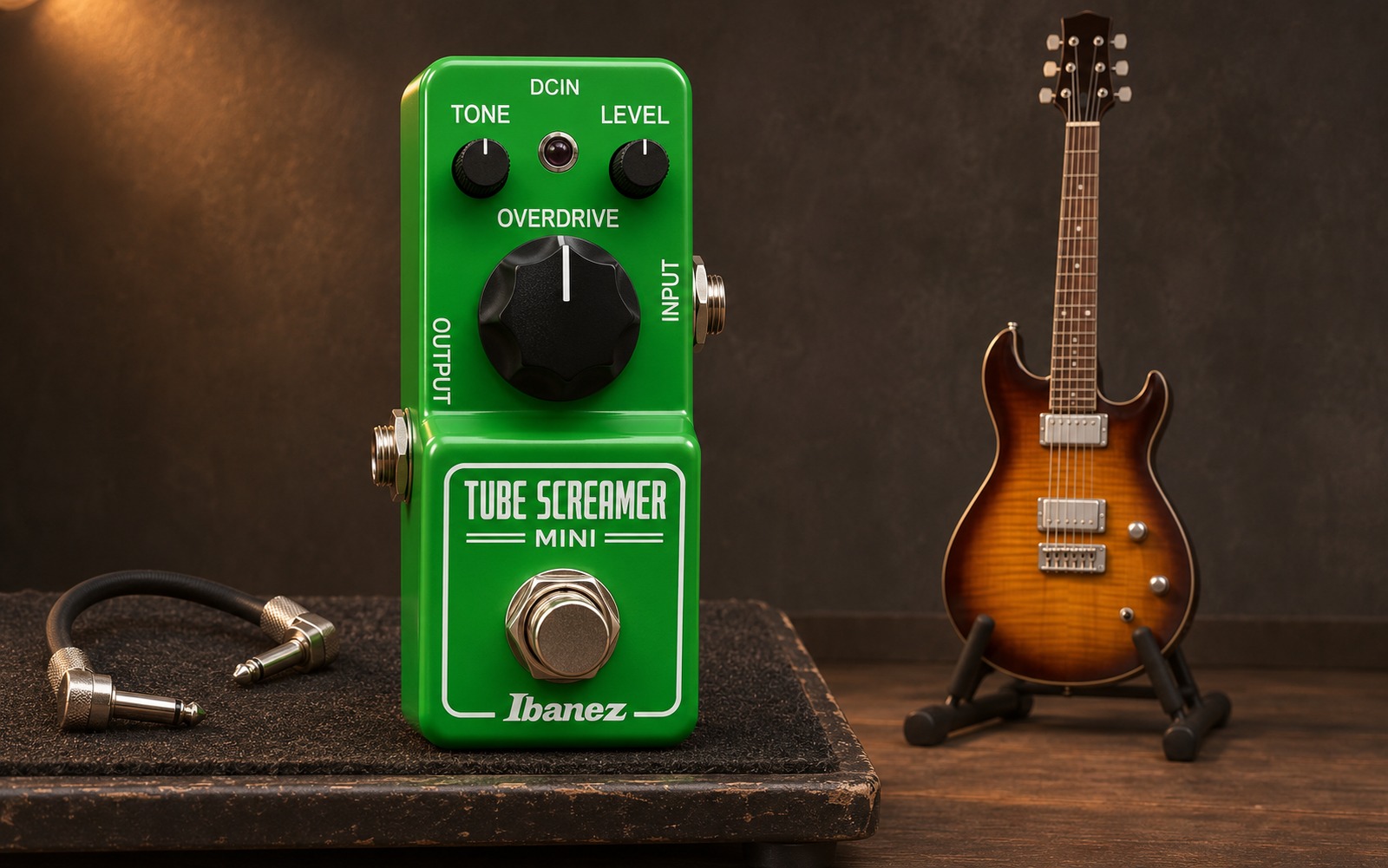
The answer came in the form of the Tube Screamer Mini, a Made-in-Japan compact that retained the JRC4558 IC chip central to the TS-9’s legendary character, added true bypass, and shrank the footprint to the point where two of them could fit in the space one TS-9 used to occupy. It wasn’t a budget compromise. It wasn’t a stripped-down approximation. It was the same circuit, in a smaller box, at a more accessible price — and the guitar world responded accordingly.
This is the deep dive into what the Tube Screamer Mini actually does, how it fits into a modern signal chain, who’s using it and why, and when it’s the right call over its larger siblings and competitors.
A Circuit Born in the Late Seventies, Miniaturized Four Decades Later
The Tube Screamer lineage begins with the TS-808, which appeared in Ibanez catalogs around 1979 and quickly found its way onto the pedalboards of Texas blues guitarists who appreciated what it did to a cranked Fender amp. The circuit introduced a particular combination of soft clipping, a pronounced midrange boost centered around 700 Hz, and a gentle high-frequency rolloff that pushed tube amp preamp stages into harmonic saturation without overwhelming them. Stevie Ray Vaughan’s adoption of the TS-808 into his signal chain — running it at low drive into cranked Dumble and Marshall amplifiers — made the Tube Screamer a canonical piece of American blues-rock equipment that it has never stopped being.
The TS-9 followed in 1982 with a slightly different output stage that gave it a marginally brighter, more aggressive character before it, too, became a foundational pedal across genres. The TS-10 Tube Screamer Classic took the circuit further through the mid-1980s before Ibanez eventually reissued the TS-9 in 1993 to meet demand from players who had discovered what the original boards sounded like. The JRC4558 op-amp chip at the heart of the early models became a subject of obsession among enthusiasts — prized for what engineers describe as asymmetric clipping behavior that contributes to the pedal’s warm, harmonically complex character.
When Ibanez announced the Tube Screamer Mini (model TSMINI) at Winter NAMM 2015, the design brief was straightforward and uncompromising: preserve the TS-9 circuit, including the JRC4558, and build it into the smallest enclosure feasible. The result was a pedal that measures roughly half the size of the TS-9 in footprint — small enough to qualify as a mini-format pedal alongside the proliferating compact options from Boss, TC Electronic, and MXR that had redefined pedalboard architecture in the early 2010s. Unlike many budget mini offerings, the TS Mini retained its Japanese manufacture, which signals to players familiar with the line that no corners were cut in the circuit itself.
Specifications: What’s Inside the Green Box
The 18mA current draw is one of the TS Mini’s genuinely practical advantages on a crowded pedalboard. Where some overdrive pedals demand 100mA or more from isolated power supply outputs, the TS Mini is accommodating enough to run on a single daisy-chain output without causing problems — though isolated power is always the cleaner choice for any board. The absence of a battery compartment is the one tangible sacrifice made to the form factor, so if you need to run without power supply access, the TS-9 remains the appropriate choice. For the vast majority of pedalboard applications, this is a non-issue.
True bypass is a genuine technical improvement over the original TS-9’s buffered bypass circuit. Whether you prefer true or buffered bypass is partly a matter of board architecture — a TS-9 in the middle of a long signal chain with no other buffers present might actually benefit from its buffer — but for players who have carefully managed their buffering elsewhere, the TS Mini’s true bypass means it introduces no coloration to the signal when it’s disengaged.
What the Tube Screamer Mini Actually Does to Your Signal
Understanding the Tube Screamer circuit means understanding what it prioritizes. This is not a high-gain pedal. It is not a fuzz. It is an overdrive with a specific tonal character — a midrange emphasis that sits in the frequency range where guitar cuts through a mix, a gradual high-frequency rolloff that keeps it from becoming harsh, and a soft-clipping topology that produces harmonically rich saturation rather than hard digital-style clipping.
The Overdrive control manages the amount of gain applied before the clipping stage. At zero, the pedal functions essentially as a clean boost with the TS mid-hump still engaged, which is one of its most useful applications before a high-gain amplifier. At maximum, it delivers aggressive overdrive that still retains note articulation and chord definition in a way that harder-clipping pedals often sacrifice. The sweet spot for most applications sits between nine o’clock and one o’clock depending on the output level of your guitar and the headroom of your amplifier.
The Tone control adjusts the high-frequency content of the output. Rolled back toward nine o’clock, it darkens the character significantly — useful for single-coil pickups that can become shrill, for aging humbuckers that need warmth, or for players targeting a more vintage character. Pushed toward two o’clock and beyond, it brings out upper harmonics and adds edge and presence. The midrange character of the circuit remains constant regardless of Tone position; you are adjusting the treble content above the mid-hump, not the mid-hump itself.
Level sets the output volume relative to your bypassed signal. For the classic boost application — driving a tube amp into harder saturation — you typically set Level above unity gain. For using the TS Mini as a standalone overdrive into a clean amp, you set it near unity. The interaction between Overdrive and Level is the core of Tube Screamer dialing — lowering Overdrive while raising Level produces a tighter, more transparent boost; raising Overdrive while keeping Level lower produces a grittier, more saturated character at the same apparent volume.
Famous Players: Who Actually Uses the Tube Screamer Mini
Stevie Ray Vaughan, John Mayer, Trey Anastasio, and Gary Clark Jr. are legitimate Tube Screamer family players, but they are documented users of the TS-808, TS-9, and related models in the Tube Screamer lineage. The Tube Screamer Mini was released in 2015, and Stevie Ray Vaughan died in 1990, which makes the attribution physically impossible. John Mayer’s documented Tube Screamer use centers on the TS-808 and TS-10. Trey Anastasio’s overdrive foundation historically relied on the TS-9 and Maxon OD9. Attributing their sounds specifically to the TS Mini would be inaccurate.
What those associations correctly communicate is that the TS Mini sounds like the TS family — because it uses the same circuit. The tones those legendary players built are available through this pedal because the JRC4558 circuit is the JRC4558 circuit regardless of enclosure size. But for per-SKU honesty, here are the players documented as actually using the Tube Screamer Mini specifically:
Keith Urban is the strongest primary-source confirmation available for the TS Mini. The Premier Guitar Rig Rundown for his High and Alive Tour 2025 documents an Ibanez Tube Screamer Mini on his live pedalboard at the 37:14 mark — a straightforward, visible confirmation from one of country music’s most technically thoughtful guitarists. Urban has long demonstrated a sophisticated approach to his signal chain, and the TS Mini’s compact footprint makes practical sense on the elaborate touring rigs he runs. Read more about Keith Urban’s gear →
Equipboard documents 70 professional artists using the Tube Screamer Mini at the community level, with notable names including Andy Timmons (though his Premier Guitar Rig Rundown documents him using a vintage TS-808 rather than the Mini specifically), Tom Misch, beabadoobee, Bruce Kulick (KISS), Tracii Guns (L.A. Guns), and Leo Moracchioli. These are Equipboard-community documented at varying levels of primary-source verification — the Keith Urban confirmation via Premier Guitar Rig Rundown stands as the clearest per-SKU primary source for this specific model.
What the TS Mini’s 70-artist Equipboard count correctly reflects is that the compact format has made the Tube Screamer accessible to a generation of players building smaller, more space-efficient boards. Players who might have hesitated to allocate full-size TS-9 real estate are finding the Mini an easy addition. That practical reality is the TS Mini’s most honest claim to fame — it democratized the Tube Screamer for the pedalboard-space-conscious era.
Seven Tone Recipes: Dialing In the Tube Screamer Mini
1. Classic Amp Boost (SRV-Style Approach)
Drive: 7–8 o’clock (near minimum). Tone: 12 o’clock. Level: 2–3 o’clock (well above unity). This is the configuration that made the Tube Screamer famous — almost no clipping added by the pedal itself, but a significant volume and midrange boost that pushes a clean-to-edge-of-breakup tube amp into harmonic saturation from the amp’s own preamp tubes. Works best with a pushed Fender Deluxe Reverb or similar single-channel tube amp. Single coils reward this treatment most obviously. See the Fender Deluxe Reverb →
2. Mid-Gain Blues Crunch
Drive: 11–12 o’clock. Tone: 11 o’clock. Level: 12–1 o’clock (near unity). A standalone overdrive setting for players running a relatively clean amp. Enough gain to add sustain and harmonic depth to bent notes without obscuring chord detail. The slightly backed-off Tone keeps single coils from becoming brittle. Works well with a Fender Stratocaster into a clean amp at moderate volume.
3. Metal Amp Tightening Boost
Drive: 7–8 o’clock (minimum). Tone: 1–2 o’clock. Level: 2 o’clock. The classic application for high-gain metal rigs: put the TS Mini before a high-gain amp (or high-gain channel) with Drive near zero, Level boosted, and Tone raised. The midrange emphasis tightens the amp’s low end, adds presence to the upper mids, and removes flabbiness from downtuned playing. Used with a Gibson Les Paul Standard and a high-gain amp, this produces focused, articulate heavy tones without reducing gain character.
4. Stacked with a Second Overdrive
Drive: 9 o’clock. Tone: 12 o’clock. Level: 2 o’clock. Run the TS Mini before a Boss BD-2 Blues Driver or another overdrive. The TS Mini’s midrange push and low-level gain feeds into the second pedal, which then applies its own character on top. Classic approach for blues-rock players who want a nuanced gain staging architecture. The TS Mini can go before or after depending on whether you want it to control input to the second drive or add its character on top of the already-broken signal.
5. Warm Clean Presence Boost
Drive: minimum. Tone: 10–11 o’clock. Level: 12–1 o’clock. The TS Mini at minimum gain with Tone slightly rolled off adds warmth and midrange presence to a clean tone without audible clipping. Useful in a studio context for thickening a clean DI’d guitar, or live for adding definition when playing in a dense mix. The circuit’s midrange character makes the guitar sit more prominently without increasing physical volume significantly.
6. Single Coil High-Definition Cut
Drive: 11 o’clock. Tone: 9–10 o’clock. Level: 12 o’clock. For players who want moderate overdrive with vintage-dark character — think early Texas blues or classic British Invasion tones. The backed-off Tone control keeps single coils from becoming glassy and emphasizes the warmer body of the note. Particularly effective for Telecaster bridge pickup, which can become bright and thin at higher Tone settings.
7. Humbucker Articulation Enhancer
Drive: 10–11 o’clock. Tone: 1–2 o’clock. Level: 1 o’clock. Humbuckers can lose high-end articulation when run through a Tube Screamer at neutral Tone settings because the circuit’s natural rolloff compounds the pickup’s own warmth. Pushing the Tone control above noon counteracts this, adding clarity and pick-attack definition to the overdrive character. Effective for jazz-tinged rock or for players who find the standard TS voice too woolly with their guitars.
These settings are reference points, not absolutes. Your guitar’s output level, pickup type, and amp headroom will all shift the numbers.
Comparisons: TS Mini vs. the Alternatives
The first comparison every player asks about is the Ibanez TS-9 Tube Screamer. The circuits are substantively the same — same JRC4558, same topology, same midrange character. The differences are practical: the TS-9 is slightly larger, accepts a 9V battery for cable-free operation, and uses buffered bypass rather than true bypass. Players who need battery backup should choose the TS-9. Players building a dense pedalboard who have power supply managed and care about true bypass should consider the Mini. On tonal grounds alone, the distinction is minimal enough that direct blind tests frequently produce split opinions about which is which.
The Boss BD-2 Blues Driver occupies an adjacent but distinct territory. Where the TS Mini has a pronounced midrange emphasis and a smooth, compressed top end, the BD-2 is notably brighter and more open-sounding, with a character that sits closer to a cranked amp than a signal-processing pedal. The BD-2 has a wider gain range and a more complex, interactive Tone control. They stack beautifully together precisely because they do different things — the TS Mini adding midrange focus, the BD-2 adding dynamic brightness.
The Maxon OD9 is the TS-9 in different clothing — same basic circuit, different construction, slightly different output stage. It’s a legitimate alternative for players who prefer its larger form factor or want to explore TS variants, but it offers no meaningful advantage over the TS Mini on circuit grounds. The OD9 typically costs more than the TS Mini and takes up more pedalboard space, which makes the Mini the logical choice for most applications.
The Ibanez TS808 Tube Screamer Pro uses a different op-amp configuration that tilts the character further toward vintage warmth. Players chasing the exact character of the original late-1970s units may prefer the TS808 Pro for that reason. The TS Mini’s JRC4558 circuit lands it squarely in TS-9 territory rather than TS-808 territory — the difference is subtle but real to ears that know the circuit well.
Buying Guide: When the TS Mini Is the Right Choice
The Tube Screamer Mini makes sense as a primary purchase in several specific scenarios. If you are building a compact board and every inch of pedalboard real estate matters, the TS Mini delivers the Tube Screamer circuit in half the space for a price that represents the best value-per-tone ratio in the TS family. If you already own a full-size Tube Screamer and want a second one for a secondary rig or a stacking application, the Mini is the obvious companion. If you are new to overdrive pedals and want to understand why the TS circuit became the foundation of the overdrive category — and want to understand it without overpaying — the TS Mini is the most efficient entry point.
The TS Mini is not the right choice if you need battery operation for occasional unpowered playing, if you require the buffered bypass of the TS-9 because your board has no other buffers and you run long cable runs, or if you are specifically chasing the TS-808 vintage character rather than the TS-9 character. In those cases, the appropriate models in the Ibanez lineup address those specific needs.
Used pricing for the TS Mini typically runs between $45 and $70 in excellent condition, making it one of the few Made-in-Japan overdrive pedals accessible at that price range. New street prices sit around $89–99 USD. Given the manufacturing quality and circuit pedigree, the TS Mini represents honest value at either price point.
Practical Ownership Notes
A few things worth knowing before the TS Mini lands on your board. The pedal requires a center-negative DC 9V power supply and draws only 18mA, making it one of the easiest pedals to power. On a Strymon Zuma, a Cioks DC7, or a One Spot Pro CS6, it will fit comfortably on any isolated output. On a simple daisy chain, 18mA is unlikely to cause noise problems, though isolated power remains best practice.
Some players report that the Mini feels slightly rocking-prone on pedalboard tape when engaged because of its compact size and the side-mounted input/output jacks. Velcro the underside properly before gigging — hook tape on the board, loop tape on the pedal bottom — and this issue disappears.
The true bypass switching is mechanical, which means there’s an audible click on engage and bypass. This is normal for true bypass pedals and is not a sign of any defect. Players who find true bypass click disruptive during live performance may prefer the TS-9’s buffered bypass, which transitions silently.
Signal chain placement matters. The TS Mini, like all Tube Screamer-circuit pedals, functions best after a tuner and wah (if used) and before amplifier-style overdrive or distortion pedals when used as a boost. Compression before the TS Mini can reduce the dynamic responsiveness that makes the circuit interactive; most players place compression after or use it in a dedicated clean chain. Modulation and time-based effects (reverb, delay, chorus) go after the TS Mini in a conventional series chain.
Frequently Asked Questions
Does the Tube Screamer Mini sound exactly like the TS-9?
The circuits are substantively identical — same JRC4558 chip, same topology. Experienced ears in direct comparison may identify minor differences attributable to component tolerances or manufacturing variation, but these are not consistent differences between the models. For practical purposes, the TS Mini and TS-9 sound like the same pedal. The differences between individual units of the same model often exceed the differences between the models themselves.
Can I run the Tube Screamer Mini on a battery?
No. The compact enclosure leaves no room for a battery compartment. The TS Mini requires an external DC 9V center-negative power supply. If battery operation is important for your playing situation, the full-size TS-9 retains the battery option.
What does the JRC4558 chip do that makes it special?
The JRC4558 is a dual op-amp with a specific clipping behavior that produces asymmetric saturation — different harmonic content on the positive and negative phases of the waveform. This asymmetry gives the Tube Screamer circuit its distinctive warm, slightly complex overdrive character compared to more symmetrically clipping designs. The chip was found in early TS-808 and TS-9 units and has been replicated in countless boutique overdrives since. Using the genuine chip in a Made-in-Japan unit is Ibanez communicating that this is the real circuit, not a cost-optimized approximation.
Is the Tube Screamer Mini good for metal?
For metal specifically, the TS Mini is primarily used as a boost before a high-gain amp rather than as a standalone distortion source. Set Drive to minimum and Level to boost, and the midrange emphasis tightens the low end of a high-gain amp, sharpens palm-muted riffing, and adds clarity to articulated passages. Running it at high Drive into a clean amp for metal tones produces mid-heavy overdrive rather than scooped aggressive distortion — most metal players would find that unsatisfying as a primary gain stage.
Does the TS Mini work well with humbuckers?
Yes, with a Tone adjustment. Humbuckers have less high-frequency presence than single coils, and the TS circuit’s natural treble rolloff can compound that warmth into muddiness. Run the Tone control at 1–2 o’clock with humbuckers to compensate. This restores articulation and clarity while retaining the midrange character that makes the Tube Screamer family distinctive.
Where in the signal chain should the Tube Screamer Mini go?
Standard placement is after a tuner (and wah if used) and before other overdrive/distortion pedals, with modulation and delay after it. When used as an amp boost, it typically goes at or near the beginning of the chain so its output level hits the amp’s input harder. When stacked before another overdrive, its position relative to that pedal depends on whether you want it to control the input gain of the second pedal (before) or add its character on top of an already-saturated signal (after).
How does the Tube Screamer Mini compare to boutique Tube Screamer clones?
The boutique TS clone market is extensive — Maxon OD9, Way Huge Green Rhino, JHS Bonsai (which actually recreates eight different TS variants including the TS-808, TS-10, and TS Mini itself), Wampler Euphoria, and dozens more. The TS Mini’s advantage in this company is its authenticity (Ibanez making the TS circuit is not a clone; it’s the original), its Made-in-Japan quality, and its price. Players who want to go deeper into TS character variations will find boutique options rewarding; players who want the genuine circuit for pedalboard-friendly money will find the TS Mini difficult to argue against.
Will the Tube Screamer Mini hold its value?
The TS family holds value reliably because demand is consistent. The Mini’s lower new price means the used price ceiling is lower than for vintage TS-808 units, but it does not depreciate to the point of being a bad investment for working guitarists. Buying new and using it for years before selling will typically recover 50–70% of purchase price depending on condition. Buying used excellent is the rational choice for players on a tight budget who want the circuit without paying full retail.
Image credits
- Top image: GuitarGangsters AI-generated reference illustration, not a photograph.
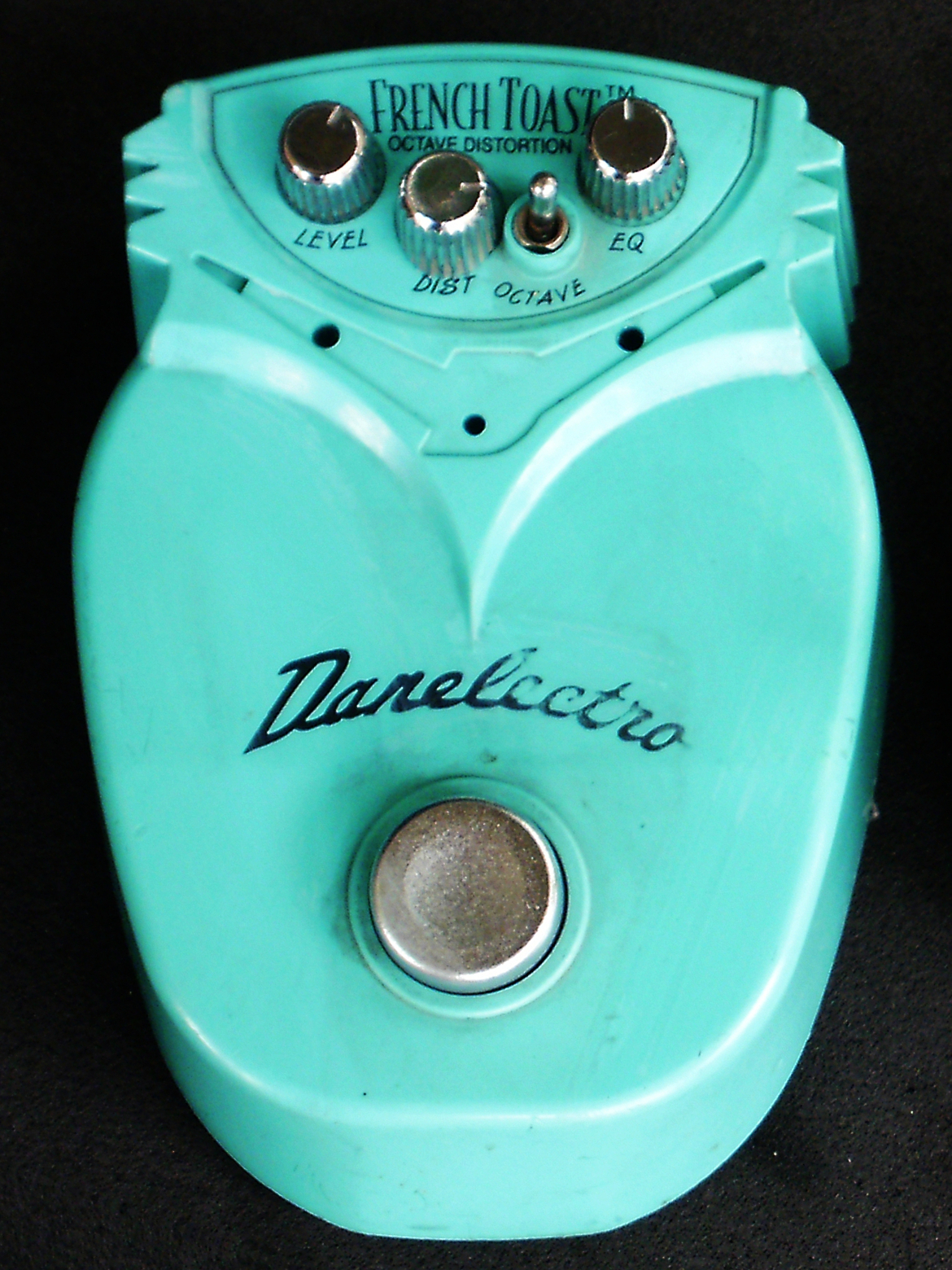
- A mint green distortion pedal: Danelectro French Toast octave distortion rehouse on metal case (2011-10-03 by Andrés Galeotti).jpg: Andrés Galeotti fro, Wikimedia Commons, CC BY 3.0.
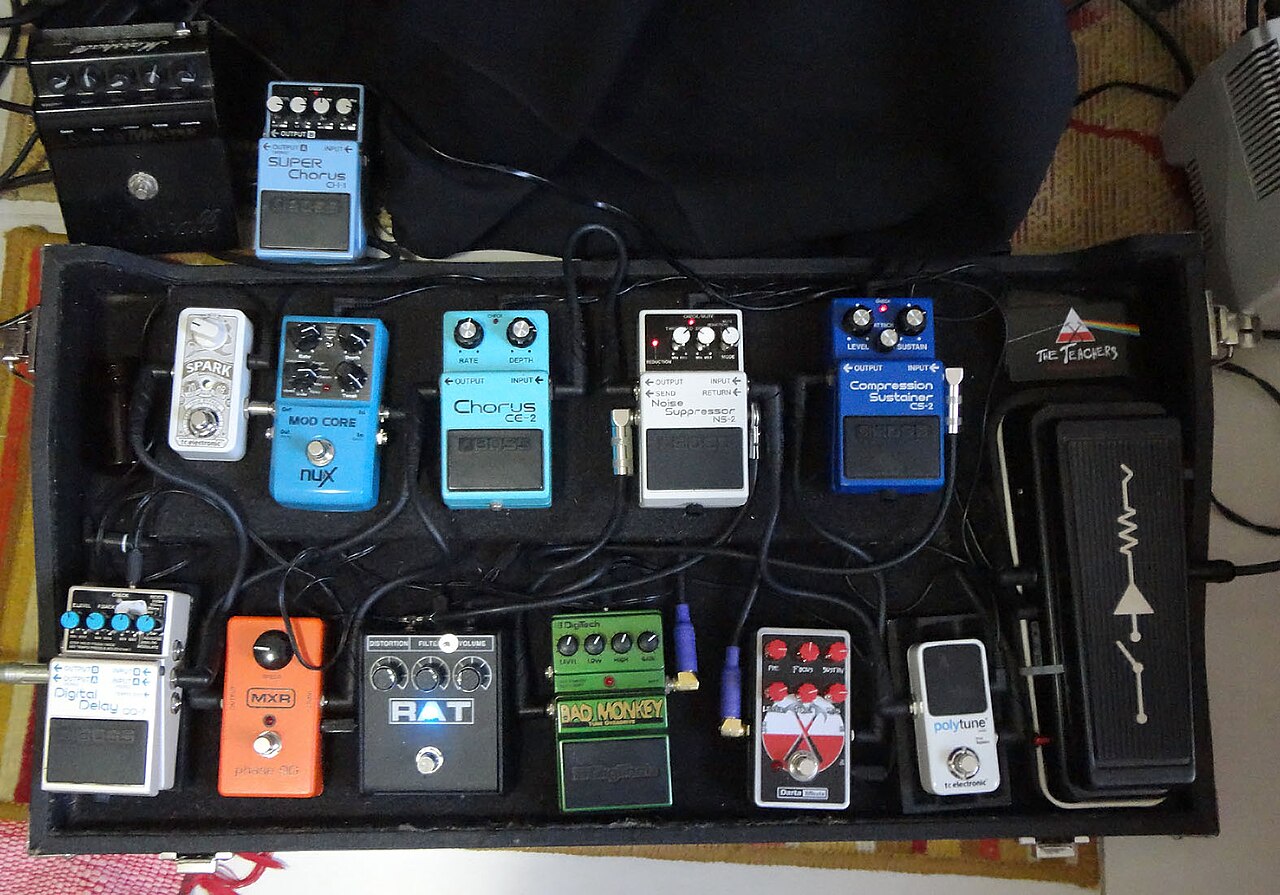
- A pedalboard with a mix of pedals: marcelodonati, Wikimedia Commons, CC BY 2.0.
Latest News
Related
On This Day
Monday 9 November
From this week: