TC Electronic Spark Mini Booster: The One-Knob Box That Reinvented the Footswitch
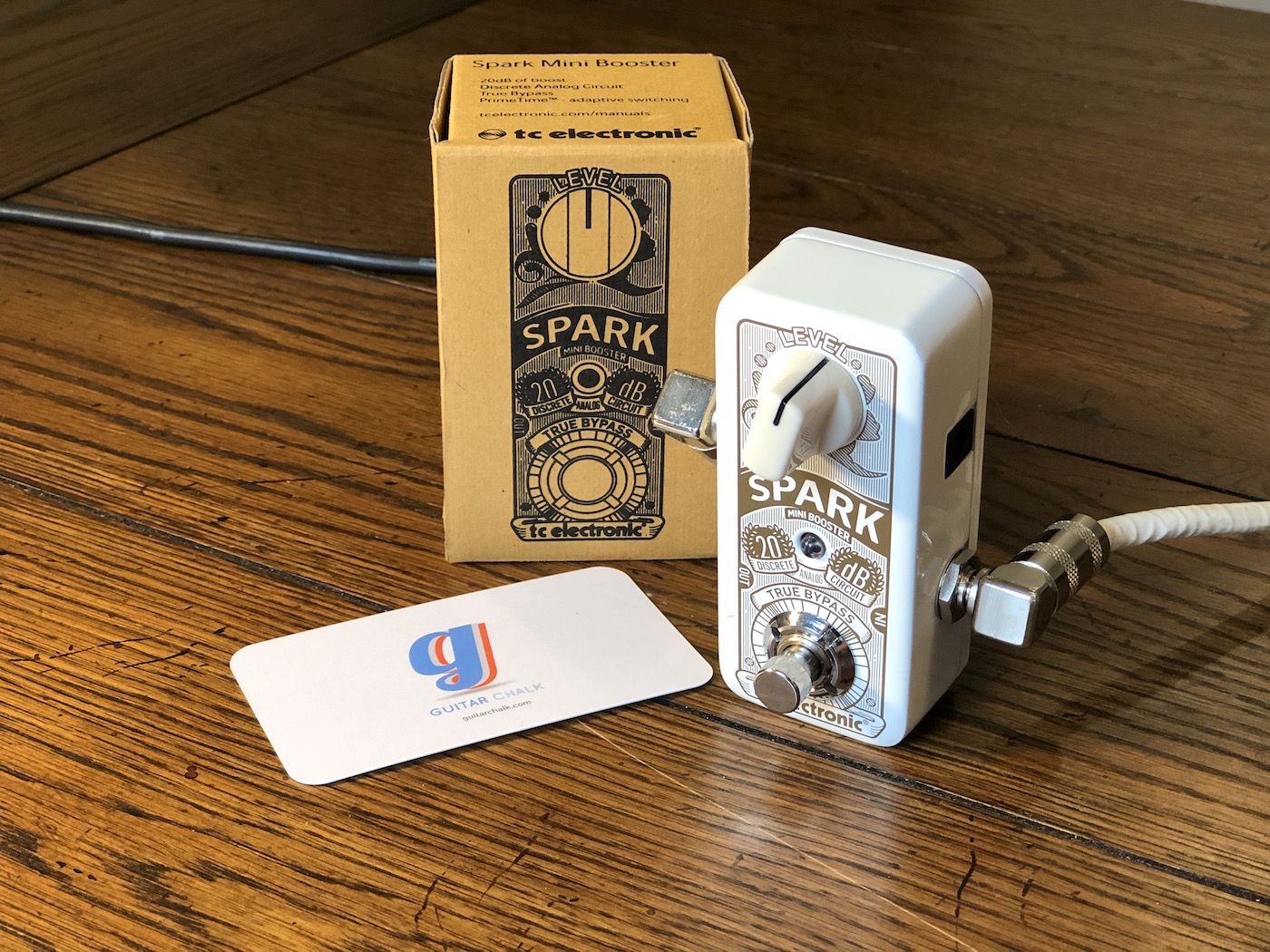
TC Electronic Spark Mini Booster with its box, photographed 1 January 2019. Photo: Guitar Chalk (https://www.guitarchalk.com/). CC BY 2.0 (https://creativecommons.org/licenses/by/2.0/). Source image unchanged by GuitarGangsters; full frame retained. Source: https://www.flickr.com/photos/guitarchalk/46142321094/
TC Electronic Spark Mini Booster review guide: 20 dB clean boost, PrimeTime switching explained, verified players, settings, specs and buying advice.
Most boost pedals are arguments about circuits. This one is an argument about feet.
The TC Electronic Spark Mini Booster arrived in the summer of 2013 with a single knob, no battery compartment, a footprint the size of a matchbox, and 20 dB of clean gain — a specification sheet so unremarkable you could have written it in 1968. And yet it did something no pedal had done before, something so simple that once you have used it you resent every stompbox that does not do it: it worked out, entirely on its own, whether you wanted the boost latched on or held down for four bars and then gone.
TC called it PrimeTime. The press release called it “revolutionary,” which is what press releases call everything. In this case the press release was closer to right than usual, because thirteen years later the Spark Mini is still on shelves, still selling, and still one of the very few boost pedals whose defining feature is not a transistor but a piece of timing logic in the switch.
This is the story of a $99 pedal that now costs $43, that Devin Townsend puts on an Axe-Fx-and-Kemper rig worth more than a car, and that carries an artist roster so glittering it demands to be read with a certain amount of scepticism. We are going to do all of that — carefully, with sources named, and with the awkward parts left in.
The Setup: What This Pedal Actually Is
Our master gear list files the Spark Mini Booster under “Boost pedal,” and for once there is nothing to correct. It is a boost pedal. It boosts. The interesting question is not what it is but why anyone chose this one when the boost aisle is the most crowded, least differentiated shelf in the entire pedal shop.
The answer is in three parts, and none of them is tone.
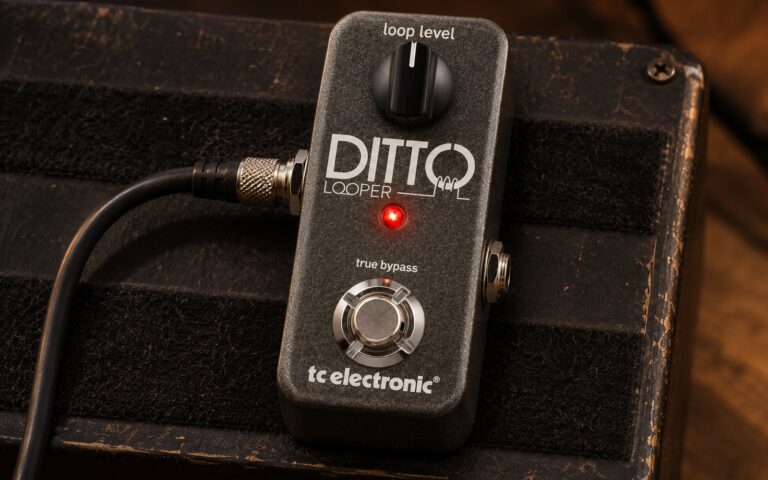
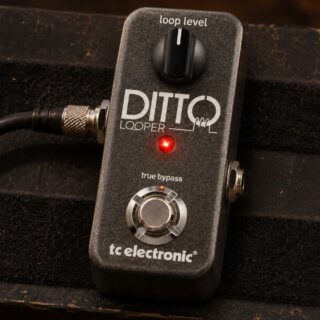
Part one: it is genuinely small. Not “compact.” Not “pedalboard-friendly.” Small. It occupies the same mini enclosure TC used across the Ditto, the PolyTune Mini and the rest of that generation — a footprint you can wedge into the gap you thought was unusable.
Part two: it is honestly transparent. Plenty of pedals claim this. MusicRadar’s Michael Brown, reviewing the pedal on 7 August 2013, tested the claim and wrote plainly: “No matter how it’s set, the Spark Mini sounds tonally transparent, simply raising the level of your guitar signal and overdriving your amp.” That is about as unhedged as a British gear magazine gets.
Part three — and this is the one that matters — it changed how the footswitch works. Everything else in this article orbits that.
Origin Story: Risskov, July 2013
The announcement went out from Risskov, Denmark on 8 July 2013, timed to Summer NAMM, and Premier Guitar ran it verbatim. The first sentence of that release is worth quoting because it stakes a claim that TC never had to walk back:
“Spark Mini Booster is the first pedal ever to feature PrimeTime, a revolutionary feature that automatically detects whether you want the pedal to be permanently on when you hit the footswitch, or just for as long as you hold the footswitch down.”
Availability was August 2013. Pricing was €79 in Europe, £69 in the UK, and a $99 US estimated street price. Tore Mogensen, then Business Manager for Guitar at TC Electronic, supplied the quote:
“Spark Mini Booster is the go-to pedal whether you want a clean boost, or add some life and excitement to your gear. It’s just a stompbox-sized miracle that is sure to delight guitarists everywhere.”
Mogensen’s name should be familiar if you have been following this guide. He is the same product manager who fronted the launches of the TC Electronic Ditto Looper in January 2013 and the Ditto X2 in January 2014. The Spark Mini sits squarely in the middle of that run, and it belongs to the same design philosophy: take one job, strip every control that is not that job, and put the cleverness somewhere the player does not have to think about it.
On the Ditto, that cleverness was one knob and one switch controlling a five-minute looper. Here it is one knob and one switch controlling a boost — with the switch doing double duty in a way that, remarkably, nobody had shipped before.
The Bigger Brother It Was Shrunk From
The Spark Mini did not appear from nowhere. TC already sold the full-size Spark Booster: 26 dB of gain, plus bass and treble controls and a three-way voicing switch. The Mini is not that pedal in a smaller box. It is a different, simpler circuit with less gain and no tone shaping at all.
MusicRadar’s review put its finger on the trade-off in the Cons box, which reads, in full: “Lacks the tone options of the Spark.” That is the entire criticism of the pedal in five words, and it is fair. What you are buying when you buy the Mini is the decision not to have tone controls — which, on a boost, is more often a feature than a compromise. A boost with an EQ section is a preamp with commitment issues.
Specifications
Two Spec-Sheet Notes You Should Not Skip
The dimensions are printed on a mislabelled axis, and this is the second TC mini pedal in this guide where that has happened. Read “48 × 48 × 93 mm” as width × depth × height and you get a 93 mm tower standing on a 48 mm square base — a pedal shaped like a chess piece. It is not. The 93 mm figure is the front-to-back length of the enclosure. We flagged exactly this on the Ditto Looper, whose manual carries the identical triplet, and where MusicRadar independently resolved it by measuring the pedal at 92 mm in length. Same enclosure, same artefact, same fix: the number that looks like a height is a depth. If you are planning pedalboard clearance from the printed spec, you will get it wrong.
The current figure appears twice, with two different numbers. The specification table gives a minimum supply capability of 40 mA. TC’s own quick-start guidance for this generation of mini pedals asks for a supply rated at 100 mA or better. These are not necessarily contradictory — 40 mA is plausibly what the pedal draws, and 100 mA is the headroom TC wants your supply to have — but the documentation never says which is which, and the two figures get copied into retail listings interchangeably. Budget 100 mA per Spark Mini on your power supply and you will never think about it again. This is the fourth SKU in this guide where a manufacturer has published two current figures without reconciling them, and the advice has been the same every time: take the larger number.
PrimeTime: The Actual Innovation
Here is the problem PrimeTime solves, and it is a real one that every gigging player has had.
A footswitch can behave in two ways. Latching is the normal stompbox behaviour: press once, it’s on; press again, it’s off. Momentary means the effect is active only while your foot is physically holding the switch down — release, and it’s gone.
Both are useful, and they are useful for completely different musical jobs. Latching is how you engage a solo boost for thirty-two bars. Momentary is how you lift the volume for a two-bar fill, a single sustained bend, or the last chord of a chorus — moments where reaching down twice with your foot is either impossible or ruins the timing.
Historically you had to choose. A pedal was one or the other, or it had a tiny internal switch you set at home and forgot about. PrimeTime removed the choice by making the pedal read your foot: tap it and let go, and it latches. Hold it down, and it goes momentary — releasing turns the boost off.
That is the whole feature. There is no menu, no mode LED, no combination to memorise. You do not decide in advance; you decide by how long you stand on the thing.
The obvious worry is that a pedal guessing your intent will guess wrong at the worst possible moment. MusicRadar tested precisely that and reported: “The PrimeTime switching works like a charm, too. No matter how hard we tried, we couldn’t fox it, and it always worked how we wanted it to.”
A Thomann owner, writing in February 2022, described the same behaviour from the other end — years of ownership rather than a review week — and added a detail no press release would think to mention: the switch is soft rather than clicky, “so it doesn’t hurt when you step on it only wearing socks.”
It is a small thing. It is also the kind of small thing that tells you a pedal was designed by people who actually play.
Why This Matters More on a Boost Than on Anything Else
Consider what momentary switching would do on a delay, a reverb, or a fuzz: mostly nothing useful, because those effects have tails, character, and settling time. Stamping them on for one bar produces a mess.
A clean boost has none of that. It is instantaneous, it is transparent, and it has no tail. It is the one effect where “on for exactly as long as my foot is down” maps perfectly onto a musical gesture. PrimeTime was not bolted onto a boost by accident — the boost is the one pedal where the idea fully pays off.
Which raises the obvious question of why so few pedals have copied it. Thirteen years on, auto-detecting latch/momentary switching remains a rarity rather than a standard. That is less a comment on the idea than on how conservative pedal switching design actually is.
Famous Players: A Roster That Needs Sorting
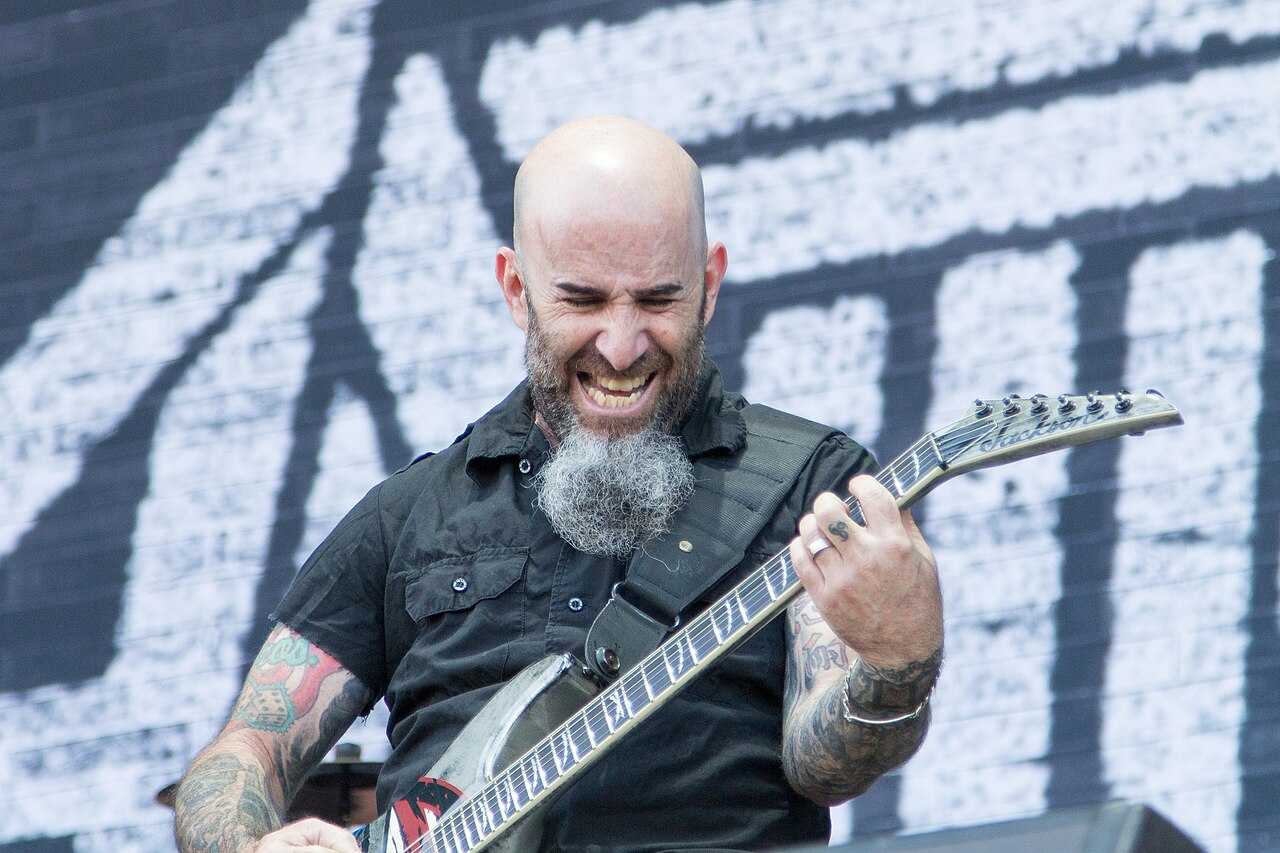
Equipboard lists 36 artists for the Spark Mini Booster. That is a very large number for a $43 boost pedal, and the names are startling — Tony Iommi, Steve Morse, Scott Ian, Nathan East, Brad Whitford, Troy Van Leeuwen.
Before we go anywhere near that list, a methodological point that this guide has had to make repeatedly and will make again here: a booster makes no sound of its own. Nobody’s signature tone is “the Spark Mini.” Player sightings on a utility pedal are not evidence about tone; they are evidence about where the object ends up — whose board, at what budget tier, doing what job. Read them that way and they are genuinely informative. Read them as endorsements and you will fool yourself.
With that established, the 36 entries do not all carry the same weight, and this pedal turns out to be an unusually clean illustration of why evidence grading matters. There are four distinct tiers here.
Tier One: The Independent Rig Feature — Devin Townsend
This is the strongest evidence on the pedal, and it is very strong indeed.
MusicRadar’s “Rig tour: Devin Townsend Project,” written by Rob Laing and published 1 June 2015, is a 22-page walkthrough of the Devin Townsend Project’s touring rig, narrated by Devin Townsend himself. The Spark Mini Booster gets its own entry. His words, in full:
“If I want to play a lead, I throw this in, which is basically just a clean boost.”
Nineteen words, no marketing, no prompting, in an editorial feature TC did not commission. That is the gold standard for this kind of claim.
What makes it more interesting is the company it keeps. The board around it, as Townsend described it on the same tour: a One Control Crocodile Tail Loop switcher sending MIDI to both a Kemper Profiling Amp and a Fractal Axe-Fx II XL; a Mesa/Boogie Grid Slammer overdrive; a Diamond Compressor; a Way Huge Saucy Box, which he describes as “essentially a Klon overdrive sound”; a Voodoo Lab tremolo; an EarthQuaker Devices Rainbow Machine; a TC Electronic Flashback Triple Delay; an ISP Decimator; a TC Electronic PolyTune; and a Dunlop Cry Baby 95Q. Guitars were Framus, with a prototype Fishman Fluence signature pickup and EverTune bridges.
In other words: a rig with two flagship digital modellers in it, and a $43 analogue box handling lead boosts. That is the argument for this pedal in one photograph. Townsend even notes that the Grid Slammer is also there “for a clean boost” and that he had cycled through a Maxon OD808 and a Keeley Red Dirt looking for the right push — the Spark Mini survived that process not because it was the fanciest option but because it was the most invisible one.
On the same page he is characteristically blunt about why his rig looks the way it does: “One of the things about doing odd, progressive heavy metal is, although it might not be financially the most lucrative thing, we get given a lot of gear.” A man who is given a lot of gear kept this one. That is worth something.
Tier Two: The Artist Quote That Is Also an Advertisement — Steve Morse and Scott Ian
Two of the most quotable lines in the Spark Mini’s entire paper trail come from Steve Morse of Deep Purple and Scott Ian of Anthrax. They are good quotes. They are also, unambiguously, promotional material, and we are going to say so.
Morse, in a video titled “Steve Morse (Deep Purple) demoing Spark Mini Booster,” says at around 0:30:
“It makes a nice boost… There’s a cool feature about, if you hold the momentary switch down you get the boost for as long as you hold the switch down.”
Ian, in “Scott Ian (Anthrax) demoing Spark Mini Booster,” says at around 1:15:
“It just gives the whole thing a nice push, kind of rounds it out and makes it smoother.”
Both quotes are real, both are accurately attributed, and both are useful — Morse’s in particular is a working guitarist explaining PrimeTime better than the manual does. But look at the titles. These are demo videos, produced as part of the pedal’s launch campaign, in which an artist has been handed a product and asked to talk about it on camera.
That is a different thing from a player choosing a pedal, gigging it for two years, and mentioning it to a journalist. Gear writing launders the first into the second constantly, usually by dropping the word “demo” and keeping the quote. We are keeping the word.
None of this means Morse or Ian dislike the pedal, or that they never used one. It means the evidence does not tell us either way, and a quote produced inside a marketing campaign cannot be counted as independent confirmation of long-term use. Grade it accordingly: excellent explanations of what the pedal does, weak evidence about what these two players actually keep on their boards.
Tier Three: The Manufacturer’s Own Artist Page — And Why Tony Iommi Needs an Asterisk
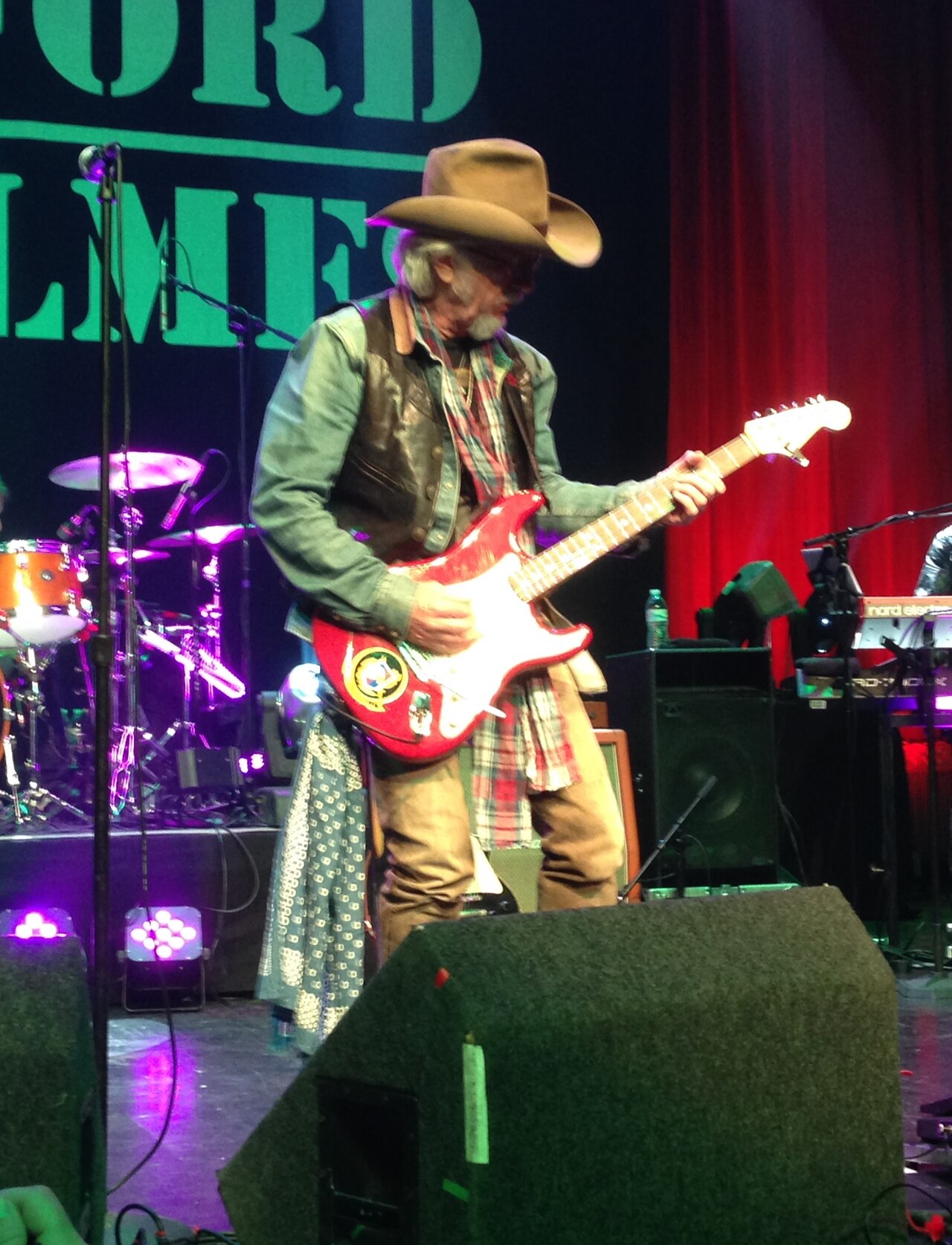
Six of the sourced entries trace back to TC Electronic’s own artist pages rather than to any independent source: Tony Iommi, Nathan East, Fredrik Åkesson of Opeth, Brad Whitford, Troy Van Leeuwen of Queens of the Stone Age, and Rob Chapman.
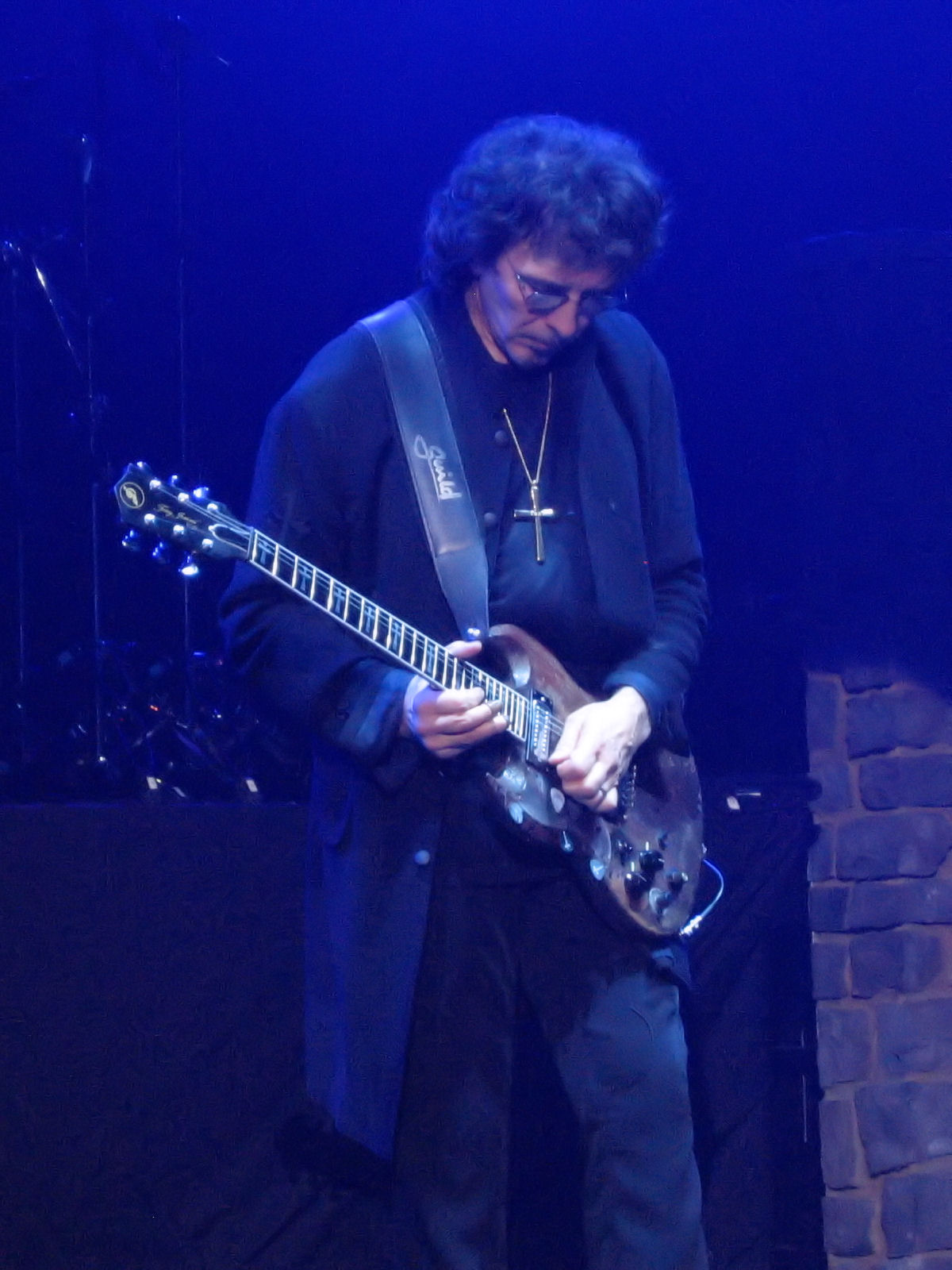
This guide grades manufacturer-published artist claims as stronger than a random user photo — a company has real legal and reputational exposure if it invents an endorsement — but weaker than an interview, because artist rosters are marketing assets. They get assembled once, reused across a whole product line, and left up for years after the relationship or the gear has changed. We have documented brand rosters recycling names across unrelated SKUs repeatedly, and the correct response is not to discard the claim but to say out loud what tier it sits in.
The Iommi entry is the one that most demands this treatment. Tony Iommi is a plausible clean-boost user — his entire sound is built on pushing an already-saturated amp — but the claim here rests on TC’s own site listing him among Spark Mini users, with no independent rig feature, no interview, and no photograph of the pedal on his board. It may well be true. It is not confirmed, and we are not going to present a marketing roster as a Rig Rundown.
There is a small, funny corroborating detail about how sloppy this layer of the internet can get: Equipboard’s own Iommi entry files him under the band “Mark Knopfler’s Guitar Heroes” rather than Black Sabbath, and files Scott Ian under Mr. Bungle rather than Anthrax. Both are technically defensible — Iommi appeared on Mark Knopfler-adjacent tribute billings, and Ian joined Mr. Bungle’s 2020 reunion lineup — but neither is the band you were expecting, and it is a useful reminder that the metadata around artist claims is assembled by algorithms and volunteers, not by fact-checkers.
Two of the names in this tier are worth flagging for a different reason. Troy Van Leeuwen — Josh Homme‘s foil in Queens of the Stone Age — and Fredrik Åkesson, who has played alongside Mikael Åkerfeldt in Opeth since 2007, are both players whose rigs are extensively documented elsewhere. If the Spark Mini were central to either sound, we would expect to find it in an independent rig feature. We did not. Treat both as roster entries.
Tier Four: Photographs, Reddit Threads, and a Blurry Pedalboard
The remaining entries are user-submitted sightings, and they are the most honest about their own limits.
beabadoobee appears via a Reddit thread from around 2020 in which users identify a Spark Mini as the third pedal from the right on her board. The submission itself concedes the photograph is blurry. Clay Parton of Duster appears via a photograph discussed on Reddit by a single named user. James Bay appears via a YouTube timestamp at 35:02, where the pedal is visible beside a J. Rockett Archer.
These are not worthless. A blurry photo of a $43 boost on an indie touring board tells you something real about who buys this pedal and why. But they are sightings, not statements, and the correct verb is “appears to,” not “uses.”
What the Aggregate Data Actually Says
The most informative thing on the Equipboard page is not any individual name — it is the shape of the data.
Genre spread: Rock 186, Metal 68, Pop 67, Electronic 38, Funk/Soul 38, Hard Rock 38, Jazz 30, Pop Rock 22, Folk/World/Country 20, Progressive Rock 19. That is a broad, flat distribution with a rock skew but no real specialisation — the statistical signature of a tool rather than a sound.
“Used with” is even more telling: Delay pedals (7), Pedal Tuners (6), Reverb (6), Chorus (4), Overdrive (4). The most common individual companions are the TC PolyTune (10), TC Flashback Delay (10), Boss TU-3 (9), Pro Co RAT 2 (9), DigiTech Whammy DT (8) and Boss NS-2 (8).
Tuners. Noise gates. A delay. In other words, the Spark Mini keeps company with the boring, necessary parts of a pedalboard — the infrastructure, not the personality. That is exactly the right conclusion, and it matches the pedal’s whole design brief.
Tone Recipes and Settings
1. The Always-On Signal Lift — 9 to 11 o’clock, never switched off
Set it around 30–40 percent, put it first in the chain, and leave it on permanently. A Thomann owner writing in May 2020 describes exactly this and explains the reasoning better than we could: with a fixed lift at the front, “there is no unexpected increase of volume or gain of effects” when you kick in an overdrive or change amp channels, and the amp “reacts very well when I change volume in my guitar.”
This is the least glamorous use of the pedal and probably the most common. You are not boosting for a solo; you are normalising your rig so that everything downstream behaves predictably. Weak pickups, long cable runs and passive volume pedals all take a toll, and 3–5 dB at the front puts it back.
2. The Solo Lift — 11 o’clock to 1 o’clock, latched
The straightforward one. Tap to latch, play the solo, tap to release. Set the level by ear against the band rather than against your own playing at home: what feels like a huge jump alone in a room is usually inaudible in a mix, and most players undershoot.
Placed in front of a dirty amp, this pushes the front end harder and you get more saturation as well as more volume. Placed in an effects loop, it is a pure volume change with no added gain. Both are legitimate; they are just different jobs, and you should know which one you are doing.
3. The PrimeTime Punctuation — any level, held with the foot
This is the setting that justifies buying this pedal rather than any other. Hold the switch for a single sustained bend, the last chord of a chorus, a two-bar fill, one line of a riff. Release and you are back.
The gesture is worth practising deliberately, because it changes what you play. Boost you have to remember to turn off is boost you use sparingly. Boost that ends when your foot lifts is boost you can use as a phrasing tool — closer to a swell or a dynamic accent than to a channel change.
4. The Amp Destroyer — 2 o’clock to full
Past three-quarters, TC’s own copy stops calling it clean. This is where the Spark Mini stops being a level control and starts being a drive pedal by proxy: it is not distorting itself in any meaningful way, it is slamming the front end of your amp until the amp distorts.
MusicRadar’s description of the full sweep on a clean valve amp: “from a small volume boost plus bottom-end fattening and treble sweetening to all-out grit at full blast.” Note “bottom-end fattening” — a genuinely clean boost into a valve front end is never entirely neutral, because the amp’s response to a hotter input is not linear. That is the point.
Caution: at these settings a noisy signal chain becomes a very noisy signal chain. 20 dB amplifies hum as faithfully as it amplifies guitar.
5. The Stacked Push — in front of an overdrive, 12 o’clock
Feed a Tube Screamer or similar with a hotter signal and you change its character: more compression, more saturation, more midrange bark. This is the classic boost-into-drive stack, and the Spark Mini does it as well as anything because it adds nothing of its own.
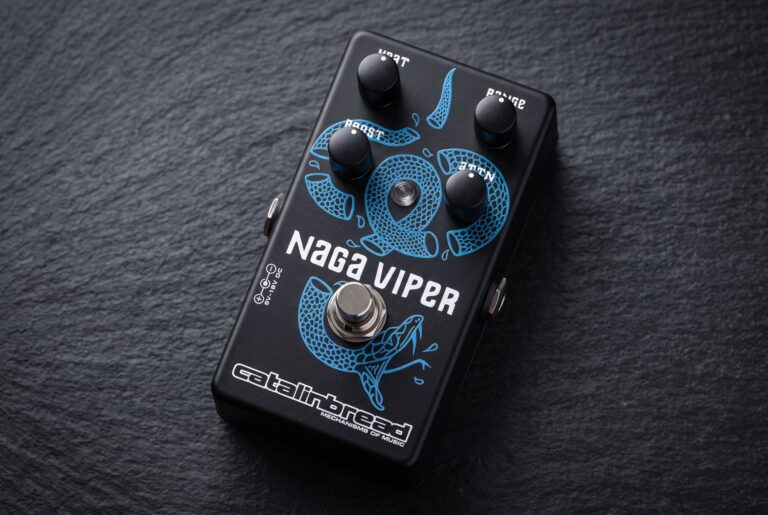
If you want the boost to add character as well as level, you want a different pedal — the Xotic EP Booster and its Echoplex-derived midrange bump, or the Catalinbread Naga Viper and its Rangemaster treble focus. That is a genuine fork in the road and we cover it below.
One knob means the “settings” section is really a section about where in the sweep you live and where in the chain the pedal sits. The clock positions below are ours, not TC’s — the pedal ships with no factory presets and no recommended settings, because with one control it does not need any.
The one first-party guidepost that matters: TC states that the majority of the sweep is “a pristinely clean boost,” and that once cranked past roughly three-quarters, the Spark Mini “is fully unleashed and drives amps to peak-performance.” So the top quarter of the knob is a different animal from the bottom three.
Where It Goes in the Chain
The Spark Mini works in three positions and does something different in each.
First in chain, before everything. The always-on lift. Everything downstream sees a hotter, more consistent signal. Note that the pedal is true bypass, so when it is off it is genuinely out of circuit — which means if it is your first pedal and it is off, you get no buffering at all. On a long cable run, this matters.
Before the dirt. The solo-boost-with-extra-gain position. You are increasing the drive pedal’s or the amp’s input level, so you get more distortion as well as more volume.
In the amp’s effects loop. The pure volume position — louder without changing the distortion character at all. The Thomann reviewer quoted earlier reports using it both ways: “as a boost before my preamp to raise the gain, and in the FX loop as a volume boost.” If your amp gets its distortion from the preamp, the loop is the only place a boost gives you clean volume.
One warning, and it is about a hallucination rather than a hardware limit. Automated “specification” summaries on at least one manual-hosting site claim the Spark Mini Booster “has a built-in effects loop” with send and return jacks, complete with step-by-step instructions for using it. This is false. The pedal has exactly one input and one output. The invented FX loop is machine-generated filler, and this is the second consecutive TC pedal in this guide where the same site has invented the same non-existent feature — it made the identical claim about the Ditto X2. Use manual-aggregator sites for the transcribed manual text only, and ignore the prose wrapped around it.
Comparisons: How to Choose a Boost
The boost aisle is where good pedals go to look identical. Here is the honest taxonomy.
Spark Mini vs the full-size Spark Booster
The Spark Booster gives you 26 dB instead of 20, plus bass and treble controls and a voicing switch. It is a boost you can shape. The Mini is a boost you cannot. Curiously, the full-size version now sells for around $55 — barely more than the Mini’s $43 — so the decision is genuinely about board space and philosophy rather than money. Want to sculpt? Take the big one. Want a level control that does not have opinions? Take the Mini. And note that only the Mini has PrimeTime.
Spark Mini vs MXR Micro Amp
The closest philosophical rival: one knob, clean gain, decades of pedigree. The Micro Amp has a slightly different voicing (a mild upper-mid emphasis that many players like and some resent), a larger enclosure, and conventional latching switching only. The Spark Mini is smaller, cheaper, arguably more transparent, and has the switch trick. If you have never been bothered by momentary switching, this is close to a coin flip.
Spark Mini vs Xotic EP Booster
Not the same pedal at all. The EP Booster is a coloured boost — it emulates the preamp stage of an Echoplex tape delay and brings a specific midrange and top-end character with it. People buy it precisely for that flavour. The Spark Mini is trying not to have a flavour. Choose the EP Booster if “transparent” sounds like a synonym for “boring”; choose the Spark Mini if it sounds like a synonym for “correct.”
Spark Mini vs Keeley Katana Clean Boost
The Katana is a boutique clean boost with a pull-knob mode change and considerable headroom, at several times the price. It is a better-specified pedal. Whether it is a better pedal for you depends entirely on whether you can hear the difference through a cranked amp in a room with a drummer in it.
Spark Mini vs Xotic RC Booster V2 and Xotic AC Booster
Both Xotics are boost-plus-EQ-plus-a-bit-of-drive devices — closer to a transparent overdrive with a lot of clean range than to a pure booster. They will do more. They will also do more to your tone, and they are considerably larger and more expensive. Different category, adjacent shelf.
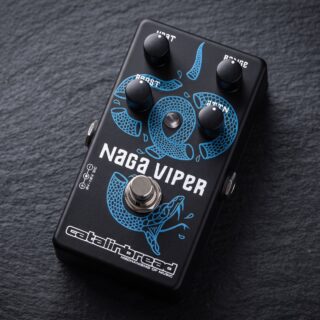
Spark Mini vs Catalinbread Naga Viper
The Naga Viper is a treble booster — a Dallas Rangemaster derivative that deliberately trims low end and boosts only the upper frequencies, because that is what makes a British amp sing. It is a boost with a very strong point of view. If you are chasing a specific late-’60s sound, that point of view is the entire product. If you want your signal louder and otherwise unchanged, it is the last thing you want.
Buying Guide
Buy the Spark Mini Booster if: you want a genuinely transparent lift, board space is tight, and the latch/momentary distinction sounds useful to you. If you have ever wished you could boost for one bar without doing a foot-tap dance, this is the pedal.
Look elsewhere if: you want your boost to have a voice (EP Booster, Naga Viper), you want tone controls (the full-size Spark, the Xotics), or you need battery operation. That last one is absolute — there is no battery compartment, and Thomann lists “battery operation not possible” as a bullet point. On a mini enclosure there was never room.
On price: this pedal launched at a $99 estimated US street price in 2013 and now sells new for around $42–43, with B-stock from $39 and used examples from about $35. That is a real-terms collapse of well over 70 percent, and it is not a sign of a failed product — the pedal is still in production, still stocked, and still ranked in the top fifty of its category at Europe’s largest retailer. It is a sign of thirteen years of manufacturing scale and a mini-pedal market that got extremely competitive. You are getting a 2013 flagship feature at 2026 commodity pricing.
On buying used: there is almost nothing to go wrong. One potentiometer, one footswitch, two jacks, no battery contacts to corrode, no digital anything. Check the footswitch feels normal and that PrimeTime behaves — tap for latch, hold for momentary — and you have tested the entire pedal. At a $7–8 saving over new, used is barely worth the risk of shipping.
Living With It
You will need a power supply, and TC does not include one. Budget for that. Any standard 9 V DC centre-negative supply works; give it 100 mA of headroom as discussed above.
True bypass has a consequence. When the pedal is off, it is out of the signal path entirely — which is good for purity and bad if you were hoping for buffering on a long cable run. If your board has no buffer at all and you notice high-end loss, that is a chain problem, not a Spark Mini problem, but the Spark Mini will not solve it.
The knob is easy to knock. One control on a small enclosure means a boot can shift your setting without you noticing. If you have found the always-on level you like, mark it.
It ships with self-adhesive rubber feet and a sticker. Peel the feet off before you hook-and-loop it to a board, or you will be fighting the adhesive later.
Owner sentiment is unusually strong. At Thomann the pedal carries 4.8 out of 5 from 888 ratings, with 739 of those being five stars and only three ratings below four. Equipboard shows 4.6 from 179. For a category where most products are interchangeable, that is a notably lopsided distribution — and reading the reviews, the recurring theme is not tone but relief: people describe it as the pedal that stopped their rig being unpredictable.
The Verdict
The Spark Mini Booster is not the best-sounding boost pedal ever made, because “best-sounding boost pedal” is close to a category error. What it is, is the boost pedal that thought hardest about the moment of switching it on.
Thirteen years after launch it is still in production, still under $45, and still one of the very few pedals where the footswitch is the feature. Devin Townsend put one on a rig containing both an Axe-Fx and a Kemper and used it for exactly one thing: leads. That is a small job, done invisibly, by a cheap box that never needs thinking about.
Which, if you are honest about what a boost pedal is for, is the entire specification.
Frequently Asked Questions
What is PrimeTime on the TC Electronic Spark Mini Booster?
PrimeTime is TC’s auto-detecting footswitch behaviour. Tap the switch and release, and the boost latches on until you tap again. Hold the switch down, and the boost stays on only while your foot is down — releasing switches it off. There is no mode selector; the pedal decides based on how long you hold the switch. TC’s July 2013 press release claims the Spark Mini was the first pedal ever to ship with this feature.
How much boost does the Spark Mini Booster provide?
Up to 20 dB. The minimum setting is unity gain — no boost and no cut — so the knob’s full range runs from “transparent, doing nothing” to “20 dB hotter.” TC’s own copy describes the majority of that sweep as a pristinely clean boost, with the top quarter of the knob driving amps considerably harder.
Can the Spark Mini Booster run on a battery?
No. There is no battery compartment. It requires a 9 V DC centre-negative adapter, which is not supplied. Retailers list “battery operation not possible” explicitly. This is a direct consequence of the mini enclosure — a 9 V block will not fit.
What is the difference between the Spark Mini Booster and the full-size Spark Booster?
The full-size Spark Booster offers 26 dB of boost plus bass and treble controls and a voicing switch. The Spark Mini offers 20 dB, one level knob, and no tone shaping — but adds PrimeTime switching, which the full-size version does not have. MusicRadar’s only criticism of the Mini in its 2013 review was that it “lacks the tone options of the Spark.”
Does the Spark Mini Booster colour your tone?
Not meaningfully on its own. MusicRadar tested it and reported that “no matter how it’s set, the Spark Mini sounds tonally transparent.” What you will hear at higher settings is your amp responding to a hotter input — bottom-end fattening, treble sweetening, and eventually genuine grit — which is the amp’s colouration, not the pedal’s.
Which famous guitarists actually use the Spark Mini Booster?
The best-documented user is Devin Townsend, who described it in a MusicRadar rig tour published 1 June 2015 with the words: “If I want to play a lead, I throw this in, which is basically just a clean boost.” Steve Morse and Scott Ian both appear in TC-produced demo videos, which is promotional material rather than independent evidence of long-term use. Tony Iommi, Nathan East, Brad Whitford, Troy Van Leeuwen, Fredrik Åkesson and Rob Chapman appear via TC’s own artist pages — a marketing tier we would not treat as confirmed. Several others, including beabadoobee and Clay Parton of Duster, appear only in user-submitted photographs.
Where should the Spark Mini Booster go in the signal chain?
Three positions, three different jobs. First in chain and always on, it normalises your signal so everything downstream behaves predictably. Before your overdrive or dirty amp, it adds gain as well as volume — the classic solo boost. In your amp’s effects loop, it adds pure volume with no change to the distortion character. If your amp distorts in the preamp, the loop is the only position that gives clean volume.
How much power does the Spark Mini Booster need?
The specification table gives a minimum of 40 mA, while TC’s quick-start guidance for this generation of mini pedals asks for a supply rated at 100 mA or better. The documentation never reconciles the two figures. Allocate 100 mA per pedal on your power supply and the question becomes moot.
Is the Spark Mini Booster still made?
Yes. Thirteen years after its August 2013 release it remains in production and widely stocked, selling new for around $42–43 against a $99 estimated street price at launch. B-stock units appear from about $39 and used examples from roughly $35.
Image credits
- Brad Whitford: Abog, Wikimedia Commons, CC BY-SA 4.0.
- Tony Iommi: Marek Krajcer (Maross), Wikimedia Commons, CC BY-SA 3.0.
- Scott Ian: Alfred Nitsch, Wikimedia Commons, CC BY-SA 3.0 AT.
- Top image: TC Electronic Spark Mini Booster with its box, photographed 1 January 2019. Photo: Guitar Chalk · Source photograph · CC BY 2.0. Source image unchanged by GuitarGangsters; full frame retained.
Latest News
Related
On This Day
Monday 9 November
From this week: