
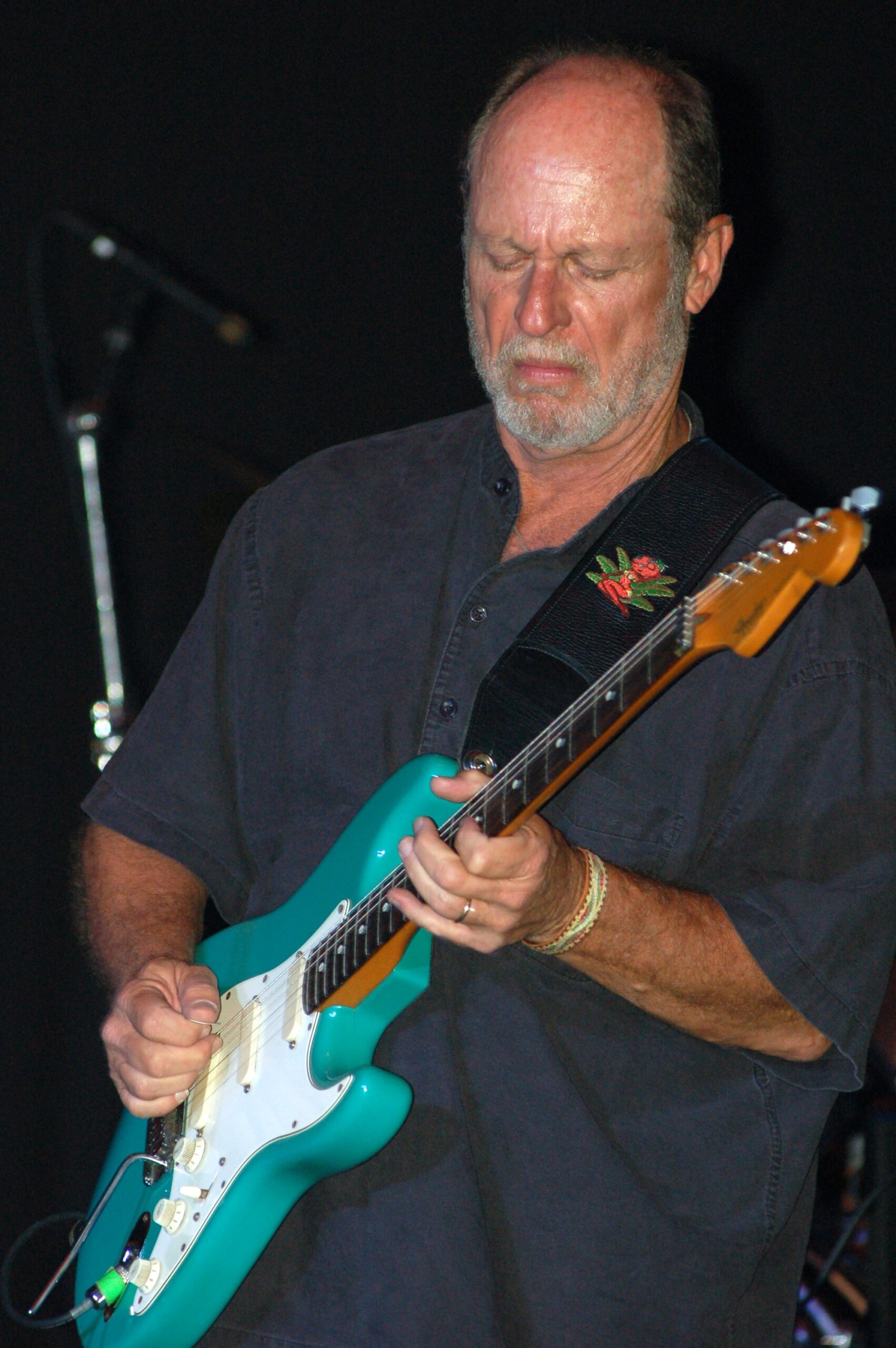
Little Feat without Paul Barrere is like a crawfish étouffée without the crawfish — technically you’ve still got a dish, but something essential and irreplaceable is missing. From the moment he joined the band for Sailin’ Shoes in 1972 and became a full creative partner by Dixie Chicken (1973), Barrere was one of the secret weapons of American rock’s most gloriously unpredictable band. While Lowell George got — and deserved — the lion’s share of the slide guitar headlines, Barrere was the engine underneath, the rhythm foundation, the second guitarist who understood instinctively that his job was to make the whole machine run smoother and hit harder. And then, when George’s personal circumstances pulled him increasingly out of the picture in the mid-to-late 1970s, Barrere stepped into the creative vacuum with an authority that kept Little Feat operational as a serious musical proposition.
The Journey
Gear Timeline
His gear tells the story of a player rooted in the American rock and R&B traditions — Fenders, semi-hollows, a healthy respect for clean tone and dynamics, and an effects approach built on expression rather than excess. Paul Barrere died on October 26, 2019, leaving behind a body of work with Little Feat that will be studied and loved for as long as people care about what American rock music can do at its absolute best. Here’s the full breakdown of how he built his sound.
Background
Paul Barrere was born on July 3, 1948, in Burbank, California — the kind of Southern California upbringing that in the late 1950s and 1960s meant sun, surf, and a radio full of R&B, country, and early rock’n’roll coming out of stations that didn’t draw the genre distinctions their corporate successors would later impose. He absorbed it all, and the eclecticism never left him. By the time he joined Little Feat in 1972, he was already a technically accomplished player with a wide stylistic range and, crucially, the musical intelligence to deploy that range in service of the song rather than his own ego.
Little Feat in the 1972–1979 period — the original run — was one of the genuinely exceptional American rock bands of the era. Lowell George’s songwriting, slide guitar, and vocals gave the band its identity; the rhythm section of Richie Hayward and Kenny Gradney gave it its groove; but Barrere and keyboardist Bill Payne gave it the harmonic depth and textural variety that elevated it from a great roots-rock band to something more complex and more lasting. The albums Dixie Chicken (1973), Feats Don’t Fail Me (1974), The Last Record Album (1975), and Time Loves a Hero (1977) are the core documents — each one a demonstration of what happens when musicians of this calibre work together long enough to develop a true collective voice.
After Lowell George’s death in June 1979, Little Feat went on hiatus. Barrere recorded solo material and worked with other artists through the 1980s before Little Feat reformed in 1987 with a new lineup, Barrere now serving as the primary guitarist and a central creative figure alongside Payne. The reformed Feat — releasing albums including Let It Roll (1988), Shake Me Up (1991), Ain’t Had Enough Fun (1995), and Raw Tomatoes (2015) — maintained a remarkably high standard of musicianship and remained a genuinely beloved live act. Barrere played with Little Feat until his death, finishing his last recording sessions with the band shortly before passing.
The Rig: Paul Barrere’s Guitars, Amps, and Effects
Guitars
The semi-hollow Gibson ES-335 was Barrere’s most characteristic and frequently photographed instrument across his career with Little Feat. The ES-335TD — “Twin Dual-coil pickups, Double cutaway” — in its mid-1960s configuration represented the instrument’s transition from dot-inlay necks (1958–1962) to the block-inlay configuration of 1962 onward. A mid-1960s ES-335 specification: laminated maple top, back, and sides (three-ply construction) with a solid maple centre block running the full internal length of the body to eliminate feedback and add sustain; a bound, double-cutaway body with Florentine cutaway horns; a 24.75-inch scale length mahogany neck (later changed to maple) with a bound rosewood fretboard and mother-of-pearl block inlays; a Tune-O-Matic bridge with a stop-bar tailpiece (replacing the earlier trapeze tailpiece from 1964 onward); and a pair of Gibson Patent Number humbuckers — the production successor to the PAF, wound to similar specifications (7.5k–8.5k ohms DC resistance, Alnico II or Alnico V rod magnets) but with a patent number stamped on the base plate. The ES-335’s tonal character — warm, airy, and complex with the hollow wings contributing acoustic resonance, the centre block preventing uncontrolled feedback, and the Patent Number humbuckers providing harmonic richness — was ideally suited to Little Feat’s blend of rock, R&B, funk, and country. Barrere used his ES-335 throughout the band’s classic period and continued using ES-335 variants through the reformed Feat’s career.
Fender Stratocasters — both pre-CBS (pre-January 1965) and early CBS-era examples — were central to Barrere’s tonal arsenal, providing the bright, transparent single-coil counterpoint to the ES-335’s warm humbucker character. A 1964 pre-CBS Stratocaster specification: alder body (lighter, more balanced tone than ash), maple neck with a rosewood “round-lam” fretboard (the curved slab rosewood fretboard introduced in late 1962), three staggered-pole Alnico V single-coil pickups wound to approximately 5.8k–6.2k ohms DC resistance, a three-way selector (five-way not yet standard), Fender synchronised tremolo with six stamped-steel saddles, and nitrocellulose lacquer finish. The pre-CBS Strat’s Alnico V pickups produce a brighter, more dynamic sound than early Alnico III examples (used pre-1956) and the ceramic-magnet pickups introduced on some later production models. Barrere used Strats for cleaner, more funk-influenced rhythm work and for specific lead textures where the ES-335’s warmth would have been excessive.
Telecasters appeared consistently in Barrere’s live setup, particularly for the more country-influenced material in Little Feat’s catalogue. A mid-1960s Telecaster specification: ash or alder body, maple neck with either a rosewood fretboard or a slab maple board (depending on year), the original three-saddle bridge assembly with the distinctive Tele bridge single-coil pickup (wound to approximately 7.0k–7.5k ohms, significantly hotter than the neck pickup at 5.5k–6.0k ohms, producing the characteristic Tele “twang” with strong high-frequency content and percussive attack), and a top-loading or through-the-body stringing configuration. The Telecaster’s asymmetric pickup response — the bridge pickup’s aggressive, bright character versus the neck pickup’s warm, almost hollow-body-like quality — gave Barrere enormous tonal variety from a single instrument, and the Tele’s exceptional note articulation suited the rhythmically complex, polyrhythmic approach that Little Feat’s music demanded.
Vintage Les Paul Standards — “burst” configuration with sunburst finish, carved maple top, mahogany body and neck, and PAF humbuckers wound to the characteristic 7.5k–9.0k ohm range — appear in documentation of Barrere’s recording work, particularly for heavier, more sustained lead passages where the ES-335’s feedback characteristics at high volume would have been problematic. The Les Paul Standard’s solid mahogany/maple construction gives a fuller, more compressed sustain than the semi-hollow ES-335, with less of the acoustic bloom but more of the direct, physical impact that certain lead passages require.
While Lowell George was the primary slide guitarist in Little Feat’s classic period, Barrere also played slide — both in the studio and increasingly live as he assumed more of the slide duties after the band’s reformation. He used resonator instruments (Dobro-style), conventional electric guitars with a raised action for slide playing, and occasionally lap steel configurations. His slide approach was blues-influenced but filtered through the same eclectic, R&B-informed sensibility that characterised all his playing.
For the acoustic passages that appeared in Little Feat’s recordings and live performances, Barrere used Guild dreadnought and jumbo acoustics — Guild’s US-made instruments of the 1960s and 1970s featured Sitka spruce tops with mahogany or rosewood back and sides, producing a full, warm acoustic tone with excellent projection. Guild’s acoustic construction used a unique scalloped X-bracing pattern that contributed to the instruments’ characteristic warmth and sustain.
Barrere used light-to-medium gauge strings — most likely Ernie Ball Regular Slinkys (.010–.046) or GHS Boomers (.010–.046) — consistent with a player who needed to balance bending ease with the tonal weight required for full chord voicings in a dense band context. For slide work, slightly heavier gauges (.011–.052) provided better tone and intonation under a slide.
Amps
The blackface Fender Twin Reverb — specifically the AB763 circuit variant introduced in 1964 — was central to Barrere’s clean and semi-clean tone. The AB763 Twin Reverb specification: two 6L6GC output tubes producing approximately 85 watts RMS (considerably louder than its rating in practice), two 12AX7 preamp tubes, a 12AT7 phase inverter, a tube-driven reverb circuit using a 12AT7 driver and a 12AX7 recovery stage, a tube-driven tremolo circuit, and the characteristic Fender blackface tone stack with bass, middle, and treble controls. The 6L6GC output tube (manufactured by RCA, Sylvania, or GE in original blackface examples) produces a characteristically American clean tone — bright, glassy, and transparent with considerably more clean headroom than British EL34-based amplifiers. The Twin Reverb’s extended clean headroom made it ideal for the funk-influenced, dynamics-sensitive rhythm playing that Little Feat demanded: the amp stays clean when you need clean, and the guitar’s volume control handles the transitions. Barrere ran his Twin into the factory-fitted Jensen C12N or Oxford 12L6 12-inch speakers — both are moderate-efficiency ceramic-magnet designs that complement the blackface circuit’s bright, open character. He sometimes used a pair of Twin Reverbs for stereo live rigs in the reformed Feat period.
The smaller Fender Deluxe Reverb — 22 watts from two 6V6GT output tubes, AA763 circuit — appeared in Barrere’s studio setup and smaller live rigs. The 6V6GT output tube has a different character from the 6L6GC: lower headroom, earlier and softer breakup, and a slightly warmer, less bright clean tone. The Deluxe Reverb at moderate-to-high volume produces a naturally overdriving clean tone with excellent touch sensitivity — the breakup responds directly to pick attack, making it ideal for players who use dynamics expressively. The AA763 circuit’s reverb and tremolo circuits are the same design as the larger Twin but scaled to the lower power level, giving a rich, organic spring reverb at lower overall volume.
For heavier material and the more rock-forward direction some of the reformed Little Feat’s catalogue took, Barrere used Marshall JMP Master Volume heads — specifically the 2203 100-watt version introduced in 1975. The JMP 2203 was Marshall’s first production amplifier to feature a master volume control (a post-phase-inverter master volume, or PPIMV, which allows the preamp to be driven harder independently of the output stage volume), using four EL34 output tubes and three ECC83 preamp tubes in a modified 1959 Plexi topology. The 2203’s higher-gain preamp section delivers more distortion at lower volume than the earlier Plexi designs, making it a more practical live and studio tool without sacrificing the essential Marshall tonal character. Barrere used the 2203 into Marshall 4×12 cabinets with Celestion G12-65 speakers — the 65-watt Celestion, introduced in 1976 as a higher-power alternative to the 25-watt Greenback, has a brighter, more modern character with less compression and more top-end extension.
Mesa/Boogie amplifiers — which originated in Randall Smith’s modification of Fender Princeton circuits to deliver far higher gain from the preamp stage — appeared in Barrere’s rig from the mid-1970s onward, consistent with their adoption by the Southern California rock community of which he was a part. The Mesa/Boogie Mark I (circa 1972–1978) used 6L6GC output tubes (maintaining the American tonal character of the Fender circuits it descended from), a highly modified preamp with cascaded gain stages producing genuine high-gain overdrive from a single channel, and the distinctive Mesa/Boogie graphic EQ (a five-band equaliser in the effects loop). The Mark II (introduced 1978) added a second channel and additional gain stages. The Mesa/Boogie’s combination of American clean tone at low gain settings and singing, compressed overdrive at high gain settings gave Barrere a versatile tool that complemented his Fender amplifiers.
Effects
The original MXR Phase 90 in script-logo configuration — four J-FET transistors (typically 2N5952 or equivalent) in a cascaded all-pass filter topology, producing a four-stage phase shift modulated by a single LFO — was a foundational component of Barrere’s rhythm tone. The script-logo Phase 90 (produced approximately 1974–1977, distinguished by the handwritten MXR logo and slightly different resistor values than the later block-logo version) has a warmer, less aggressive phase character than the later production version. The Phase 90’s single “Speed” control adjusts the LFO rate from approximately 0.5Hz (very slow, swelling sweep) to 10Hz (fast, vibrato-like modulation). At medium speeds, the Phase 90 adds a dimensional quality to chord playing that sits particularly well in a dense ensemble context — it creates separation and movement without obscuring the fundamental tone. Barrere used the Phase 90 on both clean and overdriven settings for rhythmic texture.
The MXR Dynacomp — a VCA-based compressor using the CA3080 operational transconductance amplifier (OTA) chip in a feed-forward compression topology — was used by Barrere for sustain and dynamic control on clean and slide passages. The Dynacomp’s two-control interface (Output and Sensitivity) makes it deceptively simple: the Sensitivity control sets the compression threshold and ratio simultaneously (higher sensitivity = more compression), while the Output control compensates for the gain reduction. The CA3080 OTA produces a characteristic “squash” effect on transients that is immediately identifiable on recordings, particularly on clean Strat or Tele tones where the initial pick attack is compressed into a sustained, even signal. Used subtly (Sensitivity at 7–8, Output at unity), it adds sustain and evening to clean tones without obvious compression artefacts. The script-logo version (circa 1975–1977) uses slightly different resistor values than later production that give a marginally more transparent compression character.
The original Electro-Harmonix Electric Mistress — a bucket-brigade device (BBD) flanger using MN3007 or SAD1024 BBD chips (depending on production year), producing a modulated comb filter effect — appeared in Barrere’s rig. The Electric Mistress’s “Filter Matrix” switch allows the effect to be locked at a specific phase position (removing the modulation and producing a fixed comb filter, or “jet flange” effect), while the “Flanger” mode produces the sweeping, jet-like modulation associated with the device. The BBD-based analog flanger produces a more organic, less sterile effect than digital flanger simulations due to the BBD’s characteristic frequency response non-linearities and noise floor.
The Dunlop Cry Baby GCB95 — using a Hot Potz II potentiometer, a Halo inductor (replacing the earlier Fasel inductor of the original Thomas Organ/Vox wah), and an updated circuit topology — was Barrere’s primary wah pedal in later years. The GCB95’s tonal sweep, from approximately 400Hz (toe back) to 2.2kHz (toe forward), is slightly brighter and more aggressive than the earlier Vox V846 design, reflecting the different inductor characteristics and component values. Barrere used the wah for expressive lead work and for funk-influenced rhythm playing where the wah’s bandpass filter character complements the rhythmically complex patterns that Little Feat’s music demands.
The Boss CE-1 — Boss’s first pedal, introduced in 1976, based on the chorus circuit from the Roland Jazz Chorus JC-120 amplifier and using MN3002 BBD chips for the delay line — provided Barrere with chorus and vibrato effects for specific textural purposes. The CE-1’s chorus circuit produces a warm, thick modulation with a 12–15ms delay time, split into two paths (one dry, one modulated) for stereo operation. The BBD-based circuit’s characteristic noise and frequency roll-off at higher frequencies gives the chorus a warm, slightly degraded quality that integrates better with valve amplifiers than cleaner digital alternatives.
The Electro-Harmonix Big Muff Pi — a four-transistor fuzz/sustain pedal using two clipping stages with silicon transistors (typically 2N5133 or BC239C, depending on production batch) in a topology that produces a characteristically smooth, sustained fuzz with a pronounced mid-scoop — appeared in Barrere’s lead setup. The version 2 and 3 Big Muff (the “Ram’s Head” variants, circa 1973–1977, named for the distinctive printed graphic on the enclosure) use BC239C transistors and specific capacitor values that produce a slightly less scooped, more harmonically complex character than the later NYC reissue. The Big Muff’s tone control sweeps from warm and dark (counterclockwise) to bright and cutting (clockwise), providing significant tonal flexibility for lead work.
The Roland RE-201 Space Echo — a combination tape echo and spring reverb unit using a 1/4-inch tape loop with three playback heads (allowing delay times from approximately 50ms to 500ms in various combinations), a spring reverb tank, and a tube-style preamp stage — was used by Barrere for studio recording and selective live application. The RE-201’s tape-based echo produces the same characteristic warmth, pitch modulation (wow and flutter), and progressive high-frequency roll-off with repeats that makes tape echo fundamentally different from digital alternatives. The RE-201’s spring reverb circuit adds a bright, percussive reverb character that complements the tape echo’s warmth. The selector switch allows twelve different combinations of the three playback heads and the spring reverb, giving considerable tonal variety from a single unit.
Playing Style & Tone Philosophy
Paul Barrere was the quintessential band guitarist — a player whose greatness was expressed most completely in context rather than in isolation. This is not a criticism; it’s one of the highest compliments you can pay a musician who works in a collaborative format. His ability to hear what a given arrangement needed and provide exactly that — not more, not less, not a demonstration of technique but a piece of music — is what made him irreplaceable in Little Feat’s chemistry.
His rhythm playing was rooted in the American traditions of R&B, soul, and country rather than the British blues-rock vocabulary that defined many of his contemporaries. This gave his guitar playing a fundamentally different quality: less power-chord aggression, more chord voicing sophistication, more attention to inner voices and the way chords interact with bass and keyboards in a complex ensemble. Little Feat’s music demands guitarists who understand harmony rather than merely tonnage, and Barrere’s voicing choices — often using partial chords, inversions, and upper-structure additions rather than root-position power chords — gave the band’s arrangements their characteristic harmonic interest.
His clean tone on the blackface Fender amplifiers was exceptional — a transparent, dynamic sound that responded to his pick attack with the immediacy of a fine acoustic instrument. He understood that the clean tone is not merely the absence of distortion but a positive quality in itself, with its own expressive range. The compression of the MXR Dynacomp, the movement of the Phase 90, the spatial dimension of the spring reverb — all of these were tools for sculpting the clean tone into something more than just “clean guitar.”
His relationship with slide guitar evolved significantly across his career. While Lowell George’s National Steel slide approach was the defining sound of the classic Feat, Barrere developed a different slide vocabulary — more influenced by standard electric slide technique than George’s unique approach — that served the reformed band well from 1987 onward. His slide tone emphasised clarity and melodic definition rather than the thick, bottleneck-heavy sound George pursued, and he used higher, more standard action setups rather than George’s extremely low, delta-blues-influenced configuration.
Tonally, Barrere was a pragmatist. He used the right tool for the job without ideological commitment to any particular approach — Fenders for clean and semi-clean work, Gibsons for heavier and more sustained passages, Mesa/Boogie when he needed high gain without the volume demands of a Plexi. His effects were deployed functionally rather than as a stylistic statement: the Phase 90 for rhythm texture, the Dynacomp for slide sustain and clean evening, the Big Muff for specific lead passages, the wah for expression. Nothing in the chain was there for its own sake.
How to Sound Like Paul Barrere
Guitar Approach
A Gibson ES-335 — either a vintage example or a modern Gibson ES-335 Dot or ES-335 Studio — is the correct starting point for Barrere’s primary tone. Modern alternatives include the Epiphone ES-335 Pro (with aftermarket humbuckers — Seymour Duncan Seth Lover SH-55 or Gibson ’57 Classics — for improved tonal authenticity) or the D’Angelico Excel DC. For the Strat and Tele tones, a Fender American Vintage II 1961 Stratocaster or American Professional II Telecaster with period-appropriate Alnico V pickups will provide the essential single-coil character.
Use a medium-gauge pick (0.73mm–0.88mm) and focus on consistent pick angle — Barrere’s attack was firm but not aggressive, producing a clear transient without harsh edge. Use the guitar’s tone control as an active musical tool rather than leaving it full up: rolling the tone back to 7–8 on the ES-335’s neck pickup produces a warm, quasi-acoustic quality ideal for the melodic passages in songs like “Willin'” or “Long Distance Love.”
Amp Approach
A blackface Fender Twin Reverb — or a quality reissue (Fender ’65 Twin Reverb reissue, Tone King Imperial MkII, or a Carr Raleigh) — is the foundation of Barrere’s clean tone. Run it relatively clean with the volume between 4–6, letting the dynamics of the playing produce the tonal variation rather than relying on the amp’s natural overdrive. Add a Mesa/Boogie Mark-series head (or a Boogie clone like the Ceriatone Centura or Two-Rock Studio Pro) for heavier passages.
| Control | Setting (0–10) | Notes |
|---|---|---|
| Volume (blackface Twin) | 4–6 | Clean to edge-of-breakup — the 6L6 twin stays clean remarkably long |
| Bass | 4–5 | Controlled — ES-335 has inherent warmth; don’t compound it |
| Middle | 6–7 | Present without honk — Little Feat’s music needs midrange definition |
| Treble | 6–7 | Bright enough for single-coil clarity, not harsh with humbuckers |
| Reverb (amp) | 3–4 | The blackface spring reverb is beautiful — use it generously but not soakingly |
| Presence | 4–5 | Moderate — adds definition without brittleness through the Jensen speakers |
| Phase 90 Speed | 3–4 (slow) | Slow, dimensional sweep for rhythm chord work — not fast wobble |
| Dynacomp Sensitivity | 7–8 | Moderate compression for slide sustain and clean evening |
Run the MXR Phase 90 (script logo or a Wampler Velvet Fuzz for a slightly warmer alternative) before the amp for rhythm texture. Add the MXR Dynacomp early in the chain for clean compression. Use the Big Muff Pi (or an Electro-Harmonix Nano Big Muff, Ram’s Head reissue) for specific fuzz lead tones, set with the tone around 9 o’clock for the characteristic warm/mid-cut character. Tape echo simulation (Strymon El Capistan in tape mode, 200–350ms, one repeat, 20% mix) for lead depth.
Influence & Legacy
Paul Barrere’s influence is the kind that travels in the bloodstream rather than the headlines — the influence of a player who defined what good rhythm guitar playing in a complex American rock band should sound like, and who did it so consistently and so musically that subsequent generations absorbed the lessons without necessarily being able to name the source. The players who listen carefully to the Little Feat catalogue — and serious players do — encounter a master class in how a second guitarist functions: how to complement rather than compete, how to add harmonic depth without harmonic congestion, how to make the whole greater than the sum of its parts.
His contribution to the craft of electric rhythm guitar in the context of American roots rock — drawing on R&B, country, funk, and blues simultaneously without defaulting to any one of them as the primary vocabulary — was a genuine artistic achievement. The specific combination of the ES-335’s warm humbucker character, the blackface Fender’s clean transparency, and the rhythmically sophisticated voicing choices he brought to Little Feat’s music created a template that players in the Americana, roots rock, and blues-rock traditions have drawn from extensively.
The comparison with Lowell George is inevitable and important: two guitarists in the same band with fundamentally different approaches who together created something neither could have produced alone. George was the visionary, the radical, the inventor of a slide vocabulary unlike anyone else’s; Barrere was the architect, the builder, the player who turned George’s ideas into a functioning structure. The parallel with Fred Tackett — who joined Little Feat in 1987 and became Barrere’s musical partner in the reformed band — illuminates how the tradition Barrere helped establish was continued and developed through a new collaborative dynamic. And the broader connection to Ry Cooder — another Southern California guitarist rooted in Americana and deeply committed to the meeting point of multiple American traditions — places Barrere in the company of the players who collectively defined what serious American roots guitar could aspire to.
Frequently Asked Questions: Paul Barrere Guitars & Gear
What was Paul Barrere’s main guitar?
Paul Barrere is most closely associated with the Gibson ES-335, particularly mid-1960s examples with Patent Number humbuckers and the block-inlay rosewood fretboard. The ES-335’s semi-hollow construction — laminated maple body with solid maple centre block — gave him the warmth and acoustic complexity of a hollow body with the sustain and feedback resistance required for high-volume rock performance. He also used vintage Fender Stratocasters and Telecasters extensively, particularly for the cleaner, single-coil tones that Little Feat’s R&B-influenced material demanded.
What amplifiers did Paul Barrere use with Little Feat?
The blackface Fender Twin Reverb (AB763 circuit, 6L6GC output tubes, Jensen or Oxford 12-inch speakers) was central to Barrere’s clean tone. He also used the smaller Fender Deluxe Reverb (22 watts, 6V6GT output tubes) for studio work and smaller venues, Mesa/Boogie Mark I and II heads for higher-gain passages, and Marshall JMP 2203 Master Volume heads for rock-forward material. The Twin Reverb’s exceptional clean headroom and dynamic response were ideally suited to the ensemble playing demands of Little Feat’s music.
Did Paul Barrere play slide guitar?
Yes, particularly in the reformed Little Feat from 1987 onward, where he assumed increasing slide guitar responsibilities as the band’s primary guitarist. His slide approach was more conventionally electric-blues-influenced than Lowell George’s distinctive lap-steel-derived technique, using glass or metal slides on conventionally set-up instruments rather than George’s extreme-action bottleneck approach. He used resonator instruments, standard electrics with raised action, and occasionally lap steel configurations for slide playing.
What effects did Paul Barrere use?
Barrere’s core effects included the MXR Phase 90 (script-logo version, four-stage J-FET phaser) for rhythm texture; the MXR Dynacomp (CA3080 OTA compressor) for clean compression and slide sustain; the Electro-Harmonix Big Muff Pi (Ram’s Head version, silicon transistor fuzz) for specific lead tones; the Dunlop Cry Baby wah for expressive lead work; the Boss CE-1 Chorus Ensemble (MN3002 BBD-based) for chorus textures; and the Roland RE-201 Space Echo for tape delay in studio contexts. His effects philosophy was functional rather than stylistic — each device served a specific musical purpose.
How did Barrere’s role in Little Feat change after Lowell George’s death?
After Lowell George’s death in June 1979 and the subsequent reformation of Little Feat in 1987, Barrere became the band’s primary guitarist and a central creative figure, sharing songwriting duties with keyboardist Bill Payne. He assumed the slide guitar responsibilities that George had carried, developing his own approach to that vocabulary while also expanding his rhythm and lead playing to fill the creative space George had occupied. The reformed Feat’s recordings demonstrate Barrere’s growth as a frontman-guitarist — more assertive, more varied tonally, and increasingly confident in his own musical identity rather than in his role as a complement to George’s vision.
What made Paul Barrere’s rhythm guitar playing distinctive?
Barrere’s rhythm playing was distinguished by its harmonic sophistication — his chord voicing choices drew on R&B, jazz, and country vocabulary simultaneously, using partial chords, inversions, and upper-structure additions rather than root-position power chords. The combination of this voicing approach with the ES-335’s warm harmonic character and the blackface Twin’s clean transparency produced a rhythm guitar sound of exceptional depth and musicality. His use of dynamics — the variation in attack weight and volume across a performance — was also remarkable: he played quietly and attentively when the arrangement demanded it, adding weight and presence when the music called for it.
What is Paul Barrere’s most celebrated guitar performance?
The live recordings on Waiting for Columbus (1978) — recorded at the Rainbow Theatre in London and the Lisner Auditorium in Washington, D.C. — represent Barrere at his peak in the classic Little Feat period. His rhythm guitar work throughout the album demonstrates exactly the qualities that made him exceptional: the interplay with Lowell George’s slide, the harmonic depth of his chord voicings, and the dynamic sensitivity of his playing in a live ensemble context. “Dixie Chicken,” “Fat Man in the Bathtub,” and “Spanish Moon” are particular standouts for studying how Barrere’s guitar functioned within the band’s collective sound.
Related stories
Yngwie Malmsteen Guitars & Gear: The Complete Guide to the Shred Master’s Rig
Yngwie Malmsteen's guitars, amps, and effects — the complete guide. The Duck Stratocaster, scalloped fretboard, Marshall wall, DiMarzio HS3, and how to nail that neoclassical metal tone.
Sylvain Sylvain Guitars & Gear: The Complete Guide to the New York Dolls’ Gretsch, Les Paul Junior & Automatic Guitar Proto-Punk Rig
Sylvain Sylvain guitars & gear: New York Dolls guitarist. Les Paul Junior 'automatics', Gretsch Golden Anniversary, white Les Paul Custom stolen by Steve Jones — proto-punk tone.
Ted Nugent Guitars & Gear: The Complete Guide to the Motor City Madman’s Byrdland Rig
Ted Nugent guitars & gear: the Motor City Madman's Byrdland rig. 12 vintage Gibson Byrdlands, Fender Twin Reverbs, Peavey 6505, zero effects, and the Stranglehold tone.