
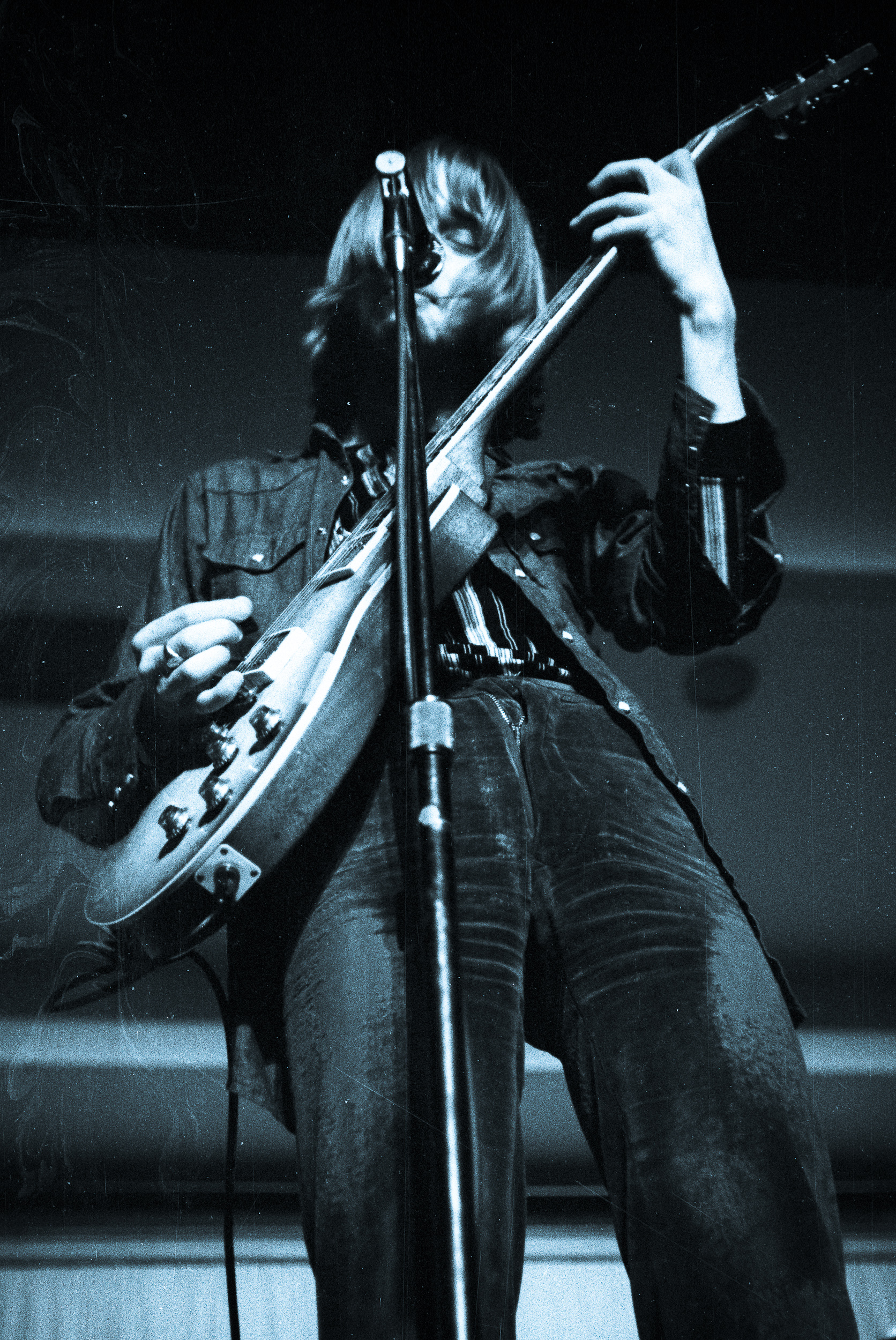
Of all the tragic figures in the long, strange history of Fleetwood Mac — a band that has accumulated personal disasters the way other bands accumulate gold records — Danny Kirwan might be the most purely heartbreaking. He joined the band in 1968 at the age of eighteen, contributed some of the most beautiful and melodically inventive guitar playing in British blues-rock history, and was fired in 1972 after a breakdown during a tour. He made a handful of solo albums of variable quality and circumstance before his life unravelled entirely; he spent years homeless and struggled severely with mental illness before his death in June 2018. What he left behind musically, though, is extraordinary — a body of work that rewards the closest attention and that demonstrates, with painful clarity, what was lost when it ended.
The Journey
Gear Timeline
Kirwan was not the heavy-handed, riff-driven kind of British blues-rock guitarist. He was melodic, delicate, precise — a player whose natural inclination was toward beauty rather than brutality, who heard the emotional possibilities in a sustained note bent a quarter-tone sharp and held there with a trembling vibrato that sounds like it’s about to break. His gear reflected this sensibility: not the biggest amplifiers, not the most aggressive guitars, not the most extreme effects. Just the right tools to make a very specific kind of music as well as it could possibly be made.
Background
Danny Kirwan was born on May 13, 1950, in Brixton, South London. He was a self-taught guitarist who developed his skills rapidly through the mid-1960s British blues scene, and by the time Peter Green invited him to join Fleetwood Mac in August 1968 — at an age when most musicians are still figuring out barre chords — he was already a confident, fully-formed player with his own distinct voice. The invitation came after Green heard Kirwan playing with a local band called Boilerhouse; the story goes that Green was sufficiently impressed to bring him in as a third guitarist alongside himself and Jeremy Spencer, a configuration almost unprecedented in the British blues context.
The three-guitar Fleetwood Mac — Green, Spencer, and Kirwan — recorded Mr. Wonderful (1968) and began work on what would become some of the band’s most important material. Green’s departure in May 1970 left Kirwan as the principal melodic lead guitarist, a role he expanded into with considerable authority on Kiln House (1970, with Spencer) and then — after Spencer’s own departure in early 1971 — as the dominant guitar voice on Future Games (1971) and Bare Trees (1972). These two albums represent the peak of Kirwan’s recorded output: atmospheric, melodically adventurous, rhythmically sophisticated records that sound unlike anything else being made in British rock at the time. The guitar playing on Bare Trees in particular — on tracks like “Bare Trees,” “Child of Mine,” and “Danny’s Chant” — is among the finest melodic rock guitar playing of the entire era.
His firing in August 1972 — reportedly after he refused to go on stage at a show in New York, smashed his guitar backstage, and physically assaulted other band members — marked the end of his significant musical contribution. He recorded three solo albums: Second Chapter (1975), Hello There Big Boy! (1979), and Danny Kirwan (1979). The first is a genuinely good record; the others are more troubled. After that, the documented story becomes increasingly sparse and increasingly sad. He was inducted into the Rock and Roll Hall of Fame as a member of Fleetwood Mac in 1998, reportedly unaware of the honour.
The Rig: Danny Kirwan’s Guitars, Amps, and Effects
Guitars
Kirwan’s primary electric guitar — and the instrument most closely associated with his signature tone — was a 1959 Gibson Les Paul Standard. The 1959 Standard represents what many consider the finest single year of Les Paul production: the neck profile had evolved from the very round, fat “baseball bat” of 1958 toward the slightly slimmer but still substantial “slim taper” neck of 1960, landing in a middle ground that many players consider the most playable of any vintage Les Paul. Specification: one- or two-piece Honduras mahogany body with a hand-carved, book-matched AAA figured maple top; mahogany neck with rosewood fretboard, trapezoid inlays, and a 24.75-inch scale length; ABR-1 Tune-O-Matic bridge with a long aluminium stop-bar tailpiece; a pair of Seth Lover’s PAF humbucking pickups wound to approximately 7.5k–8.5k ohms DC resistance with Alnico II or Alnico V rod magnets and plain enamel-coated wire on the coils. The 1959 Standard’s tonal character is the benchmark against which virtually all other electric guitars are measured: the neck pickup produces a warm, singing, almost vocal tone with exceptional sustain and harmonic complexity; the bridge pickup delivers a bright, aggressive character with immediate attack and cutting power; the two pickups together in the middle position produce the balanced, full-range tone that Kirwan used for rhythm work. His specific 1959 example — finished in the original Heritage Cherry Sunburst (fading to various degrees depending on exposure) — is audible throughout the Fleetwood Mac recordings from 1968 to 1972 and on his solo work.
The Gibson Les Paul Custom in its 1957 “Black Beauty” configuration — finished in gloss black nitrocellulose lacquer with gold hardware, a three-piece maple neck (introduced for additional stability), an ebony fretboard, and a multi-binding treatment on both the body and neck — also appeared in Kirwan’s documented setup. The 1957 Custom’s pickup configuration differed from the Standard: the neck position used a PAF humbucker (Alnico II, wound similarly to the Standard’s neck pickup), while the bridge position used a Gibson P-490 or “staple” pickup — a rectangular single-coil design with Alnico magnet “staples” rather than conventional pole pieces, producing a distinctively bright, cutting bridge tone that differs from both the standard PAF humbucker and P-90 soapbar. Some 1957 Customs also featured a third pickup in the middle position. The ebony fretboard (harder and brighter than rosewood) contributed a slightly more focused, articulate attack to the Custom’s overall tonal character compared to the Standard.
A 1960 Les Paul Standard — with the slim taper neck profile (significantly thinner front-to-back than the 1958–1959 examples), Heritage Cherry Sunburst finish, and late-production PAF humbuckers transitioning toward the Patent Number spec — also appears in Kirwan documentation. The 1960 neck’s reduced depth (approximately 0.800 inches at the first fret versus approximately 0.870–0.920 inches for a 1959 example) gave a different playing feel that some players preferred for technical passages, and Kirwan used both neck profiles depending on the material being recorded.
For acoustic work — both in the studio and for the acoustic-influenced passages on records like Future Games — Kirwan used a Martin D-28 dreadnought. The Martin D-28 specification of the 1960s: Sitka spruce top (solid), Indian rosewood back and sides (replacing Brazilian rosewood from 1969 due to supply concerns), mahogany neck with a low-oval profile, 25.4-inch scale length, scalloped X-bracing (the original scalloped design providing enhanced top responsiveness and volume). The D-28’s tone — full, balanced, with strong fundamental and extended overtone series — suited Kirwan’s melodic sensibility perfectly. The acoustic fingerpicked passages on Bare Trees and Future Games demonstrate his D-28 tone: warm, resonant, with the natural compression of a great acoustic played with fingertips rather than pick.
A Gibson ES-335 — consistent with the instrument’s presence in virtually every British blues-rock guitarist’s arsenal of the period — appeared in Kirwan’s setup for specific studio and live applications where the semi-hollow body’s acoustic warmth and feedback characteristics suited the material. The early-1960s ES-335 specification, as detailed previously: laminated maple construction, solid maple centre block, PAF or early Patent Number humbuckers, dot or block inlays depending on year.
Late 1960s Fender Stratocasters — CBS-era examples from the 1967–1969 period with the “large headstock” (the enlarged peghead introduced in 1966, sometimes called the “CBS headstock”), maple or rosewood fretboard depending on specification, and the transitional pickup design using Alnico V staggered poles — appear in Kirwan’s documented live setup. The late-CBS Strat has a slightly different character from the pre-CBS examples: the larger headstock adds mass that subtly affects the instrument’s resonant characteristics, and the transition to ceramic magnets on some production examples (from 1970 onward) changed the pickup’s tonal character. Kirwan used the Strat for specific textural and tonal requirements that the Gibson’s warmer, rounder character could not provide.
Kirwan used light-gauge strings — most likely .009–.042 or .010–.046, consistent with a melodically-oriented player who needed easy bending access across the entire neck. His vibrato technique — a narrow, controlled trembling rather than the wide wrist vibrato of the blues tradition — suggests a player who kept string tension relatively low for maximum expressiveness. Gibson Sonomatic or Ernie Ball Super Slinky (.009–.042) strings are the historically appropriate choice.
Amps
Kirwan’s primary amplification during the early Fleetwood Mac period used Marshall 1959 Super Lead heads in the late-Perspex-panel (Plexi) configuration — four EL34 output tubes (typically Mullard xf2 or xf4 code production examples of the period), three ECC83 preamp tubes, the long-tailed pair phase inverter, and the characteristic passive tone stack. Run into Marshall 4×12 cabinets with Celestion G12M Greenback 25-watt speakers (ceramic magnet, 20oz, 75Hz resonant frequency), the Plexi’s natural compression and harmonic complexity suited Kirwan’s melodic approach — the amp’s saturation at high volume produced a sustained, singing quality that complemented his vibrato-rich lead style without obscuring the note definition he required for melodic passages. He ran the Plexi at somewhat lower input gain settings than the more aggressive players of the era, using the amp’s natural character rather than extreme overdrive.
The original tweed Fender Bassman in 5F6-A configuration — four Jensen P10R 10-inch speakers, 4x6L6 output tubes producing approximately 45–50 watts, the cathode-biased topology producing exceptional touch sensitivity — appeared in Kirwan’s studio setup, particularly for the more delicate, dynamically nuanced recording work on Future Games and Bare Trees. The Bassman’s lower headroom and softer compression characteristic compared to the Marshall Plexi gave a more intimate, responsive tone for passages where the Marshall’s volume demands would have been prohibitive in a recording context.
The blackface Twin Reverb — using 6L6GC output tubes at approximately 85 watts, the AB763 circuit with tube-driven reverb and tremolo — provided Kirwan with an exceptional clean platform for the more atmospheric, clean-toned passages in Fleetwood Mac’s evolving sound. The blackface Twin’s spring reverb was particularly important for Kirwan’s approach: he used reverb generously to create the spatial quality that characterises his best playing, and the Twin Reverb’s tube-driven spring reverb (using a 12AT7 driver stage, a long-spring Type 4 reverb tank, and a 12AX7 recovery stage) produces a warmer, more organic reverb than later solid-state or digital alternatives.
The original JMI-era Vox AC30 Top Boost — 30 watts from four EL84 output tubes in fixed-bias push-pull configuration, the Top Boost circuit adding independent treble and bass controls to the Normal channel’s modified tone stack, two 12-inch Celestion Blue (alnico) speakers (the T530 or “Blue Alnico,” 15 watts, using an Alnico V magnet producing approximately 100dB sensitivity) — was used by Kirwan for specific tonal textures. The EL84 output tube has a fundamentally different character from both the 6L6GC and EL34: higher gain, earlier saturation, a more compressed and harmonically complex breakup that occurs at lower volume levels. The Celestion Blue’s alnico magnet produces a characteristic “chime” — a bell-like quality in the upper midrange that is distinct from the ceramic-magnet Greenback’s more aggressive, compressed character. The AC30 through Celestion Blues gives a shimmering, naturally compressed clean-to-just-breaking-up tone that suited Kirwan’s melodic, subtly played approach on the more introspective Fleetwood Mac material.
Effects
The Vox V846 wah — Fasel inductor, 100k audio taper pot, BC109 silicon transistor, sweep from approximately 450Hz to 1.6kHz — appeared in Kirwan’s early Fleetwood Mac setup. His use of the wah was more restrained and melodically purposeful than many contemporaries: rather than using it as an aggressive rhythmic device, Kirwan employed it as an expressive filter, holding it at specific positions to accentuate particular frequencies in his lead lines — the “cocked wah” approach that emphasises a fixed frequency band and gives lead notes a vocal, nasal character.
The Vox Repeat Percussion — a transistor-based tremolo/vibrato pedal using a light-dependent resistor (LDR) circuit to modulate the signal amplitude — provided Kirwan with a warm, organic tremolo effect distinct from the more mechanical square-wave tremolos of some contemporary devices. The LDR-based amplitude modulation produces a soft, rounded tremolo wave shape with gentle attack and release characteristics, particularly suited to clean or lightly overdriven tones.
The germanium NKT275 Fuzz Face was present in Kirwan’s early setup, used selectively for specific lead passages requiring maximum sustain and harmonic density. His use of the Fuzz Face was more restrained than players like Hendrix who used it as a primary tone — Kirwan reached for the fuzz when a passage demanded it, using the interaction between the NKT275 transistors’ warm, cleaning-up-with-volume-rollback characteristic and his PAF Les Paul to produce a singing, vocal-quality fuzz that enhanced rather than replaced the guitar’s natural tone.
Consistent with the British blues-rock convention of the period, the Dallas Rangemaster Treble Booster — OC44 PNP germanium transistor, common-emitter configuration, frequency-selective upper-midrange boost — was used by Kirwan to push the front end of his Marshall and add harmonic richness to sustained lead notes. His application was subtler than Peter Green’s more aggressive use of the same device: Kirwan set the Rangemaster to add bloom and sustain rather than to drive the amp into severe clipping.
The Maestro Echoplex EP-2 — 12AX7 tube preamp, 1/4-inch tape loop mechanism, variable tape speed for delay time adjustment from approximately 80ms to 750ms — was a critical component of Kirwan’s studio tone. His use of tape echo was distinctive: he frequently set the EP-2 to short delay times (100–180ms) with one to two repeats at relatively high mix level, giving his lead notes a slightly doubled quality that increased their sense of space and dimension without producing a distinct echo effect. This approach — sometimes called “slapback with sustain” — is particularly audible on the lead guitar passages of Future Games and Bare Trees, where the guitar tone has a characteristic shimmer and depth that comes from the EP-2’s tape echo rather than reverb alone.
The Univox Uni-Vibe — four LDRs, single incandescent lamp, asymmetric phase modulation producing the rotating-speaker approximation — appeared in Kirwan’s later Fleetwood Mac setup as the band’s sound evolved toward a more atmospheric, studio-influenced direction. Kirwan used the Uni-Vibe on the Chorus setting (lower modulation depth, more chorus-like) rather than the Vibrato setting (full pitch modulation), adding dimensional movement to sustained chord passages and clean lead lines without the pronounced warble of the Vibrato mode.
The Roger Mayer Octavia — a fuzz/octave doubler circuit using a transformer-based frequency doubling topology to produce a signal one octave above the fundamental, mixed with the original fuzz signal — appeared in Kirwan’s studio use during the transitional period when Fleetwood Mac was moving from pure blues toward the more experimental, melodic direction of Future Games. The Octavia’s transformer-based octave generation produces a characteristically fuzzy, harmonically complex upper octave that differs from both the clean pitch shifting of modern octave pedals and the transistor-based octave generation of devices like the Tycobrahe Octavia clone. Roger Mayer built the original units by hand for Hendrix and then for other London-scene players, and the individual build variation between units gave each one a slightly different character.
Playing Style & Tone Philosophy
Danny Kirwan played the electric guitar as if it were a classical instrument — with the same precision, the same attention to tone production, the same belief that every note should be placed exactly where it was meant to be and given exactly the right amount of weight and duration. This is an unusual quality in a rock guitarist, and it gave his playing a finished, composed quality that was entirely his own. The solos on Future Games don’t sound improvised in the loose, spontaneous sense that many blues-rock solos do; they sound thought-through, sculpted, inevitable.
His vibrato was the defining characteristic of his technique — narrow, very fast, and produced primarily from the finger rather than the wrist. This finger vibrato has a different character from the wide, wrist-rotated vibrato of the blues tradition: it’s more delicate, more trembling, almost operatic in its emotional character. It sounds vulnerable rather than assertive, questioning rather than declarative. It’s the vibrato of a player who is not trying to demonstrate strength but to communicate feeling, and it is the most immediately identifiable element of Kirwan’s playing — you can recognise a Kirwan guitar solo from a few notes, before you’ve consciously identified the tone or the melodic content, from the vibrato alone.
His tone philosophy was built around clarity and dynamics. He did not pursue maximum gain or maximum volume — he pursued maximum expressiveness, which required the kind of amp and guitar setup that would respond to subtle variations in touch with immediate tonal change. A PAF Les Paul into a moderately driven Marshall Plexi or a blackface Fender through a spring reverb tank: these are tools that give you back exactly what you put in, amplified and shaped but not obscured. His use of the Echoplex EP-2’s tape echo to add dimension without obscuring note definition was a perfect expression of this philosophy — the echo enhanced the spatial quality of the tone without adding any additional gain or compression that would have reduced the touch-sensitivity he depended on.
He was also, by all accounts, a meticulous and instinctive arranger. The guitar parts on Bare Trees — particularly the instrumental passages and the more complex multi-tracked compositions — demonstrate a player who thought carefully about how guitar lines worked against each other and against the harmonic content of the full arrangement. This is not something you learn from blues records; it comes from a deeper engagement with music as composition rather than performance, and it is another of the qualities that made Kirwan genuinely unusual among his contemporaries.
How to Sound Like Danny Kirwan
Guitar Approach
A PAF-equipped Gibson Les Paul Standard is non-negotiable for the core Kirwan tone — specifically a neck pickup-forward approach using either a Gibson Custom Shop ’59 Les Paul, a Gibson Les Paul Standard with ’57 Classic pickups, or a quality PAF-voiced aftermarket pickup set (Throbak SLE-101, Wolfetone Dr. Vintage, or Seymour Duncan Seth Lover SH-55). The neck pickup is where Kirwan lived for melodic lead work: set the guitar’s neck pickup volume full up and tone at 7–8 for a slightly softened treble response that enhances the warmth of long, sustained notes.
Vibrato technique is the hardest thing to replicate and the most important. Kirwan’s finger vibrato — fast, narrow, produced from the tip of the fretting finger rolling rapidly toward and away from the headstock — requires dedicated practice to develop convincingly. Start slowly, isolating the finger movement from the wrist, and build speed gradually. The goal is a trembling, unstable quality to sustained notes — not wide and assertive, but close and emotional. This is the single most distinctive element of his playing and cannot be replicated by any gear choice.
Amp Approach
A Marshall Plexi (1959 reissue or quality clone: Ceriatone 1959, Friedman BE-50 Deluxe) set at moderate gain — input volume at 6–7, not cranked to maximum — paired with a blackface Fender Twin or Deluxe Reverb for the cleaner, more atmospheric passages. The key is using the Fender’s spring reverb generously: Kirwan’s spatial tone depends heavily on reverb, and the tube-driven spring reverb of a blackface Fender gives the right character. A Vox AC30 (or AC30-type pedal platform, like the Magnatone Panoramic Stereo) provides the chiming, EL84-saturated alternative for passages requiring that specific quality.
| Control | Setting (0–10) | Notes |
|---|---|---|
| Marshall Input Volume | 6–7 | Moderate Plexi saturation — musical, not aggressive. Kirwan was not a cranker. |
| Bass | 5 | Neutral — the Les Paul’s mahogany body provides sufficient low-end warmth |
| Middle | 7 | Forward mids for that singing, vocal lead quality |
| Treble | 5–6 | Bright enough for note definition, not harsh — neck pickup softens this naturally |
| Presence | 4 | Moderate — Kirwan’s tone was warm, not edgy |
| Fender Reverb (if using Twin) | 4–5 | Generous spring reverb — spatial depth was essential to his sound |
| Echoplex EP-2 delay time | 100–180ms | Short tape echo — quasi-double-tracking rather than distinct echo |
| Echoplex mix level | 25–35% | Present enough to add shimmer, not so much it blurs note definition |
Add a Rangemaster-type treble booster (Catalinbread CB30 or Analogman Beano Boost) for lead passages requiring maximum harmonic richness. Use the Fuzz Face (Dunlop Germanium Fuzz FFM2 or Analogman Sunface NKT275) selectively — Kirwan reached for fuzz rarely and purposefully, not as his default lead tone. A Uni-Vibe clone (Fulltone Mini Deja Vibe, Dunlop UV-1FC) on the Chorus setting at slow speed adds the dimensional quality of his later Fleetwood Mac recordings.
Influence & Legacy
Danny Kirwan’s influence is one of the most underacknowledged in British rock guitar history, which is in part a consequence of the circumstances of his life — a player who was removed from the public eye so completely and so early that his work could not accrue the ongoing reputation that comes from decades of continued presence. But the recordings remain, and they speak clearly to anyone who cares to listen.
His contribution to the concept of melodic lead guitar in a rock context was genuine and original. The playing on Future Games and Bare Trees showed a generation of British rock guitarists that lead playing didn’t have to be driven by blues pentatonics and power vibrato — that there was another way, more classical in its melodic sensibility, more intimate in its emotional register, and no less valid for the difference. Players who absorbed those records took those lessons into their own work in ways that are still audible decades later.
His relationship with Peter Green was one of the great musical partnerships of the British blues-rock era — two players of completely different temperaments and approaches who together created something larger than either could have produced alone. Green’s dark, restrained intensity and Kirwan’s luminous melodic invention complemented each other so completely that the records they made together have an almost uncanny internal coherence. The contrast with Jeremy Spencer — the third guitarist in the original three-guitar Fleetwood Mac — is equally instructive: Spencer was the raw, Elmore James-influenced slide player, Green was the emotional centre of gravity, and Kirwan was the melodic architect, and the three together gave the early Fleetwood Mac a tonal and expressive range that no two-guitar lineup could have matched. Looking beyond the Mac, the parallel with Danny Gatton — another player of extraordinary melodic and technical gifts whose personal difficulties kept him from the recognition his talent warranted — offers a melancholy but illuminating comparison of what happens when genuine musical genius exists alongside the kind of fragility that the music industry is singularly ill-equipped to support.
Frequently Asked Questions: Danny Kirwan Guitars & Gear
What guitar did Danny Kirwan play in Fleetwood Mac?
Danny Kirwan’s primary guitar throughout his Fleetwood Mac tenure was a 1959 Gibson Les Paul Standard — the legendary “burst” configuration with a sunburst finish, carved maple top over mahogany body, and a pair of Seth Lover’s hand-wound PAF humbucking pickups. These pickups, wound to approximately 7.5k–8.5k ohms DC resistance with Alnico II or Alnico V magnets and plain enamel-coated wire, produce the warm, harmonically complex tone that defines the classic British blues-rock sound. He also used a 1957 Les Paul Custom “Black Beauty” and, later in his Mac tenure, Fender Stratocasters and an ES-335.
What amplifiers did Danny Kirwan use?
Kirwan used Marshall 1959 Super Lead Plexi heads (four EL34 output tubes, long-tailed pair phase inverter) as his primary live amplification, run into Celestion G12M Greenback-loaded 4×12 cabinets. For cleaner, more atmospheric studio work — particularly on Future Games and Bare Trees — he used blackface Fender Twin Reverb (AB763 circuit, 6L6GC output tubes) and Fender Bassman heads, exploiting their touch-sensitive clean tones and the Twin’s exceptional tube-driven spring reverb. A Vox AC30 Top Boost (EL84 output tubes, Celestion Blue alnico speakers) also appeared in his setup.
What made Danny Kirwan’s vibrato so distinctive?
Kirwan’s vibrato was produced primarily from the fretting finger rather than the wrist — a technique inherited from classical guitar tradition rather than blues. This finger vibrato is narrower in pitch deviation and faster in rate than the wide, wrist-rotated vibrato typical of blues-derived rock players, giving his sustained notes a trembling, almost vulnerable quality that is immediately identifiable. The combination of this vibrato technique with the natural sustain of a PAF Les Paul through a moderately driven Marshall Plexi produced a singing, deeply emotional lead tone unlike any other player of his generation.
What echo effect did Kirwan use on the Fleetwood Mac albums?
Kirwan used a Maestro Echoplex EP-2 — a tube-preamplified tape echo unit using a 12AX7 tube preamp stage and a 1/4-inch tape loop mechanism — set to relatively short delay times (100–180ms) with one to two repeats at 25–35% mix level. This created a quasi-double-tracking effect on his lead guitar lines rather than a distinct echo, adding spatial depth and shimmer to sustained notes without blurring the melodic definition he needed. The EP-2’s tube preamp stage also added a subtle harmonic warmth to the signal even when the echo was set minimally, contributing to the characteristic dimension of his recorded tone.
Which Fleetwood Mac albums best showcase Danny Kirwan’s playing?
Bare Trees (1972) is the essential Kirwan document — his playing across that album, from the acoustic fingerpicking of “Spare Me a Little of Your Love” to the electric lead work on “Child of Mine” and the instrumental “Danny’s Chant,” represents his most complete and authoritative statement. Future Games (1971) is equally important for the atmospheric, melodic direction he was developing. For the earlier period with Peter Green, the album Then Play On (1969) — particularly Kirwan’s compositions “Like Crying” and “When You Say” — demonstrates his songwriting and playing at the moment he was first fully contributing to the band’s direction.
Did Danny Kirwan use any unusual guitar tunings?
Kirwan worked primarily in standard tuning, consistent with his Gibson Les Paul-centred approach and the blues-rock context in which he developed. He used open tunings for specific slide passages and acoustic pieces — open G and open D appear in documentation of his acoustic work — but his defining electric guitar vocabulary was developed in standard tuning. The melodic sophistication of his playing was achieved through chord voicing choices, position work, and phrasing rather than through alternative tuning systems.
How did Kirwan’s tone evolve from the Peter Green era to his solo work?
In the early Peter Green era (1968–1970), Kirwan’s tone was closer to the contemporary British blues-rock standard — Les Paul through Marshall Plexi, with the Rangemaster booster and Fuzz Face supplementing the amp’s natural drive. After Green’s departure, as Kirwan assumed greater creative control on Future Games and Bare Trees, his tone became more atmospheric and spacially complex: more reverb (blackface Fender Twin), more tape echo (Echoplex EP-2), and a greater emphasis on clean and lightly overdriven tones rather than heavy saturation. His solo records (Second Chapter, 1975) show a player exploring a cleaner, more studio-oriented approach influenced by the melodic rock direction Fleetwood Mac itself was moving toward in the mid-1970s.
Related stories
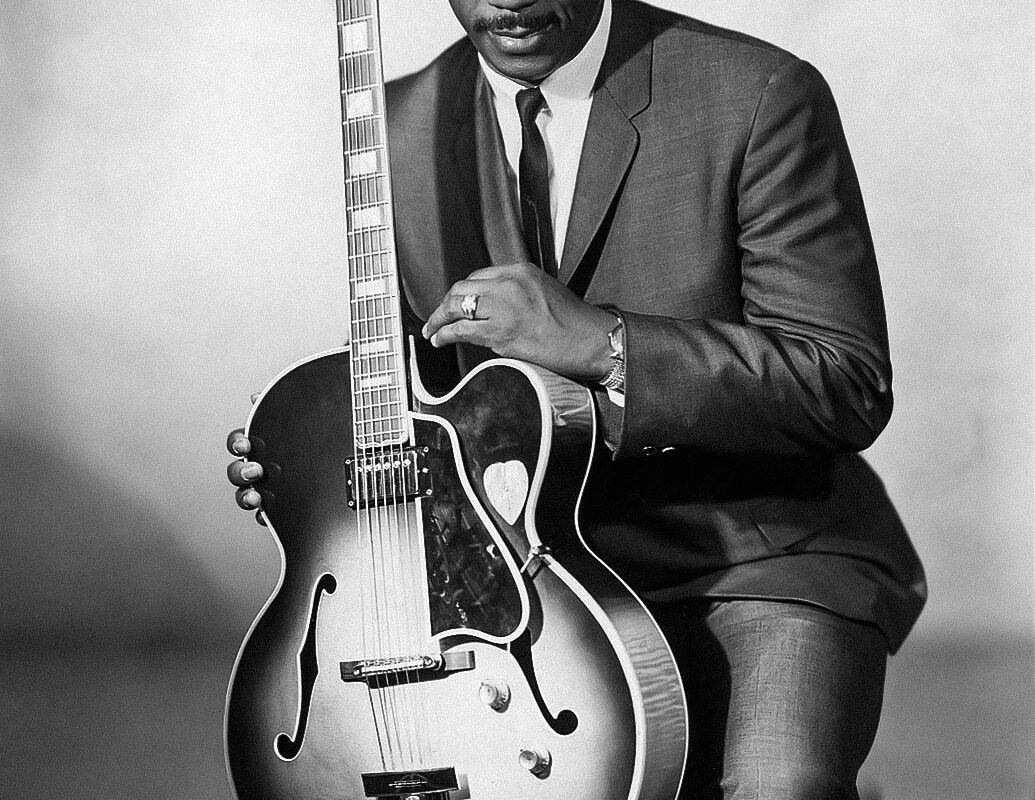
Wes Montgomery Guitars & Gear: The Complete Guide to the Jazz Master’s Rig
Wes Montgomery's guitars, amps, and effects — the complete guide. Gibson L-5 CES, Standel amps, thumb picking technique, flatwound strings, and how to nail that warm jazz tone.
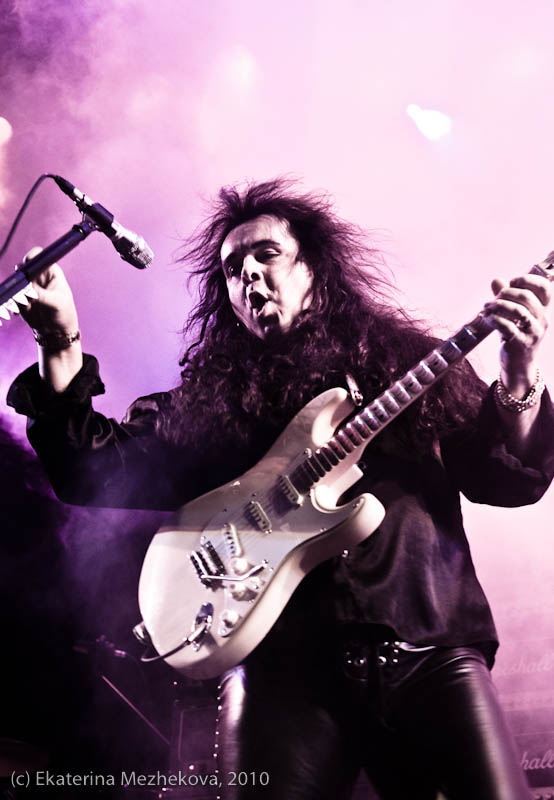
Yngwie Malmsteen Guitars & Gear: The Complete Guide to the Shred Master’s Rig
Yngwie Malmsteen's guitars, amps, and effects — the complete guide. The Duck Stratocaster, scalloped fretboard, Marshall wall, DiMarzio HS3, and how to nail that neoclassical metal tone.
Sylvain Sylvain Guitars & Gear: The Complete Guide to the New York Dolls’ Gretsch, Les Paul Junior & Automatic Guitar Proto-Punk Rig
Sylvain Sylvain guitars & gear: New York Dolls guitarist. Les Paul Junior 'automatics', Gretsch Golden Anniversary, white Les Paul Custom stolen by Steve Jones — proto-punk tone.