
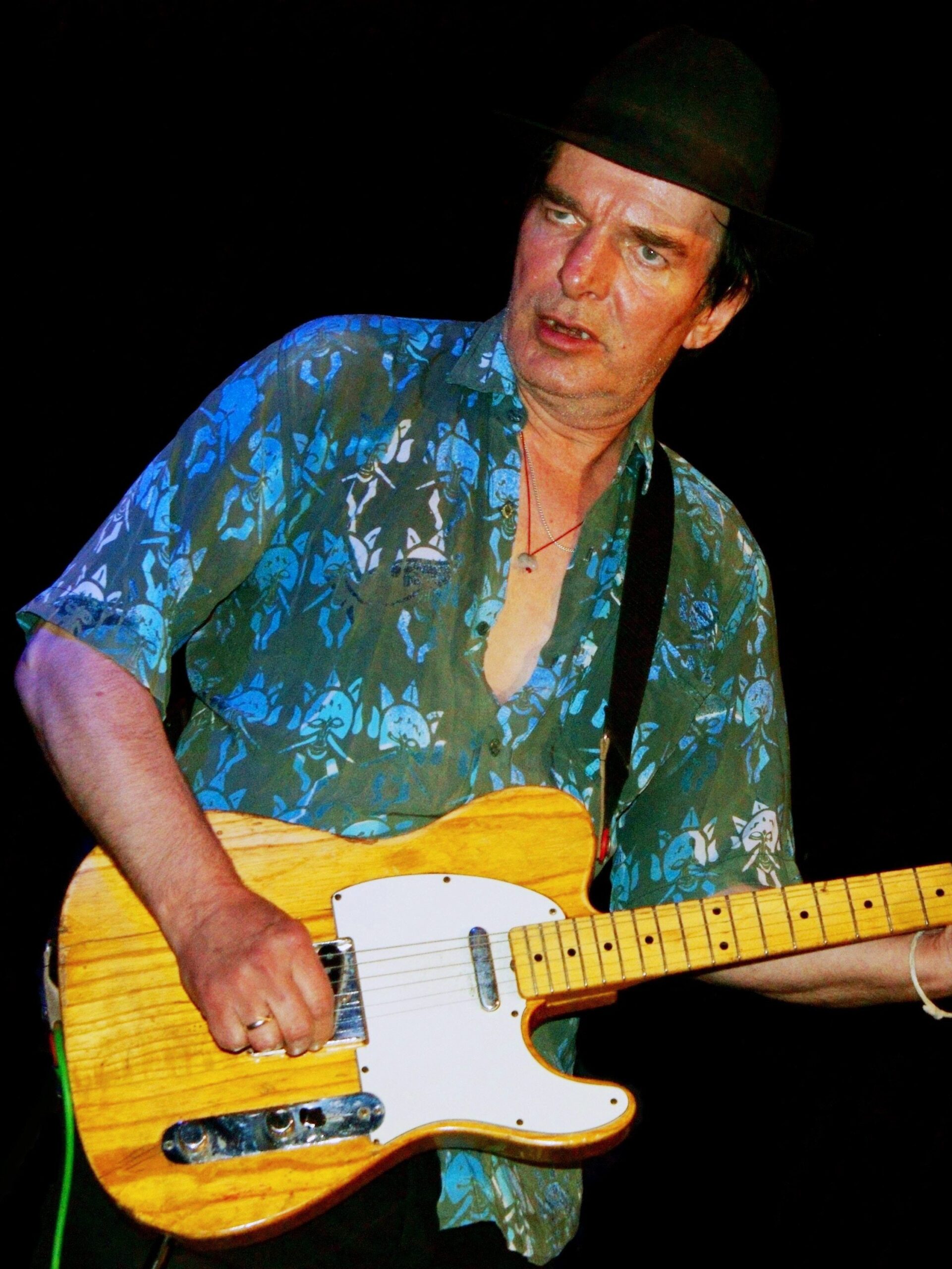
Brian James guitars gear is the subject of British punk’s most underappreciated hard rock story — the equipment and approach of the guitarist who wrote most of The Damned’s debut album, gave the band its initial riff vocabulary, and then left just as they were becoming famous, ensuring that most of the credit for the band’s musical identity would eventually attach to other names. James was The Damned’s founding guitarist — the player who had absorbed Stooges-style proto-punk, MC5 aggression, and the hard rock tradition’s Gibson-and-Marshall combination and distilled it all into the specific ferocity of “New Rose” and Damned Damned Damned. He wrote the riffs. He wrote the songs. He defined the initial sound. And then he was gone.
His post-Damned career — the Tanz Der Youth project, the Lords of the New Church (the glam-punk supergroup with Stiv Bators), and various solo projects — demonstrated a player whose musical instincts remained consistent across contexts: hard-edged, riff-driven, built on the specific combination of Gibson guitar authority and Marshall amplifier aggression that gave British punk its guitar vocabulary. His Brian James guitars gear setup was simpler and more direct than Captain Sensible’s more evolved, effects-laden approach — a Gibson guitar, a Marshall amplifier, and the aggressive, downstroke-driven rhythm guitar attack that gave “New Rose” its opening riff. Sometimes that’s all you need. This is the complete breakdown.
Background
Brian James — born Brian Robertson on February 18, 1955, in Brighton, East Sussex — grew up in England’s South Coast resort city and developed as a guitarist through the early 1970s, absorbing the hard rock and proto-punk influences that would shape his approach. His specific formative influences were the harder, more aggressive end of the rock tradition: the Stooges’ pre-punk aggression, the MC5’s political fury, the hard rock riff vocabulary of Black Sabbath and the heavier end of British rock, and the specific combination of Gibson guitar heaviness with Marshall amplifier aggression that gave British hard rock its foundational tonal character.
He joined London Ss — the pre-Clash band that served as a kind of punk talent nursery, organised by Malcolm McLaren’s circle and populated by players who would subsequently form several of the British punk movement’s most significant bands — before The Damned coalesced around Dave Vanian, Rat Scabies, and Captain Sensible. His specific contribution to The Damned’s formation was the guitar vocabulary and the songwriting discipline that gave the band a musical foundation beyond the energy-and-attitude that punk’s lowest common denominator required.
Damned Damned Damned (1977), produced by Nick Lowe, featured James as the primary songwriter and guitarist — his Gibson guitar through a Marshall amplifier giving the album its specific sonic character, and his songs giving it a compositional quality that distinguished The Damned from their contemporaries. “New Rose,” “Neat Neat Neat,” “Fan Club,” and the rest of the debut album’s material were primarily James’s compositions, delivered with the physical aggression and technical directness that his pre-punk hard rock background enabled.
His departure from The Damned in 1978 — after the second album Music for Pleasure — came at the moment of the band’s greatest commercial visibility and left him without the platform that his songwriting had built. The subsequent Lords of the New Church partnership with Stiv Bators (Dead Boys vocalist, later the Lords’ singer), Nicky Turner, and Dave Tregunna gave him a vehicle for his continuing music through the early 1980s — a band whose combination of glam rock’s theatricality with punk’s energy gave a specific entertainment-value approach to rock that had some commercial success.
Brian James Guitars Gear: The Complete Rig
Guitars
Brian James’s primary guitar throughout The Damned’s debut period and his subsequent career has been the Gibson Les Paul Standard — the mahogany-with-maple-top, humbucker-equipped, set-neck instrument that gave British hard rock its foundational tonal character. His specific Les Paul examples ranged from late-1960s and 1970s production instruments (the “pancake” body construction of the early 1970s, with multiple thin layers of mahogany laminated together rather than the single solid piece of the 1950s originals) to earlier examples with more vintage-accurate specifications. The Les Paul’s combination of mahogany warmth, humbucker sustain, and the set-neck joint’s resonance gave James’s riff playing its specific heavy, warm quality — the opposite of the Stratocaster brightness that Captain Sensible brought to the later Damned lineup, and the complement to Sensible’s lighter touch in the dual-guitar configuration of the original band.
The Les Paul’s specific contribution to “New Rose” — the riff that opened British punk’s recording history — was the combination of humbucker output and mahogany warmth that gave the guitar part its specific authority. The downstroke attack on the opening chord, the specific resonance of the Les Paul’s body at that frequency, and the Marshall’s response to the humbucker’s output all combined to give the first four bars of “New Rose” a specific sonic identity that was simultaneously urgent and heavy. This combination — the Les Paul’s warmth and weight giving the punk aggression a tonal seriousness that matched its musical aggression — was James’s specific contribution to the British punk guitar vocabulary.
Gibson SG guitars — the lighter, more aggressive-voiced alternative to the Les Paul, with its double-cutaway all-mahogany construction and the specific upper-midrange “bark” of its humbuckers — appeared in James’s documented setup for specific applications where the SG’s different tonal character gave a useful alternative voice. The SG’s lighter weight (approximately 6 lbs versus the Les Paul’s typical 8–9 lbs) made extended live performance more physically comfortable, and its more aggressive upper-midrange character suited certain riff applications where the Les Paul’s warmer, more rounded character was less appropriate.
The Gibson Les Paul Junior — featuring P-90 single-coil pickups (approximately 7.5k–8.5k ohms DC resistance, Alnico V magnets, flat wide coil aperture giving a gritty, mid-forward single-coil character) — appeared in James’s setup for specific raw punk applications where the P-90’s grittier, more aggressive character suited the material. The Les Paul Junior’s simplified construction (no maple cap, simpler hardware) and the P-90’s direct, unpolished character gave the purest, least processed rock guitar tone available from the Gibson platform — appropriate for the most aggressively direct punk passages.
James’s Les Paul Standards used Gibson’s production humbuckers of the respective years — PAF-specification early examples for the older instruments, T-Top for the 1960s-70s production examples, and occasional higher-output replacement humbuckers (Seymour Duncan SH-4 JB or similar) for instruments where additional output was required for specific amplifier gain levels. His pickup philosophy was pragmatic: using what came in the instrument and upgrading to higher-output alternatives when the musical application required more saturation at a given amplifier setting.
Fender instruments — Telecasters and Stratocasters — appeared selectively in James’s documented setup for specific applications where the single-coil transparency gave a different tonal quality from the Les Paul’s warmer humbucker character. His Fender use was selective — reaching for the single-coil brightness when the musical application required it — rather than the primary Les Paul approach that characterised most of his work.
James used Ernie Ball or Gibson brand medium-gauge strings (.011–.050 or .010–.046) on his Les Pauls — heavier than the typical light gauge of the era’s pop guitar players, reflecting his hard rock background’s preference for string mass and the physical authority that heavier gauges gave to downstroke rhythm playing. The heavier gauge on the Les Paul’s 24.75-inch scale gave a slightly higher string tension than the same gauge on a Fender’s 25.5-inch scale, giving the picking a specific physical feel that contributed to the authority of his downstroke-dominated rhythm approach.
Amps
The Marshall JMP 2203 — the late-1970s predecessor to the JCM800, using a similar cascaded high-gain preamp topology with slightly different component values — was James’s primary amplification through The Damned’s debut period. The JMP’s EL34-based high-gain character gave both the aggressive, cutting tone for the punk rhythm work and the sustained quality for the melodic lead passages that appeared in The Damned’s material. His transition to the JCM800 2203 as the decade changed reflected the natural evolution of his amplification — the JCM800’s refinement of the JMP’s circuit topology giving improved gain characteristics and more controlled tonal response without fundamentally changing the tonal direction. His Marshall settings: moderate-to-high input gain (6–8) for the high-gain saturation appropriate to punk’s aggressive energy, with EQ emphasising the midrange for the forward, cutting character that punk guitar needed to project over Rat Scabies’s powerful drumming.
James ran his Marshall heads into standard 4×12 cabinets loaded with Celestion Greenback 25-watt speakers — the classic British rock speaker combination that gave the early punk recordings their specific sonic character. The Greenback’s mechanical compression and warm vintage character complemented the JMP/JCM800’s cascaded gain topology, giving a combined sound that was heavy and aggressive without the more modern, extended character of later speaker designs. The Greenback’s 98dB sensitivity and 75Hz resonant frequency gave the Les Paul’s humbucker output a specific response — full in the lower midrange, warm in the bass, with just enough top-end presence from the speaker’s upper-midrange to give individual notes their articulation within the distorted context.
The Vox AC30 appeared in James’s setup for specific applications where the British jangle and class-A EL84 character suited the material — consistent with the broader British rock tradition’s use of the Vox for cleaner, more chimey tonal territory. His Vox use was selective and appropriate — reaching for the AC30 when the Marshall’s more aggressive character was less suitable for the musical context.
Fender amplifiers — Twin Reverb or Blues Deluxe — appeared in James’s setup for specific clean and light-gain applications in his solo work and various collaborative projects. The American clean tone gave a different palette from the British Marshall alternatives that suited certain contexts better.
Effects
The MXR Distortion+ — LM741 op-amp, 1N270 germanium diode, the transparent overdrive character documented in the Captain Sensible article — was one of the key effects in James’s signal chain, providing additional gain and tonal shaping before the Marshall. His Distortion+ use was standard for the era: driving the Marshall’s front end harder than the Gibson’s passive humbucker output alone would, adding specific harmonic content and clipping character. His Distortion+ settings: Drive at 5–6 for the moderate-to-high distortion appropriate to punk rhythm work, Output at 6–7 for above-unity output level. The combination of the Les Paul’s high-output humbucker, the Distortion+’s asymmetric germanium clipping, and the Marshall’s cascaded gain gave the specific layered distortion character of The Damned’s early recordings — each stage adding its own harmonic profile to the complete signal.
The Dunlop Cry Baby wah appeared in James’s signal chain for specific expressive lead work — the wah’s bandpass filter giving lead lines a vocal quality that complemented his blues and hard rock-derived lead vocabulary. His wah use was purposeful rather than constant — deploying the wah for specific passages where its bandpass filter expression suited the musical context.
The Big Muff Pi appeared in James’s setup for specific fuzz applications, giving the smooth, sustained fuzz character that he had absorbed from the Stooges and MC5’s proto-punk recordings alongside the British psych-rock tradition’s fuzz vocabulary. His Big Muff use was selective — reaching for the fuzz when the specific application required it.
The Boss CE-2 BBD chorus appeared selectively in James’s setup for specific clean chord passage textures — light, slow modulation adding dimensional width rather than obvious chorus effect. His CE-2 use was restrained, consistent with the direct, aggressive approach that characterised most of his playing philosophy.
Electro-Harmonix Small Clone (chorus) and Small Stone (phase shifter) appeared in James’s setup for specific atmospheric and psychedelic applications, particularly in the Lords of the New Church context where the band’s glam-punk approach made sonic experimentation more appropriate than the punk minimalism of The Damned’s earliest period.
The Boss TU-2 chromatic tuner pedal appeared in James’s signal chain for accurate on-stage tuning — the standard professional pedal tuner choice for its reliability and accuracy.
Various period-appropriate vintage effects appeared in James’s setup across different periods — reflecting the available hardware of each era and his pragmatic approach to effects selection. His approach to effects was broadly similar to his approach to everything else: use what gives the right result, don’t use what doesn’t, keep the signal chain as direct as possible while achieving the specific tonal results the music required.
Playing Style & Tone Philosophy
Brian James is a rhythm guitarist’s rhythm guitarist — a player who understood from the beginning that the riff was the fundamental unit of rock music, that a great riff played with authority and precision was worth more than a dozen technically impressive solos, and that the specific combination of Gibson humbucker warmth and Marshall amplification gave British rock guitar its defining tonal identity. His approach to the guitar was hardboiled and direct: pick up the Les Paul, plug it into the Marshall, play the riff with everything you have, and let the combination do the work. This philosophy — simplicity elevated to mastery through commitment and execution — produced “New Rose,” one of British rock’s most perfect opening riffs.
His downstroke technique was the foundation of everything. The specific weight and authority of his downstrokes — the arm’s full mass behind each pick stroke, the consistent attack angle, the physical commitment that gave each note its decisiveness — gave The Damned’s earliest material its specific quality of unstoppable forward momentum. This was not the fastest or the most technically complex rhythm guitar in punk, but it was among the most physically convincing. Each downstroke landed with the authority of inevitability rather than the energy of urgency — a distinction that separates genuinely heavy rhythm guitar from merely aggressive rhythm guitar.
His lead playing — when it appeared in The Damned’s material — drew directly from the blues and hard rock traditions he had absorbed: Hendrix’s physical commitment and harmonic adventurousness, the British blues-rock players’ wide vibrato and expressive bending, and the Stooges’ aggressive simplicity. His leads were shorter and less technically complex than Captain Sensible’s subsequent lead work, but they had a specific emotional directness that suited the punk context — leads that said what they needed to say and stopped, rather than continuing past the musical moment’s requirements.
His chord voicing in the rhythm guitar context reflected the hard rock tradition’s emphasis on power chords — root and fifth, the minimal harmonic statement that gives heavy music its physical foundation without the tonal complexity of full triads that might blur under high gain. His specific use of power chords combined with single-note riff figures gave The Damned’s early material its rhythmic variety within the minimalist vocabulary — the riff was not merely a chord strummed repeatedly but a composed rhythmic figure with specific note choices and rhythmic patterning that gave each song its individual character.
Tonally, Brian James guitars gear philosophy was built on the fundamental simplicity of the British rock tradition’s canonical combination: Les Paul through Marshall. The Les Paul’s mahogany warmth and humbucker sustain gave the rhythm work its tonal authority; the Marshall’s EL34 overdrive gave the material its aggressive character; and the Distortion+’s asymmetric germanium clipping gave an additional layer of harmonic complexity that distinguished The Damned’s early recordings from the pure-Marshall approach of heavier rock. No excessive effects, no sonic experimentation for its own sake, no tonal complexity beyond what the music required. The riff was the thing, and everything else was in service of making the riff as heavy and as direct as possible.
The Gibson “pancake” body construction of the early 1970s — the specific instrument architecture most likely present in James’s primary Les Paul — deserves technical examination because it differs from both the 1950s solid mahogany construction and the more recent chambered or weight-relieved bodies. The “pancake” construction (also called “sandwich” construction) used from approximately 1969 through the mid-1970s involved laminating multiple thinner slabs of mahogany together to form the body rather than using a single solid piece. The change was primarily economic — thick, quality solid mahogany became more expensive and harder to source as the 1960s progressed, and the multi-laminate construction allowed Gibson to use thinner pieces of wood that would not have provided sufficient mass individually. Tonal purists have debated whether the pancake construction gave acoustically different results from the solid construction, and the consensus is nuanced: the glue joints between layers add mass and slightly change the resonant characteristics of the body, but the difference is subtle enough that many examples of the pancake construction are tonally indistinguishable from solid-body examples in normal listening conditions. For Brian James guitars gear and its application in The Damned’s high-gain Marshall context, the pancake construction’s tonal characteristics were absorbed into the complete signal chain’s character to the point where the specific body construction’s contribution to the final recorded tone was essentially inaudible — the Marshall’s tube saturation and the Distortion+’s clipping dominated the tonal picture.
The Stooges’ and MC5’s influence on James’s guitar vocabulary — and the specific way these American proto-punk bands shaped British punk’s guitar approach — deserves examination because it illuminates the transatlantic musical influence that gave British punk its American hard rock roots. The Stooges (featuring Ron Asheton on guitar and later James Williamson, who appears later in this series) used a specific combination of Gibson and Fender instruments through Marshall amplifiers to create the deliberately primitive, maximally aggressive rock guitar vocabulary that predated punk by several years. Ron Asheton’s simple but physically overwhelming riff vocabulary — the two-chord figures played with complete physical commitment and maximum volume — gave the Stooges their specific quality of controlled violence. James Williamson’s later contribution (from Raw Power, 1973) added a more technically ambitious lead dimension to the Stooges’ approach, giving the guitar work additional harmonic and melodic content within the same aggressive framework. The MC5’s Wayne Kramer and Fred “Sonic” Smith brought a different quality — more harmonically ambitious, with jazz and free music influences filtered through the same commitment to volume and aggression. Brian James absorbed both traditions: Asheton’s primitive riff authority and Williamson’s more technically developed approach gave him a vocabulary of rock guitar aggression that translated directly into the British punk context. His application of American proto-punk’s guitar vocabulary to the CBGB/London punk format was not coincidence but genuine influence — and it gave The Damned a harder rock foundation than many of their British contemporaries, who had absorbed the same American influences less thoroughly.
The Celestion Greenback 25-watt speaker’s specific compression characteristic — and its relationship to the Marshall JMP’s tube-based output stage — creates an important guitar-speaker system interaction that shaped The Damned’s debut recordings. When the Marshall’s four EL34 output tubes drive the Greenback at high power levels, the speaker’s mechanical compliance — the cone’s ability to move through its full excursion range without distortion — begins to limit the speaker’s linear response. At the 25-watt rated power level, the Greenback’s cone excursion approaches its mechanical limits, and the speaker begins to add its own compression to the Marshall’s tube compression: both the output stage’s natural compression and the speaker’s mechanical compression contribute to the complete signal’s dynamic character. This “double compression” — tube compression from the Marshall’s output stage and mechanical compression from the Greenback’s cone — gives the combined amp/speaker system a specific sound quality that separate consideration of either component doesn’t capture. The double compression reduced the dynamic range of James’s picking, making soft and hard notes more similar in level — a quality that some players consider a limitation but that in the punk context gives the rhythm guitar a specific consistency and authority that preserved the energy of even the quietest parts of a passage. For Brian James guitars gear and The Damned’s earliest recordings, this double compression was part of the recording’s sonic character — the specific quality that gave “New Rose” its immediate, unrelenting energy.
The London Ss — the pre-Clash band that served as a talent nursery for several British punk figures including James — represents a specific moment in the British punk movement’s formation that is worth examining briefly as context for understanding James’s musical development. The London Ss was organised by Bernie Rhodes (later the Clash’s manager) and Malcolm McLaren in 1975–1976 as a kind of explicit casting exercise for the British punk band they were trying to construct — auditions were held, musicians were evaluated, and various future punk figures passed through. The band never released recordings but served as the introduction point for several musicians who subsequently formed important punk acts. James’s brief involvement gave him direct exposure to the organisational and aesthetic frameworks that would define British punk — the deliberate construction of a cultural movement with specific musical and visual values — before the actual musical movement crystallised into the forms that defined 1977. His subsequent founding of The Damned reflected both the musical values he had developed independently and the awareness of the punk movement’s organisational logic that the London Ss exposure had given him. Brian James guitars gear in this context was not merely the equipment of an individual musician but the material component of a deliberate cultural intervention.
How to Sound Like Brian James
Guitar Approach
A Gibson Les Paul Standard — vintage 1960s–1970s example (the “pancake” mahogany body construction of the early 1970s is specifically appropriate to the Damned Damned Damned era tone) with T-Top or higher-output replacement humbuckers (Seymour Duncan JB SH-4 or ’59 SH-1 set) is the foundation of Brian James guitars gear tone. Modern alternatives: current Gibson Les Paul Standard with Seymour Duncan JB replacement pickups, or a Gibson Les Paul Traditional with the stock 57 Classic humbuckers giving a warmer, vintage-voiced character. Use Ernie Ball Super Slinky (.009–.042) or Regular Slinky (.010–.046) strings — lighter than James’s actual gauge gives more bending ease without significantly compromising the riff authority.
The downstroke rhythm technique is the essential skill. Every rhythm note should be a downstroke where tempo allows. The picking arm should feel heavy and committed, not light and mechanical. The goal is not efficiency but authority — every downstroke feeling like a deliberate physical assertion rather than an automatic physical motion. Practice the opening riff of “New Rose” at its original tempo with this approach and you will understand exactly what Brian James guitars gear was built to do.
Amp Approach
Marshall JMP 2203 (for the most era-accurate early Damned tone) or Marshall JCM800 2203 into a 4×12 cabinet with Celestion Greenback 25-watt speakers. Set for moderate-to-high gain with forward mids — the punk rhythm guitar needs to be present and cutting rather than scooped and heavy. The MXR Distortion+ at moderate settings provides the additional gain layer and germanium harmonic complexity that distinguishes the recording from pure Marshall.
| Control | Setting (0–10) | Notes |
|---|---|---|
| JMP/JCM800 Input Volume | 7–8 | High gain — the Les Paul humbucker pushes the cascaded preamp into natural saturation |
| Bass | 5 | Neutral — Les Paul mahogany provides natural low-mid warmth; don’t overdo |
| Middle | 7 | Forward — the spine of British punk guitar tone; cutting, present, urgent |
| Treble | 6 | Present — note definition and pick attack clarity through the Greenback |
| Master Volume | 6–7 | Push the EL34 output stage for natural compression and harmonic character |
| MXR Distortion+ Drive | 5–6 | Moderate distortion — adds germanium harmonic layer to Marshall’s tube saturation |
| MXR Distortion+ Output | 6–7 | Above unity — drives Marshall input harder for sustained lead passages |
| Big Muff Sustain (if using) | 6 | Moderate — smooth fuzz for specific heavier passages; not constant |
| Guitar Volume (lead) | 10 | Full — maximum humbucker output for Marshall saturation on lead passages |
| Guitar Volume (rhythm) | 8–10 | High — James’s rhythm playing relied on full humbucker output for authority |
The MXR Distortion+ at moderate settings as the primary gain supplement — its transparent, germanium-warmed overdrive giving additional saturation and harmonic complexity into the Marshall. Big Muff Pi for specific fuzz applications. Cry Baby wah for expressive lead passages in the blues-rock tradition. Boss CE-2 for selective clean chord texture. Keep the signal chain direct and purposeful — Brian James guitars gear was built for maximum riff authority with minimum signal chain complexity, and this directness was itself part of the tonal philosophy.
Influence & Legacy
Brian James’s influence on British punk guitar is foundational and frequently unacknowledged — he wrote the riffs that gave The Damned their initial identity, he brought the hard rock vocabulary that distinguished the band from purely amateurish punk, and he defined the specific combination of Gibson and Marshall that gave early British punk its tonal character. The fact that most of the credit for The Damned’s long-term reputation has accrued to Dave Vanian’s visual and vocal identity and to subsequent lineups featuring Captain Sensible’s more developed musical vocabulary is an historical injustice of the kind that punk rock — with its emphasis on performance over recording, on the current lineup over the founding members — regularly produces.
His role in establishing the Lords of the New Church also deserves recognition: the combination of James’s punk guitar authority with Stiv Bators’s Dead Boys-derived energy and the band’s glam rock theatricality gave 1980s punk its most entertaining and sonically accomplished rock band. The Lords’ guitar work — James’s Les Paul and Marshall combination applied to more complex arrangements than the earliest punk had required — demonstrated the range of his musical ambition beyond the three-minute-blast format.
The comparison with Captain Sensible — his Damned guitar partner — is the essential reference, showing the specific complementary approaches that gave the early Damned their guitar character: James’s Gibson warmth and hard rock authority alongside Sensible’s Stratocaster brightness and more technically diverse approach. The parallel with Cheetah Chrome — the Dead Boys guitarist whose similarly hard rock-rooted, Gibson-and-Marshall approach to punk guitar gave the American equivalent of James’s British punk guitar vocabulary — illuminates the specific tradition of technically serious players applying hard rock tools within punk’s aggressive context. And the connection to James Williamson — the Stooges guitarist whose combination of Gibson/Marshall heaviness with proto-punk aggression directly influenced James’s approach — places Brian James guitars gear in the direct lineage of American proto-punk’s influence on British punk’s founding generation.
Frequently Asked Questions: Brian James Guitars & Gear
What guitar did Brian James play in The Damned?
Brian James’s primary guitar in The Damned was the Gibson Les Paul Standard — mahogany body with maple top, set mahogany neck, humbucking pickups (T-Top or PAF-specification depending on the specific instrument’s production year), rosewood fretboard. His Les Paul examples ranged from late-1960s to mid-1970s production instruments, with the early 1970s “pancake” body construction examples most associated with the Damned Damned Damned recordings. The Les Paul’s humbucker warmth and mahogany sustain gave The Damned’s earliest recordings their specific tonal authority — heavier and warmer than the Stratocasters that many contemporaries used.
What amplifier did Brian James use?
James’s primary amplification was Marshall — the JMP 2203 during The Damned’s debut period (1976–1978), transitioning to the JCM800 2203 in subsequent work. Both configurations used four EL34 output tubes, cascaded high-gain preamp topology, and ran into 4×12 cabinets loaded with Celestion Greenback 25-watt speakers. The Marshall JMP/JCM800 combination with the Les Paul gave The Damned’s earliest recordings their specific combination of punky urgency and genuine rock guitar authority.
Did Brian James write the early Damned songs?
Yes — Brian James was the primary songwriter for The Damned’s debut album Damned Damned Damned (1977), writing or co-writing most of the material including “New Rose,” “Neat Neat Neat,” “Fan Club,” and other key tracks. His departure from the band in 1978 ended his primary songwriting contribution to The Damned, though subsequent lineups of the band (including the reformed versions featuring Captain Sensible in a more central musical role) developed their own compositional directions. The foundational riff vocabulary and aggressive energy of the early recordings were substantially his creation.
What are the key differences between Brian James’s and Captain Sensible’s guitar approaches?
The James/Sensible guitar contrast in The Damned was primarily instrumental: James used Gibson humbuckers (warmer, more sustained, less dynamically variable with pick attack) while Sensible used Fender Stratocaster single-coils (brighter, more transparent, more responsive to pick attack variation). James’s Marshall-only approach gave a consistently saturated, heavy tone; Sensible’s broader effects palette (Phase 90, Electric Mistress, Big Muff alongside the Marshall) gave more tonal variety. James’s composition-focused rhythm approach complemented Sensible’s more technically adventurous lead work in the dual-guitar context of the original lineup. James’s approach was more direct and more hard rock-rooted; Sensible’s was more diverse and more technically refined.
What were the Lords of the New Church?
The Lords of the New Church were a glam-punk supergroup formed in 1981 featuring Brian James on guitar, Stiv Bators (Dead Boys) on vocals, Nicky Turner on bass, and Dave Tregunna on second guitar. The band’s combination of punk energy, glam rock theatricality, and Brian James’s hard rock guitar vocabulary gave them a specific entertainment-value rock music that achieved moderate commercial success in the early-to-mid 1980s. Albums including The Lords of the New Church (1982) and Is Nothing Sacred? (1983) demonstrated James’s ability to apply his guitar approach in more complex, arrangement-oriented contexts than the three-chord blast of The Damned’s earliest material.
What was the MXR Distortion+ and why did Brian James use it?
The MXR Distortion+ is an overdrive/distortion pedal using a single LM741 op-amp with a 1N270 germanium diode providing asymmetric soft clipping. Its specific character — transparent, warm, with a mild asymmetric harmonic profile rather than hard silicon clipping — gave additional gain and tonal complexity when used ahead of the Marshall without the harsh, aggressive edge of harder clipping alternatives. For James’s Les Paul through a Marshall setup, the Distortion+’s germanium warmth gave the combined signal an additional layer of harmonic richness that the Les Paul’s passive T-Top humbuckers and the Marshall’s tube saturation alone didn’t fully produce. Used at moderate settings (Drive 5–6, Output 6–7), the Distortion+ gave the complete Brian James guitars gear signal chain its layered, harmonically complex character.
Why is Brian James underappreciated compared to Captain Sensible?
Brian James’s relative underappreciation compared to Captain Sensible in The Damned’s history has several causes. James left the band in 1978 before The Damned’s gothic rock reinvention and most commercially successful period — the albums and tours that built the band’s long-term reputation were made without him. Captain Sensible’s distinctive visual identity (the nurse outfit, the beret, the “Happy Talk” UK number one) gave him a public profile that James, as a more conventionally-presented rock guitarist, never developed. And Sensible’s broader musical range — more effects, more stylistic diversity, more compositional development in the later albums — gave him more opportunities to demonstrate his musical abilities publicly. James’s foundational contribution to The Damned’s initial identity was real and significant, but the nature of that contribution (writing the songs and playing the riffs that launched the band) was the kind that gets taken for granted once established.
The power chord’s specific harmonic simplicity — and its relationship to the high-gain guitar context that Brian James deployed it in — deserves brief technical examination as the foundational harmonic unit of punk rhythm guitar. A power chord consists of the root note and the perfect fifth above it (sometimes with the octave added above the fifth), omitting the third degree that would define the chord as major or minor in conventional harmonic practice. This omission of the third is not merely a simplification but a specific harmonic choice with practical consequences: in a high-gain guitar context, the third degree of a chord creates significant acoustic beating against the root and fifth’s harmonics, producing a muddy, undefined tonal character at high distortion levels. The root and fifth, being in a simple 2:3 ratio relationship (the perfect fifth is the second-lowest harmonic in the overtone series above the fundamental), produce much less acoustic beating in high-gain contexts — their harmonics align more cleanly, giving the power chord a specific definition and clarity even through the compression and harmonic complexity of Marshall saturation. This is why punk and heavy metal converged on the power chord as the fundamental harmonic unit: it was not musical laziness but acoustic necessity — the only chord voicing that maintains harmonic definition at the gain levels that give the music its physical authority. Brian James’s power chord application — Les Paul’s humbucker output through Marshall’s cascaded gain — represented the canonical deployment of this acoustic principle, and “New Rose” ‘s opening riff demonstrated it at its most effective.
One more dimension of Brian James guitars gear that merits attention: his consistency as a live performer across decades of professional activity that included periods of reduced public visibility and changed commercial circumstances. The Damned’s original lineup reformed for various anniversary shows, and the Lords of the New Church maintained a touring presence through the early 1980s. In each context, James’s approach to the guitar — the same Gibson, Marshall, and Distortion+ combination, the same downstroke-dominant rhythm attack, the same direct, anti-pretension philosophy — remained consistent. This consistency was itself a kind of artistic integrity: he didn’t reinvent his approach to follow changing fashions or chase the next musical movement. The riff was still the thing, the Les Paul and Marshall were still the tools, and the physical commitment to the downstroke was still the foundation. In a music business that consistently rewarded reinvention and punished fidelity to an established approach, this consistency made him a less commercially prominent figure but a more artistically coherent one — and Brian James guitars gear, in its directness and consistency, was the most complete expression of this artistic coherence.
The specific combination of Les Paul humbucker warmth and Marshall JMP high-gain saturation — the core of Brian James guitars gear — creates a specific tonal character that can be understood as the “loaded” version of the British rock tradition’s foundational pairing. A standard Marshall Plexi with a PAF-equipped Les Paul gives the archetypal warm British rock tone: warm, harmonically complex, dynamically responsive to pick attack. The JMP/JCM800’s cascaded gain preamp, compared to the Plexi, adds a specific quality: more consistent saturation at lower playing volumes, harder clipping that reduces the dynamic range, and a specific harmonic profile in the cascaded-gain distortion that gives the complete signal more “bite” at the expense of some of the Plexi’s warmth and dynamics. For punk’s requirements — aggressive, forward, urgently cutting — this harder, more consistent saturation was specifically appropriate. The Les Paul’s warmth was not eliminated by the JMP’s harder gain character but was modified: the warmth remained in the fundamental tonal character while the harder gain gave it an aggression that the Plexi’s softer saturation would have mellowed. The result — Les Paul warmth plus JMP aggression — gave The Damned’s debut recordings their specific combination of rock authority (from the Les Paul) and punk urgency (from the harder gain staging). This is why Brian James guitars gear produced “New Rose” rather than a Led Zeppelin riff or a Ramones power chord: the specific combination gave a new result not produced by any previous application of its components.
Related stories
Vernon Reid Guitars & Gear: The Complete Guide to Living Colour’s Guitar Genius’s Rig
Vernon Reid's guitars, amps, and effects — the complete guide. Parker MaxxFly, PRS Vela VR, Mesa Dual Rectifiers, Roland VG-99, Eventide H9, Living Colour gear guide.
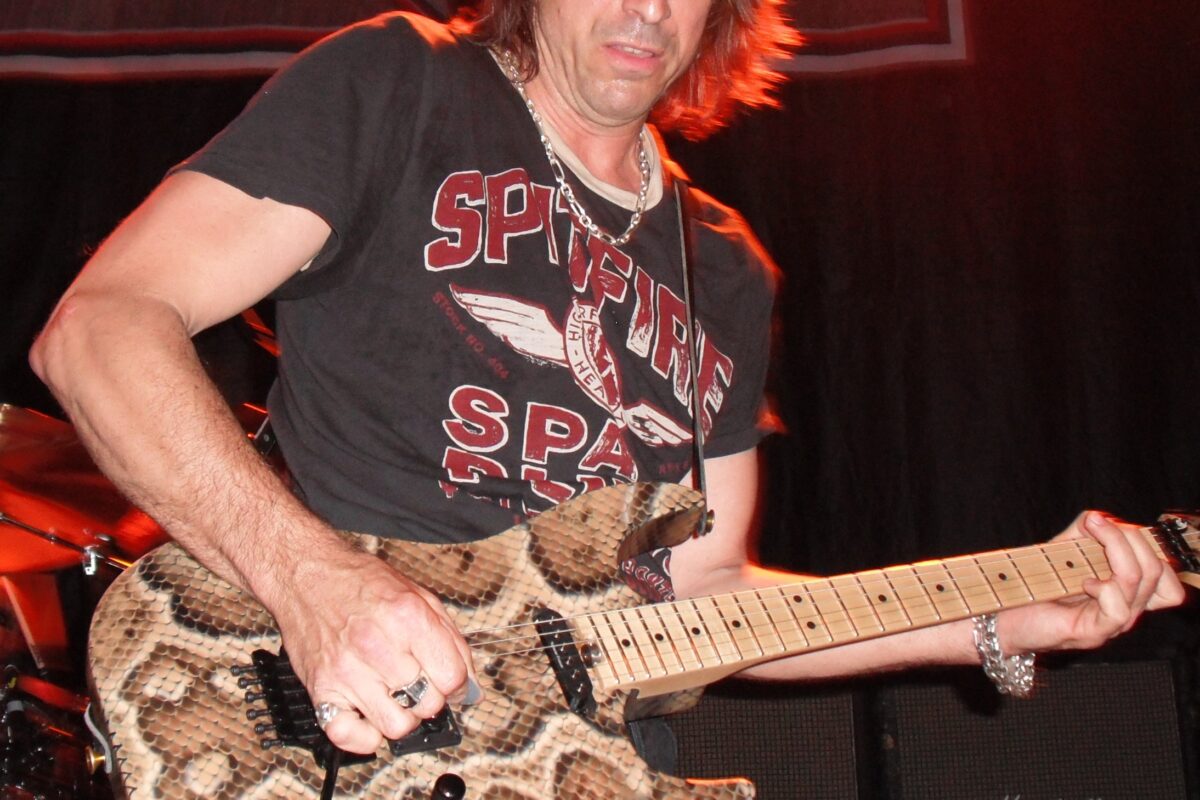
Warren DeMartini Guitars & Gear: The Complete Guide to Ratt’s Torch Guitarist’s Rig
Warren DeMartini guitars & gear: Ratt's Torch guitarist. Charvel Bomber, snakeskin, Jose-modded Plexi, Fender Super Champ, RTM pickup, slapback echo — the complete rig.
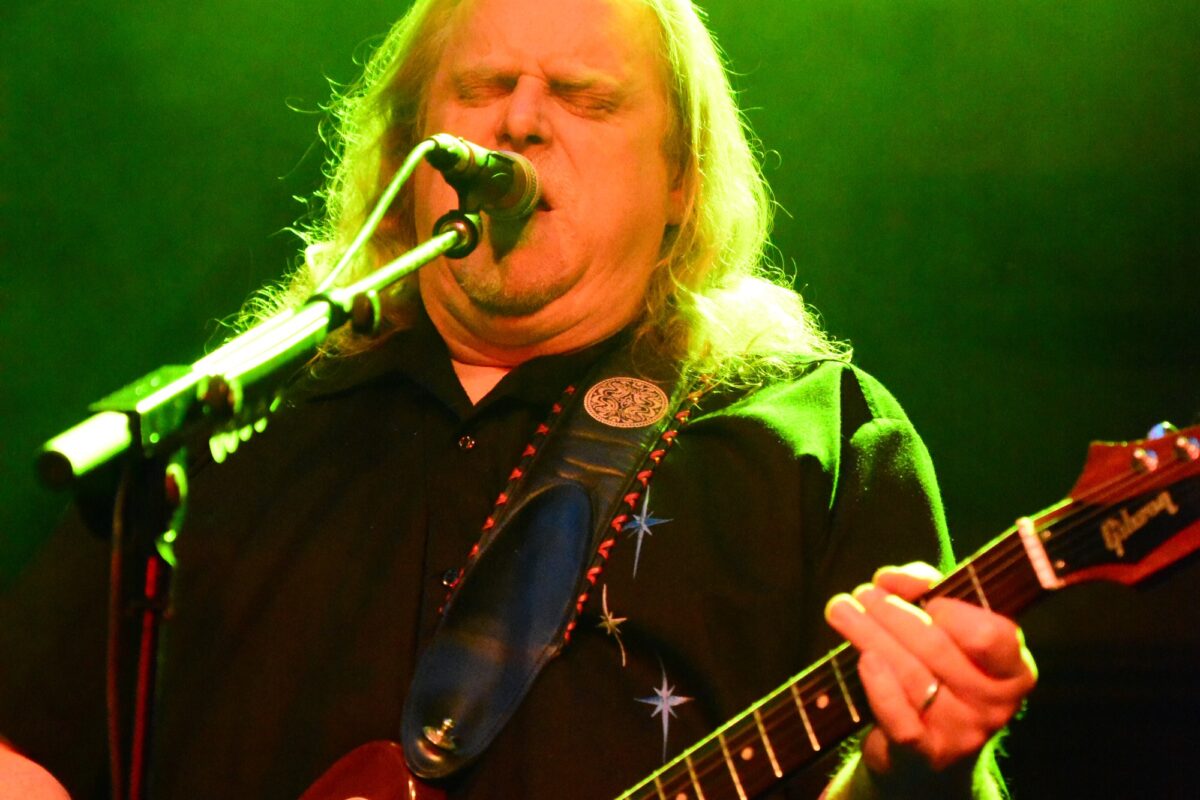
Warren Haynes Guitars & Gear: The Complete Guide to Gov’t Mule’s Guitar Master’s Rig
Warren Haynes' guitars, amps, and effects — the complete guide. Gibson Les Paul Chester, Soldano SLO-100 modified, Klon Centaur, Emma Discombobulator, and how to nail that Gov't Mule blues-rock tone.