
Kim Gordon Guitars & Gear: Sonic Youth’s Bass-Guitar Provocateur Complete Rig Guide
Kim Gordon guitars gear — Fender Mustang, Precision Bass, Big Muff deep-dive for Sonic Youth's avant-garde bassist-guitarist and no-wave pioneer.
Photo by Bertrand from Paris, France, licensed under CC BY 2.0 (https://commons.wikimedia.org/wiki/File:Image-Rock_en_Seine_2007%2C_Kim_Gordon_(Sonic_Youth)_2.jpg)
Kim Gordon guitars gear is the subject of American avant-garde rock’s most complete and most uncompromising creative identity — the equipment and approach of an artist who was simultaneously bassist, guitarist, vocalist, visual artist, and cultural provocateur in Sonic Youth, who gave the band half of its creative direction alongside Thurston Moore and Lee Ranaldo, and who built one of rock music’s most enduring and most distinctive personal aesthetics across thirty years of genuinely adventurous musical work. Gordon is not merely a bassist-who-also-plays-guitar in the conventional sense of a multi-instrumentalist who doubles on a secondary instrument; she is a complete musical identity who uses bass and guitar as different but equally valid vehicles for the same fundamental artistic vision.
The Journey
Her specific approach to both instruments — unconventional techniques, non-standard tunings, the treatment of noise and feedback as primary musical materials rather than problems to be managed — gave Sonic Youth its specific character of controlled chaos: music that sounded as if it might fall apart at any moment but was in fact precisely controlled and precisely composed. Kim Gordon guitars gear was the specific physical system that enabled this controlled chaos, and understanding it requires understanding both the specific instruments and the specific philosophy that gave the instruments their meaning within Sonic Youth’s complete aesthetic framework. This is the complete breakdown.
Background
Kim Althea Gordon was born on April 28, 1953, in Rochester, New York — a significant city in American photography and optical history whose specific cultural character gave her a formation that was as much visual arts as musical. She grew up in Los Angeles (her father was an academic at UCLA), absorbing both the specific Southern California cultural landscape and the visual arts tradition that would give her practice its consistent integration of music and image. She moved to New York City in the late 1970s, becoming part of the specific intersection of visual art, performance art, punk, and no-wave that gave early 1980s downtown Manhattan its extraordinary cultural density.
She met Thurston Moore and formed Sonic Youth in 1981 — initially as a no-wave band whose specific aesthetic framework was shaped by the New York downtown arts scene’s values: the deliberate rejection of conventional musical forms, the embrace of noise and dissonance as primary aesthetic materials, and the specific quality of intellectual seriousness combined with physical energy that gave no-wave its character. Her visual arts background gave her a specific perspective on performance and on the relationship between sound and image that distinguished her contributions from those of musicians whose primary formation was purely musical.
Sonic Youth’s evolution from the raw no-wave of the early recordings through the alternative rock accessibility of Daydream Nation (1988) through the major label years (Geffen, 1990–2011) to the final dissolution following Gordon and Moore’s personal separation traced a complete arc of American independent music across three decades. Gordon’s contributions — bass playing, specific guitar work, lead vocals on specific songs, creative direction, visual art contributions to packaging — were central to the band’s identity at every stage.
Kim Gordon Guitars Gear: The Complete Rig
Guitars
Kim Gordon’s primary guitar when playing lead and rhythm guitar was the Fender Mustang — the short-scale (24-inch) student-model Fender with the specific Mustang vibrato system, two Mustang-spec single-coil pickups (specifically voiced with a slightly different tonal character from Stratocaster or Telecaster pickups), and the lighter construction appropriate to the student instrument’s origins. The Mustang’s specific characteristics suited Gordon’s guitar approach: the short scale length (giving lower string tension than the standard 25.5-inch Fender scale) gave the instrument a looser, more malleable feel appropriate to the aggressive, physically demanding applications she used it for; the Mustang vibrato’s specific mechanical character gave pitch manipulation possibilities different from more conventional tremolo designs; and the instrument’s budget-construction heritage connected it to the lo-fi, anti-pretension aesthetic that was central to Sonic Youth’s values.
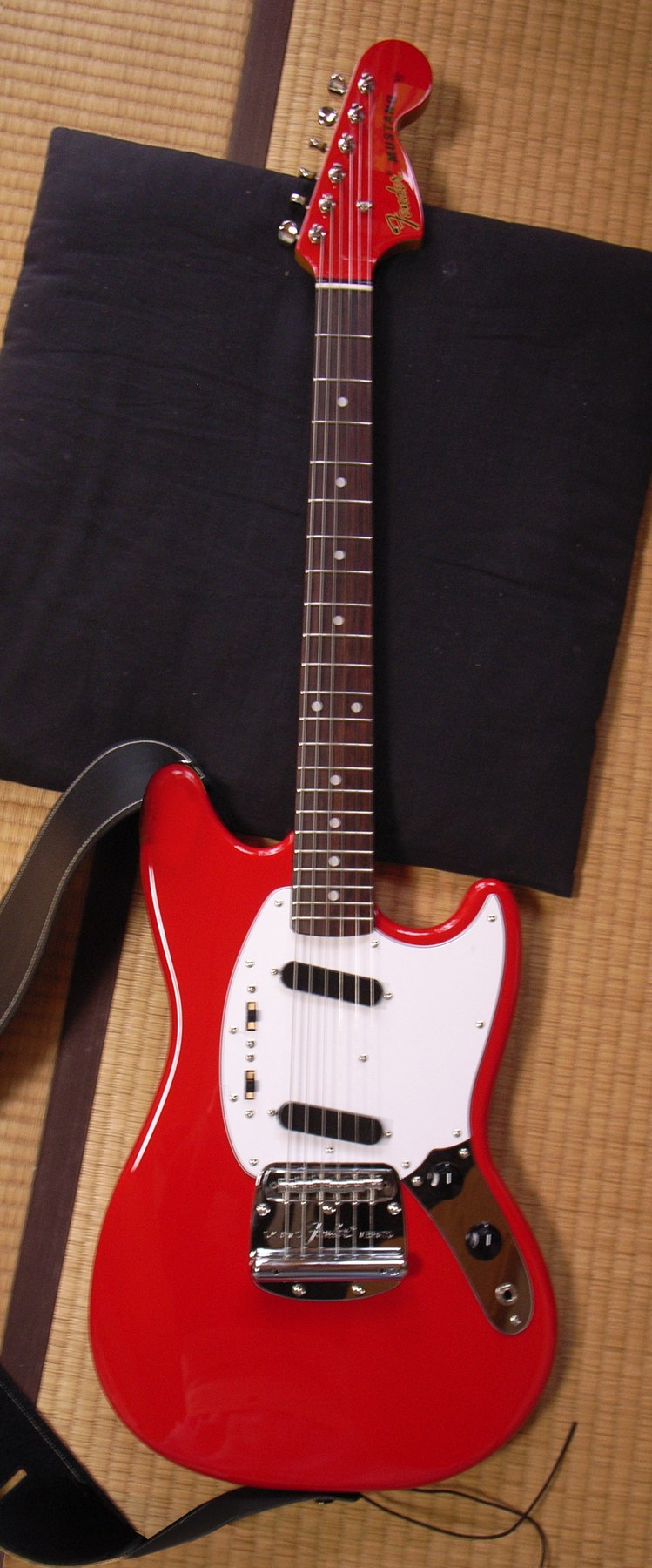
Her non-standard tuning practice — using Sonic Youth’s extensive catalogue of alternate tunings alongside the standard ones — was applied to the Mustang in the same way documented for the other Sonic Youth members’ guitars throughout this series. The Mustang’s specific response to non-standard tunings was part of its utility: its relatively low string tension at standard pitch became even more flexible when detuned, and the specific resonances of the instrument at different tuning configurations gave different harmonic characters that the band catalogued and deployed compositionally.
Gordon’s primary bass instrument was the Fender Precision Bass — the foundational American electric bass, designed by Leo Fender in 1951, with the split single-coil pickup (two offset single-coil elements in a series-humbucker configuration), the maple neck, and the specific physical character of the instrument that gave American rock and roll its foundational bass sound. Her Precision Bass use reflected both the P-Bass’s specific tonal qualities — the split pickup’s warm, mid-forward, punchy character — and its connections to the American rock and roll tradition that Sonic Youth was simultaneously absorbing, deconstructing, and redeploying.
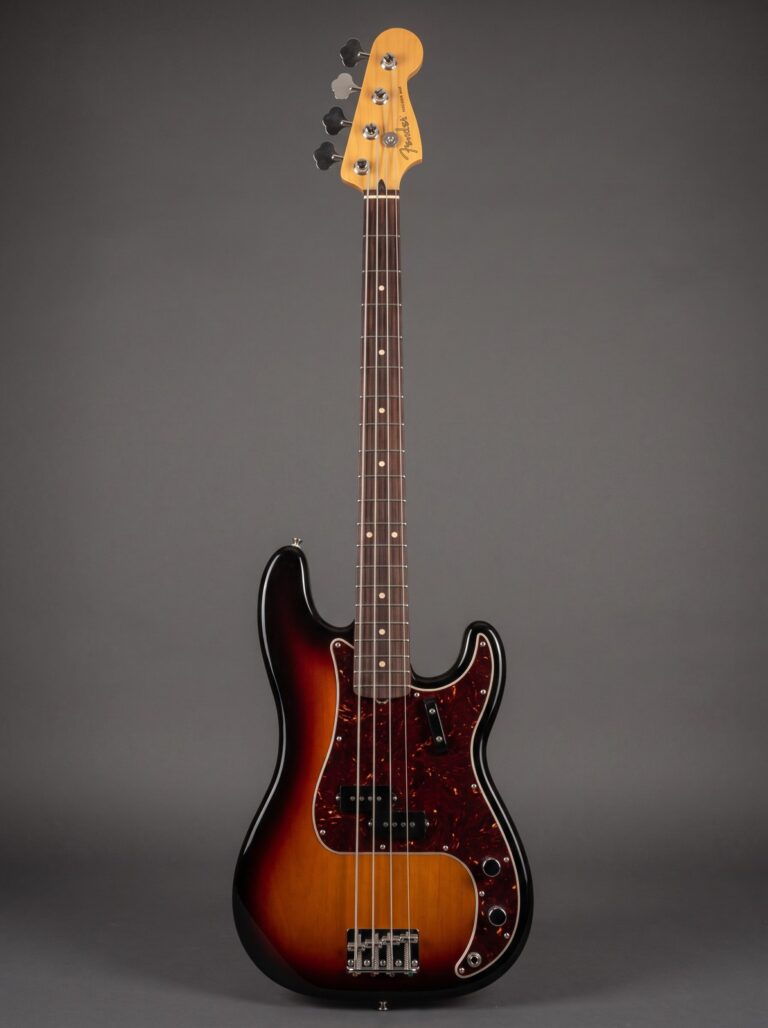
Her bass technique was as unconventional as her guitar work — using the bass as a textural and noise-generating device as much as a conventional bass-frequency support instrument. The specific techniques she deployed: bowing the bass strings with a cello bow to produce sustained harmonic textures; using various objects between or on the strings to alter the vibrational characteristics; playing with a pick in specific aggressive passages to give attack and brightness different from fingerstyle’s rounder character; and using specific playing positions (near the bridge for maximum brightness and aggression, near the neck for the deepest possible warmth) to vary the tonal character within a single performance.
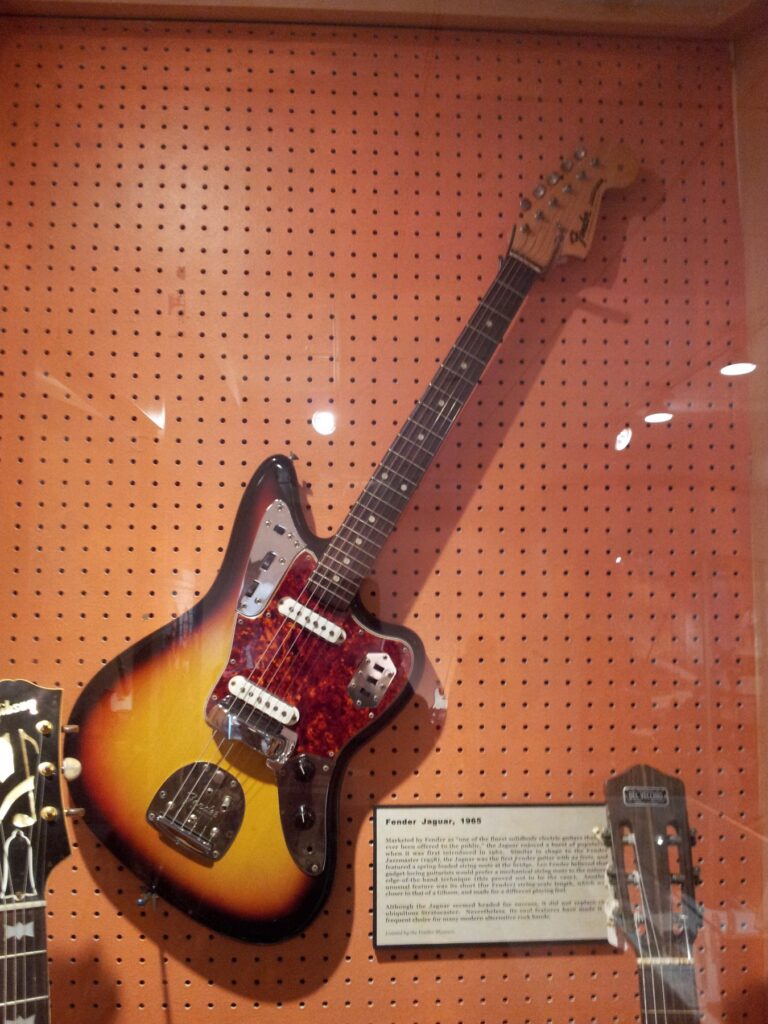
Fender Jaguars appeared in Gordon’s guitar work for specific applications where the Jaguar’s specific tonal character — similar to the Mustang but with a longer scale (24-inch, same as Mustang) and different pickup and circuit configuration — gave useful tonal alternatives. The Jaguar’s floating bridge and the Jetsound vibrato gave similar pitch manipulation possibilities to the Mustang’s vibrato system.
Danelectro instruments appeared in Gordon’s setup for specific lo-fi applications — the lipstick-tube pickups’ thin, mid-forward character giving specific tonal qualities appropriate to certain Sonic Youth passages. Her Danelectro use connected her approach to the same lo-fi instrument tradition as Graham Coxon.
Gordon’s guitar and bass instruments were frequently modified — non-standard hardware installations, custom pickups, and various other modifications that gave specific tonal qualities not available from stock instruments. Her approach to instrument modification was even more extensive than most players documented in this series: the specific sonic requirements of Sonic Youth’s compositions sometimes required instruments customised for those specific sonic purposes rather than adapted from standard configurations.
The Fender Mustang and Jaguar single-coil pickups had specific tonal characters different from Stratocaster and Telecaster pickups — shorter aperture, different magnet positions, and specific winding specifications that gave them a distinctive tonal quality often described as thinner and more nasal than standard Strat or Tele pickups. For Gordon’s noise and texture-oriented guitar applications, this specific character gave useful tonal material — the pickup’s “imperfect” quality suited the aesthetic that valued edge and dissonance over polished tone.
Gordon used various string gauges across her guitar and bass instruments, often non-standard configurations appropriate to the specific tunings and techniques each instrument required. Her string approach was entirely pragmatic — using whatever string weight and construction gave the specific physical and tonal characteristics required for each specific application.
Amps
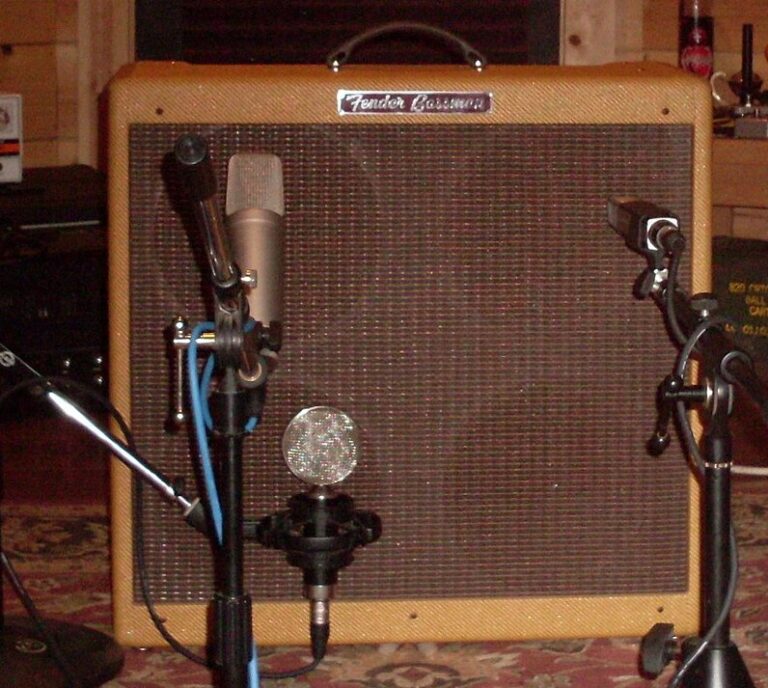
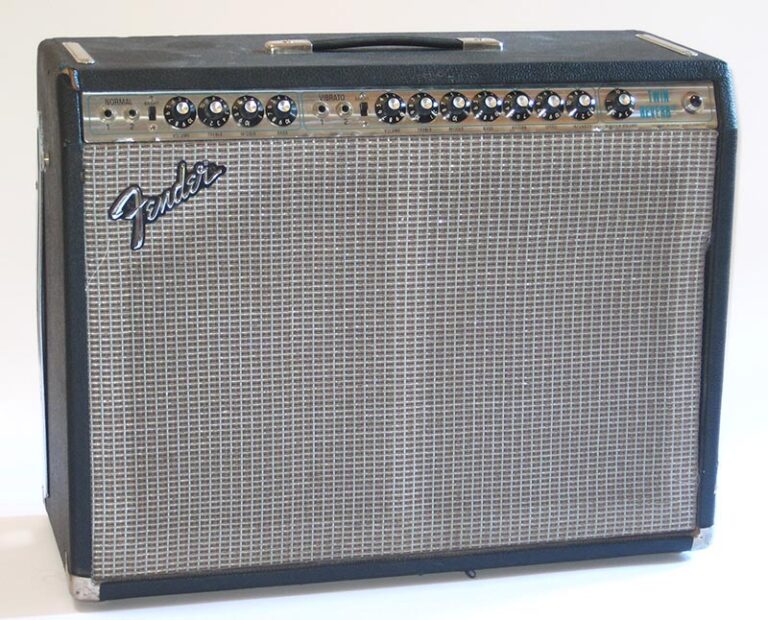
Fender amplifiers — including the Fender Bassman for bass applications and various Fender guitar amplifiers (Twin Reverb, Deluxe Reverb) for guitar work — provided the foundational amplification across Gordon’s complete instrumental work. The Fender Bassman’s specific four-10-inch speaker configuration and the natural overdrive of its 6L6GC output stage gave bass amplification appropriate to the specific needs of the bass-as-primary-instrument approach she deployed. The Twin Reverb’s clean headroom gave guitar work its transparent amplification foundation.
Marshall amplifiers appeared for specific overdrive applications — the British EL34 character giving the more aggressively saturated passages their specific tonal quality. Her Marshall use was for specific applications requiring the British hard-rock character rather than as a primary tonal foundation for most material.
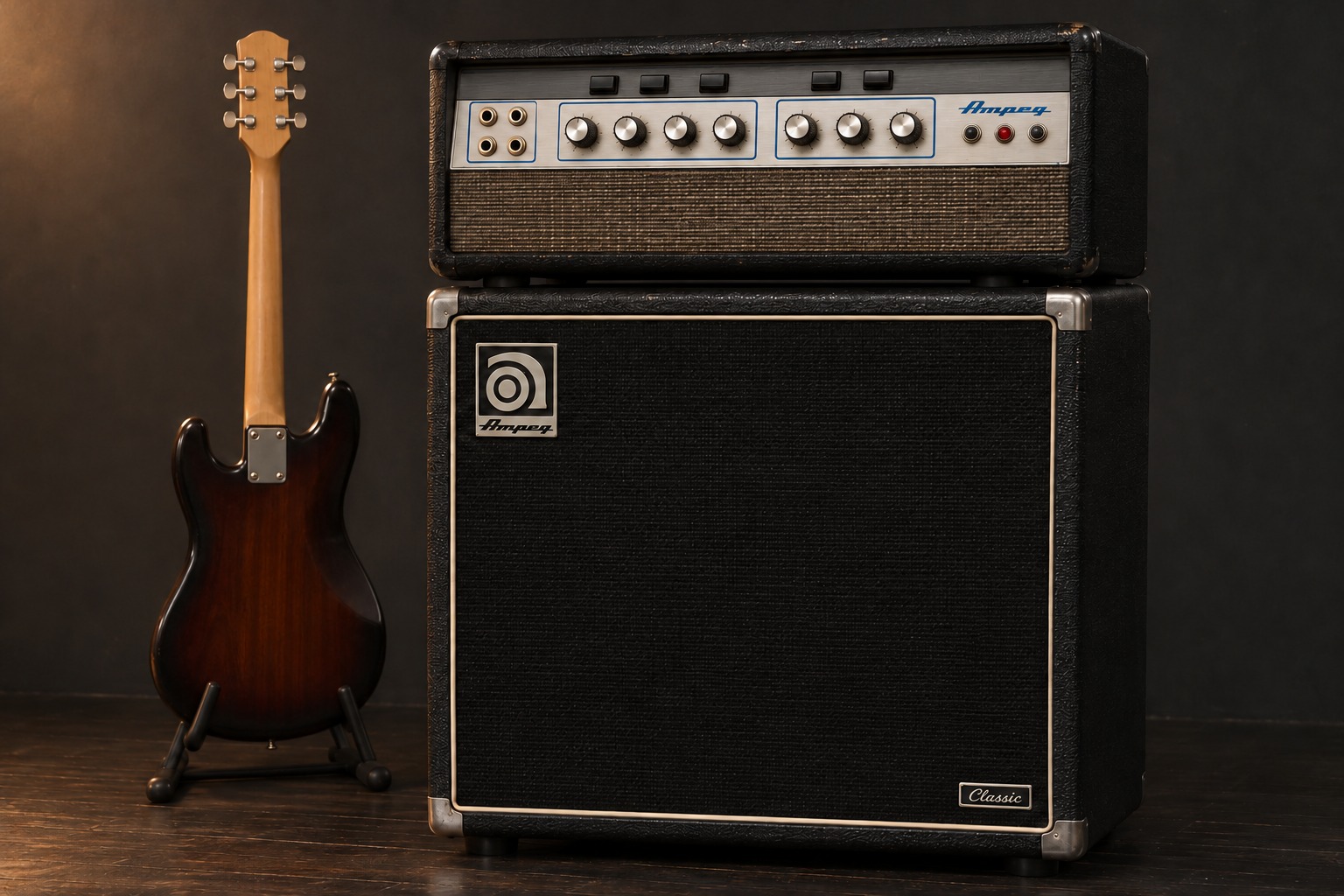
Ampeg bass amplifiers — particularly the SVT (Super Vacuum Tube, 300 watts from six 6550 output tubes, the archetypal rock bass amplifier) — appeared in Gordon’s bass setup for applications where the Ampeg’s specific warm, powerful low-end character gave the bass its most appropriate amplification. The SVT’s six 6550 tubes driving the 8×10 cabinet gave the bass-as-primary-voice approach its necessary physical authority.
Various other amplifiers appeared in Gordon’s setup — including Peavey and other working-musician brands that suited the lo-fi, anti-prestige aesthetic — reflecting the Sonic Youth approach of using whatever gave the right sonic result regardless of brand prestige or commercial value. Her willingness to use inexpensive, unconventional amplification reflected the same anti-pretension philosophy documented for Donelly’s Danelectro use and Coxon’s budget guitar applications.
Effects
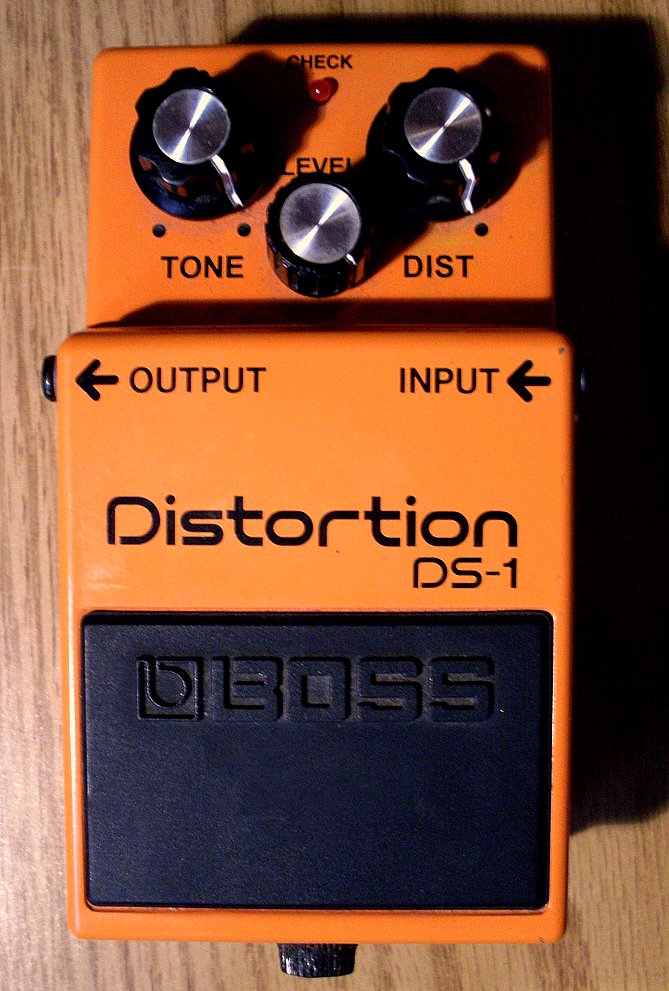
Multiple distortion and fuzz pedals appeared in Gordon’s signal chain — Big Muff Pi and Boss DS-1 being the most consistently documented — giving the aggressive, heavily saturated character appropriate to the more extreme passages in Sonic Youth’s output. Her distortion use was comprehensive rather than selective: extended passages used sustained, heavy distortion as a primary tonal environment rather than as a specific punctuation.
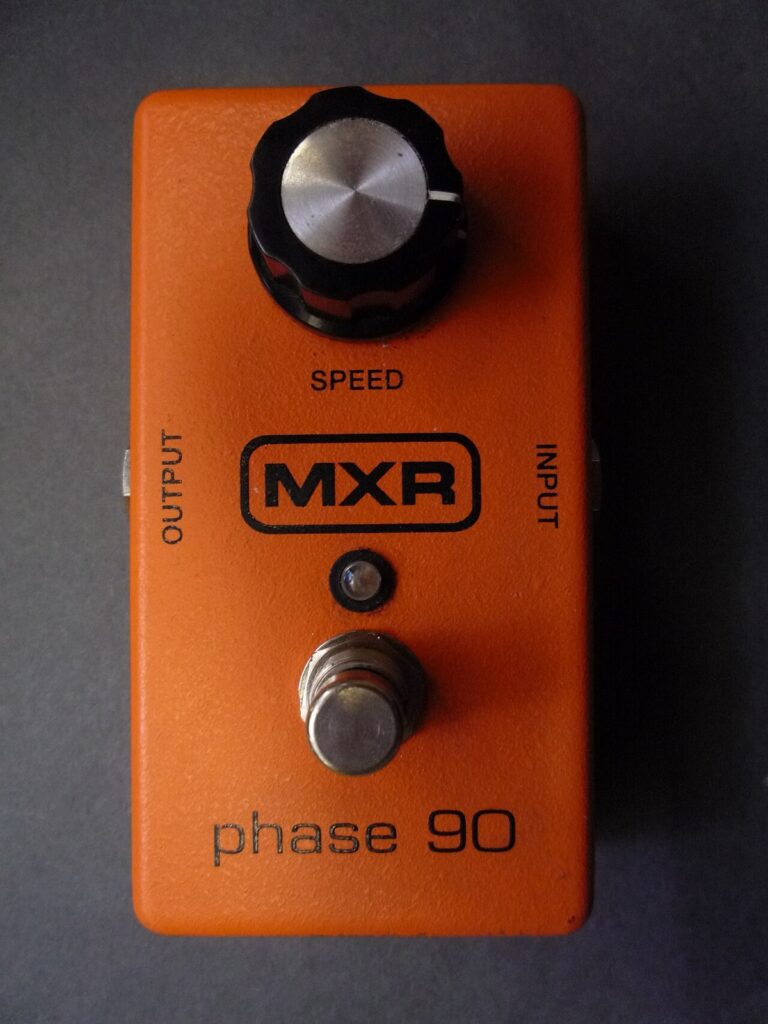
The Phase 90 appeared for atmospheric applications — consistent with its use across virtually every alternative and indie rock player in this series. Her Phase 90 use was typically at slow settings, giving dimensional warmth to sustained passages within the complete Sonic Youth sonic environment.
Various modulation pedals appeared in Gordon’s setup for specific textural applications — giving dimensional width and movement to specific passages within the Sonic Youth sonic environment. Her modulation use was consistent with the band’s overall approach to effects as compositional tools rather than performance accessories.
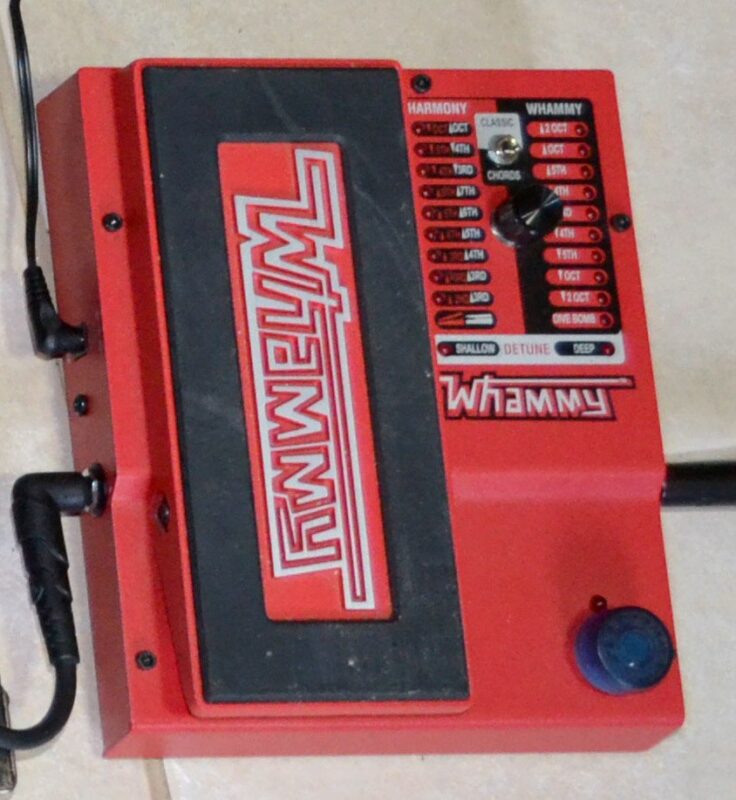
Pitch-shifting devices appeared for specific applications requiring dramatic pitch transpositions beyond the standard guitar range — consistent with the Sonic Youth aesthetic’s interest in pushing instruments beyond their conventional capabilities.
Perhaps the most important “effects” in Gordon’s signal chain were the deliberate use of feedback and noise — the specific sonic phenomena produced when a guitar’s pickup magnetic field is excited by the amplifier’s speaker output at sufficient volume to produce self-sustained oscillations, giving a sustained, pitch-variable noise that she deployed as a primary compositional material. Her feedback technique — positioning the guitar at specific distances and angles from the amplifier, manipulating the guitar’s pickup selector and volume controls to encourage and control the feedback — was as sophisticated and as specifically developed as any conventional guitar technique documented in this series.
Standard Boss TU-2 for accurate on-stage tuning — particularly important given the extensive non-standard tuning practice that characterised Sonic Youth’s complete guitar approach.

Playing Style & Tone Philosophy
Kim Gordon is the most thoroughly avant-garde musician in this series — a player whose primary artistic identity was shaped by the New York downtown arts scene’s specific values before it was shaped by rock music’s conventions, and who brought to rock music a set of aesthetic principles that gave it something genuinely different from what the tradition could produce from within itself. Her engagement with rock music was always as an outsider who found in it specific materials (volume, feedback, noise, rhythm) useful for her own artistic purposes rather than as an insider who had absorbed the tradition’s accumulated conventions as the natural framework for musical thought.
Her bass technique was developed deliberately outside conventional bass technique — not from ignorance of convention but from deliberate rejection of its most limiting aspects. The conventional bass player’s job (provide low-frequency harmonic support for the guitar and harmonic colour for the vocal melody) was something Gordon engaged with selectively rather than systematically: she provided conventional bass support when it served the composition and treated the bass as an autonomous voice when that served the composition better. Her willingness to let the bass part deviate radically from conventional bass function — playing in registers and with techniques that gave the bass the character of another lead instrument — gave Sonic Youth’s rhythm section a specific quality of unpredictability within an ultimately controlled framework.
Her guitar work — lead and rhythm guitar on specific songs and passages — reflected the same principles applied to a different instrument. The non-standard tunings gave the guitar harmonic and tonal possibilities not available from standard tuning, and the specific techniques she developed for Sonic Youth’s guitar work (including extended preparation techniques and the deliberate use of feedback as composition) gave her guitar contributions their specific avant-garde character. Her voice — the specific spoken-word-inflected, flat-affect delivery that gave her vocal contributions their character — functioned as an additional musical instrument within the same aesthetic framework: not expressive in the conventional rock vocal sense but specifically meaningful in the way that all of the instruments were specifically meaningful.

Tonally, Kim Gordon guitars gear philosophy was the most consistently anti-conventional in this entire series — an explicit rejection of the received wisdom about what guitars and amplifiers should be used for and how they should be used. The Mustang’s budget-construction character was an asset rather than a compromise. The Bassman’s and various other amplifiers’ natural overdrive was deployed as a tonal resource rather than avoided as a technical failure. Feedback was a composition rather than an accident. Noise was music rather than something to be managed. This philosophical inversion of conventional guitar tone practice — treating everything that conventional tone wisdom rejected as potentially useful — was itself the most important and most enduring element of the Sonic Youth approach, and Kim Gordon was its most complete embodiment.
The Fender Precision Bass’s specific design history — and why Gordon’s choice of it for Sonic Youth’s bass work was both historically appropriate and tonally motivated — reflects the P-Bass’s central position in American electric bass history and the specific character that position gave it. Leo Fender designed the Precision Bass in 1951 as the first commercially successful solid-body electric bass — the instrument that made the transition from upright acoustic bass to electric bass in popular music possible and practical. The original single-coil pickup (replaced in 1957 by the split-coil humbucker that defines the modern P-Bass) gave the first generation P-Bass a thinner, brighter character; the 1957 redesign’s split-coil pickup (two offset single-coil elements wound in opposite polarity, series-connected to give hum cancellation) gave the instrument its characteristic mid-forward, punchy warmth that has made it the foundational American rock bass sound for seven decades. Gordon’s Precision Bass choice was culturally and tonally specific: the P-Bass’s mid-forward character gave bass lines a presence and definition in the Sonic Youth mix that a more scooped-mid bass alternative would not have; and the instrument’s cultural connection to the American rock tradition gave its use in the avant-garde context a specific quality of deliberate engagement with that tradition — using the most conventionally American rock instrument for specifically unconventional purposes within the same performance tradition that had originally defined it.
The no-wave scene’s specific relationship to academic and visual arts institutions — and how Gordon’s own academic formation shaped Kim Gordon guitars gear’s philosophical foundations — is worth examining because it illuminates the specific cultural context that gave no-wave its particular character of intellectual seriousness combined with physical aggression. Many no-wave participants had connections to the New York art world’s institutions — Cooper Union, the New School, the specific social networks of downtown Manhattan that connected musicians to visual artists, filmmakers, and performance artists. Gordon’s UCLA and New York art school formation gave her direct access to the conceptual art tradition — the practice of art that was as much about ideas and concepts as about physical objects or skilled execution — that informed the no-wave aesthetic’s specific value of intellectual provocation over musical refinement. When she approached the guitar, it was not merely as a musical instrument but as an object with specific cultural associations that could be used, subverted, or redeployed for specific conceptual purposes. This conceptual relationship to the instrument — the artist using it rather than the musician playing it — gave Kim Gordon guitars gear a quality of intellectual intentionality that distinguished it from even the most experimental players whose primary formation was musical rather than visual-arts-based.
The Ampeg SVT’s specific technical character — and why it was appropriate for Gordon’s most aggressive bass applications — deserves brief examination because the SVT represents a specific extreme of American valve bass amplification that gave Sonic Youth’s live performances their specific physical authority. The Ampeg SVT (introduced in 1969, produced in various iterations since) used six matched 6550 output tubes producing approximately 300 watts RMS — an extraordinary amount of output power for a valve amplifier, requiring six specifically selected tubes in a class-AB push-pull configuration to produce it. The 6550’s specific characteristics — high plate dissipation, tight bass response, and a specific harmonic profile in saturation that gave the bass its characteristic “grind” quality at high volumes — gave the SVT its specific tonal character: powerful, warm, with a specific controlled compression in the output stage that gave heavily played bass lines their authority without the flabbiness that can appear in more powerful solid-state alternatives at equivalent output levels. For Gordon’s aggressive bass technique — playing harder than most conventional bassists, using the bass as a physical performance instrument as much as a harmonic support instrument — the SVT’s physical authority and the 6550’s specific saturation character gave the complete sound its necessary weight and presence. Kim Gordon guitars gear in its bass dimension required this specific authority.
The specific dynamic of Gordon’s relationship with Thurston Moore within Sonic Youth — as both personal and professional partners across three decades — shaped the band’s creative process in ways that made their eventual separation the end of the band as a complete artistic entity rather than merely a personnel change. Most bands survive member departures because the band’s identity is larger than any individual’s contribution; Sonic Youth’s identity was built so completely on the specific creative relationship between Gordon and Moore that its end necessarily ended the band. Gordon has described the relationship’s end (which she documented in Girl in a Band with considerable emotional candor) as both personally devastating and professionally final — the creative system they had built together over thirty years was not a structure that survived the separation of its two primary architects. Kim Gordon guitars gear, in this context, was not merely individual equipment but part of a complete creative system that included Moore’s approach, Ranaldo’s approach, and the specific interpersonal creative process that gave those three approaches their combined result. The equipment was necessary but insufficient; the human relationships that gave the equipment its musical meaning were what made the complete Sonic Youth sound possible.

The integration of visual art and music in Gordon’s practice — her ongoing work as a visual artist alongside the Sonic Youth career — gives Kim Gordon guitars gear an additional dimension that purely musical analysis misses. For Gordon, the guitar and bass were instruments in the same sense that paint and canvas were instruments — materials for making work that communicated specific aesthetic and conceptual content. Her visual art practice (exhibitions of her own visual work, her design contributions to Sonic Youth’s packaging and visual identity) and her music practice were not separate activities that happened to be pursued by the same person but aspects of a single creative practice whose complete expression required both. The specific visual aesthetic of Sonic Youth’s albums — the photography, the graphic design, the specific quality of visual intelligence that gave the packaging its coherence — reflected the same values as the music. Kim Gordon guitars gear, in this integrated practice, was the physical component of the musical dimension of a complete creative vision whose other components were expressed through other media. This integration — the complete artist using music as one medium among several rather than the complete musician using all of their creativity for music alone — was itself one of the most distinctive qualities of her contribution to Sonic Youth and to the broader culture of independent American music.
How to Sound Like Kim Gordon
Guitar Approach
A Fender Mustang (current production Fender Mustang or vintage Mustang for the closest approximation) with stock Mustang single-coil pickups, Mustang vibrato, and light or non-standard strings is the foundation of Kim Gordon guitars gear. For bass: Fender Precision Bass with split single-coil pickup and standard setup. The specific technique — more important than the equipment — involves the willingness to treat noise, feedback, and dissonance as primary musical materials rather than as problems to manage. Study the extended techniques: bowing strings with a cello or violin bow gives harmonics-rich sustained tones; playing objects on strings gives specific percussive and tonal modifications; controlled feedback requires positioning the guitar at specific angles and distances relative to the amplifier and manipulating the volume controls.
The most important prerequisite for the Kim Gordon approach: study the complete Sonic Youth catalogue from the early recordings through the later albums to understand how the specific techniques and instrument choices function within the complete compositional framework. The equipment alone, without the aesthetic philosophy that gives it meaning, produces noise rather than music.
Amp Approach
A Fender Bassman (for bass applications) or Fender Twin Reverb (for guitar applications) at high volume — pushing toward natural overdrive rather than using overdrive pedals as the primary gain source. Marshall amplifiers for specific hard overdrive passages. Ampeg SVT for bass applications requiring maximum low-frequency authority.
| Control / Effect | Setting | Notes |
|---|---|---|
| Fender Bassman Volume (bass) | 7–9 | High — push toward natural saturation; the Bassman’s natural overdrive is the primary gain source |
| Fender Twin / Marshall (guitar) | Volume 7–9 | High — same principle; natural amp saturation over pedal-driven distortion where possible |
| Big Muff Pi (primary fuzz) | Sustain 7–8, Tone 5, Vol 7 | Extended fuzz for sustained passages — primary rather than selective use in most aggressive material |
| Boss DS-1 (distortion) | Drive 6, Tone 6, Level 6 | Mid-forward hard clipping for specific aggressive passages |
| Phase 90 Speed | 1–2 | Very slow — atmospheric sweep as constant dimensional presence |
| Feedback technique | Position and vol control dependent | Controlled feedback requires specific guitar positioning and volume management — develop through practice |
| Non-standard tunings | Compositionally specific | Sonic Youth used dozens of non-standard tunings — each composition required a specific tuning configuration |
The signal chain for the Gordon approach is secondary to the compositional and technical philosophy: use feedback deliberately, use noise as material, use non-standard tunings for the harmonic possibilities they open, and use extended techniques for the tonal materials they provide. The specific equipment choices — Mustang, Precision Bass, Fender amplifiers, Big Muff — give the foundational character; the specific approach to using all of these as compositional resources gives the music its actual character. This distinction — between equipment and philosophy — is the most important single lesson of Kim Gordon guitars gear.
Influence & Legacy
Kim Gordon’s influence on American rock music is simultaneously as a musician, as an artist, and as a cultural figure whose specific identity — as a woman operating on her own creative terms within a male-dominated avant-garde tradition — gave subsequent female musicians in rock a different model of creative autonomy from what most mainstream rock offered. Her Sonic Youth work demonstrated that women in rock could occupy positions of genuine creative leadership and genuine musical innovation rather than being contained within the decorative or supplementary roles that the tradition had typically made available.
Her specific musical influence is felt most directly in the subsequent development of noise rock, indie rock, and the experimental music communities that drew from the no-wave and alternative rock traditions she helped define. The specific techniques she helped develop — the extended guitar and bass techniques, the feedback-as-composition approaches, the non-standard tuning catalogue — have been absorbed by subsequent musicians in ways that are now so thoroughly integrated into the experimental rock vocabulary that their specific origins are often unclear.
The comparison with Lee Ranaldo — her direct Sonic Youth guitar partner whose similar avant-garde approach and non-standard technique development paralleled her own within the same creative framework — is the essential reference for understanding the complete Sonic Youth guitar aesthetic. The parallel with Thurston Moore — the other Sonic Youth guitarist whose similar experimental approach, similar non-standard tuning practice, and similar treatment of noise as compositional material gave the band’s complete guitar picture its specific character — shows how the three-guitar (Moore, Ranaldo, Gordon) approach gave Sonic Youth a sonic complexity that any two-guitar combination could not have produced. And the connection to Tanya Donelly — who occupied a different aesthetic position within the same broad alternative rock landscape but who shared Gordon’s commitment to building a complete creative identity as a female guitarist-vocalist in a genre where such identities were systematically undervalued — places Kim Gordon guitars gear in the specific tradition of female musicians who refused the limited roles available and built something more complete and more enduring in their place.
Frequently Asked Questions: Kim Gordon Guitars & Gear
What instruments does Kim Gordon play?
Kim Gordon plays both bass and guitar — primarily Fender Precision Bass for bass applications and Fender Mustang for guitar applications, with various other instruments appearing for specific purposes. Her Precision Bass is typically stock or lightly modified, while her Mustang instruments are used in non-standard tunings and with various extended technique modifications. Fender Jaguars and Danelectro guitars served specific guitar applications. She also uses cello bows, various objects placed on strings, and other extended-technique tools that make standard instrument categorisation incomplete as a description of her musical approach.
What amplifier does Kim Gordon use?
Gordon’s amplification varied across applications: Fender Bassman for bass (the four-10-inch speaker, 6L6GC-powered design giving warm, natural overdrive for bass work), Ampeg SVT for bass applications requiring maximum authority, and Fender Twin Reverb or Marshall amplifiers for guitar work. Her amplifier approach was consistently oriented toward natural overdrive at high playing volumes rather than pedal-driven distortion as the primary gain source — pushing the amplifiers into their natural saturation rather than using them as clean platforms for pedal processing.
What were Sonic Youth’s non-standard tunings?
Sonic Youth developed an extensive catalogue of non-standard guitar tunings across their career — the band’s specific compositional approach was built around the harmonic and tonal possibilities that different tuning configurations opened up. Their tunings were typically catalogued and assigned to specific instruments, which meant that live performances of multiple tuning-specific songs required multiple guitars (each pre-tuned to the specific tuning for its songs). Some of the most documented tunings include specific lower-pitched configurations (detuned from standard E), open tunings giving sustained drone possibilities, and various asymmetric configurations where different strings were tuned to unconventional relationships with each other. The complete Sonic Youth tuning catalogue has been documented in instructional materials and online resources.
What is no-wave and how did it shape Kim Gordon’s approach?
No-wave was the specific New York avant-garde music scene of the late 1970s and early 1980s, characterised by its deliberate rejection of the previous punk movement’s own aesthetic conventions, its embrace of noise, dissonance, and non-conventional song structures, and its integration with the downtown Manhattan visual arts, performance art, and experimental film communities. Artists including DNA, the Contortions, Teenage Jesus and the Jerks, and Mars (whose compilation No New York, produced by Brian Eno in 1978, gave the scene its most widely distributed document) defined the aesthetic framework. Gordon’s formation within this specific community gave her the aesthetic principles — the embrace of noise as primary musical material, the rejection of conventional technique as a mandatory standard, the integration of visual and performance arts with music — that shaped her complete musical approach and gave Sonic Youth its specific character when they emerged from the same community in 1981.
What is Kim Gordon’s Girl in a Band memoir about?
Girl in a Band (2015) is Kim Gordon’s memoir — covering her life from childhood through the formation and dissolution of Sonic Youth following her separation from Thurston Moore in 2011. The book gives an account of her visual arts formation in Los Angeles, her arrival in New York and immersion in the downtown arts scene, the development of Sonic Youth across three decades, and the personal context of the band’s end. It also gives a sustained account of her experience as a woman in the male-dominated avant-garde rock world — the specific challenges, the specific freedoms, and the specific cost of building a complete creative identity in a context that consistently tried to reduce her to a less complete version of that identity. Required reading for anyone interested in understanding Kim Gordon guitars gear as part of a complete human and artistic context.
What is the Fender Mustang and why does Gordon use it?
The Fender Mustang is a short-scale (24-inch) electric guitar introduced in 1964 as a student instrument, featuring two Mustang-spec single-coil pickups, a specific Mustang vibrato system with a floating bridge, and the lightweight construction of a student-grade instrument. Gordon’s use of the Mustang for guitar work reflected the instrument’s specific character: the short scale’s lower string tension gave a looser, more manipulable feel appropriate to aggressive extended-technique playing; the Mustang vibrato’s specific mechanical character gave pitch manipulation possibilities different from more expensive alternatives; and the student-instrument aesthetic — the deliberate choice of a budget-heritage instrument over a professional-grade alternative — connected to the anti-pretension values central to Sonic Youth’s aesthetic framework.
How does Kim Gordon’s approach differ from Thurston Moore’s and Lee Ranaldo’s?
Gordon’s approach within Sonic Youth differed from Moore’s and Ranaldo’s in several ways. Instrumentally, she divided her contributions between bass (her primary instrument on most material) and guitar, giving her contributions a different physical and tonal character from the purely guitar-focused Moore and Ranaldo. Vocally, her flat, spoken-word-inflected delivery gave her lead vocal contributions a different character from Moore’s more conventional (if unconventional by mainstream standards) singing approach. Compositionally, her specific songs tended toward the most aggressively confrontational end of the Sonic Youth aesthetic — the most explicitly noise-oriented, the most directly provocative — giving the band a necessary extreme position within its already unconventional range. Within the complete Sonic Youth creative system, Gordon provided the most consistently anti-conventional force, giving the band’s music its hardest, most uncompromising edge.
The specific feedback technique that Gordon (and the other Sonic Youth members) developed — using controlled, sustained guitar feedback as a compositional material rather than as an occasional accidental effect to be suppressed — requires examination as a technical practice because it is both more difficult and more specific than casual observers might assume. Guitar feedback occurs when the amplifier’s speaker output reaches the guitar’s pickup at sufficient volume to excite the pickup’s magnetic field in a self-sustaining cycle: the pickup converts the string’s vibration to electrical signal, the amplifier converts the electrical signal to acoustic output, the acoustic output excites the string’s vibration, and the cycle continues indefinitely at the specific frequency determined by the guitar’s tuning and the physical position of the guitar relative to the speaker. This simple description conceals significant practical complexity: the specific frequency of sustained feedback is determined by multiple interacting variables (the string’s fundamental frequency, the amplifier’s specific frequency response, the acoustic resonances of the room, and the physical position and angle of the guitar relative to the speaker), making the exact pitch of feedback unpredictable without extensive practice and developed awareness of how each specific combination of guitar, amplifier, room, and position behaves. Gordon’s development of controlled feedback as a compositional material required the same kind of systematic exploration of the feedback variables that Shields’ development of the glide technique required of the Jazzmaster floating bridge — years of experimentation, cataloguing of behaviors, and development of physical awareness of the instrument’s specific responses. Kim Gordon guitars gear in its feedback dimension was as developed and as specifically intentional as any conventional guitar technique.
A final dimension of Kim Gordon guitars gear that requires acknowledgment is the specific way that her public persona and critical reception have consistently mediated (and sometimes distorted) engagement with her actual musical contributions. The “cool girl of indie rock” narrative — while not without basis in the specific quality of aesthetic intelligence that Gordon brought to her public presence — has sometimes functioned as a way of celebrating her image rather than her musical contributions, giving her work a quality of iconic representation rather than the careful musical analysis it deserves. This article has attempted to treat her guitar and bass choices, her technique, and her musical philosophy with the same level of technical and analytical seriousness applied to every other player in this series — not because her iconic status is unearned but because the musical substance beneath the icon is the more enduring achievement and the less thoroughly examined one. Kim Gordon guitars gear, understood properly, is the physical system that enabled some of the most adventurous, most original, and most enduring guitar and bass work in American independent music over a thirty-year period — a contribution that deserves analysis on its specific musical merits rather than as an accessory to a cultural image.
The Daydream Nation double album (1988) — Sonic Youth’s breakthrough record and the one most often cited as their definitive statement — gives the most complete available document of how Kim Gordon guitars gear and her playing approach functioned within the complete Sonic Youth creative system at its most fully realised. The album’s range — from the epic guitar explorations of “Teenage Riot” and “Silver Rocket” through the abrasive noise of “Total Trash” to the more concentrated, song-focused material of “Teen Age Riot” and “Cross the Breeze” — gave Gordon specific musical contexts that required different deployments of her complete musical vocabulary. Her bass work on the album ranged from conventional but distinctive (providing harmonic and rhythmic support that was specifically appropriate to each passage while maintaining the Sonic Youth aesthetic’s characteristic quality of controlled unpredictability) to the most aggressively avant-garde (bass as primary noise instrument in the most extreme passages). Her guitar contributions appeared in specific contexts where her specific voice as a guitarist — more confrontational, more directly provocative than Moore’s or Ranaldo’s approaches — gave particular passages their necessary quality of contained aggression. Her vocal contributions — particularly on “The Sprawl,” whose specific quality of flat, spoken-word delivery over a deeply unsettling sonic backdrop gave the album one of its most emotionally charged moments — demonstrated the complete Gordon musical vocabulary at work: bass, guitar, and voice each deployed for specific musical purposes, each contributing to a complete artistic statement that required all three simultaneously. Daydream Nation gave Kim Gordon guitars gear its most complete and most celebrated showcase, and it remains the clearest demonstration of what her specific musical approach could achieve within the Sonic Youth creative system.
Image credits
- Ampeg bass amplifiers (bass-specific applications): GuitarGangsters AI-generated reference illustration, not a photograph.
- Thurston Moore: Bene Riobó, Wikimedia Commons, CC BY-SA 4.0.
- Top image: by Bertrand from Paris, Wikimedia Commons, CC BY 2.0.
- Kim Gordon: photo by Scottdoesntknow, via Wikimedia Commons, CC BY-SA 3.0.
- Fender Mustang: Toshiyuki IMAI, Wikimedia Commons, CC BY-SA 2.0.
- Fender Jaguar: doryfour, Wikimedia Commons, CC BY-SA 2.0.
- Fender Twin Reverb: Micahmedia, Wikimedia Commons, CC BY 3.0.
- Boss DS-1 Distortion: Roadside Guitars, Flickr, CC BY-SA 2.0.
- DigiTech Whammy: marcelodonati, Wikimedia Commons, CC BY 2.0.
- Fender Bassman: Roadside Guitars, Wikimedia Commons, CC BY-SA 2.0.
- MXR Phase 90: Roadside Guitars, Wikimedia Commons, CC BY-SA 2.0.
- Boss TU-2 Chromatic Tuner: GuitarGangsters AI-generated reference illustration, not a photograph.
- Fender Precision Bass: GuitarGangsters AI-generated reference illustration, not a photograph.