Tanya Donelly Guitars & Gear: Throwing Muses, Belly & Breeders Complete Rig Guide
Tanya Donelly guitars gear — Fender Stratocaster, Deluxe Reverb, Boss DS-1 deep-dive for Throwing Muses, Belly and Breeders' melodic indie genius.
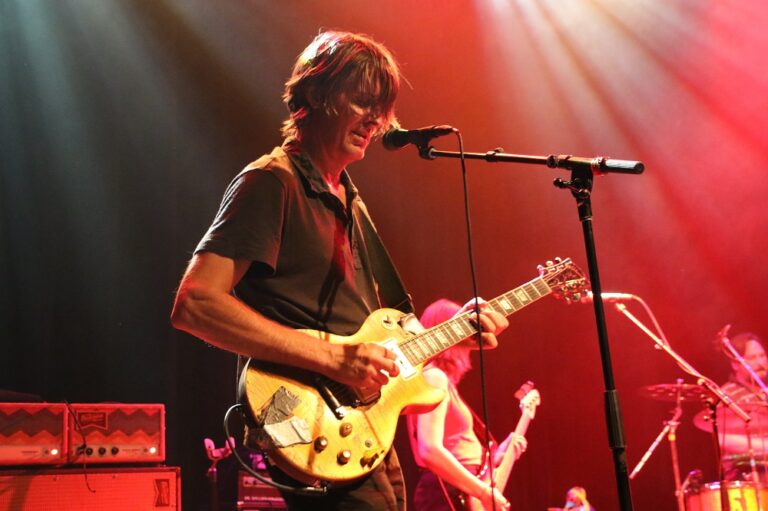
Tanya Donelly at the Brattle Theater, Cambridge, 6 October 2007.
Tanya Donelly guitars gear is the story of one of American indie rock’s most distinctive and most consistently undervalued voices — the equipment and approach of a guitarist and songwriter whose contributions to Throwing Muses, the Breeders, and Belly gave the early 1990s American alternative scene three separate bodies of work of genuine quality, and whose specific guitar approach — melodically inventive, harmonically sophisticated, emotionally direct — gave all three bands a specific quality that was uniquely hers. Donelly is one of those musicians whose influence is felt everywhere and credited nowhere specifically: the post-punk jangle, the melodic sophistication, the specific combination of sweetness and edge that characterised the best American indie rock of the early 1990s all owe something to her specific approach, even when the musicians who absorbed it can’t name the source.
The Journey
Her career trajectory — from Throwing Muses co-founder to Breeders co-founder (with Kim Deal) to Belly frontwoman and subsequently to solo artist — gave her an unusually broad range of creative contexts in which to develop and demonstrate her specific musical voice. Each band had different aesthetic requirements, different collaborators, and different commercial outcomes, and Donelly’s specific guitar and songwriting contribution to each was both consistent in its essential qualities and specifically adapted to each context. Tanya Donelly guitars gear served this consistency and adaptability simultaneously — instruments and amplification chosen for their ability to serve the full range of her musical needs across radically different band contexts. This is the complete breakdown.
Background
Tanya Donelly was born on July 14, 1966, in Newport, Rhode Island — a coastal New England town whose specific character gave her a musical formation shaped by the Northeast’s specific cultural atmosphere rather than the California or New York scenes that dominated the American indie landscape. She formed Throwing Muses with stepsister Kristin Hersh in Newport in 1981, when both were fifteen — an extraordinarily early start to a professional music career that gave her nearly a decade of professional musical development before the band’s most celebrated period. The band’s move to Boston and their signing to 4AD Records in 1986 — becoming the first American band signed to the British independent label — gave them the specific European alternative music context that shaped their aesthetic in ways that purely American-framed careers wouldn’t have.
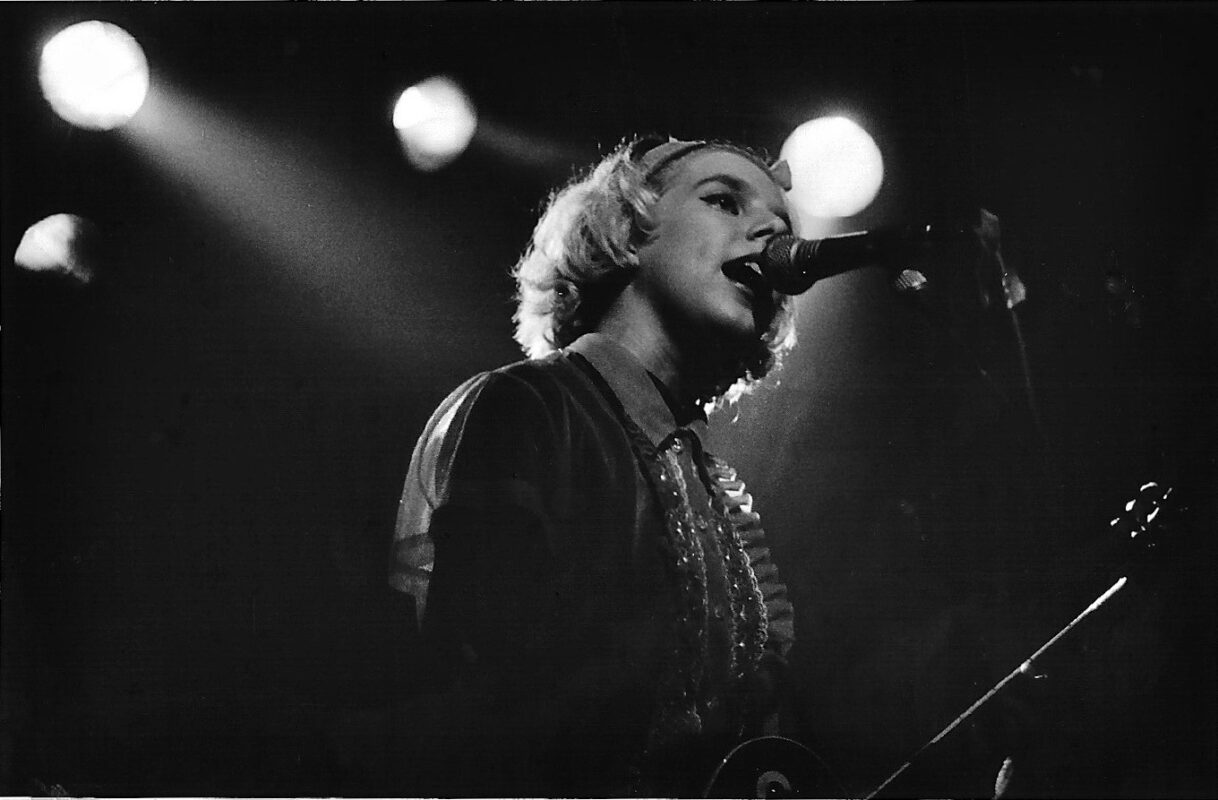
Her collaboration with Kim Deal to form the Breeders in 1989 — initially as a side project from both their main bands (Deal was in the Pixies) — gave her the specific creative partnership that produced Pod (1990) and the early Breeders material. Her departure from Throwing Muses in 1992 to focus on Belly gave her a vehicle for her more pop-oriented songwriting instincts, and Belly’s debut album Star (1993) — released to critical and commercial success — demonstrated that her melodic gift translated to a more accessible format without compromising its essential quality. King (1995) was the follow-up, and Belly’s eventual dissolution gave her the solo career that has continued to the present.
Tanya Donelly Guitars Gear: The Complete Rig
Guitars
The Fender Stratocaster has been Tanya Donelly’s primary guitar across her complete career — the instrument that gave her specific playing approach its most natural tonal expression. Her Stratocasters ranged from standard American production instruments to vintage-inspired examples, typically with Alnico V single-coil pickups and the five-position selector giving full access to the instrument’s tonal range. The Stratocaster’s dynamic responsiveness — its sensitivity to pick attack variation, its ability to produce a wide range of tonal characters from the same instrument by varying picking technique and pickup selection — suited the range of musical contexts her career spanned: the same instrument that gave the aggressive, angular passages of Throwing Muses their specific attack could give the melodic, sweet passages of Belly their warm, chiming quality.
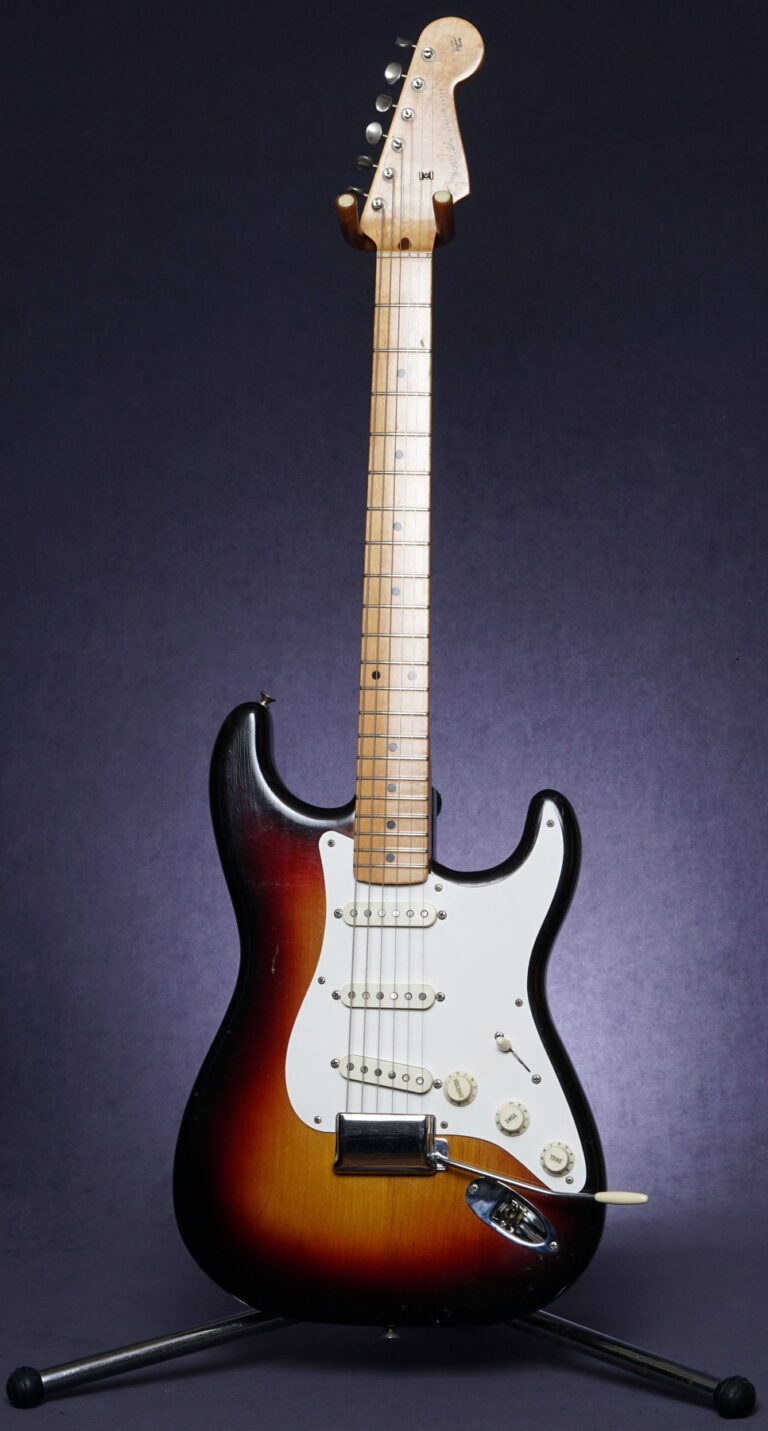
Her Stratocasters were typically set up with the tremolo bridge floating — giving access to the subtle arm vibrato that appeared in specific passages of her playing — and with the standard Fender string gauge (.010–.046) appropriate to the bending ease that her melodic approach required. Her use of all five pickup positions reflected a genuine understanding of the Stratocaster’s full tonal range: bridge for the more aggressive, cutting passages; middle for the characteristic “quack” on specific chord patterns; neck for the warmest, most melodically vocal lead passages.
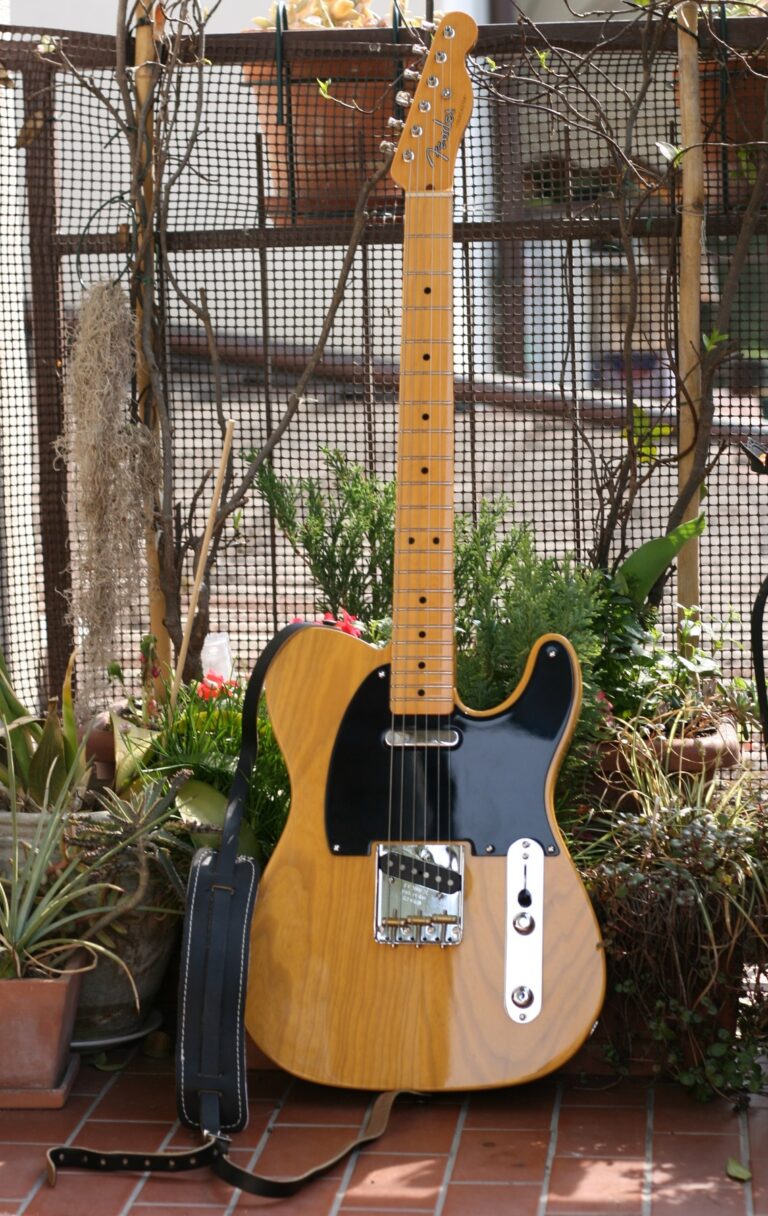
Fender Telecasters appeared in Donelly’s documented setup for specific applications where the Telecaster’s more percussive, more direct tonal character suited particular passages. Her Telecaster use was selective rather than primary — reaching for the Telecaster’s characteristic bridge twang when the Stratocaster’s more complex character was less appropriate.
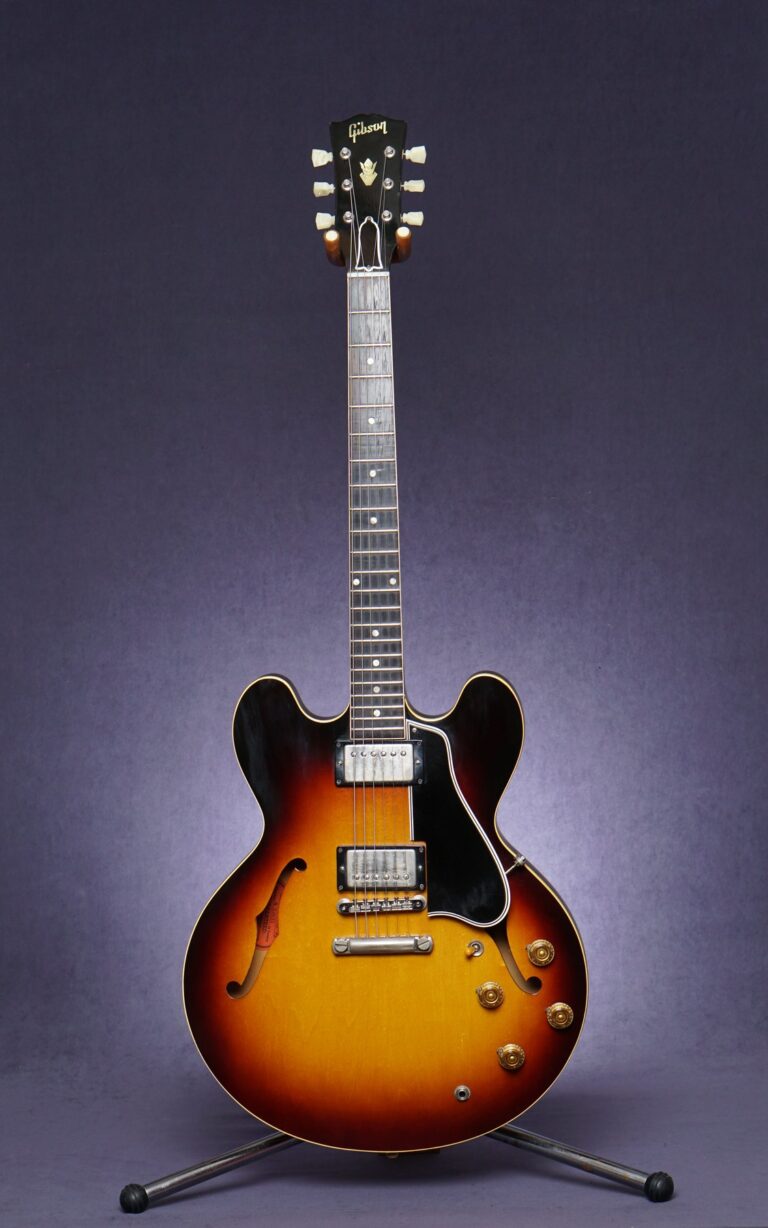
Gibson instruments — ES-335 semi-hollow and Les Paul solid-body — appeared in Donelly’s documented setup for specific warmer, more sustained applications. The semi-hollow ES-335’s warm, resonant character gave melodic lead passages a different vocal quality from the Stratocaster’s brighter single-coil character, and the Les Paul’s humbucker sustain served specific heavier or more sustained passages.
Rickenbacker guitars appeared in Donelly’s setup for specific periods where the Rickenbacker’s jangly, chiming character suited the melodic, harmonically sophisticated material she was developing. The Rickenbacker’s specific upper-midrange emphasis and its complex harmonic character gave chord-based playing a specific shimmer appropriate to the more melodically oriented material.
Various vintage and unusual instruments appeared across Donelly’s career — reflecting the pragmatic, music-serving approach to instrument selection that characterised her complete gear philosophy. Her willingness to use whatever instrument gave the right result for the specific application, regardless of its conventional status or market value, was consistent with the indie rock aesthetic’s general embrace of the full range of available guitar types.
Donelly’s Stratocasters used Fender Alnico V single-coil pickups in their stock configurations — the standard vintage-spec pickups giving the bright, dynamically responsive character appropriate to her playing approach. Her pickup choices were consistently practical rather than boutique: standard production pickups that gave the right result rather than specialty alternatives that might have given marginally different tonal qualities without significant practical advantage.
Donelly used standard Fender or D’Addario light-gauge strings (.010–.046) on her electric guitars — consistent with the standard indie rock practice appropriate to the bending ease and overall playing feel her approach required.
Amps
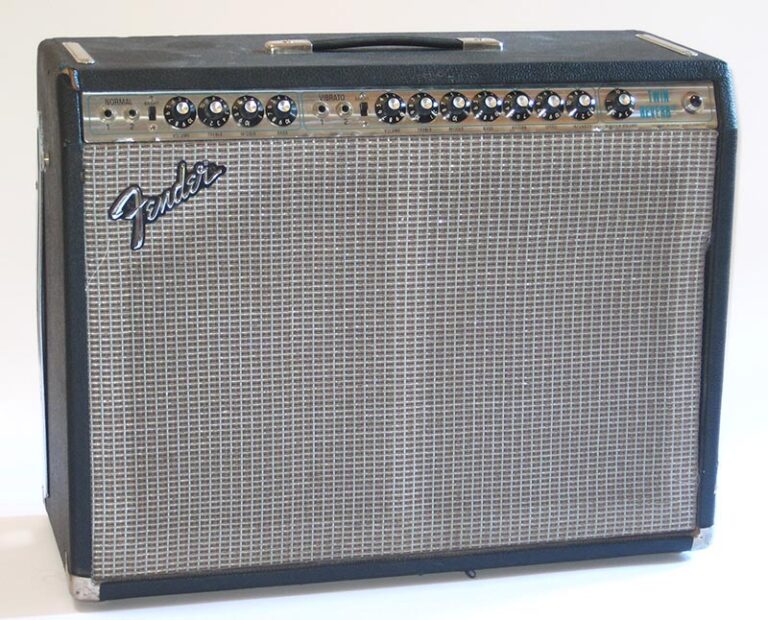
Fender amplifiers — primarily the Deluxe Reverb (22 watts, 6V6 output tubes) and the Twin Reverb (85 watts, 6L6GC output tubes) depending on the venue scale and volume requirements — provided Donelly’s clean tonal foundation across her career. The Fender clean character gave her Stratocaster’s single-coil output its most transparent amplification context, and the built-in spring reverb added the atmospheric dimension appropriate to the melodic, harmonically sophisticated material she was writing. Her Deluxe Reverb use in smaller venues gave the earlier, more natural saturation of the 6V6 output tubes — a gentle, warm breakup at moderate playing volumes that complemented the more melodically delicate material in her catalogue. The Twin’s higher headroom served the louder, more aggressive passages in the live performance context.
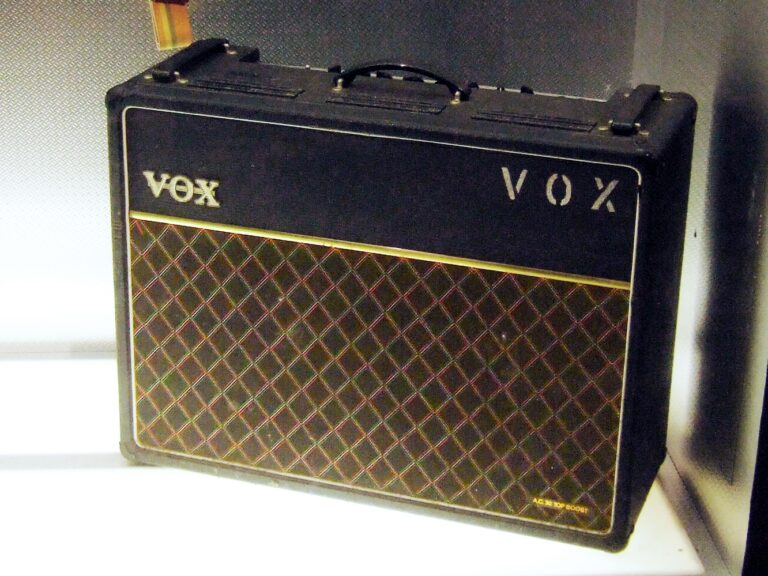
The Vox AC30 appeared in Donelly’s setup for specific applications where the British class-A EL84 character gave the chord-based, melodically sophisticated playing its characteristic warmth and compression. The AC30’s specific chime and the natural compression of the class-A output stage gave chord voicings their characteristic roundness and warmth — appropriate to the sweeter, more melodically accessible material she was developing during the Belly period particularly.
Marshall amplifiers appeared for specific applications requiring the British EL34 overdrive character — the heavier, more aggressive passages in Throwing Muses material and specific sections in the Belly and Breeders work. Her Marshall use was typically at moderate gain rather than extreme saturation — giving the natural British overdrive appropriate to the alternative indie rock context rather than the high-gain saturation of the heavier players.
Orange amplifiers appeared in Donelly’s more recent documented setup for their specific warm, compressed British character — giving a different tonal option from the Fender clean and Marshall overdrive alternatives.
Effects
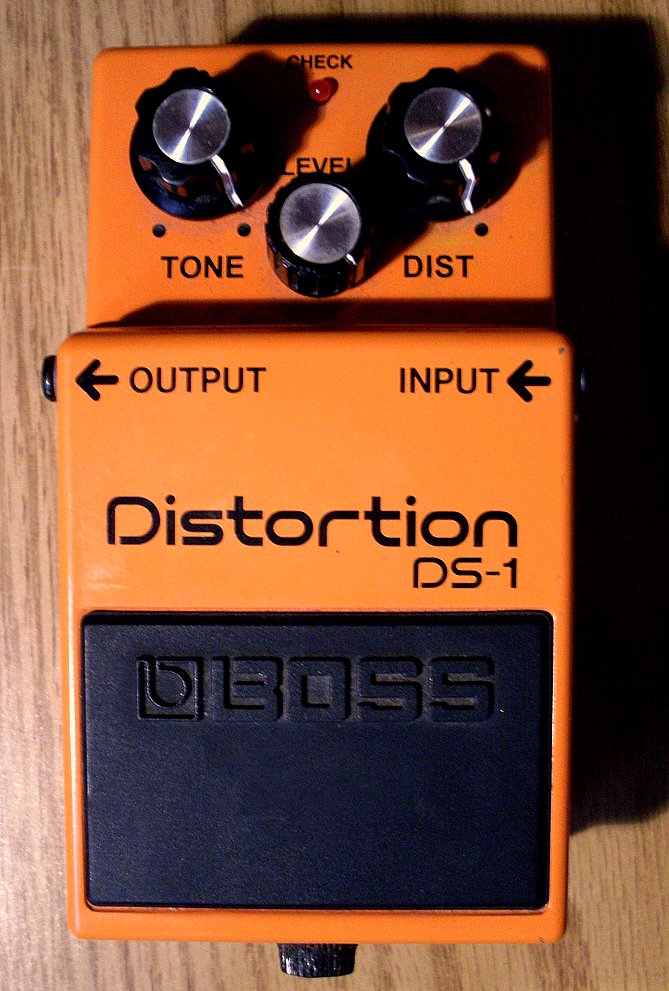
The Boss DS-1 appeared as a primary distortion source across multiple periods of Donelly’s career — consistent with its documented use by Adam Jones, Graham Coxon, Jonny Greenwood, and other players throughout this series. Her DS-1 use gave the more aggressive Throwing Muses and early indie rock material its specific mid-forward, hard-clipping distortion character.
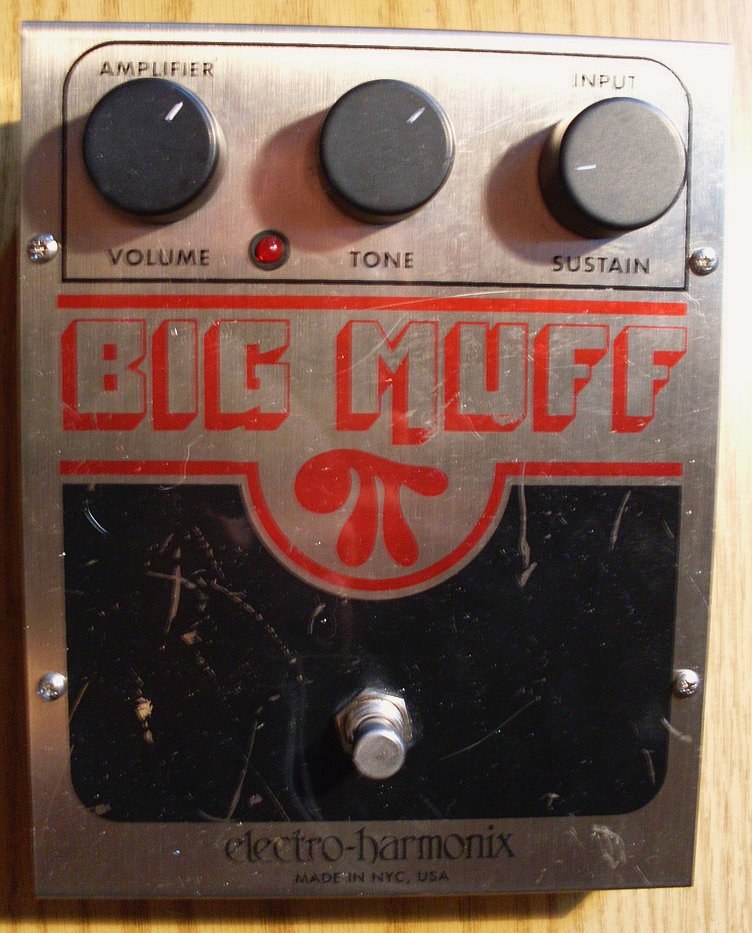
The Big Muff Pi appeared for specific fuzz applications in the more atmospherically dense material — giving the sustained, smooth fuzz character appropriate to the shoegaze-adjacent passages that appeared in both Throwing Muses’ more experimental work and the Breeders’ specific aesthetic.
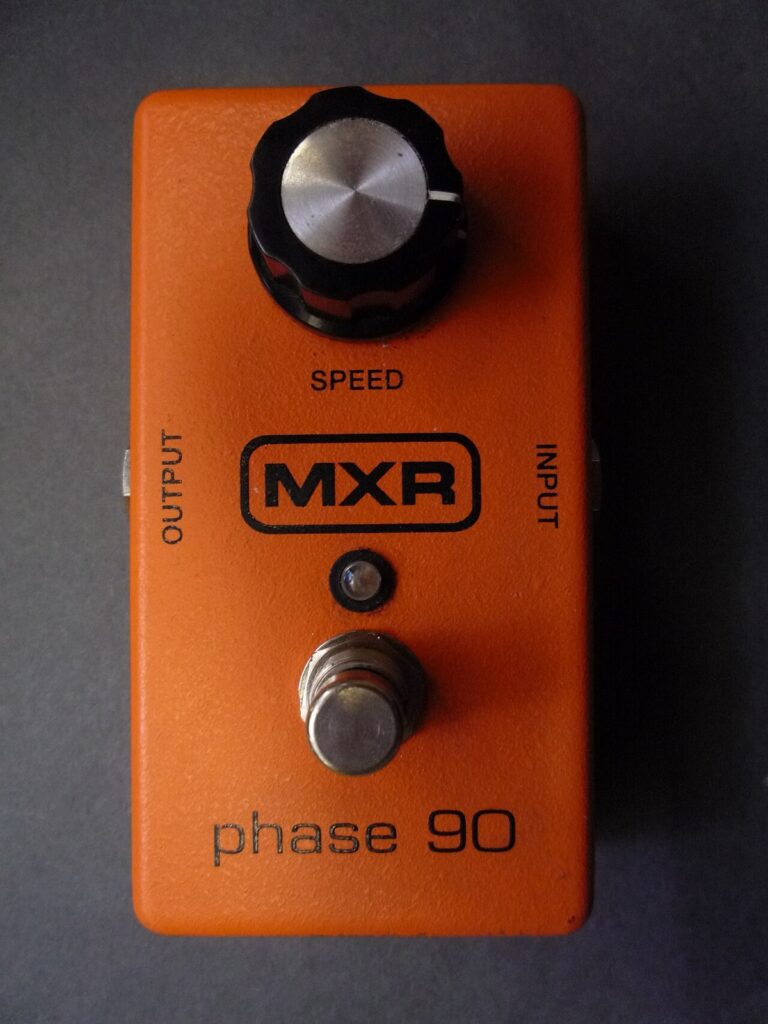
The Phase 90 appeared selectively for specific atmospheric applications — giving dimensional warmth to specific chord passages and sustained melodic lines in the more textural material. Her Phase 90 use was consistent with the selective but significant application documented for other players in the alternative and indie rock tradition.
The Boss CE-2 appeared for specific chord texture applications — adding dimensional width to the jangly chord-based playing characteristic of the more melodically oriented material. Her CE-2 use was restrained and musically motivated rather than as a constant tonal modifier.
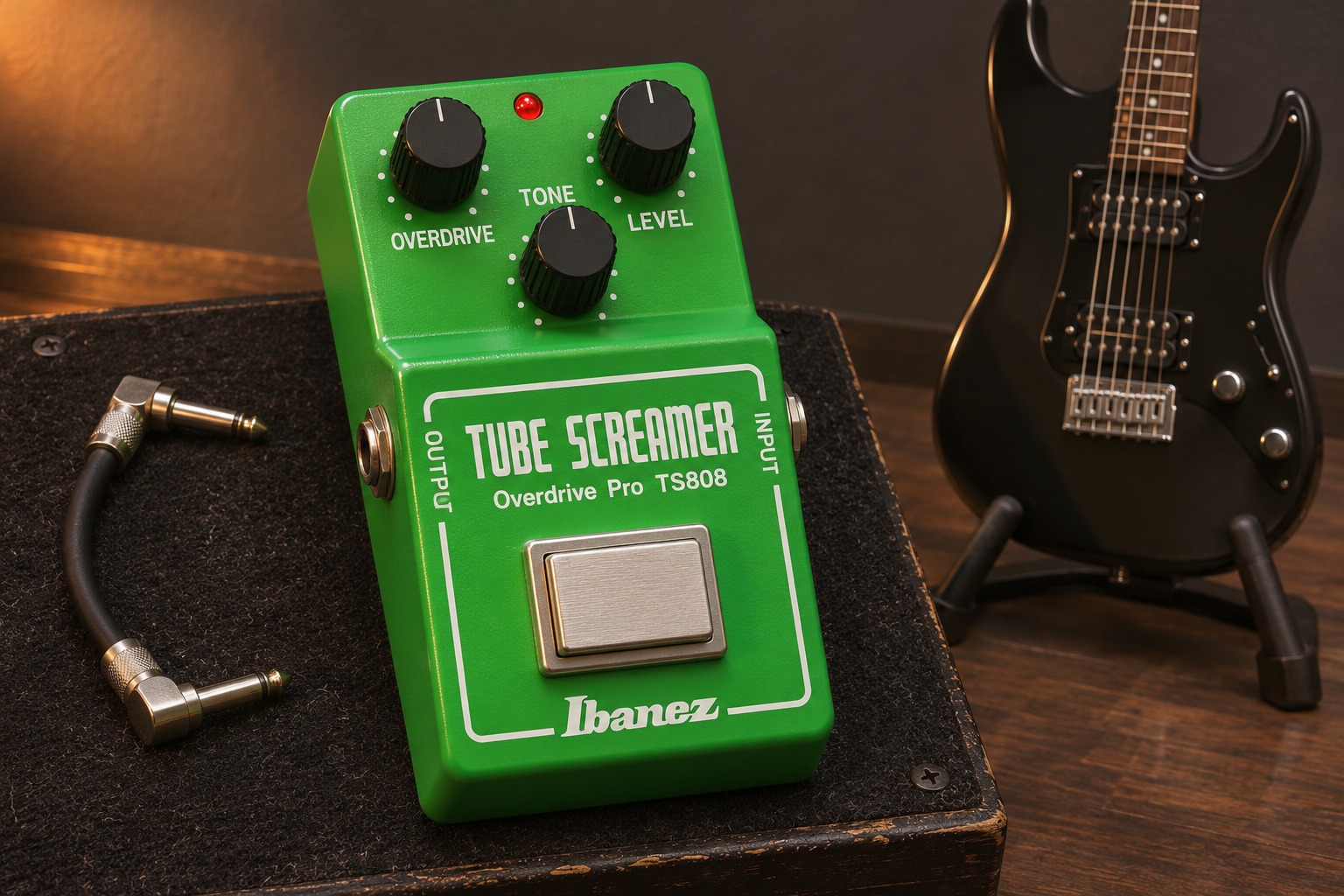
The Tube Screamer appeared for warm overdrive applications where the TS808’s midrange warmth gave a specific forward presence to lead passages and specific chord voicings. Her TS application was at low drive settings — using the midrange boost and soft-clipping character rather than heavy saturation.
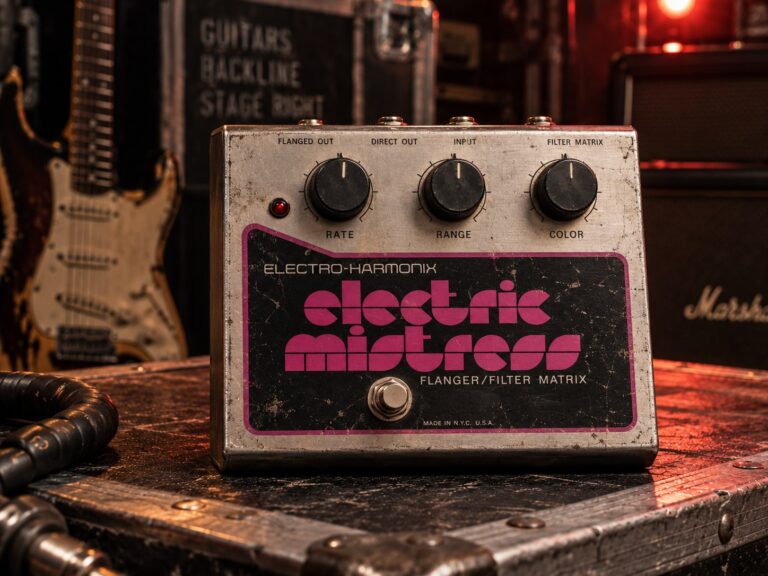
The Electric Mistress appeared for specific atmospheric flanger applications in the more textural passages — giving the liquid, swimming character of the BBD-based flanger documented extensively in the shoegaze and alternative sections of this series.
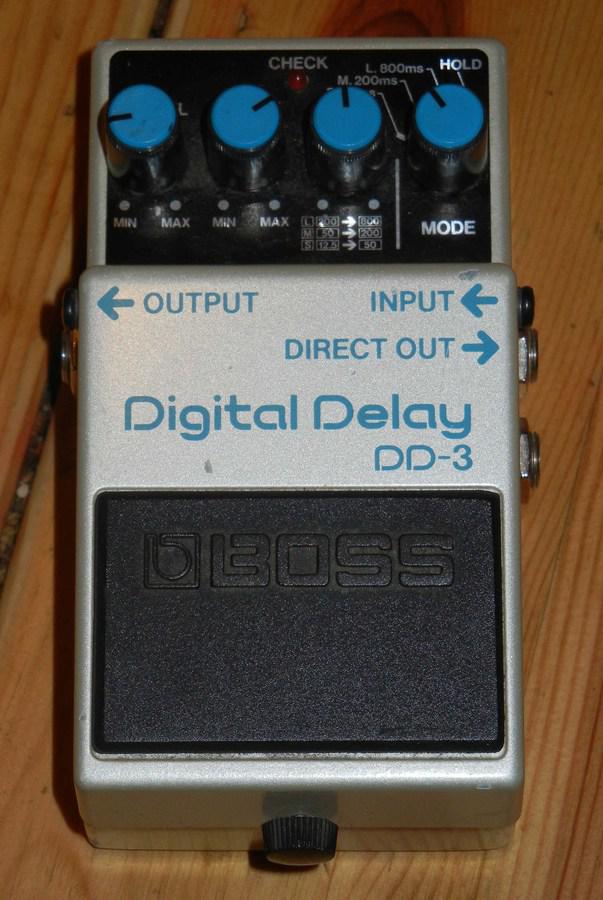
Boss digital delay provided spatial enhancement for lead passages and specific atmospheric effects — consistent with the standard application of moderate-repeat delay documented throughout the alternative and indie rock sections.
Wah pedals appeared selectively for specific expressive lead passages — the wah’s bandpass filter giving vocal, expressive qualities to specific melodic lines in the blues-influenced passages of her playing.
Standard Boss TU-2 for accurate on-stage tuning across the multiple-instrument contexts of her career.

Playing Style & Tone Philosophy
Tanya Donelly is one of the most melodically gifted guitarists in this series — a player whose specific gift for melodic invention, whose ability to find the exact right note at the exact right moment in a harmonic context, and whose specific combination of melodic sweetness and rhythmic directness gave the bands she was part of a musical dimension that her individual reputation doesn’t always fully capture. Her melodic intelligence was the quality that made her songs immediately singable — the specific property that separated a Belly or Throwing Muses melody from comparable indie rock material of the period and gave it a quality of inevitability that only the best popular music achieves.
Her rhythm guitar approach reflected the post-punk jangle tradition — the bright Fender clean through moderate effects, the chord voicings that gave harmonic information without overloading the ensemble texture, and the specific picking approach that gave rhythm guitar parts their rhythmic definition without the aggressive physical weight of the rock rhythm tradition. Her chord voicings were harmonically more sophisticated than standard power chords: specific suspended voicings, specific chromatic approach chords, and specific extended harmonies gave her rhythm playing a harmonic richness that enriched the complete arrangement while maintaining the physical directness appropriate to the indie rock format.
Her lead playing was the element most directly connected to her songwriting gift — the melodic lines she wrote as guitar leads had the same quality of inevitable rightness as her vocal melodies. The specific relationship between her guitar leads and her vocal approach was one of the most distinctive elements of the Belly and solo material: the guitar lines were not merely accompaniment to the vocals but melodic voices in their own right, sometimes anticipating the vocal melody, sometimes echoing it, sometimes commenting on it in counterpoint. This integration of guitar and voice — treating both as melodic voices within the same compositional framework — was her most specific and most personal musical quality.
Her work within the Breeders’ dual-guitar context — alongside Kim Deal’s bass-forward, more rhythmically grounded approach — gave an interesting parallel to the dual-guitar partnerships documented throughout this series. Where Deal’s approach was more rhythmically direct and harmonically minimal, Donelly’s was more melodically and harmonically sophisticated — the two approaches complementing each other to give the Breeders their specific dual character. The transition from the Breeders to Belly — from a context in which her melodic sophistication was one element in a collaborative ensemble to a context in which it was the primary defining voice — gave her music a quality of uncompromised melodic directness that the more democratic creative process of the Breeders had moderated.
Tonally, Tanya Donelly guitars gear philosophy was built on the Stratocaster’s transparent, dynamically responsive character and the Fender amplifier’s clean honesty — the same combination documented for Richard Lloyd, Ivan Kral, and Billy Zoom in this series, deployed toward a different but equally coherent musical purpose. The effects supplemented specific passages rather than defining the overall character: the DS-1 for the more aggressively distorted sections, the Big Muff for fuzz-specific applications, the Phase 90 for atmospheric dimension, the CE-2 for chord texture. The emphasis was consistently on the music’s melodic content rather than the guitar’s sonic identity as an independent tonal object.
The 4AD Records aesthetic context — and its specific influence on how Tanya Donelly guitars gear was conceptualised and deployed — deserves expanded examination because 4AD’s specific aesthetic framework gave Throwing Muses a conceptual home that shaped both players’ understanding of their music’s place within the larger alternative music landscape. 4AD, founded by Ivo Watts-Russell and Martin Mills in 1980, built its reputation on releases that shared specific qualities: sonic texture as a primary compositional parameter, emotional depth over commercial accessibility, and the specific quality of music that seemed to come from a place outside conventional popular music’s requirements. The label’s roster — Cocteau Twins (ethereal guitar textures and vocal processing), Dead Can Dance (global music influences synthesised into darkly beautiful compositions), This Mortal Coil (ambient-folk-classical assemblages), Pixies (avant-garde pop with extreme dynamic contrasts) — gave a specific aesthetic community whose collective values shaped what releases on the label could aspire to. For Donelly specifically, the 4AD context gave the validation that melodic beauty and sonic sophistication were compatible rather than competing values — that a song could be both beautiful and serious, both accessible and artistically ambitious. Her subsequent Belly work demonstrated this understanding most directly: Star‘s combination of accessible pop melody and harmonic sophistication reflected the same synthesis that 4AD’s best work achieved, applied to the more commercially oriented pop rock format that Belly occupied.
The specific Throwing Muses dual-guitar dynamic between Donelly and Kristin Hersh — and the technical and musical dimensions of how two such different playing approaches coexisted within the same band — deserves examination at a level more specific than the biographical overview provides. Hersh’s guitar approach was characterised by specific non-standard tunings (her own devisings, not conventional open tunings), irregular rhythmic patterns that crossed conventional bar lines, and a strumming approach that gave chords a physical roughness and rhythmic energy completely at odds with conventional rhythm guitar playing. Donelly’s approach, by contrast, used standard tunings, more conventional rhythmic placement, and the specific harmonic and melodic vocabulary documented in this article. The challenge of playing together within this framework — maintaining rhythmic coherence between two guitar approaches whose individual patterns were so different — gave both players a specific musical development that neither would have achieved in a more conventional dual-guitar context. Donelly’s ability to provide harmonic and rhythmic anchoring for Hersh’s more unpredictable approach — creating the stable foundation within which Hersh’s more extreme gestures could be fully felt — was itself a specific skill that required understanding both the music’s specific rhythmic logic and the guitar’s role within it. Tanya Donelly guitars gear in the Throwing Muses context served this anchoring function: the Stratocaster’s transparency gave the harmonic information clearly; the Fender amplifier’s clean character gave the rhythmic definition its full articulation; and the moderate effects supplementation gave specific passages the textural dimension they needed without competing with Hersh’s more extreme tonal approach.

The Newport, Rhode Island context — and its specific cultural atmosphere relative to the Boston and New York scenes that dominated the American indie landscape — gave Donelly and Hersh a slightly different musical formation from players who grew up in the major cultural centres. Newport’s specific character — a historic coastal city, socially stratified between old money and working class, geographically removed from the major metropolitan musical scenes — gave the two musicians a relationship to rock music that was self-directed and somewhat isolated, developing through their own specific interests rather than through absorption of locally available scene culture. This kind of isolated, self-directed development often produces musicians with more idiosyncratic and more personally specific approaches than the more heavily socialised development of musicians who grow up in established scenes — the absence of immediate models and peer pressure gives more room for genuinely personal aesthetic choices. Donelly’s specific melodic gift — the quality of originality in her melodic inventions that distinguished them from the melodic vocabulary of her immediate contemporaries — may have been partly enabled by this relative isolation from the accumulated conventions of established local scenes. Tanya Donelly guitars gear served this original melodic voice: the transparent, dynamically responsive Stratocaster and the clean, honest Fender amplification gave her specific melodic inventions their most unmediated expression.
The Fender Deluxe Reverb’s specific contribution to Donelly’s tonal character — and the distinction between its 6V6 output stage and the Twin Reverb’s 6L6GC — is worth specific examination because the two amplifiers give meaningfully different tonal characters for her melodically oriented applications. The 6V6GT (used in the Deluxe) and the 6L6GC (used in the Twin) are both American output tubes but with different characteristics: the 6V6GT has a lower plate dissipation (14 watts per tube versus the 6L6GC’s 30 watts) and a slightly different transconductance curve, giving it a softer, slightly warmer saturation character at the threshold of natural overdrive. The Deluxe Reverb’s 22-watt output (two 6V6GT tubes) saturated at lower playing volumes than the Twin’s 85-watt output (two 6L6GC tubes), giving the Deluxe a natural warm breakup at club playing volumes that the Twin maintained clean. For Donelly’s most melodically delicate material — the passages where a gentle amplifier warmth complemented the melodic sweetness rather than overwhelming it with the Twin’s more powerful character — the Deluxe’s earlier, softer saturation was specifically appropriate. The distinction between “clean amplification with a little warmth” (the Deluxe at moderate volumes) and “clean amplification without warmth” (the Twin at the same volumes) was meaningful for material whose emotional character depended on that specific quality of gentle warmth.
How to Sound Like Tanya Donelly
Guitar Approach
A Fender Stratocaster (American Professional II or American Vintage II for accessible quality, or vintage pre-CBS for the most historically authentic specification) with Alnico V single-coil pickups, floating tremolo bridge, and standard light-gauge strings (.010–.046) is the foundation of Tanya Donelly guitars gear tone. Use all five pickup positions across the playing range — middle and middle-bridge combinations for the characteristic “quack” of jangly chord playing; neck for warm, melodic lead passages; bridge for the more aggressive, cutting material. The floating tremolo gives access to subtle arm vibrato for specific expressive passages.
The melodic approach is the essential element: study Donelly’s songwriting alongside her guitar playing to understand how her melodic lines function as compositional elements within the complete arrangement rather than as technical demonstrations. The guitar lines in Belly’s material particularly — the specific way they anticipate and complement the vocal melody — demonstrate the integration of guitar and voice that is her most distinctive musical quality.
Amp Approach
A Fender Deluxe Reverb (22 watts, 6V6 output tubes, single 12-inch speaker, tube spring reverb) for most applications — the Deluxe’s natural breakup at moderate volumes giving appropriate warmth for the more melodically delicate material. Fender Twin Reverb for higher-volume applications requiring clean headroom. Vox AC30 for the sweeter, more chiming Belly-period material where the British class-A character suits the melodic sweetness.
| Control | Setting (0–10) | Notes |
|---|---|---|
| Deluxe Reverb Volume | 5–6 | Moderate — pushing toward natural 6V6 saturation for the sweet breakup appropriate to melodic material |
| Bass | 5 | Neutral — Strat’s balanced response needs neutral bass setting |
| Treble | 6 | Present — Alnico V single-coils give natural brightness; support rather than emphasise |
| Reverb | 4 | Moderate spring reverb — atmospheric spatial depth appropriate to the melodic indie aesthetic |
| Boss DS-1 (distortion, aggressive passages) | Drive 5, Tone 5, Level 6 | Standard indie rock distortion for Throwing Muses-style heavier passages |
| TS808 (warm overdrive, lead) | Drive 2, Tone 5, Level 6 | Minimal drive — warm midrange presence for melodic lead passages above rhythm guitar |
| Big Muff Pi (fuzz, specific) | Sustain 6, Tone 5, Vol 7 | Selective fuzz for specific atmospheric passages — not constant use |
| Phase 90 Speed | 1–2 | Very slow — atmospheric dimensional warmth for sustained chord passages |
| Boss CE-2 Rate/Depth (chord textures) | Rate 3, Depth 3 | Subtle chorus for specific jangly chord texture passages |
| DD-3 Delay (spatial depth) | 200–300ms, 1 repeat, 15% mix | Moderate spatial delay for melodic lead passages |
Fender Deluxe Reverb clean-to-gentle-breakup as the foundational tonal character. Boss DS-1 for more aggressive distorted passages. TS808 at minimal drive for warm lead midrange presence. Big Muff Pi for specific fuzz applications. Phase 90 at very slow speed for atmospheric chord dimension. Boss CE-2 for selective chord texture width. Boss DD-3 for spatial depth on lead passages. Vox AC30 as an alternative amplifier for the melodically sweetest material. The most important principle: serve the melody — every element of the setup should make the melodic content more audible and more effective rather than asserting its own tonal identity.
Influence & Legacy
Tanya Donelly’s influence on American indie rock is both real and somewhat diffuse — her specific contributions to Throwing Muses, the Breeders, and Belly gave the early 1990s alternative scene three separate bodies of work whose melodic intelligence and harmonic sophistication raised the ceiling of what indie rock songwriting could achieve, but her consistent self-deprecation and the commercial arc of her career (Belly’s commercial peak was brief; Throwing Muses remained a cult act) gave her legacy a lower public profile than her musical contributions warranted.
Her specific contribution to the development of women in indie rock — as a guitarist and songwriter who built a complete creative identity across multiple band contexts — gave subsequent female musicians in the American indie scene a model of creative autonomy and musical seriousness that the earlier rock tradition had rarely provided. The Throwing Muses, Breeders, and Belly work demonstrated that female guitarist-songwriters could build careers on genuine musical achievement rather than on the limited roles that the rock tradition had previously made available.

The comparison with Bilinda Butcher — another female guitarist whose contributions to a celebrated band were consistently undervalued relative to her male bandmate’s — shows the persistent pattern of female instrumentalists’ under-recognition documented throughout this series. The parallel with Kim Gordon — the Sonic Youth co-founder whose similar approach to creating a complete creative identity as a female guitarist-vocalist in the American indie underground paralleled Donelly’s own development — shows the specific tradition of female guitarists who built their own creative frameworks within the American indie rock scene rather than conforming to the roles available within male-dominated band structures. And the connection to Kristin Hersh — her Throwing Muses stepsister and primary creative partner, whose more aggressive and more angular approach to guitar and songwriting gave the Throwing Muses their dual character in the same way that Donelly’s melodic sweetness and Hersh’s dissonant angularity complemented each other — places Tanya Donelly guitars gear in the specific dual creative partnership that was the most important and most productive relationship of her musical career.
Read our guide to the Fender Twin Reverb.
Frequently Asked Questions: Tanya Donelly Guitars & Gear
What guitar does Tanya Donelly play?
Tanya Donelly’s primary guitar across her career has been the Fender Stratocaster — in standard American production and vintage-inspired configurations with Alnico V single-coil pickups and floating tremolo bridge. Her Stratocaster commitment reflected genuine preference for the instrument’s specific dynamic responsiveness and full tonal range across all five pickup positions. Fender Telecasters served specific applications where the Tele’s more percussive character suited the material; Gibson ES-335 and Les Paul appeared for warmer, more sustained applications; and Rickenbacker guitars appeared for specific jangly periods.
What amplifier does Tanya Donelly use?
Donelly’s primary amplification across her career has been Fender — specifically the Deluxe Reverb (22 watts, 6V6 output, tube spring reverb) for most applications and the Twin Reverb for higher-volume contexts. The Vox AC30 appeared for specific applications where the British class-A EL84 character suited the melodic sweetness of the Belly material. Marshall amplifiers served specific heavier applications in the Throwing Muses and early indie rock material.
What was the relationship between Tanya Donelly and Kristin Hersh in Throwing Muses?
Donelly and Hersh co-founded Throwing Muses as teenagers and developed the band’s dual creative dynamic over more than a decade. The two guitarists’ approaches were significantly different: Hersh’s more angular, dissonant, and rhythmically unpredictable approach gave the band its experimental, anti-commercial edge; Donelly’s more melodically accessible and harmonically sophisticated approach gave it the accessibility that allowed the band to reach beyond the cult audience that pure Hersh-style material might have attracted. The creative tension between these two approaches was productive — each pushed the other to develop in directions they might not have explored independently — and Donelly’s departure in 1992 represented the end of the specific creative partnership that had given the band its defining character.
What was Belly and why did it succeed?
Belly was the band Donelly formed after leaving Throwing Muses in 1992, initially with guitarist Tom Gorman, bassist Gail Greenwood, and drummer Chris Gorman. Belly’s debut album Star (1993) was a commercial and critical success, reaching #2 in the UK album charts and producing the singles “Feed the Tree” and “Gepetto.” Belly’s success reflected Donelly’s melodic gift finding its most uncompromised expression in a context where she was the primary creative voice — the songs’ specific combination of accessible melody and harmonic sophistication giving them an appeal that neither Throwing Muses’ more experimental approach nor the Breeders’ more minimal aesthetic had achieved commercially.
What is Tanya Donelly’s relationship to the Breeders?
The Breeders were co-founded by Donelly and Kim Deal (Pixies bassist) in 1989 as a side project for songs that didn’t fit their respective main bands. Donelly participated in the Pod (1990) album and the subsequent Safari EP before departing in 1992 to focus on Belly. The Breeders continued with Kim Deal as primary creative voice, eventually achieving mainstream success with “Cannonball” (from Last Splash, 1993). Donelly’s Breeders contributions demonstrate her ability to work within a creative partnership in which her melodic approach complemented Deal’s more rhythmically grounded, harmonically minimal style.
How did 4AD Records shape Throwing Muses and Donelly’s musical development?
Throwing Muses’ signing to 4AD Records in 1986 gave them access to the specific aesthetic community of British independent music that the label represented — Cocteau Twins, Dead Can Dance, This Mortal Coil, and other acts whose work shared a commitment to sonic texture, emotional depth, and artistic seriousness over commercial accessibility. This European indie aesthetic gave Throwing Muses a framework for understanding their own work that the American indie landscape of the mid-1980s had not yet fully developed, and it shaped both Donelly’s and Hersh’s understanding of what alternative music could aspire to. The 4AD context gave Donelly specifically the confidence to pursue melodic sophistication rather than treating it as a commercial compromise — within the 4AD aesthetic, musical beauty and artistic seriousness were compatible.
What are Tanya Donelly’s most important recordings?
The Throwing Muses catalogue gives the development of her approach in the collaborative context: Throwing Muses (1986, self-titled debut), The Fat Skier (1987 EP), House Tornado (1988), and Hunkpapa (1989) each demonstrate the Donelly-Hersh creative partnership at different stages. The Breeders’ Pod (1990) gives the Donelly-Deal collaboration. Belly’s Star (1993) gives the most accessible and most commercially successful expression of her specific melodic voice. Her solo albums — from Lovesongs for Underdogs (1997) to more recent recordings — give the continuing development of her individual voice in a context of complete creative freedom.
The Breeders’ Pod album — and Donelly’s specific contribution to it — gives a specific case study in how her melodic approach functioned within a different creative framework from either Throwing Muses or Belly. Kim Deal’s production philosophy for Pod was specifically minimal: close-miked acoustic instruments, limited overdubbing, and a deliberate avoidance of the production polish that was standard in major-label alternative rock of the period. Within this deliberately spare framework, Donelly’s more melodically elaborate guitar contributions gave the album its specific tonal complexity — her chord voicings and lead passages adding harmonic and melodic information that Deal’s bass-centred approach left space for. The specific quality of Pod that distinguished it from both the Pixies’ material (with which Deal was simultaneously involved) and Throwing Muses’ work was this combination: Deal’s spare, rhythmically grounded production with Donelly’s more melodically elaborate guitar contributions giving the album its specific character. Tanya Donelly guitars gear on Pod was the Stratocaster and clean Fender approach — serving the album’s minimal production philosophy while adding the melodic and harmonic complexity that gave the complete picture its specific quality. Her departure from the Breeders in 1992 changed the band’s subsequent direction toward Deal’s more exclusively bass- and rhythm-centred approach, and the comparison between Pod (with Donelly) and Last Splash (without) gives an audible account of exactly what she brought to the creative collaboration.

The guitar-voice integration that gave Belly’s best material its specific quality — the way Donelly’s guitar lines anticipated, echoed, and commented on her vocal melodies — represents a compositional sophistication that is rarely discussed explicitly in guitar writing but that distinguishes the finest singer-guitarist work from merely competent multi-tasking. Most singer-guitarists treat the guitar as accompaniment — playing chords and patterns that support the vocal melody harmonically and rhythmically without engaging it in melodic conversation. The finest singer-guitarists — Joni Mitchell being the supreme example in contemporary popular music, but Donelly doing something analogous in a completely different stylistic context — treat guitar and voice as two separate melodic voices within the same composition, each having its own melodic logic while also relating to the other’s melodic development. Donelly’s Belly guitar work gave specific songs specific guitar-voice conversations: the guitar introducing a melodic idea that the voice subsequently developed; the guitar providing a melodic commentary on the vocal line that gave the complete picture additional harmonic and melodic interest; the guitar and voice occasionally converging on the same note from different directions to give a specific moment of melodic emphasis. These moments — audible throughout Star and in her solo work — gave Tanya Donelly guitars gear its most specific and most personal expression: not merely the equipment of a rhythm guitarist who also sings, but the toolkit of a composer for whom guitar and voice were two equal melodic voices in a complete musical statement.
The Boss CE-2’s specific role in Donelly’s jangly chord-texture applications — and the distinction between the CE-2’s BBD-based character and the more common digital chorus alternatives that dominated by the mid-1990s — reflects a quality-of-modulation distinction that is important for the specific chord-texture applications she used it for. The CE-2’s BBD (Bucket Brigade Device) analog circuit gave a warmer, slightly less precise modulation character than digital chorus alternatives: the BBD’s specific frequency response limitations (a gentle high-frequency roll-off at the highest modulation frequencies) gave the chorus a quality of analog warmth that digital alternatives’ more precise, more transparent character didn’t replicate. For Donelly’s jangly chord-based playing — where the chorus was adding dimensional width to already-harmonically-complex Stratocaster chord voicings — the CE-2’s warm, slightly imprecise analog character gave a more organic, more musically appropriate texture than digital alternatives would have provided. The CE-2’s specific response at her preferred settings (slow speed, moderate depth) gave a wide, slightly languorous dimensional width that suited the melodic sweetness of the Belly material particularly — the chorus itself contributing a quality of gentle warmth that matched the emotional character of the material it was applied to. Tanya Donelly guitars gear’s effects philosophy, in this dimension, reflected the same preference for organic analog character over digital precision that characterised many of the most distinctive guitar sounds documented throughout this series.
One final note on the legacy dimension of Tanya Donelly guitars gear: the specific way that her multi-band career gave subsequent musicians a model for creative autonomy that was genuinely unusual in the early 1990s indie rock context. Most musicians of her generation and genre were defined by a single band identity — X was Billy Zoom and the others, Sonic Youth was the complete entity, Radiohead was always Radiohead. Donelly built three separate creative identities — Throwing Muses member, Breeders co-founder, Belly frontwoman — within a single career, and each gave a different but equally complete expression of specific musical values. This model of creative independence — building multiple creative contexts rather than being defined by a single band identity — was itself a form of artistic freedom that the rock tradition’s emphasis on band loyalty and consistent identity rarely accommodated. Her subsequent solo work extended this independence further, giving a continuing platform for the specific melodic voice that all three band contexts had expressed in their different ways. Tanya Donelly guitars gear, deployed across this complete career arc, served this consistent musical voice in multiple contexts — the same essential approach, the same Stratocaster-and-Fender transparency, the same melodic intelligence, adapted specifically to each creative context’s requirements without ever compromising its essential character.
The Throwing Muses’ signing to Sire Records (for American distribution) alongside 4AD (for UK/Europe) gave Donelly and Hersh a specific commercial context that is worth noting as a factor in understanding the band’s position within the American indie landscape. Sire Records was Seymour Stein’s label — the same label that had signed the Ramones, Talking Heads, and Undertones, and that subsequently signed Madonna. This positioning — between the avant-garde European aesthetic of 4AD and the commercial rock world of Sire — gave the Throwing Muses a specific cultural location that was neither fully underground nor fully mainstream, and this liminal position shaped the band’s development in ways that a more clearly defined commercial or artistic positioning would not have. For Donelly specifically, this dual context gave her experience of both the European indie aesthetic’s emphasis on artistic seriousness and the American commercial label’s legitimate interest in accessible music — a dual exposure that informed her subsequent career’s ability to balance artistic quality and melodic accessibility in ways that neither purely underground nor purely commercial contexts would have developed equally. Tanya Donelly guitars gear, in this context, was the equipment of a musician whose career had given her experience of both extremes of the alternative music spectrum, and whose melodic intelligence was sophisticated enough to operate effectively within both.
Image credits
- Ibanez Tube Screamer TS808 / TS9 (warm overdrive, selective): GuitarGangsters AI-generated reference illustration, not a photograph.
- Boss OD-2 Turbo Overdrive and OD-2R pedals side by side: Kuriosatempel, Wikimedia Commons, CC BY-SA 4.0.
- Tanya Donelly: forbiddendoughnut, Wikimedia Commons, CC BY-SA 2.0.
- Tanya Donelly: Abby Ladybug, Wikimedia Commons, CC BY 2.0.
- Top image: Tanya Donelly at the Brattle Theater, Cambridge, Massachusetts, 6 October 2007. Photo: audrey_sel, via Wikimedia Commons, CC BY-SA 2.0. Full original frame retained; proportionally resized for display. No crop or retouch by GuitarGangsters. Adaptations must use the same or a compatible license.
- Tanya Donelly: photo by Greg Neate from Sussex, UK, via Wikimedia Commons, CC BY 2.0.
- Fender Stratocaster: Lightburst, Wikimedia Commons, CC BY-SA 4.0.
- Fender Telecaster: Massimo Barbieri, Wikimedia Commons, CC BY-SA 3.0.
- Gibson ES-335: Lightburst, Wikimedia Commons, CC BY-SA 4.0.
- Fender Twin Reverb: Micahmedia, Wikimedia Commons, CC BY 3.0.
- Vox AC30 Top Boost: wetwebwork; existing crop and contrast/color adjustments: Clusternote, Wikimedia Commons, CC BY-SA 2.0.
- Boss DS-1 Distortion: Roadside Guitars, Flickr, CC BY-SA 2.0.
- Electro-Harmonix Big Muff Pi: Roadside Guitars, Flickr, CC BY-SA 2.0.
- Electro-Harmonix Electric Mistress: GuitarGangsters AI-generated reference illustration, not a photograph.
- Boss DD-3 Digital Delay: JuandiLOL, Wikimedia Commons, CC BY-SA 3.0.
- MXR Phase 90: Roadside Guitars, Wikimedia Commons, CC BY-SA 2.0.
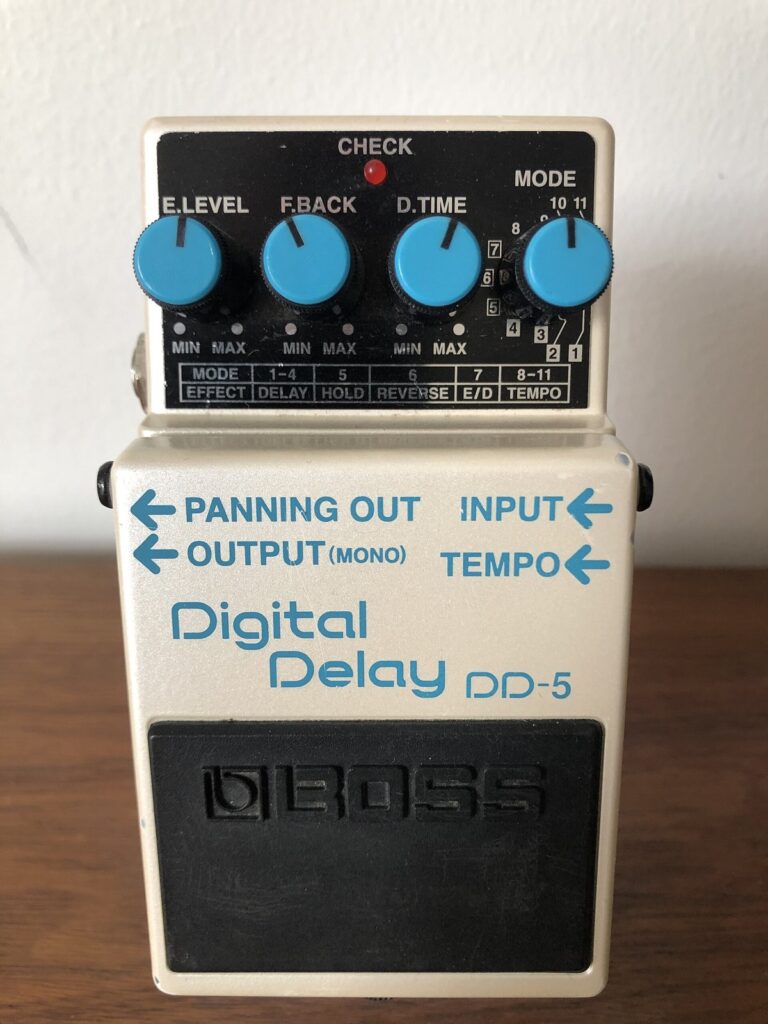
- Boss DD-5 Digital Delay: Kuriosatempel, Wikimedia Commons, CC BY-SA 4.0.
- Boss TU-2 Chromatic Tuner: GuitarGangsters AI-generated reference illustration, not a photograph.