
Stephen Malkmus Guitars & Gear: Pavement’s Slacker Genius Complete Rig Guide
Stephen Malkmus guitars gear — Fender Jaguar, Deluxe Reverb, Boss DS-1 deep-dive for Pavement's lo-fi indie genius and the Jicks frontman's complete rig.
Stephen Malkmus and the Jicks, Gothic Theater, 31 July 2018. Photo: Julio Enriquez. Work: Stephen Malkmus & the Jicks // Soccer Mommy ::: Gothic Theater ::: 07.31.18. CC BY 2.0: https://creativecommons.org/licenses/by/2.0/ Source: https://www.flickr.com/photos/julioenriquez/44294783372/ Site file unchanged from source.
Stephen Malkmus guitars gear is the subject of American indie rock’s most influential and most deceptively casual guitar story — the equipment and approach of the songwriter and guitarist who gave Pavement their specific quality of effortless brilliance, whose lo-fi production aesthetic and apparently shambling guitar style concealed genuine compositional sophistication and melodic invention, and whose subsequent work with the Jicks demonstrated that the apparent casualness was a deliberate aesthetic choice rather than technical limitation. Pavement’s influence on the 1990s American indie landscape — and on subsequent generations of indie guitarists who absorbed the band’s specific combination of melodic accessibility, structural unpredictability, and lo-fi sonic texture — was profound, and Malkmus’s specific guitar approach was central to that influence.
The Journey
His career — Pavement’s five studio albums between 1992 and 1999, the band’s hiatus and subsequent 2010 and 2022 reunion tours, and the parallel Jicks career that has continued productively since 2001 — demonstrated a musician whose specific aesthetic values (melodic inventiveness, structural looseness, lo-fi sonic texture, lyrical wit and obliqueness) remained consistent while the specific musical contexts evolved. The “slacker” label that attached to Pavement and to Malkmus specifically was always somewhat misleading — the apparent effortlessness concealed real craft, and the apparent casualness was itself a specific aesthetic position rather than an absence of one. This is the complete breakdown of Stephen Malkmus guitars gear, technique, and tonal philosophy.
Background
Stephen Joseph Malkmus was born on May 30, 1966, in Santa Monica, California, and grew up in Stockton, California — California’s Central Valley city whose specific character (agricultural, working-class, geographically and culturally distant from both Los Angeles and San Francisco) gave him a formation outside the major California cultural centres that shaped his outsider perspective on American culture more broadly. He formed Pavement in 1989 with Scott Kannberg (recording under pseudonyms — Malkmus as “S.M.” — for the band’s earliest releases), initially as a recording project before developing into a full band with drummer Bob Nastanovich, bassist Mark Ibold, and drummer Steve West.
Pavement’s early releases — the Slay Tracks (1933-1969) EP (1989) and Demolition Plot J-7 (1990) — were recorded with deliberately lo-fi production values, reflecting both practical limitations (limited recording budgets and equipment) and aesthetic choices (the lo-fi sound as a deliberate rejection of major-label production polish). Slanted and Enchanted (1992), the band’s debut full-length, established the Pavement sound and aesthetic that would define the band’s subsequent work: melodically accessible songwriting wrapped in lo-fi production, structural unpredictability that subverted conventional song forms, and Malkmus’s specific guitar approach that combined genuine melodic sophistication with a deliberately unpolished, almost careless-sounding execution.

Crooked Rain, Crooked Rain (1994), Wowee Zowee (1995), Brighten the Corners (1997), and Terror Twilight (1999) traced the band’s evolution through increasing production sophistication (while maintaining the essential aesthetic) and increasing internal tension that eventually led to the band’s 1999 breakup. Malkmus’s subsequent work with the Jicks — beginning with the self-titled Stephen Malkmus (2001) and continuing through multiple albums — gave him a vehicle for continued musical development with a different but compatible band of collaborators.
Stephen Malkmus Guitars Gear: The Complete Rig
Guitars
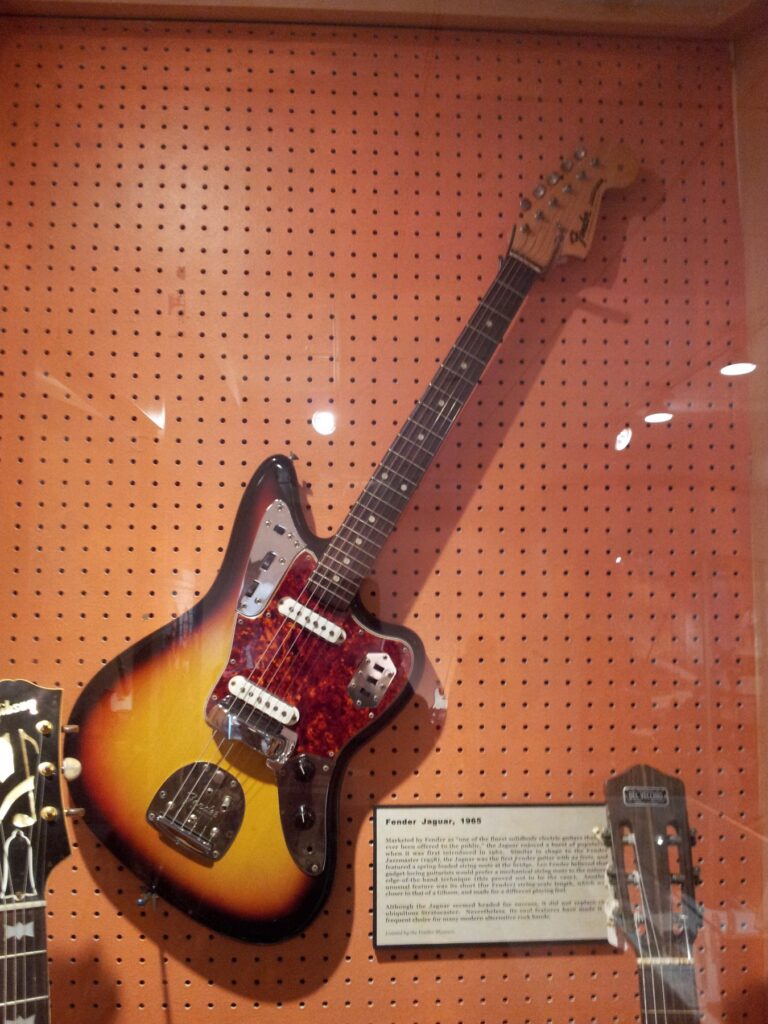
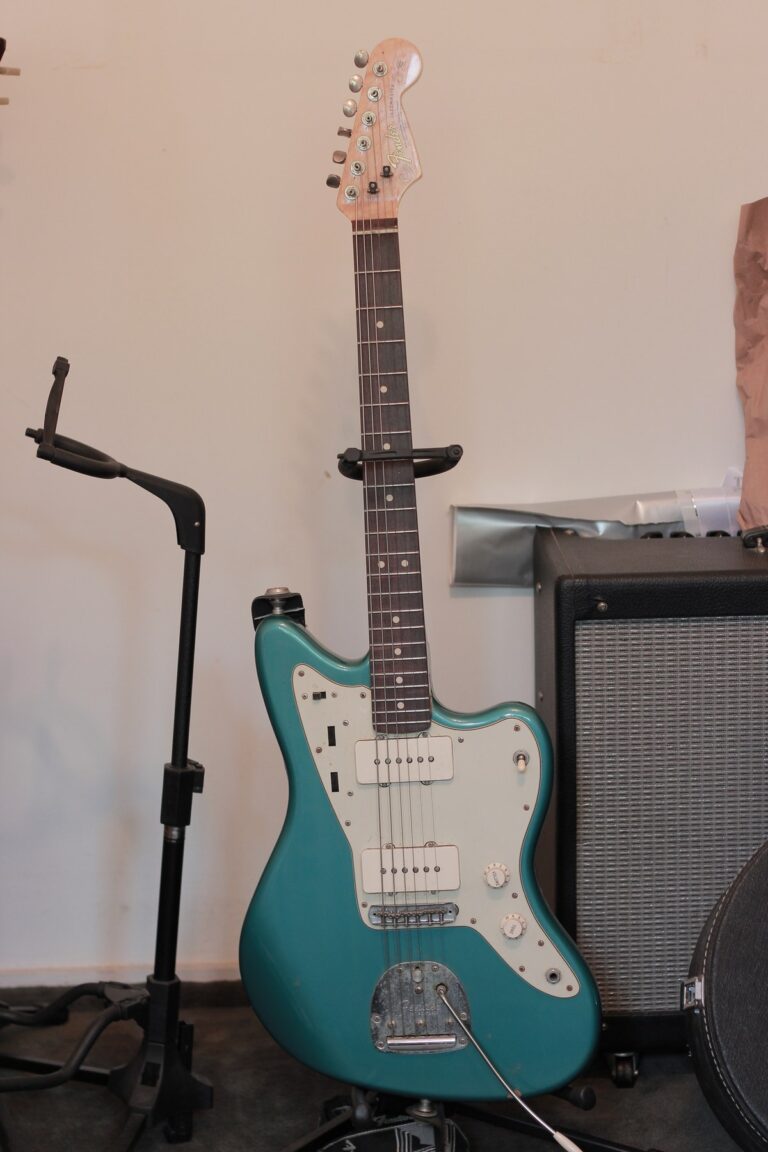
The Fender Jaguar — the offset-body, short-scale (24-inch) Fender with the floating bridge tremolo, Jaguar-specific single-coil pickups, and the complex rhythm/lead circuit with multiple switches — has been one of Malkmus’s most consistently used guitars across both Pavement and the Jicks. The Jaguar’s specific tonal character — brighter and more aggressive than the related Jazzmaster, with a thinner but more cutting single-coil voice — gave his rhythm and lead playing its specific character: bright enough to cut through the lo-fi production’s deliberate murkiness, with a slightly thin, slightly nasal quality that suited the deliberately unpolished aesthetic. The Jaguar’s specific cultural position — like the Jazzmaster, a commercial failure from the early 1960s that became cheaply available to alternative and indie musicians in the 1980s — connected Malkmus’s instrument choice to the broader pattern documented for Kevin Shields, Bilinda Butcher, and Kim Gordon: budget availability of “failed” instruments giving alternative rock players access to specific tonal characters unavailable from the more expensive, more conventionally valued Stratocasters and Les Pauls.
Fender Stratocasters appeared in Malkmus’s setup for specific applications where the Stratocaster’s more complex pickup configuration and brighter overall character suited particular passages. His Strat use was selective rather than primary, consistent with the eclectic, application-specific approach to instrument selection documented throughout the indie rock tradition.
Gibson instruments — including Les Paul and SG configurations — appeared in Malkmus’s documented setup, particularly in the Jicks era, for specific applications where humbucker warmth and sustain suited material that had moved somewhat beyond the most extreme lo-fi aesthetic of early Pavement toward more conventionally “rock” guitar tones.
Danelectro and other budget instruments appeared in Malkmus’s early Pavement-era setup — the lipstick-pickup thin, mid-forward character giving the earliest Pavement recordings their specific lo-fi tonal quality. His engagement with deliberately budget instruments reflected the same lo-fi aesthetic documented for Graham Coxon’s Danelectro use — the instrument’s specific tonal limitations were aesthetic resources rather than compromises.
Various vintage and unusual guitars appeared across Malkmus’s career — reflecting the same pragmatic, results-oriented approach to instrument selection documented throughout the American indie rock tradition. His specific willingness to use whatever guitar gave the right result for each specific song, without concern for consistency of brand or model across his complete output, was itself part of the aesthetic that prized casualness over polish.
The vintage-specification single-coil pickups in Malkmus’s Jaguar instruments gave the bright, slightly thin, characteristically nasal tonal quality documented for the Jaguar throughout this series. His preference for stock, unmodified pickups reflected the broader aesthetic preference for “as found” equipment over carefully optimised boutique alternatives.
Malkmus used standard light-gauge strings (.010–.046) on his electric guitars — appropriate to the bending and overall playing feel his approach required while giving sufficient physical mass for the more aggressive passages in Pavement’s harder-rocking material.
Amps
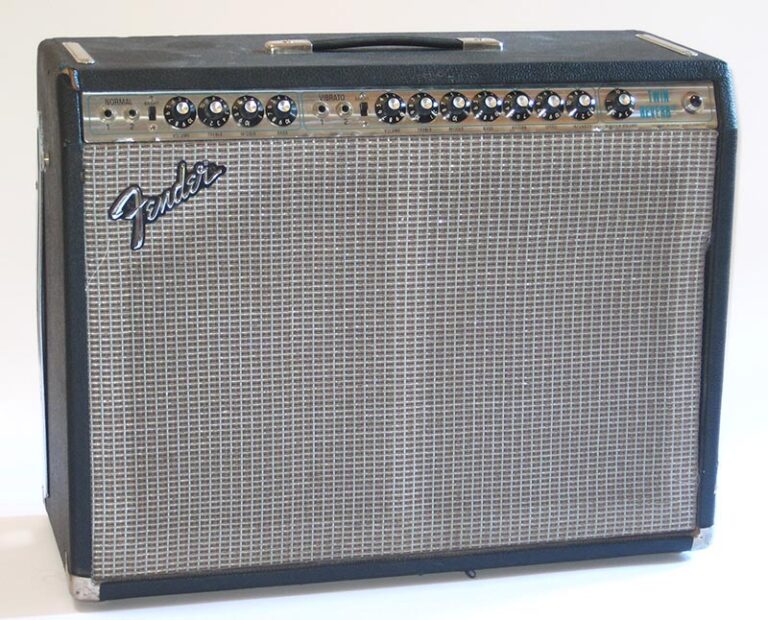
Fender amplifiers — Twin Reverb, Deluxe Reverb, and various other models depending on venue and recording context — provided Malkmus’s clean tonal foundation across both Pavement and the Jicks. The American Fender clean character gave his Jaguar’s bright single-coil output its most transparent amplification context, and the natural breakup of smaller Fender amplifiers at moderate volumes gave the lo-fi aesthetic’s specific quality of gentle, organic saturation.
Marshall amplifiers appeared for specific overdrive applications — the British EL34 character giving the more aggressively distorted passages in Pavement’s harder material (particularly on Wowee Zowee and the more aggressive Jicks material) their specific tonal quality. His Marshall use was at moderate gain rather than extreme saturation, consistent with the indie rock tradition’s generally restrained approach to amplifier gain.
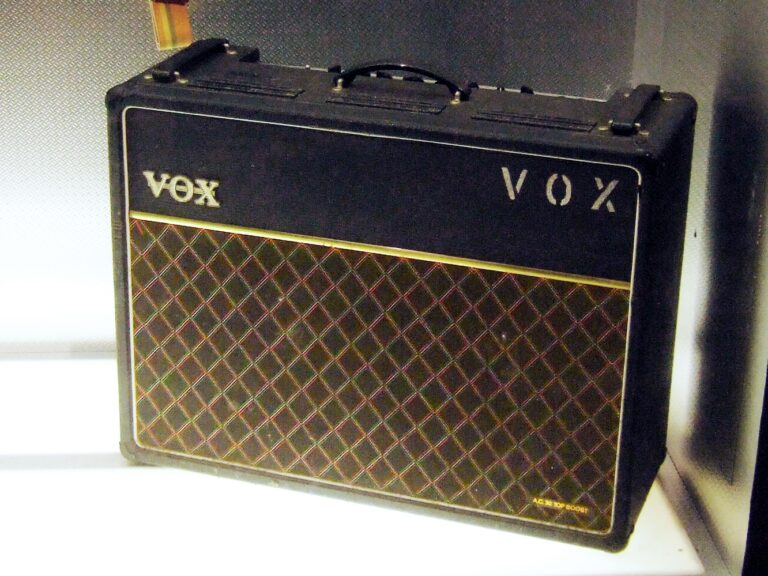
The Vox AC30 appeared for specific applications where the British class-A EL84 character suited the more chord-based, jangly passages in Malkmus’s playing. The AC30’s natural compression and characteristic chime gave specific chord textures their dimensional warmth.
Small, inexpensive amplifiers — appropriate to the early Pavement recordings’ deliberately limited production values — gave specific lo-fi recordings their characteristic compressed, slightly distorted character at low to moderate volumes. The deliberate use of equipment limitations as aesthetic resources, documented throughout the lo-fi indie tradition, was central to the earliest Pavement recordings’ specific sonic character.
Effects
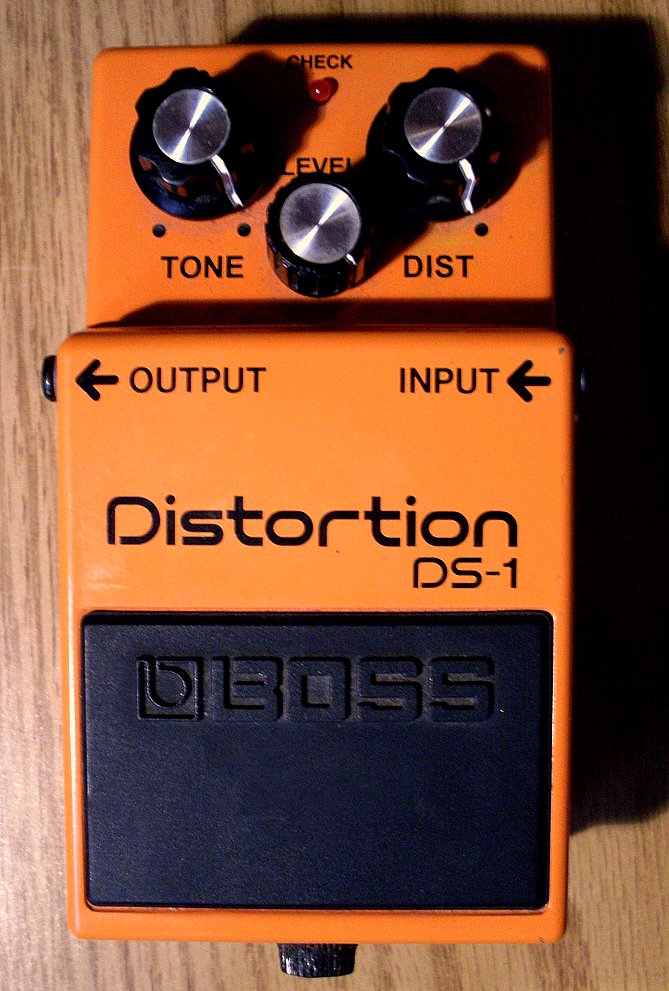
The Boss DS-1 appeared as a primary distortion source across multiple periods of Malkmus’s career — consistent with its documented widespread use throughout the alternative and indie rock sections of this series. His DS-1 use gave the more aggressive Pavement and Jicks material its specific mid-forward, hard-clipping distortion character.
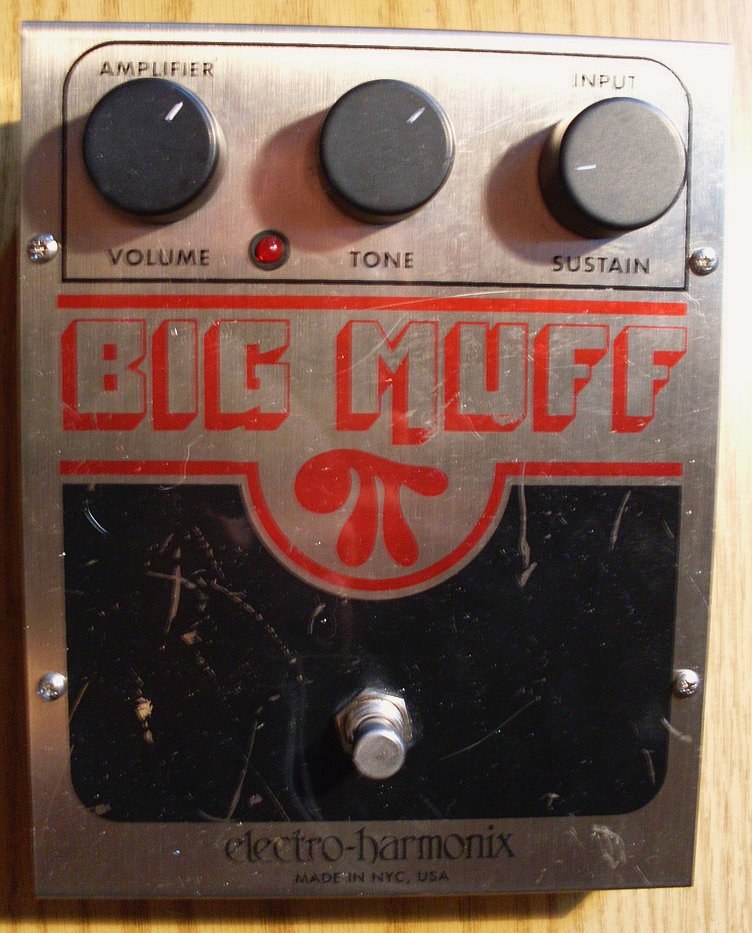
The Big Muff Pi appeared for specific fuzz applications — giving the smooth, sustained character appropriate to specific passages in both the Pavement and Jicks catalogues where extended fuzz texture suited the musical material.
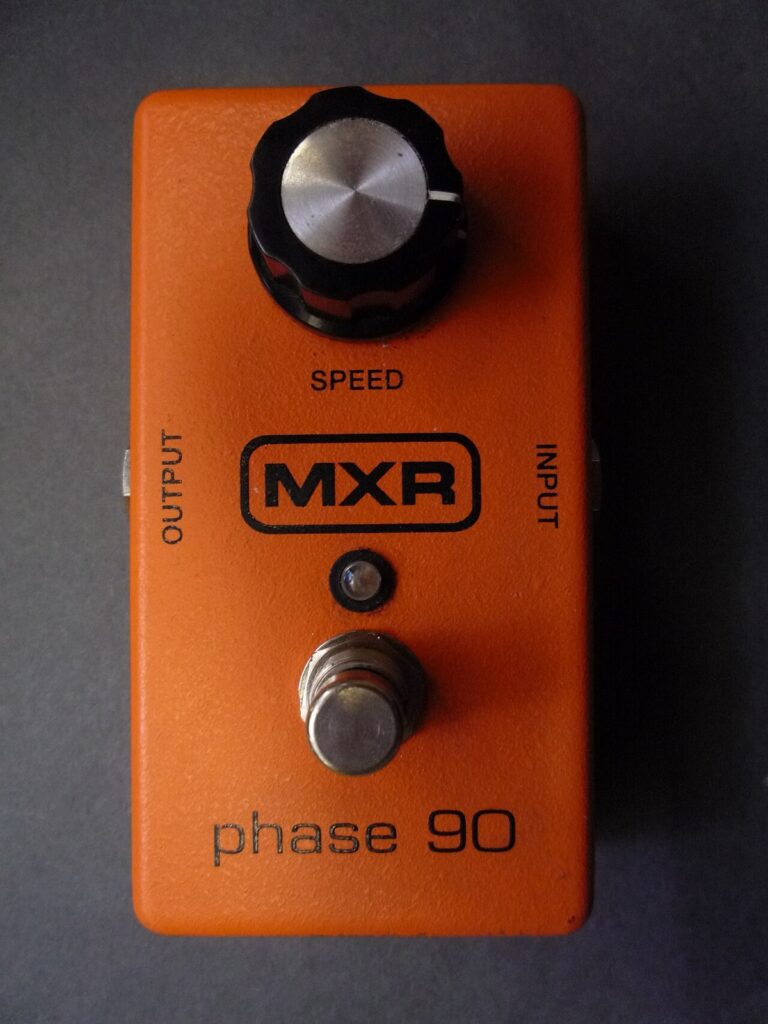
The Phase 90 appeared selectively for specific atmospheric applications — consistent with the widespread but selective application documented across the entire indie and alternative rock tradition in this series.
Chorus pedals — Boss CE-2 and Electro-Harmonix Small Clone — appeared for specific chord texture applications, giving dimensional width to the jangly chord-based passages characteristic of much of the Pavement catalogue.
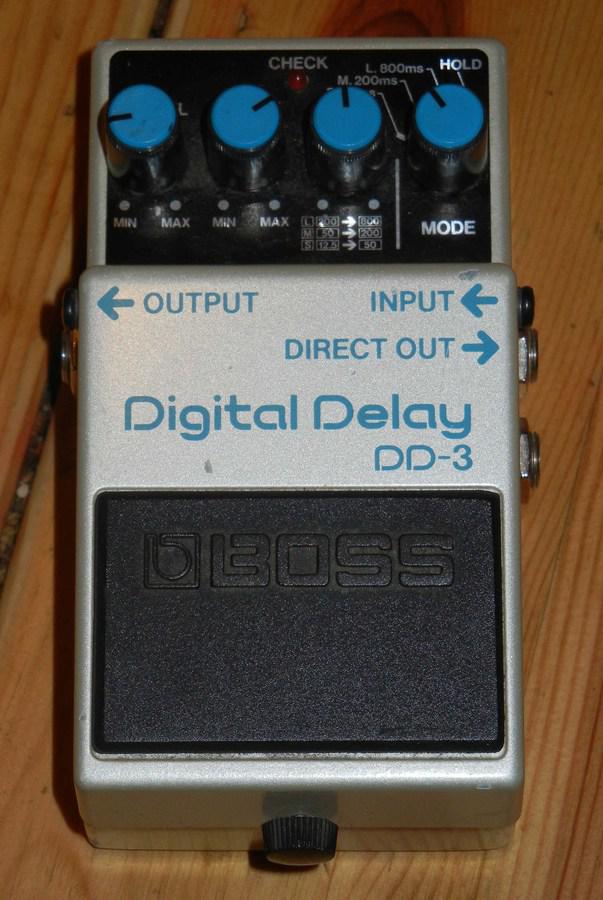
Boss digital delay provided spatial enhancement for lead passages — consistent with the standard moderate-repeat delay application documented throughout the indie rock tradition.
Wah pedals appeared selectively for specific expressive lead passages, particularly in the more extended jam-oriented material that appeared in both Pavement’s more experimental tracks and the Jicks’ generally more instrumentally extended approach.
Various vintage and budget effects devices appeared across Malkmus’s career — reflecting the same aesthetic willingness to use whatever gave the right sonic result regardless of conventional prestige that characterised his complete equipment philosophy.
Standard Boss TU-2 for accurate on-stage tuning.

Playing Style & Tone Philosophy
Stephen Malkmus is the guitarist in this series whose specific genius was most thoroughly concealed by his own aesthetic choices — a player of genuine melodic sophistication and structural inventiveness whose deliberately casual, apparently careless execution gave Pavement’s music a quality of effortlessness that was itself a sophisticated artistic achievement. The “slacker” label, while not entirely inaccurate as a description of the band’s public persona, consistently understated the genuine compositional and instrumental intelligence at work in Pavement’s best material.
His rhythm guitar approach combined the post-punk jangle tradition’s bright, chord-based playing with a specific quality of structural unpredictability: chord progressions that moved in unexpected directions, rhythmic patterns that shifted without conventional preparation, and song structures that abandoned verse-chorus conventions in favour of more idiosyncratic forms. This structural unpredictability was not random — it reflected genuine compositional decisions about what each song needed — but it gave Pavement’s music a quality of perpetual surprise that distinguished it from the more conventionally structured indie rock of many contemporaries.
His lead playing was similarly deceptive in its apparent casualness. Specific guitar solos and lead passages — often appearing to wander rather than develop conventionally — actually demonstrated melodic intelligence and harmonic awareness comparable to more conventionally “accomplished” lead guitarists, deployed with a deliberate roughness of execution that gave the result its specific Pavement character. The combination of genuine melodic content and deliberately unpolished execution was itself the aesthetic statement: music that took itself seriously enough to have real compositional substance while refusing to take itself seriously enough to polish that substance into conventional “musicianship.”
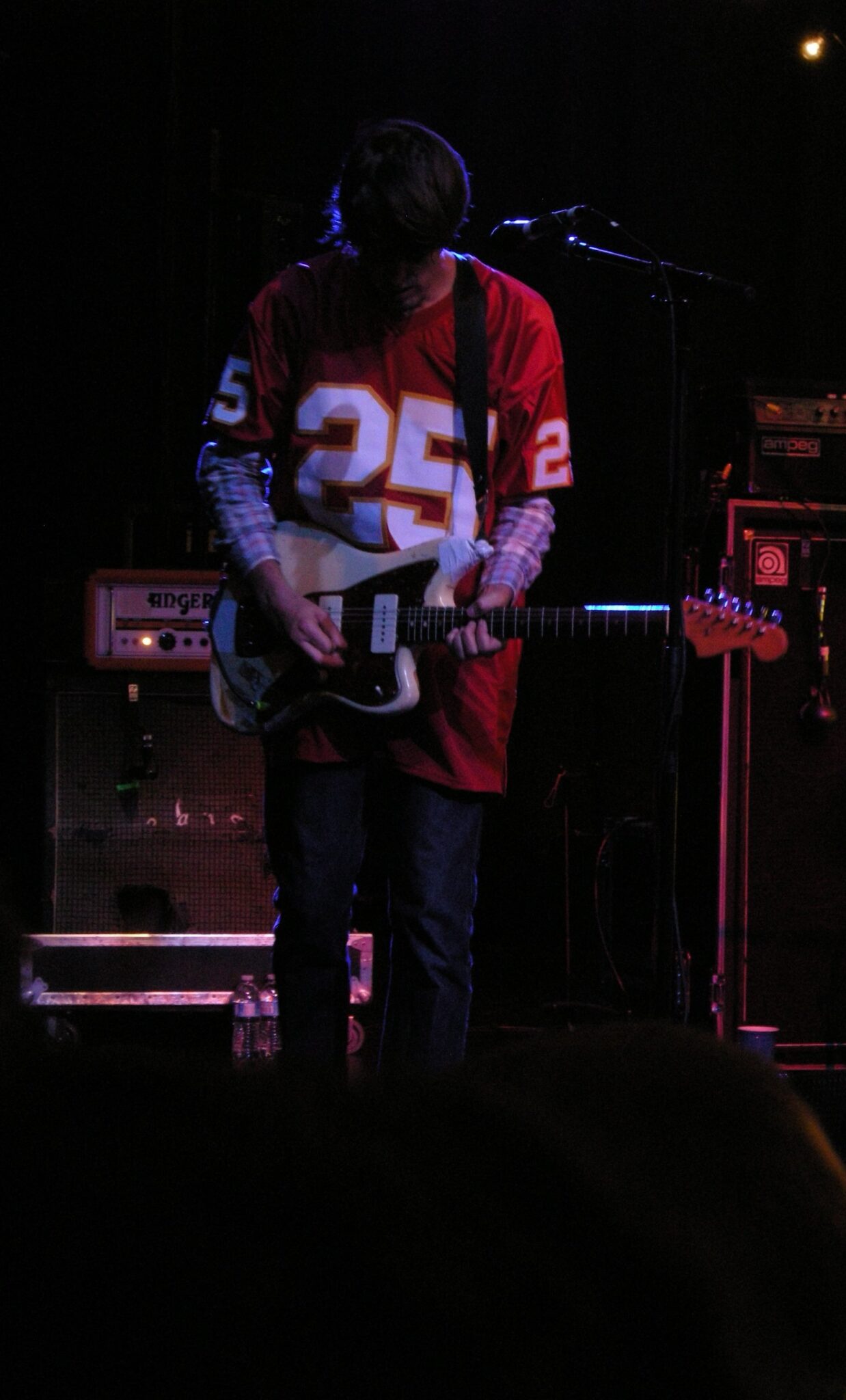
His lo-fi production aesthetic — the deliberate use of limited recording equipment, the acceptance (and even cultivation) of recording artifacts that more polished productions would have eliminated, and the general embrace of “imperfection” as an aesthetic value — gave Pavement’s recordings their specific sonic character. This aesthetic was not merely practical (though practical considerations of limited recording budgets were certainly part of the early Pavement reality) but philosophical: the lo-fi aesthetic asserted that genuine musical quality didn’t require — and might even be compromised by — the polish that major-label production values demanded.
Tonally, Stephen Malkmus guitars gear philosophy was built on the Jaguar’s bright, slightly thin single-coil character and the Fender amplifier’s natural, unforced saturation at moderate volumes — giving a foundational tone that was bright enough to cut through lo-fi murk without being conventionally “polished” or “produced.” The effects — DS-1 for distortion, Big Muff for selective fuzz, Phase 90 and chorus for atmospheric texture — supplemented this foundation without defining it. The overall philosophy prioritised the song’s melodic and structural content over the guitar’s sonic presentation — the tone served the song rather than asserting its own identity, consistent with the broader aesthetic that prized substance disguised as casualness over surface polish.
The specific recording approach used for Slanted and Enchanted — and how it shaped Stephen Malkmus guitars gear’s foundational character — deserves examination because the album’s specific lo-fi qualities were as much products of the recording process as of the equipment used. The album was largely recorded using a 4-track cassette recorder (the Tascam Portastudio format that defined home recording for an entire generation of indie musicians) in non-studio environments, giving the recordings their characteristic tape compression, limited frequency response (cassette tape’s specific high-frequency rolloff and the format’s signal-to-noise ratio limitations gave a specific “warm but murky” quality), and the general absence of the separation and clarity that multitrack studio recording on professional equipment would have provided. Within this specific recording context, Malkmus’s Jaguar — with its bright, slightly thin single-coil character — gave guitar parts a tonal quality that could cut through the cassette recording’s natural murkiness in ways that a warmer, more humbucker-heavy instrument might not have. The specific combination of a bright, thin-voiced guitar recorded through limited-fidelity equipment gave Slanted and Enchanted its characteristic sound: songs that were melodically and harmonically substantial, presented through a sonic filter that gave them a quality of distance, warmth, and slight chaos that more polished recording would have eliminated. Stephen Malkmus guitars gear, in this specific context, cannot be fully separated from the recording technology that captured it — the Jaguar’s brightness and the 4-track’s limitations were complementary rather than independent factors in the album’s specific sound.
Pavement’s structural unpredictability — the specific quality of song construction that abandoned conventional verse-chorus-verse-chorus-bridge-chorus forms in favour of more idiosyncratic structures — deserves examination as a compositional technique rather than merely a stylistic quirk. Conventional pop and rock song structure exists because it works: verse-chorus alternation gives listeners a predictable framework that makes songs easy to follow and remember, with the chorus’s repetition reinforcing the song’s central musical and lyrical ideas. Pavement’s departures from this structure — songs that introduced new sections without returning to previous ones, songs that abandoned choruses altogether in favour of continuously evolving verses, songs whose specific sectional relationships defied prediction — required listeners to engage differently: less passive recognition of familiar structures, more active attention to how the song was actually unfolding. For Malkmus’s guitar parts specifically, this structural unpredictability meant that guitar figures often needed to establish their own internal coherence without the support of structural repetition that conventional songs provide — a guitar riff that appears once and is never repeated needs to be interesting and complete in itself, in a way that a riff that will recur in every chorus doesn’t need to be on its first appearance. This requirement — guitar parts that are self-sufficient rather than depending on structural repetition for their effectiveness — gave Malkmus’s guitar writing a specific quality of melodic completeness within each individual phrase, even as the overall songs avoided the repetition that would make those phrases more immediately memorable through familiarity.
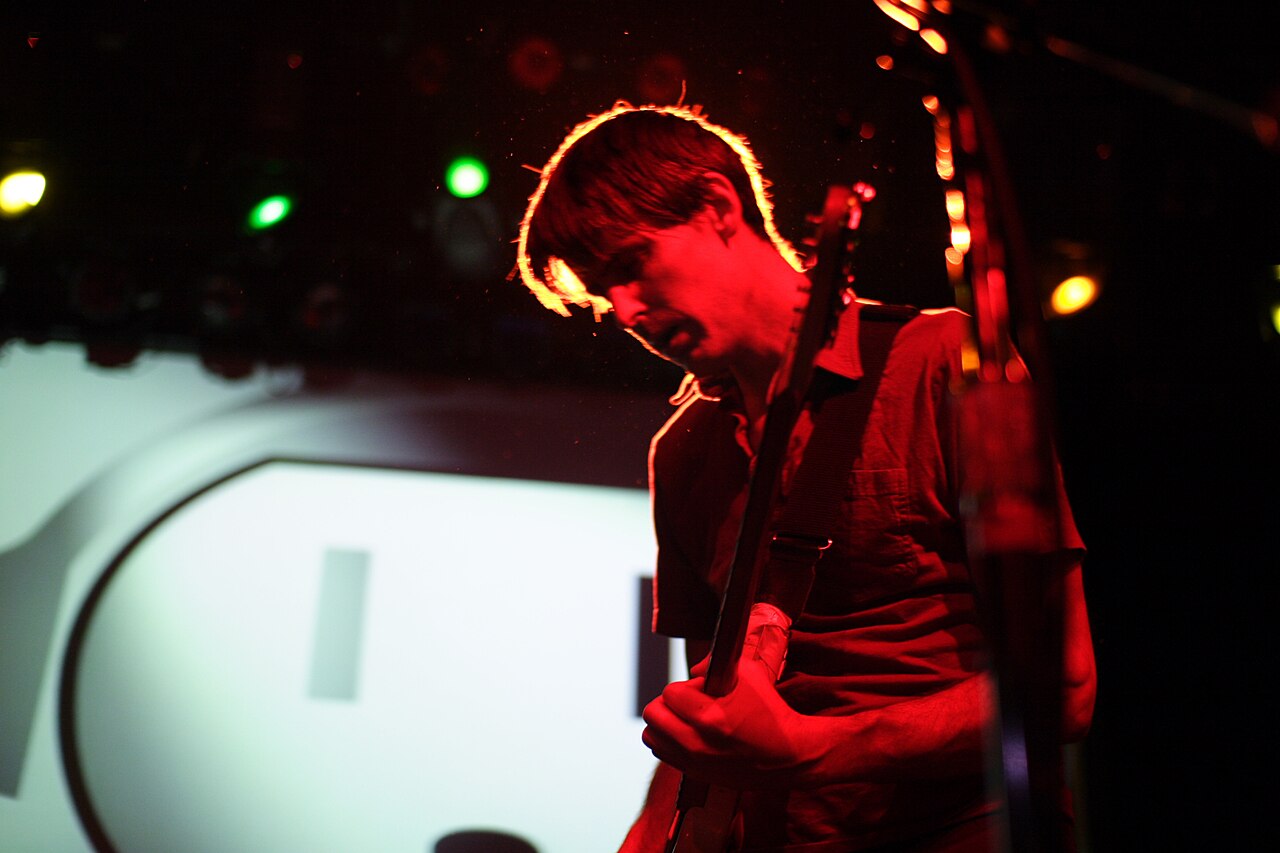
The Stockton, California background — and its specific relationship to the broader California cultural geography that shaped American indie rock’s development — gives context for understanding Malkmus’s specific outsider perspective. Stockton is a Central Valley agricultural city, economically and culturally distinct from both the coastal Bay Area and Los Angeles cultural centres that dominate popular conceptions of California. Growing up in this specific cultural geography — close enough to major California cultural centres to be aware of and influenced by them, but distinct enough to develop independently rather than as part of an established scene — gave Malkmus (like Donelly and Hersh’s Newport, Rhode Island background) a formation shaped by relative cultural isolation from established scenes. This isolation may have been part of what gave Pavement’s music its specific quality of doing things “wrong” by the standards of established indie rock conventions — without direct immersion in an established scene’s accumulated conventions about how indie rock should sound and be structured, Malkmus’s musical development proceeded according to his own specific aesthetic logic rather than according to scene-validated norms. The subsequent move to Stockton-adjacent University of Virginia (where Malkmus attended college and met some of his eventual Pavement collaborators) and then to the more established indie scenes gave him access to scene infrastructure (4AD-adjacent labels, college radio networks, the touring circuit) without requiring him to have absorbed scene conventions as the natural framework for his own musical thinking.
How to Sound Like Stephen Malkmus
Guitar Approach
A Fender Jaguar (American Original 60s Jaguar or Vintera II 60s Jaguar for accurate specification, or Squier Classic Vibe Jaguar for accessible quality) with stock Jaguar single-coil pickups and the floating bridge tremolo is the foundational Stephen Malkmus guitars gear instrument. Light strings (.010–.046). The most important technical element: deliberately avoid excessive polish — let chord changes be slightly loose, let picking be slightly uneven, let the overall execution have a quality of human looseness rather than mechanical precision. This is harder than it sounds: deliberate imperfection requires the same level of musical control as deliberate precision, just applied toward a different aesthetic goal.
For songwriting and arrangement: study Pavement’s specific structural approaches — songs that abandon conventional verse-chorus structures, chord progressions that move in unexpected directions, arrangements that leave space for apparent looseness while maintaining underlying compositional coherence. The specific Malkmus approach combines genuine melodic and harmonic sophistication with structural and executional choices that disguise that sophistication as casualness.
Amp Approach
A Fender Deluxe Reverb or similar small Fender amplifier at moderate-to-high volume, allowing natural 6V6 saturation — the amplifier’s natural breakup at moderate volumes gives the foundational tonal character without requiring pedal-driven distortion for the cleaner passages. For heavier material, a Marshall at moderate gain (5–6) gives appropriate British overdrive without extreme saturation.
| Control / Effect | Setting | Notes |
|---|---|---|
| Deluxe Reverb Volume | 6–7 | Pushed toward natural breakup — 6V6 saturation gives the foundational lo-fi-adjacent character |
| Treble | 6 | Present — Jaguar’s bright single-coils need treble support; gives cut through lo-fi murk |
| Bass | 5 | Neutral — Jaguar’s thinner pickup character doesn’t need bass reduction |
| Reverb | 3–4 | Light — atmospheric without obscuring the deliberately unpolished directness |
| Boss DS-1 (heavier passages) | Drive 5–6, Tone 5, Level 6 | Standard indie distortion for Pavement’s harder-rocking material |
| Big Muff Pi (selective fuzz) | Sustain 6, Tone 5, Vol 7 | Specific passages requiring sustained fuzz texture — not constant use |
| Marshall (heavier Jicks material) | Input Vol 6, Mid 6, Master 5 | Moderate British overdrive — natural, not extreme saturation |
| Phase 90 (atmospheric, selective) | Speed 1–2 | Slow, barely perceptible — atmospheric texture for specific passages |
| Chorus (CE-2/Small Clone) | Rate 3, Depth 3 | Light, selective — jangly chord texture without obvious modulation |
Fender Deluxe Reverb pushed toward natural breakup as the foundational character. Boss DS-1 for harder passages. Big Muff Pi for selective fuzz texture. Marshall at moderate gain for heavier Jicks-era material. Phase 90 and chorus selectively for atmospheric texture. The most important principle: the gear should never sound “produced” or “polished” — every element should contribute to a quality of organic, slightly loose, human directness that disguises real musical sophistication as effortless casualness.
Influence & Legacy
Stephen Malkmus’s influence on American indie rock is foundational — Pavement’s specific combination of melodic accessibility, structural unpredictability, and lo-fi production aesthetic became one of the defining templates for 1990s American indie rock, and subsequent generations of indie guitarists and songwriters absorbed Pavement’s influence so thoroughly that its specific components are often invisible as influence — they have simply become part of how indie rock sounds.
His specific contribution to the “lo-fi” movement of the early-to-mid 1990s — alongside artists including Sebadoh, Guided By Voices, and others — gave American indie rock a specific aesthetic alternative to both the major-label alternative rock of the post-Nirvana period and the more polished college rock of the 1980s. The lo-fi aesthetic’s assertion that genuine musical quality didn’t require production polish gave subsequent generations of bedroom musicians and DIY artists both a model and a permission structure for their own work.
The comparison with Graham Coxon — whose late-1990s Blur work was directly influenced by the American lo-fi indie tradition that Pavement helped define — illuminates the specific transatlantic influence exchange between American and British indie guitar in the 1990s. The parallel with Kristin Hersh — whose Throwing Muses work shared Pavement’s commitment to structural unpredictability within an American indie rock framework, albeit with a more angular and less melodically accessible specific approach — shows the broader American indie tradition of structurally adventurous songwriting that both artists contributed to. And the connection to Kim Deal — the Breeders and Pixies bassist-guitarist whose similarly understated, similarly lo-fi-conscious approach to American indie rock shared Pavement’s aesthetic values of melodic accessibility wrapped in deliberately unpolished presentation — places Stephen Malkmus guitars gear in the broader 1990s American indie rock tradition of bands who found genuine artistic ambition compatible with deliberate sonic and presentational modesty.
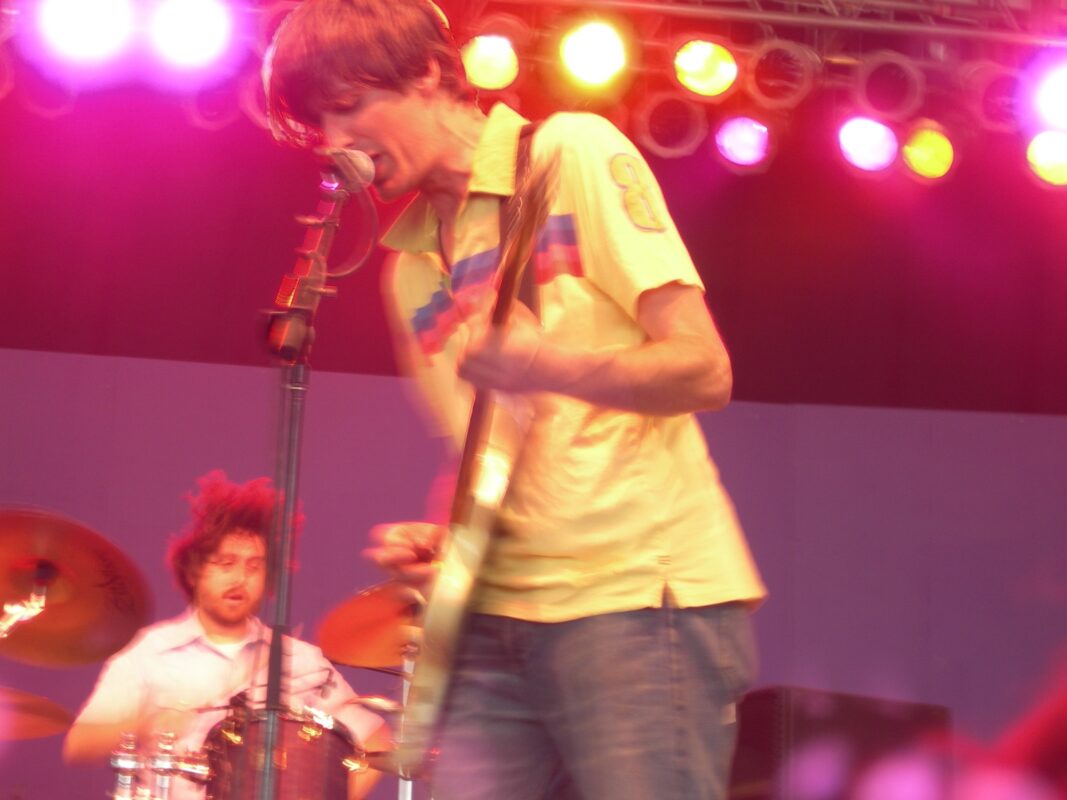
Read our guide to the Fender Stratocaster.
Frequently Asked Questions: Stephen Malkmus Guitars & Gear
What guitar does Stephen Malkmus play?
Stephen Malkmus’s primary guitar across both Pavement and the Jicks has been the Fender Jaguar — the offset-body, short-scale instrument with floating bridge tremolo and bright, slightly thin Jaguar-specific single-coil pickups. The Jaguar’s specific tonal character — bright enough to cut through lo-fi production while having a slightly nasal, unpolished quality — suited Pavement’s aesthetic perfectly. Fender Stratocasters served specific applications, Gibson instruments appeared for warmer Jicks-era material, and Danelectro and other budget instruments gave the earliest Pavement recordings their specific lo-fi character.
What amplifier does Stephen Malkmus use?
Malkmus’s amplification has primarily been Fender — Deluxe Reverb and Twin Reverb depending on context, used at volumes that allow natural amplifier saturation rather than relying entirely on pedal-driven distortion. Marshall amplifiers served heavier applications at moderate gain. Small, budget amplifiers gave the earliest Pavement recordings their specific lo-fi compressed character. His amplifier philosophy prioritised natural, unforced tonal character over the more deliberately “produced” amplifier tones of more commercially oriented alternative rock.
What is the “lo-fi” aesthetic and how did Pavement embody it?
Lo-fi (low fidelity) refers to a deliberate aesthetic choice to use limited recording equipment and to accept (or cultivate) recording artifacts — tape hiss, room noise, imperfect performances, limited frequency response — that more polished productions would eliminate. For Pavement, the lo-fi aesthetic was both practically motivated (limited budgets for the earliest recordings) and philosophically asserted: the band’s specific combination of genuinely accessible melodic songwriting with deliberately unpolished production challenged the assumption that musical quality required production quality. Slanted and Enchanted (1992) is the definitive lo-fi indie rock document, demonstrating that melodically sophisticated songs could thrive within deliberately limited sonic presentation.
Why was Pavement called “slacker rock” and is that accurate?
The “slacker” label attached to Pavement (and to the broader early-1990s “Generation X” cultural moment) reflected the band’s apparently casual public persona, their lo-fi production aesthetic, and Malkmus’s deliberately loose, apparently careless guitar execution and vocal delivery. The label was both accurate (in capturing the band’s deliberate rejection of conventional “professional” musical presentation) and misleading (in suggesting that this rejection reflected an absence of genuine musical ambition or craft, when in fact Pavement’s songwriting demonstrated considerable structural and melodic sophistication). The “slacker” framing was itself part of the early 1990s media’s broader narrative about American youth culture, and Pavement’s specific relationship to that narrative was always more complicated than the simple label suggested.
What is the Fender Jaguar and why did Malkmus choose it?
The Fender Jaguar is a short-scale (24-inch) offset-body electric guitar introduced in 1962, featuring a floating bridge tremolo system, Jaguar-specific single-coil pickups with a brighter, thinner character than Stratocaster or Jazzmaster pickups, and a complex rhythm/lead circuit with multiple switches for tonal variation. Like the Jazzmaster, the Jaguar was a commercial failure that became cheaply available to alternative musicians decades after its introduction. For Malkmus, the Jaguar’s specific bright, slightly nasal character gave his guitar parts a quality that cut through the lo-fi production’s murkiness without requiring the more conventionally “polished” tones of more expensive alternatives — the right instrument for the specific aesthetic Pavement was developing.
What happened to Pavement and what is the Jicks?
Pavement disbanded in 1999 following Terror Twilight and increasing internal tensions, particularly between Malkmus and drummer Bob Nastanovich/the band’s overall dynamic. The band reunited for tours in 2010 and again in 2022, performing their classic catalogue without releasing new material. Malkmus formed the Jicks in 2001, releasing his self-titled debut that year and continuing with the band through multiple subsequent albums. The Jicks gave Malkmus a vehicle for continued songwriting and guitar development with different collaborators, generally featuring somewhat more extended instrumental passages and somewhat more conventionally “accomplished” production than the deliberately lo-fi early Pavement work, while maintaining the essential melodic and structural qualities of his songwriting.
What are Stephen Malkmus’s most important recordings?
Slanted and Enchanted (1992) is the foundational lo-fi indie document — the album that established the Pavement sound and aesthetic. Crooked Rain, Crooked Rain (1994) gave the band’s most commercially successful material (“Cut Your Hair,” “Gold Soundz”) with somewhat more developed production while maintaining the essential aesthetic. Wowee Zowee (1995) is the most structurally adventurous and most divisive album — sprawling, eclectic, and uncompromising. The Jicks’ self-titled debut (2001) and subsequent albums demonstrate Malkmus’s continued development outside the Pavement framework, with Pig Lib (2003) and Real Emotional Trash (2008) particularly notable for more extended instrumental exploration.
The relationship between Pavement’s deliberate looseness and genuine musicianship — the apparent paradox that the “slacker” band contained genuinely accomplished musicians playing in a deliberately unaccomplished-sounding way — reflects a broader principle about the relationship between technique and aesthetic choice that is worth stating explicitly. A musician who cannot play precisely has no choice about whether their playing sounds precise; their imprecision is simply a limitation. A musician who can play precisely but chooses not to has made an aesthetic decision — the imprecision becomes a deliberate quality rather than an inevitable one. Pavement’s specific looseness — the slightly behind-the-beat rhythm guitar, the chord changes that occasionally seemed to arrive a fraction late, the lead guitar lines that wandered rather than resolved with conventional inevitability — could only function as the specific aesthetic statement it represented if the musicians were capable of the alternative. Malkmus’s evident melodic and harmonic sophistication — audible in the actual content of his songwriting regardless of how loosely it was executed — demonstrated that the looseness was choice rather than limitation. This distinction matters because it locates Pavement’s achievement correctly: not as “music that happens to sound casual because the musicians weren’t very good” but as “music that demonstrates genuine sophistication while choosing to present that sophistication in a deliberately casual way.” Stephen Malkmus guitars gear, understood in this context, was the equipment of a musician making sophisticated aesthetic choices about how to present sophisticated musical content — not the equipment of a musician whose limitations happened to produce an appealing sound.
The Jicks era’s relationship to the Pavement era — and how Stephen Malkmus guitars gear evolved between the two contexts — gives a final dimension worth examining. The Jicks albums generally featured somewhat more conventionally “accomplished” production and somewhat more extended instrumental passages than the deliberately lo-fi early Pavement work, reflecting both the natural evolution of recording technology and budgets available to an established artist and Malkmus’s own evolving aesthetic interests (including engagement with extended jam-oriented passages that the earlier Pavement format had generally avoided). This evolution did not represent an abandonment of the essential Malkmus aesthetic — the melodic sophistication, the structural idiosyncrasy, the specific quality of wit and obliqueness in his lyrics — but rather its application within a context with different production resources and different instrumental possibilities. The Jaguar remained central; the Fender clean foundation remained central; the specific combination of melodic substance and unpretentious presentation remained central. What changed was the specific scale and scope of what that combination could encompass — the Jicks’ more extended instrumental passages gave Malkmus’s guitar playing room to develop ideas at greater length than Pavement’s more compressed song forms typically allowed, demonstrating capabilities that had always been present but that the earlier format hadn’t required to be displayed at length.
Pavement’s relationship to the broader “alternative rock” commercial moment of the early-to-mid 1990s — the period when Nirvana’s success had opened major-label interest in underground and indie rock acts — gives important context for understanding the specific position Stephen Malkmus guitars gear occupied within the era’s commercial landscape. Many bands from the indie underground were signed to major labels during this period, often with results that compromised the specific qualities that had made their underground work distinctive — major-label production values frequently smoothed away the lo-fi textures and structural idiosyncrasies that had defined these artists’ earlier work. Pavement’s specific trajectory — remaining on independent labels (Matador Records) throughout their career while achieving substantial commercial success and critical recognition — demonstrated that the lo-fi aesthetic and structural idiosyncrasy weren’t merely signifiers of insufficient resources to be abandoned once resources became available, but genuine aesthetic commitments that the band maintained even as their commercial position would have allowed different choices. Crooked Rain, Crooked Rain‘s relative commercial success (charting, receiving significant college and alternative radio play) came without the band adopting the more conventional production values that major-label alternative rock of the period typically required. This independence — commercial success achieved without aesthetic compromise — gave Pavement a specific credibility within the indie rock community that bands who had “sold out” (in the period’s specific vocabulary) to achieve similar commercial success generally lacked. Stephen Malkmus guitars gear, deployed within this context of independent commercial success, represented equipment used in service of an aesthetic vision that commercial success had not been allowed to compromise.
The Fender Jaguar’s complex rhythm/lead circuit — a feature of the instrument’s original 1962 design that most players, including many alternative rock musicians who adopted the instrument decades later, simply bypassed or ignored — deserves brief technical examination because it represents one of the more elaborate control schemes Fender ever produced for a production guitar. The Jaguar’s circuit included a separate “rhythm circuit” with its own tone and volume controls (intended to give players a quickly-accessible mellow rhythm tone distinct from their lead settings), three slide switches on the upper bout that engaged or bypassed each pickup independently, and a “strangle switch” that engaged a treble-emphasis circuit. This elaborate switching scheme reflected Fender’s 1962 design assumptions about how guitarists would want to manage tonal variety — assumptions that, by the time alternative rock players adopted the Jaguar in the 1980s and 1990s, often seemed more like obstacles than features. Many players (Malkmus likely among them, based on documented setups) used the Jaguar primarily through its standard lead circuit, with the rhythm circuit and various switches left in specific fixed positions rather than actively used as Fender’s original design intended. This selective engagement with the instrument’s full feature set — using the parts that served the specific musical purpose while ignoring the parts that didn’t — reflected the same pragmatic approach to equipment documented throughout this series: the Jaguar’s value to Malkmus was its specific pickup voicing and its cultural associations, not its complete switching scheme’s original designed functionality.
Pavement’s specific influence on the subsequent “indie sleaze” and 2000s indie rock revival movements — bands including Built to Spill, Modest Mouse, Cake, and many others who absorbed specific elements of the Pavement approach — gives a final dimension of legacy worth examining. The specific elements that proved most transferable: the combination of genuinely melodic songwriting with deliberately unpolished vocal delivery and guitar tone; the structural willingness to depart from verse-chorus convention while maintaining underlying melodic coherence; and the general aesthetic stance that genuine musical ambition and deliberate lack of pretension were compatible rather than contradictory. These specific elements — rather than any particular guitar tone or equipment choice — represent Pavement’s most portable influence, which is why Stephen Malkmus guitars gear’s specific equipment choices (the Jaguar, the Fender amplifiers, the DS-1) are less widely replicated than the broader aesthetic approach those choices served. Subsequent indie guitarists absorbed the Pavement lesson at the level of aesthetic philosophy — genuine substance doesn’t require conventional polish — more than at the level of specific equipment emulation, which is itself consistent with Pavement’s own apparent indifference to equipment as a primary expressive concern. The most accurate way to “sound like” Stephen Malkmus, ultimately, may have less to do with any specific guitar or amplifier than with developing genuine compositional substance and then choosing, deliberately, not to over-polish its presentation.
One additional technical observation on Stephen Malkmus guitars gear concerns the relationship between his guitar tone and his vocal delivery — the two elements that, combined, gave Pavement’s recordings their specific overall character. Malkmus’s vocal approach — often described using the same “slacker” vocabulary applied to his guitar playing, with a quality of detached, almost spoken-word delivery that avoided conventional rock vocal dynamics — shared specific qualities with his guitar tone: both were bright enough to be clearly audible without being conventionally “powerful,” both had a quality of restraint that avoided obvious emotional display, and both contributed to the overall impression of music that was simultaneously present and somewhat removed from the listener. This vocal-guitar tonal consistency — the same aesthetic restraint applied to both the primary melodic instrument (voice) and the primary harmonic/textural instrument (guitar) — gave Pavement’s recordings a coherence that went beyond merely using consistent equipment: the complete sonic personality, vocal and instrumental, reflected the same underlying aesthetic values. Stephen Malkmus guitars gear, in this final analysis, was never merely about guitars and amplifiers in isolation, but about how those specific tonal choices combined with every other element of the band’s sound — vocals, production, arrangement, structure — to create a complete and specific artistic statement that remains one of American indie rock’s most influential and most genuinely original achievements.
Finally, it’s worth noting that Pavement’s reunion tours in 2010 and 2022 — performing the classic catalogue decades after its original creation — gave audiences and the band itself an opportunity to assess how the original recordings held up against live performance by the same musicians with decades of additional experience. The specific quality of these reunion performances — by most accounts, tighter and more conventionally “accomplished” than the original recordings while maintaining the essential songs’ melodic and structural character — demonstrated retrospectively what had been true all along: the musicians had always been capable of more conventional precision, and the original recordings’ looseness had indeed been a deliberate aesthetic choice rather than a limitation that maturity and practice eliminated. Stephen Malkmus guitars gear across this extended career arc — from the 4-track cassette recordings of 1989 through the reunion tours of 2022 — represents one of the most complete documented examples in this series of an artist whose specific aesthetic choices, examined across a full career, reveal their deliberate and considered character through the contrast between different periods’ different approaches to the same underlying musical substance.
Image credits
- Stephen Malkmus: Fred Benenson from NYC, USA, Wikimedia Commons, CC BY 2.0.
- Top image: Julio Enriquez, Flickr, CC BY 2.0.
- Stephen Malkmus: photo by Masao Nakagami, via Wikimedia Commons, CC BY-SA 2.0.
- Fender Jaguar: doryfour, Wikimedia Commons, CC BY-SA 2.0.
- Fender Stratocaster: Lightburst, Wikimedia Commons, CC BY-SA 4.0.
- Fender Jazzmaster: ligia diniz, Wikimedia Commons, CC BY 2.0.
- Fender Twin Reverb: Micahmedia, Wikimedia Commons, CC BY 3.0.
- Vox AC30 Top Boost: wetwebwork; existing crop and contrast/color adjustments: Clusternote, Wikimedia Commons, CC BY-SA 2.0.
- Boss DS-1 Distortion: Roadside Guitars, Flickr, CC BY-SA 2.0.
- Electro-Harmonix Big Muff Pi: Roadside Guitars, Flickr, CC BY-SA 2.0.
- Boss DD-3 Digital Delay: JuandiLOL, Wikimedia Commons, CC BY-SA 3.0.
- Stephen Malkmus live: Ian T. McFarland, Wikimedia Commons, CC BY-SA 2.0.
- Stephen Malkmus live: Scottom, Wikimedia Commons, CC BY 2.5.
- MXR Phase 90: Roadside Guitars, Wikimedia Commons, CC BY-SA 2.0.
- Boss TU-2 Chromatic Tuner: GuitarGangsters AI-generated reference illustration, not a photograph.