Magic Slim Guitars & Gear: The Teardrops’ Workingman Blues Complete Rig Guide
Magic Slim guitars gear — Fender Stratocaster, traditional Chicago blues deep-dive for the Teardrops' bandleader and living link to West Side tradition.
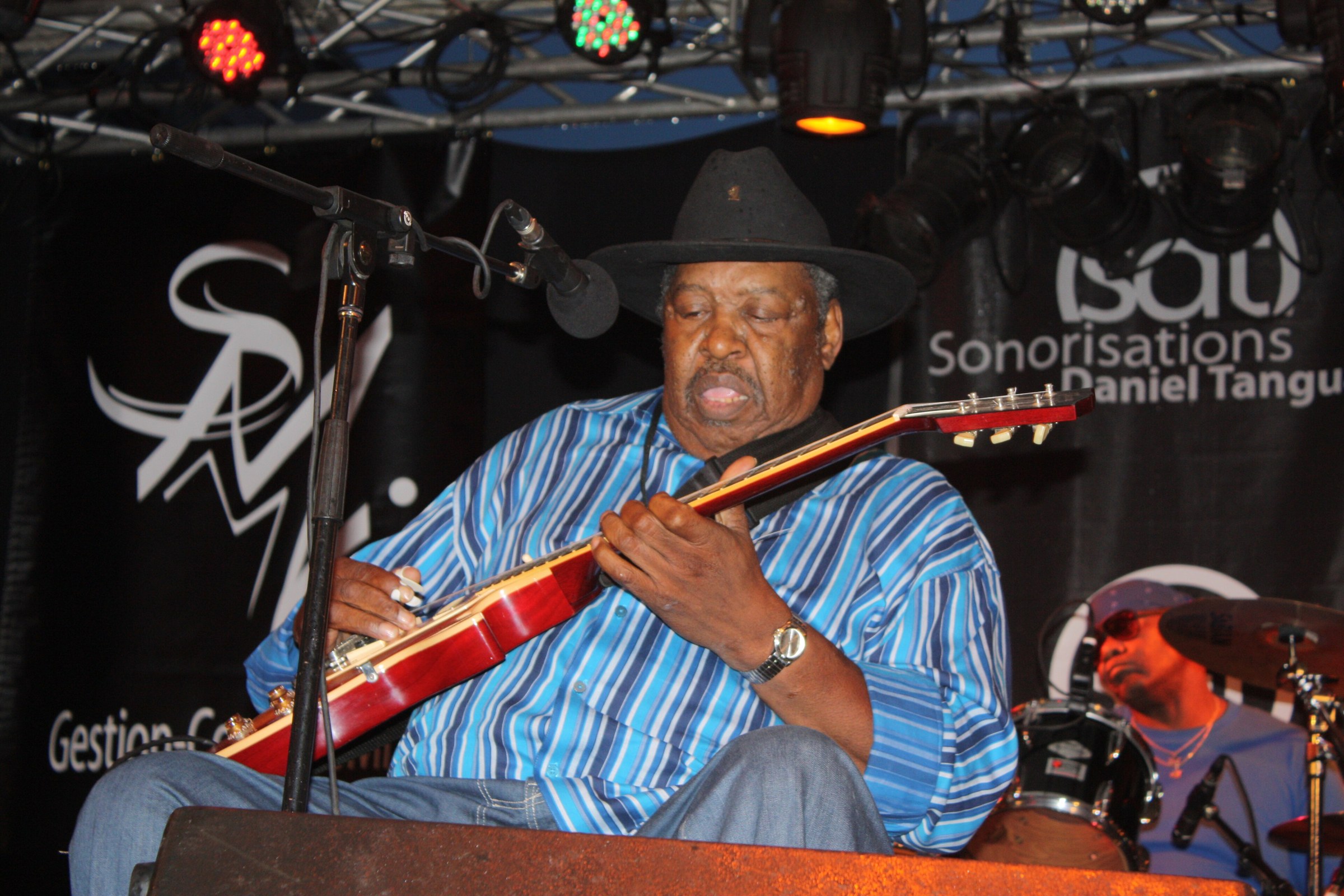
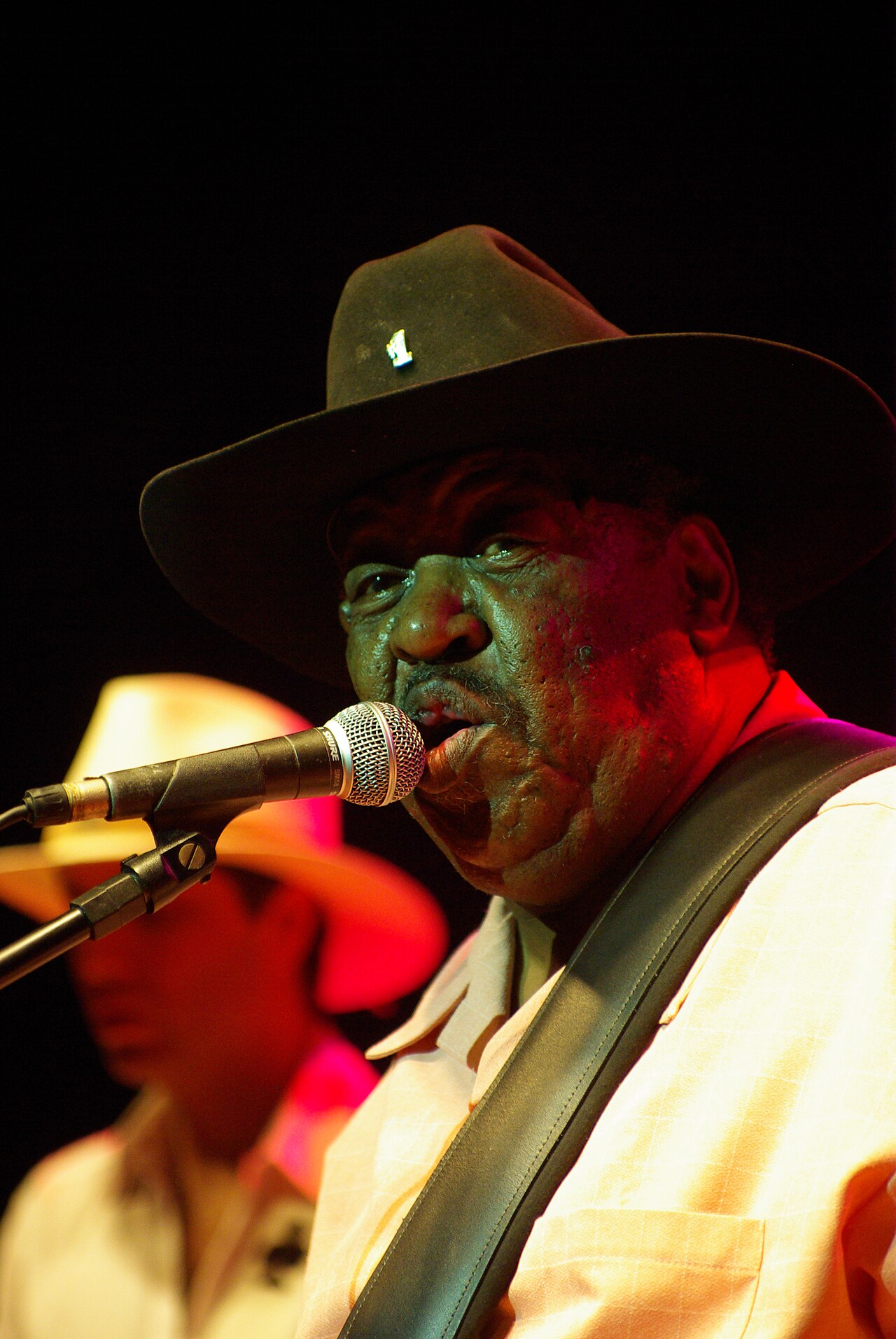
Magic Slim performing at the Donnacona Blues Festival in Quebec, August 2012. Photo: Yannick, CC BY-SA 2.0. Source: https://commons.wikimedia.org/wiki/File:Magic-Slim_2012-08-12.jpg
Magic Slim guitars gear is the subject of one of Chicago blues’ most durable and most consistently working careers — the equipment and approach of a guitarist and bandleader whose decades fronting the Teardrops gave Chicago blues clubs a continuous, reliable presence of genuinely traditional electric blues at a time when the genre’s commercial visibility was increasingly limited, and whose specific combination of large physical stature (the “Magic Slim” name itself a typically ironic blues nickname, given his considerable size), straightforward but deeply authoritative guitar approach, and tireless work ethic gave him a reputation as one of the last true links to the foundational postwar Chicago blues club tradition. Where some of the guitarists this series has documented pursued specific technical innovations or stylistic syntheses that pushed blues guitar in new directions, Magic Slim’s career represented something different but equally valuable: the sustained, working-class continuation of foundational Chicago blues club tradition, performed with consistency and authority across decades of essentially continuous live performance.
His specific connection to Magic Sam — not a direct relation despite the shared “Magic” nickname, but a connection through Chicago blues scene relationships and through Slim’s own absorption of the West Side sound’s vocabulary documented extensively in this series — gave his playing a direct line back to the foundational Cobra-era West Side tradition, even as his own career developed its specific character through decades of essentially continuous club performance rather than through the more limited recorded output that characterised some of his West Side predecessors. This is the complete breakdown of Magic Slim guitars gear, technique, and tonal philosophy.
Background
Morris Holt — known professionally as Magic Slim — was born on August 7, 1937, in Torrance, Mississippi, in the Mississippi Delta region whose blues tradition gave virtually every Chicago blues musician of his generation their foundational formation, as this series has documented extensively. His childhood friendship with Magic Sam — the two grew up together in Mississippi before both eventually made their way to Chicago — gave Slim a direct personal connection to one of the West Side sound’s foundational figures, and this friendship reportedly played a role in Slim’s own eventual move to Chicago and his absorption into the city’s blues scene.
His “Magic Slim” nickname — given by Magic Sam, reportedly, in the ironic blues tradition of nicknames that play on physical characteristics (Slim being a large man, the “Slim” name functioning as the kind of ironic nickname this series has encountered in various forms throughout the blues tradition) — gave him a stage identity connected to but distinct from Magic Sam’s own, with the shared “Magic” element reflecting their personal connection while “Slim” gave Holt his own specific identity.
His career — beginning in Chicago clubs during the 1950s and 1960s, with his band the Teardrops providing the ensemble context for his guitar and bandleading work across subsequent decades — represented one of the longest continuously active careers within the traditional Chicago blues club circuit, giving him a reputation (particularly among blues enthusiasts and musicians who valued direct connection to foundational Chicago blues tradition) as one of the genre’s most reliable and most authentically traditional working bandleaders, even as the broader commercial landscape for blues (documented extensively for Luther Allison) became increasingly challenging across the decades of his career. His eventual recordings — across various labels and configurations of the Teardrops over the decades — documented this sustained traditional approach, giving listeners access to a sound that, while perhaps less individually innovative than some of the more celebrated West Side pioneers, represented genuine continuity with the foundational tradition those pioneers established.
Magic Slim Guitars Gear: The Complete Rig
Guitars
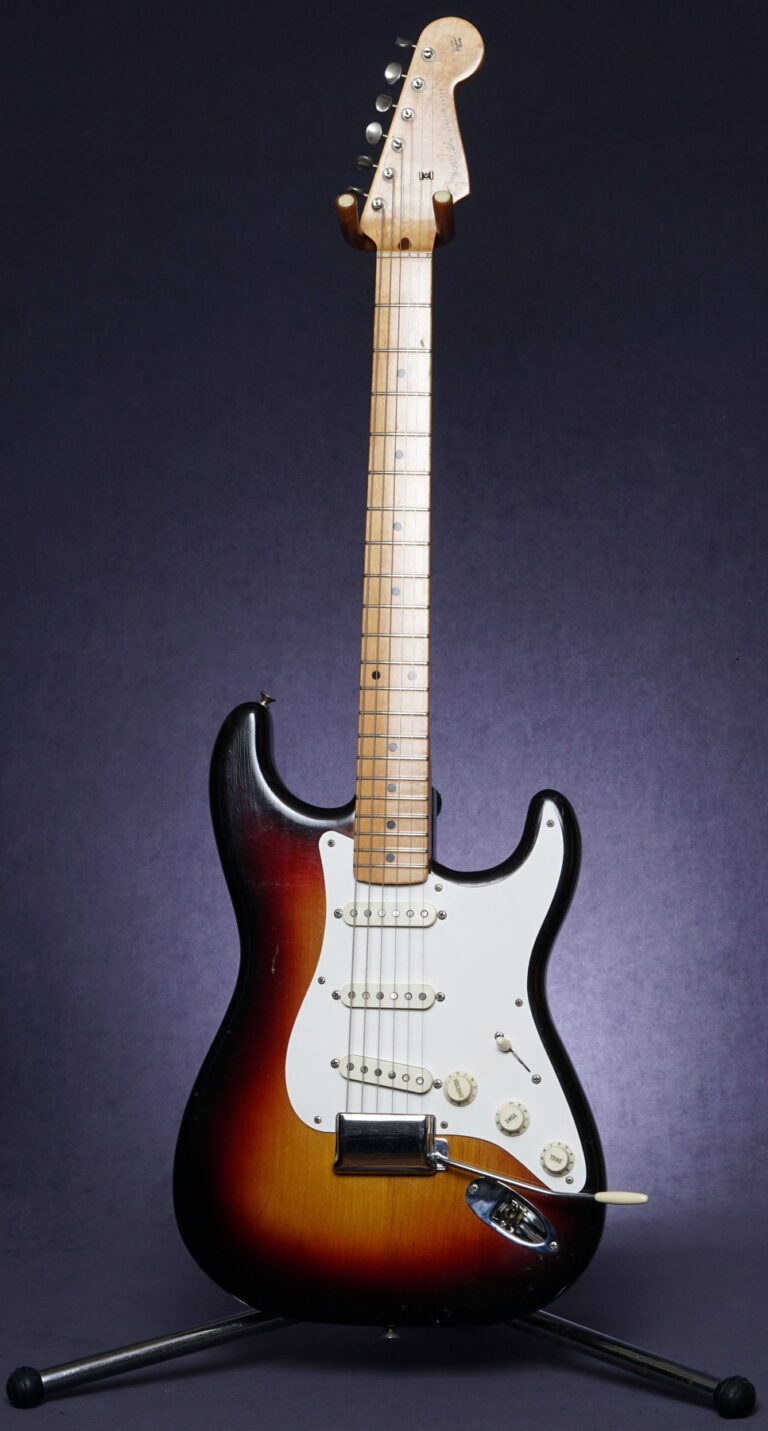
Magic Slim’s primary guitar, consistent with the broader Chicago blues tradition’s Fender-centric approach documented extensively throughout this series, was the Fender Stratocaster — giving his playing the bright, articulate single-coil character appropriate to traditional electric blues. His Stratocaster use was straightforward and unmodified, consistent with his overall approach: a working musician’s reliable, well-understood instrument rather than a vehicle for technical innovation or unusual modification.
Various other guitars likely appeared in Slim’s setup across his decades-long career, consistent with the general pattern of working musicians using available and reliable instruments appropriate to the demands of essentially continuous club performance — instruments chosen for reliability and familiarity rather than for specific tonal experimentation.
Stock Fender single-coil pickups gave Slim’s Stratocaster its foundational tonal character — bright, articulate, and well-suited to cutting through a working blues band’s ensemble texture in club performance contexts.
Slim’s string choices would be consistent with traditional Chicago blues practice — medium-to-heavy gauges appropriate to traditional blues bending and tonal fullness, chosen for reliability and consistency across the demands of essentially continuous performance rather than for specific technical optimisation.
Amps
Fender amplifiers, consistent with the broader Chicago blues tradition documented throughout this series, provided Slim’s foundational amplification — giving his Stratocaster’s single-coil output its appropriate clean-to-moderately-overdriven tonal character, suitable for traditional blues club performance contexts.
Consistent with the broader traditional blues approach documented throughout this series, Slim’s tonal edge came from natural amplifier saturation at performance volumes — Stratocaster output driving Fender amplification into its natural overdrive character, giving traditional blues tone without requiring dedicated distortion devices.
Effects
Consistent with traditional Chicago blues club performance practice — Slim’s effects approach was likely minimal, relying on guitar-and-amplifier natural tonal character rather than extensive pedal-based processing.
Built-in amplifier reverb and potentially tremolo — consistent with the broader Chicago blues tradition documented extensively for Magic Sam and Otis Rush — would have given Slim’s tone its traditional atmospheric and tonal character, though his specific application (within his overall straightforward, working-musician approach) likely emphasised reliability and consistency over the more specifically identified tonal signatures that distinguished individual West Side pioneers.
Playing Style & Tone Philosophy
Magic Slim represents a specific and valuable category within this series’ broader documentation of Chicago blues guitar: the working bandleader whose career’s significance lies not primarily in individual technical innovation (the upside-down playing of Otis Rush, the tremolo-soaked tonal signature of Magic Sam) but in sustained, reliable continuation of foundational tradition across decades of essentially continuous performance. This kind of career — less individually celebrated than the more innovative pioneers, but genuinely significant for maintaining living tradition’s continuity — represents an important dimension of how musical traditions actually survive and transmit across generations: not only through the recordings and innovations of the most celebrated individual figures, but through the working musicians whose continuous performance keeps a tradition’s vocabulary alive and accessible to audiences and to younger musicians who might encounter it through live performance rather than (or in addition to) historical recordings.
His guitar approach — straightforward, authoritative, deeply rooted in traditional Chicago blues vocabulary — reflected this role: rather than pursuing individual innovations that might distinguish his sound from his predecessors and contemporaries, Slim’s playing represented confident, authoritative command of the tradition’s established vocabulary, delivered with the consistency and reliability that decades of essentially continuous club performance both required and developed.
His bandleading role with the Teardrops — maintaining a working band across decades, with the personnel changes and practical demands that sustaining any working band across this timeframe involves — represented a different kind of musical achievement from individual guitar innovation: the sustained organisational and musical leadership required to keep a band working, rehearsed, and performing at a consistent level across decades. This bandleading achievement, while less directly “guitar gear” focused than this series’ typical content, represents an important context for understanding what his guitar playing was in service of — not primarily individual artistic statement (though certainly that as well) but the practical requirements of leading a working band through decades of continuous performance.
His childhood connection to Magic Sam — and his absorption of West Side Chicago blues vocabulary through this personal connection alongside his broader Chicago scene immersion — gave his playing direct roots in the foundational tradition this series has documented extensively, even as his own career’s specific character (sustained club performance rather than the more limited, more individually celebrated recorded output of some West Side pioneers) gave his relationship to this tradition a different quality: living continuation rather than foundational innovation.
Tonally, Magic Slim guitars gear philosophy was built on the most foundational and most widely shared Chicago blues combination — Fender Stratocaster through Fender amplification, with natural saturation providing tonal edge — deployed with the consistency and authority that decades of continuous performance both required and developed. This represents, in the context of this series, perhaps the most “default” or “foundational” tonal combination documented — not because it lacks character, but because Slim’s specific contribution was demonstrating what this foundational combination could sustain across decades of reliable, authoritative performance, rather than how it could be individually transformed into a more specifically identifiable personal signature.
The broader category of “working musician as living tradition-bearer” that this article has used to characterise Magic Slim’s significance deserves examination as a genuinely important but often under-discussed category within how musical traditions actually survive and transmit across generations. Academic and popular discussion of musical traditions often emphasises the most innovative, most individually celebrated figures — the musicians whose recordings represent identifiable artistic breakthroughs, whose techniques or compositions became foundational reference points, whose names appear in historical narratives as the tradition’s “important” figures. This emphasis is understandable — these figures genuinely did make foundational contributions, as this series has documented extensively for Tampa Red, Big Bill Broonzy, Lonnie Johnson, Magic Sam, Otis Rush, and numerous others. But traditions don’t survive merely through foundational moments captured on recordings; they survive through continued practice — musicians performing the tradition’s vocabulary, night after night, in clubs where audiences (including younger musicians who might themselves go on to develop the tradition further) encounter it as living practice rather than as historical artifact. Magic Slim’s decades of continuous Chicago club performance represented exactly this kind of continued practice — keeping traditional Chicago blues vocabulary alive and accessible as living performance throughout a period (the decades following the foundational Cobra Records era) when this vocabulary’s commercial visibility was increasingly limited, but its continued practice in actual clubs, by actual working musicians, meant that anyone who walked into a Chicago blues club during these decades could encounter this tradition directly, performed with genuine authority by a musician whose connection to the tradition’s foundational figures (through his friendship with Magic Sam specifically) was direct and personal rather than merely historical.
The specific economics and practical demands of sustaining a working blues band across decades — the Teardrops’ continuous operation under Slim’s leadership — deserve examination because these demands represent a genuinely significant achievement distinct from (though related to) individual musical ability. Maintaining a working band requires: consistent bookings (relationships with club owners, reliability that gives venues confidence in booking the band repeatedly), personnel management (musicians joining and leaving over the decades, requiring the bandleader to maintain the band’s sound and reliability despite personnel changes), financial management (ensuring the band’s economics work for both the bandleader and the musicians, across the specific economic realities of blues club performance, which — as documented for Luther Allison — generally provided modest compensation relative to the commercial mainstream), and the simple physical and logistical demands of continuous performance (travel, equipment maintenance and transport, the physical demands of performing night after night across decades). Magic Slim’s sustained leadership of the Teardrops across this combination of demands represents an achievement that, while less individually “musical” in the narrow sense of guitar technique or composition, nonetheless represents genuine skill and genuine achievement — the skill of sustaining a working musical organisation across decades, which is itself a kind of musical achievement insofar as it’s what made his continuous performance (and therefore his role as living tradition-bearer) possible in the first place. Magic Slim guitars gear, in this broader sense, encompasses not just his individual instrument and amplifier but the complete working infrastructure — band, bookings, sustained organisational leadership — that made his decades of traditional Chicago blues performance possible.
Mississippi Delta origins shared with Magic Sam — both musicians from the same general Mississippi Delta region, both moving to Chicago as part of the broader Great Migration pattern this series has documented extensively, and both maintaining a personal friendship that began in this shared Mississippi childhood — illuminates how the broader patterns this series has documented (Delta-to-Chicago migration, the development of specific Chicago blues sounds within this migrated community) operated not just as abstract demographic and musical patterns but through actual personal relationships and friendships that carried specific musical vocabulary and specific personal connections from Mississippi childhoods into Chicago’s blues scene. The friendship between Holt and Maghett — beginning in Mississippi, continuing into Chicago, and giving Holt his “Magic Slim” stage identity through Maghett’s nickname — represents one specific, documented instance of how the broader migration and musical-development patterns this series has discussed in general terms actually operated at the level of individual lives and relationships: not abstract “influence” transmitted through recordings alone, but actual childhood friendships that carried forward into adult careers, with one friend’s nickname-giving directly shaping the other’s professional identity. Magic Slim guitars gear’s specific connection to the West Side sound, in this light, runs through this personal friendship as much as through any more general “absorption of Chicago blues vocabulary” — a reminder that musical traditions are transmitted not just through abstract stylistic influence but through actual human relationships, with all the specific and sometimes quite personal connections (a childhood friend’s nickname becoming a professional identity) that human relationships involve.
How to Sound Like Magic Slim
Guitar Approach
A Fender Stratocaster with stock single-coil pickups is the foundational Magic Slim guitars gear instrument — straightforward, reliable, and consistent with the broader traditional Chicago blues approach. Medium-to-heavy gauge strings for traditional bending feel and tonal fullness.
The approach: develop confident, authoritative command of traditional Chicago blues vocabulary — the rhythm and lead approaches documented throughout this series’ Chicago blues articles — with consistency and reliability as primary goals rather than individual stylistic distinction. This is, in some ways, a more demanding goal than it might initially appear: playing reliably and authoritatively, night after night, across years and decades, without the variety and novelty-seeking that might come more naturally to musicians focused on individual artistic development, requires its own kind of discipline and its own kind of mastery — the mastery of a working musician whose job is to deliver consistent quality across essentially continuous performance demands.
Amp Approach
A Fender amplifier (Twin Reverb, Super Reverb, or similar) at moderate volume, giving natural saturation appropriate to traditional Chicago blues — consistent with the foundational tonal approach documented extensively throughout this series’ Chicago blues coverage.
| Element | Approach | Notes |
|---|---|---|
| Guitar | Fender Stratocaster, stock single-coil | Foundational Chicago blues instrument — reliable, well-understood |
| Amplifier | Fender, moderate volume | Natural saturation for traditional tonal edge |
| Effects | Minimal | Natural guitar-and-amp tone, consistent with traditional approach |
| Vocabulary | Traditional Chicago blues | Authoritative command of established vocabulary, not individual innovation focus |
| Performance approach | Consistency, reliability | The “working musician” discipline — sustained quality across continuous performance |
| Bandleading dimension | Sustained ensemble leadership | Guitar playing in service of a working band’s continuous functioning |
Fender Stratocaster through Fender amplification at moderate volume, with traditional Chicago blues vocabulary delivered with consistency and authority. The “effect” that most distinguishes Magic Slim’s approach is not equipment-based but consists of the discipline and reliability of sustained working-musician performance — a quality that, while harder to capture in a gear-and-settings table than tonal specifications, represents the genuine core of what his career demonstrated.
Influence & Legacy
Magic Slim’s influence operates differently from many of the guitarists this series has documented — rather than specific technical innovations or compositions that subsequent musicians directly absorbed and built upon, his influence lies primarily in his role as a living link to foundational Chicago blues tradition, maintained through decades of continuous performance during a period when this tradition’s commercial visibility was increasingly limited.
His specific significance for the broader blues community — particularly for younger musicians and for blues enthusiasts seeking direct connection to traditional Chicago blues club performance — gave him a role as a kind of living archive of tradition, accessible through live performance in a way that historical recordings alone couldn’t replicate. This role — the working musician as living tradition-bearer — represents a different but genuinely valuable kind of musical contribution from the more individually celebrated innovations this series has documented for other figures.
The comparison with Magic Sam — his childhood friend and the source of his “Magic” nickname, whose own career (cut short by early death) represented the foundational individual innovation that Slim’s subsequent decades of continuous performance helped keep alive and accessible — illuminates the relationship between foundational individual innovation and sustained traditional continuation that this pairing represents. The parallel with Luther Allison — whose own career navigated the commercial challenges facing Chicago blues musicians of this generation through European audiences, representing a different response to similar commercial circumstances than Slim’s sustained American club career represented — shows the range of career strategies Chicago blues musicians of this generation pursued in response to shared commercial challenges. And the connection to Otis Rush — whose own relatively limited recorded output contrasts with Slim’s extensive (if less individually celebrated) recorded documentation across decades of the Teardrops’ work — places Magic Slim guitars gear within the broader spectrum of how Chicago blues musicians’ careers and recorded legacies have varied, from Rush’s concentrated essential statements to Slim’s extensive sustained documentation of ongoing tradition.

Frequently Asked Questions: Magic Slim Guitars & Gear
What guitar did Magic Slim play?
Magic Slim’s primary guitar was the Fender Stratocaster. His Stratocaster use was straightforward and largely unmodified, reflecting his overall approach as a working musician prioritising reliability and consistency over technical innovation or unusual modification.
What amplifier did Magic Slim use?
Slim’s amplification used Fender amplifiers, consistent with the broader Chicago blues tradition — giving his Stratocaster’s single-coil output its foundational clean-to-moderately-overdriven tonal character through natural amplifier saturation at performance volumes, appropriate to traditional blues club performance.
What was Magic Slim’s connection to Magic Sam?
Magic Slim (Morris Holt) and Magic Sam (Samuel Maghett) were childhood friends from Mississippi, both eventually making their way to Chicago. Magic Sam reportedly gave Holt his “Magic Slim” nickname — the “Magic” element reflecting their personal connection, with “Slim” providing Holt’s own identity (an ironic nickname given his large physical stature, in the blues tradition’s pattern of nicknames that play on physical characteristics). This personal connection gave Slim direct access to West Side Chicago blues vocabulary through his relationship with one of its foundational figures.
What was the Teardrops and what was Magic Slim’s role in it?
The Teardrops was Magic Slim’s band, providing the ensemble context for his guitar and bandleading work across decades of Chicago blues club performance. As bandleader, Slim was responsible for maintaining a working band across decades — including personnel changes and the practical demands of sustaining continuous performance — representing an organisational and musical leadership achievement alongside his individual guitar playing.
How does Magic Slim’s career differ from more individually celebrated Chicago blues guitarists?
While guitarists like Otis Rush and Magic Sam are celebrated primarily for specific individual innovations (Rush’s upside-down playing and minor-key compositions, Magic Sam’s tremolo-soaked tone and rhythmic aggression) documented in concentrated bodies of recorded work, Magic Slim’s significance lies primarily in sustained, reliable continuation of foundational Chicago blues tradition across decades of essentially continuous club performance. This represents a different but genuinely valuable kind of musical contribution — the working musician as living tradition-bearer, maintaining a tradition’s vocabulary and accessibility through continuous performance rather than through individually celebrated innovation.
Why is “Magic Slim” an ironic nickname?
“Magic Slim” follows a pattern common in blues nicknames where physical characteristics are referenced ironically — Slim (Morris Holt) was a large man, making “Slim” an ironic descriptor rather than a literal one. This kind of ironic or contradictory nicknaming reflects a broader pattern in blues and African-American vernacular naming traditions, where nicknames often play with rather than literally describe their bearers’ characteristics.
What recordings document Magic Slim’s career?
Magic Slim’s recorded output, across various labels and configurations of the Teardrops over decades, is more extensive than some of the more individually celebrated West Side pioneers (whose recorded output was sometimes limited by early death or by the commercial challenges documented for Luther Allison), giving listeners access to extensive documentation of his sustained traditional approach across his career’s decades. This extensive documentation, while perhaps less individually distinctive than the more celebrated pioneers’ concentrated essential statements, gives a different kind of value: a sustained record of traditional Chicago blues as living, ongoing practice rather than as a small number of foundational moments.
The Chicago blues club circuit itself — the specific network of venues that gave musicians like Magic Slim their performance contexts across decades — deserves examination as the physical and economic infrastructure within which traditional Chicago blues survived as living practice through the decades following the foundational Cobra Records era. Chicago’s South Side and West Side blues clubs — venues that, across the decades from the 1950s through the present, have provided spaces for traditional Chicago blues performance — represent a specific kind of cultural infrastructure: relatively small venues, generally serving local neighbourhood communities rather than tourist or broader commercial audiences (though some venues did and do attract broader audiences including blues enthusiasts and tourists specifically seeking traditional Chicago blues), providing regular performance opportunities for working bands like the Teardrops. This club infrastructure’s continued existence across decades — even as broader commercial structures for blues (recording contracts, radio play, mainstream concert touring) became increasingly limited, as documented for Luther Allison — gave musicians like Magic Slim a performance context that, while not providing the broader commercial success that musicians like Allison sought through European audiences, did provide the consistent, ongoing performance opportunities that a working bandleader’s career required. This club infrastructure represents, in effect, the physical space within which “living tradition” actually lived — not an abstract concept but actual venues, actual regular performance dates, actual audiences (including the regular, often neighbourhood-based audiences that traditional blues clubs served) who encountered this tradition as ongoing local cultural practice. Magic Slim guitars gear’s complete context includes this club infrastructure — the specific venues, the specific Chicago neighbourhoods, the specific ongoing relationships between working bands and the clubs that booked them — as much as it includes any specific instrument or amplifier.
The contrast this article has drawn between Magic Slim’s career pattern and the more individually celebrated innovator pattern (Otis Rush, Magic Sam) connects to a broader question worth considering explicitly: what does it mean for a musical contribution to be “important,” and does importance necessarily correlate with individual innovation? This series has documented numerous individually innovative musicians whose specific technical, tonal, or compositional innovations became foundational reference points for subsequent developments — and these contributions are genuinely important in ways this series has examined in detail. But Magic Slim’s contribution — sustained, reliable, authoritative continuation of established tradition across decades — represents a different kind of importance, one that’s perhaps harder to articulate in the “innovation and influence” framework that dominates much music history discussion, but that’s nonetheless genuinely significant: without musicians like Slim maintaining traditional vocabulary as living practice, the foundational innovations of figures like Magic Sam and Otis Rush might have remained primarily historical — important as recorded artifacts, but less present as ongoing living practice that subsequent generations could directly encounter. The relationship between innovation and continuation isn’t competitive — both are necessary for a tradition to remain genuinely alive rather than merely historically documented — but discussions that focus primarily on innovation can inadvertently underemphasise continuation’s genuine importance. Magic Slim guitars gear, considered in this light, represents an important corrective: a reminder that “importance” in musical tradition encompasses both the innovators who expand a tradition’s vocabulary and the continuers who keep that vocabulary alive as living practice, with both roles genuinely necessary and genuinely valuable, even if only one of these roles tends to receive the bulk of historical and critical attention.
For guitarists studying Magic Slim’s approach today, the practical lesson may be less about specific licks or tonal settings (his approach was, by design, the most “standard” Chicago blues combination this series has documented) and more about the discipline of consistency itself — the ability to deliver authoritative, satisfying traditional blues performance night after night, across years and decades, without the variety-seeking or constant reinvention that might characterise a more individually-innovation-focused career. This consistency discipline is, in its own way, a genuinely difficult skill: many musicians find sustained repetition of established vocabulary less personally satisfying than the pursuit of novelty, and the specific combination of personal discipline, professional reliability, and continued musical satisfaction within an established vocabulary that a decades-long traditional bandleading career requires represents its own kind of mastery — different from, but not lesser than, the mastery of individual innovation that this series has documented for other figures. Magic Slim guitars gear’s ultimate lesson may be that “what to play” (the Stratocaster-through-Fender-amplifier traditional Chicago blues vocabulary, thoroughly documented throughout this series) is, in some sense, less important than “how to sustain playing it” — the discipline, reliability, and continued musical satisfaction that allowed Slim to maintain this approach as his life’s work across decades, giving Chicago blues clubs a continuous living presence of traditional vocabulary throughout a period when this vocabulary’s broader commercial fortunes were, as documented extensively for Luther Allison, increasingly uncertain.
Magic Slim’s large physical stature — referenced in the “Magic Slim” ironic nickname discussion and in this article’s opening characterisation — also connects to a broader, often-noted pattern in blues performance: the relationship between a performer’s physical presence and their stage authority. A large physical presence, combined with the kind of authoritative musical command this article has described, can give a performer a specific kind of commanding stage presence — audiences responding not just to the music itself but to the complete physical and musical presentation of a performer whose size and confidence project authority. This isn’t unique to Slim — physical presence has been part of blues performance tradition broadly, with various performers’ physical characteristics (whether large stature, as in Slim’s case, or other distinctive physical characteristics) becoming part of their overall performance identity, sometimes explicitly referenced in nicknames (as with “Magic Slim” itself) or in audience and critical descriptions of their performances. For Slim specifically, decades of club performance would have given him extensive opportunity to develop and refine whatever specific relationship between his physical presence and his musical authority worked most effectively for his audiences — a dimension of “performance” that, like the bandleading and organisational dimensions discussed earlier, extends beyond “guitars gear” in the narrow equipment sense but represents part of the complete picture of what made his sustained career possible and effective.
The relative scarcity of detailed technical documentation for Magic Slim’s specific equipment — compared to the more detailed instrument and amplifier histories this series has documented for some other figures — itself illustrates the broader point this article has emphasised: working musicians whose careers centre on sustained club performance rather than on widely-discussed studio recordings or on equipment choices that became part of their individual “legend” (the way, for instance, Tampa Red’s National Tricone or Lonnie Mack’s Magnatone became central elements of how those musicians are discussed) often receive less of this kind of detailed equipment documentation, even when — as in Slim’s case — their equipment choices were perfectly genuine and perfectly central to their actual sound. This isn’t a deficiency in Slim’s career or in his equipment choices; it reflects, rather, how documentation and discussion tend to concentrate around specific narratives (individual innovation, specific iconic equipment, dramatic career stories) in ways that can leave less dramatic but equally genuine careers — straightforward equipment, sustained traditional performance, decades of reliable club work — less thoroughly documented in the specific “gear” terms this series typically employs. For Magic Slim guitars gear, this means that “Fender Stratocaster through Fender amplifier, traditional Chicago blues vocabulary, played with consistency and authority across decades” represents both the complete and accurate picture and, simultaneously, a picture whose very simplicity and lack of dramatic specificity reflects something real about what his career actually was: not a story of equipment innovation or individual technical breakthrough, but a story of sustained, reliable, foundational tradition, kept alive through the most straightforward means, by a musician whose genuine contribution lay precisely in this sustained reliability rather than in any more dramatic or more individually distinctive equipment story.
Considering Magic Slim’s place within this series’ broader West Side Chicago blues coverage — alongside Magic Sam, Otis Rush, Luther Allison, and now Slim himself — gives a useful summary of the range of career patterns this single regional tradition produced across roughly two generations of musicians sharing common roots. Magic Sam: foundational individual innovation, cut short by early death, limited but essential recorded output. Otis Rush: foundational individual innovation (the upside-down technique, the minor-key compositions), limited but influential recorded output, direct covering by British blues-rock musicians. Luther Allison: absorption of the foundational tradition by a slightly younger generation, career sustained through European audiences when American structures proved insufficient, eventual late-career American recognition. Magic Slim: absorption of the foundational tradition through direct personal connection (the Magic Sam friendship), career sustained through decades of American club performance, extensive recorded documentation of ongoing traditional practice. These four career patterns — individual innovation cut short, individual innovation with limited output but major influence, generational absorption with international career-sustainability solutions, and generational absorption with sustained domestic traditional continuation — represent genuinely different ways that a single shared tradition (West Side Chicago blues, rooted in shared Mississippi Delta origins and shared Chicago formation) could be lived out across different individual careers, shaped by each musician’s specific circumstances, choices, and the broader commercial and cultural contexts each navigated. Magic Slim guitars gear, as the conclusion of this specific four-article West Side Chicago blues sequence, represents the pattern of sustained traditional continuation — perhaps the least dramatic of the four patterns in terms of individual narrative, but genuinely necessary for the broader tradition’s actual survival as living practice across the decades this series has documented.
For listeners seeking direct engagement with Magic Slim’s actual recordings, the Teardrops’ extensive catalogue across multiple labels and decades offers numerous entry points — unlike Otis Rush’s relatively concentrated essential output, Slim’s extensive recorded documentation means no single recording carries the same “essential statement” weight, but rather offers a representative sample of his sustained traditional approach as it existed across different points in his decades-long career. This abundance — rather than scarcity — of recorded documentation is itself characteristic of the “sustained continuation” career pattern this article has discussed: where Magic Sam’s early death and Otis Rush’s more limited output gave their catalogues a concentrated, essential quality, Slim’s decades of continuous activity produced a correspondingly extensive catalogue, any reasonable sample of which gives an accurate picture of his traditional Chicago blues approach, precisely because that approach remained consistent across the decades rather than undergoing the kind of dramatic individual development that might make some recordings more “essential” than others. Magic Slim guitars gear, approached through this extensive catalogue, rewards listeners less with individual revelatory moments and more with the cumulative impression of genuine mastery sustained across an entire career — a different but equally valuable kind of listening experience from the more concentrated catalogues this series has documented for some other figures.
Finally, this article’s conclusion to the West Side Chicago blues sequence offers an opportunity to step back and consider what this four-article sequence, taken together, has demonstrated about the broader purpose of this entire 100-article series. Each article has documented specific equipment — guitars, amplifiers, effects, settings — but the genuine substance of each article has been the human story: the specific musician, their specific circumstances, their specific choices, and the specific musical results those choices produced. Magic Sam’s tragically brief but concentrated career; Otis Rush’s unusual physical relationship to his instrument producing genuinely original vocabulary; Luther Allison’s international career navigating commercial realities across continents; and now Magic Slim’s decades of sustained traditional continuation, maintained through personal discipline and through a friendship that began in Mississippi childhood and shaped a professional identity for the rest of a working life. “Guitars gear,” across all hundred articles in this series, has always been in service of these human stories — the equipment matters because of what specific people did with it, in specific circumstances, for specific reasons. Magic Slim guitars gear, concluding this West Side sequence, reminds us that not every important musical story is a story of dramatic innovation — some of the most important stories are stories of sustained presence, reliable practice, and the quiet, decades-long work of keeping a tradition alive for the people who walk into a club on any given night, expecting and receiving the genuine thing.
That genuine thing — a Fender Stratocaster, a Fender amplifier, traditional Chicago blues vocabulary, and a working musician’s lifetime of disciplined, authoritative delivery — is Magic Slim guitars gear in full. No mystery, no secret modification, no rare vintage piece commanding collector premiums. Just the real thing, played right, for as long as a working life allowed.
For now, though, the picture is complete: Morris Holt, born in the Delta, friend to Magic Sam, bandleader of the Teardrops for decades, Stratocaster in hand, Fender amp behind him, playing the real Chicago blues for whoever walked through the club door — night after night, year after year, the genuine article.
That’s the Magic Slim story, and that’s Magic Slim guitars gear — straightforward equipment, a lifetime of dedication, and the West Side Chicago blues tradition, kept alive and well one club night at a time, for as long as the man could play.
Rest easy, Morris Holt. The Teardrops play on.
Image credits
- Magic Slim: Otávio Nogueira from Fortaleza, BR, Wikimedia Commons, CC BY 2.0.
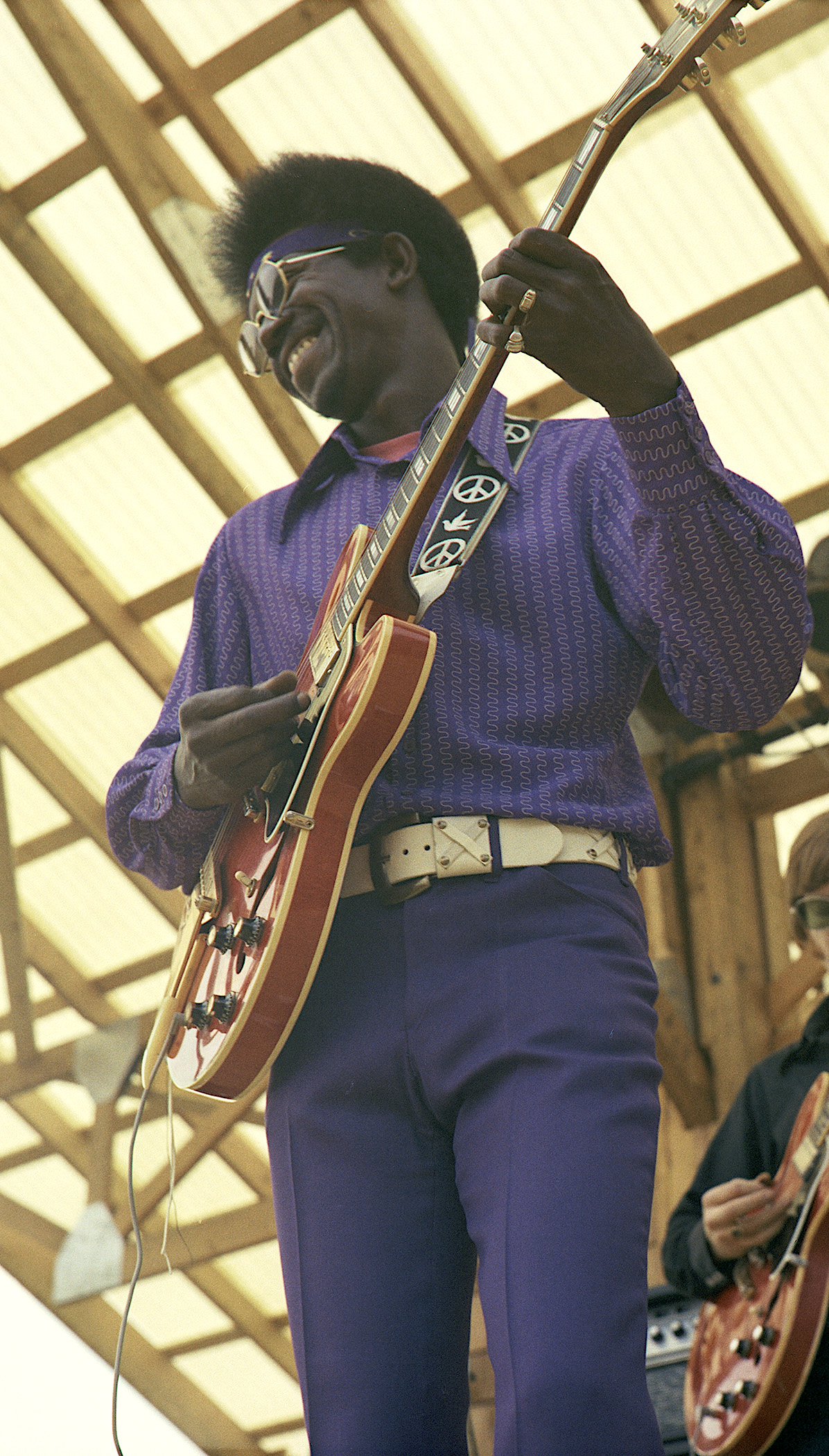
- Luther Allison: Eatonland, Wikimedia Commons, CC BY-SA 4.0.
- Magic Slim: Otávio Nogueira, Wikimedia Commons, CC BY 2.0.
- Top image: Yannick, Wikimedia Commons, CC BY-SA 2.0.
- Magic Slim: photo by Lionel Decoster, via Wikimedia Commons, CC BY-SA 4.0.
- Fender Stratocaster: Lightburst, Wikimedia Commons, CC BY-SA 4.0.