Lenny Breau Guitars & Gear: Jazz Guitar Legend’s Complete Rig Guide
Lenny Breau guitars gear — Gretsch and Gibson jazz guitar deep-dive for the artificial harmonics pioneer's jazz-country-classical synthesis approach.
Lenny Breau guitars gear is the subject of this series’ introduction to one of jazz guitar’s most genuinely singular individual voices — the equipment and approach of a guitarist whose synthesis of jazz harmony (sophisticated chord vocabulary, bebop-derived melodic lines), country guitar technique (his early formation in a country music environment), and classical guitar influences (particularly the artificial harmonics technique borrowed from classical guitar tradition) produced a combination that established Breau as one of the most technically and harmonically innovative jazz guitarists of the twentieth century, even as his recognition during his lifetime remained somewhat less than his extraordinary abilities warranted, a pattern this series has documented across numerous articles about genuinely innovative musicians whose recognition lagged their contributions.
His specific position — a jazz guitarist whose most distinctive technical innovation (the five-finger artificial harmonics technique applied to jazz guitar within a solo or small-group context) represented a genuinely novel application of a classical guitar technique within jazz’s harmonic and improvisational framework — gives this article an opportunity to examine both the technical specifics of this innovation and the biographical context (a complex personal life that intersected with jazz guitar’s demanding professional landscape in ways that contributed to his relative obscurity during much of his career) that shaped how this innovation was received and remembered. This is the complete breakdown of Lenny Breau guitars gear, technique, and tonal philosophy.
Background
Lenny Breau was born on August 5, 1941, in Auburn, Maine, United States, with his early development including an unusual musical formation: his parents were country musicians, meaning Breau developed his early guitar facility within a country music context before his subsequent immersion in jazz, representing a specific kind of formative cross-tradition experience that shaped what he subsequently brought to jazz guitar’s established vocabulary.
His development in Canada — particularly in Winnipeg, where he spent significant formative years and where he developed his specific jazz-country-classical synthesis — placed him within Canadian music’s specific landscape: geographically adjacent to American jazz’s primary centres (New York, Chicago, Los Angeles) but not within them, developing his specific approach somewhat outside the direct social/professional networks of American jazz’s primary institutional centres, which may have contributed both to his distinctive individual development (less immediate pressure to conform to established New York jazz guitar styles) and to his relative obscurity within those networks’ recognition mechanisms.
His personal struggles — with addiction, which significantly affected his professional life, his recording output (fewer albums than his abilities might have produced under different circumstances), and ultimately contributed to the circumstances surrounding his death in 1984 — represent genuinely important biographical context, noting that Breau’s life and career represent a specific instance of the devastating impact addiction can have on musicians’ lives and careers, without dwelling beyond what honesty requires.
His posthumous recognition — including extensive tribute from musicians who knew and heard his work, reissued recordings, and growing acknowledgment of his specific innovations within jazz guitar pedagogy and among guitarists working within related traditions — represents a pattern of genuine innovation receiving more appropriate recognition after the fact than during the innovator’s lifetime, with Breau’s specific case being among the more dramatic instances of this pattern.
Lenny Breau Guitars Gear: The Complete Rig
Guitars
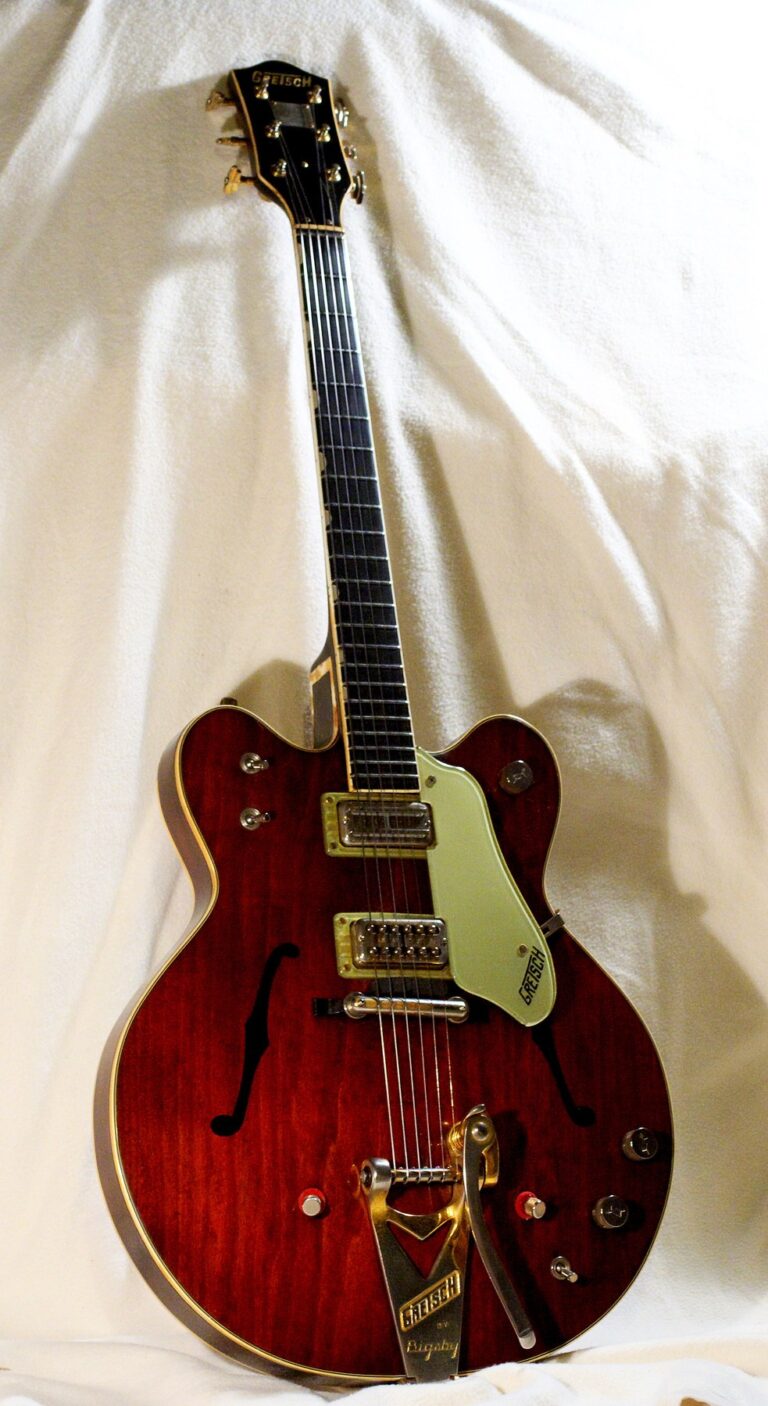
Lenny Breau’s guitar associations include Gretsch instruments — hollow-body electric guitars, whose specific construction and tonal character (warm, somewhat airy hollow-body sound, with the specific resonance characteristics that distinguish hollow-body from solid-body electrics, similar in general category to Peter Banks’ ES-175 though from a different manufacturer with different specific characteristics) suited Breau’s jazz-and-beyond approach. Gretsch instruments — associated with various significant guitarists across jazz, rockabilly, and country contexts — provided a specific warm, rounded tonal foundation that suited Breau’s chord-melody and artificial harmonics work particularly well, giving his technique’s more delicate elements (harmonics, solo chord-melody passages) appropriate resonance without the higher-output character of some other electric guitar types potentially overwhelming these delicate textural elements.
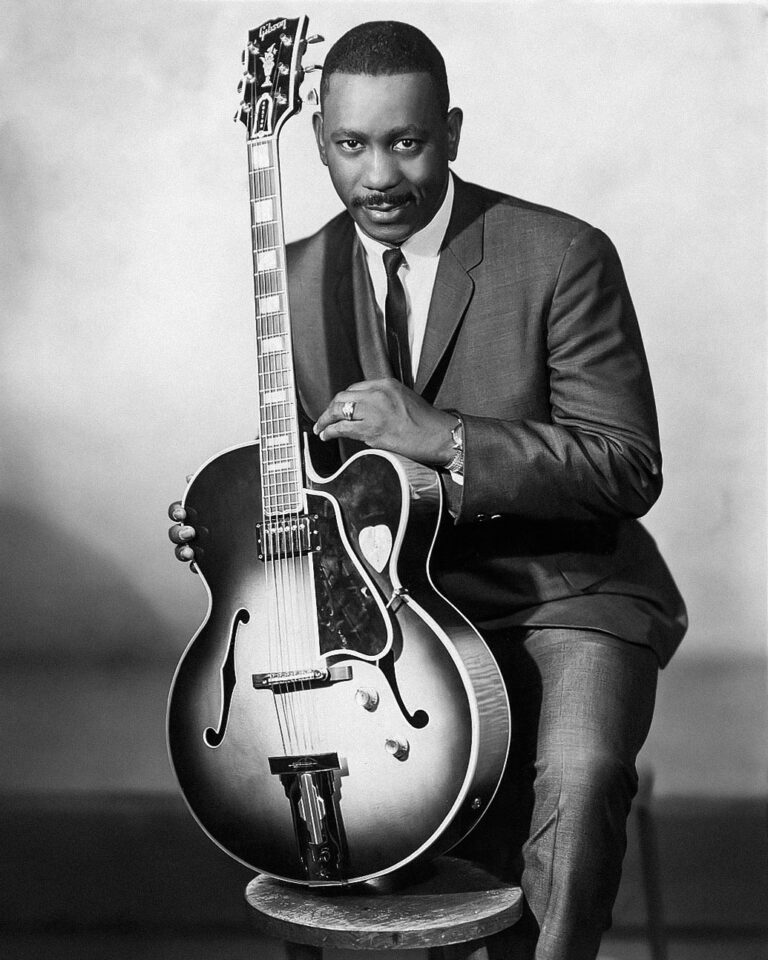
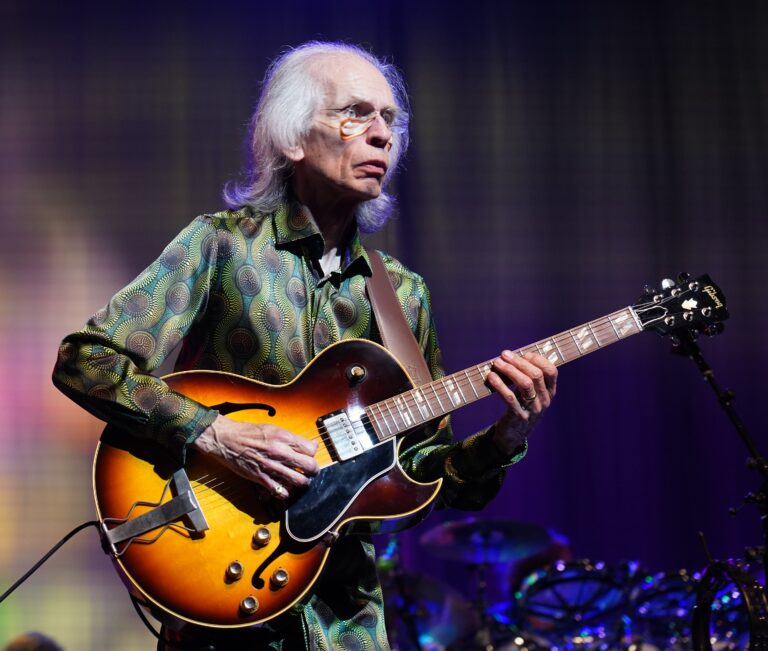
Alongside Gretsch, Gibson instruments — here in jazz-associated archtop forms more typically associated with jazz contexts — also appear within Breau’s gear history, consistent with jazz guitar’s broader Gibson association.
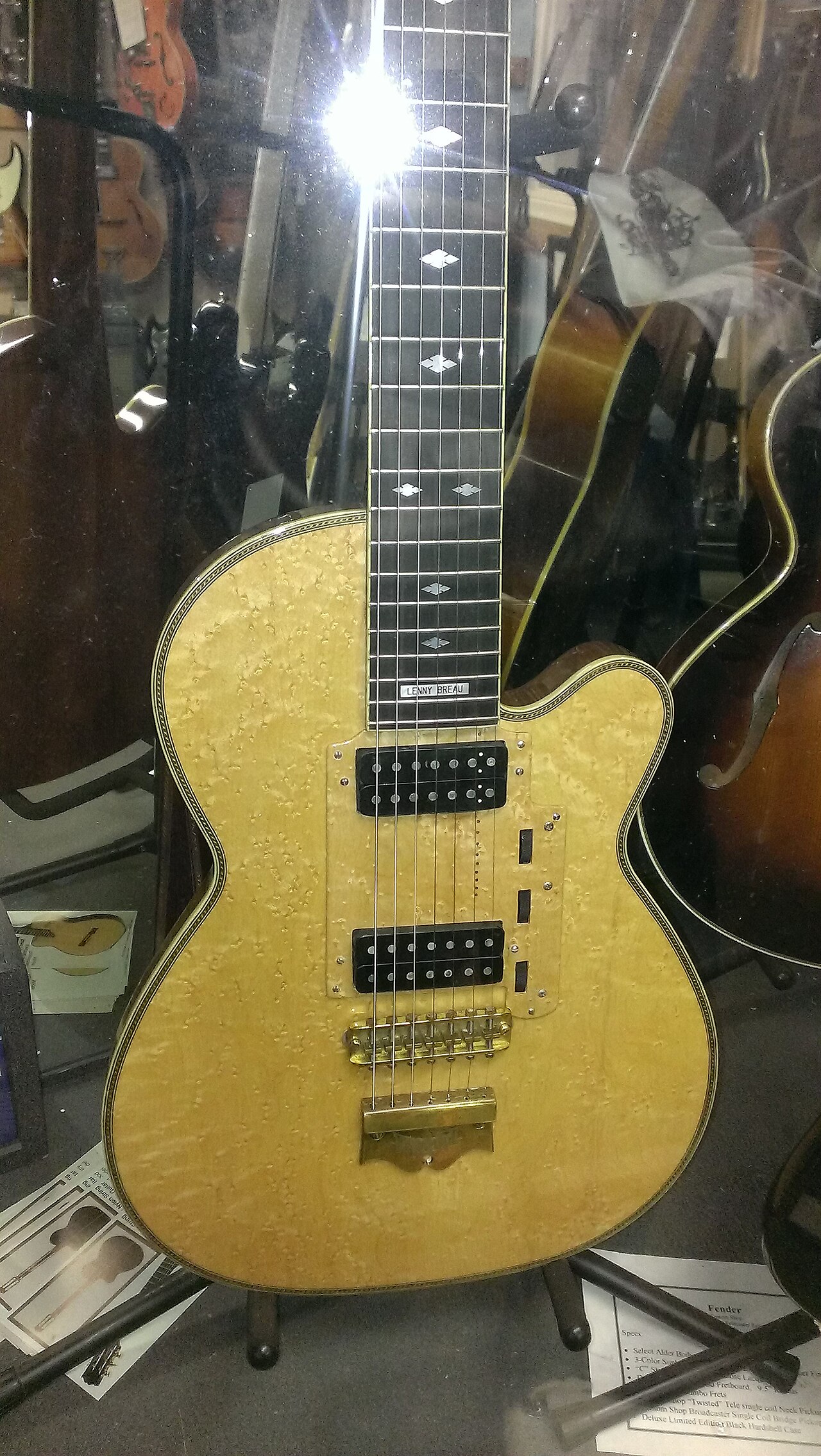
Breau’s exploration of seven-string guitar — adding a lower bass string to standard six-string guitar’s range — represents another element of his gear exploration, consistent with his broader search for expanded tonal and harmonic range within his specific approach. Seven-string guitar extends the instrument’s lower range, providing additional bass-register possibilities particularly relevant for chord-melody and solo playing where the guitar needs to cover both bass and melody simultaneously.
Amps
Jazz guitar’s traditional amplification aesthetic — clean, warm, transparent, preserving the guitar’s acoustic character rather than adding significant gain-based character — represents Breau’s foundational amplification approach, consistent with jazz guitar’s broader clean-amp tradition (jazz’s general preference for clean tones allowing harmonic detail to be heard clearly).
Effects
Consistent with jazz guitar’s generally minimal-effects tradition (jazz guitar’s harmonic complexity and improvisational character benefit from clean tonal reproduction rather than heavy processing), minimal effects processing characterised Breau’s approach, letting his guitar work’s harmonic and technical sophistication represent the primary sonic interest.
Playing Style & Tone Philosophy
Lenny Breau’s artificial harmonics technique represents a genuinely original synthesis of sources (classical guitar technique, jazz harmonic vocabulary, country picking background) that produced something jazz guitar genuinely hadn’t seen before.
Artificial harmonics on guitar — the technique this article has mentioned as Breau’s most distinctive innovation — deserve detailed technical examination, since understanding what this technique actually involves illuminates why Breau’s specific application of it within jazz guitar represents a genuine innovation rather than merely adapting a known technique to a new context. Natural harmonics on guitar (the high-pitched bell-like tones produced by lightly touching strings at specific nodal points while plucking) represent one familiar harmonic technique available to guitarists. Artificial harmonics represent a different and more demanding specific technique: rather than touching the string at a natural harmonic point relative to the nut, artificial harmonics involve using the picking hand’s index finger to lightly touch the string at a point twelve frets above wherever the fretting hand has fretted the string, while the picking hand’s thumb or another finger plucks the string. This produces a tone one octave above the fretted note — similar sonic character to natural harmonics (bell-like, pure) but available at any fretted pitch (not just at the specific pitches natural harmonics produce), giving the technique much greater harmonic flexibility than natural harmonics alone provide.
Classical guitarists use artificial harmonics within their specific technique vocabulary — the classical guitar’s nylon strings and specific right-hand technique making artificial harmonics more physically accessible than on steel-string or electric guitar, where string gauge and right-hand technique conventions differ. Breau’s innovation involved developing a technique to execute artificial harmonics on electric guitar within his jazz playing — using his picking hand’s index finger (sometimes with a thumbpick on the thumb for bass-string plucking, allowing both bass notes and melody notes to be produced simultaneously, with artificial harmonics available on melody notes via the index finger while the thumb provides bass) to produce these bell-like octave harmonics on melody notes above simultaneously-played bass notes. This “thumb for bass, index for artificial harmonics, remaining fingers for additional chord tones” right-hand configuration represents Breau’s specific technical innovation: adapting classical guitar’s artificial harmonics technique to electric jazz guitar within a solo chord-melody context where multiple simultaneous voices (bass, harmony, melody) needed to be maintained while the artificial harmonics provided the melody line’s distinctive bell-like quality.
The country-music background’s influence on Breau’s technique — specifically the country picking styles (thumb-and-fingers technique, often with thumbpick, used in various country guitar contexts) that his early formation in his parents’ country music environment would have developed — represents a specific technical foundation that contributed to his ability to execute the multi-voice right-hand configuration his artificial harmonics approach required. Country picking styles’ specific thumb-for-bass, fingers-for-melody technique configuration (while differing from Breau’s artificial harmonics application in specific details) provided a physical/technical foundation — thumb and fingers operating independently for different simultaneous musical voices — that jazz guitarists whose formation was exclusively within jazz guitar’s typically pick-centric technique tradition might not have as directly available as a starting point for developing Breau’s specific right-hand configuration.
Breau’s jazz harmonic vocabulary — sophisticated chord voicings, bebop-influenced melodic lines, awareness of jazz’s broader harmonic language — represented his musical context within which these technical innovations operated. Technical innovation in isolation (a new way to produce notes) isn’t itself artistically meaningful; what makes Breau’s artificial harmonics significant is that he used this technical capability within a genuine musical context (jazz’s harmonic and improvisational tradition) to produce musical results (bell-like melody lines singing above chord voicings and bass lines, within genuine jazz musical contexts) that were genuinely beautiful and genuinely new. The technique served the music; the music required and justified the technique; the combination produced something that jazz guitar hadn’t quite heard before Breau developed it.
Tonally, Lenny Breau guitars gear philosophy was built on Gretsch or Gibson hollow-body instruments (later expanding to seven-string) through clean, warm, jazz-appropriate amplification — equipment serving a solo and small-group jazz context where tonal warmth and transparency allowed his specific harmonic and technical approaches (artificial harmonics, chord-melody, bebop lines) to be heard with appropriate clarity and resonance.
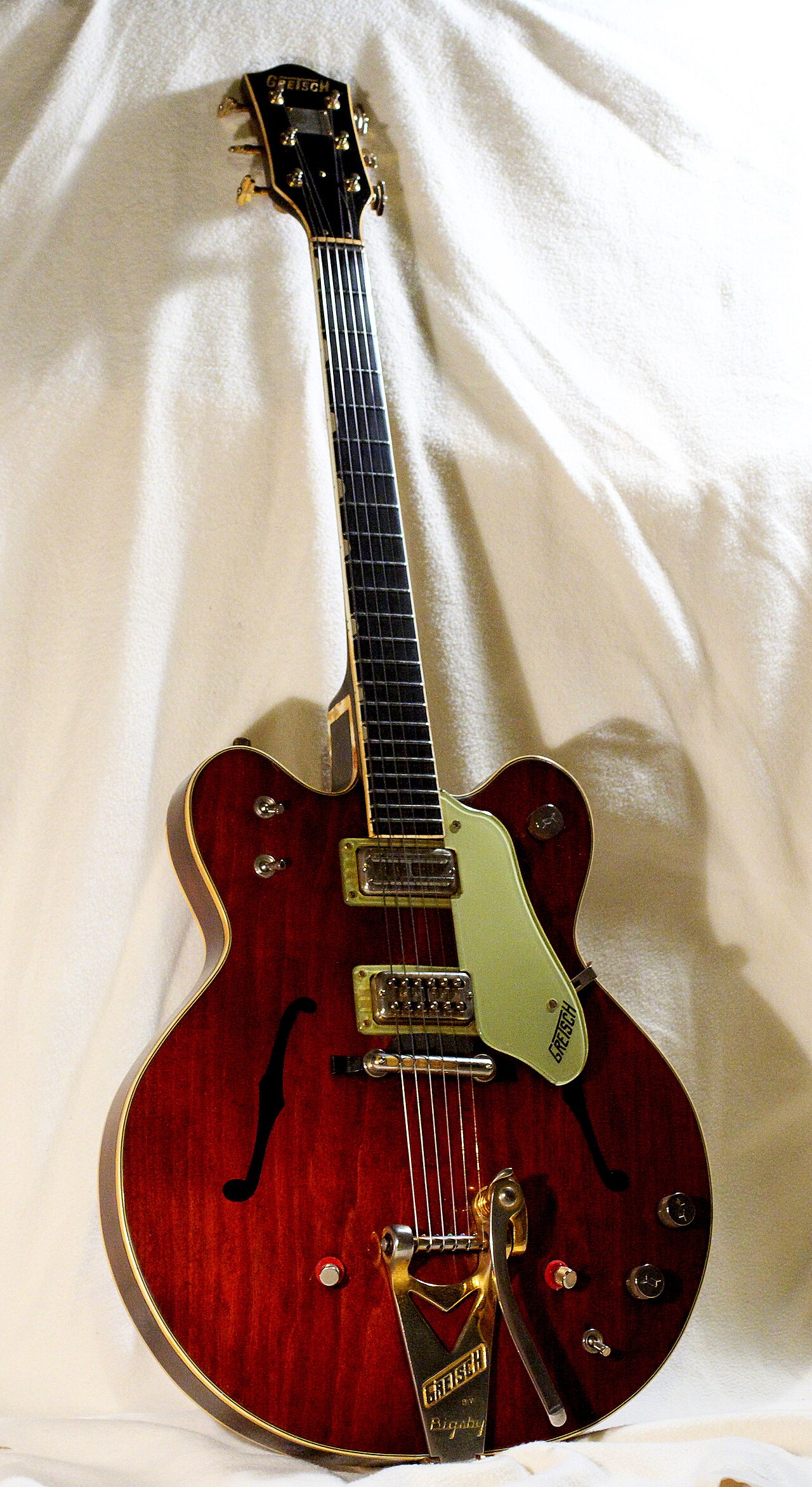
Gretsch’s history and position within electric guitar manufacturing — beyond this article’s general characterisation as producing warm hollow-body instruments — deserves brief examination, since Gretsch represents a distinct institutional story from Gibson and Fender instruments. Gretsch (the Fred Gretsch Company) has a history extending into the nineteenth century as a general music products company before its focus on electric guitars in the mid-twentieth century, with its electric guitar designs — including the distinctive double-cutaway shapes, DeArmond pickups (in earlier models), and FilterTron pickups (from the mid-1950s onward, representing Gretsch’s own pickup design developed specifically for their instruments) — producing a characteristic tonal signature distinct from both Gibson’s humbuckers and Fender’s single-coil pickups. FilterTron pickups specifically — Gretsch’s most characteristic and most historically significant pickup design — represent a kind of “in between” tonal character: more output than Fender’s single-coils, but less than Gibson’s PAF humbuckers; a specific characteristic chime and articulation that distinguishes them from both single-coil and humbucker alternatives; and an association with specific musical contexts (rockabilly, country, certain jazz applications) that reflects their specific tonal character’s fit within these genres rather than in others. For Breau’s specific applications — chord-melody, artificial harmonics, jazz improvisation — Gretsch’s warm hollow-body construction plus FilterTron pickup character provided a specific tonal foundation: resonant enough for the harmonic richness Breau’s chord work required, articulate enough for his melodic lines and artificial harmonics technique’s individual note clarity requirements, and warm enough to suit jazz guitar’s traditional tonal aesthetic rather than the brighter, more cutting character of some other guitar types.
The Winnipeg context — Breau’s formative development years in this Canadian Prairie city — represents a specific geographic situation for a developing jazz musician in the 1950s–60s that connects to broader questions about how jazz culture and jazz expertise develop in geographic locations that are adjacent to but not within the primary centres where jazz was most intensively developed and documented. Winnipeg, while not a primary jazz centre on the scale of New York or Chicago, wasn’t musically empty — Canada has produced significant jazz musicians, and whatever local jazz community Winnipeg supported during Breau’s development would have provided some context for his jazz exploration. But developing jazz guitar expertise in 1950s–60s Winnipeg necessarily involved a different relationship to the tradition than developing in New York — more mediated through recordings and whatever local teachers and fellow musicians were available, less through the direct immersion in jazz’s primary social/professional scene that geographic proximity to New York or Chicago provided. This “learning from a distance” dynamic — using recordings and whatever local resources are available to engage with a tradition whose primary institutional life is elsewhere — has been a significant part of how jazz (and various other musical traditions) spread geographically from their primary centres to the broader world, with musicians in various geographic locations developing jazz expertise through mediated engagement (recordings, visiting musicians, local advocates) rather than direct participation in the tradition’s primary social scene. Breau’s specific development illustrates this process — his extraordinary results, achieved substantially through this mediated engagement rather than through direct New York immersion, demonstrating that the “learning from a distance” pathway can produce genuinely innovative results even without direct primary-centre participation.
How to Sound Like Lenny Breau
Guitar Approach
A Gretsch hollow-body electric (or comparable warm-toned jazz-appropriate hollow-body instrument) represents the foundational Lenny Breau guitars gear instrument.
The technical approach: artificial harmonics technique, as this article has described, requires specific right-hand development — learning to use the index finger to lightly touch strings at the twelfth fret above the fretting hand’s position while plucking with thumb or another finger, within a multi-voice right-hand configuration that simultaneously handles bass notes, harmonic accompaniment, and artificial-harmonics melody. This represents a genuinely demanding technical development, likely most accessible for guitarists who already have facility with fingerstyle right-hand technique (thumb-and-fingers, rather than exclusively pick-based) rather than those whose entire technique is pick-based. The musical context: developing jazz harmony vocabulary (chord voicings, bebop vocabulary, improvisational approaches) sufficient to use artificial harmonics within genuinely meaningful jazz musical contexts rather than as isolated technique demonstration.
Amp Approach
Clean, warm jazz amplification — the kind of transparent, slightly warm clean tone associated with classic jazz amplification (Polytone amps and similar jazz-specific amplification, or any clean amplifier preserving the hollow-body’s natural warm character) — minimal effects.
| Setting | Value | Notes |
|---|---|---|
| Volume | Low to moderate (clean) | Jazz guitar’s clean-tone tradition |
| Treble | 4–5 (warm, not bright) | Hollow-body warmth preserved |
| Middle | 5–6 | Midrange presence for chord-melody clarity |
| Bass | 5–6 | Warmth appropriate to jazz aesthetic |
| Treble rolloff | Gentle rolloff | Classic jazz guitar tone — less bright than rock contexts |
| Effects | None or minimal reverb | Harmonic complexity benefits from tonal clarity |
Gretsch or Gibson hollow-body through clean warm jazz amplification, no significant effects. The defining technical element is artificial harmonics — the five-finger right-hand technique producing bell-like octave harmonics on melody notes simultaneously with bass and chord accompaniment, within genuine jazz harmonic and improvisational contexts. This technique, combined with Breau’s jazz vocabulary, represented something jazz guitar genuinely hadn’t had before him.
Influence & Legacy
Lenny Breau’s influence and legacy operates substantially through posthumous recognition — the growing acknowledgment since his death in 1984 of his specific innovations’ significance, manifest in tribute recordings and performances by various significant jazz guitarists, increased availability of his recordings, and inclusion in jazz guitar pedagogy discussions that might have included him more prominently during his lifetime under more fortunate circumstances.
His broader significance — demonstrating that cross-tradition synthesis (country technique foundations, classical guitar’s artificial harmonics, jazz harmonic vocabulary) could produce genuinely new things in jazz guitar rather than merely combining elements from separate traditions without genuine integration — represents a model for how musical traditions can fertilise each other when a musician engages genuinely with multiple traditions rather than remaining within a single tradition’s established vocabulary.
The comparison with Biréli Lagrène — whose own gypsy jazz work, documented earlier in this series, represented another distinctive jazz-guitar-adjacent synthesis combining jazz with specific non-jazz tradition (Romani gypsy music tradition) — provides a structural parallel: both representing jazz guitarists whose specific distinctiveness involved genuine synthesis of jazz with non-jazz traditions (country/classical for Breau, gypsy-Romani for Lagrène), producing individual voices that couldn’t have been produced by someone working exclusively within jazz guitar’s established tradition. The parallel with Charlie Byrd — another jazz guitarist this series will document shortly, whose own cross-tradition work (Brazilian music, classical guitar technique) shares structural similarities with Breau’s synthesis approach — extends this series’ developing picture of how jazz guitar’s most distinctive individual voices have often involved exactly this kind of productive cross-tradition engagement rather than purely within-tradition development. And the connection to Frank Gambale — whose sweep picking innovation, examined much earlier in this series, represented another case of a genuinely new technique developed by a specific individual guitarist and then becoming widely documented/recognised after the fact — places Breau’s artificial harmonics innovation within this series’ broader pattern of “genuinely new technique, initially underrecognised, subsequently gaining appropriate recognition” that has appeared across multiple articles.
Frequently Asked Questions: Lenny Breau Guitars & Gear
What guitar did Lenny Breau play?
Lenny Breau’s primary guitar associations include Gretsch hollow-body electric guitars (warm, resonant, well-suited to his jazz-and-artificial-harmonics approach) and Gibson instruments. He also explored seven-string guitar for expanded bass range in his chord-melody and solo work.
What are artificial harmonics and how did Breau develop them for jazz guitar?
Artificial harmonics involve using the picking hand’s index finger to lightly touch a string twelve frets above wherever it’s fretted, while plucking with thumb or another finger, producing a bell-like tone one octave above the fretted pitch. Unlike natural harmonics (only available at specific pitches), artificial harmonics can be produced at any fretted pitch. Breau developed a right-hand technique using thumb for bass, index for artificial harmonics on melody notes, and remaining fingers for additional voices — producing bell-like melody lines above chord accompaniment within solo jazz guitar contexts.
How did Breau’s country music background influence his technique?
Breau’s parents were country musicians, meaning his early guitar development occurred within a country music context. Country picking styles (thumb-for-bass, fingers-for-melody configurations) provided a technical foundation — thumb and fingers operating independently for multiple simultaneous voices — that facilitated his subsequent development of artificial harmonics technique, which similarly requires independent thumb/fingers right-hand operation for multiple simultaneous musical voices.
Why did Breau develop in Canada rather than in American jazz’s primary centres?
Breau spent significant formative years in Winnipeg, Canada — geographically near but not within American jazz’s primary institutional centres (New York, Chicago, Los Angeles). This outside-the-main-centres development may have contributed both to his distinctive individual approach (less direct pressure to conform to established New York jazz guitar styles) and to his relative obscurity within those centres’ recognition networks, representing a specific geographic context that shaped both his development and his recognition.
What happened to Lenny Breau?
Breau died in 1984 under circumstances connected to the personal struggles (particularly addiction) that significantly affected his professional life and his recording output across his career. His death at 42 represented a genuinely tragic loss to jazz guitar, compounded by the relative obscurity he experienced during his lifetime despite his extraordinary abilities.
Why is Breau’s recognition primarily posthumous?
Several factors contributed: his geographic development outside American jazz’s primary institutional centres limited his network access; his personal struggles affected his professional visibility and recording opportunities; and his approach — highly individual, technically demanding, combining traditions not previously synthesised in quite his way — may have been too distinctive for easy categorisation within jazz guitar’s existing commercial landscape. Posthumous recognition often follows more readily once the institutional and commercial pressures on an artist’s legacy have shifted.
How does Breau’s seven-string guitar work relate to his overall approach?
Seven-string guitar, adding a lower bass string below standard six-string’s range, extended Breau’s available bass-register resources in his chord-melody and solo work — where the guitar needs to cover bass, harmony, and melody simultaneously. This expansion of low-register possibility connects directly to his artificial harmonics technique’s high-register melody focus: more bass-register range below the main voicing, and more high-register harmonic shimmer above it, giving his solo playing a wider total range than standard six-string guitar alone provides.
The chord-melody format that Breau’s artificial harmonics technique operated within — a solo guitar approach where bass lines, chord voicings, and melodic lines are played simultaneously by one guitarist — represents a specific jazz guitar performance tradition worth examining in its own right. Chord-melody playing requires a guitarist to fulfill multiple simultaneous musical roles: providing harmonic context (chords), rhythmic and harmonic bass foundation (bass lines), and melodic interest (the melody of the song being played), all simultaneously, without other musicians providing these elements separately (as in ensemble jazz contexts where bass player handles bass, pianist handles chords, and the guitar might focus primarily on melodic lines). This simultaneous multi-role requirement places genuine demands on both technical facility (the right hand needs to handle bass, chords, and melody simultaneously; the left hand needs to voice chords that include both harmonic context and melodic notes; the overall arrangement needs to balance these simultaneous elements so none overwhelms the others) and musical intelligence (knowing how to voice chords so the melody sits clearly above them, knowing how to space bass lines so they provide foundation without cluttering the harmonic register, and knowing how to arrange material so the chord-melody format serves the musical content rather than simply demonstrating technical ability). Breau’s artificial harmonics represent an added dimension within this already demanding format: not only maintaining bass, chords, and melody simultaneously, but making the melody emerge in bell-like harmonic form rather than in the guitar’s normal note production — adding a specific tonal quality (the shimmer of harmonics) to the format’s already complex simultaneous demands.
The Jazz Coltrane parallel — noting that Breau explored jazz’s harmonic outer edges in ways that connected his specific jazz-guitar vocabulary to the broader post-bop harmonic explorations that jazz musicians across various instruments were pursuing in the late 1950s and 1960s — deserves acknowledgment even though this article won’t attempt to fully document the specific harmonic connections between Breau’s work and broader jazz’s harmonic development during this period. The point is simply that Breau’s harmonic sophistication — the jazz vocabulary side of his jazz-country-classical synthesis — wasn’t limited to bebop’s well-established harmonic language but extended toward the broader harmonic frontier jazz was collectively exploring during his formative and peak years, meaning his innovations occurred within a broader context of jazz’s harmonic expansion rather than only within the established mainstream of jazz guitar’s pre-existing vocabulary. This contextualisation helps explain why Breau’s work was simultaneously recognisable as jazz (rooted in jazz’s harmonic tradition) and genuinely novel (extending this tradition in directions that jazz guitar specifically hadn’t previously gone, through his specific synthesis of technique and harmonic approach).
The practical technical demands of artificial harmonics on electric guitar — beyond the basic description this article has provided — involve specific physical challenges that help explain why this technique, while available to classical guitarists for whom it represents a relatively standard technique within their tradition’s vocabulary, wasn’t simply adopted into jazz guitar’s vocabulary by other jazz guitarists without Breau’s specific development work. On classical guitar, lighter nylon strings and a right-hand technique already oriented toward finger-based playing (without a pick) make artificial harmonics physically accessible — the index finger can rest more easily on the string at the harmonic node while another finger or the thumb plucks, without conflicting with a pick-based technique or with steel strings’ greater resistance. On electric jazz guitar, factors including the use of picks (the standard jazz guitar right-hand approach involving a plectrum), steel strings’ generally higher tension compared to nylon, and the specific geometry of how jazz guitarists’ right hands relate to the instrument all create practical challenges for executing artificial harmonics that classical guitarists don’t face in quite the same way. Breau’s solution — developing a thumbpick-based right-hand approach that allowed his thumb (with thumbpick) to handle bass notes while his index finger executed harmonics and other fingers handled additional voices — represented a specific physical problem-solving process, not merely a conceptual insight about “put classical harmonics into jazz guitar,” but an actual development of workable physical technique for achieving this conceptually attractive synthesis within electric guitar’s specific physical constraints.
In summary, Lenny Breau guitars gear represents Gretsch and Gibson hollow-body electric guitars (with seven-string exploration for extended range) through clean, warm jazz amplification with minimal effects — equipment serving a jazz-country-classical synthesis approach centred on his artificial harmonics innovation (index-finger harmonics on melody notes above simultaneously-played bass and chord accompaniment) within genuine jazz harmonic and improvisational contexts. This article has examined Gretsch’s FilterTron pickups as a distinct tonal middle-ground between single-coil and humbucker character, chord-melody format’s simultaneous multi-role demands and how artificial harmonics add additional tonal complexity within this already demanding format, Winnipeg’s “learning from a distance” development context, the physical problem-solving involved in adapting classical harmonics technique to electric guitar’s different physical constraints, Auburn Maine’s geographic diversity, and the posthumous recognition pattern that has given Breau’s innovations appropriate acknowledgment after his 1984 death. For jazz guitarists and listeners interested in the specific combination of technical innovation and musical intelligence that jazz guitar’s most singular voices represent, Breau’s work — available through reissued recordings and increasingly documented in jazz guitar pedagogy — represents essential engagement.
For listeners wanting to engage with Breau’s artificial harmonics technique directly in sound, his recordings provide the most irreplaceable resource — particularly recordings that feature his solo guitar work prominently, where the artificial harmonics’ bell-like quality, layered above chord accompaniment and bass lines, is most immediately audible as a distinct tonal texture rather than one element within a fuller ensemble context. Listening with specific attention to the “shimmer” quality that appears on melody notes — a sound like a guitar note with a bell-like overtone ringing simultaneously — provides direct perceptual contact with the technique this article has described analytically, grounding the technical description in actual sonic experience.
A closing thought: a Gretsch hollow-body on a clean amp, the index finger resting lightly on a string twelve frets above the fretting position, the thumb driving bass notes with a thumbpick while the index produces harmonic shimmer and the remaining fingers voice the chord between — that’s Lenny Breau guitars gear in its essence, a technical configuration that took years of cross-tradition synthesis to develop and that produces, when executed well, something genuinely beautiful and genuinely jazz and genuinely unlike what jazz guitar had done before.
Lenny Breau was born in 1941 in Auburn Maine, developed in Winnipeg Canada, played Gretsch and Gibson hollow-bodies through clean amplification with no effects, developed a right-hand technique that combined thumbpick for bass with index finger for artificial harmonics with remaining fingers for chord tones, applied this technique within jazz’s harmonic tradition while also drawing on his country-music formation and classical guitar’s technique vocabulary, and was gone by 1984 at forty-two, leaving behind fewer recordings than his abilities warranted but enough for the world to understand what it had. That’s Lenny Breau, that’s his gear, that’s his technique, that’s his life.
Image credits
- A Gretsch Country Gentleman guitar: matanao, Wikimedia Commons, Public domain.
- Lenny Breau's custom 7-string guitar: teakwood, Wikimedia Commons, CC BY-SA 2.0.
- Gretsch Country Gentleman: matanao, Wikimedia Commons, Public domain.