Biréli Lagrène Guitars & Gear: Gypsy Jazz Prodigy’s Complete Rig Guide
Biréli Lagrène guitars gear — Selmer-Maccaferri acoustic, gypsy jazz tradition deep-dive for the Django Reinhardt-rooted prodigy's complete musical range.
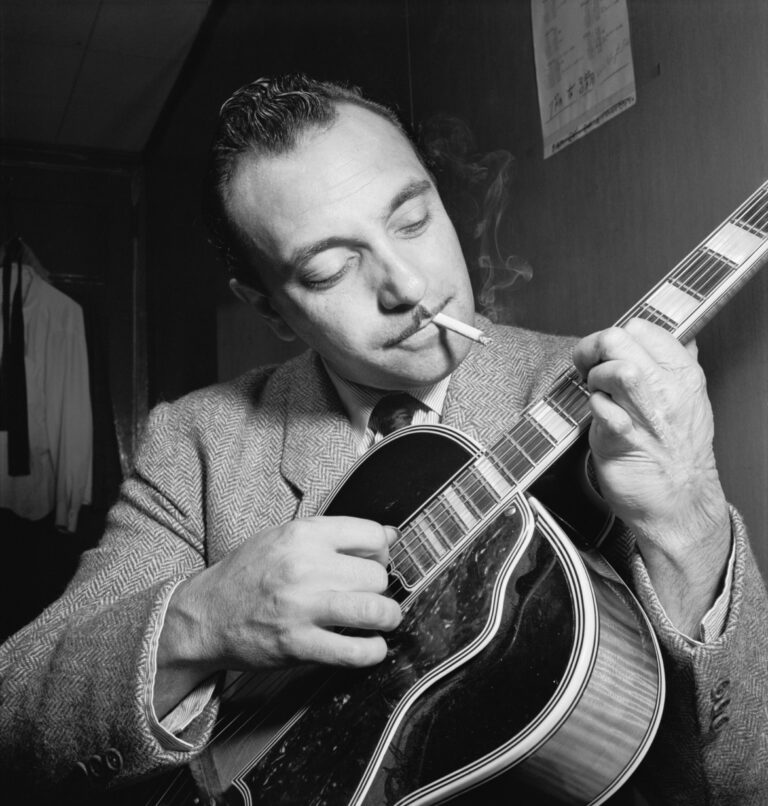
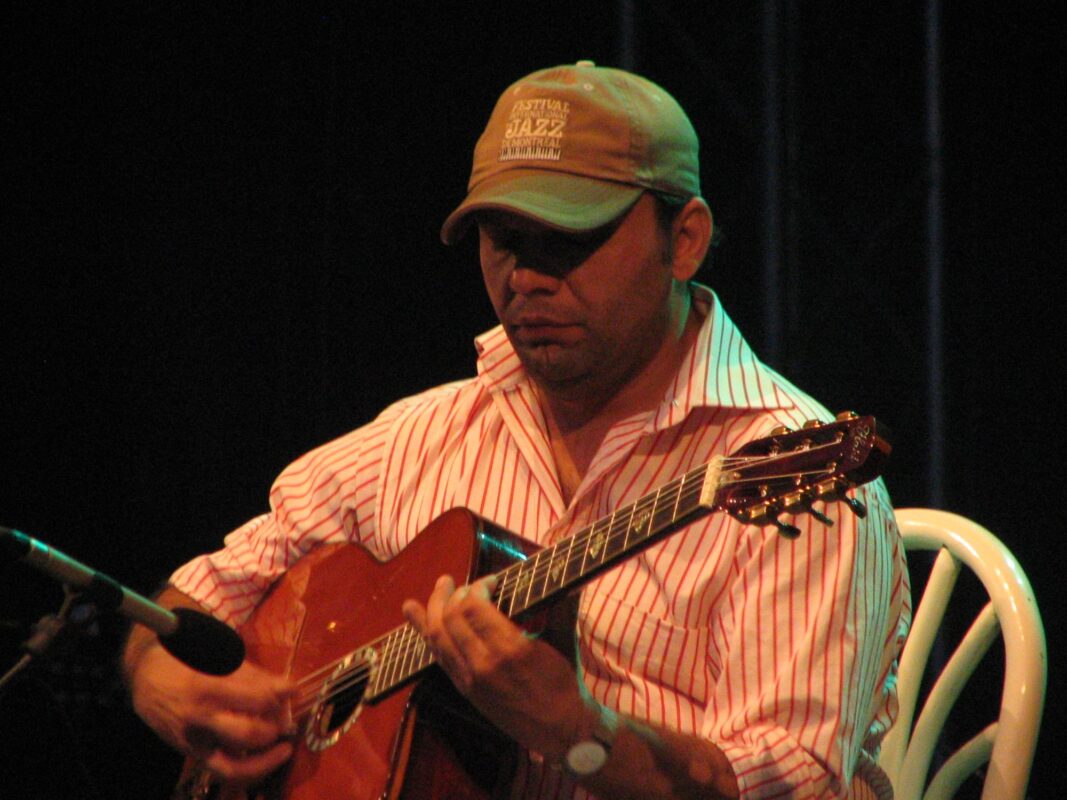
Photo by Nicoleon, licensed under CC BY-SA 4.0 (https://commons.wikimedia.org/wiki/File:Bireli.jpg)
Biréli Lagrène guitars gear is the subject of one of jazz guitar’s most genuinely prodigious careers — the equipment and approach of a guitarist whose childhood immersion in gypsy jazz tradition (the specific guitar-centric jazz tradition originating with Django Reinhardt and the Quintette du Hot Club de France in the 1930s, characterised by its specific acoustic guitar vocabulary, its rhythm guitar tradition — “la pompe,” the driving rhythmic accompaniment style central to gypsy jazz ensemble sound — and its lead guitar vocabulary built on Reinhardt’s foundational innovations) gave him command of this demanding tradition’s vocabulary from a remarkably young age, with his subsequent career extending into broader jazz contexts (including, at points, the kind of fusion vocabulary this series has documented for Frank Gambale and Scott Henderson) while maintaining his foundational connection to gypsy jazz tradition specifically.
His specific position — a guitarist whose technical command of gypsy jazz’s demanding acoustic vocabulary (developed from childhood within the Romani musical community that gypsy jazz tradition is rooted in) gave him credibility within this specific tradition that few non-Romani or non-childhood-immersed guitarists achieve, while his subsequent broader jazz exploration demonstrated range beyond gypsy jazz’s specific stylistic boundaries — gave him a career that represents genuine depth in a foundational tradition combined with subsequent broader exploration, within gypsy jazz’s quite distinct specific tradition. This is the complete breakdown of Biréli Lagrène guitars gear, technique, and tonal philosophy.
Background
Biréli Lagrène was born on September 4, 1966, in Soufflenheim, France, into a Romani family with deep connections to gypsy jazz tradition — his family’s musical background within this tradition gave him direct, immersive exposure to gypsy jazz’s specific vocabulary from earliest childhood, a formation distinct from guitarists who encounter gypsy jazz tradition later in life through recordings or formal study rather than through direct family and community transmission from childhood.
His prodigious early development — achieving recognition for his command of gypsy jazz vocabulary at a remarkably young age — gave him early career opportunities and recognition within the gypsy jazz community and beyond, with his playing demonstrating command of Django Reinhardt’s foundational vocabulary (the specific lead guitar techniques, the harmonic vocabulary, and the overall stylistic approach that Reinhardt established as gypsy jazz’s foundational reference point) at an age when most guitarists are still in early stages of basic technical development.
His subsequent career — extending across decades — included exploration of broader jazz contexts beyond gypsy jazz’s specific stylistic boundaries, including fusion-adjacent work (placing him, at points, within the broader jazz-fusion landscape this series has documented for Gambale and Henderson) alongside continued engagement with gypsy jazz tradition specifically. This range — foundational gypsy jazz mastery combined with broader jazz exploration — gave Lagrène’s career a breadth that, while perhaps less individually celebrated for any single specific innovation (unlike Gambale’s sweep picking, for instance), represents genuine range across genuinely demanding traditions, each requiring their own substantial technical and stylistic vocabulary.
Biréli Lagrène Guitars Gear: The Complete Rig
Guitars
For gypsy jazz repertoire and tradition specifically, Biréli Lagrène’s instruments include guitars in the Selmer-Maccaferri tradition — the specific acoustic guitar design (originally produced by the Selmer company based on Mario Maccaferri’s design, featuring a distinctive body shape, a specific internal bracing system, and either a “petite bouche” (small mouth/soundhole) or “grande bouche” (large soundhole) configuration, each giving slightly different tonal characteristics) that has become closely identified with gypsy jazz tradition since Django Reinhardt’s foundational use of these instruments. These guitars’ specific tonal character — a bright, percussive, distinctly acoustic tone with particular harmonic characteristics suited to both gypsy jazz’s rhythm guitar tradition (la pompe, requiring a percussive, rhythmically driving tone) and its lead guitar vocabulary (requiring clarity and projection for melodic lines, often played at considerable speed) — represents the foundational instrument type for gypsy jazz tradition specifically.
For Lagrène’s broader jazz and fusion-adjacent work — extending beyond gypsy jazz’s specific acoustic tradition — electric guitars appropriate to these broader contexts would appear in his setup.
For gypsy jazz repertoire, Lagrène’s strings would be consistent with gypsy jazz tradition’s specific string preferences — typically including specific gauges and sometimes specific string types (some gypsy jazz guitarists use silver-plated copper wound strings, for instance, giving a specific tonal character associated with the tradition) appropriate to Selmer-Maccaferri style guitars’ specific construction and tonal requirements. For electric/fusion contexts, string preferences would be consistent with the broader electric jazz/fusion landscape.
Amps
For gypsy jazz performance, amplification — when used at all, since gypsy jazz tradition’s acoustic ensemble format (typically guitars, violin, and double bass, without drums in traditional configurations) can function without amplification in appropriate venues — would typically involve acoustic-appropriate amplification (microphones or acoustic pickups feeding clean PA systems) that preserves the Selmer-Maccaferri instruments’ specific acoustic tonal character rather than colouring it through electric guitar amplifier characteristics.
For Lagrène’s electric jazz/fusion work, amplification consistent with the broader landscape documented for Gambale and Henderson — clean-to-moderate-gain amplification appropriate to jazz/fusion’s general tonal aesthetic, with higher-gain capability for fusion’s broader range as applicable.
Effects
Gypsy jazz tradition, rooted in its acoustic ensemble format predating widespread electric guitar effects, generally involves minimal to no effects processing — the Selmer-Maccaferri instruments’ natural acoustic tone, combined with the specific playing techniques (la pompe rhythm guitar, Reinhardt-derived lead vocabulary) this tradition is built around, provides the tonal foundation without electronic processing.
For Lagrène’s broader electric jazz/fusion work, effects consistent with the landscape documented for Gambale and Henderson (chorus, delay, and others appropriate to jazz/fusion guitar tone) would be applicable as his specific musical contexts required.
Playing Style & Tone Philosophy
Biréli Lagrène represents this series’ most direct engagement with gypsy jazz tradition — a tradition this series has referenced in passing (in relation to Django Reinhardt’s foundational legacy, mentioned in connection with various other guitarists’ technical achievements) but that Lagrène’s career allows this series to address more directly, through a guitarist whose childhood immersion in this tradition gave him a foundation few subsequent guitarists (regardless of their technical ability in other traditions) can claim.
Gypsy jazz’s specific vocabulary — both rhythmic (la pompe) and melodic (Reinhardt-derived lead vocabulary) — represents one of jazz guitar’s most demanding and most specifically codified traditions. La pompe — the rhythm guitar tradition central to gypsy jazz ensemble sound — involves a specific percussive strumming technique, with specific chord voicings (often using simplified, moveable chord shapes that facilitate the rapid chord changes and percussive attack the style requires) and a specific rhythmic feel (a driving, forward-leaning rhythmic quality that gives gypsy jazz ensembles their characteristic propulsive energy even without drums). Reinhardt-derived lead vocabulary — building on Reinhardt’s own innovations (themselves partly shaped by Reinhardt’s specific physical circumstances, including injuries to his left hand that required him to develop technique adapted to his specific physical capabilities, producing innovations that subsequent gypsy jazz guitarists absorbed as part of the tradition’s foundational vocabulary) — involves specific scalar and arpeggio patterns, specific approaches to chromaticism, and an overall melodic vocabulary that, while sharing some general jazz vocabulary elements (chord-tone-based construction, documented for Lonnie Johnson much earlier in this series, applies to gypsy jazz as to other jazz traditions), has its own specific character distinct from American jazz guitar traditions that developed somewhat separately.
Lagrène’s childhood immersion in this tradition — within a Romani family with direct connections to gypsy jazz’s specific community and tradition — gave him access to this vocabulary through the kind of direct, immersive, community-based transmission – comparable to Magic Slim’s friendship-based transmission from Magic Sam, though within a completely different tradition – that, for gypsy jazz specifically, represents the tradition’s primary transmission mechanism: gypsy jazz, as a tradition rooted in Romani communities, has historically been transmitted substantially through family and community contexts rather than (or in addition to) more formal institutional jazz education contexts that other jazz traditions might rely on more heavily. For Lagrène, this meant that his foundational gypsy jazz vocabulary developed through the tradition’s own primary transmission mechanism, giving him a foundation that represents the kind of deep, early, community-embedded development that subsequent technical study, however dedicated, can be genuinely difficult to fully replicate.
His subsequent broader jazz exploration — extending into fusion-adjacent contexts — demonstrated that this foundational gypsy jazz immersion didn’t limit his subsequent range; rather, it provided a foundation (in the sense this series has discussed for various guitarists whose foundational traditions informed rather than constrained subsequent broader exploration) from which broader jazz vocabulary could be approached. Whether and how his gypsy jazz foundation specifically informed his subsequent fusion-adjacent work — analogous to how Henderson’s blues foundation informed his fusion integration — represents a question this article can raise without being able to answer definitively without more detailed analysis of Lagrène’s specific recordings across these different contexts, but the general pattern (foundational tradition informing subsequent broader exploration) is one this series has documented repeatedly, and Lagrène’s career represents another instance of this pattern within gypsy jazz’s specific context.
Tonally, Biréli Lagrène guitars gear philosophy encompasses two genuinely distinct tonal worlds: the Selmer-Maccaferri acoustic tradition’s bright, percussive, distinctly acoustic tone for gypsy jazz repertoire, and electric jazz/fusion tone for his broader work — two tonal worlds reflecting the two stylistic worlds (foundational gypsy jazz tradition and broader jazz exploration) his career encompasses.
Django Reinhardt’s specific physical circumstances — the left-hand injuries mentioned in the playing style section, resulting from a fire that damaged two fingers of his left (fretting) hand — deserve more detailed examination because this circumstance’s role in shaping gypsy jazz’s foundational vocabulary represents another instance of this series’ recurring “accidental innovation” theme, discussed previously in relation to Otis Rush’s upside-down playing and Kevin Shields’ Jazzmaster floating bridge. Reinhardt’s injury — affecting his ring and pinky fingers on his fretting hand — required him to develop technique that relied primarily on his index and middle fingers for fretting, with his injured fingers used in more limited capacities (for certain chord shapes, for instance, where they could still contribute). This physical constraint, rather than ending his career, shaped the development of gypsy jazz’s foundational vocabulary itself: the specific chord voicings, scalar patterns, and melodic approaches that became central to gypsy jazz tradition reflect, at least in part, what was achievable using primarily two fretting fingers — voicings and patterns that a guitarist with full use of all four fretting fingers might not have arrived at, since more “obvious” voicings using all four fingers would have been available to such a guitarist. Subsequent gypsy jazz guitarists — including those, like Lagrène, with full use of all their fingers — nonetheless absorbed this vocabulary as the tradition’s foundational reference point, meaning that gypsy jazz tradition as a whole carries the specific imprint of Reinhardt’s physical circumstances, even for guitarists whose own physical circumstances don’t share this constraint. This represents perhaps the most direct example in this entire series of how an individual musician’s specific physical circumstances can shape not just that individual’s playing, but an entire subsequent tradition’s foundational vocabulary — gypsy jazz’s specific harmonic and melodic vocabulary, absorbed by Lagrène through childhood immersion and by subsequent generations of gypsy jazz guitarists regardless of their own physical circumstances, represents Reinhardt’s adapted technique’s lasting imprint on an entire genre’s foundations.
The Romani cultural context within which gypsy jazz tradition developed and continues to be transmitted deserves examination because this context shapes not just how the tradition is transmitted (the family/community-based transmission discussed in the playing style section) but the tradition’s broader cultural significance within Romani communities specifically. Gypsy jazz — the genre name itself reflecting “gypsy” as a (sometimes contested) term for Romani people — represents a musical tradition that, while achieving recognition within broader jazz contexts (Reinhardt’s historical significance within jazz history more broadly, documented in jazz history accounts that extend well beyond gypsy jazz’s specific community), also represents a tradition with specific significance within Romani communities themselves — a musical tradition that’s “theirs” in a way that connects to broader questions of cultural identity, transmission, and continuity within communities that have historically faced significant marginalisation and discrimination in various European contexts. For a musician like Lagrène, born into this community with deep connections to this tradition, gypsy jazz represents not merely “a genre he plays” but a tradition connected to his own cultural identity and community — giving his engagement with the tradition a dimension beyond purely musical/technical considerations, connecting to broader questions of cultural transmission, identity, and continuity that this article, while acknowledging, can’t fully explore without venturing into territory requiring more dedicated examination of Romani cultural history and the specific significance of musical tradition within it. Biréli Lagrène guitars gear, understood with this context, represents not merely technical mastery of a musical tradition, but engagement with a tradition carrying significance within his own cultural community — a dimension this article can acknowledge as part of the complete picture, even while focusing primarily on the musical/technical elements that are this series’ primary subject matter.
The “petite bouche” versus “grande bouche” Selmer-Maccaferri configurations mentioned in the guitar specifications deserve brief technical elaboration because these represent genuinely different instruments with different tonal characteristics suited to different applications within gypsy jazz tradition. “Grande bouche” (large mouth/soundhole) instruments — generally associated with Reinhardt’s earlier recordings and with rhythm guitar applications (la pompe) — tend toward a louder, more bass-heavy tonal character suited to providing rhythmic foundation within an ensemble. “Petite bouche” (small mouth/soundhole) instruments — associated with Reinhardt’s later recordings and often preferred for lead guitar applications — tend toward a brighter, more focused tonal character suited to melodic lines’ clarity and projection. For a guitarist like Lagrène, whose gypsy jazz work encompasses both rhythm guitar (la pompe) and lead guitar vocabulary, having access to both configurations — or an instrument whose specific characteristics suit whichever role is currently required — represents a practical consideration: the “right” Selmer-Maccaferri configuration isn’t a single universal answer but depends on whether the specific musical role is primarily rhythmic (favouring grande bouche’s bass-heavy projection) or primarily melodic (favouring petite bouche’s bright clarity), giving gypsy jazz guitarists a practical reason to potentially maintain instruments of both configurations depending on their specific roles within whatever ensemble context they’re performing in.
How to Sound Like Biréli Lagrène
Guitar Approach
For gypsy jazz repertoire: a Selmer-Maccaferri style acoustic guitar (reproductions of the original Selmer design are produced by various luthiers specifically for gypsy jazz players, since original Selmer instruments are rare and valuable) represents the foundational instrument — its specific tonal character (bright, percussive) is integral to gypsy jazz’s overall sound. For broader jazz/fusion contexts: electric guitars appropriate to the landscape documented for Gambale and Henderson.
The technical and stylistic approach for gypsy jazz specifically: la pompe rhythm guitar technique requires developing the specific percussive strumming approach and moveable chord voicings central to gypsy jazz rhythm guitar — this represents its own substantial technical study, often underemphasised relative to gypsy jazz’s more frequently discussed lead guitar vocabulary, but representing an equally essential element of the tradition (gypsy jazz ensembles typically feature multiple guitarists, with rhythm guitar — la pompe — providing the ensemble’s rhythmic foundation in the absence of drums). Lead guitar vocabulary requires studying Django Reinhardt’s foundational recordings and the broader gypsy jazz tradition’s subsequent development of this vocabulary — specific scalar and arpeggio patterns, chromatic approaches, and the overall melodic vocabulary distinct from American jazz guitar traditions.
Amp Approach
For gypsy jazz: minimal to no amplification, or acoustic-appropriate amplification preserving the Selmer-Maccaferri instrument’s natural tone. For broader jazz/fusion contexts: amplification consistent with the landscape documented for Gambale and Henderson.
| Element | Gypsy Jazz Approach | Broader Jazz/Fusion Approach |
|---|---|---|
| Guitar | Selmer-Maccaferri style acoustic | Electric, jazz/fusion appropriate |
| Amplification | Minimal/acoustic-appropriate | Clean-to-moderate gain, higher-gain available |
| Effects | Minimal to none | Chorus/delay as applicable |
| Rhythm vocabulary | La pompe — percussive strumming, moveable chords | Broader jazz/fusion rhythm vocabulary |
| Lead vocabulary | Reinhardt-derived scalar/arpeggio/chromatic | Broader jazz/fusion lead vocabulary |
| Transmission | Family/community-based, childhood immersion | Subsequent broader study/exploration |
Two genuinely distinct approaches reflecting Lagrène’s two stylistic worlds: Selmer-Maccaferri acoustic with minimal effects and la pompe/Reinhardt-derived vocabulary for gypsy jazz tradition; electric guitar with jazz/fusion-appropriate amplification and broader vocabulary for his subsequent exploration. The gypsy jazz approach’s foundational element — la pompe rhythm guitar — deserves particular emphasis as an often-underemphasised element relative to lead guitar vocabulary, despite representing an equally essential part of the tradition.
Influence & Legacy
Biréli Lagrène’s influence operates substantially within gypsy jazz tradition specifically — his childhood-prodigy credibility within this tradition, combined with his subsequent sustained engagement with it across a decades-long career, gave subsequent gypsy jazz guitarists (particularly those without Lagrène’s specific childhood-immersion advantage) a contemporary reference point for the tradition’s continued vitality beyond Reinhardt’s foundational historical recordings.
His broader influence — as a guitarist whose range extended from gypsy jazz’s specific tradition into broader jazz/fusion contexts — represents a model for guitarists with foundational traditions (whatever their specific tradition) seeking to demonstrate range beyond that tradition’s specific boundaries, similar to but within a different specific tradition than Henderson’s blues-fusion range.
The comparison with Scott Henderson — whose own foundational tradition (blues) combined with subsequent fusion exploration represents a structurally similar pattern (foundational tradition plus subsequent broader exploration) within a different specific foundational tradition — illuminates this recurring pattern across genuinely different specific traditions. The parallel with Frank Gambale — whose own technical innovation (sweep picking) represents a different kind of contribution (technical vocabulary development) than either Henderson’s or Lagrène’s foundational-tradition-plus-exploration pattern — shows the range of individual contribution types within jazz/fusion guitar’s broader landscape. And the connection to Lonnie Johnson — whose own foundational lead guitar innovations represent jazz guitar’s deep historical foundations from which both gypsy jazz (Reinhardt’s tradition) and American jazz guitar traditions subsequently developed, giving Lagrène’s gypsy jazz foundation and Johnson’s foundational American jazz-blues synthesis a kind of shared deep historical root even as the specific traditions subsequently diverged — places Biréli Lagrène guitars gear within the broadest possible context: jazz guitar’s historical development from early foundational figures (Johnson) through multiple subsequently diverging traditions (gypsy jazz, American jazz, fusion), each with their own foundational figures and subsequent developments, all ultimately connected through jazz guitar’s shared deep historical roots.
Frequently Asked Questions: Biréli Lagrène Guitars & Gear
What guitar does Biréli Lagrène play?
For gypsy jazz repertoire, Lagrène plays Selmer-Maccaferri style acoustic guitars — the specific instrument type, originally associated with Django Reinhardt, featuring a distinctive body shape and either “petite bouche” or “grande bouche” soundhole configurations, giving the bright, percussive acoustic tone central to gypsy jazz tradition. For his broader jazz and fusion-adjacent work, electric guitars appropriate to these contexts appear in his setup.
What is gypsy jazz and what is “la pompe”?
Gypsy jazz is a guitar-centric jazz tradition originating with Django Reinhardt and the Quintette du Hot Club de France in the 1930s, characterised by its specific acoustic guitar vocabulary and ensemble format (typically guitars, violin, and double bass, without drums). “La pompe” is gypsy jazz’s specific rhythm guitar tradition — a percussive strumming technique using moveable chord voicings that gives gypsy jazz ensembles their driving rhythmic foundation in the absence of drums. La pompe represents an essential but often underemphasised element of gypsy jazz tradition relative to its more frequently discussed lead guitar vocabulary.
How did Biréli Lagrène develop his gypsy jazz mastery?
Lagrène was born into a Romani family with deep connections to gypsy jazz tradition, giving him direct, immersive exposure to gypsy jazz’s specific vocabulary from earliest childhood through family and community transmission — the tradition’s primary historical transmission mechanism. This childhood immersion gave him command of Django Reinhardt’s foundational vocabulary at a remarkably young age, a formation distinct from guitarists who encounter gypsy jazz later through recordings or formal study.
What is a Selmer-Maccaferri guitar?
A Selmer-Maccaferri guitar is the specific acoustic guitar design — originally produced by the Selmer company based on Mario Maccaferri’s design — that has become closely identified with gypsy jazz tradition since Django Reinhardt’s foundational use of these instruments. The design features a distinctive body shape, specific internal bracing, and either “petite bouche” (small soundhole) or “grande bouche” (large soundhole) configurations, each giving slightly different tonal characteristics, with the overall design giving a bright, percussive acoustic tone suited to both la pompe rhythm guitar and gypsy jazz lead vocabulary.
How does Django Reinhardt’s influence appear in Lagrène’s playing?
Reinhardt’s foundational innovations — including specific scalar and arpeggio patterns, chromatic approaches, and an overall melodic vocabulary partly shaped by Reinhardt’s own adapted technique (developed in response to injuries to his left hand) — represent gypsy jazz tradition’s foundational reference point, absorbed by subsequent gypsy jazz guitarists including Lagrène as part of the tradition’s core vocabulary. Lagrène’s childhood immersion gave him direct access to this Reinhardt-derived vocabulary as transmitted through his family’s and community’s ongoing engagement with the tradition, rather than purely through historical recordings.
What broader jazz contexts has Lagrène explored beyond gypsy jazz?
Lagrène’s career has included exploration of broader jazz contexts beyond gypsy jazz’s specific stylistic boundaries, including fusion-adjacent work that places him, at points, within the broader jazz-fusion landscape documented for Frank Gambale and Scott Henderson in previous articles. This range — foundational gypsy jazz mastery combined with broader jazz exploration — gives his career a breadth extending beyond gypsy jazz’s specific tradition, while his foundational gypsy jazz credibility remains a core element of his musical identity.
Why is family/community transmission significant for gypsy jazz tradition specifically?
Gypsy jazz, as a tradition rooted in Romani communities, has historically been transmitted substantially through family and community contexts — direct, immersive exposure from childhood within communities where the tradition is actively practiced — rather than primarily through institutional jazz education. This transmission mechanism gives musicians with this background (like Lagrène) a foundation that subsequent technical study, however dedicated, can find genuinely difficult to fully replicate.
The “without drums” aspect of traditional gypsy jazz ensemble format — mentioned in the playing style section’s discussion of la pompe — deserves examination because this absence shapes the entire ensemble’s musical approach in ways that guitarists from drum-centric traditions (the vast majority of guitarists this series has documented, across blues, rock, and fusion contexts where drums provide rhythmic foundation) might not immediately appreciate. Without drums, gypsy jazz ensembles’ rhythmic foundation comes substantially from la pompe rhythm guitar — meaning that rhythm guitar in gypsy jazz carries a structural responsibility that rhythm guitar in drum-accompanied contexts doesn’t carry to the same degree: in a drum-accompanied context, rhythm guitar’s rhythmic function exists alongside and is reinforced by drums, giving some flexibility in how precisely rhythm guitar needs to maintain rhythmic foundation (drums can compensate for rhythm guitar’s minor rhythmic variations). In gypsy jazz’s traditional drumless format, la pompe rhythm guitar IS the rhythmic foundation — its consistency, its specific percussive quality, and its precise rhythmic placement aren’t merely contributing to a rhythmic foundation that other instruments also provide, but constitute that foundation directly. This gives la pompe a structural importance that explains why this article has emphasised it as “often underemphasised relative to lead guitar vocabulary” despite representing “an equally essential element” — in a very literal sense, without competent la pompe, a gypsy jazz ensemble has no rhythmic foundation at all, whereas a rock or blues ensemble with weak rhythm guitar still has drums providing rhythmic foundation. For guitarists from drum-centric backgrounds approaching gypsy jazz, internalising this structural reality — that rhythm guitar here isn’t “one element contributing to rhythm” but potentially “the entire rhythmic foundation” — represents an important conceptual shift, beyond merely learning la pompe’s specific technical patterns.
Considering child-prodigy musicians more broadly — Lagrène’s “remarkable young age” achievement, mentioned repeatedly in this article, places him within a category this series hasn’t extensively addressed for other guitarists, most of whose significant development occurred during adolescence or adulthood rather than early childhood — raises questions about what specifically enables this kind of prodigious early development, and what it means for a career’s subsequent trajectory. Child prodigies across various instruments and traditions often share certain factors: intensive early exposure (often through family members who are themselves accomplished practitioners, as in Lagrène’s case), a cultural/community context where the relevant tradition is actively practiced and valued (giving a child both models to learn from and community recognition/encouragement for developing ability), and presumably some combination of individual aptitude and the kind of intensive practice that, even if not consciously experienced as “practice” by a young child immersed in a tradition through family life, nonetheless represents the kind of repetition and engagement that skill development generally requires. For Lagrène, the combination of Romani family connections to gypsy jazz tradition specifically, the kind of immersive community transmission this article has discussed, and whatever individual aptitude contributed, produced a child prodigy whose subsequent career — unlike some child prodigies in various fields whose early promise doesn’t translate to sustained adult careers — continued productively across decades, suggesting that whatever combination of factors produced his early prodigious development also provided a foundation for sustained subsequent development rather than merely an impressive but ultimately limited early peak.
For guitarists outside Romani communities seeking to genuinely engage with gypsy jazz tradition — a genuinely common situation, given gypsy jazz’s broader popularity among jazz guitarists generally, well beyond Romani communities specifically — the question of how to approach a tradition whose primary historical transmission mechanism (family/community immersion) isn’t available to them deserves practical consideration. This isn’t a situation unique to gypsy jazz — this series has documented various traditions (blues, for instance) whose primary historical transmission contexts (specific communities, specific historical circumstances) aren’t directly available to subsequent guitarists from different backgrounds, yet these traditions have been productively studied and absorbed by guitarists from outside their originating communities, including guitarists whose work this series has documented extensively (the British blues-rock guitarists who absorbed Chicago blues vocabulary, for instance). The general pattern for this kind of cross-community tradition engagement involves: serious study of recordings (both historical foundational recordings — Reinhardt’s, for gypsy jazz — and contemporary practitioners’ recordings, including Lagrène’s), formal instruction where available (gypsy jazz has, like the broader jazz-fusion landscape documented for Gambale and Henderson, developed instructional resources giving outside students access to the tradition’s vocabulary in documented form), and — importantly — genuine respect for the tradition’s specific cultural context and origins, engaging with the music not merely as “techniques to extract” but as a tradition with its own cultural significance (as the previous section discussed for gypsy jazz’s significance within Romani communities specifically) that outside students are, in effect, guests within. This combination — serious technical study plus genuine cultural respect — represents the general approach this series would recommend for any guitarist approaching gypsy jazz tradition from outside its originating community, an approach that doesn’t claim to fully replicate childhood immersion’s specific advantages (discussed extensively in this article for Lagrène) but that can nonetheless produce genuine and respectful engagement with the tradition’s vocabulary.
The relationship between gypsy jazz’s acoustic tradition and the broader electric guitar landscape this series has documented extensively deserves a final reflection, because gypsy jazz represents one of relatively few traditions this series has covered where acoustic instrumentation remains the primary and historically definitive format — not as a “before electrification” historical stage (as documented for Tampa Red, Big Bill Broonzy, and Lonnie Johnson’s prewar acoustic work, which preceded and was subsequently largely superseded by electric instrumentation within blues tradition’s own development), but as the tradition’s ongoing primary format, with electric instrumentation representing an extension into different contexts (Lagrène’s broader jazz/fusion work) rather than gypsy jazz tradition itself transitioning to electric instrumentation in the way blues tradition did. This distinction matters: when Lagrène plays gypsy jazz repertoire, he’s not playing an “acoustic version” of a tradition that’s “really” electric — he’s playing the tradition in its primary, historically continuous format, with the Selmer-Maccaferri acoustic guitar representing gypsy jazz’s actual instrument, not a historical predecessor to some “true” electric form. This gives gypsy jazz a different relationship to acoustic instrumentation than this series has documented for blues — not “acoustic roots that electric instrumentation grew from and largely superseded,” but “an acoustic tradition that has maintained its acoustic format as its primary and ongoing form,” with electric instrumentation representing guitarists’ (including Lagrène’s) extension into different traditions rather than gypsy jazz tradition’s own internal development. Biréli Lagrène guitars gear’s acoustic dimension, in this light, represents not a historical stage but gypsy jazz tradition’s continuing primary reality — a genuinely different relationship between acoustic and electric instrumentation than this series’ blues coverage has generally documented.
In summary, Biréli Lagrène guitars gear encompasses two genuinely distinct instrumental and tonal worlds: Selmer-Maccaferri acoustic guitars (in petite bouche and grande bouche configurations suited to lead and rhythm roles respectively) for gypsy jazz tradition — a tradition whose acoustic format represents its ongoing primary reality rather than a superseded historical stage — with minimal effects and the specific la pompe rhythm and Reinhardt-derived lead vocabularies that define the tradition; and electric guitars appropriate to broader jazz/fusion contexts for his subsequent exploration beyond gypsy jazz’s specific boundaries. His childhood immersion within a Romani family deeply connected to gypsy jazz tradition gave him access to this tradition’s foundational vocabulary — itself shaped by Django Reinhardt’s adapted technique following his hand injury — through the tradition’s primary historical transmission mechanism, a foundation that subsequent technical study alone struggles to fully replicate. For guitarists drawn to gypsy jazz’s specific demands — la pompe’s structural rhythmic responsibility in ensembles without drums, Reinhardt-derived lead vocabulary’s specific scalar and chromatic character — Lagrène’s career represents both a contemporary reference point for the tradition’s continued vitality and, through his broader jazz exploration, a demonstration that deep foundational tradition needn’t limit subsequent range, even as that foundational depth itself — for those without Lagrène’s specific childhood circumstances — requires the kind of serious, respectful, sustained engagement this article has discussed as the realistic pathway for outside students of this remarkable tradition.
For listeners new to gypsy jazz wanting to understand Lagrène’s specific place within it, the recommended listening approach starts with Django Reinhardt’s foundational recordings (to hear the tradition’s origins and the specific vocabulary shaped by Reinhardt’s adapted technique), then moves to Lagrène’s own gypsy jazz recordings (to hear this vocabulary as transmitted through and developed by a subsequent generation with direct community connections to the tradition), and finally to Lagrène’s broader jazz/fusion-adjacent work (to hear how this foundational tradition’s vocabulary did or didn’t inform his subsequent exploration). This three-stage listening approach — origins, direct transmission, subsequent broader exploration — mirrors the structure this article has used to discuss Lagrène’s career, giving listeners a framework for understanding both gypsy jazz tradition itself and one of its most significant contemporary practitioners’ complete range.
The diversity of traditions this series has now covered, from Mississippi Delta blues through Chicago electric blues, British blues-rock, American heavy metal, punk, shoegaze, experimental rock, jazz-fusion, and now Romani gypsy jazz, continues to demonstrate that “guitars gear” as a subject is genuinely as broad as the instrument’s worldwide reach — every tradition, every community, every individual musician bringing their own equipment, their own technique, and their own story to an instrument whose capacity for genuine diversity of expression remains, seventy articles in, far from exhausted.
A tradition rooted in family, community, and acoustic instruments that predate the entire electric guitar revolution this series has otherwise documented so extensively, reminding us, as Tampa Red and Big Bill Broonzy did at the series’ opening, that the guitar’s essential capacity for genuine musical expression was never dependent on amplifiers, pedals, or any of the technology that subsequent decades made available — only on the player, the instrument, and the tradition carried forward through dedicated hands.
The Selmer-Maccaferri rings out, the la pompe drives on, and this series presses forward toward its centenary with the same curiosity and care it began with.
Biréli Lagrène guitars gear stands as a worthy entry at this halfway-plus point in the journey, an acoustic counterpoint to so much of what’s come before, and a reminder that the road from here to one hundred still holds genuine surprises in every direction this series might turn.
Image credits
- Top image: by Nicoleon, Wikimedia Commons, CC BY-SA 4.0.
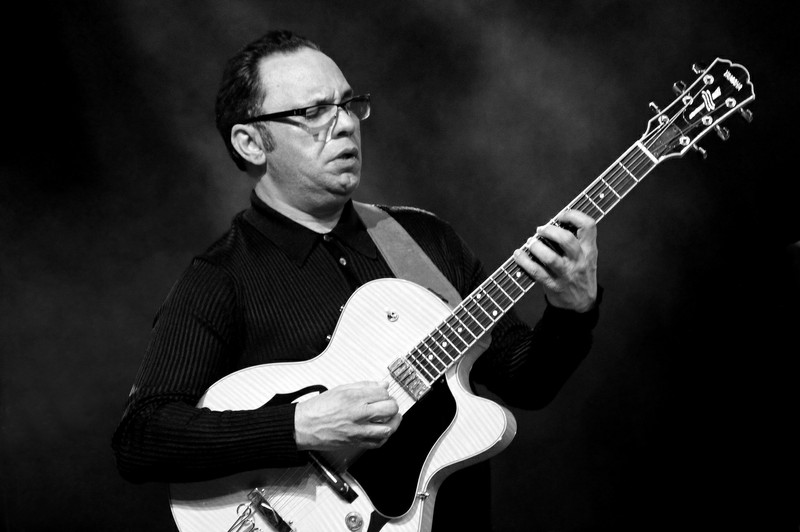
- Biréli Lagrène: photo by Walter Gehring, via Wikimedia Commons, CC BY 3.0 de.
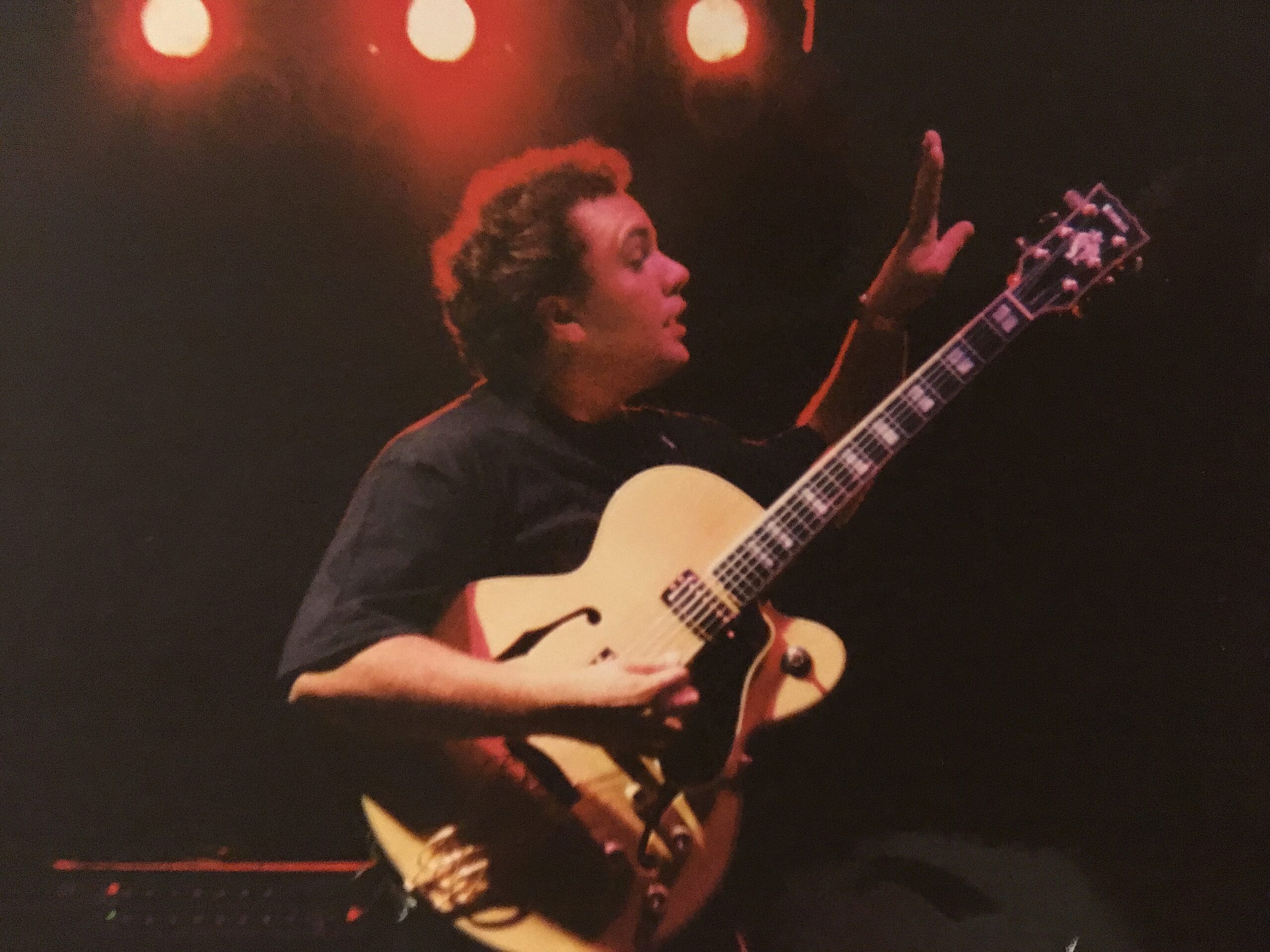
- Bireli Lagrene live: Pastorius54, Wikimedia Commons, Public domain.