
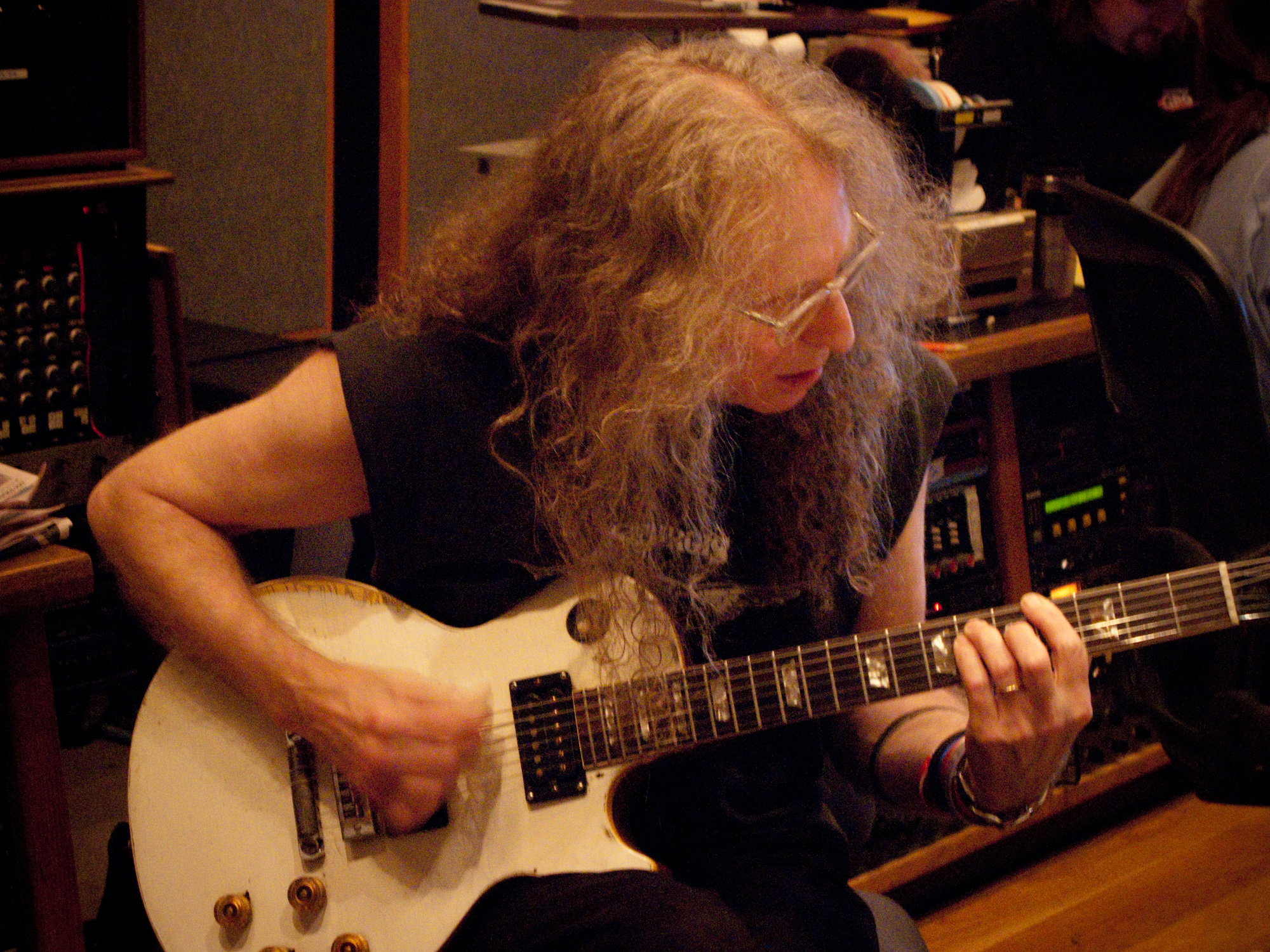
Investigate Waddy Wachtel guitars gear and you discover the equipment of one of Hollywood’s most prolific and most trusted session guitarists — a New York-born musician who relocated to Los Angeles and spent decades as one of the most recorded guitarists in American popular music, whose name appears in the credits of recordings by Linda Ronstadt, Keith Richards, Warren Zevon, James Taylor, the Eagles, and hundreds of other major artists. Wachtel is the guitarist that the best musicians call when they need someone who can do anything — rock, country, pop, blues, and everything in between — with the ease and authority of a musician for whom musical genres are different rooms in the same house rather than different buildings in different cities. His guitar playing is the sound of Los Angeles studio rock in its commercial golden age.
This guide covers Wachtel’s complete equipment picture: the Stratocasters and Telecasters that anchored his session work, the amplification that served his diverse musical contexts, his approach to effects, and the playing philosophy of a musician who built a legendary career through complete musical adaptability and absolute professional reliability. Understanding Waddy Wachtel’s gear is understanding what it means to be genuinely useful in every musical situation rather than merely excellent in your preferred context.
Background
Waddy Wachtel was born on May 27, 1947, in Brooklyn, New York. His early musical formation encompassed the full range of American popular music that New York in the 1950s and 1960s provided — the blues, jazz, rock and roll, R&B, and the Broadway show music that was central to New York’s musical identity. He learned guitar through the combination of formal study and the intensive listening and imitation that characterise self-directed musical development, building the technical foundation that would serve his subsequent career in diverse professional contexts.
His relocation to Los Angeles — following the general migration of rock musicians and music industry professionals that gathered pace through the late 1960s and early 1970s — placed him at the centre of the most commercially productive recording environment in American music history. The Los Angeles session world of the 1970s was simultaneously the most demanding and the most financially rewarding professional context for a guitarist, requiring the ability to serve extremely diverse musical demands with consistent excellence and complete professionalism.
His most sustained and most personally significant professional relationship was with Warren Zevon — the songwriter whose sardonic, literary approach to rock music produced some of the most distinctive records of the late 1970s. Wachtel’s guitar work on the Zevon records — particularly Excitable Boy (1978) and Bad Luck Streak in Dancing School (1980) — showed his guitar playing in a context where it could be itself rather than serving another primary artist’s predetermined vision. The guitar parts on the Zevon records had a specific character and a specific relationship to the songs that reflected genuine musical collaboration rather than mere professional execution.
His work with Keith Richards — co-producing and playing on Richards’ first two solo albums, Talk Is Cheap (1988) and Main Offender (1992) — placed him in one of the most historically significant musical partnerships available to a working Los Angeles session musician. The X-Pensive Winos band that Richards formed for these projects incorporated Wachtel’s guitar into a specific musical context that was both genuinely rock and roll and genuinely collaborative in ways that studio session work rarely allows.
Waddy Wachtel Guitars Gear: The Complete Rig
Guitars
Waddy Wachtel’s guitar collection reflects the practical requirements of a professional session musician who needed genuine tonal versatility across a very broad range of musical contexts — not the versatility of a single instrument with many settings, but the genuine variety of genuinely different instruments chosen for genuine acoustic reasons.
His primary session instrument for the most diverse range of contexts has been a Fender Stratocaster — specifically vintage late-1960s and early-1970s examples whose specific tonal character reflected the pickups and construction methods of that period. The Stratocaster’s three-pickup configuration gave access to five distinct tonal characters (in five-way switching), and the natural brightness and dynamic sensitivity of the single-coil pickups made it responsive to the variation in pick attack and technique that session work’s diverse musical demands required. Vintage Alnico V Stratocaster pickups (approximately 5.6k to 6.2k ohms DC resistance) produced the specific combination of output, frequency response, and magnetic character that gave vintage Stratocasters their distinctive tonal identity.
A Fender Telecaster provided the country and R&B character that specific sessions required — the Telecaster’s bridge pickup’s bright, defined twang being more authentically appropriate for those musical traditions than the Stratocaster’s somewhat warmer, more complex character. His Telecasters were vintage examples chosen for the same reasons as the Stratocasters: period-correct pickups and construction producing the specific character that the original recordings in those traditions had established as the sonic standard.
He used a Gibson Les Paul for the heavier rock material — the PAF humbucker’s warmth and sustain being the appropriate tonal character for the hard rock and blues-rock contexts that appeared in his diverse session work. Vintage late-1950s examples with original PAF pickups (7.5k to 8.5k ohms, Alnico II or Alnico V) produced the specific combination of warmth and harmonic complexity that distinguished original PAF-equipped instruments from later reproductions.
A Gibson ES-335 or ES-345 appeared for the soul and R&B material where the warm, acoustically dimensional character of the semi-hollow design was more appropriate than solid-body alternatives. The ES-335’s specific combination of humbucker warmth and hollow-body acoustic resonance suited the soul and R&B material in the Los Angeles session world with a naturalness that neither the Les Paul’s solid-body weight nor the Stratocaster’s single-coil brightness could exactly replicate.
His Keith Richards association brought out more Les Paul and Telecaster-oriented playing — Richards’ specific rock and roll approach (open G tuned five-string guitar, Telecaster through Marshall, with the specific rhythmic approach of the Stones tradition) required complementary guitar work that used instruments and approaches in the same general aesthetic territory. Wachtel’s use of vintage Les Pauls and Telecasters for the Richards sessions reflected both the musical character of the sessions and his understanding of how complementary twin-guitar playing required careful instrument choice to serve the specific musical dynamic.
String gauges ran light to medium across his different instrument types — .010–.046 on Stratocasters and Telecasters, medium-to-heavy on Les Pauls — reflecting the specific playing requirements of each instrument type and the musical contexts each served.
Amps
Wachtel’s amplification philosophy was the session musician’s fundamental priority: clean, warm, versatile amplification that served whatever musical context the session required without imposing a distinctive tonal character that conflicted with the production’s vision.
His primary amplifier for the broadest range of session work was a Fender Twin Reverb — the 85-watt, 2×12 blackface combo whose clean headroom and warm American character made it the most consistently useful amplifier for the diverse range of musical contexts that the Los Angeles session world presented. The Twin’s clean character was its primary professional virtue: it allowed the guitar’s natural character to come through without amplifier colouration, which was the fundamental requirement for session work where the guitar’s specific tonal character rather than the amplifier’s personality was the musical statement.
He also used Fender Deluxe Reverb amplifiers for more intimate recording contexts and for specific material where the Deluxe’s 6V6 natural breakup character suited the song better than the Twin’s cleaner headroom.
For the rock and hard rock material in his diverse session portfolio — and specifically for the Richards work — Marshall amplifiers provided the British EL34 character that the specific musical territory required. His Marshall use reflected the same contextual intelligence as his guitar choices: the right amplifier for the specific musical territory rather than a single consistent choice applied to all situations.
Various boutique amplifiers appeared as the market for premium small-batch amplifiers developed through the 1990s and 2000s, offering specific tonal characters not available from the major manufacturers and reflecting Wachtel’s ongoing engagement with equipment development alongside his professional work.
Effects
Wachtel’s effects chain was contextually adapted to each specific session — some required clean, minimal processing, others demanded specific effects combinations to serve the song’s character. His effects philosophy was consistently professional: each element served a specific musical purpose, nothing was included habitually.
A wah pedal — Dunlop Cry Baby or equivalent — appeared for the blues and rock material where the swept filter effect added appropriate expressiveness. His wah use reflected the musical intelligence of his session career: deployed where it served the music, left out where it didn’t.
An Ibanez Tube Screamer (TS-808 or TS-9) served as his standard smooth overdrive/boost for blues-influenced and rock sessions — the classic Texas blues approach of boosting the amplifier’s front end for natural drive character rather than using the pedal’s own clipping as the primary distortion source. His use of the Tube Screamer in boost mode was consistent with his commitment to the amplifier’s natural character as the primary drive source.
Various delays and reverbs — Boss DD units, rack-mount reverbs — for specific atmospheric and spatial applications as required. His delay use was situational rather than constant: short echoes for specific lead passages, longer reverbs for atmospheric studio work where the production required spatial dimension.
A compressor pedal — MXR Dynacomp or equivalent — appeared for studio work requiring consistent dynamics and for the specific chicken-picking and country applications where compression was musically appropriate to the style.
Playing Style & Tone Philosophy
Waddy Wachtel’s playing style is the consummate session musician’s playing style taken to its absolute highest level: the ability to hear what each specific song needs from the guitar and to deliver exactly that, with total technical conviction, without imposing personal preferences or stylistic preferences on the music’s requirements. This is not a passive or self-effacing quality — it requires genuine musical intelligence, genuine technical range, and the specific discipline to apply both in service of something larger than one’s own performance.
His rock and roll playing — most visible in the Richards association — showed a guitarist who understood the specific rhythmic and tonal character of the Stones and related traditions deeply enough to serve them without imitating or competing with their primary exponents. Playing complementary rhythm guitar alongside Keith Richards required both the specific knowledge of the Stones tradition and the musical intelligence to find the specific complementary role within it that was neither identical to Richards’ approach (which would have been redundant) nor alien to it (which would have been musically incoherent).
His pop and singer-songwriter work — the Linda Ronstadt sessions, the Warren Zevon collaborations, the James Taylor work — showed a player whose primary concern was always the song’s emotional content and the specific way the guitar could serve that content without drawing attention to itself. The guitar parts on these recordings were often the making of specific songs without being the most immediately noticed element — which is the highest form of session guitar excellence.
Tonally, his philosophy was the same as every genuinely excellent session musician’s philosophy: the right instrument for the right context, amplified appropriately for the musical character, with effects added only when they serve a specific and clearly defined musical purpose. The consistency of this approach across such a diverse range of musical contexts was the specific thing that made his career what it was.
How to Sound Like Waddy Wachtel
Guitar Approach
Match instrument to musical tradition: vintage Stratocaster for California rock and pop, vintage Telecaster for country and R&B, vintage Les Paul for rock and blues. The technical foundation is breadth: genuine command of country flatpicking technique, blues bending and vibrato, rock rhythm approaches, and the specific picking patterns of soul and R&B. Each tradition requires specific development, and genuine versatility — as opposed to superficial approximation — requires genuine study of each specific tradition’s specific requirements.
Amp Approach
A Fender Twin Reverb for the broadest range of session contexts: clean headroom, American warmth, the Stratocaster’s or Telecaster’s natural character reproduced faithfully. Marshall for the rock and Richards-influenced material. Tube Screamer as a boost into the Marshall or Twin for blues-influenced drive. Keep the effects chain minimal and purposeful — professional sessions rarely require elaborate processing, and the musical complexity comes from the playing rather than from the signal chain.
| Control | Setting | Notes |
|---|---|---|
| Volume | 4–6 | Clean — Twin headroom lets guitar character lead |
| Treble | 5–6 | Moderate — Stratocaster and Telecaster are inherently bright |
| Middle | 5–6 | Moderate mids for presence in the mix |
| Bass | 4 | Controlled bass for chord clarity |
| Reverb | 2–3 | Light spring reverb — spatial without wash |
| Tube Screamer (boost) | Low gain, volume ~6 | Boost mode for blues passages — push amp naturally |
Influence & Legacy
Waddy Wachtel’s legacy is the specific legacy of thousands of recordings that defined the sound of American popular music across several decades, made by a musician whose specific guitar contributions shaped those recordings without ever demanding individual credit for the shaping. This is the session musician’s specific and often invisible form of contribution to musical history, and Wachtel’s version of it was so consistent and so widespread that its absence from many accounts of the specific records he appeared on represents a genuine historical gap.
His Warren Zevon association produced some of the most personally creative work of his career — recordings where his guitar playing served a singular artistic vision that valued the guitar’s contribution in ways that straight commercial session work rarely did. The Zevon records showed that his musical intelligence went well beyond professional execution into genuine creative collaboration, and they gave him a critical profile that his pure session work couldn’t have generated.
His Keith Richards collaboration demonstrated both his range and his capacity for genuine artistic partnership — bringing his California session polish to the more explicitly rock and roll and roots-oriented context of Richards’ solo work in ways that served the music without compromising his own musical identity. The X-Pensive Winos recordings showed that session excellence and creative artistic collaboration were not mutually exclusive qualities but could coexist in a single musical personality.
For players exploring the Los Angeles session guitar tradition that Wachtel represents at its highest level, the rigs of Danny Kortchmar — whose session career overlapped with Wachtel’s in the same Laurel Canyon and LA studio world — and Buzzy Feiten, whose New York session career developed comparable versatility from a different geographic starting point, provide essential comparison. The creative side of his work connects to his Warren Zevon collaborations, which represent his most fully articulated personal musical voice within the session context. (For Warren Zevon’s own guitar work, see G.E. Smith’s gear guide which covers adjacent creative territory.)
Werewolves of London: The Session That Defined an Era
“Werewolves of London” (1978) — the Warren Zevon single that became his most widely known recording and that defined the specific character of the Zevon-Wachtel collaboration — provides the most vivid document of Wachtel’s guitar approach in a context where his playing was genuinely prominent rather than professionally supportive. The guitar work on “Werewolves” is simultaneously absurd and magnificent — the specific combination of the lyrical content’s dark comic vision and the guitar parts’ specific musical intelligence gave the recording its particular character of sophisticated wit that distinguished it from simpler hard rock of the era.
The opening piano figure — duplicated on guitar with a specific approach that gave the dual instrumentation its specific character — set up the song’s theatrical grandeur before the full band entered. Wachtel’s guitar throughout the track served the specific theatrical quality of the song’s premise — the rock and roll production values in service of a song about werewolves — while maintaining the musical authority that the performance required. The specific guitar tone — bright, slightly driven, with the specific character of the Stratocaster’s bridge pickup through the Twin Reverb — suited the theatrical rock character of the performance without imposing additional production complexity that would have obscured the song’s wit.
The guitar work on other Zevon songs showed different facets of Wachtel’s approach to a specific creative context. “Roland the Headless Thompson Gunner” required a different guitar character from “Werewolves” — darker, more menacing, with the specific guitar tone serving the military mercenary narrative rather than the comedic werewolf premise. The ability to adjust the guitar’s specific character to serve different songs’ different narrative and emotional requirements within the same album — without changing fundamental equipment, but through the playing approach and specific tonal selections — reflected the same musical intelligence that made the Zevon collaboration so productive.
The X-Pensive Winos: Rock and Roll with Keith Richards
The X-Pensive Winos project — Keith Richards’ solo band for the Talk Is Cheap (1988) and Main Offender (1992) albums — placed Wachtel in one of the most historically self-aware contexts available to a working American musician. Playing alongside one of the Rolling Stones — the band whose specific approach to rock and roll was as self-consciously tradition-aware as any in the history of the form — required both genuine knowledge of the specific musical tradition and the specific kind of musical intelligence that could serve that tradition without being overwhelmed by its weight.
Richards’ specific guitar approach — the five-string open G tuning that he had developed through decades of Stones work, the specific rhythmic character of his chord playing, the Telecaster’s bright, defined character through the Marshall’s natural drive — was itself a highly evolved and highly specific musical statement that any complementary guitarist had to understand and respect. Wachtel’s role in the X-Pensive Winos was to provide additional guitar texture that complemented Richards’ approach without duplicating it — to find the specific musical space that wasn’t already occupied by Richards’ playing and to fill it in ways that added to the overall music rather than competing for the foreground.
The specific equipment he used for the Richards sessions — Telecaster and Les Paul for the appropriate rock and roll character, Marshall amplification for the British drive that suited the tradition — reflected both his genuine knowledge of the musical territory and his understanding that the Richards sessions required a different specific equipment approach from his usual California session work. This adaptation — not abandoning his fundamental equipment philosophy but applying it to a different specific musical context — reflected the same musical intelligence that had made his career so diverse and so sustained.
Linda Ronstadt: California Rock at Its Commercial Peak
Wachtel’s work with Linda Ronstadt — appearing on some of the most commercially successful American rock albums of the 1970s — provided a different creative context from either the Zevon or Richards work, one in which the primary artist’s specific musical vision and commercial requirements shaped the guitar’s role in specific ways that were different from either the creative collaboration of Zevon or the rock tradition-consciousness of Richards.
Ronstadt’s music in her commercial peak period — albums like Heart Like a Wheel (1974), Prisoner in Disguise (1975), and Simple Dreams (1977) — drew on country rock, soft rock, and the broader California pop tradition that the Los Angeles studio world had developed through the early 1970s. The guitar work required for these recordings was supportive, harmonically sophisticated, and rhythmically precise — the specific qualities that made the Section (Kortchmar, Sklar, Kunkel, Doerge) the era’s definitive backing band applied in a context where the female vocal was the primary artistic statement and everything else existed to support and enhance it.
Wachtel’s guitar in the Ronstadt context — typically Stratocaster or Telecaster through clean Fender amplification, with the specific voicings and rhythmic patterns appropriate for country-influenced California rock — served the songs and the vocal with the unassuming authority that session excellence required. His ability to produce this quality of supportive excellence consistently, across recording after recording and session after session, was the specific professional virtue that kept him in demand through the Los Angeles session world’s commercial golden age.
The Los Angeles Session World: Pressure and Opportunity
The Los Angeles recording session world of the 1970s and 1980s — the environment in which Wachtel built his career — was simultaneously the most demanding and the most financially rewarding professional context for a working musician. Understanding this specific environment helps explain both the specific equipment choices that characterised his work and the specific professional virtues that sustained his career across decades of consistent demand.
A Los Angeles session call in the 1970s typically provided limited advance information about the specific musical requirements — the guitarist arrived at the studio, was shown the chord chart or the demo recording, and was expected to deliver appropriate and excellent guitar work within the minimal preparation time that the session’s economics allowed. This expectation — consistently excellent results with minimal preparation — required both the technical versatility to serve diverse musical demands and the musical intelligence to make correct stylistic decisions quickly without extended rehearsal or arrangement discussion.
Wachtel’s specific equipment choices — the diverse collection of guitars representing different musical traditions, the clean Twin Reverb as the default amplifier for the broadest range of contexts, the minimal but purposeful effects chain — were partly shaped by these session context requirements. The guitarist who arrived at every session with a single guitar and a single amplifier was limiting their ability to serve diverse musical contexts; the guitarist who arrived with a van full of equipment but needed forty-five minutes to set up was limiting the session’s productivity. The right collection of versatile, professional-quality equipment, configured for rapid deployment in diverse musical contexts, was the practical professional solution to the Los Angeles session world’s specific demands.
The competition in this environment was intense — Los Angeles in the 1970s had the highest concentration of excellent session guitarists in the world, and sustaining a position in the first tier of call required consistent delivery of the specific qualities that distinguished Wachtel from the equally capable musicians who were competing for the same sessions. His specific professional reputation — reliable, adaptable, musically intelligent, and capable of serving any context with equal excellence — was the product of consistent performance rather than a single brilliant moment, and the equipment that supported this consistent performance was chosen and maintained with the same professional seriousness.
Waddy Wachtel’s career represents one of the clearest available demonstrations of what professional excellence in the session musician role actually looks like across a sustained period of demanding professional work. The equipment: diverse vintage guitars for genuine musical diversity, clean Fender amplification for the broadest range of contexts, Marshall for specific rock applications, minimal but purposeful effects chain. The playing: technically complete across multiple traditions, always serving the music rather than displaying itself, consistently excellent across hundreds of sessions. The career: sustained, respected, diverse, and genuinely significant in the history of American popular music. That is the complete Waddy Wachtel gear and career story, and both deserve the attention they rarely receive in accounts that focus on the primary artists whose records he made possible.
The Tube Screamer’s specific role in Wachtel’s session rig — used consistently in boost mode rather than as a high-gain distortion source — reflects a sophisticated understanding of gain staging in session recording contexts that distinguishes professional-level guitar playing from enthusiast-level guitar playing. In a professional recording session, the guitar’s signal chain is optimised for the specific tonal character that the production requires rather than for the maximum possible gain or the most impressive effects processing. Using the Tube Screamer in boost mode — low gain setting with elevated output volume — pushed the amplifier’s front end harder, causing the amplifier’s own preamp circuit to generate more of the drive character rather than the pedal’s op-amp circuit. This amplifier-generated drive had a specific quality of warmth and musical character that pedal-generated drive at the same level didn’t replicate: the amplifier’s specific valve-circuit response to increased input signal level produced a different quality of harmonic distortion from the op-amp clipping of the Tube Screamer’s circuit, with a warmth and organicism that suited professional recording work. Wachtel’s consistent use of this specific approach — across the diverse range of recording contexts his career encompassed — reflected genuine understanding of why it produced better results for his specific musical purposes than the alternative of driving the Tube Screamer harder for more pedal-level distortion. This level of technical understanding about how gain stages interact in a signal chain is part of what distinguished professional session guitarists from players who were technically excellent but less sophisticated about the acoustic consequences of their equipment choices.
The ES-335’s role in his collection — specifically for the soul and R&B material where the semi-hollow’s acoustic dimension was musically appropriate — deserves specific mention because it illustrates a pattern that runs through all of Wachtel’s equipment choices: the right instrument for the right tradition, chosen for acoustic reasons rather than for prestige or habit. The ES-335’s PAF humbuckers in a semi-hollow body produced a tone that sat between the solid-body Les Paul’s warmth and density and the fully hollow archtop’s acoustic openness — a midpoint that suited the specific character of soul and R&B guitar playing, where the instrument needed both harmonic warmth for chord work and the acoustic resonance that gave single notes their dimensional quality. The specific soul and R&B sessions in his diverse session portfolio — the tracks where the instrument choice was the semi-hollow rather than the Stratocaster or Les Paul — benefited from this instrument’s specific acoustic character in ways that the alternative choices couldn’t have served equally well. Knowing which instrument served which tradition, and having that instrument available and ready, was part of what made Wachtel’s professional service so consistently excellent across such a diverse range of musical demands.
The specific guitars and amplifiers Wachtel used across his career were not assembled randomly but reflected a coherent philosophy of instrument selection grounded in genuine musical knowledge of multiple traditions. The vintage Stratocasters and Telecasters for the American pop and rock traditions where Fender single-coil character was historically appropriate; the vintage Les Paul for the harder rock and blues traditions where Gibson humbucker warmth was the historically appropriate character; the ES-335 for the soul and R&B traditions where semi-hollow acoustic resonance served the music. The Fender Twin Reverb as the default amplifier for the broadest range of contexts; the Marshall for the specific rock territory where British EL34 character was appropriate. Each choice was musically grounded, professionally maintained, and deployed with the technical facility and musical intelligence that four decades of professional excellence at the highest level develops. That is the Waddy Wachtel equipment story: coherent, professional, historically informed, and completely in service of the music that each specific session required.
The Fender Twin Reverb’s specific suitability for the Los Angeles session world — and why it served Wachtel’s professional needs more consistently than almost any alternative — reflects the specific acoustic properties of the amplifier in relation to the specific demands of professional recording sessions. The Twin Reverb’s 85-watt output with its clean headroom meant that it remained undistorted at the stage and recording studio volumes that the session context required, allowing the guitar’s natural tonal character to be captured without the amplifier’s own saturation character adding its own colouration. The Jensen C12N speakers’ specific frequency response — relatively flat compared to more coloured Celestion designs, with a slight upper-midrange presence that helped guitar sit clearly in a dense mix — suited the recording context where the guitar needed to be heard distinctly in the overall production without fighting for frequency space. The onboard spring reverb gave the guitar an appropriate spatial dimension for recording without requiring a separate reverb unit. These specific acoustic properties — clean headroom, flat frequency response, appropriate built-in reverb — made the Twin Reverb the most consistently useful single amplifier for the broadest range of professional recording contexts, which is why it was and remains the standard session amplifier for guitarists working across diverse musical demands.
Waddy Wachtel’s career is ultimately a demonstration that professional excellence — the sustained delivery of musical quality across the full range of professional demands, without the celebrity or the distinctive personal artistic statement that attracts critical attention — is as significant a form of musical achievement as the more visible achievements of solo artists and bandleaders. The equipment he used to sustain this excellence across four decades of professional work in one of the most competitive recording environments in American music was chosen with the same intelligence and the same genuine musical knowledge that the playing itself demonstrated. The gear served the music; the music served the session’s requirements; and the sessions served the artists who made records that reached millions of listeners who never knew who played the guitar. That invisible service, delivered consistently at the highest professional level for decades, is Waddy Wachtel’s specific and genuine contribution to American popular music, and it deserves recognition proportional to its scale even if it will never receive the celebrity proportional to its commercial impact.
The Eagles connection — Wachtel appearing on recordings associated with the Eagles’ extended professional circle in the Los Angeles session world — is worth noting as part of the picture of how the LA session world worked as a community rather than as a collection of individual musicians operating independently. The Eagles’ specific musical aesthetic — the smooth, polished California country rock that Don Henley and Glenn Frey developed through the 1970s — was partly a product of the shared community of musicians that included Wachtel, Kortchmar, the Section members, and dozens of other professional musicians who moved between the Eagles’ circle and the broader LA session world. The specific guitar tones and playing approaches that characterised the Eagles’ recordings reflected the shared musical vocabulary and shared equipment choices of this specific professional community, and Wachtel’s participation in the community’s broader musical projects — not necessarily Eagles recordings specifically but the same community’s recordings — contributed to the specific character of the era’s California rock sound in ways that are difficult to trace to individual sessions but that are real and historically significant nonetheless. The LA session world of the 1970s was one of those rare historical moments when a specific community of musicians developed a specific shared sound that influenced popular music far beyond the specific recordings that directly documented it, and Wachtel was a central participant in that community throughout its most productive period.
The compressor pedal’s role in Wachtel’s signal chain — appearing for specific chicken-picking and country applications — reflects an understanding of how compression functions differently in different musical traditions. In country guitar specifically, the compressor was not merely a dynamic control but a tonal element — the specific attack and sustain character that compression produced when applied to Telecaster single-coil chicken-picking became part of the specific tonal identity of that playing style. The “squash” of the attack and the elongation of the sustain that a compressor produced when set with a slow attack time and high ratio gave chicken-picking its specific percussive, springy quality that distinguished it from uncompressed single-coil guitar playing. Wachtel’s use of the compressor specifically for the country applications in his diverse session work reflected genuine knowledge of what compression contributed to that specific tradition — not as a general-purpose dynamic management tool but as a tradition-specific tonal element that was as much a part of the country guitar sound as the Telecaster itself. This level of tradition-specific equipment knowledge — knowing not just what effects exist but what specific effects contribute to specific musical traditions — was part of what made his session versatility genuinely excellent rather than merely superficially broad.
The wah pedal’s specific role in Wachtel’s signal chain reflects an aspect of the session musician’s professional knowledge that is less visible than instrument and amplifier choices but equally important for the professional who works across diverse musical contexts: knowing which effects are specific to which musical traditions and deploying them accordingly. The wah is not a universal effect — it has strong associations with specific musical traditions (blues, funk, late-1960s rock) and would be inappropriate in other traditions (country, soft rock, jazz-influenced pop) where its specific character doesn’t fit the musical aesthetic. Wachtel’s selective deployment of the wah — for the blues and rock material where it was both musically appropriate and historically authentic, and its absence from the country, pop, and more intimate singer-songwriter material where it would have been out of place — reflected this understanding. Every effects pedal has a specific character that connects it to specific musical traditions, and the professional musician’s job is to know which effects belong in which traditions and to deploy them accordingly. This knowledge — which requires genuine engagement with the musical traditions rather than superficial familiarity — was part of what made Wachtel’s session versatility genuine rather than superficial, and it was as important to his professional effectiveness as any technical guitar-playing skill.
Frequently Asked Questions: Waddy Wachtel Guitars & Gear
What guitars does Waddy Wachtel play?
Wachtel’s primary guitars include vintage Fender Stratocasters and Telecasters for the broadest range of session contexts, vintage Gibson Les Pauls for rock and blues material, and Gibson ES-335/ES-345 semi-hollow instruments for soul and R&B applications. His guitar choices reflect genuine musical knowledge of what each instrument contributes in different traditions — different guitars for different musical contexts rather than a single consistent signature instrument.
What amp does Waddy Wachtel use?
His primary amplifier for the widest range of session work is the Fender Twin Reverb — the clean, warm blackface 85-watt combo that provides transparent amplification across diverse musical contexts. He has also used Fender Deluxe Reverbs for more intimate applications and Marshall amplifiers for rock and Richards-associated material. His amplifier choices adapt to the musical territory of each specific session.
What is Waddy Wachtel’s most famous session credit?
Wachtel’s session credits are so extensive that identifying a single most famous credit is difficult. His work on Warren Zevon’s Excitable Boy (1978) — including the iconic guitar work on “Werewolves of London” and “Roland the Headless Thompson Gunner” — is among the most widely known. His work with Linda Ronstadt, Keith Richards’ X-Pensive Winos project, James Taylor, and literally hundreds of other artists across multiple decades represents one of the most extensive session discographies in American popular music history.
What effects does Waddy Wachtel use?
His key effects include a Dunlop Cry Baby wah (for blues and rock applications), an Ibanez Tube Screamer (used as a boost rather than high-gain distortion), Boss DD delay and rack-mount reverbs (for specific atmospheric applications), and an MXR Dynacomp compressor (for studio dynamics management). His effects use is contextual and purposeful — each element deployed where it serves the specific musical moment.
What was the Warren Zevon connection?
Wachtel was one of Warren Zevon’s closest musical collaborators and most consistent performing and recording partners, appearing on multiple Zevon albums and touring as part of his band across multiple decades. The relationship was one of genuine creative partnership rather than merely professional association — Wachtel contributed to the musical character of the Zevon recordings in ways that reflected genuine artistic collaboration, and the Zevon work represents the most personally expressive dimension of his otherwise professionally diverse session career.
What was the Keith Richards collaboration?
Wachtel co-produced and played on Keith Richards’ first two solo albums — Talk Is Cheap (1988) and Main Offender (1992) — as part of the X-Pensive Winos band. The collaboration brought his California session sophistication into a more explicitly rock and roll and Stones-adjacent creative context, producing recordings that balanced Richards’ specific musical personality with Wachtel’s professional range. The X-Pensive Winos touring and recording project gave Wachtel his highest-profile artistic collaboration outside the Zevon relationship.
How did Waddy Wachtel build such an extensive session career?
Wachtel’s session career was built through the combination of genuine musical versatility, complete professional reliability, and the musical intelligence to serve any context without imposing his own preferences. In the highly competitive Los Angeles session world, musicians who could deliver consistently excellent results across the broadest possible range of musical situations were the most valuable, and Wachtel’s specific combination of these qualities made him one of the most called guitarists in the industry across multiple decades. His reputation was built through consistent performance rather than through celebrity, and it has lasted longer than celebrity typically does.
Genre:
Session / Rock
Decades:
1970s | 1980s | 1990s | 2000s | 2010s