
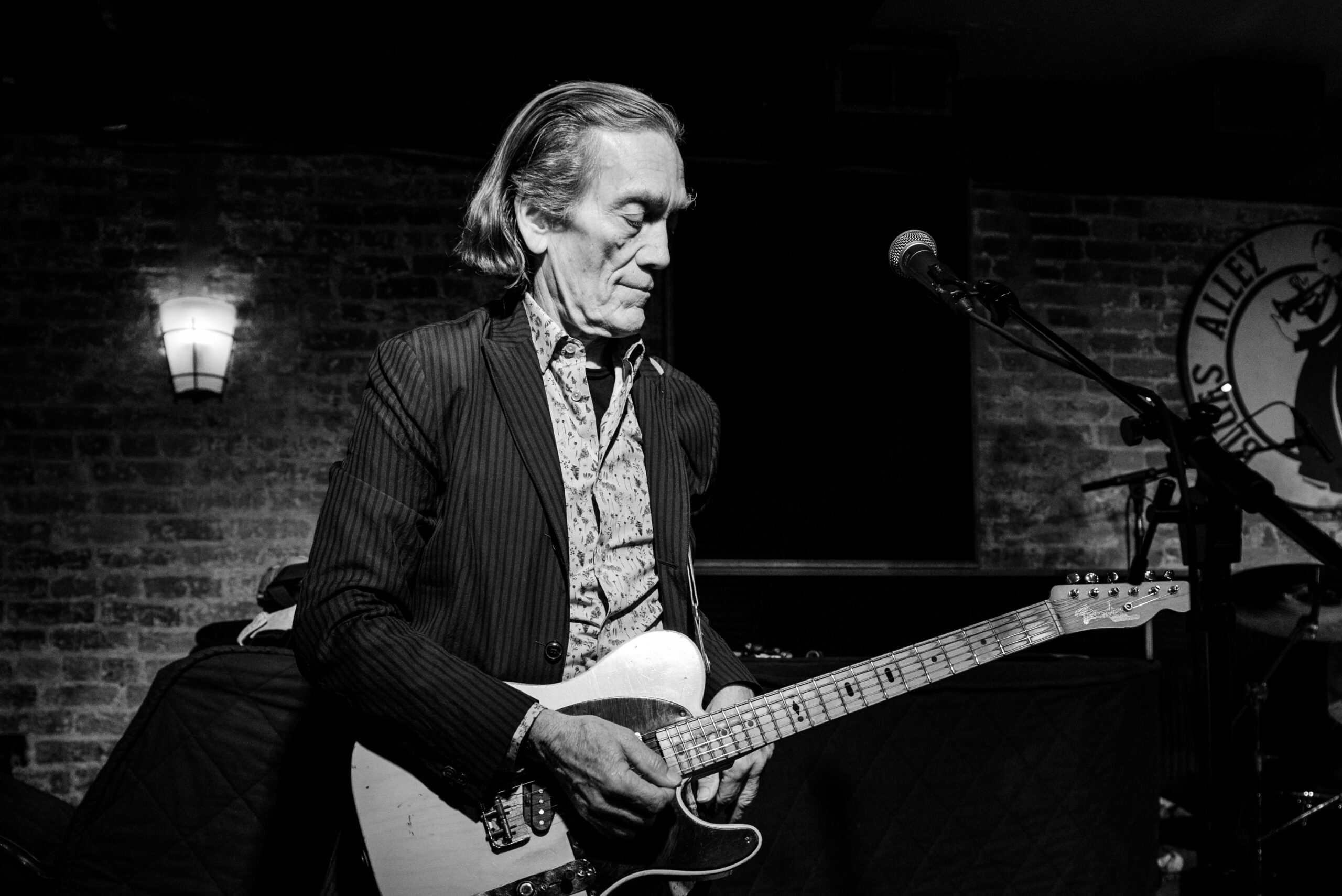
Dig into G.E. Smith guitars gear and you find the equipment of one of American music’s most versatile and most publicly exposed professional guitarists — the Connecticut-born musician who served as musical director and lead guitarist for NBC’s Saturday Night Live house band from 1985 to 1995, who toured with Hall and Oates through their commercial peak, and who has played with Bob Dylan, Roger Waters, the Rolling Stones, and dozens of other major artists across a career of extraordinary breadth and consistent musical quality. Smith is the consummate professional guitarist — the musician whom other musicians call when they need someone who can play anything, serve any musical context, and deliver consistently excellent results without the attitude or the technical showboating that lesser players substitute for genuine musicianship.
This guide covers Smith’s complete equipment picture: the Gibson and Fender guitars that have served his diverse career, the amplification he has used across radically different musical contexts, his approach to effects, and the playing philosophy of a musician whose supreme adaptability is built on genuine technical mastery and genuine musical knowledge. Understanding G.E. Smith’s gear is understanding how real versatility — the ability to serve any musical context equally well — differs from the surface versatility of someone who plays everything adequately but nothing exceptionally.
Background
Gary Eugene Smith was born on November 27, 1952, in Stroudsburg, Pennsylvania, and grew up in Connecticut. His early musical formation was eclectic — he absorbed the blues, country, rock, and R&B traditions of American music through records and through the live musical environment of Connecticut and the broader New York area, and he developed a guitar technique and musical vocabulary that reflected all of these influences simultaneously rather than privileging any single tradition.
His professional career began through the New York music scene of the late 1970s — the specific ecosystem of musicians, sessions, and live performance opportunities that gave ambitious young guitarists their professional development. His connection with Hall and Oates — the Philadelphia pop duo whose commercial success through the late 1970s and 1980s made them one of the most commercially successful American acts of the era — gave him his most sustained early professional context, playing on tours and recordings that reached mainstream audiences of extraordinary size.
The Saturday Night Live appointment in 1985 changed the nature of his public profile dramatically. The SNL house band performed live for national television audiences every week, required the ability to serve radically different musical contexts within a single broadcast (a comedy sketch requiring one musical character, a musical guest with a completely different musical personality, a house band number with its own character), and placed the musicians in immediate visual and sonic proximity to an enormously diverse musical audience. The ten years Smith spent leading the SNL band — serving musical guests from Paul Simon to Nirvana to Sinead O’Connor while maintaining the house band’s own musical identity — required and developed a degree of musical adaptability that few careers provide.
His subsequent work — with Bob Dylan (touring guitarist for the Oh Mercy period and after), Roger Waters, and various other projects — continued to place him in demanding musical contexts that required different specific approaches from any previous experience. His current work includes his own solo projects alongside continued session and touring involvement that reflects the breadth of his professional reputation.
G.E. Smith Guitars Gear: The Complete Rig
Guitars
G.E. Smith’s guitar collection reflects the breadth of musical contexts his career has encompassed — instruments chosen for genuine musical reasons that reflect a comprehensive understanding of what different guitars contribute in different musical situations.
His most frequently associated instrument is a Gibson Les Paul — specifically a vintage 1957 or 1958 Les Paul Standard (goldtop or sunburst finish) with original PAF humbucker pickups. The PAF humbucker in vintage examples measures approximately 7.5k to 8.5k ohms DC resistance with Alnico II or Alnico V magnets, producing the specific combination of warmth, sustain, and harmonic complexity that distinguishes original PAF-equipped instruments from later reproductions. The late-1950s Les Paul Standard’s carved maple top over mahogany body, combined with the original PAF pickups, produces the specific combination of warmth and presence that has made these instruments the most sought-after electric guitars in history.
The Les Paul serves Smith’s blues and rock work — the material where the humbucker’s warmth and sustain is the appropriate tonal character — and provides the primary voice for the harder-rocking material in his diverse professional contexts. His vintage instruments’ specific character — the aged tonewoods, the original PAF pickups’ specific wound character, the overall tonal refinement that decades of playing and aging produce in quality instruments — give his Les Paul work a tonal warmth and complexity that reproduction instruments approach but don’t fully replicate.
A Fender Telecaster serves the country, R&B, and pop contexts in his work — material where the Telecaster’s bright, defined single-coil character is more appropriate than the Les Paul’s humbucker warmth. His Telecasters include vintage late-1960s and early-1970s examples, chosen for the specific tonal character of CBS-era single-coil pickups (Alnico V magnets, approximately 6.5k to 7.5k ohms DC resistance) that differ in specific ways from both vintage 1950s examples and modern production instruments.
A Fender Stratocaster provides the three-pickup tonal flexibility and the vibrato arm that specific musical contexts require. His Stratocasters — vintage and custom shop examples — give him access to the middle pickup and out-of-phase intermediate positions that the Telecaster’s two-pickup configuration doesn’t provide, and the vibrato arm for the specific performance techniques that certain material requires.
He has also used a Gretsch 6120 hollowbody and various other guitars for specific tonal applications — the Gretsch’s Filtertron pickups and hollow body construction providing the specific chimey, atmospheric character that suits specific blues and country contexts differently from either the Les Paul or the Fender instruments.
String gauges vary by instrument and context: medium gauges (.010–.046) for the Les Paul, lighter gauges (.009–.042) for Telecaster and Stratocaster work. His pick weight and attack vary by musical context — heavier picks for the Les Paul’s blues and rock work, lighter picks for the Telecaster’s country and pop applications.
Amps
G.E. Smith’s amplification reflects the same breadth of musical context as his guitar selection — clean American amplifiers for specific contexts, British valve amplification for others, and the professional flexibility to adapt his amplification approach to whatever the musical situation requires.
His primary amplifier for much of his career has been a Fender Twin Reverb — the 85-watt, 2×12 blackface combo with Jensen C12N speakers that provides clean, warm American amplification across the full range of musical contexts his career encompasses. The Twin’s clean headroom — its ability to remain undistorted at high volumes — makes it appropriate for the SNL television context where clean, defined guitar tones were required for accurate musical reproduction. The 6L6 output valves’ specific American character added warmth without imposing a distinctive tonal personality that would conflict with the diverse musical characters the SNL context required.
He has also used Fender Deluxe Reverb amplifiers for more intimate performance contexts and for specific studio applications where the Deluxe’s 6V6 character provided a different quality of clean-to-driven tone from the Twin’s 6L6 amplification. The Deluxe’s smaller physical size and its natural breakup character at lower volume levels made it practical for recording contexts where the Twin’s higher power was unnecessary.
For blues and rock material specifically — the contexts where the Les Paul and a naturally driven amplifier are the appropriate combination — Smith has used Marshall amplifiers, typically JMP or JCM800 heads with 4×12 cabinets. The Marshall’s EL34 midrange authority and natural drive character suited the Les Paul’s PAF humbucker output in ways that the cleaner Fender amplifiers didn’t, producing the specific warm, driving tone that blues-influenced rock guitar required.
The SNL context specifically required amplifiers that could be miked for broadcast without the feedback problems that high-volume valve amplifiers generate in small studio environments. The Twin Reverb’s clean headroom — its ability to produce substantial volume without the feedback-promoting acoustic saturation of overdriven amplifiers — made it the practical choice for the television studio context.
Effects
Smith’s effects chain was adapted to each musical context rather than maintained as a fixed personal rig — reflecting the professional musician’s recognition that different musical situations require different effects configurations. His versatility with effects reflected the same breadth of knowledge that characterised every other aspect of his equipment approach.
A wah pedal — the Dunlop Cry Baby in standard configuration — was a consistent element of his blues and rock work, used with the musical intelligence and rhythmic sophistication that distinguished his playing from the more mechanical wah use of less musically knowledgeable players. His wah technique reflected both the blues tradition’s use of the swept filter as an expressive tool and the funk and R&B tradition’s rhythmic, groove-based wah deployment.
An Ibanez Tube Screamer (TS-808 or TS-9) provided smooth front-end boost for blues and rock applications — the standard Texas blues approach of boosting the amplifier’s front end rather than relying on the pedal’s own distortion character. His use of the Tube Screamer as a transparent boost into a naturally driven amplifier was consistent with the approach developed by Stevie Ray Vaughan and his contemporaries.
A delay pedal — Boss DD series and in earlier years tape-based units — provided the atmospheric depth and echo effects appropriate for specific musical passages. His delay use was musical and contextual rather than habitual, with delay times and feedback levels calibrated to each specific musical application.
A Boss CS-2 or CS-3 compressor appeared for studio work and specific live applications where consistent dynamics were required — the SNL television broadcast context in particular benefiting from the compressor’s ability to maintain consistent output levels across different playing intensities.
A volume pedal allowed real-time dynamic control — particularly useful in the SNL context where precise management of the guitar’s contribution to the overall broadcast sound was a professional requirement rather than a musical preference.
Playing Style & Tone Philosophy
G.E. Smith’s playing style is defined by an unusual combination: the complete technical mastery that genuine versatility requires, and the complete musical intelligence to know which specific skills to deploy in each specific context. This combination — technical completeness serving contextual intelligence — is rarer than either quality alone, and it is the specific thing that has sustained his career across such diverse professional contexts for such an extended period.
His blues playing reflects deep absorption of the American blues tradition — the pentatonic vocabulary, the bending technique, the specific rhythmic feel, and the emotional register of the Chicago and Delta traditions. This blues foundation is not decorative but structural — it provides the harmonic and technical grounding from which his more diverse musical activities extend. A guitarist without genuine blues roots cannot play convincingly in the blues-influenced contexts that constitute a large proportion of American popular music; Smith’s blues foundation is what makes his versatility genuinely broad rather than superficially wide.
His country and pop guitar work reflects equally deep knowledge of those traditions — the specific technical approaches of country flatpicking and chicken picking, the harmonic vocabulary of pop and R&B, and the specific rhythmic feel that distinguishes country and R&B from straight rock or blues. This technical breadth — not the ability to approximate multiple styles but the genuine command of each tradition’s specific requirements — is the foundation of his professional reputation.
Tonally, Smith’s philosophy is the consummate professional’s philosophy: use the right equipment for the right context, understand why it’s right, and execute the appropriate approach with total conviction. The Les Paul for blues and rock, the Telecaster for country and R&B, the Stratocaster for tonal flexibility, the Twin Reverb for clean broadcast work, the Marshall for driven blues rock — each choice reflects genuine musical knowledge rather than brand loyalty or personal preference alone.
How to Sound Like G.E. Smith
Guitar Approach
A vintage Gibson Les Paul Standard with PAF pickups — or a high-quality reproduction — for blues and rock material; a Fender Telecaster for country and R&B work; a Fender Stratocaster for applications requiring tonal flexibility. The most important element is the breadth of stylistic knowledge — Smith’s versatility is built on genuine mastery of multiple traditions, and achieving his range requires serious study of blues, country, R&B, and rock guitar vocabularies. The technical range must be real rather than approximate; there is a difference between playing in a style and being able to play in a style convincingly.
Amp Approach
A Fender Twin Reverb for clean, professional-quality amplification across diverse contexts; a Marshall JMP or JCM800 for the blues and rock material where natural EL34 drive is appropriate. The Tube Screamer as a front-end boost for blues playing. Keep the effects chain minimal except when the specific musical context requires specific additions. Professional musicians’ rigs are typically simpler than enthusiasts expect, because the musical complexity comes from the playing rather than from the equipment.
| Control | Setting | Notes |
|---|---|---|
| Volume | 4–6 | Clean — Twin headroom is the primary requirement for broadcast |
| Treble | 5–6 | Moderate — appropriate for Les Paul or Telecaster character |
| Middle | 5 | Neutral mids for versatile character across different musical styles |
| Bass | 4 | Controlled bass for clarity in broadcast reproduction |
| Reverb | 2–3 | Light spring reverb for spatial quality |
| Tube Screamer (blues) | Low gain, volume ~6 | Boost mode — push the amp rather than distort the signal |
Influence & Legacy
G.E. Smith’s legacy is the specific legacy of the consummate professional musician whose contribution to American music is distributed across an extraordinary range of contexts rather than concentrated in a single definitive statement. His ten years at Saturday Night Live — performing for live television audiences of tens of millions every week — constituted one of the most extended and most publicly visible professional guitar performances in American music history. The specific quality of that performance: consistent, versatile, musically intelligent, and completely unfussy — represented a model of professional musicianship that the guitar community rarely acknowledges because it lacks the dramatic gesture of the star guitarist but that is as genuinely difficult and as genuinely valuable as any more visible form of guitar achievement.
His work with Bob Dylan — touring with one of the most historically significant musicians in American culture, serving Dylan’s specific musical vision with the sensitivity and intelligence that Dylan consistently requires of his musical collaborators — represented another dimension of his professional achievement. Playing with Dylan requires a specific quality of musical intelligence: the ability to listen and respond in real time to a performer whose choices are deliberately unpredictable, to serve a musical vision that is deeply personal and often difficult to anticipate, and to maintain consistent professional quality across the physical and logistical demands of major international touring.
His influence on subsequent American session and touring guitarists — particularly those who aspire to the breadth of his professional profile — is substantial if difficult to quantify. The model he represents: genuine technical mastery across multiple traditions, deployed with complete musical intelligence and complete professional reliability — is the highest model of professional guitar achievement available, and musicians who have observed his career and absorbed its lessons carry them forward in ways that are not easily traced to their source.
For players exploring the American professional session and touring guitar tradition that Smith represents at its highest level, the rigs of Waddy Wachtel — whose parallel session career in Los Angeles developed comparable musical breadth — and Buzzy Feiten, whose New York session work covered similar musical breadth with comparable quality, provide essential comparison. The blues foundation that underpins all three players’ work connects to Doyle Bramhall II‘s approach, showing how the same blues tradition continues to provide the harmonic and technical grounding for diverse professional careers in contemporary music.
Saturday Night Live: Ten Years of Live Television Guitar
The ten years G.E. Smith spent as musical director and lead guitarist of the Saturday Night Live house band constitute one of the most unusual and most demanding sustained professional guitar performances in American music history — a decade of weekly live television appearances requiring the specific combination of technical excellence, musical adaptability, professional reliability, and the ability to perform under the specific pressures of live broadcast that few careers develop simultaneously.
The SNL context was genuinely demanding in ways that standard professional guitar work doesn’t reproduce. Each week’s broadcast required Smith and the house band to prepare musical accompaniment for a musical guest whose specific requirements were communicated only days before the broadcast, to perform with that guest live on national television without the safety net of multiple takes or post-production correction, and to maintain the house band’s own musical identity and entertainment value independent of whatever the musical guest contributed. The weekly repetition of this process — fifty weeks per year for ten years — constituted a sustained curriculum in professional musical adaptability that very few careers provide.
The specific equipment requirements of the SNL television studio context shaped his amplifier choices in specific ways. Live television broadcast requires microphone signals that are clean enough for broadcast-quality audio reproduction — amplifier feedback, excessive distortion, and the mechanical noise of hard-played equipment can all create broadcast problems that the live, non-editable nature of the SNL format couldn’t correct. The Fender Twin Reverb’s clean headroom made it the appropriate broadcast amplifier: its ability to remain undistorted at the volumes required for stage performance in a television studio, combined with its warm American character that suited the diverse musical contexts SNL’s musical guests represented, made it the most practical and most musically appropriate amplifier for the specific requirements of weekly television performance.
The guitar choices for the SNL context were similarly dictated by practical broadcast requirements alongside purely musical preferences. The Les Paul’s warm, full-bodied tone — appropriate for the blues and rock material that formed a significant part of the SNL house band’s musical identity — translated well to broadcast audio. The Telecaster’s defined, articulate character suited the country, R&B, and pop material that SNL’s diverse musical guests required. The Stratocaster’s tonal flexibility addressed the contexts where neither the Les Paul nor the Telecaster was exactly right. The combination of these three instruments — plus the Gretsch for specific atmospheric applications — gave Smith the full tonal range that a decade of SNL’s diverse musical landscape required.
The Bob Dylan Years: Serving an Icon
G.E. Smith’s work with Bob Dylan — as a touring guitarist during the late 1980s and early 1990s — placed him in one of the most historically significant and most professionally demanding musical relationships available to a working guitarist. Dylan’s specific approach to live performance — his willingness to change arrangements, tempos, and even songs during a performance, his expectation that musicians would follow his unpredictable choices in real time, and his deliberate avoidance of the fixed-setlist, rehearsed-performance approach that most major touring acts used — required specific qualities from his musicians that went beyond conventional professional excellence.
The specific equipment Smith used for the Dylan tours was adapted to the demands of that specific musical context. The Dylan band’s live sound — raw, immediate, blues-rooted — required a guitar tone that served the music’s directness without imposing additional polish or production value. The Les Paul through a moderately driven Marshall or through the Tube Screamer-into-Twin combination provided the specific warm, slightly driven tone that suited Dylan’s music: present and authoritative without the slick character of cleaner, more produced approaches.
The challenge of following Dylan’s in-performance changes — responding to his vocal phrasing, his tempo variations, his occasional departures from arranged material — required a quality of listening and musical intelligence that technical guitar skill alone couldn’t provide. Smith’s ability to follow and serve Dylan’s real-time choices, while maintaining the musical coherence of the performance, reflected the same contextual intelligence that had made him effective in the SNL context despite the very different specific demands of the two situations. The ability to listen and respond — to make the guitar serve whoever is leading the musical moment rather than leading it yourself — is the specific professional virtue that sustained Smith’s diverse career, and the equipment he used in both contexts served this virtue without imposing its own character more forcefully than the musical leadership required.
Hall and Oates: Pop Guitar at Commercial Peak
Smith’s extended work with Hall and Oates — as a touring and recording guitarist during their commercial peak in the late 1970s and early 1980s — gave him experience with the specific demands of commercial pop rock guitar at the highest level of commercial success. Hall and Oates were, during this period, one of the most commercially successful American acts in popular music history, with production values and live performance requirements that reflected both the commercial scale and the genuine musical quality that distinguished their best work from simpler pop music of the era.
The guitar work required for the Hall and Oates context was different from either the SNL or the Dylan context: consistent with the band’s specific musical character, appropriate to the pop production values of their recordings, and musically polished enough to satisfy the mainstream audience that their commercial success had attracted. This context required the Telecaster’s R&B-influenced clean character for the rhythm work that underpinned their soul-inflected pop, and the more driven Les Paul character for the harder-rocking tracks in their catalogue. The amplification was clean and professional — Fender Twin Reverb providing the specific American warmth that suited the Philly-influenced soul and pop of their best material.
The specific production context of the Hall and Oates recordings — major-label pop records with sophisticated production values and radio-format commercial requirements — also shaped Smith’s recording approach in specific ways. Studio guitar work for major commercial recordings required a different discipline from live performance: the ability to deliver consistent performances take after take until the producer had the specific character of guitar playing the production required, the ability to adapt one’s instinctive approach to specific producer or A&R feedback, and the patience to serve the recording process’s demands even when those demands conflicted with what would have been the most musically interesting approach.
These varied professional demands — SNL’s weekly live television, Dylan’s real-time unpredictability, Hall and Oates’ polished commercial production — constituted a curriculum in professional musicianship that few careers provide simultaneously. Each context developed different specific skills: SNL developed adaptability and broadcast-quality consistency, Dylan developed real-time listening and responsiveness, Hall and Oates developed polished professional recording craft. The specific equipment that served all three contexts — the Les Paul for blues and rock, the Telecaster for pop and R&B, the Twin Reverb for clean broadcast quality, the Marshall for driven blues character — was chosen with the same professional intelligence that the playing itself demonstrated.
The Vintage Les Paul: Why Original PAF Matters
G.E. Smith’s preference for vintage late-1950s Gibson Les Paul Standards with original PAF humbuckers — rather than the reproduction models that have become increasingly sophisticated in capturing the vintage specification — reflects a genuine acoustic difference rather than mere vintage fetishism. Understanding what specifically original PAF pickups contribute that high-quality reproductions don’t fully replicate illuminates both his equipment choice and the specific acoustic reasons why certain vintage instruments remain sought after by professional musicians.
The original PAF humbuckers, wound by hand at the Gibson factory in Kalamazoo, Michigan, in the late 1950s, have specific construction details that affect their tonal character in ways that modern manufacturing tolerances and materials don’t perfectly reproduce. The wire used in the original windings — plain enamel-coated copper wire whose specific diameter and coating thickness varied within manufacturing tolerances from pickup to pickup — produces a specific quality of winding density that modern machine-wound pickups achieve more consistently but differently. The Alnico II and Alnico V magnets used in the original pickups have specific magnetic property profiles that have been modified by decades of service and by the specific magnetic history of each individual pickup — the cumulative exposure to other magnetic fields over sixty-plus years subtly changes the magnet’s strength and character. The specific construction of the bobbins, the lead wire, and the overall assembly introduces mechanical resonances that affect frequency response in ways that modern CNC-machined bobbins and machine-precise assembly don’t exactly replicate.
The sum of these specific differences — none individually dramatic, all cumulatively significant — produces a tonal character in original PAF-equipped vintage instruments that professional players who have used both vintage and reproduction examples consistently describe as warmer, more dynamically responsive, and more harmonically complex than the closest available modern approximations. Smith’s preference for his vintage Les Paul reflects this genuine acoustic difference, and his continued use of the instrument in the most demanding professional contexts available — where any equipment deficiency would be immediately audible — validates the preference as musically rather than merely historically motivated.
The Tube Screamer’s specific function in Smith’s blues rig — as a transparent boost rather than as a primary distortion source — is worth examining in technical detail because it illustrates a use of the pedal that is distinct from its more common deployment as a medium-gain overdrive. The Tube Screamer’s JRC4558 op-amp circuit, when configured with the drive control at minimum and the volume control at a level above unity gain, produces a signal boost rather than a distortion — the op-amp circuit’s clipping threshold is not reached at low gain settings, passing the guitar signal through essentially clean but at higher amplitude. This boosted signal hits the amplifier’s preamp input stage harder, pushing the preamp into its natural saturation zone more readily and producing more natural drive at any given amplifier volume setting. The result is amplifier-generated drive rather than pedal-generated distortion — the specific warm, valve-saturation character of the Marshall or Twin at its natural overdrive point, rather than the op-amp clipping character of the Tube Screamer driven hard. For Smith’s blues work specifically, where the natural character of a quality valve amplifier at working volume was the target tone, this boost-into-amplifier approach produced the correct result — the musical drive of a naturally pushed valve circuit rather than the pedal’s own clipping character. This understanding of the pedal’s function at different settings — knowing that different drive control positions produce qualitatively different results rather than merely different amounts of distortion — reflects the specific technical knowledge about how his equipment worked that characterised his overall approach.
The broader lesson of G.E. Smith’s career — for any musician considering what professional excellence in guitar playing actually looks like — is that genuine versatility requires genuine mastery of each individual tradition rather than mere familiarity with multiple styles’ surface characteristics. The blues foundation that anchors his diverse professional work is not decorative but structural — without genuine blues grounding, the country, R&B, pop, and rock applications above it would be technically passable but musically unconvincing. The equipment that serves this foundation — the vintage Les Paul’s PAF warmth, the Twin Reverb’s clean transparency, the Tube Screamer’s natural boost character — was chosen with genuine understanding of what each element contributed rather than with the equipment enthusiasm that sometimes substitutes for musical knowledge. The equipment served the music; the music justified the career; and the career documents what genuine professional musicianship looks like sustained over four decades of the most diverse and most demanding professional contexts that American music provides.
The Gretsch 6120’s specific role in Smith’s collection — as an alternative voice for material where the hollowbody’s chimey, atmospheric character was more appropriate than either the Les Paul’s humbucker warmth or the Fender single-coil’s brightness — reflected the same comprehensive musical knowledge that characterised every aspect of his equipment approach. The 6120’s Filtertron pickups (approximately 4.5k to 5.5k ohms, Alnico V magnets) produce a bright, compressed character quite different from either the PAF humbucker or the Fender single-coil, with the hollowbody’s acoustic resonance adding a specific dimensional quality that solid-body instruments don’t provide. For blues and country material with a specific vintage character — the jump blues, the western swing, the early rock and roll traditions — the 6120’s specific character was more authentically appropriate than any modern solid-body alternative. Smith’s inclusion of this instrument in his professional toolkit reflected the same historical knowledge and the same willingness to use the instrument that best served each specific musical context that characterised his handling of the Les Paul, Telecaster, and Stratocaster. The collection as a whole — four substantially different instruments, each chosen for specific musical reasons and used in specific musical contexts — was the physical expression of a professional musician’s comprehensive knowledge of what different guitars contribute and why different musical traditions have always been associated with different instrument types.
The Fender Telecaster’s specific role in Smith’s work with Hall and Oates deserves additional examination as an example of how an instrument’s cultural associations can be as musically relevant as its purely acoustic properties. Hall and Oates’ music was rooted in the Philadelphia soul tradition — the Gamble-Huff production approach, the MFSB session musicians’ specific sound, the specific blend of soul, R&B, and pop that gave their best work its distinctive character. This tradition was historically associated with the Telecaster’s bright, defined R&B character — the specific single-coil tone that had been central to the Memphis and Philadelphia session work that created soul music’s guitar sound. Smith’s use of the Telecaster for the Hall and Oates work connected his playing to this specific historical tradition at the level of instrument choice, and that connection — the Telecaster’s cultural associations with R&B and soul guitar — complemented the acoustic appropriateness of the instrument’s specific tonal character for this musical context. When an instrument is both acoustically appropriate and culturally resonant with the specific musical tradition being served, the equipment choice achieves a level of rightness that purely acoustic suitability alone doesn’t produce. Smith’s Telecaster for Hall and Oates achieved exactly this kind of complete rightness — acoustically correct and culturally coherent simultaneously.
The compressor pedal’s role in Smith’s SNL rig — providing dynamics management for the broadcast context — illustrates a use of the effect that is quite different from its more familiar deployment as a sustain enhancer or chicken-picking-style attack shaper. In the broadcast context, the compressor’s primary function was to reduce the dynamic range of the guitar signal before it reached the broadcast chain — ensuring that the quietest passages weren’t lost in the broadcast noise floor and that the loudest transients didn’t clip the broadcast processing stages. This application was entirely functional rather than tonal — the compressor was in service of the broadcast engineering requirements rather than of any musical preference. Smith’s understanding of this distinction — knowing when a piece of equipment was being used for its musical character and when it was being used for its engineering function — reflects the broader professional intelligence that sustained his decade of weekly live television performance without the kind of broadcast technical problems that less experienced or less prepared musicians might have generated. Professional musicianship in a broadcast context requires this dual understanding: musical excellence and technical broadcast competence simultaneously. Smith demonstrated both consistently across ten years of weekly national television, and the specific equipment he used — chosen and configured with both musical and broadcast engineering requirements in mind — was central to that consistent achievement.
G.E. Smith’s career stands as one of the clearest available demonstrations of what genuine professional excellence in guitar playing looks like — not the dramatic gesture of the star soloist or the specific tonal identity of the signature artist, but the sustained delivery of musical quality across every professional context a musician encounters, every week, for decades. The equipment he chose to sustain this delivery: the vintage Les Paul’s warmth, the Telecaster’s versatility, the Stratocaster’s flexibility, the Twin Reverb’s professional cleanness, and the minimal but purposeful effects chain — was chosen and used with the same intelligence that made the playing itself consistently excellent. The gear served the musician; the musician served the music; and the music served its audience across a professional career that few guitarists have matched for range, consistency, and sustained professional achievement.
Frequently Asked Questions: G.E. Smith Guitars & Gear
What guitars does G.E. Smith play?
G.E. Smith’s primary guitars include a vintage Gibson Les Paul Standard (1957-1958 era) with original PAF humbucker pickups, Fender Telecasters (late-1960s and early-1970s CBS-era examples), and Fender Stratocasters for tonal flexibility. He has also used Gretsch 6120 hollowbody guitars for specific applications. His instrument choices reflect the genuine diversity of his professional career — different instruments for different musical contexts rather than a single signature instrument.
What amp does G.E. Smith use?
His primary amplifier for the SNL and broadcast work was the Fender Twin Reverb — its clean headroom and warm American character making it appropriate for the diverse musical contexts of live television. He has also used Fender Deluxe Reverbs for more intimate contexts and Marshall JMP and JCM800 amplifiers for blues and rock material. His amplifier choice adapts to the musical context rather than remaining fixed.
What was G.E. Smith’s role at Saturday Night Live?
Smith served as musical director and lead guitarist of the Saturday Night Live house band from 1985 to 1995. In this role, he was responsible for leading the house band’s performances, serving the musical requirements of each week’s musical guests (providing appropriate musical accompaniment for enormously diverse artists), and maintaining the house band’s own musical identity. The position required an extraordinary degree of musical versatility, professional reliability, and the ability to serve completely different musical contexts within a single broadcast.
What effects does G.E. Smith use?
His key effects include a Dunlop Cry Baby wah (for blues and funk applications), an Ibanez Tube Screamer (TS-808 or TS-9, used as a transparent front-end boost for blues work), Boss DD delay (for atmospheric depth on specific passages), Boss CS-2/CS-3 compressor (for broadcast and studio dynamics management), and a volume pedal (for real-time dynamic control). His effects use is context-specific and purposeful rather than habitual.
Who has G.E. Smith toured with?
Smith has toured with an extraordinary range of major artists including Hall and Oates (their commercial peak period), Bob Dylan (the Oh Mercy period and subsequent tours), Roger Waters (various post-Pink Floyd touring), and various other major artists across his professional career. He has also appeared as a musical guest and performer on numerous other projects, television appearances, and recording sessions that reflect the breadth of his professional reputation.
What makes G.E. Smith’s guitar playing distinctive?
Smith’s distinctiveness lies in his genuine mastery of multiple guitar traditions — blues, country, R&B, rock, and pop — deployed with complete musical intelligence and complete professional reliability across radically different contexts. Where many guitarists are versatile in a superficial sense (able to approximate multiple styles), Smith is genuinely accomplished in each tradition he works within. This genuine breadth — built on a blues foundation and extended through decades of professional work in diverse contexts — is his specific quality as a musician.
What is G.E. Smith doing now?
Smith continues to record and perform — with his own band, in various collaborative projects, and in ongoing session and touring work that reflects his sustained professional reputation. He has released solo recordings that show his guitar playing in contexts where his own musical vision rather than a specific employer’s requirements shape the results. He continues to be active in American music as both a performer and an educator, sharing the musical knowledge that his extraordinary career has accumulated.
Genre:
Rock / Session
Decades:
1970s | 1980s | 1990s | 2000s | 2010s
Related stories
Warren DeMartini Guitars & Gear: The Complete Guide to Ratt’s Torch Guitarist’s Rig
Warren DeMartini guitars & gear: Ratt's Torch guitarist. Charvel Bomber, snakeskin, Jose-modded Plexi, Fender Super Champ, RTM pickup, slapback echo — the complete rig.
Warren Haynes Guitars & Gear: The Complete Guide to Gov’t Mule’s Guitar Master’s Rig
Warren Haynes' guitars, amps, and effects — the complete guide. Gibson Les Paul Chester, Soldano SLO-100 modified, Klon Centaur, Emma Discombobulator, and how to nail that Gov't Mule blues-rock tone.
Wayne Kramer Guitars & Gear: The Complete Guide to MC5’s Proto-Punk Guitar Insurrectionist’s Rig
Wayne Kramer guitars & gear: MC5's proto-punk guitar insurrectionist. Star-spangled Strat, Big Muff Triangle, Marshall stacks, MXR Jail Guitar Doors Drive — the complete rig.