
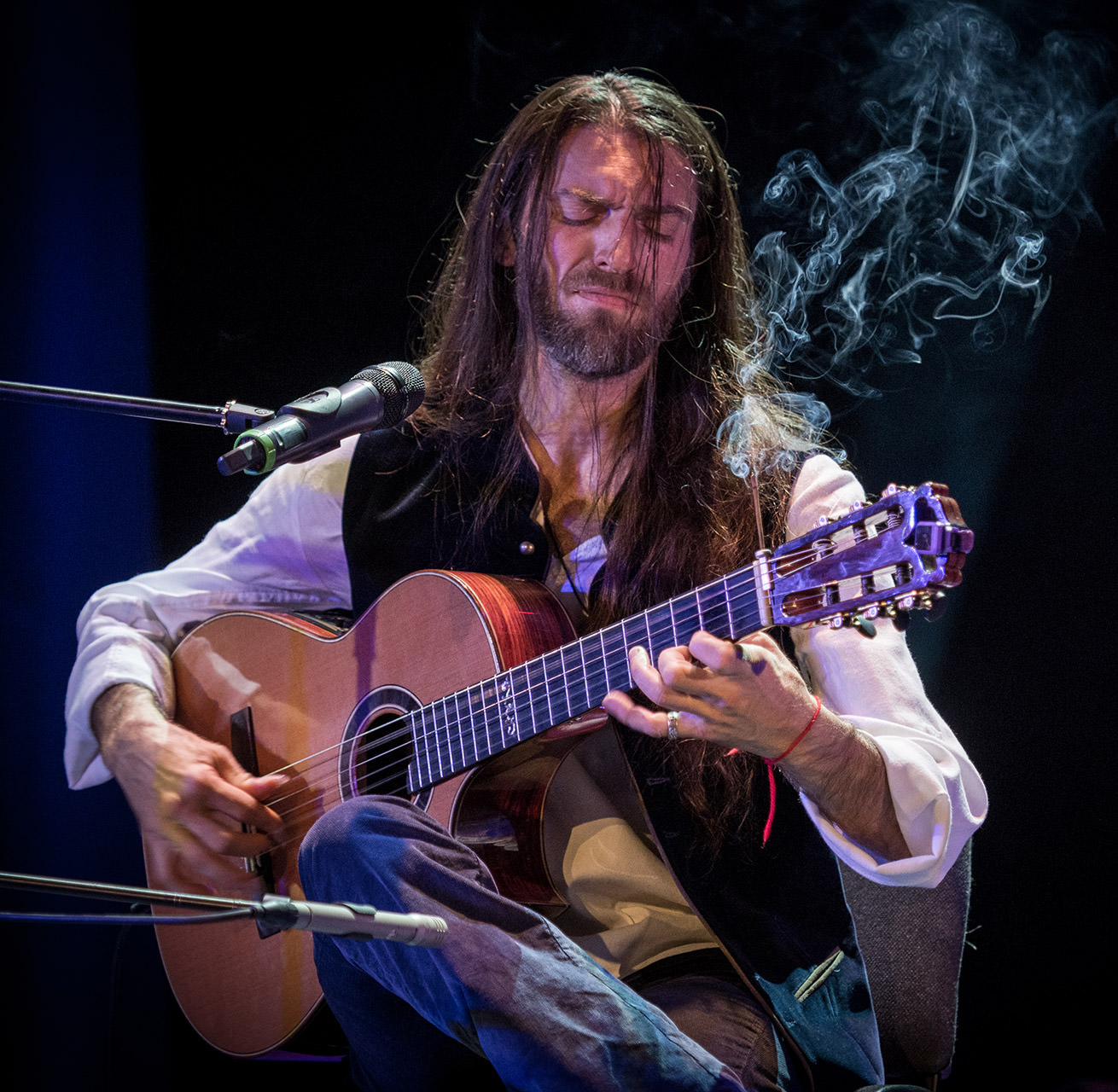
Investigate Estas Tonne guitars gear and you find the equipment behind one of the most genuinely mystical and most independently spirited acoustic guitarists performing anywhere in the world — a Ukrainian-born, globally nomadic musician who developed a guitar approach that combined flamenco technique, classical fingerstyle, Middle Eastern modal scales, Indian ragas, and various other world music traditions into a single personal musical language that was simultaneously rooted in specific traditions and utterly impossible to categorise within any of them. Tonne was the specific embodiment of what happened when a musician of genuine spiritual conviction and genuine technical accomplishment rejected the commercial music industry’s entire framework and instead played the music he heard in his head for whoever would listen — on street corners, in public squares, in concert halls, and on recordings released entirely on his own terms. His acoustic guitars served this vision with the natural acoustic character that his philosophy of direct, unmediated musical communication required.
This guide covers Tonne’s complete equipment picture: the acoustic guitars that gave his playing its specific warmth and resonance, his amplification approach for concert contexts, his approach to effects (minimal), and the playing philosophy of a musician whose relationship with the guitar was as much spiritual as technical. Understanding Estas Tonne’s gear is understanding how musical authenticity requires first knowing what you actually want to say, and then finding the simplest possible means of saying it.
Background
Estas Tonne was born in 1975 in Kharkiv, Ukraine — within the Soviet musical culture that gave him access to classical music education alongside the folk traditions of Ukrainian and Eastern European music. He subsequently lived in Israel for a period — absorbing the specific musical cultures of the Middle East alongside the diverse Jewish musical traditions that Israel’s immigrant population had brought from across the world — before becoming essentially nomadic, living on multiple continents and in multiple countries while maintaining a performing and recording career that was entirely independent of conventional music industry infrastructure.
This specific nomadic formation gave his musical approach its specific quality of being genuinely multi-cultural rather than superficially world-music-influenced — the specific musical traditions he drew on were ones he had genuinely lived within at specific points in his life rather than musical influences absorbed from recordings and studied from outside their original cultural contexts.
His performances in public spaces — particularly his extended solo performances in city squares and on street corners that were documented through videos that spread virally online — gave him an international audience that came to him through the specific quality of his musical experience rather than through any conventional music industry promotion. The famous videos of his performances in European city squares — where he drew large impromptu crowds through the sheer magnetic quality of his playing — were as genuine a documentation of his specific musical impact as any professionally produced concert recording.
Estas Tonne Guitars Gear: The Complete Rig
Guitars
Tonne’s guitar approach was centred on acoustic instruments — the direct acoustic character of the unamplified guitar was as central to his musical philosophy as any specific technique or playing approach.
His primary instruments were high-quality classical nylon-string guitars — specifically concert-quality instruments whose specific acoustic character of warmth, resonance, and the particular singing quality of nylon strings gave his playing its appropriate tonal foundation. The classical guitar’s specific character — the nylon strings’ warmer, more rounded attack and more sustained resonance compared to steel strings — was appropriate for the flamenco and classical influences that were central to his technique.
He also used flamenco-style guitars — typically with a slightly different construction from classical guitars, with a thinner top and lower action that gave flamenco technique its specific bright, percussive attack character alongside the nylon string’s warmth. The flamenco guitar’s specific character suited the rhythmic, percussive dimensions of his playing that drew on the flamenco rasgueado and golpe techniques.
Various world music string instruments appeared in his performing and recording — oud, sitar, and other specific instruments from the various world music traditions he inhabited appearing for specific musical purposes.
Amps and Pickups
When amplification was required for larger performance contexts, Tonne used acoustic pickup systems — LR Baggs or similar high-quality transducers that preserved the natural acoustic character of the guitar as completely as possible in amplified performance contexts.
The philosophy was always minimal amplification: the acoustic guitar’s natural sound was the primary musical statement, and amplification was used only to make that natural sound audible in larger spaces rather than to enhance or transform it.
Effects
Effects were essentially absent from Tonne’s primary approach — consistent with his philosophy of direct, unmediated musical communication and his specific acoustic instrument focus. The guitar’s natural acoustic character through its natural acoustic resonance was the complete musical statement.
In amplified performance contexts, minimal reverb gave the guitar’s natural acoustic character its appropriate atmospheric dimension when the performance space’s natural reverb was insufficient. No additional processing was used.
Playing Style & Tone Philosophy
Estas Tonne’s playing style was defined by the extraordinary combination of diverse world music technical vocabularies — flamenco rasgueado, classical fingerstyle, Middle Eastern modal improvisation, Indian raga-influenced single-note development, and various other specific tradition’s techniques — integrated into a single personal musical language that moved between these vocabularies fluidly and naturally rather than switching between them as separate stylistic modes.
The flamenco dimension of his technique gave his playing its most immediately striking single technical element: the rapid rasguedo strumming, the percussive golpe (tapping the guitar’s body as a rhythm instrument alongside the string playing), and the specific rhythmic drive of flamenco’s most physically compelling moments. His command of flamenco technique at a professional level — developed through genuine engagement with the tradition rather than surface imitation of its most recognisable characteristics — gave these elements their authentic character rather than the exotic local colour of someone approximating flamenco from outside.
The classical fingerstyle dimension gave the playing its melodic clarity and its harmonic richness — the specific right-hand independence that allowed simultaneous melody, harmony, and bass within a single guitar part, giving his solo performances their quality of complete musical self-sufficiency.
The Middle Eastern and Indian modal dimensions gave his improvisation its specific tonal vocabulary — the specific scales, the specific ornamental approaches, and the specific relationship between improvisation and modal framework that gave his most extended solo performances their contemplative depth.
Tonally, his philosophy was the acoustic purist’s most spiritually grounded expression: the guitar’s natural acoustic character was the complete statement; no amplification, no effects, no processing between the strings and the listener’s ears was the ideal; and every compromise from this ideal (when amplification was required) was minimised as completely as practicable.
How to Sound Like Estas Tonne
Guitar Approach
A high-quality classical or flamenco nylon-string guitar — concert quality, with the specific acoustic character that gives nylon strings their warmth and resonance. The most important elements are the diverse technical vocabularies: genuine flamenco rasgueado and golpe technique, genuine classical fingerstyle independence, and genuine engagement with the modal improvisational approaches of Middle Eastern and Indian music. Each tradition requires genuine study of its specific values rather than surface imitation of its recognisable sounds.
Amp Approach
No amplification wherever possible. LR Baggs or similar high-quality acoustic pickup when amplification is required. Minimal reverb for spatial dimension when needed. The natural acoustic character of the guitar is the complete musical statement.
| Control | Setting | Notes |
|---|---|---|
| Volume | As low as adequate projection requires | The acoustic character must remain primary |
| EQ | Flat — no coloration | Preserve the guitar’s natural character |
| Reverb | Minimal — room supplement only | Room acoustic is preferred; amp reverb supplements when inadequate |
| Effects | None | The guitar speaks for itself |
Influence & Legacy
Estas Tonne’s legacy was the specific legacy of a musician who showed that genuinely original music, performed with genuine spiritual conviction and genuine technical accomplishment in genuinely public spaces, could reach genuinely global audiences without any commercial music industry infrastructure — that the viral videos of his city square performances represented a form of music distribution as legitimate and as effective as any label-mediated commercial channel.
His influence was less on the technical vocabulary of subsequent guitarists than on the philosophy of how music could be made and shared — his example showed that a guitarist could develop a completely individual musical language across decades of global nomadic living, share it directly with whoever would listen without commercial intermediary, and build a global audience through genuine musical quality alone.
For players exploring the world acoustic guitar tradition that Tonne represented, the rigs of Muriel Anderson — whose comprehensive world acoustic guitar approach showed similar breadth of world music engagement from a more formally education-centred starting point — and Erik Mongrain, whose acoustic percussive fingerstyle showed how similar orientation toward extended acoustic guitar technique produced a different but comparably original individual approach, provide illuminating comparison. The flamenco dimension reaches toward Paco de Lucia‘s work, which shows how the specific flamenco tradition that informed a significant dimension of Tonne’s technical vocabulary was developed at its most complete and most culturally authentic in the hands of a musician who had spent his entire life within the tradition.
The City Square Performances: Music as Public Gift
The viral videos of Tonne’s extended solo performances in European city squares — particularly the famous recordings in Prague’s Old Town Square and in various Italian and German public spaces — were as important to understanding his specific musical significance as any studio recording or concert hall performance. Understanding what specifically these performances achieved and why they resonated with such a wide and diverse range of viewers gives the most complete picture of his specific musical impact.
The city square performance context — spontaneous, public, with an audience that had not specifically chosen to attend a music event and that could leave at any moment — was as demanding a performance context as any musician could choose. The audience was not captive; it was constantly self-selecting, with viewers who found the music compelling staying and drawing closer while those who didn’t left. This specific performance context gave the performances their particular quality of demonstrated musical authenticity: anyone who drew and sustained a crowd of hundreds for an extended improvised solo performance in a public square had done so entirely through the magnetic quality of the music itself, without any of the promotional, logistical, or social factors that sustained concert hall audiences regardless of the music’s quality.
The videos that documented these performances spread through the internet because they showed something that was genuinely unusual: a single musician, an acoustic guitar, an outdoor public space, and hundreds of people standing in silence to listen to an extended improvised performance of music that was simultaneously technically accomplished and deeply emotionally affecting. The combination of those specific elements — technical accomplishment, emotional depth, public spontaneity, and the specific spiritual quality that gave Tonne’s performances their particular atmosphere — was as rare in the contemporary musical landscape as it was immediately recognisable when it appeared.
The Nomadic Life: Music Without Geography
Tonne’s nomadic lifestyle — living continuously on the move between countries and continents, without a permanent home or a fixed professional base — was as central to his musical identity as any specific technical approach or specific world music influence. Understanding why this specific lifestyle was as genuinely integral to his music as his guitar technique gives the most complete picture of the specific kind of musician he was.
The nomadic life gave his music its specific quality of multi-cultural authenticity — the specific world music traditions he drew on were not academic influences absorbed from recordings but living cultural experiences absorbed through genuine residence within specific cultural communities at specific points in his life. The Middle Eastern influences came from actual years of living in Israel and encountering the specific musical cultures of that specific geographic region; the European and Eastern European influences came from his Ukrainian formation and his extended time in various European countries; and the other world music influences he subsequently incorporated came from similar direct cultural engagements rather than from the remote study of recordings.
This specific quality of direct cultural engagement gave his musical synthesis its authentic character rather than the cosmopolitan eclecticism of musicians who combined world music sounds without genuine cultural knowledge of what those sounds expressed. When Tonne played in a Middle Eastern modal scale, he was drawing on a musical vocabulary he had genuinely absorbed through direct cultural engagement rather than approximating an exotic sound through theoretical knowledge of its structure. This difference — genuine absorption versus theoretical approximation — was as audible to listeners with genuine knowledge of the relevant traditions as the difference between genuine and approximated blues was to listeners with deep blues knowledge.
Flamenco and Classical: The Technical Foundation
The flamenco and classical guitar techniques that formed the most immediately recognisable technical foundation of Tonne’s playing deserved specific examination to understand both what they specifically required and how his command of them served his broader world music vision.
Flamenco guitar technique was built around specific approaches that were as distinct from classical guitar technique as from popular guitar — the rasgueado, the picado, the golpe, and the specific right-hand position and nail technique that gave flamenco guitar its characteristic sound. The rasgueado — the rolling strum produced by individual finger release in rapid succession — gave flamenco guitar its characteristic percussive, rhythmically complex strumming character that was entirely different from the single-stroke strumming of popular guitar or the arpeggiated picking of classical guitar. The golpe — tapping the guitar body below or beside the strings to produce percussive accents — made the guitar simultaneously a melodic and a rhythmic percussion instrument, giving flamenco performance its specific quality of complete musical self-sufficiency without any other accompanying instrument.
These specific flamenco techniques required years of dedicated development to achieve the professional standard that Tonne’s performances showed — the rasgueado in particular required specific development of the individual finger independence and the specific wrist rotation that produced its characteristic sound, and the golpe required specific calibration of the tapping force to produce a clear percussion sound without damaging the guitar’s top. His command of these techniques at a professional level gave his playing its specific authentic flamenco character that distinguished it from the approximated flamenco of musicians who had adopted flamenco-sounding techniques without genuinely developing them within the tradition’s specific technical requirements.
The Spiritual Dimension: Music as Practice
Tonne’s specific approach to music as spiritual practice — his view of the guitar performance as a vehicle for transcendent experience rather than as entertainment or artistic expression in the conventional Western concert sense — was as central to his musical identity as any technical approach. Understanding this specific philosophical orientation and how it shaped his approach to performing and recording gives the most complete picture of why his music had the specific quality of spiritual depth that even casual listeners frequently described experiencing in his performances.
The concept of music as spiritual practice — as a vehicle for accessing and communicating states of consciousness beyond ordinary everyday experience — was central to multiple world music traditions that Tonne had genuinely engaged with: the Sufi musical tradition’s specific use of music as a vehicle for mystical experience, the Indian classical tradition’s understanding of ragas as specific emotional-spiritual modes capable of inducing specific states of consciousness, and various other traditions’ understanding of music as something more than entertainment. His performances showed the influence of these specific understandings — the extended, meditative quality of his most characteristic improvisations, the specific relationship between modal framework and free improvisation that gave those improvisations their particular quality of spiritual exploration, and the overall atmosphere of collective contemplation that his best performances created among audiences who had not specifically sought a spiritual musical experience.
The guitar, in this framework, was not merely a musical instrument producing entertainment but a specific vehicle for spiritual communication — a technology for accessing and sharing specific qualities of human consciousness that exceeded the capacity of ordinary everyday language or ordinary everyday social interaction. This specific understanding of the guitar’s purpose gave Tonne’s playing its particular quality of genuine spiritual seriousness that was immediately perceptible to audiences even without any specific knowledge of the world music traditions from which this understanding derived.
Estas Tonne’s complete story — the Kharkiv formation, the Israeli years, the nomadic life across multiple continents, the city square performances that went viral and gave his specific music its widest global audience, and the recordings released entirely on his own terms — was one of contemporary music’s more genuinely inspiring individual stories of artistic integrity, global cultural engagement, and the specific kind of musical authenticity that came from living the music rather than performing it. The instruments he used: high-quality classical and flamenco nylon-string guitars, with minimal amplification only when necessary and no effects at any point — were as specifically appropriate for his specific musical vision as any of the elaborate setups documented across this series. Simpler in equipment, deeper in roots, and more genuinely original in musical identity than almost any of his contemporaries. The guitar was the medium; the music was the message; and the message was as old and as universal as the specific world music traditions from which it came and to which it remained, in the most genuine possible sense, completely faithful.
The classical guitar’s specific role in Tonne’s multi-tradition synthesis — and why the classical nylon-string guitar was the right instrument for the specific combination of traditions he had integrated — reflected the same acoustic logic that had made it the standard vehicle for diverse world music traditions across the guitar’s entire history. The classical guitar’s nylon strings gave it a specific warmth and sustain that was appropriate for the Middle Eastern and Indian modal traditions that valued long, singing note sustain as a primary tonal characteristic; the instrument’s fingerstyle playing position gave it the right-hand independence needed for the polyphonic arrangements that the classical tradition required; and the flamenco variants of the same basic instrument gave those classical foundations their specific percussive, rhythmically complex extension. This specific combination of acoustic character, playing position, and instrumental variants within a single basic instrument family gave the classical and flamenco guitar its specific appropriateness for the diverse world music synthesis that Tonne had developed across decades of nomadic cultural engagement.
The rasgueado technique’s specific physical demands — and how the development of this technique to a professional standard required specific physical training that most other guitar techniques didn’t — illustrated the genuine technical depth of Tonne’s flamenco formation. The rasgueado’s rolling strum was produced by releasing individual fingers in rapid succession — typically beginning with the little finger (a), followed by the ring finger (m), followed by the middle finger (i), and sometimes followed by the index finger — with each finger’s release producing a downward strum across the strings. This specific rolling motion required both the specific wrist position that allowed the fingers to fall naturally across the string path and the specific individual finger independence that allowed each finger to release at its specific precise moment rather than all releasing simultaneously. The development of this specific combination of wrist position and finger independence required the same quality of sustained dedicated physical practice as any other demanding guitar technique, and Tonne’s command of it at a professional level reflected genuine training rather than casual adoption of a recognisable flamenco-sounding technique.
The Middle Eastern modal scale vocabulary that gave Tonne’s improvisation its specific tonal character — particularly the specific scales of the Maqam tradition that formed the theoretical framework of much Middle Eastern music — was as genuinely absorbed a musical vocabulary as any technique in his approach. Maqam scales were not merely exotic-sounding alternatives to the Western major and minor scales but specific emotional-spiritual modes in the full sense that the Indian raga tradition also gave to its modal scales — each specific maqam having a particular emotional character, a particular appropriate time of day or season, and a particular improvisational approach that expressed the maqam’s specific emotional quality most completely. Tonne’s genuine engagement with these scales during his Israeli years gave him access to this deeper understanding of what the specific scales expressed rather than merely their technical structure, and this deeper understanding gave his Middle Eastern-influenced improvisation its specific quality of genuine modal expression rather than exotic tonal colour.
The Indian raga dimension of his improvisational approach — the specific way he developed single-note melodic lines through gradual exploration of a specific modal framework over extended performance time — was one of the most immediately distinctive elements of his most extended improvisations and the element that most directly showed the influence of his engagement with Indian classical music’s specific improvisational approach. The raga tradition’s specific approach to improvisation — beginning with slow, deliberate exploration of the raga’s specific notes and ornaments, gradually increasing the complexity and the rhythmic activity as the performance developed, and finally arriving at the most elaborate and most rhythmically complex expressions of the raga’s specific character — gave Tonne’s extended improvisations their characteristic arc of development that was different from the more episodic structures of Western improvisation. His specific adoption of this developmental arc — not as a structural imitation of the raga form but as a genuinely absorbed approach to how musical development over time could work — gave his most extended solo performances their particular quality of meditative depth that distinguished them from shorter, more structurally conventional performances.
The specific quality of silence in Tonne’s performances — the specific relationship between his playing and the spaces between his playing — was as musically important as any specific technique or tonal element and reflected the influence of multiple world music traditions’ specific understanding of silence as a positive musical element rather than an absence of music. The Japanese ma concept had already been discussed in the Ichika Nito entry; the Indian classical tradition had its own specific understanding of the space between notes as a carrier of the raga’s emotional character; and the Sufi musical tradition understood silence as the space in which the Divine could be heard. Tonne’s specific use of silence in his most characteristic performances showed the influence of these multiple traditions’ understanding of silence’s musical value — the pauses between musical gestures were not empty spaces but specific musical moments, and the quality of each specific silence was as carefully considered as the quality of each specific note. This specific relationship between sound and silence gave his playing its particular contemplative quality that was immediately felt by audiences even without any knowledge of the specific traditions from which it derived.
Estas Tonne’s complete career — the Kharkiv formation, the Israeli engagement, the nomadic global life, the city square performances that showed what genuine musical authenticity looked like in genuinely public contexts, and the recordings released entirely on his own terms — was as genuinely original a musical story as any in this series. The equipment was the simplest available: high-quality classical and flamenco nylon-string guitars, LR Baggs pickup for the rare amplified performances, no effects of any kind. The music was the most genuinely comprehensive available: multiple specific world music traditions genuinely absorbed through direct cultural engagement, integrated into a single personal musical language through decades of musical practice and global nomadic living. The gear was the vehicle; the vehicle served the music; and the music, in its specific combination of technical accomplishment, world music depth, and genuine spiritual conviction, was as complete a single musician’s expression of what the guitar could mean in human cultural life as any in the contemporary world.
The picado technique — the specific single-note melodic playing approach of flamenco guitar, using alternating index and middle finger strokes on individual strings to produce rapid, clear single-note runs — was the flamenco dimension that most directly connected to classical fingerstyle technique and that gave Tonne’s melodic single-note playing its specific flamenco character even in passages that were not explicitly rhythmically flamenco. The picado’s specific alternating finger approach gave single-note runs a particular quality of rhythmic regularity and tonal brightness that distinguished flamenco melodic playing from the classical tradition’s somewhat different approach to the same technical challenge. His command of the picado at a professional level gave his melodic passages their specific authentic flamenco character, and the integration of this specifically flamenco single-note approach with the Middle Eastern and Indian melodic approaches he had also absorbed gave his melodic playing its particular quality of multi-tradition synthesis that was one of the most immediately distinctive elements of his individual guitar voice.
The Ukrainian cultural formation that gave Tonne his earliest musical foundation — the specific Eastern European folk music, the Soviet-era classical music education, and the particular cultural character of Ukrainian music with its specific melodic and harmonic sensibility — was as important to understanding his specific musical character as any of the more exotic world music influences that his subsequent nomadic life had added. Ukrainian folk music had its own specific melodic sensibility — characterised by specific modal scales, specific ornamental approaches, and a particular quality of melancholy and longing that was as culturally distinctive as any regional music in Europe. This specific Ukrainian melodic character showed most clearly in the specific quality of his slower, more contemplative melodic passages — the specific approach to musical longing that was as culturally embedded in Eastern European folk music as the blues sensibility was embedded in the African American musical tradition. The Ukrainian foundation gave his world music synthesis a specific Eastern European emotional register that complemented and deepened the Middle Eastern, Indian, and flamenco influences without competing with any of them.
The classical guitar’s specific construction — and how the specific combination of spruce or cedar top, rosewood or cypress back and sides, and the specific fan bracing of the classical tradition gave the instrument its characteristic acoustic profile — was as important to understanding the specific character of Tonne’s guitar sound as any playing technique. The classical guitar’s fan bracing — a system of wooden braces glued to the underside of the top in a fan pattern radiating from below the soundhole — was specifically designed to support the lower string tension of nylon strings while maximising the top’s resonance and sustain. This specific bracing approach gave the classical guitar its characteristic balance of warmth across the full string range and the particular sustain of each note that allowed the complex polyphonic arrangements of classical fingerstyle to be clearly heard with each voice maintaining its presence for appropriate duration. For Tonne’s specific use — the complex polyphonic arrangements, the sustained meditative single-note development, and the flamenco rhythmic drive that all demanded different specific acoustic qualities from the same instrument — the classical guitar’s specific acoustic profile served multiple requirements simultaneously in ways that steel-string alternatives or other instrument types couldn’t have provided with equal appropriateness.
The Israel period’s specific musical contribution to Tonne’s formation — the years of direct engagement with the specific musical cultures of the Middle East that Israel’s geographic position and its diverse immigrant population made available — was as important a direct cultural experience as the Ukrainian formation that preceded it. Israel’s specific position at the intersection of Jewish, Arab, and various other Middle Eastern musical cultures gave musicians who lived there long enough to genuinely engage with those cultures access to multiple distinct musical traditions within a single geographic context. The specific Jewish musical traditions — the Ashkenazi klezmer tradition, the Sephardic Mediterranean traditions, the Mizrahi Middle Eastern traditions — each had their specific melodic characters and specific emotional registers. The Arab musical traditions accessible through Israel’s geographic context — the maqam tradition, the specific oud and qanun and nay instrumental vocabularies — gave access to a different but related set of specifically Middle Eastern modal and melodic approaches. Tonne’s genuine engagement with these multiple specific traditions during his Israeli years gave his subsequent musical synthesis its specific quality of genuine Middle Eastern musical knowledge rather than the approximated orientalism that musicians who had absorbed Middle Eastern sounds from recordings without cultural engagement often produced.
The viral video phenomenon that gave Tonne’s city square performances their widest global exposure — and what specifically about those videos made them spread as widely as they did in the specifically social-media-distributed visual culture of the 2010s — reflected the same quality of genuine musical authenticity communicating across cultural and linguistic boundaries that all the most successful social media music content of that era shared, but in a specifically unusual and specifically powerful form. Where most viral guitar videos showed technical accomplishment in an explicitly technical way (the impressive run, the complex piece, the extraordinary speed), Tonne’s videos showed something different: a single musician and an acoustic guitar creating an experience of collective contemplation in a public space, with the genuinely spontaneous gathering of hundreds of people standing in respectful silence as visible evidence of the music’s specific impact. The visual quality of those gatherings — the specifically public and specifically spontaneous quality of audiences that had not come to a concert but had been drawn by the music itself — gave the videos a documentary quality that conventional concert footage didn’t have. Viewers saw not only the music but the music’s specific power to gather and hold a diverse public audience, and that specific documentary quality gave the videos their particular capacity to spread beyond the guitar-interested audience that was the initial audience for any guitar social media content.
Estas Tonne’s independent distribution approach — the recordings released on his own terms through his own channels without any label involvement — was as consistent an expression of his overall artistic philosophy as his specific musical approach. The commercial music industry’s standard model required musicians to accept specific commercial constraints — on the musical content, the production values, the release timing, and the marketing and promotional approach — in exchange for the commercial infrastructure that gave recordings their widest possible distribution. Tonne’s specific rejection of this exchange — maintaining complete creative control at the cost of the commercial infrastructure’s specific distributional advantages — reflected the same musical integrity that gave his city square performances their specific quality of genuine authenticity. The music was made entirely on its own terms; the audience that found it did so through the specific quality of the music rather than through the specific quality of the commercial promotional machinery. This specific approach gave his recordings the same quality of genuine artistic integrity that his city square performances had, and it gave his audience the same quality of genuine musical engagement that audiences who chose to stand in public squares to listen to an unexpected musician showed.
The LR Baggs pickup system’s specific role in Tonne’s rare amplified performances — minimising the compromise between acoustic authenticity and practical performance requirements that larger performance spaces imposed — reflected the same acoustic intelligence that governed Muriel Anderson’s and Larry Campbell’s amplified acoustic instrument approaches. The LR Baggs system’s specific combination of undersaddle transducer and body microphone gave the amplified guitar signal the maximum possible representation of the actual acoustic instrument’s character, and its specific electronic design preserved the natural dynamics and the natural frequency response of the acoustic guitar more completely than simpler single-element pickup alternatives. For a musician whose entire musical philosophy was built on the direct, unmediated character of acoustic guitar communication, the choice of the highest-quality available acoustic pickup system when amplification was genuinely unavoidable was as consistent an expression of that philosophy as the rejection of all effects processing in every performance context. Every compromise from the ideal of pure acoustic sound was minimised as completely as the available technology allowed, giving the amplified performances their maximum possible proximity to the pure acoustic ideal that was his primary musical value.
The specific quality of Tonne’s improvisational approach — the specific way he developed musical ideas over extended performance time without the pre-composed structure of fixed compositions — showed the genuine internalization of multiple improvisational traditions’ approaches to spontaneous musical creation. His improvisations showed the raga tradition’s developmental arc, the maqam tradition’s modal sensibility, and the flamenco tradition’s rhythmic structure, all integrated into a single spontaneous musical flow that was as natural-sounding as any fixed composition. This specific quality of genuine improvisational fluency — arising from real absorption of multiple improvisational traditions rather than from the application of compositional techniques to the improvised context — was as defining a quality of his musical identity as any specific technique or specific world music influence, and it was the quality that gave his extended public performances their specific capacity to sustain large audiences across durations that a more episodic or more compositionally structured performance approach would not have achieved as completely.
Frequently Asked Questions: Estas Tonne Guitars & Gear
What guitar does Estas Tonne play?
Estas Tonne plays high-quality classical nylon-string guitars and flamenco-style guitars — concert-quality instruments whose specific acoustic warmth and resonance gave his playing its appropriate tonal foundation. The nylon string’s warmer, more rounded character suited both the classical fingerstyle and the flamenco dimensions of his diverse technical approach.
Does Estas Tonne use effects?
Essentially no — his philosophy was direct, unmediated musical communication from the acoustic guitar to the listener’s ears. When amplification was required for larger performance contexts, he used high-quality acoustic pickup systems (LR Baggs or similar) with minimal reverb to supplement inadequate room acoustic. No additional processing was used in any context.
What musical traditions does Estas Tonne draw from?
His playing integrated flamenco technique (rasgueado, golpe, and the specific rhythmic drive of the flamenco tradition), classical fingerstyle (right-hand independence, polyphonic arrangement), Middle Eastern modal improvisation (specific scales and ornamental approaches from the traditions of Israel and the broader Middle East), Indian raga-influenced single-note development, and various other world music traditions absorbed through direct cultural engagement during his nomadic life.
Where is Estas Tonne from?
He was born in Kharkiv, Ukraine in 1975, subsequently lived in Israel, and has since lived nomadically across multiple continents and countries. This specific multi-country formation gave his musical approach its genuinely multi-cultural character — the musical traditions he drew on were ones he had genuinely lived within rather than influences absorbed from recordings from outside their original cultural contexts.
How did Estas Tonne build his audience?
His audience was built primarily through his performances in public spaces — particularly his extended solo performances in European city squares that were documented through videos that spread virally online — and through recordings released entirely on his own terms. No major label involvement, no conventional music industry promotion — just genuine music making in public spaces and direct distribution of recordings to the audience that found him through the quality of his music.
What is Estas Tonne’s approach to music?
His approach was defined by genuine spiritual conviction — he viewed music as a form of spiritual practice and transmission rather than as entertainment or commercial product — combined with genuine technical accomplishment across multiple world music traditions. His performances were as much meditative events as concerts, with extended improvised passages that developed from specific modal starting points through the same kinds of extended improvisation that Indian classical music and Sufi musical traditions used as vehicles for collective spiritual experience.
What is the flamenco technique in Tonne’s playing?
The flamenco rasgueado — the rapid, rolling strumming technique that produced the characteristic flamenco rhythmic drive through individual finger rolls rather than single-stroke strumming — was the most technically demanding and most visually distinctive flamenco element in his playing. The golpe — tapping the guitar body as a percussion instrument to provide rhythmic accents alongside the string playing — was the other primary flamenco technique. Together they gave his most rhythmically driving passages their specific quality of physical energy and rhythmic complexity.
Genre:
World / Acoustic / New Age
Decades:
2000s | 2010s | 2020s
Related stories
The Edge Guitars & Gear: The Complete Guide to U2’s Guitar Genius’s Rig
The Edge's guitars, amps, and effects — the complete guide. Gibson Explorer, Vox AC30, dotted eighth-note delay, Korg SDD-3000, and how to nail that massive U2 tone.
Tim Henson Guitars & Gear: The Complete Guide to Polyphia’s Guitar Innovator’s Rig
Tim Henson's guitars, amps, and effects — the complete guide. Ibanez TOD10, TOD10N nylon, Fractal Axe-FX, Neural DSP Archetype, hybrid picking, and how to nail that Polyphia clean-crunch tone.
Tom DeLonge Guitars & Gear: The Complete Guide to Blink-182’s Single-Pickup Strat, Mesa Triple Rectifier & Invader Tone
Tom DeLonge guitars & gear: Blink-182 guitarist. Custom Shop Strat single Seymour Duncan Invader, Mesa Boogie Triple Rectifier, MXR EVH Flanger — Enema of the State tone guide.