Taj Mahal Guitars and Gear: The Complete Guide to His Resonators, Banjo and Live Rig
Taj Mahal's documented gear: Regal and Recording King tricones, a National Duolian, a Whyte Laydie banjo, a Boss chorus and a Fender Bassman.
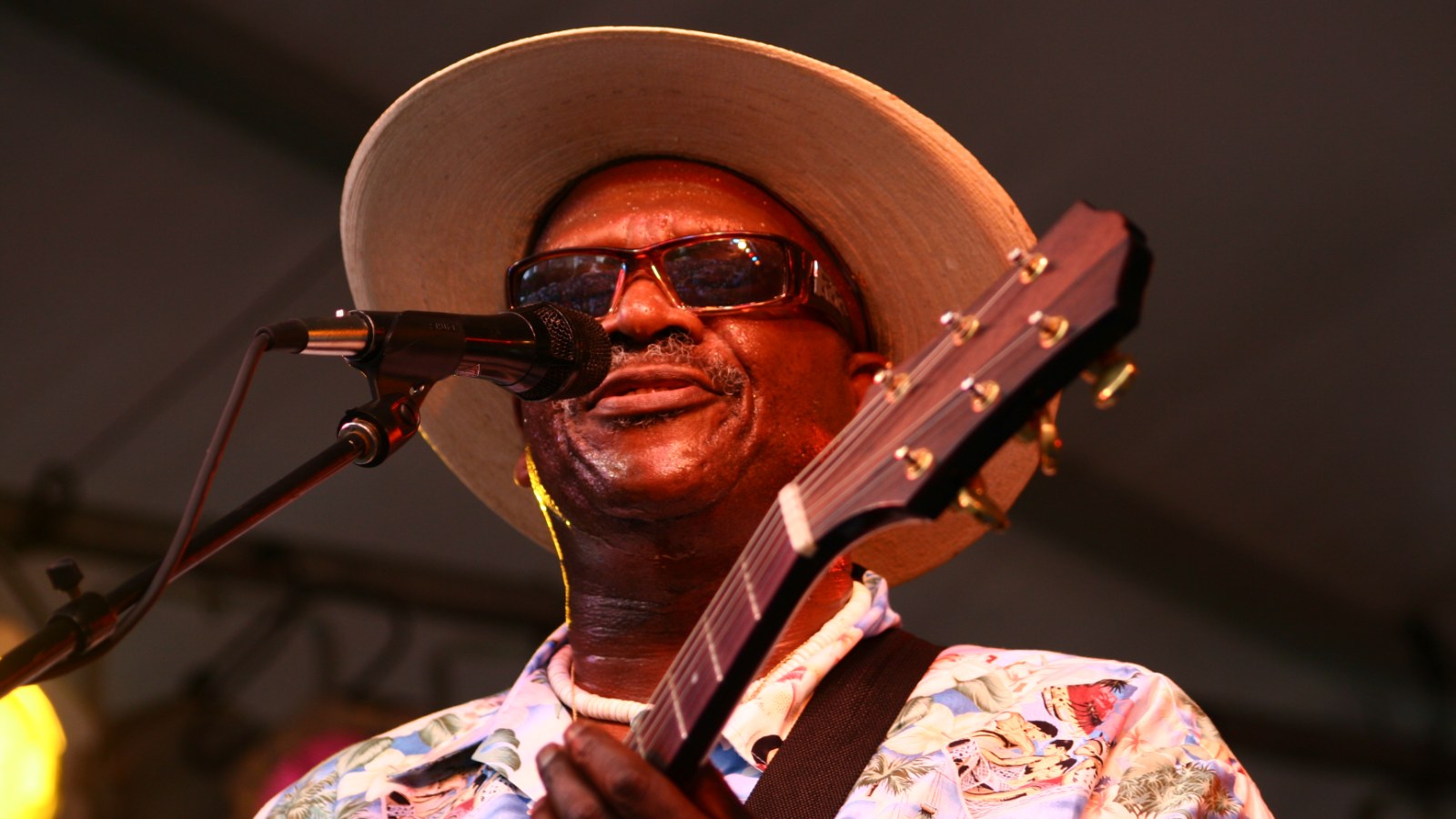
Taj Mahal at the Houston International Festival, 27 April 2008. Photo: Jason McELweenie, CC BY 2.0 (https://creativecommons.org/licenses/by/2.0), via Wikimedia Commons. Source: https://commons.wikimedia.org/wiki/File:Taj_Mahal_-_iFest_2008.jpg Cropped to 16:9 and resized.
Taj Mahal’s career runs from the Rising Sons, a 1960s Columbia band with Ry Cooder whose album was shelved, to a Grammy win in 2025. In interviews spanning more than twenty years he has discussed a steel-bodied National Duolian from his late-1960s albums, a brass Dobro, black McPherson acoustics and a Whyte Laydie-style banjo. In 2017 he described running his resonator through “a little ol’ three-dollar weird mic pickup,” a Boss volume pedal, a Boss chorus and a Fender Bassman, and a 2025 gear list credits him with two tricone resonators. This Taj Mahal guitars and gear guide sticks to what is documented and says where each detail comes from.
He was born Henry St. Claire Fredericks on May 17, 1942, in Harlem, New York, and grew up in Springfield, Massachusetts. His father was a jazz pianist and arranger of Caribbean descent, and his mother was a schoolteacher and gospel singer. When the Recording Academy gave him its Lifetime Achievement Award in 2025, it described a six-decade career in which he “helped popularize and reshape the scope of the blues.”
Background: From Springfield to the Rising Sons
His stepfather owned a guitar, but Taj credits a neighbor with getting him started. “The guy that actually got me started on the instrument was Lynwood Perry from Louisburg, North Carolina, outside of Durham,” he told Premier Guitar in 2017. “He knew how to play and I followed him all over the place.” In 2004 he told Vintage Guitar how much that neighbor mattered:
I learned almost everything I knew about guitar playing from him. I didn’t take any lessons; I didn’t sit down and learn the chords; he just was an incredible player. This is when I was 12 to 15, around there.
He has named many other influences. He told Premier Guitar that his style came from a player who knew Piedmont blues, “but also from people like Bo Diddley, Jimmy Reed, Elmore James.” To Vintage Guitar he named Albert King, Skip James, Charley Patton, Howlin’ Wolf, Brownie McGhee and Sonny Terry, Robert Pete Williams and Fred McDowell. He said that hearing Elizabeth Cotten and Etta Baker was one of the most significant things that happened to him in those years, and that he spent time with the Bahamian guitarist Joseph Spence at Spence’s home. In Guitar Player he remembered watching “guys like Oscar Moore [Nat King Cole Trio] and Charlie Christian” and liking Chuck Berry. He also credits finding Sam Charters’ 1959 compilation The Country Blues for his version of Blind Willie McTell’s “Statesboro Blues.” The 12-string came while he was working on a dairy farm: “A guy who came to test the cow’s milk played a Lead Belly record for me, and the sound of the 12-string stuck in my head.”
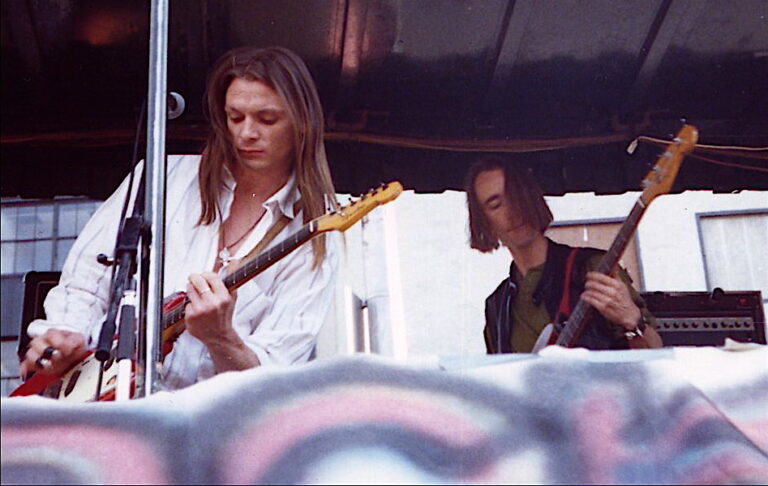
He studied at the University of Massachusetts Amherst in the early 1960s, majoring in animal science with minors in veterinary science and agronomy. He then moved to Los Angeles and formed the Rising Sons with Ry Cooder. The Recording Academy calls the Rising Sons “one of the first interracial bands” and notes that they opened for Otis Redding and the Temptations. They signed to Columbia, but Vintage Guitar reports that they “didn’t jell with Terry Melcher, who was assigned to produce them,” and the album was shelved. Columbia/Legacy released the recordings in 1992 as Rising Sons Featuring Taj Mahal and Ry Cooder. See our Ry Cooder guitars and gear guide.
The banjo was there early too. Vintage Guitar and Acoustic Guitar both tell the story of a mid-1960s Topanga banjo contest in which Taj and David Lindley reached the final. According to Acoustic Guitar, the tiebreak had each of them play “John Henry,” and Taj played it with a calypso feel. Vintage Guitar reports that the judges declared a tie.
The Rig: Taj Mahal’s Guitars, Amps, and Effects
This section draws on four interviews: Vintage Guitar (2004), Premier Guitar (2017), Guitar Player (2021) and Acoustic Guitar (2025). Where an instrument appears only in a gear list, we say so.
Guitars
Guitar Player’s 2021 feature opens with the sound of a Regal resonator coming from Taj’s front porch in Berkeley, and the follow-up piece describes his “trusty Regal resonator.” Acoustic Guitar’s 2025 “What They Play” list names a Regal as one of his two tricones.
Premier Guitar’s 2017 gear list for Taj names a Recording King tricone resonator. Acoustic Guitar’s 2025 list specifies a Recording King RM-991. How he amplifies it is described below.
Guitar Player identifies a National Duolian as the resonator on The Natch’l Blues and Giant Step/De Ole Folks at Home. On where it came from, Taj said: “I got mine from a guy who couldn’t play very well.” Vintage Guitar describes early-1930s Duolians as “National’s budget guitars,” with steel bodies and a single cone.
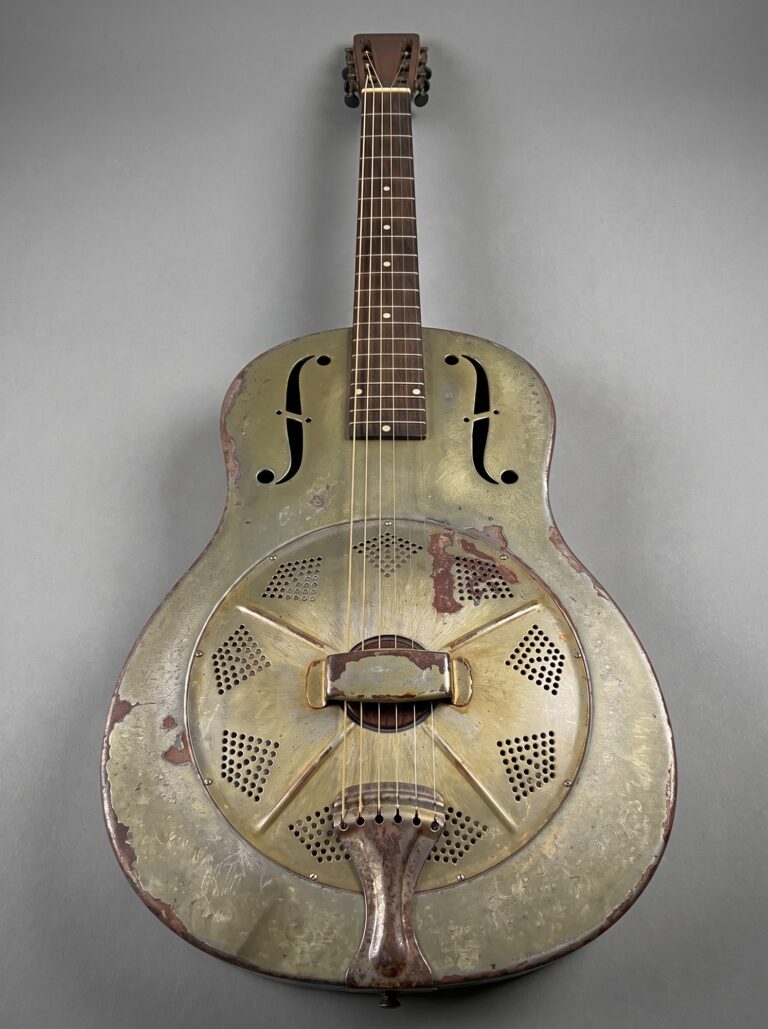
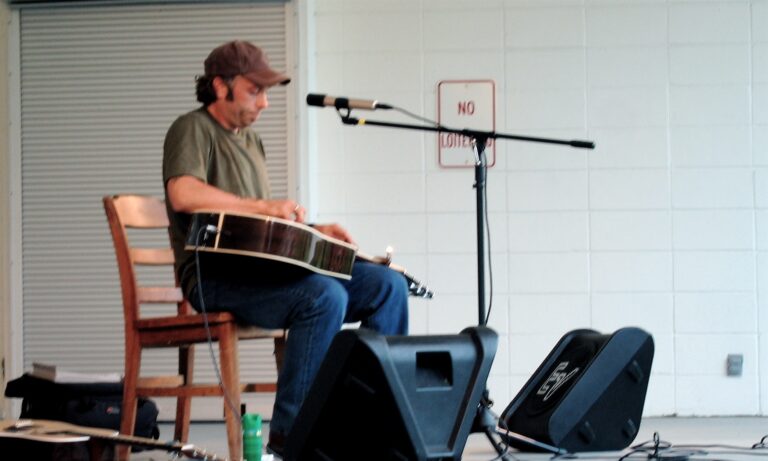
In 2004 Taj told Vintage Guitar about “a brass Dobro – the one with the crosses in the holes. It’s got a great sound. I’ve used that on quite a few recordings.” He also had a National in pieces, “waiting for the right kind of cone,” and said: “I don’t have a tri-cone.”
“I love them; they’re clean and record really well,” he told Vintage Guitar. He had two six-strings, one in 00-18 size and one close to a J-200 shape, plus a 12-string in the larger shape. All three were black, with piezos under the bridge and a Baggs system.
In 2004 this was the archtop he said he tended to play: “I tend to play my Epiphone Emperor, which has a cutaway and a Johnny Smith floating pickup.” He also listed a Kalamazoo four-string archtop, a Gibson Howard Roberts model, a Gretsch, a couple of Memphis Minnie-style National acoustics, an Ibanez 12/6 solidbody doubleneck, a Fernandes Telecaster-style guitar and an old Supro lap steel.
An acoustic-electric nylon-string on Acoustic Guitar’s 2025 list, with no further detail given.
Also on Acoustic Guitar’s 2025 list, described only as a custom hollow-body.
Banjo, Ukulele and Mandolin
Bart Reiter Whyte Laydie Banjo: “That was a Bart Reiter copy of a [vintage] 5-string Fairbanks Whyte Laydie banjo,” Taj told Premier Guitar, talking about the banjo on TajMo. Acoustic Guitar listed a Bart Reiter Whyte Laydie in 2025. His banjo, he told Vintage Guitar, was a Whyte Laydie: “I think Fairbanks originally made that model.”
Kala Eight-String Ukulele: Listed by Acoustic Guitar in 2025.
National Steel-Body Mandolins: He mentioned owning two in the 2004 Vintage Guitar interview.
Amps
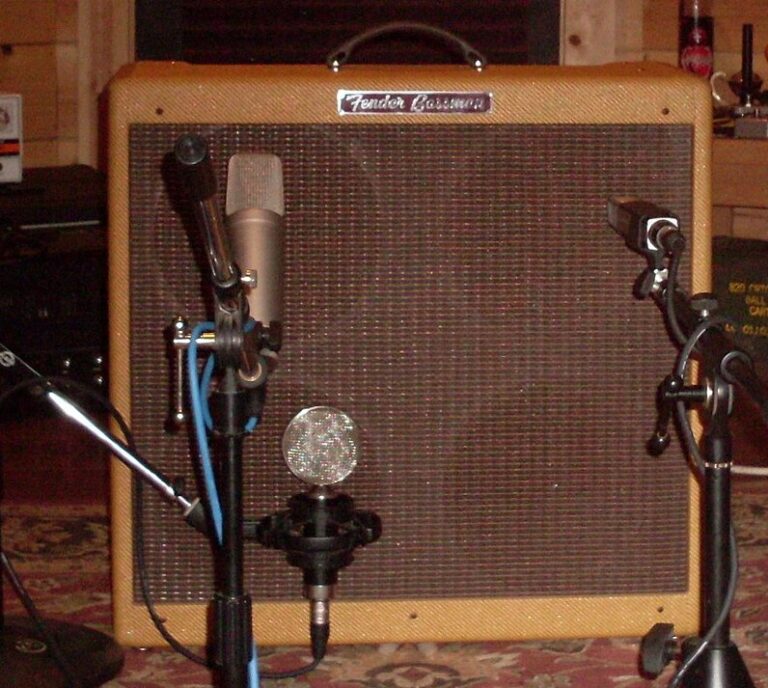
Premier Guitar’s 2017 gear list gives a Fender Bassman, and Acoustic Guitar’s 2025 list specifies a ’59 Bassman reissue. We found no documented amp for his early electric records, so none is listed.
Effects
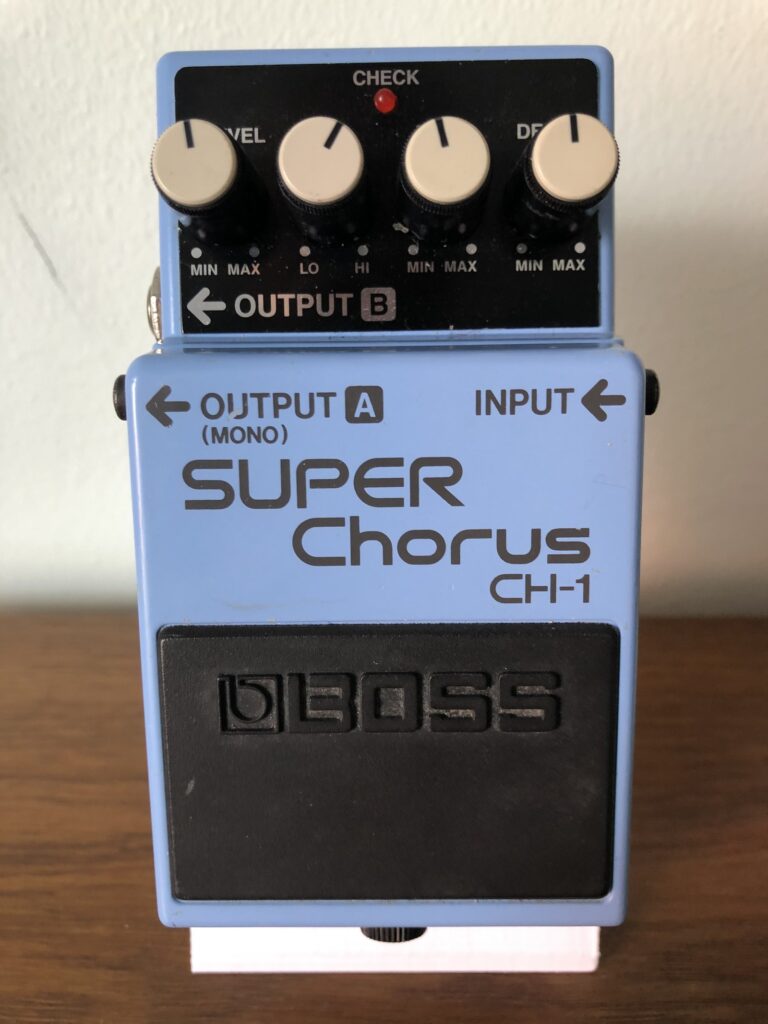
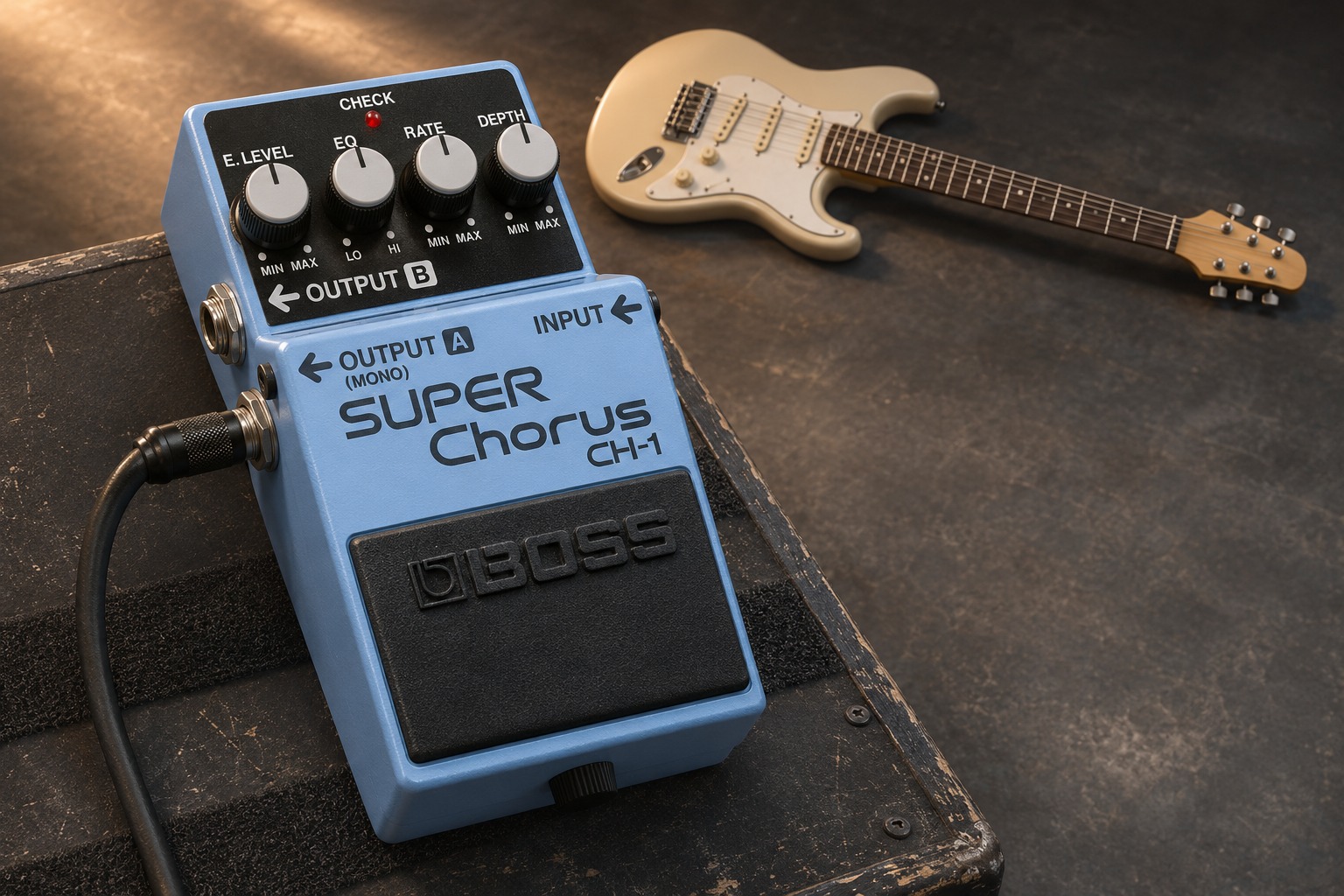
A Boss chorus appears in the 2004, 2017 and 2025 interviews. He told Vintage Guitar in 2004: “I’ll use it a little bit, but nothing too crazy – a Boss Super-Chorus.” Acoustic Guitar names the CH-1 in 2025. Our Boss CH-1 Super Chorus guide covers the pedal itself.
First pedal in his resonator chain, according to Premier Guitar (2017). Acoustic Guitar’s 2025 list also includes a Boss volume pedal.
Strings and Slides
Premier Guitar lists GHS or D’Addario strings, gauged .013–.056. Acoustic Guitar’s 2025 list gives medium-gauge D’Addario phosphor bronze. On slides, Taj told Vintage Guitar: “Different times I use glass or brass or even copper pipe. It depends on what sounds best on the instrument.”
The Resonator Chain, as Taj Describes It
When Premier Guitar asked in 2017 how he amplifies his resonator, Taj described his whole setup: “Mine is just a little ol’ three-dollar weird mic pickup installed by the guys at Subway Guitars in Berkeley, California. I just put little cheap mics in there and plug them into a Boss volume pedal, a Boss stereo chorus, and then plug that into Fender Bassman amps.” Acoustic Guitar’s 2025 list has the same three parts. For more on how resonators work, see our guide to the National Reso-Phonic Style O.
Playing Style and Technique
“Fingerpicking in general goes back to the West African kora,” Taj told Guitar Player. Talking about Sister Rosetta Tharpe, he said “she’s obviously in open D tuning, what they used to call ‘Delta tuning'” (see our Sister Rosetta Tharpe guide). On “Corrina,” he said, “the tuning is drop D, but I’m playing in A.” Plucking a resonator and “cutting off sustain with palm muting,” he said, “produces a somewhat similar sound” to the kora.
“Acoustic music is my roots, my chapel,” he told Guitar Player. He added that he had watched many players give up that space and fail to get back, “because all they’re doing is playing electric licks on an acoustic guitar.” According to the magazine, he can play “nearly 20” acoustic instruments.
On Jesse Ed Davis’s slide playing, he said: “Jesse was the first guy I ever came across that played slide in standard tuning, which is what Muddy did” (see our Muddy Waters guitars and gear guide). Guitar Player asked whether he really locked himself in a trailer with a bottle of booze to learn the banjo. He answered: “Oh, yeah, I really did, with two fifths of Jack Daniels. I came out playin’!”
Records, Collaborators and Recognition
Taj’s self-titled debut came out in 1968. The Natch’l Blues followed, then the 1969 double album Giant Step/De Ole Folks at Home, with one electric disc and one solo acoustic disc. Vintage Guitar notes that Cooder, Davis and Taj all played guitar on the debut. Its interviewer also pointed out that the slide lead on “Statesboro Blues,” a Blind Willie McTell song, had been wrongly credited to Cooder. Taj confirmed it: “Yes, Jesse played slide. He’s the one that led Duane Allman into playing.” See our guides to Blind Willie McTell and Duane Allman. Davis also backed Taj on “Ain’t That a Lot of Love” in The Rolling Stones Rock and Roll Circus, filmed in 1968.
His score for the film Sounder earned a Grammy nomination at the 16th Grammy Awards. Mumtaz Mahal paired him with Indian slide guitarist Vishwa Mohan Bhatt. He played guitar on two tracks of Ali Farka Touré’s The Source (World Circuit, 1992), covered in our Ali Farka Touré guitars and gear guide. He also made Kulanjan (1999) with kora player Toumani Diabaté and Mkutano Meets the Culture Musical Club of Zanzibar (2005), and released Hanapepe Dream with his Hula Blues band in 2003.
Grammy.com lists five wins:
- Señor Blues: Best Contemporary Blues Album at the 40th Grammys (1998).
- Shoutin’ in Key, with the Phantom Blues Band: the same category at the 43rd (2001).
- TajMo, with Keb’ Mo’: the same category at the 60th (2018). See our Keb’ Mo’ guitars and gear guide.
- Get On Board, a 2022 album of Sonny Terry and Brownie McGhee songs with Ry Cooder: Best Traditional Blues Album at the 65th (2023). Acoustic Guitar describes Taj as sitting in “the Sonny seat,” and Nonesuch credits him with vocals, harmonica, guitar and piano.
- Swingin’ Live at the Church in Tulsa, credited to the Taj Mahal Sextet: Best Traditional Blues Album at the 67th (2025).
Room on the Porch, his second album with Keb’ Mo’, was nominated at the 68th. The Recording Academy also notes his induction into the Blues Hall of Fame and his Americana Music Association Lifetime Achievement Award. In May 2026 he released Time with the Phantom Blues Band, on Resonatin’ Records with Thirty Tigers. Its title track is a previously unreleased Bill Withers song.
Related guides: Elizabeth Cotten, Joseph Spence, Skip James, Mississippi Fred McDowell, Charlie Christian, Bo Diddley and Mississippi John Hurt.
Frequently Asked Questions: Taj Mahal Guitars and Gear
What resonator guitar does Taj Mahal play?
Acoustic Guitar’s 2025 list gives two tricones, a Regal and a Recording King RM-991. The Recording King is also in Premier Guitar’s 2017 gear list. According to Guitar Player, he played a National Duolian on his late-1960s albums.
What banjo does Taj Mahal play?
A Bart Reiter copy of a vintage five-string Fairbanks Whyte Laydie. He used it on TajMo, and Acoustic Guitar listed it again in 2025.
What amp and pedals does Taj Mahal use?
A Fender Bassman (a ’59 Bassman reissue, per Acoustic Guitar in 2025), with a Boss volume pedal and a Boss CH-1 Super Chorus. In 2017 he said his resonator had a cheap mic-type pickup fitted by Subway Guitars in Berkeley.
Who taught Taj Mahal to play guitar?
He credits Lynwood Perry, a neighbor from Louisburg, North Carolina, which he describes as outside Durham. Taj says Perry taught him “almost everything” between the ages of about 12 and 15, without formal lessons.
Did Ry Cooder play slide on Taj Mahal’s “Statesboro Blues”?
No. In a 2004 Vintage Guitar interview, Taj confirmed that Jesse Ed Davis played the slide lead. The interviewer noted that it had been credited to Cooder by mistake.
Image credits
- Boss CH-1 Super Chorus: GuitarGangsters AI-generated reference illustration, not a photograph.
- Top image: Jason McELweenie, Wikimedia Commons, CC BY 2.0.
- Boss CH-1 Super Chorus: Johan Rosén, CC BY-SA 4.0.
- Fender Bassman: Roadside Guitars, Wikimedia Commons, CC BY-SA 2.0.
- National Duolian: GuitarGangsters AI-generated reference illustration, not a photograph.