Mississippi John Hurt Guitars & Gear: The Complete Guide to Avalon’s Gentle Guitar Master
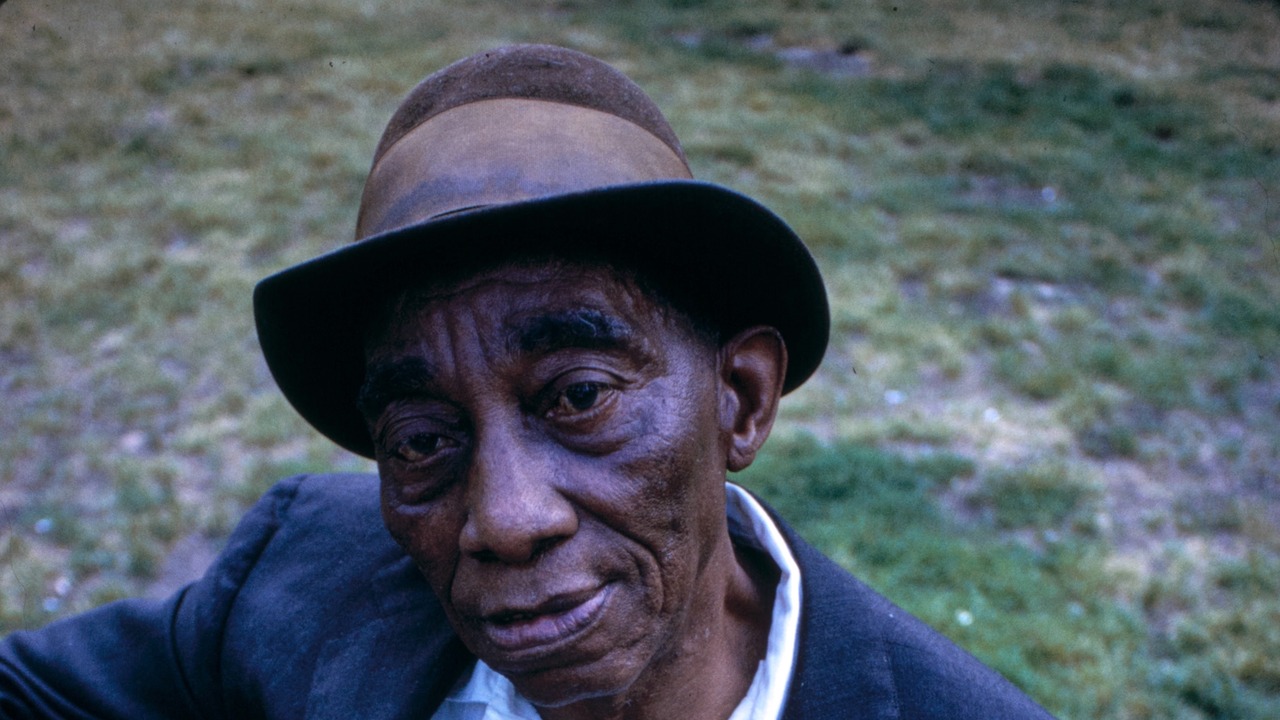
Mississippi John Hurt, New York City, 1965. Library of Congress, Prints & Photographs Division, photograph by Bernard Gotfryd, LC-DIG-gtfy-01612. No known copyright restrictions: https://hdl.loc.gov/loc.pnp/res.592.gotf. Source: https://commons.wikimedia.org/?curid=166110077. Cropped to an intentional head-and-shoulders portrait; resized to 1280×720 and JPEG re-encoded. No AI or retouching.
When Tom Hoskins found him in 1963, Mississippi John Hurt didn’t own a guitar.
Hoskins was a blues record collector and researcher who had spent months tracking down the man behind the 1928 recordings that bore the label “Avalon Blues” — specific enough that it narrowed the search to the tiny Mississippi town of Avalon. He knocked on the door. Hurt answered. When Hoskins produced the guitar to see if this was really the man he’d been searching for, Hurt’s first reaction was to assume he was from the police: “I haven’t done anything wrong.”
He had not recorded anything in thirty-five years. He had gone back to sharecropping and farmwork after the 1928 sessions produced no further commercial opportunities. He played occasionally for friends and local dances, but not professionally, not for the outside world. He was 71 years old.
Hoskins took him north. He recorded two albums on the Piedmont label, borrowing Hoskins’ Gibson — probably a J-45 or J-50 — for the sessions. Then came Newport 1963, where his unannounced appearance caused a sensation among the folk revival audience that had rediscovered the pre-war blues recordings. The Newport Folk Festival wanted to buy him any guitar he wanted, at any price. They took him to Marc Silber’s Fretted Instrument Shop in Greenwich Village and showed him a Martin 00-42 with pearl inlays.
He chose a cheaper Martin 00-18 instead. “I don’t need all those decorations.”
This is the complete character of Mississippi John Hurt in a single instrument choice: gentle, unpretentious, focused entirely on what matters rather than what impresses. He played the 00-18 until the end of his career. It suits the music perfectly.
Background: Avalon, Mississippi, Isolation, and the Most Self-Contained Musical Personality in Blues
John Smith Hurt was born March 8, 1893, in Teoc, Carroll County, Mississippi — though he spent virtually his entire life in and around the tiny community of Avalon, Carroll County. His mother gave him his first guitar when he was nine years old. He was self-taught. He rarely left Avalon. He learned music from field hands and local musicians rather than from any formal tradition or identifiable lineage of teachers. He played primarily for his own enjoyment, for friends, for local dances and parties.
In his own words: “I taught myself to play the guitar the way I thought the guitar should sound.”
This isolation-derived self-sufficiency is the most important biographical fact for understanding his music. Unlike Lightnin’ Hopkins (who spent years playing professionally in the Houston club scene), T-Bone Walker (who developed in the Los Angeles jazz world), and Otis Rush (who honed his approach in Chicago’s competitive West Side clubs), Hurt developed his specific approach in near-complete isolation from the commercial blues world. The style he built — the alternating-thumb bass with melodic treble fingerpicking, the gentle, conversational vocal delivery, the repertoire mixing blues, ragtime, hymns, and folk songs — reflects a specific individual personality rather than a genre tradition. He invented himself.
His 1928 recording sessions came through a connection with fiddle player Willie Narmour — when Narmour’s Okeh Records contact asked for a recommendation for a guitar accompanist, Narmour suggested Hurt. He recorded twelve sides for Okeh in 1928, including “Avalon Blues,” “Frankie,” “Blessed Be the Name,” and “Candy Man Blues.” Okeh Records then found themselves in financial difficulty and did not pursue further recordings. Hurt went home to Avalon and continued as a farmworker.
The 1963 rediscovery — through the “Avalon Blues” title’s geographical specificity — brought him to the Newport Folk Festival and the New York folk music scene. He was 71. He had thirty-five years of musical development behind him that had happened in complete isolation, playing for local friends who were too close to his life to be amazed. When the folk revival audiences heard him, they were amazed. He was merely playing the same music he’d always played, on whatever guitar was available, the same way he’d always played it.
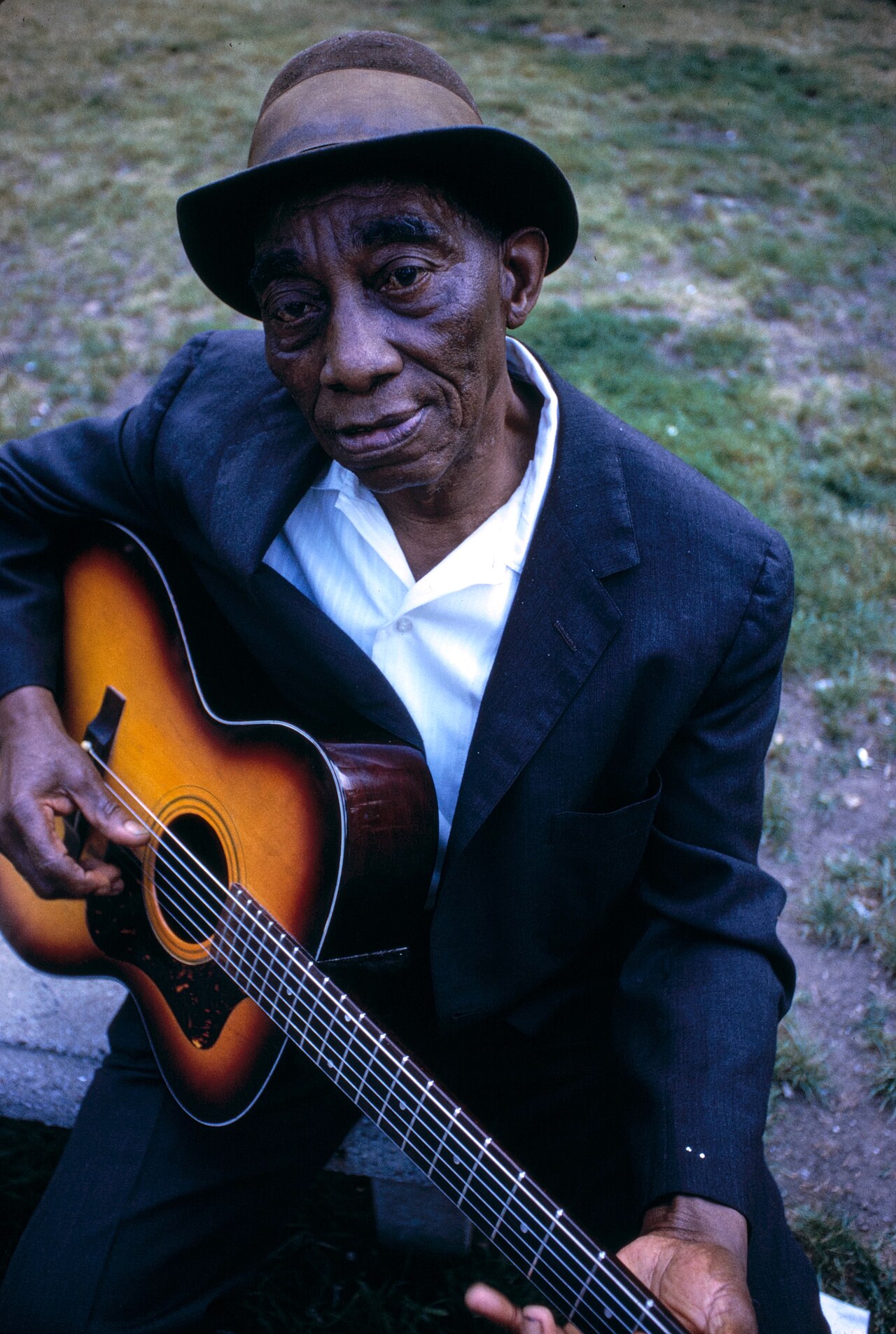
He performed at Newport repeatedly, recorded multiple albums for Vanguard Records and others, appeared on television, became one of the most beloved figures of the folk revival, and was a regular presence at the Gaslight Café in Greenwich Village. John Sebastian, who would go on to found The Lovin’ Spoonful, spent time learning from Hurt at the Gaslight. Happy Traum, David Bromberg, and many others absorbed his technique directly.
He died November 2, 1966, at age 73 — three years after his rediscovery. “I sure wish I’d been rediscovered sooner,” he said. The sentiment is impossible to argue with.
Tone note: He taught himself “the way I thought the guitar should sound.” Not the way the blues tradition said it should sound, or the way his teachers said it should sound, or the way the recording industry expected it to sound — the way he thought. This self-derived certainty about what the guitar should do produced a completely individual approach that influenced everyone who subsequently heard it.
The Rig: Mississippi John Hurt’s Guitars, Amps & Gear
Mississippi John Hurt’s gear story is the simplest in this series and the most revealing. He had almost nothing. What he had, he used completely. The instrument that produced some of the most beloved guitar recordings in American music history was, for most of his life, whatever he could get his hands on — including, for the most important recording sessions of his rediscovery, a borrowed guitar.
Guitars: From “Black Betty” to the Modest Martin
“Black Betty” — The 1928 Session Guitar (Not His Own)
For his landmark 1928 Okeh Records sessions — the recordings that produced “Avalon Blues” and everything that Tom Hoskins would eventually track down — Hurt’s personal guitar was considered insufficiently high-quality for recording. The guitar he called “Black Betty” was, by the studio’s assessment, not recordable. The Okeh Records people provided a studio guitar instead.
This is one of the most poignant gear facts in this series: the recordings that made him famous enough to be tracked down thirty-five years later were not made on his own instrument. “Black Betty” — the guitar whose name suggests a genuine personal relationship with the instrument — was left at home because it wasn’t good enough to record.
The specific make and model of Black Betty is unknown. She was simply a guitar available to him in rural Mississippi in the 1920s, which meant something modest, inexpensive, and suited to the physical conditions of agricultural life rather than the technical demands of recording.
The studio guitar provided for the 1928 sessions is similarly unspecified in available documentation. Whatever it was — likely a higher-quality flat-top acoustic appropriate for the Okeh recording setup — it captured the playing style that had been developed on Black Betty in the cotton fields and local dances of Carroll County.
Tone note: The most famous recordings he made were not on his own guitar. His guitar wasn’t good enough to record. The technique that would influence Mark Knopfler and John Sebastian and generations of fingerpicking guitarists was developed on an unnamed instrument in rural Mississippi that the recording studio didn’t want near their microphones. Technique is not equipment.
Hoskins’ Gibson (J-45 or J-50) — The First Rediscovery Sessions (1963)
When Tom Hoskins came to Avalon in 1963 and brought Hurt north to record, Hurt had no guitar of his own. For the Piedmont label sessions that produced the rediscovery albums Avalon Blues and Worried Blues, he borrowed Hoskins’ Gibson — most likely a J-45 or J-50 flat-top dreadnought.
The J-45 (or J-50, essentially the same guitar with minor cosmetic differences) is Gibson’s most widely produced acoustic guitar — a mahogany-bodied dreadnought with a slope-shouldered body that Gibson used from the 1940s onward. The specific warmth of the mahogany body suited Hurt’s playing approach: not as bright as a spruce-topped, rosewood-bodied Martin, but warm and present in the midrange, forgiving of the natural acoustic dynamics of fingerpicking technique.
The rediscovery recordings on this borrowed guitar demonstrate that Hurt’s technique had not only survived the thirty-five years of obscurity but had matured: the playing on the 1963 sessions is more developed, more assured, and in certain ways more refined than the 1928 originals.
Martin 00-18 — The Guitar He Chose
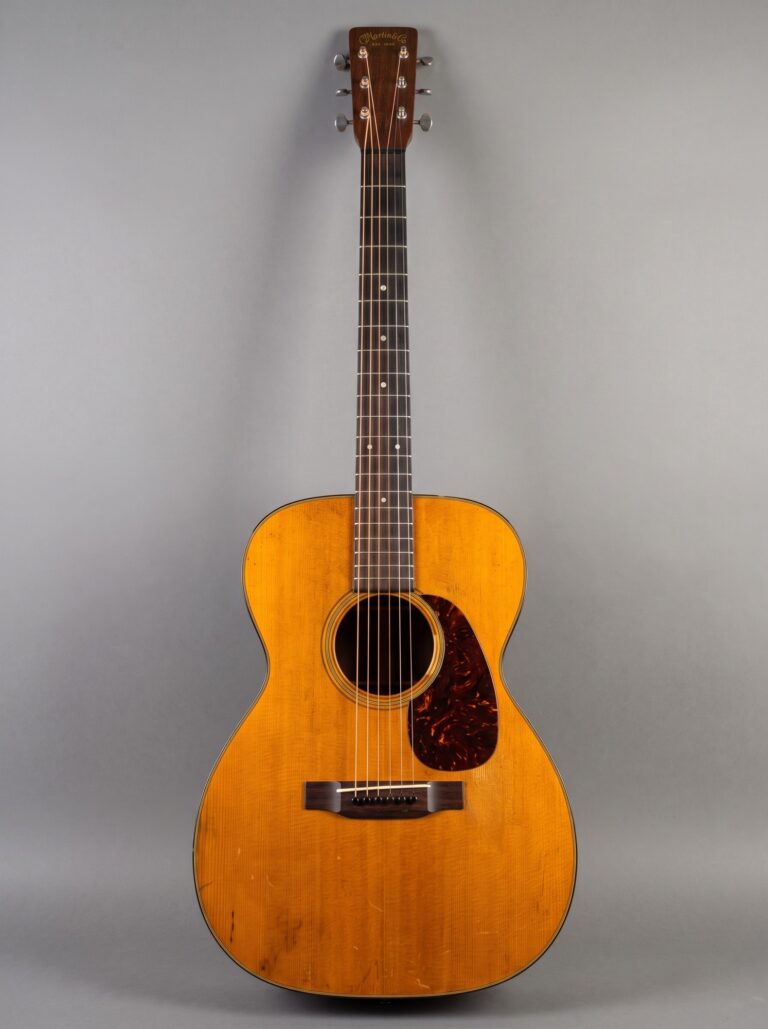
After Newport 1963, the Newport Folk Festival offered to buy Hurt any guitar he wanted, at any price. They took him to Marc Silber’s Fretted Instrument Shop in Greenwich Village and showed him a Martin 00-18, a Martin 00-42 (with elaborate pearl inlays and the highest-level appointments), and possibly other options.
He chose the 00-18.
The 00-18 is Martin’s least expensive parlor-style small-body guitar — the simplest, most straightforward acoustic flat-top from the smallest body size in the Martin range. No pearl inlays. No elaborate appointments. Mahogany body, spruce top, simple binding, nickel hardware. His reason for choosing it over the significantly more expensive 00-42: “I don’t need all those decorations.”
The 00-18’s specifications suited his playing in specific ways beyond the aesthetic preference for simplicity. The small 00 body produces a more focused, midrange-forward sound than the larger 000 or dreadnought Martin bodies — less bass-heavy, more even across the frequency range. For fingerpicking, where each note needs to be clearly defined, the 00’s tighter response and smaller resonating chamber produce more note separation than the booming resonance of a large-body guitar. The mahogany body adds warmth and sustain without the bright high-frequency character that rosewood produces.
Acoustic Guitar magazine confirmed his use of a Martin for his later recordings and performances, and the 00-18 is the most consistently documented final guitar in his career. He played it until the end.
A Regal Dobro resonator guitar is also listed in his gear documentation (Dai Thomas’s “Blues Singers & Their Instruments” compilation) — confirming occasional resonator use alongside his primary acoustic flat-top work.
Complete Guitar List
- “Black Betty” (make unknown) — Personal guitar through 1928; considered not recordable by Okeh Records studio; played on every local performance before the commercial recordings
- Okeh Records studio guitar (unknown) — Used for the 1928 Okeh sessions; the instrument on “Avalon Blues” and all 1928 recordings
- Tom Hoskins’ Gibson J-45 (or J-50) — Borrowed for 1963 Piedmont Records rediscovery sessions; Hurt had no guitar of his own when found
- Martin 00-18 — Chosen by Hurt (over a more expensive 00-42) at Marc Silber’s Fretted Instrument Shop in Greenwich Village after Newport 1963; primary instrument for remaining career; “I don’t need all those decorations”
- Regal Dobro resonator — Listed in equipment documentation; occasional use alongside primary acoustic
Amps: None
Mississippi John Hurt was an entirely acoustic performer throughout his career. No amplifiers. No electric guitars. No amplification of any kind. His recorded legacy — the 1928 Okeh sessions and the 1963 rediscovery recordings — was made with a microphone placed in front of an acoustic guitar.
This is the simplest amp section in this entire series. The “amplification” in Mississippi John Hurt’s world was the acoustic resonance of the guitar’s body, the size of the room, and the proximity of the microphone. Everything else was the player.
Tone note: No amps. Just a small-bodied Martin acoustic guitar in a recording room with a microphone. That’s the complete signal chain on recordings that influenced Mark Knopfler, Nick Drake, John Sebastian, and the entire tradition of folk-blues fingerpicking guitar. The sound lives entirely in the wood, the strings, and the hands.
Pedals: Also None
For an article that has covered Wes Borland’s DOD Buzz Box and Kerry King’s three simultaneous Marshall heads, writing “no pedals” for the third consecutive entry feels significant. Mississippi John Hurt’s signal chain: guitar, fingers, room. End of chain.
Strings, Picks & Setup
Strings: Not documented in specific commercial terms for his era. Light gauge acoustic strings consistent with fingerpicking on a small-bodied acoustic (approximately .011–.052 or lighter) would suit both his technique and the 00-18’s scale length and construction. No picks — all playing was with bare fingers.
No Picks: Hurt played with no thumb or fingerpicks. His right-hand technique used bare thumb and fingers exclusively. Acoustic Guitar magazine documented the specific right-hand technique in detail: “He picked with his thumb, index, and middle fingers, bracing his ring and little finger lightly on the face in front of the treble foot of the bridge. He wore no thumb or fingerpicks, producing a clear, bell-like tone with a combination of nail and what must have been some very well developed callouses.”
The “nail and callous” combination is revealing. The hard surface of a fingernail produces a brighter, more defined attack than the flesh of the fingertip; the callous provides durability for the sustained playing that his performances required. Hurt’s right-hand technique produced a sound that sits between the warmth of pure flesh-of-finger playing and the brightness of a fingerpick — the specific “clear, bell-like tone” that is immediately recognisable as his.
Right-hand anchor: The ring and little fingers rested lightly on the guitar face, providing a physical reference point for the thumb and other fingers. This anchoring technique is the same principle documented in Hopkins’ technique and in many other fingerpickers — maintaining a stable hand position relative to the strings allows the independent thumb and finger movements to be more precise and consistent.
The hyperextended thumb: Acoustic Guitar documented a specific physical characteristic of his picking technique: “Playing downstrokes with a hyperextended thumb.” The hyperextension — bending the thumb backward past its natural resting position — increases the arc of the thumb stroke, producing a louder, more emphatic attack on the bass strings. This physical characteristic contributed to the driving, confident quality of his alternating-bass patterns.
Left-hand technique: Hurt frequently used his fretting-hand thumb to fret the low E string, a classical-derived technique that allows additional chords and voicings unavailable when the thumb is kept behind the neck. This thumb fretting allowed him to maintain bass patterns while simultaneously adding melodic notes higher on the neck — part of the technical sophistication that makes his playing more complex than it initially appears.
Guitar setup: The small-bodied Martin 00-18 required minimal specific setup for his playing approach. The 00 body’s scale length and action suited fingerpicking without the high-tension setup that slide players or heavy strummers require. He played in both standard tuning and alternate tunings; the 00-18’s lightweight design made tuning changes manageable mid-performance.
Tone note: The hyperextended thumb, the nail-and-callous finger attack, the braced ring-and-little-finger anchor, the thumb-fretting left hand. Collectively, these physical characteristics of Hurt’s playing technique produce a sound that is immediately recognisable as his and that no amount of equipment can replicate. The technique is the instrument.
Tunings & Tone Philosophy
Hurt used both standard E tuning and alternate tunings. The Martin Guitar Forum research established: “most of MJH’s songs were done in standard tuning, at least in terms of the relationships between strings.” However, he also used open G, open D, and DADDAD tunings for specific songs.

The alternating-bass technique works in all these tunings — the independence between thumb (providing bass rhythm) and fingers (providing melody) is the constant; the specific tuning affects which notes are available but not the fundamental structure of the approach.
His tone philosophy, stated with characteristic simplicity: “I taught myself to play the guitar the way I thought the guitar should sound.” This self-determined aesthetic — not derived from external tradition but from his own sense of what was right — is reflected in the guitar choice (the cheaper Martin over the fancier one), the technique (bare fingers rather than picks), the repertoire (mixing blues, ragtime, gospel, and folk without genre anxiety), and the performance approach (gentle, conversational, never aggressive or demonstrative).
He described himself as someone who played primarily for pleasure rather than for commercial purpose: “I played for my own enjoyment.” The three-year final chapter of his career — the Newport performances, the Vanguard recordings, the Gaslight residencies — was the commercial world catching up with something that had existed in private contentment for decades.
Tone note: “I don’t need all those decorations.” That choice — the 00-18 over the 00-42 — is the complete aesthetic philosophy. What matters is the sound and the feel. The decorations are for other people. The music is for playing.
Playing Style & Tone Philosophy: The Invention of Peaceful Guitar
Mississippi John Hurt’s playing style is the most technically underestimated in this series. He is frequently described as “simple” or “accessible” — and the music is accessible, in the sense that listeners of every background find it immediately warm and welcoming. But the technique that produces this apparently simple music is sophisticated, and the right-hand coordination required to maintain the alternating-bass pattern while simultaneously improvising melodic responses is genuinely demanding.
The Alternating-Thumb Technique
Hurt’s most defining technical characteristic is the alternating-thumb bass: the right-hand thumb alternates between two bass strings in a steady, rhythmic pattern — typically on beats one and three of the bar, or in eighth-note patterns — while the index and middle fingers provide melodic notes on the treble strings between those bass beats.
This technique, derived from the broader Piedmont blues tradition and ragtime piano playing that influenced it, creates a self-accompanied musical texture: the thumb provides the bass-and-rhythm foundation while the fingers provide the melody, effectively one person playing two parts simultaneously. The result sounds like a guitar and a bass player performing together, though it’s one instrument and one pair of hands.
Acoustic Guitar documented the technical specifics: “He often thumbed double-stops or chords on the low strings to emphasize the backbeats and to add harmonic colour, and his control of individual string dynamics and chord overtones was remarkable.”
The “double-stops or chords on the low strings” is the refinement beyond simple alternating bass: rather than playing single bass notes, Hurt sometimes played two strings simultaneously with the thumb, creating a fuller, more harmonically complex bass response. This requires exceptional thumb independence and strength — the ability to consistently hit two adjacent strings with one digit at performance tempo.
Tone note: The alternating bass looks like the simplest thing in the world when you watch a recording of him. The thumb just goes back and forth. It takes about thirty seconds of trying it before you understand that the thumb independence required — keeping the bass pattern absolutely steady while the fingers do something completely different — is months of dedicated practice to develop. The simplest-looking music is often the hardest to actually play.
The Melody Over the Bass
While the thumb maintains the bass pattern, Hurt’s index and middle fingers navigate the melody on the treble strings with a logic that is simultaneously improvisatory and completely structured. He plays “within position” — maintaining a chord shape with the fretting hand while the playing hand navigates the available notes — but with an improvisatory responsiveness that means the same song never sounds quite the same twice.
Acoustic Guitar described this: “Typically, Hurt played within position, maintaining a chord shape with his second and third fingers on the low strings while adding melody and blue-note fills on top with deft manipulation of his first and fourth fingers, the latter of which could jump from string to string fast enough to fret eighth-note passages.”
The fourth finger (little finger) as a melody-playing digit is uncommon — most guitarists use the fourth finger rarely, finding it the weakest and least dexterous. Hurt’s use of it for fast melodic passages demonstrates the specific physical development that comes from decades of practice: the little finger, properly trained, is capable of the speed and accuracy that his playing demonstrates.
The Ragtime Connection
Hurt’s music is as much ragtime as it is blues — the rhythmic character, the use of alternating bass patterns derived from stride piano, and the repertoire (which includes pieces like “Candy Man Blues” that have as much ragtime character as Delta blues) all reflect a broader musical education than the pure blues tradition suggests. The Piedmont style he represents was explicitly ragtime-influenced: the Martin Guitar Forum documentation confirmed that Piedmont blues is characterised by “a unique fingerpicking method on the guitar in which a regular, alternating-thumb bass string pattern supports a syncopated melody using the treble strings. The result is comparable in sound to piano ragtime or later stride.”
This ragtime-piano comparison is the key to understanding both the technique and the musical character. He was not translating blues guitar — he was translating piano. The thumb is the left hand of the pianist, maintaining the bass. The fingers are the right hand, playing the melody. The guitar is the piano, all in one instrument and two hands.
The Peaceful Quality
What distinguishes Mississippi John Hurt’s playing from every other guitarist in this series is its quality of contentment. His music sounds happy — not simplistically, but in the way that someone who has genuinely found a way to express themselves that satisfies them sounds happy. There is no aggression, no striving, no performance anxiety audible in any of his recordings. He plays as if he is playing for himself, which was literally the case for most of his life.
John Sebastian described him gathering around at the Gaslight: “an unassuming legend.” The unassuming quality was genuine, not performed modesty. He had played in isolation for decades without any external validation. When the validation arrived in the form of Newport audiences and Vanguard recording contracts, he received it graciously but seemed no more or less engaged with the music than he had been when playing for himself in Avalon. The music was the thing. The audience was pleasant. The guitar was whatever was available.
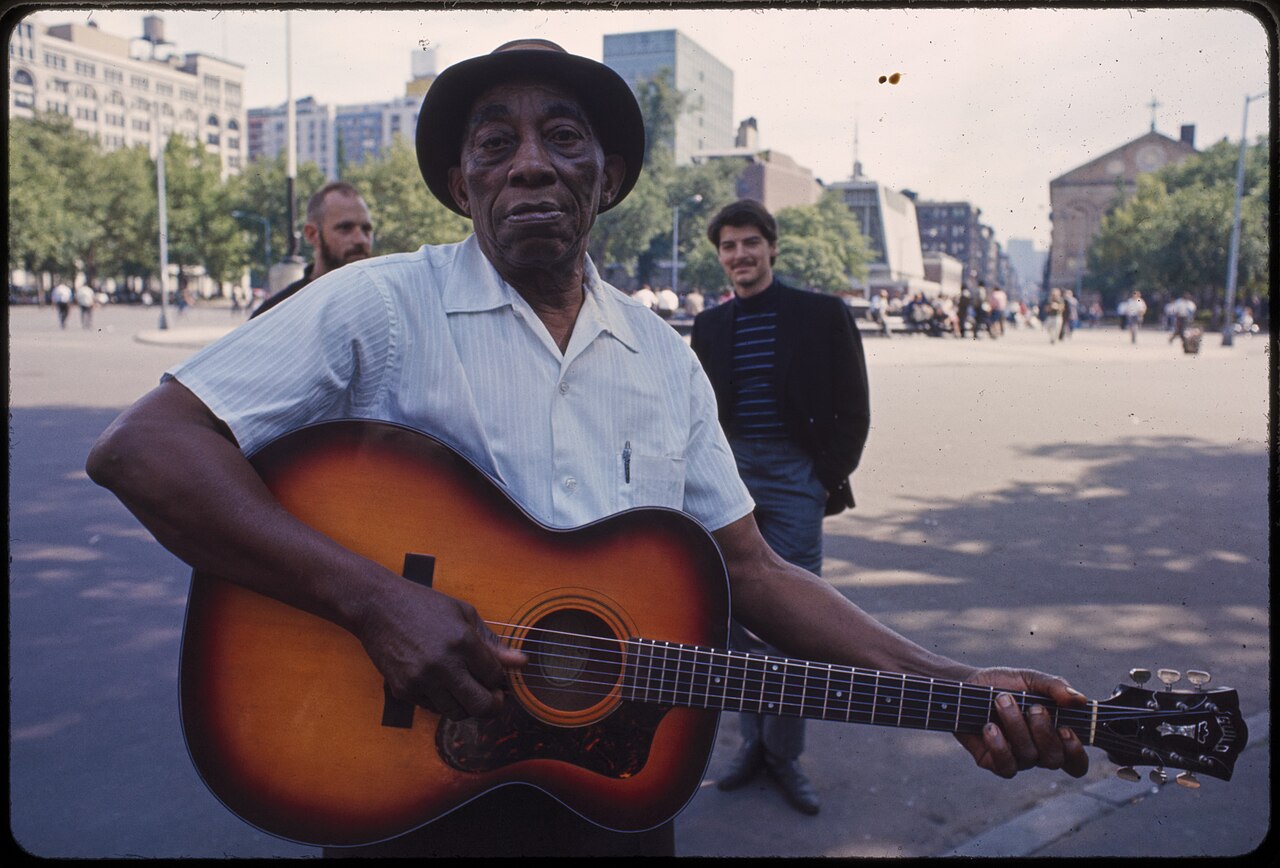
Tone note: “I played for my own enjoyment.” The music sounds like that. It sounds like someone playing because they love playing, not because they are proving anything. After sixty years of playing primarily for himself, the music has the specific quality of unperformed pleasure. You can hear it in every recording. It is not teachable. It is the result of being exactly who you are, without apology or audience.
How to Sound Like Mississippi John Hurt: Building the Piedmont Blues Fingerpicking Tone
Hurt’s tone is more accessible than most in this series — his guitar is a standard acoustic, his technique is unplugged, and no amplification or effects are required. What is challenging is the technique itself: the right-hand thumb independence is genuinely difficult to develop.
The Guitar
Small-bodied acoustic flat-top, mahogany body, light or medium gauge strings. The Martin 00 or 000 size produces the correct balance of midrange warmth and note definition for fingerpicking.
- Martin 00-18 — The authentic choice; his own guitar; mahogany body and neck, spruce top, simple appointments
- Martin 000-18 — Slightly larger body; same construction philosophy; more projection while maintaining tonal character
- Gibson J-45 or J-50 — What he borrowed for the rediscovery sessions; warm dreadnought with mahogany body
- Any small-bodied acoustic flat-top with mahogany back and sides — The mahogany body’s warmth suits the technique; rosewood produces a brighter character that emphasises the treble over the bass, which can upset the balance of the alternating-bass approach
- Parlor guitars (any quality maker) — The parlor-size body is historically appropriate for the tradition he represents; Guild M-120, Recording King RP-06, or similar
No Amp, No Effects
Completely acoustic. This is the entire signal chain: guitar to air. No pickup. No amplification. No microphone in performance (though obviously recorded with a microphone in the studio). The acoustic projection of the instrument and the natural decay of the room are the only “effects.”
For modern performance contexts where acoustic projection isn’t sufficient: an undersaddle pickup (K&K Pure Mini or Fishman Matrix Infinity) through the cleanest, most transparent DI and amplification available. The goal is to reproduce the acoustic character of the instrument, not add colour or compression. The less the amplification chain does to the signal, the closer to the authentic Hurt sound the amplified version will be.
The Strings
Light gauge phosphor bronze strings (.011–.052 or lighter) for acoustic. The light gauge produces less tension on the fingers, which is important for the specific right-hand technique — heavy strings require more force to produce clean, consistent tones with bare fingers. The phosphor bronze winding adds warmth relative to 80/20 bronze strings, which can be slightly brighter.
No picks. Bare fingers. Develop the callous on the tip of the thumb and index and middle fingers — this takes weeks to develop initially and months to fully establish. The nail-and-callous combination that Acoustic Guitar described is the result of sustained playing without picks, and it produces the “clear, bell-like tone” that characterises his sound.
Budget vs Authentic
Budget approach:
- Guitar: Recording King RP-06 parlor guitar or Orangewood Playa mahogany parlor
- Strings: D’Addario EJ16 Phosphor Bronze Light (.012–.053)
- Picks: None
- Amp: None
Authentic approach:
- Guitar: Martin 00-18 or 000-18
- Strings: Martin SP Phosphor Bronze Light (.012–.054)
- Picks: None
- Amp: None
Tone note: The most important setup choice is no picks. His entire tonal character — the nail-and-callous combination producing that bell-like clarity — is a product of direct finger contact with the strings. Fingerpicks would change the sound; flatpicking would change it completely. The bare-finger approach is not optional. It is the technique.
The Technique — The Only Thing That Matters
The alternating-thumb bass. This is where all the practice needs to go.
Start: place your right hand on the guitar. Let the thumb rest on the low E string, the index finger on the G string, the middle finger on the B string. Ring and little fingers rest lightly on the guitar face for anchor.
Step one: alternate the thumb between the low E and the A string. Count: one-and-two-and. Low E on “one,” A string on “two.” Keep the pattern absolutely steady. Don’t add anything else. Just the alternating thumb. This is the foundation. Practice it until it’s automatic — ten minutes a day for several weeks.
Step two: while maintaining the alternating thumb, add a single note with the index finger on the “and” of beats. Just one note, anywhere on the G string. Don’t think about what note — just maintain the coordination: thumb bass, finger treble, thumb bass, finger treble. If the thumb stumbles when the finger appears, go back to step one.
Step three: add the middle finger. Two fingers alternating on the treble strings while the thumb alternates on the bass. This is where the piano-left-hand/piano-right-hand texture begins to emerge.
This process takes months. The specific coordination — thumb independent of fingers — is the most fundamental challenge of fingerpicking and the one that most guitarists who don’t pursue it are least prepared for. Start now.
Then: learn “Avalon Blues.” Learn “Spike Driver Blues.” Learn “Candy Man Blues.” Learn them note for note from recordings. Not to perform them — to understand the specific way that Hurt uses the technique to create musical ideas from a mechanical process. The alternating bass is the machine. The melody is the music. Learning his songs is learning how to make the machine produce music.
Influence & Legacy: The Gentle Revolution
Mississippi John Hurt’s influence on popular music is pervasive and largely invisible — pervasive because the fingerpicking tradition he represents runs through decades of folk, rock, and popular music; invisible because most musicians who absorbed the influence didn’t know they were absorbing Hurt specifically.
The direct connections are documented and significant:
- John Sebastian — Co-founder of The Lovin’ Spoonful, spent time learning from Hurt at the Gaslight Café in Greenwich Village; the folk-blues influence runs through Spoonful’s musical character
- Happy Traum — Blues educator and guitar teacher who learned from Hurt directly and has taught his style to thousands of students
- David Bromberg — Absorbed the Hurt tradition and carried it into his own eclectic folk-blues work
- Taj Mahal — Absorbed the broader tradition Hurt represents; the ragtime-blues synthesis is central to Taj Mahal’s musical identity
- Mark Knopfler — Martin Guitar Forum documentation confirms that the Piedmont fingerpicking tradition runs through Knopfler’s specific right-hand approach; the “Sultans of Swing” picking pattern has Hurt ancestry
- Nick Drake — The British folk tradition that Nick Drake worked in was directly influenced by the Piedmont and folk-blues fingerpicking revival; Hurt’s recordings were central to that revival
- Jack White — Cited in Martin Guitar Forum as one of the musicians for whom the Piedmont tradition has entered popular and folk music
- Paul Simon — Similarly cited; Simon’s specific fingerpicking style has acknowledged debts to the folk-blues tradition that Hurt represents
The broader influence on the folk revival is structural: Hurt’s rediscovery in 1963 was one of the defining moments of the folk-blues revival that transformed American popular music in the 1960s. His appearance at Newport 1963 demonstrated to an entire generation of young musicians that the acoustic blues tradition they had been studying from records was still alive, performed by its originators, and more personally compelling than the records had suggested.
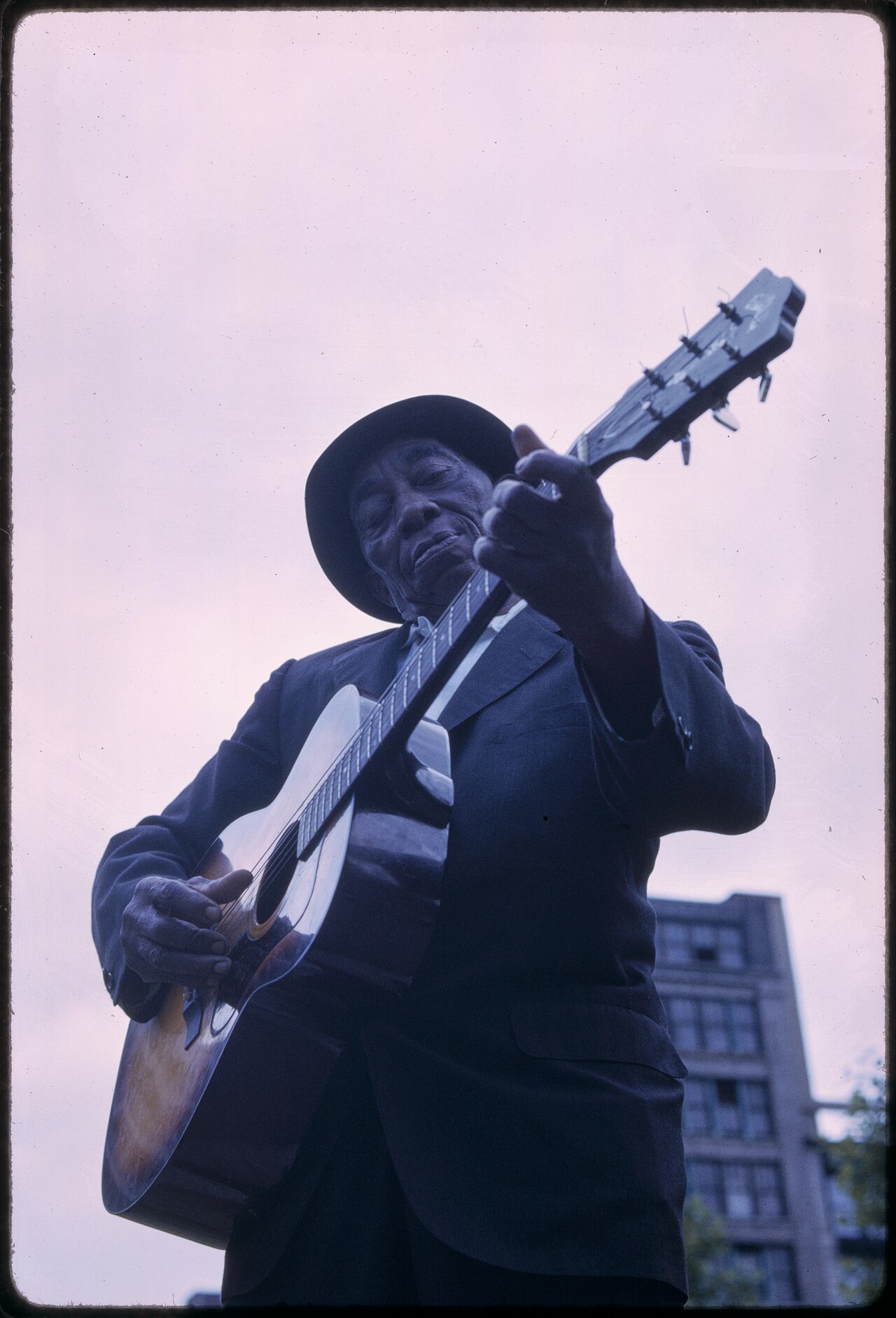
The Martin 00-18 he chose over the fancier 00-42 remains the exact guitar that most serious fingerpickers would choose as their primary instrument — small-bodied, mahogany, warm, honest. The instrument matches the man. The man matches the music. The music has lasted because it was made for the right reasons: personal pleasure, gentle expression, the desire to play the guitar the way he thought it should sound.
He was rediscovered at 71. He had three years. He had thirty-five years before that of complete obscurity. During those thirty-five years, the music continued — for friends, for dances, for himself. When the world finally arrived to hear it, the music hadn’t changed. It had, perhaps, deepened.
Tone note: He said “I sure wish I’d been rediscovered sooner.” This is the only complaint Mississippi John Hurt is on record as making. Given what he had to complain about — three decades of commercial obscurity, dying at 73 with only three years of recognition — it is the most restrained expression of a legitimate grievance in the history of music.
In Avalon, Mississippi, a man played guitar for himself. He played for friends. He played for local dances. He played in the way he thought the guitar should sound — the alternating thumb, the bare fingers, the melodic responses on the treble strings, the gentle conversational voice above all of it.
For thirty-five years between 1928 and 1963, nobody outside Carroll County heard him. The records he’d made sat in collectors’ collections, appreciated but not traceable to their maker.
When Tom Hoskins found him, he thought it was the police. When Newport heard him, they wanted to buy him any guitar in the shop. He chose the modest one. “I don’t need all those decorations.”
He played the Martin 00-18 for three more years and died at 73. The alternating-thumb bass he developed in isolation, the melody-over-bass texture that sounds like a piano played on six strings, the bell-like nail-and-callous tone that no pick can replicate — all of it lives in the recordings that Hoskins got him to make in time.
“I taught myself to play the guitar the way I thought the guitar should sound.”
He was right about what it should sound like. The guitar has agreed with him ever since.
Read our guide to Elizabeth Cotten’s guitars and gear.
Read our guide to David Bromberg’s guitars and gear.
FAQ: Mississippi John Hurt Guitars & Gear
- What guitar did Mississippi John Hurt play?
- His primary guitar for the last three years of his career (1963–1966) was a Martin 00-18 — chosen by Hurt himself from Marc Silber’s Fretted Instrument Shop in Greenwich Village after his Newport Folk Festival 1963 triumph. When shown a Martin 00-42 with elaborate pearl inlays alongside the simpler 00-18, he chose the 00-18 with the reason “I don’t need all those decorations.” For the 1963 rediscovery sessions, he had no guitar of his own and borrowed Tom Hoskins’ Gibson (probably a J-45 or J-50). His 1928 Okeh Records sessions used a studio-provided guitar, as his personal instrument (“Black Betty”) was considered not of sufficient quality to record.
- What is Mississippi John Hurt’s most famous guitar technique?
- The alternating-thumb bass: the right-hand thumb alternates steadily between two bass strings in a rhythmic pattern while the index and middle fingers provide melodic notes on the treble strings. This creates a self-accompanied musical texture where one player simultaneously provides bass-and-rhythm foundation (with the thumb) and melodic response (with the fingers) — comparable in sound to piano ragtime or stride. He played with no thumb or fingerpicks, producing “a clear, bell-like tone with a combination of nail and what must have been some very well developed callouses” (Acoustic Guitar magazine).
- What happened when Mississippi John Hurt was “rediscovered” in 1963?
- Record collector Tom Hoskins had spent months tracking down the man behind the 1928 “Avalon Blues” recording, using the song title’s geographical specificity to narrow the search to Avalon, Mississippi. When he found Hurt, the 71-year-old had no guitar and initially thought Hoskins was from the police (“I haven’t done anything wrong”). Hoskins brought him north to record two albums on the Piedmont label, then his unannounced appearance at the Newport Folk Festival 1963 caused a sensation. The Newport Folk Festival subsequently offered to buy him any guitar in a Greenwich Village shop; he chose the inexpensive Martin 00-18 over more elaborate options.
- Did Mississippi John Hurt use any amplification or effects?
- No. He was entirely acoustic throughout his career — no amplifiers, no electric guitars, no effects of any kind. His recordings were made with a microphone placed in front of an acoustic guitar. This applies to both the 1928 Okeh sessions and all 1963 and later rediscovery recordings. The complete signal chain in his music: guitar strings, soundboard, acoustic resonance of the room, microphone. Everything else is the player.
- How did Mississippi John Hurt develop his guitar style?
- Entirely in isolation. His mother gave him his first guitar at age nine. He was self-taught, rarely left Avalon, Mississippi, and learned music from field hands and local musicians rather than from any formal tradition or identifiable lineage of teachers. He played primarily for his own enjoyment, for friends, and for local dances. In his words: “I taught myself to play the guitar the way I thought the guitar should sound.” This isolation-derived approach produced a completely individual musical personality that was uninfluenced by the commercial blues world.
- Who did Mississippi John Hurt influence?
- His direct influence includes John Sebastian (Lovin’ Spoonful co-founder who learned from Hurt at the Gaslight Café), Happy Traum (blues educator), David Bromberg, and Taj Mahal. The broader Piedmont fingerpicking tradition he represents has entered popular music through Mark Knopfler, Nick Drake, Paul Simon, and many others who absorbed the folk-blues revival of the 1960s. He is frequently cited as the primary inspiration for folk-blues fingerpicking instruction, with multiple instructional books and videos dedicated specifically to his style.
- How do I learn Mississippi John Hurt’s guitar technique?
- Begin with the alternating-thumb bass — the foundation of everything. Thumb alternates between two bass strings (e.g., low E and A) in a steady eighth-note pattern. Practice until it’s completely automatic before adding anything. Then add a single finger striking a treble string between the thumb strokes. Then add a second finger. The goal is complete independence: the thumb maintains its pattern regardless of what the fingers do. This takes weeks to months of daily practice. Use bare fingers, no picks — the nail-and-callous tone is part of the technique. Learn “Avalon Blues” and “Spike Driver Blues” note for note from recordings. Use a small-bodied mahogany acoustic (Martin 00-18 or equivalent). No amp.
Image credits
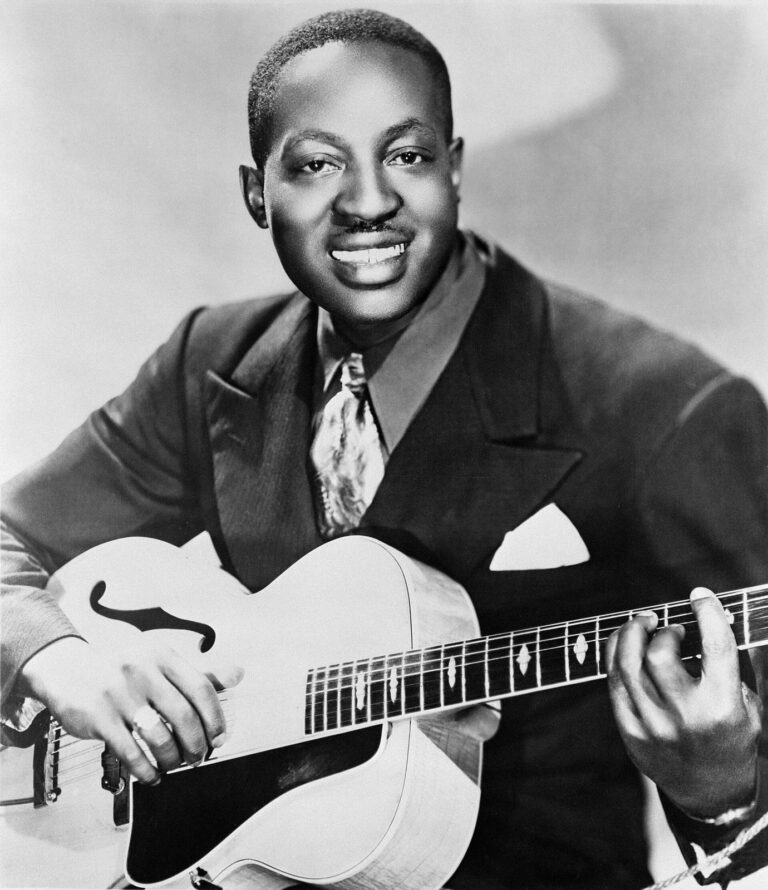
- Mississippi John Hurt: Gotfryd, Bernard, photographer, Wikimedia Commons, Public domain.
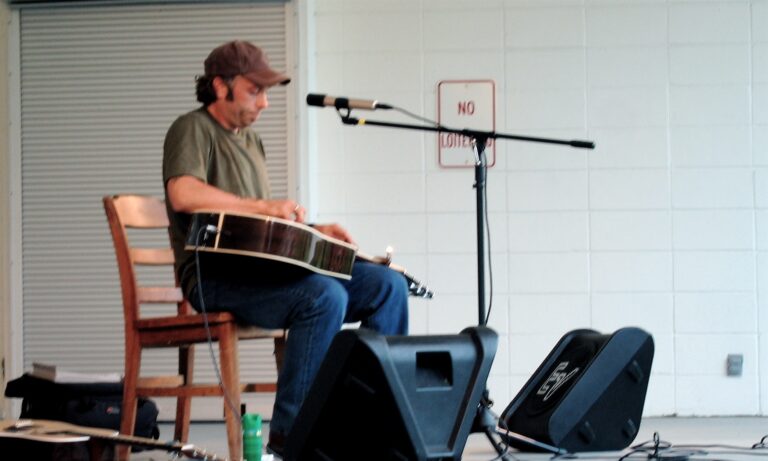
- David Bromberg: Harald Krichel, Wikimedia Commons, CC BY-SA 3.0.
- Mississippi John Hurt: Bernard Gotfryd, Wikimedia Commons, Public domain.
- Mississippi John Hurt: Bernard Gotfryd, Wikimedia Commons, Public domain.
- Top image: Library of Congress, Prints & Photographs Division, photograph by Bernard Gotfryd, LC-DIG-gtfy-01612.
- Martin 00-18: GuitarGangsters AI-generated reference illustration, not a photograph.