
Richard Thompson Guitars & Gear: The Complete Guide to Britain’s Greatest Unsung Electric Guitarist
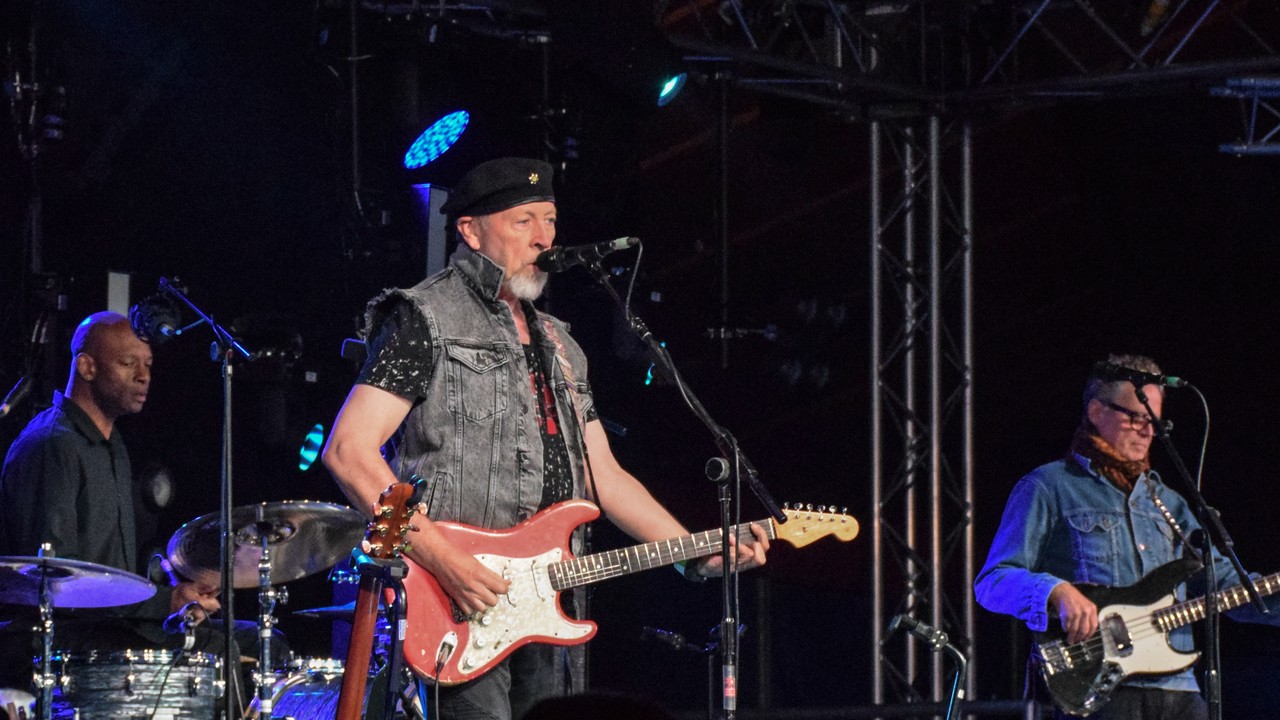
“When I started playing Fenders in 1968, it was unfashionable because everyone in England was playing Gibsons and trying to get a big, fat sound like Eric Clapton had in Cream.”
Richard Thompson has always done the unfashionable thing. When Clapton’s Cream was defining what a British rock guitarist should sound like — Les Paul, Marshall, maximum sustain, American blues-derived — Thompson was playing a Stratocaster through a configuration that nobody in England was attempting. When the British Invasion was focused on American music, Thompson and Fairport Convention deliberately turned toward their own tradition: British and Celtic folk, filtered through rock instrumentation. When the Britpop and grunge eras made certain sounds fashionable, Thompson continued making sophisticated, folk-rooted electric music that answered to no trend.
Rolling Stone ranked him in the top 20 guitarists of all time. He is simultaneously one of the most critically respected and commercially underexposed guitarists of the last fifty years — a combination that is itself a kind of testimony to the specific quality of his work. The audience that finds him finds him for life. The mainstream has never quite known what to do with him.
His 1959 Stratocaster cost $300. He bought it in 1971 on London’s Denmark Street. It was recently insured for $50,000 — “which is insane,” he said. He replaced the original rosewood neck with a 1955 maple neck ten years after purchase. He doesn’t tour with it anymore because “they’re getting too valuable and people like to steal them.”
His current primary electric is assembled from different parts — Fender bits combined by his tech Bobby Eichorn, started as Fiesta Red, faded by sun and use to coral. “It looks lived in, which it is.”
The music sounds like a Scottish piper playing folk reels through a Marshall amp in the middle of the night. There is nothing else that sounds like it.
Background: Muswell Hill, Fairport Convention, and the Celtic Rock That Nobody Expected
Richard John Thompson was born April 3, 1949, in Notting Hill, London. His father was a detective with the Metropolitan Police and an amateur guitarist — “a bad amateur player,” according to Thompson, who nonetheless exposed his son to jazz and traditional Scottish music records. His father had seen Django Reinhardt play in Glasgow in the 1930s. These early jazz and Scottish folk influences, absorbed before any formal music education, embedded the specific non-American orientation of Thompson’s playing: it is fundamentally British music, rooted in Celtic modality and jazz sophistication, applied to rock instrumentation.
Listening to Buddy Holly in 1956 was the point at which he wanted to pick up a guitar, though he didn’t actually manage to do that until 1960. He played Shadows songs in school bands until he started associating with the musicians who would become Fairport Convention.
Fairport Convention co-founded in 1967 with Simon Nicol, Ashley Hutchings, Judy Dyble, and Martin Lamble. Producer Joe Boyd — who had heard Thompson play at a rehearsal, described him as playing “a solo which quotes from Django, from Charlie Christian, you know, an incredibly sophisticated little solo” — signed them to his Witchseason production company. The band’s evolution from American-influenced folk-rock toward a specifically British folk-rock aesthetic produced Liege & Lief (1969) — the album that effectively founded the British folk-rock genre.
Thompson’s philosophy, articulated clearly: “We got to a point where we thought, ‘We will never play the blues as good as somebody from Chicago.’ We’d never been to Chicago — never even to America. We would never play country as good as Hank Williams, or soul as good as Otis Redding. If we played music that was more indigenous, music that reflected where we came from, we stood a chance to excel and to be the best in our field.”
He left Fairport in 1971, bought the 1959 Stratocaster on Denmark Street for $300, and began his solo career. The duo recordings with his then-wife Linda Thompson — particularly I Want to See the Bright Lights Tonight (1974) and Shoot Out the Lights (1982) — are among the most critically admired recordings in British music. Shoot Out the Lights, made as the marriage was visibly collapsing, is regularly cited as one of the greatest British albums.
He has released 20+ solo studio albums, received Grammy nominations, and continues to record and tour. Rolling Stone put him in the top 20 guitarists of all time. His commercial profile has never matched his critical reputation.
Tone note: His father saw Django Reinhardt play in Glasgow in the 1930s. Django’s influence — the jazz modal approach, the single-string articulation, the idea of the guitar as a melodic instrument in dialogue with itself — runs through Thompson’s playing at the deepest level. Not through imitation but through absorption: the sound of jazz guitar heard as a child, processed through British folk music and Celtic modality, emerging as something that sounds like nothing else.
The Rig: Richard Thompson’s Guitars, Amps & Gear
Guitars: The 1959 Stratocaster and the Ferrington
1959 Fender Stratocaster (Sunburst, ’55 Maple Neck) — The Historic Primary
Richard Thompson’s most historically significant electric guitar is a 1959 Fender Stratocaster in sunburst finish that he purchased in 1971 on London’s Denmark Street for $300. The Stratocaster was his main electric guitar and was used on 1982’s “Shoot Out The Lights,” which Rolling Stone magazine rates as one of the best rock albums of all time.
Thompson described it: “It has a beautiful tone and I don’t know why you can’t get that tone again. It has a mellowness to it and I can’t figure out why. It’s probably not my favorite guitar to play because it’s so worn. But I’ve had it since 1971, and I bought it just after I left Fairport. I paid $300 for it. It was insured recently for $50,000, which is insane.”
Thompson replaced the worn-out original rosewood fingerboard neck ten years after purchase with an all-maple 1955 neck. The ’55 maple neck has a different feel and character from the original ’59 rosewood — brighter, more direct attack, with a slightly different neck profile. Thompson’s preference for this specific combination (1959 body with 1955 neck) reflects his willingness to build instruments that serve his specific playing needs rather than maintain historical purity.
He no longer tours with the vintage Strat: “Nowadays you can’t take guitars like that out on the road though because they’re getting too valuable and people like to steal them.”
The 1959 Stratocaster was famously not fashionable when Thompson adopted it. He wrote on his official website: “When I started playing Fenders in 1968, it was unfashionable because everyone in England was playing Gibsons and trying to get a big, fat sound like Eric Clapton had in Cream.” He chose the Strat precisely for its difference from what everyone else was doing — the single-coil clarity, the Celtic melodic sharpness, the articulate mid-range that suited his folk-derived playing rather than blues-derived sustain.
Custom Fender Stratocaster (Coral/Red, Bobby Eichorn) — The Current Primary
Thompson described his current live electric: “The Strat I play on stage is a beaten-up red one, assembled from different bits. It started out red and it’s faded very nicely to this coral color. It looks lived in, which it is.” The guitar is assembled by his long-time tech Bobby Eichorn from Fender components — body, neck, and pickups from different sources, combined into an instrument specifically configured for Thompson’s needs. “It’s different bodies and necks that have been assembled by my guitar tech. The pickups are all different — I can’t remember what they are. It’s an amalgamation of bits, but they’re all Fender bits.”
This assembled Stratocaster — started as Fiesta Red, faded to coral — is the guitar on most of Thompson’s contemporary recordings and live performances. The specific virtue of a tech-assembled instrument: each component is chosen for its specific character rather than accepted as part of a package. The result may sound better than any production guitar, even if it has no vintage provenance.
Custom Danny Ferrington Guitar — The P90 Hybrid
Thompson owns at least two custom electric guitars built by Danny Ferrington — the Los Angeles luthier who built custom instruments for many prominent musicians. The primary Ferrington: a custom Ferrington guitar with P90 neck, Alnico Strat pickup in the middle, and Broadcaster pickup in the bridge.
This specific combination — P90 in the neck (warm, thick, slightly compressed single coil), Alnico Strat in the middle (clear, chimey), Broadcaster in the bridge (the original Fender bridge pickup design, slightly brighter and more twangy than modern Tele bridges) — gives Thompson tonal variety across the three pickup positions that no stock guitar provides.
Thompson described it as his main onstage electric: “My ’59 Strat doesn’t play live these days very much because it’s in need of serious work, so I use the Ferrington, which has an extra-wide maple neck, as my main onstage electric instrument.” The extra-wide maple neck suits his specific hand and playing approach.
He also has a black SG, gifted by Bobby Eichorn, in his collection.
Earlier Electric Guitars
Prior to using a Stratocaster with Fairport Convention, Thompson used a Gibson Les Paul with P-90 pickups. He then switched to a late-1960s Stratocaster. The Equipboard documentation noted photographs of him playing a Gibson Les Paul Goldtop with single-piece wraparound tailpiece (most likely a 1954 model) with Fairport Convention in 1968-1969. This early Les Paul → Stratocaster evolution mirrors his shift from the British rock mainstream (Les Paul, Clapton-style) to his own idiom (Strat, Celtic-influenced).
He has also used a 1965 Stratocaster and a Danelectro U2 in the studio for specific tonal applications.
Lowden Acoustic Guitars — The Acoustic Primary
Since the early 1990s, Thompson has made prominent use of Lowden acoustic guitars for studio and live work; Lowden have made a signature model for him.
His primary Lowden is the L32C (formerly called L27FC) — confirmed in a post on his own website: “Well folks, I mainly play on stage a Lowden L32C (L27FC is the old model #, now changed to L32C). I own a spare of the same model, but with Walnut back/sides and cedar top — used on Old Kit Bag. I also have a baby Lowden, currently in London, so I can’t check the model number, and three Ferrington acoustics, and my old Martin 00018, which is a bit bashed about.”
The Lowden L32C features a cedar or spruce top with rosewood back and sides, producing the specific warm, resonant character that Thompson associates with his acoustic sound. The Lowden is an Irish-made guitar known for its exceptional sustain and complex overtones — suited to fingerstyle playing in the British folk tradition.
His acoustic live setup uses both a magnetic soundhole pickup and a condenser microphone: “The main stage guitar has a Sunrise magnetic soundhole pickup, and a Countryman Isomax Condenser Mic in the soundhole. These both run through a 2 channel Gas Cooker Pre-Amp, made by Ridge Farm Studios.”
He elaborated: “I use a Ridge Farm Industries Gas Cooker pre-amp which warms up the sound considerably. The Sunrise pickup can sometimes be a cold, slightly metallic-sounding thing and it becomes a lot more human through the Gas Cooker. The internal condenser mic puts a lot more air around the sound too.”
There is also a Lowden F-35C-RT Richard Thompson Signature Model — a production guitar available to the public.
Complete Guitar List (Key Instruments)
- Gibson Les Paul Goldtop (c.1954, P-90s) — Fairport Convention 1968-1969; earliest primary electric
- 1959 Fender Stratocaster (sunburst, ’55 maple neck) — Bought 1971, Denmark Street, $300; insured for $50,000; Shoot Out the Lights; retired from touring due to value/theft risk
- 1965 Fender Stratocaster — Secondary vintage Strat; also retired from regular touring
- Custom Fender Strat (coral/red, Bobby Eichorn assembly) — Current primary live electric; Fender components; Fiesta Red faded to coral; “looks lived in”
- Danny Ferrington custom (P90 neck, Alnico Strat middle, Broadcaster bridge) — Extra-wide maple neck; former primary onstage electric
- Danelectro U2 — Studio applications
- Black SG (Bobby Eichorn gift) — In collection
- Lowden L32C (signature) — Primary acoustic; Sunrise pickup + Countryman Isomax condenser; Ridge Farm Gas Cooker preamp
- Lowden L32C spare (walnut/cedar) — Used on Old Kit Bag
- Lowden “baby” (small body) — In London
- Lowden F-35C-RT signature (production model)
- Danny Ferrington acoustics (×3) — Additional acoustic instruments
- Martin 00018 (“a bit bashed about”) — Old acoustic workhorse
Amps: Small and Vintage, With Boutique in Reserve
Headstrong Amplifiers — The Current Studio Primary
For the studio, Thompson uses “these little boutique amps called Headstrong that are made in Santa Cruz.” Headstrong builds Fender-inspired boutique tube amps — specifically Vibrochamp, Deluxe Reverb, and Princeton Reverb-style units. Their specific character: the warmth and bloom of vintage Fender tube amps with improved reliability and consistency. Thompson’s preference for small, boutique Fender-style amps over large-format Marshall heads is consistent with his clarity-oriented playing approach: he doesn’t need massive volume or extreme gain, he needs articulate tonal response to his fingerstyle technique.
Vintage Fenders — The Foundation
Studio visits have documented: “There was an old Fender Princeton, a Vox AC15, and a Magnatone with the pitch-change vibrato.” Thompson confirmed: “I have a Divided by 13 with two 12-inch speakers, and I also have an old Fender Vibro, and a Fender Deluxe from 1956 that’s a great sounding amp. Too many amps and not enough space at home.”
The 1956 Fender Deluxe — a 15-watt tweed-covered combo with a single 12-inch speaker — produces a specific warm, compressed, naturally overdriving character at working volumes that is distinctly different from the British Marshall character most associated with rock guitar. Thompson’s use of this amp reflects the American vintage Fender tradition in his tonal palette alongside the Celtic folk influences.
Divided by 13 — The Boutique British Character
The Divided by 13 amplifier company makes hand-wired boutique tube amps with both American and British character options. Thompson’s Divided by 13 with two 12-inch speakers provides a specific character between the Fender’s warmth and the British amp’s clarity and bite. His Facebook posts have shown the Divided by 13 Switchazel in his setup.
Vox AC15 and Magnatone
The Vox AC15 — the smaller sibling of the AC30 — appears in Thompson’s studio sessions. Its character is closer to the AC30’s chimey EL84 British sound than to the Fender’s warmer American character, adding tonal variety. The Magnatone is particularly notable: the vintage American amp known for its unique Doppler-vibrato circuit (actual pitch change, not tremolo volume change) produces a distinctive wobble that Thompson has used for specific tonal effects.
Pedals: Univibe, Tremolo, and Folk-Flavored Modulation
Thompson’s pedal philosophy is relatively spare compared to many in this series — his tone is primarily about guitar-to-amp interaction and fingerstyle technique rather than extensive effects processing. But specific modulation effects are documented as important to his sound.
Univibe and Rotary Effects — The Primary Modulation
Thompson has made significant use of modulation and vibrato-type effects pedals, most notably the Univibe and emulations thereof.
The acoustic live setup includes “optional effects — a Line 6 Delay Modeller and a UniVibe rotary effect (Dan Armstrong?).”
His solo electric setup also uses: “I also use a Fulltone Deja’Vibe Rotating Effect Pedal on a few things because I like the way it sounds with acoustic guitar.” He told Vintage Guitar: “The Old Pack Mule” has a classic Richard Thompson solo — fingerstyle with heavy modulation. Which pedals did you use for that effect? I think that was a Dunlop rotary-speaker pedal.”
The Univibe’s original purpose was to emulate a Leslie rotating speaker cabinet — the same effect that Andy Summers used with the Rotosphere and that Kim Thayil achieved with the H&K Rotosphere. In Thompson’s context, the rotating quality adds a three-dimensional, animated quality to his long, melodic single-note lines, making them feel like they’re moving through space.
Tremolo — Amp or Pedal
When asked whether he uses amp tremolo or a pedal, Thompson replied: “I use amp tremolo if I can. It just sounds a little warmer. But I also use pedals that can pretty much do the same thing. On the record I probably used both.” He confirmed using a Fulltone tremolo pedal for touring.
Delay
For acoustic: “I’ve also got a Line 6 DL4 Delay Modeler which I mostly use to create treatments that are similar to old tape echo-like sounds and warm repeats.”
For electric: “I use a Carl Martin Vintage Series Red Repeat delay — it’s digital, but it sounds very warm.” The Carl Martin Red Repeat has a specifically warm, tape-delay-emulating character that suits Thompson’s preference for what he called a “more realistic sound” — avoiding what he described as “too shiny” digital reverb.
Other Pedals
- Fulltone OCD Overdrive — Primary overdrive on tour: “I use a Fulltone tremolo and OCD overdrive.” The OCD’s specific character — responsive to guitar volume, with a broad range from clean boost to heavy overdrive — suits Thompson’s dynamic approach
- Sweet Sound Electronic Mojo Vibe — Additional Uni-Vibe style rotary effect; documented from Facebook post
- Electro-Harmonix Micro POG — Octave generator; documented from Facebook post
- Barber LTD Overdrive — Additional overdrive option; documented from Facebook post
- Divided by 13 Switchazel — Channel switching unit for the Divided by 13 amp
- Roland GK-1 pickup and GL-2 synthesizer — Thompson has made intermittent use of Roland’s GK-1 pickup and GL-2 synthesizer over the years, used on 1979’s Sunnyvista album.
Strings, Picks & Setup
Fingerstyle approach: Thompson plays primarily fingerstyle on both electric and acoustic — using thumb and fingers rather than a pick for most of his playing. This is fundamental to his sound: the fingertip’s softer attack produces a different tonal quality from a pick’s sharper transient. Single-string lines played fingerstyle have a more rounded, singing quality; chords played fingerstyle have a harp-like arpeggiated character.
He described his approach to folk reels on electric: “I hate playing fiddle tunes in which I’m just flatpicking — the way someone would if they were a bluegrass musician. I don’t want to get that sound on the electric guitar. I’m looking for a different way to do it, so I play fingerstyle. And that means a lot of crosspicking.”
Pedal steel influence: He described a double-stop technique: “I had a pedal-steel compilation album — I think it was on Starday Records — and I loved the idea of using those licks on the guitar. Nothing unique about that; James Burton was doing the same thing a decade earlier.” The pedal-steel influence is audible in his multiple-string bending approach — bending two or three strings simultaneously to produce chord-like bent intervals.
The “Octave-A” tuning: Thompson uses at least one alternate tuning — an “Octave-A” configuration that allows him to function as his own bass player in solo performances. He described its use on “Beds Are Burning”: “using the Octave-A tuning I mentioned earlier, so I could be my own bass player.”
Playing Style & Tone Philosophy: The Celtic Electric
Richard Thompson’s playing philosophy synthesizes British and Celtic folk melody, jazz harmonic sophistication, rockabilly and country double-stop technique, and a specific emotional directness that has no clear American counterpart. He is the guitarist who proved that British folk music translated to the electric guitar could produce something as powerful and as original as American blues-derived rock — and perhaps more interesting, because it drew on a different cultural source.
The Celtic Drone Influence
Thompson’s father’s Scottish music collection embedded the drone tradition — the bagpipe’s constant held drone against which the melody moves — in his musical DNA. This surfaces in his electric playing as a tendency toward held notes against moving melodies, open-string drones combined with fretted passages, and the specific modal melodic movement of the Celtic scales rather than the pentatonic/blues scales of American rock guitar.
Wikipedia described what Joe Boyd heard at the first Fairport rehearsal: “a solo which quotes from Django, from Charlie Christian, an incredibly sophisticated little solo.” The jazz citation — Django Reinhardt, Charlie Christian — alongside the Celtic folk root is the complete picture of Thompson’s playing before he had recorded a note. Jazz sophistication, folk root, no blues.
The Non-Blues Stance
“No blues clichés” is how Rolling Stone described his playing. This is not a limitation but a deliberate choice: Thompson explicitly rejected the American blues tradition as “something we would never play as well as somebody from Chicago” and oriented his playing toward where he came from. The result is a guitar vocabulary built from Celtic scales, jazz intervals, folk modal movement, and country/rockabilly double-stops — none of which has the standard blues inflection that dominates most British and American rock guitar.
The Fingerstyle Precision
His fingerstyle approach on electric guitar is unusual in rock: most electric guitar players use a pick, and fingerstyle electric guitar has a specific rounded, smooth quality different from picked guitar. Thompson’s fingerstyle combines thumb and fingers simultaneously — the thumb providing bass emphasis while the fingers handle melody — in the same way that Jansch and Drake approached acoustic guitar. Applied to electric guitar, through a clean-to-lightly-driven amp, this produces the specific liquid, articulate quality of his lead playing.
Impeccable Articulation
Reverb.com’s description: “With an impeccably clean tone and precise articulation, Thompson dazzles listeners without leaning on gobs of distortion or electronic wizardry.” The articulation — every note clearly defined, every phrase shaped — is the specific quality that makes his playing immediately identifiable. High-gain distortion obscures articulation; his preference for single-coil Stratocasters through clean or lightly driven amps preserves it completely.
How to Sound Like Richard Thompson: The Celtic Folk-Rock Guitar Tone
The Guitar
Fender Stratocaster — single-coil pickups, articulate response, clear note separation. The 1959 model’s specific character is difficult to replicate exactly, but any quality Stratocaster provides the fundamental tonal basis.
- 1959 Fender Stratocaster (or equivalent vintage Strat) — The historic primary; expensive and now too valuable to tour with
- Any assembled/Frankenstrat Strat from Fender components — Thompson’s current approach; components selected for character rather than historical purity
- Danny Ferrington custom (or custom equivalent) — P90 neck, Alnico Strat middle, Broadcaster bridge — maximum tonal variety
The Amp
Small vintage-voiced Fender amp (Headstrong Princeton/Deluxe equivalent, or vintage Fender Deluxe) for the most authentic character. The key: moderate volume for natural tube compression, not excessive gain.
| Control | Setting | Notes |
|---|---|---|
| Volume | 5–7 (edge of breakup) | Natural compression from the tubes; fingerstyle dynamics control the gain |
| Treble | 6–7 | The Strat’s single coils and Celtic melodic approach benefit from treble presence |
| Bass | 4–5 | Controlled; the Celtic melodic approach is treble-oriented |
| Reverb | Light spring reverb | “If a studio doesn’t have a really good echo plate… I’m reluctant to use too much digital reverb” |
| Tremolo (if amp has it) | Moderate rate, moderate depth | “I use amp tremolo if I can. It just sounds a little warmer.” |
The Essential Effects
- Fulltone Deja Vibe (or equivalent Univibe) — The primary modulation; adds the rotating, animated quality to long melodic lines; use for solo passages
- Fulltone OCD Overdrive — Light to moderate gain; pushes the amp into its natural saturation without the harsh clipping of high-gain pedals
- Carl Martin Red Repeat Delay — Warm tape-like repeats; not “shiny” digital reverb; contributes to the “realistic” studio sound
Budget vs Authentic
Budget:
- Guitar: Fender Player Stratocaster or Squier Classic Vibe ’50s Stratocaster
- Amp: Fender Blues Junior or Fender Champion 40 (small clean Fender-voiced amp)
- Pedals: Fulltone OCD or Boss OD-1 + MXR Uni-Vibe or TC Electronic Viscous Vibe + Boss DD-3
Authentic:
- Guitar: Vintage Fender Stratocaster (1959-1965) or custom-assembled Strat from quality Fender components
- Amp: Headstrong Princeton or vintage Fender Deluxe (1956-1965); small, natural breakup
- Pedals: Fulltone Deja Vibe + Fulltone OCD + Carl Martin Red Repeat + optional amp tremolo
The Technique
Fingerstyle on electric guitar. Develop independence between thumb (bass) and fingers (melody) as with acoustic fingerstyle. Study Celtic and modal scales — particularly Dorian and Mixolydian modes, which are the scales that produce the “Celtic” quality in folk-based melody. Practice double-stops (two-string bends) in the pedal-steel tradition. Avoid pentatonic/blues scale clichés; find the modal alternatives that sound like where you come from rather than where American rock comes from.
Influence & Legacy: The Standard by Which British Folk-Rock is Measured
Richard Thompson’s influence on British music is foundational in a specific and particular way: he defined what British folk-rock guitar sounds like — what it means to bring Celtic and folk modality to an electric guitar in a rock context. Every subsequent British guitarist who attempted to use traditional folk melody in a rock context was working in the space he created.
Thompson’s work influenced many artists who’ve engaged with the Celtic-folk tradition in rock contexts. His specific documented connections:
- Rolling Stone top-20 ranking — One of the highest guitar rankings in the publication’s history for someone with his commercial profile; the recognition reflects professional musicians’ and critics’ consensus about his technical and artistic achievement
- Fairport Convention — The foundational British folk-rock band he co-founded; the template for all subsequent British folk-rock
- Shoot Out the Lights — Regularly cited as one of the greatest British albums; the guitar playing on it was made during a collapsing marriage; the emotional content and technical achievement are inseparable
- Joe Boyd’s immediate recognition (1967) — “He played a solo which quotes from Django, from Charlie Christian, you know, an incredibly sophisticated little solo” — the recognition of jazz sophistication in a folk context, heard immediately by one of the most musically sophisticated producers of the era
He still tours. He is still recording. Rolling Stone put him in the top 20. His commercial profile remains smaller than his critical reputation. He would probably describe this as the correct relationship between the two. He is “still on a mission to play solid music that’s more about where I come from than what is popular. Hopefully, there’s an overlap, and it’s at least vaguely popular, but I can satisfy my soul playing the music that echoes the country of my origin.”
Tone note: He paid $300 for the 1959 Stratocaster. It was insured recently for $50,000. He doesn’t tour with it because people like to steal it. The guitar he plays now is assembled from parts by his tech — Fender bits, started as Fiesta Red, faded to coral, “looks lived in, which it is.” The $50,000 guitar sits at home. The lived-in assembled guitar goes on the road. This is the correct order of priorities for a working musician who actually plays the instrument rather than preserving it as an investment.
In 1971, just after leaving Fairport Convention, Richard Thompson walked into a guitar shop on London’s Denmark Street and bought a 1959 Fender Stratocaster for $300. Everybody else in England was playing Les Pauls and chasing Clapton’s Cream tone. He bought the Stratocaster because it was unfashionable and because it suited the Celtic folk-rock he was developing.
He replaced the rosewood neck with a 1955 maple neck ten years later. He played it through small vintage Fender amps and a Fulltone Deja Vibe. He recorded Shoot Out the Lights on it. Rolling Stone called that album one of the best rock albums of all time.
The Strat is now insured for $50,000. He doesn’t tour with it because people like to steal it. He tours with a coral-faded assembled Stratocaster that his tech built from Fender parts. It looks lived in. It is lived in.
He plays fingerstyle on electric guitar, using Celtic and modal scales rather than blues pentatonics, because he will never play Chicago blues as well as someone from Chicago. He plays the music that echoes the country of his origin. That country is Britain. The guitar is the Stratocaster. The sound is Celtic rock. There is nothing else that sounds like it.
If Richard Thompson’s Celtic folk-rock Stratocaster approach — the non-blues modal scales, the fingerstyle electric technique, the small vintage Fender amps and Deja Vibe — has you exploring the British folk-rock tradition he helped create, check our complete guide to Bert Jansch’s guitars and gear — the acoustic folk guitarist whose fingerpicking tradition Thompson absorbed and extended to the electric guitar in the Fairport Convention context.
And for the next guitarist in this series — an American singer-songwriter whose intimate acoustic approach shares Thompson’s commitment to emotional directness over commercial calculation — don’t miss our breakdown of Elliott Smith’s complete gear guide.
FAQ: Richard Thompson Guitars & Gear
- What is Richard Thompson’s most famous guitar?
- A 1959 Fender Stratocaster in sunburst finish that he bought in 1971 on London’s Denmark Street for $300 — just after leaving Fairport Convention. He replaced the original rosewood neck with an all-maple 1955 neck ten years after purchase. The guitar was used on Shoot Out the Lights (1982), which Rolling Stone rates as one of the best rock albums of all time. It was recently insured for $50,000 — “which is insane,” Thompson said. He no longer tours with it because it’s too valuable and vulnerable to theft. He described it: “It has a beautiful tone and I don’t know why you can’t get that tone again. It has a mellowness to it and I can’t figure out why.”
- What guitar does Richard Thompson play live?
- His current primary live electric is a custom Stratocaster assembled by his long-time tech Bobby Eichorn from various Fender components. Thompson described it: “The Strat I play on stage is a beaten-up red one, assembled from different bits. It started out red and it’s faded very nicely to this coral color. It looks lived in, which it is.” The pickups are from various sources — he doesn’t remember exactly what they are — but all components are Fender. He also uses a custom Danny Ferrington guitar with P90 neck pickup, Alnico Strat in the middle, and a Broadcaster bridge pickup, which has an extra-wide maple neck.
- What acoustic guitar does Richard Thompson use?
- Primarily Lowden acoustics since the early 1990s — specifically the Lowden L32C as his main stage guitar, with a spare of the same model (walnut/cedar) and a smaller “baby” Lowden. Lowden has made a signature model for him (the F-35C-RT). For live acoustic performance, he uses a Sunrise magnetic soundhole pickup alongside a Countryman Isomax condenser microphone inside the soundhole, both running through a Ridge Farm Industries “Gas Cooker” preamp: “I use a Ridge Farm Industries Gas Cooker pre-amp which warms up the sound considerably. The Sunrise pickup can sometimes be a cold, slightly metallic-sounding thing and it becomes a lot more human through the Gas Cooker.” He also has a Martin 00018 and three Ferrington acoustic guitars.
- Why did Richard Thompson choose a Stratocaster when everyone was playing Les Pauls?
- Deliberately, because it was unfashionable. He explained: “When I started playing Fenders in 1968, it was unfashionable because everyone in England was playing Gibsons and trying to get a big, fat sound like Eric Clapton had in Cream.” Thompson was developing a Celtic and British folk-influenced guitar approach that required the Stratocaster’s single-coil clarity and articulation rather than the Les Paul’s thick humbucker sustain. His modal, folk-derived melodic lines needed note separation and treble presence; the Strat provided that while the Les Paul would have blurred it. The unfashionable choice turned out to be the right choice for his specific music.
- What pedals does Richard Thompson use?
- His core live pedal setup: Fulltone OCD Overdrive (primary overdrive), Fulltone Deja Vibe rotary effect (Univibe emulation for modulation on long melodic lines), Carl Martin Vintage Series Red Repeat delay (warm, tape-like repeats). He uses amp tremolo when available, supplemented by a Fulltone tremolo pedal on tour. Additional documented pedals include a Sweet Sound Electronic Mojo Vibe, Electro-Harmonix Micro POG (octave), Barber LTD overdrive, and a Divided by 13 Switchazel for amp channel switching. For acoustic, he uses a Line 6 DL4 Delay Modeler for tape-echo-style repeats.
- What amplifiers does Richard Thompson use?
- For studio work, he uses Headstrong amplifiers — boutique Fender-inspired units made in Santa Cruz. He has described his studio and home collection: a Divided by 13 with two 12-inch speakers, a vintage Fender Vibro, and a 1956 Fender Deluxe (“a great sounding amp”). Studio sessions have also featured an old Fender Princeton, Vox AC15, and a Magnatone with pitch-change vibrato. His approach: “I’m reluctant to use too much digital reverb… It’s nicer to have it in your face and stripped-down — a more realistic sound.” He prefers amp tremolo over pedal tremolo: “I use amp tremolo if I can. It just sounds a little warmer.”
- How do I get Richard Thompson’s guitar tone?
- Fender Stratocaster (vintage or quality current production with single-coil pickups). Into a small vintage-voiced Fender amp (Headstrong Princeton, vintage Fender Deluxe, or Fender Blues Junior) at moderate volume for natural tube compression — not high-gain. Fulltone Deja Vibe (or equivalent Univibe) for the rotating modulation on melodic lines. Fulltone OCD or equivalent transparent overdrive for light drive. Warm tape-style delay for atmospheric repeats. The crucial technique: develop fingerstyle on electric guitar, using Celtic and modal scales (Dorian, Mixolydian) rather than pentatonic/blues scales. Practice double-stop bends in the pedal-steel tradition. “I’m still on a mission to play solid music that’s more about where I come from than what is popular.”
Related stories
Vernon Reid Guitars & Gear: The Complete Guide to Living Colour’s Guitar Genius’s Rig
Vernon Reid's guitars, amps, and effects — the complete guide. Parker MaxxFly, PRS Vela VR, Mesa Dual Rectifiers, Roland VG-99, Eventide H9, Living Colour gear guide.
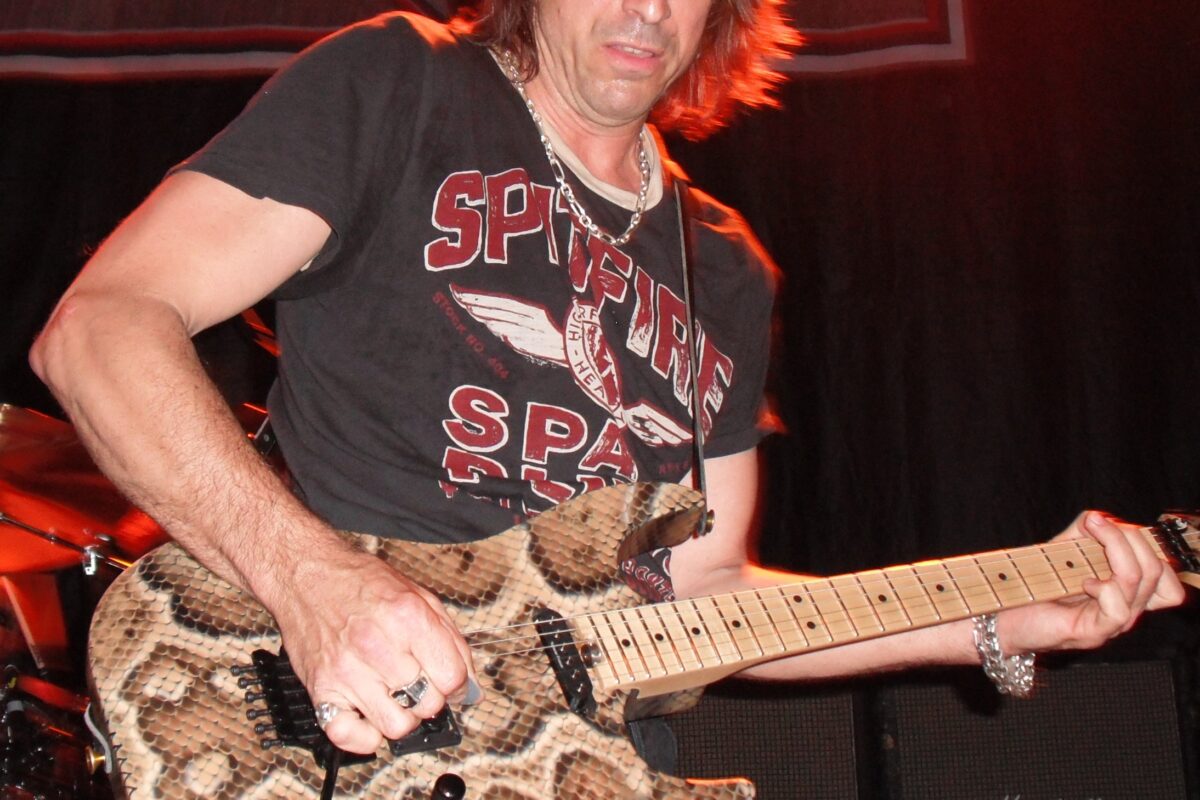
Warren DeMartini Guitars & Gear: The Complete Guide to Ratt’s Torch Guitarist’s Rig
Warren DeMartini guitars & gear: Ratt's Torch guitarist. Charvel Bomber, snakeskin, Jose-modded Plexi, Fender Super Champ, RTM pickup, slapback echo — the complete rig.
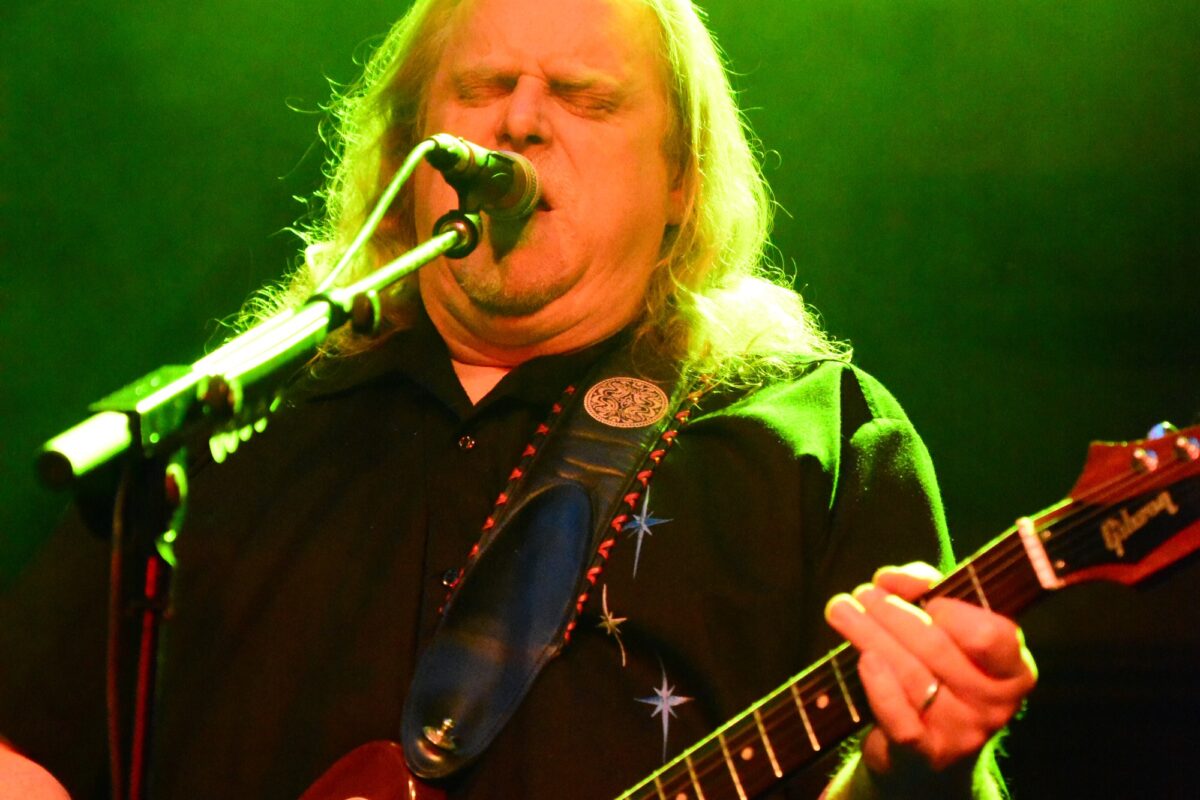
Warren Haynes Guitars & Gear: The Complete Guide to Gov’t Mule’s Guitar Master’s Rig
Warren Haynes' guitars, amps, and effects — the complete guide. Gibson Les Paul Chester, Soldano SLO-100 modified, Klon Centaur, Emma Discombobulator, and how to nail that Gov't Mule blues-rock tone.