
Richie Sambora Guitars & Gear: The Complete Guide to Bon Jovi’s Most Underrated Guitar Hero
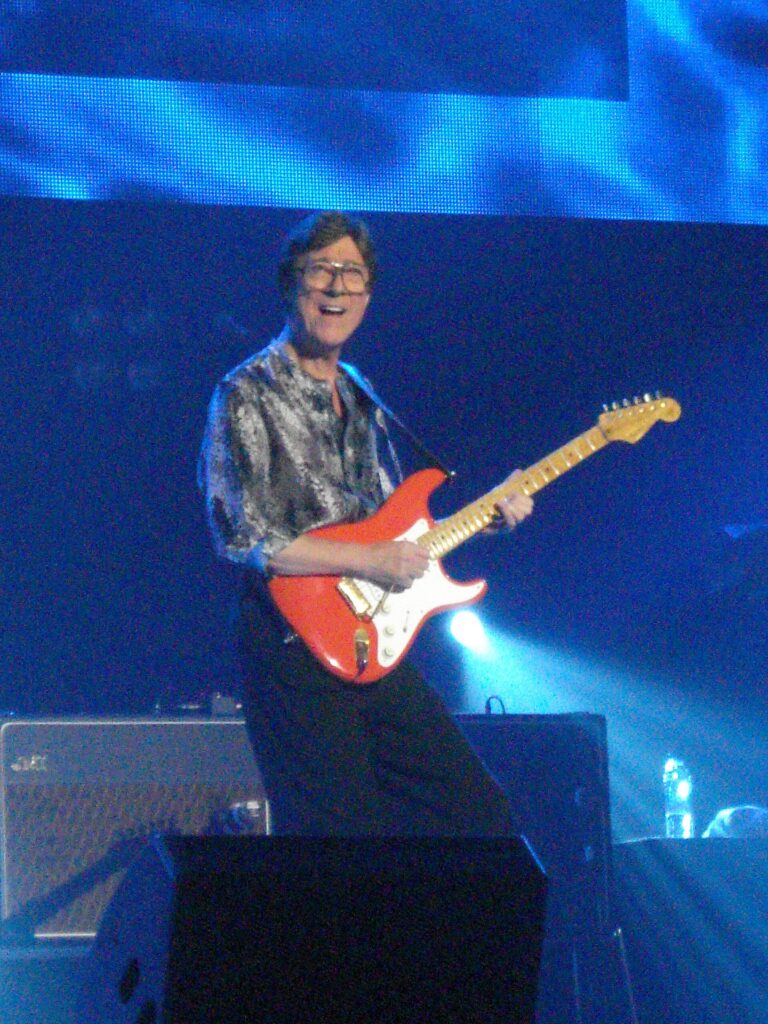
Richie Sambora performing with Orianthi at the She Rocks Awards in Anaheim, 23 January 2015. Photo: Orianthi 01 23 2015 -13 (16266834038) by Justin Higuchi / CC BY 2.0 (https://creativecommons.org/licenses/by/2.0/). Source: https://commons.wikimedia.org/w/index.php?curid=78616525. Copyright (c) 2015 Justin Higuchi. Source previously processed with Acorn version 4.5.3. Cropped to 16:9, resized and JPEG encoded in the existing derivative; complete foreground guitars, hands and photographer watermark retained. Original source metadata restored without changing image pixels.
In 1989, at the MTV Video Music Awards, Jon Bon Jovi and Richie Sambora walked onstage with acoustic guitars, sat on stools, and played stripped-down versions of “Livin’ on a Prayer” and “Wanted Dead or Alive.” It was so simple, so unexpected, so different from the big-production spectacle that everyone assumed MTV and arena rock required, that it helped inspire a television executive to develop an entire programme around the concept. That programme became MTV Unplugged.
Richie Sambora helped invent the unplugged concept. That’s not a claim most guitarists in this series can make.
He is also, by his own description, “a total guitar geek” — the owner of a “formidable assortment of Les Pauls, Strats, Teles, and tweed Fender amps,” who describes himself as “continually hunting for guitars and amps to add to his menagerie.” He switched from Gibson to Fender after his guitars were stolen, taking it as a sign to try something new. He was one of the first guitarists to have a Fender signature Stratocaster. He fought for “Livin’ on a Prayer” to be included on Slippery When Wet when Jon wasn’t convinced — correctly betting it would become their signature song, which means that without Sambora’s advocacy, the talk box intro that became one of rock’s most recognisable sounds might never have appeared on an album.
His gear story is one of the most eclectic in 1980s rock: Aria Pro IIs, Kramers, Ovation triple-necks, vintage Les Pauls, the Fender signature era, ESP customs, Paoletti hand-made Stratocasters, and a vintage amp collection big enough to run eight simultaneously from a single custom switcher. This is all of it.
Background: Perth Amboy, Accordion, Hendrix, and the Most Important Talk Box in Rock History
Richard Stephen Sambora was born July 11, 1959, in Perth Amboy, New Jersey — the same state that would produce Bon Jovi, a fact that made the eventual partnership geography as much as destiny. He began playing accordion at age six, a detail that points toward the musical family background that gave him his early harmonic sensibility. When Jimi Hendrix died in 1970, eleven-year-old Sambora was so moved that he picked up a guitar. The connection between Hendrix’s death and Sambora picking up a guitar is one of those biographical moments that connects the generations of rock guitar in a direct chain.
His early guitar education was largely self-taught and by ear, working through the blues-rock vocabulary of his generation: Hendrix, Clapton, Beck, the British blues tradition. His first significant guitars were Gibsons — an SG, a Les Paul, a Gibson Explorer — before a theft that Sambora has described as a turning point. His Gibson collection was stolen, and rather than replacing like for like, he took it as a sign to explore different territory. He ended up with a Stratocaster and found it suited something in his playing approach that the Gibsons hadn’t fully served.
He joined Bon Jovi in 1983 after Jon Bon Jovi heard him playing with a local band and recruited him. The band’s early albums found modest success; Slippery When Wet (1986) was the commercial breakthrough that made everything else possible — 28 million copies sold worldwide, “Livin’ on a Prayer” and “You Give Love a Bad Name” and “Wanted Dead or Alive” establishing the songs that would define the band permanently.
Sambora’s specific contribution to “Livin’ on a Prayer” is the element most discussed: the talk box intro that opens the song. The talk box — a device that routes guitar signal through a tube into the player’s mouth, allowing the player’s vocal cavity to shape the guitar signal into vowel sounds — was Sambora’s idea, and his specific implementation of it on “Prayer” created a hook so memorable that the song’s entire emotional arc pivots around that intro.
He also co-wrote most of Bon Jovi’s most celebrated material alongside Jon Bon Jovi — a songwriting partnership that produced some of the most commercially successful rock songs of the 1980s and 1990s. His contribution as songwriter is at least equal to his contribution as guitarist, a distinction often overlooked in gear-focused discussions.
He left Bon Jovi in 2013 — officially citing personal reasons, with the departure remaining somewhat ambiguous in its permanent or temporary nature — and has maintained a solo career and various other projects. The Bon Jovi story continues without him; the songs he co-wrote continue to play in arenas worldwide.
Tone note: He started with accordion, switched to guitar when Hendrix died, had his Gibsons stolen and took it as a sign to switch to Stratocasters, and then fought for “Livin’ on a Prayer” to be included on the album that made Bon Jovi one of the biggest bands in the world. Multiple moments of accident and advocacy, any one of which could have been different with different consequences.
The Rig: Richie Sambora’s Guitars, Amps & Gear — Complete Era-by-Era Breakdown
Sambora’s gear history covers more stylistic ground than most of his 1980s rock contemporaries — from the superstrat era of Kramer and similar instruments through the signature Fender period to the vintage Les Paul and tweed amp obsession of his mature collecting years. Each phase reflects both the musical demands of the period and the personal taste of a confirmed guitar geek who never stopped looking.
Guitars: From Aria Pro IIs to Vintage Les Pauls and Everything Between
Early Instruments — Gibson Era and Aria Pro II
Before his Kramer and Fender years, Sambora worked through Gibson territory: an SG, Les Paul, and Explorer as his first significant electrics. These were the guitars of his pre-Bon Jovi period. Early in Bon Jovi’s career, he also had a brief Aria Pro II endorsement — the Japanese manufacturer providing instruments for the early touring period before the band’s commercial success opened doors to more prestigious equipment relationships.
Kramer Jersey Star — The Slippery When Wet Era

By the time Bon Jovi recorded Slippery When Wet (1986), Sambora was using Kramer guitars — the New Jersey-based superstrat manufacturer that dominated the high-end arena rock market in the mid-to-late 1980s alongside companies like Charvel and Jackson. His specific Kramer became the basis for the Jersey Star signature model — a guitar associated with him strongly enough that it’s sometimes called “a Sambora Signature without being a Sambora Signature.”
Key specifications of the Kramer Jersey Star:
- Alder body
- Maple neck with maple or rosewood fingerboard
- Star-shaped inlays on the fretboard — the star motif that would persist through subsequent signature models
- Seymour Duncan pickups (splittable)
- Gold hardware
- Floyd Rose Original tremolo
- Schaller tuners and strap locks
- 1× volume, 1× coil splitter, 1× kill switch
- Triple humbucker pickup layout (like a Strat with three humbuckers, giving maximum output and tonal options)
The triple humbucker configuration is distinctive — most superstrats of the era used HSS or HSH; three full humbuckers provides a different set of tonal possibilities and the specific midrange weight that Sambora’s early live tone required.
Kramer produced Japanese and USA versions of the Sambora signature. The white version was particularly iconic — the image of Sambora with the white Kramer became one of the defining guitar images of late-1980s arena rock. MusicYo/Kramer later reproduced the Jersey Star in 2004.
Ovation Custom Triple-Neck — The Wanted Dead or Alive Guitar

One of the most visually extraordinary instruments in any 1980s rock guitarist’s arsenal: Sambora’s custom Ovation triple-neck guitar. The black example documented by Rock Stars Guitars was built in the 1980s and used on the New Jersey tour.
The triple-neck combined mandolin, six-string guitar and twelve-string guitar necks. Sambora explained that he commissioned the instrument for the solo acoustic interlude he played before “Wanted Dead or Alive.” It let him move between those three acoustic voices without changing instruments.
Ovation made the custom triple-neck specifically for Sambora in the 1980s. It remains one of the more unusual custom instruments in mainstream rock guitar history.
Tone note: A custom Ovation with mandolin, 12-string and six-string necks, built for the acoustic interlude before Wanted Dead or Alive. The engineering is in service of the music, not the other way around. That’s how instrument customisation should work.
Fender Richie Sambora Signature Stratocaster — The Signature Era
Sambora was among the first guitarists to have a Fender artist signature Stratocaster — a distinction that reflects both his commercial prominence and his genuine commitment to the Stratocaster as his primary instrument identity. The signature ran in multiple versions across several markets:
Mexican Fender Sambora Signature:
- Poplar body
- Special maple neck with rosewood fingerboard
- Fender tuners
- Floyd Rose II tremolo
- HSS configuration: DiMarzio PAF Pro humbucker (bridge), Fender single coils (middle and neck)
- Listed in the 1998 Fender catalog in Arctic White, Black, Crimson Red Metallic and Lake Placid Blue
- 1× volume, 2× tone controls
Japanese Fender Sambora Signature (1996 catalog models):
- STR-135RS: Cherry Sunburst or Snow White; STR-140RS: Black Paisley
- Alder bodies, one-piece maple fingerboards, 22 frets and star inlays on both models
- Floyd Rose Original tremolos and Gotoh tuners with pearl buttons
- DiMarzio PAF Pro bridge humbuckers and RS-Special neck and middle single coils; volume, neck tone and TBX controls
The DiMarzio PAF Pro bridge humbucker was used in the HSS Sambora models described here. It was not universal across the Fender signature family: the later USA model 0102602 used three Noiseless pickups and a vintage-style synchronized tremolo.
Star-shaped inlays carried over from the Kramer era to Sambora’s USA signature Stratocasters and the Japanese STR-135RS and STR-140RS. The Mexican Richie Sambora Standard used dot markers.
The Vintage Gibson Collection — Mature Guitar Geekery
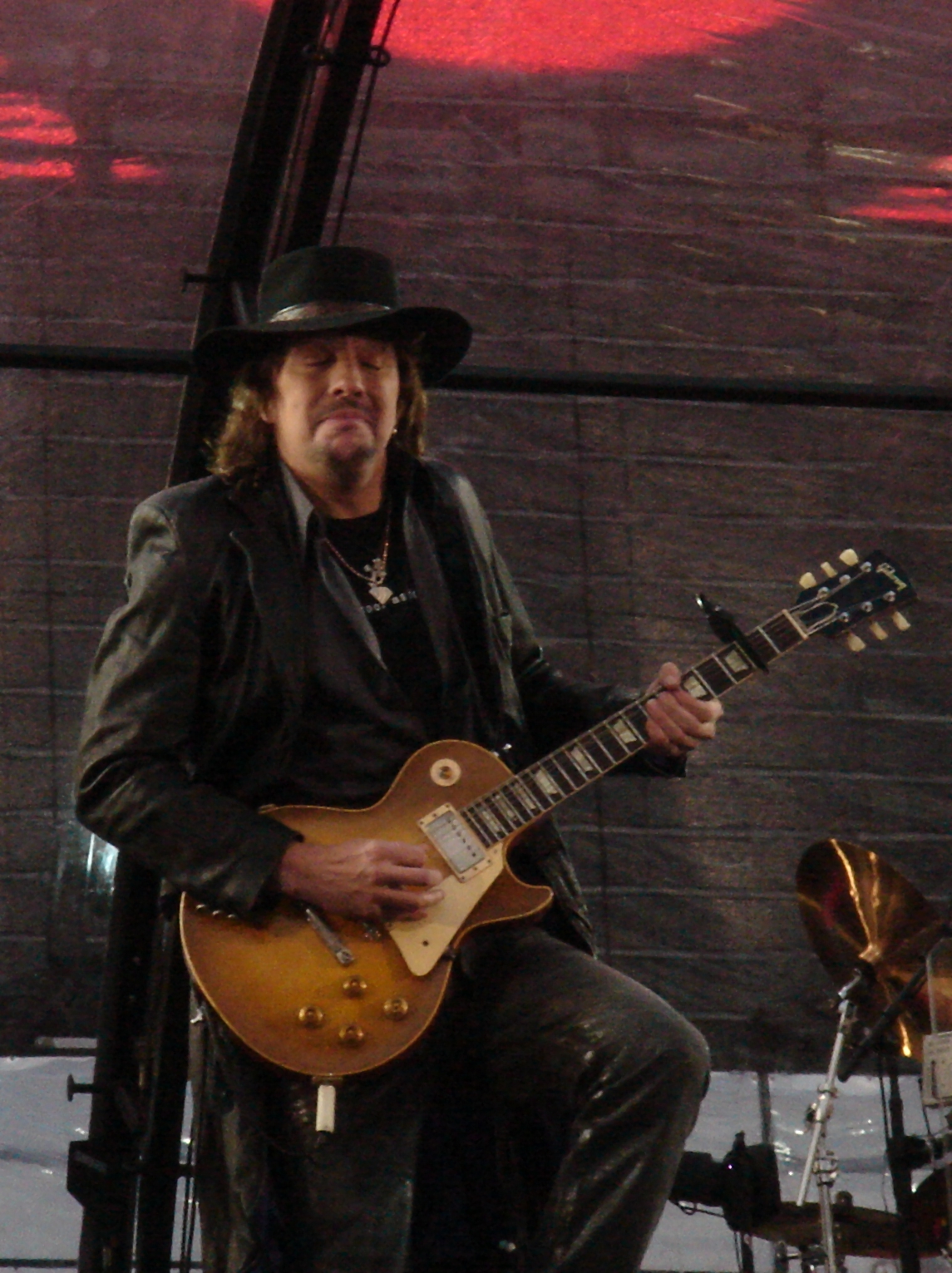
As Sambora developed his collecting interests through the 1990s and 2000s, vintage Gibson instruments became central to both his personal collection and his studio use. Key pieces:
- 1960 Gibson Les Paul Standard — His most celebrated vintage piece, confirmed in his MusicRadar interview: “I wanted people to react when the first chord hit them. It’s a combination of my ’60 Les Paul doubled through the new 100-watt Marshall JCM 2000 Dual Super Lead head and a Mesa/Boogie Rectifier head through a 4×12.” The 1960 sunburst Les Paul Standard is one of the most coveted guitars in rock history. His specific example was described by Gear Page users as having “the most ungodly top I’d ever seen… cherry burst and the flame was crazy and totally over the top.”
- 1959 Gibson Les Paul Standard — Also confirmed in his documented gear; the ’59 and ’60 are adjacent to each other in the history of Les Paul’s most celebrated specifications
- Gibson ES-335 (blonde) — Semi-hollow; used for specific tonal contexts in studio work and certain live applications
- Les Paul given by Les Paul himself — Sambora has referenced receiving a Les Paul from the inventor himself, adding an extraordinary provenance layer to his collection
Sambora described himself to Vintage Guitar as the owner of “a formidable assortment of Les Pauls, Strats, Teles, and tweed Fender amps,” and as “continually hunting for guitars and amps to add to his menagerie.” This is not a managed public image — it’s the authentic enthusiasm of someone who genuinely loves instruments as objects as much as tools.
ESP LTD SA-2 — The Later Career Guitar
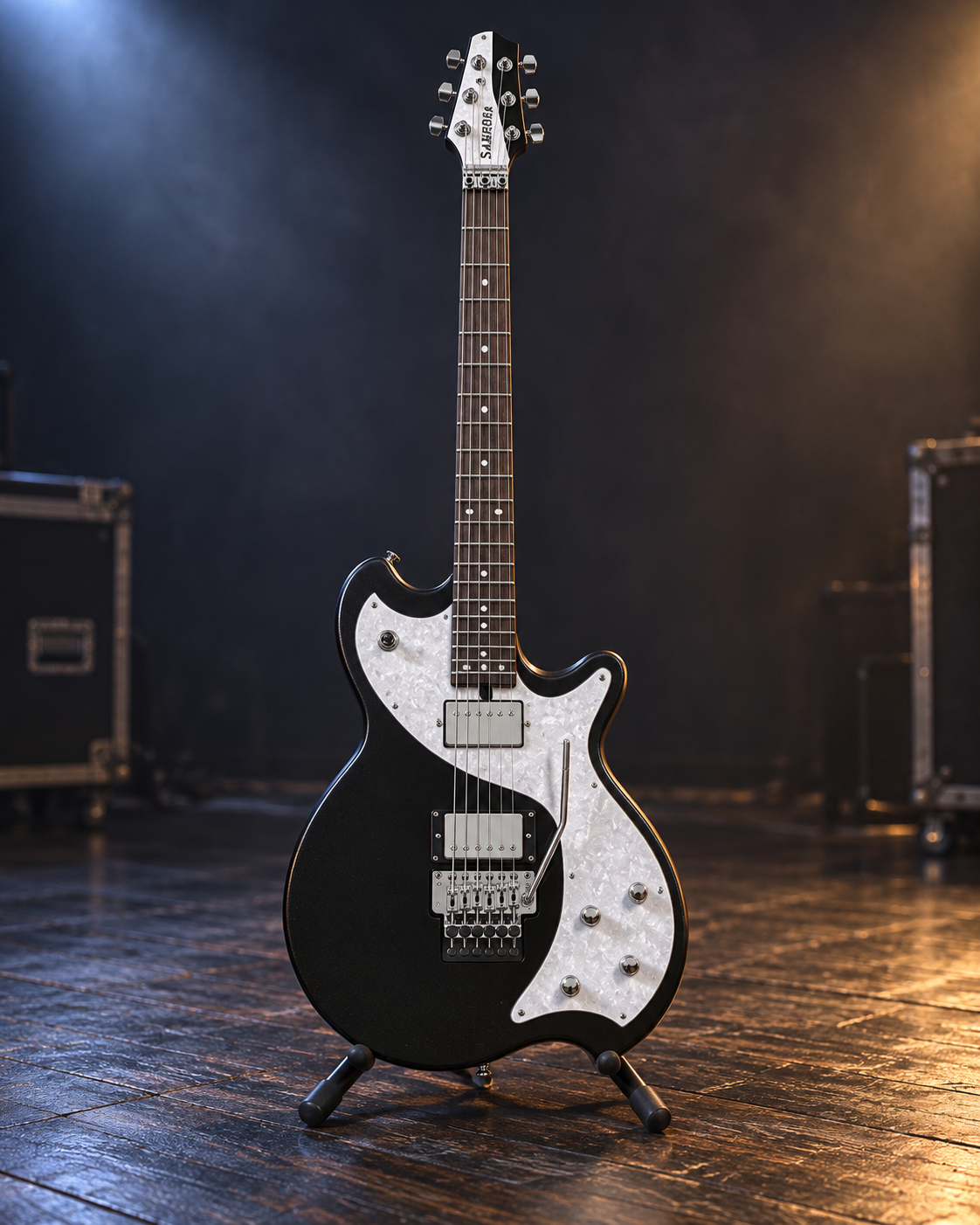
By 2008, ESP had catalogued the LTD SA-2 signature model — the second iteration of a prototype he developed with his then-guitar tech Chris Hofschneider. The production SA-2 features a double-locking tremolo, two humbucking pickups and a white pearloid pickguard. ESP produced the SA-2 in black (the commercially available version), with Sambora using black, white, sunburst, and custom-engraved versions in live performance. The SA-2 was discontinued in 2011.
Paoletti Stratospheric — Italian Hand-Made Craftsmanship
A more recent addition: the Paoletti Stratospheric, a custom hand-made Stratocaster built by Italian luthier Fabrizio Paoletti. Used during the Aftermath of the Lowdown solo tour in 2012 and Bon Jovi’s Because We Can tour in 2013. The Paoletti represents the boutique luthier direction that many senior players pursue as their appreciation for fine craftsmanship deepens — an instrument that brings both tonal quality and the aesthetic pleasure of an object made entirely by hand.
Other Documented Guitars
- Aria Pro II (early career endorsement) — First significant factory endorsement before Kramer
- Gibson Explorer (early career) — Part of his original Gibson collection before the theft
- Gibson SG (early career) — Part of the original stolen collection
- Kramer Explorer-style (1985) — Documented in an early video from 1985; the Explorer shape before the Jersey Star standardised his Kramer identity
- Fender Telecaster (various, including a double-neck blackguard Tele) — Documented in live and studio use; the double-neck blackguard Telecaster is particularly notable
- Fender Stratocaster (various vintage) — Part of his vintage collection for studio work
- First Act Custom Shop (briefly) — Documented through Gear Page references; a specific period of that manufacturer’s high-end instrument offering
- SpeedLoader prototype — A custom guitar developed by Sambora and his tech featuring Fender’s SpeedLoader string system (requiring no string winding through the tuner)

Amps & Cabinets: From Marshall JCM2000 to Eight Vintage Amps Simultaneously
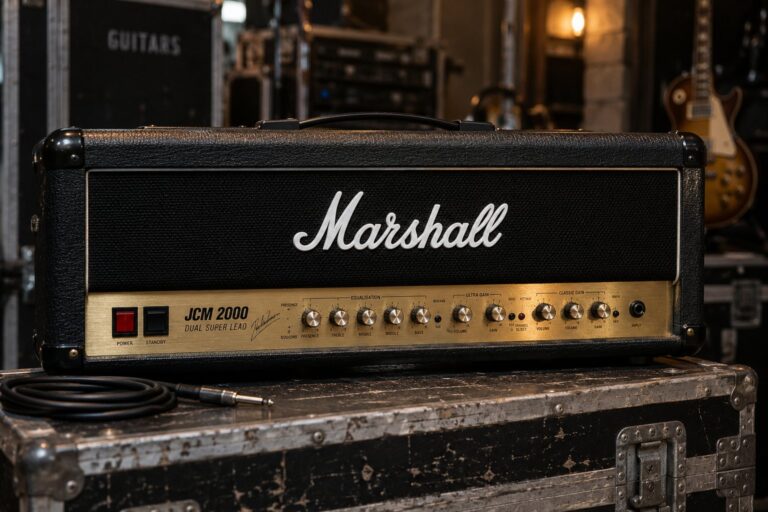
Marshall JCM800 / JCM2000 — The Classic Bon Jovi Live Sound
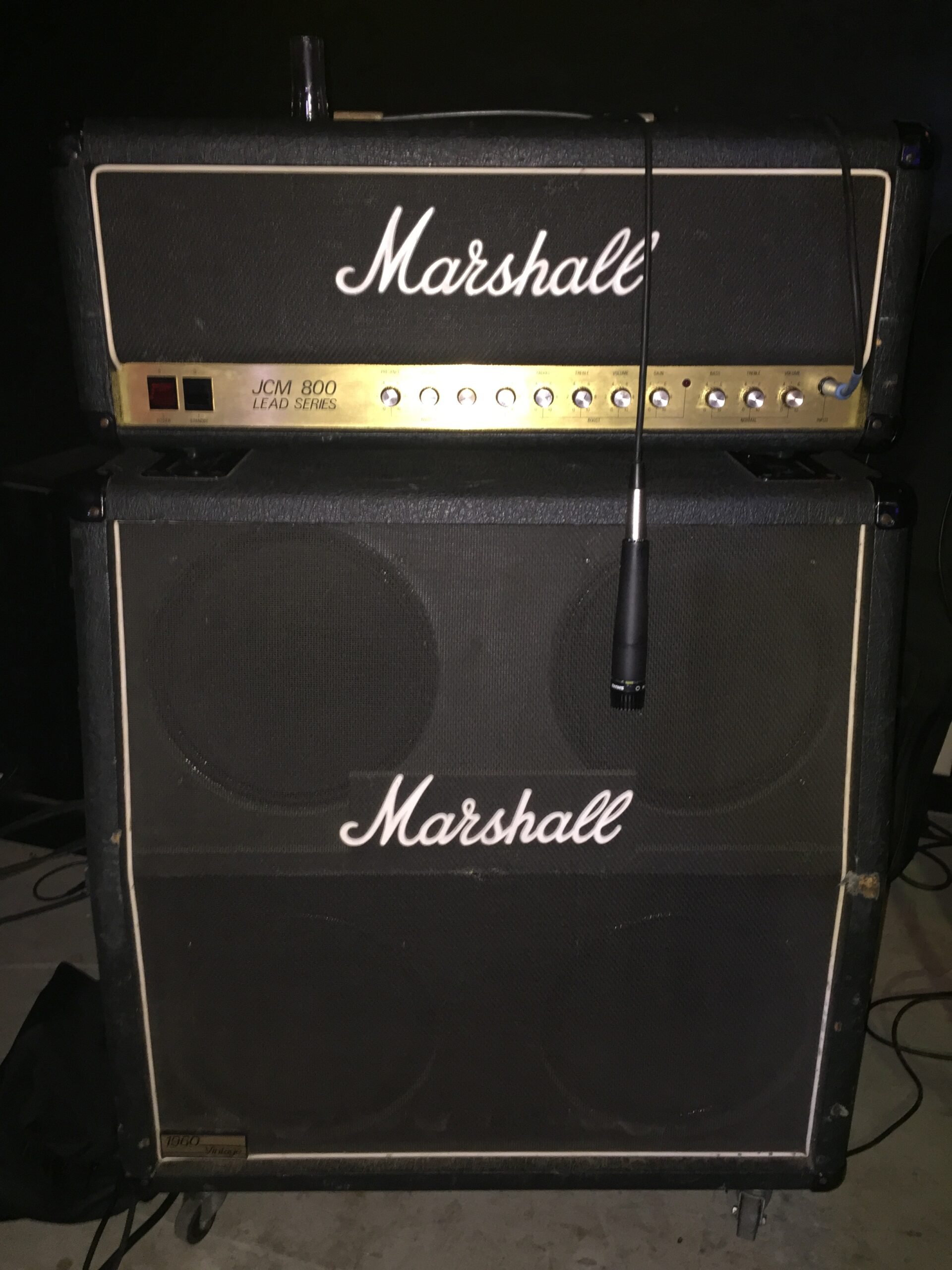
The fundamental amp for Sambora’s Bon Jovi live work was Marshall — consistent with the rest of the Bon Jovi guitar camp: “All three Bon Jovi guitarists use Marshalls.” The specific models evolved: JCM800 in the earlier era, JCM2000 DSL100 in the later period. He described his approach in a MusicRadar feature: “I wanted people to react when the first chord hit them. It’s a combination of my ’60 Les Paul doubled through the new 100-watt Marshall JCM 2000 Dual Super Lead head and a Mesa/Boogie Rectifier head through a 4×12.”
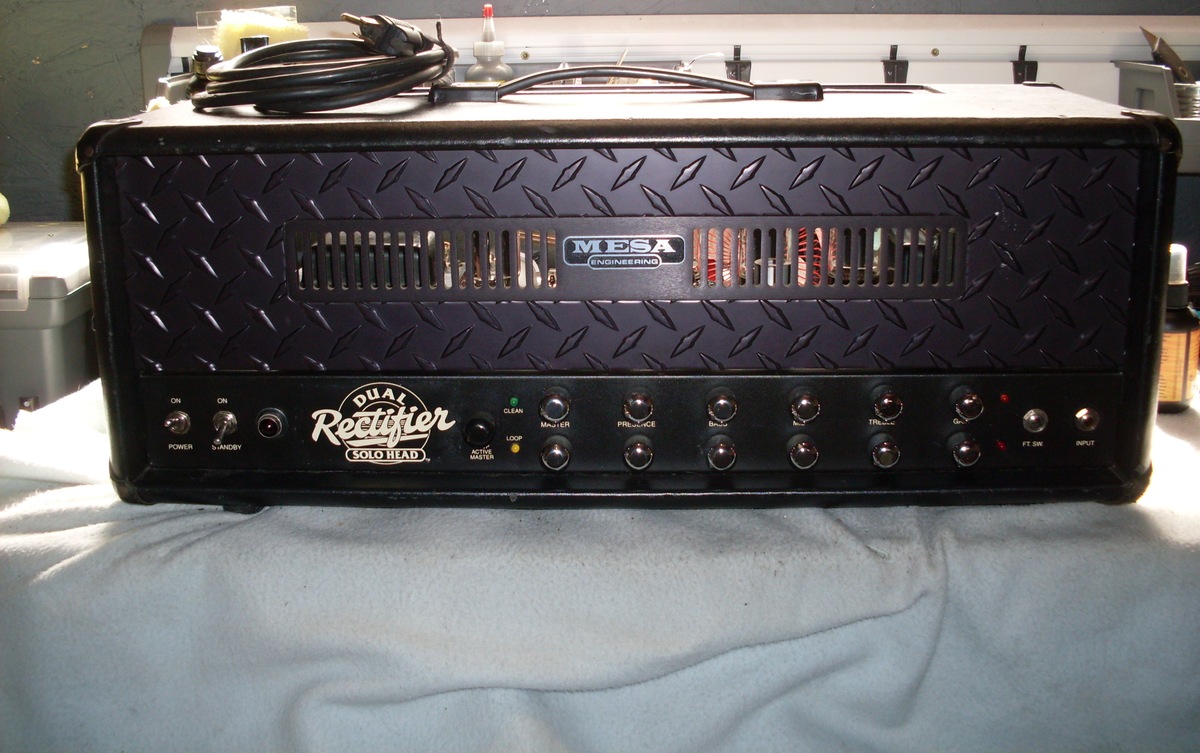
Doubling the Les Paul through both a JCM2000 and a Mesa/Boogie Rectifier — running both amps simultaneously — creates a combined tone that is both thicker and more three-dimensional than either amp alone: the Marshall’s British character and the Mesa’s American character blending into a combined sound that occupied more of the frequency spectrum than one amp could provide.
Diezel Herbert — Have a Nice Day Tour (2005–2006)

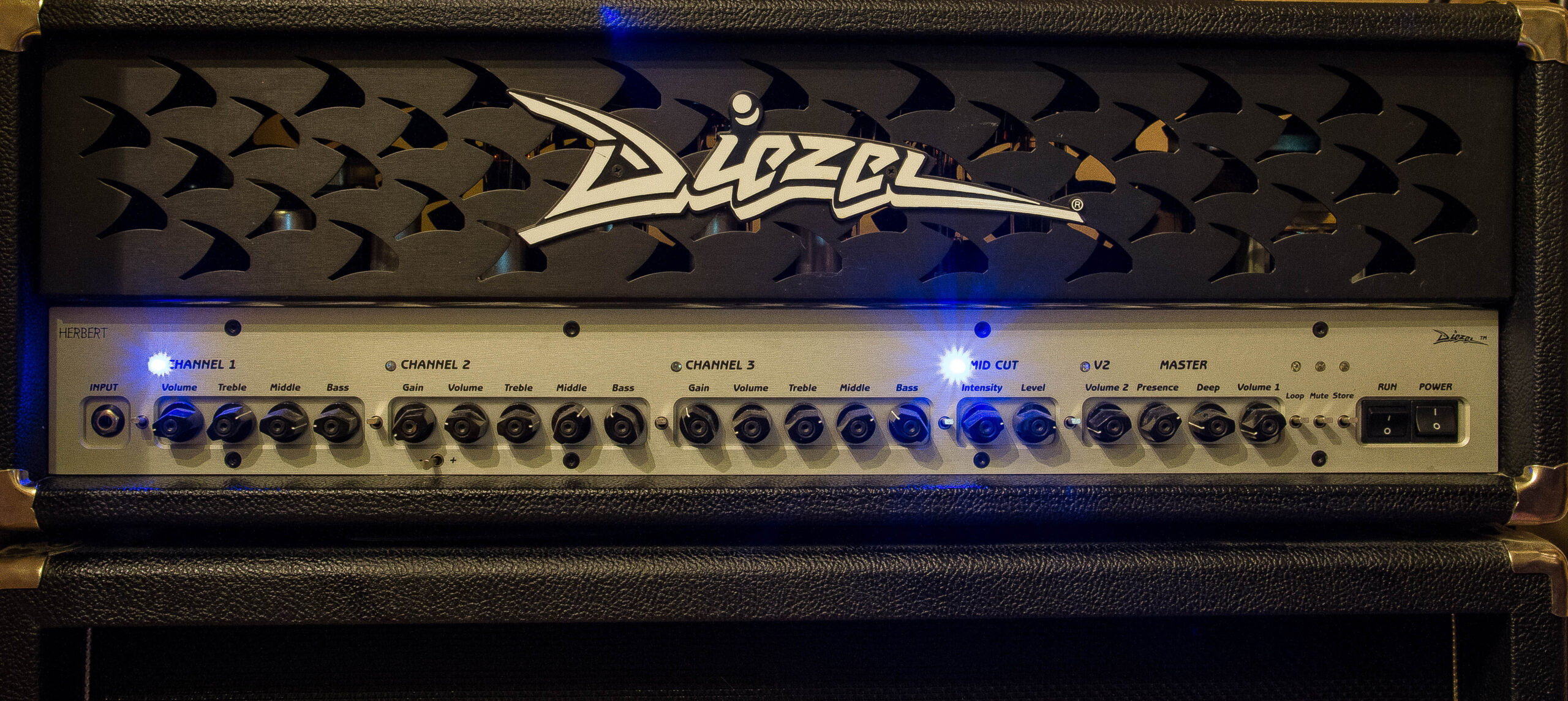
For the Have a Nice Day tour, Sambora used two Diezel Herbert heads in stereo — the German boutique amp that provides exceptional tonal versatility and precision across its three channels. Running two Herberts in stereo gave him the spatial dimension and tonal control required for Bon Jovi’s elaborate live production at that scale.
The Vintage Amp Collection — The Studio Secret
Sambora’s vintage amp collection is where his “total guitar geek” description becomes most concrete. He has described owning a huge collection of vintage amps including Marshall vintage heads, tweed Fender combos (the 1950s and early 1960s tweed construction Fender amplifiers that are among the most tonally celebrated amps ever built), and Vox AC30s — the three most significant vintage amp lineages in British and American rock guitar.
He built a custom amp switcher system that allows him to plug eight amps in simultaneously — the ability to mix the output of eight different amplifier characters into a single blended signal. As he described: “he has an amp switcher which allows him to plug 8 amps in at the same time, allowing him to mix different amp tones together and creating a new sound.”
This eight-amp simultaneous approach is the studio equivalent of the multi-amp live rigs that other players use on stage — instead of moving from amp to amp to find the right character for a given track, Sambora can blend multiple characters until the specific tonal recipe for that moment is achieved. For a player and songwriter of his sophistication, this level of tonal control in the studio is not extravagance — it’s the practical toolkit of someone who takes the recording process seriously.
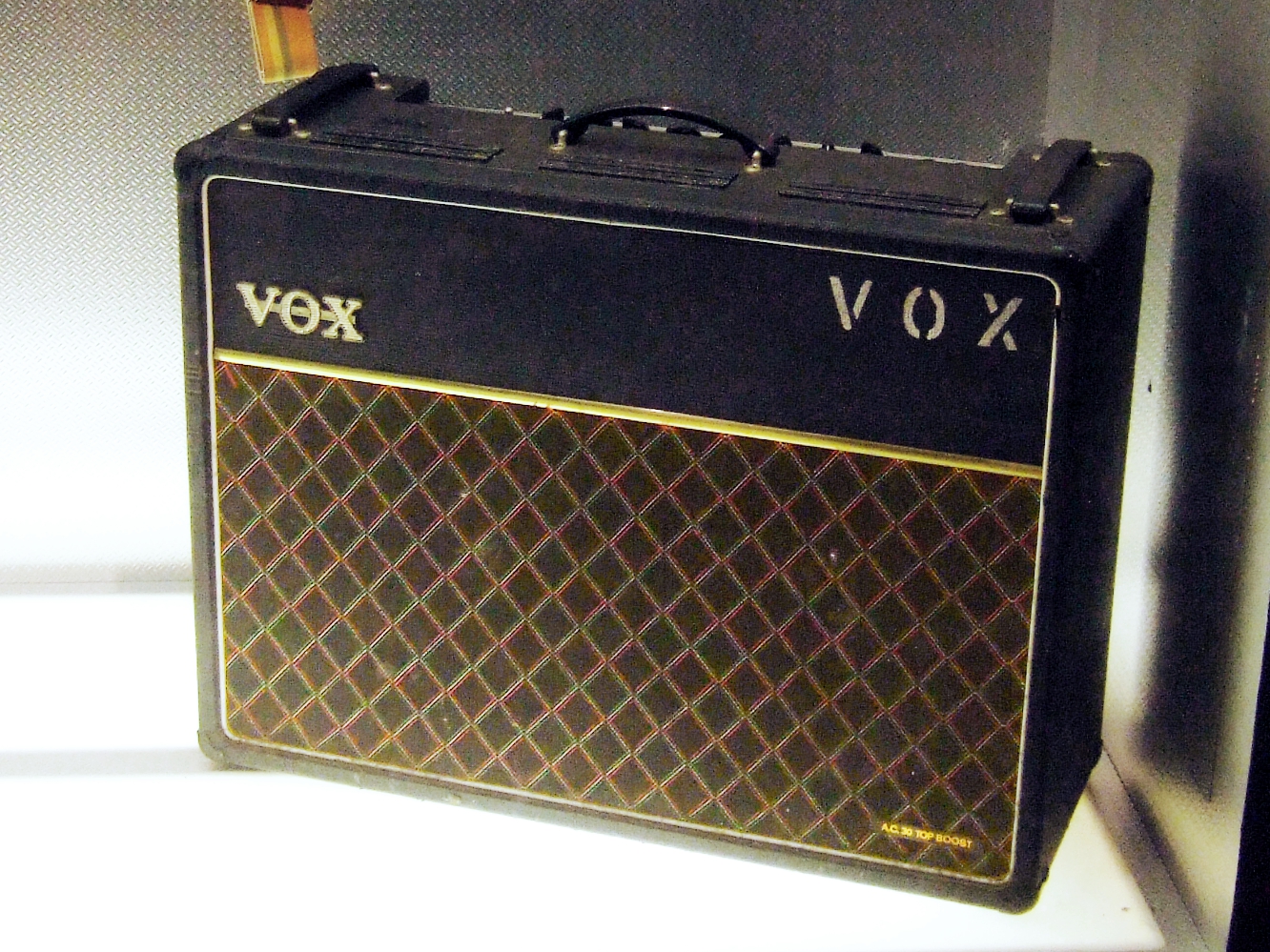
Later Amp Additions

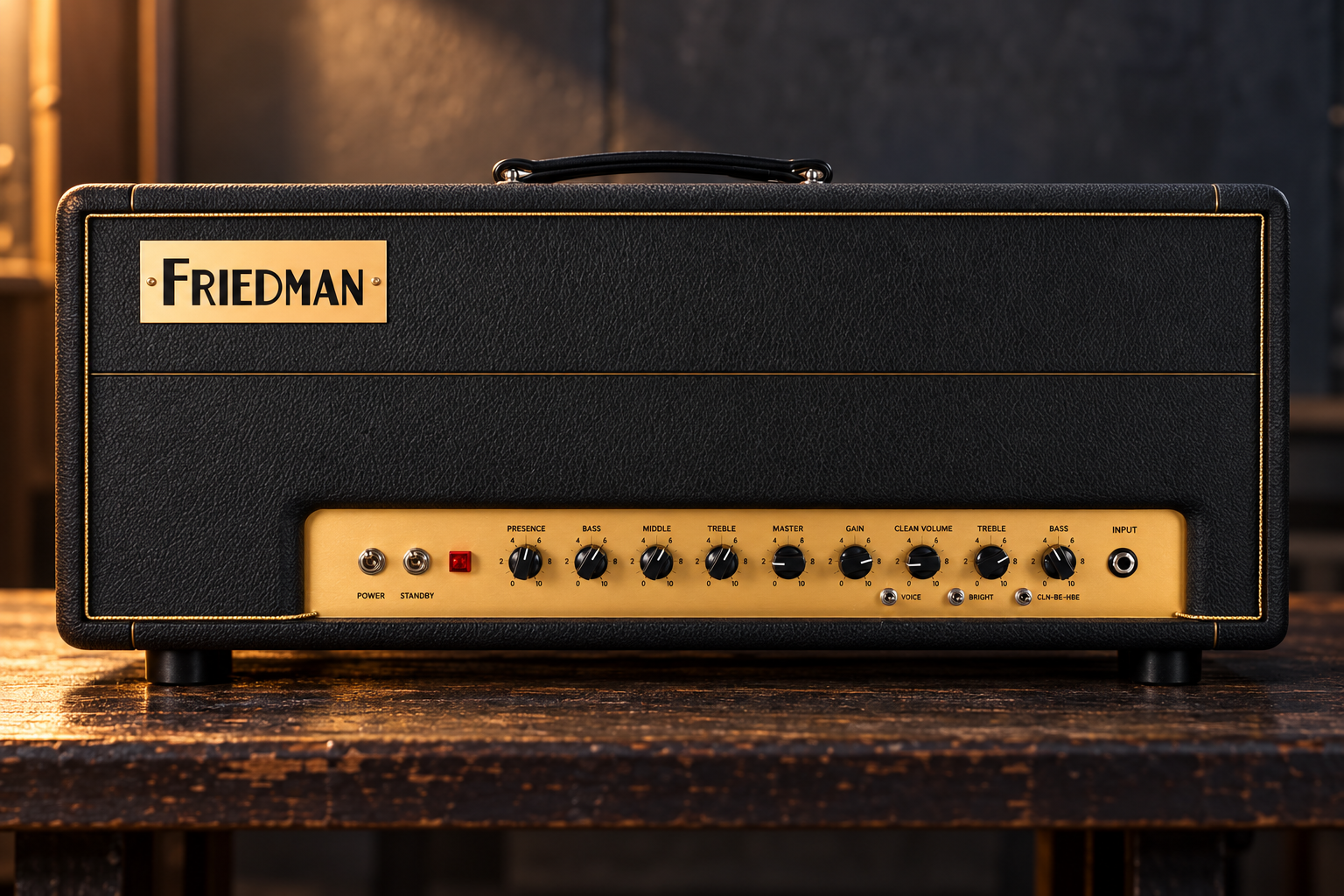
- Blackstar Artisan 100 — Documented in Sambora’s later period; British boutique amp with strong vintage character
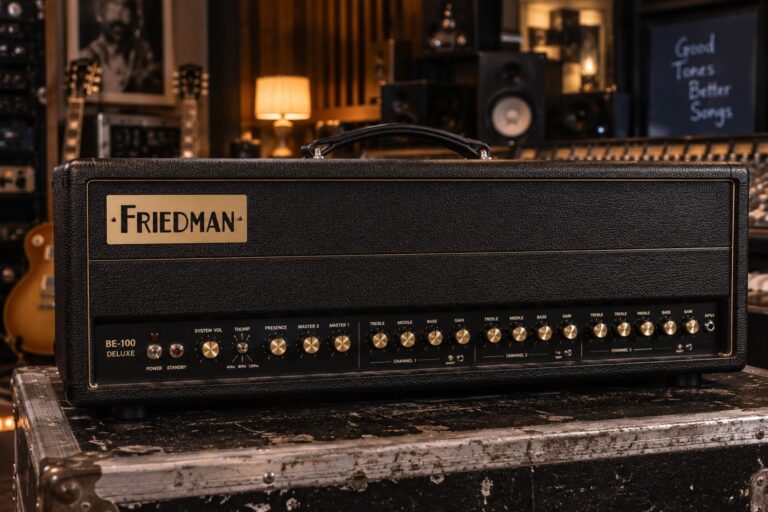
- Friedman Brown Eye 100W — Dave Friedman’s flagship amp; the British-voiced boutique design that became the go-to for serious vintage-tone enthusiasts
- VHT Power Amp — Part of his 2010 recording rack; solid-state power amp for specific studio configurations
| Amp | Era / Context | Notes |
|---|---|---|
| Marshall JCM800 | Early Bon Jovi career | Classic British hard rock tone; all three Bon Jovi guitarists used Marshalls |
| Marshall JCM2000 DSL100 (+ Mesa/Boogie Rectifier, blended) | Crush era (2000) and similar | “My ’60 Les Paul doubled through the new 100-watt Marshall JCM 2000 and a Mesa/Boogie Rectifier head through a 4×12” |
| Diezel Herbert (×2, stereo) | Have a Nice Day tour (2005–2006) | German boutique; four-channel; stereo pair for spatial dimension |
| Eight-amp vintage collection (studio) | Studio use throughout career | Marshalls, tweed Fenders, Vox AC30s; custom amp switcher for simultaneous use; “mixing different amp tones together creates a new sound” |
| Blackstar Artisan 100 | Later career | Boutique British character |
| Friedman Brown Eye 100W | Later career | British-voiced boutique; confirmed in rig-talk forum documentation |
Pedals & Signal Chain: The Talk Box and the Tone Recipe
The Heil Talk Box — The Livin’ on a Prayer Sound
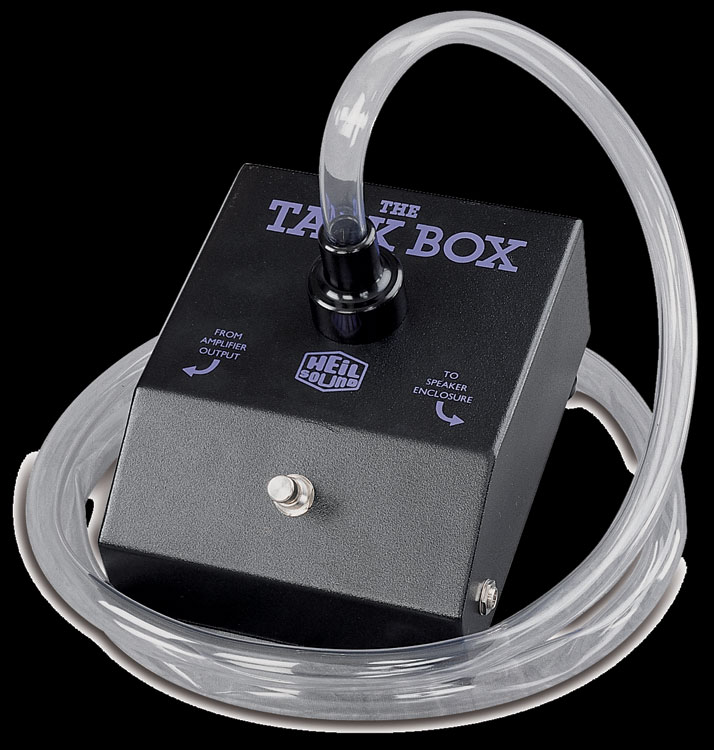
The most historically significant piece of equipment in Richie Sambora’s signal chain is the Heil Talk Box — the device whose routing of guitar signal through a tube into the player’s mouth allows the vocal cavity to shape the tone into vowel sounds. The result on “Livin’ on a Prayer” is the iconic opening — that descending “prayer” vocal-guitar hook that has been recognised by generations of rock fans immediately on first hearing.
Peter Frampton had made the talk box famous in 1976 with “Do You Feel Like We Do” from Frampton Comes Alive! Sambora absorbed the technique and applied it to the specific songwriting context of “Prayer” — not as a showcase for the device’s novelty but as the melodic hook of the entire song. The talk box in “Prayer” does what the best effects do: it serves the song so completely that listeners remember the song, not the effect.
Sambora has also used the Framptone Talk Box (a version associated with Peter Frampton) in some documented contexts.
Tone note: The talk box was not a new invention when Sambora used it on Livin’ on a Prayer. What was new was using it as the primary hook of a song that went to number one. That’s the difference between a device and a musical idea.
Core Effects

- Heil Talk Box / Framptone Talk Box — The signature effect; “Livin’ on a Prayer” intro; selective use throughout career
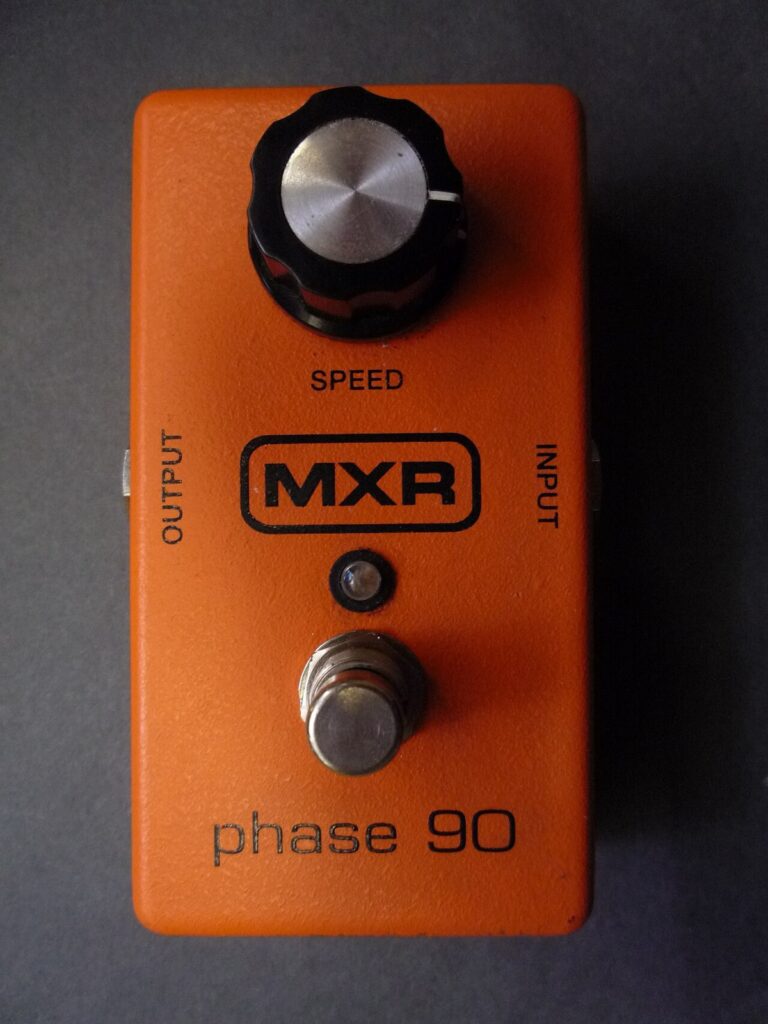
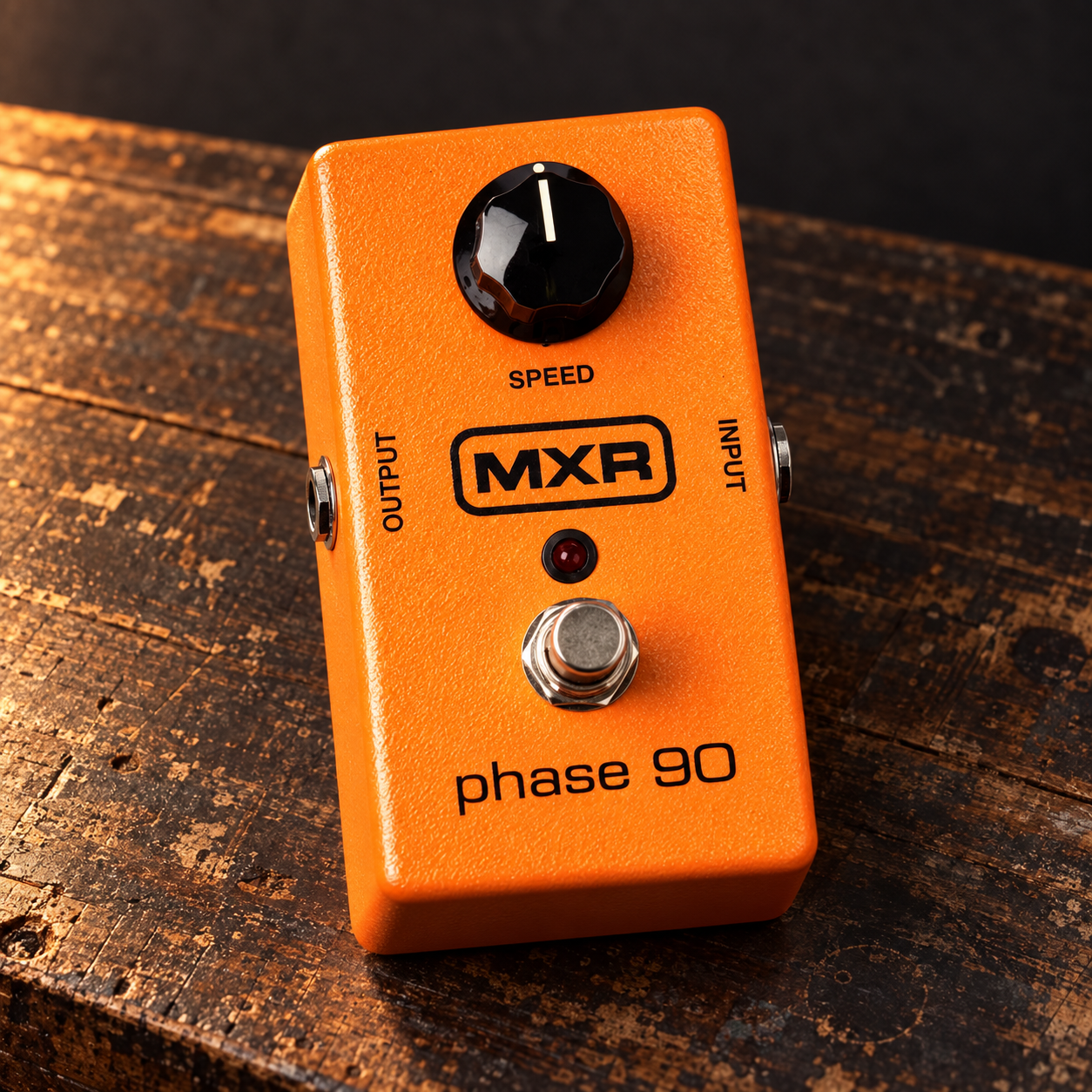
- MXR M101 Phase 90 — Phaser for modulation on specific solos and rhythm passages; used during Bon Jovi tours
- Foxrox effects (various) — Documented on the official Foxrox artist page; specific models not publicly documented in full detail
- Pigtronix EP2 Envelope Phaser — Confirmed on Pigtronix’s website; envelope-controlled phasing for dynamic filter effects
- Shin’s Music Custom Dumbloid Twin Overdrive — A custom boutique overdrive; the Dumbloid is an overdrive inspired by Howard Dumble’s ODS circuit
- Boss CE-2 Chorus — Classic analog bucket-brigade chorus; used for the shimmer on clean passages
- Digital delay (various) — For the spatial depth on lead lines and solos
- Wah pedal (various) — For expressive filter sweeps on solos

The 2010 Studio Rack
Documented in 2010: a recording rack containing two RJM Effect Gizmos (MIDI routing for effects loop management), a custom Suhr amp switcher, a BAE mic pre, a VHT power amp, Voodoo Lab Pedal Power AC and 2 Plus power supplies. This represents the professional studio infrastructure of a player who takes recording quality seriously enough to invest in high-end signal management and power conditioning.
Strings, Picks & Setup
Strings: Not documented in consistent specific detail across the full career. His playing style — melodic lead work combining bending, vibrato, and occasional fast runs — suggests standard-to-medium light electric gauge (.009–.042 or .010–.046) for most electric work.
Picks: Not documented in specific commercial detail. His melodic, feel-oriented playing suggests medium gauge picks; he is not primarily an aggressive downstroke rhythm player in the Kerry King mould.
Guitar setup:
- Floyd Rose locking tremolo on most signature Stratocasters — for the whammy bar use that he employs in live performance
- DiMarzio PAF Pro bridge humbucker in the Fender signature models — vintage-output for organic response
- Star-shaped fretboard inlays — consistent visual signature across all production signature models
- HSS configuration in signature Stratocasters — the humbucker bridge for rock leads, single coil middle and neck for the Strat character he specifically wanted
Tone note: The DiMarzio PAF Pro in the bridge of the signature Strats is a vintage-output humbucker, not the very high-output ceramics of the Kramer era. His pickup choices in the 1990s moved toward warmer, more dynamic response — consistent with the general direction of his playing toward feel and melody over aggression.
Tunings & Tone Philosophy
Standard E tuning for the vast majority of Bon Jovi’s catalog. The emotional directness of Sambora’s playing approach doesn’t require alternate tunings — the character comes from the touch, the vibrato, and the melody, not from retuning shortcuts.
His tone philosophy is stated in the Vintage Guitar interview: “I think it has become a more organic approach. Inside the band’s style, I’ve totally got my own style and I’ve gained my own voice.” The “organic approach” description aligns with his growing use of vintage instruments and classic amps — he was moving toward the natural response of well-made instruments through quality amplification rather than toward the processed, highly saturated sounds of late-1980s production.
He describes himself as “mostly a blues guy” in his fundamental approach, despite the arena rock context. This is the explanation for why his solos sound the way they do: melodic, expressive, rooted in feel rather than velocity. The pentatonic vocabulary deployed in “Bad Medicine” and “You Give Love a Bad Name” is blues vocabulary in arena rock clothing.
Tone note: “Mostly a blues guy.” That’s how he describes himself despite thirty-plus years with one of the biggest arena rock bands in history. The blues foundation is audible if you strip away the production — in the vibrato, in the bend choices, in the melodic directness of his solo lines.
Playing Style & Tone Philosophy: The Songwriter Who Could Also Shred
Richie Sambora is one of the most complete rock musicians in this series — a guitarist, co-songwriter, secondary vocalist, and the person responsible for some of the most recognisable guitar sounds in mainstream rock. Understanding his playing requires separating what he contributed to recording and songwriting (enormous) from what he contributed to the specific tradition of guitar technique (more modest).
The Songwriting Partnership
Sambora and Jon Bon Jovi’s songwriting partnership produced “Livin’ on a Prayer,” “Wanted Dead or Alive,” “You Give Love a Bad Name,” “Bad Medicine,” “I’ll Be There for You,” “Always,” “It’s My Life,” and dozens of other commercially successful rock songs. The quality of this catalog — both melodically and lyrically — is the foundational reason Bon Jovi achieved their specific scale of commercial success, and Sambora is co-responsible for that foundation.
His advocacy for “Livin’ on a Prayer” when Jon wasn’t sure about it demonstrates a songwriting instinct that goes beyond playing ability — he heard the potential in a song that its own primary author hadn’t fully grasped yet. That kind of musical judgment is rare.
Tone note: He fought for Livin’ on a Prayer to be included. The talk box hook was his idea. The song became one of the defining rock songs of the 1980s. That’s three separate contributions to one piece of music — the advocacy, the performance idea, and the playing — all from the guitarist.
The Lead Vocabulary — Melodic Blues in an Arena Context
Sambora’s lead playing is explicitly blues-rooted and melody-first. His solos are constructed to be felt, not merely admired — they have the emotional directness of a blues player applying that tradition to the specific demands of anthemic, accessible rock songs. The “wanted Dead or Alive” solo, the “Bad Medicine” lead — these are singable, memorable, emotionally appropriate to their songs.
He described his approach to Guitar.com: melody over technical flash. “Next time you’re crafting a solo, try singing or humming it first before playing a note. This forces you to create something memorable rather than just a flurry of notes.” This is consistent with the blues tradition of guitar as voice — every note should mean something, and the meaning should be accessible to any listener, not just to other guitarists.
He does possess genuine technical facility — he “had some shredding abilities,” as one music education website acknowledged — but he consistently chose to deploy technique in service of the song rather than as a demonstration in itself.
The Talk Box Technique
The talk box requires specific physical technique that is genuinely demanding: the tube carries guitar signal into the player’s mouth, and the player must maintain clear vowel shapes with consistent pressure and clear phonation while simultaneously playing guitar. The pitch tracking of a talk box is determined by the shape of the mouth/throat cavity — maintaining accurate, expressive pitch modulation while playing guitar at performance tempo is not trivial.
Sambora developed the technique to a level of musical expressiveness that goes significantly beyond the novelty use that many players apply it to. In “Livin’ on a Prayer,” the talk box line is a melodically complete and harmonically accurate guitar solo delivered through vocal cavity shaping. That’s a sophisticated application of a device that can easily become merely gimmicky.
The MTV Unplugged Moment
The 1989 VMA performance that inspired MTV Unplugged demonstrates another dimension of Sambora’s musical intelligence: the ability to understand that the most powerful version of a song might be the simplest one. Two men on stools with acoustic guitars, performing songs that had been produced with full arena rock production — and the audience’s response confirmed that the songs were strong enough to survive the reduction.
This instinct — that great songs don’t need great production to be great — is a rare one in an era defined by its production excess. Sambora and Jon Bon Jovi had it, and its demonstration at the VMAs changed how the music industry thought about acoustic performance for decades.
How to Sound Like Richie Sambora: Building the Bon Jovi Guitar Tone
Sambora’s tone ranges considerably across the Bon Jovi catalog — from the Kramer superstrat crunch of the early albums to the vintage Les Paul warmth of the reunion-era recordings. The most immediately recognisable elements are the talk box (requiring specific equipment) and the specific Marshall-plus-Mesa combination of his live sound.
The Guitar
Stratocaster HSS for the signature era; vintage Les Paul for the warmer, more organic sound of later recordings.
- Fender American Ultra Luxe Stratocaster Floyd Rose HSS — Current best production approximation of his signature Strat configuration; Floyd Rose, HSS pickup config, quality construction
- Fender Player Stratocaster HSS with Floyd Rose — More accessible price point; same essential configuration
- Gibson Les Paul Standard (1960 reissue) — For the vintage-toned studio sound; 60s neck profile, burstbucker pickups
- The Kramer Jersey Star (if available) — For the authentic Slippery When Wet era tone; triple humbuckers, Floyd Rose, star inlays
For “Wanted Dead or Alive” specifically: a 12-string acoustic guitar is essential for the descending intro figure. A 6-string acoustic doesn’t produce the same ringing, jangly character of the original.
The Talk Box — Non-Negotiable for “Livin’ on a Prayer”
There is no substitute for a talk box if you want the “Livin’ on a Prayer” intro. The MXR Talk Box is the most accessible current option; the Heil and Framptone versions are more authentic but harder to find. The talk box requires routing your guitar signal through a power amp into the device’s speaker, which then routes through a tube into your mouth. The mouth shapes the tone. You then sing (actually vocalise) the note values through a microphone.
Learning to use a talk box for the specific “Prayer” line: practice the vowel shapes (“doo-wah-doo-wah”) without the guitar first, then add the guitar playing, then add the microphone pickup. The coordination of all three simultaneously is the genuine skill.
The Amp
British Marshall character for the live tone; vintage American (tweed Fender or Vox) for the organic studio sound.
| Control | Marshall Live Setting | Vintage/Studio Setting | Notes |
|---|---|---|---|
| Gain / Volume | 6–7 | 4–6 (natural breakup) | The Les Paul’s output pushes the amp naturally; moderate gain lets the guitar’s character through |
| Treble | 6 | 5–6 | Present but warm — Sambora’s tone is never bright or thin |
| Middle | 6–7 | 6–7 | Midrange presence for the singing, melodic quality of his lead tone |
| Bass | 5 | 5 | Warm; the Les Paul adds natural warmth without amp enhancement |
| Reverb | Moderate | Light-moderate spring | Space and warmth; unlike Kerry King, Sambora uses reverb |
The Essential Effect
MXR Talk Box — For the iconic “Livin’ on a Prayer” tone. No other effect replicates it. Optional for everything else; essential for that specific song.
Additional effects: MXR Phase 90 for movement on solos; Boss CE-2 chorus for shimmer on clean passages; analog delay for spatial depth on leads.
Budget vs Pro Rigs
Budget — Slippery When Wet era:
- Guitar: Squier Contemporary Stratocaster HSS Floyd Rose or Kramer Striker HSS
- Amp: Marshall DSL20CR or Marshall Code 25
- Effects: MXR Talk Box + MXR Phase 90
- Acoustic: any 12-string acoustic for Wanted Dead or Alive
Pro:
- Guitar: Gibson 1960 Les Paul Standard reissue for studio; Fender Signature Strat (original or current equivalent) for live
- Amps: Marshall JCM2000 DSL100 + Mesa Boogie Rectifier (dual-amp setup, blended)
- Effects: Heil or Framptone Talk Box; MXR Phase 90; Boss CE-2; quality digital delay
Tone note: The vintage Les Paul through the JCM2000 plus Mesa Rectifier blend is the specific setup he described for his 2000 live tone. Both amps simultaneously creates a combined character that neither produces alone — British warmth and American punch in the same signal.
Influence & Legacy: The MTV Unplugged Guitarist
Richie Sambora’s legacy is complicated by a cultural tendency to see Bon Jovi as a pop phenomenon rather than a rock one — which leads to undervaluing the guitar contribution that made the music work. Strip away the production, the Jon Bon Jovi hair, and the stadium contexts, and you find a catalog of extremely well-written rock songs with excellent guitar work at their centre. That guitar work is Sambora’s.
The talk box on “Livin’ on a Prayer” is one of the most recognisable guitar sounds in popular music — not just rock, but popular music broadly. It is heard by people who have never thought about guitar equipment and who couldn’t name a single other guitarist. That kind of cultural penetration is rare.
The 1989 VMA acoustic performance and its role in inspiring MTV Unplugged is a structural cultural legacy — a guitar performance that changed how the music industry thought about acoustic performance and stripped-down presentation for a decade. His direct influence on that specific development gives him a position in music history that extends beyond his own recordings.
His guitar collecting and vintage instrument expertise — the “guitar geek” self-description backed by a collection of vintage Les Pauls, Strats, Teles, and tweed Fenders, plus an eight-amp simultaneous studio system — connects him to the broader culture of serious guitar appreciation that runs alongside but separate from the commercial career.
He is, by the admission of people who followed the 1980s arena rock scene, significantly underrated as a guitarist — someone whose commercial context worked against his critical reputation. The “I always thought it sounded like Richie was playing for the song, and I can definitely appreciate that” assessment from a Gear Page member who doesn’t even particularly like Bon Jovi captures the professional quality that distinguishes him: he serves the music, consistently and skillfully, even when the music is asking him to hold back.
Tone note: He helped inspire MTV Unplugged. He wrote Livin’ on a Prayer and then invented the talk box hook that made it immortal. He owns vintage Les Pauls and eight amps and calls himself a guitar geek. He is underrated. These are four independent facts that should be stated more often in the same sentence.
At the 1989 MTV Video Music Awards, two men sat on stools with acoustic guitars. They had previously performed in arenas with full production values, laser shows, elaborate stage sets, and the complete visual spectacle of 1980s arena rock. Now there were two stools, two acoustic guitars, and forty million people watching.
They played “Livin’ on a Prayer” and “Wanted Dead or Alive.”
Somebody at MTV thought: we should build a whole programme around this idea.
MTV Unplugged ran from 1989 to 1999. Among the albums it produced: Nirvana Unplugged in New York, Eric Clapton Unplugged, Tony Bennett MTV Unplugged, Mariah Carey MTV Unplugged. All because Richie Sambora and Jon Bon Jovi sat on two stools and played their songs simply.
The talk box on “Livin’ on a Prayer” is playing on a radio somewhere right now. It will play on a radio somewhere tomorrow. It will play for as long as radio exists in any recognisable form, which is either forever or a very long time, both of which are longer than most guitar solos can claim.
Richie Sambora is a total guitar geek. He’s also the person whose idea it was to put the talk box on that song.
Both things are the same person, which is why both are worth knowing.
If Sambora’s talk box technique and melodic approach to arena rock guitar has you exploring the Bon Jovi tradition, the guitar philosophy he developed — melody first, feel over flash, songs over solos — connects most directly to the approach documented in our guide to Vivian Campbell’s complete gear history, another melodic hard rock guitarist whose playing was always in service of the song.
And for the player whose legacy of stripped-down acoustic guitar performance and the emotional directness of blues-rooted rock playing parallels Sambora’s most closely, don’t miss our complete breakdown of Eric Clapton’s guitars and gear — the original inspiration (alongside Hendrix) for Sambora’s specific approach to melodic, feeling-first guitar playing.
FAQ: Richie Sambora Guitars & Gear
- What guitar is Richie Sambora most associated with?
- Two instruments define different eras of his career: the Kramer Jersey Star for the Slippery When Wet and late-1980s Bon Jovi era (triple humbuckers, Floyd Rose, star inlays), and the Fender Richie Sambora Signature Stratocaster for the 1990s period (HSS configuration with DiMarzio PAF Pro bridge, Floyd Rose, star inlays). His vintage collection centres on a 1960 Gibson Les Paul Standard — described as having an exceptional flame maple top — used extensively in studio recordings. He also owns a 1959 Les Paul and received a Les Paul directly from Les Paul himself.
- What is the talk box on “Livin’ on a Prayer” and how does it work?
- The talk box is a device that routes guitar signal through a power amplifier into a small speaker inside a box, which then directs the sound through a plastic tube into the player’s mouth. The player’s vocal cavity — the shape of the mouth, throat, and tongue — acts as a resonant filter that shapes the guitar tone into vowel sounds. By moving the mouth to form different vowels while playing guitar, the player creates the characteristic wah-like, talking guitar sound. Sambora used a Heil Talk Box for “Livin’ on a Prayer” and a Framptone Talk Box in other contexts. The result on the intro of “Prayer” is one of the most recognisable guitar sounds in rock history.
- What was Richie Sambora’s Ovation triple-neck guitar?
- A custom-made three-neck guitar built by Ovation specifically for Sambora in the 1980s. The black example documented by Rock Stars Guitars was used on the New Jersey tour. Its three necks combined mandolin, six-string guitar and twelve-string guitar. Sambora commissioned it for his solo acoustic interlude before “Wanted Dead or Alive,” allowing him to change voices without changing instruments.
- What amplifiers did Richie Sambora use with Bon Jovi?
- Marshall heads were his primary live amp throughout his Bon Jovi career — the JCM800 in the early years and JCM2000 DSL100 in the 2000s era. He described his studio approach for the Crush album period: “My ’60 Les Paul doubled through the new 100-watt Marshall JCM 2000 Dual Super Lead head and a Mesa/Boogie Rectifier head through a 4×12” — running both simultaneously for a blended British/American character. For the Have a Nice Day tour (2005–2006) he used two Diezel Herbert heads in stereo. His studio collection includes vintage Marshalls, tweed Fender combos, and Vox AC30s connected through a custom amp switcher allowing eight amps simultaneously.
- Did Richie Sambora have a Fender signature guitar?
- Yes — his signature Stratocaster was produced in USA, Mexican and Japanese versions. The Mexican Richie Sambora Standard had a rosewood fingerboard with dot markers, a DiMarzio PAF Pro bridge humbucker and a Floyd Rose II. Fender Japan’s 1996 catalog lists the STR-135RS in Cherry Sunburst or Snow White and the STR-140RS in Black Paisley; both had maple fingerboards, star inlays and Floyd Rose Original tremolos. The later USA model 0102602 used three Noiseless pickups and a vintage-style synchronized tremolo.
- How did Richie Sambora help inspire MTV Unplugged?
- At the 1989 MTV Video Music Awards, Sambora and Jon Bon Jovi performed acoustic versions of “Livin’ on a Prayer” and “Wanted Dead or Alive” on stools with acoustic guitars — a stripped-down presentation that was dramatically different from their usual high-production arena rock show. The performance was so well-received that it reportedly helped inspire an MTV executive to develop an entire programme around the concept of stripped-down acoustic performances. MTV Unplugged debuted in 1989 and ran through 1999, producing celebrated recordings by Nirvana, Eric Clapton, Tony Bennett, and many others.
- How do I get Richie Sambora’s guitar tone?
- For the classic Slippery When Wet era: a triple-humbucker Stratocaster-style guitar (Kramer Jersey Star or HSS Stratocaster with Floyd Rose) through a Marshall JCM800 or equivalent, moderate gain, mids present, with MXR Phase 90 for solos. For the “Livin’ on a Prayer” talk box intro: an MXR Talk Box (or Heil/Framptone original) is essential — there is no substitute. For the later vintage sound: a Gibson Les Paul (1960 or similar specs) through a Marshall JCM2000 blended with a Mesa Boogie Rectifier, for the dual-amp combined character he described. In all contexts: prioritise melody, bend and vibrato expressiveness, and the blues-rooted approach that Sambora himself describes as his foundation.
Sources and image credits
Fender signature-model checks: Fender 15 July 1998 price and specification list, page 12; Fender Japan 1996 catalog, RS-18–19; and Fender factory service drawings for Mexican model 1132700 and USA model 0102602.
Amplifier specification checks: Diezel Herbert owner’s manual (three channels) and Friedman’s account of the original BE circuit’s British voicing.
ESP LTD SA-2 production specifications: ESP 2008 USA Product Catalog, printed page 16 (SA-2 model row and photograph).
Ovation triple-neck configuration: Richie Sambora’s own explanation in Guitar World, “Dear Guitar Hero: Richie Sambora”, published 3 November 2010. Instrument and tour documentation: Rock Stars Guitars’ archive of Sambora’s black Ovation triple-neck.
Richie Sambora performing with Orianthi at the She Rocks Awards in Anaheim, 23 January 2015. Photo: Orianthi 01 23 2015 -13 (16266834038) by Justin Higuchi / CC BY 2.0. Copyright (c) 2015 Justin Higuchi. Source previously processed with Acorn version 4.5.3. Cropped to 16:9, resized and JPEG encoded in the existing derivative; complete foreground guitars, hands and photographer watermark retained. Original source metadata restored without changing image pixels.
- Richie Sambora with a Gibson Les Paul in Dublin, 2006. Photo: James Anderson / CC BY-SA 3.0. Existing crop by Stefan-Xp; no further crop.
- A two-channel Mesa/Boogie Dual Rectifier Solo Head, illustrating the Rectifier family discussed in Sambora’s dual-amp setup. Photo: “90s Mesa/Boogie Dual Rectifier” by Roadside Guitars (source notice: “COPYRIGHT, 2007”) / CC BY-SA 2.0. Upper background cropped, resized and JPEG-encoded; adaptation under the same license.
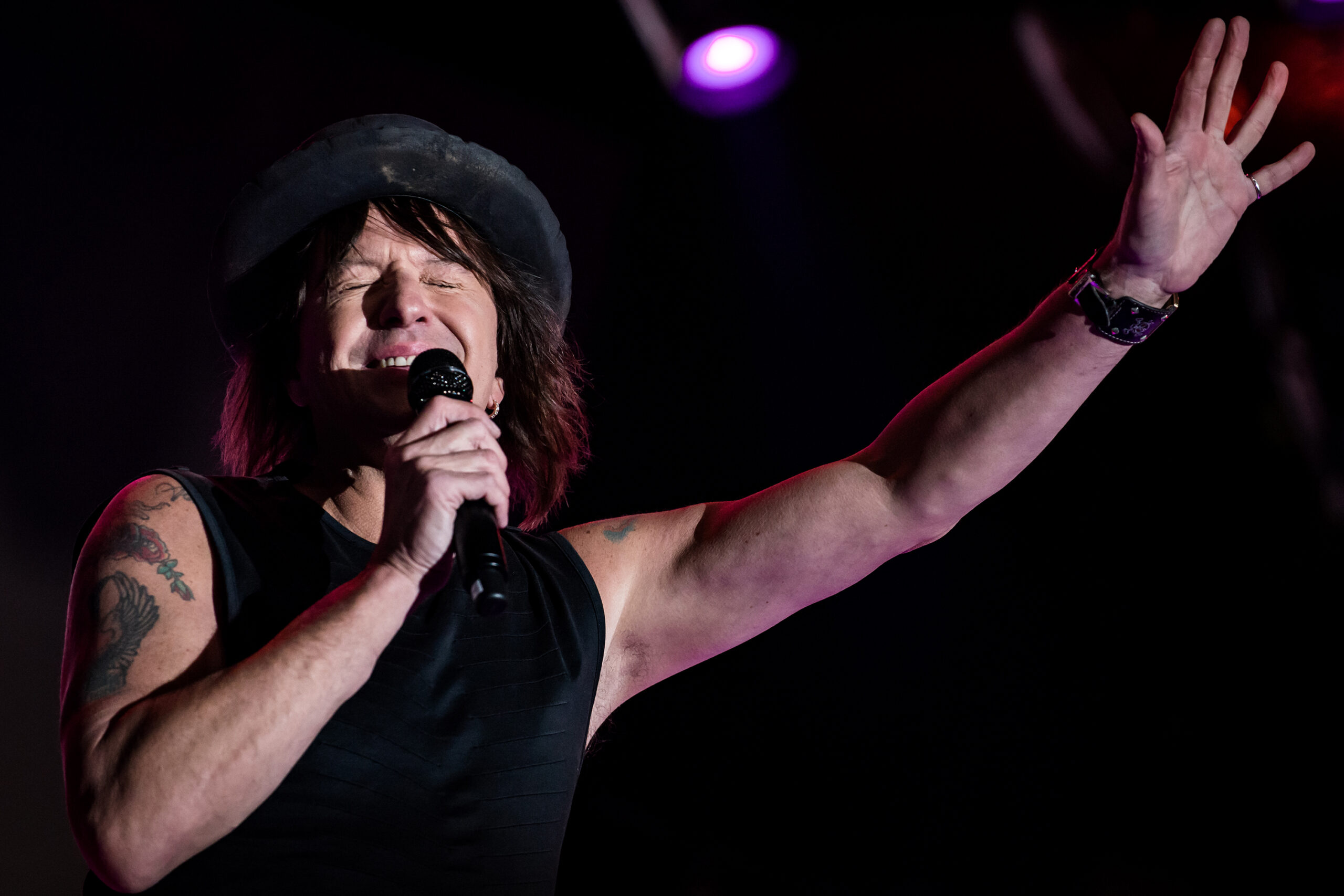
- Sambora on vocals with RSO at the Winter NAMM Show, Anaheim, 19 January 2017.. Photo: Justin Higuchi / CC BY 2.0. Copyright (c) 2017 Justin Higuchi. Full frame, resized for the web.
- Gibson Explorer model example. Photo: Guitarpimp / CC BY 3.0. Existing side-background crop and proportional resize; complete instrument retained.
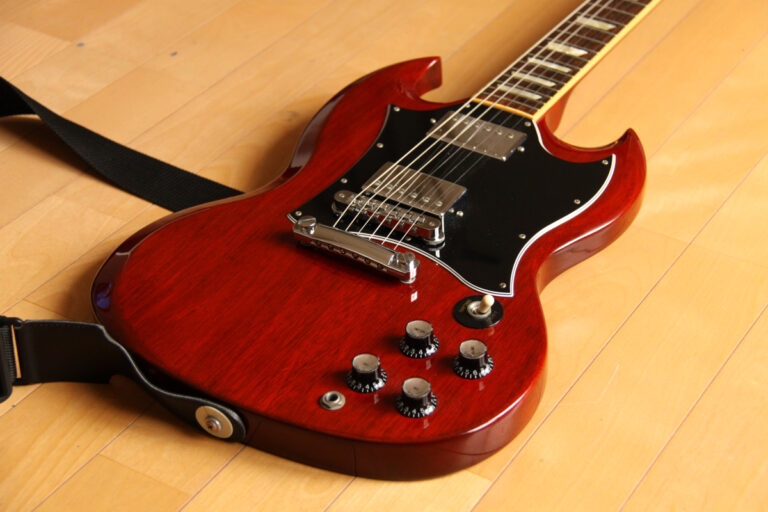
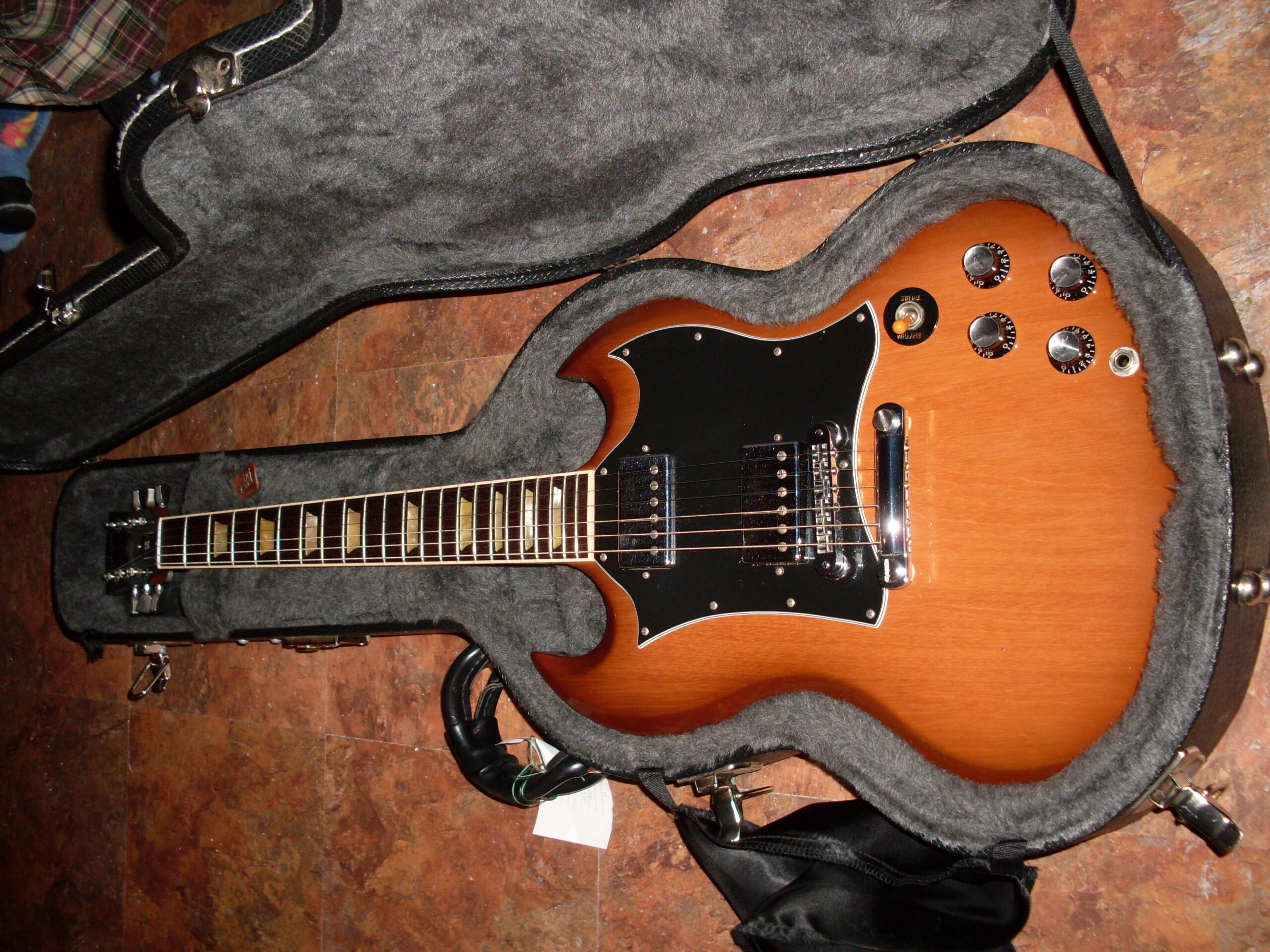
- Gibson SG Standard model example. Photo: “Gibson In Case” by Roadside Guitars (source notice: “COPYRIGHT, 2007”) / CC BY-SA 2.0. Full frame resized for the web; adaptation under the same license.
- Marshall JCM800 Lead Series. Photo: John2112 / CC BY-SA 4.0. Full frame, automatically oriented and resized for the web.
- Diezel Herbert Mk I. Photo: Luke dukeee / CC BY-SA 4.0. Full frame resized for the web.
- Vox AC30 Top Boost. Photo: wetwebwork; existing crop and contrast/color adjustments by Clusternote / CC BY-SA 2.0. Complete amplifier retained; existing derivative used unchanged.
- Dunlop Heil Talk Box. Photo: kevin / CC BY 2.0. Full original frame.
Image credits
- Gibson SG Standard: Sonya, Wikimedia Commons, CC BY-SA 4.0.
- Marshall JCM2000 DSL100: GuitarGangsters AI-generated reference illustration, not a photograph.
- Friedman BE-100 Deluxe: GuitarGangsters AI-generated reference illustration, not a photograph.
- MXR Phase 90: Roadside Guitars, Wikimedia Commons, CC BY-SA 2.0.
- Diezel Herbert: Luke dukeee, Wikimedia Commons, CC BY-SA 4.0.
.jpg)

_01_19_2017_-9_(31889906404).jpg)


.jpg)
_clipped.jpg)


