Albert Lee Guitars & Gear: The Complete Guide to Mr. Telecaster
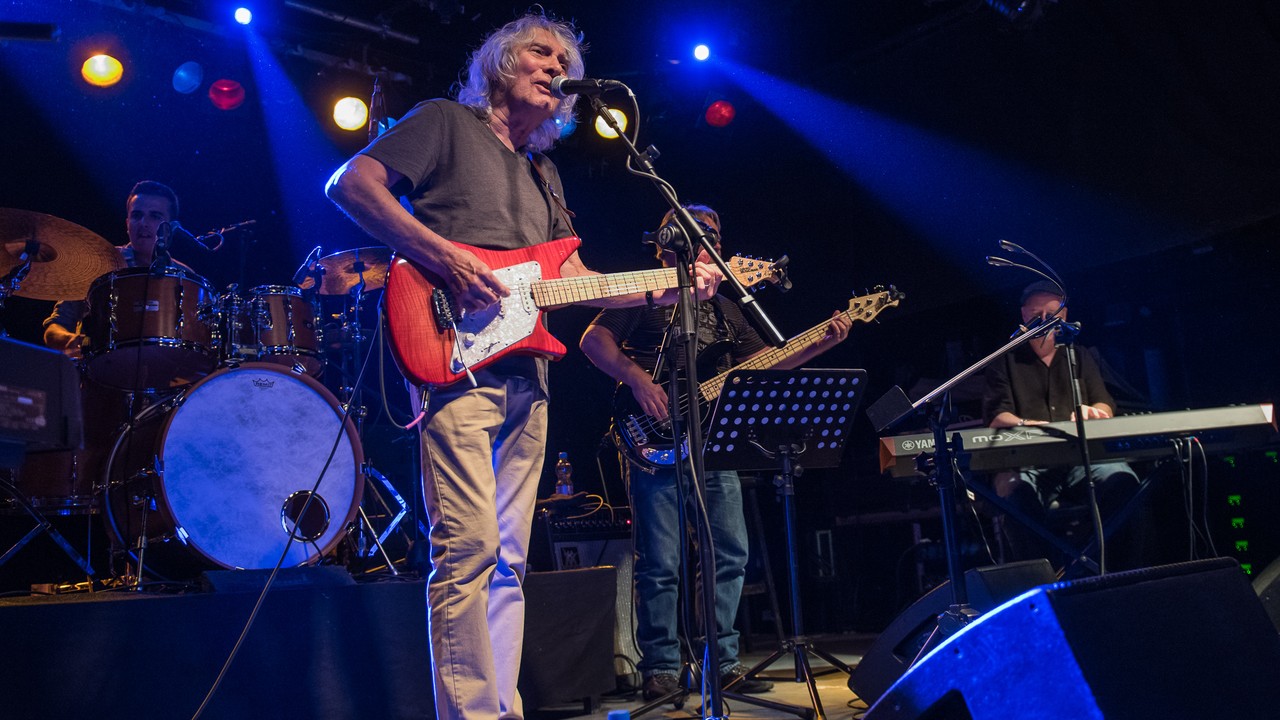
Albert Lee performing at Der Hirsch in Nuremberg, Germany, on 15 May 2017. Photo: Stefan Brending / Lizenz: Creative Commons CC-BY-SA-3.0 de. © www.2eight.de Stefan Brending, via Wikimedia Commons. Work: 2017 Albert Lee - by 2eight - 8SC6386.jpg. Cropped to 16:9, resized and JPEG re-encoded. Adapted image licensed under CC BY-SA 3.0 DE. Source: https://commons.wikimedia.org/?curid=58971881 License: https://creativecommons.org/licenses/by-sa/3.0/de/legalcode
Eric Clapton wrote the introduction to Albert Lee’s biography. He didn’t phone it in.
“He is a great, great player, fluid, lyrical, and free — like a jazz musician, but with country scales; like Django, but with a bluegrass past.”
Elsewhere, Clapton has been more direct: “He’s the greatest guitarist in the world. The ultimate virtuoso. His skill is extraordinary, his ear is extraordinary, and he’s gifted on just about every level.”
Emmylou Harris said: “When St. Peter asks me to chronicle my time down here on Earth, I’ll be able to say, with pride if that’s allowed, that for a while, I played rhythm guitar in a band with Albert Lee.”
That’s Emmylou Harris saying she played rhythm guitar in a band — a supporting role — and considering it a biographical highlight that she’ll be proud to mention at the gates of heaven. The guitarist she was supporting was Albert Lee.
He is from Herefordshire, England. He learned American country music from records while living in London. He absorbed Jimmy Bryant, Cliff Gallup, Scotty Moore, and James Burton, and then synthesised their vocabularies into something specifically his own — a hybrid-picking, double-stop-bending, cascading-delay country guitar style that has no precise American equivalent. He replaced James Burton in Emmylou Harris’s Hot Band in 1976. He played with Eric Clapton for five years. He toured with the Everly Brothers for twenty years. He won a Grammy in 2002 for “Foggy Mountain Breakdown.”
He is still playing. He tours in 2026.
Background: Lingen, Blackheath, London, and the American Music That Came Through the Radio
Albert William Lee was born December 21, 1943, in Lingen, Herefordshire — a small town near the Welsh border in the west of England. His family was of Romani heritage. They moved to Blackheath in South London when he was young, and it was in London that his musical development took place.
His father was a musician, and Lee studied piano from age seven. But it was the rock and roll and country records coming from America — Buddy Holly, Jerry Lee Lewis, and then the guitar playing of Jimmy Bryant, Cliff Gallup (Gene Vincent’s guitarist), Scotty Moore, and James Burton — that captured his specific musical imagination. Guitar Player confirmed: “As a young man in his native England, Lee was inspired by Jimmy Bryant, Cliff Gallup, Scotty Moore, and James Burton to forge his own white-knuckle picking style from elements of hot-rod country and jump-jivin’ rockabilly.”
He bought a second-hand Höfner President guitar as his first instrument, then traded it for a Czechoslovak Jolana Grazioso (the forerunner of the Futurama — the same budget guitar that George Harrison had used). He left school at sixteen to play professionally. He moved through various bands in the London R&B and rock scene — swapping bands with the likes of Jimmy Page and Chris Farlowe in the constantly fluid London club circuit of the early 1960s.
The pivotal gear moment came in 1963. Guitar Player quoted him directly: “Back in 1963, I bought a second-hand Tele and it changed my life completely. The Tele had a really wiry sound compared to my Les Paul Custom. I immediately began to approach music differently.” The Telecaster’s specific character — the bridge pickup’s wiry, cutting single-coil tone — transformed his playing in the same way it had transformed James Burton’s and Roy Buchanan’s: not as an accidental discovery but as a deliberate recognition that this specific instrument suited his specific musical direction.
In England in the early 1960s, Telecasters were rare and misunderstood. Lee described the cultural context: “Telecasters were quite rare in England. They had the image of being a rhythm guitar because the band over there in the early ’60s was Cliff Richard and the Shadows. The lead player had a Stratocaster, and the rhythm player had a Telecaster, so everyone thought that Teles were rhythm guitars and there weren’t that many around.” By choosing the Telecaster for lead playing — the guitar that his cultural environment considered a rhythm instrument — he was already departing from convention.
Heads Hands & Feet, the late-1960s country-rock group he co-founded, gave him his first significant platform. The band’s original recording of “Country Boy” (1971) established the song that would become his signature piece across multiple subsequent re-recordings and live performances.
He moved to Los Angeles in 1974. In 1976 he was asked to join Emmylou Harris’s Hot Band, replacing James Burton — one of his own primary guitar heroes — who was returning to play with Elvis Presley for the Las Vegas residency. Lee described his initial intimidation at replacing Burton; the gig proved successful, and the recordings with Harris produced some of his most celebrated playing.
His five years with Eric Clapton (1978-1983) further established his international profile. The 1983 Everly Brothers reunion at the Royal Albert Hall — for which Lee served as musical director — led to over twenty years performing with the duo. He appeared at the Concert for George (2002) and the Crossroads Guitar Festival (2007, 2010).
He received the UK Americana Awards Trailblazer Lifetime Achievement Award in 2017. He is still touring internationally as of 2026.
Tone note: He replaced James Burton in Emmylou Harris’s Hot Band. James Burton — one of Lee’s own guitar heroes, the man he’d studied as a young musician in London — left the band to return to Elvis Presley, and Lee was his replacement. The specific circularity of this — a musician absorbing a hero’s vocabulary so completely that he becomes good enough to take the hero’s chair when the hero moves on — is one of the more elegant biographical progressions in this series.
The Rig: Albert Lee’s Guitars, Amps & Gear
Guitars: From Höfner to Telecaster to Music Man
Early Instruments — The London Years
Lee’s progression through instruments in his early career reflects the limited availability and specific cultural context of guitars in early 1960s England:
- Höfner President — His first guitar; a German-made archtop in the Höfner tradition; the standard starter guitar for British musicians of the period before American imports became widely available
- Jolana Grazioso (Futurama) — The Czech-made solid-body guitar he traded the Höfner for; the same budget instrument George Harrison had used early in his career; a compromise between an American Stratocaster’s design concept and the manufacturing capacity available behind the Iron Curtain
- Gibson Les Paul Custom — His primary guitar before the Telecaster; a high-quality instrument that he described as having a warmer, fuller sound that the Telecaster’s “wiry” character contrasted with dramatically when he switched
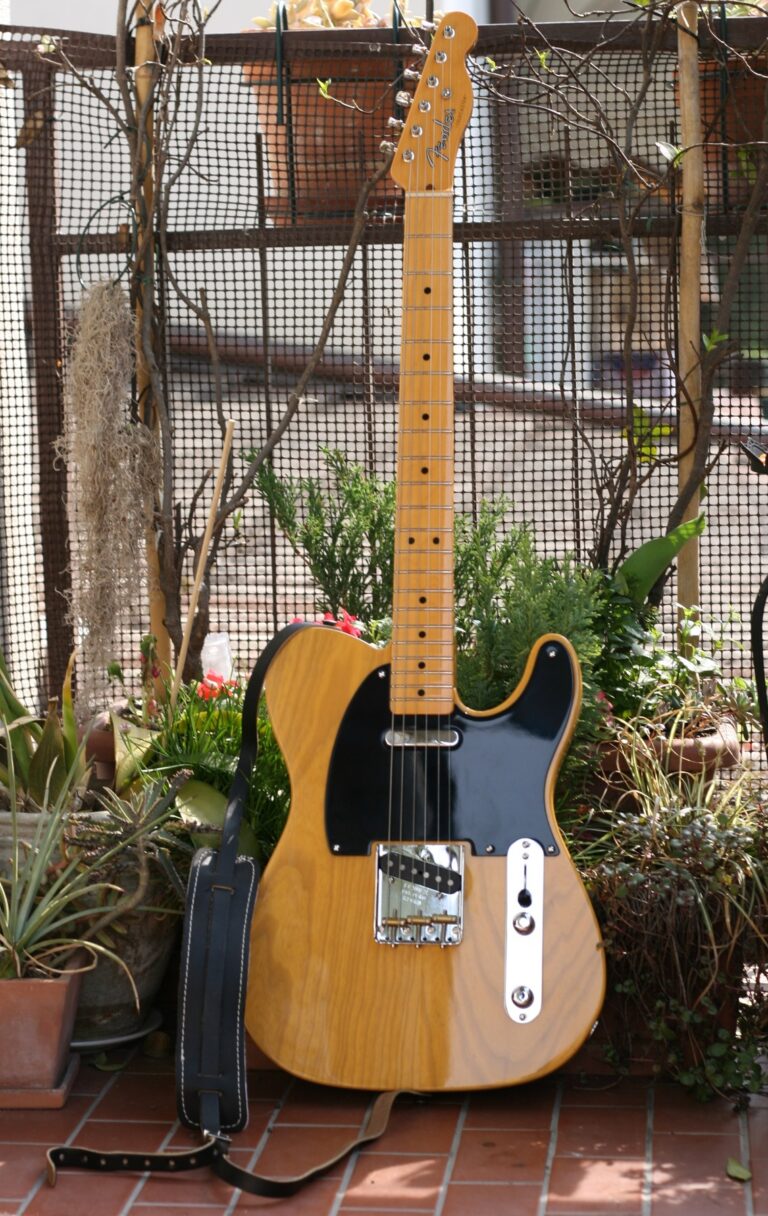
1953 Fender Telecaster — The Guitar That Changed Everything
The specific Telecaster that transformed Lee’s playing was a second-hand 1953 model he acquired in 1963. He has been direct about its impact: “Back in 1963, I bought a second-hand Tele and it changed my life completely. The Tele had a really wiry sound compared to my Les Paul Custom. I immediately began to approach music differently.”
The 1953 Telecaster’s character: maple neck, ash body, original single-coil bridge and neck pickups with the specific character of early Fender single coils — bright, cutting, with the aggressive bridge-position twang that defines the Telecaster’s most distinctive tonal quality. The “wiry sound” Lee described is specifically the Telecaster bridge pickup’s quality — a directness and mid-forward character that the Les Paul’s humbucker warmth could not produce.
He plays the bridge pickup exclusively. Guitar Player: “Do you play on the lead pickup most of the time? All of the time.” His one modification to the basic Telecaster setup: a phase switch. “Sometimes for really honking rock and roll I’ll put it out of phase for that funky sound. I love that sound. I’ve just put a phase switch in — that’s about the only thing I’ve done to it.”
The emotional attachment to this guitar is documented plainly: “If anything happened to my ’53 Tele I don’t know what I’d do.” The guitar is his primary instrument even as his Ernie Ball Music Man signature model has become his contemporary touring choice.
He also acquired a 1959 or 1960 Telecaster with a rosewood fingerboard at some point — one of the first rosewood-neck Teles imported to England. He described wishing he still had it: the maple-neck version became his preference for its visual appeal (“it looked so neat with a line running down the back of the neck”), but the rosewood-neck example was an early significant instrument.
His assessment of Telecasters collectively reflects decades of playing every alternative: “That style just doesn’t sound right on another guitar. I’ll get really frustrated sometimes and dig out the Strat or my Les Paul and take it along to a gig, and I’ll think, ah, shit, I wish I’d brought the Tele. Even though the others have great characters of their own, you develop a style on a Tele you don’t develop on another guitar.”
Tone note: “You develop a style on a Tele you don’t develop on another guitar.” This is the most precise description of the Telecaster’s specific pedagogical quality in this series. It is not just that the Telecaster is a good guitar — it is that the Telecaster, specifically its bridge pickup and its specific response to technique, forces the development of a particular style vocabulary that other guitars do not. Lee developed his style on a Telecaster. The style and the instrument are inseparable.
Ernie Ball Music Man Albert Lee Signature — The Contemporary Primary
In the late 1980s, Lee received a Music Man prototype that would eventually become the Ernie Ball Music Man Albert Lee signature model — now his primary touring and recording instrument. The Music Man Albert Lee is a distinctive design: unlike typical Telecasters, it features three single-coil or two humbucker pickup configurations, and the body shape is specifically different from the standard Telecaster, with a more contoured, ergonomic design.
The current Ernie Ball Music Man Albert Lee specifications:
- Body: Southern swamp ash; lightweight; resonant
- Neck: Figured roasted maple; fast, comfortable feel
- Pickups: Three custom-wound Seymour Duncan single-coil pickups (three-pickup configuration) or two humbuckers depending on version; providing the tonal range from “brilliant hi-pitched twang” to “smooth throaty tone” in Ernie Ball’s description, “wrapped up in a hum-free package”
- B-Bender: Lee has equipped both his Telecasters and Music Man guitars with B-benders over the years — Guitar Player confirmed: “Lee has used both Telecasters and Music Man guitars equipped with B-Benders”
The Music Man’s ergonomic advantages over the Telecaster — lighter weight, more body contouring, the specific neck profile Lee specified — suit the demands of sustained touring across a career that spans six decades. The tonal character of the three Seymour Duncan single coils produces an approximation of his Telecaster tone in a more physically comfortable and mechanically reliable instrument.
He described the Music Man in interviews as among the finest guitars he has played — combining the tonal character he requires with construction quality that the vintage Telecaster, however beloved, cannot reliably provide across thousands of performances.
Other Documented Instruments
- Fender Telecasters (various vintage models) — Multiple Telecasters across his career alongside the primary 1953 and the rosewood-neck example
- Gibson Les Paul Custom — Pre-Telecaster primary; the instrument the 1953 Tele replaced
Complete Guitar List
- Höfner President — First guitar; German archtop
- Jolana Grazioso (Futurama) — Czech Strat-style substitute; same model as young George Harrison
- Gibson Les Paul Custom — Pre-Telecaster primary
- 1953 Fender Telecaster (bridge pickup only, phase switch added) — Primary instrument since 1963; “it changed my life completely”; all bridge pickup; phase switch the only significant modification; “if anything happened to my ’53 Tele I don’t know what I’d do”
- 1959/1960 Fender Telecaster (rosewood fingerboard) — Early significant Telecaster; wished he still had it
- Various vintage Fender Telecasters — Multiple examples across career
- Ernie Ball Music Man Albert Lee Signature (three single-coils or two humbuckers) — Contemporary primary since late 1980s prototype; swamp ash body; roasted maple neck; Seymour Duncan pickups; B-bender equipped on various examples
Amps: Clean, Loud, Headroom
Lee’s amplifier philosophy is consistent and clear: he uses Fender or Music Man amplifiers, seeking a loud, clean sound with plenty of headroom. The headroom requirement is specific — his playing produces wide dynamic swings (from the delicate fingerpicked passages to the aggressive chicken-pickin’ attacks), and a clean, high-headroom amplifier preserves this dynamic range without compressing the quiet passages or distorting the loud ones.
Guitardoor confirmed: “He typically uses Fender or Music Man amplifiers, seeking a loud, clear sound with plenty of headroom.” The clean American tube amplifier tradition — Fender Twin Reverb and related platforms — provides the specific clear, full-range character that his Telecaster bridge pickup’s aggressive, bright character requires. Too much amp coloration would overlay his specific picking attack with the amplifier’s own tonal character; clean, neutral headroom lets the guitar and technique speak directly.
The volume matters: he plays loud enough that the Telecaster’s natural character projects fully, with the amplifier providing clean amplification rather than saturated drive. His tone comes from the guitar, the technique, and the echo — not from amp overdrive.
Pedals & Signal Chain: The Echoplex Discovery and the Cascading Delay
The Echoplex — The Technique That Defined “Country Boy”
The most distinctive and most documented element of Albert Lee’s signal chain is his use of delay — specifically, the cascading delay runs that define “Country Boy” and his work with Emmylou Harris. The discovery of this technique has a specific biographical origin that Guitar Player documented in direct quotation:
“When I met Jerry Reed in ’68 or ’69, he told me you could get great delay tricks with an Echoplex, but didn’t explain how. It wasn’t until I picked up an instrumental album by Jim and Jesse, a bluegrass duo featuring Jesse McReynolds on mandolin, that I heard someone using echo to add notes to a line.”
Jesse McReynolds plays mandolin in a technique called “crosspicking” — a specific right-hand approach that creates a rolling, continuous sound by picking individual strings in a specific sequence. Lee heard McReynolds applying delay to this technique on a recording, understood immediately what was happening, and developed his own guitar version.
The cascading delay technique: by setting the Echoplex’s delay time to a specific rhythmic value related to the tempo of the song, each picked note receives an echo that arrives exactly on a different beat subdivision. This means that a single melodic line, played once, sounds like two guitarists playing simultaneous lines — the original note and its echo creating counterpoint that the player didn’t explicitly play. Lee used this to create the signature sound of “Country Boy”: the rapid, apparently superhuman picking speed that produces cascading runs is partly the Echoplex adding a second line to his actual played line.
This is one of the most specific and most honest gear-technique revelations in this series: Lee openly attributes the “cascading runs” quality of his most celebrated playing to the Echoplex rather than purely to his own hand speed. The hand speed is extraordinary; the Echoplex doubles it.
Tone note: Jerry Reed told him he could get “great delay tricks with an Echoplex” but didn’t explain how. Lee then figured it out himself by listening to a bluegrass mandolin album where Jesse McReynolds was using delay to add notes. The discovery chain — Reed’s hint, McReynolds’s mandolin, Lee’s guitar — is one of the most interesting technique-transmission stories in this series. The technique was already being used on mandolin. Lee translated it to guitar. “Country Boy” was the result.
B-Bender
Both his Telecasters and his Music Man guitars have been equipped with B-benders across his career. The B-bender allows the pedal-steel-characteristic pitch bend on the B string — essential for the specific country sound that Lee represents. His B-bender use, combined with the Telecaster bridge pickup and the Echoplex delay, is the complete recipe for the “Luxury Liner” and “Country Boy” guitar character.
Other Effects
Lee’s effects use is deliberately minimal beyond the Echoplex/delay. His tone philosophy — clean amp, clean guitar signal, technique doing the work — doesn’t accommodate elaborate effects chains. The delay is the single effect that is structurally integrated into his most distinctive technique. Everything else is occasional and contextual.
Strings, Picks & Setup
Strings — The G String Gauge Detail:
Guitar Player documented a specific string gauge preference with direct quotation: “For quite a few years I used a .016 instead of the stock .017, but these days I’ve been using a .015 and I don’t notice a significant difference in tone. Music Man still sends me guitars with a .016 third. Maybe I should tell them what I’m doing [laughs].”
The G string gauge is the critical variable. Standard light electric guitar sets use a .017 wound G string; Lee has long preferred a lighter .016 or .015 plain (unwound) G string. This preference has the same root as James Burton’s banjo-string experiment: lighter G string = easier bending, more responsive feel, and a different tonal character (plain strings sound different from wound strings of equivalent gauge). The lighter G string is better suited to the double-stop bending that is central to his vocabulary — bending the G alongside the B or the B alongside the high E requires the lighter gauge to execute cleanly at the speeds his playing demands.
Picks: Ernie Ball picks — heavy gauge for electric playing, medium gauge for acoustic. His own words: “I use Ernie Ball picks — heavy for electric, medium for acoustic.” The heavy pick for electric playing provides the firm, consistent attack that his rapid hybrid-picking technique requires; the medium for acoustic reflects the softer attack appropriate for acoustic dynamics.
Bridge pickup exclusively: Bridge pickup, all the time, on Telecaster. He has acknowledged trying other positions — the phase switch is used for specific rock and roll sounds — but the bridge is his default and his primary tonal home. The bridge pickup’s bright, wiry, aggressive character is the foundation of everything he plays.
Tuning: Standard E throughout his career. His technique — the hybrid picking, the double-stop bends, the cascading delay runs — operates in standard tuning. No documented alternate tuning use in the Telecaster and Music Man context.
Tone note: He uses a .015 G string. Music Man sends him guitars with a .016 G. He hasn’t told them he changed. He laughs about it. The lighter G string is one of the more casually revealed significant gear details in this series — offered in a direct quotation that confirms the same fundamental insight as James Burton’s banjo strings: lighter treble strings enable the bending and speed that define the playing style.
Playing Style & Tone Philosophy: English Country
Albert Lee’s playing is the paradox of the Englishman who plays American music better than most Americans — or at minimum, differently, with a perspective that comes from absorbing the tradition as an outsider with supreme love and technical discipline rather than as a native who grew up in it.
The Hybrid Picking Foundation
Lee’s technique, like Mason’s, Buchanan’s, and Burton’s before him, is built on hybrid picking — the combination of flatpick and bare fingers. Guitardoor confirmed: “His playing is a thrilling fusion of influences, blending the rock and roll fire of Chuck Berry, the sophisticated twang of Telecaster pioneers like James Burton and Scotty Moore, and the banjo-roll-inspired velocity of bluegrass.”
The “banjo-roll-inspired velocity” is the specific quality that his playing achieves that other hybrid pickers don’t always match: the ability to execute rapid, rolling three-finger patterns (pick, middle, ring finger in rapid sequence) that produce the flowing, cascading character of bluegrass banjo rolls translated to electric guitar. Combined with the Echoplex’s delay adding a second line, this produces the “impossible speed” quality of his most celebrated passages.
The Double-Stop Bends
Guitardoor documented one of his signature techniques: “Another hallmark of his playing is his masterful use of double-stop bends. This classic country technique involves bending one string while holding another note stationary, or bending two strings at once. Lee executes these with perfect intonation, creating the soulful, crying sound that is a staple of country and rockabilly guitar.”
The double-stop bend requires simultaneous control of two strings under different conditions — one bending, one stationary — while maintaining pitch accuracy in the bent note. At Lee’s typical playing speed, this requires both physical precision and the specific muscle memory that only comes from decades of practice. His “perfect intonation” on these bends is a technical achievement that other players recognise immediately: the bent note consistently arrives at the correct pitch rather than the approximate territory that careless bending produces.
The Cascading Delay Runs — “Country Boy”
The defining technical showcase of Lee’s playing is the cascading delay run technique he developed from Jesse McReynolds’s mandolin approach and Jerry Reed’s hint. On “Country Boy” — his signature piece, originally written for Heads Hands & Feet in 1971 and re-recorded for the 1979 solo album Hiding — the specific passage that announces his technical ability is built on the Echoplex adding a second melodic line to his played line, creating the impression of two guitarists simultaneously executing a rapid melodic sequence.
Guitardoor: while “Country Boy” is Albert Lee’s definitive anthem, its celebrated form was crystallised during his tenure with Emmylou Harris’s Hot Band, a period that also produced the seminal 1976 album Luxury Liner. The Hot Band recordings provided the perfect professional context for developing and refining the technique that the solo recording then showcased completely.
The Clapton Assessment
“He is a great, great player, fluid, lyrical, and free — like a jazz musician, but with country scales; like Django, but with a bluegrass past.” Clapton’s description captures the specific paradox: the fluidity and freedom of jazz, the harmonic vocabulary of country, the rhythmic urgency of bluegrass, all combined in one guitarist’s approach. The Django comparison is interesting — Lee himself is of Romani heritage, connecting him biographically as well as musically to the tradition that Django represented.
Clapton’s more direct assessment — “the greatest guitarist in the world, the ultimate virtuoso” — is a statement from someone who has employed more celebrated guitarists than almost anyone in rock history. When Clapton says something like that, it carries specific weight.
How to Sound Like Albert Lee: The English Country Guitar Tone
Lee’s tone is achievable — Telecaster, clean amp, Echoplex-style delay, lighter G string — but his technique is the harder acquisition, requiring the specific hybrid picking independence and the Echoplex timing control that his most celebrated passages depend on.
The Guitar
Fender Telecaster for the classic period; Ernie Ball Music Man Albert Lee for the contemporary sound.
- Fender American Vintage or Professional Telecaster — Bridge single-coil pickup, maple neck, for the classic Lee character
- Ernie Ball Music Man Albert Lee signature — Three Seymour Duncan single coils; contemporary Lee tone; B-bender option
- Any Telecaster with original or vintage-voiced bridge single coil — The bridge pickup character is the essential element; always in bridge position
The Amp
Fender Twin Reverb or similar high-headroom clean American tube amplifier. The amp should be clean — no natural saturation, no breakup. Lee’s tone comes from the guitar and the delay, not from amp distortion.
| Control | Setting | Notes |
|---|---|---|
| Volume | 5–7 (loud and clean) | Loud enough for the Telecaster’s full character to project; no saturation |
| Treble | 6–7 | Present; the Telecaster bridge pickup’s bright character needs treble to project |
| Middle | 5–6 | Moderate; natural Tele midrange presence |
| Bass | 4–5 | Controlled; the Tele is not a bass-heavy instrument |
| Reverb | Light | Subtle spatial presence; not dominant |
The Essential Effect — Delay for Cascading Runs
The Echoplex or equivalent tape-based delay is the defining effect. The delay time must be set rhythmically relative to the song’s tempo — the cascading run technique only works when the echo arrives at a musically meaningful position (typically the next eighth note or sixteenth note in the rhythmic sequence).
- Maestro Echoplex — The authentic original; tape-based warmth and specific character
- Strymon El Capistan — Tape echo emulation at high quality; the most accurate modern approximation of the Echoplex character
- Boss DM-2W — Analog delay; warm repetitions; simpler than El Capistan but effective
- Any delay pedal with tempo-sync or tap tempo — The delay time must be precisely rhythmically synced; tap tempo is essential for the cascading run technique to work musically
Setting up the cascading run: set the delay to a dotted-eighth note value at your song’s tempo, with one repeat at moderate volume. Play a melodic line. The echo arrives on the next subdivision, creating a second line. The combined sound is the Lee cascading run effect.
Budget vs Authentic
Budget:
- Guitar: Squier Classic Vibe Telecaster; bridge pickup; standard position
- Strings: Replace G string with .015 or .016 plain (unwound)
- Amp: Fender Blues Junior (clean)
- Delay: TC Electronic Flashback with tap tempo; set to dotted-eighth at song tempo
- Pick: Ernie Ball heavy gauge
Authentic:
- Guitar: Fender American Professional Telecaster (maple neck, bridge pickup exclusively) or Ernie Ball Music Man Albert Lee signature
- Strings: Standard light set with .015 G string substituted
- Amp: Fender Twin Reverb (clean, high headroom)
- Delay: Maestro Echoplex or Strymon El Capistan; delay time set rhythmically
- Pick: Ernie Ball heavy gauge for electric
The Technique
Hybrid picking: pick held between thumb and index finger; middle and ring fingers available for plucking treble strings. Practice alternating pick-and-finger patterns until they achieve independence — the pick handles bass strings and downstrokes, the fingers handle treble strings and upstrokes, both operating simultaneously.
Double-stop bends: find the G and B strings at the 9th fret (standard blues box in A). Bend both strings upward simultaneously. The G bends one whole step (from G to A); the B bends one half step (from E to F). This double-stop bend produces the classic country “crying” sound. Practice maintaining the intonation of the bent notes — both strings must reach their target pitches simultaneously and hold them precisely.
The cascading delay run: set the delay to approximately 375ms (dotted eighth at 100 BPM, or adjust for your tempo). Play a simple pentatonic scale pattern. Listen to where the echo falls. Adjust the delay time until the echo lands musically. Then play the pattern more deliberately, letting the echo do the second voice. That’s the Lee technique.
Influence & Legacy: The Guitarist Who Made Eric Clapton Use the Word “Greatest”
Albert Lee’s influence on guitar playing is the influence of the player who sets the technical standard within a specific style — country and rockabilly hybrid picking — and whose playing becomes the reference point against which other players in that style measure themselves.
The documented tributes from other musicians are consistently superlative:
- Eric Clapton: “He’s the greatest guitarist in the world. The ultimate virtuoso.” — and the biography introduction’s more nuanced “like a jazz musician, but with country scales; like Django, but with a bluegrass past”
- Emmylou Harris: “I’ll be able to say, with pride if that’s allowed, that for a while, I played rhythm guitar in a band with Albert Lee” — as her biographical highlight
- Guitar Player Readers: Five consecutive Best Country Guitarist awards — sustained reader recognition over multiple consecutive years
His specific technical contributions:
- The cascading delay run technique — applying delay to create counterpoint in country hybrid picking, derived from Jesse McReynolds’s mandolin approach and developed for electric guitar
- The double-stop bend executed at high speed with correct intonation — a technical standard that other country guitarists cite as their benchmark
- The demonstration that the American country guitar tradition could be absorbed and transcended by a non-American player — expanding the tradition beyond its geographical origin
The Grammy Award in 2002 for “Foggy Mountain Breakdown” (from Earl Scruggs and Friends) — a Grammy for country instrumental performance, for a British guitarist playing in an American genre founded by Appalachian banjo players — is the formal institutional acknowledgment of what musicians had always known: Albert Lee plays this music at its highest level regardless of where he was born.
He appeared at the Concert for George in 2002. He played the Crossroads Guitar Festival with Clapton in 2007 and 2010. He toured with Bill Wyman’s Rhythm Kings. He is still touring in 2026, over sixty years after he picked up that second-hand 1953 Telecaster in London.
“I see some guitarists who had a lot of success during a certain period, yet now they sit back on their laurels,” he said in a Guitar Player interview. “I like to think I’m playing as well as I ever did, and the reason for that is I haven’t really stopped.”
Tone note: He has been playing for over sixty years without stopping. His Telecaster is from 1953. His delay technique came from a hint by Jerry Reed and a bluegrass mandolin album. His G string is a .015 when Music Man sends him guitars with a .016. Eric Clapton called him the greatest guitarist in the world. Emmylou Harris considers playing rhythm guitar in his band a biographical highlight. He still tours. He has not stopped.
In London in 1963, a young man from Herefordshire bought a second-hand 1953 Fender Telecaster. He had been playing a Les Paul Custom. The Telecaster sounded completely different — wiry where the Les Paul was warm, cutting where the Les Paul was full. He immediately began to approach music differently.
He learned the American country music of James Burton and Scotty Moore and Jimmy Bryant from records. He developed a hybrid picking style that combined flatpick and fingers. In 1968 or 1969 he met Jerry Reed, who told him he could get great delay tricks with an Echoplex. He found a bluegrass mandolin album by Jim and Jesse where Jesse McReynolds was using echo to add notes to a line. He developed the cascading delay run technique. He recorded “Country Boy.”
He replaced James Burton — one of his guitar heroes — in Emmylou Harris’s Hot Band in 1976. He played with Eric Clapton for five years. He served as musical director for the Everly Brothers’ reunion and toured with them for twenty years. He appeared at the Concert for George. He played the Crossroads Festival.
Clapton wrote: “He is a great, great player, fluid, lyrical, and free — like a jazz musician, but with country scales; like Django, but with a bluegrass past.” Emmylou Harris said that playing rhythm guitar in a band with Albert Lee is what she’d tell St. Peter she was proud of.
He still plays a 1953 Telecaster — bridge pickup only, with a phase switch as the sole modification, and a .015 G string that Music Man doesn’t know about yet. He still tours. He has not stopped.
If Albert Lee’s Telecaster-and-delay country virtuosity — the cascading runs, the double-stop bends, the clean amp with plenty of headroom — has you exploring the country guitar tradition he mastered from across the Atlantic, check out our complete guide to James Burton’s guitars and gear — Lee’s primary guitar hero, whose chair he eventually took in Emmylou Harris’s Hot Band and whose chicken pickin’ vocabulary is the foundation that Lee built on.
And for the guitarist who gave him the first hint about Echoplex delay tricks, without explaining how they worked, don’t miss our breakdown of Jerry Reed’s complete gear guide — whose hint led Lee to discover one of the defining techniques in country guitar.
FAQ: Albert Lee Guitars & Gear
- What guitar is Albert Lee most associated with?
- A 1953 Fender Telecaster he bought second-hand in London in 1963, which he has described as the guitar that “changed my life completely.” He plays exclusively the bridge pickup and has made only one significant modification — a phase switch. In the late 1980s he also adopted the Ernie Ball Music Man Albert Lee signature model as his contemporary touring instrument, which features three single-coil or two humbucker pickups on a swamp ash body with roasted maple neck. Both his Telecasters and Music Man guitars have been equipped with B-benders over the years.
- How did Albert Lee develop his cascading delay technique?
- Jerry Reed told Lee in 1968 or 1969 that “you could get great delay tricks with an Echoplex, but didn’t explain how.” Lee then found a bluegrass album by Jim and Jesse, where mandolinist Jesse McReynolds was using echo to add notes to a melodic line using his “crosspicking” technique. Lee translated this to guitar — setting the Echoplex delay time to a rhythmically meaningful interval relative to the song tempo, so each played note receives an echo that arrives on a musically useful subdivision, creating the impression of two guitarists playing simultaneous lines. This is the technique on “Country Boy” and his recordings with Emmylou Harris.
- What did Eric Clapton say about Albert Lee?
- Clapton wrote the introduction to Albert Lee’s biography, describing him as “a great, great player, fluid, lyrical, and free — like a jazz musician, but with country scales; like Django, but with a bluegrass past.” In Guitar Player he was more direct: “He’s the greatest guitarist in the world. The ultimate virtuoso. His skill is extraordinary, his ear is extraordinary, and he’s gifted on just about every level.” Lee played with Clapton for five years in Clapton’s band in the late 1970s and early 1980s.
- What string gauge does Albert Lee use for the G string?
- A .015 plain (unwound) G string — lighter than the standard .017 wound G string in most light gauge sets, and lighter than the .016 that Ernie Ball Music Man sends on his signature guitars by default. In his own words from Guitar Player: “For quite a few years I used a .016 instead of the stock .017, but these days I’ve been using a .015 and I don’t notice a significant difference in tone. Music Man still sends me guitars with a .016 third. Maybe I should tell them what I’m doing.” The lighter G string facilitates the double-stop bending and rapid hybrid picking that his style requires.
- Why did Albert Lee replace James Burton in Emmylou Harris’s Hot Band?
- Burton left the Hot Band in 1976 to return to playing with Elvis Presley for his Las Vegas residency. Lee was asked to replace him — a significant honour as Burton was one of Lee’s own primary guitar heroes. Lee initially felt intimidated by having to front a band and fill Burton’s shoes; the gig proved successful, and his work with Harris produced some of his most celebrated playing, including the recordings on Luxury Liner, Quarter Moon in a Ten Cent Town, and other albums from the period.
- What is the Ernie Ball Music Man Albert Lee guitar?
- A signature instrument Lee has been associated with since receiving a prototype in the late 1980s. Unlike a standard Telecaster, it features three custom-wound Seymour Duncan single-coil pickups (or two humbuckers in some versions) on a southern swamp ash body with a figured roasted maple neck. Ernie Ball describes it as producing “brilliant hi-pitched twang, or smooth throaty tone wrapped up in a hum-free package.” Various examples have been equipped with B-benders. Lee currently plays this as his primary touring instrument alongside the vintage Telecasters.
- How do I get Albert Lee’s guitar tone?
- A Fender Telecaster (bridge pickup exclusively — always) or Ernie Ball Music Man Albert Lee signature into a clean, high-headroom Fender amplifier (Twin Reverb or equivalent). Replace the G string with a .015 plain (unwound) for the double-stop bending character. Heavy Ernie Ball pick for electric. The defining effect: Echoplex or tape-delay equivalent (Strymon El Capistan, Boss DM-2W) with the delay time set rhythmically relative to your song’s tempo — dotted-eighth or eighth-note delay for the cascading run effect. No amp saturation — the tone is clean with delay, technique providing all the expression. Learn the double-stop bends from his Emmylou Harris recordings and practice the hybrid picking until the pick and finger independence becomes fluent.
Photo: “2017 Albert Lee – by 2eight – 8SC6386” by Stefan Brending. © www.2eight.de Stefan Brending. Albert Lee performing at Der Hirsch, Nuremberg, on 15 May 2017. Source: Wikimedia Commons. Lizenz: Creative Commons CC BY-SA 3.0 DE. Cropped to 16:9, resized and JPEG re-encoded in the existing web version. Adapted image licensed under CC BY-SA 3.0 DE.
Image credits
- Top image: Stefan Brending / Lizenz: Creative Commons, Wikimedia Commons, CC BY-SA 3.0.
- Fender Telecaster: Massimo Barbieri, Wikimedia Commons, CC BY-SA 3.0.
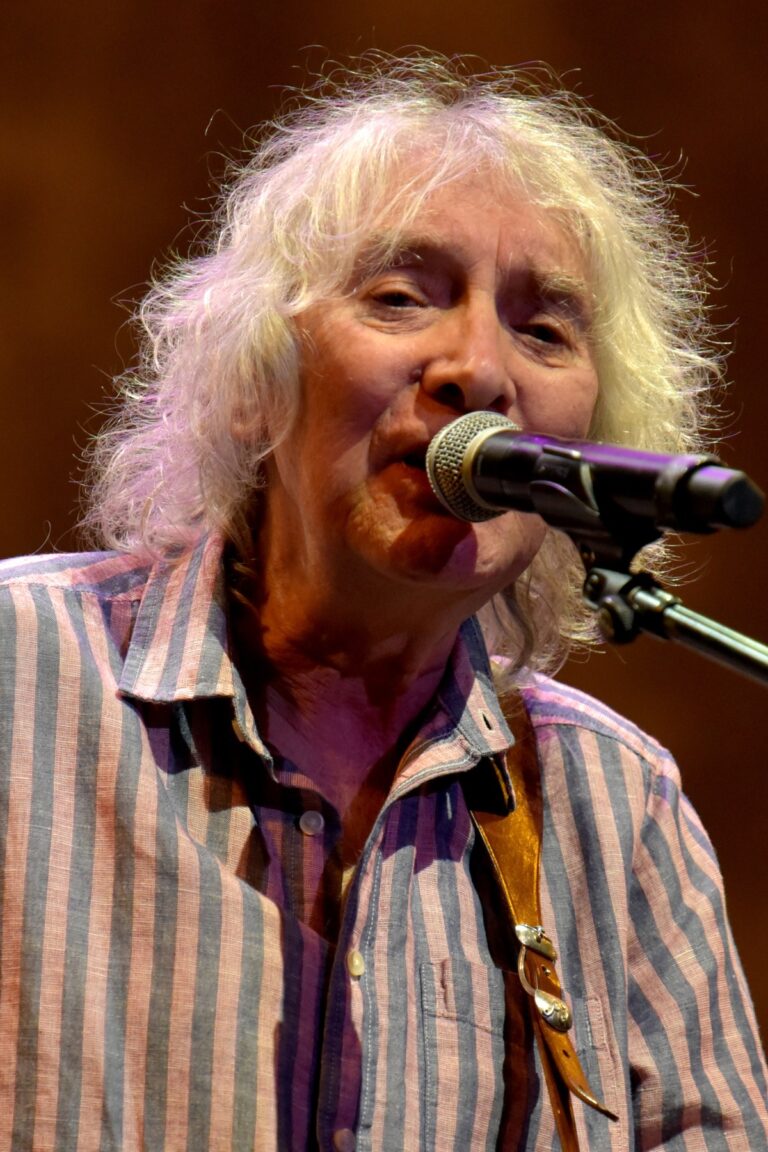
- Albert Lee: Glenn Francis, Wikimedia Commons, CC BY-SA 4.0.