
Alexi Laiho (Children of Bodom) Guitars & Gear: The Complete Guide to the Wildchild’s Iconic Rig
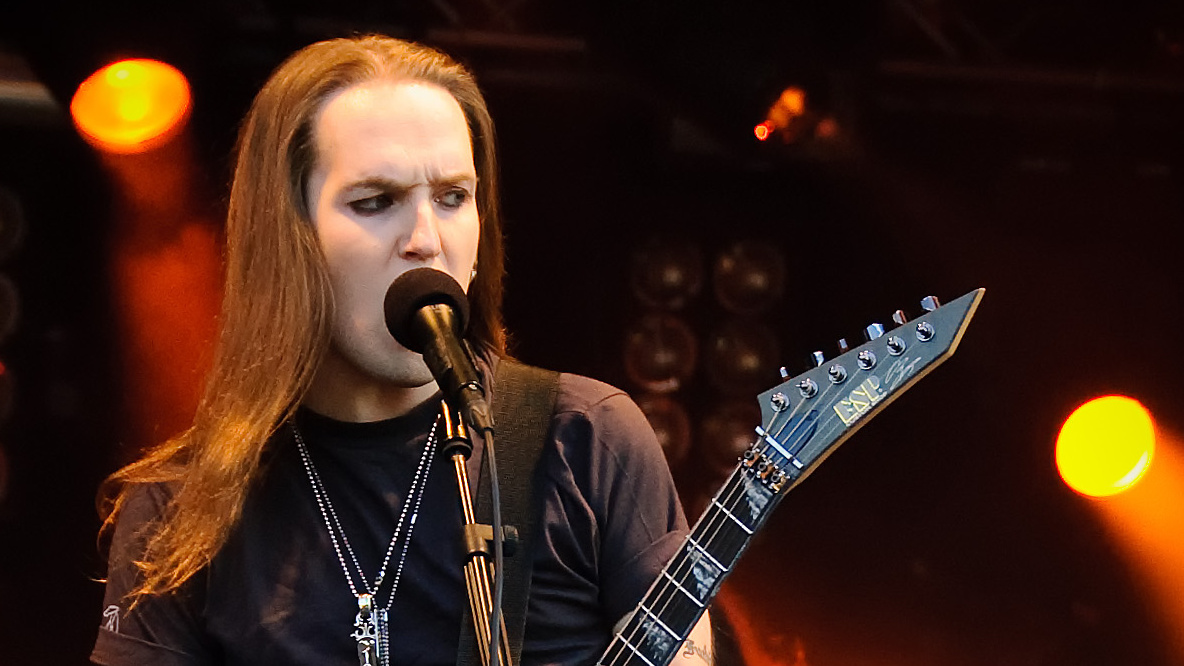
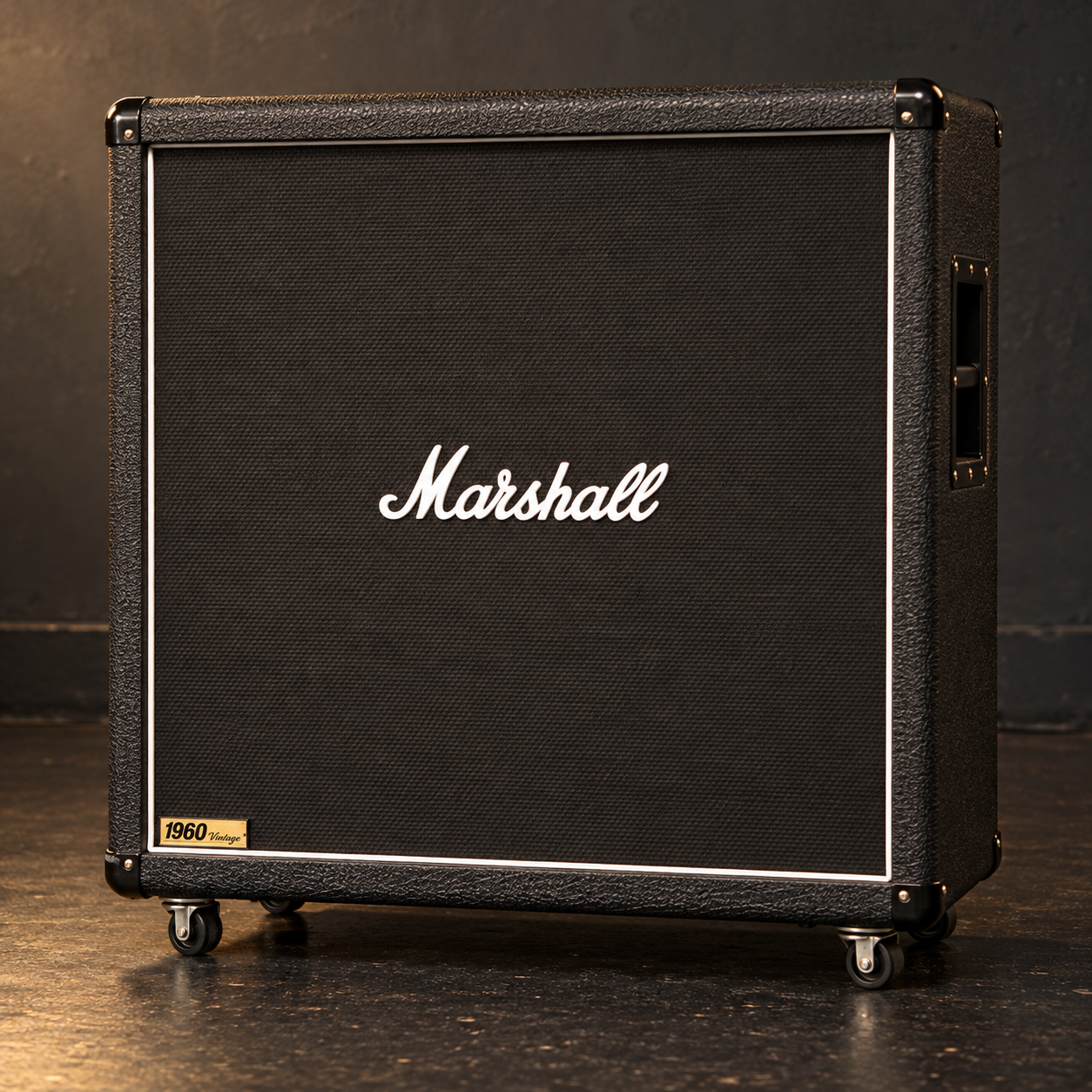
The Marshall JVM410H amplifier head that served as Alexi Laiho’s primary amplifier for the last decade of his career carries the serial number M-2007-32-0567-1. This is known because Guitar World reported that Finnish retailer Musamaailma was auctioning the gear from the Alexi Laiho Estate in 2021, including “his #1 Marshall JVM410H head (serial number M-2007-32-0567-1), Marshall 1960B 4×12″ cabinet (serial number M-2002-05-1354-Z)” and the accompanying pedalboard from his last sessions with Bodom After Midnight. The amplifier was tagged “ALEXI AMP 1.” His tone settings were “marked green on the front panel.” All original gaffer tape with markings was intact. Some wear, tear, dust, and dirt buildup. The amplifier’s guitar tech Antti Harma described it as “All Stock, Bone Stock” — meaning Laiho used it exactly as Marshall designed it, with no modifications. The JVM410H has four channels; the 2016 Rig Rundown documented Laiho using its third channel, paired with a 1960BV cabinet. This was the amplifier through which he recorded and performed the final chapters of Children of Bodom’s career. Alexi Laiho died on December 29, 2020, at the age of forty-one. The cause of death was reported by Guitar World as “alcohol-induced degeneration of the liver and pancreas connective tissue.” He was one of the most gifted and most celebrated melodic death metal guitarists in the history of the genre. His musical legacy — ten studio albums with Children of Bodom, the specific neoclassical-meets-death-metal guitar vocabulary he developed, the specific tone he achieved — is intact and will remain so.
Alexi Laiho — born Markku Uula Aleksi Laiho on April 8, 1979, in Espoo, Finland — was the vocalist, lead guitarist, and primary songwriter of Children of Bodom from the band’s formation in 1993 (initially as Inearthed) through their final album Hexed (2019) and the band’s dissolution in late 2019. He subsequently formed Bodom After Midnight. He was nicknamed “Wildchild” — a description that accurately characterized both his stage persona and his playing approach: the combination of technically extraordinary neoclassical vocabulary, extreme speed and precision, and the specific energy and charisma of a performer who made the guitar look simultaneously effortless and dangerous. Children of Bodom’s catalog — Something Wild (1997), Hatebreeder (1999), Follow the Reaper (2000), Hate Crew Deathroll (2003), Are You Dead Yet? (2005), Blooddrunk (2008), Relentless Reckless Forever (2011), Halo of Blood (2013), I Worship Chaos (2015), Hexed (2019) — is the complete documentation of his guitar development from teenage prodigy to mature artist. The rig that produced it evolved from a Lee Jackson preamp through a Marshall JVM that was, ultimately, all stock. Bone stock. Exactly as designed.
Background: Espoo Finland, Inearthed to Children of Bodom, Neoclassical Death Metal, “Wildchild” Stage Persona
Children of Bodom’s specific musical character — the fusion of Finnish melodic death metal with neoclassical keyboard arrangements, Alexi’s specific neoclassical guitar vocabulary (drawn from Yngwie Malmsteen’s harmonic minor and diminished scale applications alongside the bluesy minor pentatonic directness of his American metal influences), and the band’s specific sense of speed and precision — produced one of the most distinctive sounds in early 2000s metal. The band name refers to the Lake Bodom murders of 1960 — a genuine Finnish true crime case in which three teenagers were murdered at a campsite near Lake Bodom in Espoo and the fourth survivor was subsequently (controversially, ultimately unsuccessfully) prosecuted for the murders decades later. The name’s connection to genuine historical tragedy rather than fictional horror differentiates Children of Bodom from bands with cartoonishly evil names; it reflects a specifically Finnish relationship to dark historical events.
Laiho’s neoclassical guitar vocabulary — the harmonic minor scales, the diminished arpeggios, the specific fast alternate-picking runs that characterize his lead playing — was absorbed from Yngwie Malmsteen (his most cited influence) and applied within a death metal context that gave the approach a specific brutality unavailable in pure neoclassical metal. Where Malmsteen’s neoclassical metal was dramatic and bombastic, Laiho’s was aggressive and direct; the death metal foundation gave the neoclassical vocabulary a physical violence that Malmsteen’s more explicitly classical context rarely achieved.
His partnership with keyboardist Janne Wirman — whose synthesizer arrangements provided a second melodic voice alongside Laiho’s lead guitar — created the specific Children of Bodom sound: two lead instruments (guitar and keyboard) trading and harmonizing melodic lines over a death metal rhythm foundation. This is explicitly keyboard-influenced neoclassical metal; the keyboard is not a background texture but a structural partner to the guitar. The specific interplay between Laiho’s guitar lines and Wirman’s keyboard lines is the defining characteristic of the Children of Bodom aesthetic, and understanding it requires understanding that Laiho was composing for a two-lead-voice band rather than as a solo lead guitarist.
The Rig: Alexi Laiho’s Guitars, Amps, and Effects
Guitars
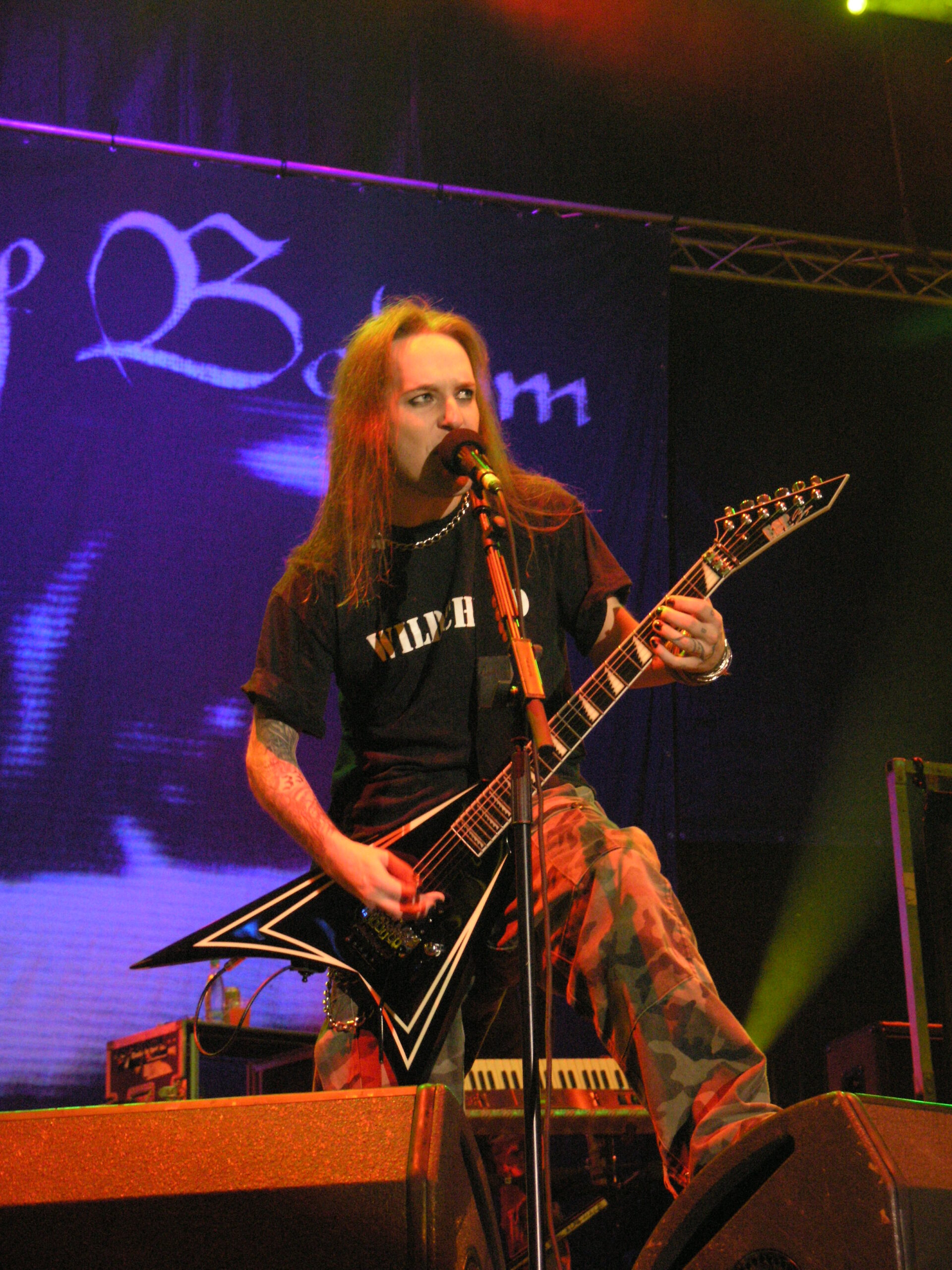
ESP Alexi Signature Models (Multiple Colorways, Primary Career Guitars): Alexi Laiho’s primary guitars throughout the peak of his career and legacy were ESP Alexi signature models — instruments produced in multiple finishes and configurations that are as closely identified with his visual identity as any guitar in heavy metal history. His signature guitars appeared in several pinstripe finishes. The white-and-black Scythe takes its name from the scythe-shaped fretboard inlays, rather than a scythe graphic on the body. The UberProAudio documentation is the most complete available catalog: “ESP Custom White/Black Pinstripes: White finish with black pinstripes, EMG-HZ H4 humbucker, chrome hardware, scythe inlays. ESP Custom Black/White Pinstripes: Black finish with white pinstripes, EMG-HZ H4 humbucker, chrome hardware, reversed sawtooth inlays. ESP Custom Black/Purple Pinstripes: Black finish with midnight purple pinstripes, EMG-HZ H4 humbucker, black hardware, reversed purple sawtooth inlays.” Multiple colorways of the same fundamental instrument — neck-through alder body construction, 25.5-inch scale, Floyd Rose tremolo, the unique EMG-HZ + active boost combination — used depending on “his mood the night of the show,” as the musicstrive.com account confirms.
The neck-through-body construction of the ESP signature series (mentioned in the musicstrive.com account: “The ESP and LTD guitars feature a neck-through-body construction to give alder an extra dose of sustain”) was a specific tonal choice: neck-through construction (where the neck extends the full length of the body, with the body “wings” attached to the sides of the neck) provides greater sustain and a more even tonal response across the neck’s length than bolt-on construction. For a lead guitarist who depends on sustain for long, singing lead lines over a heavy rhythm foundation, this construction detail mattered.
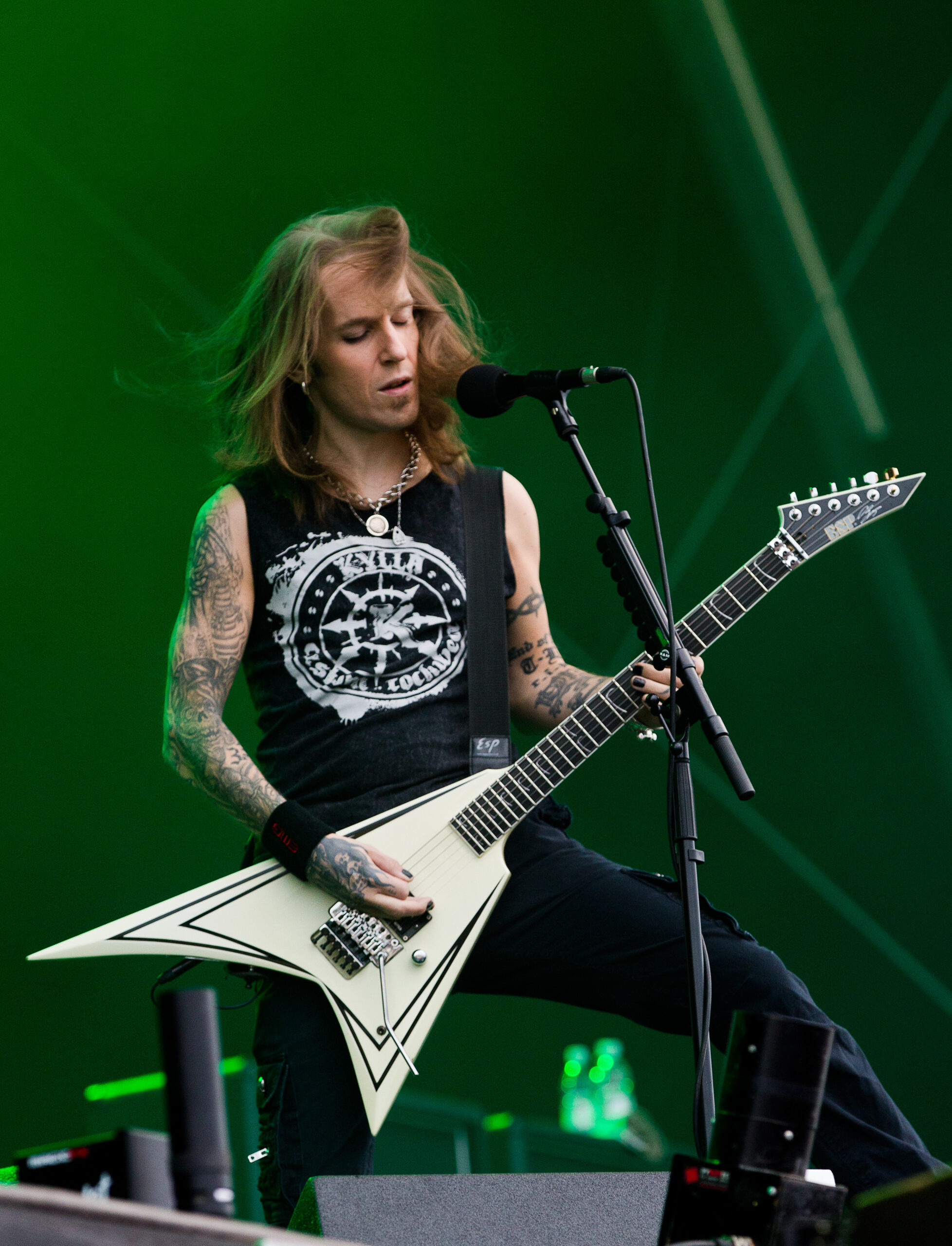
EMG-HZ Passive Humbucker + Onboard Active Boost Circuit (Unique Pickup Configuration): The most technically distinctive aspect of Laiho’s guitar setup — and the element that most specifically defines his tonal approach — is his unusual pickup configuration. The Guitardoor description is precise: “A crucial element of his searing tone was his unique pickup and preamp combination. He often used a single passive humbucker (like an EMG-HZ) paired with an onboard active boost circuit.” The EMG-HZ (H4) is a passive humbucker — not the active EMG 81/85 that dominates high-gain metal — combined with an onboard active boost circuit installed inside the guitar body. The passive pickup captures the string vibration with the natural, slightly less compressed quality of passive pickups; the active boost circuit then increases the signal’s gain and presence before it reaches the amplifier. VVN News characterizes this approach: “His approach to amplification was unique in the metal world — he preferred lower gain settings on his amps, letting the high-output pickups do most of the work.” The high-output signal from the passive + active boost combination hitting the Marshall’s input at high level with a relatively lower amp gain setting produces the specific “tight, articulate, and screaming high-gain tone” that Guitardoor identifies.
Jackson Custom Shop Rhoads Guitars (Early Career; Two Stolen in 2002): Before his ESP partnership, Laiho played custom Jackson Rhoads guitars. A contemporary report reproducing the band’s official statement records that two were stolen after the September 28, 2002 show at Nosturi in Helsinki. The statement distinguishes one with yellow stripes from another with thin white phosphor stripes; both had gold hardware.
Early Guitars: Tokai and an Unverified Ibanez Listing: Guitar World’s retrospective of its interviews with Laiho identifies his first guitar as a white Tokai Strat-style instrument, bought by his father when he was eleven. An Ibanez RG220B appears in a later secondary gear list, but that listing does not establish that it was his first electric guitar, a Japanese model, or an early-1990s instrument. The exact RG220B claim remains unverified.
Amps
Marshall JVM410H “All Stock, Bone Stock” (Primary Amp, Documented Serial Number, Last Decade): Alexi Laiho’s primary amplifier for the last decade of his career was the Marshall JVM410H — the 100-watt all-tube head with four independent channels (Clean, Crunch, OD1, OD2) that provides the complete tonal range from clean to ultra-high-gain saturation. His guitar tech Antti Harma’s “All Stock, Bone Stock” characterization — confirmed in the EMG Backstage interview — means that Laiho used the JVM410H exactly as Marshall designed it, with no modifications to circuits or components. The specific serial number (M-2007-32-0567-1) documented in the Guitar World estate auction report is one of the more remarkable pieces of gear documentation in this guide: a primary performance amplifier identified by its precise manufacturing serial number rather than simply its model designation.
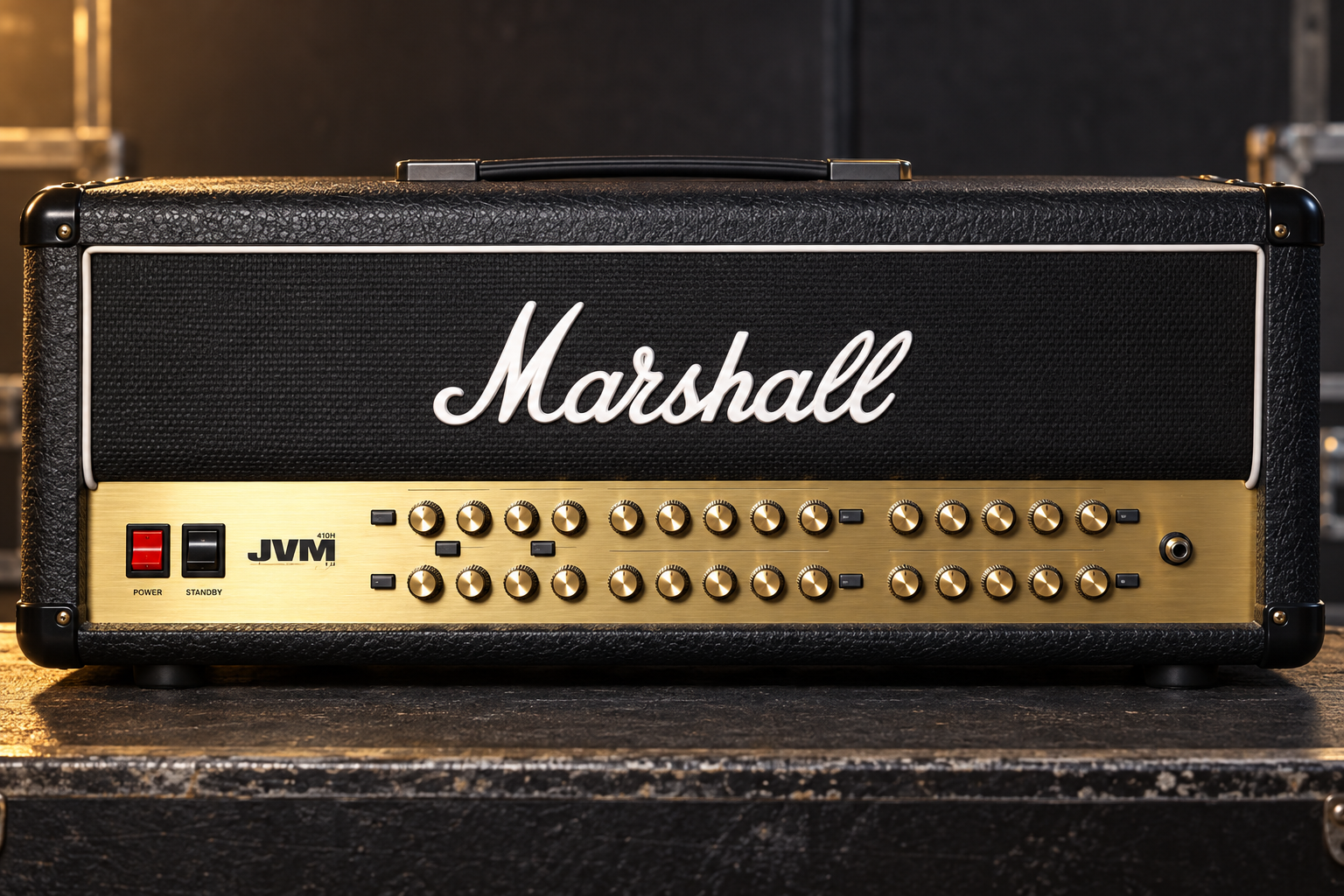
The 2016 Rig Rundown identified a Marshall 1960BV cabinet. The estate listing later named the serial-numbered cabinet as a 1960B; it does not establish the same speaker load. The 1960BV is a straight 4×12, and Marshall specifies four Celestion G12 Vintage speakers for the stock model.
Lee Jackson Perfect Connection GP-1000 (Hatebreeder Through Earlier Albums): Before the JVM410H, Laiho’s primary amplification was the Lee Jackson Perfect Connection GP-1000 — a rack-mount preamp that he used from the Hatebreeder era through earlier albums. The musicstrive.com account: “Alexi Laiho, in the early days of his career, played through an unobtainable piece of gear called Lee Jackson Perfect Connection GP-1000. This is a preamp that feeds a power amp to get the needed volume. Since it wasn’t very reliable, the frontman of Children of Bodom decided to change to a mighty Marshall JVM410H.” The GP-1000’s “unreliability” — rack units can develop connection problems, component failures, and consistent maintenance requirements on tour — is the specific practical reason for the transition to the more robust, simpler JVM410H head. The GP-1000 provides a specific preamp character (associated with the Frank Marino influenced, warm American preamp tradition) that gave the early Children of Bodom albums their specific guitar tone before the Marshall era.
ENGL Special Edition Amplifier (2009, Documented): The UberProAudio documentation confirms an ENGL Special Edition amplifier used in 2009: “seen using with a Marshall cab on EMG TV in 2009.” The ENGL Special Edition — a high-gain German amplifier — provides the tight, aggressive, modern high-gain character associated with European metal amplification, different from both the Marshall’s British character and the American 5150 approach. Its documentation alongside the Marshall for 2009 suggests a period when Laiho was exploring different amplifier options before settling definitively on the JVM410H.
Effects
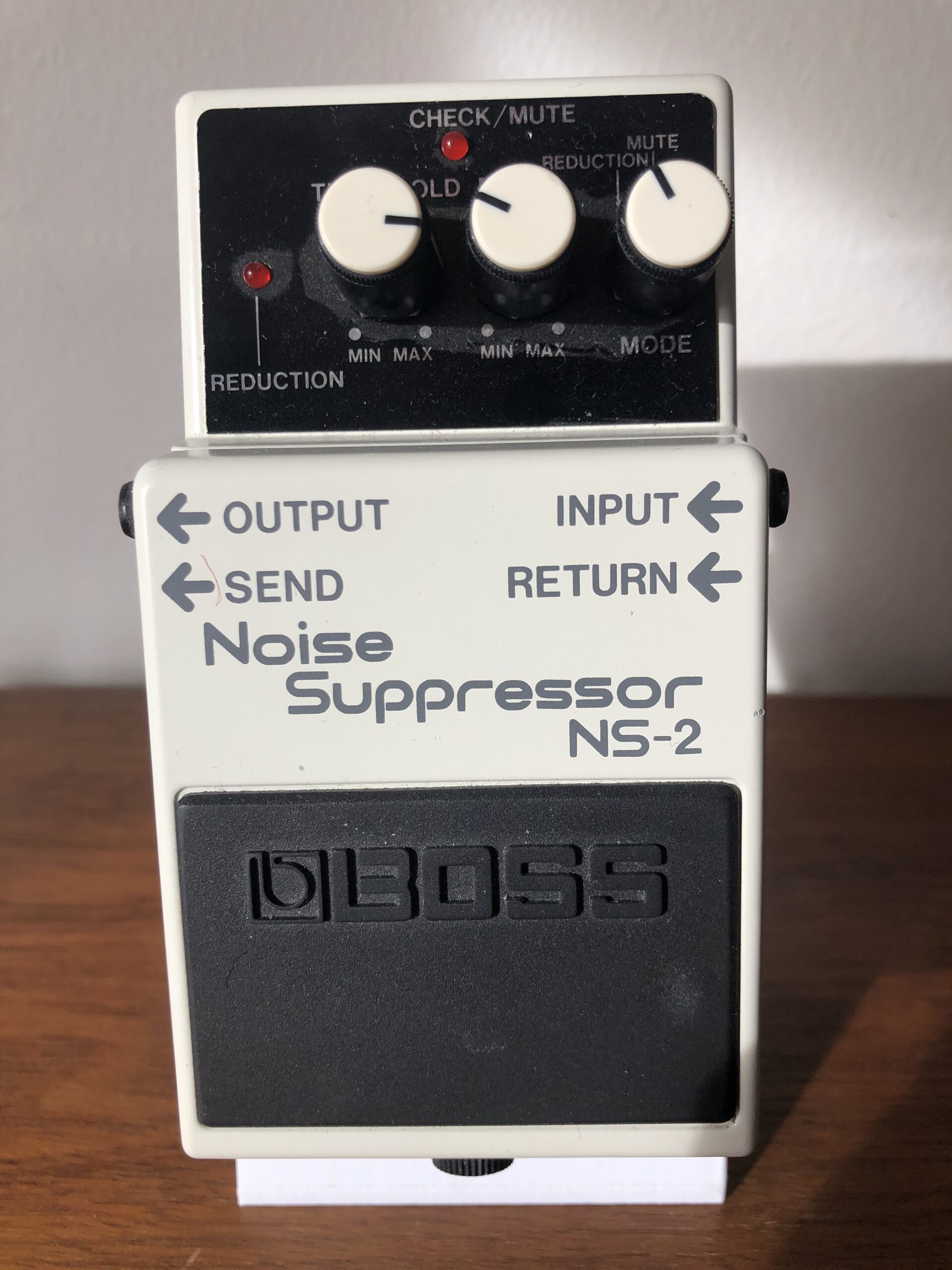
Boss NS-2 Noise Suppressor (2016 Rig): The 2016 Rig Rundown places the NS-2 on top of the amplifier, after the wireless receiver.
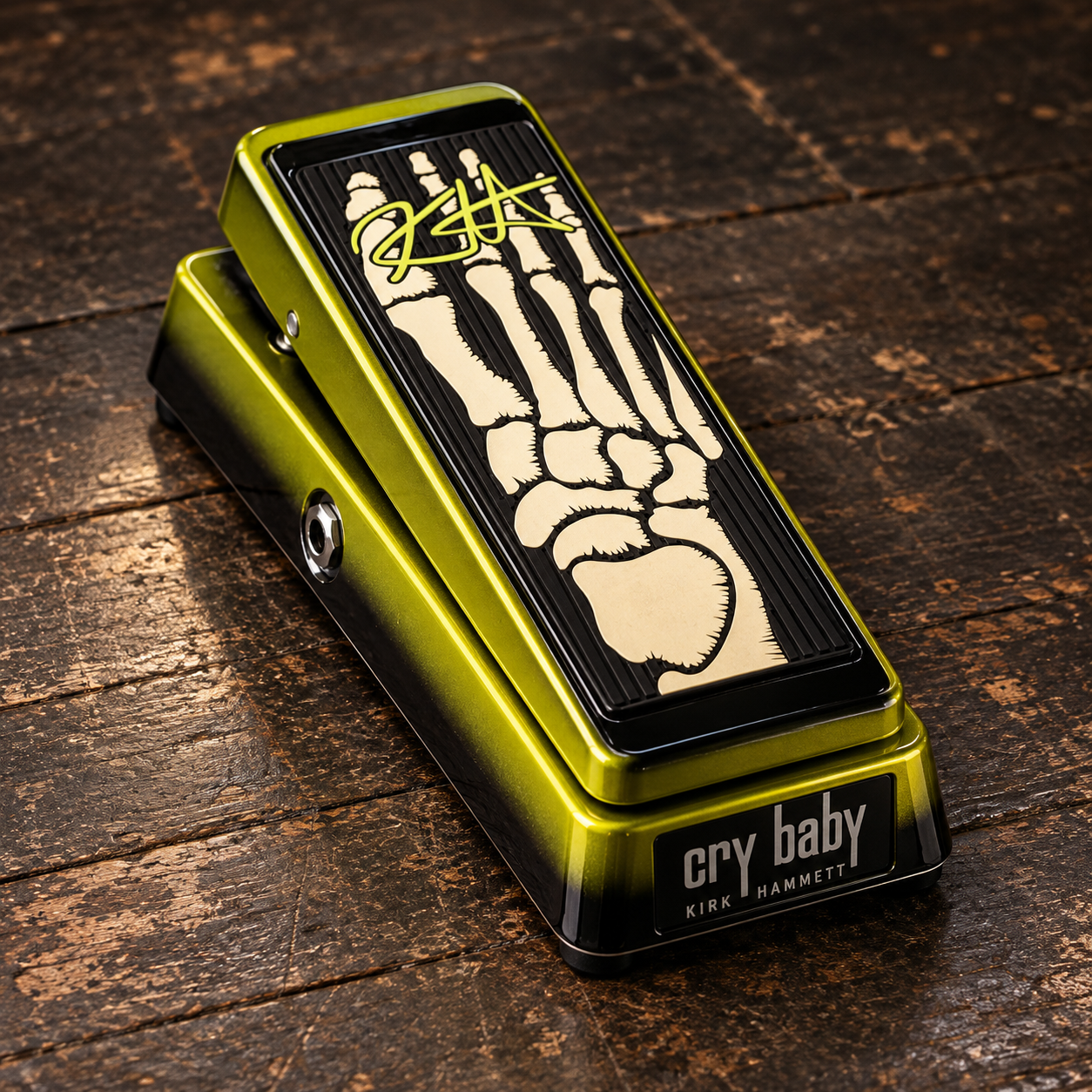
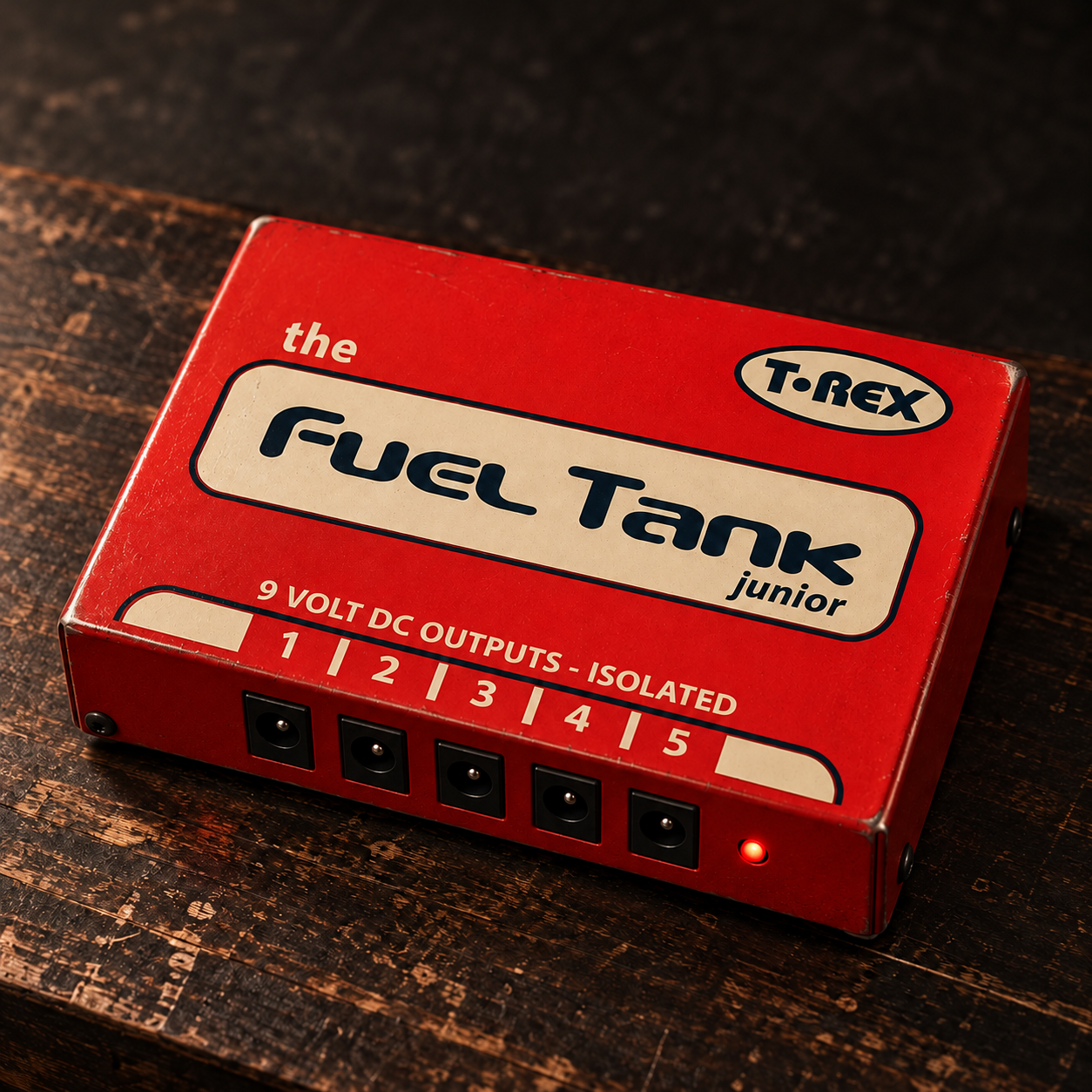
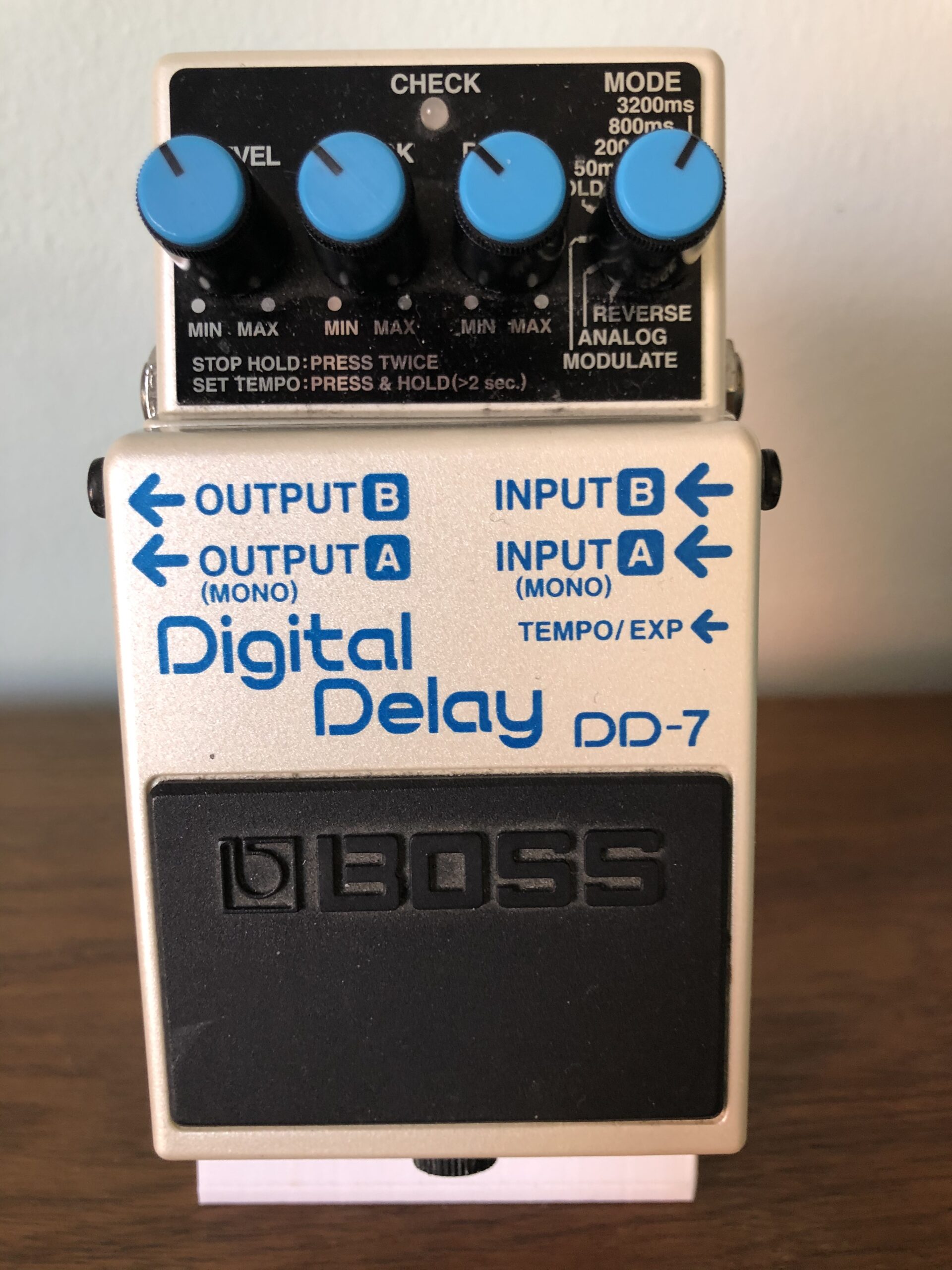
Boss DD-7, Dunlop KH95 and T-Rex Fuel Tank Junior: The documented board also included the DD-7 delay, Kirk Hammett signature wah and Fuel Tank Junior power supply.
Dunlop KH95 Kirk Hammett Signature Wah: Laiho’s wah pedal choice was specifically motivated by tonal character. Equipboard: “Premier Guitar Rig Rundown March 8th 2016. Alexi prefers it because it has the most ‘high end’ in its wah sweep.” The Dunlop KH95 Kirk Hammett signature model was chosen for the specific frequency character of its sweep — the treble-forward, bright quality of the sweep peak that complemented his high-gain Marshall tone and his high-speed neoclassical lead vocabulary.
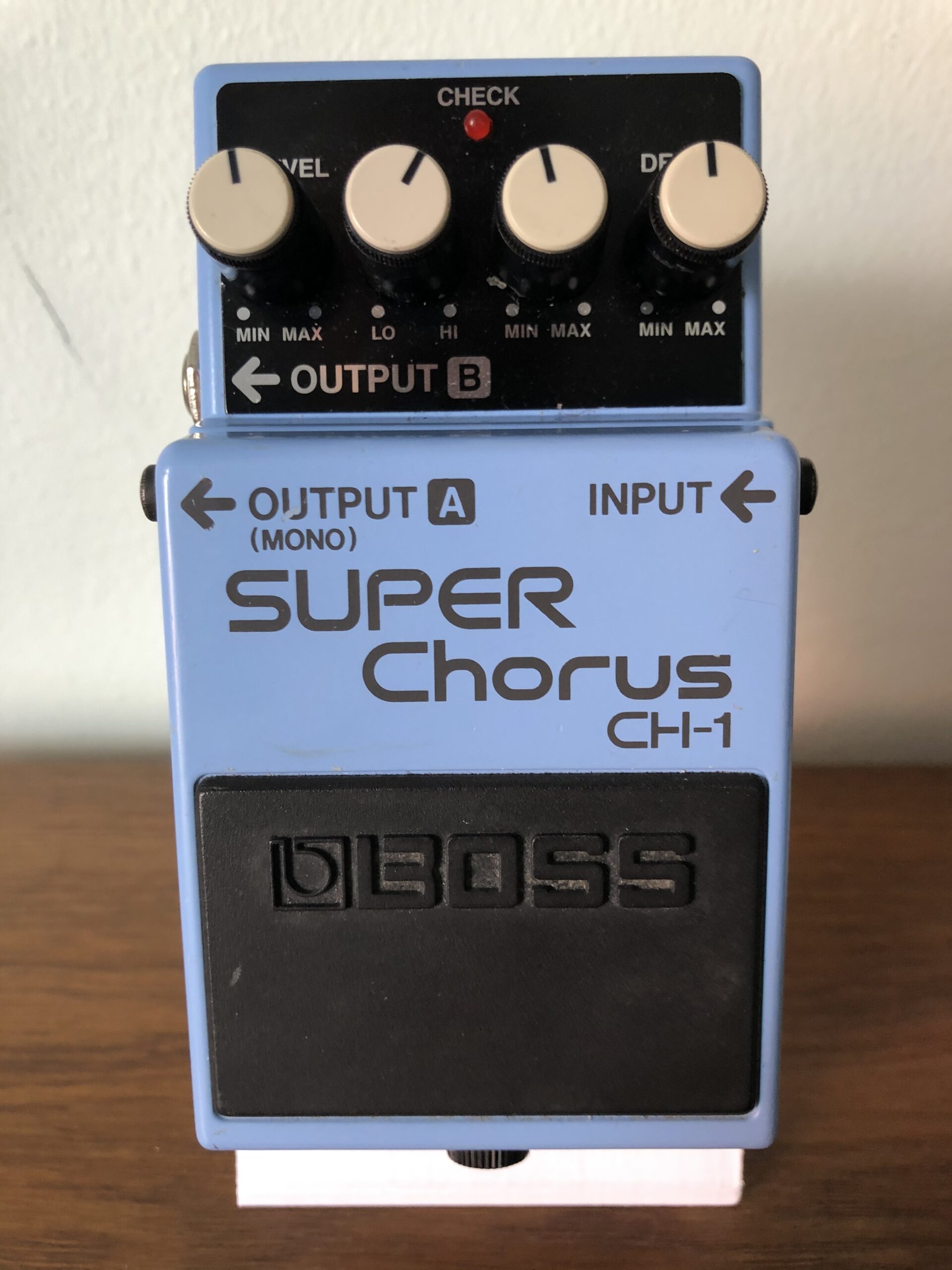
Boss CH-1 Super Chorus (2016 Board; Later Removed): The CH-1 was documented as always on in 2016. Musamaailma’s 2021 estate listing says it had since been removed, without specifying when. This is the same chorus model discussed in our Dave Navarro guide.
Playing Style & Tone Philosophy
Alexi Laiho’s playing style was the most viscerally exciting in Finnish metal — a style built on the combination of Yngwie Malmsteen’s neoclassical harmonic minor vocabulary (the specific scale language of Bach and Paganini applied to distorted electric guitar at high speed), the melodic death metal tradition that Michael Amott and Carcass had established on Heartwork, and the specific Finnish metallic energy that gave Children of Bodom’s music its particular explosive quality. He could play fast — genuinely fast, Malmsteen-level fast — and the speed was not a trick but a communicative tool: the specific compression of multiple notes into a short time frame created a specific emotional intensity that slower playing cannot achieve.
His tone philosophy was the passive-plus-active-boost philosophy: the EMG-HZ passive humbucker + onboard active boost hitting the Marshall JVM410H “bone stock” at a specific input level that produced his specific tight, articulate, high-gain tone without excessive amp gain. Lower amp gain + higher pickup output = a specific clarity and attack precision that high amp gain alone cannot provide. The wah as a static-ish filter added the specific high-end presence to his lead tone. The Boss NS-2 kept the silence between phrases clean. The combination produced the specific Laiho lead tone that is instantly recognizable across a decade of recordings.
His loss at forty-one is the specific tragedy of a musician whose career was clearly not complete — not because the work he left behind was unfinished or immature, but because ten albums and twenty-six years of Children of Bodom documented the development of an approach that had not reached its end. The specific quality of Halo of Blood (2013) — widely considered his late-career peak — suggests a musician who was still developing, still finding new dimensions of the neoclassical death metal approach. What the subsequent decade might have produced is genuinely unknowable.
How to Sound Like Alexi Laiho
Guitar: ESP Alexi signature model (multiple colorways available) — the neck-through alder construction and the EMG-HZ + active boost combination are the authentic choices. For a budget entry: the LTD Alexi signature series provides the same fundamental design at a more accessible price point. The Floyd Rose tremolo is essential for the specific dive-bomb and controlled vibrato techniques he used.
Amp: Marshall JVM410H. Start with OD1 for the documented 2016 setup. The following settings are practical suggestions rather than a transcription of Laiho’s marked controls.
Suggested JVM410H Starting Settings:
| Control | Setting (0–10) | Notes |
|---|---|---|
| Gain | 6–7 | Moderate-high — the active boost does the rest; don’t push maximum |
| Bass | 5–6 | Present — Finnish death metal needs low-end weight |
| Mid | 5–6 | Forward — neoclassical leads need midrange cut and presence |
| Treble | 6–7 | Bright — the high-speed alternate picking needs treble definition |
| Presence | 5–6 | Present — attack definition for the fast neoclassical runs |
Effects: Boss NS-2 for noise suppression, with threshold and decay adjusted to the guitar and gain level. Add a Boss DD-7 delay and Dunlop KH95 wah for the documented pedalboard. Scale vocabulary: harmonic minor scale, Phrygian dominant (the fifth mode of harmonic minor), and diminished arpeggios for the neoclassical passages; minor pentatonic for the blues-inflected sections.
Influence & Legacy
Alexi Laiho’s influence on melodic death metal and on Finnish metal specifically is the most direct and most mourned in contemporary metal. Children of Bodom were the most commercially successful Finnish metal band in history (alongside Nightwish), and Laiho’s specific combination of neoclassical guitar vocabulary, extreme speed, and death metal aggression established the approach that dozens of subsequent Finnish and Scandinavian metal guitarists absorbed and developed. His connection to Michael Amott as the preceding figure whose Heartwork work established the melodic death metal template Laiho extended reflects the specific generational transmission of the approach. His connection to Ihsahn as a parallel Scandinavian extreme metal figure reflects the shared Northern European metal tradition within which both musicians worked.
His legacy, in the specific sense of influence on subsequent musicians, continues through the ESP Alexi signature models that remain in production (honoring the collaboration), through the Guitar Messenger and Premier Guitar documentation of his technique that provides educational resources for his approach, and through the specific quality of the Children of Bodom catalog — ten albums that document a career of genuine musical vision consistently executed. The JVM410H marked “ALEXI AMP 1” — tone settings marked green — is a specific physical artifact of that career. It was all stock. Bone stock. Exactly as designed. It sounded exactly like Alexi Laiho.
Related reading:
- Michael Amott of Arch Enemy/Carcass, whose Heartwork work established the melodic death metal template Laiho extended
- Ihsahn of Emperor, a parallel Scandinavian extreme metal figure of the same generation
- Mikael Åkerfeldt of Opeth, another Scandinavian progressive/melodic metal guitarist of the same era
- Timo Tolkki of Stratovarius, another Finnish metal guitarist whose neoclassical approach parallels Laiho’s
Frequently Asked Questions: Alexi Laiho Children of Bodom Guitars & Gear
What guitar did Alexi Laiho play?
His best-known instruments were custom ESP Alexi guitars in several finishes, including the white-and-black Scythe with scythe-shaped fretboard inlays. Specifications varied by period. He previously played custom Jackson Rhoads guitars; two were reported stolen in September 2002. Guitar World identifies a white Tokai as his first guitar. The later RG220B listing and exact midnight-purple custom remain insufficiently verified.
What amplifier did Alexi Laiho use?
The Marshall JVM410H is documented in his later rig. In 2016 he used its third channel with a 1960BV cabinet. The estate sale separately lists a 1960B cabinet and reports OD2 use on his spare head. Earlier accounts also list a Lee Jackson GP-1000 and an ENGL Special Edition.
What is the EMG-HZ + active boost combination?
Laiho’s pickup approach was unique in metal: he used a single passive EMG-HZ humbucker (not the active EMG 81/85 that most metal guitarists use) combined with an onboard active boost circuit installed inside the guitar body. The passive pickup captures string vibration naturally; the active boost circuit amplifies the signal before it reaches the amp. This combination — lower amp gain with higher pickup output — produced a specific tight, articulate, high-gain tone that differs from the more compressed sound of fully active pickups at maximum amp gain. His guitar tech confirmed this configuration across his ESP signature guitars.
How did Alexi Laiho develop his neoclassical technique?
Laiho absorbed Yngwie Malmsteen’s neoclassical approach — the harmonic minor scale, Phrygian dominant mode, diminished arpeggios, high-speed alternate picking — as his primary guitar influence, combining it with the melodic death metal tradition that Carcass’s Heartwork had established. The Children of Bodom approach added Finnish death metal brutality to the neoclassical vocabulary: where Malmsteen’s neoclassical metal was dramatic and bombastic, Laiho’s was aggressive and physically violent in the way death metal demands.
What is Children of Bodom’s most significant album?
Follow the Reaper (2000) and Hatebreeder (1999) are the albums most commonly cited as Laiho’s breakthrough recordings — the works that established Children of Bodom as a major force in melodic death metal. Halo of Blood (2013) is widely considered his late-career artistic peak: a more refined, focused record that demonstrated his continued development as a songwriter and guitarist two decades into his career.
When did Alexi Laiho die and what was the cause?
Alexi Laiho died on December 29, 2020, at the age of forty-one. Guitar World reported that the cause of death was “alcohol-induced degeneration of the liver and pancreas connective tissue.” The news of his death was announced by his bandmates, who stated that he had been suffering from serious health issues in the final years of his life. His passing was mourned widely across the metal community and beyond. Bodom After Midnight, the band he had formed after Children of Bodom’s dissolution in 2019, subsequently released recordings he had completed before his death.
What is the Boss CH-1 detail from the estate auction?
The CH-1 was on the 2016 pedalboard but had been removed by the 2021 estate sale. The listing does not give the removal date.
Sources and image credits
Gear and timeline checks: Premier Guitar’s 2016 Rig Rundown; Musamaailma’s 2021 estate inventory; ESP’s 2009 catalog, printed page 8; the band’s October 2002 theft statement, reproduced by Blabbermouth; Guitar World’s Laiho interview retrospective; and Marshall’s 1960BV specifications.
- Featured Ilosaarirock 2009 photograph: Tuomas Vitikainen (Teevee), CC BY-SA 3.0. Cropped to a performance portrait and re-encoded without resizing; adaptation under the same license.
- Masters of Rock 2007, black ESP with white pinstripes: Kaja Konarska (KaJaNa), CC BY-SA 2.5. Full frame resized by WordPress; derivative under the same license.
- Rockharz 2016, white ESP with black pinstripes: S. Bollmann, CC BY-SA 4.0. Full frame resized by WordPress; derivative under the same license.
- Boss CH-1 Super Chorus: Johan Rosén; courtesy of bosspedals_sweden, uploaded by Kuriosatempel, CC BY-SA 4.0. Full frame, EXIF orientation respected and resized by WordPress; derivative under the same license.
- Boss NS-2 Noise Suppressor: Johan Rosén / Kuriosatempel, bosspedals_sweden, CC BY-SA 4.0. Full frame, automatically oriented and resized by WordPress; derivative under the same license.
- Boss DD-7 Digital Delay: Kuriosatempel, CC BY-SA 4.0. Full frame, automatically oriented and resized by WordPress; derivative under the same license.


