Timo Tolkki (Stratovarius) Guitars & Gear: The Complete Guide to Finland’s Power Metal Architect’s Rig
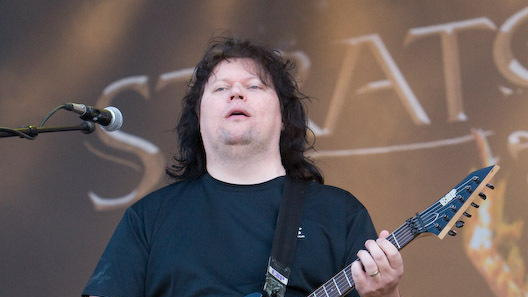
“I used Mesa Boogie Dual Rectifier with the ‘Visions’ album.” Timo Tolkki posted this on Stratovarius’s official Facebook band page — one of the most specific single amp-to-album citations in Finnish metal history. Visions (1997) is the Stratovarius album that most fully realized the power metal vision he had been developing since joining the band in 1984: the soaring, neoclassical guitar over twin-keyboard orchestration over double-bass-drum propulsion approach that defined European power metal’s most commercially successful period. The Mesa Boogie Dual Rectifier provided the specific tight, aggressive American high-gain character that gave Visions its guitar tone. Then the Mesa broke. “I had a Mesa Rectifier, but that was/is broken,” he confirmed on Equipboard — and he moved to ENGL. Specifically: “I used ENGL Powerball on the last Stratovarius gigs.” And for live effects: “TC Electronics G-Force. In studio whatever the song needs, usually some harmonizer for the rhythm guitars and the same plus some delay for the solos.” This is the complete documentation of his approach — specific, factual, and delivered in the direct prose of a Finnish musician who was also a producer and who understood the technical dimensions of his own guitar sound as thoroughly as any studio engineer. He has written over 200 songs for Stratovarius. He produced all the band’s albums during his tenure. Guitar World readers placed him at number 88 in their most influential metal guitarists of all time, and in the top 50 fastest guitarists. He is, without qualification, the architect of Finnish power metal.
Timo Tapio Tolkki was born on March 3, 1966, in Klaukkala, Nurmijärvi, Finland. His first musical influences were The Beatles, ABBA, and The Shadows. When he heard “Smoke on the Water” on the radio, it changed his direction; he began buying Rainbow and Deep Purple albums. His first purchased album was Rainbow: On Stage. He subsequently absorbed Randy Rhoads, Gary Moore, and Yngwie Malmsteen — the combination that, alongside his love for classical music, produced his specific neoclassical power metal approach. He joined Stratovarius in 1984, two months after the band’s formation. He served initially as vocalist and all-instrument player (guitars, bass) before handing vocal duties to Timo Kotipelto from Fourth Dimension (1995) onward — a decision motivated by his desire to concentrate on guitar work and evolve the band’s musical direction. He departed Stratovarius in 2008 after personal difficulties. He subsequently formed Revolution Renaissance and Symfonia (both disbanded) and the ongoing project Timo Tolkki’s Avalon. He has won three consecutive Finnish gold discs from Stratovarius album sales and one Finnish Grammy. He opened Goldenworks Mixing Suite as his own recording studio in Finland. He continues making music.
Background: Klaukkala, Rainbow Revelation, Stratovarius 1984, Finnish Power Metal Architecture, 200+ Songs Composed
Tolkki’s specific role in the development of European power metal is the most architecturally complete in the tradition. He did not merely write guitar parts for an existing band; he wrote the songs, produced the albums, designed the sound, and managed the artistic direction of Stratovarius for over twenty years. His connection to the Rainbow tradition — the specific influence of Ritchie Blackmore’s dark, classically-informed hard rock — is audible in the harmonic language of the best Stratovarius songs: the minor key drama, the specific sense of classical structure imposed on rock energy, the keyboard/guitar partnership that recalls the Purple/Rainbow approach. But where Blackmore’s classical influence was deployed through the specific vehicle of British hard rock, Tolkki’s classical influence was deployed through the specific vehicle of European power metal — faster, more melodically elaborate, more explicitly symphonic.
His three primary guitar influences — Randy Rhoads, Gary Moore, and Yngwie Malmsteen — explain the three dimensions of his lead playing: Rhoads’s neoclassical vocabulary applied to hard rock (the Bach-derived arpeggio sequences, the classical harmonic structures), Moore’s emotional directness and vibrato quality (the Welsh guitarist’s ability to communicate maximum feeling within a pentatonic framework), and Malmsteen’s specific speed and harmonic minor application to neoclassical metal (the Swedish guitarist whose work in the mid-1980s established the neoclassical metal template that Tolkki developed within the Finnish context). The combination of these three — Rhoads’s structure, Moore’s feel, Malmsteen’s speed — produced the specific Tolkki lead vocabulary.
The compositional scope of his Stratovarius contribution — over 200 songs written and all albums produced during his tenure — makes him one of the most prolific single-musician contributions to any major European metal band. Songs including “Black Diamond,” “Hunting High and Low,” “The Kiss of Judas,” and “Forever” are among the most celebrated in the power metal canon. “Forever,” in particular — the keyboard-led ballad that became Stratovarius’s most commercially successful single — demonstrates the dual dimension of his songwriting: capable of the most technically demanding neoclassical metal and the most emotionally direct melodic composition within the same career.
The Rig: Timo Tolkki’s Guitars, Amps, and Effects
Guitars
ESP M-II FR Custom (Primary Career Guitar, Custom Japan Models): Timo Tolkki’s primary guitar throughout the peak of his Stratovarius career and subsequently has been the ESP M-II FR — an ESP M-Series instrument with a Floyd Rose tremolo, in custom configurations that he helped design at the ESP Japan Custom Shop. The Equipboard documentation confirms: “Tolkki is known for using ESP guitars, specifically the ESP M-II FR, when playing rock and metal music. According to Guitar-list, he has acquired custom models from Japan, which he helped design himself.” The Metal Archives entry confirms: “Throughout his whole career, Tolkki has played ESP Guitars. His primary models are custom made M series models, most notably a solid black one and one with the Visions album artwork on the body.” The Visions album artwork guitar is one of the more distinctive visual instruments in Finnish metal — a guitar whose body graphics directly reference the album that represents his peak compositional achievement.
The ESP M-II’s typical specifications — superstrat body design, 24 frets, 25.5-inch scale, Floyd Rose tremolo, EMG active or high-output passive humbuckers, maple neck — provide the specific combination of technical capability (24-fret upper-register access, Floyd Rose for controlled vibrato) and tonal character (high-output pickups through high-gain amplification) appropriate for the neoclassical power metal lead approach. The Stratovarius Community forum confirms the division of his studio work: “Timo Tolkki plays on stage always ESP and he plays on studio albums all his solos with ESP and the acoustic parts with Gibson.”
Tokai AST52 (Documented Secondary Guitar): The Equipboard documentation includes the Tokai AST52 — a Japanese-made Stratocaster-style guitar — as a documented Tolkki instrument: “Tolkki playing Tokai AST52.” The Tokai AST52 is a well-regarded Japanese Stratocaster copy, known for high quality construction at accessible prices. Its single-coil pickup configuration and Stratocaster-style tremolo provide a tonally distinct alternative to the humbucking, Floyd Rose ESP M-II — appropriate for clean and lighter-gain passages within Stratovarius’s compositional range.
ESP LTD H3-1000FR and EX-351 (Additional Documented Models): The Equipboard documentation additionally confirms: “On the official ESP Guitars website, Timo Tolkki is shown with the ESP LTD H3-1000FR” and “In this video Timo Tolkki can be seen using the ESP LTD EX-351.” The LTD series represents ESP’s more accessible production line (Korean-made) compared to the Japanese Custom Shop ESP instruments — appropriate for backup instruments and specific touring contexts. The EX-351 is ESP’s Explorer-style body model.
Gibson Acoustic Guitars (Studio Recording): The Stratovarius Community forum documentation confirms Gibson acoustic guitars for the studio recording of acoustic parts — standard professional-quality acoustic instruments appropriate for the orchestral and acoustic passages in Stratovarius’s more elaborate compositional arrangements.
Amps
Mesa Boogie Dual Rectifier (Visions Album Primary Amp): “I used Mesa Boogie Dual Rectifier with ‘Visions’ album.” The Mesa Boogie Dual Rectifier — the American high-gain amplifier whose specific tight, aggressive character defined the sound of 1990s heavy metal — provided the specific guitar tone for Visions (1997), the Stratovarius album most widely considered Tolkki’s peak compositional achievement. The Dual Rectifier’s specific character: tight, aggressive, American-voiced, with the specific dual-rectifier power supply that provides a slightly “looser,” more organic response than the single-rectifier British tube approach. For the fast, aggressive, neoclassical Stratovarius guitar parts, the Dual Rectifier’s combination of tight low-end and aggressive saturation suited the specific musical requirements.
ENGL Powerball (Late Stratovarius Period, Primary After Mesa Broke): “I used ENGL Powerball on the last Stratovarius gigs. I had a Mesa Rectifier, but that was/is broken.” The ENGL Powerball is a German high-gain amplifier with four channels, known for its extremely tight, modern, high-output character. When the Dual Rectifier broke and was not replaced, the ENGL Powerball became his primary live amplifier for the final Stratovarius performances. The ENGL’s character differs from the Mesa in specific ways: tighter low-end, more modern EQ voicing, more channels, and the specific ENGL harmonic character that many metal guitarists describe as “more precise” than the Dual Rectifier’s slightly warmer, more organic character.
ENGL Ritchie Blackmore Signature (Listed on Official Site): According to Timo’s official site he lists an ENGL Ritchie Blackmore head as part of his equipment. The ENGL Ritchie Blackmore signature — designed with the Deep Purple guitarist whose musical influence was one of Tolkki’s primary inspirations (the Deep Purple/Rainbow tradition being the direct predecessor of the Stratovarius approach) — provides the specific British rock character of Blackmore’s own amplification preference within the ENGL German engineering framework. Using the Ritchie Blackmore ENGL is not just a tonal choice but an acknowledgment of the specific influence chain: Tolkki absorbed Blackmore’s approach, and now uses an amplifier designed with Blackmore’s input.
Marshall DSL100H (Avalon Period): The Equipboard documentation for the Timo Tolkki’s Avalon project confirms the Marshall DSL100H — the 100-watt dual-super-lead, the successor to the classic JCM800 design — as part of his amplifier setup for the Avalon project. The DSL100H’s two channels (Classic Gain and Ultra Gain) provide both vintage Marshall crunch and high-gain saturation within a single head. Its British voiced character differs from the American Mesa and the German ENGL, providing another tonal option in his multi-amp history.
Laney (Historical, Community Forum Reference): The Stratovarius Community forum notes: “He’s played with so many amps, Laney, Marshall, Mesa/Boogie, Line6” — confirming Laney amplifiers appear in his historical gear. The specific Laney models are not documented, but Laney’s British tube character is consistent with his primary influences (Rainbow, Deep Purple) and with the Marshall-adjacent tonal territory he occupied throughout his career.
Effects
TC Electronics G-Force (Primary Live Multi-Effects, Documented by Tolkki Himself): “Effects: live I use TC Electronics G-Force, in studio whatever the song needs, usually some harmonizer for the rhythm guitars and the same plus some delay for the solos.” The TC Electronics G-Force is a rack-mount multi-effects processor — one of the most respected rack-mount guitar effects units of the 2000s, known for its exceptionally high audio quality, wide range of effects algorithms, and professional reliability. For live performance with Stratovarius — where the dramatic tonal shifts between clean passages, rhythm crunch, and lead work require consistent, switching-reliable effects management — the G-Force’s rack-mount stability and programmable preset switching provided the professional-grade performance that the band’s production demanded.
Harmonizer for Rhythm Guitars (Studio Recording Primary Effect): His studio approach specifically includes “harmonizer for the rhythm guitars” — a pitch-shifting or harmonizing device that creates the specific “doubled” or “harmonized” rhythm guitar sound of Stratovarius’s studio recordings. Harmonizing the rhythm guitar tracks (adding a pitch-shifted copy at a specific interval — typically a third or fifth above or below the original) creates the specific dense, wall-of-guitar character of European power metal studio recordings. This is a studio technique rather than a live tool, accounting for the “in studio whatever the song needs” addendum to his standard “live I use TC G-Force” statement.
Delay for Solos (Studio, Consistent): The “same plus some delay for the solos” studio approach documents his use of delay as the consistent lead guitar processing — the delay adding the specific spatial depth and sustaining quality to his neoclassical lead lines that makes them sound larger and more three-dimensional than unprocessed guitar alone. The specific delay unit varies by context and availability in the recording studio.
Marshall The Guv’nor (Distortion Pedal, Official Website Listed): According to Timo Tolkki’s official website, he uses the Marshall The Guv’nor pedal. The Marshall Guv’nor (also written “Guvnor”) is a British-made distortion/overdrive pedal based on a Marshall JCM800 gain stage — providing the specific Marshall crunch character in pedal format. Its use alongside his amplifiers (whether as an overdrive boost before the amp’s input stage or as a standalone distortion) documents his connection to the Marshall tonal tradition even in periods when his primary amplifier was a Mesa or ENGL.
Playing Style & Tone Philosophy
Timo Tolkki’s playing style is the most compositionally ambitious in the European power metal tradition — the work of a musician who simultaneously composed, arranged, produced, and performed the music that defined Finnish power metal for over two decades. His lead guitar work — neoclassical arpeggios at high speed, harmonic minor scale runs, the specific legato-and-picked combination that produces his flowing lead quality — is always in service of the song rather than as technical display, consistent with his role as the band’s primary songwriter and producer. He knew what each song needed from the guitar; he played that, precisely.
His tone philosophy evolved across the Stratovarius albums as he explored different amplifier characters: the Mesa Boogie Dual Rectifier’s American warmth for Visions, the ENGL Powerball’s German precision for the final Stratovarius period. The consistent element across all periods was the TC Electronics G-Force’s live effects management and the harmonizer for studio rhythm tracks — two tools that maintained the specific sonic character of Stratovarius’s recordings regardless of the specific amplifier of the period. The Mesa broke; the ENGL replaced it; the G-Force remained; the harmonized rhythms remained; the songs remained. The songs were always the primary instrument.
How to Sound Like Timo Tolkki
Guitar: ESP M-II FR or comparable superstrat with 24 frets, Floyd Rose tremolo, and high-output humbuckers (EMG active or equivalent). 25.5-inch scale for the string tension appropriate for his E standard tuning neoclassical leads. The ESP Custom Japan-built instruments are authentic; the LTD series provides accessible entry.
Amp: Mesa Boogie Dual Rectifier for the Visions-era tone (tight, American, aggressive). ENGL Powerball for the later-career approach (German, modern, extremely controlled). Marshall DSL100H for the British-voiced alternative.
Amp Settings (Mesa Boogie Dual Rectifier — Modern High Gain Channel):
| Control | Setting (0–10) | Notes |
|---|---|---|
| Gain | 7–9 | High — Finnish power metal leads require full saturation for sustain |
| Bass | 4–5 | Controlled — too much bass blurs the fast neoclassical runs |
| Mid | 5–6 | Present — lead guitar needs midrange to cut above keyboard orchestration |
| Treble | 6–7 | Bright — fast alternate picking needs treble articulation |
| Presence | 5–6 | Moderate — attack definition without harshness |
Effects: TC Electronics G-Force (or comparable rack-mount multi-effects with reverb, delay, and modulation) for live performance. Studio: harmonizer on rhythm guitars (set to thirds or fifths above the root for the power metal “twin harmony” character); delay on solos (moderate time, 2-3 repeats). Marshall Guv’nor for overdrive boost if needed before the amp. Scale vocabulary: harmonic minor (the neoclassical scale), Phrygian dominant (mode 5 of harmonic minor), and minor pentatonic for the emotionally direct passages.
Influence & Legacy
Timo Tolkki’s influence on European power metal is foundational — he established the Finnish power metal template that subsequent bands including Sonata Arctica, Nightwish (indirectly), and the broader Finnish metal community built from. The specific combination of keyboard-guitar partnership, neoclassical lead vocabulary, and the high production values that he consistently delivered as producer-guitarist shaped what Finnish metal sounded like internationally across two decades.
His connection to Alexi Laiho as a parallel figure in Finnish metal — both musicians who brought neoclassical guitar vocabulary to an extreme metal context — reflects the specific richness of Finnish metal’s neoclassical tradition. His connection to Emppu Vuorinen of Nightwish as a fellow Finnish metal guitarist of the same generation reflects the community within which both musicians developed. His connection to Ihsahn as a Scandinavian extreme metal figure reflects the broader Nordic metal tradition that Finnish, Norwegian, and Swedish musicians all contributed to simultaneously.
Guitar World’s placement of him in both the 50 fastest guitarists and the most influential metal guitarists lists — the dual recognition of speed and influence — captures his specific contribution: not just technically impressive, but historically important to the development of a genre.
Related reading:
- Alexi Laiho of Children of Bodom, a parallel figure in Finnish neoclassical metal
- Emppu Vuorinen of Nightwish, a fellow Finnish metal guitarist of the same generation
- Ihsahn of Emperor, representing the Scandinavian extreme metal tradition alongside which Finnish metal developed
- Michael Amott of Arch Enemy, a Scandinavian melodic metal contemporary
Frequently Asked Questions: Timo Tolkki Stratovarius Guitars & Gear
What guitar does Timo Tolkki play?
Tolkki’s primary guitar throughout his career has been the ESP M-II FR — a custom-configured superstrat from the ESP Japan Custom Shop that he helped design himself, featuring a Floyd Rose tremolo, 24 frets, and high-output humbuckers. His most distinctive instrument is the ESP with the Visions album artwork on the body. He also plays a Tokai AST52 Stratocaster-style guitar, ESP LTD models (H3-1000FR, EX-351), and Gibson acoustics for studio recording. The Metal Archives confirms: “Throughout his whole career, Tolkki has played ESP Guitars.”
What amplifiers has Timo Tolkki used?
His documented amplifier history spans multiple brands: Mesa Boogie Dual Rectifier (used on the Visions album — confirmed directly: “I used Mesa Boogie Dual Rectifier with ‘Visions’ album”), ENGL Powerball (used on the last Stratovarius gigs after the Mesa broke), ENGL Ritchie Blackmore signature (listed on his official site), Marshall DSL100H (Avalon period), and historically Laney, Line 6, and other Marshall models. His approach: “I used ENGL Powerball on the last Stratovarius gigs. I had a Mesa Rectifier, but that was/is broken.”
What effects does Timo Tolkki use?
For live performance: TC Electronics G-Force rack-mount multi-effects processor. For studio: “usually some harmonizer for the rhythm guitars and the same plus some delay for the solos” — a harmonizer on the rhythm tracks (creating the twin-harmony power metal guitar wall), delay on leads. Marshall The Guv’nor overdrive/distortion pedal listed on his official website. His studio philosophy: “whatever the song needs” — the song’s requirements determine the specific processing, not a fixed signal chain.
What is Timo Tolkki’s role in Stratovarius’s musical development?
Tolkki joined Stratovarius in 1984, two months after the band’s formation, and was the longest-standing member before his 2008 departure. He initially served as vocalist and handled all guitar and bass parts, handing vocal duties to Timo Kotipelto from Fourth Dimension (1995) onward. He wrote over 200 songs for the band, produced all albums during his tenure, and was “responsible in writing the biggest hits of Stratovarius ever such as ‘Black Diamond,’ ‘Hunting High and Low,’ ‘The Kiss of Judas,’ and ‘Forever.'” He won three consecutive Finnish gold discs and a Finnish Grammy for the band’s commercial achievements.
What are Timo Tolkki’s primary guitar influences?
His primary guitar influences include Randy Rhoads (neoclassical vocabulary applied to hard rock), Gary Moore (emotional directness, vibrato quality), and Yngwie Malmsteen (harmonic minor application, speed). His broader musical formation included The Beatles, ABBA, and The Shadows as early influences; Deep Purple’s “Smoke on the Water” as the guitar revelation; and Rainbow (particularly the On Stage live album, his first purchased album) as his entry into the hard rock tradition. Classical music has been a consistent influence alongside the rock and metal sources.
What is Timo Tolkki’s Avalon project?
Timo Tolkki’s Avalon is a symphonic and power metal project founded after his departure from Stratovarius in 2008, featuring a rotating lineup of guest musicians with Tolkki as the primary guitarist and creative force. The project has released multiple albums and featured vocalists including Jorn Lande. The Avalon sound combines the power metal vocabulary he developed with Stratovarius with the lush orchestrations and theatricality of symphonic metal. His amplification for the Avalon project included the Mesa Boogie Dual Rectifier, Marshall DSL100H, and ENGL Powerball.
Where does Timo Tolkki rank among the fastest and most influential metal guitarists?
Guitar World Magazine readers placed Timo Tolkki at position 88 in the most influential metal guitarists of all time category, and in the top 50 fastest guitarists of all time — dual recognition of his technical speed and his genre-defining historical importance to European power metal. His official biography notes: “The readers of the renowned American Guitar World Magazine chose Timo Tolkki to the category of 50 fastest guitar players of all time and position 88 in the category of most influential metal guitar player of all time.”