
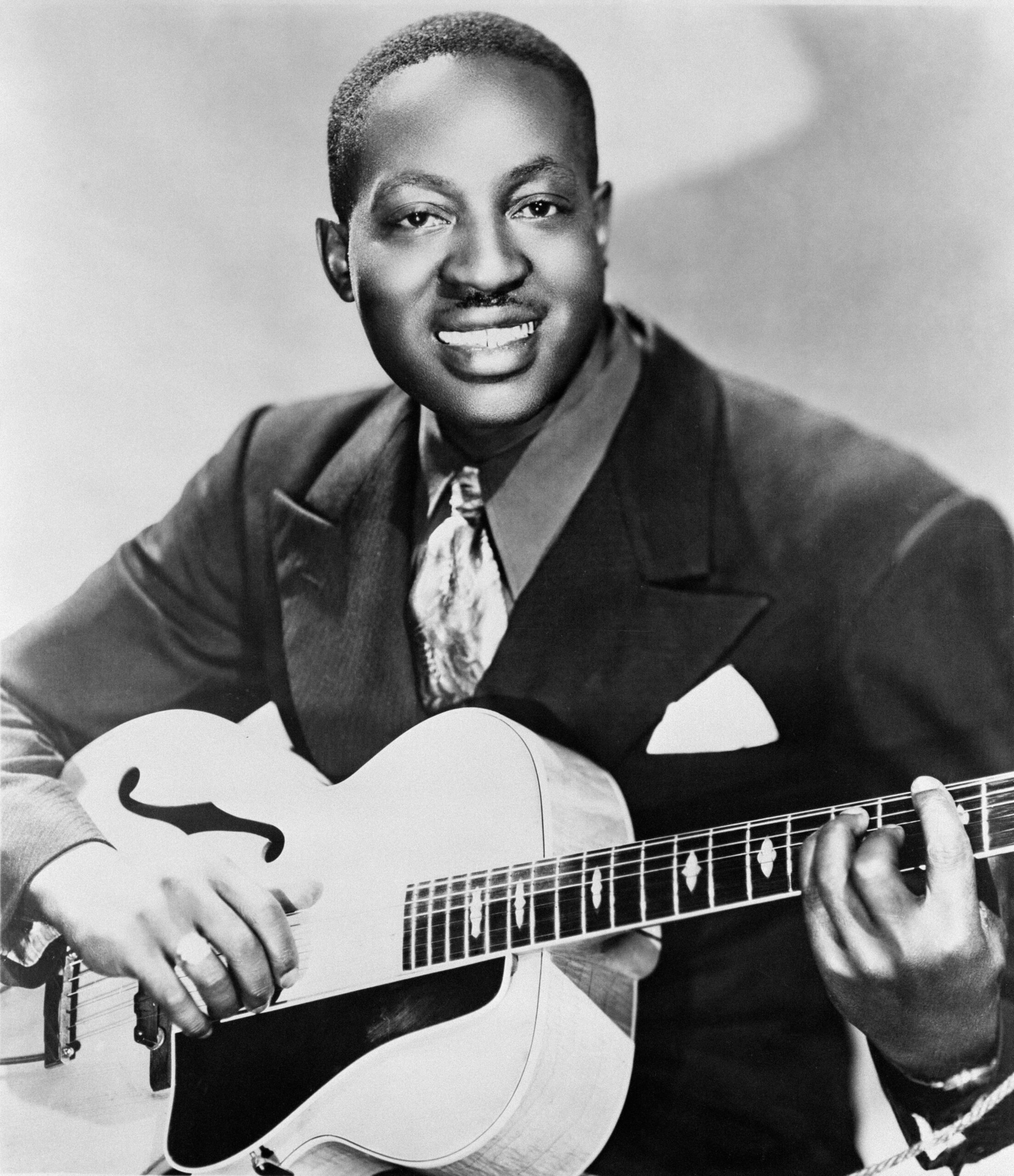
Big Bill Broonzy guitars gear is the subject of one of American music’s most genuinely consequential and most chronologically expansive careers — the equipment and approach of a guitarist whose career, beginning in the early 1920s and extending through his death in 1958, gave him a position as both a foundational Chicago blues figure and, in his later career, as one of the most important ambassadors of American blues to European audiences during the folk and blues revival’s earliest international expressions. Broonzy’s specific combination of sophisticated fingerstyle guitar technique, his extraordinarily prolific recording career (estimates suggest hundreds of recordings across multiple decades), and his late-career transformation into a figure who performed acoustic blues and folk material for European audiences seeking “authentic” American music gave him an influence that operated on multiple levels simultaneously — as a working Chicago blues musician shaping the music’s development from within, and as a cultural ambassador shaping how international audiences understood American blues from without.
His specific guitar technique — sophisticated fingerstyle picking that gave his accompaniments a harmonic and rhythmic complexity beyond simpler strumming-based approaches, combined with his roles as both featured artist and prolific session musician for other Chicago blues artists during the prewar and early postwar eras — gave him a position of genuine musical importance that his career’s specific arc (relative commercial obscurity for long stretches, late-career international recognition that came with its own complications regarding how “authentic” blues was packaged for new audiences) makes more complex to assess than careers with more straightforward trajectories. This is the complete breakdown of Big Bill Broonzy guitars gear, technique, and tonal philosophy.
Background
William Lee Conley Broonzy — known professionally as Big Bill Broonzy — was born around 1903 (his exact birth year and location have been subjects of historical uncertainty and some controversy, with various sources giving different dates and locations, complicated in part by Broonzy’s own sometimes-inconsistent autobiographical accounts) in the rural South, with his family’s musical background including the fiddle and other instruments common to rural Southern Black musical traditions before his eventual focus on guitar. His move to Chicago in the early 1920s — part of the same broader Great Migration pattern documented for Magic Sam and Tampa Red — placed him at the centre of Chicago’s developing blues recording industry from its earliest stages.
His prewar recording career — extending across the 1920s and 1930s — established him as one of the most prolific and most versatile musicians working within the Chicago “race records” industry, recording in a wide range of styles and serving as a session musician for numerous other artists in addition to his own recordings under his own name. His specific guitar technique — sophisticated fingerstyle picking — gave him versatility across different musical contexts, from solo accompaniment to ensemble playing with other musicians.
His postwar career took a specific and historically significant turn: as Chicago blues itself transitioned toward electric instrumentation and the harder, more amplified sound that would define the postwar Chicago blues most associated with Muddy Waters and his generation, Broonzy’s career moved in a different direction — toward acoustic performance for the developing folk revival audience, particularly in Europe, where his tours during the 1950s gave European audiences some of their earliest direct exposure to American blues performed by an actual blues musician (as opposed to recordings alone). This European reception — which sometimes involved Broonzy adapting his presentation and repertoire toward what European folk revival audiences expected “authentic” blues to sound like, including emphasising acoustic performance and certain repertoire choices over the electric blues that was simultaneously developing in Chicago — gave his late career a complex character: genuinely important in introducing American blues to international audiences, while also reflecting the specific (and not always accurate) expectations those audiences brought to the music.
Big Bill Broonzy Guitars Gear: The Complete Rig
Guitars
Big Bill Broonzy’s instruments across the majority of his career were acoustic guitars — standard flat-top acoustic instruments of the type common to blues and folk guitarists of his era, used for both his prewar recordings and his later acoustic folk revival performances. His specific instruments are not as precisely documented as some of the iconic instruments associated with other guitarists in this series (the National Tricone documented for Tampa Red, for instance), reflecting both the more variable equipment situations of working musicians of his generation and the relatively less “iconic instrument” framing that his career’s documentation has generally received compared to musicians whose specific instruments became more closely identified with signature recordings.
During the postwar period when Chicago blues was transitioning to electric instrumentation, Broonzy — working within the Chicago blues scene during this transition — would have had access to and likely used electric guitars for at least some recordings and performances during this period, consistent with the broader transition documented for Tampa Red and other Chicago blues musicians of this generation. However, his subsequent career direction — toward acoustic folk revival performance — meant that his electric guitar work, to the extent it occurred, is less prominently featured in his most historically celebrated recordings than his acoustic fingerstyle work.
Twelve-string guitars — giving a fuller, more complex tonal character through the doubled strings (each “course” of the twelve-string consisting of two strings, typically tuned in octaves for the lower four courses and in unison for the higher two) — appeared in some blues and folk guitarists’ setups of this era, including potentially Broonzy’s, for specific recordings and performances where the twelve-string’s fuller character suited the material. The twelve-string tradition in blues — associated prominently with figures like Lead Belly — gave certain prewar and folk-revival-era blues recordings their characteristic fuller, more chiming acoustic texture.
Broonzy, like Tampa Red and other guitarists of his generation, would have used the heavier-gauge acoustic strings standard for the period — giving period acoustic instruments their characteristic tonal fullness and the specific physical resistance that shaped the fingerstyle techniques his playing demonstrated.
Amps
For the majority of Broonzy’s career — both his prewar recordings and his folk-revival-era European performances — “amplification” in the sense subsequent guitarists would understand it was largely absent. His acoustic guitar’s natural volume, combined with appropriate microphone placement for recordings and performance venues whose acoustic properties suited unamplified or minimally amplified acoustic performance, gave his recordings and performances their sound without the amplifier-based tonal considerations that define most subsequent articles in this series.
To the extent Broonzy used electric instrumentation during the postwar Chicago blues transition, standard amplifiers available to Chicago blues musicians of the period (consistent with the general equipment landscape documented for other Chicago blues musicians of this era) would have provided amplification — though, as noted, this dimension of his work is less prominently documented than his acoustic fingerstyle recordings.
Effects
Big Bill Broonzy’s primary tonal characteristic was his sophisticated fingerstyle picking technique — using individual fingers (rather than a single pick) to play multiple simultaneous voices on the guitar: typically a bass line (often alternating between root and fifth, or walking bass patterns) played with the thumb, combined with melodic and harmonic content played with the fingers. This fingerstyle approach — giving the guitar a quality of playing multiple parts simultaneously, approximating what a pianist’s two hands or a small ensemble might produce — was Broonzy’s most distinctive technical characteristic, giving his solo accompaniments a fullness and complexity that simpler strumming or flatpicking approaches didn’t achieve.
Consistent with the largely acoustic, unamplified nature of his career’s most historically significant recordings and performances, Broonzy’s tone was largely the natural acoustic tone of his guitar(s), shaped by his specific fingerstyle technique, without electronic processing — similar in this respect to Tampa Red’s documented approach, though without the resonator guitar’s specific mechanical amplification system (Broonzy’s instruments being, as best documented, conventional flat-top acoustic guitars rather than resonator instruments).
Playing Style & Tone Philosophy
Big Bill Broonzy is one of the most technically sophisticated fingerstyle guitarists in the prewar and early postwar blues tradition — a player whose ability to generate bass, harmony, and melody simultaneously through fingerstyle technique gave his solo guitar accompaniments a fullness that complemented his vocals without requiring additional instrumentation. This fingerstyle sophistication — developed and refined across a career that included extensive work as both featured artist and session musician — gave him a specific versatility: his accompaniment technique could support his own vocals in solo performance, or integrate with other musicians in ensemble contexts, adapting his specific fingerstyle approach to whatever the musical context required.
His thumb-and-fingers technique — typically the thumb playing bass notes (often in alternating bass patterns, where the thumb alternates between the root and fifth of the chord, or in walking bass patterns that move stepwise between chord tones) while the fingers played melodic and chordal content on the higher strings — represented a specific technical tradition within American acoustic guitar playing, related to but distinct from the ragtime-influenced fingerstyle traditions that some other prewar guitarists drew from. This technique gave his playing a rhythmic foundation (the bass line) and melodic/harmonic content (the finger-picked upper voices) simultaneously — a genuinely polyphonic approach to solo guitar that required considerable independence between the thumb and fingers.
His prolific session work — playing on recordings by numerous other Chicago blues artists in addition to his own recordings — demonstrated a specific kind of musical adaptability: the ability to provide appropriate accompaniment for different vocalists and different musical contexts, adjusting his specific fingerstyle approach to support rather than compete with the featured artist’s musical content. This session musician versatility, while less individually celebrated than featured-artist recordings, represented a significant body of musical work that shaped numerous recordings beyond those credited to Broonzy himself.
His late-career European performances — and the specific repertoire and presentation choices that characterised them — reflected a complex negotiation between his own musical background (which included considerable ensemble and electric blues experience from his Chicago career) and European folk revival audiences’ specific expectations about what “authentic” American blues should sound like (generally: acoustic, solo, and drawing from an older repertoire associated with prewar blues rather than the contemporary electric Chicago blues that was simultaneously developing). Broonzy’s specific choices in this context — emphasising acoustic performance, certain repertoire selections — gave European audiences a specific (if not necessarily complete or representative) introduction to American blues, with consequences for how those audiences and subsequent commentators understood “authentic” blues that extended well beyond Broonzy’s individual performances.
Tonally, Big Bill Broonzy guitars gear philosophy — like Tampa Red’s, operating largely without the amplifier and effects considerations that dominate most of this series — was built on the specific tonal character of acoustic flat-top guitars combined with his sophisticated fingerstyle technique. The complexity and fullness of his sound came from his technique — the simultaneous bass, harmony, and melody generation — rather than from any equipment-based tonal shaping. This represents, alongside Tampa Red, one of the clearest examples in this series of a guitarist whose signature sound was determined almost entirely by technique rather than equipment.
The alternating bass and walking bass techniques that formed the foundation of Broonzy’s thumb-driven approach deserve more detailed technical examination because they represent two related but distinct fingerstyle bass patterns that gave prewar acoustic blues guitar its rhythmic and harmonic foundation. Alternating bass — the thumb moving between the root of the chord and the fifth (or sometimes other chord tones) in a steady rhythmic pattern, typically on the beat or in a simple subdivided pattern — gave a steady rhythmic pulse that functioned analogously to how a bass player or the left hand of a boogie-woogie pianist might establish a rhythmic foundation. Walking bass — a more melodically active bass line that moves stepwise (or through other intervals) between chord tones, often connecting the harmony of one chord to the next through passing tones — gave a more harmonically and melodically active foundation, requiring the thumb to navigate a wider range of notes in a more melodically conceived pattern. Broonzy’s command of both techniques, and his ability to move between them or combine elements of both depending on the specific musical context, gave his accompaniments a rhythmic and harmonic sophistication that distinguished his playing from guitarists whose bass-string technique was limited to simple repetitive patterns. The independence required to maintain either pattern — alternating or walking — while the fingers simultaneously play melodic and chordal content on the upper strings, represents the core technical challenge of the fingerstyle blues tradition that Broonzy’s playing exemplified at a high level.
The specific historical uncertainty surrounding Broonzy’s biographical details — his birth year and location, and various inconsistencies in his own autobiographical accounts — connects to a broader pattern in how prewar Black American musicians’ biographies were documented (or not documented) by the institutions and individuals who might have created reliable records. Birth certificates, official records, and other documentary evidence were often incomplete or unavailable for rural Black Americans born in the early 20th century South, particularly in the specific historical context of the Jim Crow South where official documentation of Black births, deaths, and other vital records was often inconsistent or actively neglected by the white-controlled institutions responsible for such records. Musicians themselves, when interviewed decades later by folklorists, journalists, or other researchers, sometimes gave varying accounts of their own biographical details — whether due to genuine uncertainty (if official records didn’t exist, a person’s own knowledge of their exact birth date might itself be approximate), strategic self-presentation (adjusting biographical details for specific audiences or contexts), or simply the natural variability of memory across repeated retellings over decades. For researchers attempting to establish reliable biographical timelines for musicians like Broonzy, this combination of factors — absent official records, variable self-reported accounts — creates genuine historical uncertainty that, in Broonzy’s case specifically, has been the subject of dedicated research attempting to establish more reliable biographical details than the sometimes-contradictory accounts that circulated during and after his lifetime. Big Bill Broonzy guitars gear, in this sense, is documented within a broader biographical context whose specific details remain, in some respects, genuinely uncertain in ways that contrast with the much more thoroughly documented biographical details available for most subsequent musicians in this series.
The relationship between Broonzy’s prolific session work and the broader economics of the prewar and early postwar “race records” industry illuminates how working musicians of this era sustained careers through a combination of featured-artist recordings (which might be commercially successful or not, with uncertain and often modest royalty arrangements even when successful) and session work (providing more reliable, if modest, payment for specific recording dates regardless of whether the resulting recordings achieved commercial success). For a musician with Broonzy’s specific combination of technical skill and versatility — able to provide appropriate accompaniment across different musical contexts and for different vocalists — session work represented a more economically stable (if less individually celebrated) component of a working musician’s income than reliance on featured-artist recordings alone. This economic reality shaped how musicians of this era approached their careers: technical versatility and reliability as a session musician had genuine economic value independent of whether any individual musician achieved the kind of featured-artist commercial success that would give them broader recognition. Broonzy’s extensive session work, documented across numerous recordings credited to other artists, reflects this economic reality — a working musician’s career sustained partly through the kind of reliable, versatile contribution that session work represented, alongside (and sometimes more reliably than) his own featured recordings’ commercial fortunes.
How to Sound Like Big Bill Broonzy
Guitar Approach
A standard flat-top acoustic guitar (steel-string, dreadnought or similar body style common to blues and folk guitarists) is the foundational Big Bill Broonzy guitars gear instrument — no specific iconic model is as closely identified with his sound as the National Tricone is with Tampa Red’s, making a quality standard acoustic guitar (Martin, Gibson, or comparable) an appropriate starting point. Medium-to-heavy gauge strings (.012-.054 or similar, period-appropriate for fingerstyle acoustic playing) give the tonal fullness and physical feel appropriate to fingerstyle technique.
The technical approach: develop thumb-and-fingers independence — the thumb maintaining a steady bass pattern (alternating bass or walking bass) while the fingers play melodic and chordal content on the higher strings, largely independent of the thumb’s rhythm. This thumb-finger independence is the foundational skill for the Broonzy approach and for the broader fingerstyle blues and ragtime tradition his playing connected to. Practice maintaining a steady bass pattern while the fingers play increasingly complex melodic content above it — this independence, once developed, gives solo guitar playing its polyphonic, “playing multiple parts at once” quality.
Amp Approach
No amplifier — Big Bill Broonzy guitars gear, for its most historically significant recordings, is an entirely acoustic, unamplified approach. For contemporary performance requiring amplification: a quality acoustic guitar pickup or microphone, run through a clean acoustic amplifier or PA system that doesn’t colour the guitar’s natural acoustic tone.
| Element | Approach | Notes |
|---|---|---|
| Instrument | Standard flat-top steel-string acoustic | No single iconic model — quality standard acoustic appropriate; twelve-string for specific fuller-textured material |
| String gauge | Medium-to-heavy (.012-.054) | Period-appropriate fingerstyle acoustic gauge — gives tonal fullness and appropriate string tension for fingerstyle technique |
| Thumb technique | Alternating bass or walking bass | Steady, independent bass pattern — the rhythmic and harmonic foundation |
| Finger technique | Melodic and chordal content, upper strings | Independent of thumb pattern — develops polyphonic, multi-voice texture |
| Amplification | None (historical) or clean acoustic PA (practical) | Natural acoustic tone is the foundation — avoid coloration |
| Vocal-guitar relationship | Guitar supports/complements vocal | Fingerstyle accompaniment designed to support solo vocal performance without additional instrumentation |
Thumb-and-fingers independence is the single most essential and most technically demanding element of Big Bill Broonzy guitars gear — the alternating or walking bass pattern maintained by the thumb while the fingers play melodic and harmonic content above it gives solo acoustic guitar its polyphonic quality. Standard acoustic guitar, medium-heavy strings, no amplification for historically accurate approach. The complexity and fullness of the Broonzy sound comes entirely from technique rather than equipment — this is, alongside Tampa Red, the clearest “technique over equipment” demonstration in this entire series.
Influence & Legacy
Big Bill Broonzy’s influence operates on multiple distinct levels that don’t always receive equal attention. As a working Chicago blues musician across the prewar and early postwar periods — both as featured artist and prolific session musician — he contributed to and shaped a substantial body of recorded blues that influenced subsequent Chicago blues development directly. As a late-career ambassador to European audiences, he shaped (for better and for more complicated reasons) how international audiences understood American blues during a formative period of the music’s international reception — an influence whose consequences extended into how the blues and folk revival more broadly developed in subsequent decades.
His specific fingerstyle technique — the thumb-and-fingers independence giving solo guitar its polyphonic capability — represents a technical tradition that subsequent acoustic blues and folk guitarists (including many associated with the folk revival that his European tours helped catalyse) drew from, whether directly through exposure to his recordings and performances or through the broader fingerstyle tradition that his playing was part of and helped transmit.
The comparison with Tampa Red — his Chicago contemporary whose own prewar career and subsequent influence on Chicago blues’ development gave a parallel example of how prewar techniques and repertoire shaped subsequent generations — illuminates the broader prewar Chicago blues environment that both musicians’ careers developed within and contributed to. The parallel with Lonnie Johnson — whose own sophisticated guitar technique, developed in overlapping prewar contexts, gave another example of technically advanced prewar blues guitar whose influence extended into subsequent decades — shows the broader landscape of technically sophisticated prewar guitarists whose work shaped the foundations of the tradition. And the connection to Magic Sam — whose postwar West Side Chicago blues represents one direction the Chicago blues tradition developed in (the electric, amplified, tremolo-soaked direction), in contrast to Broonzy’s late-career direction toward acoustic folk revival performance — shows the genuine bifurcation that occurred within the Chicago blues tradition during the postwar period, with Broonzy’s career uniquely positioned to have participated in (and to illuminate, through its specific trajectory) both directions.
Frequently Asked Questions: Big Bill Broonzy Guitars & Gear
What guitar did Big Bill Broonzy play?
Big Bill Broonzy’s instruments across his career were primarily standard flat-top acoustic guitars — no single iconic instrument is as closely identified with his sound as, for example, the National Tricone is with Tampa Red. His specific instruments varied across his decades-long career, consistent with the more variable equipment situations of working musicians of his generation. Twelve-string guitars may have appeared for specific recordings where a fuller acoustic texture was appropriate. During the postwar Chicago blues transition to electric instrumentation, Broonzy likely had access to and used electric guitars for at least some work, though this is less documented than his acoustic fingerstyle recordings.
What is fingerstyle guitar and why was Broonzy’s approach significant?
Fingerstyle guitar refers to playing technique using individual fingers (rather than a single pick) to play multiple simultaneous voices — typically a bass line played with the thumb and melodic/harmonic content played with the fingers. Broonzy’s specific fingerstyle approach — sophisticated thumb-and-fingers independence giving his solo guitar a polyphonic, multi-voice quality — allowed his accompaniments to provide bass, harmony, and melody simultaneously, giving solo performances a fullness that simpler strumming approaches couldn’t achieve. This technical sophistication was significant both for his own recordings and for the broader fingerstyle blues and folk tradition that subsequent guitarists drew from.
What was Big Bill Broonzy’s role as a session musician?
Beyond his own recordings under his own name, Broonzy worked extensively as a session musician for other Chicago blues artists during the prewar and early postwar periods — providing guitar accompaniment on numerous recordings credited to other featured artists. This session work, while less individually celebrated than his featured-artist recordings, represented a substantial body of musical contribution that shaped many recordings beyond his own catalogue, demonstrating his adaptability in providing appropriate accompaniment across different musical contexts and for different vocalists.
What was Big Bill Broonzy’s role in the European blues and folk revival?
During the 1950s, Broonzy toured Europe, giving European audiences some of their earliest direct exposure to American blues performed by an actual blues musician (as opposed to recordings alone). His performances — which emphasised acoustic performance and certain repertoire choices that aligned with European folk revival audiences’ expectations about “authentic” American blues — gave those audiences a specific (though not necessarily complete or fully representative) introduction to the music, with consequences for how subsequent international audiences and commentators understood “authentic” blues that extended beyond his individual performances. This role gave him significant historical importance in the international reception of American blues, alongside (and sometimes in tension with) his identity as a working Chicago blues musician.
How did the postwar transition affect Big Bill Broonzy’s career differently than other Chicago blues musicians?
While many Chicago blues musicians of Broonzy’s generation transitioned toward the harder, electric, amplified sound that defined postwar Chicago blues (the sound associated with Muddy Waters and subsequently with the West Side sound documented for Magic Sam), Broonzy’s career took a different direction — toward acoustic performance for the developing folk revival audience, particularly in Europe. This meant that while contemporaries were developing the electric Chicago blues sound that would influence subsequent rock guitar, Broonzy’s late-career work moved toward acoustic folk-blues performance, giving his career a genuinely different trajectory from many of his generational peers even as all were working within and shaping the broader Chicago blues tradition.
What controversies or complications surround Big Bill Broonzy’s biography?
Broonzy’s exact birth date and location have been subjects of historical uncertainty, complicated in part by inconsistencies in his own autobiographical accounts across different interviews and writings during his lifetime. More substantively, his late-career European performances and the “authentic blues” framing they sometimes involved have been examined by subsequent scholars as part of broader questions about how American blues was packaged and presented for international audiences during this formative period of the music’s international reception — questions about authenticity, representation, and the specific expectations that European folk revival audiences brought to American blues, expectations that individual musicians like Broonzy navigated with varying degrees of choice and constraint.
What are Big Bill Broonzy’s most important recordings?
Broonzy’s extraordinarily prolific recording career — extending across decades and including both featured-artist recordings and extensive session work — makes identifying a small number of “most important” recordings difficult relative to assessing his overall career arc and influence. His prewar recordings document his fingerstyle technique and his role within the developing Chicago blues recording industry; his postwar acoustic recordings and European performance recordings document his late-career folk revival direction. Compilation recordings covering different periods of his career give the most complete picture of his range across the decades-long arc from prewar Chicago blues session musician to international folk-blues ambassador.
The “authenticity” question that Broonzy’s European folk revival performances raised — and that subsequent scholarship has examined in some detail — deserves more careful examination because it illuminates a recurring tension in how traditional or “roots” musics are presented to audiences from outside the musical tradition’s original cultural context. European folk revival audiences of the 1950s, encountering American blues largely for the first time through performers like Broonzy, brought specific expectations about what “authentic” blues should sound and look like — expectations shaped by limited prior exposure (primarily through recordings, and through the specific selection of recordings that had reached European audiences), by broader romantic notions about “folk” music as somehow more authentic or unmediated than commercial popular music, and by the specific cultural dynamics of how white European audiences understood and related to Black American musical traditions. Broonzy, navigating this reception, made specific choices about repertoire and presentation — choices that, by some accounts, involved presenting a somewhat simplified or “purified” acoustic blues persona that aligned with these audience expectations, even though his actual career (as a working Chicago musician across decades) had included considerable ensemble and electric blues experience that this acoustic folk-revival presentation didn’t fully represent. This isn’t necessarily a criticism of Broonzy individually — performers navigating cross-cultural reception have always made strategic choices about presentation, and Broonzy’s choices gave him a successful and historically significant late career — but it does mean that European audiences’ understanding of “what blues is” was shaped, in part, by a specific and not fully representative presentation, with consequences for how “authentic blues” was subsequently understood and how that understanding shaped the broader folk and blues revival’s development. Big Bill Broonzy guitars gear, in its European folk-revival context, was deployed within this complex cross-cultural reception dynamic — genuinely important in introducing American blues to new audiences, while also part of a presentation whose relationship to the “complete” picture of American blues (including its electric, ensemble, urban dimensions) was more selective than audiences may have recognised at the time.
The broader pattern of prewar Chicago blues musicians’ careers bifurcating in the postwar period — some moving toward electric ensemble blues (the direction associated with Muddy Waters and subsequently the West Side sound documented for Magic Sam), others moving toward acoustic folk revival performance (Broonzy’s direction) — reflects genuinely different responses to the same underlying transformation in how blues was performed, recorded, and received. For musicians whose technical foundation was in fingerstyle acoustic accompaniment (as Broonzy’s was), the transition to electric ensemble blues required adapting not just instrumentation but the underlying musical conception — electric ensemble blues generally required less of the polyphonic, “playing multiple parts at once” fingerstyle approach (since bass, rhythm, and lead functions could be distributed across multiple musicians and instruments in an ensemble) and more of the kind of single-voice lead or rhythm playing that electric ensemble contexts required. For musicians whose specific skills were optimised for solo acoustic performance, the folk revival audience’s interest in exactly this kind of solo acoustic performance offered a career direction that didn’t require this fundamental adaptation. Broonzy’s specific career trajectory — toward folk revival rather than electric ensemble blues — may reflect, in part, a recognition that his specific technical strengths (sophisticated solo fingerstyle accompaniment) were better suited to the folk revival context than to the electric ensemble context that was simultaneously developing, even as both directions represented genuine and historically significant paths for Chicago blues musicians of his generation.
Broonzy’s specific position as a “bridge” figure — connecting the prewar acoustic blues tradition to both the postwar electric Chicago blues tradition (through his prewar Chicago career and session work alongside musicians who would shape that tradition) and to the international folk and blues revival (through his European performances) — gives him a genuinely unusual historical position: a single career that touched, in some way, nearly every major development in how American blues was transmitted and received across the middle of the 20th century. Few individual musicians’ careers span quite this range of contexts and consequences. This breadth, while giving Broonzy genuine historical significance, also makes his specific legacy harder to characterise with a single clear narrative than musicians whose careers and influence operated in more singular directions — he was neither purely a “Chicago blues pioneer” in the sense that subsequent electric blues developed most directly from, nor purely a “folk revival figure” in the sense that the acoustic folk-blues tradition developed most directly from, but genuinely both, with his career’s specific arc reflecting the actual complexity of how American blues developed and was received during this transformative period, rather than the simplified narratives that subsequent popular and even scholarly accounts sometimes impose on this history for the sake of clearer storytelling. Big Bill Broonzy guitars gear, understood across his complete career, resists exactly this kind of simplification — a genuinely complex legacy for a genuinely complex and consequential career.
The technical skill of thumb-finger independence that Broonzy’s playing exemplifies has analogues across multiple musical traditions worth briefly noting for guitarists seeking to develop this approach. Classical guitar technique (documented in relation to Bernard Butler’s formal training earlier in this series) develops right-hand finger independence through systematic exercises that isolate and coordinate individual fingers; ragtime piano technique requires similar left-hand/right-hand independence, with the left hand maintaining a steady bass-and-chord “stride” pattern while the right hand plays melodic content; and many West African guitar and lute traditions (which fed into the broader development of American blues and folk guitar through the same cultural transmission processes that brought blues itself from Africa through the African diaspora) feature similarly polyphonic approaches to single-instrument performance. Broonzy’s specific fingerstyle technique sits within this broader cross-cultural and cross-instrumental tradition of polyphonic solo performance — the specific goal of making a single instrument sound like it’s doing the work of multiple instruments or multiple performers. For contemporary guitarists developing this skill, exercises that isolate the thumb’s bass pattern (practicing it alone until it becomes automatic) before adding the fingers’ melodic content (practiced separately, then combined gradually) represent the standard pedagogical approach — building the independence incrementally rather than attempting to coordinate both elements simultaneously from the start. This is, in a real sense, the same skill that subsequent fingerstyle guitarists across folk, blues, and other acoustic traditions have continued to develop using essentially the same incremental pedagogical approach, connecting contemporary fingerstyle guitarists to the same technical tradition that Broonzy’s prewar recordings document at a historically foundational stage.
Finally, considering Big Bill Broonzy guitars gear alongside Tampa Red’s in the immediately preceding article gives a useful comparative view of two prewar Chicago blues guitarists whose specific approaches — Tampa Red’s slide and single-string lead work on the National Tricone resonator, Broonzy’s fingerstyle thumb-and-fingers accompaniment on standard acoustic guitars — represented genuinely different technical traditions within the same broader prewar Chicago blues environment. Both musicians were prolific, both worked as both featured artists and in supporting roles for other musicians, and both lived through and contributed to the transition from prewar acoustic to postwar electric Chicago blues, with each musician’s career taking somewhat different directions through that transition. Together, their two approaches — slide/lead versus fingerstyle accompaniment — represent two of the foundational technical traditions that subsequent Chicago blues guitarists (electric and acoustic alike) would draw from, combine, and develop further. Understanding both articles together gives a more complete picture of prewar Chicago blues guitar’s technical foundations than either alone could provide — a foundation that the subsequent postwar electric Chicago blues documented elsewhere in this series, and indeed the entire subsequent history of blues-influenced rock guitar that this complete series has documented, ultimately built upon.
For guitarists today, the most valuable lesson from studying Big Bill Broonzy guitars gear may be this: across a career spanning more than three decades and an extraordinary range of recording and performance contexts — from prewar Chicago session work to postwar transitions to European concert halls — the constant element was not any specific instrument, amplifier, or technology, but a technical foundation (thumb-and-fingers independence, the capacity to generate bass, harmony, and melody simultaneously) that travelled with the musician regardless of context. This portability of genuine technique — as distinct from equipment-dependent tonal signatures — gave Broonzy a career resilience that equipment-dependent approaches couldn’t match: wherever he performed, whatever instrument was available, the fundamental skill remained applicable. For contemporary guitarists, this suggests that technical development of this kind — skills that don’t depend on specific equipment availability — represents an investment whose value persists across whatever equipment and contexts a career might subsequently involve, a lesson as relevant to a 21st-century guitarist navigating different gigs, studios, and equipment setups as it was to a working Chicago blues musician navigating the transformations of the mid-20th century.
One additional point on twelve-string guitar’s place in this tradition: when twelve-string instruments appeared in prewar acoustic blues contexts (whether in Broonzy’s specific recordings or in the broader tradition his playing was part of), the doubled courses gave fingerstyle accompaniment an additional layer of natural chorus-like richness — each plucked note actually sounding as two strings (tuned in octaves for the bass courses, in unison for the treble courses), giving a fuller, more shimmering acoustic texture than a six-string instrument produces. For fingerstyle playing specifically, this meant that the thumb’s bass notes carried additional harmonic richness (the octave-doubled bass courses), while the fingers’ melodic and chordal content on the treble courses gained the unison-doubled shimmer that twelve-string instruments are known for. This natural acoustic enrichment — achieved entirely through the instrument’s string configuration, with no electronic processing — gave twelve-string fingerstyle blues recordings of this era a specific fullness that prefigured, in an entirely acoustic and mechanical way, some of the chorus and doubling effects that subsequent electric guitarists would achieve through pedals and studio techniques. Big Bill Broonzy guitars gear, in its twelve-string applications, thus represents another instance of this series’ recurring theme: effects and tonal enrichments that later generations achieved through electronics had acoustic and mechanical precedents in the instruments and techniques of earlier guitarists, whose solutions to the same fundamental musical desires — fullness, richness, the sense of more than one instrument’s worth of sound from a single performer — used the materials and technologies available to them with remarkable musical effectiveness.
Related stories
Sylvain Sylvain Guitars & Gear: The Complete Guide to the New York Dolls’ Gretsch, Les Paul Junior & Automatic Guitar Proto-Punk Rig
Sylvain Sylvain guitars & gear: New York Dolls guitarist. Les Paul Junior 'automatics', Gretsch Golden Anniversary, white Les Paul Custom stolen by Steve Jones — proto-punk tone.

Ted Nugent Guitars & Gear: The Complete Guide to the Motor City Madman’s Byrdland Rig
Ted Nugent guitars & gear: the Motor City Madman's Byrdland rig. 12 vintage Gibson Byrdlands, Fender Twin Reverbs, Peavey 6505, zero effects, and the Stranglehold tone.
Ted Turner Guitars & Gear: The Complete Guide to Wishbone Ash’s Twin Guitar Pioneer’s Rig
Ted Turner guitars & gear: Wishbone Ash's twin-lead pioneer. Stratocasters, Firebird, Orange amps, and the Argus-era tone fully explained.