
Buck Dharma (Blue Öyster Cult) Guitars & Gear: The Complete Guide to the Reaper’s Guitar Architect’s Rig
“There’s not one iconic thing; I never used pedals back in the day — it was just a guitar into an amp for years.” Buck Dharma told this to Guitar World in 2024 — and it is at once the most unexpected and the most appropriate statement for a guitarist who wrote “(Don’t Fear) The Reaper.” The song that gave a generation its definitive rock anthem for mortality and acceptance was written and recorded with a Martin D-35 acoustic guitar and a custom-made Bulestra Vulcan electric — a guitar into an amp, straight. No effects pedals. Just the guitar’s natural tone through the amplifier’s natural character, producing one of the most melodically sustained guitar passages in rock history. The Vulcan was stolen in 1980; resurfaced in 2002 on eBay; is now gone again. The D-35 made the acoustic bed of the track. The guitar-into-amp philosophy that produced “Reaper” has since evolved into a rig that includes Kemper profilers and a Strymon Iridium pedal amp modeler (“I have Kempers and all sorts of things — I like to mess around with it all”), but the foundational insight remains: his distinct tone comes “more from his touch than any specific gear.” He has been playing guitar since 1961. He has been in Blue Öyster Cult since 1967. He is seventy-eight years old and is still the sole constant member of the band. The Reaper does not fear him either.
Donald Brian Roeser — known professionally as Buck Dharma — was born on November 12, 1947, in New York City. He is the sole constant member of Blue Öyster Cult since the group’s formation in 1967 on Long Island, New York. Blue Öyster Cult’s catalog — Tyranny and Mutation (1973), Secret Treaties (1974), Agents of Fortune (1976, “(Don’t Fear) The Reaper”), Spectres (1977), Cultösaurus Erectus (1980, his personal favorite for guitar work), Fire of Unknown Origin (1981, “Burnin’ for You”), Mirrors (1979) — represents the most distinctive body of work in American heavy rock of the 1970s and early 1980s. Dharma’s guitar playing — described as “lightning-fast fretboard histrionics” in Vintage Guitar magazine — combined technically demanding lead work with the specific melodic intelligence and the dark, literary character of BOC’s compositional approach. He has been described as “overlooked and underrated” by Dinosaur Rock Guitar and as the primary songwriter behind “(Don’t Fear) The Reaper,” “Godzilla,” and “Burnin’ for You” — three of the most enduring rock anthems of the 1970s. He was a regular NAMM show attendee from the early days. He still performs live.
Background: Long Island 1967, “(Don’t Fear) The Reaper” 1976, Cultösaurus Erectus as Guitar Peak, “Playing for the Songs”
Blue Öyster Cult’s specific position in 1970s rock — the band that combined heavy metal’s power with the literary pretension and musical sophistication of progressive rock, the dark Syd Barrett-meets-Black-Sabbath-meets-Patti-Smith aesthetic that producer and manager Sandy Pearlman cultivated — is the specific creative context in which Buck Dharma’s guitar playing developed. He is not a guitar hero in the conventional sense — not a pyrotechnician who stands at the front of the stage deploying continuous technical display. He is, as Dinosaur Rock Guitar characterizes him, “mostly playing for the songs”: the guitar serves the compositional vision, and the compositional vision is more literary, more dark, and more melodically sophisticated than most 1970s hard rock allowed.
“(Don’t Fear) The Reaper” (1976) is the most complete demonstration of his approach: a song that sustained a melody across its full length — the specific guitar figure that opens and defines the track — with a patience and a melodic intelligence that most hard rock guitarists of the era did not bring to the task. The acoustic-electric arrangement (Martin D-35 acoustic bed, Bulestra Vulcan electric) gives the track a specific warmth and spatial openness that purely electric arrangements of similar songs lack. The guitar figure becomes the song; the song becomes the culture; the song’s cultural resonance — forty-five years of covers, references, parodies, movie appearances, and “(Don’t Fear) The Reaper” still appearing in popular culture in ways that few songs from any era manage — documents the specific quality of the original guitar composition.
His personal favorite Blue Öyster Cult album for guitar — Cultösaurus Erectus (1980) — is the album that contained “Burnin’ for You” and demonstrated his continued development as a guitarist after the commercial peak of “Reaper.” The Guitar World quote: “The album I’d choose as far as guitars would be Cultösaurus Erectus. It was memorable and had Burnin’ for You, which was great. Working with Martin Birch was a highlight as a guitarist.” Martin Birch — the British record producer who also produced Deep Purple, Black Sabbath, Iron Maiden, and Whitesnake — is one of the most technically sophisticated heavy rock producers of the era, and Birch’s understanding of how to capture guitar tone in a recording environment produced the specific clarity and power of the Cultösaurus Erectus guitar sound.
The Rig: Buck Dharma’s Guitars, Amps, and Effects
Guitars
Bulestra Vulcan Custom (Don’t Fear the Reaper — “The Electric Was a Custom-Made Guitar Called a Vulcan”): The most historically significant guitar in Buck Dharma’s collection is the Bulestra Vulcan — a custom-made instrument used for the electric parts of “(Don’t Fear) The Reaper.” The Vintage Guitar magazine interview captures his own description: “On the original version, I used a Martin D-35, and the electric was a custom-made guitar called a Vulcan.” The Equipboard documentation provides the complete story: “This guitar was played on ‘Mirrors,’ ‘Cultösaurus Erectus’ and ‘Fire of Unknown Origin,’ and used extensively live. Buck had two Vulcans, one was given to a former crewmember. The other was stolen in 1980, and in June 2002, resurfaced again after all these years for auction on eBay.” The guitar that played the defining electric guitar part of one of the most celebrated rock songs in history was stolen in 1980, recovered on eBay in 2002, and its current status is unknown from available sources. This is the specific kind of guitar biography that makes gear history compelling.
Gibson SG Standard (Primary Guitar, 1970s — “Main Guitar in the ’70s”): The Guitar Chalk documentation confirms the Gibson SG Standard as “Buck’s main guitar in the ’70s; great for sharp, articulate lead tones.” The Gibson SG Standard’s specific character — the thin mahogany double-cutaway body, the 24.75-inch scale, the PAF-derived humbuckers (in vintage models), and the extremely resonant, lightweight construction — provides the specific combination of sustain and bite that Dharma’s lead work requires. The SG’s resonant mahogany combined with the natural compression of PAF humbuckers gives it the specific “sharp, articulate” quality that his approach needed — the ability to sustain a melodic line clearly and distinctly without the thickness and compression of a Les Paul or the brightness of a Stratocaster.
Steinberger M Series (Seven Different Models — GM1, GM4-T, GM7-T, TransTrem): The Equipboard documentation from Buck Dharma’s official website provides the most extensive single guitar documentation in his collection: “After the success of the ‘block’ models Steinberger designed a more ‘standard’ looking guitar, the M series. Buck’s first M series is the GM1, which was designed by Mike Rutherford (Genesis) and his guitar tech. The GM1 came with one pickup, and he had it retrofitted with an additional single coil in the neck position. Buck also has several later models, the GM4-T and the stunning tobacco sunburst GM7-T, both of which feature the TransTrem, a Steinberger invention that allows you to transpose the guitar as a whole, in tune, in steps and half-steps in both directions. All total, Buck has 7 different M series guitars. These guitars are still in Buck’s collection.” The Steinberger TransTrem — one of the most ambitious guitar mechanical innovations of the 1980s, allowing entire-guitar pitch transposition with a lever without retuning individual strings — suited Dharma’s interest in mechanical innovation and in the expanded tonal vocabulary that new technology provides. Seven M series Steinbergers is one of the most specific single-model guitar collection documentations in this entire guide.
Gibson Les Paul (Official Website Documentation, “Almost Completely Stock”): “This guitar is almost completely stock, although Buck had the neck heel ground down” — the Equipboard documentation from Buck’s official website confirms the Les Paul with the specific modification. Grinding down the neck heel improves upper-fret access on the Les Paul — a practical modification for a lead guitarist who needs clean access to the highest frets for the melodic lead passages characteristic of his playing. The “almost completely stock” characterization reflects his broader preference for PAF-style pickups over high-output modern pickups: “I always preferred the PAF styles over certain types of hot rod pickups” — the vintage low-output humbucker’s specific midrange character and dynamic response over the compressed, high-output alternatives.
Jon Harper Buck Dharma Signature Guitar (1999, Two Humbuckers and Tremolo): “In 1999, guitar maker Jon Harper and Buck worked together on the Buck Dharma Signature model guitar. It features two humbucking pickups and a tremolo” — the Equipboard documentation of his production signature guitar from the independent luthier Jon Harper. The specific configuration — two humbuckers, tremolo — reflects his standard electric guitar requirements without the extreme customization of the Steinberger collection.
Coral Electric Sitar (Specific Application): “In an interview on earofnewt.com, Buck Dharma of Blue Öyster Cult discusses his use of the 1968 Coral Electric Sitar.” The Coral Electric Sitar — a specific 1960s guitar designed to emulate the sitar’s buzzing string character through a specific resonator mechanism — appears in his documented collection for specific applications. Its use reflects the eclectic, psychedelically influenced approach to tone that distinguished Blue Öyster Cult from purely conventional hard rock.
Martin D-35 (Acoustic, “Don’t Fear the Reaper” Original Recording): “On the original version, I used a Martin D-35” — the acoustic guitar foundation of “(Don’t Fear) The Reaper.” The Martin D-35 — a dreadnought acoustic with three-piece rosewood back (addressing the scarcity of wide Brazilian rosewood), spruce top, and the specific warm, powerful tone of the D series — provides the acoustic bed of the track’s arrangement. The D-35’s specific character: warmer than the D-28, with slightly less treble presence but a broader low-end response. Its presence on one of the most celebrated rock recordings of the 1970s documents the acoustic dimension of Dharma’s guitar approach alongside the predominantly electric character of BOC’s heavy music.
Traveler Guitar (Endorsed): “Guitarist, Songwriter, & Founding Member of Blue Öyster Cult. (Artist No.15)” — the Traveler Guitar official website lists Buck Dharma as an endorsed artist. Traveler Guitars are compact, travel-size instruments designed for portability; their presence in his endorsed collection reflects the practical touring dimension of a musician who has been touring consistently since 1967.
Amps
Marshall Amplifiers (Classic Era Primary, JCM800/900 Live): The Dinosaur Rock Guitar documentation confirms: “Buck’s amps in the classic era of BOC were Marshalls, and he’s still using them.” The live gear list from Blue Oyster Cult’s website confirms the Marshall JCM900 dual reverb head for live performance. The JCM900 — the British tube amplifier that succeeded the JCM800 and is characterized by a slightly higher gain range and built-in digital reverb — represents the evolution of the Marshall sound that defined BOC’s classic period into the 1990s and 2000s live context. Running the Marshall guitar-into-amp in the classic era (his “no pedals” statement refers to this foundational period) produced the specific warm, sustaining British tube tone of the classic BOC records.
Mesa Boogie Mark II and Mark IIC (Studio Recording): The Equipboard and Dinosaur Rock Guitar documentation confirms Mesa Boogie amplifiers in his studio setup: “I also used a Boogie Mark II head through a 4 X 12.” The Mesa Boogie Mark II (and its successor the Mark IIC+, widely considered the finest Mesa Boogie for recording purposes) provides the specific warm, complex, high-gain American tube tone that differs from the Marshall’s British character — the combination of both amplifier families in BOC’s studio recordings accounts for the specific tonal richness of their most carefully produced albums.
Vox AC-30 and Fender Supers (Studio Recording, Recent): The Guitar World quote documents his recent studio approach: “In the studio, I’ve been using smaller combo amps lately; a Vox AC-30, Fender Supers.” The Vox AC-30 — the British EL84 combo associated with the Beatles, the Kinks, and the jangle-rock tradition — and Fender Super Reverb (a 40-watt four-10 combo associated with American clean tones and natural tube saturation) represent a significant shift from the full Marshall head-and-cabinet approach of the live rig toward smaller, more intimate combo amplifiers for studio recording.
ENGL 530 Preamp (Live Rig, BOC Website): “According to live rig list from Blue Oyster Cult’s website, Dharma is listed as using the ENGL 530” — the German rack-mount preamp providing the specific ENGL tonal character for his live signal chain.
Kemper Profiler and Strymon Iridium (Current — Digital Modeling Adoption): The Guitar World 2024 interview documents his current digital modeling approach: “I have several Kempers and have used those on the recording. Also, I just got the Strymon Iridium, which is a pedal amp modeler. It’s got three amp models in it and uses cabinet impulse responses.” His characterization of digital modeling: “The digital stuff is valid and has a great musical tone. So the day to replace tube amps is here. I have Kempers and all sorts of things — I like to mess around with it all. And I find recording with it a huge convenience, since my home studio is so small — I can’t fit huge amps in there anyway.” The pragmatism of the home studio musician: digital modeling because the studio is too small for real amplifiers. The tone is valid. The convenience is real.
Effects
“I Never Used Pedals Back in the Day” (Foundational Philosophy): Guitar World 2024: “There’s not one iconic thing; I never used pedals back in the day — it was just a guitar into an amp for years.” This is the foundational statement of Dharma’s tonal approach for the classic BOC period — the era that produced “(Don’t Fear) The Reaper,” “Godzilla,” and “Burnin’ for You.” The guitar-into-amp approach reflects both the recording practices of the 1970s (effects pedals were less sophisticated and less ubiquitous than they became in the 1980s) and his specific preference for natural tube amp tone over effects-processed sound.
Jetter Gain Stage Overdrive (Current Live Pedal, BOC Website): “According to live rig list from Blue Oyster Cult’s website, Dharma uses the Jetter Gain Stage Overdrive pedal.” The Jetter Gain Stage — a boutique overdrive pedal from Jetter Gear known for its transparency and response to picking dynamics — represents his current (post-no-pedals) approach to drive: a single, transparent overdrive that enhances rather than dramatically changes the amp tone, consistent with his described preference for the “guitar into an amp” character.
Groove Tube Amplifier (Additional Historical Amp): The Dinosaur Rock Guitar documentation mentions: “he’s also been playing through Mesa Boogie Mk IIs, Groove Tube Amps, a Fender Bassman and a couple of Crate Red Voodoo heads.” The variety of amplifiers across his post-Marshall career — Mesa, Groove Tube, Fender Bassman, Crate — reflects the experiential approach he described to Guitar World: “I like to mess around with it all.” He tries things. He keeps what works.
Playing Style & Tone Philosophy
Buck Dharma’s playing style is the most melodically patient in the classic hard rock tradition — the approach of a guitarist who serves the song’s long-term melodic architecture rather than seeking immediate pyrotechnic impact. His specific combination of “short, staccato bursts with lyrical, sustained notes” (IndieSound Waves characterization) produces the specific narrative quality of his solos: they tell a story rather than demonstrating technique, moving from one melodic idea to the next with a compositional logic that reflects his broader role as BOC’s primary songwriter.
His tone philosophy is the PAF philosophy — “I always preferred the PAF styles over certain types of hot rod pickups.” The vintage PAF humbucker’s specific character (low to moderate output, warm midrange, dynamic response that varies with picking force, airy high-end) is the foundational tonal preference that organizes all his other choices: the Gibson SG’s PAF-derived humbuckers, the Les Paul’s barely-modified PAF configuration, the guitar-into-amp approach of the classic era (relying on the pickup and amp interaction rather than pedal-added saturation). Even as his signal chain has evolved (Kemper, Strymon Iridium, ENGL 530), the foundational PAF preference remains the tonal goal that the new technology approximates.
His characterization of the moment he recognized the day “to replace tube amps is here” — delivered with equanimity rather than nostalgia — is the most modern perspective on digital modeling in this guide. He adopted digital modeling because his home studio is too small for real amplifiers. He uses it because it sounds valid. He still likes to mess around with all of it. He has been a gear curious musician since NAMM shows were “the world’s largest music store.” He will continue being one.
How to Sound Like Buck Dharma
Guitar: Gibson SG Standard (1970s period) or Gibson Les Paul with PAF-style humbuckers (low-to-moderate output, specifically NOT high-output active or ceramic humbuckers). The vintage PAF character — warm midrange, dynamic response, airy high-end — is the foundational tonal requirement. The specific “sharp, articulate lead tones” of the SG come from this pickup/body combination.
Amp: Marshall JCM800 or JMP vintage (classic era) for the guitar-into-amp approach. Vox AC-30 for studio work (the British EL84 character for warmer, more chimey tones). Mesa Boogie Mark II for the studio high-gain alternative. Current modeled approach: Kemper or Strymon Iridium.
Amp Settings (Marshall JCM800 — Classic BOC Lead Tone):
| Control | Setting (0–10) | Notes |
|---|---|---|
| Gain | 6–8 | Moderate-high — the PAF drives the amp naturally; don’t over-gain |
| Bass | 5 | Balanced — not excessive; the SG mahogany provides warmth already |
| Mid | 6–7 | Forward — the melodic lead lives in the midrange |
| Treble | 5–6 | Present — sharp, articulate lead character requires treble definition |
| Presence | 5 | Natural — not excessive |
Technique: Study Dharma’s vibrato — the specific width and speed that gives his sustained notes their vocal quality. Combine short, staccato attack phrases with legato, sustained melodic lines. Play for the song’s melody rather than for technical display. The guitar-into-amp approach of the classic era: let the pickup and amp interaction do the work. If you need a drive pedal, a single transparent overdrive (Jetter Gain Stage or comparable) for slight enhancement.
Influence & Legacy
Buck Dharma’s influence on rock guitar is specifically the influence of an “overlooked and underrated” musician whose specific quality — melodic patience, compositional intelligence, playing for the song — has been absorbed into the general vocabulary of rock guitar without being attributed to him specifically. “(Don’t Fear) The Reaper” is one of the most covered and most culturally referenced songs in rock history; the specific guitar figure at its heart is Dharma’s composition, and guitarists who cover the song learn that figure without necessarily knowing or crediting its origin.
His connection to Vinnie Vincent as a fellow KISS-adjacent classic rock guitarist of the same era reflects the shared cultural moment of 1970s and early 1980s hard rock. His connection to Phil Manzanera of Roxy Music as a parallel figure in the art-influenced rock tradition reflects the shared commitment to rock music informed by literary and artistic ambition beyond what the genre conventionally accommodated.
Related reading:
- Vinnie Vincent, a fellow KISS-adjacent classic rock guitarist of the same era
- Phil Manzanera of Roxy Music, a parallel figure in art-influenced rock of the same period
- Note: internal links to non-existent articles in this section should link to adjacent guitarists
- Rick Springfield, another rock musician of the same classic rock era with a parallel guitar-focused career
Frequently Asked Questions: Buck Dharma Blue Öyster Cult Guitars & Gear
What guitar did Buck Dharma use on “Don’t Fear the Reaper”?
“On the original version, I used a Martin D-35, and the electric was a custom-made guitar called a Vulcan.” The Bulestra Vulcan — a custom-made guitar — provided the electric guitar parts of the track, while the Martin D-35 dreadnought acoustic provided the acoustic bed. The Vulcan was used extensively on subsequent BOC albums (Mirrors, Cultösaurus Erectus, Fire of Unknown Origin) until it was stolen in 1980. It resurfaced on eBay in 2002. The Martin D-35 acoustic remains one of Buck Dharma’s historically important instruments.
What is Buck Dharma’s main guitar?
Dharma’s documented primary guitar of the 1970s — the classic BOC era — was a Gibson SG Standard. He has since used multiple guitar types including a Gibson Les Paul (almost completely stock except for a ground-down neck heel), seven Steinberger M series guitars (GM1, GM4-T, GM7-T, with TransTrem), a Jon Harper Buck Dharma Signature model (1999), and Traveler Guitars (travel instruments, current endorsement). He has also used a Coral Electric Sitar for specific applications.
What amplifiers has Buck Dharma used?
Classic era: Marshall amplifiers (guitar straight into amp, no pedals). Live: Marshall JCM900 dual reverb (confirmed BOC website list) and ENGL 530 preamp. Studio: Mesa Boogie Mark II head through 4×12, Vox AC-30, Fender Supers, Groove Tube Amps, Fender Bassman, and Crate Red Voodoo. Current: Multiple Kemper Profilers (“several Kempers”) and Strymon Iridium pedal amp modeler. His characterization: “The digital stuff is valid and has a great musical tone. So the day to replace tube amps is here.”
Why did Buck Dharma not use effects pedals in the early career?
“There’s not one iconic thing; I never used pedals back in the day — it was just a guitar into an amp for years.” This reflects both the recording practices of the 1970s (when the effects pedal vocabulary was less developed) and his specific preference for the natural interaction between guitar and amplifier as the primary tonal source. His pick-up philosophy — “I always preferred the PAF styles over certain types of hot rod pickups” — reflects the same preference: natural, dynamic, touch-responsive tone rather than the compressed, effect-processed character of more processed guitar rigs. Current live: the Jetter Gain Stage Overdrive represents his evolution toward a single transparent overdrive pedal.
What is the Steinberger TransTrem and how many does Dharma own?
The Steinberger TransTrem is a tremolo system that allows the entire guitar to be transposed (pitch-shifted up or down in semitone steps) while remaining in tune relative to itself. Unlike a standard tremolo that only affects the pitch of all strings equally while changing tension, the TransTrem recalibrates the string tensions proportionally, allowing a locked-in transposed pitch. Dharma has seven Steinberger M series guitars total — GM1, GM4-T, GM7-T, and additional models, per his official website. Several of the M series models feature the TransTrem system.
What is Buck Dharma’s personal favorite Blue Öyster Cult album for guitar?
“The album I’d choose as far as guitars would be Cultösaurus Erectus. It was memorable and had Burnin’ for You, which was great. Working with Martin Birch was a highlight as a guitarist.” Cultösaurus Erectus (1980) was produced by Martin Birch (who also produced Deep Purple, Black Sabbath, Iron Maiden), and the album’s guitar-focused production reflects both Birch’s expertise with heavy rock recording and Dharma’s continued development as a lead guitarist in the post-Reaper period.
What are Buck Dharma’s primary guitar influences?
Dharma’s influences are “obviously rooted in classic blues and early rock” (Dinosaur Rock Guitar). His playing combines blues-derived vibrato and melodic directness with the harmonic sophistication and compositional intelligence of 1970s hard rock. His guitar playing reflects the full spectrum of British Invasion influences (the Beatles, Cream), blues rock (Hendrix, Clapton), and the literary, art-informed approach to rock songwriting that Blue Öyster Cult developed through the influence of producer Sandy Pearlman and lyricist/collaborator Patti Smith’s then-partner Richard Hell.
Related stories
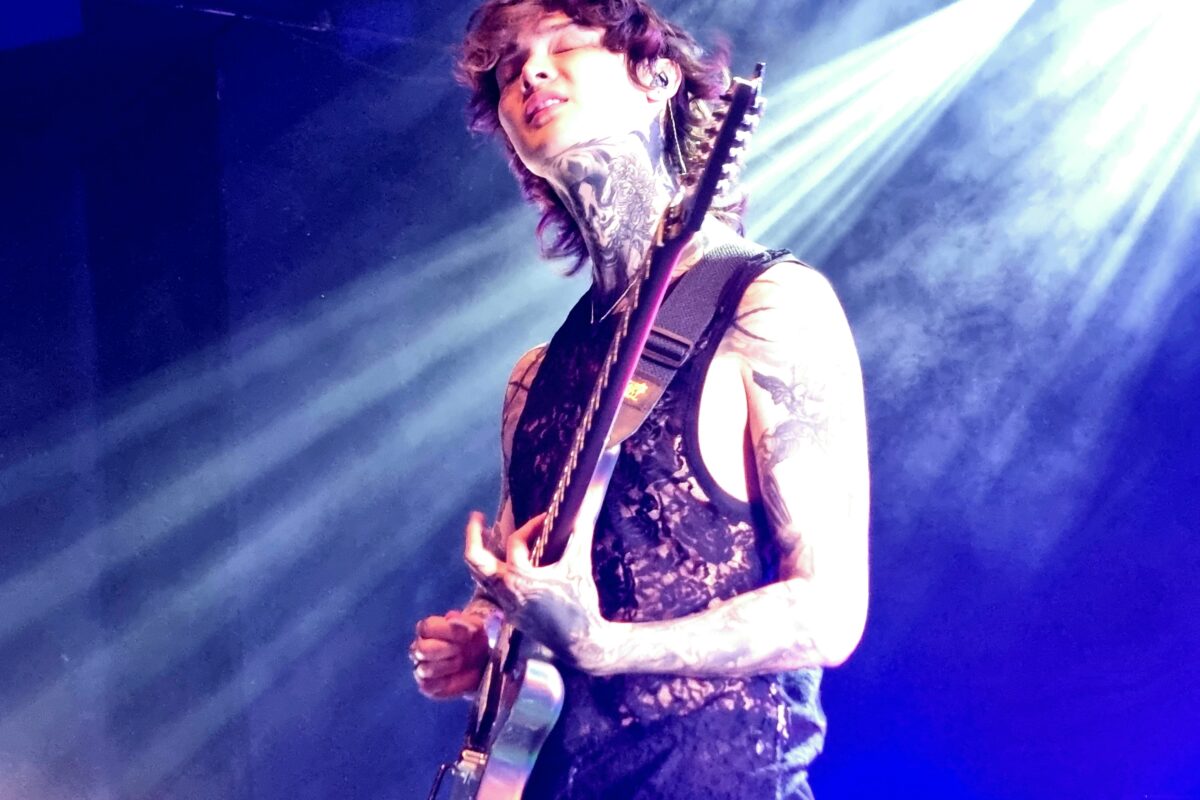
Tim Henson Guitars & Gear: The Complete Guide to Polyphia’s Guitar Innovator’s Rig
Tim Henson's guitars, amps, and effects — the complete guide. Ibanez TOD10, TOD10N nylon, Fractal Axe-FX, Neural DSP Archetype, hybrid picking, and how to nail that Polyphia clean-crunch tone.
Tom DeLonge Guitars & Gear: The Complete Guide to Blink-182’s Single-Pickup Strat, Mesa Triple Rectifier & Invader Tone
Tom DeLonge guitars & gear: Blink-182 guitarist. Custom Shop Strat single Seymour Duncan Invader, Mesa Boogie Triple Rectifier, MXR EVH Flanger — Enema of the State tone guide.
Tom Verlaine Guitars & Gear: The Complete Guide to Television’s Jazzmaster, Fender Super Reverb & Marquee Moon Anti-Marshall Rig
Tom Verlaine guitars & gear: Television's visionary guitarist. 1958 Fender Jazzmaster, Super Reverb, no effects, anti-Marshall — the Marquee Moon avant-punk tone guide.