Dave Grohl – Power Unchained
GuitarGangsters Editorial 23 min read Updated 19 October 2026
There’s a kind of thunder that doesn’t come from the sky — it comes from the hands of Dave Grohl.
From the first snare hit on Smells Like Teen Spirit to the roaring choruses of The Pretender, he’s always been the pulse behind chaos. The man didn’t just play rock — he rebuilt it, piece by piece, with duct tape, blood, and sheer volume.
Before the stadiums, before the Foo Fighters, before he became the loudest frontman since Bon Scott, Dave was just another punk kid from Virginia with a cheap guitar, a set of drumsticks, and an addiction to noise.
Background: From Suburban Punk to Seattle’s Eye of the Storm
Grohl’s story starts far from fame. Born in Warren, Ohio, in 1969 and raised in the suburbs of Virginia, he was the kind of teenager who used his bedroom walls as a practice space and his school notebooks for lyric sheets. His first real musical education came from the D.C. hardcore scene — bands like Bad Brains, Minor Threat, and Black Flag.
At 17, he dropped out of high school and joined Scream, a touring punk band that lived out of a van and recorded DIY records on four-tracks. It wasn’t glamorous, but it built the work ethic that would define his entire career.
Every night was sweat, smoke, and 100-decibel therapy.
Then in 1990, fate called from Seattle. Kurt Cobain and Krist Novoselic had just lost their drummer and were hunting for someone who could keep up with their tornado of sound. Grohl auditioned, hit one song, and the job was his before the cymbals stopped ringing.
Within a year, Nevermind was born.
The drums on Smells Like Teen Spirit — that perfect balance of swing and aggression — became the heartbeat of an entire generation. Grohl didn’t just play the backbeat; he led the band from behind the kit, his fills driving Cobain’s riffs like sparks through a fuel line.
After the Fall – Rebuilding from Silence
When Kurt Cobain died in April 1994, Grohl disappeared.
For months, he couldn’t even look at a drum kit. He toyed with the idea of joining other bands — even considered playing with Tom Petty — but something inside him said it was time to start over.
He went into a small studio in Seattle with nothing but a few songs and played every instrument himself — drums, bass, guitars, vocals. That became the first Foo Fighters record (1995), released without fanfare and with almost no credit to his name.
But people noticed. The songs had teeth — catchy, melodic, and heavy all at once.
Within two years, Foo Fighters were headlining festivals. By the 2000s, they were the most reliable rock band on the planet — the torchbearers of analog power in a digital world.
Where most musicians chase perfection, Grohl chases imperfection — that beautiful moment when the amp shakes, the drum bleeds, and the room becomes part of the sound.
The Guitars of Dave Grohl
For most of his career, Dave Grohl’s stage presence has been defined by one thing: a big, semi-hollow Gibson hanging low and roaring through the PA.
His relationship with guitars is built on tone, durability, and simplicity — they have to survive sweat, stage dives, and three-hour sets without blinking.
The 1967 Gibson Trini Lopez Standard – The Birth of the Grohl Tone
When Grohl stepped out from behind the drums to form Foo Fighters, he reached for a 1967 Gibson Trini Lopez Standard — a semi-hollow built on the ES-335 chassis but with diamond-shaped f-holes, split-diamond inlays, and a Firebird-style headstock.
He bought it second-hand during the late Nirvana days, mainly because it looked cool — but once he plugged it in, he realized it had the perfect balance of punch and clarity.
That guitar became the blueprint of his sound: warm, thick mids from the semi-hollow body, yet tight and articulate enough to handle massive distortion.
It’s the guitar you hear across the first two Foo Fighters albums — tracks like Everlong, Monkey Wrench, and Learn to Fly.
Tone note: The Trini Lopez bridges the gap between 335 sweetness and SG aggression — a sonic middle ground perfect for Grohl’s wall-of-sound rhythm style.
The Gibson DG-335 Signature – From Fan to Legacy
In 2007, Gibson Custom Shop launched the Dave Grohl DG-335, a tribute that turned his beloved Trini into a production legend.
It kept the same offset diamond f-holes and neck design but used a lighter center block for better feedback control and road reliability.
The DG-335 came stock with ’57 Classic Humbuckers, a slim-taper C-neck, and the same Firebird headstock.
Available in Pelham Blue or Ebony, it instantly became one of the most sought-after artist models of the 2000s — collectors fought over them, and Gibson eventually reissued small runs for fans who missed out.
Live, Grohl often switches between two DG-335s — one Pelham Blue (nicknamed “Blue”) and one metallic silver.
Both are wired identically: simple volume and tone for each pickup, three-way toggle, no coil-splits, no nonsense.
Tone note: The DG-335 isn’t a “signature model.” It’s a battle axe built to survive Grohl’s volume.
Other Notable Weapons
Gibson Explorer Pro – Seen on heavy Foo Fighters material (White Limo, All My Life). Mahogany body, 496R/500T humbuckers. Gives a thicker, tighter low end when he wants a more metal-leaning crunch.

Gibson ES-335 and ES-333 – Studio mainstays when tracking layers. Semi-hollow warmth with just enough feedback control for massive rhythm stacking.
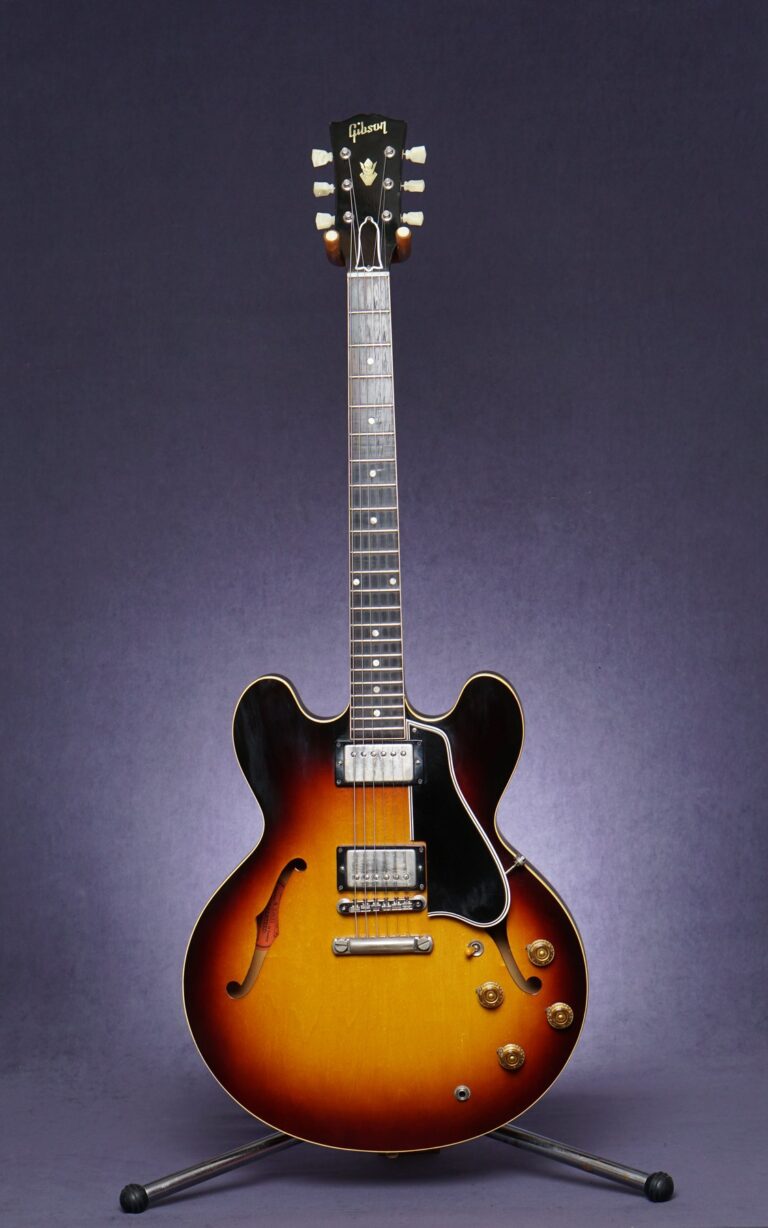
Gibson Firebird Studio – Used occasionally on live tours, mainly as backup; provides extra bite in upper mids.
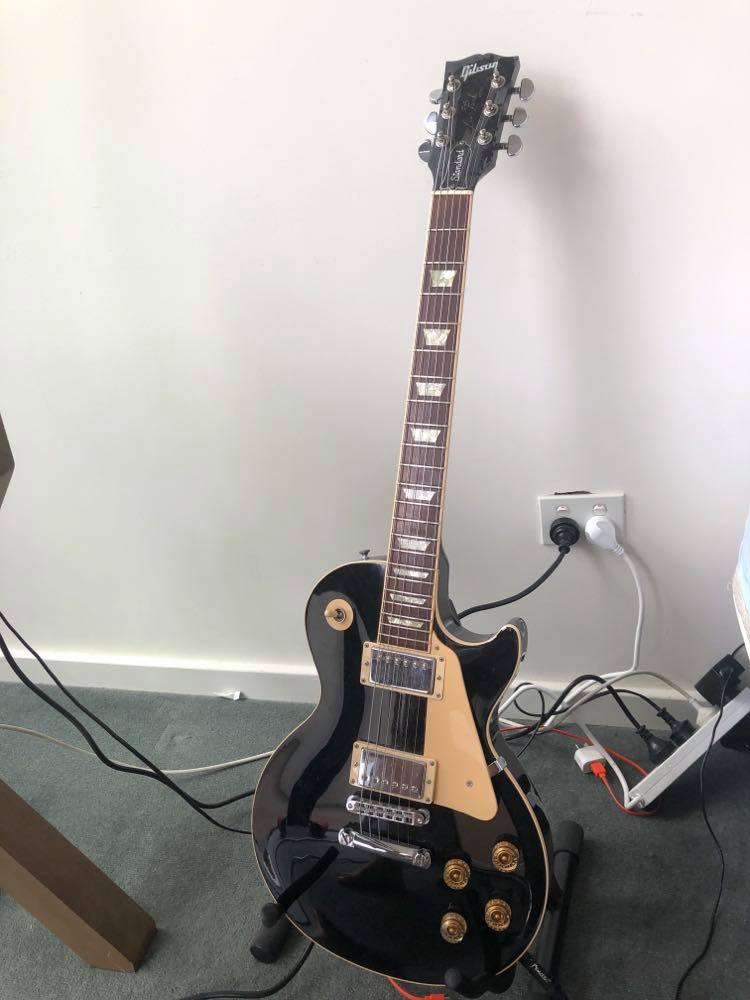
Gibson Les Paul Custom (Black) – Occasionally appears for single-song performances or TV sets; Grohl loves its sustain but prefers the DG-335 for comfort and attack.
Gibson Trini Lopez Reissue – Used alongside his original 1967 model on Medicine at Midnight sessions. Gibson has since produced new Trini Lopez runs thanks in part to Grohl’s influence.
Every Grohl guitar shares the same DNA — dual humbuckers, solid center block, and a neck built for momentum.
The Philosophy of Grohl’s Guitars
Grohl doesn’t switch guitars for show — he picks one for a reason and sticks with it for decades.
His love for the Trini Lopez and DG-335 isn’t nostalgia; it’s about how those guitars respond when pushed hard.
They compress naturally, they howl under feedback, and they still ring clean when the amp backs off.
He once said, “I like guitars that fight back a little.”
That’s why he stays with heavy, semi-hollow Gibsons — they resist just enough to make him play harder.
Tone note: If you want Grohl’s tone, start with wood and air, not pedals.
Pickups & Electronics
The secret to Dave Grohl’s tone isn’t a wall of pedals — it’s the voice of his pickups.
Every one of his main guitars is built around a dual-humbucker (HH) setup, and that choice defines his entire sound philosophy: big, mid-pushed, harmonically rich tones that stay tight when the volume goes nuclear.
The Trini Lopez Standard – Vintage Bite Meets Modern Muscle
Grohl’s original 1967 Gibson Trini Lopez Standard came stock with Gibson patent-number humbuckers — the same type found in late-’60s ES-335s and SGs.
These are low-to-medium output Alnico II pickups, roughly in the 7.5–8.0 kΩ range.
That moderate output gives him clarity under gain — perfect for those massive Foo Fighters rhythm layers where every chord still sounds like a chord, not a fuzz cloud.
He runs both pickups wide open, rarely using the tone knob.
Neck for cleans (Everlong intro), bridge for everything else.
Tone note: The Trini’s humbuckers aren’t about brute force — they’re about control. They bloom when you dig in, not when you crank up.
The DG-335 Signature – ’57 Classics, Grohl’s Chosen Voice
When Gibson launched the DG-335, Grohl insisted on keeping things vintage.
Instead of going for modern high-output pickups, he chose the Gibson ’57 Classic Humbuckers — modeled after the original PAFs.
These use Alnico II magnets, unpotted coils, and slightly mismatched winds, which adds that airy top end you hear on The Pretender and Best of You.
The bridge pickup handles most of his live tone:
Sharp attack, mid growl, and a slight compression when hitting the front of his amps.
The neck is round, vocal, and rarely used alone — Grohl mostly blends it in for choruses when he wants that “thick but not muddy” rhythm texture.
Tone note: The ’57 Classic gives him vintage soul with modern stamina — it’s the sonic glue in every Foo Fighters riff.
Other Pickups in Rotation
Gibson Dirty Fingers – Occasionally found in backup Explorers.
High-output ceramic humbuckers that drive his amps into heavier saturation. Used on live performances of All My Life and White Limo.
Burstbuckers – Appear in some Custom Shop ES-335s and Les Pauls he uses in the studio.
Slightly hotter than the ’57 Classics, they give a snappier attack and tighter low end.
P-90s and Single Coils?
Almost never. Grohl avoids single coils entirely — not because he dislikes them, but because they simply don’t fit his world of big-room distortion and feedback control.
When he needs cleaner dynamics, he uses his semi-hollow body’s resonance instead of switching pickups.
Tone note: Grohl’s idea of “clean” still growls — it’s the sound of humbuckers breathing at low volume, not shimmering single coils.
Wiring, Controls & Setup
Grohl’s wiring philosophy matches his playing: simple and bombproof.
Each guitar runs individual volume and tone controls for neck and bridge, plus a three-way toggle — nothing fancy, no push-pulls, no coil-splits, no preamps.
He leaves the tone knobs near full, adjusting warmth only through his picking dynamics.
All of his guitars are wired 50’s style, which keeps the highs intact when rolling down the volume — an essential trick for his live setup where he rides the volume knob to clean up without losing bite.
When you’ve got 100 watts of amp behind you, the tone knob is the only effect pedal you need.
The Pickup Philosophy
Grohl’s tone begins and ends with balance: enough output to roar, but not so much that you lose nuance.
He once joked that high-output pickups “make every song sound like Motörhead.”
What he wants is tension — that razor-thin line between clarity and chaos.
He never chased boutique pickups or signature winds; his entire career proves that classic Gibson humbuckers + a loud amp = eternal tone.
Tone note: If your pickups can’t survive feedback, they don’t belong in a Foo Fighters setlist.
Rig Deep-Dive by Era
The Nirvana Years (1990–1994) – Drum Power and Minimal Strings
Before he became a frontman, Grohl’s “rig” was a drum kit.
But even then, his gear choices hinted at the sound he’d later chase on guitar — huge, open, organic tone.
He played Ludwig maple kits, Zildjian A-series cymbals, and tuned his snare high enough to cut through Cobain’s distortion wall.
That “caveman precision” laid the foundation for his guitar style later — every strum like a drum fill.
When he did pick up a guitar during downtime, it was usually a Gibson Les Paul or an old Trini Lopez plugged into whatever was available — often a Fender Twin Reverb or Mesa/Boogie Dual Rectifier, both of which later became key to his sound.
Tone note: Even behind the kit, Grohl thought like a guitarist — every hit was rhythm and melody combined.
Foo Fighters Early Era (1995–1999) – Volume and Vision
When Grohl switched to frontman, his rig had to evolve — but his minimalist DNA stayed intact.
The early Foo Fighters tours featured a Gibson Trini Lopez → Mesa/Boogie Dual Rectifier setup.
The Rectifier’s saturated mids paired perfectly with the Trini’s semi-hollow bite, creating a huge stereo spread even with one guitarist.
Typical early setup:
-
Guitar: Gibson Trini Lopez Standard
-
Amp: Mesa/Boogie Dual Rectifier (main)
-
Cab: Mesa 4×12 with Celestion Vintage 30s
-
Backup: Vox AC30 for clean tones
-
Pedals: Boss TU-2 tuner, maybe a Big Muff or overdrive — but only rarely
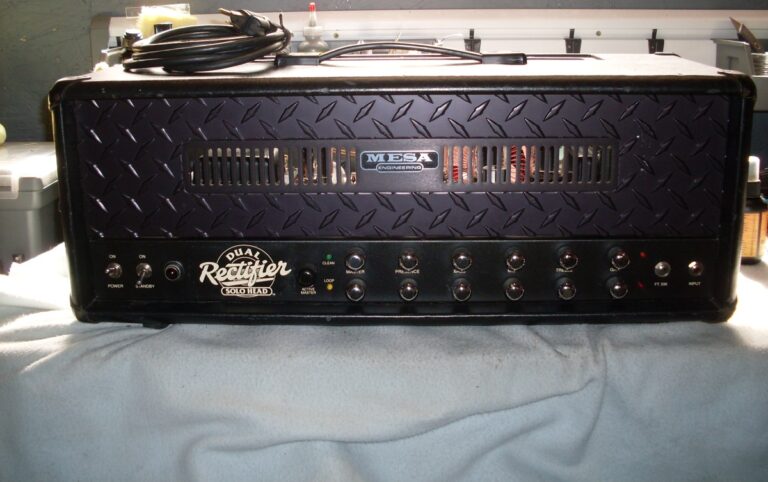
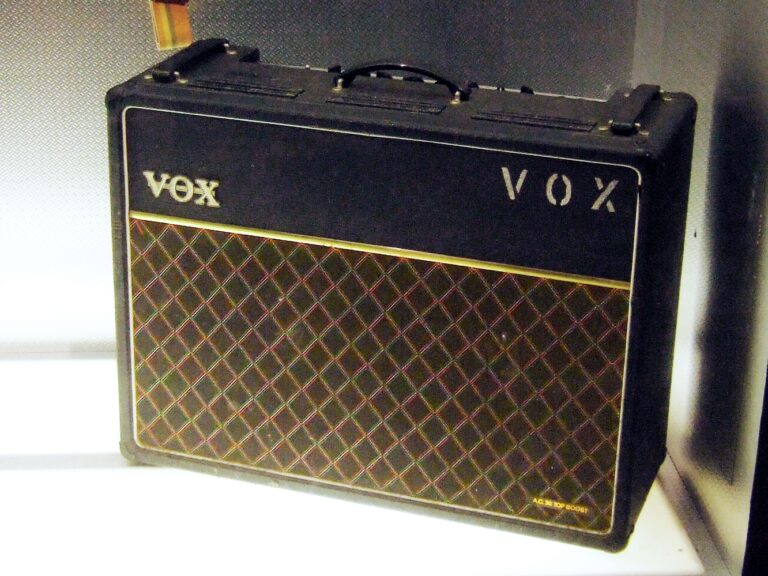

By The Colour and the Shape (1997), Grohl was doubling rhythm tracks with slightly different amp tones — Rectifier left, AC30 right — giving the Foo Fighters their signature massive stereo field.
If you hear “Everlong” in headphones, that’s not reverb — that’s two amps fighting for space.
The Stadium Era (2000–2010) – Plexis, Vox, and Layered Power
By the One by One and In Your Honor eras, Grohl’s rig had evolved into a Frankenstein of vintage tone and brute force.
He started combining British and American amp voices:
Live Rig (mid-2000s):
-
Main: Mesa/Boogie Road King II or Dual Rectifier
-
Side: Vox AC30 for bright overtones
-
Occasionally: Fender Tonemaster head for clean sparkle
-
Cabinets: Mesa 4×12s (Vintage 30s) and Marshall 4×12s (Greenbacks)
During the Echoes, Silence, Patience & Grace tour, he added Diezel VH4 and Hiwatt Custom 100 heads to his arsenal — stacking amps in stereo for depth instead of effects.
Everything ran bone-dry: no reverb, no delay, no modulation. The air in the room did that job.

Grohl’s pedalboard has fewer buttons than your TV remote.
Modern Era (2011–Present) – Analog Faith in a Digital World
While the world went modeler-crazy, Grohl doubled down on real amps.
His touring rig for Concrete and Gold and Medicine at Midnight is a monster:
Current Stage Rig:
-
Guitars: DG-335s and Trini Lopez
-
Amps: Vox AC30 (Top Boost), Hiwatt Custom 100, Mesa/Boogie Road King II
-
Cabinets: Marshall 4×12 (Greenbacks) + Mesa 4×12 (V30s)
-
Mics: Shure SM57 + Sennheiser 421 blend
-
Pedals: None — except tuner and A/B switcher
-
Wireless: Shure Axient or Lectrosonics, depending on venue
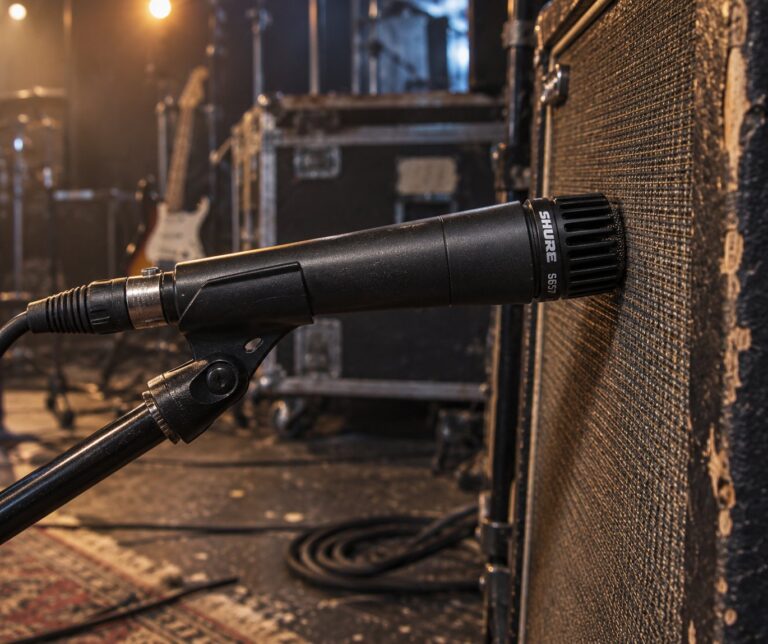
His front-of-house engineers mix the amp blend into a stereo spread that sounds bigger than most three-guitar bands.
Grohl calls it “volume architecture” — building tone with loudness and air movement rather than electronics.
Tone note: Grohl doesn’t use delay — he lets the room echo back at him.
Studio Tricks
In the studio, he often layers three tones per part:
-
Main rhythm: DG-335 through Mesa Rectifier (hard left)
-
Complement rhythm: AC30 through Greenbacks (hard right)
-
Glue track: Clean 335 through Twin Reverb (center, low volume)
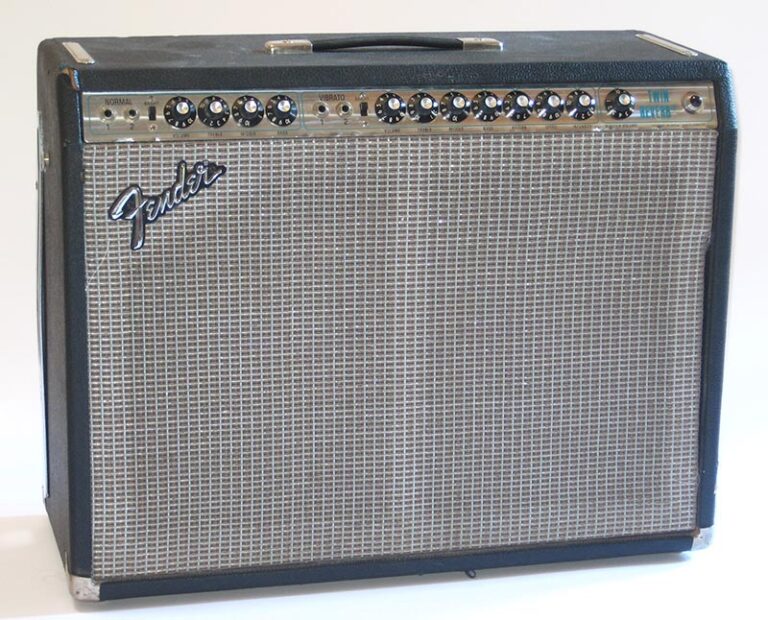
He’s a fan of mic bleed and live takes — the guitar and drums leaking into each other on purpose.
That’s what gives Foo Fighters albums that “band in a warehouse” realism.
Perfection is the enemy of impact — Grohl records for feel, not fidelity.
The Amp Philosophy
Grohl’s amp philosophy mirrors his songwriting: simple, loud, honest.
He uses volume as his compressor and speaker breakup as his chorus pedal.
Where modern players chase precision, Grohl builds chaos that somehow stays musical.
He’s said, “When you hit the first chord and it feels like a wall falling down, that’s when you know the amp’s loud enough.”
Tone note: Every Grohl riff lives somewhere between feedback and control — and that’s exactly where rock belongs.
.
Strings, Picks & Tunings
Strings – Built for Power, Not Pain
Dave Grohl has stuck with Ernie Ball Regular Slinky (.010–.046) strings for most of his career.
In the Nirvana days, he used .009s — easier to bend, faster under his fingers — but as Foo Fighters got louder and his guitars got bigger, he moved to 10s for more resistance and stability on semi-hollow bodies.
He calls it “a fight worth having.” The strings should push back a little, forcing him to dig in harder. That tension creates the percussive tone that defines his rhythm playing.
Setup:
-
Ernie Ball Regular Slinky (.010–.046)
-
Medium-high action (1.8–2.0 mm at the 12th fret)
-
Almost flat neck relief
-
Spot-on intonation — Grohl hates sloppy chords on stage
The sound of Foo Fighters starts at the moment flesh meets tension.
Picks – The Percussive Weapon
Grohl attacks the guitar like a drummer who accidentally picked up six strings instead of sticks.
He uses Dunlop Tortex .73 mm (the classic yellow ones) — just flexible enough for rhythm downstrokes, but stiff enough to slam through power chords.
He grips close to the tip and hits hard near the bridge, creating that sharp “thwack” you hear on The Pretender and Monkey Wrench.
He burns through dozens of picks per show — most don’t survive more than two songs.
Tone note: Every Grohl strum is a drum hit disguised as guitar tone.
Tunings – Down for the Groove
Grohl keeps his tunings simple but purposeful. There’s no drop-C madness or alternate voodoo — just subtle changes to match the song’s energy.
Standard E – The majority of Foo Fighters tracks (Learn to Fly, My Hero, The Pretender).
Drop D – For heavier riffs (Monkey Wrench, All My Life, The Sky Is a Neighborhood).
Eb Standard – Occasionally used live to ease vocal strain and add a touch more low-end growl.
Grohl’s focus isn’t the tuning itself — it’s stability. His guitars are set up to handle violent strumming without drifting sharp or flat. That’s why his DG-335s have slightly stiffer setups and carefully intonated bridges.
Tone note: Grohl’s tuning philosophy: play hard, stay in tune, and let the amp breathe.
Setup & Maintenance
His tech team keeps the guitars dialed in like a fighter jet squad:
-
Fresh strings before every show
-
Neck adjustments for climate (semi-hollows hate humidity)
-
Pickup height fine-tuned for venue volume
-
Guitars “pre-stressed” at full stage volume before soundcheck to stabilize tuning
Tone note: There’s nothing digital in Grohl’s tone — it’s built on steel, sweat, and routine.
The Feel Philosophy
Grohl doesn’t want a guitar that plays easy. He wants one that fights back.
The resistance of .010 strings and semi-hollow resonance forces him to play with his whole body — every hit like a punch.
He once said:
“If the strings don’t fight back, the guitar’s dead to me.”
And that’s his truth: the harder you push, the better it sounds.
Tone note: His strings aren’t there to make it easy. They’re there to make it sound alive.
Playing Style & Tone Philosophy
Dave Grohl doesn’t “play” guitar — he hits it.
Every strum, every downstroke, every muted chord feels like a snare crack aimed straight at your chest.
He’s not chasing finesse; he’s chasing impact.
Grohl’s playing style comes directly from his drumming background.
The right hand is his kick and snare; the left hand is his hi-hat and tom accents.
It’s all rhythm — heavy, precise, and full of motion.
The Right Hand – Controlled Violence
Grohl’s picking hand is a weapon of rhythm.
He uses almost exclusively downstrokes, especially on verses, to keep that tight, driving groove — similar to James Hetfield, but with more swing and human push-pull.
Listen to Everlong: every strum is perfectly timed, yet slightly off-grid in the best way possible.
That micro-imperfection creates tension, making the song breathe like a living thing.
He rarely uses palm-muting; instead, he damps the strings with his left hand mid-strum, giving riffs that raw, open crunch you hear on All My Life and Monkey Wrench.
Tone note: Grohl’s rhythm hand doesn’t follow the beat — it is the beat.
The Left Hand – Controlled Chaos
Grohl’s fretting hand works like a percussionist’s limb — firm, efficient, no wasted motion.
He doesn’t shred, he doesn’t over-articulate — but every chord he grabs sounds massive because of how he releases it.
He often uses partial power chords and two-note voicings, letting open strings ring through distortion to fill the mix.
That technique turns simple shapes into walls of sound — chords that sound like they’re mixed through a substation transformer.
Tone note: His left hand doesn’t play chords — it detonates them.
Rhythm First, Melody Second
Grohl plays melody like a drummer hears time — with syncopation and space.
Solos are rare and functional; he’d rather build tension with repetition than flash.
You hear it in The Pretender and Rope: riffs loop like drum patterns, evolving subtly each time.
That repetition is hypnotic. It’s his secret weapon — groove through guitar.
The Stage Animal
On stage, Grohl’s body becomes part of the tone chain.
He moves with every beat, throwing his entire torso into each strum.
He uses movement to control feedback — leaning into the amp to make it sing, stepping back to cool it off.
That physicality is why his tone always feels alive, even when he’s playing a simple G chord.
Tone note: Grohl doesn’t play in front of the amp — he plays with it.
Tone Philosophy – Loud Is a Feeling
Dave Grohl’s tone philosophy is brutally simple: volume + conviction = tone.
He doesn’t chase transparency or hi-fi precision; he wants saturation, air movement, and emotion.
Every Foo Fighters record bleeds room sound because he records at earthquake volume.
He’s said it countless times:
“If it doesn’t move air, it’s not rock.”
That’s why he sticks to analog amps, real cabs, and minimal pedals.
He believes the soul of a guitar tone comes from imperfection — strings rattling, amps sagging, tubes on the edge of meltdown.
Tone note: You can’t fake conviction with a plugin.
The Human Compressor
Grohl doesn’t use compression pedals, but he is one.
His playing naturally compresses: hard hits push, soft hits breathe.
That’s why his tone sounds consistent across wildly dynamic songs.
Every riff is a heartbeat — and every downstroke is an adrenaline spike.
Tone note: Grohl’s dynamics don’t come from gear. They come from guts.
How to Sound Like Dave Grohl
Trying to sound like Dave Grohl is like trying to bottle a thunderstorm — you can’t control it, but you can learn how to ride it.
His tone isn’t complicated, but it’s unforgiving. Every note you play has to be earned.
Amp Settings – Controlled Chaos
| Control | Setting | Notes |
|---|---|---|
| Gain | 5–6 | Enough grit to bite, not to blur |
| Bass | 4 | Keeps the low end tight for double-tracking |
| Mid | 7 | The heartbeat of his tone |
| Treble | 6 | Bright enough to cut, never ice-pick harsh |
| Presence | 5 | Adds air to chords |
| Master Volume | As loud as humanly possible | No joke — that’s half the tone |
Amp recommendations:
-
Mesa/Boogie Dual Rectifier – his live workhorse.
-
Vox AC30 Top Boost – adds harmonic shimmer for layering.
-
Hiwatt Custom 100 – massive headroom, pure punch.
-
Marshall Plexi (jumped channels) – for that raw mid-70s crunch he channels on heavier Foo Fighters material.
Modeler settings (for digital players):
-
Helix / Fractal: Brit Plexi Brt or Cali Rectifire; Drive 5.5, Bass 4, Mid 7, Treble 6, Presence 5, Master 8.
-
Kemper profile: “FooF Plexi Blend” or “Rectifier Tight Crunch.”
Tone note: If the volume knob isn’t shaking your pant legs, you’re not even close.
Signal Chain – Brutally Simple
Guitar → Tuner → Amp → 4×12 Cabinet → Microphones.
That’s it. No overdrives, no EQ pedals, no compression, no reverb.
He uses a Shure SM57 paired with a Sennheiser 421 on his cabs — one close, one off-axis — to capture punch and air.
In the studio, engineers sometimes add a room mic 10 feet away just to capture the “Grohl bloom.”
Tone note: He doesn’t layer effects — he layers air.
Pedals – None (Seriously)
Grohl’s pedalboard is famously empty except for:
-
Boss TU-3 (Tuner)
-
A/B switcher for multiple amps
-
Occasionally a Whirlwind Selector for stereo blending
He’s allergic to pedals. If something breaks, he wants to plug straight in and keep going.
Tone note: Less gear. More guts.
Guitar Settings
DG-335 or Trini Lopez:
-
Bridge pickup full volume for rhythm
-
Neck pickup 8/10 for warmth
-
Tone knobs wide open
-
3-way switch in middle position for choruses when layering
Explorers / ES-335s:
Same layout — he relies on pickup blend for tone shaping, not pedals or EQ.
Tone note: The middle position is his secret sauce — it fattens the tone without mud.
Cab & Speaker Choices
Grohl’s go-to mix is:
-
Marshall 4×12 (Greenbacks) on one side
-
Mesa 4×12 (Vintage 30s) on the other
This combo gives him that “left channel grind, right channel shimmer” balance that defines Foo Fighters’ stereo sound.
Tone note: Greenbacks growl, V30s scream — Grohl uses both.
Budget vs Pro Rigs
Budget Setup:
-
Guitar: Epiphone ES-335 or Harley Benton DC-580
-
Amp: Boss Katana 100 or Orange Super Crush 100
-
Cab: 2×12 with Vintage 30s
-
Pedals: None — just volume
Pro Setup:
-
Guitar: Gibson DG-335 or Trini Lopez Standard
-
Amps: Mesa/Boogie Dual Rectifier + Vox AC30 stereo
-
Cabs: Marshall 4×12 (Greenbacks) + Mesa 4×12 (V30s)
-
Mic setup: SM57 + 421 blend
Tone note: If it feels like the building might collapse, congratulations — you’re there.
Technique Drills – The Grohl Discipline
1. Downstroke Endurance
Play Everlong with only downstrokes. Your forearm will hate you. Keep going.
2. Dynamics Without Pedals
Set your amp hot. Control gain by touch and volume knob only. Practice clean-to-crunch transitions on the same riff.
3. Feedback Control
Stand in front of your amp and move until it sings. Mark that spot. That’s your stage “feedback zone.”
4. Volume Swell Training
Use your guitar’s volume knob like a fader. Practice rolling it from 5 to 10 mid-riff without losing timing.
5. Groove Focus
Play along to a click — then turn it off and keep tempo for a minute. Record it. You’ll hear if your groove breathes right.
Tone note: Precision makes you good. Imperfection makes you Grohl.
Plugin & Studio Options
If you’re working in a DAW:
-
Plugin Alliance Friedman BE-100: great for Rectifier-style gain.
-
Neural DSP Archetype: Cory Wong: surprisingly good for Grohl-style clean compression.
-
Two Notes DynIR “Marshall 1960B Greenback” – pairs perfectly with any Plexi sim.
Tone note: Digital gear can fake the sound — but not the sweat.
Read our guide to the Mesa/Boogie Dual Rectifier Solo Head for a closer look at its high-gain sound.
FAQ – The Dave Grohl Tone Files
Q: What guitar does Dave Grohl play the most?
A: His main weapon is the Gibson Trini Lopez Standard from 1967 — the same guitar that inspired his DG-335 Signature model. Both are semi-hollow monsters built for loud stages, with diamond f-holes, Firebird headstocks, and dual humbuckers that can survive a hurricane.
Q: What pickups does Dave Grohl use?
A: His DG-335 and Trini Lopez guitars use Gibson ’57 Classic humbuckers — low-to-medium output Alnico II pickups that stay open and punchy even through heavy distortion. In some Explorers, he swaps to Dirty Fingers for more bite. He almost never touches single coils.
Q: What amps does Dave Grohl use live?
A: A blend of Mesa/Boogie Dual Rectifier, Vox AC30, and Hiwatt Custom 100, each pushing 4×12 cabs loaded with Celestion Greenbacks and Vintage 30s. Engineers mic both sides for that huge stereo wall of sound.
Q: Does Dave Grohl use pedals?
A: Practically none. His board usually has a tuner, an A/B switcher, and that’s it. Grohl hates extra circuitry between his hands and the amp — his philosophy is volume first, pedals later (if ever).
Q: What strings and picks does Dave Grohl use?
A: Ernie Ball Regular Slinky (.010–.046) and Dunlop Tortex .73 mm picks. He prefers a bit of resistance in both — that push-back is what gives him his percussive attack.
Q: How does Dave Grohl get his clean tone?
A: He doesn’t use pedals — his “cleans” come from rolling the guitar’s volume down and letting the semi-hollow resonance breathe. The neck pickup of the DG-335 delivers warmth; the bridge pickup adds bite when he opens up again.
Q: What tuning does Dave Grohl use?
A: Mostly Standard E, with occasional Drop D for heavier tracks (Monkey Wrench, All My Life). Some live sets drop half a step to E♭ Standard to ease vocals.
Q: What’s the real secret to Dave Grohl’s tone?
A: Conviction. His tone isn’t about gear — it’s about how hard he hits. Volume, honesty, and physicality. When you play like your life depends on it, even a stock 335 will sound like a stadium.
Dave Grohl’s sound is proof that attitude is louder than any pedal. Plug in, turn up, and play until the amp begs for mercy.
There’s loud — and then there’s Dave Grohl loud.
The kind of volume that doesn’t just fill a room but changes the air pressure.
For three decades, he’s proven that you don’t need complex rigs or racks of pedals to sound enormous.
You just need conviction, sweat, and a guitar that can take a beating.
Grohl is proof that rock doesn’t need saving — it just needs someone
to hit it harder.
Every time he steps on stage, it’s a reminder that the most powerful tone in the world comes from human energy, not electricity.
He’s the last great ambassador of plug-and-play chaos.
The guy who turned pain into anthems, grief into groove, and volume into healing.
From Smells Like Teen Spirit to The Pretender, the common thread is the same:
no excuses, no filters — just one man, one guitar, and a wall of sound.
So if you want to sound like Dave Grohl, don’t overthink it.
Plug in, turn up, and hit that first chord like the world’s depending on it.
Because maybe — just maybe — it still is.
Image credits
- Gibson Explorer: Guitarpimp, Wikimedia Commons, CC BY 3.0.
- Gibson ES-335: Lightburst, Wikimedia Commons, CC BY-SA 4.0.
- Gibson Les Paul Standard: DonnyBurger1974, Wikimedia Commons, CC BY-SA 4.0.
- Mesa/Boogie Dual Rectifier: Roadside Guitars, Flickr, CC BY-SA 2.0.
- Vox AC30 Top Boost: wetwebwork; existing crop and contrast/color adjustments: Clusternote, Wikimedia Commons, CC BY-SA 2.0.
- Diezel VH4: GuitarGangsters AI-generated reference illustration, not a photograph.
- Shure SM57 Dynamic Instrument Microphone: GuitarGangsters AI-generated reference illustration, not a photograph.
- Fender Twin Reverb: Micahmedia, Wikimedia Commons, CC BY 3.0.
- Boss TU-2 Chromatic Tuner: GuitarGangsters AI-generated reference illustration, not a photograph.