Fender Richie Kotzen Telecaster: The Flame-Top Workhorse That Bridges Glam, Shred, and Soul
Richie Kotzen's signature Telecaster: flame maple top, DiMarzio Twang King and Chopper T pickups, series/parallel switching. Twang to shred in one guitar.
There are guitarists who pick one lane and stay in it for forty years. Then there is Richie Kotzen — a guitarist who learned piano at five, picked up electric guitar at seven after seeing a poster of Gene Simmons breathing fire, released his first instrumental shred album at nineteen, joined glam-metal titans Poison at twenty-one, took over lead guitar duties in Mr. Big from Paul Gilbert, fronted a hard rock supergroup with Mike Portnoy and Billy Sheehan, and along the way developed one of the most distinctive fingerpicking techniques in modern rock guitar — one built almost entirely around a single, heavily modified Fender Telecaster.
The instrument central to nearly all of that work is not a vintage Tele or a stock Custom Shop build. It is Kotzen’s own signature model: a flame maple-topped, gold-hardware Telecaster loaded with a pair of DiMarzio pickups selected specifically to deliver both the twang his fingerpicking style demands and the high-output, high-gain capability his rock and shred playing requires. Originally available only in Japan, the guitar has since become one of the more quietly significant modern signature Telecasters — a genuine fusion instrument built by a player whose career has never respected genre boundaries.

From Reading, Pennsylvania to Shrapnel Records: Kotzen’s Unlikely Path
Richard Dale Kotzen Jr. was born on February 3, 1970, in Reading, Pennsylvania. He began piano lessons at age five; at seven, after seeing a poster of Kiss bassist Gene Simmons breathing fire, he convinced his parents to buy him an electric guitar at a yard sale. The instrument took. Kotzen developed rapidly, drawing not only from the hard rock and metal that initially inspired him but, crucially, from R&B and soul artists he encountered early — Stevie Wonder, whom he saw perform live in Valley Forge, and jazz guitarist George Benson, whose fluid phrasing left a lasting mark on Kotzen’s technique. This combination — rock aggression layered over soul and R&B sensibility — would become the defining characteristic of his playing for the next four decades.
Kotzen was discovered by Mike Varney, the influential A&R figure at Shrapnel Records who had a track record of identifying technically exceptional young guitarists (Paul Gilbert and Tony MacAlpine among them). Varney was reportedly struck by how prolific Kotzen was — sending new material weekly — and signed him to record his first solo album at nineteen, an instrumental shred record that put Kotzen on the cover of Guitar World before he had turned twenty. He recorded a second instrumental album, Fever Dream, in 1990, then released the instructional video Rock Chops in 1989, showcasing the wide-interval and fluid sweep-picking techniques that defined his early style.
In 1991, at age twenty-one, Kotzen’s career took an unexpected turn into mainstream glam metal when he joined Poison, replacing C.C. DeVille. He co-wrote and performed on the 1993 album Native Tongue, contributing to two top-twenty singles, “Stand” and “Until You Suffer Some (Fire and Ice).” His tenure ended after a personal scandal involving his relationship with the ex-fiancée of Poison drummer Rikki Rockett — Kotzen and Deanna Eve later married and subsequently divorced — but the Poison period established Kotzen as a recognisable name well beyond the instrumental shred community that had first embraced him.
The 1990s and early 2000s saw Kotzen build a substantial solo catalogue while collaborating extensively — with fusion guitarist Greg Howe, with Stanley Clarke and Lenny White in the project Vertu, and eventually replacing Paul Gilbert as lead guitarist in Mr. Big in 1999, a position he held until 2002. His work with Mr. Big included the album Get Over It, which sold nearly two million copies in its first two weeks in Japan alone, and Actual Size, which featured his composition “Shine,” a number-one hit on Japanese radio.
In 2012, Kotzen co-founded The Winery Dogs alongside bassist Billy Sheehan (his former Mr. Big bandmate) and drummer Mike Portnoy (Dream Theater). The supergroup’s self-titled 2013 debut and subsequent albums established Kotzen as a frontman in his own right — singing lead vocals while playing guitar, a combination that places enormous technical and stylistic demands on a single performer. The band remains active, having released their third album, III, in 2023, and has become the primary vehicle through which Kotzen demonstrates the full range of his playing — fingerstyle funk, soulful blues bends, hard rock riffing, and extended improvisation, often within the same song.
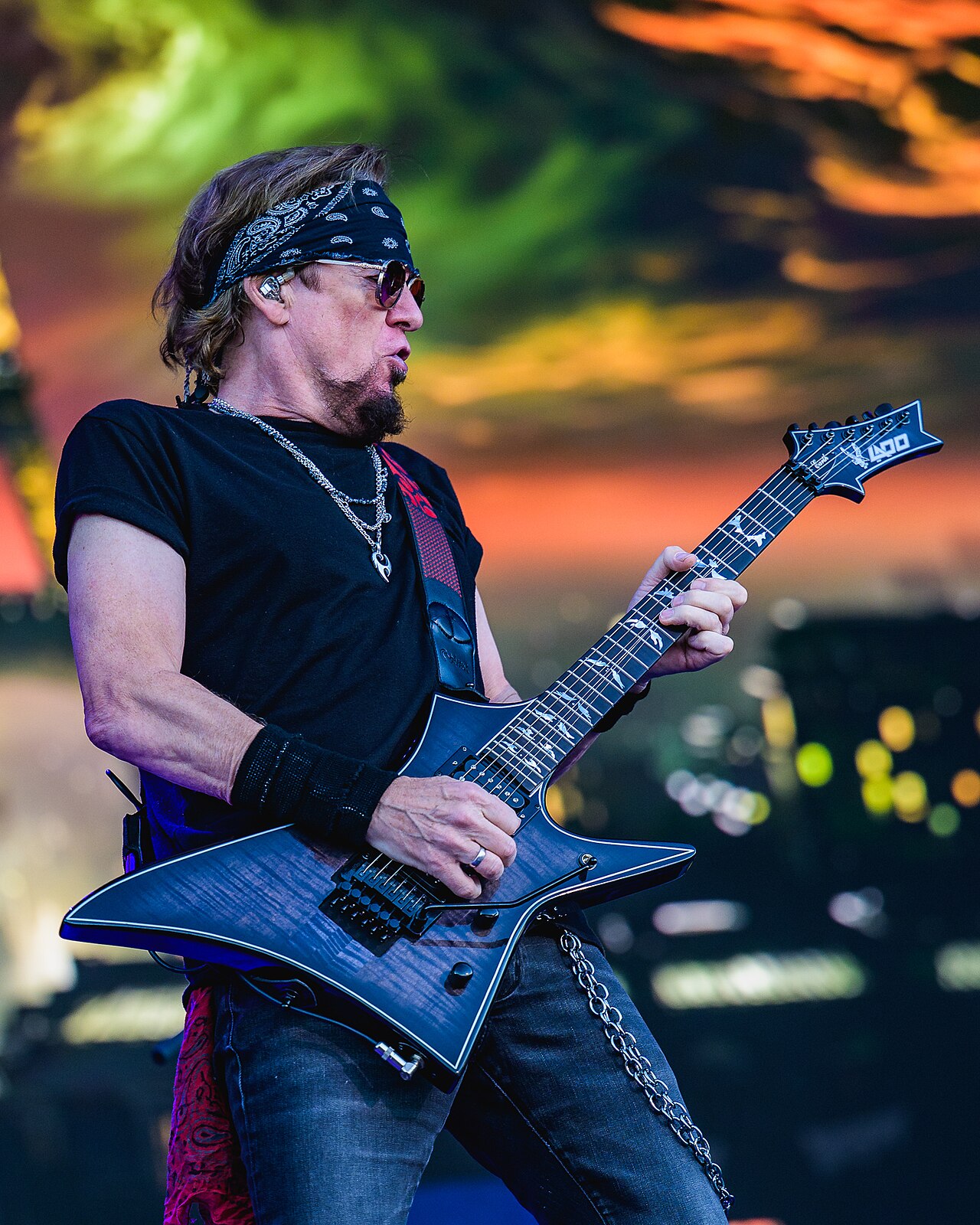
More recently, Kotzen formed Smith/Kotzen with Iron Maiden guitarist Adrian Smith, releasing a self-titled album in 2021 that blended blues, hard rock, and R&B with dual-guitar interplay — a project that further demonstrates Kotzen’s genuine versatility across rock subgenres that rarely intersect.
The Fingerpicking Technique: Why a Telecaster Made Sense
Kotzen’s playing style is genuinely unusual among rock and shred guitarists, and it explains why the Telecaster — rather than a superstrat or a Les Paul — became his primary instrument. Rather than relying exclusively on a flatpick, Kotzen developed a hybrid and fingerstyle approach that allows him to combine percussive, funk-influenced picking patterns with the legato runs and wide-interval phrases that defined his early shred period. This technique demands an instrument with exceptional dynamic response and string-to-string clarity — qualities the Telecaster’s bridge design and scale length have always delivered.
The Telecaster’s bright, articulate voice also suits the soul and R&B influences that run through Kotzen’s playing as deeply as his rock and metal background. Where many shred-era guitarists of his generation gravitated entirely toward humbucker-loaded superstrats for maximum saturation and sustain, Kotzen found that the Telecaster platform — modified with the right pickups — could deliver both the percussive twang essential to his fingerpicking and sufficient output for his harder rock material. The signature Telecaster is the production result of that search.
Full Specifications: Fender Richie Kotzen Telecaster
The DiMarzio Twang King and Chopper T: Engineering Versatility
The pickup configuration on the Richie Kotzen Telecaster represents one of the more thoughtfully engineered solutions to the twang-versus-output problem that any player crossing genres encounters. Both pickups are DiMarzio designs created specifically to solve distinct technical problems within the Telecaster’s traditional single-coil format.
The DiMarzio Twang King, in the neck position, was engineered to deliver authentic vintage Telecaster character without simply copying a forty-year-old design. DiMarzio’s approach involved controlled-tension coil winding, specialised wire, and hand-calibrated magnets that respond proportionally to playing dynamics — from the softest pianissimo touch to the most aggressive attack. The pickup is wax-potted twice for squeal-free performance at high gain, addressing a common limitation of vintage-style single-coils in high-output applications. For a player whose technique spans delicate fingerpicked passages and aggressive rock riffing within the same song, this dynamic range is essential rather than a luxury.
The DiMarzio Chopper T in the bridge position addresses a different problem: the standard Telecaster bridge single-coil’s relatively high DC resistance and its tendency toward unwanted string pull from traditional rod magnets. The Chopper T uses twin-blade pole pieces rather than the conventional six individual rod magnets, reducing magnetic string pull and producing a more even response across the fingerboard. The result is a bridge pickup with significantly lower output resistance than a vintage Tele single-coil, delivering more headroom and clarity at high gain settings while retaining a recognisably Telecaster character rather than sounding like a generic humbucker substitute.
The rotary series/parallel switch — replacing the traditional tone control entirely — is the feature that elevates this pickup pairing from merely good to genuinely versatile. In parallel mode (the traditional wiring), the two pickups operate independently, producing the classic Telecaster voicing players expect. In series mode, the pickups are wired in sequence rather than parallel, which significantly increases output and produces a thicker, more humbucker-like tone with added sustain and gain. This single rotary control effectively doubles the tonal palette available from the standard three-way switch, giving Kotzen — and any player using this guitar — access to both vintage Tele twang and a substantially heavier, higher-output voice without needing to switch instruments.
The Flame Maple Top: An Unusual Choice for a Telecaster
Telecasters are not traditionally associated with figured tops. The classic Tele aesthetic is a single-wood slab body — ash or alder — with a straightforward finish. The Richie Kotzen Telecaster departs from this tradition with a bound flame maple top laminated onto the ash body, giving the guitar a visual richness more commonly associated with high-end Les Pauls or PRS instruments than with Fender’s flagship workhorse.
The construction is a contoured ash body with the flame maple cap bound around the edges — a detail that requires more manufacturing precision than a standard single-wood Tele body and signals the instrument’s positioning as a premium signature model rather than a budget production guitar. The figuring on the maple varies naturally by instrument, meaning no two examples of this guitar look quite identical — a quality collectors and players both appreciate.
Tonally, the ash core retains the resonant, articulate character that defines the Telecaster platform, while the maple cap contributes additional brightness and attack definition. Combined with the gold hardware — Gotoh sealed tuners, the through-body bridge, the control knobs — the overall aesthetic positions this Telecaster as an elegant, premium instrument that nonetheless retains the fundamental playability and tonal DNA of the platform Leo Fender created.
The Large “C” Neck: Built for a Specific Hand
The neck profile on the Kotzen signature is notably chunkier than the slim, fast necks favoured by many shred-oriented players. The “Large C” profile fills the hand substantially, providing a sense of mass and stability under the fingers that some reviewers have described as “beefy yet fast” — a combination that initially sounds contradictory but reflects Kotzen’s actual playing requirements. His fingerpicking and hybrid-picking technique benefits from a neck that offers a stable platform for the thumb to anchor against while the fingers execute complex picking patterns, rather than the ultra-thin necks that prioritise pure speed over stability.
The 12-inch fingerboard radius, paired with 22 jumbo frets, supports both the wide-interval legato runs from Kotzen’s instrumental shred background and the string-bending demands of his blues and soul-influenced playing. The flatter radius reduces the likelihood of notes choking out during aggressive bends, a consideration that matters significantly for a player whose vocabulary draws as much from blues phrasing as from technical metal runs.
Famous Players
Richie Kotzen
The guitar’s namesake and the player whose technical and stylistic range it was built to serve. Across more than two decades, multiple bands (Poison, Mr. Big, The Winery Dogs, Smith/Kotzen), and a solo discography exceeding twenty albums, Kotzen has used variations of this Telecaster configuration as his primary instrument — adapting it across glam metal, hard rock, instrumental shred, blues, funk, and soul-influenced material. His fingerpicking and hybrid-picking technique, refined over decades, is closely associated with this specific guitar’s pickup configuration and neck profile.
Tone Recipes: Getting the Kotzen Sound
Recipe 1: Classic Tele Twang (Neck Pickup, Parallel)
- Pickup: Neck (DiMarzio Twang King), series/parallel switch in parallel
- Amp: Clean American or British combo (Fender Vibro-King style)
- Volume: 4–5 (clean)
- Treble: 6
- Mid: 5
- Bass: 5
- Reverb: 2–3
- Guitar volume: Full (10)
- Notes: The Twang King’s dynamic responsiveness rewards a varied attack — practice moving between soft fingerstyle passages and harder picked accents within the same phrase. This is the foundation tone for Kotzen’s soul and R&B-influenced playing.
Recipe 2: High-Gain Rock (Bridge Pickup, Series Mode)
- Pickup: Bridge (DiMarzio Chopper T), series/parallel switch in series
- Amp: High-gain head (Victory or similar boutique amp)
- Gain: 6–7
- Treble: 6
- Mid: 5–6
- Bass: 5
- Guitar volume: Full
- Notes: Switching to series mode significantly increases output and thickens the tone, producing a sound closer to a humbucker than a traditional Tele single-coil. This setting handles The Winery Dogs’ heavier riffing and hard rock material.
Recipe 3: Blues-Rock Lead (Bridge + Neck, Parallel)
- Pickup: Middle position (bridge + neck combined), parallel mode
- Amp: Clean-to-edge-of-breakup amp setting
- Volume: 5–6
- Treble: 6
- Mid: 6
- Bass: 5
- Guitar volume: 8–9
- Notes: The combined pickup position produces a complex, vocal-like tone suited to Kotzen’s blues-rock soloing — wide string bends, legato runs, and the expressive vibrato that characterises his lead playing.
Recipe 4: Funk Rhythm (Neck Pickup, Fingerstyle)
- Pickup: Neck (DiMarzio Twang King)
- Amp: Clean, slightly compressed
- Volume: 4
- Treble: 5
- Mid: 6
- Bass: 4
- Guitar volume: 7–8 (rolled back slightly for cleaner attack)
- Notes: Use fingers exclusively (no pick) for percussive funk patterns. The Twang King’s articulate response and the maple-topped ash body’s brightness combine for excellent note separation in chordal funk work — a Kotzen signature outside his more rock-oriented material.
Kotzen’s tone setup has evolved over decades and across different amplification systems — from Cornford Amplification’s RK100 signature head (discontinued in 2013), through Fender Vibro-King amplifiers during early Winery Dogs touring, to his current Victory Amplifiers signature model. He is known for using relatively few pedals, relying primarily on amp gain and dynamic playing technique to shape his tone, with occasional use of overdrive pedals like the Suhr Riot or similar drivers stacked in front of his amp.
Competitors and Comparisons
Fender Richie Kotzen Telecaster vs. Fender Jim Root Telecaster
These two signature Telecasters represent almost opposite philosophies within the same model family. The Jim Root Telecaster strips everything down to a single volume knob, mahogany body, and active EMG pickups built for detuned metal. The Kotzen Telecaster goes the opposite direction — gold hardware, flame maple top, dual passive-style pickups with a series/parallel switch offering maximum tonal range. Where Root’s guitar is a tool for one specific application executed with maximum focus, Kotzen’s is a multi-genre instrument built for a player whose career has never stayed in one lane.
Fender Brad Paisley Road Worn Telecaster vs. Fender Richie Kotzen Telecaster
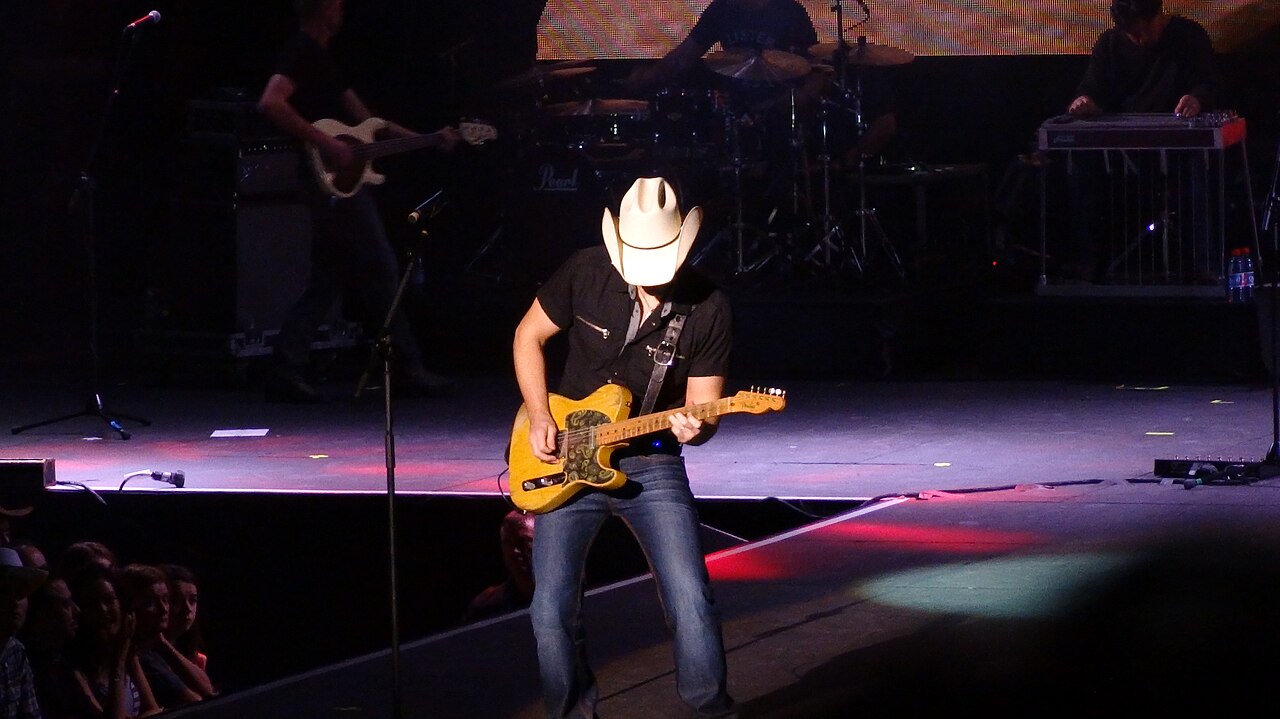
Both signature models pursue versatility, but through different routes. The Brad Paisley Road Worn Telecaster achieves range through lightweight paulownia construction and carefully voiced single-coils aimed primarily at country and Americana applications. The Kotzen Telecaster achieves its range through the series/parallel switching system, which fundamentally alters pickup output and character at the flip of a control — a more dramatic and immediate tonal shift than the Paisley model’s subtler approach.
Suhr Classic T vs. Fender Richie Kotzen Telecaster
The Suhr Classic T represents the boutique Telecaster tradition — premium construction, high-end pickups, exceptional fit and finish, at a significantly higher price point. Compared to the Kotzen signature, the Suhr offers more refined fretwork and construction tolerances but lacks the specific series/parallel switching system and DiMarzio pickup pairing that define the Kotzen guitar’s unique tonal flexibility. For players seeking maximum craftsmanship, the Suhr is compelling; for players seeking Kotzen’s specific multi-genre tonal palette, the signature model is more directly useful.
Fender American Professional II Telecaster vs. Fender Richie Kotzen Telecaster
The American Professional II Telecaster offers Fender’s modern flagship production specifications — V-Mod II pickups, a comfortable modern C neck, made in the USA. Compared to the Kotzen signature, it lacks the flame maple top, gold hardware, and crucially the series/parallel switching that gives the Kotzen model its dramatic tonal range shift. The American Pro II is the more conventional, versatile-by-subtlety option; the Kotzen Telecaster is versatile-by-design, with switching capability built directly into its control layout.
Buying Guide: Who Should Play This Guitar?
Multi-genre players who refuse to specialise
If your playing draws from rock, blues, funk, and metal in roughly equal measure — the way Kotzen’s does — this guitar’s series/parallel switching and dual specialised DiMarzio pickups offer genuine practical value rather than marketing novelty. Few production guitars give you this much tonal range from a single instrument without requiring pedal-based tone shaping.
Fingerstyle and hybrid-picking players
The DiMarzio Twang King’s dynamic response was specifically engineered for players who move between delicate and aggressive picking within a single performance. If your technique includes significant fingerstyle or hybrid-picking elements, this pickup — and the guitar built around it — rewards that approach more directly than a standard Telecaster single-coil.
Players who want a premium-looking Telecaster
The flame maple top and gold hardware give this Telecaster a visual presence well beyond the standard Tele aesthetic. For players who want an instrument that looks as distinctive as it sounds, without moving to a different body shape entirely, the Kotzen signature delivers genuine visual sophistication within the Telecaster platform.
Rock and hard rock guitarists seeking output flexibility
The series mode on the rotary switch provides meaningfully higher output and a thicker tone than standard Telecaster wiring, making this guitar genuinely capable in hard rock and high-gain contexts that a standard Tele would struggle with. Players who want one guitar to cover both clean twang and driven rock tones will find the switching system delivers on that promise.
Practical Ownership Considerations
The series/parallel rotary switch is an unfamiliar control for players accustomed to standard Telecaster wiring, and some setup time is worthwhile to fully internalise how dramatically it changes the guitar’s output and character. Unlike a simple tone control, this switch fundamentally alters the pickup wiring configuration — spend time exploring both settings across different musical contexts before committing to one as a default.
The absence of a traditional tone control surprises some players coming from standard Telecasters. All tonal shaping beyond pickup selection happens through the series/parallel switch and amp controls rather than an onboard passive tone circuit. Players who rely heavily on rolling off guitar tone for warmer voicings will need to adjust their approach or compensate through amp EQ.
Multiple owner reviews note that the guitar does not include a hardshell case as standard — a case or gig bag must be purchased separately, which is worth budgeting for given the instrument’s premium positioning and flame maple top, which benefits from protective storage during transport.
The gold hardware, while visually striking, requires more diligent care than standard chrome or nickel finishes. Gold plating can show wear and tarnishing more visibly over time, particularly with frequent playing and perspiration contact. Regular cleaning with appropriate non-abrasive polish helps maintain the finish’s appearance.
Frequently Asked Questions
What is the series/parallel switch and how does it work?
The rotary control on the Richie Kotzen Telecaster replaces the standard tone knob and allows you to wire the bridge and neck pickups together in either parallel (the traditional Telecaster configuration, producing the classic bright, articulate tone) or series (where the pickups are wired in sequence, significantly increasing output and producing a thicker, more humbucker-like character with added sustain). This single control effectively doubles the tonal options available from the guitar’s three-way pickup selector.
Why does this Telecaster have a flame maple top when most Teles don’t?
The flame maple top was a deliberate aesthetic and construction choice for Kotzen’s signature model, distinguishing it visually from traditional single-wood Telecasters and aligning it with the premium positioning Fender intended for this Artist Series instrument. The figured maple cap is laminated onto an ash body core, combining visual distinction with the Telecaster’s traditional tonal foundation.
What bands has Richie Kotzen played in?
Kotzen has been a member of Poison (1991–1993), Mr. Big (1999–2002), and has fronted The Winery Dogs since 2012 alongside Mike Portnoy and Billy Sheehan. He has also collaborated extensively as a solo artist with over twenty albums, with fusion guitarist Greg Howe, in the project Vertu with Stanley Clarke and Lenny White, and more recently in Smith/Kotzen with Iron Maiden guitarist Adrian Smith.
Is this guitar good for shred and technical playing?
Yes. Kotzen’s own background is rooted in instrumental shred guitar, and the signature model’s 12-inch fingerboard radius, jumbo frets, and large C neck profile support fast legato runs and wide-interval phrasing. The series mode on the pickup switching also provides sufficient output for high-gain technical playing, addressing one of the traditional limitations Telecasters have faced in shred contexts.
Was this guitar only available in Japan originally?
Yes. The Richie Kotzen Telecaster was initially released as a Fender Japan Artist Series exclusive before later becoming available to a worldwide audience through Fender’s broader distribution. This reflects Kotzen’s significant popularity in Japan, where several of his albums and singles achieved chart-topping success.
What amplifiers does Richie Kotzen use?
Kotzen’s amplification has evolved considerably across his career. He used a Cornford Amplification RK100 signature head (discontinued in 2013), Fender Vibro-King amplifiers during early Winery Dogs touring, and currently uses Victory Amplifiers, including his own signature model. He generally favours minimal pedal use, relying on amp gain structure and playing dynamics for tonal variation, occasionally supplementing with drive pedals and his signature Tech 21 RK5 Fly Rig for backup or smaller setups.
How does the DiMarzio Twang King differ from a standard Telecaster pickup?
The Twang King uses controlled-tension coil winding, specialised wire, and hand-calibrated magnets designed to deliver an exceptionally wide dynamic range, responding distinctly to playing intensity from very soft to very aggressive attack. It is double wax-potted to eliminate microphonic squeal at high volume — a refinement over many vintage-style single-coils, which can become unstable at higher gain settings.
A Telecaster for Players Who Won’t Be Pinned Down
The Richie Kotzen Telecaster occupies an unusual position in Fender’s signature catalogue. It is not a vintage recreation, not a country specialist instrument, and not a single-purpose metal weapon. It is, instead, a genuinely considered solution to the problem facing any guitarist whose musical identity spans multiple genres without comfortably settling into one: how do you build a single instrument capable of authentic twang, soulful blues expression, and legitimate high-gain rock output, without compromising any of those applications?
The answer Fender and DiMarzio arrived at — purpose-engineered pickups paired with series/parallel switching, housed in a Telecaster body elevated with a flame maple top and gold hardware — reflects genuine engineering thought rather than signature-guitar formula. It is a guitar built by and for a player whose entire career has resisted easy categorisation, from glam metal arenas to instrumental shred records to soul-inflected hard rock fronted from centre stage. For players who similarly refuse to choose a single lane, the Kotzen Telecaster offers something rare in the signature guitar market: an instrument that actually delivers the versatility its specification sheet promises.
Image credits
- Adrian Smith: Birgit Fostervold, Wikimedia Commons, CC BY-SA 4.0.
- Brad Paisley: RFdeRooij, Wikimedia Commons, CC BY 2.0.
- Paul Gilbert: MrPanyGoff, Wikimedia Commons, CC BY-SA 3.0.


Latest News
On This Day
Monday 9 November
From this week: