George Lynch Guitars & Gear: The Complete Guide to Dokken’s Mr. Scary Guitar Tiger’s Rig
George Lynch guitars & gear: Dokken's guitar hero. Tiger guitar, ESP Kamikaze, Soldano SLO, Randall Lynch Box, Screaming Demon pickup, MXR Phase 90 — the complete rig.
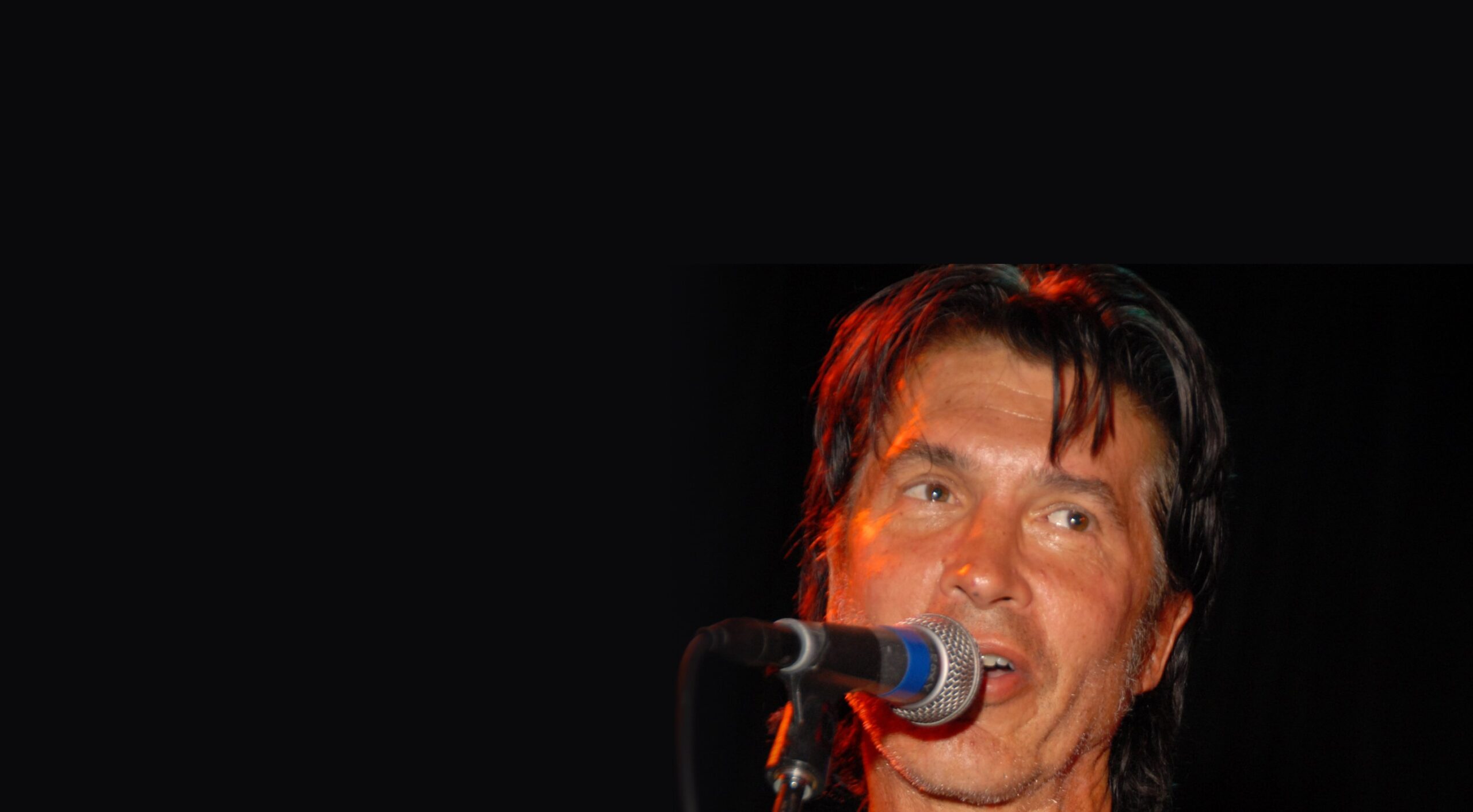
George Lynch, 2009. Photo: Glenn Francis, www.PacificProDigital.com, CC BY-SA 3.0 (https://creativecommons.org/licenses/by-sa/3.0/). Source: https://commons.wikimedia.org/wiki/File:George_Lynch_2009.jpg. Cropped and placed on a dark background.
Did You Know?
The body, long believed to be maple, was discovered in a recent interview to actually be ash — one piece of hard ash weighing approximately 12-13 pounds, which anyone who has held a full-weight single-piece ash body guitar will understand represents a significant physical commitment.
Gear Timeline
George Lynch auditioned twice for the position of lead guitarist in Ozzy Osbourne’s band. The first time was in 1979, when he lost the gig to Randy Rhoads. The second time was in 1982, when Rhoads had died in the March plane crash and Osbourne needed a new permanent guitarist. By Lynch’s account, he got the job — “hired for three days” — before Sharon Osbourne changed her mind and went with Jake E. Lee instead. Sharon, the story goes, preferred Lee’s “look” over Lynch’s playing. Lynch was working as a liquor store delivery driver at the time, a job that required short hair, which presumably contributed to the look disadvantage. He lost the Ozzy gig twice. Then he went to Dokken. And then he wrote “Tooth and Nail,” “Breaking the Chains,” “Mr. Scary,” and the entire musical argument for why George Lynch was exactly where he needed to be. Sharon Osbourne’s aesthetic judgment may have cost Ozzy a decade of the most inventive, melodically sophisticated, and visually spectacular guitar work in mid-1980s hard rock. George Lynch’s loss was Dokken’s — and the guitar world’s — gain.
George Lynch was born on September 28, 1954, in Spokane, Washington, and raised in California. He is, by his own description, “really more of an amp guy than I am a guitar guy” — a self-assessment that initially seems strange for a guitarist as visually identified with specific instruments (the Tiger guitar, the ESP Kamikaze) as any player of his era, but that becomes more comprehensible when you understand his tone philosophy: Lynch’s most distinctive quality is not his guitar playing in isolation, but his guitar playing in the context of specific amplification — the specific combination of power-amp drive, natural Marshall saturation, and the way a modified JMP or Plexi responds to the specific pick attack of a player who “uses Dunlop Jazz III picks held at a 45-degree angle for maximum harmonic content.” His “searing, articulate tone is one of the most immediately identifiable aspects of his playing,” preferring “the natural-sounding power amp drive to the fizzy, high-gain distortion of many of his 1980s contemporaries.” The gear serves this philosophy: not the most modern, most extreme high-gain architecture available, but the most responsive, most dynamically alive configuration that allows the player’s hands to shape the tone as much as the equipment does.
The Dokken years — roughly 1981 through the band’s first dissolution in 1989 — produced the recordings on which Lynch’s reputation is most firmly based. Breaking the Chains (1982), Tooth and Nail (1984), Under Lock and Key (1985), and Back for the Attack (1987) established him as one of the defining lead guitarists of the American hard rock era — technically sophisticated in ways that went beyond the standard shred vocabulary of the period, melodically inventive in ways that distinguished his solos from exercises in speed, and tonally distinctive in ways that made his guitar immediately recognizable even in the context of a generation of technically accomplished players. The instrumental track “Mr. Scary” from Back for the Attack — a sophisticated, compositionally developed guitar piece that demonstrated Lynch’s capacity for extended musical thinking beyond the three-minute rock song context — earned him a Grammy nomination for Best Metal Performance alongside the album’s broader success. He received the nomination because the Guitar World readers’ polls were consistently placing him at or near the top of their “favorite guitarist” rankings. He was, for a specific window of the mid-1980s, the most celebrated guitarist in American hard rock.
His gear tells the story of his development: custom tiger-striped Charvel partscasters in the early Dokken years, transitioning to ESP as his primary manufacturer from 1986; a modified Marshall JMP as his primary amplification in the classic Dokken period, supplemented and eventually replaced by Soldano SLO-100 for the Lynch Mob era; the Randall Lynch Box as his signature amplifier in the modern period; and Seymour Duncan’s Screaming Demon as his signature pickup across the ESP era. The Tiger guitar — the original one-piece ash body instrument that looks like it was painted by a heavy metal Jackson Pollock — remains the visual anchor of his identity, even though it spent years believed to be maple before a recent discovery confirmed the body as ash. He has turned guitar building and finishing into an art form, hand-painting and signing guitars through his Mr. Scary Guitars boutique operation. He describes the result as “fine art created through guitar performance.” He is, characteristically, not wrong about this.
His relationship with Dokken singer Don Dokken is rock music’s most thoroughly documented creative antagonism — a two-person creative dynamic in which the tension between the principals produced some of the decade’s best hard rock songs and also eventually destroyed the band through sheer accumulation of irreconcilable differences. “Two scorpions in a bottle” is a reasonable characterization. The songs, however, were extraordinary. And the guitar work on those songs — the solos on “Alone Again,” the leads on “Breaking the Chains,” the complete compositional achievement of “Mr. Scary” — represents the peak of 1980s American hard rock guitar in ways that thirty-five years of subsequent listening have only confirmed.
Background: Tiger Stripes, Amp Religion, and the Guitar Hero Sharon Osbourne Rejected Twice
The Tiger guitar’s origin story is one of rock’s better partscaster narratives. In the early years of his California music scene career, Lynch built himself a custom guitar from parts — essentially a Partscaster assembled in the specific configuration he needed: a single Seymour Duncan humbucker at the bridge, a 21-fret Strat-style neck, and the tiger stripe paint job that would define his visual identity across the decade. The body, long believed to be maple, was discovered in a recent interview to actually be ash — one piece of hard ash weighing approximately 12-13 pounds, which anyone who has held a full-weight single-piece ash body guitar will understand represents a significant physical commitment. This tiger stripe Charvel partscaster was the primary guitar for the early Dokken recordings, before Lynch’s transition to ESP as his primary manufacturer in 1986.
Prior to 1986, Lynch used Charvel guitars — most notably the tiger stripe instruments that gave him his visual signature. The transition to ESP was motivated both by the technical and construction quality ESP could provide and by the commercial and creative opportunity of a formal signature relationship. His most iconic ESP instrument is the Kamikaze — a superstrat with the ESP-specific construction characteristics that Lynch specified over years of working with the company. The Kamikaze’s distinctive headstock, its specific neck profile, and the Seymour Duncan Screaming Demon pickup that serves as its primary sound source are all products of Lynch’s specific requirements for a touring instrument that could reliably produce his specific tonal approach night after night.
The twice-rejected Ozzy auditions are worth examining in their biographical context, because they explain something about how Lynch’s career developed the specific urgency it had in the early-to-mid 1980s. Losing to Randy Rhoads in 1979 was, with hindsight, simply a case of an extraordinary guitarist being replaced by a more extraordinary one. Losing to Jake E. Lee in 1982 — with the “Sharon preferred Lee’s look” story as the explanation — while Lynch was working as a liquor store delivery man struggling financially, was a different kind of loss. The Dokken records that followed carry a specific quality of someone who had something to prove, who understood that the mainstream spotlight had passed him over twice and that the only response available was to play so well, so inventively, so memorably that the oversight became part of the story rather than the conclusion to it. “Tooth and Nail,” the “Mr. Scary” instrumental, the solos across the platinum Dokken albums — these are the work of a guitarist who took the rejection as fuel. He describes himself as having been struggling financially when the second Ozzy rejection came. What he built in the years immediately after that rejection is one of the great middle fingers in rock guitar history.
The “amp guy not a guitar guy” self-description is philosophically significant. Many guitarists in this series have specific, cherished instrument relationships — Paul Kossoff and the Stripped Burst, Alvin Lee and Big Red, Leslie West and the Junior, Wayne Kramer and the star-spangled Strat. Lynch’s relationship with his instruments is more varied and more experimental: he builds guitars, paints guitars, designs guitars through Mr. Scary Guitars, uses a range of ESP models, maintains the original Tiger as a cherished artifact but uses many different instruments in recording and live contexts. His relationship with amplification is where the real commitment lives: the search for the natural-sounding, dynamically responsive amp tone that responds to pick attack and playing dynamics rather than simply saturating at all input levels has driven his amplifier choices across decades of career development.
The Rig: George Lynch’s Guitars, Amps, and Effects
Guitars
The guitar most closely associated with George Lynch’s visual identity — the tiger-striped instrument that appears in early Dokken photographs and became the template for all subsequent “Tiger” guitar designs — was a handbuilt partscaster assembled from available components and finished with the orange and black tiger-stripe paint pattern that Lynch hand-applied. The body, long believed to be maple, was discovered in a recent interview to be ash — specifically one piece of hard ash approximately 12-13 pounds, making it a significant physical commitment for a touring guitarist to carry. The guitar was fitted with a single Seymour Duncan humbucker in the bridge position and a 21-fret Strat-style neck. Its handbuilt, Partscaster origin is consistent with the DIY approach that characterized many of the early 1980s California guitar heroes who assembled their specific tonal requirements from available parts before the custom shop options of later decades became accessible. This original Tiger guitar continues to be a working instrument in Lynch’s arsenal — documented in the tech description of his recording gear: “Original Tiger guitar” heads the guitar list for sessions as recently as the mid-2000s. It is the center of gravity around which all his other guitars orbit.
George Lynch has endorsed ESP Guitars since 1986, and the ESP Kamikaze is his most iconic signature instrument from this relationship. The Kamikaze features a maple body, maple neck, ebony fretboard, and the Seymour Duncan Screaming Demon pickup as its primary sound source. Its headstock design — the elongated, distinctive Kamikaze shape that ESP developed specifically for Lynch — is one of the more recognizable headstock designs in 1980s hard rock guitar. The Kamikaze’s maple body produces a different tonal character from the ash of the original Tiger or the mahogany of the Gibson instruments Lynch occasionally uses, with a specific brightness and attack that suits the fast, articulate picking approach of Lynch’s lead style. ESP has produced various versions of the Kamikaze over the years of the signature relationship, including limited edition and standard production variants.
The ESP Tiger represents ESP’s production version of the original Tiger guitar — replicating the distinctive tiger-stripe visual identity of the original Charvel partscaster in the ESP construction and specification. The ESP Tiger signature incorporates the Floyd Rose Original tremolo system (which the original Charvel partscaster may or may not have had, depending on the specific configuration), the Seymour Duncan Screaming Demon pickup, and the general superstrat construction approach that characterizes the ESP Kamikaze family. ESP and LTD have both produced Tiger variants, giving players at different price points access to the iconic finish and general specification.
The Skull and Bones guitar affectionately named “Mom” — appearing in the late 1980s — was designed and hand-crafted by artist John “J. Frog” Garcia, who created a custom instrument with skull and bones decorative elements reflecting the visual aesthetic of the heavy metal cultural moment. Since Lynch was under ESP contract at the time, an ESP decal was applied to the headstock — making “Mom” technically an ESP, though it was artistically a J. Frog Garcia original. The existence of “Mom” in Lynch’s visual history reflects the broader culture of custom art guitars that Lynch has embraced more fully than most guitarists of his era, eventually founding his own boutique guitar company centered on handbuilt and hand-decorated instruments.
In a development that is the natural endpoint of Lynch’s “amp guy not a guitar guy” self-description meeting his lifelong fascination with custom instrument building, Lynch founded Mr. Scary Guitars — a boutique guitar company producing entirely handbuilt, hand-finished instruments. The Mr. Scary Guitar range includes models like the Burnt Tiger (a twisted take on the iconic Tiger guitar), the Snakehunter (with hand-laid snakeskin finish, custom center inlay with hand-carved bone skulls and snake fang fret markers), the Solcaster, the GL54, the GL56, and the Dem Bones. The standard pickups across the range are the Arcane Mr. Scary humbucker and the Arcane Desert Eagle single coil. All instruments are hand-carved — “No CNC machines are used in the production” — with finishes that are “hand-applied and nitro cellulose-sprayed by George, by hand.” The Mr. Scary Guitar operation represents Lynch’s most complete expression of guitar as fine art object, consistent with the GeorgeLynchArt.com parallel operation through which he sells guitar-performance-based visual art. Each Mr. Scary Guitar is signed and numbered.
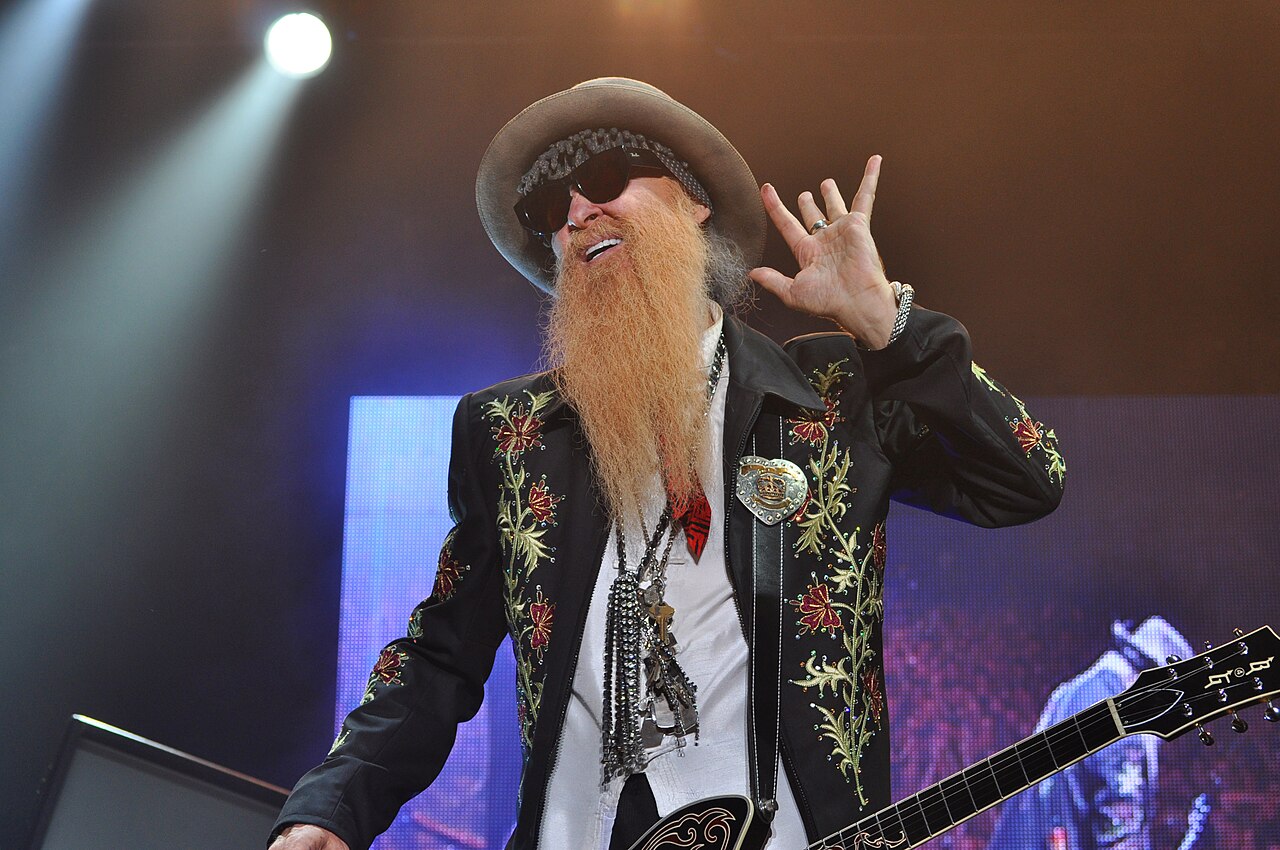
A 1959 Fender Esquire appears in the Tone Rooms documentation of Lynch’s recording gear — described specifically as “the battered Tele with the pickup petrified into the wood with Billy Gibbons’ mojo.” The specific connection to Billy Gibbons is not extensively detailed in available sources, but the description suggests a guitar that has been in continuous use to the point where the pickup has become physically embedded in the body wood — a process that takes decades of sustained vibration and natural material compression. The Esquire’s single-pickup simplicity (it has only one pickup, a bridge single-coil) and its vintage tonal character make it a very different musical tool from the high-output, active-or-passive-humbucker equipped ESP signature instruments.
Seymour Duncan created the Screaming Demon pickup specifically for Lynch — it features on all ESP Lynch signature guitars and represents his most formally documented signature pickup. The Screaming Demon is described as providing the specific tonal character Lynch developed across the Dokken and Lynch Mob years: aggressive enough for the hard rock context, warm enough for the melodic lead work, with sufficient dynamic range to respond to the pick attack variations that Lynch’s “amp guy” approach requires. The SH-12 is the humbucker version; the TB-12 is the trembucker version designed for Floyd Rose-equipped guitars where the pickup needs to fit under the locking tremolo’s wider string spacing. Seymour Duncan also created a Super V pickup for Lynch’s ESP Super V model.
Amps
George Lynch’s primary amplification during Dokken’s peak years — the recordings from Breaking the Chains through Under Lock and Key — was a modified Marshall JMP (Jim Marshall Products), with the modification specifically described as “added gain stages.” The unmodified Marshall JMP is a non-master-volume head from the late 1970s, with a clean preamp stage and an EL34 output section that produces natural power-amp saturation when driven hard. The “added gain stages” modification increased the preamp gain substantially — essentially creating the higher-gain JCM800-and-beyond territory that Dokken’s recordings required, while preserving the fundamental EL34 character of the Marshall platform. This preference for power-amp drive over preamp distortion — the “natural-sounding power amp drive” that Guitar Lobby identifies as Lynch’s preference over “the fizzy, high-gain distortion of many of his 1980s contemporaries” — is the foundational tonal philosophy that has remained consistent across all his amplifier choices.
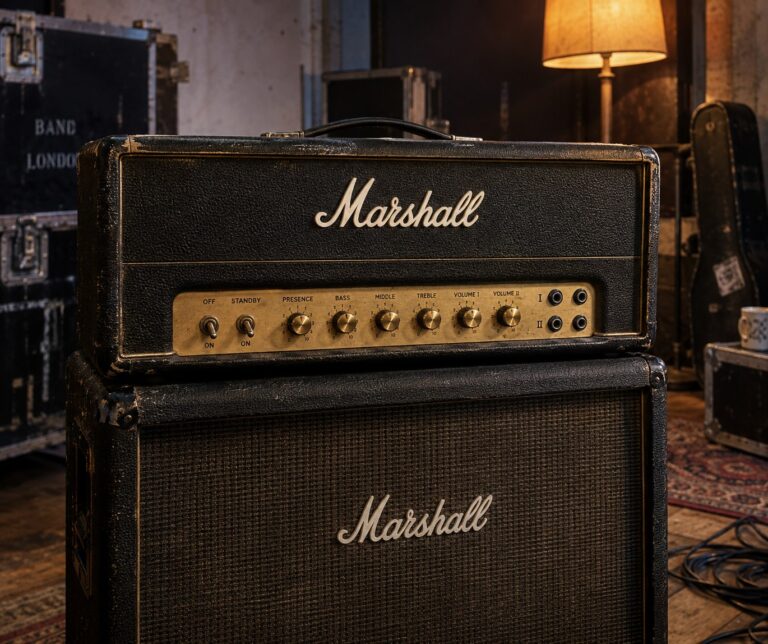
The Guitar Lobby documentation confirms that Lynch “was using a Marshall Plexi back in the Dokken days when he was playing a fifty-watt model” — the standard non-master-volume Plexi that, cranked to full output, provides the natural EL34 power-amp saturation that Lynch valued. The 50-watt preference produces a more responsive, more dynamically sensitive amplifier character at lower absolute output levels. The Plexi’s specific character — bright, warm, harmonically complex, with the natural compression of an output stage working near its limits — is the reference point against which all Lynch’s subsequent amplifier choices have been measured.
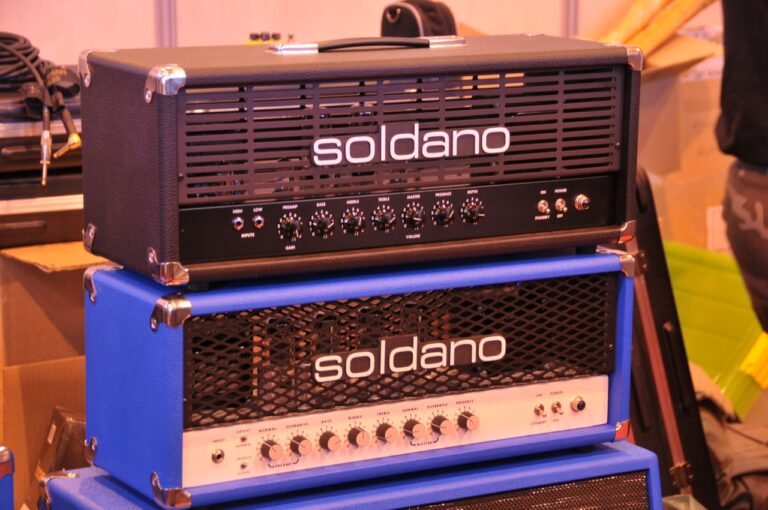
When Lynch left Dokken and formed Lynch Mob, his amplification evolved toward the Soldano SLO-100 — Mike Soldano’s flagship high-gain amplifier that represented one of the most significant advances in guitar amplifier design of the late 1980s. “George Lynch was not immune to the charms of the high-gain SLO-100 when it came time to record the first Lynch Mob record in the late 1980s.” The SLO-100 offered more controllable high-gain saturation than any competing amplifier of the period, with a specific quality of smooth, musical high gain that avoided the “fizzy” character Lynch specifically wanted to avoid. In a remarkable piece of vintage acquisition, one of Lynch’s original Soldano SLO-100s went missing in 1993 — but “its twin, reportedly the sixth Soldano amp ever made, remains in his possession to this day.” The sixth Soldano SLO-100 ever produced: an instrument of historical significance in the development of high-gain guitar amplification, still in active use by the guitarist for whom it was built.
The Randall Lynch Box is Lynch’s signature amplifier from his long-term Randall endorsement relationship, and “the cornerstone of George Lynch’s sound these days, whether it’s live or in the studio.” It features a modular architecture with three interchangeable modules that Lynch has described as capturing specific tonal eras of his career: “Mr. Scary” (based on his Dokken/Lynch Mob lead tone), “Brahma” (based on his classic rhythm tone), and “Grail” (described as a third tonal option). Lynch typically uses “a Randall Lynch Box, my signature amp, and at least one other amp” — with the other amp being a Marshall, Soldano, or Diezel, used in combination with the Lynch Box for the specific tonal combination each situation requires. The Randall Dragon (non-master-volume tube head) was his primary touring amp in 2005, specifically because “the design is very similar to the older Marshall Plexi heads he used early on in Dokken” — confirming that the Plexi’s specific tonal character remained the reference point for his amplification choices across decades.
Bogner and Diezel amplifiers appear in Lynch’s modern documented rig alongside the Soldano and Randall — both German/American boutique manufacturers known for high-quality, tonally sophisticated valve amplification. Lynch’s “combination of Marshall, Soldano, Bogner & Diezel amps” represents the natural endpoint of a “more of an amp guy” philosophy: building a sophisticated multi-amplifier arsenal that allows access to different tonal characters and tonal combinations for different musical contexts and recording requirements.
Effects
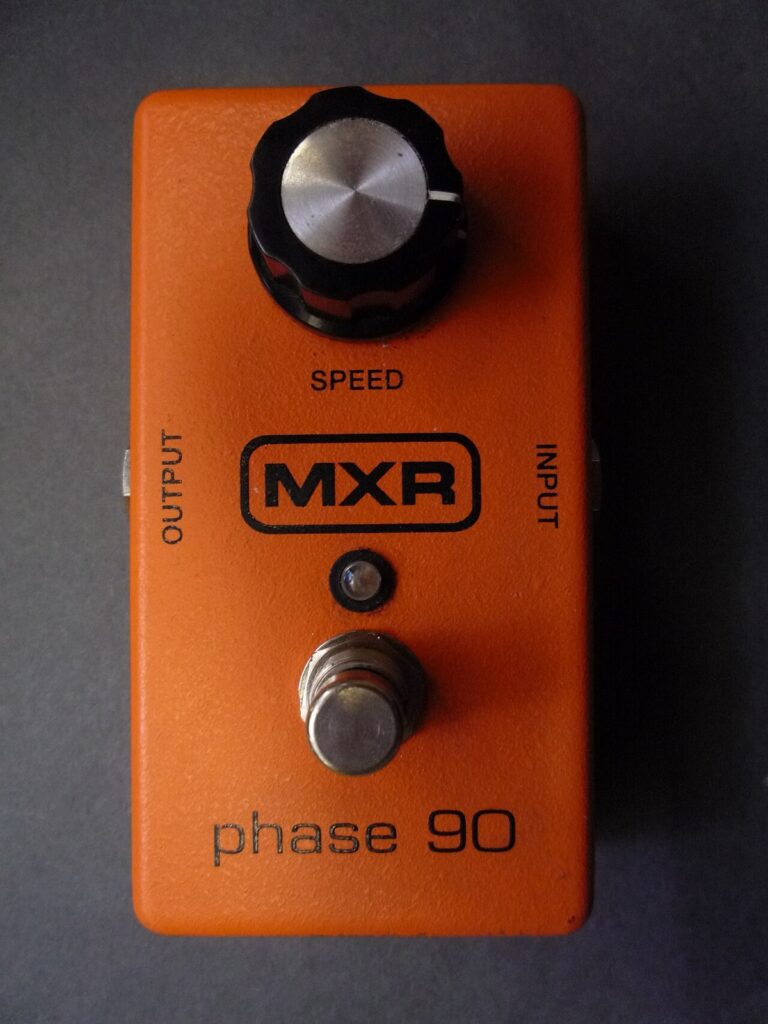
Lynch owns a genuine vintage 1974 MXR Phase 90 — one of the early examples of the pedal that Eddie Van Halen made famous through “Eruption” and other early Van Halen recordings. Lynch describes his Phase 90 explicitly as “the old Eddie thing from ‘Eruption’ and other solos” — acknowledging the specific Van Halen influence on this aspect of his signal chain. He “generally uses his Phase 90 for additional texture during his guitar solos” — at slow speed settings that add the smooth, warm phase modulation characteristic of the Phase 90 without producing the obvious “woosh” effect of a fast phase setting. A genuine 1974 Phase 90 has the specific circuit characteristics of early MXR production — a slightly different tonal character from later versions, with the specific “Script Logo” version’s warmer, more complex phasing.
George Lynch has a specific relationship with Morley wah pedals, culminating in the Morley Dragon 2 Wah — a prototype of which was added to his live rig in 2008 (per the Equipboard 2008 tour gear documentation). Lynch uses wah both as a dynamic expressive tool in solos and as a fixed-position filter — “cocked” in a specific position to add frequency emphasis without dynamic sweeping. His wah tone on specific Dokken-era recordings has the characteristic forward-midrange push of a wah set to a specific position and left there, adding the vocal quality of wah coloration to the sustained lead notes without the rhythmic sweep motion.
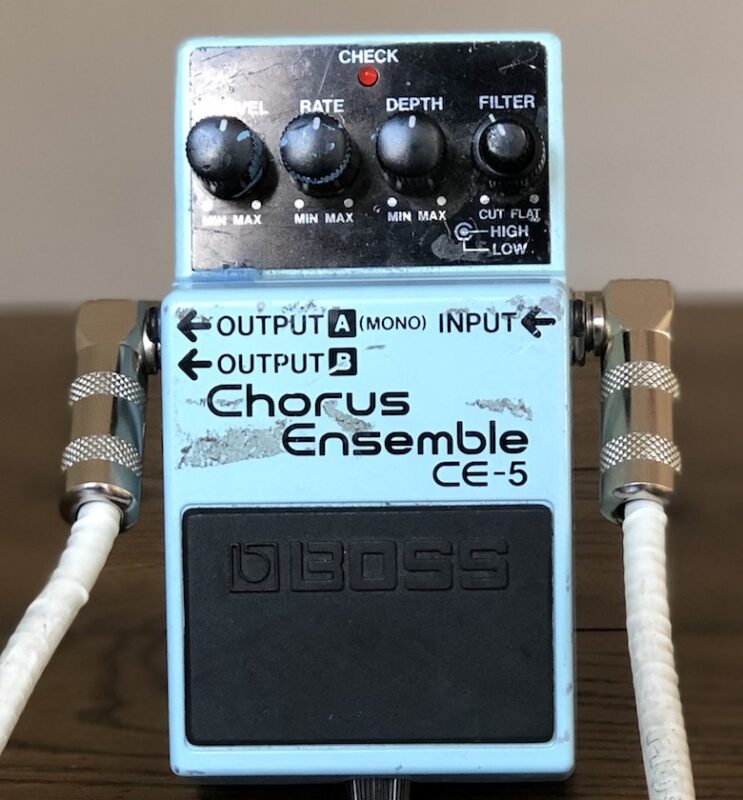
Lynch has used Boss CE-3 and CE-5 chorus units for the specific chorus character heard on his Dokken-era rhythm guitar work — a warm, dimensional chorus effect that adds the subtle doubling quality to rhythm chords without the extreme modulation that more dramatic chorus settings produce. His “chorus tone seems to be mostly reserved for rhythm work a la his Dokken-era tone” — confirming that chorus was a rhythmic texture tool rather than a lead guitar effect.
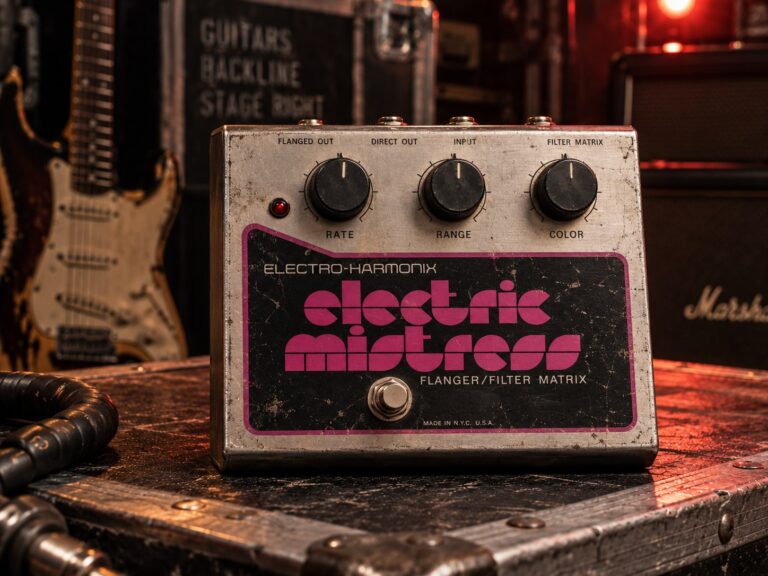
Lynch used the Electro-Harmonix Electric Mistress flanger — the classic filter-matrix flanger known for its specifically metallic, sweeping flanging character — before removing it from his rig at some point after 2011. The Electric Mistress’s flanging character is different from the Boss BF-series or the Eventide approach — more extreme, more dramatic, with the specific “jet airplane” quality of the original Electric Mistress circuit.
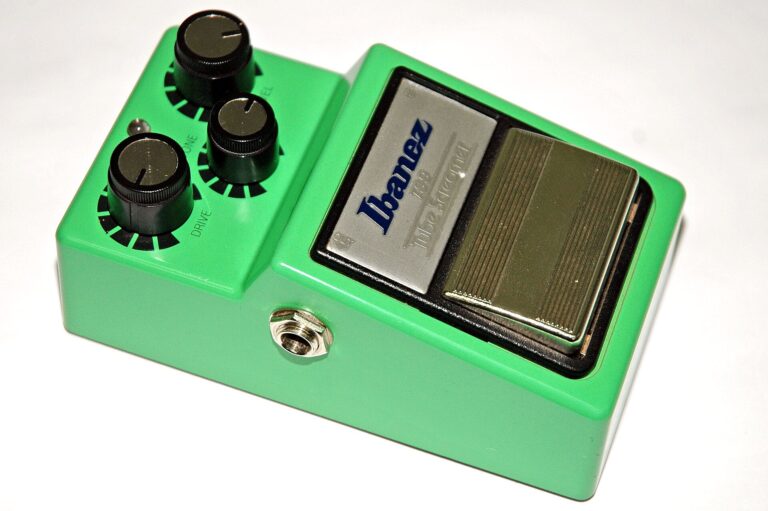
The Ibanez TS9 Tube Screamer appears in Lynch’s documented signal chain — the mid-frequency boosting overdrive that provides the specific quality of pushed, warm overdrive that Lynch uses to shape the tone going into the amplifier’s input stage. “This particular pedal adds a little bit of push to it before it hits the input stage of the amp” — a description of the classic Tube Screamer function as a pre-amplifier boost that adds midrange character and level increase without fundamentally altering the amplifier’s own tonal voice.
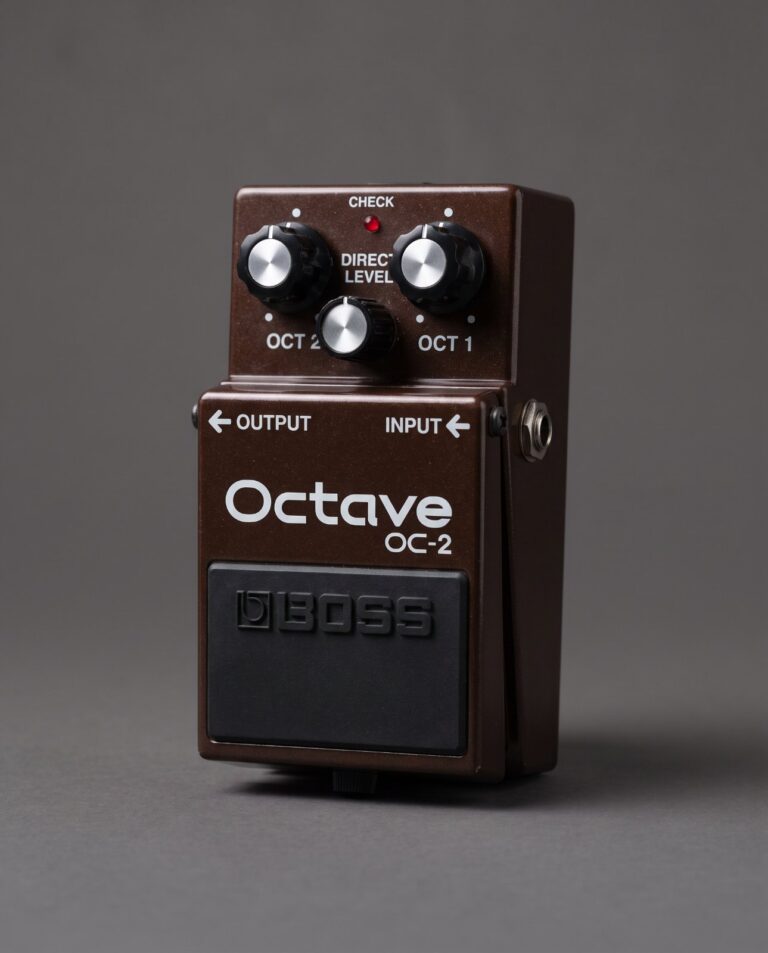
The Boss OC-2 octave divider appears in Lynch’s 2008 tour rig — the analog pitch-shifting unit that adds a signal one octave below the input, creating a bass-register doubling effect useful for specific musical passages. The OC-2’s specific character — warm, slightly indistinct in its tracking but musically useful for its bass-weight addition — provides a different tonal resource from any standard overdrive or boost.
A Robert Keeley GL Time Machine boost pedal — a collaboration between Lynch and boutique pedal builder Robert Keeley — appears in his documented signal chain. Keeley’s transparent boost designs are known for adding level and warmth without significantly coloring the signal, and the GL Time Machine variant was specifically developed with Lynch’s tonal requirements in mind.
Lynch has designed a custom high-nickel-content string through Dean Markley — notably without his name on the packaging, a decision that prioritized the string’s accessibility over the branding opportunity. The high-nickel content is a specific choice: pure nickel wound strings have a warmer, slightly darker tonal character than the nickel-plated steel strings that most players use, with a different quality of magnetic interaction with pickups that affects both tone and pick attack character. The choice of high-nickel content reflects Lynch’s continued attention to the specific, subtle variables that affect his tonal character.
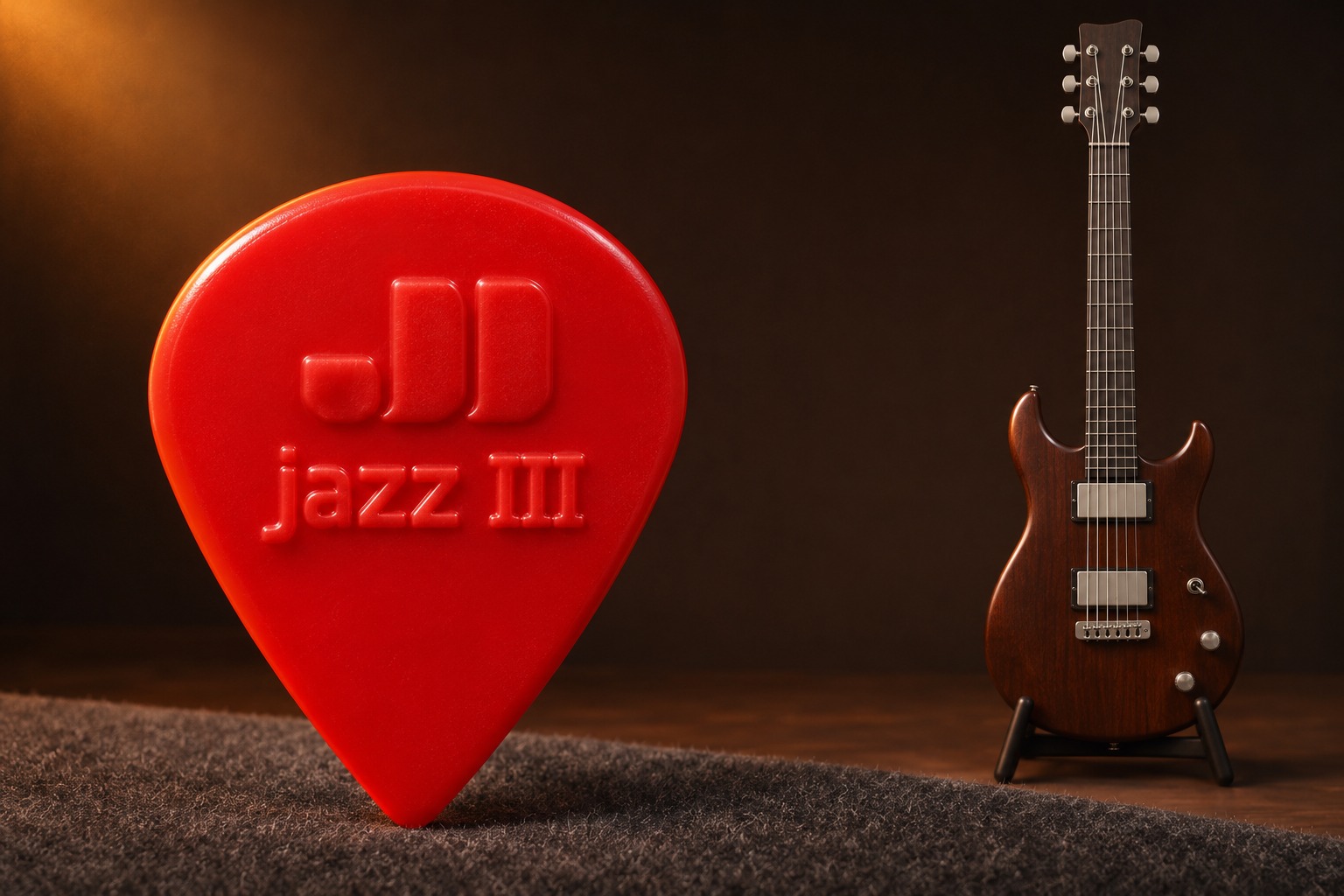
Lynch uses Dunlop Jazz III picks held at a 45-degree angle, specifically for “maximum harmonic content.” The Jazz III is a small, stiff pick with a pointed tip — quite different from the medium or thin picks used by many blues-rock players. The small, pointed tip produces a more precise, more defined attack, with the 45-degree angle providing the specific quality of harmonic content Lynch references. The angle at which a pick contacts the string affects both the attack character and the harmonic series generated by the pick strike — a more aggressive angle produces more harmonic complexity in the initial transient.
Playing Style & Tone Philosophy
George Lynch plays with the melodic intelligence of a guitarist who has internalized the blues tradition and the compositional sophistication of a musician who thinks about guitar solos as small structured compositions rather than opportunities for technical display. His leads on the Dokken albums are notably melodic — each solo has a beginning, middle, and end; each phrase resolves; each solo tells a small musical story. This structural quality, combined with technical ability that was genuinely exceptional by mid-1980s standards, produced solos that remain listenable and emotionally effective decades after the 1980s metal production aesthetics that surround them have aged considerably less gracefully.
The “amp guy” orientation is the key to understanding his tonal approach. Most guitarists think of amplification as the delivery mechanism for tone generated at the guitar — the guitar makes the sound, the amp makes it louder. Lynch thinks of the amplifier as the primary tone-generating element, with the guitar providing the input signal that the amp then shapes into sound. This orientation means that his practice of running Marshall, Soldano, and Randall amplifiers in various combinations — drawing from each for specific tonal qualities — is not gear-collecting for its own sake but the systematic construction of a complete tonal vocabulary from the instruments best suited for different voices within it.
The pick technique — Jazz III at 45 degrees for maximum harmonic content — is the physical expression of the same tonal philosophy. Lynch is specifically choosing a pick shape and attack angle that maximizes the harmonic complexity of his signal at the pick-string interface, before the signal reaches any processing at all. If the guitar and the amp are the tonal conversation, the pick is the specific quality of voice with which Lynch begins it.
How to Sound Like George Lynch
The classic Dokken-era Lynch tone requires a superstrat with a hot humbucker (Screaming Demon or Seymour Duncan Distortion equivalent), a Marshall JMP or Plexi modified for additional preamp gain, an Ibanez TS9 Tube Screamer as a front-end boost, and a Jazz III pick held at a 45-degree angle. The Phase 90 (at slow speed) adds the specific textural warmth that characterizes the lead tone. The Boss CE-3 or equivalent warm chorus adds the specific dimensional quality of the rhythm guitar tone. The “natural-sounding power amp drive” philosophy means the amp should be pushed into saturation from the output stage rather than relying entirely on preamp compression — wide open, responsive to pick attack, alive.
| Control | Setting (0–10) | Notes |
|---|---|---|
| Ibanez TS9 (Front-End Boost) | Drive: 3; Level: 7; Tone: 5 | Low drive, higher level — the TS9 functions as a mid-boost and input level increase that pushes the Marshall into more natural saturation rather than as a primary distortion source. Lynch’s “amp guy” philosophy means the amplifier generates the primary tone; the TS9 gives it more to work with. |
| Marshall JMP / Plexi Preamp | Volume 1: 8; Volume 2: 6 | Push the preamp hard — the Lynch Dokken tone comes from driving the output stage into natural saturation. Both inputs at significant levels, with the master (if present) similarly high. The natural power-amp drive is the goal. |
| Bass | 6 | Moderate-to-warm bass — the Tiger (ash body) and the ESP instruments have different natural bass character from mahogany guitars. Controlled but present. The Lynch tone has weight and body without being loose or undefined. |
| Mid | 7 | Present midrange — Lynch’s tone is mid-forward and articulate. The “searing, articulate” quality that Guitar Lobby identifies as his trademark lives in the midrange frequency range, where the pick attack and the melodic content of his solos project most clearly. |
| Treble | 7 | Present treble — more than many heavy rock players use, because the “articulate” quality of Lynch’s tone depends on top-end definition as well as midrange presence. The harmonic content of his pick attack (from the Jazz III at 45 degrees) needs amp treble support to project. |
| Presence | 6–7 | Moderate-to-high presence for definition and cut. The combination of hot humbucker, TS9 boost, and cranked Marshall creates a dense signal that benefits from presence control support to maintain articulation at high volume. |
| Master Volume | 7–9 | Push the master for output stage engagement. Lynch’s “natural-sounding power amp drive” preference requires the EL34 output section to be working at significant output levels. Maximum EL34 engagement is the target. |
| MXR Phase 90 (Lead Texture) | Speed: 8–9 o’clock (very slow) | Very slow speed — almost imperceptible as a distinct phase sweep, but adding the warm, smooth textural dimension to sustained lead notes. Lynch uses the Phase 90 for “additional texture during guitar solos” rather than as a dramatic effect. Set it slow and leave it engaged for leads. |
| Boss CE-3 Chorus (Rhythm) | Rate: 4; Depth: 4; Mix: 40% | Moderate chorus for rhythm work — the specific dimensional quality of the Dokken-era rhythm guitar tone. Engage for rhythm chords; disengage for lead passages. The warm, dimensional quality of the CE-3’s analog chorus circuit adds the specific quality Lynch’s rhythm work has on the Dokken records. |
| Pick Technique | Jazz III at 45 degrees | The specific pick choice and attack angle are part of the tone. Dunlop Jazz III (small, stiff, pointed) held at approximately 45 degrees to the string. The angle generates more harmonic content in the pick attack than a flat contact angle produces. This is not optional; it is tonal. |
Influence & Legacy
George Lynch’s influence on 1980s hard rock guitar is most clearly visible in the specific quality of melodic sophistication he brought to a genre that was increasingly rewarding speed and technique over musical substance. “Mr. Scary” — the instrumental track from Back for the Attack that earned the Grammy nomination — remains the clearest statement of his ambition: a guitar composition that has a real beginning, middle, and end, that develops its themes, that demonstrates what a guitar solo could be if it were treated as a compositional form rather than a technical showcase. That Lynch produced this piece in the same era as the more purely speed-oriented guitarists of the Los Angeles hair metal scene is its own testament to the depth of his musical thinking.
The Tiger guitar has become one of the more recognizable visual artifacts of the 1980s hard rock era — not as precious a cultural object as Alvin Lee’s Big Red or as historically weighted as the Kossoff Strat, but immediately identifiable in photographs as the specific guitar of a specific era. The Mr. Scary Guitars boutique operation he now runs — handbuilding and hand-finishing instruments in limited quantities — represents the natural evolution of a craftsman who taught himself to paint guitars in tiger stripes and discovered, across four decades, that the process was as interesting as the music it enabled. For more on the California hard rock guitar scene that shaped Lynch’s development, see Jake E. Lee’s parallel Ozzy trajectory — the guitarist who got the gig Lynch lost twice. The broader NWOBHM and early metal guitar tradition that influenced both players connects to Michael Schenker’s melodically sophisticated lead approach. And the “amp guy” philosophy that Lynch explicitly champions — the belief that amplification is the primary tone-generating element rather than the delivery mechanism — connects to Leslie West’s Sunn PA head discovery as another player who found his definitive tone in an unconventional amplification approach.
“I really am more of an amp guy than I am a guitar guy,” he says. He has a signature guitar company producing handbuilt, hand-finished, hand-signed instruments. He lost the Ozzy gig twice and wrote “Mr. Scary” instead. He has the sixth Soldano SLO-100 ever produced. He knows exactly how to hold a Jazz III pick for maximum harmonic content. And he still plays the original Tiger guitar — the one-piece ash body that he built himself from parts, that he thought was maple for decades before finding out it was something better. Thirty-five years. Still scary.
Frequently Asked Questions: George Lynch Guitars & Gear
What is the Tiger guitar and what is it made of?
The Tiger guitar is George Lynch’s most iconic instrument — a handbuilt partscaster from his early California music career, featuring a tiger-stripe orange-and-black paint job that Lynch hand-applied. The guitar has a single Seymour Duncan humbucker in the bridge position and a 21-fret Strat-style neck. Notably, the body was long believed to be maple, but Lynch revealed in a recent interview that it is actually one piece of hard ash weighing approximately 12-13 pounds — a discovery that retroactively explains some of the guitar’s specific tonal character. The Tiger remains a working instrument in Lynch’s arsenal. ESP produces signature Tiger models based on this guitar, and Lynch’s own Mr. Scary Guitars operation produces the “Burnt Tiger” — described as “a twisted take on George Lynch’s iconic Dokken guitar, the ESP Tiger.”
What is George Lynch’s relationship with Ozzy Osbourne?
Lynch auditioned for Ozzy Osbourne’s lead guitarist position twice. The first audition in 1979 was lost to Randy Rhoads — straightforwardly the better player at that moment. The second audition in 1982, when Rhoads had died and Osbourne needed a permanent replacement, produced a more complex outcome: Lynch was reportedly hired for three days before Sharon Osbourne decided to go with Jake E. Lee, with Lynch’s account suggesting Sharon preferred Lee’s “look” over Lynch’s playing. Lynch was working as a liquor store delivery driver at the time, a job that required short hair. He lost the position to Jake E. Lee; the Dokken years that followed produced some of the most celebrated hard rock guitar work of the decade, including the Grammy-nominated instrumental “Mr. Scary.”
What amplifiers define George Lynch’s tone?
Lynch describes himself as “really more of an amp guy than I am a guitar guy,” and his amplifier history reflects this priority. His classic Dokken tone used a modified Marshall JMP with added gain stages and a Marshall Plexi (50-watt) — both run for natural power-amp saturation rather than preamp distortion. The Lynch Mob era introduced the Soldano SLO-100, with Lynch’s original example reportedly being the sixth SLO-100 ever produced, still in his possession after one of the pair went missing in 1993. His primary modern amp is the Randall Lynch Box signature — featuring three modules named Mr. Scary (Dokken/Lynch Mob lead tone), Brahma (classic rhythm tone), and Grail. He typically combines the Lynch Box with at least one other amp from the Marshall, Soldano, or Diezel families.
What is the Seymour Duncan Screaming Demon pickup?
Seymour Duncan created the Screaming Demon (SH-12/TB-12) specifically for George Lynch, and it features on all ESP Lynch signature guitars. It was designed to provide the specific tonal character Lynch developed during the Dokken and Lynch Mob years — aggressive enough for hard rock context, warm enough for melodic lead work, with sufficient dynamic range to respond to pick attack variations. The SH-12 designation is the standard version; the TB-12 (Trembucker) is for Floyd Rose-equipped guitars where the pickup needs wider string spacing under the locking nut. Seymour Duncan also created the Super V pickup for Lynch’s ESP Super V signature model.
What is the Randall Lynch Box and how does it capture different eras of Lynch’s tone?
The Randall Lynch Box is Lynch’s signature amplifier from his Randall endorsement, featuring a modular architecture with three interchangeable modules: “Mr. Scary” (capturing the Dokken/Lynch Mob lead tone), “Brahma” (capturing his classic rhythm tone), and “Grail” (a third tonal configuration). Lynch typically uses the Lynch Box as his primary amp alongside “at least one other amp” from the Marshall, Soldano, or Diezel families, accessing different tonal combinations for different musical requirements. The modular architecture allows him to switch the core tonal character of the amp by swapping modules rather than switching between entirely different amplifiers. Lynch has confirmed that the Randall Lynch Box represents “the cornerstone of George Lynch’s sound these days, whether it’s live or in the studio.”
What is Mr. Scary Guitars and how does it differ from Lynch’s ESP signature relationship?
Mr. Scary Guitars is George Lynch’s own boutique guitar company, producing entirely handbuilt instruments with hand-applied finishes. Unlike his ESP signature relationship (where ESP builds guitars to Lynch’s specifications using their production capabilities), Mr. Scary Guitars produces instruments in very limited quantities, with Lynch personally involved in the physical building and finishing process. “No CNC machines are used in the production” — all bodies are hand-carved using a pin router. “All finishes are hand-applied and nitro cellulose-sprayed by George, by hand.” The range includes models like the Burnt Tiger, Snakehunter (with hand-laid snakeskin and hand-carved bone skull inlays), Solcaster, GL54, GL56, and Dem Bones. Standard pickups are the Arcane Mr. Scary humbucker and Arcane Desert Eagle single coil. Lynch connects the guitar building to his parallel visual art practice: each signed-and-numbered guitar is also described as fine art.
Why does George Lynch use a Jazz III pick at a 45-degree angle?
Lynch uses a Dunlop Jazz III pick at a 45-degree angle to the string specifically “for maximum harmonic content.” The Jazz III is a small, stiff pick with a pointed tip that produces a more precise, more defined attack than larger or softer picks. The 45-degree angle at which the pick contacts the string — rather than flat contact, which produces a cleaner, more fundamental-heavy tone — generates more harmonic complexity in the initial transient of each note. The harmonic content produced at the pick-string interface is part of Lynch’s overall tonal architecture: the pick, the guitar, and the amplifier all contribute to the specific “searing, articulate” quality that Guitar Lobby identifies as his most distinctive tonal characteristic. Lynch’s Jazz III pick technique is not a cosmetic preference; it is a functional part of his signal chain.
Image credits
- Dunlop Jazz III Picks: GuitarGangsters AI-generated reference illustration, not a photograph.
- Billy Gibbons: Tilly antoine, Wikimedia Commons, CC BY-SA 4.0.
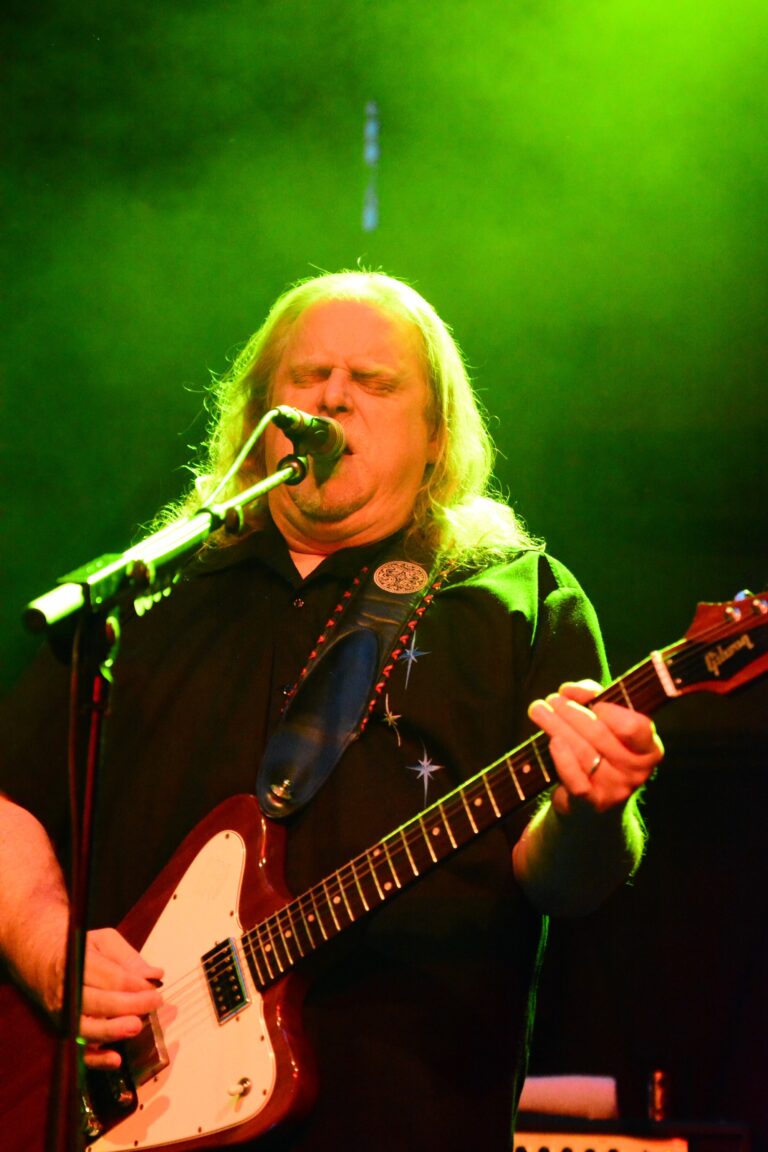
- Top image: Glenn Francis, Wikimedia Commons, CC BY-SA 3.0.
- Marshall 1959 Super Lead Plexi: GuitarGangsters AI-generated reference illustration, not a photograph.
- Electro-Harmonix Electric Mistress: GuitarGangsters AI-generated reference illustration, not a photograph.
- Ibanez TS9 Tube Screamer: Mataresephotos, Wikimedia Commons, CC BY 3.0 US.
- MXR Phase 90: Roadside Guitars, Wikimedia Commons, CC BY-SA 2.0.
- Soldano SLO-100: fvancini, Wikimedia Commons, CC BY 2.0.
- Boss CE-5 Chorus Ensemble: Guitar Chalk, Wikimedia Commons, CC BY 2.0.
- Boss OC-2 Octave: GuitarGangsters AI-generated reference illustration, not a photograph.