
Jason Pierce (Spiritualized) Guitars & Gear: The Complete Guide to J. Spaceman’s Minimalist Wall-of-Sound Rig
“I’m a big believer in pushing the simplest of ideas as far as they can go,” Jason Pierce told Guitar World. “You only need a chord to write a song.” The man who made Ladies and Gentlemen We Are Floating in Space (1997) — the Spiritualized album that the NME named Album of the Year (beating Radiohead’s OK Computer) — made it with a minimalist philosophy that is almost the opposite of what the album’s orchestral, choir-augmented, fifteen-musicians-in-the-studio sound suggests. A chord. Pushed as far as it can go. The album is sixty-nine minutes of that chord — the specific chord of wanting everything and having nothing, the specific chord of a love that has ended and a body that has collapsed and a soul that is floating in the space between the morphine-laced transcendence he was writing about and the physical reality of his own health crisis. Jason Pierce spent most of the late 1990s profoundly ill. Ladies and Gentlemen We Are Floating in Space is the specific record that resulted. His pedalboard — the one documented by a fan’s disposable camera on the Let It Come Down (2001/2) tour — contains four pedals: a Pro Co RAT distortion, a vintage Colorsound Wah, a Nobels Tremolo TR-X, and a Boss TU-2 tuner. Four pedals. One chord. Floating in space.
Jason Andrew Pierce was born on November 19, 1965, in Rugby, Warwickshire, England. He co-founded Spacemen 3 in 1982 with Peter Kember (Sonic Boom) and developed, over the course of that band’s existence, a minimalist psychedelic sound derived from the Velvet Underground, Iggy Pop, and 1960s garage rock — a sound that prioritized drone, repetition, and the specific feeling of sustained noise over conventional song structure. After Spacemen 3’s acrimonious dissolution in 1991 (the band split while recording their final album, which was subsequently released as two separate records by the two co-leaders), Pierce formed Spiritualized. The Spiritualized trajectory — from the minimal psych-blues of Lazer Guided Melodies (1992) through the orchestral gospel-rock of Ladies and Gentlemen (1997) and Let It Come Down (2001) to the continued activity of his later career — represents one of the most artistically ambitious and most personally costly creative projects in British alternative music. He is the sole permanent member of Spiritualized. He plays guitar, bass, piano, keyboards, percussion, banjo, dulcimer, autoharp, and harmonica. He lives in England. He has four pedals.
Background: Rugby England, Spacemen 3, Velvet Underground Drone, Sonic Boom Split, Ladies and Gentlemen Health Crisis
The Spacemen 3 period (1982–1991) is the specific biographical context for understanding Pierce’s guitar approach. Spacemen 3’s music was built on the principle that less is more in its most extreme application: a single chord, sustained through extreme volume, extreme distortion, and extreme repetition, becomes a transcendent experience rather than a limited musical statement. The Velvet Underground’s “Sister Ray” and “Heroin” provided the foundational model — the idea that a chord held for twenty minutes is not boring but overwhelming, not monotonous but hypnotic, not simple but profound. This was the specific tradition Pierce absorbed and extended, moving from the primitive production of early Spacemen 3 recordings to the increasingly sophisticated orchestral deployments of the Spiritualized era without ever losing the foundational insight: drone is the foundation; the elaborations are ornamental.
The specific Spacemen 3 influence on the broader shoegaze and drone-rock tradition is documented: their minimalist approach, combined with the heavy drone of their specific guitar sound, influenced the British psychedelic underground in ways that connected directly to the shoegaze tradition that was simultaneously developing around My Bloody Valentine, Slowdive, and the 4AD acts. Where the shoegaze bands prioritized effects-as-texture (Guthrie’s processing philosophy, Halstead’s reverb-and-delay atmospheric approach), Pierce prioritized the guitar drone itself — the sustained note or chord at high volume through high distortion as the primary musical event, with effects as secondary additions.
His health crisis in the late 1990s — the period during which Ladies and Gentlemen We Are Floating in Space was conceived and recorded — is documented in the album’s specific character: its emotional extremity (the sense of someone who has lost everything and is floating in the space of that loss) and its specific sonic character (the orchestral grandeur surrounding a fundamentally simple chord-based foundation) reflect the experience of someone creating art at the limits of their physical capacity. The album’s critical success — NME Album of the Year 1997, beating both Radiohead’s OK Computer and Primal Scream’s Vanishing Point — confirmed that the specific emotional and sonic ambition Pierce pursued had produced a work of genuine magnitude.
The Rig: Jason Pierce’s Guitars, Amps, and Effects
Guitars
Fender Telecaster (Primary Electric Guitar, Multiple References): Jason Pierce’s primary electric guitar is documented as a Fender Telecaster — consistent with his minimalist approach to the instrument and with the specific bright, cutting character of the Telecaster’s bridge single-coil pickup through distortion and drone. The TDPRI forum documentation from his Let It Come Down touring period confirms a Telecaster in the “H/H SS combo” (humbucker-humbucker or standard Stratocaster-style) configuration alongside his minimal pedalboard. The Telecaster’s specific character — its direct, unprocessed attack and its specific single-coil brightness — responds to high distortion and sustained drone differently from the warmer, more compressed character of a humbucker-equipped guitar, giving the sustained chords a specific cutting quality even at extreme volume and distortion levels.
Fender Stratocaster (Alternative Primary, Various Periods): Photographs across Pierce’s career show him with both Telecasters and Stratocasters — the Equipboard documentation showing “Ed O’Brien is pictured here playing a Fender Stratocaster” applies generally to Pierce’s Fender family preference rather than a single confirmed instrument. He has used various Fender-family instruments across the Spacemen 3 and Spiritualized periods, consistent with the Fender character (bright, clear, single-coil-based) rather than the Gibson/humbucker character that would have a warmer, less cutting interaction with high distortion.
Guitar Philosophy — “You Only Need a Chord”: Pierce’s Guitar World statement — “you only need a chord to write a song” — is the most direct possible expression of his approach to the guitar as an instrument. Where other guitarists in this guide collect vintage instruments, develop complex technical approaches, or pursue specific tonal architectures, Pierce’s approach reduces everything to the minimum necessary. A chord. Sustained. At volume. Through distortion. This is not primitivism — it requires specific knowledge of which chord, which volume, which distortion, which tempo of sustain creates the specific feeling that the song requires. But it is a radical reduction of guitar playing to its most fundamental component.
Minimalist Approach to Guitar Collection: Unlike the vintage guitar collectors and gear-obsessed musicians who appear elsewhere in this guide, Pierce is not documented as maintaining an extensive guitar collection or being particularly interested in instrument specifics. The guitar is a sound-generating tool; the specific instrument matters less than the specific drone it produces in combination with the specific processing it’s run through. This is the same philosophy as Robin Guthrie’s (“the choice of guitar is sometimes not very important”) arrived at by completely different means — Guthrie through electronic processing sophistication, Pierce through philosophical minimalism.
Amps
Roland JC-120 Jazz Chorus (Documented, 1992 Norway Performance): The Equipboard documentation confirms a Roland Jazz Chorus 120 for Pierce’s early Spiritualized period: “In this footage of Spiritualized performing in Norway in ’92 recently uploaded on YouTube, one can see Mr. Pierce’s usage of Roland Jazz Chorus 120.” The JC-120’s specific solid-state clean character — the same amplifier used by Neil Halstead and Vieux Farka Touré — suited Pierce’s approach: a transparent platform for effects processing, particularly the RAT distortion, which provides the saturation and sustain character rather than the amplifier itself. The JC-120’s built-in chorus also added the first layer of modulation to the processed guitar signal.
Marshall Amplifiers (Various, Drone and Volume): Marshall amplifiers appear in Pierce’s documented gear alongside the JC-120 — consistent with his requirement for the specific volume at which sustained drone guitar makes its physical impact. The Spacemen 3 aesthetic required extreme volume as a specific performance dimension: the drone must be felt in the body as well as heard, and achieving this requires amplification at Marshall half-stack levels. His documented use of both the clean JC-120 and Marshall-style amplifiers reflects the dual approach of his guitar sound: the RAT provides the saturation character, and the amplifier’s volume provides the physical impact.
Effects: The Minimalist Pedalboard
Pro Co RAT Distortion (Primary Distortion, Four-Pedal Board Core): The Pro Co RAT distortion — the American distortion pedal associated with the aggressive, compressed, harmonically rich saturation that distinguishes it from both overdrive pedals and conventional fuzz — is Jason Pierce’s primary and essential distortion. The TDPRI forum documentation is specific: “Jason’s entire pedalboard for the last few tours have consisted of a Rat, a Coloursound wah pedal, a Nobels trem. and a Boss TU-2 tuner.” The Pro Co Turbo RAT variant is documented on WhatGear. The RAT’s specific distortion character — a harder, more compressed clipping than the Big Muff’s sustaining fuzz, with the specific “filter” control that cuts treble when turned clockwise (the reverse of a conventional tone control) — produces the specific mid-forward, slightly nasal saturation that characterizes Spiritualized’s guitar sound. Through the RAT into a clean amplifier, Pierce’s sustained Telecaster chords produce the specific compressed, harmonically rich drone that is the foundational sound of Spiritualized.
Colorsound Wah-Wah Vintage Blue (Primary Wah): Jason Pierce’s wah pedal is specifically a vintage blue Colorsound Wah-Wah — “Jason Pierce uses a vintage blue Colorsound Wah-Wah pedal, as shown in the user-uploaded photo on Equipboard.” The Colorsound Wah (produced by Sola Sound in Britain from the early 1970s) is a specifically British-voiced wah pedal with a different frequency sweep character from the American Dunlop Cry Baby — its specific “vocal” quality and its midrange peak are different, producing a more subtle, more musical wah sound that suits Pierce’s atmospheric, drone-oriented playing style better than the more aggressive American wah character. The same Colorsound Wah is associated with Dave Navarro, but the vintage British version Pierce uses has a distinctly different character from the Dunlop-produced versions.
Nobels Tremolo TR-X (Tremolo/Vibrato, Let It Come Down Tour): “The image clearly shows that Jason Pierce uses the Nobels Tremolo TR-X” — documented from the “Pedalboards of Doom” Facebook community photo shared by Donald Burke, taken with a disposable camera during the Let It Come Down 2001/2 tour. The Nobels TR-X is a tremolo pedal that produces the cycling volume modulation (tremolo) or pitch modulation (vibrato) effect — the specific on-off pulsing of the guitar volume that creates the hypnotic, swelling quality of sustained notes. Tremolo is one of the foundational effects of the drone-rock and psych tradition that Pierce works within: the Velvet Underground used tremolo extensively, and the specific pulsing of a tremolo on a sustained distorted chord creates the specific hypnotic quality that Pierce’s music pursues.
Boss PN-2 Tremolo/Pan (Earlier Tremolo, Also Documented): “The second pedal is a Boss PN-2 Tremolo/Pan Guitar Effects Pedal” — documented in an earlier Equipboard photo. The Boss PN-2 Tremolo/Pan adds a panning dimension to the tremolo effect (alternating the signal between left and right channels) in addition to the volume cycling of standard tremolo. In a stereo amplifier setup, the PN-2’s panning function creates a specific left-right cycling movement in the stereo field — the drone guitar moving from speaker to speaker in a hypnotic pattern that adds spatial dimension to the sustained chord.
BBE Boosta Grande (Clean Boost, WhatGear Documented): The BBE Boosta Grande — a clean boost pedal that increases the signal level without adding distortion — appears in Pierce’s documented effects. A clean boost before the RAT distortion increases the distortion’s input signal, producing a more saturated, more compressed distortion character. Used after the RAT, it increases the overall output level for lead passages or for pushing the amplifier harder.
Boss TU-2 Chromatic Tuner (Utility, Part of the Four-Pedal Tour Board): The Boss TU-2 Chromatic Tuner is the fourth pedal on Pierce’s documented Let It Come Down tour board — the practical utility tool that keeps his guitar in tune during performances that involve extended sustained drone. With four pedals total (RAT, Colorsound wah, Nobels trem, TU-2), Pierce’s touring pedalboard is one of the smallest documented in this guide — a physical expression of the minimalist philosophy that “you only need a chord to write a song.”
Playing Style & Tone Philosophy
Jason Pierce’s playing style is the most philosophically pure in this guide — a guitarist who has reduced rock guitar playing to its most essential component (the sustained chord at high volume through high distortion) and built an entire artistic career from that foundation. The Guitar World characterization — “a minimalist psychedelic sound inspired by Iggy Pop, The Velvet Underground and 1960s garage rock” — is accurate and complete: he absorbed the specific drone-rock vocabulary of these traditions and applied it with an increasing orchestral sophistication across the Spiritualized catalog without ever abandoning the foundational chord-drone principle.
His tone philosophy is the opposite of Robin Guthrie’s or Ed O’Brien’s: where they make the guitar sound like something else through processing, Pierce makes the guitar sound as much like itself as possible — the loudest, most distorted, most sustaining version of a guitar playing a chord. The Pro Co RAT provides the saturation that gives the chord its specific harmonic density; the Colorsound Wah shapes the frequency sweep when expressiveness is needed; the Nobels Tremolo TR-X provides the hypnotic pulsing that makes the drone sustainable across extended durations. Everything serves the chord. The chord is the song. The song floats in space.
His approach to live performance — volume as a physical element, drone as transcendence, the audience’s physical experience of the guitar’s sustain — connects him to the specific tradition of immersive, overwhelming live performance that runs from the Velvet Underground’s Exploding Plastic Inevitable through My Bloody Valentine’s hearing-damage-inducing live shows to the contemporary drone and noise traditions. He plays loud because loud is part of the content, not part of the delivery mechanism. The guitar’s drone at concert volume does something to the body and the mind that the same drone at bedroom volume cannot do.
How to Sound Like Jason Pierce
Guitar: A Fender Telecaster — or any Fender-family single-coil guitar — through heavy distortion. The Telecaster’s bright, direct attack character responds to the RAT’s saturation differently from the warmer Gibson character, producing the specific cutting, harmonically complex drone that is the Spiritualized sound. Standard or slightly dropped tuning; the specific tension of the strings contributes to the drone’s sustain character.
Amp: Volume is as important as any specific amp: whatever amplifier is available, pushed to the volume where it fills the room with physical presence. Roland JC-120 for the cleaner, more transparent character; Marshall for the harder, more saturated character alongside the RAT. A combination of both (the “H/H SS combo” mentioned in TDPRI) provides the specific layered tone.
Amp Settings (Roland JC-120 with RAT as Primary Distortion):
| Control | Setting (0–10) | Notes |
|---|---|---|
| Volume | 7–10 | LOUD — the drone requires volume to have its physical effect |
| Bass | 5–6 | Full — the drone needs low-end weight |
| Treble | 5 | Natural — the RAT’s filter control manages the treble |
| Chorus Rate/Depth | 3/3 | Subtle — adds width to the sustained chord without obvious modulation |
Effects chain: Pro Co RAT (distortion high — 2–3 o’clock; filter at noon, adjusted for specific chord; volume at unity or slightly above) → Nobels Tremolo TR-X (speed slow — 9–10 o’clock; depth moderate) → Colorsound Wah (deployed for expressive passages, not constantly active) → Boss TU-2 (for tuning). Keep the board to four pedals. Find the chord. Push it as far as it can go.
Influence & Legacy
Jason Pierce’s influence on British psychedelia and drone-rock is the most direct and most sustained of any musician in this section of the guide. Spacemen 3’s minimalist drone approach — the specific aesthetic of a single chord sustained at extreme volume through extreme distortion — was the foundational document of the British drone-rock tradition that runs through Catherine Wheel, Ride’s heavier material, and into the contemporary drone and doom traditions. His specific combination of the drone-rock foundation with the gospel and soul influences he introduced in the Spiritualized period (the choir, the horn section, the specific gospel harmonic language of “Funeral Blues” and “Come Together”) created a new aesthetic hybrid: gospel-drone-rock, or what critics have called “space-gospel.”
Ladies and Gentlemen We Are Floating in Space is the single most cited Spiritualized album for influence, and its specific character — the orchestral grandeur surrounding a fundamentally simple chord structure — has been absorbed into the post-rock tradition (Godspeed You! Black Emperor’s similar use of orchestral grandeur alongside minimal chord foundations), into the ambient tradition (the album’s specifically floating, gravity-less quality), and into the contemporary indie tradition (the emotional ambition of the album’s explicit and unashamed emotional extremity).
His connection to Ed O’Brien of Radiohead — both artists whose peak creative moments were produced under conditions of extreme personal difficulty, both artists who used the guitar as a vehicle for something beyond conventional rock music — reflects the specific character of the late-1990s British alternative rock scene at its most ambitious. His connection to Neil Halstead of Slowdive as a parallel figure in the British atmospheric guitar tradition reflects the shared aesthetic environment — both absorbed the Velvet Underground and both developed specifically British approaches to the guitar as atmosphere and transcendence. His connection to Robin Guthrie runs through the shared 4AD/independent British alternative music community that produced all of them.
Related reading:
- Ed O’Brien of Radiohead, whose album OK Computer competed with Ladies and Gentlemen for NME Album of the Year 1997
- Neil Halstead of Slowdive, a parallel figure in the British atmospheric guitar tradition
- Robin Guthrie of Cocteau Twins, who established the British effects-and-drone tradition that Pierce worked within
- J Mascis of Dinosaur Jr., whose similarly drone-heavy, fuzz-centered approach represents the American parallel to Pierce’s British tradition
Frequently Asked Questions: Jason Pierce Spiritualized Guitars & Gear
What guitar does Jason Pierce play?
Pierce’s documented primary electric guitar is a Fender Telecaster — confirmed in photographs from his Let It Come Down touring period and consistent with his minimalist approach to guitar playing and the specific bright, cutting character of Fender single-coil pickups through high distortion. He has also used Fender Stratocasters across different periods. He plays multiple instruments — guitar, bass, piano, keyboards, percussion, banjo, dulcimer, autoharp, and harmonica — reflecting the breadth of his compositional approach beyond guitar-centric rock music.
What was Jason Pierce’s pedalboard on the Let It Come Down tour?
The Let It Come Down (2001/2) tour pedalboard was documented in a “disposable camera photo” shared on the “Pedalboards of Doom” Facebook community by fan Donald Burke: “Jason’s entire pedalboard for the last few tours have consisted of a Rat, a Coloursound wah pedal, a Nobels trem. and a Boss TU-2 tuner.” Four pedals — Pro Co RAT distortion, vintage Colorsound Wah-Wah, Nobels Tremolo TR-X, and Boss TU-2 Chromatic Tuner. This minimal four-pedal board is one of the smallest documented for any artist of comparable stature in this guide, consistent with Pierce’s “you only need a chord” philosophy.
What is Jason Pierce’s guitar philosophy?
“I’m a big believer in pushing the simplest of ideas as far as they can go. You only need a chord to write a song.” — Guitar World. Pierce’s approach reduces guitar music to its most fundamental components: a chord, sustained at volume, through distortion, with tremolo providing hypnotic pulsing. The elaborations (the orchestral arrangements, the choir on Ladies and Gentlemen, the horn sections) are additions to this core; the drone chord is always the foundation. This philosophy connects him to the Velvet Underground’s “Sister Ray” and “Heroin” tradition of extended, drone-based guitar music.
What was Spacemen 3?
Spacemen 3 was the band Pierce co-founded in Rugby, England in 1982 with Peter Kember (later known as Sonic Boom). They developed a minimalist psychedelic sound inspired by the Velvet Underground, Iggy Pop, and 1960s garage rock — a sound built on drone, repetition, and extreme volume. The band was active from 1982 to 1991 and released four studio albums, including The Perfect Prescription (1987) and Playing with Fire (1989). Their acrimonious split in 1991 — while recording their final album, which was subsequently released as two separate records — led directly to Pierce forming Spiritualized and Kember forming Spectrum.
What is Ladies and Gentlemen We Are Floating in Space?
Ladies and Gentlemen We Are Floating in Space (1997) is Spiritualized’s fourth album and their most celebrated record. It was inspired by Pierce’s emotional state following the breakdown of his relationship with Kate Radley (keyboard player of Spiritualized) and created during a period of serious personal health difficulties. The album combines rock, gospel, soul, and ambient music within a framework of simple drone-chord structures elaborated by orchestral arrangements and choral elements. It won the NME Album of the Year award for 1997, beating Radiohead’s OK Computer. It is widely considered one of the greatest British rock albums of the 1990s.
How is Pierce’s drone approach different from shoegaze?
Pierce’s drone approach is more philosophically minimalist than shoegaze. Shoegaze (My Bloody Valentine, Slowdive, Ride) uses heavy effects processing to transform guitar chords into atmospheric texture — the effects chain is the primary tonal voice. Pierce uses minimal effects (the four-pedal board) to sustain a simple chord at maximum volume and distortion — the drone itself is the primary tonal voice, and the effects (RAT for saturation, tremolo for pulsing) serve the drone rather than replacing it. Shoegaze builds texture through processing complexity; Pierce builds intensity through drone simplicity. Both traditions share the Velvet Underground foundational influence but develop it in different directions.
Why does Pierce use volume as a compositional tool?
Pierce’s connection to the Velvet Underground and Spacemen 3 traditions includes the specific understanding that extreme volume is a musical and physical event, not just a delivery mechanism. At certain volumes, sustained drone guitar does something to the body — the physical vibration, the pressure on the ears, the specific sensory saturation — that moderate-volume guitar cannot. This is the specific quality that drone-rock and noise-rock musicians describe as “transcendence” or “physical experience” of music. Pierce designs his live performances around this physical dimension: the volume is not merely loud, it is part of the content.
Related stories
Vernon Reid Guitars & Gear: The Complete Guide to Living Colour’s Guitar Genius’s Rig
Vernon Reid's guitars, amps, and effects — the complete guide. Parker MaxxFly, PRS Vela VR, Mesa Dual Rectifiers, Roland VG-99, Eventide H9, Living Colour gear guide.
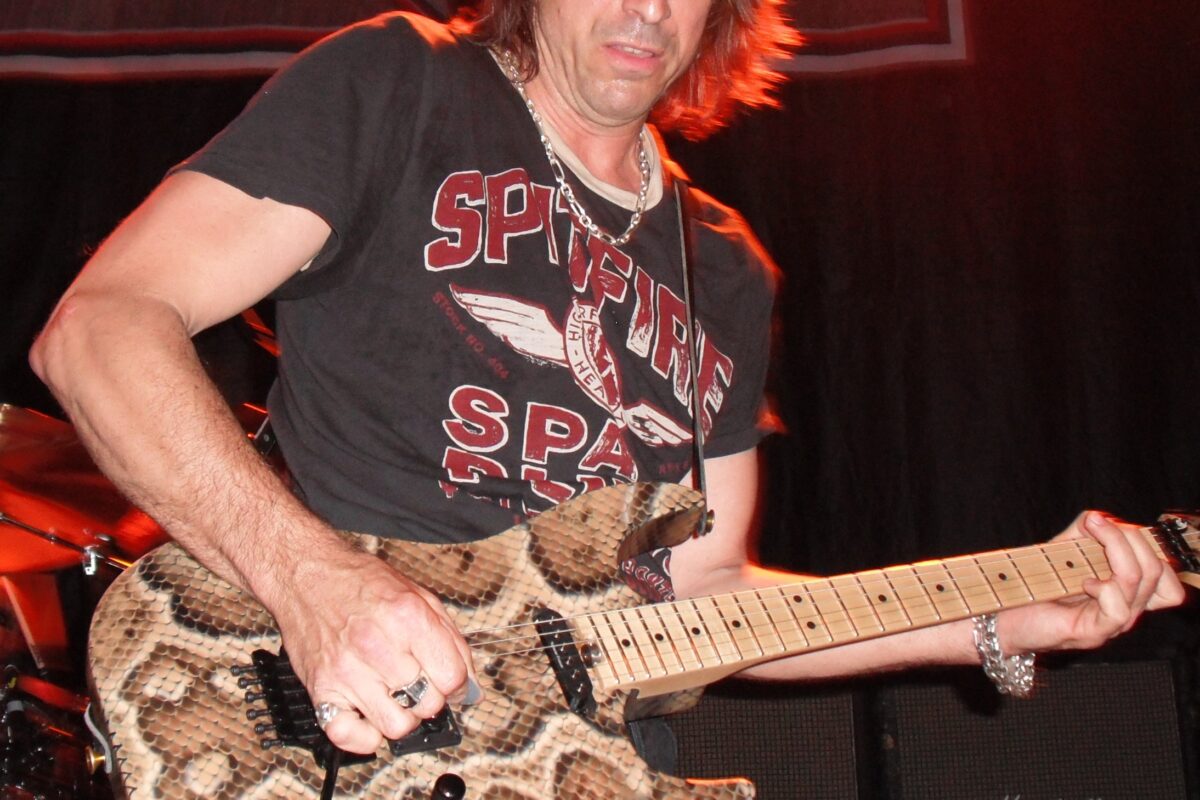
Warren DeMartini Guitars & Gear: The Complete Guide to Ratt’s Torch Guitarist’s Rig
Warren DeMartini guitars & gear: Ratt's Torch guitarist. Charvel Bomber, snakeskin, Jose-modded Plexi, Fender Super Champ, RTM pickup, slapback echo — the complete rig.
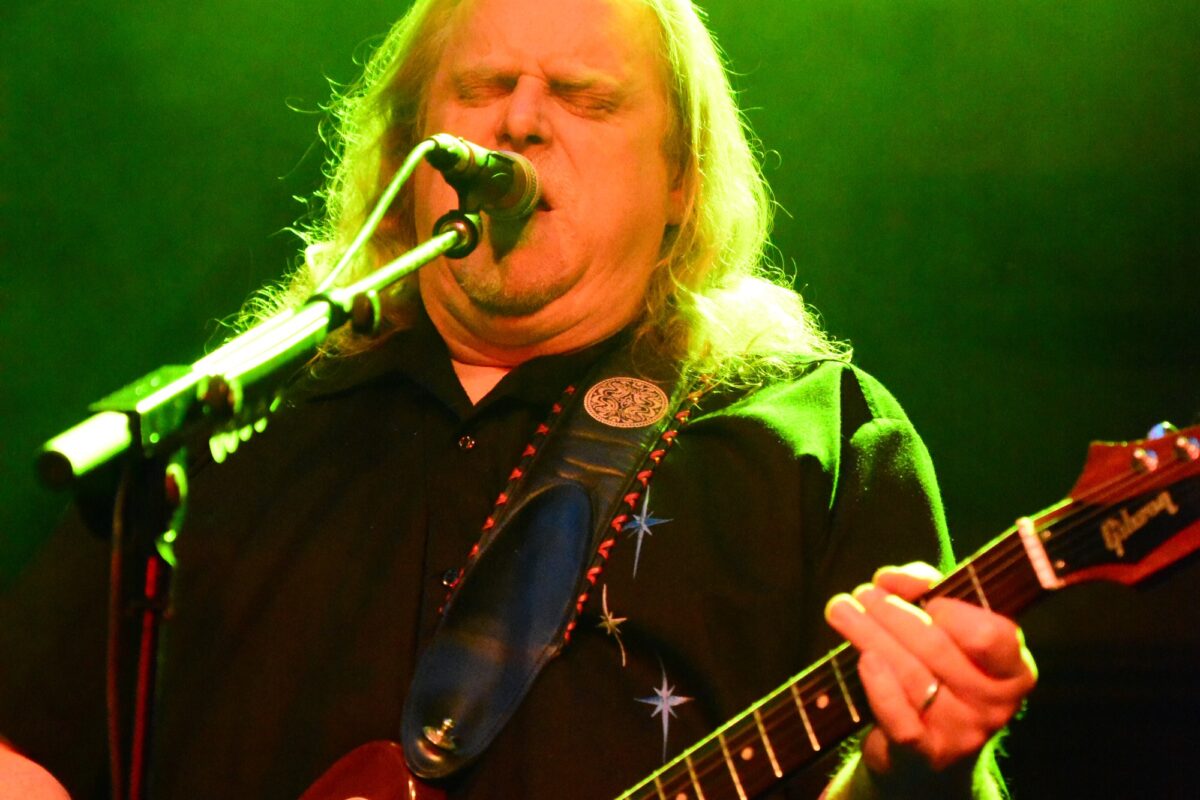
Warren Haynes Guitars & Gear: The Complete Guide to Gov’t Mule’s Guitar Master’s Rig
Warren Haynes' guitars, amps, and effects — the complete guide. Gibson Les Paul Chester, Soldano SLO-100 modified, Klon Centaur, Emma Discombobulator, and how to nail that Gov't Mule blues-rock tone.