
Bilinda Butcher Guitars & Gear: My Bloody Valentine’s Ethereal Voice Complete Rig Guide
Bilinda Butcher guitars gear — Fender Jazzmaster, Deluxe Reverb, Phase 90 deep-dive for My Bloody Valentine's vocalist-guitarist and shoegaze co-architect.
Bilinda Butcher with My Bloody Valentine, ATP Minehead, December 2009.
Bilinda Butcher guitars gear is the story of the most underrated guitar contribution in shoegaze — the equipment and approach of the player whose specific tonal character, guitar voicings, and vocal presence gave My Bloody Valentine its complete dual-identity rather than merely its Kevin Shields-as-protagonist and supporting-cast-of-everyone-else identity. The narrative around MBV has always centered on Shields — his obsessive recording process, his glide technique, his specific gear — to a degree that systematically understates Butcher’s contribution. But the specific quality of Loveless and MBV’s wider catalogue depended on the dual-guitar arrangement: Shields’ more technically adventurous, glide-technique-centred approach needed Butcher’s more conventionally musical and vocally oriented counterpart to give it context and warmth. The wall of guitar that MBV built was not a single monolithic thing but a specific combination of two players’ specific approaches.
The Journey
Her dual role — guitarist and co-vocalist — gave her a specific position in the band analogous to Matthew Heafy’s in Trivium but in a completely different aesthetic context. Where Heafy’s vocalist-guitarist role shaped Trivium’s commercial heavy metal, Butcher’s shaped MBV’s experimental shoegaze — a smaller audience but no less demanding a musical challenge. Her vocal contributions to “Sometimes,” “Blown,” and other MBV recordings gave the band its melodic human voice within the sonic hurricane Shields was constructing, and her guitar contributions gave the hurricane its specific dual-character. This is the complete breakdown of Bilinda Butcher guitars gear, technique, and tonal philosophy.
Background
Bilinda Butcher was born on September 16, 1961, in London, England — a decade after Shields and from the specific London context that gave her a slightly different musical background from his Queens-Dublin formation. She joined My Bloody Valentine in 1987, replacing the band’s previous vocalist and eventually becoming the primary female voice alongside Shields’ contributions. Her arrival gave MBV the specific dual-vocal and dual-guitar character that distinguished the classic lineup — Shields’ more angular, effects-heavy guitar and lower-register voice alongside Butcher’s more melodically conventional guitar and ethereal, higher-register voice.
Her guitar playing developed within the MBV context rather than through an independent career, which gave it a quality of being specifically shaped by and for the band’s aesthetic requirements rather than reflecting a pre-formed musical identity imposed from outside. She absorbed the Jazzmaster-based approach that dominated MBV’s guitar vocabulary, developed her own relationship to the glide technique and the band’s multi-amplifier recording approach, and became the specific musical complement to Shields that the complete MBV sound required.
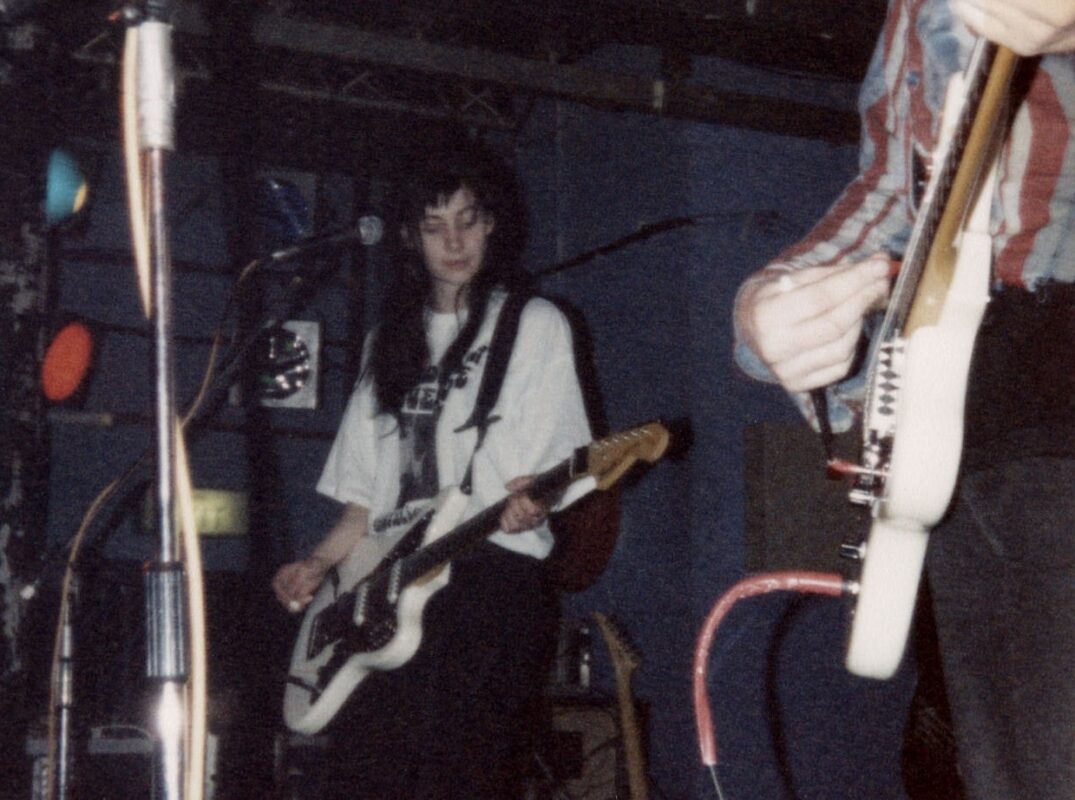
Her contributions to the classic MBV albums — particularly Isn’t Anything (1988) and Loveless (1991) — gave both records specific qualities that would have been absent without her presence. The vocal performances on “Sometimes,” “Blown,” “Loomer,” and other key tracks demonstrated a singer whose specific quality — the combination of melodic accuracy and tonal fragility that gave MBV’s vocals their characteristic quality of barely-held-together emotional directness — was irreplaceable within the band’s aesthetic. Her guitar contributions, though less frequently analyzed than Shields’, gave the complete guitar sound its specific dual character: Shields’ more technically extreme approach given context by Butcher’s more conventionally melodic but equally atmospherically oriented playing.
Bilinda Butcher Guitars Gear: The Complete Rig
Guitars
Bilinda Butcher’s primary guitar, consistent with My Bloody Valentine’s overall aesthetic approach, was the Fender Jazzmaster — the same platform that Shields used, giving the band’s guitar sound a specific unity of tonal character while the two players’ different approaches to the instrument gave individual distinction. Her specific Jazzmaster examples were typically mid-to-late 1960s production instruments — the same period as Shields’ primary instruments, giving the band’s guitar tone the consistent character of a defined production era’s specifications. The Jazzmaster’s warm, somewhat “woofy” single-coil pickups, the floating bridge’s mechanical complexity, and the offset body’s specific acoustic resonance gave her playing the same foundational tonal qualities as Shields’ — the difference between their sounds coming from their different playing techniques and different amplifier and effects approaches rather than from fundamentally different instruments.
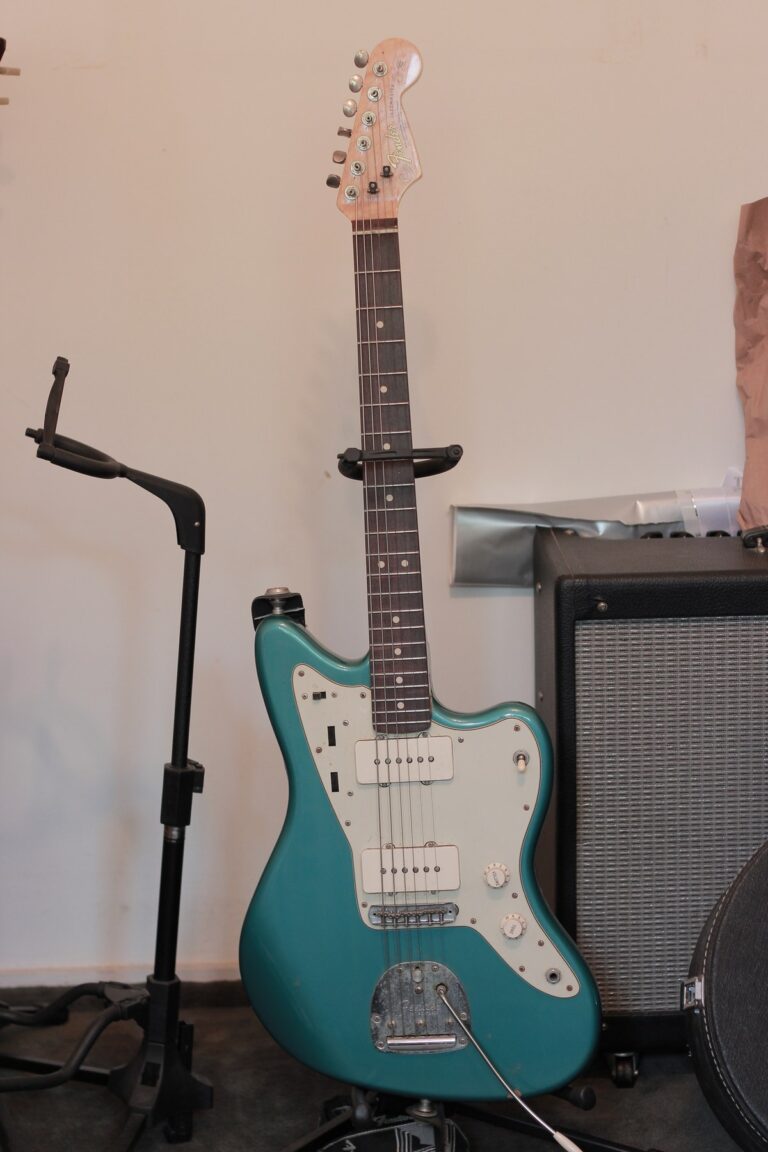
Her specific relationship with the Jazzmaster tremolo arm was different from Shields’ — while she used the arm for expressive vibrato and subtle pitch variation consistent with the band’s aesthetic, she didn’t deploy the continuous pressure of the full glide technique as Shields did. Her more selective tremolo use gave her contributions a slightly more conventional, melodically stable quality that provided an anchor within Shields’ more continuous pitch-swimming approach. This distinction was musically functional: without Butcher’s slightly more stable pitch reference, the complete guitar sound might have lacked the melodic clarity necessary for the tonal complexity to resolve into music rather than noise.
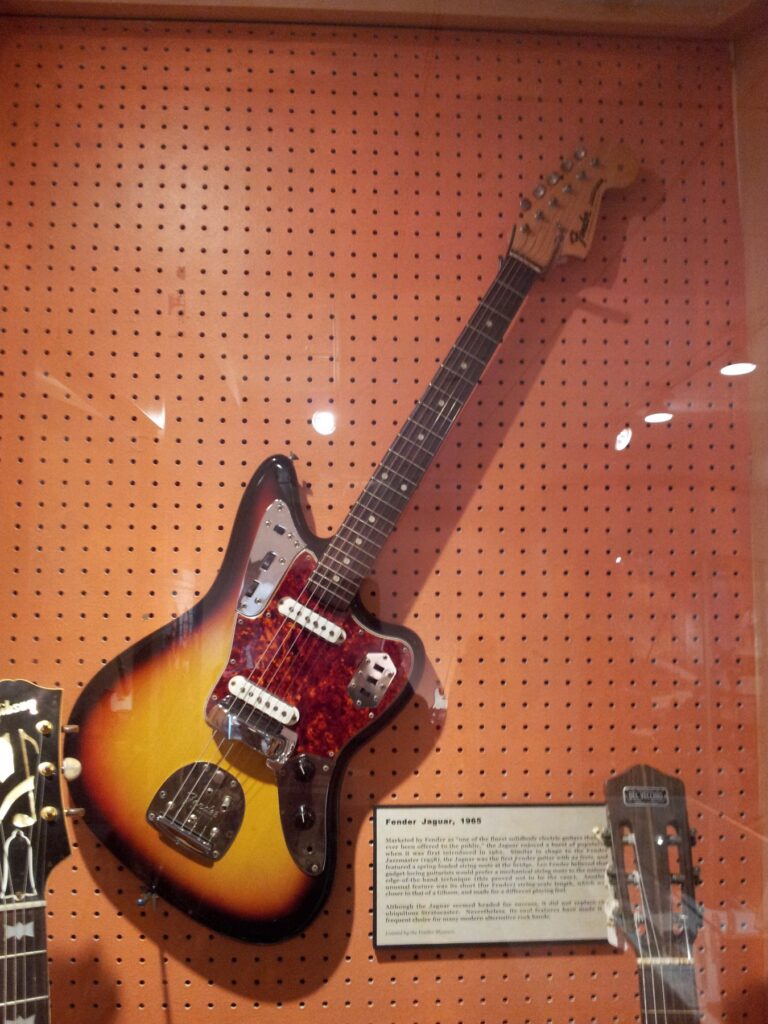
Fender Jaguars — the Jazzmaster’s sister instrument with a shorter 24-inch scale, similar offset body, and Jaguar-specific pickups with a different tonal character from the Jazzmaster’s — appeared in Butcher’s documented setup for specific applications. The Jaguar’s shorter scale gave a slightly different playing feel, and the Jaguar-specific pickups’ brighter, more aggressive character gave useful tonal variety for specific passages requiring more presence than the Jazzmaster’s warmer output.
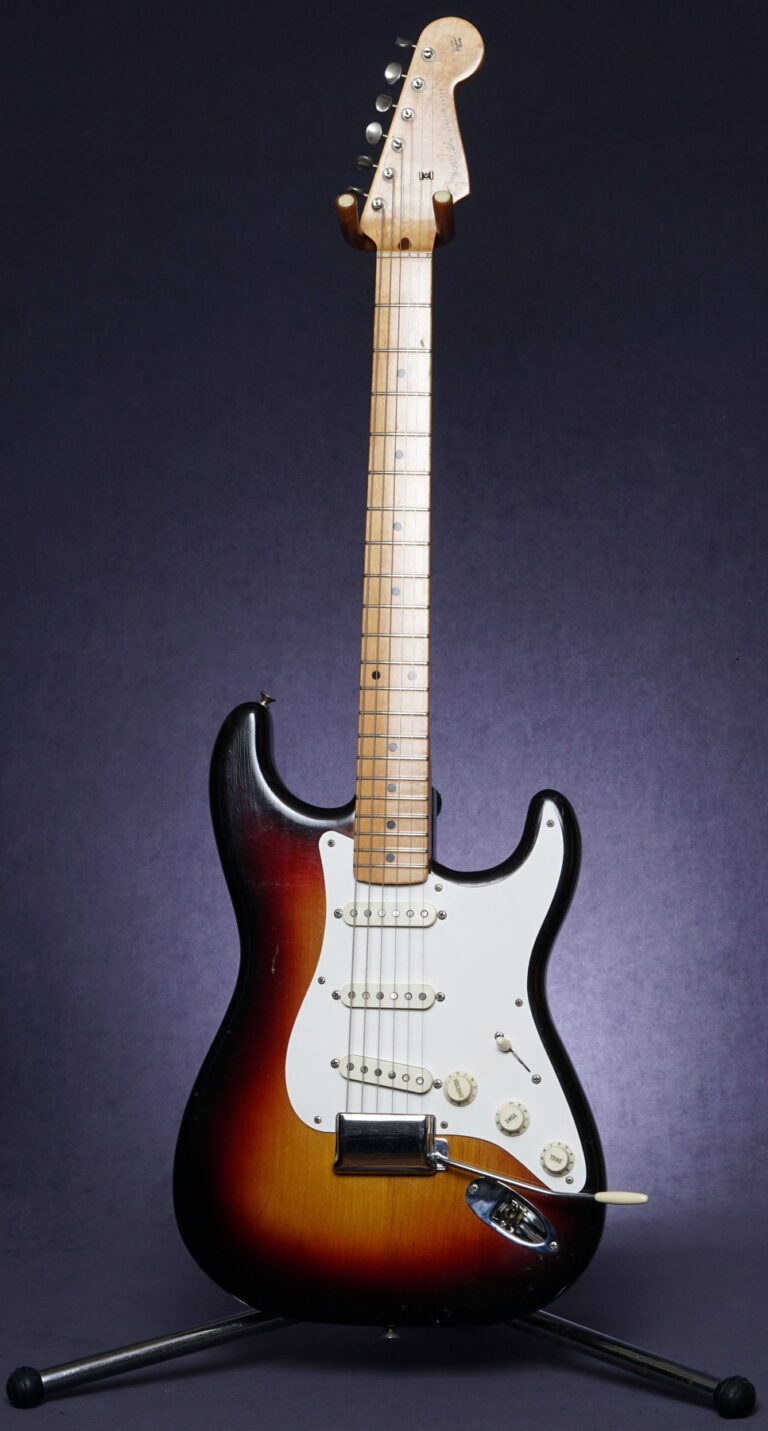
Fender Stratocasters appeared in Butcher’s setup for specific applications where the three-pickup configuration and the Stratocaster’s more complex tonal palette (particularly the in-between pickup positions’ characteristic “quack”) gave useful alternatives to the Jazzmaster’s more homogeneous pickup character. Her Strat use was selective rather than primary.
Like Shields, Butcher used various modified instruments for specific studio and live applications — instruments with custom electronics or hardware modifications giving tonal qualities not available from stock configurations. The MBV approach to instrument modification reflected the same willingness to treat instruments as tools to be adapted rather than objects to be preserved that characterised Shields’ approach.
The vintage-specification Jazzmaster single-coil pickups in Butcher’s instruments gave the same foundational tonal character documented in the Kevin Shields article — approximately 8k ohms DC resistance, Alnico V magnets, wide aperture. The consistency of this pickup specification between both guitarists’ instruments gave MBV’s guitar sound its specific tonal unity even as the players’ different approaches created distinction within that unity.
Butcher used standard light-gauge strings (.010–.046) on her Jazzmaster instruments — consistent with MBV’s general approach to string gauge and with the tremolo arm technique’s requirement for light strings giving easy arm movement and responsive pitch variation.
Amps
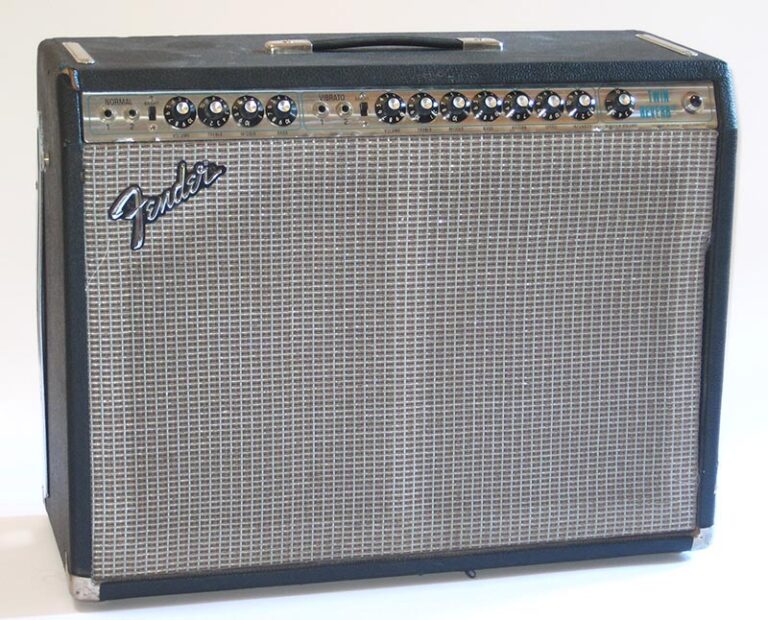
Butcher’s primary amplification, consistent with MBV’s overall Fender-clean aesthetic, used Fender valve amplifiers — the Twin Reverb’s clean headroom for most applications, the Deluxe Reverb’s earlier saturation for applications requiring gentle amplifier warmth. Her Fender use gave her guitar contributions the same clean, transparent American character documented in Shields’ primary setup, though her specific Fender models and their settings reflected her different tonal requirements as a more melodically conventional guitarist within the shared band aesthetic.
Marshall amplifiers appeared in Butcher’s documented setup for specific overdrive applications — the British EL34 character giving her portions of the multi-amp blend approach that MBV used in the studio. Her Marshall use was typically at lower gain settings than Shields’ — giving gentle British overdrive rather than the heavier saturation appropriate to the more aggressive passages that Shields handled.
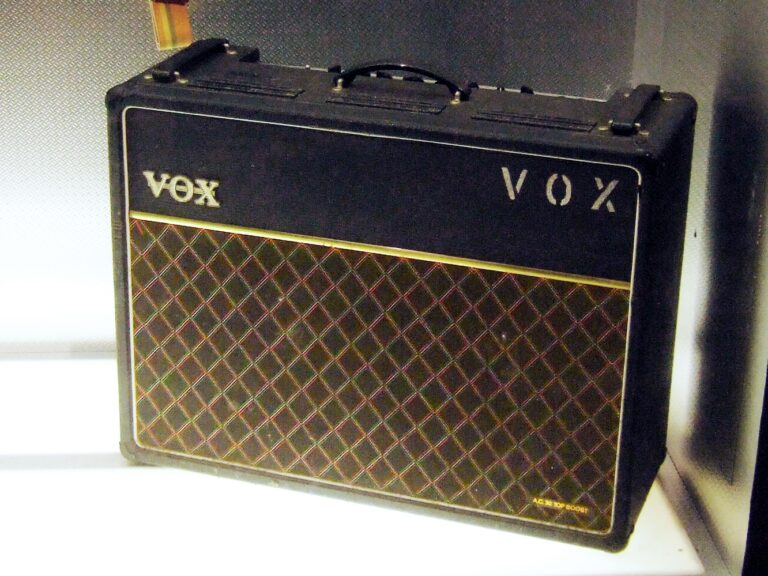
The Vox AC30 appeared in Butcher’s setup for specific applications where the class-A EL84 character and the AC30’s characteristic chime suited the more melodically conventional, chord-voicing-focused guitar work that she contributed to certain arrangements. The AC30’s specific compression and warmth gave her chord passages a rounded, full character appropriate to the accompaniment role she often played within the dual-guitar arrangement.
Orange amplifiers appeared for specific overdrive applications in her documented setup — the Orange’s compressed, warm character giving useful tonal territory between the clean Fender and the more aggressive Marshall alternatives.
Effects
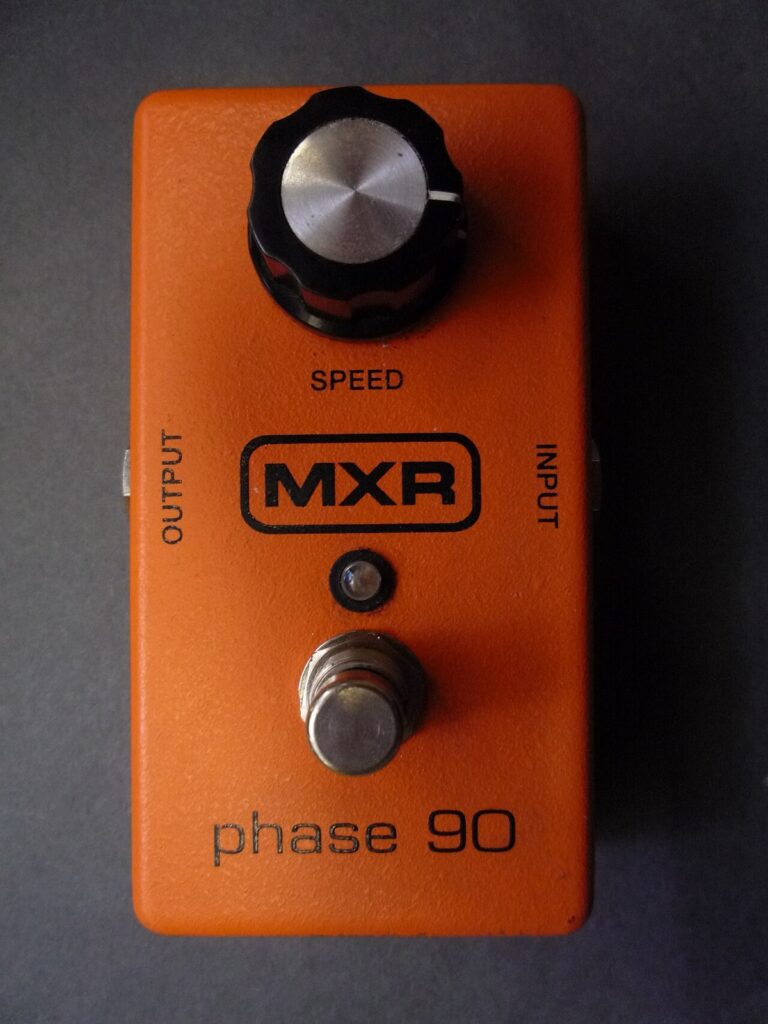
The MXR Phase 90 was as central to Butcher’s signal chain as to Shields’ — the slow-speed dimensional sweep being a defining element of MBV’s complete guitar character rather than belonging to either guitarist exclusively. Her Phase 90 settings paralleled Shields’: very slow speed (1–2Hz) for the barely-perceptible dimensional warmth appropriate to the shoegaze aesthetic’s emphasis on atmospheric immersion over obvious modulation effects.
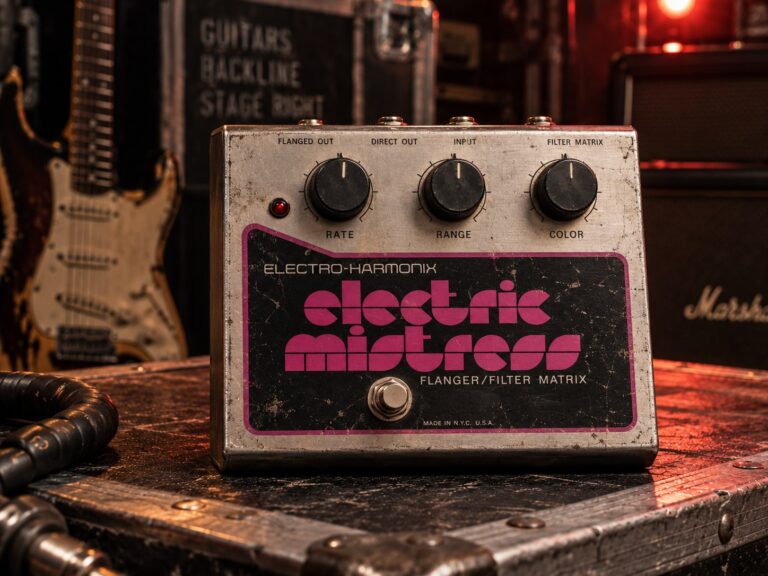
The Electric Mistress appeared in Butcher’s setup for specific atmospheric flanger applications — the BBD-based flanging giving her guitar contributions the same liquid, swimming textural quality documented in multiple previous articles. Her Electric Mistress use was consistent with the band’s overall aesthetic approach to effects: reaching for specific devices when their particular character served the specific musical moment.
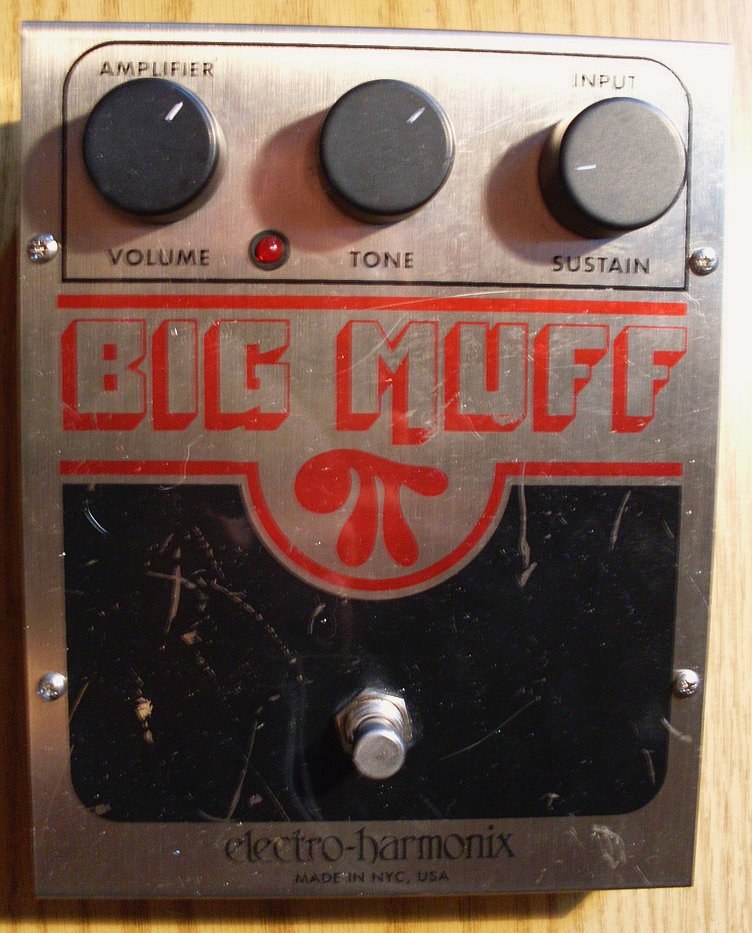
The Big Muff Pi appeared in Butcher’s signal chain for specific fuzz applications in the band’s heavier passages. Her Big Muff use was typically at lower sustain settings than Shields’ — giving a somewhat gentler fuzz character appropriate to her more melodically oriented contributions within the combined guitar sound.
Boss DD-series digital delay appeared in Butcher’s setup for specific atmospheric delay applications — creating spatial depth in her guitar contributions that complemented Shields’ own delay and reverb processing. Her delay use was musically specific: creating the spatial dimension that gave her melodic guitar lines their atmospheric quality within the complete MBV sonic environment.
Multiple reverb sources — the built-in spring reverb of her Fender amplifiers and standalone or rack-mounted reverb processors — gave her guitar contributions the spatial dimension central to the shoegaze aesthetic. Her reverb settings were typically set for longer, more diffuse decay than is conventional in melodic guitar contexts, consistent with MBV’s emphasis on sonic immersion over melodic clarity.
Standard Boss TU-2 chromatic tuner for accurate on-stage tuning — the consistent choice across multiple players in this series for its reliability. The specific challenge of maintaining accurate tuning with the Jazzmaster’s floating bridge (which requires specific calibration for each string’s specific saddle position) made a reliable tuner particularly important in MBV’s live context.

Various other vintage Electro-Harmonix devices appeared in Butcher’s setup for specific applications — Small Clone chorus, Memory Man delay — consistent with MBV’s general embrace of the full range of available analog effects for specific purposes.
Playing Style & Tone Philosophy
Bilinda Butcher’s specific contribution to My Bloody Valentine’s guitar sound was the human melodic element within the wall of texture and noise — the player whose slightly more conventionally musical approach gave the band’s sonic architecture its melodic reference points without which the complete picture would have been genuinely difficult to follow as music rather than pure texture. Her guitar playing was not technically less sophisticated than Shields’ but it was deployed toward a different musical purpose: where Shields was building sonic environments, Butcher was providing the melodic and harmonic content that gave those environments their musical structure.
Her chord voicings reflected both the band’s shared aesthetic framework and her own melodic sensibility. The specific chord shapes she used — fuller voicings than Shields’ more texture-oriented approach, with specific chord tones voiced to give clear melodic top notes — gave the arrangements their harmonic information within the sonic density. Her ability to make specific chords audible and harmonically clear within the overwhelming volume and effects processing of MBV’s sound reflected genuine musical intelligence: choosing voicings that would survive the sonic environment’s specific challenges rather than voicings that might have been harmonically richer in a cleaner context.
Her tremolo arm technique — more selective and more expressive than Shields’ continuous glide — gave her guitar contributions a different kind of pitch movement from his. Where his continuous glide created the background shimmer that gave the sound its oceanic quality, her more selective tremolo arm use created specific expressive pitch variations — the slight down-and-back of a chord’s resolution, the gentle vibrato of a sustained melodic note — that were specifically musical in their function. This distinction was important: Shields’ technique created the sonic environment; Butcher’s technique operated within that environment as a melodic voice.
Her vocal approach was the most public element of her musical contribution — the specific quality of her voice that gave MBV’s most celebrated recordings their emotional character. The fragility, the slight pitch uncertainty (not a technical flaw but a specific quality that gave the voice its human, unprocessed character within the heavily processed sonic environment), and the specific tonal quality of her middle register gave songs like “Sometimes” and “Blown” their emotional directness. Her voice worked against the sonic hurricane rather than with it — a small, fragile human presence within an overwhelming sonic environment — and this contrast was itself part of the band’s aesthetic statement.
Tonally, Bilinda Butcher guitars gear philosophy reflected a somewhat different version of the MBV aesthetic from Shields’ — the same foundational elements (Jazzmaster, Fender amplifier, Phase 90, Electric Mistress) deployed toward a more melodically conventional and vocally supportive purpose. Her signal chain was built for the same sonic environment but approached it as a musician whose primary identity was as much vocal as instrumental, giving her guitar work a quality of serving both the sonic architecture and the melodic structure that Shields’ more purely instrumental approach didn’t need to balance in the same way.
The specific challenge of being the “other guitarist” in My Bloody Valentine — the dual-guitar dynamic in which Shields’ obsessive technical approach and theoretical primacy in the band’s creative process consistently overshadowed Butcher’s contribution — is worth examining as a specific professional and artistic challenge that shaped how Bilinda Butcher guitars gear was deployed within the band’s creative system. Many accounts of MBV focus on Shields so completely that Butcher functions as a supporting player without distinct musical identity; this account specifically disputes that characterisation. The specific tonal qualities on Loveless and the band’s other recordings that can be attributed to her contributions — the chord voicings that gave the sonic environments their harmonic structure, the melodic guitar lines that provided melodic reference within the texture, the vocal performances that gave the music its human emotional presence — were not incidental to the album’s achievement but central to it. A Loveless made by Shields alone — however technically extraordinary his individual contributions — would have been a fundamentally different record: more technically fascinating, perhaps, but less emotionally complete. Butcher’s specific contributions were what made the technical achievements emotionally meaningful rather than merely sonically extraordinary.

The Jazzmaster Jaguar family’s relationship to the alternative and indie rock guitar culture of the 1980s and 1990s — and why MBV’s choice of these instruments was culturally specific as well as tonally motivated — reflects a particular moment in the history of the electric guitar. The Jazzmaster and Jaguar had been commercial failures when introduced (the Jazzmaster in 1958, the Jaguar in 1962) — they failed to appeal to the jazz players they were designed for and were priced too high for the rock players who actually wanted Stratocasters and Telecasters. By the 1980s, they were available cheaply in pawn shops and used-instrument stores because mainstream players had moved to other instruments and the vintage market hadn’t yet recognized their value. This made them specifically accessible to musicians in the early alternative and indie rock scenes who had limited budgets — Kurt Cobain, J Mascis, MBV’s players, and others acquired Jazzmasters and Jaguars cheaply precisely because mainstream rock had abandoned them. The instruments’ specific tonal qualities — the warm, slightly “woofy” pickup character, the floating bridge’s mechanical complexity, the offset body’s specific acoustic resonance — were well-suited to the alternative and indie aesthetic that valued imperfection and organic character over the controlled, polished tones of mainstream rock. For Butcher and Shields both, the Jazzmaster was the right instrument at the right price at the right cultural moment, and its specific technical characteristics aligned with the specific sonic ambitions of the MBV approach.
The challenge of tuning a Jazzmaster in a live performance context — particularly relevant to Butcher as both guitarist and vocalist, requiring maintained accuracy across multiple dimensions simultaneously — reflects a specific practical dimension of the instrument’s mechanical design. The Jazzmaster’s floating bridge (resting on two posts without any mechanical locking) can move as the tremolo arm is used, potentially changing the string’s intonation at the saddle if the bridge shifts slightly from its calibrated position. The strings’ tendency to slip from the saddle slots (a known Jazzmaster characteristic, particularly on vintage instruments with their smaller saddle slots) could cause sudden tuning changes during performance. The floating bridge also required specific maintenance calibration — each string saddle needed to be set to the correct intonation position for the specific string gauge, tuning, and scale-length combination — and could require readjustment more frequently than fixed-bridge alternatives. For Butcher’s live performance, managing these Jazzmaster-specific tuning challenges alongside the demands of singing and playing simultaneously required the same awareness of instrument behavior that all professional musicians who use complex instruments develop through experience. The Boss TU-2 chromatic tuner gave accurate reference for quick checks between songs, but the ongoing maintenance of intonation during performance required the physical awareness of the instrument’s behavior that only extended live experience with a specific instrument provides. Bilinda Butcher guitars gear, in its Jazzmaster-centered form, was an instrument system that required specific knowledge and ongoing attention — the practical cost of the specific tonal qualities the instruments provided.
The Vox AC30’s specific role in Butcher’s amplifier setup — and the contrast between the AC30’s character and the Fender and Marshall alternatives in the MBV context — is worth expanding because the AC30’s specific qualities gave her chord-voicing-focused contributions their particular warmth and roundness. The AC30’s class-A output stage — all four EL84 tubes operating continuously, without the crossover distortion of class-AB designs — gave natural compression that rounded the attack of chords slightly, making chord voicings sound more cohesive and less aggressive than through a Marshall’s harder initial attack. For Butcher’s more harmonically complete chord voicings — the full triads and inversions that gave the arrangements their harmonic information — this rounding quality was specifically useful: the AC30 gave the chords a warmth and completeness that the Marshall’s more aggressive initial character would have made seem harder and more confrontational. The AC30’s specific upper-midrange chime quality — the EL84’s characteristic brightness in the 3–6kHz region — also gave the Jazzmaster pickups’ warm low-mid character a complementary brightness that kept the chord voicings audible through the heavy reverb and effects processing of the MBV sonic environment without requiring additional EQ intervention.
The broader question of how female instrumentalists are discussed in rock music — and the specific under-documentation of Butcher’s contributions relative to Shields’ — reflects a pattern in which female contributions to rock music’s foundational sounds are systematically underrepresented in the discourse that surrounds them. This pattern is not unique to MBV; throughout rock history, female instrumentalists have consistently received less technical documentation, less gear-focused discussion, and less recognition for their specific musical contributions than their male counterparts in the same bands and scenes. This article’s specific focus on Bilinda Butcher guitars gear — treating her guitar and amp choices with the same level of technical detail applied to Shields’ setup — reflects a deliberate choice to document her specific musical contribution with the seriousness it deserves rather than treating her as a supporting figure in someone else’s story.
How to Sound Like Bilinda Butcher
Guitar Approach
A Fender Jazzmaster (same specification as documented for Shields — 1960s vintage or accurate current production equivalent) with vintage-spec Jazzmaster single-coil pickups and the floating bridge tremolo is the foundational instrument for Bilinda Butcher guitars gear tone. The key distinction from Shields’ approach: use the tremolo arm more selectively — for specific expressive pitch variations and gentle vibrato rather than continuous pressure. Light strings (.010–.046) for easy arm movement. Use the neck pickup as the primary voice for melodic passages — its warm, vocal quality suits the melodic role Butcher plays within the MBV dual-guitar arrangement.
Focus on chord voicings that give clear melodic top notes within the harmonic structure — choosing specific inversions and voicing positions that keep the melody audible within the heavy reverb and effects processing of the MBV aesthetic. Study the specific voicings on Loveless recordings to understand how to make chords harmonically clear within an overwhelming sonic context.
Amp Approach
A Fender Deluxe Reverb (22 watts, 6V6, single 12-inch speaker, tube spring reverb) or Twin Reverb (for higher headroom), set clean with moderate spring reverb. The amplifier should maintain clean character through most playing levels, with the Phase 90’s atmospheric sweep as the primary tonal modifier. Gentle overdrive from a Marshall or low-gain pedal serves specific heavier passages; the clean Fender character is the primary foundation.
| Control | Setting (0–10) | Notes |
|---|---|---|
| Deluxe/Twin Reverb Volume | 4–5 | Clean — transparent platform for the Jazzmaster’s warm single-coil character |
| Reverb | 5–6 | More reverb than typical — atmospheric spatial immersion appropriate to shoegaze |
| Treble | 5–6 | Present — Jazzmaster’s warm character needs some treble for melodic clarity |
| Bass | 5 | Neutral — Jazzmaster’s wide-aperture pickups give natural bass; balance rather than boost |
| Phase 90 Speed | 1–2 | Very slow — atmospheric dimensional sweep as near-constant presence |
| Digital reverb decay | Long (3–5 seconds) | Long reverb tail for maximum immersive quality — the space should feel permanent |
| Tremolo arm use | Selective, expressive | Specific expressive pitch variations and gentle vibrato — not continuous glide pressure |
| Big Muff Sustain (heavy passages) | 5–6 | Moderate — gentler fuzz than Shields’; melodic content should remain audible through fuzz |
Fender amplifier clean with generous spring reverb as the foundation. MXR Phase 90 at very slow speed as a constant atmospheric element. Boss DD-series delay for spatial depth on melodic passages. Electric Mistress selectively for specific atmospheric flanger textures. Big Muff Pi at moderate settings for heavier passages. Selective, expressive tremolo arm use for specific pitch variations rather than continuous glide pressure. The most important principle: prioritise melodic clarity within the atmospheric context — Butcher’s role was to give the sonic environment its melodic human voice, and every element of the setup should serve that specific function.
Influence & Legacy
Bilinda Butcher’s influence is both direct and indirect — direct through the musicians who specifically identified her vocal and guitar contributions as inspiring their own approaches to the shoegaze aesthetic, indirect through the broader influence of the MBV recordings she contributed to on the complete development of guitar-based atmospheric music from the 1990s onward.
Her specific contribution to shoegaze’s development was the demonstration that the genre’s walls of guitar noise could contain melodic human presence without compromising the sonic architecture’s overwhelming quality — that the voice and the guitar could operate simultaneously within the same aesthetic framework, each maintaining its distinct identity within the shared sonic environment. Every subsequent shoegaze vocalist-guitarist who balanced tonal atmospherics with melodic expressiveness owed something to her specific model of how this balance could be achieved.
The comparison with Kevin Shields — her direct MBV guitar partner — is the essential reference, illuminating how the complete MBV guitar sound was constructed from two complementary rather than identical approaches. Shields’ more technically obsessive, glide-technique-centred approach needed Butcher’s more melodically conventional complement to give it musical context; Butcher’s more conventional approach needed Shields’ sonic environment to give it the atmospheric depth that distinguished her contributions from those of a straightforward melodic guitarist. Each made the other’s work more fully realised. The parallel with Thurston Moore — whose similar role as one half of a dual-guitar partnership (with Lee Ranaldo in Sonic Youth) that created sonic environments beyond what either guitarist alone could produce — shows how the dual-guitar approach was a specific and particularly fruitful creative format in the experimental guitar music of the late 1980s and early 1990s. And the connection to Tanya Donelly — the Throwing Muses, Breeders, and Belly guitarist whose dual-guitar partnerships in multiple bands gave her a similar experience of working within a collaborative guitar framework — places Bilinda Butcher guitars gear in the broader tradition of guitarists whose most distinctive contributions were made in specific creative partnerships rather than as solo voices.

Frequently Asked Questions: Bilinda Butcher Guitars & Gear
What guitar does Bilinda Butcher play?
Bilinda Butcher’s primary guitar is the Fender Jazzmaster — the same platform as Kevin Shields, giving MBV’s guitar sound a specific tonal unity. Her specific instruments were typically mid-to-late 1960s vintage examples with original Jazzmaster pickups and the floating bridge tremolo. She used the tremolo arm more selectively than Shields’ continuous glide technique — deploying it for specific expressive pitch variations and gentle vibrato rather than constant pressure. Fender Jaguars and Stratocasters served specific alternative applications.
What amplifier does Bilinda Butcher use?
Butcher’s primary amplification was Fender valve amplifiers — the Twin Reverb for higher headroom applications, the Deluxe Reverb for smaller-scale use requiring earlier natural saturation. Her Fender setup was used with generous spring reverb consistent with MBV’s atmospheric approach. Marshall amplifiers appeared for gentle British overdrive on specific passages, and the Vox AC30 provided the class-A EL84 character for specific chord-voicing-focused applications.
What was Bilinda Butcher’s vocal role in My Bloody Valentine?
Butcher served as one of MBV’s two primary vocalists — her higher-register, more conventionally melodic voice complementing Shields’ lower-register vocal contributions. Her vocal performances on tracks like “Sometimes,” “Blown,” and “Loomer” gave those recordings their specific emotional character: the combination of melodic accuracy and tonal fragility that gave MBV’s vocals their characteristic quality of barely-held-together emotional directness. Her voice operated within the band’s sonic hurricane as a small, fragile human presence, and this contrast between vocal fragility and sonic overwhelming was a defining element of the MBV aesthetic.
How did Butcher’s guitar approach differ from Shields’?
The key distinction was in the deployment of the tremolo arm and the musical purpose of the guitar work. Shields used continuous arm pressure to create the glide technique’s pitch swimming; Butcher used the arm more selectively for expressive vibrato and specific pitch variations. Shields’ guitar work was more texture-and-environment oriented; Butcher’s was more melodically conventional and harmonically informative, providing the chord voicings and melodic reference points that gave the sonic environment its musical structure. Her chord voicings prioritised clear melodic top notes audible through the heavy effects processing; Shields’ approach prioritised overall sonic character over harmonic clarity.
When did Bilinda Butcher join My Bloody Valentine?
Butcher joined My Bloody Valentine in 1987, replacing the band’s previous vocalist and becoming the primary female voice in the classic lineup. Her arrival gave MBV the dual-vocal and dual-guitar character that defined their most celebrated recordings. She appeared on Isn’t Anything (1988), Loveless (1991), and the 2013 follow-up m b v, representing the complete classic-era and contemporary MBV discography.
What is the significance of the dual-guitar arrangement in MBV?
The dual-guitar arrangement was central to MBV’s specific sonic character — not a redundancy but a specific creative system in which two players’ different approaches to the same aesthetic framework created a combined result neither alone could achieve. Shields’ glide technique created the background shimmer and sonic environment; Butcher’s more melodically conventional approach gave that environment its harmonic structure and melodic reference points. Without Shields, the band would have been a melodic guitar-pop act of limited distinction; without Butcher, it would have been a technically fascinating noise project without the melodic human presence that made the technical achievements emotionally meaningful.
What is shoegaze and why is My Bloody Valentine important to it?
Shoegaze is a genre of guitar-based music characterised by dense layers of distorted, heavily effected guitar, ethereal vocals often buried within the instrumental mix, and an emphasis on sonic texture and atmospheric immersion over melodic clarity or rhythmic drive. The name derives from the players’ tendency to stare at their pedalboards during live performances. My Bloody Valentine, alongside Slowdive, Ride, and Lush, defined the genre in the late 1980s and early 1990s. Loveless is generally considered the genre’s defining document — the album that most completely realised the aesthetic’s specific qualities and that demonstrated what the guitar and recording studio could achieve when treated as primary instruments rather than means to a conventional end.
The specific quality of Butcher’s vocal performances on Loveless — and its relationship to her guitar approach — reflects an interesting principle about how the same performer’s roles as vocalist and guitarist can interact and reinforce each other. Her vocal style — the fragility, the slight pitch uncertainty, the quality of a voice operating at the edge of its comfortable range — shared specific qualities with her guitar approach: both were slightly less perfectly controlled, slightly more humanly imperfect than might be considered optimal in a more technically perfectionist context. This consistency between vocal and guitar approach was not accidental; it reflected a coherent aesthetic position in which human imperfection was a musical resource rather than a technical failure. The slight pitch uncertainty of a voice singing within its range’s upper limits, combined with the pitch swimming of a Jazzmaster tremolo arm technique, gave a specific quality of pitch uncertainty — not out of tune but moving around specific pitches in ways that gave the music a specific quality of human fragility against the overwhelming sonic background. This quality — the human voice and the guitar sharing a kind of trembling pitch instability within the certain, massive context of the sonic environment — was one of the most specific and most effective elements of MBV’s aesthetic, and Bilinda Butcher guitars gear and vocal approach were jointly responsible for it.
The delay between Loveless (1991) and m b v (2013) — and how Butcher maintained her musical identity and technical readiness across a 22-year gap — presents an interesting parallel to the James Williamson hiatus documented earlier in this series. Where Williamson pursued a technology career during his musical hiatus, Butcher’s activities during the MBV silence are less publicly documented, but her ability to return to the band’s aesthetic for the 2013 recordings with the same quality of contribution as the classic period suggested that her musical development had continued during the gap rather than merely being preserved in its 1991 form. The technical demands of the Jazzmaster — the floating bridge maintenance, the tuning stability management, the tremolo technique’s physical requirements — were maintained or re-developed for the recording; the vocal approach was either maintained through private practice or naturally recovered when the creative context returned. m b v‘s reception — generally very positive, with critical consensus that it was a worthy follow-up to Loveless — validated both Shields’ and Butcher’s ability to return to the aesthetic after the extended absence without compromising its essential character. Bilinda Butcher guitars gear, in its 2013 return, demonstrated that the specific qualities that had defined the classic period were not merely products of a specific time and place but genuine musical capabilities that could be re-activated when the creative context was right.
The way MBV’s dual-guitar approach was captured in studio recording — and Butcher’s specific contributions within that recording approach — gives a final dimension of Bilinda Butcher guitars gear worth examining. In the multi-amplifier, multi-track recording methodology that gave Loveless its specific character, Butcher’s guitar contributions were typically recorded with similar levels of processing complexity to Shields’ but deployed toward different musical purposes. Where his tracks created the background shimmer through layered glide technique passes, her tracks provided the harmonic and melodic framework within the shimmer — specific chord passages, specific melodic lines, specific voice-leading connections that gave the sonic environment its musical structure. The mixing decisions that placed each player’s contributions in the complete picture — volume levels, panning positions, effects treatment in the mix — were part of the creative process that Shields led but in which Butcher’s contributions were indispensable structural elements. The complete Loveless mix was not Shields’ sonic vision to which Butcher’s contributions were added but a collaborative construction in which each player’s specific musical role was essential to the complete result. Bilinda Butcher guitars gear, in the complete Loveless context, was the specific equipment system that enabled the melodic and harmonic structural contributions that made the sonic environment into music rather than texture alone.
One final note on Bilinda Butcher guitars gear that is worth stating explicitly: the fact that less is publicly documented about her specific equipment choices than about Shields’ reflects the broader documentation gap regarding female instrumentalists in rock music rather than any lack of specificity in her actual gear approach. Professional musicians develop specific, considered relationships to their instruments and equipment through years of performance and recording experience, and Butcher’s development of her specific Jazzmaster approach — the particular instruments she preferred, the specific amplifier combinations she used, the effects she reached for in specific musical contexts — was as deliberate and as considered as Shields’ more extensively documented approach. That the documentation available does not capture this specificity in full detail is a failure of the documentation rather than a reflection of the musician’s approach. This article treats Bilinda Butcher guitars gear with the same level of technical and musical seriousness applied to every other player in this series, and that seriousness is what the contribution deserves.
The specific quality of MBV’s live performances — and Butcher’s role within them — gives additional context for understanding how Bilinda Butcher guitars gear was deployed in a non-studio environment. MBV live shows were famous for their extraordinary volume — among the loudest in rock music, with reports of audiences suffering temporary hearing loss and earplugs being routinely distributed at the door. Within this sonic onslaught, Butcher’s role was to maintain the melodic and harmonic clarity that gave the live set its musical structure rather than collapsing into undifferentiated sonic mass. Her ability to play chord voicings and melodic lines with sufficient authority to be musically audible within the extreme volume of a live MBV performance — while simultaneously singing parts that needed to register above the wall of guitar — reflected a level of professional competence and physical resilience that is rarely acknowledged in accounts that focus exclusively on the volume’s overwhelming quality. The Jazzmaster’s specific floating bridge management, the amplifier settings that gave her contributions sufficient presence within the band’s complete sonic mass, and the vocal technique required to perform at extreme volume without damaging her voice — all of these were specific professional challenges that Butcher managed across years of MBV touring with the same quietness of achievement that characterised her contribution to the recorded work.
The Electro-Harmonix Small Clone chorus — one of the supplementary effects documented in Butcher’s setup — deserves brief technical distinction from the Boss CE-2 documented for many other players in this series, because the two BBD-based chorus pedals give different character despite similar basic operating principles. The Small Clone uses a single MN3007 BBD chip (the same device used in the Electric Mistress flanger) with a simple LFO circuit, giving a warm, relatively thick chorus effect that was particularly effective at slower speeds where the pitch modulation gave a wide, full-sounding chorus rather than the tremolo-like quality that very slow speeds produce on some chorus designs. The CE-2’s more sophisticated circuit gave more even, more controlled chorus at higher speeds; the Small Clone’s simpler circuit gave a specific character at slower speeds that players described as “dreamy” or “deep” — qualities specifically appropriate to the shoegaze aesthetic’s emphasis on sonic depth and immersion. For Butcher’s chord-voicing applications in the MBV context, the Small Clone’s specific warm, deep chorus character gave chord passages an additional dimension of spatial warmth that complemented the Phase 90’s dimensional sweep and the reverb’s spatial depth. The combination of three different modulation types — phase (Phase 90), chorus (Small Clone), and flange (Electric Mistress), each used selectively for different specific purposes — gave her signal chain a palette of modulation options appropriate to the range of atmospheric effects required across MBV’s complete recorded catalogue.
Image credits
- Kevin Shields: Julio Enriquez, Wikimedia Commons, CC BY 2.0.
- Top image: Bilinda Butcher performing with My Bloody Valentine at ATP, Minehead, December 2009. Photo: jaswooduk, via Wikimedia Commons, CC BY 2.0. Full original frame retained; proportionally resized for display. No crop or retouch by GuitarGangsters.
- Bilinda Butcher: photo by Graham Racher, via Wikimedia Commons, CC BY-SA 2.0.
- Fender Jazzmaster: ligia diniz, Wikimedia Commons, CC BY 2.0.
- Fender Jaguar: doryfour, Wikimedia Commons, CC BY-SA 2.0.
- Fender Stratocaster: Lightburst, Wikimedia Commons, CC BY-SA 4.0.
- Fender Twin Reverb: Micahmedia, Wikimedia Commons, CC BY 3.0.
- Vox AC30 Top Boost: wetwebwork; existing crop and contrast/color adjustments: Clusternote, Wikimedia Commons, CC BY-SA 2.0.
- Electro-Harmonix Electric Mistress: GuitarGangsters AI-generated reference illustration, not a photograph.
- Electro-Harmonix Big Muff Pi: Roadside Guitars, Flickr, CC BY-SA 2.0.
- Bilinda Butcher live: livepict.com, Wikimedia Commons, CC BY-SA 3.0.
- MXR Phase 90: Roadside Guitars, Wikimedia Commons, CC BY-SA 2.0.
- Boss TU-2 Chromatic Tuner: GuitarGangsters AI-generated reference illustration, not a photograph.