Joe Walsh Guitars & Gear: The Complete Guide to the Eagles Legend’s Rig
Joe Walsh's guitars, amps, and effects — the complete guide. Gibson Les Paul, Fender Champ, talk box, Funk #49, Hotel California, and how to nail that classic rock tone.
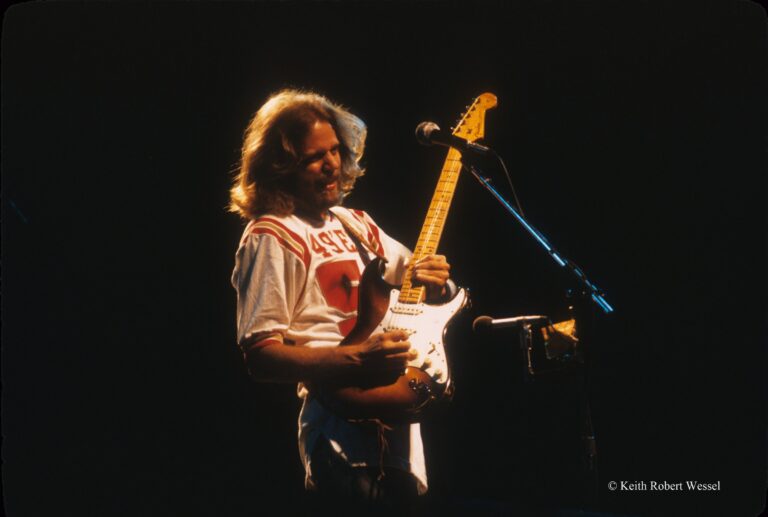
Photo by Jim Summaria, licensed under CC BY-SA 3.0
Gear Timeline
There is a man at the center of classic rock guitar history who almost nobody talks about when they talk about classic rock guitar history, and his name is Joe Walsh. This is the man who sold Jimmy Page the 1959 Les Paul Standard that became Page’s primary instrument across the entire Led Zeppelin catalog — the guitar on “Whole Lotta Love,” “Stairway to Heaven,” “Communication Breakdown,” and effectively the entire recorded output of the most influential hard rock band in history. This is the man who gave Pete Townshend the 1959 Gretsch 6120 and Fender Bandmaster amplifier that Townshend used to record Who’s Next — the album many consider the finest rock record ever made. And then Joe Walsh went and played “Hotel California,” “Funk #49,” “Rocky Mountain Way,” and “Life’s Been Good” on his own. He was the nexus of classic rock guitar. He just didn’t particularly need you to know about it.
Born Joseph Fidler Walsh on November 20, 1947, in Wichita, Kansas, and raised primarily in Montclair, New Jersey, Walsh came up through the rock scene of the late 1960s as a member of the James Gang — a Cleveland power trio that arrived between the Cream era and the hard rock explosion with a specific sound: riff-heavy, propulsive, technically sophisticated, and shot through with a sense of humor that distinguished it from the self-seriousness of most of its contemporaries. “Funk #49” — James Gang’s most celebrated recording — was made on a Telecaster into a blackface Fender Champ, all knobs at 10. It became one of the defining guitar tones of its era using a $50 used amplifier with an eight-inch speaker.
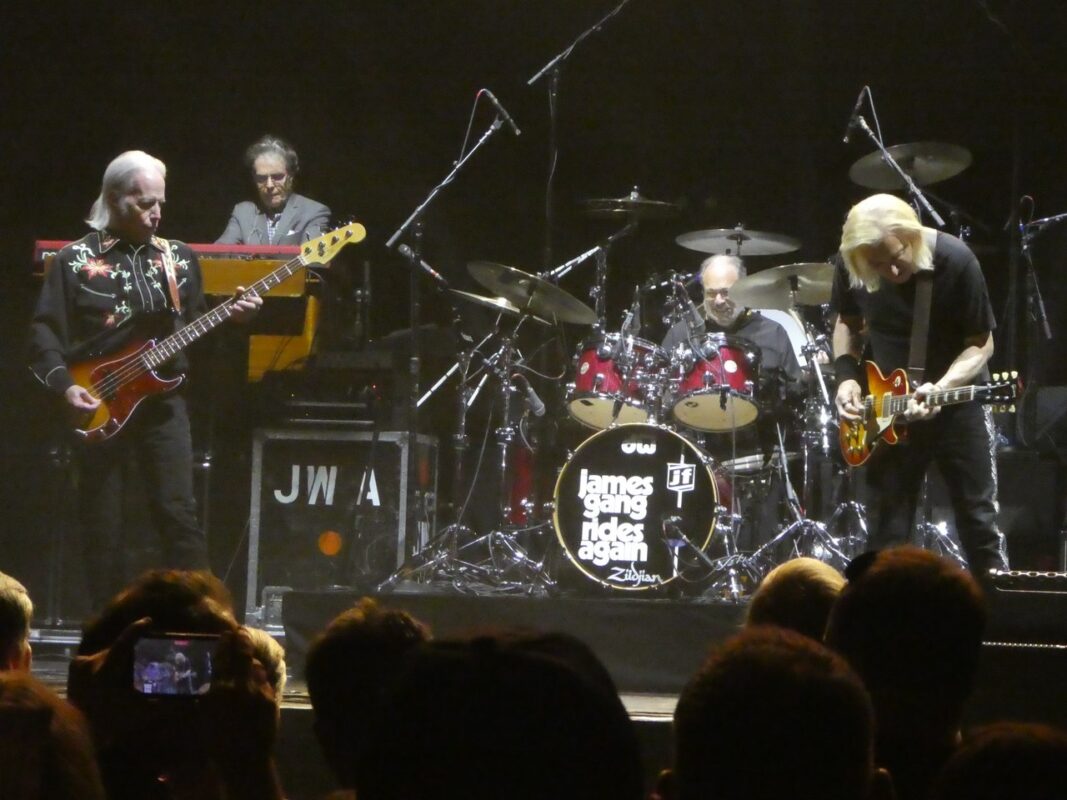
The Eagles period — he joined in 1975 as a replacement for Bernie Leadon, just in time to contribute to Hotel California — gave his guitar work a new commercial context and a production budget that allowed the layered sophistication of his approach to fully emerge. The Hotel California solo is not a typical Eagles moment: it is a guitar statement of genuine authority, immediately recognizable, emotionally direct, and technically accomplished in a way that transcends the surrounding smooth rock production. Walsh brought an edge to the Eagles that was not there before him and could not have been replicated by anyone else.
His humor, his eccentricity, and his genuine brilliance as a musician have coexisted productively for fifty-plus years. He has been sober since 1994, after years of substance problems that he discusses openly. He performs regularly with the Eagles (now featuring only Daltrey himself — Roger, Henley, and Schmit remaining from the classic lineup following Glenn Frey’s death in 2016), on solo tours, and at charity events. He was inducted into the Rock and Roll Hall of Fame with the Eagles in 1998. Rolling Stone ranks him among the greatest guitarists of all time. He is, by any honest reckoning, one of the most important and most underrated figures in American rock guitar history.
Background: From James Gang to Hotel California
The route from Wichita to Montclair to Cleveland to Los Angeles — Walsh’s geographic trajectory — tracks the movement of American rock in the late 1960s and 1970s: from the Midwest to the coasts, from the club circuit to the studio, from regional recognition to genuine stardom. Walsh studied oboe, clarinet, and bass before settling on guitar, which is exactly the kind of unexpected musical biography that explains why his guitar playing has a harmonic and rhythmic sophistication that most pure-guitar obsessives lack. He thinks in parts, not just solos.
His early professional work included a stint with a band called the Measles — a Midwestern rock group from Kent, Ohio — before joining the James Gang in 1969. The James Gang was a power trio built around Walsh’s guitar, drum, and bass, playing a specific hybrid of hard rock, funk, and what would later be called heavy metal, with Walsh’s compositions providing the melodic and harmonic content that elevated them above simple riff-rock. Their albums Yer’ Album (1969), James Gang Rides Again (1970), and Thirds (1971) are essential documents of the transition from late-1960s psychedelia to early 1970s hard rock, and Walsh’s guitar playing on them is consistently excellent — technically accomplished but never cold, harmonically interesting but never academic.
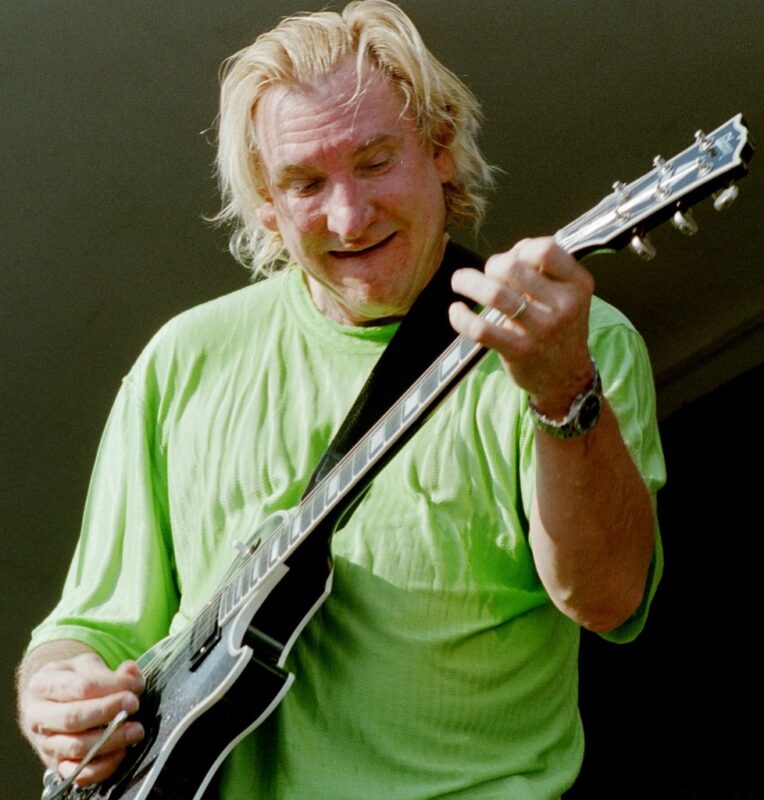
The gear nexus stories are worth dwelling on because they illuminate something about Walsh’s position in the rock world. His sale of the Page Les Paul — he had been using the 1959 Standard as one of his primary instruments and sold it to Page, who used it for effectively all of Led Zeppelin’s studio recordings — is one of the more consequential single transactions in rock history. “Walsh played a crucial role in the gear choices of other iconic players by selling Jimmy Page the legendary #1 Les Paul Standard heard on dozens of Led Zeppelin recordings and giving Pete Townshend the Gretsch 6120/Fender Bandmaster rig used on the Who’s early ’70s albums.” This is the act of a man who understood what these instruments were worth tonally and who was also generous or practical enough to pass them on to people who would use them well. Joe Walsh was the gear-trading nexus of the classic rock world.
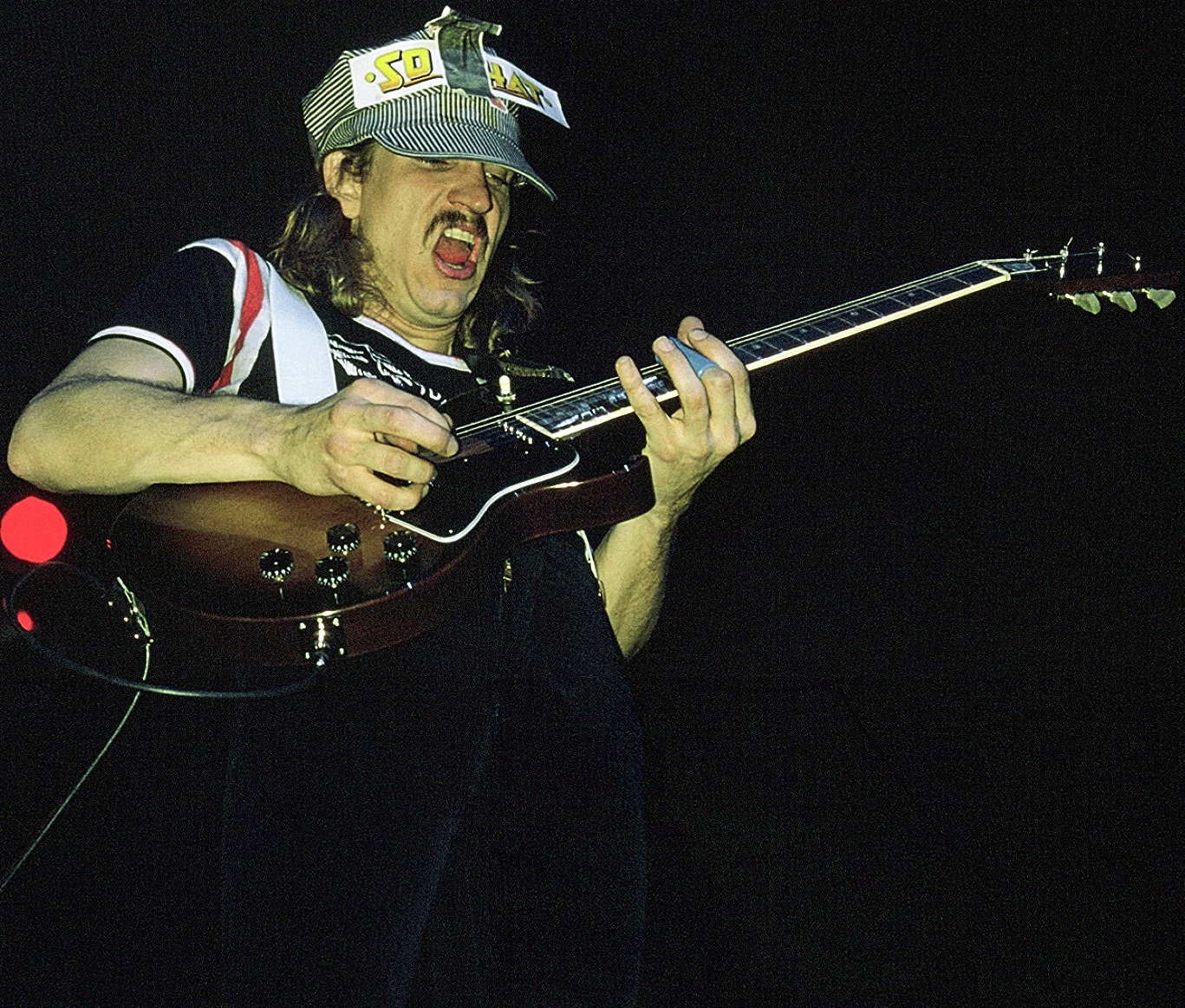
His solo career — launched with Barnstorm (1972) and producing the celebrated solo records The Smoker You Drink, the Player You Get (1973) and So What (1974) — established him as a complete artist rather than merely an excellent guitarist-for-hire. “Rocky Mountain Way,” the solo hit that features the first widely-heard use of the talk box in mainstream rock, demonstrated that Walsh could write, produce, and perform music of genuine commercial appeal entirely on his own terms. The humor of “Life’s Been Good” (1978) — a sardonic commentary on rock star excess from a man who was actively experiencing it — demonstrated that he had a literary intelligence alongside the musical intelligence.
The Eagles years — Hotel California (1976), The Long Run (1979), and the subsequent reunion projects — gave him his largest audience and his most commercially significant guitar moments. The Hotel California solo, recorded on a Fender Telecaster through a tweed Deluxe, is one of the most studied and beloved in rock guitar history. His partnership with Don Felder on that solo — the two guitarists trading and harmonizing phrases across the song’s outro — produced a piece of guitar orchestration that transcends the song’s surrounding context and stands as one of the great moments of the form.
The Rig: Joe Walsh’s Guitars, Amps, and Effects
Joe Walsh’s gear philosophy can be summarized as: the right tool for the right job, and the right tool is almost always a vintage Fender amplifier run at high volume with no pedals between the guitar and the input jack. The sophistication is in the choice of guitar for the sonic context; the signal chain is as direct as possible. “Funk #49” — Telecaster straight into a Champ, everything at 10. That’s the template.
Guitars
Before it became the most important guitar in Led Zeppelin’s catalog, this 1959 Les Paul Standard was Joe Walsh’s instrument — used during his pre-James Gang and early James Gang years as one of his primary guitars. Walsh subsequently sold it to Jimmy Page, who used it as his number one Les Paul across the entire Led Zeppelin recording career. The guitar is one of the most historically significant single instruments in rock history — a 1959 Burst with figured maple top, PAF humbuckers, and the specific resonance characteristics that made the ’59 models the most sought-after vintage electric guitars in the world. Walsh’s decision to sell it to Page was, from one perspective, remarkably consequential for the history of rock music.
The modified Les Paul Deluxe that Walsh used for “Rocky Mountain Way” and much of his solo work is one of the most specifically important guitars in his own output. The Les Paul Deluxe features mini-humbuckers (Firebird-style pickups) rather than full-size PAF humbuckers — smaller, brighter, with less low-end weight and more of the midrange presence that cuts through a dense arrangement. Walsh’s specific Les Paul Deluxe was further modified with full-sized humbuckers in place of the mini-humbuckers, giving it a hybrid tonal character. The specific balance of brightness and warmth this modified Deluxe produced — run through a cranked Fender Champ or tweed Deluxe — created the tone heard on “Rocky Mountain Way” and the talk box passage that became one of rock’s most recognizable sonic signatures.
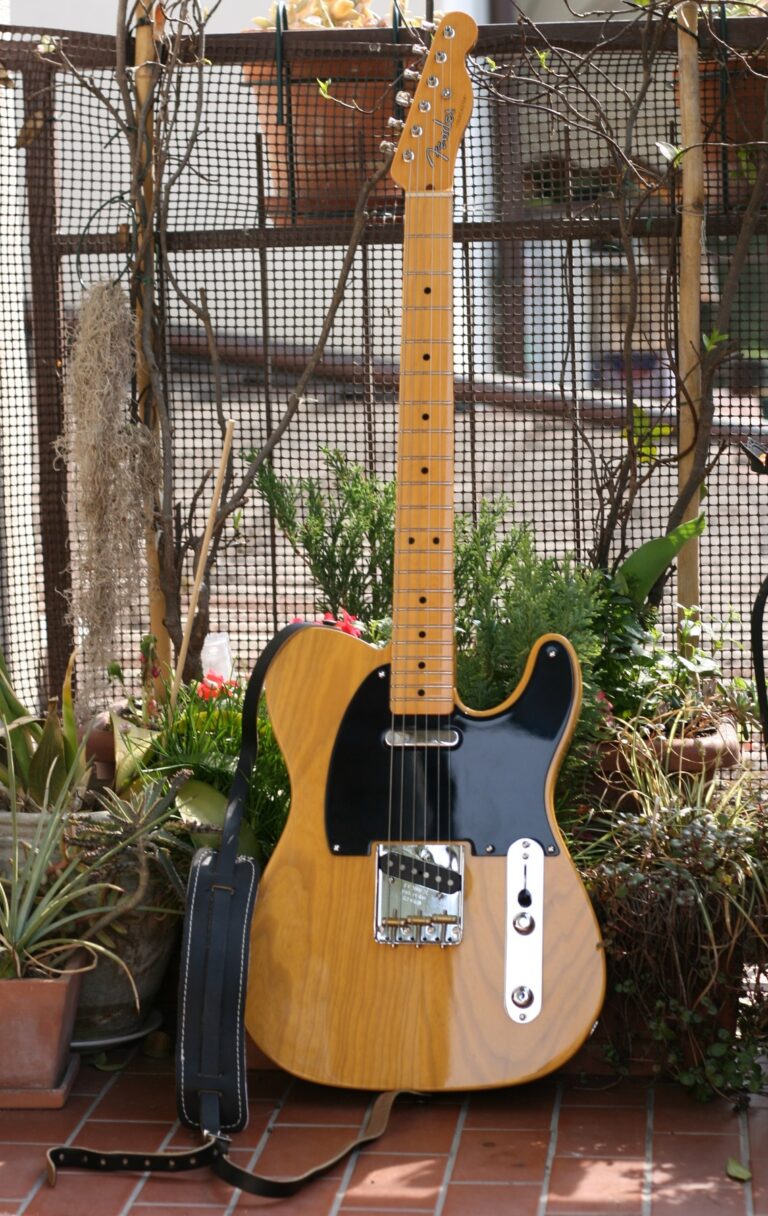
Walsh’s Telecaster use is as well-documented as his Les Paul work, and the Telecaster’s tonal contribution to his most famous recordings is if anything more significant. “Funk #49” was made with a Telecaster straight into a blackface Fender Champ. The “Hotel California” solo (specifically the second part, Walsh’s contribution to the Felder-Walsh dual solo) was made with a Telecaster through a tweed Deluxe. “Life in the Fast Lane” used a Stratocaster, but the Hotel California tone — the clean, slightly compressed, bell-like sustain of the solo’s famous lines — came from the Telecaster and the Deluxe’s specific combination. His Telecasters include a natural-finish 1970s model and a 1977 Telecaster Custom with humbucker in the neck position.
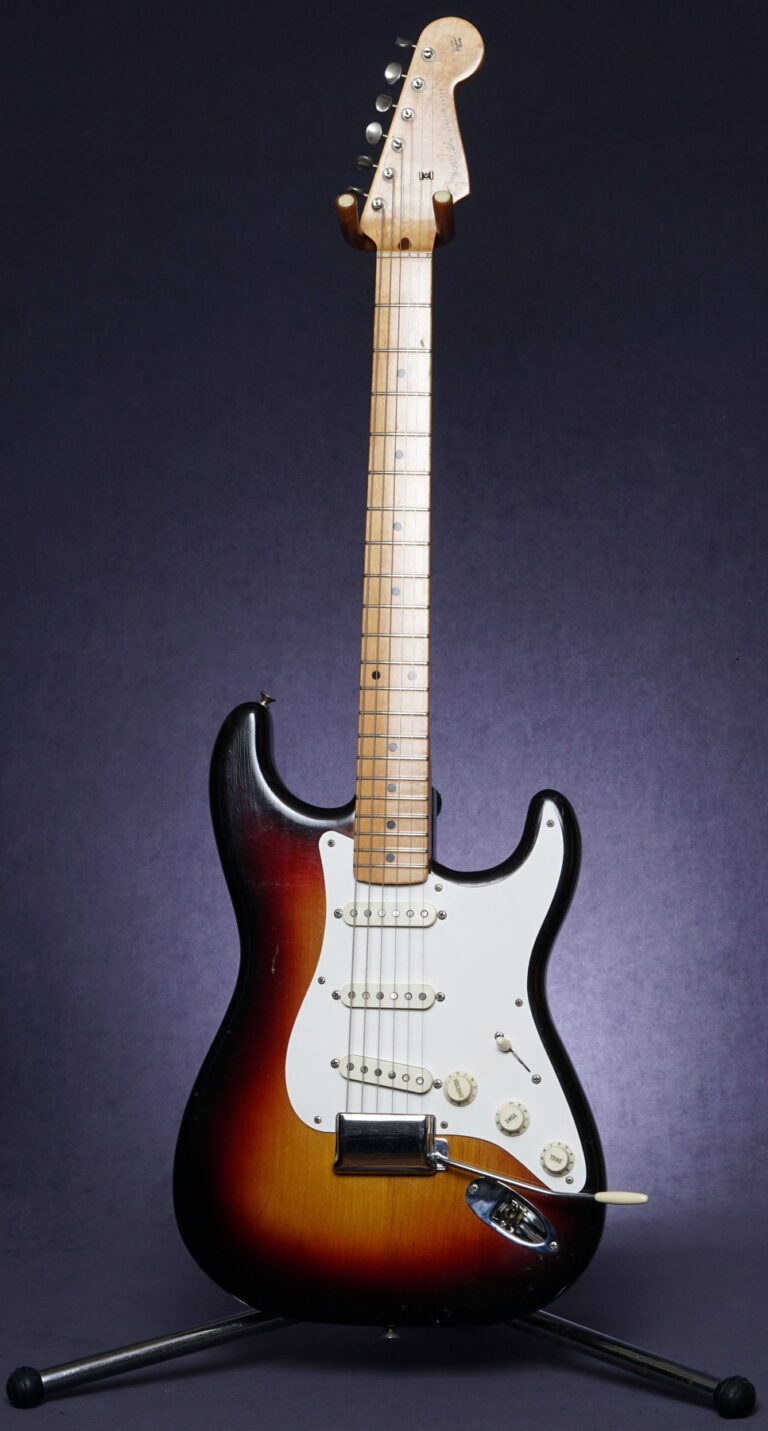
Walsh’s Strats appear throughout his career in both studio and live contexts. A 1980s Fender Stratocaster is documented in his collection. Most notably, he was seen using an Eric Clapton Signature Stratocaster in white during the Eagles’ Hell Freezes Over live recording — the Clapton signature’s active midrange boost circuit providing the sustain and thickness he needed for the live context. “Life in the Fast Lane” used a Stratocaster and the tweed Deluxe.
Another guitar Walsh passed forward: a 1959 Gretsch 6120 Chet Atkins that he gave to Pete Townshend along with a Fender Bandmaster amplifier. Townshend used this combination to record Who’s Next — meaning that a guitar Joe Walsh once owned is on “Won’t Get Fooled Again,” “Baba O’Riley,” and “Behind Blue Eyes.” The specific Gretsch 6120’s Filter’Tron pickup character and semi-hollow resonance contributed to the distinctive guitar tone of that album that has been extensively studied and discussed ever since. Walsh apparently gave it to Townshend without particular sentiment, because he had other guitars. This is the act of a man who owned better gear than he needed and shared it with people who could use it.
Walsh’s double-neck Gibson appears in his live performance setup from at least the late 1970s Eagles era. A photo from his personal Facebook shows him with the double-neck at the old Buffalo Memorial Auditorium, October 15, 1979. He removed six of the twelve tuners from the twelve-string neck in the late 1980s and used both necks as standard six-strings, modifying the guitar to suit his specific performance requirements rather than maintaining it as a strict 6/12 double-neck instrument.
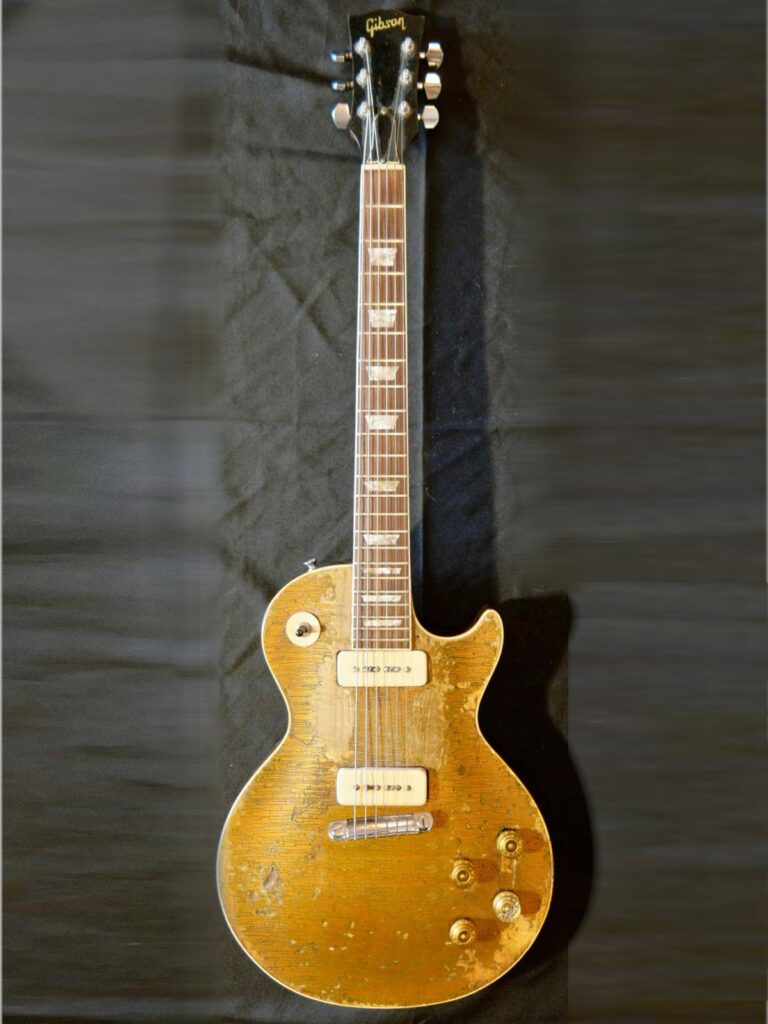
Walsh has used multiple Les Paul Goldtops across his career — both vintage and more modern versions. A Goldtop with Bigsby tremolo was seen at his 1983 US Festival and 1987 Eagles performance, appearing to be a Les Paul Deluxe that he had modified with full-sized humbuckers, keeping the Bigsby from its original configuration. He also owns a 1958 Gibson Les Paul Goldtop with P-90 pickups — a different sonic character from the humbucker-equipped models. His wife gave him a ’58 reissue as a gift. Multiple Goldtops with various pickup and hardware configurations have appeared in his collection over the decades.
Walsh has been a long-time endorser of Carvin guitars — the California-based manufacturer known for high-quality, direct-to-player guitars at competitive prices. The Carvin relationship demonstrates his practical orientation to gear: Carvin guitars are excellent instruments that don’t carry the vintage premium of his Gibson collection, suited for touring and situations where he’d rather not risk a museum-quality vintage piece.
Various Gretsch and Duesenberg guitars regularly make their way into Walsh’s set. His appreciation for the Filter’Tron pickup character that he first encountered on his own 6120 (before giving it away) has continued through various Gretsch instruments in his collection. Duesenberg guitars — a German boutique manufacturer whose instruments have a mid-century American aesthetic combined with modern construction quality — appeal to Walsh’s eclectic tastes.
Amps
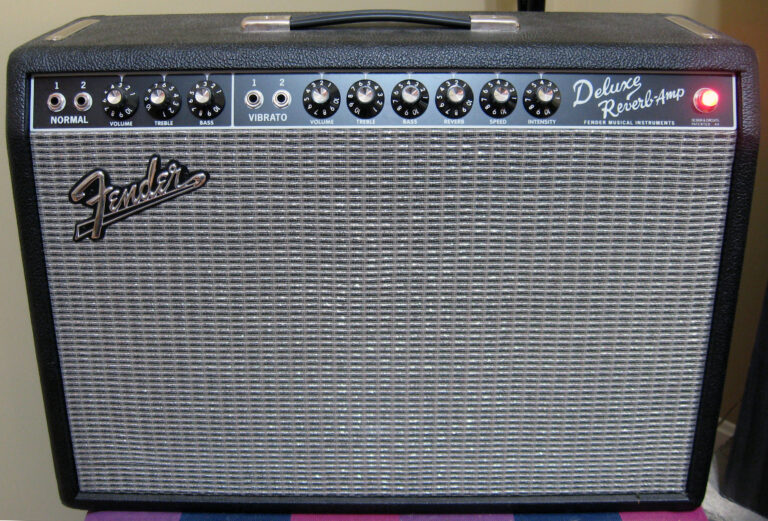
The Fender Champ is the most important single amplifier in Joe Walsh’s recording history, and it is also one of the most modest: a single 8-inch-speaker, 5-watt combo designed as an entry-level practice amp and student instrument. Walsh cranked it to 10 on volume, bass, and treble, and plugged in a Telecaster, and recorded “Funk #49.” He confirmed this directly: “An old blackface Champ is actually what I did ‘Funk #49’ on. A blackface Champ and a Tele, straight in.” Also: “Walk Away” and “Rocky Mountain Way” were also made on a Champ. The Champ at full volume is an entirely different instrument from the Champ at bedroom volume: a 5-watt amplifier with both power tubes fully saturated produces a specific, compressed, harmonically complex overdrive that larger amplifiers produce only at ear-damaging volumes. Walsh understood this before most players had thought about power amp saturation as a tonal tool.
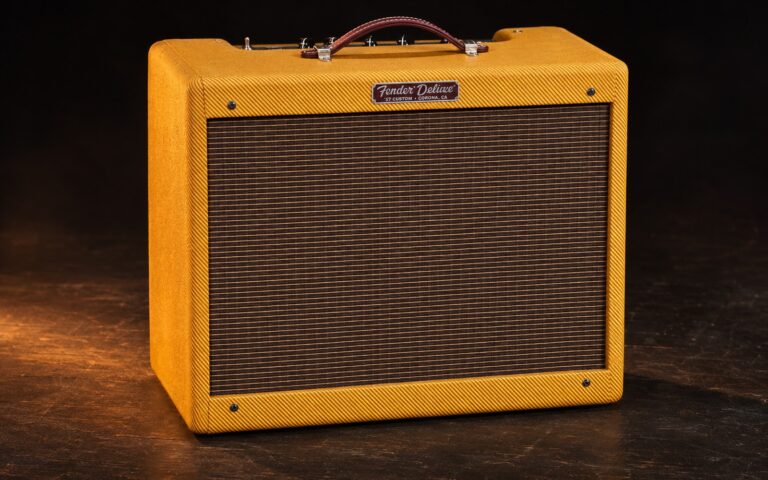
The Fender Tweed Deluxe — Walsh’s primary studio amp for the Eagles period and for much of his most celebrated solo work — is the instrument that produced the “Hotel California” lead tone. The tweed Deluxe’s 15-watt output (two 6V6 tubes, single 12-inch speaker) and the specific harmonic compression of its cathode-biased circuit gave the recording its particular singing, slightly saturated clean tone. For the Hotel California solo, the combination of Telecaster and tweed Deluxe produced the note-by-note clarity and sustain that allows each phrase to develop and sing above the complex arrangement. Walsh used multiple Fender Blackface Deluxes and Tweed Deluxes throughout his Eagles tenure — both blackface (the later, post-1967 circuit, with slightly more clean headroom) and tweed (the earlier, cathode-biased circuit, warmer and more compressed).
The amplifier driving Walsh’s talk box on “Rocky Mountain Way” was not one of his primary guitar amps but a Roland CUBE — specifically described as an old 60-watt Roland CUBE painted orange, subsequently painted black. As Walsh explained: “That’s driving the talk box. The speaker isn’t hooked up; it’s driving the talk box. It’s an old 60-watt CUBE — an orange one that’s been painted black. Those CUBE amps are so great. I used to play with four of those in the early Eagles when Hotel California came out. In fact I used a CUBE to play slide on ‘The Long Run.’ I liked to stack ’em too. That’s what I did in the old days. I even made a stand so I had two and two stacked.” The Roland CUBE’s solid-state character was not the primary appeal here — its wattage and portability suited the specific function of driving the talk box.
A Mesa/Boogie Mark I can be seen behind Walsh on the Hotel California tour — adding a higher-gain option to the primarily clean Fender-based rig for specific musical applications in the live context. The Boogie’s cascading gain structure provided tonal options unavailable from the Fenders’ natural saturation.
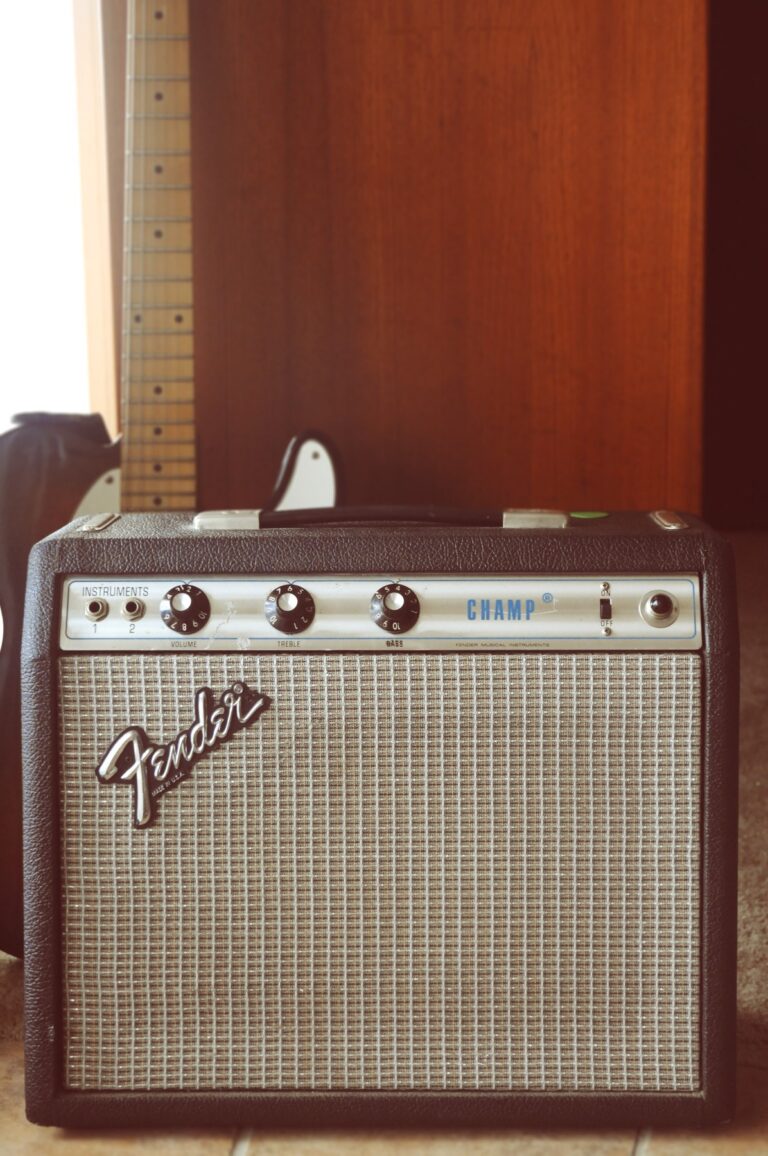
With the Eagles, Walsh primarily played Fender Blackface Deluxes and Tweed Deluxes. The Blackface Deluxe’s combination of clean American Fender tone, moderate power (22 watts), and the built-in spring reverb made it ideal for the Eagles’ production context — where clean, defined tone and reliable performance were prioritized. The Eagles, notably, demanded quiet stage volumes that made even a Deluxe Reverb occasionally too loud for the production requirements.
In his more recent touring setups, Walsh has favored Dr. Z amplifiers — a boutique American manufacturer known for their touch-sensitive, harmonically rich tube designs. The Dr. Z Maz 38 and Z-Lux have appeared in his documented touring setups. These amplifiers provide the clean-to-natural-breakup character Walsh has always preferred, built to modern professional touring reliability standards.
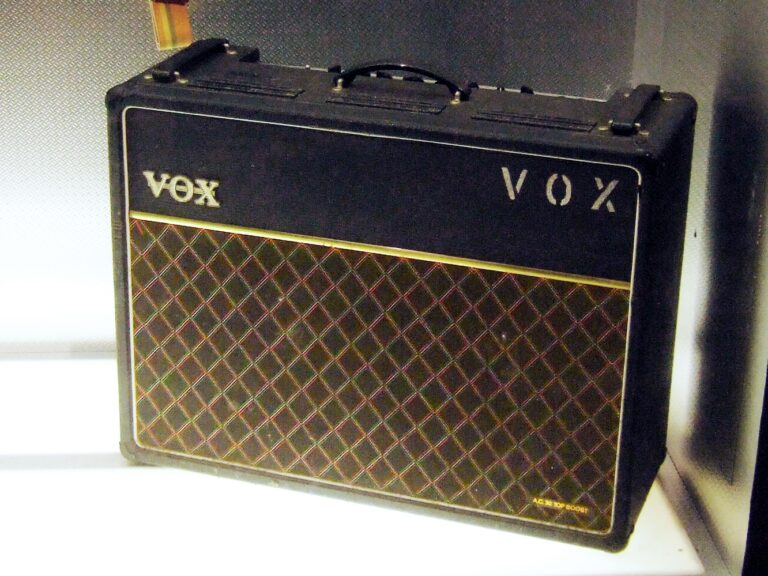
Walsh has also noted a strong preference for Vox AC30s with Fender guitars: “My other favorite thing is a pair of Vox AC-30s. That is tremendous for Fender guitars.” The AC30’s EL84-tube brightness and top-boost character does complement the Telecaster and Stratocaster’s single-coil definition particularly well — a pairing that has been recognized by many Fender-guitar players across different genres.
Effects
The talk box is Joe Walsh’s most distinctive and immediately recognizable effect — the device that converts the guitar’s amplified signal into a physical air column that the player shapes with their mouth, lips, teeth, and tongue into articulated vowel sounds and phonetic patterns that the microphone then captures. Walsh made the talk box famous on “Rocky Mountain Way” (1973), which was one of the first mainstream rock recordings to feature the effect prominently and which directly influenced Peter Frampton’s subsequent use of it on “Do You Feel Like We Do” (1976). The talk box itself was not Walsh’s invention — it had existed in various forms for decades — but his application of it to rock guitar gave the effect its commercial breakthrough. He used a Heil Talk Box for “Rocky Mountain Way.” As he described the setup: the guitar amplifier (the Roland CUBE) drives the talk box’s small speaker, which is connected by a tube to a position near the microphone. The guitar signal is shaped by Walsh’s mouth movements around the tube and captured by the vocal microphone. The result is the vowel-manipulated, harmonized guitar sound that defined the record.
The Echoplex — the tape-based delay unit that Walsh and many of his classic rock contemporaries used — provides the warm, slightly saturating echo effect present on various Walsh recordings. During the recording of Hotel California, he reportedly used an Echoplex for the delay aspects of the Hotel California lead tone. The tape delay’s specific character — warm repeats that degrade slightly with each repeat, giving an organic, human quality to the echo — suited the analog production aesthetic of the Eagles’ studio work.
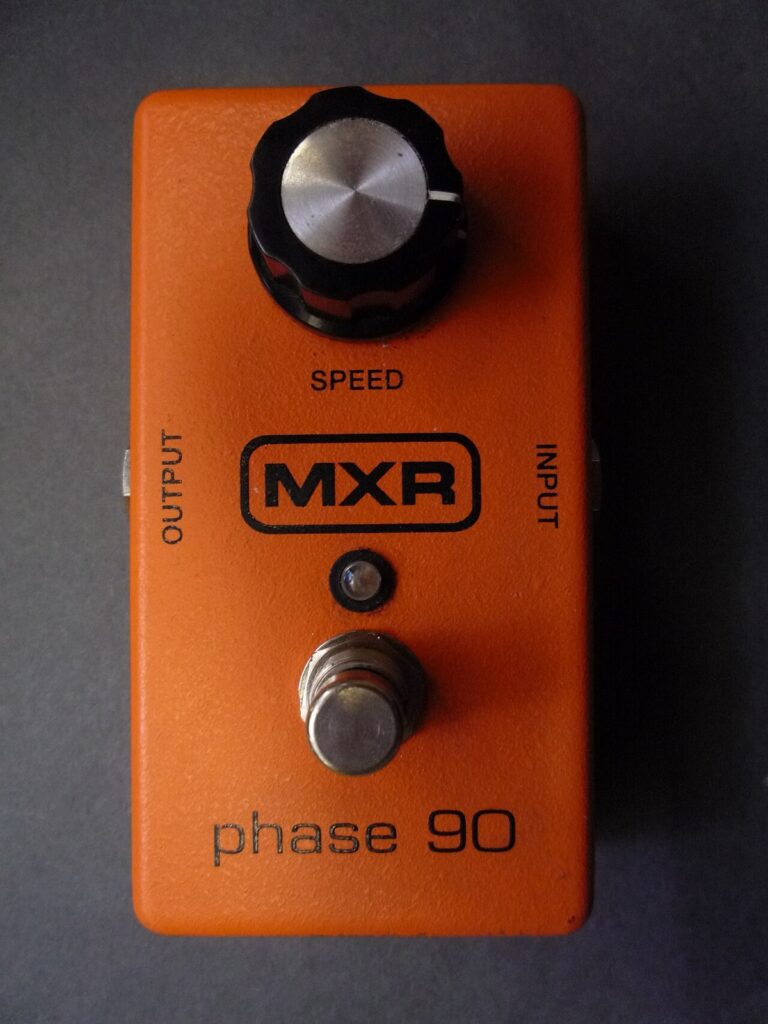
During the recording of Hotel California, Walsh reportedly used an MXR Phase 90 for subtle phasing effects. The Phase 90’s particular rate and depth settings produce a slow, organic sweep rather than the more dramatic phasing that later era pedals could achieve. Set subtly, it contributes to the slight shimmering quality of the Hotel California lead tone without announcing itself as an obvious effect.
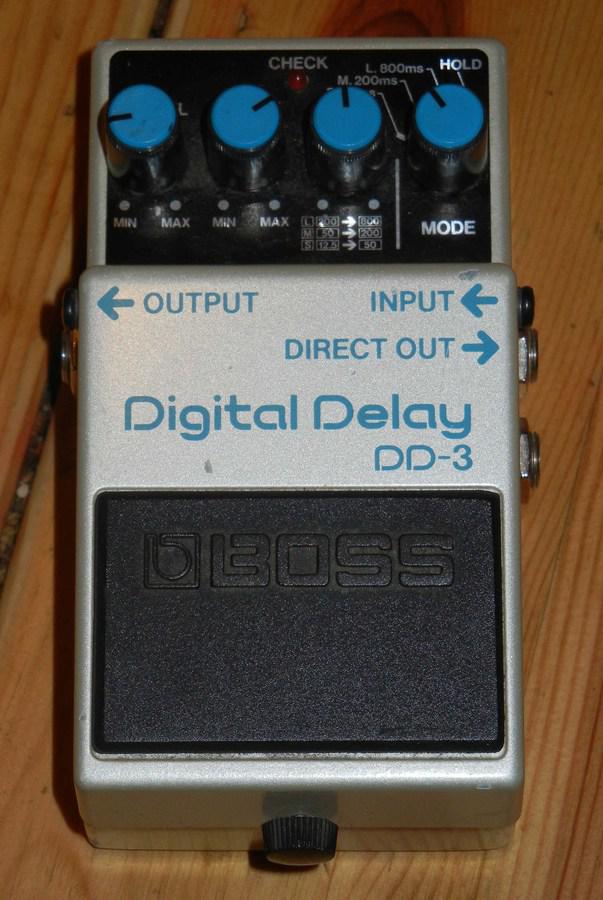
Walsh has confirmed Boss delay pedals in his contemporary setup: “The delay [DD-3] is a favorite… I prefer the DD-3 onstage, but for recording I use the DD-6.” The Boss digital delays provide reliable, consistent delay times for live performance and the additional features (longer delay times, different algorithms) of the DD-6 for studio work. These are straightforward utility pedals chosen for reliability rather than for any particular vintage character.
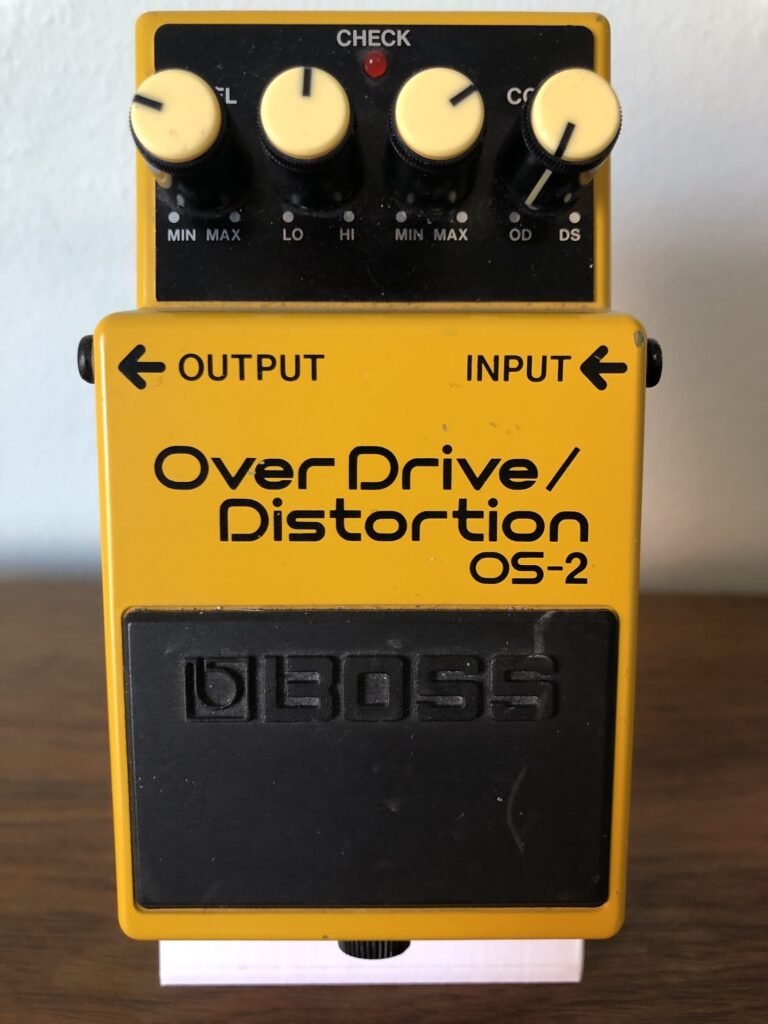
Also confirmed in his contemporary pedalboard: “the overdrive [OS-2].” The Boss OS-2 combines overdrive and distortion circuits in a single pedal, allowing blending between the two characters. For Walsh, who has historically used amp saturation as his primary drive source, the OS-2 likely provides the mild boost and drive that’s useful in live contexts where the amp cannot be pushed to its natural saturation point at manageable stage volumes.
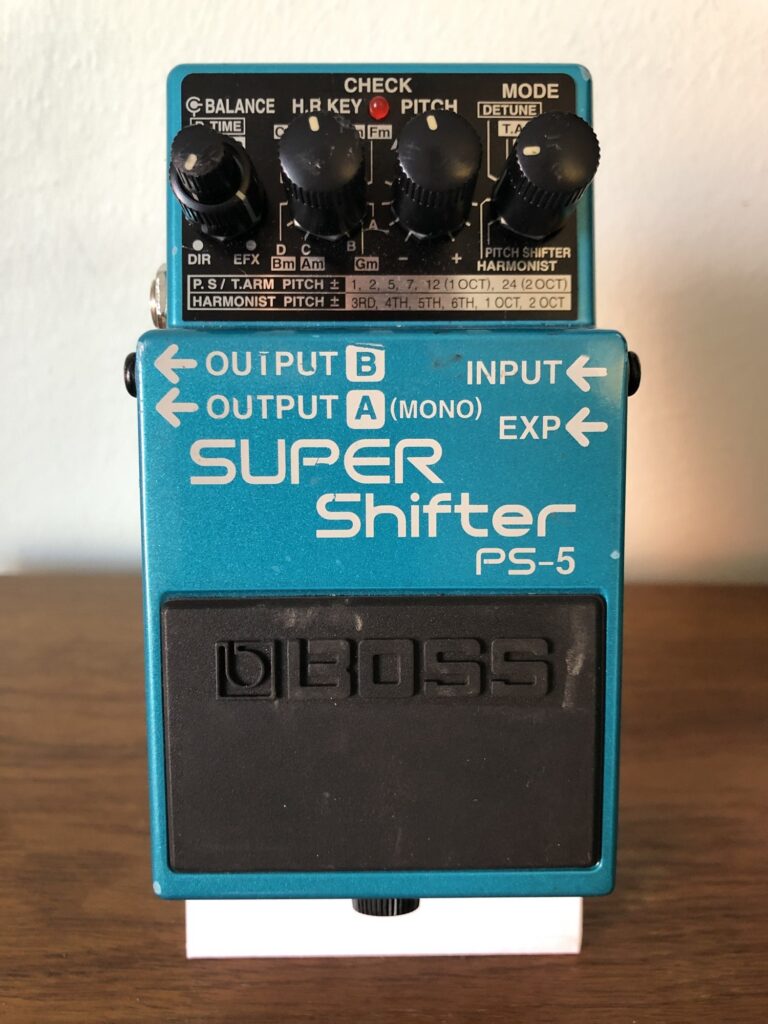
Walsh also mentioned the Boss PS-5 pitch shifter as an increasingly favorite contemporary effect: “more and more the pitch shifter [PS-5].” Pitch shifting — manipulating the guitar’s fundamental pitch through electronic processing — provides specific harmonic and textural effects unavailable from conventional playing. Its appearance in his contemporary setup suggests a continuing curiosity about new tonal possibilities even after fifty-plus years of professional playing.
For most of his classic period work — the James Gang recordings, the solo albums, much of the Eagles material — Walsh recorded with minimal or no effects: guitar directly into amplifier, everything driven by the amp’s natural saturation at volume. This direct approach is audible in the recordings: there is no veil of processing between the guitar and the listener, and every element of his picking attack and note character comes through with unusual clarity and directness.
Playing Style & Tone Philosophy
Joe Walsh’s playing style inhabits a specific and unusual register between the blues tradition and hard rock’s more aggressive vocabulary — sophisticated enough for jazz-trained ears, direct enough for rock listeners who couldn’t name a jazz chord, and rhythmically specific in ways that distinguish him from both traditions. He is a rhythm player of great sophistication who is also a lead player of genuine expressiveness, and his ability to occupy both roles simultaneously (as he must in a band context) is one of his most underappreciated musical qualities.
His rhythm guitar playing — documented most clearly in the James Gang recordings, where he was the only guitarist and therefore responsible for the entire harmonic foundation — combines the locked-in quality of a great rock rhythm player with harmonic choices that go beyond standard power chord sequences. The specific chord voicings and the rhythmic placement of his attacks give James Gang material a propulsive quality that was influential on subsequent bands who were trying to understand why the grooves felt the way they felt. “Funk #49” specifically is a masterclass in rhythm guitar syncopation — the riff’s rhythmic displacement creates a push-pull feel that is simultaneously heavy and funky, a combination that proved enormously influential.
His lead playing draws from the blues tradition — specifically the expressive bending and wide vibrato of the blues vocabulary — but applies it to a hard rock context that the blues tradition hadn’t fully inhabited before him. His solos sing in a way that many technically superior players’ solos don’t, because the note choices are melodically intelligent and the bending adds the emotional expressiveness that connects the lead line to the listener’s body rather than just to their admiration.
The slide guitar dimension of his playing — he is an underrated slide guitarist, as the Hotel California live recordings and various solo material demonstrate — adds another vocabulary to his technical range. His slide approach is blues-inflected and emotionally direct, using the slide’s gliding quality for expressive rather than merely technical effect.
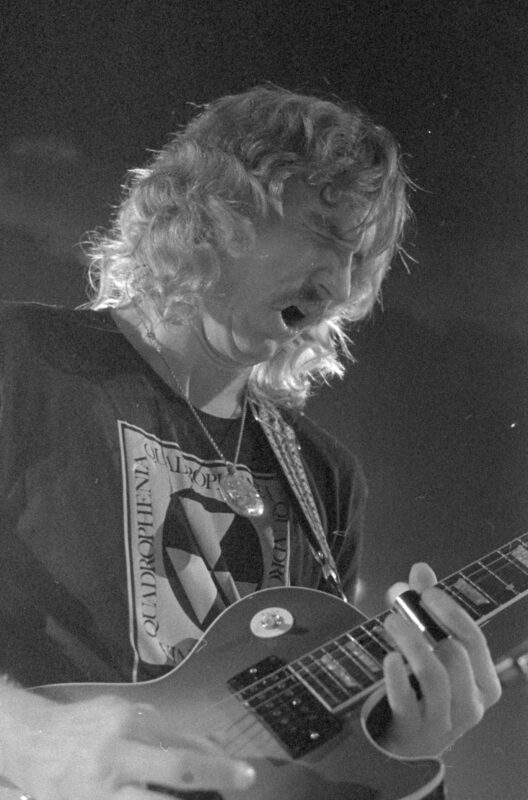
His tone philosophy is elegantly simple: the amp does the work. The guitar provides the signal character; the amp provides the saturation and compression; the player provides the dynamics through picking attack. Pedals are minimized because they put something between the guitar and the amp’s input stage that changes the relationship. A cranked Fender Champ responds differently to a picked note than the same Champ with an overdrive pedal in front of it — the former is the player’s attack driving the amp’s natural saturation; the latter is a processed signal driving a cleaner amp. Walsh consistently preferred the former.
How to Sound Like Joe Walsh
Joe Walsh’s tone is one of the more achievable in classic rock because his foundational approach — guitar into cranked small amp, no effects — is within reach of any player with basic equipment.
Guitar: A Les Paul with PAF-style humbuckers for the solo material and Eagles work. A Telecaster for “Funk #49” and James Gang material. A Stratocaster for “Life in the Fast Lane” and the cleaner Eagles rhythm work. The guitar choice affects the tonal character; the amp choice affects how that character is expressed.
Amp: Small, cranked Fender tube amp is the definitive approach. A vintage blackface Fender Champ or Deluxe, or the Fender tweed Deluxe, is the most accurate choice. Modern alternatives: the Fender ’57 Custom Champ (a hand-wired reissue that accurately captures the tweed Champ’s character) or the Fender ’57 Custom Deluxe. A tweed-in-a-box pedal (Catalinbread Formula No. 55, Wampler Tweed 57) into any clean Fender-voiced amp approximates the tweed Deluxe character at lower volumes.
Amp Settings (Fender Tweed Deluxe or Blackface Champ):
| Control | Setting (0–10) | Notes |
|---|---|---|
| Volume | 8–10 | Cranked — the saturation IS the tone |
| Bass | 8–10 | Full — Walsh runs everything up |
| Treble | 8–10 | Full — bright, clear, and saturated simultaneously |
| Effects (Reverb) | 0–2 | Minimal or none — direct is the point |
Hotel California Lead Tone Settings (Telecaster into Tweed Deluxe):
| Element | Specification | Notes |
|---|---|---|
| Guitar | Fender Telecaster, bridge pickup | Clean, cutting single-coil character |
| Amp | Fender Tweed Deluxe, volume 7–9 | Natural compression and saturation, not clean |
| Phase | MXR Phase 90, rate slow | Very subtle — adds shimmering dimension |
| Delay | Echoplex or tape-style, short time | Just enough for depth — not obviously echoed |
The talk box: Requires a talk box unit (Heil, Danelectro, or similar) connected to a separate small amplifier (the Roland CUBE is historically correct). The tube runs to the microphone position. Shape the guitar’s vowel sounds with your mouth around the tube — practice the basic vowel movements (ah-eh-oo-ee) before attempting specific phrases. It is a physically unusual technique that takes time to develop.
Influence & Legacy
Joe Walsh’s influence on classic rock guitar is pervasive but frequently unlabeled — he is the guitarist’s guitarist rather than the mainstream’s icon, known more to people who actually play guitar than to people who simply listen to music. Every guitarist who has cranked a small Fender amp and used its natural saturation as the primary drive source rather than a pedal owes something to Walsh’s demonstration of what that approach could produce. “Funk #49” is still the first thing guitar teachers reach for when a student asks what a cranked Champ sounds like.
His gear-trading legacy — the Page Les Paul, the Townshend Gretsch — means that his influence extends into the catalogs of Led Zeppelin and The Who in ways that are not credited to him but are entirely real. The tone of “Whole Lotta Love” runs through a Les Paul that Joe Walsh once owned. The tone of “Won’t Get Fooled Again” runs through a Gretsch that Joe Walsh once owned. This is an unusual kind of influence — invisible in the credits, audible in the music — that speaks to both his generosity and his position at the center of the classic rock gear world.
The talk box connection to Peter Frampton is the most directly traceable influence line: “Rocky Mountain Way” in 1973 preceded “Do You Feel Like We Do” in 1975-76, and Frampton’s commercial success with the effect is, in part, built on Walsh’s earlier demonstration of its possibilities. This is not to diminish Frampton’s achievement but to contextualize Walsh’s priority.
His influence on the Eagles’ sound is continuous and fundamental. He gave them a harder edge, a specific guitar vocabulary, and a tonal authority that their pre-Walsh albums lack. For context on how Walsh’s approach fits into the broader landscape of American rock guitar, the comparison with Stevie Ray Vaughan’s approach to blues-inflected rock tone is instructive — two players of essentially the same era who both drew from the blues tradition and applied it to a rock context with maximum physical commitment and minimum electronic mediation.
The connection to his Eagles bandmates’ guitar heritage runs through the dual-guitar architecture that Walsh and Don Felder developed — most specifically in the “Hotel California” outro solo, where two guitarists playing complementary parts produced something neither could have achieved alone. This is an underappreciated dimension of Walsh’s genius: his ability to function as a half of a guitar partnership without losing his individual voice.
Read our guide to the Fender Telecaster.
And for understanding how Walsh’s small-amp philosophy connects to the broader tradition of American guitar tone produced by Fender amplifiers, the comparison with Buddy Guy’s approach to Fender amp saturation and expressive technique illuminates the shared blues foundation that informed both players, even when their musical contexts were very different. Walsh absorbed Guy’s tradition; he just applied it to power trios and concept albums instead of Chicago clubs.
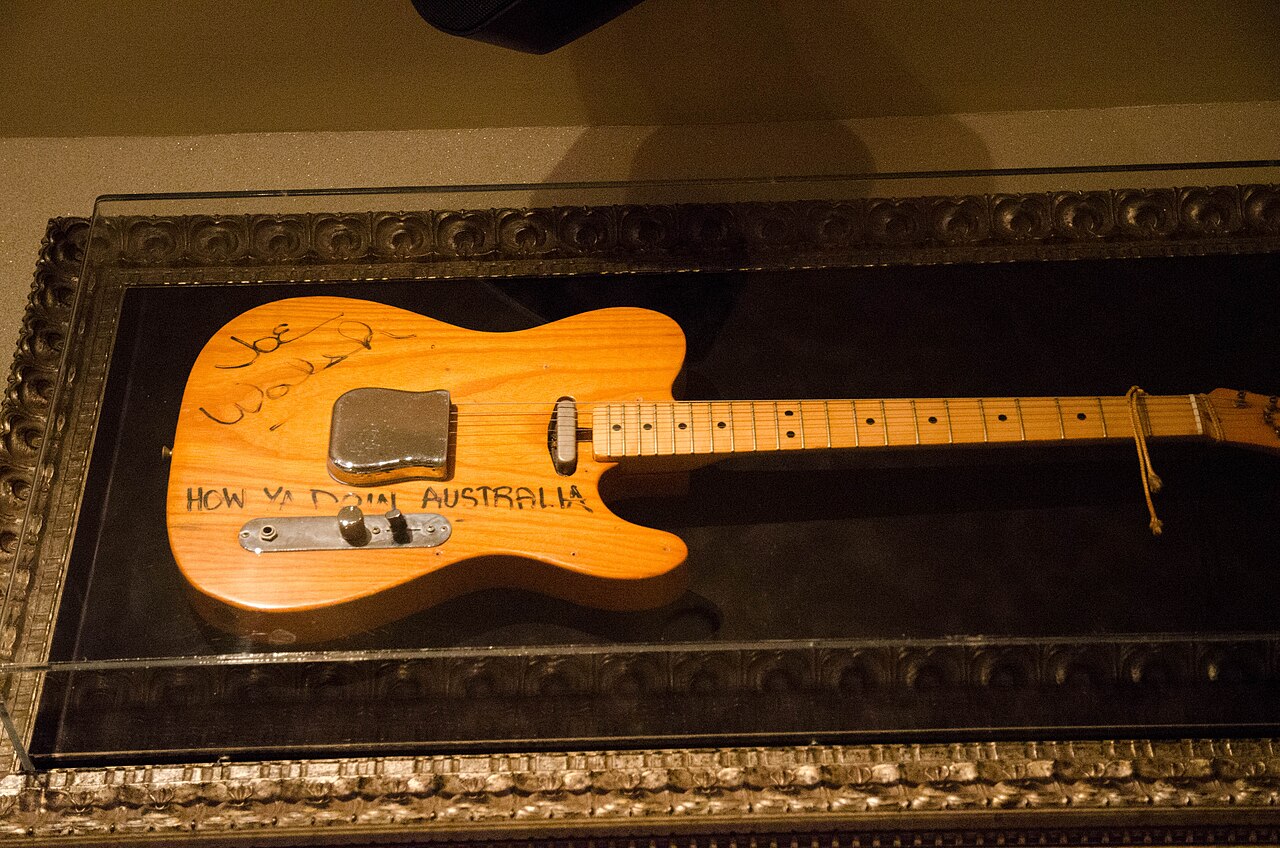
Joe Walsh is seventy-seven years old in 2026. He has been sober for thirty-two years. He still plays with a physical commitment and a tonal intelligence that reflects fifty-plus years of thinking about what the guitar can do when you point a Telecaster at a cranked Champ and get out of the way. The Hotel California solo still sounds like the real thing. “Funk #49” still sounds like a revelation. “Rocky Mountain Way” still makes the talk box seem like the most natural instrument in the world. The man sold Jimmy Page his best Les Paul and still had enough left over to write half the Eagles’ catalog. That’s Joe Walsh. He didn’t need you to make a fuss about it.
Frequently Asked Questions: Joe Walsh Guitars & Gear
What guitar does Joe Walsh play?
Joe Walsh has played a wide variety of guitars throughout his career. His most historically significant include: a 1959 Gibson Les Paul Standard that he sold to Jimmy Page (who used it as his primary recording guitar for Led Zeppelin), a modified 1969/70 Gibson Les Paul Deluxe used on “Rocky Mountain Way” and his solo work, various Fender Telecasters (used on “Funk #49” and the “Hotel California” solo), and Fender Stratocasters (used on “Life in the Fast Lane” and later Eagles material). He gave a 1959 Gretsch 6120 Chet Atkins to Pete Townshend, who used it on Who’s Next. He has also used a Gibson EDS-1275 double-neck live, various Les Paul Goldtops, and Gibson Flying Vs, and has been a long-term endorser of Carvin Guitars. Walsh is known for rotating between many instruments rather than maintaining a fixed “signature” guitar.
What amp does Joe Walsh use?
Joe Walsh’s foundational amplification philosophy centers on small, vintage Fender tube amplifiers driven to natural saturation at high volume. He confirmed that “Funk #49” was recorded on a blackface Fender Champ with everything at 10. His primary studio and touring amps during the Eagles period included Fender Tweed Deluxe and Blackface Deluxe combos. The “Hotel California” solo was recorded on a Telecaster through a Tweed Deluxe. He also used Roland CUBE solid-state amplifiers specifically for driving his talk box on “Rocky Mountain Way.” The Mesa/Boogie Mark I appeared on the Hotel California tour. Contemporary touring setups have included Dr. Z amplifiers and Vox AC30s. His consistent principle: small amp, high volume, natural saturation.
What is the talk box and how does Joe Walsh use it?
The talk box is an effect device that routes an amplified guitar signal through a small internal speaker, which is connected by a tube to a position near the singer’s microphone. The player shapes the guitar’s vowel sounds with their mouth movements around the tube, and these shaped sounds are captured by the vocal microphone. The result is the distinctive vowel-manipulated, “talking” guitar sound. Walsh made the talk box famous in rock on “Rocky Mountain Way” (1973), using a Roland CUBE amplifier to drive the talk box and a Heil Talk Box unit. His application of the effect directly influenced Peter Frampton’s subsequent and commercially even more successful use of it on “Do You Feel Like We Do” (1976). Walsh used a straightforward signal path: Les Paul into the Roland CUBE (which drove the talk box), with his mouth shaping the vowel characters around the tube.
Did Joe Walsh sell Jimmy Page his Les Paul?
Yes. Joe Walsh sold Jimmy Page a 1959 Gibson Les Paul Standard that became Page’s primary recording guitar for Led Zeppelin — his “Number 1” Les Paul, heard on “Whole Lotta Love,” “Communication Breakdown,” “Stairway to Heaven,” and dozens of other Led Zeppelin recordings. Walsh had been using the guitar as one of his primary instruments before the sale. He also gave Pete Townshend a 1959 Gretsch 6120 Chet Atkins and Fender Bandmaster amplifier that Townshend used to create the guitar sound on Who’s Next. Walsh’s role as a gear-trading nexus of the classic rock world — passing instruments to other legendary guitarists who used them on historically significant recordings — is one of the more remarkable backstories in rock guitar history.
How was the “Hotel California” solo recorded?
The “Hotel California” guitar solo is a dual guitar part shared between Joe Walsh and Don Felder. According to well-documented accounts, Walsh’s contribution (the second part of the dual solo) was recorded using a Fender Telecaster through a Fender Tweed Deluxe amplifier, with an MXR Phase 90 phaser set to a slow rate and an Echoplex tape delay for additional depth. Felder’s contribution used different equipment. The two parts were designed to interlock and harmonize, creating the multi-voice solo that has become one of rock’s most celebrated guitar moments. The recording’s relatively clean, slightly saturated tone — preserving the Telecaster’s natural clarity while adding the Tweed Deluxe’s compression and warmth — is characteristic of Walsh’s preference for minimal processing and natural amp saturation.
What is “Funk #49” and why is it important?
“Funk #49” is a 1970 recording by the James Gang, featuring Joe Walsh on guitar, that became one of the defining guitar tones of classic rock — a riff-based track with a characteristically syncopated, displaced rhythm that created a heavy, funky groove unlike anything else happening in rock at the time. The guitar tone was achieved with radical simplicity: a Fender Telecaster plugged directly into a blackface Fender Champ with everything at 10. The cranked Champ’s natural tube saturation produced the specific compressed, harmonically complex overdrive character of the recording. “Funk #49” demonstrates the principle that small, cranked tube amplifiers can produce tonal sophistication that larger, more powerful amps with effects don’t match — a lesson that Walsh understood earlier than most of his contemporaries.
Is Joe Walsh in the Rock and Roll Hall of Fame?
Yes. Joe Walsh was inducted into the Rock and Roll Hall of Fame in 1998 as a member of the Eagles. He has also been nominated and recognized in multiple other contexts reflecting his musical contributions. He has won Grammy Awards as part of the Eagles and collaborated across virtually the entire classic rock landscape. He has been sober since 1994 and discusses his recovery openly. He continues to perform regularly with the remaining Eagles members (Henley, Walsh, Schmit), on occasional solo tours, and at charity benefit concerts.
Image credits
- Joe Walsh's Telecaster: Billy O'Neal, Wikimedia Commons, CC BY 2.0.
- Top image: by Jim Summaria, CC BY-SA 3.0.
- Joe Walsh: photo by Carl Lender at https://www.flickr.com/photos/clender/, via Wikimedia Commons, CC BY-SA 3.0.
- Joe Walsh: photo by John McDavid, via Wikimedia Commons, CC BY-SA 2.0.
- Fender Telecaster: Massimo Barbieri, Wikimedia Commons, CC BY-SA 3.0.
- Fender Stratocaster: Lightburst, Wikimedia Commons, CC BY-SA 4.0.
- Fender Champ: teakwood from Laguna Beach, CA, USA, Wikimedia Commons, CC BY-SA 2.0.
- Fender Deluxe Reverb: DlxReverbFront, Wikimedia Commons, CC BY-SA 3.0.
- Vox AC30 Top Boost: wetwebwork; existing crop and contrast/color adjustments: Clusternote, Wikimedia Commons, CC BY-SA 2.0.
- Boss DD-3 Digital Delay: JuandiLOL, Wikimedia Commons, CC BY-SA 3.0.
- Joe Walsh live: Steve Proctor, Wikimedia Commons, CC BY-SA 4.0.
- Gibson Les Paul Goldtop: Kellykma71, derivative by Clusternote, Wikimedia Commons, CC BY-SA 4.0.
- MXR Phase 90: Roadside Guitars, Wikimedia Commons, CC BY-SA 2.0.
- Boss PS-5 Super Shifter: Kuriosatempel, Wikimedia Commons, CC BY-SA 4.0.
- Boss OS-2 OverDrive/Distortion: Kuriosatempel, Wikimedia Commons, CC BY-SA 4.0.