
There is a guitar amplifier setup in the Rock and Roll Hall of Fame that looks less like musical equipment and more like the instrument panel of a spacecraft designed by someone who had taken too much LSD and not nearly enough. Two Standel bass amplifiers at the base, each loaded with a pair of fifteen-inch speakers. A Fender Twin Reverb above them, then a Fender Dual Showman. Perched above everything, pointing outward like the horns of some chrome deity: six Wurlitzer organ speakers mounted on the top of the stack, angled for maximum coverage of the room. And controlling the whole thing from the guitar itself — a system of truck running lights on the amp that indicated to the audience which effect had been activated by footswitch, because of course the audience needed to know. John Cipollina built this rig. He played it with thumbpick and metal fingerpicks. He made it produce sounds that Guitar World described as “bordering on the occult.” And every night, in the Haight-Ashbury of 1966, ’67, ’68, he pointed those Wurlitzer horns at an audience of people who were discovering that reality was more malleable than they had been told, and he proved that the electric guitar was the instrument most suited to exploring that discovery.
John Cipollina was born on August 24, 1943, in Berkeley, California, into a musical family that provided him with an exceptionally sophisticated musical foundation before he ever touched a guitar. His mother was a classical concert pianist, and his godfather was José Iturbi — the acclaimed Spanish pianist who was a household name in mid-twentieth-century American culture through his film appearances and his recordings with major orchestras. Iturbi was not merely a distant honorific connection; he was an active presence in the young Cipollina’s musical education, and the result was a guitarist who understood harmonic complexity, formal musical structure, and the technical demands of serious performance at a level that most self-taught rock guitarists didn’t approach. He initially trained on piano, as one might expect given this background, before gravitating toward electric guitar in his teens under the influence of the Bay Area’s burgeoning rock scene. The classical training, absorbed through piano, shaped his approach to the guitar in ways that would distinguish him from virtually everyone playing psychedelic rock in San Francisco: the harmonic sophistication, the structural awareness in improvisation, the specific quality of melodic thinking that made his extended solos genuinely musical rather than merely extended.
In 1965, Cipollina co-founded Quicksilver Messenger Service alongside guitarist Gary Duncan, bassist David Freiberg, and drummer Greg Elmore — plus, briefly, a singer named Skip Spence who would later found the band Moby Grape. By 1966, the band was playing regularly at the Fillmore Auditorium and the Avalon Ballroom, sharing bills with the Grateful Dead, Jefferson Airplane, and Big Brother and the Holding Company, and establishing themselves as one of the defining live bands of the San Francisco psychedelic scene. Guitar World’s description of the dynamic — “on any given night sharing a bill with the Grateful Dead, the Quicksilver guys could hand Garcia and company their asses” — captures the competitive excellence of the scene and Cipollina’s specific place at its forefront.
His approach to the guitar was distinctive in several specific ways. He used a thumbpick and metal fingerpicks simultaneously — a hybrid picking approach borrowed from country and folk guitar traditions that gave him more tonal options than a conventional flatpick and more attack precision than fingers alone. He developed a Bigsby tremolo technique in which he deliberately pushed the guitar slightly out of tune and then constantly corrected it with the bar and by ear — a technique that produced the distinctive warbling, shimmering quality associated with his playing and that required constant physical and aural attention to maintain. He wired his guitars with separate bass and treble pickups, each routed to different amplification chains — the bass pickup to the solid-state Standel bass amps, the treble pickup to the tube-powered Fender stacks that drove the Wurlitzer horns. “I like the rapid punch of solid-state for the bottom,” he said, “and the rodent-gnawing distortion of the tubes on top.” The metaphor — “rodent-gnawing distortion” — is one of the great gear descriptions in rock history, and it is exactly accurate: the tube distortion of the Fender amps through the Wurlitzer horns has a specific quality of aggressive, organic bite that Cipollina’s phrase captures perfectly.
He died on May 29, 1989, in San Francisco, of emphysema — a lung condition that had been exacerbated by years of heavy smoking. He was forty-five years old. His guitar rig went to the Rock and Roll Hall of Fame, where it remains on display — a monument to one of the most genuinely innovative pieces of guitar technology ever assembled, not in a laboratory or a boutique shop but in a San Francisco garage by a guitarist who needed it to produce specific sounds that no existing equipment could provide.
Background: The Berkeley Classical Pianist’s Son Who Built a Guitar Spacecraft
The Haight-Ashbury scene in which Quicksilver Messenger Service emerged was the product of a specific historical conjunction: the San Francisco Bay Area’s existing tradition of radical artistic and political culture, the nationwide phenomenon of the psychedelic experience, and the specific energy of a generation that had been told the world was one way and was discovering, through various combinations of music and chemistry, that it might be another. The bands that emerged from this scene — the Grateful Dead, Jefferson Airplane, Big Brother and the Holding Company, and Quicksilver Messenger Service — each found their own way of expressing this discovery musically. The Dead’s way was extended improvisation over folk and blues structures. Airplane’s was tight, politically charged rock and roll. Big Brother’s was brute emotional force through Janis Joplin’s extraordinary voice. Quicksilver’s was the specific combination of Cipollina’s elaborately personal guitar approach with Gary Duncan’s rhythm work, in long instrumental passages that treated the stage as an arena for genuine musical exploration.
The dual-guitar interaction between Cipollina and Duncan is central to understanding what Quicksilver Messenger Service actually sounded like. Cipollina was the lead player, the tone architect, the one whose hybrid rig and Bigsby technique produced the instantly recognizable shimmer and warble of the QMS sound. Duncan was the rhythm player whose solid foundation gave Cipollina the platform to explore. The albums Happy Trail (1969), and to a lesser degree the self-titled debut (1968) and Shady Grove (1969), document the band at its creative peak — Happy Trail in particular, a live double album that captures Cipollina’s extended improvisations in the specific environment where they were designed to function, is the essential Quicksilver document and one of the landmark live recordings of the San Francisco psychedelic era.
The Bigsby vibrato technique deserves detailed examination because it is the most distinctive and technically demanding element of Cipollina’s playing approach. Most guitarists use vibrato to add expressiveness to already-in-tune notes — a controlled oscillation around the correct pitch that adds richness and vocal quality to sustained tones. Cipollina’s approach was fundamentally different: he used the Bigsby to deliberately push the guitar slightly sharp or flat from concert pitch, and then continuously corrected back to pitch by ear, creating a continuous, dynamic pitch relationship with the proper note rather than a static, correct pitch with added oscillation. The result was a guitar sound that seemed to be simultaneously in and out of tune, always approaching its target from just above or below, creating a shimmering, warbling quality that no other guitarist was producing in quite this way. “Once his guitar was technically out of tune, John could pull his notes back in tune by constantly stretching the strings with the Bigsby and listening for stop points with his ear,” as the Quicksilver site documented. “This style of guitar playing required constant attention and attack to maintain the level of intensity needed to create the Cipollina sound.”
The thumbpick and metal fingerpick approach — borrowing from the country tradition of hybrid picking — gave Cipollina a specifically different attack character from flatpick-only players. The thumbpick provides the primary attack for downstroke notes; the metal fingerpicks provide a brighter, sharper attack for the individual strings they contact; and the combination enables patterns of picking that a single flatpick can’t produce — simultaneous string attacks, arpeggiated figures with different attack velocities on each string, and the specific harmonic approach of someone who could reach multiple strings independently. Combined with the classical piano background’s emphasis on independent finger technique, the thumbpick-and-fingerpick approach gave Cipollina a right-hand toolkit that was genuinely unusual in the rock guitar world of the 1960s.
The Rig: John Cipollina’s Guitars, Amps, and Effects
Guitars
John Cipollina’s primary instrument was a custom Gibson SG — described in various sources as a “1961 Gibson SG” but more precisely documented as a custom-made SG with a batwing pickguard and a Bigsby tremolo tailpiece rather than the standard SG/Les Paul vibrato or wraparound bridge. The guitar’s most distinctive and technically significant modification was its split pickup routing system: each pickup in the guitar was wired to feed a completely separate amplification channel rather than blending into a single combined signal. The bass pickup fed the solid-state Standel bass amplifiers at the bottom of his stack, handling the low-frequency component of the guitar signal. The treble pickup fed the tube-powered Fender amplifiers (Twin Reverb and Dual Showman) that ultimately drove the Wurlitzer horns, handling the high-frequency component. This split routing meant that Cipollina was effectively playing two separate amplification systems simultaneously from a single guitar — the bass component going through solid-state amplification for the “rapid punch” character he valued in the low frequencies, and the treble component going through tube amplification for the “rodent-gnawing distortion” quality he wanted in the high frequencies. No commercially available guitar produced this configuration; it required specific custom wiring to achieve. The guitar’s batwing pickguard — a distinctive variant on the standard SG pickguard shape — contributed to the instrument’s visual identity as something deliberately unusual and specifically personal rather than a production model in standard configuration. Cipollina created “several custom guitars that were designed to exploit the properties of the Bigsby tailpiece,” suggesting that the SG was the most prominent of a series of specifically engineered instruments rather than a single cherished instrument in the manner of Alvin Lee’s Big Red or Harvey Mandel’s lost Les Paul.
Before settling on the custom SG as his primary instrument, Cipollina used a Gibson ES-335 in the early Quicksilver Messenger Service period — documented in photographs from the band’s first year of activity. The ES-335’s semi-hollow construction would have provided a different quality of acoustic resonance than the SG’s solid mahogany body, with the hollow chambers contributing the characteristic warmth and slight feedback susceptibility of the semi-hollow design. The move from ES-335 to custom SG represents a deliberate choice in favor of the SG’s different resonant properties and the specific ability to implement the split pickup routing system that was fundamental to his tonal architecture.
The documentation that Cipollina created “several custom guitars that were designed to exploit the properties of the Bigsby tailpiece” indicates a practice of systematic instrument design that extended beyond the primary SG. Each of these custom instruments would have been built to the same fundamental specification as the primary SG — split pickup routing for separate bass and treble amplification channels, Bigsby tremolo for the vibrato technique, and whatever additional refinements Cipollina identified through his extensive live performance experience. The willingness to have multiple custom instruments built rather than relying on production guitars reflects both his understanding of exactly what he needed from an instrument and the specific demands of his technique, which required a guitar specifically engineered for the Bigsby vibrato approach and the split routing system.
Amps
The foundation of Cipollina’s amplification tower was a pair of Standel bass amplifiers — solid-state units, each loaded with two fifteen-inch speakers, fed by the bass pickup of his custom SG. Standel was an American amplifier manufacturer based in California, known for their use of solid-state (transistor) amplification at a time when most guitar amplifiers used vacuum tubes. The solid-state character of the Standel bass amps provided what Cipollina valued: the “rapid punch” of transistor amplification — faster transient response, tighter low end, a more precise and immediate attack character than the more compressed, warmer-sounding EL34 or 6L6 tube amplifiers. For the bass frequency component of his split routing system, this rapid-punch solid-state character suited his physical playing approach: the thumbpick and fingerpick technique’s specific attack quality benefited from amplification that accurately reproduced the initial transient of each picked note. The fifteen-inch speakers provided the bass frequency extension appropriate for the low-frequency signal coming from the bass pickup — four fifteen-inch speakers total, producing a substantial sub-bass foundation for the overall sound.
The Fender Twin Reverb — a 6L6-powered, two-twelve-inch-speaker combo amplifier — was positioned in the middle of Cipollina’s amp stack, receiving the treble pickup signal and contributing the tube amplification’s “warm overdrive” character to the high-frequency component. The Twin’s 6L6 tubes produce a specifically American quality of saturation when driven: rounder and warmer than the British EL34 character, with the Twin’s built-in spring reverb adding bloom and spatial dimension. The Twin’s twelve-inch speakers handled the midrange and upper-midrange frequencies that the Wurlitzer horns above it would extend into the high-frequency range. Together, the Twin and the Dual Showman (below) provided the tube amplification for the treble pickup channel.
The Fender Dual Showman — another 6L6-powered Fender amplifier, but without the built-in reverb and with a characteristically powerful, clean output stage — fed signal to the Wurlitzer horns at the top of the tower. The Dual Showman’s specific character — very powerful, very clean, with a particular quality of solid foundation in the low end from its more powerful output stage — provided the additional headroom and power that driving six Wurlitzer horn speakers required. The combination of Twin Reverb (for the reverb and the twelve-inch speaker character) and Dual Showman (for additional power and the Wurlitzer horn feed) gave Cipollina’s treble channel a complex, multi-layered sound profile.
The most visually dramatic and tonally distinctive element of Cipollina’s amplification tower was the six Wurlitzer organ speaker horns mounted at the top — originally designed for use with electronic organs, these horn-loaded speakers produce a specific bright, cutting, shimmering high-frequency response. Horn-loaded speakers (where the speaker element is coupled to a flared horn enclosure that amplifies and directs the high-frequency output) produce a fundamentally different sound from conventional cone speakers: more directional, with a sharper, more focused high-frequency dispersion and a specific quality of presence and cut that cone speakers don’t precisely replicate. In the context of Cipollina’s split routing system — with the Wurlitzer horns handling the top frequencies of the treble pickup channel — the result was a guitar sound with extreme high-frequency presence and a specifically shimmering quality that no conventional guitar amplifier setup could produce. “Like something out of Tom Wolfe’s Kandy-Kolored Tangerine-Flake Streamline Baby,” as Guitar World described it — visually and sonically extravagant in a way that was perfectly calibrated to the visual and sonic language of the Haight-Ashbury psychedelic scene it served.
Effects
As discussed in detail above, Cipollina’s Bigsby vibrato technique was the most important and most personal element of his tonal approach — a specific, highly developed method of using the tremolo bar not for conventional vibrato but for a continuous, active pitch-management technique that produced the warbling, shimmering quality most closely associated with his sound. The technique required that the guitar be deliberately slightly out of tune, constantly corrected by ear through bar adjustments, with the resulting sonic output being a continuous relationship with pitch rather than a static, correctly-tuned note. This is a demanding technique — it requires constant physical attention from the picking hand (managing the Bigsby bar) simultaneously with the musical demands of the fretting hand and the improvisational requirements of extended live performance. That Cipollina maintained this technique over long performances lasting well over ten minutes (“Starship,” the band’s freestyle jam, often clocked in at over ten minutes) demonstrates the depth of its incorporation into his physical playing approach.
Cipollina’s effects selection system was as distinctive as the effects themselves: a custom foot-switched system for selecting effects, with truck running lights mounted on the amplifier stack that indicated to the audience which effect was active. The running lights used for this purpose were the amber or red safety lights found on the sides of large American trucks — practical, durable, and utterly incongruous in the context of a guitar amplifier system. Their use as effect indicators reflects both Cipollina’s practical problem-solving approach (he needed a reliable, visible indication of effect status in a live performance context) and the broader psychedelic aesthetic of the era, in which the unexpected repurposing of everyday objects was a cultural value. The truck running lights on the amplifier tower are as much a part of the system’s character as the Wurlitzer horns on the top — both elements reflect the same creative intelligence: take what’s available, repurpose it for your specific musical need, let the visual strangeness be part of the experience.
The Echoplex — described in the Blues Show documentation as an “Astro Echoplex” unit mounted on the right side of the Fender Twin Reverb — provided the tape-based delay effects that were central to the psychedelic guitar sound of the San Francisco era. The Echoplex’s warm, tape-degraded repeats added depth and dimension to Cipollina’s lead guitar lines, and its ability to produce different delay times allowed for a range of echo effects from short slapback to longer ambient repeats. In the context of Cipollina’s already elaborate, spatially complex rig — the stereo split-routing, the Wurlitzer horns’ directional high-frequency dispersion, the Bigsby’s continuous pitch shimmer — the Echoplex added a time dimension to the spatial and frequency complexity already present in the basic guitar-and-amp setup.
The Standel Modulux — positioned on the left side of the Twin Reverb — provided modulation effects. The Modulux was a Standel product designed for general audio use, and its deployment as a guitar modulation tool reflects Cipollina’s general approach of using whatever equipment produced the specific tonal result he needed rather than confining himself to guitar-specific equipment. The Modulux’s modulation character added additional harmonic movement to his already complex, Bigsby-modulated tonal palette.
A Gibson Maestro Fuzz-Tone appears in Cipollina’s documented effects chain — the original commercially available fuzz pedal, manufactured by Gibson’s Maestro brand, and the unit that Keith Richards used on “Satisfaction” in 1965 to introduce fuzz guitar to mainstream pop culture. The Maestro Fuzz-Tone’s specific silicon transistor fuzz character — hard-clipping, slightly buzzy, with a characteristic quality of compression and sustain — was used by Cipollina for specific passages requiring more aggressive drive than the tube amplifiers’ natural saturation provided. In the context of his already elaborate signal chain, the Maestro Fuzz-Tone was one additional color in a palette rather than a primary tone source — a specific effect for specific musical moments rather than a constant tonal presence.
Cipollina also used Vox wah-wah and volume pedals in his effects setup. The Vox wah — the British-made version of the wah effect with its specific frequency sweep character — added the vocal, conversational quality of the wah filter to his lead guitar lines when deployed. The volume pedal allowed dynamic control over the guitar’s output level without taking the hands off the strings, enabling the volume swell technique and smooth dynamic transitions that would have been practically unavailable from the guitar’s own volume control while managing the Bigsby tremolo bar simultaneously.
Cipollina’s use of a thumbpick combined with metal fingerpicks — a hybrid picking approach borrowed from country and folk traditions — produced a specific attack character that conventional flatpick playing doesn’t replicate. The metal fingerpicks have a brighter, harder attack than either bare fingers or a conventional guitar flatpick, and the combination with the thumbpick enables simultaneous multi-string attacks and arpeggiated figures that a single pick can’t produce efficiently. This picking approach, combined with the classical piano training’s emphasis on independent finger technique, gave Cipollina a right-hand toolkit that was genuinely singular in the rock guitar context of the 1960s.
Playing Style & Tone Philosophy
John Cipollina played electric guitar as if he had been trained as a classical pianist and decided that the best instrument for expressing what he knew was a Bigsby-equipped SG through a tower of mismatched amplifiers pointing in different directions. This is not a metaphor — it is a literal description of his musical formation. The classical piano background, inherited through his mother’s teaching and his godfather Iturbi’s presence, gave him a formal musical intelligence — harmonic sophistication, melodic structure, the understanding of how musical ideas develop and resolve — that most of his psychedelic rock contemporaries simply didn’t have. He brought this intelligence to bear on the electric guitar in ways that produced improvisations that were genuinely composed in real time: they had themes, development, and resolution, not just scale-running over chord changes.
His approach to the extended solo — which was the primary vehicle for QMS’s music in live performance — was specific and deliberate. The long improvised passages on Happy Trail demonstrate a guitarist who understands narrative: where to build tension, where to release it, where to introduce a new melodic idea and where to return to an established theme. This compositional intelligence, filtered through the specific tonal architecture of the hybrid rig and the warbling Bigsby technique, produced a guitar voice that Guitar World called “anticipating much of what was to come in rock guitar playing” — a forward-looking, genuinely original approach that owed nothing to convention.
The “rodent-gnawing distortion” quote is philosophically as significant as it is memorable. Cipollina didn’t want smooth, warm tube saturation. He wanted something more aggressive, more textured, more physically present — the specific quality of tube overdrive that feels like something attacking the signal rather than merely warming it. This preference for a harder, more aggressive quality of distortion was balanced by the solid-state amps’ “rapid punch” in the low frequencies — together, they produced a sound that was both powerful and articulate, both warm and aggressive, occupying a tonal territory that no single amplifier type could provide.
How to Sound Like John Cipollina
Replicating Cipollina’s rig exactly would require sourcing vintage Standel bass amps, specific Fender models, Wurlitzer organ horns, and a custom Gibson SG with split pickup routing — a genuinely difficult and expensive undertaking. The philosophical approach can be captured more simply: use a semi-hollow or solid-body Gibson-type guitar through a combination of solid-state and tube amplification if possible, with the solid-state handling the bass frequencies and the tube amplification handling the midrange and treble. Add an Echoplex or quality tape delay, a Maestro-style germanium fuzz for specific passages, and a wah for additional expressiveness. The Bigsby technique requires its own dedicated practice — the specific warbling, shimmering quality of Cipollina’s playing cannot be achieved without deep familiarity with how a Bigsby interacts with the guitar’s pitch in a continuous, dynamic way.
| Control | Setting (0–10) | Notes |
|---|---|---|
| Solid-State Amp (Bass Channel) | Volume: 7; Bass: 8; Mid: 5; Treble: 3 | Bass-heavy, treble-light on the solid-state channel — the “rapid punch” low end. The solid-state’s faster transient response and tighter low-end character suits the bass pickup signal. High bass setting for the physical weight of the foundation; reduced treble to prevent harsh top-end from the solid-state character. |
| Tube Amp (Treble Channel) — Fender-style | Volume: 7; Bass: 4; Mid: 7; Treble: 8; Reverb: 3 | Treble-forward on the tube channel — the “rodent-gnawing distortion” top end. High treble and present midrange, minimal bass (handled by the solid-state channel). Light spring reverb from the Twin Reverb’s onboard reverb adds bloom. Drive the tube amp enough for natural saturation but not heavy preamp compression. |
| Maestro Fuzz (Drive — Selective) | Volume: 6; Sustain: 6 | Used selectively for specific passages — not a constant tonal presence. The Maestro Fuzz-Tone (or quality silicon fuzz equivalent) adds aggressive, buzzy character to specific moments. Keep moderate settings; Cipollina’s fuzz use was expressive rather than constant. |
| Echoplex (Tape Delay) | Mix: 30%; Time: 250ms; Feedback: 2–3 repeats | Warm tape-based delay — adds depth and dimension to sustained lead lines. Three audible repeats with natural tape degradation. Keep the mix moderate — the delay should add dimension rather than dominate. Echoplex’s specific tape-warmth character is part of the classic QMS sound. |
| Vox Wah | Dynamic — selective use | Used expressively on specific passages for vocal, conversational quality. Not an always-on effect. The Vox wah’s specific frequency sweep character suits the psychedelic guitar context better than more modern wah designs. |
| Bigsby Technique | Continuous — active pitch management | This is the technique that defines the tone more than any equipment choice. Set the guitar slightly sharp, then use the Bigsby to continuously approach pitch from above — constantly correcting, constantly shimmering. The effect is a guitar that seems to be always arriving at its notes rather than sitting on them. Practice slowly; internalize the continuous physical motion as part of the playing, not as a separate technique applied to otherwise conventional playing. |
Influence & Legacy
John Cipollina’s influence on rock guitar is specific and profound, concentrated in a narrower stream than some other players in this series but no less consequential within that stream. His hybrid tube/solid-state amp architecture — the specific idea of using different amplification types for different frequency ranges of the same guitar signal — anticipated amplifier design approaches that would later be formalized in high-end professional studio and live sound equipment. His split pickup routing for stereo amplification presaged the stereo guitar rig configurations that would become standard among serious rock guitarists in subsequent decades. His use of Wurlitzer horn speakers for guitar amplification was an early example of the creative deployment of non-guitar equipment that would later produce Ted Nugent’s Byrdland through a Sunn PA head and Leslie West’s Les Paul Junior through a Sunn Coliseum — a tradition of using the “wrong” amplification for creative effect that Cipollina helped establish.
Guitar World’s assessment — his playing “anticipating much of what was to come in rock guitar playing” — is validated by the specific techniques he used. The extended, compositionally structured improvisation. The deliberate use of out-of-tune pitch relationships for expressive effect. The hybrid picking technique. The creative deployment of non-guitar amplification. The systematic use of foot-switched effects with visual indication of active effects — truck running lights on the amp being an early precursor to the LED effect-status indicators on modern professional pedalboards. All of these were original in 1967, and all of them became standard elements of serious rock guitar practice in subsequent decades. For the broader San Francisco psychedelic guitar tradition within which Cipollina operated, the comparison with his contemporary Jerry Garcia provides additional context. The Quicksilver and Grateful Dead bands shared bills, traded musical ideas, and defined the specific character of the San Francisco sound through creative competition and mutual influence. The broader psychedelic guitar tradition is explored through Harvey Mandel’s parallel San Francisco-era work, and the extended improvisation tradition connects to Alvin Lee’s Woodstock-era extended performance approach.
The Rock and Roll Hall of Fame display of his rig is the ultimate institutional recognition that what Cipollina built was not just equipment but a genuinely significant piece of sonic history. The truck running lights are still on the amp. The Wurlitzer horns still angle outward at the space the audience would have occupied. The whole thing still looks like it might, at any moment, begin producing the specific shimmering, warbling, layered psychedelic guitar sound that it was built to produce — as if the forty-five-year-old man who built it in a San Francisco garage might walk in, thumbpick and fingerpicks on, and coax it back to life. He died too young. The rig is permanent. And on any given night in 1968 at the Avalon Ballroom, John Cipollina could hand the Grateful Dead their asses.
Frequently Asked Questions: John Cipollina Guitars & Gear
What made John Cipollina’s amp rig so unusual?
Cipollina built a custom hybrid tube/solid-state stereo amplification tower that was unlike any other guitar rig of its era. From bottom to top: two solid-state Standel bass amplifiers (each with two fifteen-inch speakers) fed by the bass pickup of his custom SG; a Fender Twin Reverb (two twelve-inch speakers) and a Fender Dual Showman (tube-powered); and six Wurlitzer organ speaker horns at the top. Each guitar pickup fed a separate amplification chain — bass pickup to the solid-state Standels, treble pickup to the Fender tube amps and Wurlitzer horns. Truck running lights on the amp indicated which effect was active via footswitch. Cipollina’s explanation: “I like the rapid punch of solid-state for the bottom, and the rodent-gnawing distortion of the tubes on top.” This rig is now on display at the Rock and Roll Hall of Fame.
What guitar did John Cipollina play?
Cipollina’s primary guitar was a custom Gibson SG — described as having a batwing pickguard and a Bigsby tremolo tailpiece, specifically engineered for split pickup routing. Each pickup was wired to feed a separate amplification chain: bass pickup to the solid-state Standel amps, treble pickup to the Fender tube amplifiers that drove the Wurlitzer horns. He created several such custom instruments specifically designed to exploit the Bigsby tailpiece’s properties. Before settling on the custom SG, he used a Gibson ES-335 in the early Quicksilver period. His playing approach was distinctive: thumbpick and metal fingerpicks simultaneously, a hybrid technique borrowed from country and folk traditions that gave him more tonal options than a conventional flatpick.
What was Cipollina’s Bigsby technique?
Cipollina’s Bigsby vibrato technique was fundamentally different from conventional vibrato use. Rather than using the tremolo bar to add oscillation to an in-tune note, he deliberately pushed the guitar slightly out of tune with the Bigsby and then continuously corrected back toward pitch by ear — creating a continuous, dynamic pitch relationship with the correct note rather than a static, correctly-tuned note with added oscillation. The result was a constant warbling, shimmering quality in his sustained notes: “Once his guitar was technically out of tune, John could pull his notes back in tune by constantly stretching the strings with the Bigsby and listening for stop points with his ear.” The technique required constant physical and aural attention throughout extended performances, and produced the specific, unmistakable Cipollina guitar sound.
What effects did John Cipollina use?
Cipollina’s effects chain included: an Astro Echoplex tape echo (mounted on the right of the Twin Reverb) for warm tape delay; a Standel Modulux (on the left of the Twin Reverb) for modulation effects; a Gibson Maestro Fuzz-Tone for drive on specific passages; Vox wah-wah and volume pedals for dynamic expressiveness; and his custom foot-switched system for selecting between reverb, tremolo, Echoplex, Modulux, or the horn speakers, with truck running lights indicating the active effect. The Bigsby vibrato technique — while not an electronic effect — was the most important and most defining element of his tonal approach, requiring more physical skill and musical attention than any of the pedals.
What is Quicksilver Messenger Service’s most important album?
For documenting Cipollina’s guitar work at its most fully realized, Happy Trail (1969) — a live double album — is the essential Quicksilver Messenger Service document. It captures the band’s extended improvisational approach in the specific performance environment for which the music was designed: the San Francisco dance hall, with an audience immersed in the psychedelic culture of the Haight-Ashbury. The album contains “Who Do You Love” and “Mojo” as extended live showcases for Cipollina’s techniques, and it stands alongside the Grateful Dead’s Live/Dead as a definitive document of the San Francisco psychedelic scene’s approach to performance. The studio albums — the self-titled debut (1968) and Shady Grove (1969) — are also essential, but Happy Trail’s live context is where the full scope of Cipollina’s approach is most completely audible.
How did Cipollina’s classical training influence his guitar playing?
Cipollina’s mother was a classical concert pianist, and his godfather was the acclaimed Spanish pianist José Iturbi — one of the most celebrated pianists of the mid-twentieth century. This foundation gave Cipollina a formal musical intelligence that most of his psychedelic rock contemporaries lacked: harmonic sophistication, an understanding of melodic development and formal musical structure, and the technical discipline of serious musical training applied to an electric guitar. The result was an approach to extended improvisation that had genuine compositional quality — themes were stated, developed, and resolved with the structural awareness of a trained composer rather than simply being extended demonstrations of scale knowledge. Guitar World identified this as “anticipating much of what was to come in rock guitar playing” — the specifically structured approach to improvisation that would become central to jazz-rock fusion and to the more sophisticated wing of progressive rock in the 1970s.
When did John Cipollina die and what was his legacy?
John Cipollina died on May 29, 1989, in San Francisco, of emphysema exacerbated by years of heavy smoking. He was forty-five years old. His guitar rig was donated to the Rock and Roll Hall of Fame, where it remains on display. His specific legacy includes: the development of hybrid tube/solid-state stereo guitar amplification; the systematic use of split pickup routing for separate frequency-range amplification; the early creative deployment of non-guitar equipment (Wurlitzer organ horns) in guitar amplification; the specific Bigsby vibrato technique that produced the Quicksilver Messenger Service’s characteristic warbling guitar sound; and the compositionally sophisticated approach to extended improvisation that anticipated many of the developments of jazz-rock fusion in the 1970s. Rolling Stone placed him in their list of the 100 Greatest Guitarists of All Time, recognizing a player who operated at the intersection of technical innovation, musical intelligence, and the specific cultural moment of San Francisco in 1966–69.
Related stories
Vernon Reid Guitars & Gear: The Complete Guide to Living Colour’s Guitar Genius’s Rig
Vernon Reid's guitars, amps, and effects — the complete guide. Parker MaxxFly, PRS Vela VR, Mesa Dual Rectifiers, Roland VG-99, Eventide H9, Living Colour gear guide.
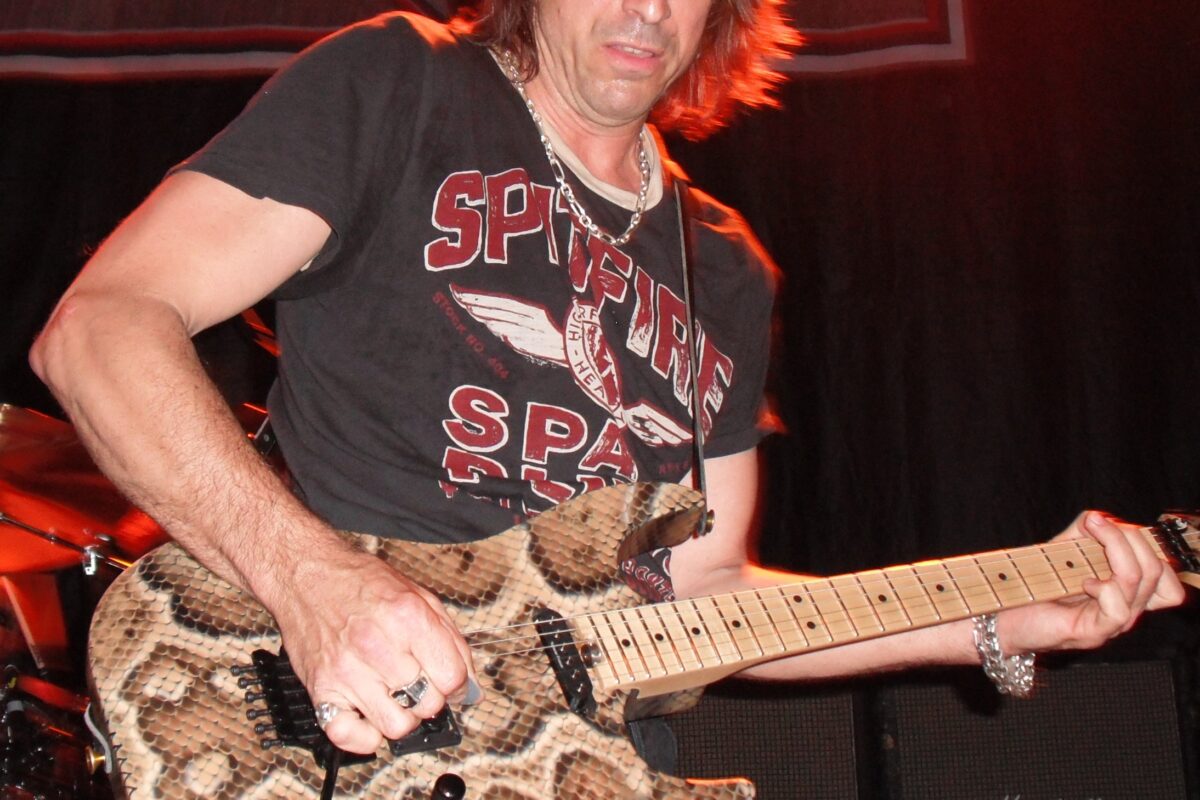
Warren DeMartini Guitars & Gear: The Complete Guide to Ratt’s Torch Guitarist’s Rig
Warren DeMartini guitars & gear: Ratt's Torch guitarist. Charvel Bomber, snakeskin, Jose-modded Plexi, Fender Super Champ, RTM pickup, slapback echo — the complete rig.
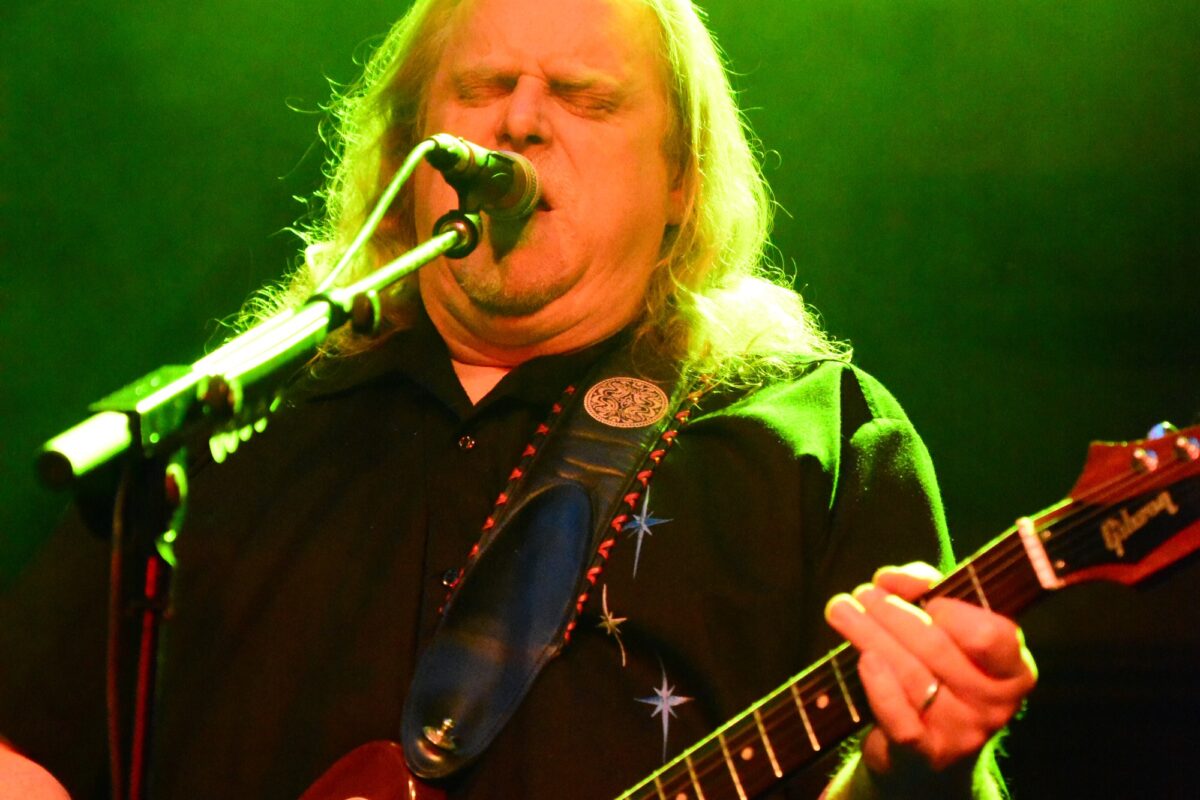
Warren Haynes Guitars & Gear: The Complete Guide to Gov’t Mule’s Guitar Master’s Rig
Warren Haynes' guitars, amps, and effects — the complete guide. Gibson Les Paul Chester, Soldano SLO-100 modified, Klon Centaur, Emma Discombobulator, and how to nail that Gov't Mule blues-rock tone.