Leslie West Guitars & Gear: The Complete Guide to Mountain’s Les Paul Junior Giant
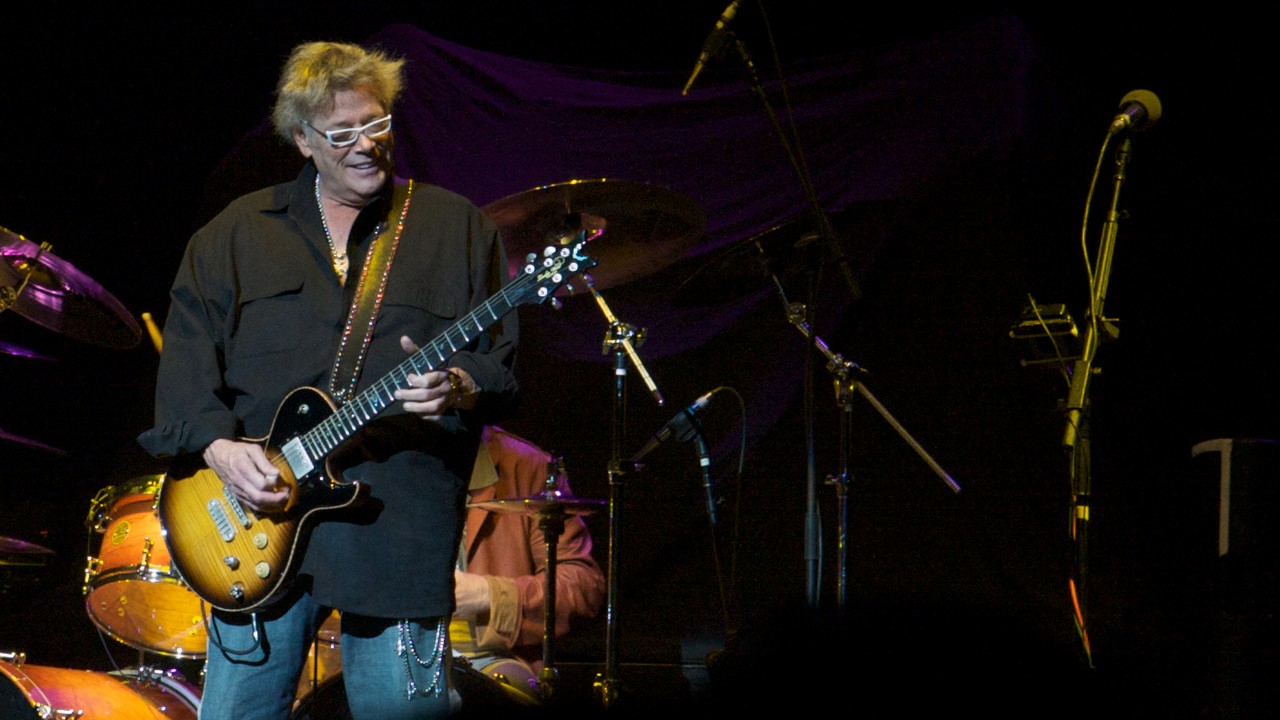
Leslie West performing live on 28 October 2008. Photo: Mountain by Wilson Bilkovich, via Wikimedia Commons, CC BY-SA 2.0 (https://creativecommons.org/licenses/by-sa/2.0/). Cropped to 16:9, resized and re-encoded for web. Adapted image licensed under CC BY-SA 2.0. Source: https://commons.wikimedia.org/wiki/File:Leslie_west.jpg
Felix Pappalardi sent him downtown to pick up a guitar.
“He says, ‘The guy’s got one of my guitars in there. He’s repairing it. Tell him to give it to you.'”
It was the Gibson Les Paul Junior. West looked at it. “I saw it only had one pickup and some knobs, very bare. It reminded me of a tree with a microphone.”
A tree with a microphone. That is Leslie West’s initial description of the guitar that would define his career, define Mountain’s sound, define what a Les Paul Junior could do in a rock context, and inspire a generation of guitarists — including Slash, Ace Frehley, Zakk Wylde, and virtually every hard rock guitarist who found that the cheapest Gibson in the store made the biggest noise when turned up loud.
“It stuck,” he said simply.
Then, for the first Mountain gig at Fillmore West in 1969, he expected Marshalls. Instead, the cartons from the airport contained a Sunn Coliseum PA head — a 1,000-watt public address amplifier designed for vocals, not guitar, loaded with massive KT88 tubes and huge transformers. He plugged in the Les Paul Junior. He turned it up. He thought there was no way he’d get a good tone out of a PA head.
The tone was extraordinary. It became his signature sound. He used that accidental combination — the cheapest Gibson guitar and a PA head designed for someone else’s purpose — to record “Mississippi Queen.”
One pickup. Some knobs. Very bare. A tree with a microphone. The biggest guitar sound in hard rock 1969.
Background: Queens, The Vagrants, Woodstock, and Mountain
Leslie Abel West was born October 22, 1945, in Forest Hills, Queens, New York City. His birth name was Weinstein; he changed it to West after his parents divorced. He grew up in the New York metropolitan area and began playing guitar as a teenager, his influences initially the British Invasion — The Who, The Rolling Stones, The Beatles, Eric Clapton’s Bluesbreakers album. “I didn’t know one blues guy!” he said. “All I knew was The Who, the Stones, the Beatles. That was my schooling. The John Mayall Bluesbreakers album, I must have listened to that 3,000 times!”
He started in The Vagrants, an R&B/blue-eyed soul-rock band from the New York area. Some of their recordings were produced by Felix Pappalardi — the musician and producer who was simultaneously working with Cream on Disraeli Gears. Pappalardi heard something in West’s guitar playing that he wanted to develop further. In 1969, they formed Mountain.
Mountain appeared at Woodstock on Saturday, August 16, 1969 — the second day — starting their set at 9 PM. Their set included “Mississippi Queen.” The performance, seen by hundreds of thousands of people at the festival and later by millions who watched the Woodstock film and album, established Mountain as one of the heaviest and most powerful bands of the era.
Rolling Stone called Mountain “a louder version of Cream.” This is both accurate and insufficient: Mountain took Cream’s power trio format (expanded to a quartet with keyboard player Steve Knight) and applied the specific New York hard rock character that Cream’s British blues derivation didn’t include. West’s guitar — the Les Paul Junior through the Sunn PA head — was the central voice.
Mountain had success with “Mississippi Queen” (No. 21 Billboard), “Theme for an Imaginary Western” (Jack Bruce song), and multiple albums. They broke up and reformed multiple times. West also worked in West, Bruce and Laing with Jack Bruce and Corky Laing.
He had his right leg amputated in June 2011 due to complications from diabetes. He continued performing and recording until his death on December 23, 2020, at age seventy-five.
Tone note: Felix Pappalardi sent him to pick up a guitar that turned out to be a Les Paul Junior. Pappalardi told him to take it. West described it as a tree with a microphone. Then he used it to play one of the heaviest guitar parts in hard rock history. The instrument was chosen for him by someone else’s logistics and described with casual dismissal. The guitar that became the defining document of what a Les Paul Junior could do was given to him for the most practical of reasons — Pappalardi needed it repaired and thought West might as well carry it back. Accidents and logistics, again, producing the most consequential tone.
The Rig: Leslie West’s Guitars, Amps & Gear
Guitars: The Les Paul Junior Tradition
Gibson Les Paul Junior (1956 Single-Cutaway) — The Mississippi Queen Guitar
Leslie West’s primary guitar for the Mountain recordings — including “Mississippi Queen” — was a 1956 Gibson Les Paul Junior in single-cutaway configuration. West was playing a couple of ’50s Gibson Les Paul Juniors at the time “Mississippi Queen” was recorded: a 1956 single-cutaway and a slightly newer double-cutaway.
The Les Paul Junior’s specific construction:
- Body: Solid mahogany — no maple top like the Les Paul Standard, just the mahogany slab. The all-mahogany construction produces a different tonal character: warmer, thicker, with more midrange emphasis and less of the maple’s high-end brightness
- Pickup: Single dog-ear P-90 single-coil in the bridge position. The dog-ear P-90 is surface-mounted on the body, which decreases the distance between the strings and the pickup magnets and increases pickup output compared to soap-bar P-90 pickups. This makes the Junior’s P-90 more aggressive than other P-90 designs
- No neck pickup: One pickup only. The entire tonal range comes from the bridge P-90’s specific character — no neck position option
- Wrap-around bridge/tailpiece: A single piece serving both functions; simpler and lighter than Les Paul Standard’s ABR-1 and tailpiece combination
- Price: The cheapest Gibson in the catalog; the student/budget model
West described the appeal in a Guitar World interview: “What I like about it is… I saw it only had one pickup and some knobs, very bare. It reminded me of a tree with a microphone. It stuck.”
The Junior’s specific virtue at high gain and high volume: when a single-pickup mahogany guitar with a surface-mounted high-output P-90 is run through a high-powered amplifier at working volume, it produces a specific massive, mid-forward character with natural feedback and sustain that multi-pickup guitars with lower-output pickups don’t replicate. The simplicity is the power: one pickup, maximum output, all the way up.
He gave the original Junior to Pete Townshend. “I used it in the studio and I gave it to him.” According to West, Townshend later had a flood at his house and all his guitars were damaged. The original Mountain-era Junior’s fate remains unknown.
He used two Juniors on stage — West frequently used two Les Paul Juniors, one TV Yellow and the other a sunburst. The TV Yellow (the television-studio-optimized finish that photographed as a neutral grey in black-and-white TV) and the sunburst provided the same tonal character in different visual presentations.
Tone note: He gave the original to Pete Townshend. This is the second time in this series that a single instrument connects two of hard rock’s most significant guitarists — the previous example being the 1960 Les Paul Standard that passed between Townshend and Marr and Gallagher. West gave Townshend the Junior he’d used to define the Mountain sound. Townshend had a flood. The guitar’s fate is unknown. The guitar that recorded “Mississippi Queen” may no longer exist in its original form. The music remains.
Gibson Les Paul Junior Double-Cutaway
Alongside the single-cutaway, West also used a slightly newer double-cutaway Les Paul Junior. The double-cutaway (SG-Junior style, introduced in 1958) provides access to the upper register that the single-cutaway’s body horn blocks. The tonal character is similar to the single-cutaway but with a slightly different resonance from the different body shape. West preferred the single-cutaway “and suggested we should really have two independent contests to select the best single-cutaway and double-cutaway model, because they are different animals” when adjudicating at the Vintage Guitar Junior test.
Modified Gibson Flying V (P-90 Bridge, Ashtray Neck)
West also used a modified Gibson Flying V, with the neck pickup removed (he used the hole for an ash tray — literally, he put an ashtray in the pickup route) and a P-90 pickup fitted at the bridge position. A single P-90 in the bridge of a Flying V provides a similar configuration to the Junior — maximum simplicity, maximum output, one pickup — but with the Flying V’s specific mahogany-body character and the more dramatic visual statement of the angular design. He also had a two-pickup Flying V (serial number 906965) used after the “ashtray” Flying V broke.
Dan Armstrong Plexiglass Guitar — The Slide Guitar
For slide guitar work, West used a Dan Armstrong plexiglass guitar — the see-through acrylic-bodied guitar that Ampeg designed in 1969. The plexiglass body’s specific tonal character — brighter, with more attack clarity than wood — suited the slide technique where note definition is critical. West also used a Japanese plexiglass Electra guitar, which is a copy of the better-known Ampeg-made Dan Armstrong guitar, for slide.
Dean Leslie West Signature Series — The Later Career Guitar
In later career, West endorsed Dean Guitars and used the Dean Leslie West Signature USA Soltero model, fitted with a custom Dean pickup called “Mountain of Tone” — a humbucker designed around the Junior’s sonic philosophy. “I waited for like 40 years!” West said of having his own signature model. He played at NAMM with his Dean signature while Gibson walked over to say they were thinking of making a Leslie West signature model. His response: “Well, when?”
The Dean signature maintained the Junior’s philosophical approach: a relatively simple guitar with high-output pickup in a mahogany body, optimized for the specific heavy-rock character West had defined with the Les Paul Junior fifty years earlier.
Other Documented Guitars
- Hagstrom (early career) — “When we started the group, I had a Hagstrom, and it wouldn’t stay in tune.” The intonation problems were part of what led to the Junior acquisition
- Burns guitars — Based on an endorsing contract in the 1970s, West played British-made Burns guitars
- Steinberger (headless, 1980s-1990s) — “I had narrowed my commonly played instruments down to two: an off-the-shelf Steinberger and a Kramer with DiMarzio pickups.” West long favored “headless” guitars and can be seen playing them on some videos
- Kramer with DiMarzio pickups — Alongside the Steinberger in the 1980s-1990s period
- MPC solidbody (Electra, 1977-1982) — Signature on-board effects model created by the Japanese company Electra
- DiMarzio Strat-style (custom for Leslie, 1980s) — Custom instrument from the 1980s
- Ed Roman customs — Later career custom instruments
- 1986 Gibson Les Paul Jr (signed by Les Paul) — Gibson gave the first one to West; it was signed by Les Paul
Complete Guitar List (Key Instruments)
- Gibson Les Paul Junior (1956, single-cutaway, TV Yellow) — Mountain primary; Felix Pappalardi gift/acquisition; “Mississippi Queen” recording; given to Pete Townshend; fate unknown after Townshend flood
- Gibson Les Paul Junior (double-cutaway, sunburst) — Stage use alongside single-cutaway
- Gibson Flying V (modified: P-90 bridge, ashtray neck route) — Modified for single-pickup configuration
- Dan Armstrong plexiglass / Electra plexiglass copy — Slide guitar
- Steinberger (headless) — 1980s-1990s primary
- Dean USA Soltero Leslie West Signature — Later career primary; Mountain of Tone pickup
- 1986 Gibson Les Paul Jr (signed by Les Paul) — Collectible; first Gibson gift
Amps: The Accidental Sunn and the Marshalls
Sunn Coliseum PA Head (KT88 Tubes) — The Mississippi Queen Amp
The most consequential amplifier in Leslie West’s career arrived by mistake — and he knew immediately it was wrong and assumed it would sound bad. His description from Guitar Player:
“Mountain’s first gig was at Fillmore West in 1969. I had been using Marshall amps, and that’s what I expected to find when I opened a bunch of cartons that had arrived from the airport, but instead I got a Sunn — and it wasn’t even a guitar amp. The cartons contained a Sunn Coliseum P.A. head and four 4×12 cabinets, and I thought, ‘There’s no way I can get a good tone out of this thing.’ But the head had four microphone inputs and a master volume control, and when I plugged in and turned it up I got this amazing tone, which became my sound. And remember, this was years before amps had master volume controls. The head had huge transformers and gigantic KT88 tubes, and the cabinets were loaded with Eminence speakers, which never hurt your ears even with the treble all the way up. That’s the amp I used on Mountain Climbing, which included ‘Mississippi Queen.'”
The Sunn Coliseum PA head’s specific technical character:
- KT88 tubes: The KT88 is a higher-power octal power tube than the EL34 or 6L6 used in most guitar amps. Its specific character: more headroom, harder attack, different compression behavior than guitar-specific tube designs. The KT88’s sound at working volume has a specific “hugeness” that comes from its power tube design’s interaction with the transformer
- Huge transformers: The PA head’s transformers are designed for the high-current requirements of public address use; larger transformers produce different low-frequency response and different saturation behavior
- Master volume control: “Years before amps had master volume controls” — the PA head’s master volume allowed West to push the preamp hard (gaining the preamp distortion) while controlling the output volume. This is exactly the approach that Marshall’s master volume heads would later make standard in rock guitar amplification
- Eminence speakers: The specific loading produced “never hurt your ears even with the treble all the way up” — a specific high-frequency character that allowed the trebly Les Paul Junior P-90 to be turned up without harshness
He expected Marshall. He got a PA head designed for vocals. He plugged in a guitar everyone considered a student model. The combination produced the most massive guitar tone in hard rock to that point.
Marshall JMP and JCM900 — The Live Standard
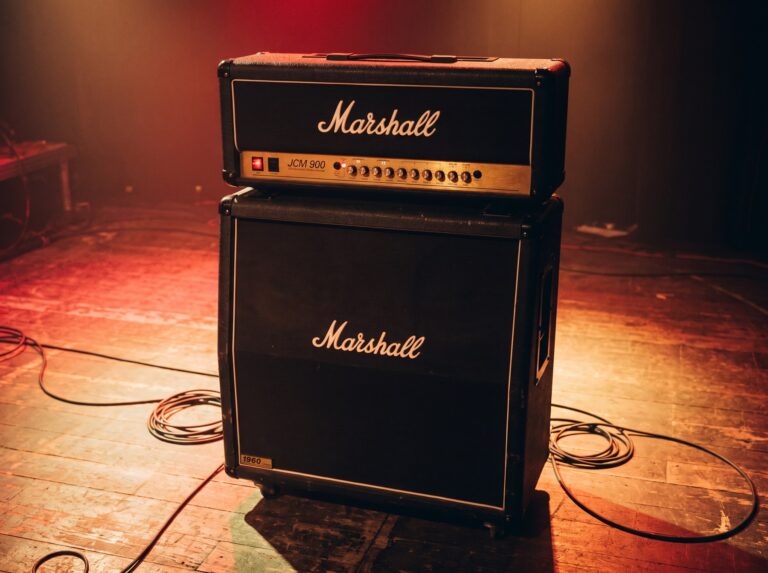
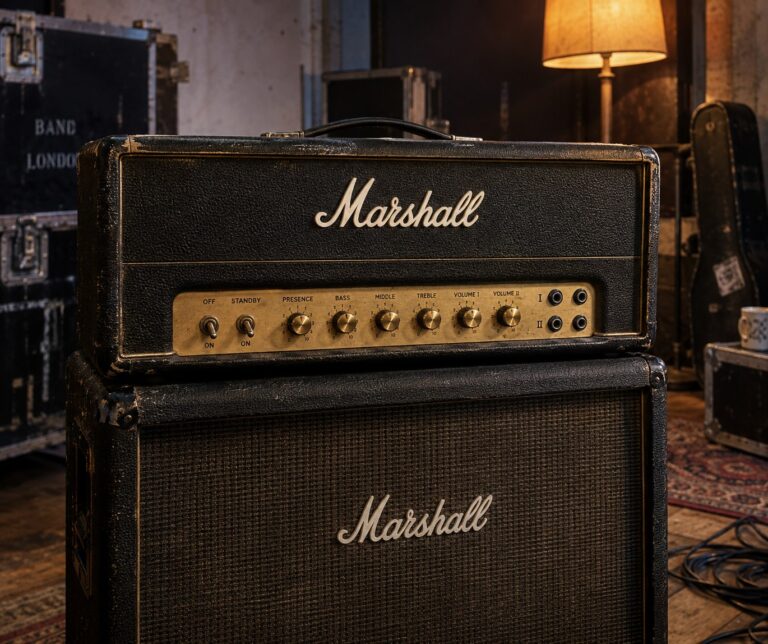
West’s studio amplifier was a Marshall JMP. Live, he used Marshall JCM 900s with Greenback Celestions loaded inside. The Marshall was his expected standard — what he thought he was getting when the Sunn arrived — and he returned to Marshall for live use throughout his career.
The JCM900 with Greenback Celestions: the Celestion Greenback (rated at 25 watts, with a specific warm, vocal character) is an unusual speaker choice for a JCM900 (which produces 100 watts). The mismatch between amp and speaker rating produces a specific pushed, compressed character from the speakers operating near their limit.
Other Documented Amplifiers
- Carlsbro 50 Top valve heads — In 2005, West received a sponsorship with Carlsbro amplifiers; the 50-watt all-valve heads were his primary live amp in this period
- Budda Superdrive Series (custom) — Started endorsing Budda in 2008; custom-built Superdrive Series II amps (Workdog 30 into a 45 and 80) in a slaving configuration
- Crate amps — Various periods
Pedals: The Double Sam Ash Fuzz Story
Sam Ash Fuzz Tone (×2 in Series) — The Early Effect
The earliest and most distinctive West effects story: From Analog Man, from conversations with Gene Cornish and Ira Stone: Ira Stone, who played with and knew Leslie back then, confirmed, saying “Leslie used two Sam Ash fuzz tones in line many times.” Gene Cornish (from The Rascals) saw West use one Sam Ash Fuzz Tone in The Vagrants era after seeing Cornish use one. “The next time they met, he saw that Leslie was using TWO of them in line!”
Two fuzz tones in series — the output of one feeding the input of the other — produces a specific compressed, saturated fuzz character that is different from either unit alone. The stacking doubles the fuzz effect’s harmonic compression and sustain, producing a violin-like sustained tone that anticipates the high-gain amplifier world by several years.
Later Career Pedal Chain
Documented from various sources:
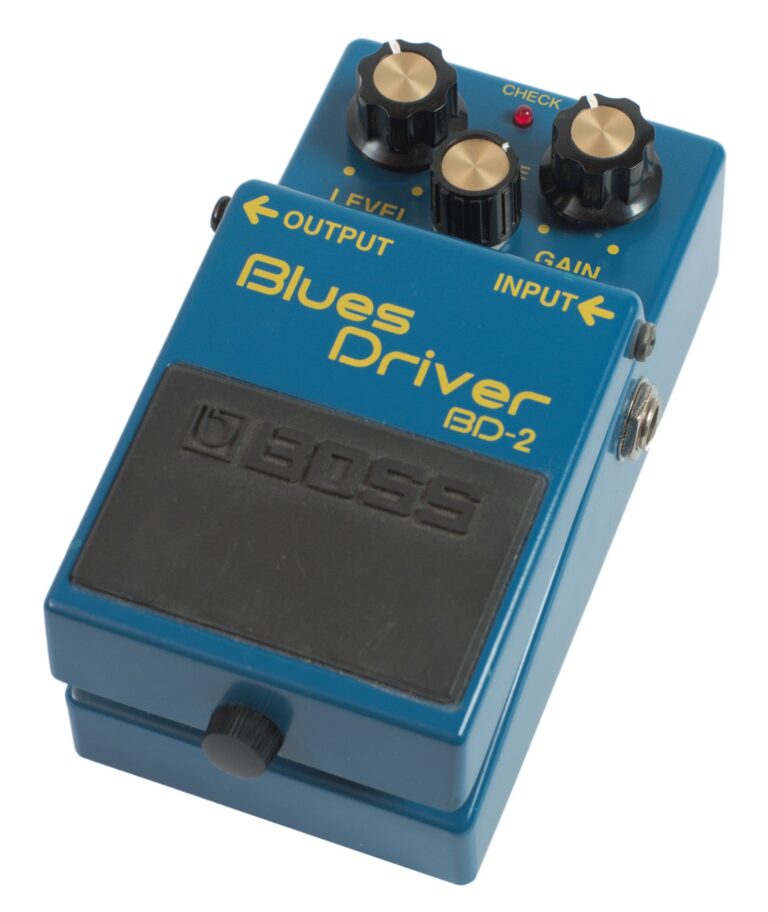
- Boss Blues Driver — Overdrive/distortion; confirmed in Equipboard documentation
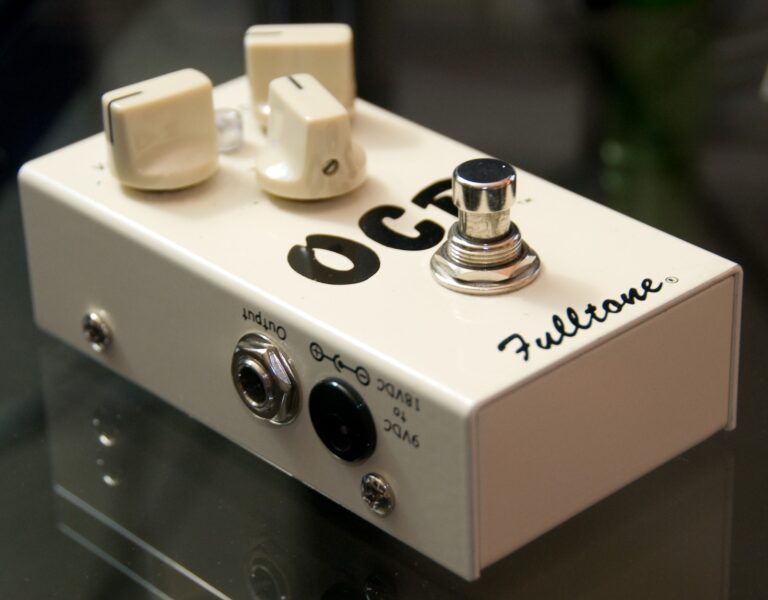
- Fulltone OCD — Transparent overdrive
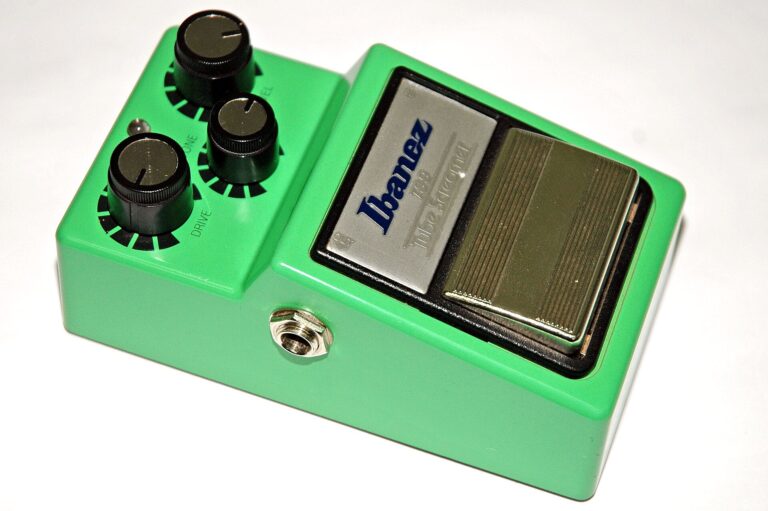
- Ibanez TS-9 Tube Screamer — Classic overdrive
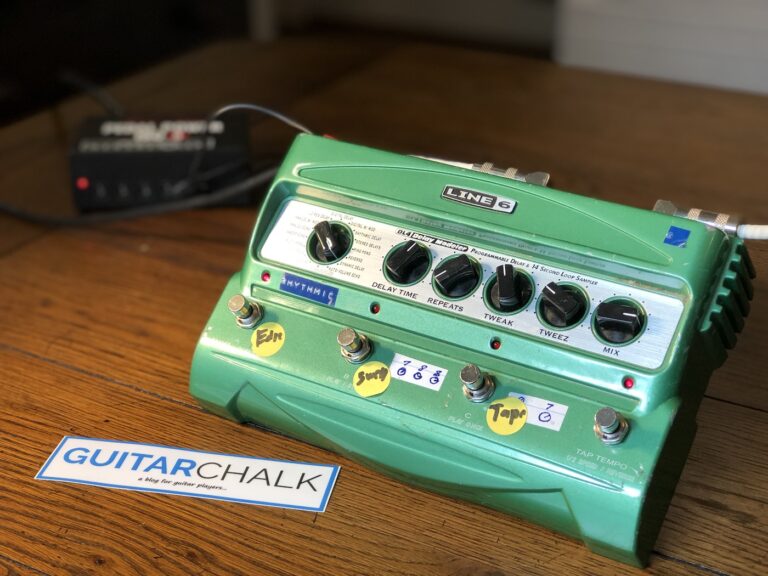
- Line 6 DL4 Delay Modeler — Delay
- Morley pedals — Various Morley effects; listed on Morley’s official artist page
- Boss Chorus — Chorus effect
- DanElectro BackTalk (reverse delay) — Unique reverse delay effect
- Zoom 9000 — Multi-effects unit
- TC Electronic Chorus — Additional chorus option
- Voodoo Lab Pedal Power — Power supply
Strings & Setup
Strings: La Bella electric strings with a .010 gauge banjo string for the high-E — an unusual substitution that provided a specific bright, clear high-E character distinct from standard guitar string high-E. The banjo string’s higher tension and specific alloy produces a different harmonic character that suited West’s heavy picking attack.
Picks: Soft triangle picks — an unusually flexible and large pick format. The triangle’s three usable corners and soft flexibility produces a warmer, more rounded pick attack than standard medium or heavy picks.
Playing Style & Tone Philosophy: One Pickup, Maximum Output
Leslie West’s guitar philosophy is the simplest and most directly effective in hard rock: one pickup, maximum output, amplifier volume at maximum, sustain through the instrument-amplifier interaction rather than through effects chains. The Junior’s single P-90 and the Sunn PA head’s massive KT88 power produced a guitar tone that was simultaneously raw and sustained, aggressive and musical.
The Single-Pickup Philosophy
The Les Paul Junior has one pickup. No pickup selection. No choice between neck warmth and bridge snap. One P-90, bridge position, maximum output. This limitation is the architecture. When there is no choice, every note comes from exactly the same tonal source, producing a consistency and commitment that multi-pickup guitars constantly offer alternatives to.
Vintage Guitar’s assessment: “More than any other guitar player, Leslie West’s seminal guitar work in Mountain… defined what a Les Paul Junior could do. From the screaming leads of ‘Mississippi Queen’ to the melodic runs of ‘Theme From An Imaginary Western,’ the intensity and range of expression apparent in West’s guitar work inspired many players to pick up a Les Paul Junior to see what was behind this legendary guitarist’s selection of a ‘budget’ instrument.”
The Volume Produces the Tone
The Sunn PA head’s master volume allowed West to discover what every subsequent hard rock guitarist would be attempting to replicate: the specific tone of a tube amplifier’s preamp saturated hard while the output volume is managed. The preamp distortion produces a different character from power-amp saturation; the PA head’s specific tube topology (KT88 power stage, massive transformers) produced the specific “Mississippi Queen” massive guitar tone.
The British Invasion as Foundation
West’s stated influences — The Who, The Stones, The Beatles, Eric Clapton’s Bluesbreakers — were entirely British. He was a New York musician playing British-influenced hard rock on an American budget guitar through an American PA head. The synthesis of these influences — the British heavy sound applied to the most American of simple guitar designs — is specifically Mountain’s character.
How to Sound Like Leslie West: The Mountain Guitar Tone
The Guitar
A Gibson Les Paul Junior — single-cutaway preferred; TV Yellow or sunburst. The single dog-ear P-90 bridge pickup is the essential element. No substitution of the Les Paul Standard or Custom replicates the Junior’s specific character.
- Gibson Les Paul Junior (vintage, 1955-1960) — The authentic instrument; single-cutaway preferred; original P-90
- Gibson Les Paul Junior (current production) — Production Junior with modern specifications; less expensive, similar fundamental character
- Epiphone Les Paul Junior — More affordable; approximates the single P-90 character
The Amp
The Sunn Coliseum PA head is essentially impossible to source in working condition at reasonable prices. The approach: a high-powered tube amplifier with a master volume control, allowing the preamp to be pushed hard while managing output volume. Marshall JCM800 or equivalent with the gain turned up into a 4×12 with Greenback speakers approximates the character.
| Control | Setting | Notes |
|---|---|---|
| Gain/Preamp | High — at least 7–8 | The Sunn PA head’s preamp saturation is the core of the tone; replicate with high preamp gain |
| Master Volume | As loud as the venue allows | The PA head’s master volume principle: preamp hard, master managing output |
| Treble | 5–7 | “Never hurt your ears even with treble all the way up” — Eminence speakers character |
| Bass | 5–6 | Present; the mahogany Junior needs bass expression |
| Middle | 6–7 | Forward — the P-90’s midrange emphasis should come through |
Budget vs Authentic
Budget:
- Guitar: Epiphone Les Paul Junior or Gibson Les Paul Junior (current production)
- Amp: Marshall DSL40 or any high-gain amp with master volume; gain high, master moderate
- No essential effects for the Mountain sound
Authentic:
- Guitar: 1956 Gibson Les Paul Junior single-cutaway (TV Yellow) with original dog-ear P-90
- Amp: Sunn Coliseum PA head (if findable) or Marshall JCM800 into 4×12 with Celestion Greenbacks
- Strings: La Bella electric with banjo string high-E
Influence & Legacy: The Cheapest Gibson Made the Heaviest Sound
Leslie West’s influence on rock guitar is the influence of the specific demonstration: he showed, definitively, that the Les Paul Junior — the budget model, the student guitar, the cheapest Gibson in the store — could produce rock’s most massive and powerful guitar sound when matched with the right amplification and played with conviction.
The documented connections:
- Slash — Frequently cited West as an influence; appeared on West’s tribute album Legacy after West’s death; the Junior’s P-90 character runs through the early Guns N’ Roses sound
- Ace Frehley — KISS’s guitarist absorbed the New York hard rock tradition West helped define
- Zakk Wylde — “Recorded the album, titled Legacy: A Tribute to Leslie West” after West’s death; the heavy single-pickup sound has Wylde ancestry
- The entire Les Paul Junior cult — West’s use of the Junior elevated it from budget guitar to serious rock instrument; the Junior’s current cult status and vintage prices reflect his influence
- Dee Snider, guitar community broadly — The Legacy tribute album brings together the diverse community of musicians who absorbed West’s approach
- The master volume amp concept — West’s Sunn PA head discovery (preamp saturation at manageable output volume) anticipated and demonstrated the principle that Marshall’s master volume models would formalize in the mid-1970s
He married his fiancée on stage after Mountain’s performance at the Woodstock 40th anniversary concert in 2009, with a crowd of over 15,000 and a canopy of upraised electric guitars. He had his leg amputated in 2011. He kept playing. He died in 2020 at seventy-five.
Felix Pappalardi sent him downtown to pick up a guitar. It was a tree with a microphone. It stuck.
Tone note: “The head had four microphone inputs and a master volume control, and when I plugged in and turned it up I got this amazing tone, which became my sound. And remember, this was years before amps had master volume controls.” He discovered the master volume principle — preamp saturation at manageable output volume — years before Marshall designed it into their amplifiers. The PA head arrived by mistake. The principle it demonstrated changed how rock guitarists think about amplification. The mistake became the method.
Felix Pappalardi sent him downtown to pick up a guitar. It was the Gibson Les Paul Junior. “I saw it only had one pickup and some knobs, very bare. It reminded me of a tree with a microphone. It stuck.”
Then at the first Mountain gig he expected Marshalls. Instead: a Sunn Coliseum PA head, four 4×12 cabinets, KT88 tubes, huge transformers. He thought there was no way. He plugged in. He turned it up. The tone was extraordinary. He used it to record “Mississippi Queen.”
Two Juniors — one TV Yellow, one sunburst. Two Sam Ash Fuzz Tones in series. A PA head that was never meant for guitar. The cheapest Gibson in the catalog. The biggest guitar sound in rock 1969.
He gave the original to Pete Townshend. He married his fiancée on stage at Woodstock’s 40th anniversary with upraised guitars. He had his leg amputated and kept playing. He died at seventy-five.
A tree with a microphone. It stuck. Everything after was the music.
If Leslie West’s Les Paul Junior and PA-head heavy rock approach — the single dog-ear P-90, the Sunn Coliseum KT88 by accident, the master volume principle before master volumes existed — has you exploring the foundational heavy rock tradition, check our complete guide to Vince Gill’s guitars and gear — the previous guitarist in this series, whose clean country Telecaster elegance occupies the opposite end of the American guitar spectrum from West’s raw Junior power, but whose commitment to the specific instrument-song relationship is equally profound.
And for the next guitarist in this series — whose experimental relationship with the electric guitar is as far from West’s simple one-pickup philosophy as it’s possible to get, but equally committed to finding what the instrument can do — don’t miss our breakdown of Nels Cline’s complete gear guide.
FAQ: Leslie West Guitars & Gear
- What guitar did Leslie West play on “Mississippi Queen”?
- A 1956 Gibson Les Paul Junior single-cutaway — the single-pickup mahogany slab guitar that Gibson marketed as their entry-level budget model. West was playing two Juniors at the time “Mississippi Queen” was recorded: the 1956 single-cutaway and a slightly newer double-cutaway. He described getting the guitar: his Mountain partner Felix Pappalardi sent him downtown to pick up a guitar that was being repaired. It was the Les Paul Junior. “I saw it only had one pickup and some knobs, very bare. It reminded me of a tree with a microphone. It stuck.” He later gave the original to Pete Townshend; it was reportedly damaged in a flood at Townshend’s home. He also used two Juniors on stage: one TV Yellow and one sunburst.
- What amplifier did Leslie West use to record “Mississippi Queen”?
- A Sunn Coliseum PA head — a public address amplifier that arrived by mistake when West expected Marshall amps. He described it: “I had been using Marshall amps, and that’s what I expected to find when I opened a bunch of cartons that had arrived from the airport, but instead I got a Sunn — and it wasn’t even a guitar amp. The cartons contained a Sunn Coliseum P.A. head and four 4×12 cabinets, and I thought, ‘There’s no way I can get a good tone out of this thing.’ But the head had four microphone inputs and a master volume control, and when I plugged in and turned it up I got this amazing tone, which became my sound.” The PA head featured KT88 tubes and huge transformers; the cabinets were loaded with Eminence speakers. He used this accidental rig on Mountain Climbing, which included “Mississippi Queen.”
- Why did Leslie West play a Les Paul Junior instead of a Les Paul Standard?
- He didn’t choose it — he was sent to pick it up as a favor. The guitar was already there, it was the cheapest Gibson available, and it had a single dog-ear P-90 in the bridge position. But the specific qualities of the Junior turned out to be exactly what his style required: the surface-mounted dog-ear P-90 has higher output than soap-bar P-90 designs, the all-mahogany construction produces a warmer, more mid-forward tone than the maple-capped Les Paul Standard, and the single-pickup simplicity meant there was only one voice — bridge P-90, maximum output, all the time. Vintage Guitar Magazine described it: “More than any other guitar player, Leslie West’s seminal guitar work in Mountain… defined what a Les Paul Junior could do.”
- What were the two Sam Ash Fuzz Tones?
- In The Vagrants era (before Mountain), West saw Gene Cornish of The Rascals using a Sam Ash Fuzz Tone. He got one. By the next time the musicians met, West had two Sam Ash Fuzz Tones run in series — the output of one feeding the input of the other. His friend Ira Stone confirmed: “Leslie used two Sam Ash fuzz tones in line many times.” Running two fuzz pedals in series doubles the harmonic compression and sustain, producing a violin-like sustained tone with more saturation than either unit alone. This approach anticipated the high-gain amp world that would emerge in the mid-1970s.
- What happened to Leslie West’s original Les Paul Junior?
- He gave it to Pete Townshend of The Who. West described it: “I used it in the studio and I gave it to him.” According to West, Townshend later had a flood at his house and all his guitars were damaged. The guitar’s subsequent fate is unknown. The Mountain-era Junior that recorded “Mississippi Queen” may no longer exist in its original form — or may still be somewhere, damaged from the flood but perhaps surviving. West no longer had it. He used other Juniors for the remainder of his career, including the Dean Leslie West Signature in later years.
- What was Leslie West’s biggest influence?
- British Invasion rock — specifically The Who, The Rolling Stones, The Beatles, and Eric Clapton’s Bluesbreakers. He said: “I didn’t know one blues guy! All I knew was The Who, the Stones, the Beatles. That was my schooling. The John Mayall Bluesbreakers album, I must have listened to that 3,000 times!” This is the paradox of the Mountain sound: a New York hard rock band whose guitarist was entirely British-influenced, playing a budget American guitar through an accidentally acquired American PA head, producing a sound that Rolling Stone called “a louder version of Cream.” British influence, American instrument, American PA accident, New York result.
- How do I get Leslie West’s Mountain guitar tone?
- Gibson Les Paul Junior (single-cutaway preferred, TV Yellow or sunburst; original dog-ear P-90 bridge pickup). Through a high-powered tube amp with master volume — Marshall JCM800 or equivalent with gain high (7–8), master volume at appropriate level for the venue. Celestion Greenback speakers in the cabinet if possible. The Sunn Coliseum PA head is nearly impossible to source; the principle it demonstrated (preamp saturation with output volume control) is available from any master-volume Marshall. No essential effects; the tone comes from the guitar-amp interaction at high volume. La Bella electric strings with a banjo string on high-E for the specific bright-but-warm character. Soft triangle picks for the rounded attack. Turn it up.
Image credits
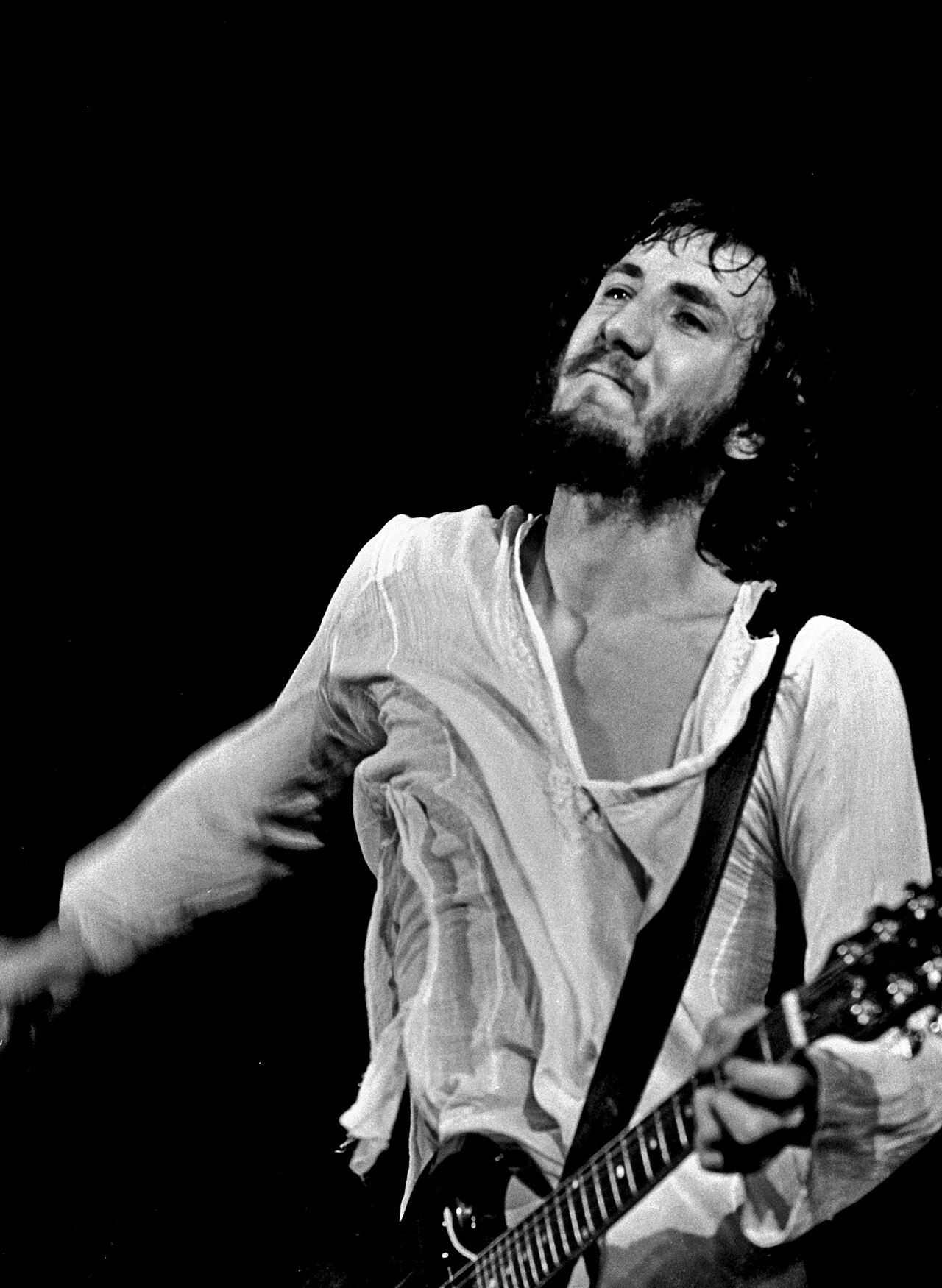
- Pete Townshend: Heinrich Klaffs, Wikimedia Commons, CC BY-SA 2.0.
- Top image: Leslie West performing on 28 October 2008. Photo: Mountain by Wilson Bilkovich / CC BY-SA 2.0. Cropped to 16:9, resized and JPEG re-encoded. Adapted photograph also CC BY-SA 2.0. Original stage lighting and grain retained; no exact guitar model is asserted.
- Marshall 1959 Super Lead Plexi: GuitarGangsters AI-generated reference illustration, not a photograph.
- Boss BD-2 Blues Driver: El Grafo, Wikimedia Commons, CC BY-SA 4.0.
- Ibanez TS9 Tube Screamer: Mataresephotos, Wikimedia Commons, CC BY 3.0 US.
- Line 6 DL4: Guitar Chalk, Flickr, CC BY 2.0.
- Marshall JCM900: GuitarGangsters AI-generated reference illustration, not a photograph.
- Fulltone OCD Overdrive: ArtBrom, Wikimedia Commons, CC BY-SA 2.0.


