
Investigate Mick Ronson guitars gear and you find the equipment behind one of rock and roll’s most musically complete and most tragically brief careers — a Hull, England-born guitarist whose work as David Bowie’s lead guitarist through the Ziggy Stardust and Aladdin Sane period produced some of the most musically sophisticated and most emotionally powerful guitar playing in the glam rock tradition, whose Les Paul through Marshall created the specific combination of classical-influenced melodicism and rock power that defined the Spiders from Mars’ sonic identity, and who died at forty-five from liver cancer in 1993 before most of the wider world had recognised what he had achieved. Ronson was simultaneously a technically accomplished lead guitarist, a skilled arranger who could translate classical orchestral ideas to the rock band context, a producer, and a solo artist — a musician of genuine comprehensive musical intelligence in a genre that was often dismissed as superficial, playing on records that revealed greater musical depth with every decade of subsequent listening.
This guide covers Ronson’s complete equipment picture: the Gibson Les Paul that was his signature instrument, the Marshall amplification that gave his playing its specific driven authority, his effects use, and the playing philosophy of a musician who brought genuine musical education and genuine classical music awareness to the rock and roll context without losing the raw rock conviction that made the music physically exciting as well as intellectually rewarding. Understanding Mick Ronson’s gear is understanding how musical sophistication and rock and roll power are not merely compatible but complementary.
Background
Michael Geoffrey Ronson was born on May 26, 1946, in Kingston upon Hull, Yorkshire, England. His early musical formation was unusually diverse for someone who would become best known as a rock guitarist — he studied the piano and violin as a child, developing genuine musical literacy and genuine classical music knowledge before turning to the guitar as his primary instrument in his teens.
This classical music background was as central to his subsequent guitar work as any specifically rock influence — the ability to read and interpret orchestral arrangements, to understand harmony from a music theory perspective rather than purely empirically, and to appreciate the specific quality of melody and arrangement that distinguished the European classical tradition from the simpler harmonic language of most rock and roll. These classical influences showed up in his guitar playing as a specific quality of melodic sophistication — the ability to construct lead guitar lines that moved through harmonic space with the logic and elegance of a classical melody rather than merely cycling through blues pentatonic vocabulary.
His association with David Bowie began in the early 1970s after a period playing in various Hull bands and subsequently joining the band that became the Spiders from Mars. The Ziggy Stardust album (1972) introduced the Ronson guitar approach to the world — the Les Paul warmth through the Marshall’s natural drive, the classical-influenced melodicism of the lead lines, and the specific theatrical quality of playing that served Bowie’s glam rock persona with complete conviction.
The albums he appeared on with Bowie — The Man Who Sold the World (1970), Hunky Dory (1971), The Rise and Fall of Ziggy Stardust (1972), Aladdin Sane (1973), and Pin Ups (1973) — were among the most musically accomplished and most culturally significant rock recordings of the early 1970s, and his guitar was central to what made them so. He left the Bowie band in 1973 and subsequently worked with Mott the Hoople, Ian Hunter, Bob Dylan, Morrissey, and various other artists, and released solo albums that showed the full range of his musical intelligence outside the Bowie context. He died on April 29, 1993.
Mick Ronson Guitars Gear: The Complete Rig
Guitars
Mick Ronson’s guitar identity was as completely associated with a single instrument as any rock guitarist’s — the Gibson Les Paul was his primary voice from the Bowie period through his entire career.
His primary and most iconic guitar was a 1968 Gibson Les Paul Custom — the “Black Beauty” model with three humbucking pickups and ebony fingerboard. The Les Paul Custom’s specific construction — mahogany body with a thin maple cap, ebony fingerboard, and three-pickup configuration — gave it a specific tonal character that was somewhat different from the more celebrated “Burst” Standard: slightly tighter in the low end, with the ebony board’s specific hardness contributing a slightly brighter and more articulate character to the overall tone. The three pickups (neck, middle, and bridge) gave access to additional tonal combinations beyond the two-pickup Standard, though Ronson’s most characteristic playing used the neck pickup for the warm, singing quality of his most melodic lead work.
He later used a 1968 Gibson Les Paul Standard alongside the Custom — the two-pickup Standard with its PAF-spec humbuckers (Alnico II, approximately 7.5k to 8.5k ohms) providing the classic Les Paul warm, sustaining character that was the foundational tone of the Bowie recordings.
A Fender Stratocaster appeared for specific passages — particularly for the more funky, rhythmically oriented material in later Bowie work and in his solo recordings — where the single-coil brightness and definition suited the musical character better than the Les Paul’s warmer humbucker.
His strings were typically medium gauge — .010–.046 — appropriate for the melodic lead approach while maintaining adequate sustain and warmth for the Les Paul’s sustained single-note playing.
Amps
Ronson’s amplification was Marshall — the British EL34 designs that gave his Les Paul playing its specific combination of warmth and driven authority.
His primary amplifiers were Marshall Super Lead heads — the vintage Plexi-panel designs whose EL34 natural saturation at working volume provided the primary gain character of the Bowie recordings and live performances. The Les Paul Custom or Standard’s humbucker output driving the Marshall’s input produced the specific combination of warmth (from the humbucker’s double-coil character) and natural drive (from the EL34’s working saturation) that gave the Bowie recordings their specific guitar tone.
He ran the Marshalls into Marshall 4×12 cabinets — the standard professional arena rock configuration that gave the guitar its specific combination of focused projection and acoustic authority.
The specific volume levels at which Ronson played the Marshalls in the studio — typically at performance-level volumes that pushed the output stage into its natural saturation zone — were as important to the specific guitar tone as any other element of the signal chain. The EL34’s natural compression and harmonic enrichment at these specific operating points gave the sustained notes their specific singing quality and gave the more aggressive passages their specific driven authority.
Effects
Ronson’s effects chain was minimal — consistent with the approach of maximising the natural character of the Les Paul through Marshall combination rather than adding electronic processing that would change the fundamental character.
A wah pedal appeared for specific expressive passages — particularly the famous wah-driven lead work on “Moonage Daydream” from the Ziggy Stardust album, where the wah’s vocal quality gave the lead lines their specific character of theatrical expressiveness that suited the song’s specific theatrical rock context.
The natural character of the Les Paul Custom through the Marshall Super Lead at working volume was the primary and most important tonal statement — the specific combination of humbucker warmth and EL34 natural saturation producing the specific tone that appeared on the Bowie recordings without requiring additional electronic processing.
Various studio processing — specific equalization, compression, and reverb applied by producers Ken Scott and others in the specific studio context — shaped the recorded guitar sound beyond the direct amplifier output, but these were studio decisions rather than live performance effects choices.
Playing Style & Tone Philosophy
Mick Ronson’s playing style was defined by the specific combination of classical musical education and rock and roll conviction that gave his guitar work its particular quality of melodic sophistication within physical power. His lead guitar lines moved through harmonic space with the logic and elegance of a trained musician who understood what notes were doing harmonically rather than relying on blues pentatonic pattern application, while maintaining the physical energy and rock conviction that gave the music its immediate impact.
His melodic approach on songs like “Ziggy Stardust,” “Moonage Daydream,” and “Jean Genie” showed guitar lines that had specific harmonic logic — notes chosen for what they expressed in the context of the chord structure rather than for their position within a pattern. The lines moved with a quality of melodic inevitability — each note sounding right because it was genuinely the right harmonic choice for that moment — that reflected the classical music training’s specific contribution to his musical intelligence.
His vibrato — controlled, musical, with a quality of European classical music influence alongside the rock and roll physicality — was one of the most immediately distinctive elements of his playing. The vibrato added expressiveness to sustained notes without the excessive width of some rock guitar approaches, reflecting the classical tradition’s emphasis on controlled expression within specific musical contexts rather than the maximum-width vibrato of some blues rock approaches.
His arranger’s intelligence — the ability to hear how the guitar’s role fit within the broader arrangement of string orchestrations, piano, and other instruments — gave his guitar work a specific quality of ensemble intelligence that most rock guitarists didn’t bring to their playing. The guitar was always placed in context rather than merely playing its own content, and this contextual awareness gave the Bowie recordings their specific quality of guitar-as-voice-within-ensemble rather than guitar-as-featured-instrument.
Tonally, his philosophy was the melodic rock guitarist’s most complete version: warm, sustaining Les Paul through naturally saturating Marshall at working volume, with the natural interaction between instrument and amplifier producing the primary tonal character without requiring additional processing. Every tone choice was in service of the specific melodic and harmonic intelligence that distinguished his approach.
How to Sound Like Mick Ronson
Guitar Approach
A Gibson Les Paul — Custom or Standard, with PAF-spec humbuckers for the most authentic character. Medium strings (.010–.046). The neck pickup for the warmest, most singing lead tone; the bridge pickup for the more aggressive rhythm work. The most important element is the melodic approach — Ronson’s guitar lines showed genuine harmonic knowledge of what each note was doing in the chord context. Study classical music melody and European pop harmony alongside rock guitar technique to develop the specific quality of melodic logic that characterised his approach.
Amp Approach
A vintage Marshall Super Lead Plexi — or quality reproduction — at working volume where the EL34s produce natural output saturation. The Les Paul Custom’s neck pickup into the naturally saturating Marshall at this volume level was the primary Ronson tone.
| Control | Setting | Notes |
|---|---|---|
| Volume (Input 1) | 7–9 | Natural EL34 output saturation — Spiders from Mars lived here |
| Treble | 6 | Moderate — Les Paul Custom provides warmth, treble adds definition |
| Middle | 6–7 | Present mids — melodic lead needs midrange authority |
| Bass | 4–5 | Controlled — Les Paul warmth manages itself at these settings |
| Presence | 5 | Moderate — clarity without harshness for melodic lead |
Influence & Legacy
Mick Ronson’s legacy was the specific legacy of a musician whose combination of classical musical education, genuine rock and roll conviction, arranger’s intelligence, and specific guitar tone gave glam rock its most musically distinguished guitar voice — a voice that continued to be recognised and appreciated by subsequent generations of musicians even as the mainstream culture moved on from glam to punk to new wave and beyond.
His influence on subsequent rock guitarists — particularly those who sought to combine classical music awareness with rock guitar playing — was substantial. The specific approach of applying classical melodic logic to rock guitar improvisation, of treating the guitar as a voice within an orchestral arrangement rather than as the dominant sound in a three-piece band, and of achieving warmth and drive through the natural character of instrument and amplifier rather than through electronic processing were all Ronson contributions to the rock guitar vocabulary that remained valuable regardless of the specific genre context they were applied in.
His work as an arranger — the string arrangements on Bowie’s recordings, the orchestral arrangements for Ian Hunter’s post-Mott the Hoople albums, and the production work that showed his musical intelligence extending beyond the guitar — was as important a professional legacy as his guitar playing, showing that his musical gifts were genuinely comprehensive rather than specifically instrumental.
For players exploring the glam rock and theatrical hard rock tradition that Ronson defined, the rigs of Earl Slick — whose subsequent Bowie work continued the Les Paul-through-Marshall approach that Ronson had established — and Alex Harvey, whose Sensational Alex Harvey Band showed how similar theatrical rock conviction and similar musical range produced a completely different aesthetic result, provide illuminating comparison. The classical music influence in his approach connects to Mick Taylor‘s Rolling Stones work, which shows how similar genuine musical sophistication from a different starting point produced a different but equally distinctive guitar voice within the early 1970s British rock tradition.
Ziggy Stardust: The Album That Made Ronson Famous
The Rise and Fall of Ziggy Stardust and the Spiders from Mars (1972) — the album that launched David Bowie’s commercial breakthrough and gave Mick Ronson his most complete and most public showcase — was one of the most musically accomplished and most culturally significant rock albums of its decade. Understanding what specifically Ronson contributed to this recording gives the clearest picture of what his guitar playing was capable of at its most fully developed and most carefully realised.
The album’s guitar approach showed Ronson at his most complete: the classical melodic intelligence in the lead lines, the arranger’s understanding of how the guitar sat within the broader arrangement of string orchestrations and piano, the specific warmth of the Les Paul Custom’s neck pickup through the Marshall’s natural drive, and the theatrical quality of playing that served Bowie’s Ziggy Stardust persona with complete conviction. Each track showed a different dimension of his approach: the driving rhythm work of “Suffragette City,” the sustained melodic lead of “Starman,” the theatrically wah-driven expressiveness of “Moonage Daydream,” and the classical-influenced melodicism of “Rock ‘n’ Roll Suicide.”
“Moonage Daydream” deserves specific examination as the fullest single-track demonstration of Ronson’s combined technical and tonal approach. The song’s opening guitar riff — angular, dissonant, and theatrically aggressive — showed the Les Paul’s bridge pickup at its most cutting through the Marshall’s driven character. The central guitar solo — the wah-driven lead lines that gave the song its most immediately distinctive guitar moment — showed the Les Paul neck pickup through the wah’s vocal expression, creating a quality of theatrical guitar voice that was as much a theatrical performance as a musical one. The combined effect was of a guitarist who understood both what the guitar could do technically and what it needed to do theatrically in this specific song’s specific theatrical context.
Hunky Dory: Arranger and Guitar Player
Hunky Dory (1971) — the Bowie album that preceded Ziggy Stardust and that showed a somewhat different dimension of Ronson’s musical contribution — documented his guitar approach in a more atmospheric, more harmonically adventurous musical context. The album’s specific character — more reflective and more harmonically sophisticated than the driving glam rock of Ziggy Stardust — required a different specific guitar approach, and Ronson served the different context with the same quality of musical intelligence.
His string arrangements on “Life on Mars?” — one of the most celebrated Bowie songs and one of the most beautifully arranged rock recordings of the early 1970s — showed the classical training’s most direct contribution to his professional work. The string arrangement’s specific melodic content and specific harmonic movement reflected genuine knowledge of how strings functioned in an orchestral context, and the resulting arrangement gave the song a specific quality of orchestral richness that distinguished it from rock recordings that used strings merely as textural additions rather than as genuine compositional voices.
The guitar on the Hunky Dory tracks was typically warmer and more atmospheric than the driving Ziggy Stardust approach — the neck pickup’s sustained character serving the more reflective musical content of songs like “Changes” and “Oh! You Pretty Things” rather than the aggressive driving rock of the Ziggy material. This adaptability — the guitar serving the specific musical character of each album and each song rather than maintaining a consistent rock guitar presence regardless of context — was one of the most significant and least acknowledged dimensions of Ronson’s musical intelligence.
Aladdin Sane: The Most Adventurous Bowie Recording
Aladdin Sane (1973) — Bowie’s follow-up to Ziggy Stardust, recorded while on tour in America and capturing the specific character of that touring experience — showed Ronson’s guitar in the most musically adventurous context of his Bowie career. The album’s music was more jagged, more experimental, and more reflecting of the American blues and soul influences that the American touring experience had exposed the band to, and Ronson’s guitar adapted to these influences with the same intelligence he had brought to the European art rock of the earlier recordings.
The title track — “Aladdin Sane” — featured the famous Mike Garson piano improvisation that was one of the most structurally unusual passages in mainstream rock recording, and Ronson’s guitar work alongside and around this piano improvisation showed his ability to serve music of genuine experimental ambition without losing the rock guitar conviction that grounded the overall musical statement. His guitar in the more blues-influenced tracks on the album showed genuine absorption of the American blues and rock and roll that the touring had exposed him to alongside the European art rock that had always been part of his musical formation.
The specific guitar tones on Aladdin Sane — the Les Paul through the Marshall at the specific volume levels of the recording context, captured with Ken Scott’s specific production approach — showed the natural evolution of the Ziggy Stardust tones toward a slightly rawer, more live-sounding character that reflected the touring experience’s influence on the band’s overall musical approach. The warmth was the same; the drive was the same; but the specific character of the playing was slightly more immediate and more physically committed, reflecting the specific difference between carefully constructed studio work and recording that captured something of the live performance energy.
The Classical Music Foundation: Why It Mattered
The classical music education that Ronson had received as a child — the piano and violin study that gave him genuine musical literacy before he encountered rock guitar — was the single most important element of his musical formation that distinguished him from most of his rock guitar contemporaries. Understanding what specifically this classical education contributed to his playing gives the most accurate picture of why his guitar work had the particular qualities that made it so distinctive.
Classical music training developed specific musical capabilities that were not typically developed through the informal methods by which most rock guitarists learned: the ability to read and interpret written music, the understanding of harmonic theory from a structural perspective, the specific knowledge of how melody, harmony, and rhythm functioned as independent but interrelated musical elements, and the specific awareness of what each note in a melody was doing harmonically — how it related to the underlying chord, how it connected to the notes before and after it, and what specific emotional or harmonic function it served in the overall phrase.
These classical-derived musical capabilities showed directly in Ronson’s guitar work. His lead guitar lines moved with a quality of melodic purpose — each note in the right place for the right harmonic reason — that musicians who had not developed the same theoretical foundation couldn’t always achieve. The specific intervals he chose in lead passages, the specific way he resolved melodic tensions at phrase endings, and the overall quality of melodic logic that gave his lines their specific character of inevitability — these were all products of the classical music understanding that his formal training had developed.
The guitar effects that served his playing — minimal, with the wah appearing for specific theatrical purposes and the natural character of the Les Paul through Marshall serving as the primary statement — reflected the same classical musician’s understanding that the instrument’s natural character was the primary musical resource, and that electronic processing should add specific qualities for specific musical purposes rather than serve as a constant tonal addition. The classical guitarist played the instrument directly; Ronson played the electric guitar with the same directness, using the wah when the theatrical context specifically called for its vocal quality and relying on the natural instrument-amplifier interaction for everything else.
Mick Ronson’s career — tragically brief, spanning from the early Hull bands through the Bowie peak period, the Mott the Hoople and Ian Hunter work, and the solo recordings to his death at forty-five — left a recorded legacy that grew in recognition and appreciation with every passing decade. The equipment he used: the 1968 Gibson Les Paul Custom through the Marshall Super Lead at working volume, with the wah for specific theatrical moments and minimal additional processing — was exactly right for exactly the music he was making. The gear served the musical intelligence; the musical intelligence honoured the classical training; and the training gave rock and roll one of its most genuinely musically distinguished guitar voices. That is the complete Mick Ronson gear story, and it deserves to be as widely known as the records it helped create.
The Les Paul Custom’s three-pickup configuration — a design feature that distinguished it from the more common two-pickup Standard and that reflected Gibson’s mid-1950s luxury guitar philosophy — gave Ronson access to tonal combinations that the Standard didn’t provide. The three pickups (neck, middle, and bridge Alnico humbucker designs) could be used individually or in combination, with the three-way switch providing the standard individual selections and the volume/tone controls allowing specific additional combinations through blending. The middle pickup’s specific position on the instrument — approximately between the neck and bridge positions of a two-pickup guitar — gave it a tonal character that was warmer than the bridge position but with more definition and presence than the neck position’s warmth alone. This middle position’s specific character suited certain rhythm chord playing where the neck pickup was too warm and the bridge too bright, giving Ronson a third distinct tonal option that many guitarists didn’t have available. His neck pickup for the warmest melodic lead work; his bridge for the most aggressive rhythm driving; and his middle for specific applications where neither extreme was exactly right — this three-pickup intelligence was part of the specific tonal versatility that distinguished his playing approach.
The Ken Scott production approach on the Bowie recordings — Scott being one of the most accomplished British rock producers of the early 1970s, whose work included not only the Bowie records but significant Beatles-adjacent work at Abbey Road — shaped how Ronson’s guitar was recorded and presented in ways that were as significant to the recordings’ specific character as the instruments and amplifiers themselves. Scott’s specific microphone placement for the Marshall cabinet, his specific approach to the studio acoustic environment, and his specific equalization and compression decisions all contributed to the recorded guitar sound that appeared on the albums. The natural warmth of the Les Paul through the Marshall at working volume was the raw material; Scott’s production decisions gave that raw material its specific recorded presentation. Understanding the complete signal chain — instrument, amplifier, room, microphone, and production processing — gives the most accurate picture of how the specific character of the Bowie recordings’ guitar sound was achieved.
The Ian Hunter and Mott the Hoople work that followed Ronson’s departure from the Bowie band showed his guitar approach in a slightly different musical context — harder and more straightforwardly rock-oriented than the Bowie theatrical rock, but with the same musical intelligence and the same Les Paul-through-Marshall fundamental approach. Hunter’s songwriting — more blues-rooted and more straightforwardly melodic than Bowie’s theatrical art rock — suited Ronson’s guitar approach slightly differently from the Bowie context: more emphasis on the rock guitar’s rhythmic and harmonic support role, less emphasis on the orchestral arranger’s specific contributions. The recordings showed Ronson serving a different specific creative vision with the same professional quality and the same Les Paul warmth through Marshall drive, demonstrating that his musical intelligence was adaptable to different specific creative contexts without losing its fundamental character.
The Hull, Yorkshire origin of Ronson’s musical formation — an English industrial city as far from the glamour of London’s rock scene as geography could place it — gave his musical development a specific character of provincial earnestness that was part of what distinguished his approach from the more self-consciously fashionable approaches of some London-based musicians of the same period. Hull produced musicians who played because they loved music rather than because they were pursuing cultural fashion, and this specific quality of genuine musical commitment — the willingness to practice seriously and to develop genuine musical knowledge because the music itself demanded it — was part of what gave Ronson’s playing its specific quality of genuine depth rather than surface polish. The classical training he received in Hull was the product of a provincial musical culture that valued genuine musical education for its own sake rather than for its commercial applications, and this unglamorous provincial seriousness was as central to his musical achievement as any specific guitar technique or equipment choice.
The Bob Dylan Rolling Thunder Revue connection — Ronson appearing on Dylan’s 1975-1976 tour as a guitarist alongside T-Bone Burnett, Steven Soles, and others — placed his guitar in one of the most creatively charged touring contexts of the mid-1970s and showed his ability to serve music that was as far from glam rock’s theatrical excess as any in mainstream American music. Dylan’s specific approach to his own songs — the constant reinterpretation, the specific harmonic and rhythmic variations that gave each performance its individual character — required a guitarist who could listen and respond in real time rather than execute predetermined parts, and Ronson’s response to this challenge showed the same musical intelligence and the same musical adaptability that had always characterised his best work. The Les Paul and Marshall that had served the glam rock theatrical context served the more folk and blues-rooted Dylan context with the same fundamental character, because the acoustic warmth and sustain of that combination was as appropriate for Dylan’s music as for Bowie’s — different specific musical applications of the same fundamental acoustic relationship between instrument and amplifier.
The Heaven and Hull album (1994) — Ronson’s final solo recording, completed in the final months of his life and released posthumously — was as much a personal statement about his musical identity as it was a collection of songs and guitar performances. Named after his Yorkshire origins and completed despite the illness that would kill him shortly after, the album showed the full range of his musical intelligence — the classical melodic sophistication, the rock guitar conviction, the arranger’s ear, and the specific warmth of the Les Paul through Marshall that had always been his primary tonal identity — in a context where the specific personal urgency of a dying musician gave every performance its specific quality of emotional weight. The guitar tones on the album reflected the same fundamental approach as the Bowie work — Les Paul warmth through Marshall natural saturation — but with the specific character of a musician playing with the awareness that these might be his final recorded performances, giving each note the weight of a genuinely final statement. The equipment served the music with the same acoustic appropriateness as always; the music was given its most personal and most emotionally weighted context; and the result was a recording that deserved more attention than the posthumous release circumstances allowed it to receive.
The specific acoustic interaction between the Les Paul Custom’s ebony fingerboard and its tonal character — and how this distinguished the Custom from the rosewood-boarded Standard — was one of the more subtle but genuinely real dimensions of Ronson’s specific guitar character. Ebony’s specific hardness and density gave the fingerboard a slightly brighter attack response than rosewood — the harder material transmitting the string’s vibration to the neck more efficiently and with less high-frequency absorption than the softer rosewood. This subtle brightening of the attack character gave the Custom’s notes a specific quality of definition and presence that distinguished it from the Standard’s slightly warmer, more rounded character, and this difference was particularly relevant for the melodic lead work where note definition — the ability to perceive each individual note’s specific pitch and attack character — was as important as sustain and warmth. Ronson’s choice of the Custom over the Standard as his primary instrument — a choice that was less common among Les Paul users of the period — may have reflected genuine awareness of this specific acoustic difference and genuine appreciation for what the ebony board’s brighter attack contributed to his melodic approach.
The Morrissey collaboration in the early 1990s — Ronson producing and playing on Morrissey’s Your Arsenal (1992) album, which received widespread critical praise and which became one of Morrissey’s most highly regarded solo recordings — showed his continued musical intelligence in a completely different creative context from either the glam rock period or the Hunter/Dylan work. Morrissey’s specific aesthetic — the combination of glam rock and rockabilly influences that the Rockabilly Revue’s guitarists provided, the theatrical and somewhat camp sensibility, the specific lyrical intelligence — required guitar and production contributions that were both musically appropriate and sympathetic to the overall artistic vision. Ronson’s production and guitar work on Your Arsenal served this specific creative context with the same quality of musical intelligence that had always characterised his work in other specific contexts, and the album’s critical success validated both Morrissey’s creative vision and Ronson’s ability to serve it with complete professional quality in what turned out to be one of his final major professional associations before his death. The Les Paul’s warmth and the Marshall’s drive that had served Bowie’s glam rock thirty years earlier served Morrissey’s neo-glam vision with the same fundamental acoustic appropriateness, showing that the equipment’s specific character was as enduring as the musical values it had always served.
The Slaughter on 10th Avenue solo album (1974) — Ronson’s debut as a solo artist, released in the year following his departure from the Bowie band — documented his guitar and musical intelligence in a context where his own artistic vision was the primary subject rather than a supporting element of someone else’s larger creative statement. The album’s specific character — rock with classical music and orchestral influences — showed the full scope of his musical capabilities: the guitar playing, the arranging, the production, and the compositional intelligence that had always been present in the Bowie work but that had necessarily been subordinated to Bowie’s overall creative vision. The guitar tones on the album reflected the same Les Paul through Marshall fundamental approach as the Bowie work, but with a somewhat different character that reflected the different production context and the different creative purpose. Understanding Slaughter on 10th Avenue alongside the Bowie recordings gives the most complete picture of Mick Ronson’s full musical identity — the Bowie work showing what he could contribute to another musician’s vision, and the solo album showing what that musical intelligence produced when it was in complete creative control of its own material.
The specific guitar tone of “Jean Genie” — one of the most immediately recognisable guitar riffs in the British glam rock canon — illustrated how Ronson’s Les Paul through Marshall produced the specific warmth and drive that distinguished the Bowie sound from both the British heavy rock of Led Zeppelin and the American blues rock of the contemporary American scene. The “Jean Genie” riff was built on a Bo Diddley rhythm pattern — the same “shave and a haircut” syncopation that Jody Williams had served in the original Chess Records context — but with the specific warmth and drive of the Les Paul Custom’s bridge pickup through the Marshall’s natural EL34 saturation rather than the P-90’s character through the Fender Deluxe that the original had used. The specific acoustic character of Ronson’s Les Paul-and-Marshall combination gave the riff its specific quality of warm aggression — the aggression of the driven EL34 at working volume, the warmth of the PAF humbucker’s double-coil character — that was both immediately distinctive and specifically appropriate for the theatrical glam rock context in which it appeared. Understanding this specific acoustic relationship between Ronson’s equipment choices and the specific character of the recorded guitar sound gives the most complete picture of how the Bowie recordings’ signature sounds were actually produced.
Frequently Asked Questions: Mick Ronson Guitars & Gear
What guitar did Mick Ronson play?
Mick Ronson’s primary guitar was a 1968 Gibson Les Paul Custom — the “Black Beauty” model with three humbucking pickups and ebony fingerboard. He also used a 1968 Gibson Les Paul Standard and occasionally a Fender Stratocaster for specific applications. His Les Paul Custom’s three-pickup configuration and ebony fingerboard gave it a slightly different character from the more celebrated “Burst” Standard, with the neck pickup’s warm, singing quality being the primary voice for his most melodic lead work.
What amp did Mick Ronson use?
His primary amplification was Marshall Super Lead heads — the vintage Plexi-panel designs whose EL34 natural saturation at working volume provided the primary gain character of the Bowie recordings. He ran into Marshall 4×12 cabinets. The specific interaction between the Les Paul Custom’s humbucker output and the Marshall’s EL34 natural saturation at working performance volumes produced the specific warm, driven tone that appeared on the Bowie recordings.
What classical music background did Mick Ronson have?
Ronson studied piano and violin as a child — giving him genuine musical literacy and genuine classical music knowledge before he turned to guitar as his primary instrument. This classical background showed in his guitar playing as a specific quality of melodic sophistication — the ability to construct lead guitar lines that moved through harmonic space with the logic of a classical melody rather than cycling through blues pentatonic patterns — and in his arranging ability, which allowed him to translate classical orchestral ideas to the rock band context on Bowie’s recordings.
What are Mick Ronson’s most important recordings?
His most important recordings are the Bowie albums he appeared on: Hunky Dory (1971), The Rise and Fall of Ziggy Stardust and the Spiders from Mars (1972), Aladdin Sane (1973), and Pin Ups (1973). These albums — particularly Ziggy Stardust — are the fullest documentation of his guitar approach and remain among the most musically accomplished rock recordings of the early 1970s. His solo albums, including Slaughter on 10th Avenue (1974) and Heaven and Hull (1994), showed his musical range outside the Bowie context.
What effects did Mick Ronson use?
His effects chain was minimal — the natural character of the Les Paul through the Marshall at working volume was the primary tonal statement. A wah pedal appeared for specific passages (notably on “Moonage Daydream”), giving the lead lines their specific theatrical vocal quality. Studio processing (equalization, compression, reverb) shaped the recorded sound beyond the direct amplifier output, but these were production decisions rather than live performance effects.
What was Mick Ronson’s role as an arranger?
Ronson arranged the string and orchestral parts on several of Bowie’s most ambitious recordings — the string arrangements that gave Hunky Dory and other albums their specific quality of orchestral richness within a rock context. His classical music training allowed him to write for orchestral instruments with genuine knowledge of their specific characters and capabilities, and the resulting arrangements were among the most musically accomplished string contributions to rock recordings of the era.
What happened to Mick Ronson after leaving Bowie?
After leaving the Bowie band in 1973, Ronson joined Mott the Hoople as lead guitarist, subsequently worked closely with Ian Hunter (Mott the Hoople’s former lead singer) across multiple albums and tours, appeared on Bob Dylan’s Rolling Thunder Revue, worked with Morrissey, collaborated with David Bowie again on the Sound + Vision tour in 1990, and released solo recordings that documented his musical range. He died in April 1993 from liver cancer, just weeks after completing Heaven and Hull, his final solo album.
Genre:
Glam Rock
Decades:
1970s | 1980s | 1990s
Related stories
Sylvain Sylvain Guitars & Gear: The Complete Guide to the New York Dolls’ Gretsch, Les Paul Junior & Automatic Guitar Proto-Punk Rig
Sylvain Sylvain guitars & gear: New York Dolls guitarist. Les Paul Junior 'automatics', Gretsch Golden Anniversary, white Les Paul Custom stolen by Steve Jones — proto-punk tone.
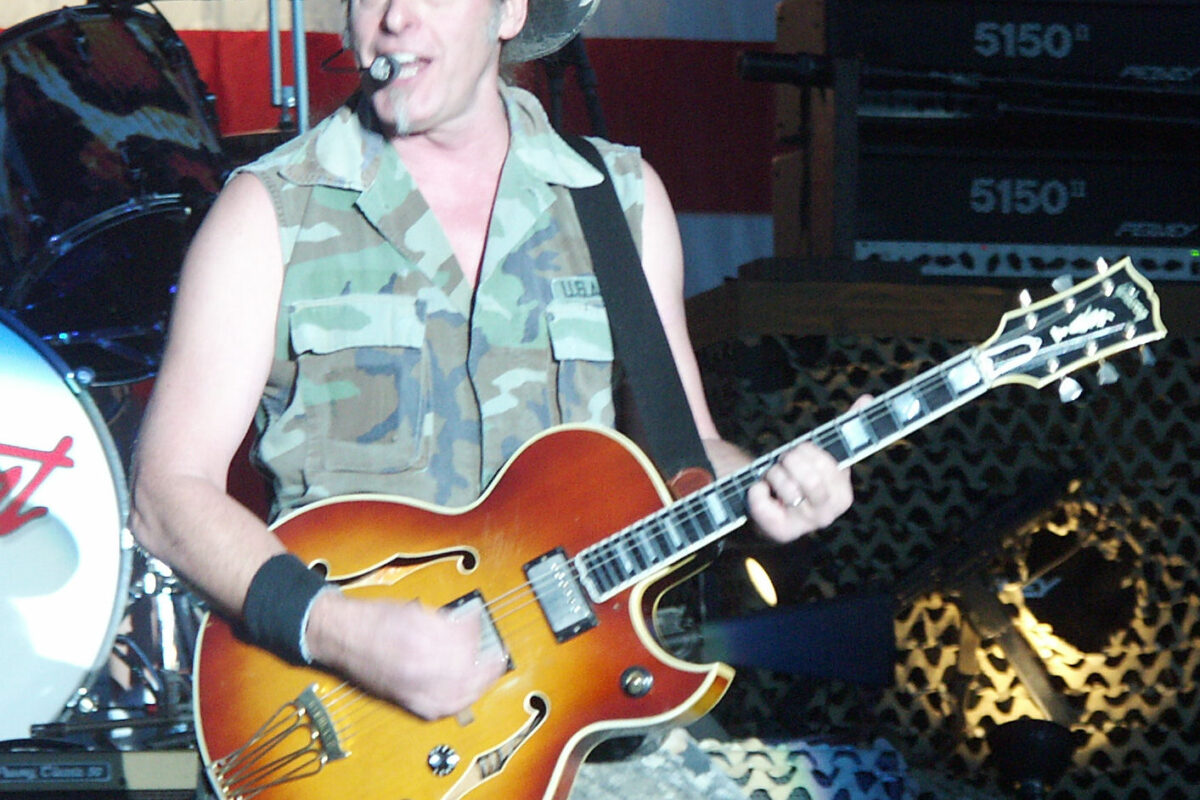
Ted Nugent Guitars & Gear: The Complete Guide to the Motor City Madman’s Byrdland Rig
Ted Nugent guitars & gear: the Motor City Madman's Byrdland rig. 12 vintage Gibson Byrdlands, Fender Twin Reverbs, Peavey 6505, zero effects, and the Stranglehold tone.
Ted Turner Guitars & Gear: The Complete Guide to Wishbone Ash’s Twin Guitar Pioneer’s Rig
Ted Turner guitars & gear: Wishbone Ash's twin-lead pioneer. Stratocasters, Firebird, Orange amps, and the Argus-era tone fully explained.