Peter Frampton Guitars & Gear: The Complete Guide to the Talk Box Pioneer’s Gibson, Marshall & Framptone Rig
Peter Frampton guitars & gear: the talk box pioneer. 1954 Les Paul 'Phenix', Jose-modded Marshall, Framptone talk box, Fender Bassman — the Frampton Comes Alive tone explained.
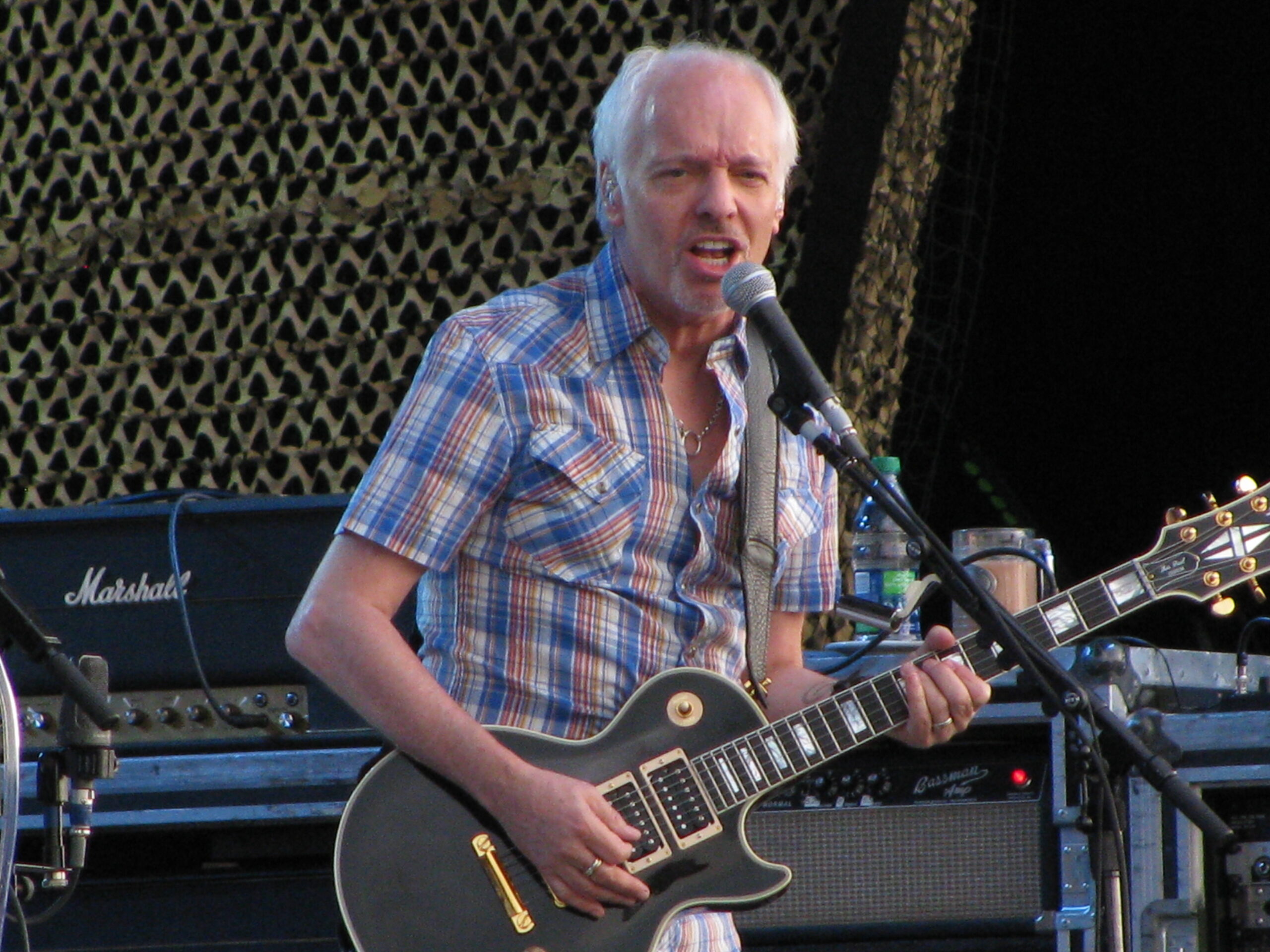
Photo by ceedub13, licensed under CC BY 2.0 (https://commons.wikimedia.org/wiki/File:Peter_Frampton_at_the_2011_Ottawa_Bluesfest.jpg)
Gear Timeline
Peter Frampton’s girlfriend gave him a Heil Talk Box as a Christmas gift, and the summer of 1976 happened. This is not a simplification — the specific chain of causation runs from the Christmas gift to the recording of the Frampton Comes Alive! performances in 1975, to the album’s release in 1976, to “Show Me the Way” and “Do You Feel Like We Do” becoming the specific radio ubiquity of that summer, to every guitarist who was learning to play guitar in 1976 trying to figure out how the guitar was making that noise, to the subsequent half-century of talk box usage across rock, funk, and hip-hop production that made the effect a standard component of the guitarist’s tonal vocabulary. A Christmas gift. An aluminum tube. The guitar signal routed through a driver to the tube, held in the mouth, the resonant cavity of the mouth shaping the sound that the microphone picks up and sends to the PA. The mouth becomes the guitar’s speaker. The guitarist’s face becomes the wah pedal. And in 1976, in concert halls across America and on the radio of every car in the country, Peter Frampton made it famous enough that every guitarist needed one, and “Show Me the Way” became the specific piece of music that the sound was inseparable from. The Heil Talk Box. The Christmas gift. The summer of 1976.
The Journey
Peter Kenneth Frampton was born on April 22, 1950, in Beckenham, Kent, England — the same London suburb that produced David Bowie, who was Frampton’s schoolmate and who remained a friend and collaborator across the following decades. The schoolmate-and-future-rock-legend connection is one of popular music’s more remarkable biographical coincidences, though perhaps less remarkable in retrospect given that Beckenham in the 1960s was specifically the kind of suburb where the British art-school-and-rock-music culture was being developed that produced the English rock scene. Frampton left school at sixteen in 1965 to join The Herd — demonstrating either a lack of respect for formal education or a very well-calibrated assessment of where his musical talent should be directed. He formed Humble Pie with Steve Marriott in 1969, one of the most physically powerful hard rock bands of the early 1970s, and then pursued a solo career that produced four albums of lukewarm reception before Frampton Comes Alive! changed everything.
Frampton Comes Alive! — recorded live in San Francisco and Long Island in the summer and fall of 1975, released in 1976 — sold more than eight million copies in the United States, stayed on the Billboard charts for ninety-seven weeks, and launched “Baby, I Love Your Way,” “Show Me the Way,” and the fourteen-minute “Do You Feel Like We Do” as radio staples that have been playing somewhere continuously since 1976. It is one of the best-selling live rock albums in history and the foundational commercial document of the talk box as a rock guitar effect. The specific guitar sound of those recordings — the 1954 Les Paul Custom “Phenix” through a Marshall amplifier, with the talk box providing the human-voice modulation of the guitar signal — is one of the most immediately recognizable guitar tones of the decade. You hear two bars of “Show Me the Way” and you know exactly where you are, when it is, and what guitar sounds like when someone figures out what to do with a Christmas present.
His current rig — documented in the Guitar World interview from the Thank You Mr. Churchill period — centers on a Jose Arredondo-modified Marshall 100-watt head as the primary amplification, with John Suhr cloned copies of the same modification providing redundancy. The connection to the Jose modification runs through Eddie Van Halen: “I had spoken with Eddie Van Halen about his sound, and he told me about Jose. Jose never ever gave me exactly the same thing that he did for Eddie, but whatever he did sure sounds good.” The same amp modifier who shaped the guitar sound of multiple players in this series — with Warren DeMartini and the broader LA rock amplification culture — also shaped Frampton’s post-Frampton Comes Alive! amplification approach. The Jose modification connects the 1970s British rock legend to the 1980s LA hard rock tradition through the shared amp tech who worked for both.
In 2014, Frampton was diagnosed with inclusion body myositis — a progressive muscle disease that affects the muscles gradually and irreversibly, reducing their ability to function. He undertook a final world tour in 2019 before the disease made continued touring impossible. The diagnosis and the final tour were handled with the specific public candor of a musician who understood that his audience deserved honesty and that the guitar playing he had done deserved a proper farewell. The final tour was recorded and released as Peter Frampton Finale — The Farewell Tour (2019). He continued recording after the tour, but the physical demands of live performance at the scale his career had established were no longer manageable. This is part of the gear story because the relationship between a guitarist and their body — the physical instrument through which all the other instruments are played — is never more clearly visible than when the body’s capability changes and the music adapts around it.
Background: Beckenham to Budokan, Humble Pie to “Do You Feel Like We Do”
The Humble Pie chapter of Frampton’s career establishes the specific hard rock context from which his solo melodic sensibility emerged. Steve Marriott — the Small Faces singer who co-founded Humble Pie and whose blues-rock voice and guitar approach defined the band’s character — was one of the most physically powerful presences in British rock of the early 1970s. Frampton’s role in Humble Pie as the second guitarist — melodic, technically accomplished, harmonically sophisticated alongside Marriott’s raw blues aggression — is the specific context in which the two-guitar dynamic of complementary voices rather than competing ones was established. Frampton’s leads in Humble Pie have a specific melodic directness that distinguishes them from Marriott’s more aggressive approach, and this directness is the specific quality that his subsequent solo career developed into the multi-platinum Frampton Comes Alive! sound.
His friendship with David Bowie — the Beckenham schoolmate who became one of rock’s most innovative and visually spectacular artists — is part of the broader cultural context of what the British rock scene of the late 1960s and 1970s produced in terms of musicians who crossed genre boundaries and developed new musical vocabularies. Frampton contributed guitar to Bowie’s recordings across different periods, and the Bowie collaboration places him in direct relationship with one of the century’s most important rock artists. The connection is documented in the Guitar World career overview and represents a peer relationship of genuine musical substance rather than merely biographical coincidence.
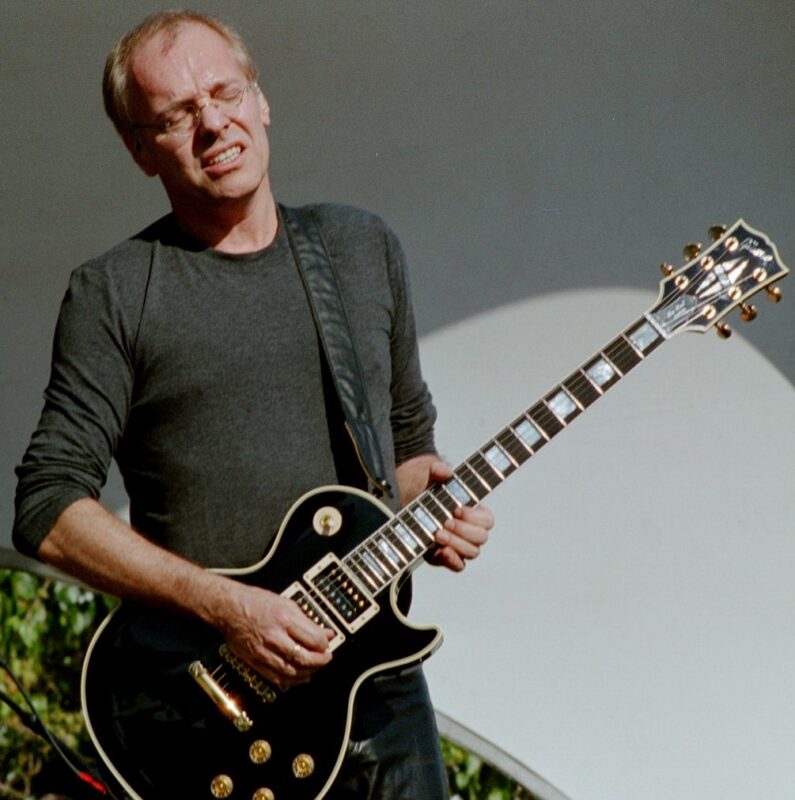
The 1954 Gibson Les Paul Custom known as “Phenix” — the guitar that appears in the iconic Frampton Comes Alive! images and that was used throughout those landmark recordings — has a specific recovery story that makes it one of rock’s more extraordinary guitar biographies. The guitar was lost in a plane crash in Caracas, Venezuela in 1980, when equipment from a Humble Pie tour was destroyed in the accident. Frampton believed “Phenix” was gone permanently. In 2011, the guitar was located in the possession of a guitarist in Curacao — it had survived the crash in damaged condition and been repaired and restored over the intervening decades. Its return to Frampton after thirty-one years is one of the more remarkable instrument recovery stories in rock history, and the emotional significance of the reunion is documented in multiple interviews where Frampton discusses the guitar with the specific feeling of someone who had lost something central to their musical identity and found it again against all expectation.
The Frampton Comes Alive! commercial peak was followed — as it was for several bands in this series — by the specific commercial challenge of following an unexpected massive success. “After Frampton Comes Alive! became a huge success, I really needed to take time off to work out what the hell just happened. Instead, I just kept working,” as he told Guitar World. The subsequent albums — I’m in You (1977), Where I Should Be (1979), and the 1980s releases — demonstrated diminishing commercial returns as the specific cultural moment of Frampton Comes Alive! receded. The longer-term arc of his reputation, however, has been favorable: the recordings have maintained their cultural presence, the talk box has remained his most immediately recognizable contribution, and the 2019 farewell tour demonstrated that the audience for the Frampton Comes Alive! material remained large and genuinely engaged.
The Rig: Peter Frampton’s Guitars, Amps, and Effects
Guitars
The 1954 Gibson Les Paul Custom known as “Phenix” is the guitar most closely associated with Peter Frampton’s commercial peak and his fundamental tonal identity. Used throughout the Frampton Comes Alive! recordings and the career that the album launched, “Phenix” is a 1954 Les Paul Custom — the ebony fingerboard, bound-and-fitted body, and P-90 soapbar pickups (the original 1954 configuration before PAF humbuckers were introduced) that produce the specific warm, vocal quality of the pre-humbucker Les Paul era. The guitar was lost in a plane crash in Caracas in 1980 and recovered in Curacao in 2011 — thirty-one years of absence followed by a reunion that Frampton described with specific emotional weight. “Phenix” is named, the guitar community has speculated, for the phoenix mythology of rising from destruction — a name that proved unexpectedly appropriate when the guitar returned from a literal aircraft accident after three decades. Its return to Frampton’s active touring arsenal for the final tour confirmed both its physical restoration and its musical significance as the primary tonal reference for his career’s most celebrated period.
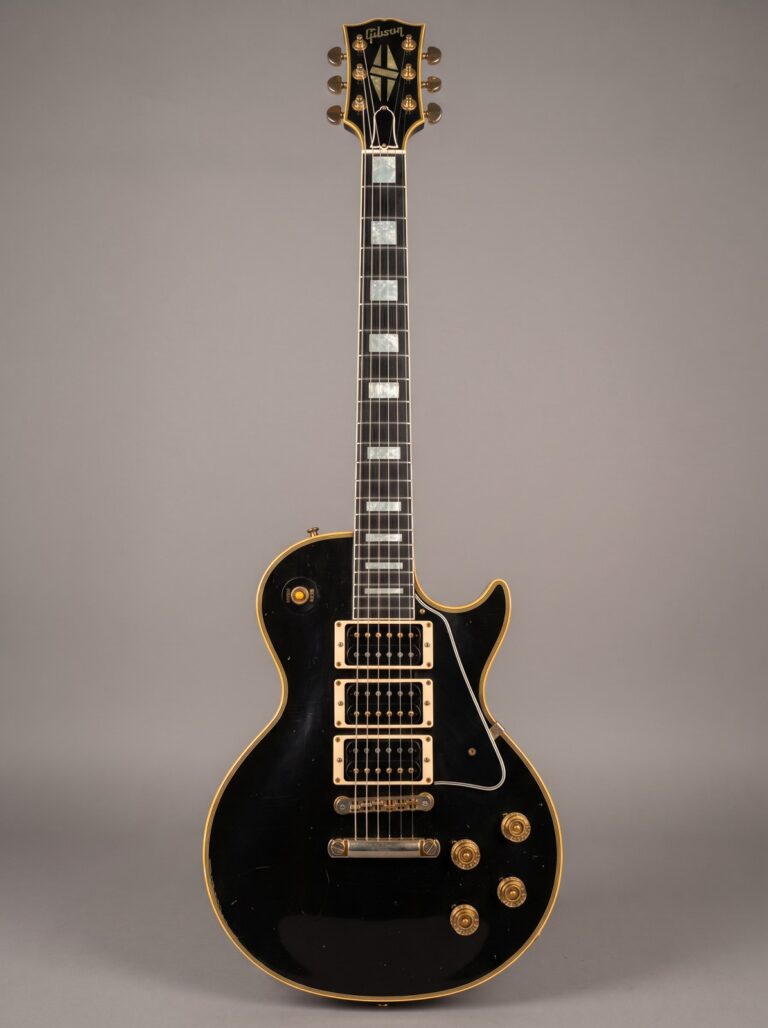
For his modern recording and touring work, Frampton uses a Gibson Les Paul Standard 1960 Reissue — the Gibson Custom Shop’s historically accurate recreation of the 1960 Les Paul Standard specification, featuring the thin neck profile of the 1960 production run, PAF-style humbuckers, and the figured maple top over mahogany body construction. The 1960 reissue provides the warm, sustaining PAF humbucker character that suits Frampton’s melodic, sustain-dependent lead playing while maintaining the playing feel of the vintage instrument family he has always preferred. The transition from “Phenix”‘s P-90 configuration (original 1954 spec) to the humbucking configuration of the 1960 reissue represents a tonal evolution — warmer, slightly less cutting — while remaining firmly within the Gibson Les Paul tonal family.
Gibson produces a Peter Frampton signature Les Paul — the formal signature documentation of his Les Paul identity and his relationship with the Gibson brand. The Frampton signature Les Paul reflects his specific requirements: the neck profile, pickup configuration, and general specification that suit his playing approach. The signature represents both the commercial acknowledgment of his influence and the practical instrument documentation of the Les Paul configuration he has developed across fifty years of professional playing.
Frampton’s documented guitar collection includes additional Gibson vintage instruments used across different recording contexts — the standard professional guitarist’s collection of different Gibson family voices for different tonal requirements. His career-long Gibson family commitment is unusual in its consistency: from the Humble Pie period through Frampton Comes Alive! and the subsequent decades, the Les Paul family has remained his primary instrument category. The specific warmth and sustain of the Les Paul’s mahogany construction and PAF-type pickups suits the melodic, sustain-dependent approach of his lead playing and the warm, direct character of his chord work.
Amps
The foundational amplification of Frampton’s modern rig is a 1970s 100-watt Marshall head modified by Jose Arredondo — the same LA amp modifier documented in Warren DeMartini’s Ratt rig and in the broader Jose modification mythology of the 1980s LA rock scene. “I had spoken with Eddie Van Halen about his sound, and he told me about Jose. Jose never ever gave me exactly the same thing that he did for Eddie, but whatever he did sure sounds good.” The Jose modification’s specific effect on a Marshall — increased gain, improved clarity, better high-frequency response, the EL34 character preserved while the preamp gain is increased — gives Frampton the specific combination of Marshall warmth and amplified gain that his sustain-dependent melodic lead playing requires. John Suhr cloned the Jose-modified Marshall and made additional copies for touring redundancy — confirming both the value of the modification and the practical touring necessity of having backup amplifiers that exactly duplicate the primary’s tonal character.
A separate John Suhr-modified Marshall 100-watt head is used exclusively to drive the Framptone talk box — not for general guitar amplification but specifically as the talk box’s dedicated driver. The specific routing: the guitar signal is split, with one path going to the primary Jose-modified Marshall for the main guitar sound, and a second path going to the Suhr-modified Marshall which drives the Framptone talk box driver. The talk box signal — the guitar sound that has been acoustically shaped by the resonant cavity of Frampton’s mouth and picked up by the microphone — is then mixed with or substituted for the direct guitar signal in the house PA mix. This two-amplifier approach for the talk box specifically ensures that the talk box driver receives a consistent, high-quality signal from a dedicated amplifier rather than sharing the primary amplification signal.
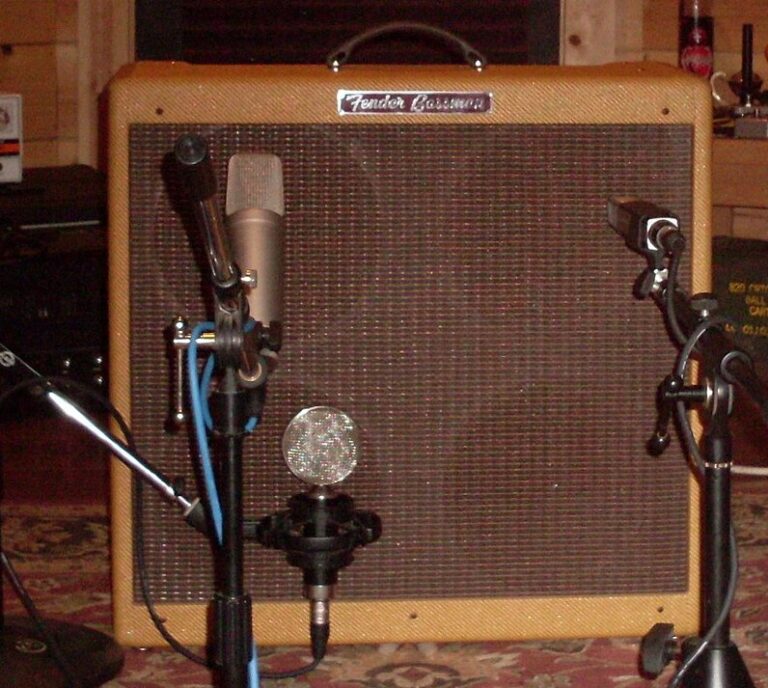
The 1960s blackface Fender Bassman head provides the clean tonal platform in Frampton’s rig — the specific vintage Fender character that the Jose-modified Marshall doesn’t provide. The blackface Bassman’s 6L6 power tubes, Fender’s specific American clean character, and the vintage Bassman circuit’s natural compression at working volume produce the clean dimension of Frampton’s tonal palette. The combination of the Jose-modified Marshall’s lead character and the Fender Bassman’s clean character gives Frampton the full range from clean to high-gain lead from a single guitar path, switching between the two amplifiers as the musical context requires.
The Egnater M4 preamp module system provides additional tonal color in Frampton’s rig — the Bruce Egnater-designed modular preamp system that allows different preamp “modules” to be inserted for different tonal characters. The Egnater’s presence alongside the Jose-modified Marshall and the Fender Bassman provides a third tonal option for specific recording and performance applications where neither the Marshall’s aggressive high-gain character nor the Bassman’s vintage American clean character is optimal.
Effects
The Framptone talk box is the effect most closely associated with Peter Frampton’s musical identity — his own custom-designed version of the talk box that he developed after years of using other manufacturers’ versions. The talk box mechanism: the guitar signal is routed to a driver unit (a small speaker in a sealed cabinet), which converts the electrical signal back to acoustic sound and drives it up a plastic tube; the tube is placed in the guitarist’s mouth, and the resonant cavity of the mouth acoustically shapes the guitar sound by changing its spectral character as the mouth opens and closes, forms vowel shapes, and moves in different positions. A microphone picks up the acoustically shaped sound and sends it to the PA, where the effect is heard as the guitar apparently “talking” or “singing” in the guitarist’s voice. Frampton’s Framptone is his own signature version of this device, developed with the specific driver characteristics, tube length, and signal routing that he has found optimal across decades of professional use. “Show Me the Way” and “Do You Feel Like We Do” are the primary documents of the Framptone talk box in its most celebrated context: the specific vocal, sliding, human-voice quality of the guitar on those recordings is the talk box effect at its most musically effective.
The original talk box that produced the Frampton Comes Alive! sound was a Heil Talk Box — “According to Heil, Peter Frampton’s girlfriend called the engineer one day asking for one of his original fiberglass talk boxes to give Frampton as a Christmas gift.” The Heil Talk Box was an early design that required routing the guitar signal through the driver and tube rather than the standard speaker — an unusual signal routing that required a dedicated amplifier for the talk box signal rather than sharing the main guitar amplifier. Frampton used the Heil Talk Box for the original Frampton Comes Alive! recordings before developing the Framptone version. He later used the Shaffer/Talk Box units before settling on the custom Framptone design.
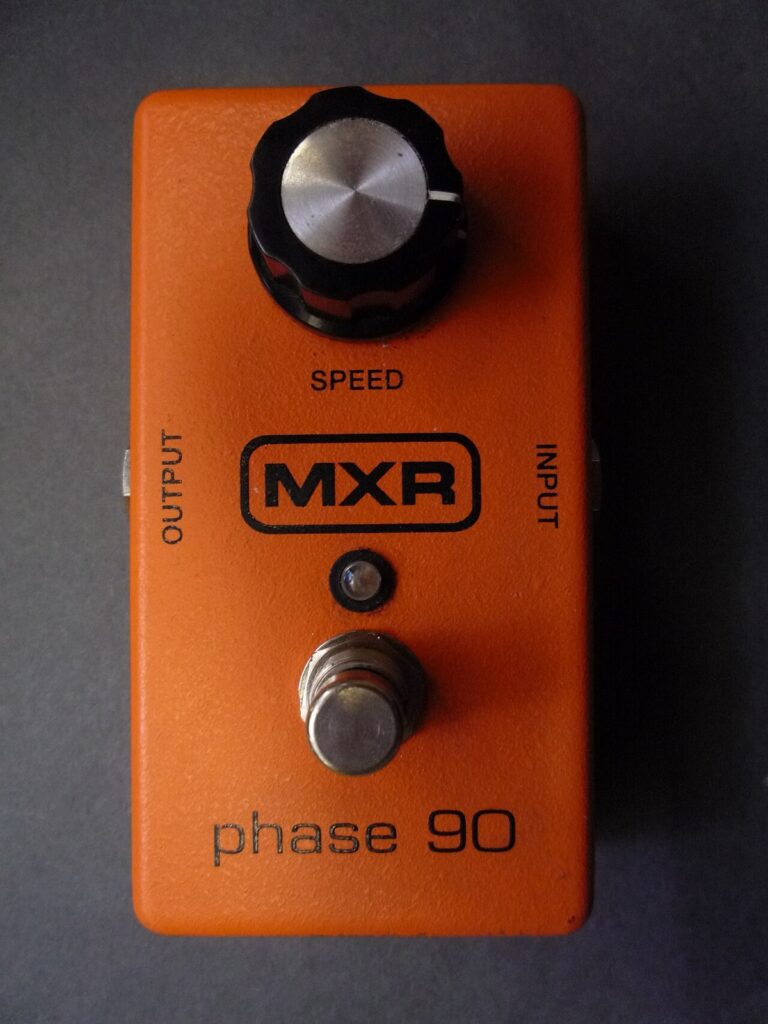
The MXR Phase 90 appears in the documented Frampton Comes Alive! era gear, adding the harmonic texture and warmth of phase modulation to specific passages. The Phase 90’s consistent appearance across this series of players — Nielsen, Aldrich, Schon, and now Frampton — confirms that the slow-speed phase modulation is as standard a component of the 1970s rock guitar approach as the Marshall amplifier itself.
A Leslie rotating speaker effect is documented in the Frampton Comes Alive! era gear — the specific rotary speaker effect originally designed for Hammond organs that produces the characteristic Doppler-effect pitch modulation and spatial movement. The Leslie’s application to electric guitar — used by many 1970s rock guitarists including Eric Clapton and George Harrison — provides a more dramatic rotary spatial effect than the Phase 90’s electronic phase modulation, with the physical rotation of the speaker producing a distinct amplitude and phase modulation cycle.
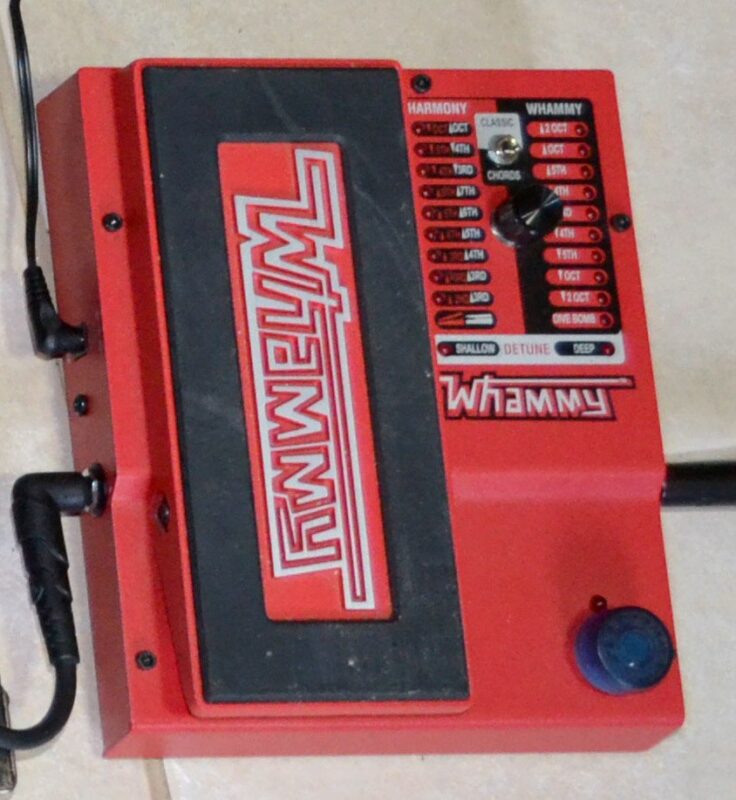
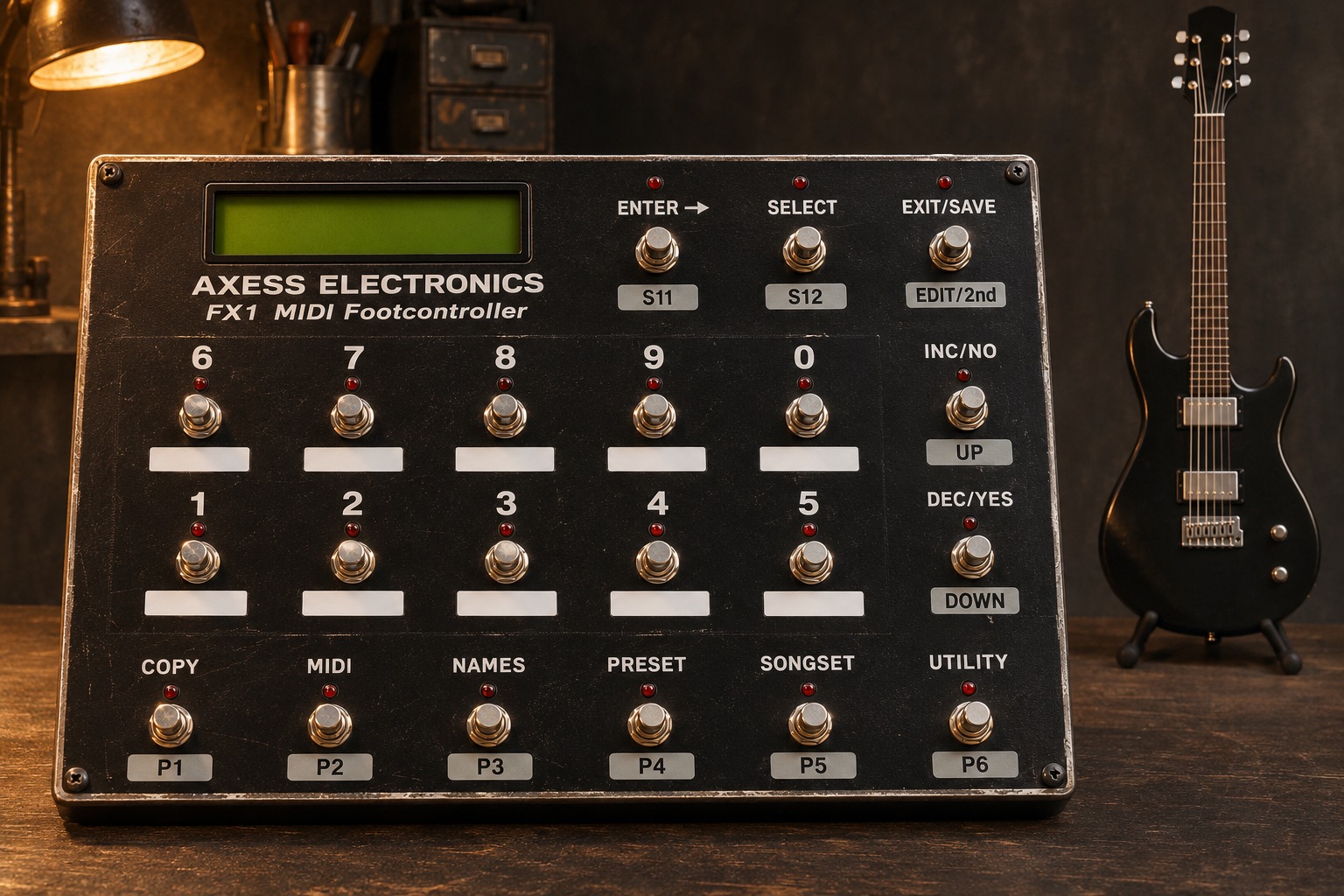
The DigiTech Whammy and Gig FX pedals appear in Frampton’s modern rig — controlled directly by foot rather than through the Axess Electronics FX1 MIDI controller that manages most of his other effects. The Whammy’s pitch-shifting capability adds a different kind of pitch modulation from the talk box — mechanical and instantaneous rather than acoustic and gradual — and the Gig FX products provide specific performance-oriented effects for specific musical passages.
The Axess Electronics FX1 MIDI foot controller manages most of the effects switching in Frampton’s modern rig — “the guitarist controls all of them, except for the Whammy and Gig FX pedals, via an Axess Electronics FX1 MIDI foot controller.” The FX1’s professional MIDI switching architecture provides consistent, reliable switching of the complex multi-amplifier and multi-effects configuration that the modern Frampton rig requires.
The Benson Echo appears in the documented Frampton Comes Alive! era signal chain — a vintage echo unit providing the specific warm, slightly degrading repeat character of the tape and magnetic disk echo devices of the 1970s. The Benson Echo’s contribution to the FCA sound is the specific spatial dimension added to the talk box signal and the lead guitar tone — not the modern digital clarity of later delay units but the warmer, more vintage character of early analog and mechanical echo.
The specific commercial context of Frampton Comes Alive! deserves more precise documentation because the album’s scale is genuinely extraordinary. It was the best-selling album of 1976 in the United States. It is one of the best-selling live albums in rock history. The specific combination of circumstances that produced it — five years of solo albums with modest commercial returns, a 25-year-old guitarist who had been playing professionally for a decade, recorded live performances in San Francisco and Long Island, the talk box on “Show Me the Way” and “Do You Feel Like We Do,” and the specific cultural moment of mid-1970s American rock radio — is the kind of confluence that cannot be manufactured. The recordings are good because the playing is genuinely excellent and the songs are genuinely strong, but the commercial scale required the specific cultural moment as well. The Les Paul through the Marshall through the talk box into the tube that a girlfriend gave as a Christmas present: these are the specific instruments of one of the best-selling rock recordings of the decade, and they are worth documenting precisely because the scale of the outcome was so disproportionate to the modesty of the equipment.
The “Phenix” guitar’s recovery story — lost in a 1980 plane crash, found in Curacao in 2011, restored and returned to touring service — is one of rock guitar’s more affecting instrument biographies. The name “Phenix” (the alternate spelling was the original name, before the more common “Phoenix” became standard) is appropriate in ways that Frampton couldn’t have known when the guitar was first named: it did, literally, rise from the wreckage of a destroyed aircraft. The 1954 Les Paul Custom that played “Show Me the Way” in 1975, that survived a plane crash in 1980, that was repaired and restored by someone in Curacao over three decades, and that came home to its original player in 2011 — this guitar has a biography that no equipment factory specification can capture. It is the specific, irreplaceable object that made a specific, irreplaceable recording. The recording is in the Library of American cultural memory. The guitar came home.
Playing Style & Tone Philosophy
Peter Frampton plays guitar with the melodic directness of someone who hears melody as the primary expressive vehicle and who has developed the technique to sustain melodic lines with the specific vocal quality that the talk box then literalizes — the guitar literally singing in a human voice. His lead playing — the sustained, sustaining lines of “Show Me the Way,” the fluid melodic runs of “Baby, I Love Your Way,” the extended dialogue of “Do You Feel Like We Do” — has the specific quality of a melody that is genuinely sung rather than technically executed. This vocal quality is what the talk box expresses at its most extreme — the guitar voice becoming literally a human voice — and it is present in the standard lead guitar playing even without the talk box.
The Jose-modified Marshall as the primary amplification reflects the same melodic priorities: warm, harmonically complex, sustaining rather than aggressively clipping. The Jose modification’s specific increase in gain combined with its preservation of the Marshall’s fundamental EL34 warmth provides the sustain necessary for extended melodic lines without the harsh, compressed character of maximum preamp gain. The guitar sings; the amp sustains; the talk box speaks for the guitar in the most literal possible sense.
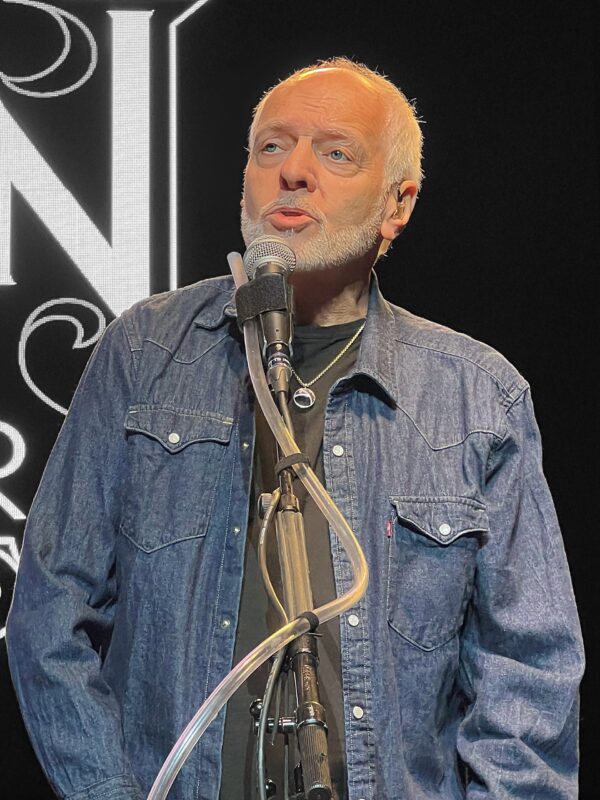
His Humble Pie background — the hard rock power and physical commitment of that band’s approach — is part of the tonal foundation that the Frampton Comes Alive! pop-rock surface sometimes obscures. The specific authority of the Les Paul through the Marshall, the physical directness of the pick attack, the commitment to the note — these come from the Humble Pie context and they are present in every Frampton performance regardless of how commercially accessible the material is. The sustain and the vocal quality are what the audience hears; the physical authority of the attack is what makes the sustain possible.
How to Sound Like Peter Frampton
The Peter Frampton tone requires: a Gibson Les Paul (1954 Custom with P-90s or PAF-spec 1960 reissue, for different tonal characters); a Jose-modified Marshall or equivalent high-quality modified Marshall with EL34 warmth preserved; optional Framptone talk box with dedicated driver amplifier; and the specific melodic, sustain-oriented approach. The talk box requires the complete signal routing setup — dedicated driver amp, tube to mouth, microphone — but even without it, the Les Paul-through-modified-Marshall produces the warm, sustaining lead character.
| Control | Setting (0–10) | Notes |
|---|---|---|
| Jose-Modified Marshall 100W Gain | 7 | Moderate-to-high gain — the Jose modification’s specific increase in gain preserves the Marshall’s EL34 warmth while providing enough saturation for extended sustained notes. The Les Paul’s PAF-type humbuckers drive the input at a level that achieves natural saturation at this gain setting without excessive compression. |
| Bass | 6 | Moderate-warm bass — the Les Paul’s mahogany provides natural warmth. Amp bass at 6 supports without the excessive low-end that would compromise the clarity of the melodic lead lines. The vocal, singing quality depends partly on mid-frequency clarity. |
| Mid | 7 | Present midrange — the vocal quality of Frampton’s lead tone lives in the midrange. The PAF humbucker’s warm midrange combined with the Jose Marshall’s specific mid response produces the singing, sustained quality of the FCA lead sound. |
| Treble | 6 | Moderate treble — the Les Paul’s inherent warmth needs treble support for note clarity in melodic lines, but not the high treble of a superstrat setup. Warm and present rather than bright and cutting. |
| Presence | 5–6 | Moderate presence — the Frampton tone is warm and sustaining rather than aggressively present. The melodic approach depends on warmth and sustain; excessive presence adds harshness that interrupts the singing quality of the sustained notes. |
| Framptone Talk Box | Mouth shapes; vowel sounds; consonant attacks | Route the guitar signal to a dedicated driver amplifier, which drives the talk box tube. Hold the tube in the mouth, directed toward the back of the mouth cavity. Form vowel sounds (ah-ee-oo-ay) while playing sustained notes — the mouth cavity shapes the guitar’s frequency content into speech-like phonemes. A microphone placed at the mouth picks up the shaped sound. Start with simple vowel shapes on sustained single notes; build to more complex phoneme sequences on melodic lines. There is no quick version of the talk box learning curve. |
| Sustain Philosophy | Hold; sustain; sing | The melodic approach is the primary element. Sustain each note for its full musical value; resist the impulse to ornament with additional notes when the sustained note is doing all the required musical work. The Les Paul, the Jose Marshall, and the modified Marshall’s specific harmonic character all enable this sustain; the player’s decision to use it is the musical intelligence. |
Influence & Legacy
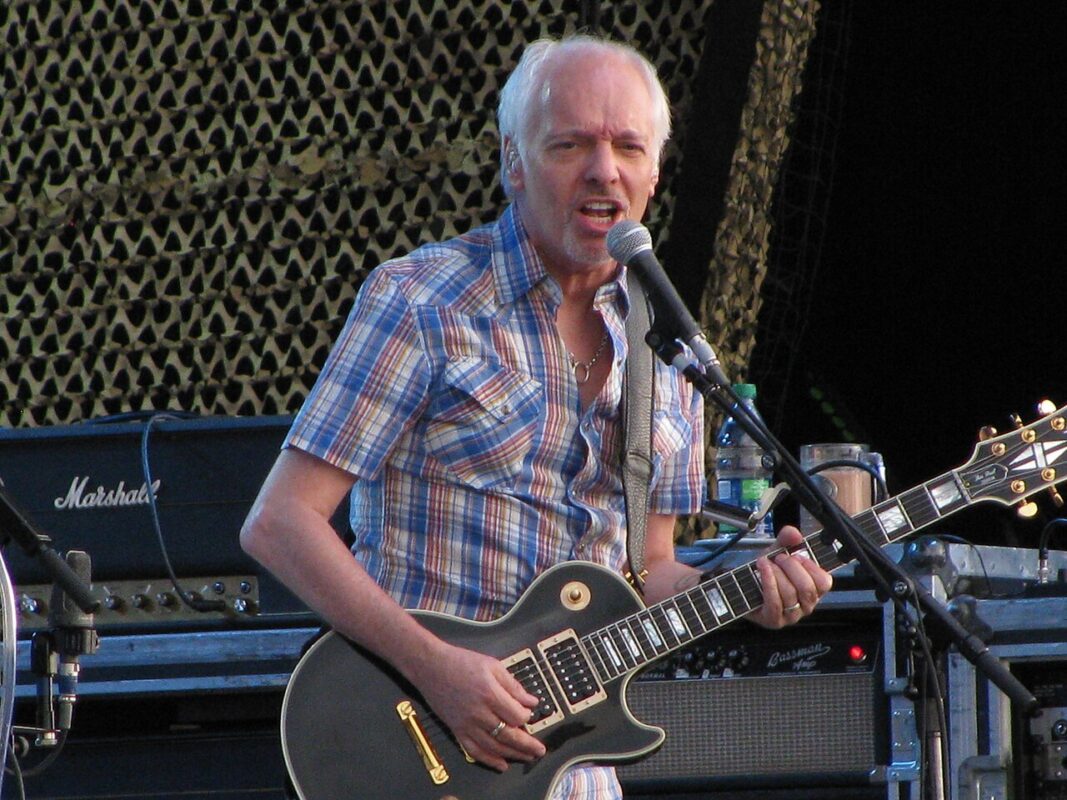
Peter Frampton’s influence on rock guitar is concentrated in two specific contributions: the commercial popularization of the talk box as a standard guitar effect, and the demonstration that a technically accomplished melodic lead guitarist could achieve mainstream commercial success on the scale of Frampton Comes Alive! without sacrificing musical quality. The talk box influence is the more technically specific: virtually every subsequent guitarist who used a talk box — Joe Walsh on “Rocky Mountain Way,” Bon Jovi live, Roger Troutman’s guitar-based R&B work, hip-hop production’s vocoder-adjacent uses — was building on the specific popularization that Frampton achieved in 1976 with a Christmas present and the Heil Talk Box.
The commercial influence is the more culturally significant: Frampton Comes Alive! remains one of the best-selling live rock albums in history, and its commercial peak demonstrated that the specific combination of melodic lead guitar, warm Les Paul-through-Marshall tone, and the talk box effect’s vocal intimacy could produce music of mass appeal without the commercial compromise that mass appeal sometimes requires. The eight million US sales were not purchased by people who didn’t understand what they were hearing; they were purchased by people who heard the guitar singing through the talk box and found it genuinely, immediately moving.
His inclusion body myositis diagnosis — and the 2019 final tour that acknowledged its eventual consequences for his live performance ability — represents one of the more publicly and gracefully handled career endings in rock music. The disease’s progressive nature means that it eventually made continued professional performance at the scale his career required impossible; the choice to acknowledge this, tour one final time, and release the farewell concert as a document rather than simply stopping, reflects the specific character of a musician who has always understood that the audience is part of the relationship and deserves both honesty and beauty. The 2019 tour was both.
For the broader melodic lead guitar tradition that Frampton represents, see Neal Schon’s Journey approach — a contemporary whose melodic, soulful guitar identity operates in the same AOR-adjacent space. The talk box technique that Frampton developed connects to the broader expressive effects tradition; his Jose Arredondo amp modification experience connects to Warren DeMartini’s parallel Jose modification history. And the Humble Pie hard rock foundation that preceded his solo melodic identity connects to the British blues-rock tradition that runs through the entire series from Paul Kossoff onward.
A Christmas present. A tube. A Gibson Les Paul Custom named “Phenix” that survived a plane crash in Caracas and came home thirty-one years later. The most famous talk box performance in rock history. Eight million records. Ninety-seven weeks on the charts. The summer of 1976. Peter Frampton made the guitar sing, and the guitar has been singing ever since.
Frequently Asked Questions: Peter Frampton Guitars & Gear
What guitar did Peter Frampton use on Frampton Comes Alive?
Peter Frampton’s primary guitar on Frampton Comes Alive! was the 1954 Gibson Les Paul Custom known as “Phenix” — a pre-humbucker Les Paul with the original P-90 soapbar pickups of the 1954 specification. “Phenix” was lost in a plane crash in Caracas, Venezuela in 1980 and recovered in Curacao in 2011 after thirty-one years, returning to Frampton’s active use after extensive restoration. The guitar’s return — which he described with specific emotional weight across multiple interviews — confirmed both its physical survival and its continuing significance as the primary tonal reference for his career’s most celebrated recordings. His modern primary guitar is a Gibson Les Paul Standard 1960 Reissue, and Gibson also produces a Peter Frampton signature Les Paul.
What is the talk box and how did Frampton use it?
The talk box routes the guitar signal to a driver unit that converts the electrical signal to acoustic sound, which travels up a plastic tube held in the guitarist’s mouth. The resonant cavity of the mouth acoustically shapes the guitar sound by changing its spectral character as the mouth forms different vowel and consonant shapes. A microphone placed at the mouth picks up the shaped sound and sends it to the PA, producing the characteristic “talking guitar” effect. Frampton’s original talk box was the Heil Talk Box, given to him as a Christmas gift by his girlfriend. He later developed the Framptone — his own signature talk box design — which uses a dedicated John Suhr-modified Marshall head as its driver amplifier in his current rig.
What amplifiers does Peter Frampton use?
Frampton’s primary lead amplifier is a 1970s 100-watt Marshall head modified by Jose Arredondo — the same modifier who worked on equipment for Eddie Van Halen. “I had spoken with Eddie Van Halen about his sound, and he told me about Jose. Whatever he did sure sounds good.” John Suhr cloned this modified Marshall and made additional copies for touring redundancy, and a separate Suhr-modified Marshall is used exclusively as the talk box driver. A 1960s blackface Fender Bassman head provides the clean tones, and an Egnater M4 modular preamp provides additional tonal color. MIDI switching via an Axess Electronics FX1 foot controller manages the rig’s multiple signal paths.
What is the Framptone?
The Framptone is Peter Frampton’s custom-designed talk box — his own version of the effect that he developed after years of using the Heil Talk Box and later the Shaffer Talk Box units. The Framptone represents the evolution of his specific understanding of what the talk box needs to do acoustically and electronically, developed through decades of professional use and refined into a design that serves his specific musical requirements. In his current rig, the Framptone is driven by a dedicated John Suhr-modified Marshall 100-watt head rather than sharing the primary guitar amplification signal, ensuring a consistent, high-quality driver signal specifically optimized for the talk box application.
What happened to Peter Frampton’s career after Frampton Comes Alive?
The commercial success of Frampton Comes Alive! (8 million US copies, 97 weeks on the Billboard charts) was followed by the specific challenge of following an unexpected massive success. “After Frampton Comes Alive! became a huge success, I really needed to take time off to work out what the hell just happened. Instead, I just kept working,” he told Guitar World. The subsequent albums — I’m in You (1977), Where I Should Be (1979), and 1980s releases — showed diminishing commercial returns. In 2014, Frampton was diagnosed with inclusion body myositis, a progressive muscle disease. He undertook a final world tour in 2019 before the disease made continued large-scale touring impossible, recording Peter Frampton Finale — The Farewell Tour as the documentary of that final chapter.
What was Peter Frampton’s connection to David Bowie?
Peter Frampton and David Bowie were schoolmates in Beckenham, Kent — the same London suburb where both grew up and where the British art-school and rock music culture that produced the English rock scene of the 1960s and 70s was developing. The schoolmate connection developed into a professional musical relationship across the subsequent decades, with Frampton contributing guitar to Bowie recordings. Both musicians went on to have careers of major commercial and artistic significance from the same suburban English origin. The Bowie connection places Frampton in a specific biographical and cultural context that the Frampton Comes Alive! era’s American commercial success sometimes obscures: he is part of the specific British rock tradition that produced the Yardbirds, the Beatles, and the British Invasion, and his musical roots are in that tradition before the American commercial breakthrough.
Did Peter Frampton play with Humble Pie?
Yes — Peter Frampton co-founded Humble Pie with Steve Marriott (of the Small Faces) in 1969, after his initial professional career with The Herd beginning in 1965. Humble Pie was one of the physically powerful British hard rock bands of the early 1970s, and Frampton’s role as the second guitarist — providing melodic lead work alongside Marriott’s raw blues aggression — is the hard rock foundation from which his subsequent solo melodic sensibility developed. He left Humble Pie in 1971 to pursue his solo career, beginning a series of solo albums that culminated in the Frampton Comes Alive! breakthrough in 1976. His specific quality of melodic directness — developed in the specific context of providing lead guitar contrast to Marriott’s more aggressive approach — is the foundational playing quality that the FCA recordings document at their commercial peak.
Image credits
- Axess Electronics FX1 MIDI Foot Controller (Signal Routing): GuitarGangsters AI-generated reference illustration, not a photograph.
- Top image: by ceedub13, Wikimedia Commons, CC BY 2.0.
- Peter Frampton: photo by Carl Lender at https://www.flickr.com/photos/clender/, via Wikimedia Commons, CC BY-SA 3.0.
- Peter Frampton: photo by Druss379, via Wikimedia Commons, CC0.
- DigiTech Whammy: marcelodonati, Wikimedia Commons, CC BY 2.0.
- Peter Frampton live: ceedub13, Wikimedia Commons, CC BY 2.0.
- Fender Bassman: Roadside Guitars, Wikimedia Commons, CC BY-SA 2.0.
- MXR Phase 90: Roadside Guitars, Wikimedia Commons, CC BY-SA 2.0.
- Peter Frampton’s ‘Phenix’: GuitarGangsters AI-generated reference illustration, not a photograph.