Phil Manzanera (Roxy Music) Guitars & Gear: The Complete Guide to Art Rock’s Guitar Architect’s Rig
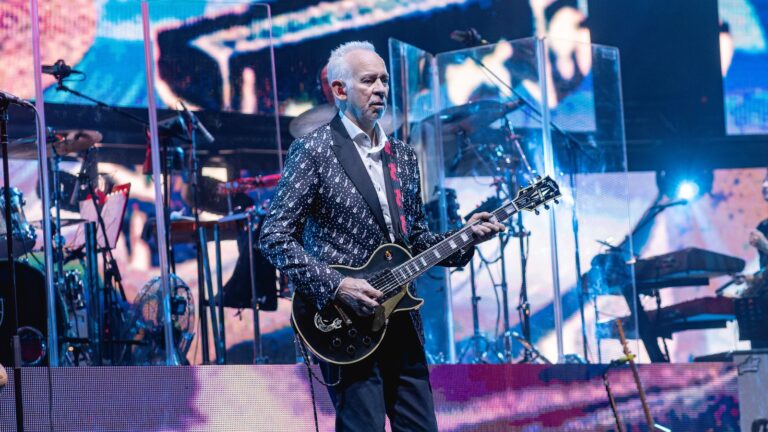
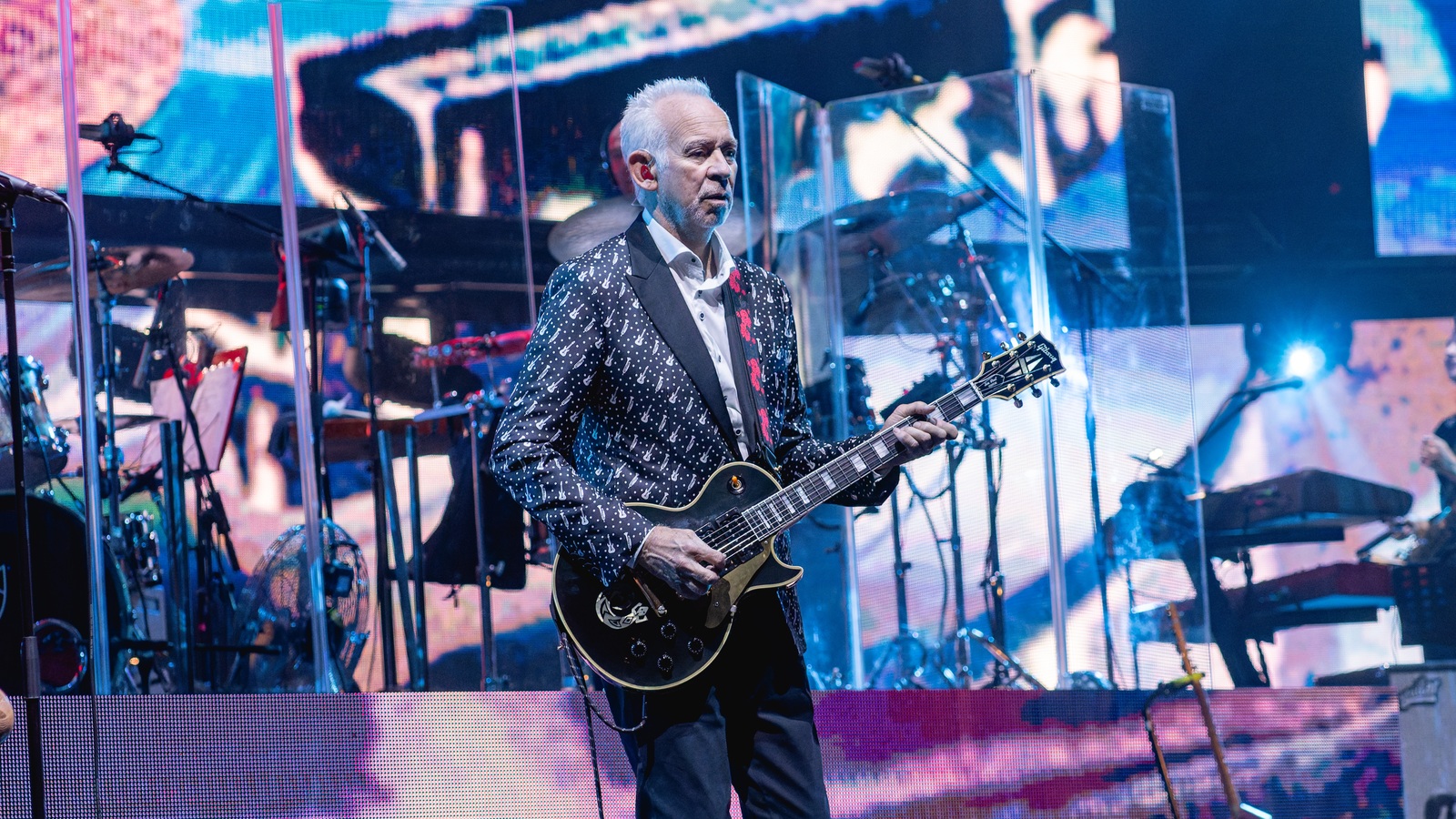
Phil Manzanera, The O2, London, 2022. Photo: Raph_PH. CC BY 2.0: https://creativecommons.org/licenses/by/2.0/ Source: https://www.flickr.com/photos/raph_ph/52428355399/ Cropped and resized. Work: RoxyMusicO2141022 (27 of 68).
“I didn’t really want an incredible technique: I thought that would impede my ability to enjoy music for the whole of my life.” Phil Manzanera said this to Guitar World — and it is the most deliberately anti-guitar-hero statement in this entire two-hundred-article guide. Not “I didn’t develop incredible technique because it was hard.” Not “I had other priorities.” He specifically didn’t want incredible technique. He thought it would be an obstacle to enjoying music. He was right, and the guitar playing on Roxy Music’s catalog documents what happens when a guitarist of genuine musical intelligence applies themselves to sound and feeling and composition rather than to scale patterns and speed: “Love Is the Drug,” “Angel Eyes,” “More Than This,” “Avalon” — some of the most immediately affecting guitar playing in British rock, achieved through hooks and sound and the specific exploratory approach he absorbed from Hendrix, Terry Riley, the Velvet Underground, and Sonny Sharrock. His 1964 Gibson Firebird was his neighbor David Gilmour’s guitar: Gilmour was given it for his 16th birthday and didn’t want it. Manzanera took one look and said: “Thanks, I’ll have it!” He has used it ever since. His 1951 Fender Telecaster appears on every Roxy Music album: “on every album I’d use this for something.” He was sampled by Jay-Z and Kanye West — the guitar riff from K-Scope (1978) became “No Church in the Wild,” the Grammy-winning first track of Watch the Throne. He produced David Gilmour’s On an Island and John Cale’s Fear. His neighbor in London is David Gilmour. He has the 1964 Firebird. The whole of his life is music.
Philip Geoffrey Targett-Adams — Phil Manzanera — was born on January 31, 1951, in London, England, to a British father and a Colombian mother. He joined Roxy Music in 1972, aged 21, as lead guitarist — the lineup at that time was Bryan Ferry, Brian Eno, Paul Thompson, and Andy Mackay. He remained with Roxy Music through a series of international best-selling albums (Virginia Plain, Do the Strand, Stranded, Country Life, Siren, Viva!, Manifesto, Flesh + Blood, Avalon) achieving ten UK top-ten albums before a long break in 1983. During this period and in parallel, he formed the experimental rock supergroup 801 (with Brian Eno, bassist Bill MacCormick, Francis Monkman, Lloyd Watson, and Simon Phillips) and released solo albums. The 18-year Roxy Music hiatus ended in 2001 with a critically acclaimed 52-date world tour. Roxy Music was inducted into the US Rock and Roll Hall of Fame in March 2019. He runs Gallery Studios in West London, where artists including Robert Wyatt, Brian Eno, Hot Chip, David Gilmour, Annie Lennox, Paul Weller, Kevin Ayers, and Chrissie Hynde have recorded. He is seventy-five years old. He still has the 1964 Firebird. He still has the 1951 Telecaster.
Background: London, Colombian Mother, Roxy Music 1972, Brian Eno Partnership, “Love Is the Drug,” Gallery Studios, Jay-Z/Kanye Sample
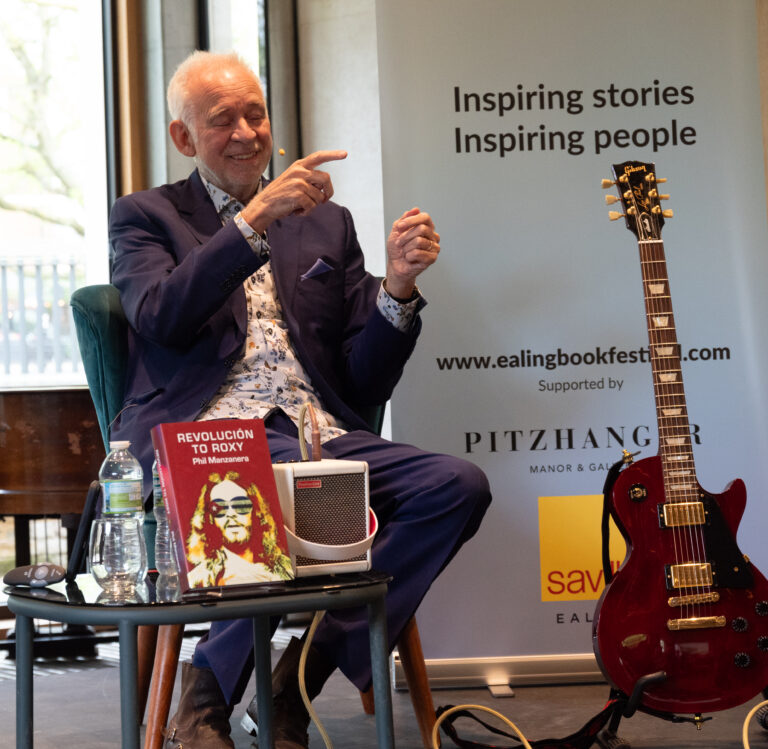
Manzanera’s specific musical formation — British father, Colombian mother, the international perspective that this heritage provides, and the specific influences he absorbed (Hendrix’s studio exploration, Randy California’s effects use, Velvet Underground’s drone and noise, Terry Riley’s systems music, Sonny Sharrock’s avant-garde guitar) — produced a guitarist who arrived at Roxy Music with a musical vocabulary that was simultaneously rock-formed and avant-garde-aware, simultaneously accessible and experimental. His Vintage Guitar magazine characterization: “You carved a niche as an exploratory player, not afraid of effects or droning notes.” His response: the influences are Hendrix (“so exploratory and innovative in the studio”), Randy California’s effects use, John Cale’s drone use (on the viola), the Velvet Underground, Terry Riley’s systems music, and avant-garde guitarists Sonny Sharrock, Terje Rypdal, and John McLaughlin.
The Roxy Music creative context — with Brian Eno providing the experimental electronic processing and sonic texture, Bryan Ferry providing the sophisticated, aesthetically literate melodic and lyrical direction, and the broader band providing the specific blend of art school avant-garde and pop accessibility — was the ideal environment for Manzanera’s specific approach: a guitarist who wanted the exploratory freedom of avant-garde music within the structure of genuinely commercial pop. The “addictive hooks” (Guitar World’s characterization) that he contributed to “Love Is the Drug” and “Angel Eyes” demonstrate that the exploration and the accessibility were not in conflict.
The Jay-Z/Kanye connection is the most commercially surprising biographical fact in his career: the guitar riff from K-Scope (1978) — his solo album, three years after the Roxy Music peak — was sampled for “No Church in the Wild,” the Grammy-winning opening track of Watch the Throne (2011), the most celebrated hip-hop album of its year. A 1978 experimental rock guitar riff becoming the foundation of a 2011 hip-hop landmark is the specific kind of cultural longevity that only genuinely distinctive guitar playing achieves. “Manzanera was taken by surprise,” his biography notes.
The Rig: Phil Manzanera’s Guitars, Amps, and Effects
Guitars
1964 Gibson Firebird (Primary Guitar — David Gilmour’s Former Guitar, “Thanks, I’ll Have It!”): Phil Manzanera’s primary and most historically significant guitar is his 1964 Gibson Firebird — and its backstory is one of the most enjoyable guitar provenance stories in rock history. Guitar Player documents Manzanera’s account: “He’d been given the guitar for his 16th birthday and obviously didn’t want it. I took one look and said, ‘Thanks, I’ll have it!'” The “he” is David Gilmour — who would go on to become Pink Floyd’s primary guitarist and one of the most celebrated tone-focused guitarists in British rock. A teenage David Gilmour received a 1964 Gibson Firebird for his 16th birthday, didn’t want it, and his friend Phil Manzanera took it. Manzanera used it throughout the Roxy Music period and beyond. Guitar World titles its 2018 interview with Manzanera “Phil Manzanera Talks Roxy Music History, Gibson Firebirds and His Neighbor and Bandmate, David Gilmour” — Gilmour subsequently became Manzanera’s neighbor in London, creating one of the most specifically guitar-rich neighborly relationships in British music.
The Gibson Firebird’s specific character — the reverse-body design with its distinctive asymmetric cutaway, the mini-humbucker pickups of the 1960s production, and the through-neck construction that provides exceptional sustain — gave Manzanera’s Roxy Music playing its specific tonal character: the Firebird’s mini-humbuckers have a specific brightness and clarity (more single-coil-adjacent than full humbuckers) that suited the guitar’s exploratory, effects-processed role in Roxy Music’s productions. His use of it across the Roxy Music catalog is documented in multiple Guitar World and Guitar Player interviews as the primary electric guitar of the Roxy period.
1951 Fender Telecaster (“Used in Quite a Lot of the Roxy Songs, on Every Album I’d Use This for Something”): The second most historically significant guitar in Manzanera’s collection is his 1951 Fender Telecaster — confirmed in the Guitarist Magazine “My Go-To Guitars” video. His own description: “What’s particularly good about this guitar has always been great for recording — the tuning aspect is not brilliant but for recording purposes it just likes going onto analog tape and so this was used in quite a lot of the Roxy songs, on every album I’d use this for something.” The 1951 Telecaster is one of the earliest production Fender Telecasters — the first year of production for Fender’s solidbody electric. Its specific character: the bright, twangy, single-coil character of the earliest Telecasters, with the specific “vintage Tele” acoustic quality that the very earliest production models have before various design changes altered the character. That it appears on every Roxy Music album (for something, per Manzanera) makes it one of the most consistently-used vintage instruments in the history of British art rock.
Hofner Galaxie (Studio Guitar, Shepherd’s Bush Secondhand Shop Find, £180): The Guitar Player “Essential Guitars” documentation captures the specific Hofner Galaxie story: “I found this in a Shepherd’s Bush secondhand shop for around £180. It’s been modified with three humbuckers, and it’s got these little switches to the right, which gives you different combinations of the pickups.” The guitar was most famously used on 801 Live (1976) — the live album by Manzanera’s experimental supergroup 801. A £180 secondhand Hofner used for one of the landmark live art rock recordings. The Hofner Galaxie is a 1960s German semi-hollow guitar — not a prestigious instrument by collector standards, but Manzanera’s specific modifications (three humbuckers, pickup combination switches) and its specific tonal character gave it the distinctive sound heard on the 801 recordings. The Equipboard confirmation: “This picture is taken in Phil Manzanera’s studio. Phil is on the right with his own Hofner Galaxie.”
Gibson Firebird VII and Firebird X (Additional Documented Models): The Equipboard documentation confirms both a Gibson Firebird VII (“Manzanera can be seen playing a Gibson Firebird VII in this image”) and a Gibson Firebird X (“Manzanera can be seen in this image with a Gibson Firebird X”) as documented instruments. The Firebird VII is the highest-specification 1960s Firebird — with gold hardware, banjo tuners, and the full-specification appointments of the top-of-range model. The Gibson Firebird X is the 2010-era computerized Firebird with onboard electronic switching and effects — a modern development that Gibson introduced and subsequently discontinued.
Fender Stratocaster and Les Paul (Additional Documented Instruments): The Telecaster Guitar Forum documentation notes: “He also uses assorted Firebirds, Les Pauls, Stratocasters and Telecasters.” The range of guitar types — from the Firebird’s reverse-body mini-humbucker character through the Les Paul’s PAF humbucker warmth to the Stratocaster’s single-coil shimmer and the Telecaster’s twang — documents the full spectrum of electric guitar tonal vocabulary available in his collection for different musical applications.
Amps
Roland VGA-7 V-Guitar Amplifier (Roxy Music Tour 2001): The official Roxy Music Tour 2001 equipment list by Bill MacCormick confirms: “Manzanera has always been known for his innovative approach to guitar playing and, over the years, this has been reflected in his choice and use of guitars, amps and effects… he has chosen to combine the traditional virtues of well established guitar makes such as Gibson and Fender with state-of the-art amplification by Roland and Peavey.” Specifically: the Roland VGA-7 V-Guitar Amplifier, “known for its ability to model both amplifiers and guitars,” is confirmed in the Equipboard documentation “during the Roxy Music Tour in 2001, as detailed in the official tour equipment list by Bill MacCormick.” The VGA-7’s amp and guitar modeling capability allowed Manzanera to reproduce different guitar and amplifier tones for different songs in the live set without changing instruments or amplifiers.
Roland VG-99 V-Guitar System (Current Enthusiasm, Roland UK Video): “In a Roland UK video, Phil Manzanera expresses his enthusiasm for experimenting with the Roland VG-99 V-Guitar System, highlighting its versatility in his music creation process.” The VG-99 — the updated and expanded version of the VGA-7 — provides the same comprehensive amp and guitar modeling in a more sophisticated package. His ongoing enthusiasm for the Roland V-Guitar system reflects the same exploratory approach to technology that characterized his use of effects throughout the Roxy Music period.
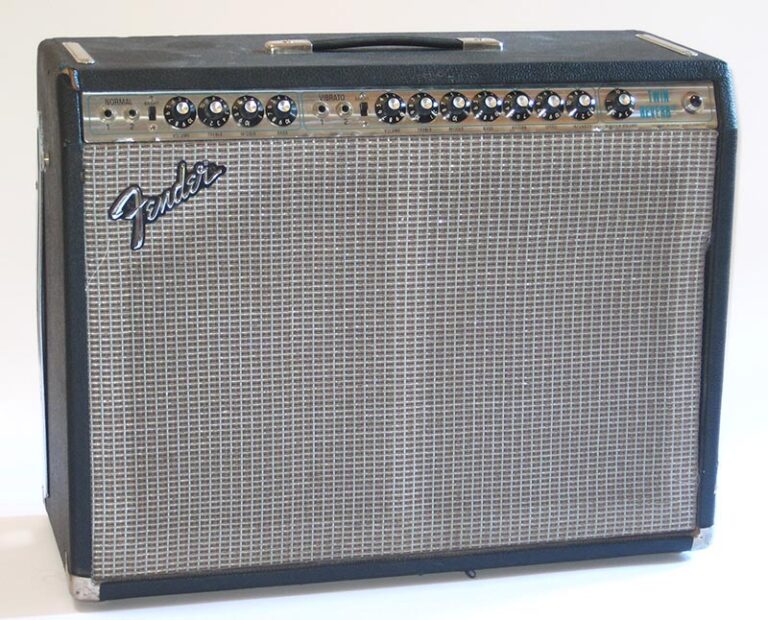
Fender Twin Reverb (Classic Era Amp, Documented): The Telecaster Guitar Forum documentation confirms “his amp is a Fender Twin Reverb” — the same 100-watt clean American combo that appears throughout this guide as the foundational clean platform for effects-processed guitar playing. The Twin Reverb’s extraordinary clean headroom — it remains clean at volumes where most other amplifiers would saturate — provides the transparent platform for Manzanera’s effects-processed guitar signals to be heard precisely. The comment from the forum: “Sure sounds like a Jazz Chorus to me, with a lightning fast compressor” — the Roland JC-120 and Fender Twin Reverb sharing similar clean, large-stage character.
Gallery Studios, London (Recording Environment): Manzanera’s Gallery Studios in West London is both his professional recording facility and the environment within which much of his most recent work has been developed. “When I finished off after the Roxy 50th Anniversary tour, I was able to finally record with my stage setup at my Gallery Studio.” The studio has hosted Robert Wyatt, Roxy Music, Brian Eno, Hot Chip, David Gilmour, Annie Lennox, Paul Weller, Kevin Ayers, Chrissie Hynde, and others.
Effects
Exploratory Effects Approach (Hendrix, Randy California, Terry Riley Influences): Manzanera’s effects approach is the most philosophically developed in this section of the guide — not a list of specific pedals but a coherent philosophy of sonic exploration: “Hendrix was a great influence, especially as he was so exploratory and innovative in the studio… Also, Randy California’s use of effects, as well as the way John Cale, Lou Reed, and Sterling Morrison used guitars in the Velvet Underground. Cale’s use of drones on the viola was another big influence, and also a ‘systems music’ giant like Terry Riley. I also explored avant-garde guitarists like Sonny Sharrock, Terje Rypdal, and John McLaughlin.” His Vintage Guitar characterization: “Today, there are any number of echo, ambient reverb, and looper pedals that produce a Phil Manzanera vibe.”
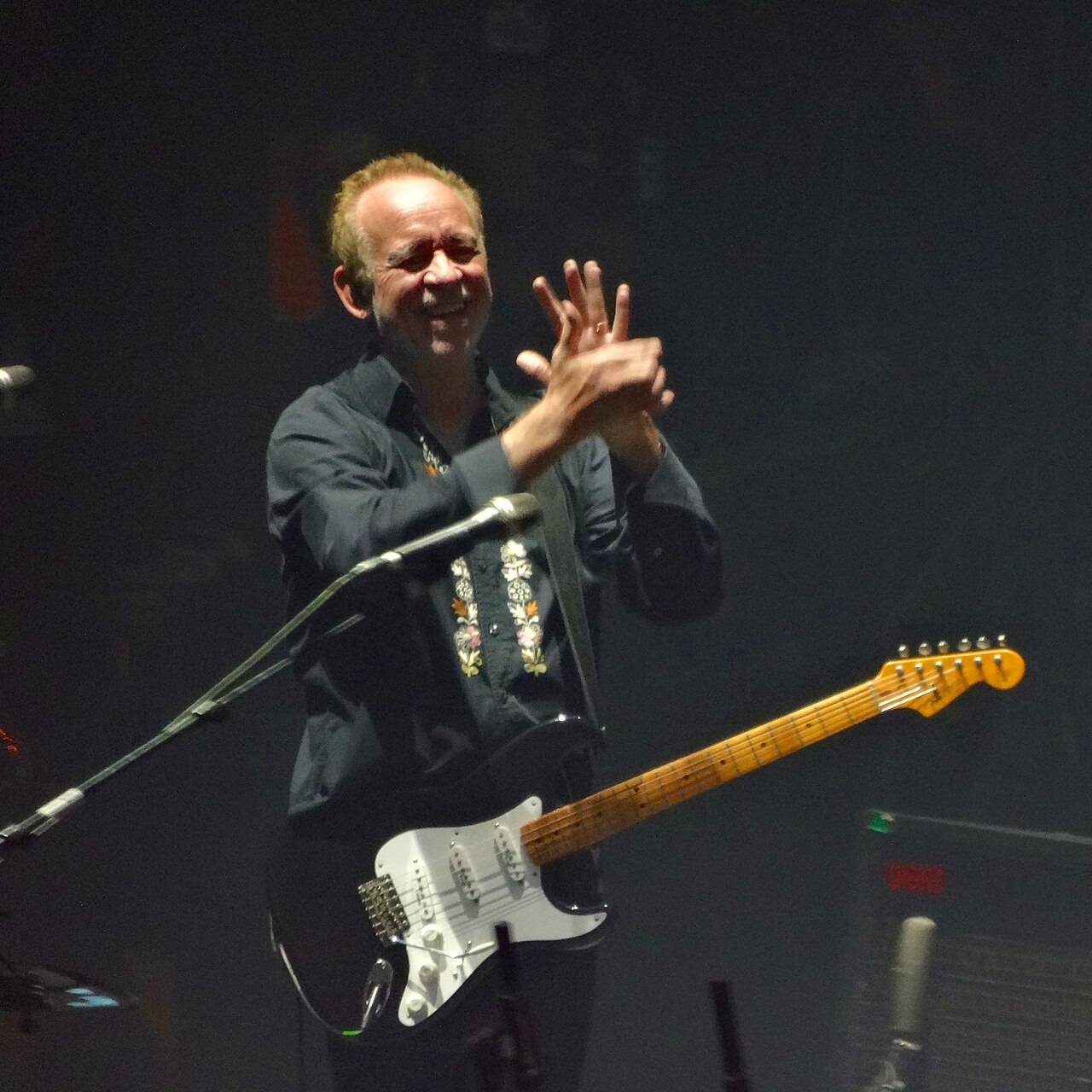
The effects he used across the Roxy Music period — tape echo, phasing, flanging, reverb, the specific processed guitar character that Brian Eno’s production aesthetic encouraged — are the defining tonal features of his contribution to the Roxy Music sound. His willingness to explore whatever effect served the sonic goal (rather than maintaining a fixed signal chain) reflects the same anti-technique-for-its-own-sake philosophy that his “I didn’t really want an incredible technique” statement expresses.
Roland VGA-7 and VG-99 (Modeling Effects, Live and Studio): As detailed above, the Roland V-Guitar system — with its ability to model both amplifiers and guitars electronically — has been his primary technology for live performance in the 21st century. The VGA-7 (Roxy 2001 tour) and VG-99 (current) provide the complete sonic palette of his historic guitar and amp catalog in a single digital system.
Playing Style & Tone Philosophy
Phil Manzanera’s playing style is the most artistically self-aware in this guide — the approach of a musician who made a deliberate choice to prioritize sound, feeling, and musical intelligence over technique, and who spent fifty years demonstrating that this choice was correct. His Roxy Music guitar work — the specific combination of hooks (the “addictive hooks” Guitar World identifies in “Love Is the Drug” and “Angel Eyes”), exploratory sound textures, and the specific emotional directness that his influences (Hendrix, the Velvet Underground, Terry Riley) taught him — is the specific definition of art rock guitar: intelligent, beautiful, surprising, and impossible to replicate by purely technical means.
His tone philosophy is the explorer’s philosophy: “Today, there are any number of echo, ambient reverb, and looper pedals that produce a Phil Manzanera vibe.” This characterization — from his own Vintage Guitar interview — acknowledges that his specific tonal approach (the echo, the ambient reverb, the drone) can be replicated by anyone with the right pedals. But the specific quality of his playing within that tonal approach — the hooks, the musical intelligence, the exploratory spirit — cannot be replicated by pedals alone.
His collaboration with Brian Eno across the Roxy Music period is the specific creative relationship that gives his playing its most distinctive context: Eno’s specific approach to texture and process (the systems music approach, the “oblique strategies,” the willingness to let accident and process generate musical content) provided the perfect creative environment for Manzanera’s exploratory guitar approach. Together, they produced guitar-and-electronic-texture music that neither could have produced alone.
How to Sound Like Phil Manzanera
Guitar: Gibson Firebird (1960s, mini-humbucker) for the primary Roxy Music tonal character — the Firebird’s specific brightness and clarity. Fender Telecaster (1950s or equivalent) for the twangy, single-coil character that appears on every Roxy Music album.
Amp: Fender Twin Reverb (clean platform for effects processing). Roland VG-99 V-Guitar system for the modeling approach to both guitar and amp character.
Amp Settings (Fender Twin Reverb — Clean Effects Platform):
| Control | Setting (0–10) | Notes |
|---|---|---|
| Volume | 4–6 | Clean — the Twin stays clean; effects define the tone |
| Bass | 5 | Natural — the Firebird’s mini-humbuckers provide balance |
| Treble | 6 | Present — the Firebird’s natural brightness needs support |
| Reverb | 3–4 | Moderate — adds spatial depth for the ambient passages |
| Vibrato Speed | Slow | Slow amp vibrato for the specific tremolo-shimmer dimension |
Effects (the Phil Manzanera Vibe): Echo/tape delay (the specific warm, slightly degrading character of tape echo — consistent with the Roxy Music recording era). Phaser or flanger (for the modulated, swirling character of specific passages). Ambient reverb (large, spacious — the Terry Riley/drone influence). Looper (for drone-based composition approaches). The exploratory principle: “any number of echo, ambient reverb, and looper pedals produce a Phil Manzanera vibe.” Try things. Keep what works. Don’t worry about technique.
Influence & Legacy
Phil Manzanera’s influence on art rock, experimental rock, and the broader intersection of pop and avant-garde musical approaches is foundational — as the guitarist who “helped invent art rock” (Guitar World) through his specific combination of hooks, sound exploration, and the refusal to prioritize technique over musical intelligence. His Roxy Music work set the template for a generation of British art rock and post-punk guitarists who understood that sound and imagination were more important than speed and precision.
His connection to Bill Nelson as a fellow British art rock guitarist of the same era — Nelson’s Be-Bop Deluxe preceded and contributed to the specific tradition that Roxy Music and the subsequent art rock/new wave scene developed — reflects the shared aesthetic territory of British 1970s art rock. His connection to Vini Reilly as a parallel figure in the art-influenced British rock tradition reflects the Roxy Music/Factory Records generational proximity. His connection to Susanna Hoffs as a musician whose Rickenbacker-rooted approach drew from the same British Invasion tradition that Roxy Music simultaneously absorbed and critiqued reflects the shared cultural moment.
Related reading:
- Bill Nelson of Be-Bop Deluxe, a fellow British art rock guitarist of the same era whose work preceded Roxy Music’s tradition
- Vini Reilly of Durutti Column, a parallel figure in the art-influenced British rock tradition
- Susanna Hoffs of The Bangles, whose Rickenbacker-rooted approach drew from the same British Invasion tradition Roxy Music absorbed and critiqued
- Buck Dharma of Blue Öyster Cult, a parallel art-adjacent rock guitarist whose similarly “overlooked” approach produced equally enduring music
Frequently Asked Questions: Phil Manzanera Roxy Music Guitars & Gear
What guitar does Phil Manzanera play?
Manzanera’s primary guitar is his 1964 Gibson Firebird — formerly belonging to David Gilmour, who was given it for his 16th birthday and didn’t want it. Manzanera took it and has used it throughout his career. He also uses a 1951 Fender Telecaster that appears on every Roxy Music album (“on every album I’d use this for something”). Additional documented guitars include Gibson Firebird VII, Gibson Firebird X, Hofner Galaxie (found in a Shepherd’s Bush secondhand shop for £180, modified with three humbuckers, used on 801 Live), and assorted Fender Stratocasters and Gibson Les Pauls.
What amplifier does Phil Manzanera use?
Manzanera’s primary live amplifier approach has evolved over decades. Classic era: Fender Twin Reverb (clean platform for effects processing). Roxy Music Tour 2001: Roland VGA-7 V-Guitar Amplifier (modeling both amplifiers and guitars) alongside Peavey amplification, per the official tour equipment list. Current: Roland VG-99 V-Guitar System (“In a Roland UK video, Manzanera expresses his enthusiasm for experimenting with the Roland VG-99 V-Guitar System, highlighting its versatility”).
What is the story of Manzanera’s 1964 Gibson Firebird?
“He’d been given the guitar for his 16th birthday and obviously didn’t want it. I took one look and said, ‘Thanks, I’ll have it!'” — the “he” is David Gilmour, who would become Pink Floyd’s lead guitarist. A teenage Gilmour received a 1964 Gibson Firebird as a birthday gift, didn’t want it, and his friend Phil Manzanera took it. Manzanera has used it throughout his career. Gilmour subsequently became his neighbor in London, creating one of the more specifically guitar-rich neighborly relationships in British music history.
How was Manzanera sampled by Jay-Z and Kanye West?
“His guitar riff from 1978’s K-Scope was sampled by Jay Z and Kanye West and became the Grammy winning smash hit ‘No Church in the Wild,’ the first track on their multi-million selling album, ‘Watch The Throne.'” K-Scope is Manzanera’s solo album from 1978; the specific guitar riff from that album provided the foundational sonic element of Watch the Throne’s opening track, winning Grammy recognition. “Manzanera was taken by surprise” by this development.
What are Phil Manzanera’s guitar influences?
From the Vintage Guitar magazine interview: “Hendrix was a great influence, especially as he was so exploratory and innovative in the studio… Also, Randy California’s use of effects, as well as the way John Cale, Lou Reed, and Sterling Morrison used guitars in the Velvet Underground. Cale’s use of drones on the viola was another big influence, and also a ‘systems music’ giant like Terry Riley. I also explored avant-garde guitarists like Sonny Sharrock, Terje Rypdal, and John McLaughlin.” His influences are specifically the exploratory and experimental guitarists of the 1960s and 1970s.
What is Gallery Studios?
Gallery Studios is Phil Manzanera’s recording facility in West London, “now also a post-production studio for films.” Artists who have recorded at Gallery Studios include Robert Wyatt, Roxy Music, Brian Eno, Hot Chip, David Gilmour, Annie Lennox, Paul Weller, Kevin Ayers, and Chrissie Hynde. After the Roxy 50th Anniversary tour, Manzanera was “able to finally record with my stage setup at my Gallery Studio” — the studio’s quality allowing him to capture his fully-developed live rig in a professional recording context.
What did Manzanera mean by “I didn’t really want an incredible technique”?
Full quote: “I didn’t really want an incredible technique: I thought that would impede my ability to enjoy music for the whole of my life.” He explains to Guitar World that he chose to prioritize musical exploration, feeling, and sound over technical mastery — a deliberate artistic choice rather than a failure. His specific influences (Hendrix’s studio exploration, the Velvet Underground’s drone approach, Terry Riley’s systems music) were not virtuosic technique-focused musicians but exploratory sound-focused ones. The result: fifty years of guitar playing characterized by hooks, exploration, and musical intelligence rather than technical display.
Image credits
- Phil Manzanera: Phil Guest, Wikimedia Commons, CC BY-SA 2.0.
- Top image: Raph_PH, Flickr, CC BY 2.0.
- Fender Twin Reverb: Micahmedia, Wikimedia Commons, CC BY 3.0.
- Phil Manzanera: Roger Green, Wikimedia Commons, CC BY-SA 2.0.