PRS Fiore: Mark Lettieri’s Guitar for Players Without a Genre
The PRS Fiore isn't Santana's or Mayer's guitar — it's session ace Mark Lettieri's. History, specs, wiring deep-dive, and buying guide.
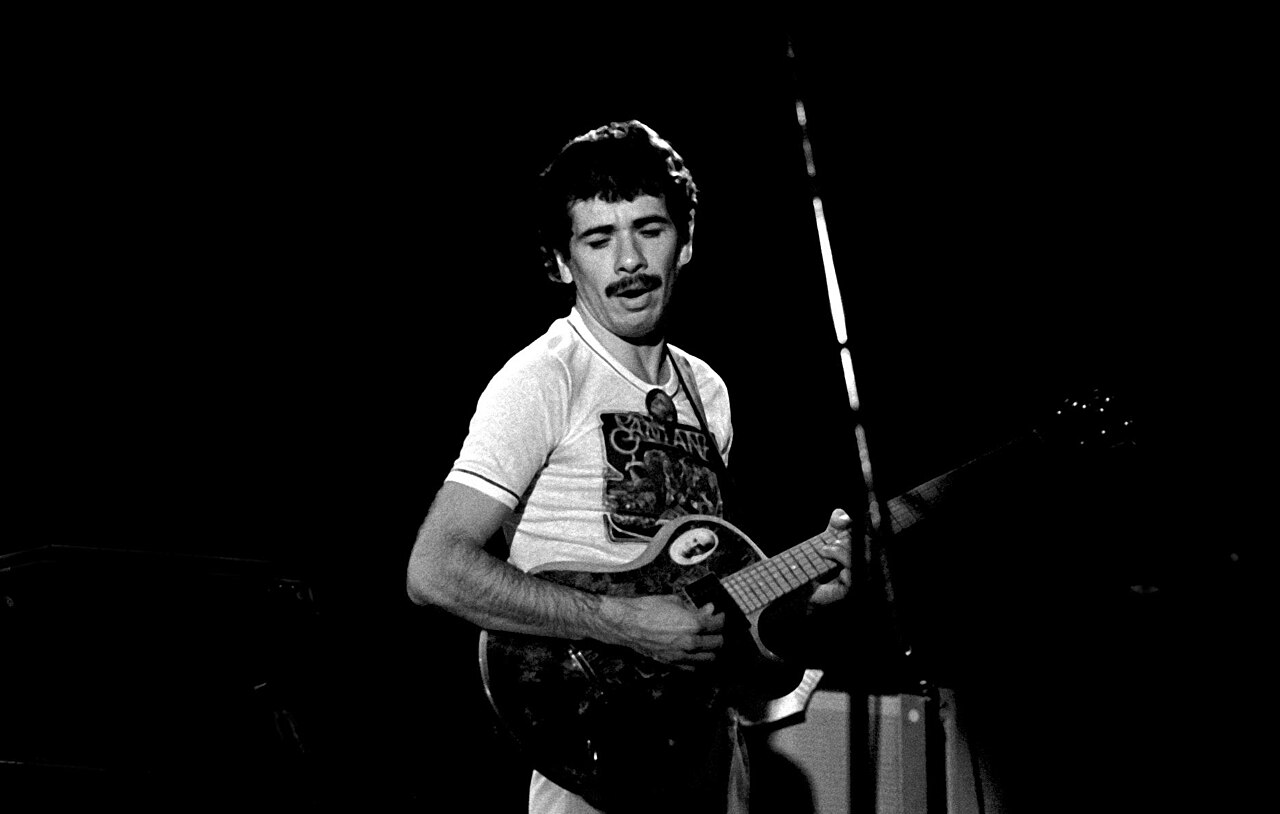
PRS’s generic artist roster — Carlos Santana, Mark Tremonti, John Mayer, Orianthi, David Grissom — shows up here exactly as it does everywhere else in this catalog, and exactly as it does everywhere else, it’s irrelevant. The Fiore isn’t a guitar any of those five plays. It’s a genuine signature model, built from the ground up for one specific working musician’s needs. The player who actually matters here is Mark Lettieri — a five-time Grammy winner who spends far more time in recording studios and behind other artists than in front of stadium crowds, and whose entire career logic is baked into the guitar’s unusually versatile design.
Who Mark Lettieri Actually Is
If the name doesn’t immediately register, that’s part of the point. Lettieri has built one of the more unusual careers in modern guitar: enormously respected among musicians and virtually invisible to the mainstream audiences he’s quietly helped shape. Born in the San Francisco Bay Area, he studied advertising and public relations — not music — at Texas Christian University, competing in track and field as a long jumper before deciding to pursue guitar professionally after graduating in 2005.
He built his reputation in the Dallas-Fort Worth gospel and R&B scene before joining the instrumental jazz-fusion collective Snarky Puppy in 2008, where he remains a core member as guitarist, arranger, and composer. Snarky Puppy has won five Grammy Awards during Lettieri’s tenure — Best R&B Performance for “Something” featuring Lalah Hathaway in 2014, and Best Contemporary Instrumental Album for Sylva (2016), Culcha Vulcha (2017), Live at the Royal Albert Hall (2021), and Empire Central (2023). In 2018 he co-founded The Fearless Flyers, a Vulfpeck-adjacent funk supergroup with Cory Wong, bassist Joe Dart, and drummer Nate Smith, which has released numerous EPs and albums since. As a solo artist, his 2021 album Deep: The Baritone Sessions, Vol. 2 earned him his first individual Grammy nomination.
Underneath all of that sits an enormous, largely uncredited session career: Erykah Badu, David Crosby, Kirk Franklin, 50 Cent, Tori Kelly, Nelly, Lupe Fiasco, Xzibit, Ledisi, and dozens of others, spanning gospel, hip-hop, neo-soul, and pop. That breadth — a guitarist equally comfortable behind a Grammy-winning jazz-fusion act, a funk supergroup, and a rotating cast of major-label pop and R&B sessions — is the direct reason the Fiore was designed to cover as much sonic ground as possible from a single instrument, rather than specializing the way most signature guitars do.
Lettieri has also built a substantial career outside performance, releasing multiple instructional courses through platforms including JamPlay, Guitareo, and Soundslice, and contributing print lessons to Premier Guitar magazine. That teaching background is worth noting in the context of the Fiore’s design, since it means the guitar was shaped by someone who spends as much time thinking about how guitar tone and technique translate to other players as he does using them himself — a different design lens than the “personal dream guitar” framing behind many artist signature models.
Designing a Guitar for a Career Without a Genre
The Fiore arrived at Winter NAMM 2021, announced virtually during the pandemic-era show, as only the second bolt-on signature guitar in PRS’s history — three years after John Mayer’s Silver Sky broke ground as the company’s first. Where the Silver Sky was a deliberate homage to Fender’s S-style format built around a single celebrity’s specific taste, the Fiore was built around a session musician’s practical need to walk into any studio or gig with one guitar and credibly cover whatever the job required.
Lettieri named the guitar Fiore — Italian for “flower” — and brought a series of personal touches to its design, most notably a custom truss rod cover featuring a floral logo drawn by his own mother. Speaking about the collaboration, Lettieri has described wanting an instrument responsive enough to grow alongside a player’s developing musical voice, framing the Fiore less as a fixed signature statement and more as an open platform other guitarists could make their own.
That framing is unusual in the signature-guitar world, where most artist collaborations are built explicitly around replicating one specific player’s exact rig — a particular pickup wind, a particular neck carve matched to one person’s hands, a particular finish tied to one specific stage-worn instrument. The Fiore’s brief was closer to the opposite: rather than asking “what does Mark Lettieri’s personal guitar look like,” PRS and Lettieri asked what a guitar would need to offer to solve the practical problems a working session and touring musician actually faces — walking into unfamiliar studios and stages with limited time to dial in a sound, across genres that might shift from gospel to hip-hop to instrumental fusion within the same week. The body shape itself, while visually related to earlier PRS bolt-on designs like the DC-3 and the Brent Mason signature model, was built specifically around that philosophy rather than around one player’s aesthetic preference alone.
Full Specifications
| Spec | Fiore (original, HSS) | Fiore HH (2025) |
|---|---|---|
| Body | Swamp ash, double-cutaway bolt-on | Swamp ash, double-cutaway bolt-on |
| Neck | Maple, Fiore profile, bolt-on | Maple, Fiore profile, bolt-on |
| Scale Length | 25.5″ (Fender-style) | 25.5″ |
| Frets | 22 | 22 |
| Fretboard | Maple, 7.25″ radius | Rosewood, 12″ radius, Bird inlays |
| Pickups | 2x Fiore-S single coils (neck/middle), Fiore-H humbucker (bridge) | 2x Fiore-H humbuckers |
| Switching | 5-way blade; volume + 2 push/pull tone (voicing/series-parallel) | 3-way blade; volume + 2 push/pull tone (series/parallel per pickup) |
| Bridge | PRS 2-point steel tremolo | PRS 2-point steel tremolo |
| Tuners | Vintage-style locking | Vintage-style locking, nickel-plated |
| Finish | Gloss nitrocellulose-over-body, tinted nitro neck | Gloss or satin nitrocellulose |
| Weight | ~7.5–8 lbs | ~7.5–8 lbs |
| Street Price | ~$2,649 | ~$2,649–$2,849 |
An Unusually Deep Wiring Scheme
What separates the Fiore from a typical HSS “super-Strat” is the control layout PRS and Lettieri built around it. The 5-way blade switch handles standard bridge/bridge+middle/middle/middle+neck/neck selection, but the two push/pull tone controls dramatically expand on that foundation: one lets players voice the bridge humbucker and neck pickup together, or all three pickups simultaneously, in switch positions that would otherwise offer only a single pickup; the other toggles the bridge humbucker between series (full humbucker output) and parallel (a brighter, more single-coil-adjacent voice with reduced hum).
Reviewers have specifically praised how well PRS balanced the notoriously difficult HSS pairing — humbuckers and single coils typically fight each other, with humbuckers overpowering and darkening the mix while single coils sound comparatively thin and quiet. The Fiore’s single coils were voiced hotter and fuller than a typical Stratocaster’s, closing much of that output gap without sacrificing single-coil clarity, a detail multiple reviewers singled out as the guitar’s standout achievement.
Positions 2 and 4 on the 5-way switch — the “in-between” settings that on a standard Stratocaster simply combine two adjacent pickups — do something more elaborate on the Fiore, engaging all three pickups simultaneously when the corresponding push/pull switch is engaged. That yields a genuinely distinctive hum-cancelling voice unavailable on most HSS instruments: fuller and more three-dimensional than a typical two-pickup blend, while retaining the noise-cancellation benefit of combining single coils and a humbucker together. It’s the kind of detail that rewards a player willing to spend real time exploring the guitar’s full switch matrix rather than settling into one or two favorite positions immediately.
The Fiore HH: A 2025 Reinvention
For PRS’s 40th anniversary in 2025, the company and Lettieri revisited the Fiore with a dual-humbucker version built for players whose sound leans further from single-coil territory. Lettieri has explained that despite not being primarily known as a humbucker player, dual-humbucker tone plays a significant role in his session and touring work, and that his long-standing affection for the PRS McCarty 594 directly informed the Fiore HH’s approach to voicing.
The Fiore HH keeps the original’s swamp ash body, 25.5″ scale length, and 2-point tremolo, but swaps the maple fretboard for rosewood with a tighter 12″ radius and PRS’s Bird inlays, and replaces the HSS pickup array with two Fiore-H humbuckers wired to a simpler 3-way switch. The two push/pull tone controls now function as independent series/parallel selectors for each pickup — full humbucker warmth in series mode, a brighter, more scooped near-single-coil voice in parallel — giving players eight total tonal combinations without the original’s added pickup-voicing complexity. Reviewers have described the HH version as trading some of the original’s stylistic range for a more focused, gig-ready character particularly suited to rock and funk contexts.
Famous Players: The Guitarist Behind the Curtain
Because Lettieri’s career runs almost entirely through session work, touring sideman gigs, and instrumental ensemble playing rather than frontman stardom, his profile doesn’t carry the mainstream name recognition of PRS’s other signature artists — a fact Guitar World’s own review of the Fiore noted directly, observing that Lettieri isn’t in the same public-recognition league as John Mayer or Carlos Santana despite being a highly respected player among musicians. None of PRS’s marquee names has any connection to the Fiore, because the Fiore was never designed to be marketed on star power. It’s worth noting John Mayer is relevant to the Fiore in one indirect sense — the Fiore is explicitly PRS’s second bolt-on signature model, following the trail Mayer’s Silver Sky blazed for the company in 2018, even though Mayer has no connection to the Fiore itself.
Lettieri’s own credentials speak for themselves: five Grammy Awards with Snarky Puppy, a solo Grammy nomination, founding membership in The Fearless Flyers alongside Vulfpeck’s Cory Wong, and session credits spanning gospel, hip-hop, neo-soul, and pop music for artists including Erykah Badu, Kirk Franklin, 50 Cent, and Tori Kelly. That range — genuinely wide rather than a marketing exaggeration — is the reason the Fiore’s unusually flexible wiring exists at all. It’s a guitar designed by someone whose job requires walking into radically different musical contexts week to week, not a guitar designed around a single artist’s fixed sonic identity.
Tone Recipes
- Funk/R&B rhythm (Fearless Flyers-style): Positions 2 or 4 (single-coil/humbucker mix), clean amp tone, light compression. The hum-cancelling mixed voicings are tailor-made for tight, syncopated funk rhythm work.
- Session clean/pop: Neck and middle single coils together, pristine clean amp tone, subtle chorus. Genuinely Strat-adjacent clarity for pop and R&B session work.
- Instrumental fusion lead (Snarky Puppy-style): Bridge humbucker in series mode, moderate overdrive, expressive vibrato via the 2-point tremolo. Full humbucker output for extended, melodic solo lines.
- Rock rhythm (Fiore HH): Both humbuckers in series, amp on the edge of breakup, moderate midrange. The McCarty 594-influenced voicing gives a warmer, more vintage-humbucker character than the original HSS Fiore’s bridge pickup.
- Bright parallel tones (Fiore HH): Humbuckers in parallel mode via the push/pull tone controls, clean-to-crunch amp tone. A convincing near-single-coil brightness without the classic humbucker hum-cancelling guitar ever leaving humbucker territory.
Fiore vs. PRS’s Other Bolt-On Signature Models
Against the PRS Silver Sky, the comparison is instructive precisely because both are PRS’s only bolt-on signature guitars, yet built around opposite design philosophies. The Silver Sky is a focused homage to a single classic format, chasing one specific vintage-Strat tonal target with unwavering precision. The Fiore is the opposite instinct: a genre-agnostic tone-shaping platform built to cover as much ground as possible from one instrument, reflecting its designer’s career as a hired gun rather than a genre specialist. Against PRS’s non-signature Swamp Ash Special, which shares tonewood and a similarly carved-top aesthetic, the Fiore’s dramatically more elaborate switching sets it apart as the more deliberately engineered “do-everything” tool of the two, at a broadly comparable price point.
Who the Fiore Actually Suits
The Fiore’s ideal owner looks a lot like its designer: a guitarist whose work doesn’t sit neatly inside one genre, and who needs a single instrument capable of credibly covering funk rhythm, pop session clean tones, rock crunch, and instrumental fusion lead work without swapping guitars mid-session. That’s a meaningfully different buyer than the one drawn to PRS’s more singularly focused signature models — the vintage-Strat purist chasing John Mayer’s Silver Sky, or the metal-leaning shredder drawn to a high-output signature humbucker platform. The Fiore’s entire value proposition rests on tonal range rather than a single, perfectly replicated classic sound.
In practice, that makes it a natural fit for working cover-band guitarists who need one guitar to handle an entire night’s setlist across genres, session players building a compact touring or studio rig without room for multiple guitars, and home recordists who want maximum tonal options from a single instrument rather than assembling a larger collection. It’s less immediately suited to players with a narrow, well-defined tonal identity already locked in — a dedicated metal player, for instance, or a strict vintage-blues purist — who may find the Fiore’s versatility somewhat beside the point compared to a more specialized instrument built around exactly their sound.
Buying Guide
- Fiore HSS (~$2,649): The original, most versatile version — ideal for session players, cover-band guitarists, and anyone who wants maximum tonal range from a single guitar.
- Fiore HH (~$2,649–$2,849): Better suited to players whose sound centers on humbucker tones — rock, funk, and modern fusion players who want the Fiore’s build quality and switching flexibility without single-coil territory.
- Used market: Fiore HSS models have been seen used in the $1,700–$2,100 range depending on finish and condition — a reasonable discount for a guitar with this level of build quality and switching complexity.
- Finishes: The original Fiore has shipped in colors including Amaryllis, Black Iris, Sugar Moon, and satin options like Lilac; the Fiore HH adds Sunflower, Sugar Moon, Black Hyacinth, Metallic Midnight, and Red Apple Metallic across gloss and satin finishes.
Ownership Notes
Because the Fiore’s HSS pickup configuration mixes single coils with a bridge humbucker, some players have reported audible 60-cycle hum in the single-coil-only switch positions — an inherent trait of any true single-coil pickup rather than a flaw specific to this guitar, and one the mixed humbucker/single-coil positions are specifically designed to minimize. Players sensitive to noise in performance settings should plan pedalboard and stage-lighting placement accordingly, as with any single-coil-equipped instrument. The 2-point tremolo bridge, while comfortable and stable for most players, uses a pop-in tremolo arm rather than a threaded screw-in arm favored by some vintage-style Stratocaster players — a minor adjustment for players coming from older Fender-style designs. The dense, multi-function wiring scheme, while powerful, takes longer to fully learn than a standard 3- or 5-way switch guitar; players who want to use the full range of voicing options are best served by spending focused practice time cycling through all switch and push/pull combinations rather than expecting the layout to become intuitive immediately.
FAQ
Is the PRS Fiore actually a signature model, even though it’s not labeled that way?
Yes. The Fiore was developed directly with Mark Lettieri and incorporates his specific design preferences, including a custom truss rod cover drawn by his mother — it functions as a full signature model in every practical sense.
What’s the difference between the original Fiore and the Fiore HH?
The original Fiore uses an HSS pickup configuration (two single coils plus a bridge humbucker) with a maple fretboard, aimed at maximum tonal versatility. The 2025 Fiore HH uses two humbuckers with a rosewood fretboard, trading some versatility for a more focused, rock- and funk-oriented voice inspired partly by Lettieri’s affection for the PRS McCarty 594.
Why isn’t Mark Lettieri as well known as PRS’s other signature artists?
His career runs primarily through session work, touring sideman roles, and instrumental ensemble playing (Snarky Puppy, The Fearless Flyers) rather than frontman visibility — despite five Grammy Awards and widespread respect among working musicians.
Is the Fiore a good choice for a working session or cover-band guitarist?
It’s arguably the guitar’s core use case. The wide switching range was specifically engineered around exactly that kind of player’s need to credibly cover multiple genres and tones from a single instrument.
Image credits
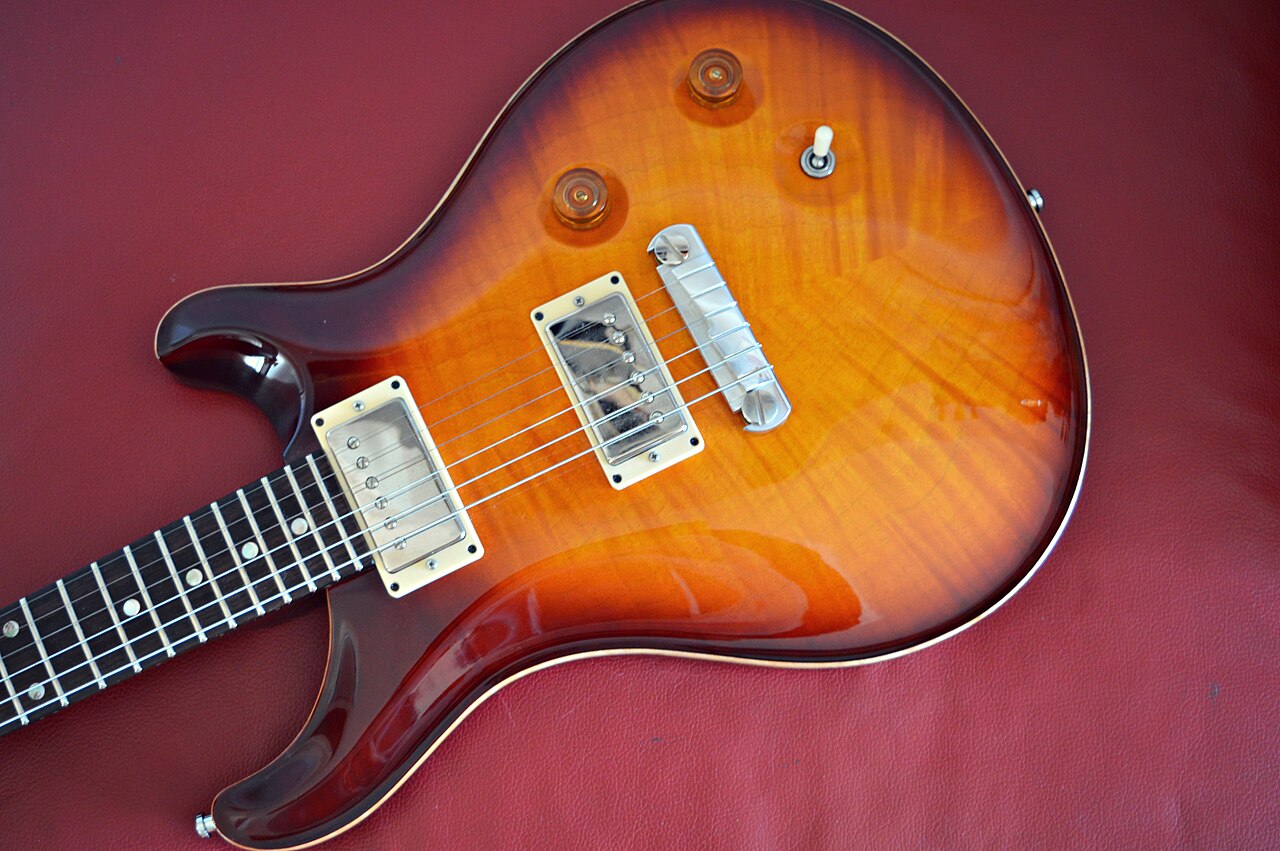
- A PRS McCarty guitar body: Freebird, Wikimedia Commons, CC BY-SA 2.0.
- Carlos Santana: Heinrich Klaffs, Wikimedia Commons, CC BY-SA 2.0.
Latest News
Related
On This Day
Monday 9 November
From this week: