Ron Wood Guitars & Gear: The Complete Guide to the Rolling Stones Guitarist’s Strat, Zemaitis & Copper Pipe Slide Rig
Ron Wood guitars & gear: Rolling Stones guitarist's complete rig. 1955 Fender Strat, Zemaitis black 6-string, copper pipe slide, ESP signature, Marshall & Fender — the full story.
Photo by Raph_PH, licensed under CC BY 2.0 (https://commons.wikimedia.org/wiki/File:Ronnie_Wood_plays_guitar_onstage_-_Rolling_Stones%2C_London_22_May_2018_(40532922340)_-_crop.jpg)
Gear Timeline
Ron Wood’s guitar slide is a piece of copper pipe — standard 3/4-inch copper tubing, the kind used in household plumbing, fashioned by his guitar tech Dave Rouze into the specific length and diameter that Wood has used for decades. Not a commercial glass slide or a machined metal slide or a custom-designed boutique slide material. Standard copper pipe. This choice is not accidental and it is not uncritical: Wood has also used a Stevens bar with the lap steel, a Bullet bar with the pedal steel, and has tried knives and lighters. He knows the slide landscape. He has chosen copper pipe because copper pipe produces the specific warm, slightly impure, bittersweet tonal character that defines his slide guitar voice — the sound that Guitar World describes as “deeply rooted in prewar American country blues and postwar Chicago blues” and that the moment you hear it, you know is Ron Wood. The copper pipe slide and the Zemaitis black 6-string that it plays on are the specific combination responsible for some of the most immediately recognizable slide guitar in rock history: the slide passages of the Faces and the Rolling Stones, the warm, fluid, scrappy slide work that is as personally identifiable as a fingerprint. Standard copper plumbing pipe. The greatest slide guitarists use what works.
Ronald David Wood was born on June 1, 1947, in the London Borough of Hillingdon, England, into a musical family where his older brothers Art and Ted were active in the skiffle and traditional jazz scenes — the specific British musical tradition of the late 1950s that produced so many of the guitarists who went on to define British rock. He was playing washboard in Ted’s skiffle group at ten. He would be playing guitar in the Rolling Stones at twenty-eight. The trajectory from washboard to Stones is the specific arc of postwar British working-class music culture: the American roots music that came over on records, absorbed and transformed by English musicians who heard something in it that their own musical tradition didn’t yet contain, and who built the British rock tradition by developing what they heard into something new. Wood’s specific genius within this tradition is the interweave — the guitar approach of a player who listens more to his bandmates than to his own part, who locks in rather than stands out, who makes the band sound better by knowing exactly where not to play.
His pre-Stones biography is as densely packed with significant musical partnerships as any in rock: bassist in the Jeff Beck Group (with Rod Stewart as vocalist, 1967-1969), guitarist and primary songwriter for the Faces (with Rod Stewart, 1969-1975), and then joining the Rolling Stones in 1975 to replace Mick Taylor. Each transition represented both a personal musical development and a significant moment in British rock history. The Jeff Beck Group’s late-1960s American tours are credited with establishing the heavy blues-rock approach that would influence Led Zeppelin and the harder edge of American rock. The Faces were one of the most musically joyful and commercially significant British rock bands of the early 1970s. And the Rolling Stones remain, fifty years after Wood joined them, the longest-running major commercial rock band in history.
His visual identity beyond the guitar — the paintings, the radio work, the autobiography Ronnie (2007), the documentary films — confirms a creative personality of genuine breadth. He is a serious and professionally exhibited painter whose work has been shown in galleries internationally, and the visual sensibility that the paintings demonstrate — immediate, rhythmically energetic, warm in colour and warm in emotional content — is the same sensibility that his guitar playing demonstrates. The specific quality of presence-in-the-moment that characterizes the best rock guitar playing is also the quality that distinguishes the best rock painting: the willingness to commit to the mark on the canvas or the note in the song without the safety net of revision. Ron Wood commits to both.
The twin cancer diagnoses of 2017 — lung cancer requiring surgery, successfully treated — and the subsequent public candor about both the diagnosis and the recovery reflect the specific character of a musician who has always been more transparent about his life than most public figures in his commercial position. He survived. He continued playing. The Stones continued touring. The copper pipe slide is still in use.
Background: Jeff Beck Group, the Faces, and Fifty Years with the Rolling Stones
The Jeff Beck Group’s American tours of 1968 and 1969 were, in retrospect, one of the most significant musical events of the period: a British band playing amplified blues-rock at volumes and with an intensity that American audiences hadn’t heard from British musicians, with Rod Stewart’s extraordinary voice over Jeff Beck’s aggressive lead guitar and Wood’s bass providing the specific rhythmic foundation that Beck’s approach required. The Led Zeppelin connection — Page, Plant, Jones, and Bonham were heavily influenced by what Beck’s group was doing, and there is documented mutual awareness between the two bands — is part of the specific musical genealogy of heavy British rock that the Jeff Beck Group helped establish.
Wood’s transition from bassist to guitarist for the Faces is the specific biographical moment when his guitar identity — rather than his bass identity — became his primary musical contribution. The Faces’ specific quality of musical democracy and joyful looseness — the sense that every member was contributing freely and generously to a collective sound rather than performing prescribed parts — suited Wood’s interweave guitar approach perfectly. “Stay With Me” (1971) is the primary document of the Faces guitar sound: Wood’s Zemaitis through a Hiwatt, in open E tuning, with the Zemaitis’s built-in booster adding grit and rasp that the Hiwatt alone couldn’t produce, has “fooled many into thinking Wood used a tweed amp.” The guitar tuned to open E provides the “generous amount of unison-note clang that makes the tone even more resonant.” The result is one of British rock’s most immediately recognizable guitar sounds — warm, scrappy, sure-handed, and immediately persuasive.
His joining of the Rolling Stones in 1975 — replacing Mick Taylor, who left in December 1974 — changed the band’s dynamic in specific and documented ways. Taylor was a technically accomplished lead guitarist in the British blues tradition, with the specific approach of a guitarist who played solos as primary melodic statements. Wood’s approach is fundamentally different: the interweave with Keith Richards rather than the lead statement, the rhythm-and-slide partnership rather than the rhythm-and-lead one. The specific quality of the Wood-Richards guitar partnership — documented across the It’s Only Rock ‘n’ Roll, Black and Blue, Some Girls, Emotional Rescue, Tattoo You, and subsequent albums — is the sound of two guitarists who listen to each other more carefully than most rock guitarists listen to anything. They lock in. The Stones sound like the Stones rather than like any particular guitar player within them, and this is primarily because the Wood-Richards guitar relationship produces more than the sum of its parts.
“Maggie May” — Rod Stewart’s signature song from Every Picture Tells a Story (1971) — was recorded with Wood’s guitar through a Fenton Weill amplifier for the solo. “I used an old Fenton Weill on the solo for ‘Maggie May.’ It was like, more or less, a converted radio — it’s a bit like the Champ amp is. There’s a bit of distortion already built in, just because of the old valves and stuff.” The Fenton Weill — a British amplifier company whose small, distinctively voiced valve amplifiers were used by various British guitarists in the 1960s — provides exactly the warm, slightly primitive distortion character that the “Maggie May” mandolin-style guitar solo required. An amp like a converted radio. The solo is one of the most recognized in British rock history.
The Rig: Ron Wood’s Guitars, Amps, and Effects
Guitars
Ron Wood’s most-used stage guitar for the Rolling Stones is a 1955 Fender Stratocaster in sunburst finish — a first-year or near-first-year example of the Stratocaster, from the specific production period when the Fender Stratocaster’s design was being finalised and the specific tonal character of the early Strat — the ash body, the early-design single-coil pickups, the one-piece maple neck — was at its most unmistakable. The 1955 Strat’s specific acoustic character: bright, clear, with the specific quality of single-coil presence and the particular warmth of ash over the later alder that Fender transitioned to in the late 1950s. He has used this specific guitar across multiple Stones touring cycles, confirming its status as the central performing instrument of his Stones career. A 1954 Fender Stratocaster (described as a “great spare” in a backstage interview during the 2003 Licks tour) and a red 1967 Fender Stratocaster are also documented in his performing arsenal alongside the primary 1955 example.
The Zemaitis black 6-string electric is Ron Wood’s primary slide guitar — the instrument he uses whenever the slide copper pipe comes out. “I’ve always used the black Zemaitis 6-string for slide.” The Zemaitis is a guitar by Tony Zemaitis — the London-born Lithuanian-British luthier who worked from a garage in Chatham, Kent, and whose metal-top electric guitars became some of the most sought-after instruments in British rock. Wood’s Zemaitis black 6-string is used with the built-in Zemaitis booster circuit — “the Zemaitis’ booster adds delicious rasp and grit that has fooled many into thinking Wood used a tweed amp.” The booster is a built-in preamp boost that Zemaitis incorporated into specific instruments, providing additional output and harmonic complexity that suited the slide-through-amplifier approach Wood uses. The combination of the Zemaitis guitar’s specific tonal character, its built-in booster, and the copper pipe slide produces the specific warm, scrappy, bittersweet slide sound that is the most immediately personal element of Wood’s guitar identity.
Wood uses his original 1952 Fender Telecaster for specific classic Rolling Stones songs including “Honky Tonk Women” — the earliest production year of the Telecaster, from the period when Fender’s solidbody electric was still called the Broadcaster and then the Nocaster before the Telecaster name was settled. The 1952 Telecaster’s specific construction — the ash body, the original bridge pickup with the specific three-saddle ashtray bridge, the maple neck — produces the specific twangy, bright, penetrating tone of the early Telecaster that no subsequent version quite replicates. Wood’s use of this specific guitar for specific classic Stones songs reflects both the tonal appropriateness of the early Telecaster for certain musical contexts and the practical intelligence of a working guitarist who selects the right instrument for the song rather than defaulting to a single primary instrument across all material.
Ron Wood is one of ESP’s longest and most distinguished endorsers, and his signature guitar — described by Bill Kelliher (Mastodon) as the best-sounding Telecaster he had ever played (“It’s a Telecaster with a humbucker and it’s the best-sounding Tele ever, so warm and still twangy”) — is the ESP Custom Shop Ron Wood model. The ESP Ron Wood is a Telecaster-style guitar with a bolt-on alder body, maple neck with maple fingerboard, and an unusual pickup configuration: ESP Designed LH-200 humbucker in the neck position and ESP TS-120 single-coil in the bridge. The production version (ESP LTD Ron Wood) uses Seymour Duncan pickups — ’59 humbucker neck and Hot Tele single-coil bridge. The humbucker-neck/single-coil-bridge configuration provides the specific combination of warmth (humbucker neck for rhythm and slide) and twang (Tele single-coil bridge for specific song applications) that suits Wood’s stylistically varied guitar requirements across the Stones setlist.
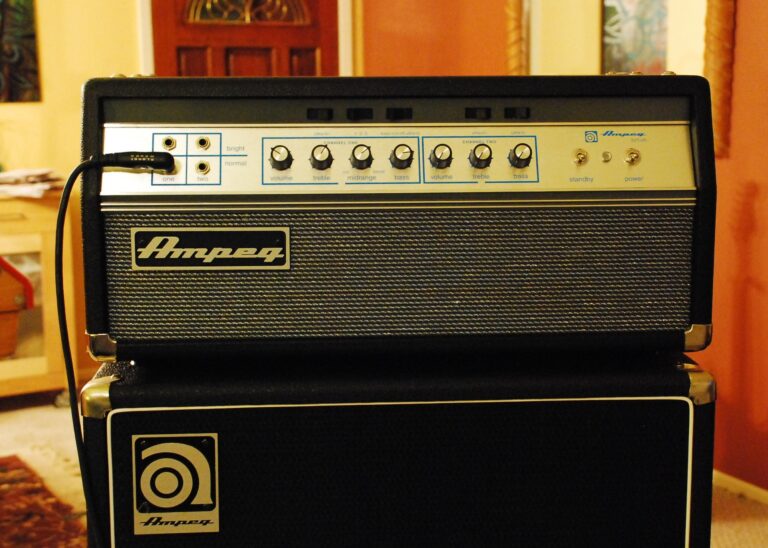
During his Faces period, Wood paired Gibson SG guitars with an Ampeg bass amplifier rig (the SVT, V-2, or V-4) — a configuration described by fans and historians as “the quintessential Woody tone.” The Gibson SG’s specific character — lighter than a Les Paul, brighter, with the double-cutaway design’s easy upper-fret access — through the Ampeg’s bass amplification produced a warm, crunchy, distinctive guitar tone that is specifically associated with the Faces recordings. Using a bass amplifier for guitar — the same approach that some guitarists use for its specific warmth and low-end character — produced the specific fullness that the SG-through-Ampeg combination delivered on “Stay With Me” and other Faces recordings.
Wood’s lap steel guitar is specifically documented: “It’s an old one I got for $150 from an old lady’s attic.” The specific provenance of the instrument — an unknown old lady’s attic, $150, the kind of transaction that characterizes the opportunistic discovery of significant vintage instruments by musicians who are always looking — is the most characteristically Ron Wood gear story in his equipment history. The Stevens bar slide is used with this lap steel. The lap steel’s specific tonal character — the resonator or electric lap steel’s warm, sustained single-string slide voice — is distinct from the Zemaitis 6-string slide approach and provides a different tonal dimension for the specific pedal steel-adjacent passages that appear in the Faces and Stones material.
A 1964 white Gibson Firebird reverse — the through-neck reverse-headstock Gibson — is documented in Wood’s touring arsenal. The Firebird’s specific tonal character: bright for a Gibson, with the mini-humbucker’s specific articulate, forward character and the through-neck’s sustain and clarity. Its presence in Wood’s guitar collection alongside the primary Strats and the Zemaitis slide guitar confirms the breadth of tonal options he maintains for different musical applications.
A Gibson L5-S — described on Wood’s website as “often mistaken for a Les Paul” and “unusual as it has only a single pick-up” — is documented in his collection. The L5-S was Gibson’s mid-1970s attempt at a quality solid-body instrument based on the archtop L-5 design, featuring a carved maple top over a mahogany body. Wood’s example with a single pickup configuration is the specific instrument featured in the Gibson.com documentation of his playing.
Amps
Wood’s primary recording amplification is vintage Fender — specifically a collection of vintage Fender valve amplifiers covering different periods and different tonal characters. For I Feel Like Playing (2010), he used a ’50s Fender Tremolux, a ’56 Fender low-powered tweed Twin, a ’58 high-powered Twin, and a new Fender Vibro-King — all “cranked up” for the “raunchy no-frill rock-and-roll guitar sounds he is famous for.” The range from the ’50s Tremolux (a low-powered combo with tremolo, similar character to the Deluxe) to the ’56 and ’58 Twin (increasingly powerful 6L6 amps) provides a complete spectrum of vintage Fender tonal options for different songs and different recording contexts. The Vibro-King (the mid-1990s Fender reissue of the blackface amplifier aesthetic with Fender’s specific vintage-voiced character) provides a modern vintage-voiced option alongside the genuine vintage instruments.
The Hiwatt DR103 — the high-quality British valve amplifier associated with the Who’s Pete Townshend — is the amplification documented for the Faces’ “Stay With Me” recording and the broader Faces era. “Tone snobs argue that an early Hiwatt’s tone is too clean, these amps can get quite nasty when pushed hard.” Wood’s combination of the Hiwatt with the Zemaitis’s built-in booster produced the specific warm, pushed tone of the Faces recordings — the booster providing the grit that the clean Hiwatt alone wouldn’t deliver. The Hiwatt’s high-quality EL34 output stage, when pushed near its operating point by the Zemaitis booster, produces a distinctly different saturation character from the Marshall — tighter, more controlled, with a specific British warmth that suits the Faces’ particular combination of looseness and quality.

Marshall amplification is part of Wood’s documented live touring setup alongside the vintage Fender collection and the Hiwatt. The Rolling Stones’ general amplification approach across different touring periods has used various Marshall configurations alongside other British and American amplifiers, and Wood’s Marshall use is the standard professional touring configuration for the arena and stadium context.
“Amps-wise, a Boogie or an old Vox AC30. They’re all there if I want to use them,” Wood confirmed in the Premier Guitar interview. “Just the regular Mesa/Boogie with the EQ on the front. I don’t know the model name. An older one — the little combo? Yeah, they’re cool.” The Mesa/Boogie presence alongside the Fender and Hiwatt options confirms Wood’s practical approach to amplification: the right amp for the right application, with multiple different tonal options available and the specific selection determined by the song’s requirements.
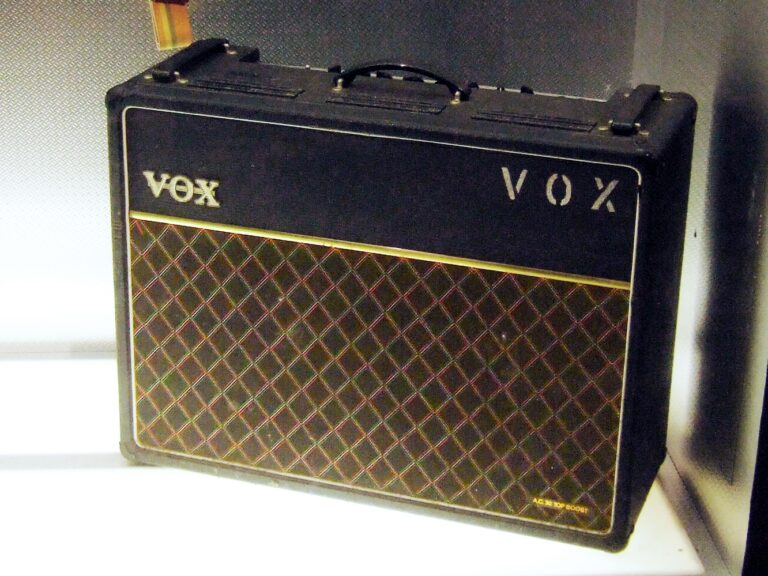
The Vox AC30 is confirmed in Wood’s amplifier arsenal alongside the Mesa/Boogie, Fender, and Marshall options — the standard British chimey EL84-powered amp. Its inclusion confirms the breadth of amplification character available in Wood’s rig.
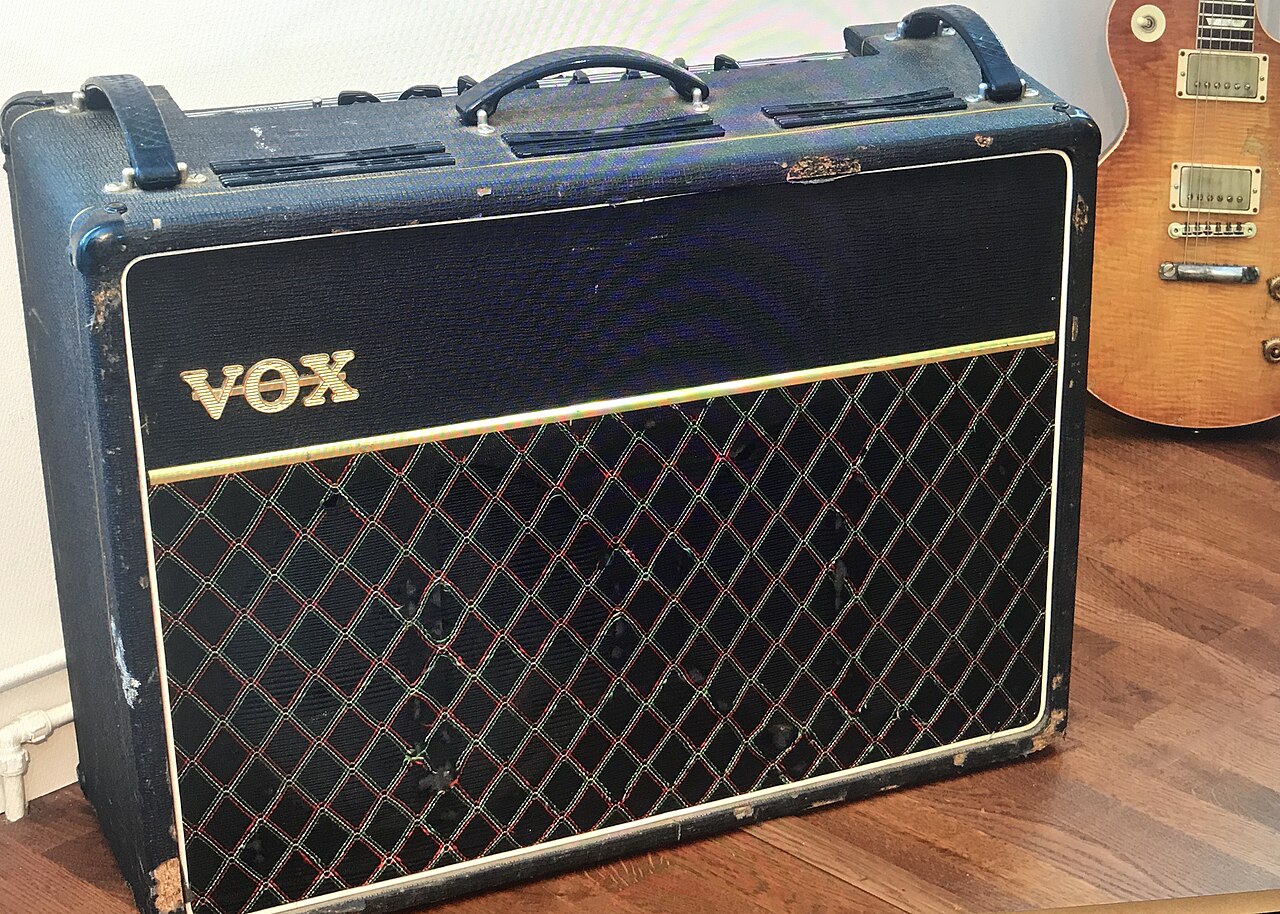
The Fenton Weill amplifier used for the “Maggie May” guitar solo is one of the more obscure amplifier references — a British brand whose small, distinctively voiced valve amplifiers were used in the 1960s British scene. Wood’s description — “more or less, a converted radio — it’s a bit like the Champ amp is. There’s a bit of distortion already built in, just because of the old valves and stuff” — captures the specific character of these small, warm, slightly primitive British valve amplifiers perfectly. The “Maggie May” solo, one of the most recognized in British rock history, was recorded through what Wood describes as being like a converted radio. This is the gear story of the 1970s British recording scene: the right sound was wherever you found it, and sometimes you found it in an amp that was more or less a converted radio.
The Ampeg bass amplifiers used in the Faces era — specifically the SVT, V-2, or V-4 — produced what fans describe as “the quintessential Woody tone” when paired with the Gibson SG. Using bass amplification for guitar produces a specific warmth, fullness, and low-end character that guitar-specific amplifiers don’t always provide in the same way. The Ampeg SVT in particular — the most powerful valve bass amplifier commercially produced in the early 1970s — delivers a specific combination of high output, warmth, and the particular harmonic character of Ampeg’s valve design that, combined with the SG’s specific tonal character, produced the warm, crunchy, musically compelling Faces guitar sound.
Effects and Technique
Copper Pipe 3/4″ Slide (Primary Slide — Fashioned by Guitar Tech Dave Rouze)
Standard 3/4-inch copper plumbing pipe, fashioned by guitar tech Dave Rouze into the specific length and diameter that Wood uses as his primary slide. The copper pipe’s specific tonal character — warmer than stainless steel, slightly brighter than glass, with a specific quality of the copper’s natural acoustic properties affecting the way the string vibrates under the slide — produces the particular tone of Wood’s slide playing. He has described using copper pipe, and also Stevens bars, Bullet bars, and has tried knives and lighters. The copper pipe is the primary choice because it produces the specific sound he wants: warm, fluid, bittersweet, with the specific impurity that copper provides rather than the cleaner character of glass or stainless steel.
Open E Tuning (Slide Guitar — Primary Tuning)
Wood plays his slide work in open E tuning — the same tuning documented for Sonny Landreth and for various other slide guitarists throughout this series. Open E (E-B-E-G#-B-E) provides the drone of an open E major chord, enabling straight-bar major chords at every fret position and producing the specific “generous amount of unison-note clang that makes the tone even more resonant” that Guitar World identifies in the Faces “Stay With Me” tone. The open tuning’s sympathetic resonance — the strings vibrating in sympathy with the fundamental chord’s harmonic content — gives the slide guitar an acoustic richness and depth that standard tuning slide cannot produce.
Zemaitis Built-In Booster (Pre-Amp Boost — Faces Era)
The built-in booster circuit in Wood’s Zemaitis black 6-string is a critical component of the Faces and early Stones slide guitar tone: “the Zemaitis’ booster adds delicious rasp and grit that has fooled many into thinking Wood used a tweed amp.” Zemaitis incorporated built-in preamp boost circuits into specific instruments to provide additional output and harmonic complexity. In Wood’s signal chain, the Zemaitis booster pushes the amplifier’s input stage harder, driving the Hiwatt or Marshall toward natural saturation at lower overall volume levels and adding the specific harmonic complexity of a pushed preamp stage to the clean Hiwatt’s baseline character.
Minimal Effects (Primarily Guitar-and-Amp Direct)
Like the other experienced British rock guitarists in this series — Page, Clapton, Richards — Wood’s primary approach is minimal effects, relying on the instrument and the amplifier to produce the fundamental tonal character. The specific quality of his sound — warm, fluid, personally identifiable — comes from the copper pipe slide, the open tuning, the Zemaitis’s built-in booster, and the amplifier’s natural character rather than from effects processing. His approach is the most direct possible statement of the British blues tradition’s tonal philosophy: the guitar should sound like the guitarist, not like the effects chain.
Playing Style & Tone Philosophy
Ron Wood plays guitar with the specific, sophisticated understanding of the ensemble musician who makes the band sound better by knowing where not to play. His guitar approach within the Rolling Stones is fundamentally an interweave approach: he and Keith Richards play around and through each other rather than separately, creating a combined guitar texture that is more than the sum of its parts. This is the specific contribution of a guitarist who has been playing with other people since he was ten years old and who has spent fifty years developing the specific listening quality that the great ensemble playing requires.
The slide work — the copper pipe, the Zemaitis, the open E tuning, the warm-and-bittersweet tonal character that is “deeply rooted in prewar American country blues and postwar Chicago blues” — represents the most specifically personal dimension of his guitar voice. The slide says things about the American vernacular music tradition that no standard fretted playing quite reaches: the pitch ambiguity, the vocal quality, the connection to the bluesmen who played without frets and found the notes by feel rather than by physics. Wood absorbed this tradition — through the British skiffle and jazz environment of his brothers’ music, through the same records that every British musician of his generation absorbed, and through the specific cultural intelligence that his painter’s eye and musician’s ear combined to develop. The result is a slide voice that is immediately his: warm, bittersweet, sure-handed, and scrappy, as Guitar World puts it — all at the same time.
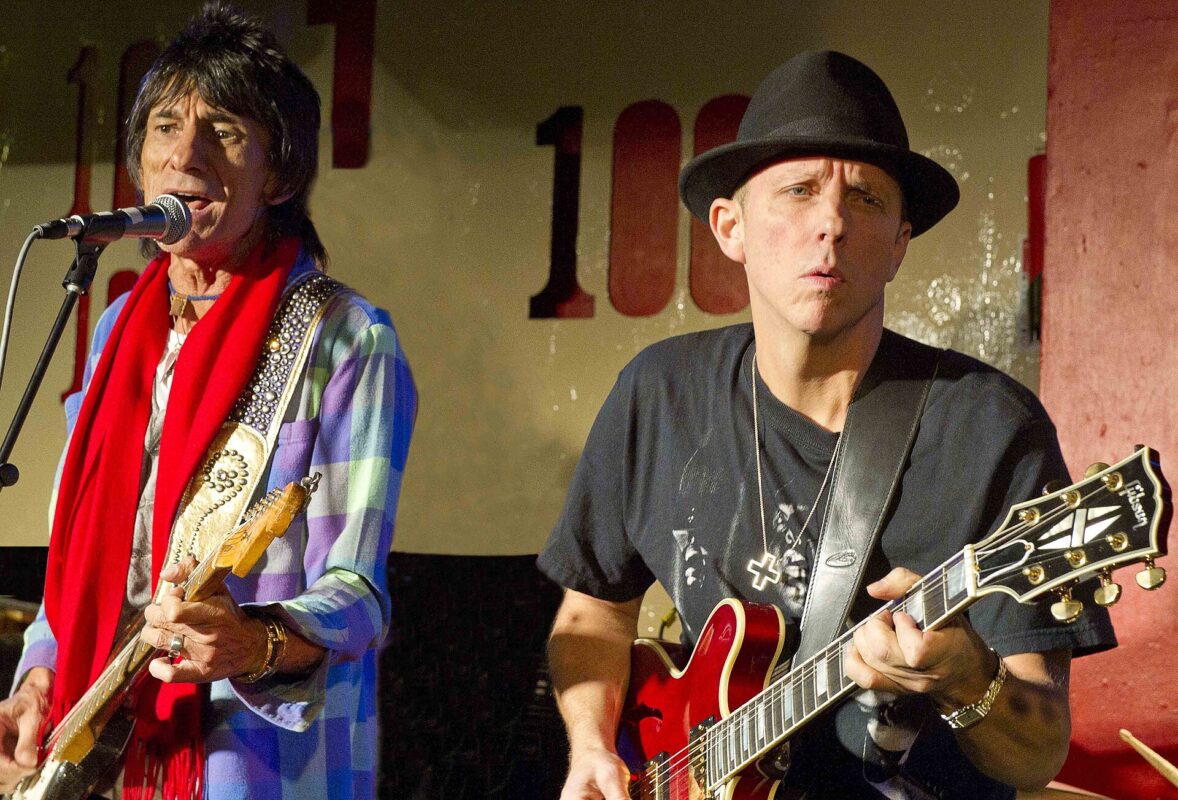
His broad approach to instruments and amplifiers — the rotating collection of vintage Fenders, Gibsons, and Zemaitis instruments, the pragmatic selection of Hiwatts, Fenders, Marshalls, and Mesa/Boogies — reflects the same fundamental philosophy. What serves the music is what gets used. The right guitar for the right song. The right amp for the right context. The copper pipe for the slide. The old lady’s lap steel from the attic when the pedal steel sound is what’s needed.
How to Sound Like Ron Wood
The Ron Wood Rolling Stones tone requires: a Fender Stratocaster (1955 or equivalent mid-1950s configuration) through a vintage Fender or Marshall valve amplifier; open E tuning for slide work; copper pipe or equivalent warm metal slide; and the interweave playing approach that serves the band rather than the individual. The Faces era tone specifically requires the Zemaitis or equivalent guitar with built-in boost, a Hiwatt or equivalent clean high-quality British valve amp, the built-in boost adding grit, and open E tuning.
| Control | Setting (0–10) | Notes |
|---|---|---|
| Fender Strat / Vintage Fender Amp (Stones Live Tone) | Volume: 7; Treble: 7; Bass: 5; Mid: 6 | The ’55 Strat’s ash body and early single-coils through a pushed vintage Fender produce the specific warm, present, slightly bright character of the Stones live guitar. The Strat’s volume pot at 7 rather than 10 provides slightly softer attack for the interweave approach — the guitar supporting the band rather than cutting through it. |
| Hiwatt (Faces “Stay With Me” Tone) | Volume: 7; Treble: 6; Bass: 6 | Push the Hiwatt toward its working point with the Zemaitis booster adding input signal. The Hiwatt’s clean, high-quality character at this volume with the booster’s added drive produces the specific raspy-but-clean Faces guitar sound. Open E tuning provides the resonant drone. |
| Zemaitis Booster (Faces Era — Built-In) | Engaged — adds grit and output | The built-in Zemaitis booster engaged permanently for slide work. Adds harmonic complexity and drives the Hiwatt harder than the guitar’s passive output alone would. If the Zemaitis booster is unavailable, a Rangemaster-style treble booster provides similar character. |
| Open E Tuning | E-B-E-G#-B-E | From standard tuning: raise strings 3, 4, and 5 (G to G#, D to E, A to B). Strings 1, 2, and 6 stay at standard pitch. The result is an open E major chord with the specific resonance of multiple strings tuned to the same fundamental. Unison clang on the G# and B strings adds the specific warmth of the open-E slide tone. |
| Copper Pipe Slide | 3/4″ copper plumbing pipe; above fret | Standard 3/4″ copper plumbing tube, cut to appropriate finger length. Position directly above the fret for correct intonation. Light contact pressure — the pipe’s weight against the strings rather than pressing down. The copper’s tonal character is warmer than stainless steel; softer attack, bittersweet sustain. This is not a commercial slide. This is from the hardware store. |
| Interweave Approach | Listen more than play | The primary tonal philosophy. Play around and through the other guitars rather than over them. Find the spaces in the Keith Richards rhythm part and fill them without duplicating them. Play less than you think you should. The interweave approach produces a combined guitar texture larger than any single part within it. This is the Ron Wood gift: making the band sound better by knowing exactly where not to play. |

Influence & Legacy
Ron Wood’s influence on rock guitar is the influence of the ensemble musician rather than the virtuoso — harder to identify specifically, but present in every performance of any band that understands that the guitarist’s primary responsibility is to the music rather than to the guitar. The Wood-Richards interweave is the specific model for how two guitars can be more than the sum of their parts, and every two-guitar band that develops a coherent combined voice rather than two separate individual voices is working from this model whether they know it or not.
His slide guitar work — the copper pipe, the Zemaitis, the open E tuning, the bittersweet blues-rooted tonal character — is one of the most specifically personal slide guitar voices in rock, immediately identifiable from the first note. The “deeply rooted in prewar American country blues and postwar Chicago blues” description captures the specific cultural genealogy; the warmth, fluidity, and scrappiness of the execution are the personal qualities that distinguish it from other slide players in the same tradition.
His painter’s identity — the serious, exhibited, internationally collected artwork — is part of the complete picture of who Ron Wood is as a cultural figure: a guitarist who is also an artist, whose visual sensibility and musical sensibility express the same fundamental qualities. The warmth of the colour field in the paintings is the warmth of the copper pipe slide in the music. The immediacy of the mark in the paintings is the immediacy of the note in the Stones live performance. The same person made both. For the Faces context that preceded and shaped his guitar identity, the connection to Steve Marriott’s Humble Pie approach runs through Peter Frampton’s gear history — Frampton was Humble Pie’s other guitarist while Wood was developing his own Faces sound. The broader slide guitar tradition that Wood inhabits most personally connects to Sonny Landreth’s approach. And the Keith Richards interweave partnership that defines the modern Wood guitar identity is part of the broader Rolling Stones guitar story that this entry documents on Wood’s side of the equation.
The copper pipe is from the hardware store. The lap steel cost $150 from an old lady’s attic. The 1955 Stratocaster is worth considerably more. The Zemaitis is irreplaceable. And the interweave continues — fifty years of Rolling Stones, and still listening more carefully than most guitarists think to play.
Frequently Asked Questions: Ron Wood Guitars & Gear
What guitar does Ron Wood use most on stage with the Rolling Stones?
Ron Wood’s most-used stage guitar with the Rolling Stones is a 1955 Fender Stratocaster in sunburst finish — a near-first-production-year example of the Stratocaster with ash body, early single-coil pickups, and one-piece maple neck. He also uses a 1954 Fender Stratocaster as a “great spare” and a red 1967 Stratocaster. For specific classic Rolling Stones songs including “Honky Tonk Women,” he uses his original 1952 Fender Telecaster. The ESP Custom Shop Ron Wood signature guitar — a Telecaster-style instrument with ESP LH-200 humbucker neck and TS-120 single-coil bridge — appears in the modern touring lineup alongside the vintage Fenders.
What slide does Ron Wood use and how does he play it?
Ron Wood’s primary slide is made from standard 3/4-inch copper plumbing pipe, fashioned by his guitar tech Dave Rouze into the appropriate length and diameter for Wood’s finger. He plays the slide on the Zemaitis black 6-string electric guitar, primarily in open E tuning (E-B-E-G#-B-E). He has also used a Stevens bar with lap steel, a Bullet bar with pedal steel, and has experimented with knives and lighters. The copper pipe’s specific tonal character — warmer than stainless steel, with a bittersweet quality — is what gives his slide tone its immediately identifiable character, described as “deeply rooted in prewar American country blues and postwar Chicago blues.”
What is the Zemaitis guitar and why does Ron Wood use it for slide?
The Zemaitis is a guitar built by Tony Zemaitis — a Lithuanian-British luthier based in Chatham, Kent, whose metal-top electric guitars became highly sought-after by leading rock musicians including Wood, Eric Clapton, George Harrison, Pete Townshend, and Bob Dylan. Wood’s primary Zemaitis is a black 6-string electric with a built-in booster circuit. “I’ve always used the black Zemaitis 6-string for slide.” The built-in Zemaitis booster adds grit and harmonic complexity that has fooled many listeners into thinking Wood used a tweed amp — the booster pushes the amplifier’s input stage harder, producing natural saturation at lower volume levels. Tony Zemaitis died in 2002; his son Tony Jr. continues the guitar-making tradition.
What amplifiers does Ron Wood use?
Wood’s amplifier approach is broadly pragmatic — the right amp for the right application, with a wide range of vintage and modern options available. For recording I Feel Like Playing (2010) he used a ’50s Fender Tremolux, ’56 and ’58 Fender Twin, and a Fender Vibro-King — all vintage Fender configurations. The Hiwatt DR103 is documented as the primary Faces era amplifier for “Stay With Me.” The Ampeg SVT/V-2/V-4 bass amplifier paired with the Gibson SG is described as producing “the quintessential Woody tone” of the Faces period. For modern touring he uses a combination that includes Mesa/Boogie and Vox AC30 alongside Marshalls. The Fenton Weill — “like a converted radio” — was used for the “Maggie May” guitar solo.
What was Ron Wood’s role before joining the Rolling Stones?
Before joining the Rolling Stones in 1975, Ron Wood had been the bassist in the Jeff Beck Group (1967-1969, with Rod Stewart on vocals — the influential tours that helped establish heavy blues-rock in America) and the guitarist and primary creative force in the Faces (1969-1975, again with Rod Stewart, producing influential recordings including “Stay With Me”). He also contributed guitar to Rod Stewart’s solo albums including Every Picture Tells a Story (where he played the “Maggie May” solo). He joined the Rolling Stones to replace Mick Taylor, who left in December 1974.
What are Ron Wood’s non-musical pursuits?
Ron Wood is a serious and professionally exhibited painter whose artwork has been shown in galleries internationally and is genuinely collected. His visual style — immediate, rhythmically energetic, warm in colour, often depicting musicians and musical performance — reflects the same sensibility as his guitar playing. He has also written the autobiography Ronnie (2007), appeared in documentary films about his life and the Rolling Stones, and hosted radio programs. In 2017, he was diagnosed with and successfully treated for lung cancer. He is also the father of twins born in 2016, when he was sixty-eight years old, confirming that his personal biography has always had the same quality of enthusiastic excess as his guitar collection.
How does Ron Wood’s role in the Rolling Stones differ from Mick Taylor’s?
Mick Taylor, who preceded Wood in the Rolling Stones, was a technically accomplished lead guitarist in the British blues tradition who played extended melodic solos as primary statements — the approach of a guitarist whose lead work is the center of attention. Ron Wood’s approach is fundamentally different: the interweave with Keith Richards rather than the extended lead statement. Wood and Richards play around and through each other, creating a combined guitar texture that is characteristically described as more than the sum of its parts. This difference is partly one of temperament — Wood is a natural ensemble musician whose specific gift is the listening and locking-in of the interweave — and partly one of musical conception: where Taylor was a traditional lead guitarist in the blues sense, Wood is a rhythm-and-slide player whose interweave approach produces a different kind of guitar chemistry with Richards.
Image credits
- Vox AC30: Johnsamps, Wikimedia Commons, CC BY-SA 4.0.
- Top image: by Raph_PH, Wikimedia Commons, CC BY 2.0.
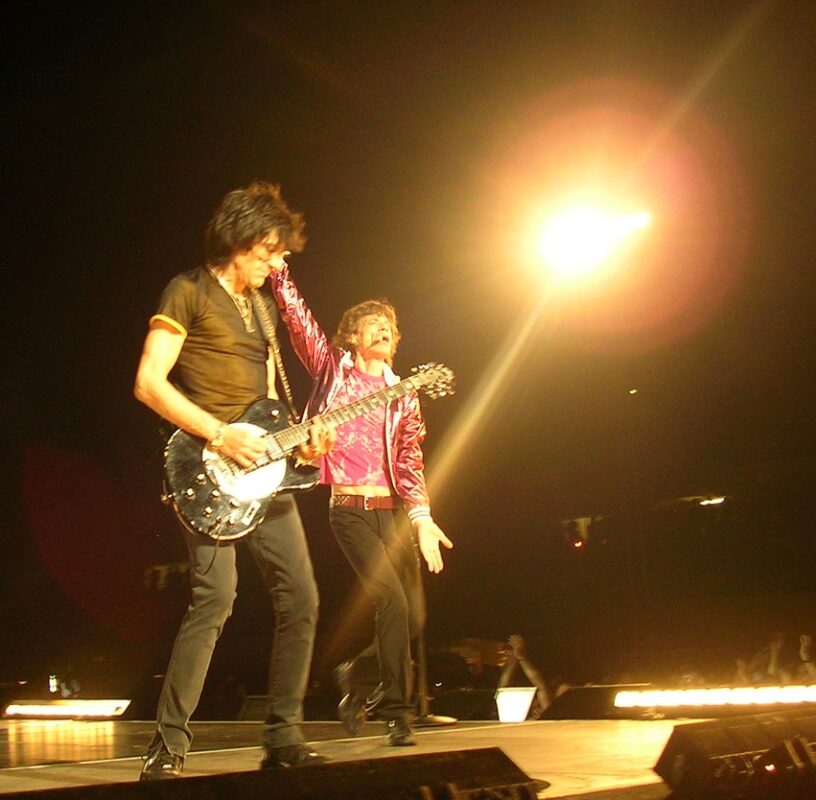
- Ronnie Wood (with Mick Jagger): photo by Lorenz Loidl, via Wikimedia Commons, CC BY-SA 2.0.
- Ronnie Wood (with Stephen Dale Petit): photo by Paul Stewart, via Wikimedia Commons, CC BY-SA 4.0.
- Vox AC30 Top Boost: wetwebwork; existing crop and contrast/color adjustments: Clusternote, Wikimedia Commons, CC BY-SA 2.0.
- Hiwatt DR103 Custom 100: GuitarGangsters AI-generated reference illustration, not a photograph.
- Ron Wood live: Raph_PH, Wikimedia Commons, CC BY 2.0.
- Ampeg SVT: RobbyR790 (English Wikipedia), Wikimedia Commons, CC BY-SA 3.0.