Billy Duffy Guitars & Gear: The Cult Guitar God’s Complete Rig
Billy Duffy guitars gear — Gretsch White Falcon and Marshall JCM800 deep-dive for the Cult guitar god's iconic hollowbody hard rock tone and complete rig.
Alberto Cabello
Dig into Billy Duffy guitars gear and you find the equipment behind one of British alternative rock’s most distinctive and most genuinely massive guitar sounds — a Manchester-born guitarist who helped forge the Cult’s specific brand of gothic-tinged hard rock through the late 1980s and early 1990s, whose Gretsch White Falcon became one of the most visually iconic guitars in rock, and whose playing — simultaneously atmospheric and aggressive, melodic and driving — gave the Cult a tonal identity that was immediately recognisable and genuinely unlike anything else in the heavy rock landscape of the period. Duffy is not a technically dazzling player in the conventional sense, but he has something rarer: a completely individual guitar voice that serves his band’s specific musical vision with consistent authority.
This guide covers Duffy’s complete equipment picture: the Gretsch, Gibson, and custom guitars that defined the Cult’s sound, the Marshall and other amplification that gave his playing its massive presence, his effects chain, and the playing philosophy of a musician who understands how atmosphere and aggression can coexist in the same guitar tone. Understanding Billy Duffy’s gear is understanding how a specific guitar aesthetic can become the sonic backbone of a band’s entire identity.
Background
Billy Duffy was born on May 12, 1961, in Wythenshawe, Manchester. His early musical formation was shaped by the Manchester music scene of the late 1970s — the post-punk environment that was producing Joy Division, the Fall, the Buzzcocks, and the extraordinary creative ferment that gave British alternative music much of its subsequent character. Duffy briefly attended the same school as Morrissey, who would later form the Smiths with Johnny Marr, and was part of the extended musical community that shaped early 1980s British alternative rock.
He joined Theatre of Hate in the early 1980s before connecting with Ian Astbury to form the Cult (initially as Southern Death Cult, then Death Cult, then the Cult) in 1983. The band’s early recordings showed a gothic rock aesthetic — atmospheric, darkly romantic, influenced by Joy Division, the Doors, and various shamanistic and Native American cultural references that Astbury incorporated into the band’s imagery and lyrical approach. The guitar work in this early period was more textural and atmospheric than in later years, with Duffy deploying reverb, delay, and atmospheric playing approaches that suited the gothic rock aesthetic.
The critical shift came with Electric (1987) — the album produced by Rick Rubin that deliberately moved the Cult toward a hard rock and heavy metal aesthetic, simplifying the gothic rock textures in favour of a more stripped-back, aggressive guitar sound. This transformation was controversial within the alternative rock community that had embraced the earlier gothic material, but it produced some of Duffy’s most powerful and most immediately compelling guitar work. The specific combination of his Gretsch White Falcon’s unique tonal character and the Marshall amplification’s natural drive produced a sound that was simultaneously massive and slightly strange — the hollowbody guitar’s acoustic resonance giving the heavy rock playing an air and dimension that solid-body alternatives couldn’t replicate.
Subsequent albums — Sonic Temple (1989), Ceremony (1991), The Cult (1994), Beyond Good and Evil (2001), Born Into This (2007), Choice of Weapon (2012), and Hidden City (2016) — showed varying degrees of return to different elements of the band’s sonic range, with Duffy’s guitar work adapting to different production approaches while maintaining the essential tonal identity that his specific instrument and amplifier combination provided.
Billy Duffy Guitars Gear: The Complete Rig
Guitars
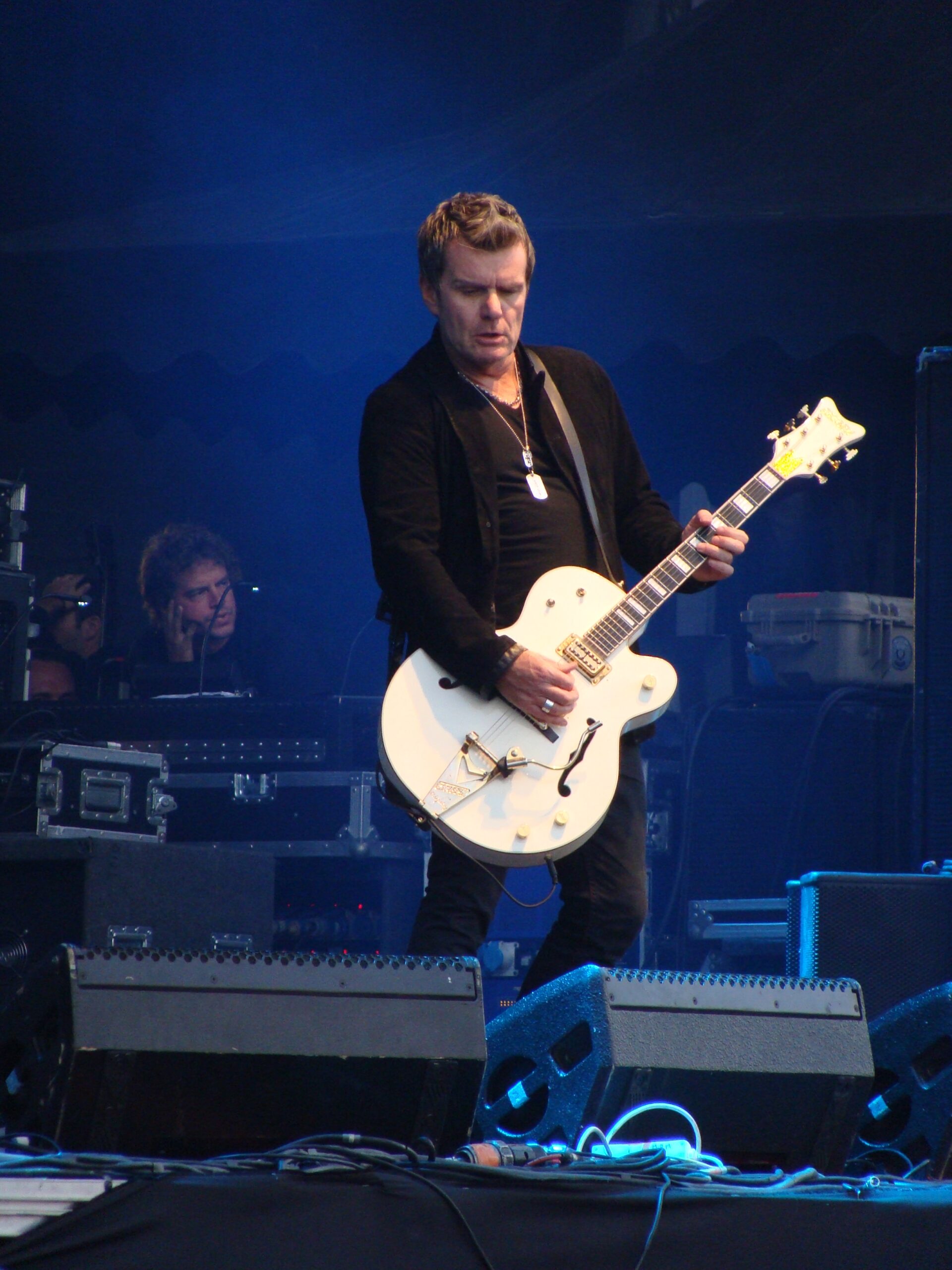
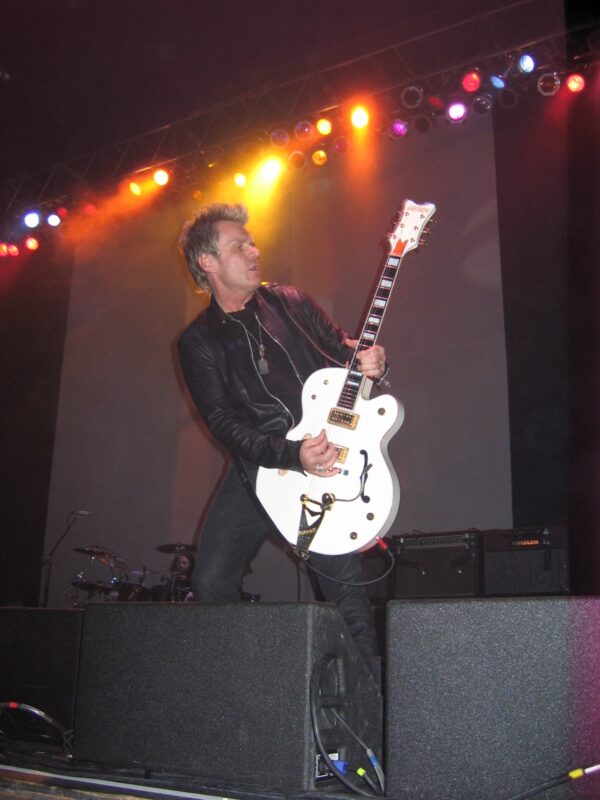
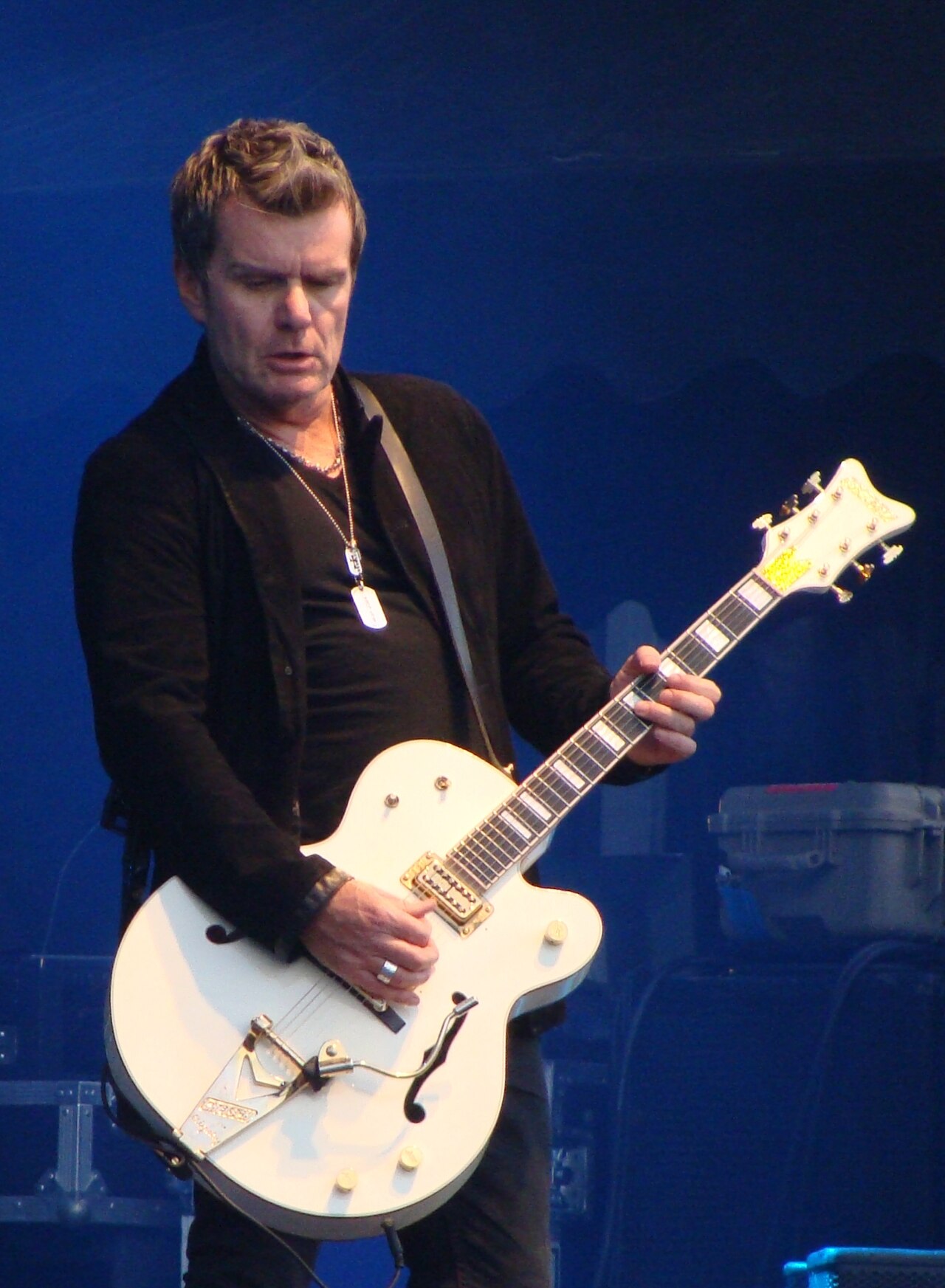
Billy Duffy’s guitar identity is more closely associated with a single instrument than almost any other guitarist in rock — the Gretsch White Falcon, the imposing, gleaming, gold-hardware hollowbody archtop that has been his primary instrument throughout the Cult’s existence and that has become so inseparable from his visual and tonal identity that the guitar and the guitarist are practically synonymous in rock photography and guitar culture.
The Gretsch White Falcon, originally introduced in 1955 as Gretsch’s flagship instrument and intended as a “show guitar” — the most visually spectacular and most expensive guitar Gretsch made — is a fully hollow body archtop with a laminated maple body and top, Gretsch’s Filtertron humbucking pickups, and the gold hardware that gives it its specific visual grandeur. The original 1955 model was approximately 17 inches wide — larger than most electric guitars — with a single Venetian cutaway and a relatively thin body depth for a hollowbody instrument. The White Falcon’s acoustic resonance is substantial for an electric guitar, contributing a specific dimensional quality to the amplified sound that solid-body instruments don’t produce.
The Filtertron pickups — Gretsch’s proprietary humbucker design, introduced in 1957 — produce a significantly different tonal character from either Gibson PAF humbuckers or Fender single-coils. The Filtertron measures approximately 4.5k to 5.5k ohms DC resistance — much lower than a Gibson PAF — with Alnico V rod magnets and a specific winding configuration that emphasises the upper-midrange frequencies and produces a bright, chimey character that sits between the Gibson humbucker’s warmth and the Fender single-coil’s cut. In the context of a fully hollow body, the Filtertron’s brightness combined with the acoustic resonance of the body produces a specific tonal character that is simultaneously warm (from the hollow body) and defined (from the pickup’s upper-midrange emphasis).
For Duffy’s specific playing context — driving rock guitar through high-powered Marshall amplification — the Filtertron’s low output relative to Gibson humbuckers meant that the amplifier was driven less hard by the pickup signal, producing a different quality of natural drive character. The White Falcon through a Marshall at working volume produced a specific combination of the hollow body’s acoustic dimension, the Filtertron’s chimey brightness, and the Marshall’s midrange warmth and natural drive that was distinctive and immediately recognisable: the specific Cult guitar sound that no combination of solid-body guitar and any amplifier could exactly replicate.
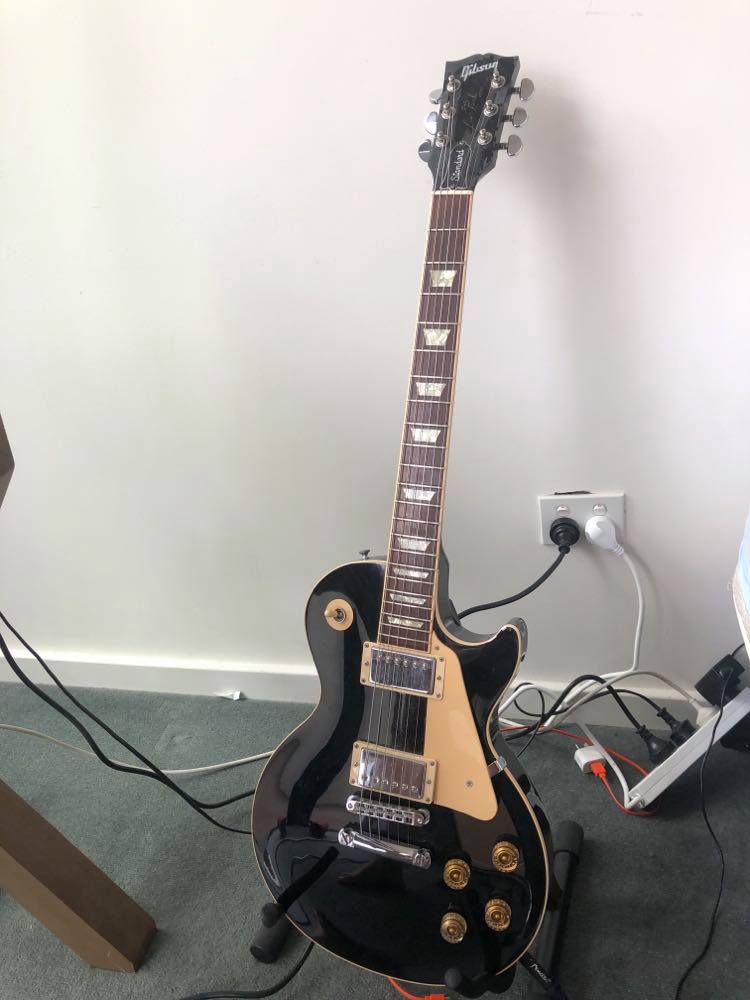
He has also used Gibson Les Pauls and Gibson SG models — both at various periods and for specific applications where the hollow body’s acoustic dimension was less appropriate than a solid or semi-hollow guitar’s tighter, more focused character. The Les Paul’s PAF-spec humbuckers (7.5k to 8.5k ohm, Alnico II or Alnico V) provided a warmer, more sustained character for specific material where the White Falcon’s specific acoustic-electric character was less appropriate.
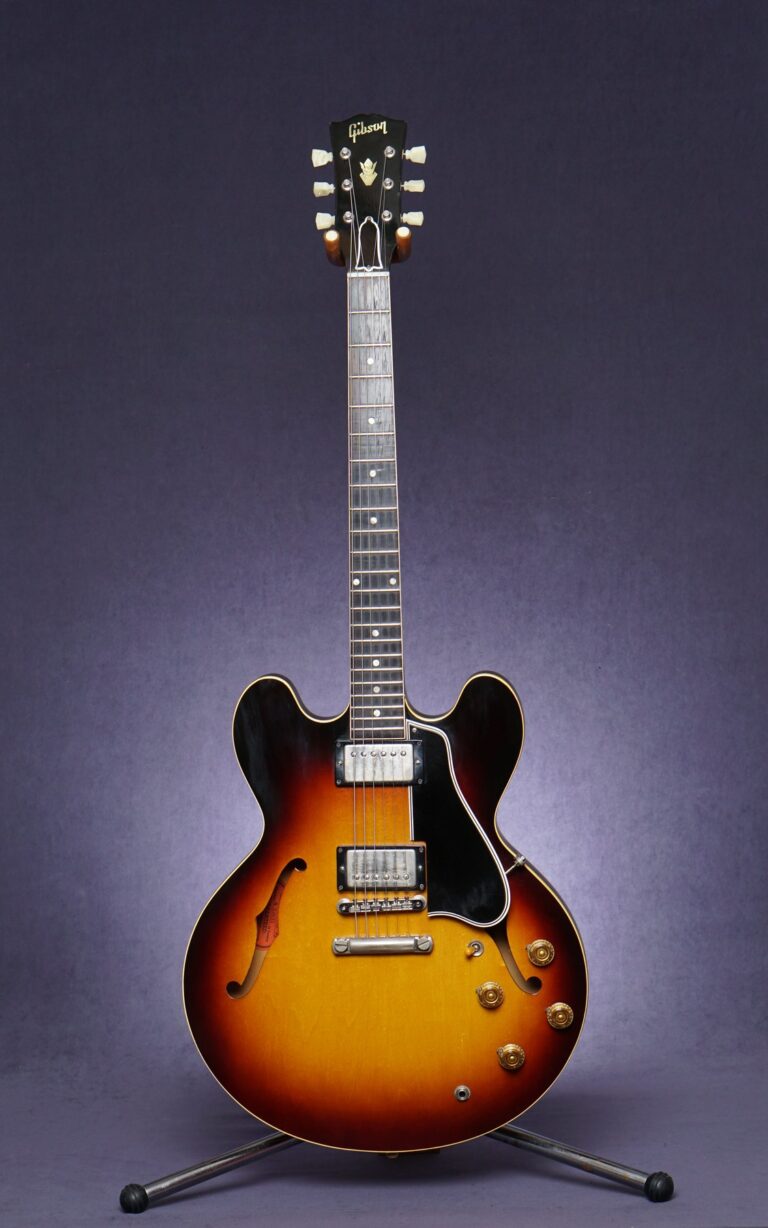
A Gibson ES-335 semi-hollow appeared in his arsenal for material where the ES-335’s specific combination of hollow body warmth and solid-body feedback resistance was more appropriate than either the full hollow White Falcon or the solid Les Paul. The ES-335’s PAF-spec humbuckers in a semi-hollow body produced a middle-ground character between the White Falcon’s atmospheric quality and the Les Paul’s focused weight.
Various other guitars — including vintage Gretsch Country Gentleman and Gretsch 6120 models — appeared at different points in his career. His relationship with the Gretsch brand extended beyond the White Falcon to other Gretsch models, reflecting a genuine affinity with the brand’s specific character rather than mere loyalty to a single instrument.
String gauges for Duffy’s rock work typically ran medium-heavy — .011–.052 or similar — providing the string mass and tension that the driving, aggressive playing of the Cult’s hard rock material required. The heavier gauge compensated for some of the hollowbody’s natural tendency toward feedback at high volumes by increasing string tension and reducing the strings’ susceptibility to acoustic excitation.
Amps
Billy Duffy’s amplification is primarily Marshall — the British EL34-based designs that are the standard for British hard rock of the era his career has occupied, run at volumes and settings that maximise the natural drive character that distinguishes British amplification from American alternatives.
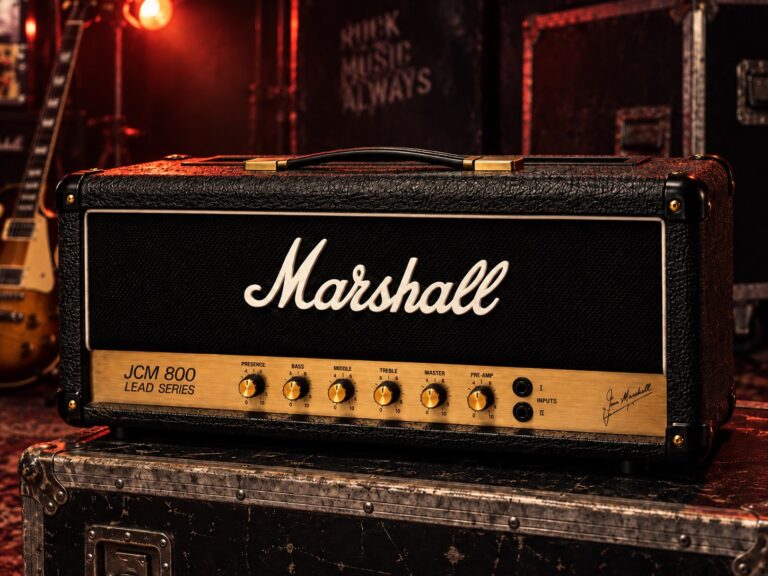
His primary amplifiers have been Marshall JCM800 2203 heads — the 100-watt master volume Marshall that was the standard professional British rock amplifier of the 1980s. The JCM800’s EL34 output valves, in combination with its preamp gain staging, produced the specific combination of midrange authority and natural drive at working volumes that Duffy’s playing style required. Run at high master volume with moderate preamp gain, the JCM800 produced the specific tight, articulate overdrive that distinguished 1980s British hard rock from the more saturated American high-gain amplifier approach.
He ran the Marshalls into Marshall 4×12 cabinets loaded with Celestion G12T-75 speakers — the 75-watt ceramic-magnet Celestion that was Gretsch’s standard speaker for 4×12 cabinets through the 1980s. The G12T-75’s specific character — tighter bass response than the Vintage 30, with a somewhat brighter treble emphasis — suited the hard rock material by providing clarity and definition in the lower midrange that prevented the heavily driven signal from becoming muddy.
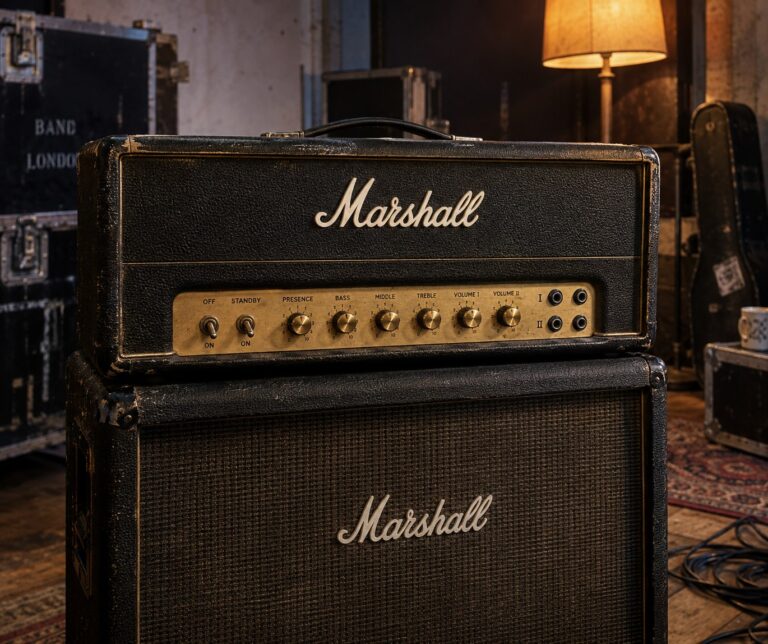
He has also used Marshall JMP Super Lead heads — the Plexi-panel 100-watt designs from the late 1960s — for their specific natural output-stage saturation character that the later JCM800 designs replaced with more controlled preamp gain. The Plexi’s EL34 output stage, driven to natural saturation at working volume, produced a different quality of overdrive from the JCM800’s master volume design — more dynamically responsive, with a different quality of touch sensitivity that rewarded variations in pick attack with proportional changes in distortion character.
Effects
Duffy’s effects chain reflects the two distinct phases of the Cult’s sonic approach — the atmospheric, reverb-and-delay-heavy gothic rock of the early period and the more stripped-back, drive-focused hard rock of the Electric and subsequent period.
A Boss CE-2 Chorus Ensemble was central to the atmospheric, gothic rock sound of the early Cult — adding the shimmering dimensional quality that characterised the band’s more textural playing approach. His CE-2 use in this period was more prominent than in the later hard rock period — chorus as a primary tonal element rather than a selective addition.
A heavy reverb — both the onboard reverb of specific amplifier configurations and separate reverb pedals or rack units — gave the early gothic rock material its characteristic atmospheric depth. The long, ambient reverb tails on the atmospheric guitar passages of albums like Dreamtime (1984) were as much a part of the guitar’s tonal identity as any aspect of the instrument or amplifier.
A delay pedal — Boss DD series or similar — provided the echo effects for atmospheric passages. His delay use was more prominent in the gothic period than in the harder rock material, where the drive and immediacy of the Marshall’s natural character took precedence over atmospheric processing.
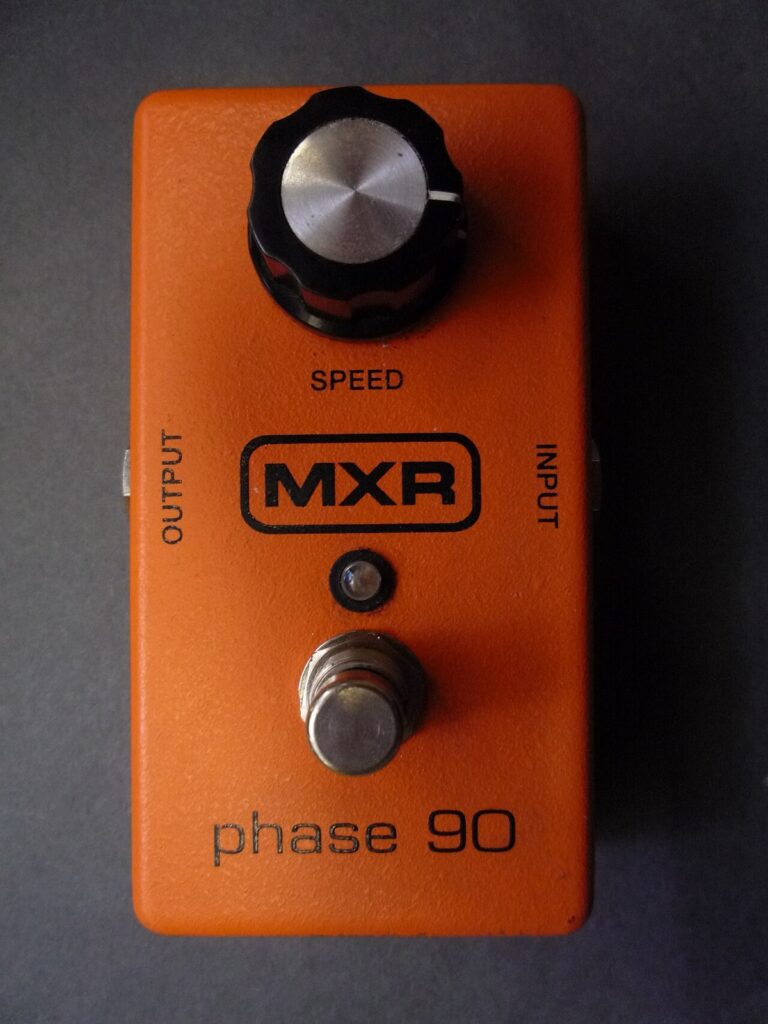
An MXR Phase 90 phaser appeared for specific textural applications — the swept modulation adding a dimensional quality to clean and lightly driven passages that complemented the gothic rock aesthetic. His phase use was selective rather than constant.
A ProCo Rat distortion pedal — the American hard-clipping distortion using a LM308 op-amp that produces a specific dense, aggressive distortion character — appeared in his later hard rock rig for specific passages requiring additional gain and density beyond what the JCM800’s natural drive provided. The Rat’s character — harder and more compressed than smooth overdrive pedals, with a specific middle-heavy frequency response — suited the aggressive, riff-based hard rock material of the Electric period.
Playing Style & Tone Philosophy
Billy Duffy’s playing is defined by the specific quality of his guitar sound more than by technical complexity — his approach to the instrument prioritises the right tone and the right feel over technical display, and the tonal character of his White Falcon through his Marshall setup is so distinctive that it communicates his musical identity before a single note’s melodic content becomes apparent. This is a specific and unusual kind of guitar mastery: the ability to make the instrument’s sound itself the primary musical statement.
His chord work is the foundation of the Cult’s guitar sound — driving, rhythmically assertive, with specific voicings that the White Falcon’s Filtertron pickups and hollow body render with a unique combination of weight and air. His power chords through the Marshall have a specific dimensional quality — the hollow body’s acoustic resonance adding a bloom to each chord that solid-body alternatives don’t produce — that gives the Cult’s heavy rock a specific identity within the broader hard rock landscape.
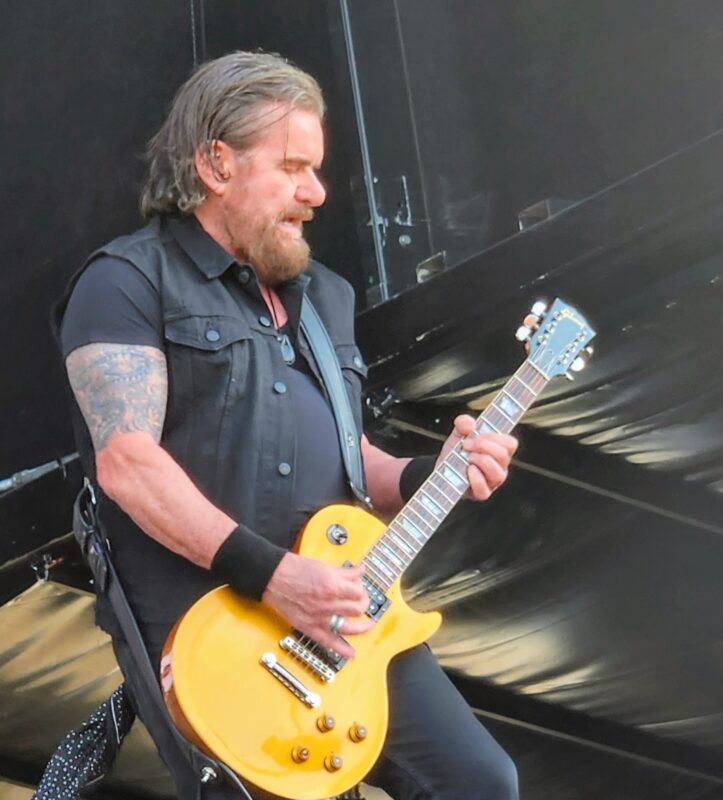
His lead playing reflects the same emphasis on feel and tone over technical complexity. His solos are melodically appropriate and emotionally committed without being technically elaborate — the guitar voice expressing something specific within each song’s emotional context rather than demonstrating technical facility for its own sake. The White Falcon’s specific tonal character — the Filtertron’s chimey brightness through the Marshall’s midrange authority — gives his lead lines a distinctive quality that makes them immediately recognisable regardless of their technical level.
Tonally, Duffy’s philosophy is comprehensive commitment to the Gretsch White Falcon’s specific character, amplified through Marshall to produce maximum power without sacrificing the acoustic dimension that the hollow body provides. This tonal commitment — knowing exactly what his guitar sounds like and building the entire approach around that specific sound rather than seeking versatility — is a form of sonic integrity that produces the most recognisable and most consistent guitar identity in contemporary rock.
How to Sound Like Billy Duffy
Guitar Approach
A Gretsch White Falcon is the authentic starting point — there is simply no substitute for the specific combination of hollow body acoustic resonance and Filtertron pickup character that defines his tone. A vintage 1950s or 1960s White Falcon is the ideal, but the modern Gretsch reissues capture enough of the essential character to be musically useful. Medium-heavy strings (.011–.052) provide the string mass for the aggressive playing style. The hollowbody’s feedback management at high volumes requires careful amplifier positioning and body orientation — feedback that adds dimension when controlled, becomes unmanageable when not.
Amp Approach
A Marshall JCM800 2203 — 100 watts, EL34 output valves, into a 4×12 cabinet with Celestion G12T-75 speakers. Master volume at a moderate setting, preamp gain moderate — the goal is natural EL34 drive character at the working volume rather than maximum preamp gain. The White Falcon’s Filtertron pickups drive the Marshall’s input stage with moderate output, producing a specific quality of natural amplifier drive rather than pedal distortion. Run loud enough that the speakers are working and contributing their own compression to the overall sound.
| Control | Setting | Notes |
|---|---|---|
| Preamp Gain | 5–7 | Moderate — White Falcon drives Marshall naturally |
| Treble | 7 | High — Filtertrons are bright, EL34 adds midrange |
| Middle | 6 | Moderate-high mids for the Cult’s rock presence |
| Bass | 4 | Controlled — hollowbody adds acoustic warmth already |
| Presence | 6 | Moderate presence for definition |
| Master Volume | 6–8 | Working volume — EL34 and G12T-75 compression zone |
Influence & Legacy
Billy Duffy’s legacy is the specific legacy of a guitar sound that became inseparable from a band’s identity — one of rock music’s clearest examples of how a specific instrument-amplifier-player combination can produce a tonal character so distinctive that it becomes the band’s primary sonic fingerprint. The White Falcon through the Marshall is the Cult’s sound as surely as Angus Young’s SG through a Marshall is AC/DC’s sound or Pete Townshend’s Les Paul through Marshall is the Who’s sound — a specific equipment combination so consistently and so brilliantly deployed that it becomes the band’s identity rather than merely the guitarist’s preference.
His influence on the guitarists who came after him in the alternative and gothic rock traditions is primarily tonal — players who heard the Cult’s specific sound and understood that the White Falcon hollowbody in a hard rock context was a viable and distinctive approach that no solid-body alternative could replicate. The subsequent use of hollowbody and semi-hollow instruments in hard rock contexts by players who might previously have defaulted to Les Pauls and Stratocasters reflects in part the demonstration that Duffy provided of what hollowbody guitars could achieve in this specific musical territory.
The visual impact of the White Falcon — its imposing size, its gleaming gold hardware, its white finish — has also been part of Duffy’s cultural contribution. Guitar imagery in rock culture is as much visual as sonic, and the specific visual character of the White Falcon in Duffy’s hands — giving the Cult’s performances a theatrical gravitas that matched Astbury’s commanding stage presence — contributed to the band’s overall cultural impact in ways that go beyond the music’s sonic qualities alone.
For players exploring the British alternative and gothic rock tradition that Duffy helped define, the rigs of Will Sergeant — whose Echo and the Bunnymen guitar work showed how similar post-punk influences produced a more delicate, atmospheric approach — and James Honeyman-Scott, whose Pretenders work showed how similar British rock values could be combined with greater harmonic sophistication, provide essential comparison. The hard rock tradition that absorbed the Cult’s specific sonic identity is illuminated through Mark Farner‘s work with Grand Funk Railroad, which shows how the American equivalent of British hard rock developed its own specific equipment identity.
Electric: Rick Rubin and the Hard Rock Transformation
The recording of Electric (1987) with producer Rick Rubin represents the most significant single creative decision in the Cult’s history and the most dramatically transformative event in Duffy’s guitar career. Understanding what Rubin brought to the recording — and how it changed the way Duffy’s guitar was recorded and presented — is essential for understanding both the album’s specific sonic character and the equipment approach that produced it.
Rubin’s production philosophy, developed through his work with the Beastie Boys, LL Cool J, and his early metal and hard rock productions, emphasised directness, power, and the elimination of production artifice in favour of raw musical energy. His approach to Electric was to take the Cult’s existing musical elements — Astbury’s commanding vocal presence, Duffy’s powerful White Falcon guitar tone, a tight rhythm section — and present them as directly and powerfully as possible, without the atmospheric reverb and delay processing that had characterised the earlier gothic rock recordings.
For Duffy specifically, this meant recording his White Falcon through his Marshall with minimal signal processing between the guitar and the recording microphone. The natural character of the instrument-amplifier combination — the Filtertron’s chimey brightness through the JCM800’s midrange authority and natural drive — was captured as directly as possible, with the recording engineer focusing on microphone placement and level management rather than on EQ and effects processing. The result was a guitar sound of unusual power and directness: every aspect of the White Falcon’s and Marshall’s natural character fully present in the recording, without the filtering and processing that atmospheric rock production typically applies.
The specific character of the Electric guitar sound — which became one of the most distinctive hard rock guitar tones of the late 1980s — was also partly the product of the White Falcon’s specific acoustic properties being captured in a recording environment that was designed to maximise rather than minimise the hollow body’s resonance. When Duffy played hard — when the physical energy of his rhythm playing was at its most intense — the White Falcon’s hollow body resonated with the Marshall’s acoustic output in ways that added dimension to the amplified signal, creating a layered guitar sound that no solid-body instrument could have produced under the same recording conditions.
The Hollowbody in Hard Rock: Why It Works
The use of a fully hollow archtop guitar — the White Falcon — for hard rock and heavy rock guitar is acoustically counterintuitive enough that it deserves specific examination. Most hard rock players use solid-body instruments specifically because the solid body’s acoustic damping reduces the feedback susceptibility that hollow body guitars exhibit at high volumes. Duffy’s choice of the White Falcon for hard rock guitar was therefore either a miscalculation or a demonstration of specific understanding — and the evidence of the recordings makes clear it was the latter.
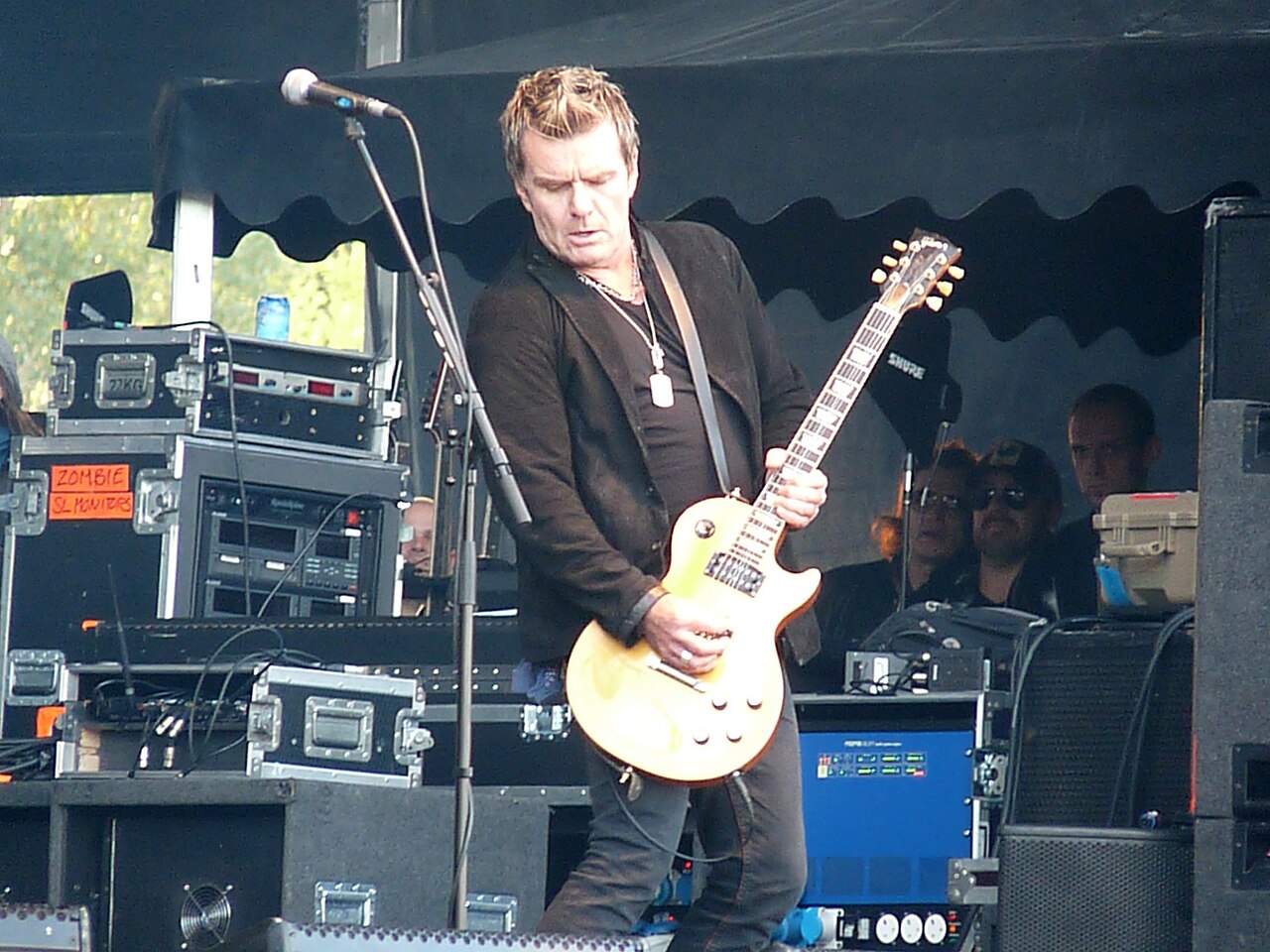
The White Falcon’s hollow body acoustic resonance adds a specific dimensional quality to the amplified signal that solid-body instruments don’t produce — the body’s air resonance contributes harmonic content that the strings and pickups alone don’t generate, giving the overall tone a bloom and dimension that solid-body alternatives lack. For chord work specifically — the power chords and open voicings that drive hard rock rhythm playing — this bloom gives the guitar a quality of physical presence that is immediately perceptible even in a dense mix with bass and drums. The chord sounds fuller, more three-dimensional, more physically imposing than the equivalent chord from a solid-body instrument through the same amplifier and at the same volume.
The feedback management that this approach required — preventing the hollow body’s resonance from generating uncontrolled acoustic feedback at the high volumes that hard rock demands — was part of Duffy’s technique. Strategic body positioning relative to the amplifier, awareness of the specific feedback frequencies that the White Falcon was prone to, and the ability to use controlled feedback as a musical resource rather than allowing it to become uncontrolled noise were practical skills he developed through years of playing the instrument in demanding live contexts. The mastery of feedback management in the hollowbody-at-high-volume context is itself a form of guitar technique that solid-body players never need to develop, and it contributes to the specific character of his live performances in ways that go beyond the simple tonal character of the instrument.
Gothic Rock Roots: Dreamtime and the Atmospheric Period
Dreamtime (1984) represents the Cult at their most atmospheric and most thoroughly gothic — the period before the Electric transformation where Duffy’s guitar approach was as much textural and ambient as rhythmically driving. Understanding this earlier period is essential for understanding the full range of his approach to the instrument and the equipment that served it.
The guitar work on Dreamtime shows a player who understood how to create atmosphere through guitar texture — the specific combination of reverb, delay, and chiming Filtertron character that gave the album its specific quality of gothic romanticism. The White Falcon in this context was not a driving rock guitar but an atmospheric instrument, its Filtertron chimeyness combined with heavy reverb and delay to create washes of guitar sound that filled the sonic space rather than cutting through it.
This atmospheric approach required specific equipment and technique distinct from the hard rock approach of the later period. The reverb and delay units that dominated his signal chain in this period — Boss DD pedals, rack-mount reverb units — were essential to the tonal character rather than selective additions. The guitar’s volume was often lower, allowing the atmospheric processing to dominate the overall sound rather than the raw amplifier drive character. The playing technique emphasised sustained notes and chords, allowing the reverb and delay to develop the harmonic content of each chord voicing over time rather than driving a dense rhythm guitar pattern.
The transition from this atmospheric approach to the stripped-back hard rock of Electric was not a rejection of the earlier approach but a recognition of a different set of musical possibilities. The White Falcon that had served the gothic atmospheric approach equally well served the hard rock approach, demonstrating the instrument’s genuine versatility — different equipment processing producing completely different musical results from the same guitar and the same player. This versatility of result from consistent instrument choice reflects both the White Falcon’s specific acoustic properties and Duffy’s understanding of how to deploy those properties in service of different musical visions.
Billy Duffy’s career — approaching five decades of professional guitar playing with the Cult as the primary but not sole musical context — represents one of the most sustained commitments to a specific sonic identity in British rock guitar. The White Falcon and the Marshall have been his primary tools throughout, their specific combination of attributes defining his musical personality as completely as any equipment combination defines any rock guitarist’s identity. The consistency of that commitment — and the quality of the music it has produced across multiple decades and multiple musical styles — is the ultimate testimony to the correctness of the original equipment choice and the depth of the musical understanding that made it.
The ProCo Rat’s specific contribution to Duffy’s hard rock rig — appearing for additional gain when the natural Marshall drive wasn’t sufficient for specific passages — is worth examining because it illustrates how a specific effect can serve a specific musical purpose without dominating the overall tone. The Rat uses a LM308 op-amp configured as a hard-clipping distortion — cutting the signal peaks sharply rather than the softer clipping of valve saturation — producing a dense, aggressive distortion character with a specific midrange emphasis that can sound harsh in isolation but cuts through a band mix with unusual effectiveness. Its specific character — harder and more compressed than smooth overdrive pedals, with the LM308’s particular combination of even and odd harmonic distortion — suited the aggressive, riff-based material of the Electric period by adding density and weight to chord work without sacrificing the definition that fast riff playing requires. Duffy’s selective use of the Rat — for specific passages where additional drive was required rather than as a constant gain stage — reflected the same musical intelligence that characterised his overall approach: each tool deployed where it served the music specifically, with the guitar’s natural character (Filtertron through Marshall) doing the work the rest of the time. The Rat added what was needed when it was needed; the natural White Falcon and Marshall combination handled everything else. This economy of deployment — maximum musical result from minimum processing complexity — is one of the marks of a guitarist who understands what his equipment actually does rather than simply what it is.
The Gretsch company’s relationship with Duffy — which has included the production of Billy Duffy signature White Falcon models that capture the specific features of his personal instruments — is worth noting as another example of the productive musician-manufacturer relationship that the best guitar careers generate. Gretsch’s White Falcon had existed for nearly thirty years before Duffy made it his primary instrument, and its commercial profile — always a prestigious but niche instrument — was substantially raised by its association with one of the most visually prominent guitarists of the 1980s. Duffy’s advocacy for the instrument — his consistent, unwavering use of it across multiple decades and multiple musical styles — contributed to the White Falcon’s contemporary status as one of the most recognisable and most desired guitars in rock, a status that has translated into sustained production of quality instruments that serve players who share his appreciation for what the instrument provides. This cultural contribution — raising the profile of a specific instrument and the tradition it represents — is part of a guitarist’s legacy that goes beyond the music itself, and Duffy’s contribution to the White Falcon’s cultural standing is as significant in its way as any of the recordings that produced it.
The Manchester context of Duffy’s musical formation — the post-punk environment that produced Joy Division, the Smiths, and the Buzzcocks alongside the Cult’s early incarnations — shaped both his musical values and his understanding of what guitar playing could achieve. Manchester post-punk had a specific relationship with the guitar: less interested in conventional rock virtuosity than in atmosphere, texture, and the specific emotional charge that comes from guitar playing at the service of a larger musical and lyrical vision. Duffy absorbed this orientation — the idea that the guitar’s role was to serve the band’s overall vision rather than to demonstrate the guitarist’s individual ability — and carried it into the harder rock context of the Cult’s later work. The result was guitar playing that was powerful and immediately compelling without being technically elaborate, because the power came from the commitment to the music’s vision rather than from the guitarist’s desire to impress. That commitment — sustained across four decades and multiple musical transformations — is the defining characteristic of Billy Duffy’s career, and the White Falcon through the Marshall is its sonic expression.

The specific interaction between the White Falcon’s Filtertron pickups and the JCM800’s EL34 output stage at working volumes produces a guitar tone of specific and unusual character that deserves one final technical examination. The Filtertron’s low output level (approximately 4.5k to 5.5k ohms, compared to a Gibson PAF’s 7.5k to 8.5k ohms) means that it drives the JCM800’s preamp input stage less hard than a Gibson humbucker would at the same volume setting. This lower drive level produces a different quality of preamp saturation — less compressed, with more dynamic response to pick attack variations, and a lighter, more chimey character in the distorted signal than the heavier, more saturated character that a high-output pickup drives into the same preamp. The JCM800’s output stage then adds its own EL34 character — the specific warmth and compression of British EL34 valves at working volume — to this chimey, lightly-preamp-saturated signal, producing a combined tone that is simultaneously bright (from the Filtertron’s high-frequency emphasis) and warm (from the EL34’s midrange character). The result is the specific Duffy tone: not the heavy, saturated sound of a high-output pickup through a high-gain preamp, but a lighter, more chimey, more dynamically alive sound that carries massive volume and authority while retaining the acoustic dimension of the hollow body and the specific character of the Filtertron pickup. This specific combination — low-output Filtertron through a JCM800 at working volume — is what no other guitarist has fully replicated, because no other guitarist has consistently committed to the specific White Falcon and Marshall pairing that Duffy has maintained across his entire career. The tone is his because the commitment is his, and the commitment reflects the understanding of a guitarist who found his sound and knew it was right.
Ian Astbury’s vocal presence and lyrical approach — the shamanic, romantically grandiose quality of his delivery and his words — required a guitar counterpart of comparable presence and comparable willingness to operate at a scale larger than everyday rock music. Duffy’s White Falcon through the Marshall, at the volumes the Cult’s live performances required, provided exactly this: a guitar sound of physical presence and tonal grandeur that matched Astbury’s ambition without overshadowing it. This specific matching of guitar character to vocalist character — the guitar serving as the sonic embodiment of the band’s larger-than-life aesthetic — required both the right equipment and the right understanding of the musical relationship between guitar and voice. Duffy’s consistent choice of the White Falcon reflected this understanding: a guitar with smaller visual and tonal presence would have been dwarfed by Astbury’s commanding stage presence; the White Falcon’s physical size, its visual grandeur, and its specific tonal character — massive yet somehow airy, aggressive yet atmospheric — matched Astbury’s scale in ways that no other commonly available instrument could. The guitar served the singer; the singer served the music; and the music served the audience. That chain of service, maintained consistently across four decades of recording and performing, is the Cult’s legacy and Billy Duffy’s guitar story in its most complete and most essential form.
The Celestion G12T-75 speaker deserves final technical mention because its specific character — different from both the Vintage 30 and the classic Greenback — contributed significantly to the specific Duffy tone that the Electric era recordings document. The G12T-75’s 75-watt rating gave it substantially more headroom than the 25-watt Greenback or the 30-watt Vintage 30, allowing it to handle the output of a 100-watt JCM800 head at high master volume settings without the power compression that would occur with lower-rated speakers. This greater headroom produced a tighter, more controlled bass response — the speaker cone operating well within its linear range rather than flexing into mechanical distortion — which gave the Electric guitar sound its specific tight, defined quality rather than the warmer, more compressed character of lower-rated speakers at comparable power levels. The G12T-75’s slightly brighter treble emphasis also suited the Filtertron pickups’ own brightness, complementing rather than duplicating the pickup’s frequency emphasis and producing a combined top-end clarity that gave chord work its specific ringing, defined quality. This specific speaker choice — not merely a Marshall-branded speaker but this specific 75-watt ceramic-magnet Celestion with this specific frequency response — was part of the complete equipment picture that produced the Cult’s signature sound, and understanding it completes the technical picture of how the White Falcon, the JCM800, and the G12T-75 combined to produce one of the most distinctive and most immediately recognisable guitar sounds in 1980s British rock.
Frequently Asked Questions: Billy Duffy Guitars & Gear
What guitar does Billy Duffy play?
Billy Duffy’s primary and most iconic guitar is the Gretsch White Falcon — the fully hollow body archtop with Filtertron humbucking pickups and gold hardware that has been his signature instrument throughout the Cult’s career. He has also played Gibson Les Pauls, Gibson SG models, and Gibson ES-335 semi-hollows for specific applications. The Gretsch White Falcon’s specific combination of hollow body acoustic resonance and Filtertron chimey brightness gave the Cult’s sound its distinctive quality that no other guitar could replicate.
What amp does Billy Duffy use?
His primary amplification has been Marshall JCM800 2203 100-watt heads into Marshall 4×12 cabinets loaded with Celestion G12T-75 speakers. He has also used Marshall JMP Super Lead Plexi heads for their specific natural output-stage saturation character. His Marshall setup runs at working volumes where the EL34 output valves contribute their natural compression and harmonic richness, giving the White Falcon’s Filtertron output a specific drive character that high-gain pedal distortion doesn’t replicate.
What is the Gretsch White Falcon?
The Gretsch White Falcon is a fully hollow body archtop electric guitar introduced by Gretsch in 1955 as their flagship “show guitar” — the most visually spectacular and most expensive instrument in their range. It features a laminated maple body and top, Gretsch’s Filtertron humbucking pickups, and gold hardware. The White Falcon’s approximately 17-inch body width and hollowbody construction give it a specific acoustic resonance that contributes to the amplified sound, making it unique among electric guitars used for hard rock applications.
What is the Filtertron pickup?
The Filtertron is Gretsch’s proprietary humbucker pickup design, introduced in 1957. It measures approximately 4.5k to 5.5k ohms DC resistance — significantly lower output than a Gibson PAF humbucker — with Alnico V rod magnets and a specific winding that emphasises upper-midrange frequencies. The result is a bright, chimey character that sits between Gibson humbucker warmth and Fender single-coil cut. In the White Falcon’s hollowbody context, the Filtertron’s brightness combined with the body’s acoustic resonance produces the distinctive atmospheric-yet-powerful tone associated with Duffy’s playing.
What effects does Billy Duffy use?
His key effects include a Boss CE-2 Chorus Ensemble (particularly prominent in the gothic rock period), heavy reverb (ambient reverb units and amplifier spring reverb for atmospheric depth), a Boss DD delay (for atmospheric echo passages), an MXR Phase 90 (for specific textural modulation), and a ProCo Rat distortion pedal (for additional gain in the harder rock period). His effects use evolved from the more processing-heavy gothic rock period toward a more stripped-back approach in the hard rock era.
How did the Cult transition from gothic rock to hard rock?
The transition came with Electric (1987), produced by Rick Rubin, who deliberately stripped away the atmospheric production complexity of the earlier gothic rock recordings in favour of a more direct, aggressive hard rock approach. Rubin’s production style — influenced by his work with AC/DC and other hard rock and metal acts — brought out the direct rock power of Duffy’s White Falcon through Marshall combination while eliminating the reverb and delay-heavy atmospheric processing of the earlier period. The transition was controversial but produced some of the Cult’s most enduring music.
What is the Cult’s most important album?
Electric (1987) is the most commercially successful and most critically significant Cult album — the record that demonstrated the full power of the Duffy-Astbury partnership in its hardest rock incarnation and that produced the songs (“Wild Flower,” “Love Removal Machine,” “Lil’ Devil”) most closely associated with the band’s peak commercial period. Sonic Temple (1989) is equally important as the commercial peak. The earlier Love (1985) and Dreamtime (1984) are essential for understanding the gothic rock foundation from which the hard rock evolution developed.
Genre:
Alternative Rock / Gothic Rock
Decades:
1980s | 1990s | 2000s | 2010s
Image credits
- Billy Duffy: Alberto Cabello, Wikimedia Commons, CC BY 2.0.
- Billy Duffy: Botellita de Cielo, Wikimedia Commons, CC BY-SA 2.0.
- Billy Duffy: photo by Veronica Perina, via Wikimedia Commons, CC BY 3.0.
- Billy Duffy: photo by Pugilist, via Wikimedia Commons, CC0.
- Gibson Les Paul Standard: DonnyBurger1974, Wikimedia Commons, CC BY-SA 4.0.
- Gibson ES-335: Lightburst, Wikimedia Commons, CC BY-SA 4.0.
- Marshall JCM800 2203: GuitarGangsters AI-generated reference illustration, not a photograph.
- Marshall 1959 Super Lead Plexi: GuitarGangsters AI-generated reference illustration, not a photograph.
- MXR Phase 90: Roadside Guitars, Wikimedia Commons, CC BY-SA 2.0.
- Billy Duffy live: Alberto Cabello, Wikimedia Commons, CC BY 2.0.