
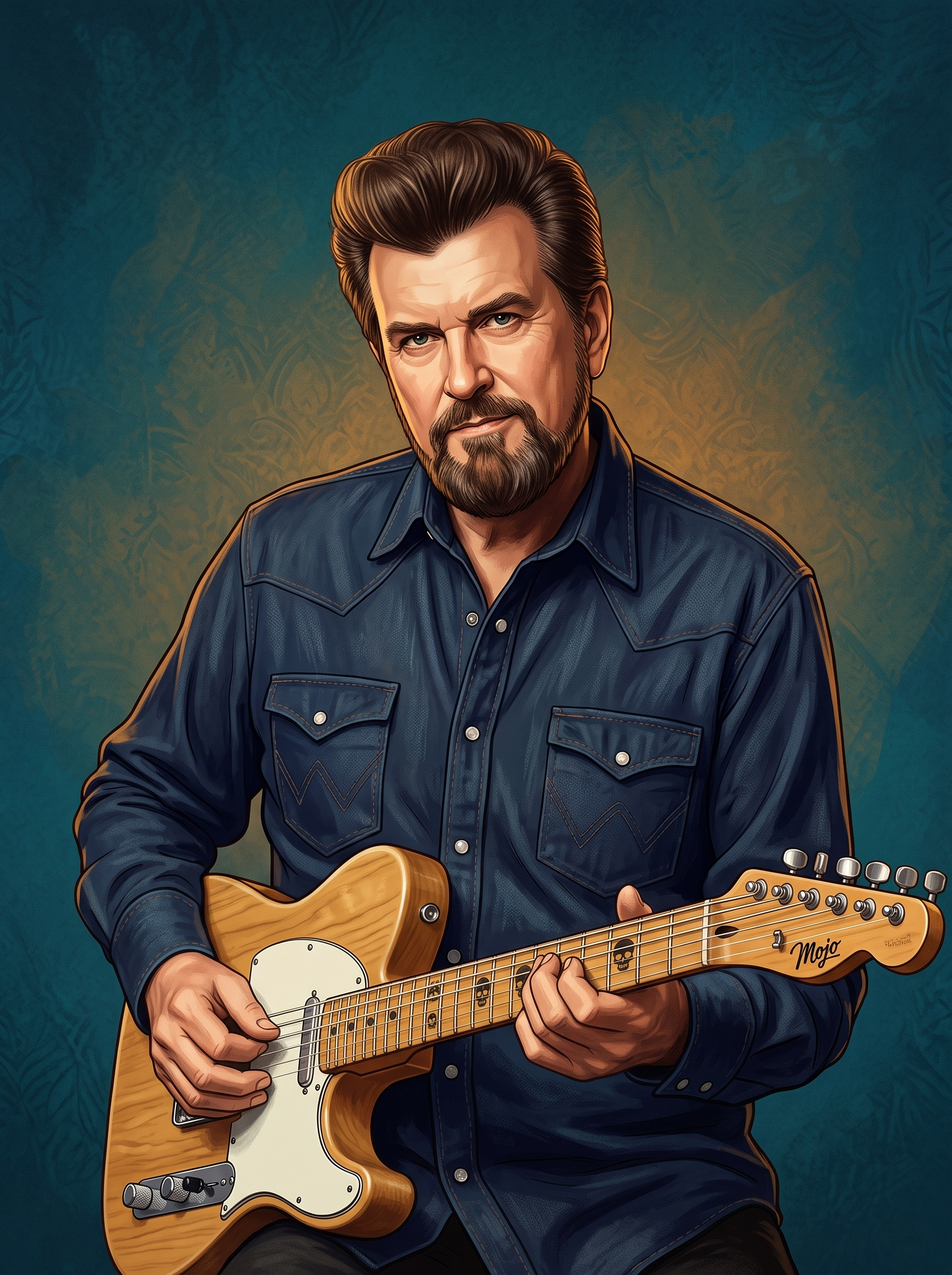
Investigate Will Ray guitars gear and you find the equipment behind one of the most technically accomplished and most stylistically dedicated country and rockabilly guitarists in contemporary American music — a Nashville-born, Los Angeles-based musician who co-founded the Hellecasters with John Jorgenson and Jerry Donahue in 1990, creating the country guitar super-trio that gave three of the most technically accomplished country and Western Swing guitarists their most prominent collective showcase, and whose specific combination of deep country tradition knowledge and contemporary technical development gave the Hellecasters their specific quality of authentic country virtuosity rather than mere technical display. Ray brought to the Hellecasters a specific connection to the most authentic roots of the country guitar tradition — the chicken-picking, the double-stops, the specific tonal character of the Telecaster through Fender amplification — combined with the technical ambition and the musical intelligence of a musician who had absorbed the full range of country guitar’s possibilities.
This guide covers Ray’s complete equipment picture: the Fender Telecasters that defined his tonal identity, the amplification that served his country twang approach, his effects use, and the playing philosophy of a musician who understood that country guitar virtuosity required both genuine historical knowledge of the tradition and genuine technical ambition in its development. Understanding Will Ray’s gear is understanding how country guitar’s most demanding techniques are served by the most historically appropriate equipment.
Background
Will Ray was born in Nashville, Tennessee — at the geographical and cultural centre of American country music — and developed within a specific understanding of the country music tradition that gave his guitar approach its specific quality of genuine roots authenticity alongside the technical ambition that his Hellecasters work would subsequently display. The Nashville formation gave him direct access to the specific traditions of country guitar — the chicken-picking technique, the specific double-stop vocabulary, the specific Telecaster-through-Fender tonal character — that were the living practices of the professional Nashville music community rather than the historically reconstructed approaches of musicians who had studied the tradition from outside.
His subsequent move to Los Angeles placed him within the specific contemporary guitar culture that balanced his Nashville roots formation with the technical ambition and the broader musical awareness of the LA music community. The combination of Nashville roots knowledge and LA contemporary guitar awareness gave him the specific dual foundation that made the Hellecasters project possible — genuine country tradition authenticity combined with the technical sophistication and the musical breadth that gave the trio their specific quality of advancing the tradition rather than merely reproducing it.
The Hellecasters — formed in 1990 by Ray, John Jorgenson, and Jerry Donahue — recorded a series of albums that documented the trio’s specific approach to advanced country guitar across its full technical and stylistic range. Their recordings showed what three of the most technically accomplished country guitarists could do when given the freedom to explore the tradition’s full possibilities without commercial constraints, and the resulting music remained among the most impressive documentation of country guitar technique available.
Will Ray Guitars Gear: The Complete Rig
Guitars
Ray’s guitar identity was centred on the Telecaster — the instrument that was historically and acoustically the most appropriate single tool for the specific country guitar tradition he worked within.
His primary guitar was a Fender Telecaster — specifically vintage or quality vintage-specification examples that gave his chicken-picking and lead work the specific bright, cutting character that the country tradition had developed around the Telecaster’s specific acoustic properties. His Telecaster collection included various vintage examples and specific custom or modified instruments chosen for the specific acoustic character that served his approach most completely.
He also used a Fender G&L ASAT — the Telecaster-influenced design developed by Leo Fender after his departure from Fender, whose specific combination of the Telecaster’s fundamental design approach with Leo’s subsequent technical improvements gave it a specific character that was related to but distinct from the standard Telecaster. The G&L’s MFD (Magnetic Field Design) pickups — one of Leo Fender’s later innovations — gave the instrument a specific output and tonal character different from the standard Telecaster single-coil.
Various custom and modified Telecaster-type instruments appeared across his recording and performing career — specific modifications for specific acoustic purposes reflecting the same practical intelligence about instrument acoustic properties that characterised the best country guitarists’ collection management.
String gauges were medium — .010–.046 or similar — appropriate for the chicken-picking technique’s specific demands of both technical precision and adequate string mass for the attack character the technique required.
Amps
Ray’s amplification was rooted in the American Fender tradition — the clean American valve character that was as historically appropriate for country guitar as the Telecaster itself.
His primary amplifiers included Fender Twin Reverb and Fender Super Reverb — the clean-headroom and naturally-compressing alternatives that between them covered the tonal character requirements across different specific country material and different specific performance environments. The Twin’s clean headroom gave specific faster passages their appropriate definition without compression blurring the speed; the Super Reverb’s natural 6L6 compression gave slower, more expressive passages their appropriate warmth.
Various other Fender amplifiers and boutique designs appeared for specific applications — his practical approach to amplification prioritising acoustic appropriateness for each specific context over any single consistent amplifier identity.
Effects
Ray’s effects use was historically grounded — consistent with the country guitar tradition’s specific aesthetic values about natural instrument character versus electronic processing.
A Tube Screamer (TS-808) in boost mode — pushing the Fender amplification’s natural character harder for specific driven passages rather than using the pedal’s own clipping as the primary gain source. The standard country guitar boost approach reflected the tradition’s preference for natural amplifier character over pedal distortion.
A tremolo pedal or the Fender amplifier’s onboard tremolo — the pulsing character that was as historically central to the country guitar aesthetic as the Telecaster’s twang or the chicken-picking technique.
A reverb unit — the spring reverb of his Fender amplifiers or a dedicated reverb pedal — for the atmospheric dimension appropriate to country guitar material.
A volume pedal for pedal steel-influenced swells — the smooth volume control appropriate for specific country guitar passages where the gentle swell from silence gave notes and chords their specific country music character.
Playing Style & Tone Philosophy
Will Ray’s playing style was defined by the specific combination of authentic Nashville roots tradition knowledge and the technical ambition of a musician who had developed that tradition toward its most technically demanding expressions. His chicken-picking was rooted in the genuine Nashville session tradition — not the rock guitar approximation of country picking but the genuine professional technique of someone who had grown up within the tradition and developed it through professional practice within the Nashville professional music community.
The chicken-picking technique that was central to his approach — the hybrid picking method using the pick and fingers simultaneously to create the specific rhythmic and tonal interplay that gave the technique its characteristic sound — was developed to a level of technical facility that few contemporaries matched. His execution of complex chicken-picking passages showed the specific quality of genuine mastery — each note placed precisely, each rhythmic element defined clearly, and the overall musical flow maintained even at the highest technical velocities.
His double-stop vocabulary — the specific two-note figures in thirds and sixths that gave country guitar rhythm playing its characteristic harmonic richness — showed the same genuine Nashville roots knowledge that characterised every other aspect of his approach. The specific intervals, the specific rhythmic placement, and the specific harmonic context of each double-stop figure reflected professional knowledge of what the country tradition had developed and why.
Tonally, his philosophy was the country guitarist’s most historically grounded expression: the Telecaster’s specific bright cutting character through the clean American valve character of the Fender amplification, with the tremolo and the reverb deployed for the specific atmospheric dimensions that the country tradition historically valued. Every tonal choice was in service of the authentic country character rather than of any personal tonal innovation.
How to Sound Like Will Ray
Guitar Approach
A Fender Telecaster — vintage or quality vintage-specification — is essential. The bridge pickup’s specific bright cutting character through Fender amplification is the acoustic foundation of the country guitar approach. Medium strings (.010–.046). The chicken-picking technique requires dedicated development of the specific hybrid picking coordination — the pick and fingers working simultaneously requires sustained practice before it produces the clean, rhythmically precise result the tradition demands. Study the Nashville session tradition directly alongside the Hellecasters recordings to understand both the historical roots and the technical ambition that characterised Ray’s approach.
Amp Approach
A Fender Twin Reverb or Super Reverb — clean American valve character that gives the Telecaster its appropriate bright, warm country tone without the driven British character that would be inconsistent with the tradition. Onboard tremolo for the country passages that call for it. Tube Screamer in boost mode for the most driven passages.
| Control | Setting | Notes |
|---|---|---|
| Volume | 5–6 | Clean headroom for chicken-picking definition |
| Treble | 6–7 | Moderate-high — Telecaster bridge needs treble presence to cut |
| Middle | 5 | Neutral middle for country harmonic clarity |
| Bass | 3–4 | Controlled — Telecaster adds natural warmth without bass boost |
| Reverb | 3 | Light spring reverb for country atmosphere |
| Vibrato/Tremolo | Medium speed and depth | Country pulsing character when called for |
Influence & Legacy
Will Ray’s legacy was the specific legacy of the Hellecasters’ contribution to country guitar culture — the trio’s recordings showed what the country guitar tradition was capable of at its highest technical level and gave subsequent generations of country guitarists a specific model of how traditional roots authenticity and contemporary technical ambition could serve each other rather than competing. The Hellecasters’ specific combination of genuine Nashville roots knowledge (through Ray) and broader musical sophistication (through Jorgenson and Donahue) showed the country guitar tradition’s full possibilities more completely than any single musician’s approach could have demonstrated alone.
His Nashville formation and his LA contemporary development showed younger country guitarists that genuine roots knowledge and technical ambition were not merely compatible but genuinely complementary — that the best country guitar playing required both the historical foundation that Nashville’s living tradition provided and the technical ambition that the broader contemporary guitar community had developed.
For players exploring the country guitar virtuoso tradition that Ray and the Hellecasters represented, the rigs of Jerry Donahue — his Hellecasters partner whose British formation brought a different but equally authentic country guitar perspective to the trio — and John Jorgenson, whose Desert Rose Band and solo work showed how similar comprehensive country guitar knowledge combined with extraordinary technical range produced one of the tradition’s most complete single musicians, provide essential comparison. The Nashville roots connection reaches toward Arlen Roth‘s approach, which shows how similar comprehensive country guitar technique developed through study rather than community immersion produced comparable technical depth from a different geographic and cultural starting point.
The Hellecasters: Country Guitar’s Most Complete Showcase
The Hellecasters — the country guitar super-trio formed in 1990 by Ray, John Jorgenson, and Jerry Donahue — was as complete a single showcase of advanced country guitar technique as the tradition had produced, giving three of its most technically accomplished practitioners a collective context in which their individual capabilities could be displayed and developed alongside each other’s complementary strengths. Understanding what specifically each member brought to the trio and how those contributions complemented each other gives a more complete picture of why the Hellecasters represented something genuinely distinctive in the country guitar world.
Ray’s contribution was the Nashville roots authenticity — the genuine country music community formation that gave the trio’s approach its specific quality of traditional grounding. His chicken-picking and his double-stop vocabulary reflected the living practices of the Nashville professional community rather than the historically reconstructed approaches that musicians outside that community sometimes produced. This specific quality of authentic tradition knowledge gave the Hellecasters’ most technically ambitious passages their roots character — the virtuosity was serving the tradition rather than merely displaying technical accomplishment for its own sake.
Jerry Donahue’s contribution — the specifically British-formation country guitar sophistication that had developed through Fotheringay, Fairport Convention, and his subsequent solo career — brought a different but equally genuine country guitar perspective to the trio. Donahue’s specific technical innovations in string bending — the ability to bend strings to specific intervals with a precision that approximated pedal steel technique on a conventional guitar — gave the trio its most distinctive single technical element and showed how the country tradition’s values could be served through innovative technical means.
John Jorgenson’s contribution — the extraordinary technical range, the cross-genre musical intelligence, and the specific combination of country, rock, and jazz vocabulary that made him one of the most comprehensively accomplished guitarists of his generation — gave the trio its broadest musical range and its most technically flamboyant moments. Together, the three contributions created a collective musical statement that was more complete than any individual’s approach could have been.
The Nashville Formation: Country Guitar from the Inside
Ray’s Nashville origin and formation — growing up within the specific professional community that had defined the country guitar tradition’s most refined expressions — gave his approach a specific quality that was difficult to achieve through study alone. Understanding what specifically the Nashville formation provided that outside study didn’t gives a more complete picture of why his specific roots authenticity was genuinely distinctive rather than merely claimed.
The Nashville professional music community had developed specific guitar techniques — the chicken-picking hybrid picking approach, the specific double-stop vocabulary in thirds and sixths, the specific Telecaster-through-Fender tonal character — through generations of professional practice within the specific demands of the commercial Nashville recording and performance context. These techniques were living practices, refined through daily professional use in recording studios and live performance environments by musicians who understood their specific musical purposes and their specific technical requirements from direct professional experience.
Musicians who grew up within this community absorbed these practices through direct engagement — playing alongside other professional country musicians, hearing the techniques in context, and developing them through the specific professional demands of the Nashville musical environment rather than through the more abstract process of studying recordings and reconstructing techniques from outside. This specific quality of direct community engagement was what gave Ray’s approach its authentic Nashville character — not merely technical accuracy in reproducing the tradition’s characteristic sounds but genuine knowledge of what those sounds expressed and why they expressed it in those specific ways.
The Telecaster’s Country Guitar Supremacy
The Fender Telecaster’s specific suitability for the country guitar tradition — and why this specific instrument had become the standard tool for professional country guitar playing in a way that no other electric guitar design had displaced across seven decades of professional use — was as acoustically grounded as any instrument’s traditional association with any specific musical tradition. Understanding the specific acoustic reasons for the Telecaster’s country guitar supremacy gives a more complete picture of why Ray’s Telecaster commitment was as acoustically motivated as it was historically appropriate.
The Telecaster’s bridge pickup — mounted directly to the metal bridge plate rather than suspended above the body as the Stratocaster’s bridge pickup was — produced the hardest, most cutting attack of any major production single-coil design. The metal plate acted as an additional resonating surface for the pickup’s signal, giving the notes played in the bridge position a specific quality of attack brightness and sustain character that was different from any other Fender design. This specific bridge pickup character — the hardest attack, the most cutting brightness — was exactly what the chicken-picking technique required, because the specific tonal contrast between the pick-struck notes (using the pick) and the finger-plucked notes (using the fingers) was greatest and most musically effective when the pick-struck notes had the maximum possible attack definition and brightness relative to the finger-plucked notes’ softer character.
The Telecaster’s specific neck pickup — the large chrome-plated pickup in the neck position — produced a specific warm, round character that complemented the bridge pickup’s brightness for chord work and for the specific melodic passages where warmth rather than attack was the primary tonal requirement. The contrast between the Telecaster’s two pickup positions — harder than any other design’s bridge character, warmer than most designs’ neck character — gave the instrument its specific range of tonal options within the country guitar context.
Will Ray’s complete career — the Nashville formation, the Los Angeles development, the Hellecasters, and the sustained country guitar teaching and performing career that continued beyond the Hellecasters’ most active period — was one of the country guitar tradition’s more complete single-musician expressions of the specific combination of authentic roots knowledge and genuine technical ambition that distinguished the tradition’s most accomplished practitioners from those who either possessed the roots knowledge without the technical ambition or the technical ambition without the roots knowledge. The equipment he used: the Telecaster’s bright country twang through the clean American Fender valve character, with tremolo and reverb for the tradition’s specific atmospheric dimensions — was exactly right for exactly this music. The gear served the tradition; the tradition was served by the knowledge; and the knowledge was as complete a Nashville country guitar education as any career had produced in the contemporary era.
The G&L ASAT’s MFD pickup’s specific technical innovation — and how the Magnetic Field Design differed from conventional single-coil pickup designs in specific ways that gave the instrument its distinctive character — was as interesting a dimension of Ray’s instrument collection as any vintage Telecaster’s period-correct specifications. Leo Fender’s MFD design moved away from the conventional single-coil’s approach of winding many turns of fine wire around magnets to create the pickup’s magnetic field, instead using a wider, flatter magnetic design that gave more even magnetic field distribution across the string length. This different field distribution produced a specific output character — higher output than equivalent conventional single-coil designs, with a different frequency response that some players found more even across the string range and others found slightly different in tonal character from the conventional single-coil. Ray’s use of the G&L ASAT alongside conventional Telecasters reflected both appreciation for Leo Fender’s continued engineering development after his departure from the company he founded and genuine practical assessment of which specific instrument served which specific musical context most completely.
The Hellecasters’ specific approach to arranging material for three guitars — all playing different specific roles within the ensemble — showed a level of ensemble musical intelligence that was as impressive as any individual’s technical accomplishment within the context. Where three guitarists playing simultaneously might have produced a cluttered, texturally undifferentiated result, the Hellecasters’ arrangements gave each instrument a specific role within the complete harmonic and melodic picture: one guitar providing the harmonic foundation, one providing the melodic lead, and one providing the rhythmic and textural fill between the other two, with these roles shifting and exchanging across the course of individual pieces. This ensemble intelligence — knowing how three guitars could serve a piece of music more completely than any arrangement of fewer instruments — was as much a part of the Hellecasters’ specific achievement as any individual technical virtuosity, and it reflected the genuine musical seriousness that distinguished the trio’s approach from the mere technical display that three technically accomplished guitarists might have produced without equivalent musical intelligence about how ensemble music worked.
The country guitar tradition’s specific relationship with the Fender Telecaster — and why this relationship had persisted unchanged across seven decades of professional country music evolution — was partly a matter of acoustic appropriateness and partly a matter of cultural identity. The acoustic appropriateness was the primary reason: the Telecaster’s bridge pickup’s specific attack character was the right acoustic tool for the chicken-picking technique’s specific tonal requirements, and the instrument’s overall acoustic character suited the clean American valve amplification of country music’s standard production approach. But the cultural identity dimension was also real — the Telecaster had been the country guitar’s primary instrument for so long that it had become part of the tradition’s identity rather than merely its most acoustically appropriate tool, and playing a Telecaster in a country context was simultaneously an acoustic choice and a cultural identification with the tradition. Ray’s Telecaster commitment reflected both dimensions: the acoustic appropriateness of the specific instrument for the specific technique, and the cultural identification with the tradition that the instrument’s historical association represented.
The volume pedal’s role in Ray’s country guitar approach — for the specific pedal steel-influenced swells that gave particular notes and chords their characteristic country music swell character — was the same application discussed in the Larry Campbell and Arlen Roth entries: the use of real-time volume control to approximate the pedal steel guitar’s mechanical volume control for specific expressive applications in country guitar playing. Country music had always valued the pedal steel’s specific expressive vocabulary, and guitarists who understood the tradition’s values had developed the volume pedal technique as a means of incorporating some of that specific expressiveness into conventional guitar playing. Ray’s use of the volume pedal for this purpose reflected both genuine knowledge of what the tradition valued and the specific practical intelligence to use the available tools to serve those values as completely as the technical limitations of the conventional guitar allowed.
The tremolo’s specific role in the country guitar aesthetic — whether from the onboard Fender amplifier tremolo circuit or from a dedicated tremolo pedal — was as historically central to the tradition’s sound as the Telecaster’s twang or the chicken-picking technique itself. Country music’s use of tremolo extended from the earliest electric country recordings of the late 1940s and early 1950s through the entire subsequent history of the tradition, and the specific pulsing character of the Fender amplifier’s optical tremolo — the warm, slightly irregular pulse produced by the photocell-based circuit — was one of the most immediately recognisable sonic signatures of the authentic country guitar sound. Ray’s use of tremolo in the historically appropriate country contexts reflected the same genuine roots knowledge that characterised every other aspect of his approach to the tradition.
The Tube Screamer’s application in Ray’s country rig — as a front-end boost for the Fender amplification rather than as a primary distortion source — was consistent with the same understanding that characterised its deployment by Arlen Roth, Coco Montoya, and virtually every other Fender-amplification-based guitarist who understood the specific gain staging principles that made the Tube Screamer most effective in this specific application. The JRC4558’s gentle mid-forward character, when used to push the Fender amplifier’s input rather than to clip the signal itself, added warmth and presence to the Telecaster’s natural character without changing the amplifier’s fundamental sonic identity. This specific application — preserving the Fender’s natural character while adding warmth and drive through the Tube Screamer’s gentle boost — was as important a practical understanding of effects as any specific technique knowledge, and Ray’s consistent deployment of it reflected the same genuine knowledge of the gear’s acoustic properties that distinguished the most technically sophisticated country guitarists from those who merely knew which pedals were fashionable in the specific professional context.
The Chet Atkins influence on Ray’s Nashville formation — Atkins being the primary architect of the fingerpicking and chicken-picking tradition that defined Nashville’s most refined guitar approach — was as foundational to his specific technique as to Arlen Roth’s comprehensive country guitar knowledge from a different geographic starting point. Atkins’ specific approach — the simultaneous bass-melody fingerpicking, the hybrid picking that gave the chicken-picking technique its foundation, and the overall orientation toward complete musical self-sufficiency as a solo guitar style — was the standard against which the Nashville professional country guitar tradition measured its most complete expressions. Ray’s absorption of this tradition through the Nashville community’s living practices gave him a specific quality of Atkins-tradition authentic knowledge that was different from the more reconstructed knowledge available to musicians who came to the tradition from outside. The specific technical requirements of the Atkins tradition — the simultaneous coordination of pick and multiple fingers, the specific bass-melody independence that gave the technique its complete musical statement quality — were as demanding as any technical approach in the guitar world, and Ray’s genuine professional mastery of them through the Nashville community’s direct engagement with the tradition was as significant a professional achievement as any more publicly visible technical accomplishment.
The specific acoustic difference between the Fender Twin Reverb’s clean headroom and the Fender Super Reverb’s natural 6L6 compression — and when each was the right amplifier for specific chicken-picking applications — reflected the same practical acoustic intelligence that characterised the best country guitarists’ amplifier selection. The Twin’s higher wattage (85 watts in the standard blackface configuration) and larger speaker configuration (two 12-inch Jensens) gave it more clean headroom than the Super Reverb (40 watts, four 10-inch Jensens), meaning the Twin could be pushed to higher volume levels before natural compression appeared. For the fastest, most technically demanding chicken-picking passages — where the individual attack of each note in a rapid run needed to be clearly defined without compression blurring the specific differences between adjacent attacks — the Twin’s greater clean headroom was the more appropriate amplifier. For slower, more expressive passages where the natural warmth and compression of the Super Reverb at working volume added musical expressiveness — where the compression was serving the music’s emotional content rather than limiting the technical definition — the Super Reverb was the more appropriate choice. Ray’s maintenance of both amplifiers and his practical deployment of each for its most appropriate applications showed the same practical equipment intelligence that the best professional country guitarists always brought to their amplifier choices.
The Western Swing dimension of the Hellecasters’ musical range — the Bob Wills and His Texas Playboys tradition that informed some of the trio’s most musically adventurous material — connected their approach to the broader American roots music tradition of which country guitar was one specific expression. Western swing’s specific character — the jazz rhythms applied to country instrumentation, the jazz chord substitutions in the harmonic language, and the specific interaction between the fiddle and guitar voices that gave the tradition its characteristic ensemble character — was as important a dimension of the Hellecasters’ musical range as the more directly country-rooted chicken-picking and double-stop vocabulary that was their primary identifiable tradition. Ray’s Nashville formation included genuine knowledge of the western swing tradition alongside the more directly Nashville country approach, and his ability to serve both dimensions of the Hellecasters’ repertoire with equal authenticity showed the comprehensive country roots knowledge that distinguished his specific contribution to the trio.
The Los Angeles country music community that gave Ray’s post-Nashville career its specific context — the Bakersfield-influenced California country tradition of Buck Owens and Merle Haggard, the contemporary LA Americana scene, and the specific concentration of technically sophisticated country and roots guitarists that the city’s music community attracted from across the country — was as important a formative context for the Hellecasters project as either Ray’s Nashville roots or the broader LA guitar culture that gave the project its technical ambition. The specific combination of authentic Nashville roots knowledge (Ray), British country guitar sophistication (Donahue), and broad technical and musical range (Jorgenson) that made the Hellecasters possible was as much a product of Los Angeles’s specific musical culture — the concentration of diverse musical backgrounds in a single professional musical community — as of any individual musician’s specific formation. The Hellecasters were specifically a Los Angeles project even as their musical roots were everywhere but Los Angeles, and understanding the LA context as the specific environment in which the three musicians’ complementary capabilities found their collective expression gives the most complete picture of how this specific musical collaboration came to be.
The specific double-stop vocabulary that was central to Ray’s country guitar approach — the two-note figures in thirds, sixths, and octaves that gave country guitar rhythm playing its characteristic harmonic richness and rhythmic drive — required both genuine harmonic knowledge and genuine physical technique at the level of professional country guitar execution. The harmonic knowledge involved understanding which specific intervals were appropriate for which specific chord tones and harmonic situations: major thirds gave major chord tones their bright, open character; minor thirds gave specific chromatic passing figures their slightly darker character; sixths gave specific sustained melodic-harmonic combinations their specific open, singing quality. The physical technique involved executing these specific interval combinations cleanly and accurately at the speeds and with the rhythmic precision that professional country guitar playing demanded. Ray’s command of this double-stop vocabulary — reflecting both the genuine Nashville roots training and the sustained professional development that gave his playing its specific quality of authentic mastery — was one of the primary technical foundations of his Hellecasters contributions and one of the primary markers of his genuine Nashville country guitar formation.
The rockabilly dimension of Ray’s musical range — the specific stylistic territory that connected the country roots of his Nashville formation to the rock and roll of his contemporary professional world — gave his playing a specific dimension that was related to but distinct from the more directly country-rooted material that dominated the Hellecasters’ primary repertoire. Rockabilly’s specific character — the country instrumentation (Telecaster, upright bass, drum kit) applied to the rhythmic energy and the emotional directness of rock and roll — was a natural extension of the country tradition’s values rather than a departure from them, and Ray’s ability to serve it with the same authentic roots knowledge that informed his country work showed the natural continuity between the two traditions for a musician whose formation encompassed both. The Telecaster that served his most authentic country chicken-picking also served his most energetic rockabilly passages — because rockabilly’s specific tonal requirements were extensions of the same acoustic values that gave the Telecaster its country guitar supremacy. The gear served both; the musician served both; and the music that resulted was as complete an expression of the specific American musical territory at the intersection of country and rock as any single guitarist’s work in that territory has produced.
Will Ray’s complete career — the Nashville formation, the LA development, the Hellecasters, and the continued teaching and performing career that sustained his professional presence beyond the trio’s most active period — showed how genuine roots knowledge and genuine technical ambition could serve each other when a musician had both in sufficient depth to make the combination produce something genuinely greater than either alone. The equipment was always right: the Telecaster’s Nashville-appropriate brightness and attack, the Fender amplification’s historically grounded clean American character, the tremolo and reverb serving the tradition’s specific atmospheric values, and the Tube Screamer boost preserving the natural amplifier character while adding the drive that specific musical moments required. The gear was honest to the tradition; the tradition was served by the honesty; and the music was among the most technically accomplished and most genuinely roots-grounded country guitar available in the contemporary era.
The specific harmonic content of the Telecaster bridge pickup’s signal through the Fender Twin Reverb’s clean circuit — and how this specific combination produced the acoustic foundation of authentic Nashville country guitar — was the complete acoustic picture that every other element of Ray’s rig was calibrated to complement and extend. The bridge pickup’s metal plate mounting gave the signal its specific hard attack and cutting brightness; the Twin’s 6L6 tubes operating in clean linear range gave that brightness its specific warmth and definition without the compression that would have blurred the attack’s specific character; and the combination gave each note of a chicken-picking passage its maximum possible individual definition and attack clarity. This was exactly the acoustic foundation that the Nashville session tradition had developed the chicken-picking technique around, and Ray’s equipment reproduced it with the historically appropriate tools chosen for the historically appropriate acoustic reasons. The tradition served the music; the equipment served the tradition; and the music was the living continuation of the most authentic Nashville country guitar legacy available in the contemporary era.
The John Jorgenson friendship and musical partnership — the specific creative relationship between two of the Hellecasters’ three members that had preceded the trio’s formation and continued alongside it — was as important to understanding the Hellecasters’ specific musical achievement as any individual’s technical capabilities. Musicians who knew each other’s playing deeply enough to anticipate each other’s musical choices in real time, to calibrate their own contributions based on intimate knowledge of what the other would do, produced ensemble music of a different quality from musicians who were merely technically accomplished alongside each other. Ray and Jorgenson’s specific musical relationship — developed through their shared LA country guitar community engagement before the Hellecasters formalised it into a specific trio project — gave their joint contributions a quality of genuine musical dialogue rather than merely parallel technical display. The gear each brought to the dialogue was individually appropriate; together, in the specific ensemble context that their musical relationship enabled, it produced something greater than either individual’s approach could have achieved independently.
Frequently Asked Questions: Will Ray Guitars & Gear
What guitar does Will Ray play?
Will Ray’s primary guitar is the Fender Telecaster — vintage and quality vintage-specification examples chosen for the specific bright, cutting character that the country guitar tradition developed around the Telecaster’s acoustic properties. He also uses the G&L ASAT, Leo Fender’s post-Fender Telecaster-influenced design, and various custom and modified Telecaster-type instruments. The Telecaster is the historically and acoustically right instrument for the specific country guitar tradition he works within.
What amp does Will Ray use?
His primary amplifiers are Fender Twin Reverb and Fender Super Reverb — the clean American valve designs that served the country guitar tradition most appropriately. The Twin’s clean headroom for precision chicken-picking passages; the Super Reverb’s natural 6L6 compression for warmer, more expressive material. Both provided the clean American character historically appropriate for authentic country guitar.
What are the Hellecasters?
The Hellecasters were the country guitar super-trio formed in 1990 by Will Ray, John Jorgenson, and Jerry Donahue — three of the most technically accomplished country and Western Swing guitarists of their generation. The trio’s recordings documented what the country guitar tradition was capable of at its highest technical level, combining Ray’s Nashville roots authenticity, Donahue’s British country guitar sophistication, and Jorgenson’s extraordinary technical range in a collective showcase of country guitar virtuosity.
What is chicken-picking?
Chicken-picking is the country guitar technique using a hybrid picking approach — the pick held between thumb and first finger while the middle, ring, and sometimes little fingers pluck additional strings simultaneously. The technique creates a specific rhythmic and tonal interplay between the pick-struck notes (brighter, more percussive) and the finger-plucked notes (slightly softer, rounder), giving the playing its characteristic rhythmic complexity and tonal variety. It was developed primarily through the Nashville session community in the 1950s and 1960s.
What effects does Will Ray use?
His key effects include a Tube Screamer TS-808 in boost mode (natural amplifier drive rather than pedal distortion), a tremolo pedal or the Fender amplifier’s onboard tremolo (historically central to country guitar aesthetics), spring reverb (amplifier or dedicated unit), and a volume pedal (for pedal steel-influenced swells). His effects use was historically grounded — deployed for specific purposes consistent with the country guitar tradition’s aesthetic values.
What is the G&L ASAT?
The G&L ASAT was the Telecaster-influenced instrument developed by Leo Fender after his departure from the Fender company — a design that maintained the fundamental character of the Telecaster while incorporating specific engineering improvements that Leo developed subsequently. The ASAT’s MFD (Magnetic Field Design) pickups were one of Leo Fender’s later innovations, giving the instrument a specific output and tonal character related to but distinct from the standard Telecaster. Ray’s use of the ASAT alongside vintage Telecasters reflected the same practical instrument intelligence that governed his complete equipment approach.
How did Will Ray’s Nashville background influence his playing?
Ray’s Nashville formation gave him direct access to the living practices of the professional country music community rather than the historically reconstructed approaches of musicians who studied the tradition from outside. The chicken-picking technique, the double-stop vocabulary, the specific Telecaster-through-Fender tonal character, and the overall professional country guitar aesthetic were absorbed through genuine community engagement rather than through record study alone, giving his playing the specific quality of authentic roots knowledge that distinguished the Hellecasters from technically accomplished but less roots-grounded alternatives.
Genre:
Country / Rockabilly
Decades:
1990s | 2000s | 2010s
Related stories
Wayne Kramer Guitars & Gear: The Complete Guide to MC5’s Proto-Punk Guitar Insurrectionist’s Rig
Wayne Kramer guitars & gear: MC5's proto-punk guitar insurrectionist. Star-spangled Strat, Big Muff Triangle, Marshall stacks, MXR Jail Guitar Doors Drive — the complete rig.
Wes Montgomery Guitars & Gear: The Complete Guide to the Jazz Master’s Rig
Wes Montgomery's guitars, amps, and effects — the complete guide. Gibson L-5 CES, Standel amps, thumb picking technique, flatwound strings, and how to nail that warm jazz tone.
Yngwie Malmsteen Guitars & Gear: The Complete Guide to the Shred Master’s Rig
Yngwie Malmsteen's guitars, amps, and effects — the complete guide. The Duck Stratocaster, scalloped fretboard, Marshall wall, DiMarzio HS3, and how to nail that neoclassical metal tone.