

Steve Hunter wrote the guitar intro to “Sweet Jane” while noodling on an acoustic guitar in a living room, not thinking it was going anywhere. “I had an acoustic guitar and I started working on it,” he recalled. “He asked me, ‘What is that?’ I said, ‘I don’t know, something that I’m noodling around with.'” He tried the progression with a couple of different bands but it never quite sounded right. He thought it was probably a nice chord progression that wasn’t really going anywhere. Then Bob Ezrin said that Lou Reed’s management needed something to start the live show with — maybe a jam thing — and Hunter brought the progression in, and what emerged from the Reed rehearsals at the Academy of Music in December 1973 became the “Intro/Sweet Jane” on Rock ‘n’ Roll Animal: seven minutes and forty-eight seconds of guitar introduction that Guitar World calls “one of the most underrated twin-guitar solos of the ’70s” and that the website guitarsexchange.com describes as “a monument to the electric guitar.” A living-room noodle on an acoustic guitar became a guitar moment that Bob Ezrin referenced when calling Hunter a “Guitar Hero.” The progression that wasn’t going anywhere went all the way to the most celebrated guitar intro in the history of Lou Reed’s catalog, panned hard right in the Rock ‘n’ Roll Animal stereo mix so you can hear exactly what Hunter was doing on the right side while Dick Wagner worked the left. The noodle became the monument. The acoustic chord progression became the electric guitar intro. This is the Steve Hunter career: the specific musical intelligence that transforms something unremarkable into something permanent, applied to the sessions with Lou Reed and Alice Cooper and Peter Gabriel and Aerosmith across four decades of professional playing.
The Journey
Stephen John Hunter was born on June 14, 1948, in Decatur, Illinois, and earned the nickname “The Deacon” across a career that spans seven Alice Cooper albums, the Rock ‘n’ Roll Animal and Lou Reed Live recordings, the Berlin album, the ghost guitar performance on Aerosmith’s “Train Kept A Rollin’,” the acoustic guitar intro on Peter Gabriel’s “Solsbury Hill,” sessions with Tracy Chapman, Dr. John, Jack Bruce, and dozens of others. Bob Ezrin — the producer who worked with Hunter on the Alice Cooper and Lou Reed projects — remarked that Hunter’s copious contributions to rock music have earned him the designation of “Guitar Hero.” He started on lap steel at age eight and moved to the standard six-string guitar while serving in the army — one of the more unusual guitarist origin stories in this series, though fully consistent with the self-taught, practically oriented approach that his session career demonstrates. He joined Mitch Ryder’s band Detroit in 1971, and it was the arrangement he did for Ryder’s version of Lou Reed’s “Rock and Roll” that caught Reed’s attention and led to the engagement for Berlin and then Rock ‘n’ Roll Animal.
The “Train Kept A Rollin'” ghost performance on Aerosmith’s debut album is the other canonical Hunter studio moment — the one he describes with wry amusement in the Rolling Stone interview, having been called to add guitar to the session while Aerosmith was recording at the same studio. He went in, played one rehearsal pass, played one take, and was told “I love it, you’re done” — and then wondered why the band with two guitar players needed him to come in and play it. The specific quality of his guitar — the ability to produce the exactly right phrase in the exactly right tone in the minimum number of takes — is the defining professional quality that the session guitarist develops over years of professional work, and Hunter had it to a degree that Aerosmith’s producer apparently found more efficient than using the band’s own guitarists for that specific moment. He is credited on the album. He is not credited on all the albums he contributed to, which is the specific economic and professional injustice of the session musician’s career that the guitarsexchange.com profile documents: “Hunter has on many occasions seen economic troubles due to not having been given necessary credit, as was common practice in the profession.”
The Peter Gabriel “Solsbury Hill” acoustic intro is the third canonical Hunter moment — the specific acoustic guitar part that opens Gabriel’s first solo single and that “if you judge by the internet, is challenging to properly transcribe,” as the Vintage Guitar profile notes. Hunter wrote and played it. The specific finger-picking pattern, the specific acoustic guitar voice, the specific rhythmic figure in 7/8 time that makes “Solsbury Hill” immediately identifiable from its first measures — all of this is Steve Hunter’s contribution to a record that had nothing to do with the rock context of his Alice Cooper and Lou Reed work, demonstrating the specific musical versatility that the best session players maintain across completely different musical contexts. Three canonical moments — “Sweet Jane” intro, “Train Kept A Rollin’,” “Solsbury Hill” — from three completely different musical contexts, all Steve Hunter, all immediately identifiable in the recordings.
Background: Decatur to Detroit to the Academy of Music
The Decatur, Illinois origin — the specific Midwestern small-city geography that produced a guitarist who would eventually record some of the most celebrated guitar moments of 1970s rock — is the biographical context that establishes the specific quality of the self-made professional musician. Decatur is not a music industry center; there is no proximity to the studio infrastructure or the touring circuit that would provide the natural educational pathway for a professional guitarist in the way that growing up in New York or Los Angeles might. Hunter taught himself, developed in the military service period, and then found his way into professional rock through the specific connection (John “Polar Bear” Sauter calling him for the Mitch Ryder band) that set his career trajectory toward the Bob Ezrin/Lou Reed/Alice Cooper context that defined his peak years.
The Mitch Ryder and the Detroit Wheels connection is the specific professional entry point that placed Hunter in the orbit of Bob Ezrin and the Toronto/New York rock production world that Ezrin inhabited in the early 1970s. Detroit — the band, not the city — was Ryder’s post-Wheels project, a harder, more album-oriented rock outfit that Hunter joined in 1971 and that gave him the opportunity to develop the specific arranging and performing approach that would produce the “Sweet Jane” intro. The arrangement he did for Ryder’s cover of Lou Reed’s “Rock and Roll” is the specific piece of work that caught Reed’s attention and led to the Berlin engagement; the “Rock and Roll” arrangement is therefore the foundational piece of the Hunter career trajectory, the specific demonstration that produced the opportunities that followed.
The Lou Reed Berlin sessions (1973) — produced by Bob Ezrin at Morgan Studios in London and Jimi Hendrix’s Electric Lady Studios in New York, with a massive cast of session musicians — placed Hunter in a recording environment of extraordinary production ambition. Berlin remains one of the most controversial and most celebrated rock albums of its era: initially poorly received (dismissed as depressing and commercially ill-advised after Transformer’s success), subsequently recognized as a rock masterpiece of dark theatrical ambition. Hunter’s guitar work on Berlin — alongside Dick Wagner, with whom he formed the working partnership that would continue through Alice Cooper and the Rock ‘n’ Roll Animal live recording — is the foundational studio document of the Hunter/Wagner guitar tandem.
The Academy of Music live recording on December 21, 1973 — which became Rock ‘n’ Roll Animal — is the specific moment at which the Hunter career reached its most widely heard expression. “At the Academy, I didn’t expect much and when his new band came out and began to play spectacular, even majestic, rock & roll, management’s strategy for the evening became clear: Elevate the erratic and unstable punkiness of the centerpiece into punchy, swaggering grandeur by using the best arrangements, sound and musicians that money could buy; the trimmings, particularly guitarists Dick Wagner and Steve Hunter, were awesome enough so that if Reed were merely competent, the concert would be a success.” The specific quality of Hunter and Wagner as the trimmings that elevated the erratic centerpiece is the most accurate available description of what the best session guitarists do: they are the professional reliability that makes the artistic risk-taking viable.
The Rig: Steve Hunter’s Guitars, Amps, and Effects
Guitars
Steve Hunter’s session career required the specific versatility of instrument choice that different recording contexts demand — the specific guitar sound for the specific session, whether that was the hard rock of Alice Cooper, the theatrical rock of Lou Reed, the art rock of Peter Gabriel, or the blues-rock of Aerosmith. Session guitarists of Hunter’s generation and caliber typically maintained collections of Gibson and Fender electric guitars — Les Pauls for warm, sustaining humbucking rock character; Stratocasters for the specific single-coil clarity and bell-like clean tone of pop and rock sessions; Telecasters for the cutting, twangy country and rock character. The specific instruments in Hunter’s primary collection are not comprehensively documented across available sources in the way that the primary instruments of the featured artists are, reflecting the session musician’s professional orientation toward whatever serves the specific session rather than a fixed primary instrument identity. What is documented is the specific quality of his playing — the “stinging, melodic leads” that Guitar World describes as his Alice Cooper work’s primary characteristic — which suggests a player who understood how to get the maximum melodic expressiveness from whatever guitar he was using in any given session context.
The acoustic guitar finger-picking intro on Peter Gabriel’s “Solsbury Hill” is documented as Hunter’s performance — a specific demonstration of acoustic guitar capability in a stylistically completely different context from the hard rock of the Alice Cooper and Lou Reed work. The “Solsbury Hill” acoustic part’s specific rhythmic complexity — the 7/8 time signature that gives the song its characteristic rolling, asymmetric feel — and the specific finger-picking technique that produces the part’s clear, ringing acoustic character demonstrate the breadth of Hunter’s guitar vocabulary beyond the electric rock context of his most famous work. “It was Hunter who came up with the storied intro to Reed’s ‘Sweet Jane’ on the Rock And Roll Animal album and the mesmerizing acoustic guitar part in the FM-radio staple ‘Solsbury Hill’ — a song that, if you judge by the internet, is challenging to properly transcribe.”
Amps
The most specifically documented piece of Hunter’s studio signal chain is the Ampex tube preamp from the 1960s that he describes in the Vintage Guitar interview: “I have an Ampex tube preamp from the ’60s that warms up anything.” The vintage Ampex tube preamp — a studio signal processing unit rather than a guitar amplifier — is the specific piece of equipment that Hunter uses to add the warmth of vintage tube electronics to his recorded guitar signal, regardless of which guitar or amplifier he is using in a specific session. “Analog sounds better, but digital is getting closer all the time,” as Hunter stated in the same interview, reflecting the specific preference for the warmth and harmonic complexity of tube electronics that the Ampex preamp embodies. The preamp warms whatever goes through it — not by adding distortion but by providing the specific harmonic character of vintage tube electronics that the session guitarist uses to give recordings the quality that digital recording alone doesn’t provide.
The specific amplifiers used for the Rock ‘n’ Roll Animal, Alice Cooper, and other session recordings are not comprehensively documented across available sources, but the hard rock session context of the 1970s in which Hunter worked — Bob Ezrin productions, Alice Cooper theatrical rock, Lou Reed hard rock — would have used Marshall or equivalent British high-gain amplification for the electric rock work, consistent with the industry standard of the period. The specific “stinging, melodic leads” of the Alice Cooper work suggest a Marshall-based amplification approach that provides the natural EL34 saturation at performance volume suitable for the specific character of those recordings.
Effects and Approach
Melodic Lead Guitar Approach (Primary Characteristic — “Stinging, Melodic Leads”)
Guitar World’s description of Hunter’s Alice Cooper work as “stinging, melodic leads” is the most compressed available characterization of his playing approach: the specific combination of the attacking, assertive quality (“stinging”) and the melodically organized, singable quality (“melodic”) that distinguishes a lead guitarist who understands that a guitar solo is a musical statement rather than a technical demonstration. The Alice Cooper context — theatrical hard rock in which the guitar’s melodic contribution needs to be both rock-aggressive and musically coherent with the theatrical production’s emotional content — required exactly this combination: leads that sting, leads that sing, leads that serve the song.
Pro Tools and Analog Mindset (Modern Studio Approach)
“Pro Tools is terrific for its editing power, but when it comes to recording, if you treat Pro Tools like a tape recorder rather than doing a verse and then copying and pasting, it sounds less like Pro Tools in a weird sort of way. When I mix, I think analog more than digital.” This statement captures the specific studio philosophy of a guitarist who developed his craft in the analog era and who applies the analog mindset to the digital tools: the performance as a complete take rather than as an assembled composite, the analog warmth of the Ampex tube preamp applied to the digital recording chain, the final mix approached as an analog process even in a digital environment. The guitarist who “warmed up anything” with the 1960s Ampex tube preamp and treated Pro Tools like a tape recorder is the same guitarist who wrote the “Sweet Jane” intro on an acoustic guitar without knowing it was going anywhere.
Session Versatility (Career Philosophy — The Complete Professional)
The session musician’s fundamental philosophy — the ability to produce the exactly right musical contribution for the exactly right session in the minimum necessary time — is the primary “effect” in Hunter’s professional career. “He runs a pass. I thought he was just checking the guitar tone, preparing for me to record, but he goes, ‘That’s the right idea, but you’re kind of stepping on the vocals.'” One rehearsal pass. One correction. One take. “That’s it. I love it. You’re done.” This is the session guitarist’s specific professional quality: the ability to hear what a session requires, understand how to provide it, and deliver it in one or two takes. Hunter achieved this across four decades of sessions with artists ranging from Lou Reed to Peter Gabriel to Tracy Chapman — completely different musical contexts, completely different emotional requirements, completely different technical approaches, all delivered with the same professional quality that made Bob Ezrin say “Guitar Hero.”
The Rock ‘n’ Roll Animal context — the specific decision by Lou Reed’s management to surround Reed’s erratic live performance with the best available session players — produced not just a commercially successful live album but one of the most celebrated guitar recordings of the decade. The stereo mix’s specific engineering decision to pan Hunter hard right and Wagner hard left allows the listener to hear exactly what each guitarist was doing in the performance, making Rock ‘n’ Roll Animal one of the more analytically useful documents of dual lead guitar interplay available in the rock canon. Hunter on the right, Wagner on the left, the two guitar voices in the specific conversation that had been developing through the Berlin sessions and the subsequent Reed touring, fully audible and fully separable in the stereo field. The “Sweet Jane” intro — seven minutes and forty-eight seconds of guitar introduction before Lou Reed has sung a single note — is the specific document that Hunter’s guitar noodle became, and it lives in the right channel of Rock ‘n’ Roll Animal as the primary evidence for the Bob Ezrin “Guitar Hero” designation.
His post-peak session career — the work with Tracy Chapman, Dr. John, and the various other artists who engaged him through the 1980s and beyond — documents the continuing professional quality that the most celebrated session musicians maintain after the specific peak creative context has passed. The Chapman and Dr. John work are completely different musical contexts from the theatrical hard rock of Alice Cooper and the literary rock of Lou Reed, and Hunter’s ability to serve both demonstrates the specific professional versatility that had produced the “Solsbury Hill” acoustic intro in the first place: the guitar in service of the song, whatever the song requires, delivered with complete proficiency in the minimum necessary takes. The Ampex tube preamp warms up anything. Pro Tools is treated like a tape recorder. The musician thinks analog regardless of the available tools. Decatur, Illinois to the Rock ‘n’ Roll Animal right channel is the specific geographic and professional journey that produced one of rock guitar’s most useful musicians. The Deacon. Still playing. The guitar monument is still in the right channel. Seven minutes and forty-eight seconds, panned hard right, the noodle that became the monument, the chord progression that was never going anywhere arriving at exactly the right place at the Academy of Music on December 21, 1973, in front of an audience that didn’t expect much and got spectacular, majestic rock and roll. That’s it. I love it. You’re done. The session guitarist’s career, in one anecdote, from Decatur to the Rock ‘n’ Roll Animal right channel to the Guitar Hero designation from Bob Ezrin. Stephen John Hunter. The Deacon. Born June 14, 1948. The intro is seven minutes and forty-eight seconds long and it was a living-room noodle before it was a monument. Pay attention to what you play when you’re not paying attention. The noodle might be going somewhere after all.
Playing Style & Tone Philosophy
Steve Hunter plays guitar as a melodic lead guitarist whose primary creative identity is the musical statement — the guitar line that says something specific, that contributes to the song’s emotional content rather than to the guitarist’s technical reputation. The “Sweet Jane” intro is the most concentrated expression of this identity: a musical statement that was developed on an acoustic guitar, tried with multiple bands without finding its right context, and then arrived in the Lou Reed live show context with the exactly right musical intelligence at the exactly right moment to produce the guitar monument that Bob Ezrin celebrated as “Guitar Hero.” The musical intelligence was always there; it needed the right context to produce the most celebrated expression.
His approach to the recording context — the Ampex tube preamp warming anything, the Pro Tools treated like a tape recorder, the analog mindset in the digital environment — reflects the same professional intelligence applied to the technical side of his craft: understand what the recording context requires, understand how to provide it, and deliver it with the warmth and musicality that the vintage tube electronics of his formative professional period established as the appropriate standard. “Analog sounds better, but digital is getting closer all the time.” The standard is established by the best available; the pursuit of that standard across different tools and technologies is the professional constant.
The breadth of his session work — Alice Cooper theatrical rock, Lou Reed hard rock, Peter Gabriel art rock, Aerosmith hard rock, Tracy Chapman folk-pop, Dr. John New Orleans blues-rock, Jack Bruce heavy rock — is the specific evidence of the session guitarist’s specific musical intelligence: the ability to serve completely different musical contexts with equal proficiency, to leave the musical ego at the studio door and provide what the specific session requires. “He’s also known for playing legendary riffs such as Aerosmith’s ‘Train Kept A Rollin”, the acoustic intro on Peter Gabriel’s ‘Solsbury Hill’ and he wrote the legendary intro to Lou Reed’s ‘Sweet Jane.'” Three completely different musical contexts, three completely different technical approaches, three immediately identifiable performances. This is what “Guitar Hero” means in the Bob Ezrin usage: not the most technically impressive guitarist but the most musically useful one.
How to Sound Like Steve Hunter
The Steve Hunter stinging melodic lead approach requires: a warm-toned electric guitar (Les Paul or equivalent humbucker-equipped instrument for the Rock ‘n’ Roll Animal and Alice Cooper hard rock context); a pushed British or American tube amplifier for natural saturation; an Ampex-style tube preamp or equivalent to add warmth to the recorded signal; and the specific melodic lead guitar philosophy of playing lines that sing rather than lines that impress. The “Solsbury Hill” acoustic part requires finger-picking technique in 7/8 time. The “Sweet Jane” intro requires the insight to recognize that a living-room acoustic noodle is actually a seven-minute guitar monument waiting for the right context to emerge.
| Control | Setting (0–10) | Notes |
|---|---|---|
| Tube Amplifier (Rock Context) | Volume: 7; Gain: 5; Treble: 7; Mid: 6; Bass: 5 | The pushed tube amplifier for the melodic hard rock of the Rock ‘n’ Roll Animal and Alice Cooper contexts. Natural EL34 or 6L6 saturation at performance volume — enough gain for sustaining, singing lead lines without the compressed character of extreme high gain. The stinging quality comes from the amplifier working hard; the melodic quality comes from the notes being correctly chosen. |
| Ampex Tube Preamp (Recording Enhancement) | Applied to any guitar/amp combination | “I have an Ampex tube preamp from the ’60s that warms up anything.” Apply a tube preamp to the recorded signal before it hits the DAW or tape. The vintage tube character adds the specific harmonic warmth and subtle compression of tube electronics that digital recording alone doesn’t provide. Modern equivalents: API 512c, Neve 1073, Universal Audio Solo 610. The specific warming quality of vintage tube electronics on the guitar signal is what Hunter identified as the characteristic he wanted in his recorded tone. |
| Melodic Lead Guitar (Singing Lines) | Think vocally; serve the song; sting without stabbing | The Hunter approach: every lead line should be singable. If you can’t hum the guitar solo, the guitar solo is too technical and not melodic enough. The “stinging” quality comes from the pick attack and the note choice — specific intervals and note placements that create harmonic tension against the chord — not from the velocity or the sheer number of notes. One well-placed stinging note is worth more than twenty correctly executed scalar runs. |
| Session Efficiency (Take Philosophy) | One good take; then you’re done | “He runs a pass. ‘That’s it. I love it. You’re done.'” The session guitarist’s approach to recording: play the part correctly in as few takes as possible. This requires understanding what the part should sound like before you play it — listening, internalizing, and then delivering the performance with the complete commitment of someone who knows what the music requires. The practice of getting it right in one or two takes is both the professional standard and the approach that produces the most natural, uncontrived recordings. |
| Pro Tools as Tape Recorder (Digital Philosophy) | Full performances; no copying and pasting; think analog | “If you treat Pro Tools like a tape recorder rather than doing a verse and then copying and pasting, it sounds less like Pro Tools.” Record complete performances rather than composite assembled takes. The specific quality of a complete musical performance — the natural variations in dynamics, timing, and tonal character across a full take — is lost when a take is assembled from copied elements. The analog mindset in the digital environment produces the organic quality that the best recorded guitar has. |
| Noodle Recognition (Creative Philosophy) | Pay attention to what you’re playing when you’re not paying attention | “I had an acoustic guitar and I started working on it… I don’t know, something that I’m noodling around with.” The guitar progression that became the “Sweet Jane” intro was being played before Hunter knew it was significant. The creative practice of paying attention to what emerges in unstructured playing — the noodle that might be something, the chord progression that might go somewhere — is the source of the specific material that the context eventually reveals as significant. |
Influence & Legacy
Steve Hunter’s influence on rock guitar is the influence of the session musician whose specific contributions to other artists’ recordings have shaped the guitar vocabulary of multiple rock generations without the specific recognition that the featured artist typically receives. The “Sweet Jane” intro on Rock ‘n’ Roll Animal is heard by generations of rock listeners as “Lou Reed”; the specific guitar work is Steve Hunter’s. The “Train Kept A Rollin'” guitar is heard by generations of Aerosmith fans as “Aerosmith”; the specific performance is Steve Hunter’s. The “Solsbury Hill” acoustic intro is heard by generations of Peter Gabriel fans as “Peter Gabriel”; the specific finger-picking part is Steve Hunter’s. This is the session musician’s specific legacy: the music survives fully credited to the artist it served, and the specific contribution that made it what it is lives in the recording without the contributing musician’s name attached in the listener’s experience.
Bob Ezrin’s “Guitar Hero” designation is the most specific peer acknowledgment of Hunter’s specific contribution to the music he worked on — not “great guitarist” or “excellent session musician” but “Guitar Hero”: someone whose guitar playing elevated the music it appeared on to a level that the music might not have reached without that specific contribution. The Rock ‘n’ Roll Animal “Sweet Jane” intro is the clearest evidence: a Lou Reed live show that was organized specifically to take an “erratic and unstable” performance and surround it with “the best arrangements, sound and musicians that money could buy” produced one of the most celebrated guitar moments of the 1970s because Steve Hunter had a chord progression noodled on an acoustic guitar that had never found its right context before that rehearsal in December 1973.
For the Alice Cooper production context that brought Hunter and Wagner together with Bob Ezrin, see the Dick Wagner entry — Hunter’s primary guitar partner across the most celebrated work of his career. The Rock ‘n’ Roll Animal connection to Lou Reed’s broader catalog places Hunter in the same sonic tradition as the Velvet Underground’s complex harmonic approach, transformed into the hard rock context of the 1970s live album. And the session musician tradition that Hunter embodies — the specific professional quality of producing the exactly right guitar performance for the exactly right moment in a session across completely different musical contexts — connects to Carlos Alomar’s session approach and Steve Cropper’s Stax session identity: different musical contexts, the same fundamental professional quality of serving the song with complete commitment and minimum ego.
The Ampex tube preamp from the 1960s warms up anything. Pro Tools treated like a tape recorder sounds less like Pro Tools. The “Sweet Jane” intro was a living-room noodle on an acoustic guitar. The “Solsbury Hill” finger-picking part in 7/8 time is challenging to transcribe. The “Train Kept A Rollin'” solo was done in one or two takes while Aerosmith was in the room. Bob Ezrin said Guitar Hero. Stephen John Hunter, born June 14, 1948, in Decatur, Illinois. The Deacon. Still playing. Still warming up anything with the Ampex preamp. Seven Alice Cooper albums. One monument to the electric guitar in the stereo right channel of Rock ‘n’ Roll Animal, panned so you can hear exactly what he’s doing. That’s the right idea. That’s it. I love it. You’re done. The session guitarist’s career, in one anecdote, from Decatur to the Rock ‘n’ Roll Animal right channel to the Guitar Hero designation from Bob Ezrin. Stephen John Hunter. The Deacon. Born June 14, 1948. The intro is seven minutes and forty-eight seconds long and it was a living-room noodle before it was a monument. Pay attention to what you play when you’re not paying attention. The noodle might be going somewhere after all.
Frequently Asked Questions: Steve Hunter Guitars & Gear
Who is Steve Hunter and why is he significant?
Steve Hunter (born June 14, 1948, in Decatur, Illinois) is an American guitarist known as “The Deacon” who is one of rock’s most celebrated session players. He is best known for writing and playing the legendary guitar intro to Lou Reed’s “Sweet Jane” on Rock ‘n’ Roll Animal (1974), playing the ghost guitar solo on Aerosmith’s “Train Kept A Rollin'” (1973), and playing the acoustic guitar intro on Peter Gabriel’s “Solsbury Hill” (1977). He contributed to seven Alice Cooper albums starting with Billion Dollar Babies (1973), worked extensively with Lou Reed including the Berlin album, and has recorded with Peter Gabriel, Tracy Chapman, Dr. John, Jack Bruce, and many others. Bob Ezrin called him a “Guitar Hero.”
How did Steve Hunter come up with the “Sweet Jane” intro?
Hunter developed the chord progression that became the Rock ‘n’ Roll Animal “Sweet Jane” intro while playing acoustic guitar in a living room during his time with Mitch Ryder’s Detroit. “I had an acoustic guitar and I started working on it,” he recalled. “I don’t know, something that I’m noodling around with.” He tried the progression with a couple of different bands but it never quite sounded right in those contexts. When Lou Reed’s management needed something to start the live show with for the December 1973 Academy of Music concert, Hunter brought the progression to rehearsals, and what emerged became the seven-minute-forty-eight-second “Intro/Sweet Jane” — panned to the right channel in the Rock ‘n’ Roll Animal stereo mix so listeners can hear Hunter’s contribution distinctly from Dick Wagner’s left-channel parts.
What is Steve Hunter’s connection to Aerosmith?
Steve Hunter played the guitar solo on Aerosmith’s “Train Kept A Rollin'” from their debut album (1973) — one of rock’s most celebrated guitar solos, which most listeners assume was played by Aerosmith’s own guitarists Joe Perry and Brad Whitford. Hunter was at the same studio when the Aerosmith session was happening, was called in, played one pass while the producer checked levels, received one correction about stepping on the vocals, played one final take, and was told “That’s it. I love it. You’re done.” In the Rolling Stone interview, Hunter recalled thinking: “This is a band with two guitar players. Why didn’t one of them do it? I have no idea.” He was credited on the album.
What key studio equipment does Steve Hunter use?
The most specifically documented element of Hunter’s studio approach is a vintage Ampex tube preamp from the 1960s that he describes as warming up anything it processes. “I have an Ampex tube preamp from the ’60s that warms up anything,” he told Vintage Guitar magazine. He also treats Pro Tools like a tape recorder rather than using its copy-and-paste capabilities: “If you treat Pro Tools like a tape recorder rather than doing a verse and then copying and pasting, it sounds less like Pro Tools in a weird sort of way.” When mixing, he thinks analog rather than digital. The philosophy: the warmth and organic character of vintage tube electronics applied to whatever digital or analog recording environment the specific session requires.
What is Steve Hunter’s connection to Alice Cooper?
Steve Hunter contributed to seven Alice Cooper albums, starting with Billion Dollar Babies (1973) through Welcome 2 My Nightmare (2011). His partnership with Dick Wagner — established first through Bob Ezrin’s production work — formed the guitar tandem that defined Alice Cooper’s peak commercial period. The two guitarists who appeared on Rock ‘n’ Roll Animal became the guitar foundation of Alice Cooper’s solo band beginning with Welcome to My Nightmare (1975). Guitar World described Hunter’s Alice Cooper work as “stinging, melodic leads” — the specific combination of attacking assertiveness and melodic coherence that suited the theatrical hard rock context of the Cooper productions.
How did Steve Hunter get into professional guitar playing?
Hunter started on lap steel at age eight, then moved to the standard six-string guitar while serving in the military. After the army, he developed professionally in Decatur, Illinois, until John “Polar Bear” Sauter called him in 1971 to join Mitch Ryder’s band Detroit. As a 22-year-old, Hunter left his hometown in his “little blue Datsun fastback” heading to Detroit — launching the professional career that would eventually produce the “Sweet Jane” intro, the Aerosmith ghost solo, and seven Alice Cooper albums. The arrangement he did for Detroit’s cover of Lou Reed’s “Rock and Roll” caught Reed’s attention and led to the Berlin and Rock ‘n’ Roll Animal engagements.
What did Bob Ezrin say about Steve Hunter?
Producer Bob Ezrin — who worked with Hunter on the Lou Reed Berlin and Rock ‘n’ Roll Animal projects and on multiple Alice Cooper albums — remarked that Hunter’s copious contributions to rock music have earned him the designation of “Guitar Hero.” The specific compliment from a producer who has worked with some of rock’s most significant artists (Alice Cooper, Lou Reed, Pink Floyd, Kiss) is the most authoritative peer assessment available for Hunter’s career: not merely “great guitarist” or “excellent session musician” but Guitar Hero — someone whose guitar playing elevated the music it appeared on to a level that the music might not have reached without that specific contribution.
Related stories
Vernon Reid Guitars & Gear: The Complete Guide to Living Colour’s Guitar Genius’s Rig
Vernon Reid's guitars, amps, and effects — the complete guide. Parker MaxxFly, PRS Vela VR, Mesa Dual Rectifiers, Roland VG-99, Eventide H9, Living Colour gear guide.
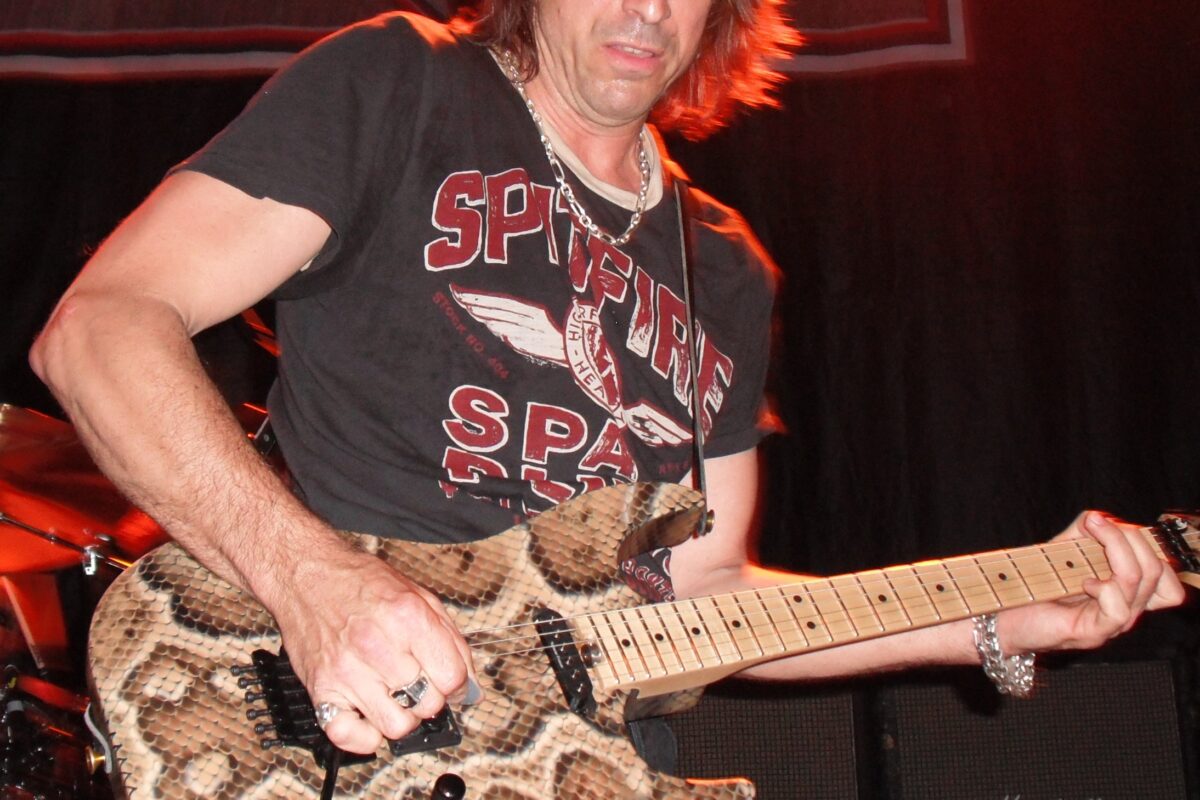
Warren DeMartini Guitars & Gear: The Complete Guide to Ratt’s Torch Guitarist’s Rig
Warren DeMartini guitars & gear: Ratt's Torch guitarist. Charvel Bomber, snakeskin, Jose-modded Plexi, Fender Super Champ, RTM pickup, slapback echo — the complete rig.
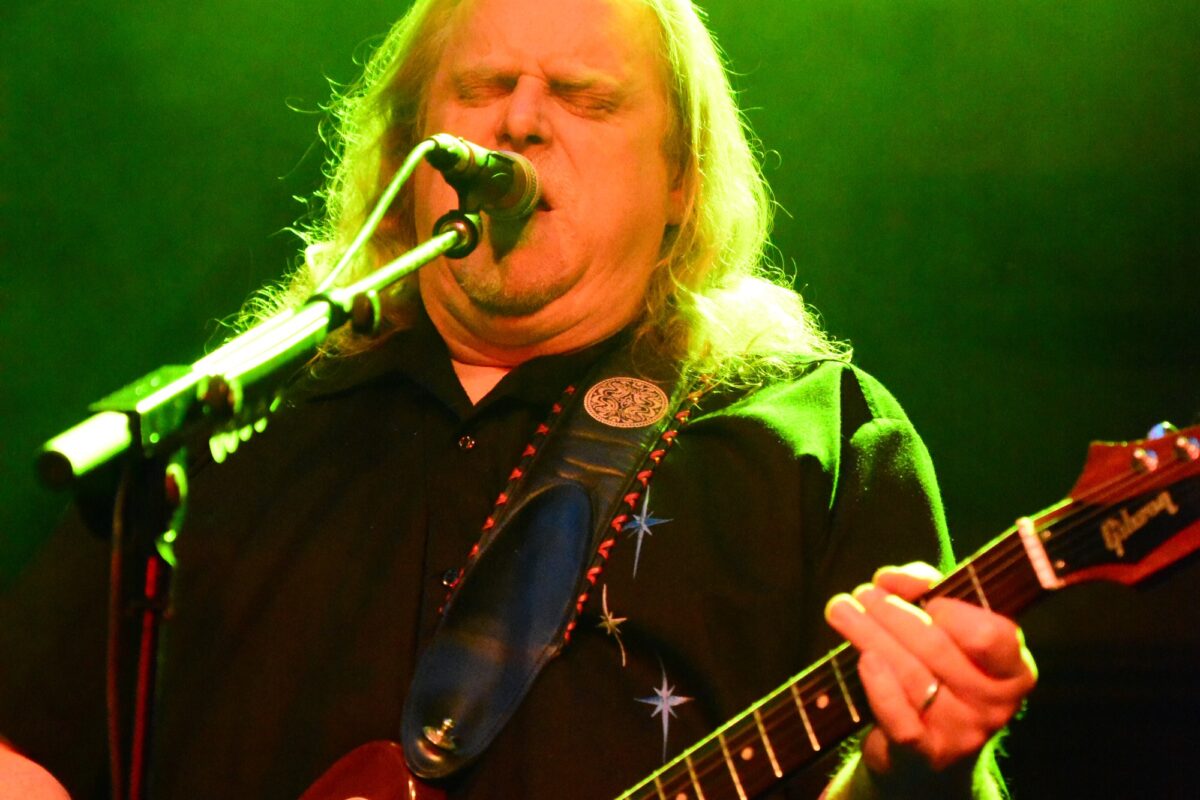
Warren Haynes Guitars & Gear: The Complete Guide to Gov’t Mule’s Guitar Master’s Rig
Warren Haynes' guitars, amps, and effects — the complete guide. Gibson Les Paul Chester, Soldano SLO-100 modified, Klon Centaur, Emma Discombobulator, and how to nail that Gov't Mule blues-rock tone.