Tim Henson Guitars & Gear: The Complete Guide to Polyphia’s Guitar Innovator’s Rig
Tim Henson's guitars, amps, and effects — the complete guide. Ibanez TOD10, TOD10N nylon, Fractal Axe-FX, Neural DSP Archetype, hybrid picking, and how to nail that Polyphia clean-crunch tone.
Photo by Drew de F Fawkes from Guildford, United Kingdom, licensed under CC BY 2.0 (https://commons.wikimedia.org/wiki/File:Tim_Henson%2C_Polyphia%2C_Shepherd's_Bush_Empire_(52942364417).jpg)
Hans Zimmer has his number on speed dial. Steve Vai played on Polyphia’s “Ego Death” and afterward received one of Tim Henson’s guitars as a thank-you gift — specifically the prototype “Tree of Death” guitar that would become the Ibanez TOD10 signature model. A Babymetal collaboration was in the works as of early 2025. A System of a Down collaboration with Serj Tankian was completed. A solo record was being developed. Polyphia’s fifth album was in the writing phase. And Guitar World, in February 2025, described Tim Henson as “one of the most influential guitarists in contemporary music, reshaping the landscape of guitar playing.”
The Journey
Tim Henson was born on November 19, 1993, in Texas, grew up in Dallas, and co-founded Polyphia in 2010 at seventeen years old. In fifteen years he has moved from guitar covers of classical songs on YouTube to collaborations with guitar legends, film composers, and K-pop acts — all while maintaining a playing style that is genuinely his own: hybrid picking with flatpick and fingers simultaneously, thumping with the thumb in the slap bass tradition, natural harmonics as structural elements of composition, and a specific clean-to-crunch tonal approach where “it’s clean until you dig in and then it breaks up and gets distorted. Not distorted, but a little crunchier.” The Neural DSP Archetype: Tim Henson plugin — which he himself uses for much of his production work — features a “Multivoicer” attachment that “humanizes your guitar sound.” He gave a custom guitar to Steve Vai. He has scores being performed by orchestras. He is thirty-one years old.
Polyphia’s four studio albums — Muse (2014), Renaissance (2016), New Levels New Devils (2018), Remember That You Will Die (2022) — chart a trajectory from instrumental prog-metal toward an increasingly eclectic genre synthesis that now incorporates trap beats, bossa nova, bubblegum pop, flamenco-inflected nylon string classical, hip-hop production aesthetic, and the specific clean-electric technique that Henson and bandmate Scott LePage have developed into one of the most discussed and most imitated guitar approaches in the online guitar community. This is the complete guide to the instruments, amplification, and effects through which that approach is expressed.
Background: From YouTube Guitar Covers to the Modern Guitar Frontier
Polyphia’s origin is specifically a YouTube story. The band formed in Plano, Texas in 2010, initially as a guitar-cover outfit posting performances of classical pieces and progressive metal material online. The specific community of instrumental guitar enthusiasts that developed on YouTube and other social media in the 2010s — a community that prized technical precision, creative arrangements, and genre-blending — was exactly the right audience for what Polyphia was developing, and the band’s profile grew within that community before it crossed into mainstream rock audiences.
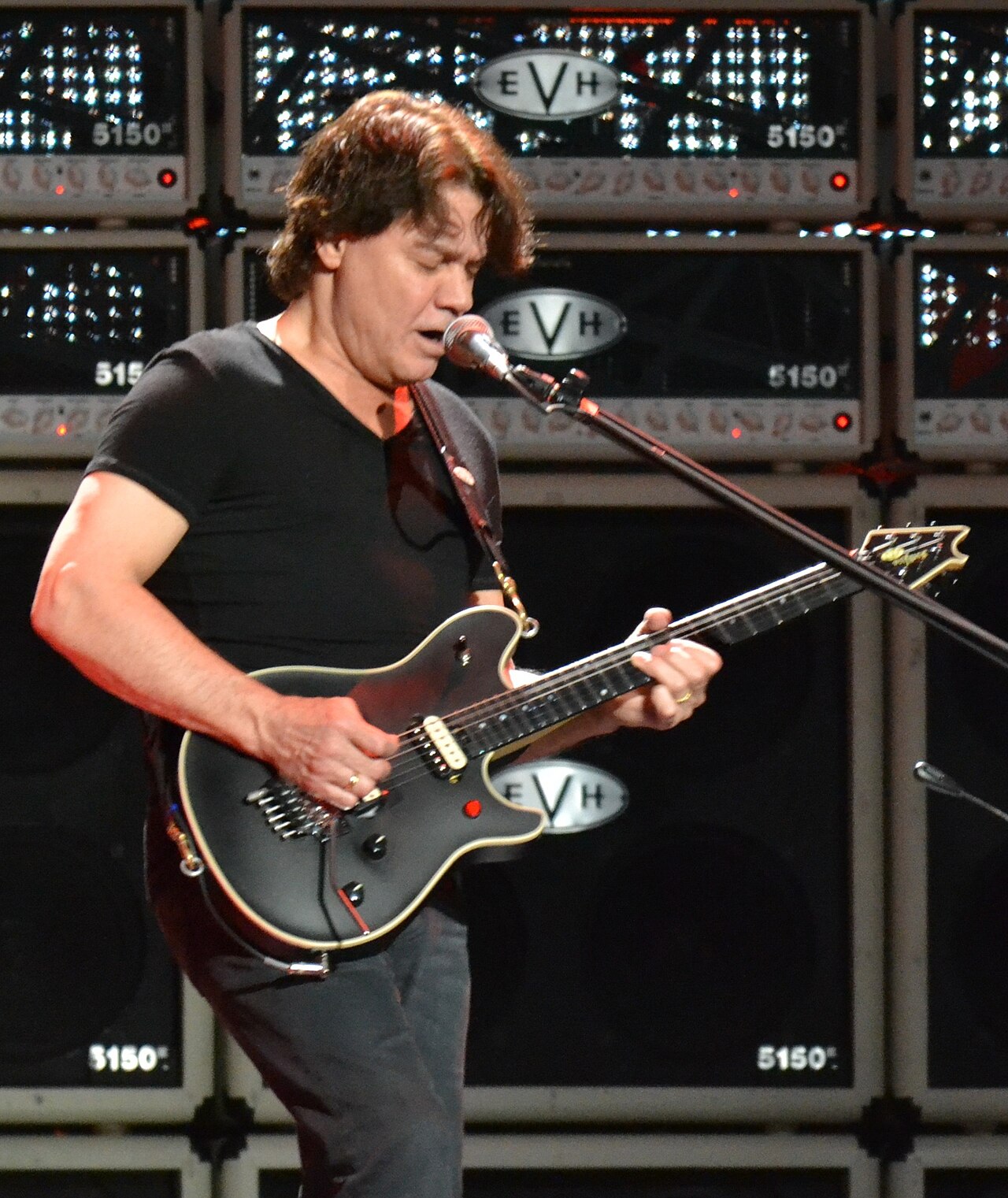
Tim Henson’s musical formation was eclectic from the beginning. His mother played piano, giving him early exposure to music theory. He started classical guitar at ten before moving to electric guitar, absorbing rock and metal influences. The classical guitar foundation gave him the fingerpicking vocabulary that would later inform his hybrid picking approach. His early guitar heroes — John Petrucci of Dream Theater, Steve Vai, Eddie Van Halen — are the standard progressive/shred influences of a technically ambitious guitarist; what distinguished his subsequent development was the addition of hip-hop production aesthetics, electronic music rhythmic sensibility, and the willingness to treat guitar technique as a compositional element to be combined with production rather than a genre-defining statement in itself.
The Vai collaboration is the most dramatic evidence of this generational transition, but not the only one. Babymetal — the Japanese kawaii metal phenomenon — has collaborated with Henson and Polyphia on multiple tracks. Deftones’ Chino Moreno appeared on “Bloodbath.” The guest list on Polyphia records reads like a map of Henson’s specific aesthetic curiosity: technically extreme instrumentalists, mainstream vocal artists, K-pop adjacent acts, heavy rock legends. The willingness to work across these categories without genre loyalty reflects both his production sensibility (what does this song need?) and his specific position as a guitarist without genre affiliation. Polyphia’s music is not metal. It is not prog. It is not hip-hop. It is not pop. It uses all of these as compositional materials. Henson’s gear reflects this: the clean amp setting that responds to playing dynamics, the nylon-string guitar for flamenco phrases, the Neural DSP plugin for production-level control. Everything is in service of music that cannot be defined by any single genre’s expectations.
Polyphia’s evolution across their four albums tracks Henson’s broadening aesthetic horizons. The Muse debut combined instrumental prog-metal with pop accessibility. Renaissance moved further toward hip-hop and EDM production textures. New Levels New Devils (produced in collaboration with hip-hop and EDM producers Judge and Y2K) was the fullest realization of the genre synthesis: trap percussion, hip-hop production aesthetics, and technically virtuosic guitar. Remember That You Will Die in 2022 — which debuted at number 33 on the Billboard 200 — continued and expanded this approach, with the Steve Vai collaboration on “Ego Death” representing both a generation-bridging meeting between the new guard and the old and a statement about Polyphia’s position relative to guitar music’s canonical tradition.
The Vai collaboration is worth dwelling on. Henson and Polyphia worked with Vai not as awed students receiving validation from a legend but as compositional collaborators whose specific aesthetic required a specific kind of contribution from Vai. And afterward, they gave him a guitar as a thank-you — the Tree of Death prototype that had been Tim’s guitar before the TOD10 production model was finalized. This inversion — the younger generation thanking the older for participation rather than the older acknowledging the younger’s achievement — tells you something about where Polyphia sits in the current hierarchy of guitar music. They are not trying to join the canon. The canon is adapting to accommodate them.
The Rig: Tim Henson’s Guitars, Amps, and Effects
Guitars
The Ibanez TOD10 is Tim Henson’s primary electric signature guitar — a solid-body instrument with a roasted maple neck, the “Tree of Death” fretboard inlay (inspired by Steve Vai’s “Tree of Life” design), a Gotoh tremolo bridge with locking machine heads, and a set of Fishman Fluence Tim Henson Signature humbucker pickups. The “Tree of Death” inlay name is characteristic Henson humor — taking Vai’s iconic “Tree of Life” inlay and inverting its symbolism while acknowledging the specific debt to one of his primary influences. The instrument was designed by Henson and Ibanez collaboratively, evolving from the prototype he used during the development of “Playing God” and “Ego Death.” The original Tree of Death prototype — the guitar on which the design was first realized — was given to Steve Vai as a thank-you for appearing on “Ego Death.”
The Fishman Fluence Tim Henson Signature pickups feature two different voicings accessible by pulling out the volume knob. Between the two voicing options and the 5-way pickup selector, Henson has access to a range of tones from glassy clean to moderate crunch. This tonal versatility — the ability to switch between radically different tonal characters within the same instrument without changing guitars or amp settings — suits Polyphia’s specific approach to composition, where different sections of the same song may require completely different guitar characters. The 5-way selector’s intermediate positions provide the out-of-phase and combined single-coil-like tones that give Polyphia’s clean passages their specific chimey, transparent quality.
The TOD10N is Tim Henson’s nylon-string signature model — and its origin story is one of the more charming equipment purchase decisions in recent guitar history. While on tour in Cologne, Germany in 2020, Henson encountered an Ibanez SC500N — a model that Ibanez had sold only between 1998 and 2000, deemed such a commercial failure that they discontinued it and had written it off. He bought it for approximately €700, brought it back to his hotel, and immediately understood what it could do: a nylon-string electric with a modern acoustic character that produced the flamenco-inspired and classical-inflected phrases that he could hear in his compositional imagination. “I was like — wow, this sounds crazy. Polyphia riffs through a nylon-esque guitar.”
He then did something unusual: he approached Ibanez about making a signature version of the discontinued model, and Ibanez was initially skeptical. Their own sales data said nobody wanted the SC500N. Henson convinced them with two things: a social media poll showing significant fan interest in a nylon-string signature guitar, and a demo of “Playing God” recorded on the SC500N showing exactly what the instrument could do in his hands. Ibanez agreed. The TOD10N was released in December 2022 alongside the TOD10, and its success — it has been described as having “unprecedented success” for a nylon-string signature model — validated Henson’s instinct about a market that Ibanez’s historical data had said didn’t exist. He created the demand by demonstrating what the instrument was capable of. This is the innovation principle at work.
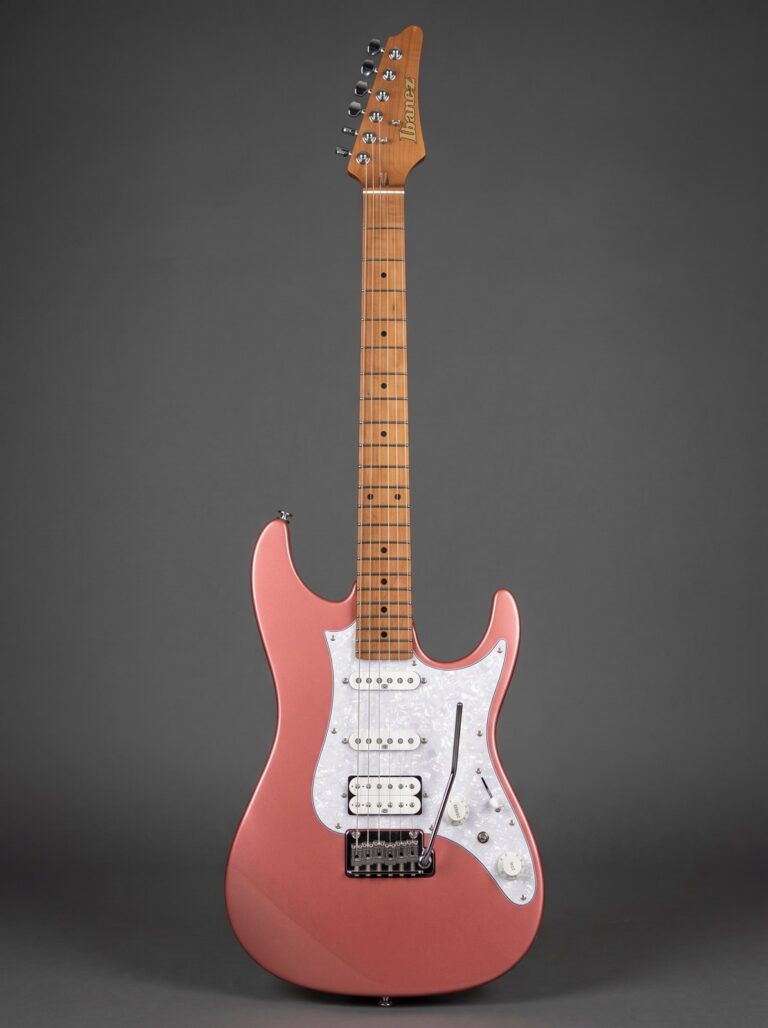
Before the TOD10 signature model was finalized, Henson’s primary Ibanez was from the AZ Series — a guitar line that became his de facto signature platform before the official signature was finalized. A prototype of the AZ Series was made by the Ibanez LA Custom Shop in a custom satin finish that Henson dubbed “Clitoris Pink” — a name that has generated both amused and exasperated coverage but that reflects his general approach to guitar culture’s sometimes earnest self-seriousness. The pink AZ, loaded with John Petrucci’s signature DiMarzio Illuminator pickups, was used live during the early Polyphia touring. The AZ Series serves as the base for both Henson’s and bandmate Scottie LePage’s numerous signature models.
The THBB10 was Henson’s first official signature model from Ibanez — featuring a roasted maple neck, Gotoh tremolo bridge with locking machine heads, and DiMarzio pickups. The THBB10 preceded the TOD10 and represented the first formal collaboration between Henson and Ibanez’s manufacturing team on an instrument specifically tailored to his requirements. Its DiMarzio pickup configuration differed from the Fishman Fluence system of the subsequent TOD10, giving it a different tonal character.
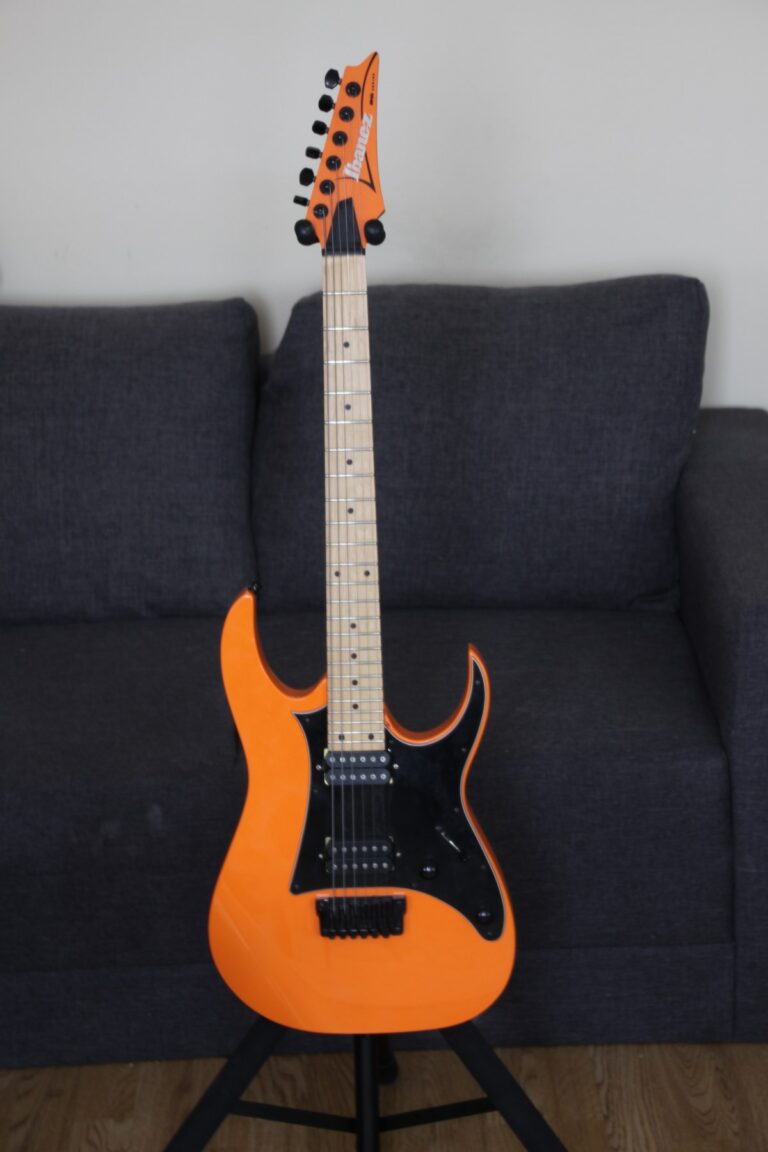
From Polyphia’s earliest recordings — the Inspire EP and the initial YouTube material — Henson has been an Ibanez player. The RG350MDX appears in early Polyphia documentation from around 2009. Various RG Series, S Series, and extended-range models (7-string and 8-string RG and Iron Label series) populated his arsenal before the AZ and signature era. The RG’s specific blueprint — Superstrat-style, thin neck, high-output pickups, floating tremolo — has been the consistent physical foundation of his playing, with the AZ and TOD10 representing refinements of that template rather than departures from it.
Much of Polyphia’s earlier material is in drop D (D A D G B E); most recent material uses standard E tuning (E A D G B E). Henson uses Dunlop Polyphia Signature Picks: “Dunlop picks give us the control and precision needed to play our music accurately and dynamically.” Ernie Ball strings were confirmed in the 2025 Guitar World interview, with the specific gauge tuned to the clean-crunch tone requirements of his hybrid picking approach.
Amps
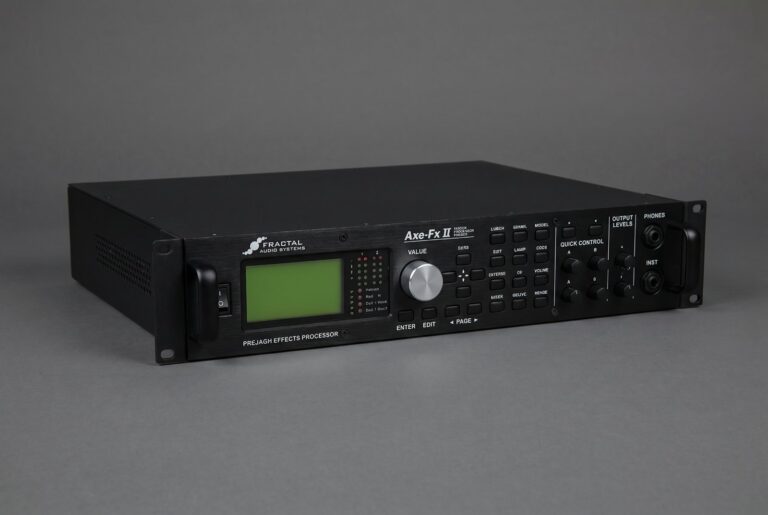
Tim Henson’s primary amplification for most of his professional career has been the Fractal Audio Axe-FX II — the same digital modeling platform used by Tosin Abasi and John Petrucci, applied here to clean-to-crunch tones rather than the high-gain extended-range tones those players require. The Axe-FX II provides the specific tonal consistency across performances that Polyphia’s production-influenced aesthetic demands: the guitar tone on stage should match the guitar tone on the recording, and digital modeling makes this possible in a way that relies on preset recall rather than the variable character of tube amplifiers in different rooms and temperatures.
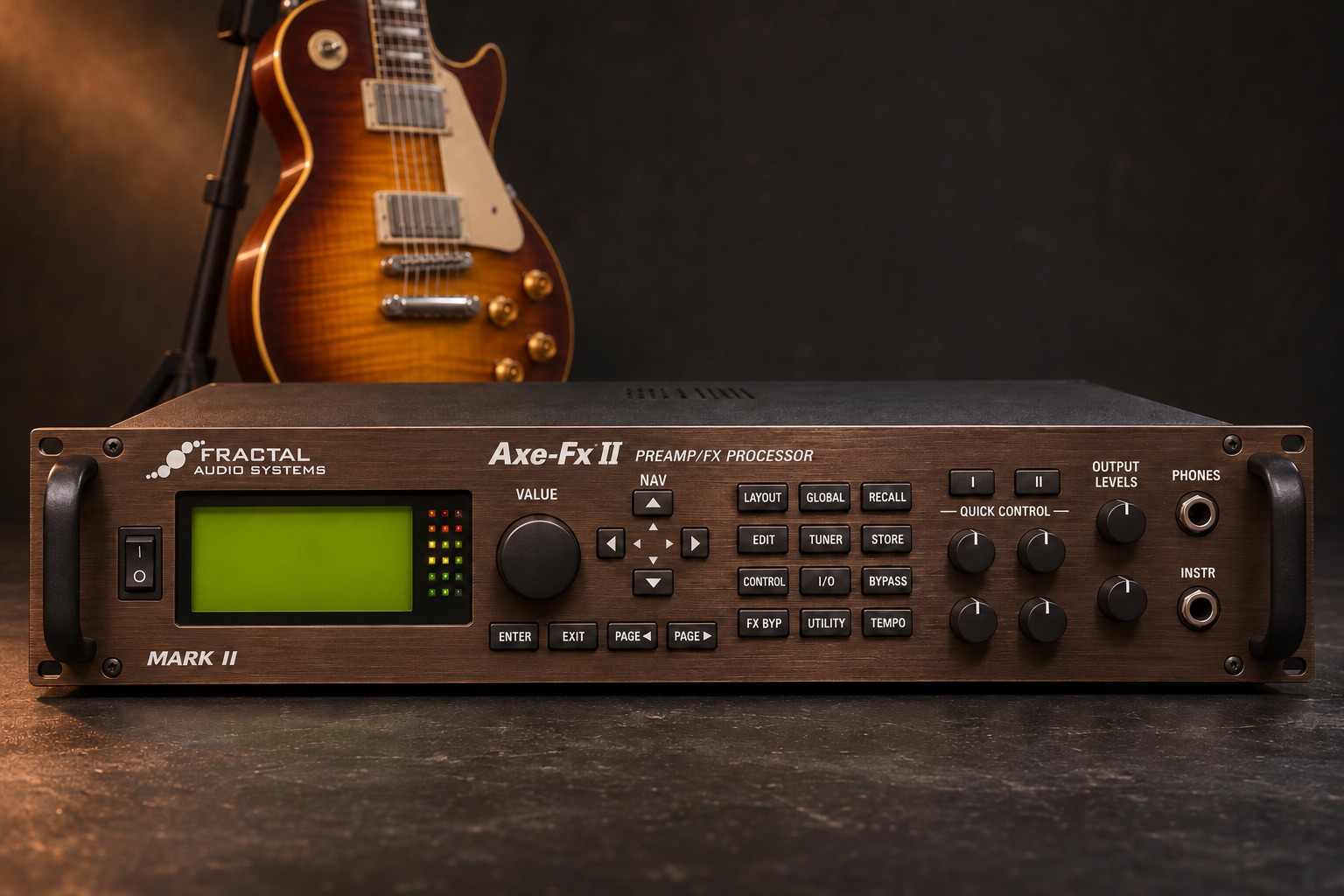
Henson’s primary Axe-FX II models: the Corn Cob M50 (Fractal’s emulation of the Cornford MK50 II boutique amp — “largely responsible for Tim Henson’s more saturated tone as per the Renaissance album”) for crunchy tones; and Boutique 1 (based on the Matchless Chieftain, an all-EL84 class A British amp) for clean tones. The Matchless Chieftain-based model specifically provides “the cleanliness he describes: ‘it’s clean until you dig in and then it breaks up and gets distorted.'” This touch-sensitive, dynamic breakup on heavy picking — where light playing stays clean and aggressive playing produces a slight crunch — is the fundamental characteristic of Polyphia’s guitar tone.
The Neural DSP Archetype: Tim Henson plugin is Tim Henson’s primary studio tool for most recording and production work. The plugin contains three simulated amp models and Henson’s signature “Multivoicer” attachment — described as a device that “humanizes your guitar sound.” The Multivoicer concept is specific to Henson’s production sensibility: guitar playing can have an artificial, mechanical quality in certain contexts (particularly clean, high-precision technical playing), and the Multivoicer addresses this by adding subtle pitch modulation and tonal variation that make the guitar sound more like a living, breathing performance. The plugin represents the democratization of his specific tonal approach and production philosophy in accessible software form.
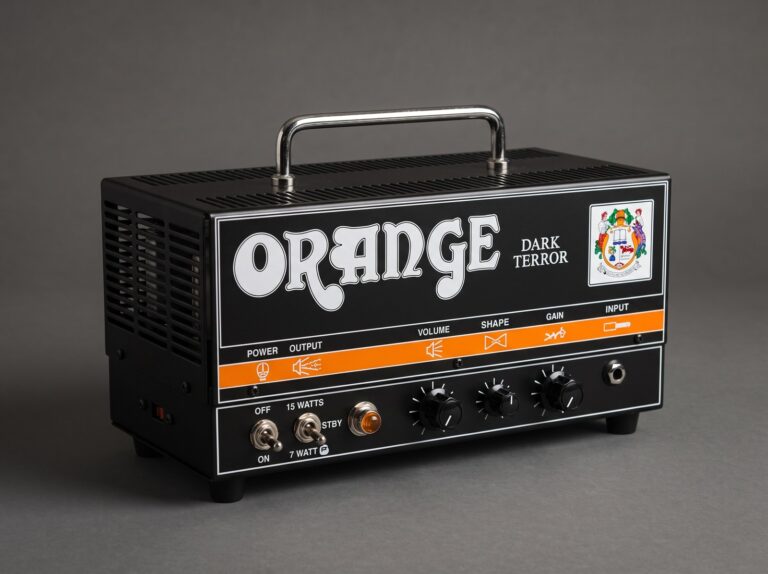
Both Tim Henson and Scott LePage use Orange Dark Terror heads as part of their on-stage rig — but not for their preamp character. The Dark Terror is used purely as a power amplifier, with the tones coming from the Fractal Axe-FX digital modeling. “Tim Henson does not rely on the Dark Terror for its tone-shaping qualities, simply using it as a power amp and platform for his guitar processor.” The Dark Terror is connected to an Orange cabinet with Celestion V30 speakers for on-stage sound projection, but the tonal character of what comes out of those speakers is entirely determined by the Axe-FX presets, with the Dark Terror and Orange cabinet serving as the final conversion from electrical signal to acoustic sound. The Dark Terror’s twin EL84 power tubes do contribute some character to the signal — EL84s have a specific compression and sag — but this is secondary to the Axe-FX’s digital modeling in determining the tone.
Tim Henson used Positive Grid’s Bias FX amp and effects simulator to record some of his guitar work on New Levels New Devils — demonstrating his pragmatic approach to studio tools: whatever produces the right sound for the specific recording is the right tool. Bias FX as a studio recording platform is a different use case from the Axe-FX’s live performance primary use, and Henson’s willingness to move between different modeling platforms depending on the specific sonic requirement reflects the producer’s pragmatism rather than the guitarist’s brand loyalty.
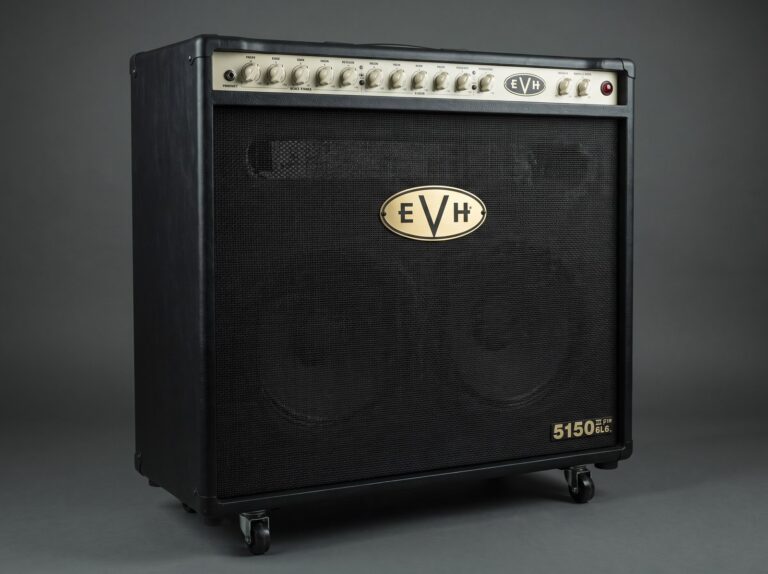
In 2015, during Polyphia’s earlier heavier phase, Henson used an EVH 5150 combo amp — Eddie Van Halen’s signature high-gain amplifier, which provided the more saturated, heavier tone of Polyphia’s early Renaissance-era sound. This was “a rare example of Tim Henson running a traditional amp setup” — and the shift away from traditional amplification toward the Axe-FX and digital modeling approach mirrors the broader evolution of Polyphia’s sound from genre-conventional prog-metal toward genre-defiant production-forward instrumental rock.
Effects
The Fractal Axe-FX II handles essentially all effects processing for Henson’s live signal chain — delay, reverb, modulation, and the amp modeling that defines the tonal character. His specific use of effects within the Axe-FX is restrained: “Tosin says he minimally uses the multi-tap delay, occasional reverb, and some compression on cleans.” Similar philosophy applies to Henson’s Axe-FX use — the effects support the guitar’s natural character rather than defining it. The delay, in particular, is used “the way many other guitarists use a reverb pedal” — as a tighter, more note-defining spatial element rather than the washy ambient presence of reverb.
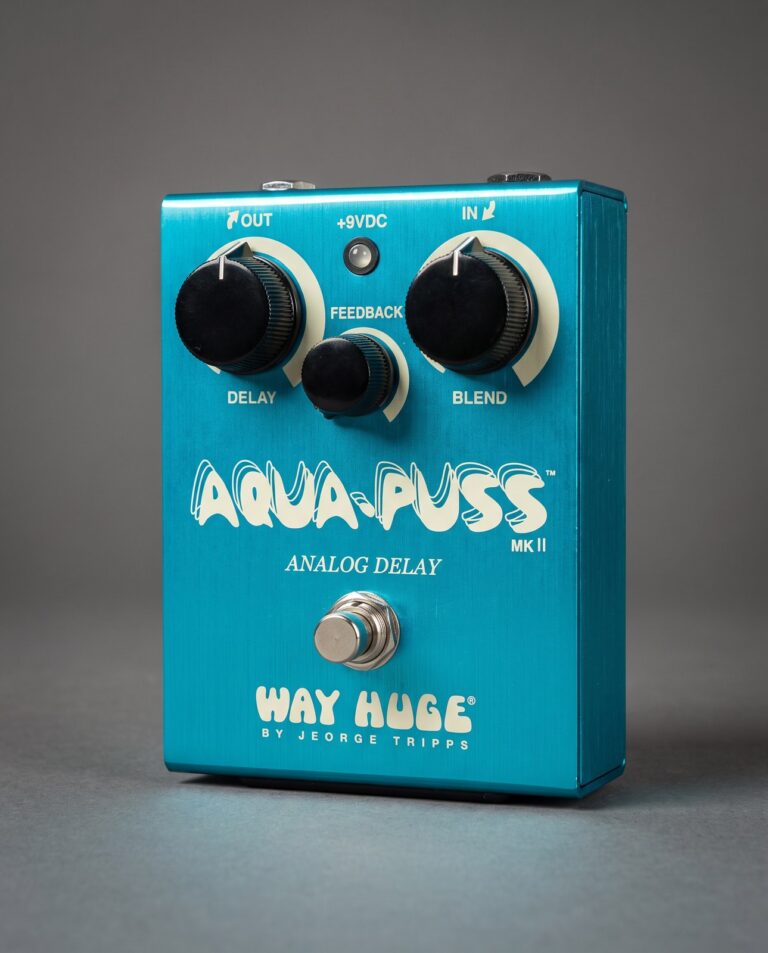
In Polyphia’s earlier work, the Way Huge Aqua-Puss analog delay was central to “the bouncy, articulate tone of Polyphia’s early work.” The warm, organic analog delay character — the slight tonal degradation of each repeat, the specific timing variation of bucket-brigade delay — gave Polyphia’s early clean guitar tones their specific depth and dimensionality before the full digital Axe-FX setup replaced it as the primary signal chain.
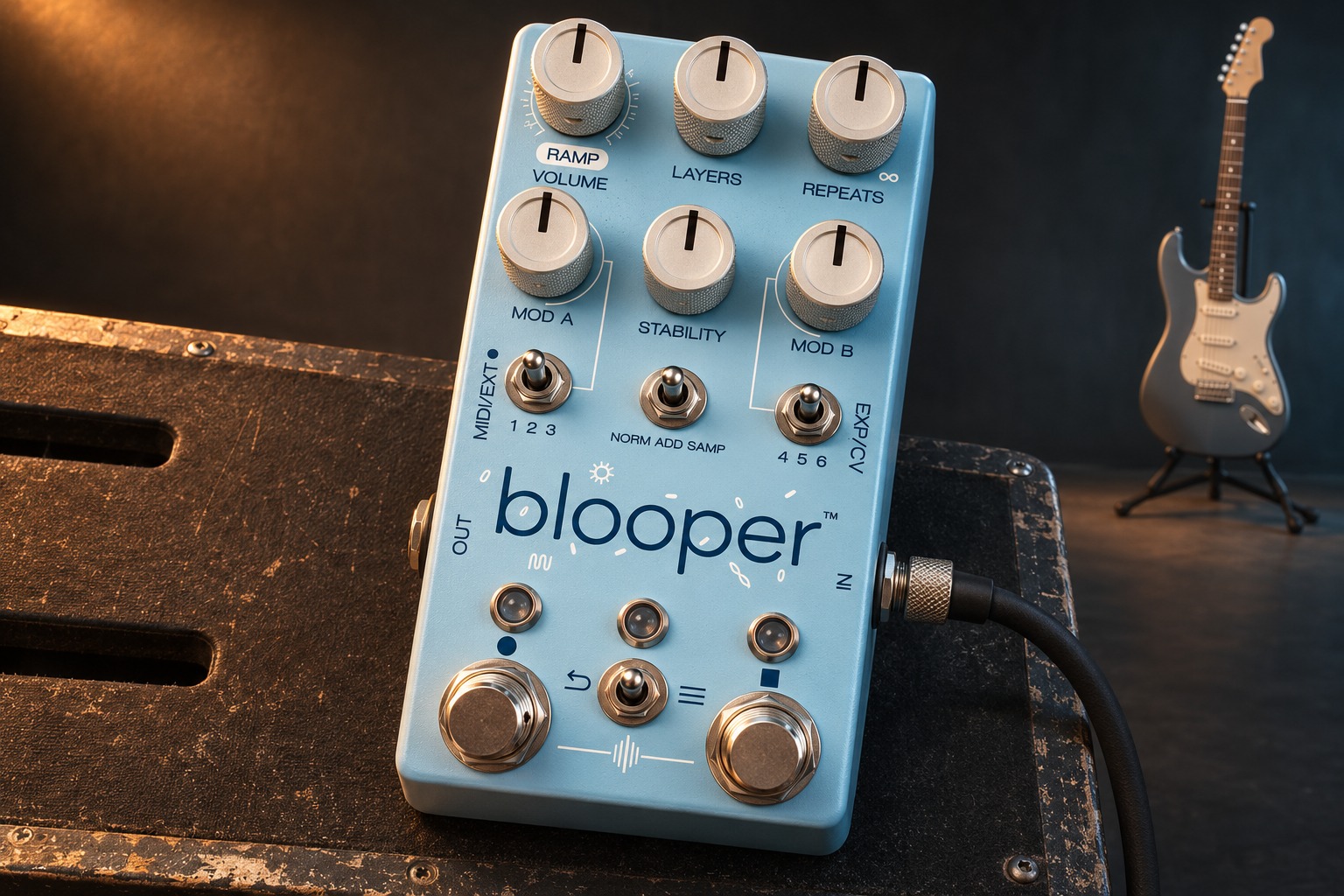
The Chase Bliss Audio Blooper — a sophisticated phrase looper that allows pitch, flutter, and speed manipulation of recorded phrases — appears in Henson’s home studio setup as “more of a songwriting tool for Tim Henson than anything else.” The Blooper enables exploration of riff ideas across different pitches, tempos, and textures without committing them to recording software, making it a specific compositional aid rather than a performance effect.
The Multivoicer attachment in the Neural DSP Archetype: Tim Henson plugin — which “humanizes your guitar sound” — is one of the most distinctive and most discussed elements of Henson’s production approach. The specific mechanics of the Multivoicer involve adding subtle micro-pitch variation and tonal animation to the guitar signal, counteracting the perfectly precise, mechanical quality that high-precision digital guitar recording can produce. This is a production sensibility as much as a guitar effect: the understanding that perfectly mechanical performance sounds less real than slightly imperfect human performance, and the technological solution of adding human-like variation back to a technically precise signal.
Playing Style & Tone Philosophy
Tim Henson’s playing style is the most production-native of any guitarist in this series — meaning that his specific technical approach was developed specifically in the context of modern music production, where the guitar functions as one element in a layered digital arrangement rather than as the primary instrument of a live band. His techniques — hybrid picking, thumping, natural harmonics, two-hand tapping — are all chosen partly for their specific sound in a production context, where their tonal characters can be layered, effected, and combined with beats and synthesizers in ways that live performance approaches only approximate.
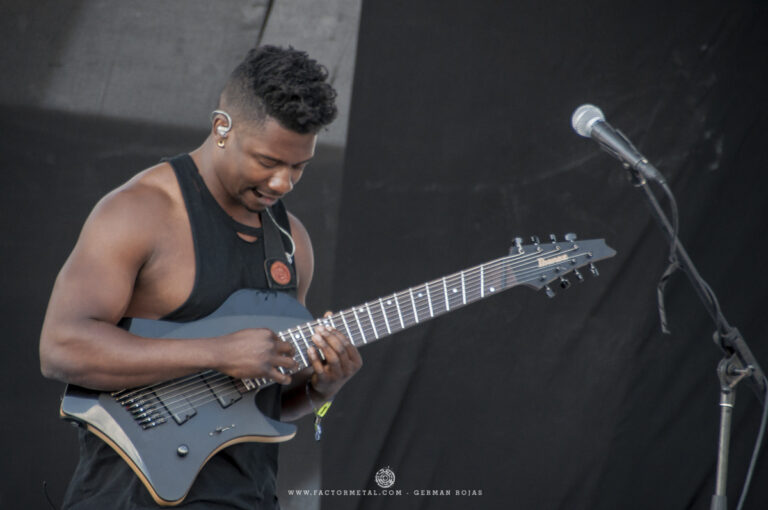
The hybrid picking technique is the foundation: flatpick handles the lower strings while the middle, ring, and fourth fingers pluck the higher strings simultaneously. This creates the specific tonal variety of attack — flatpick attack on the lower strings, fingernail attack on the higher strings — that gives Polyphia’s guitar parts their simultaneous bass and treble voices. Guitar World described it as creating “huge interval leaps” between different strings played by different fingers, producing textures that a single-pick or single-finger approach cannot replicate. The combination of different attack timbres within a single phrase — the harder, more defined flatpick on the low strings, the softer, more luminous finger on the high strings — is what gives Polyphia’s clean guitar tone its specific three-dimensional quality.
The thumping technique — adapted from Tosin Abasi’s eight-string approach and further developed through Polyphia’s specific aesthetic — applies the percussive thumb-slap of bass guitar slap technique to the electric guitar, creating a rhythmic, percussive element that drives Polyphia’s trap-influenced sections. The interaction between Henson’s thumping and the trap percussion on Polyphia’s recent recordings is one of the defining characteristics of their sound: guitar functioning not just as melodic-harmonic content but as percussive rhythmic foundation.
His tone philosophy centers on the tension between cleanliness and crunch. The clean plateau that “breaks up when you dig in” — the touch-sensitive response of the Matchless-inspired Boutique 1 model on the Axe-FX — gives the guitar a dynamic quality that rewards expressive playing: gentle playing stays clean and precise, while aggressive attack produces subtle harmonic enrichment. This is the opposite of the always-on-distortion approach of most technical metal guitarists; Henson’s guitar is a dynamic responder to his technique rather than a fixed distortion source. The cleanliness, in the specific context of Polyphia’s production aesthetic, is as important as any driving or distorted tone — it allows the individual notes and finger attacks to be heard with the precision that the compositions require.
How to Sound Like Tim Henson
Getting Tim Henson’s core tone is more accessible than many guitarists in this series, because the primary tool — the Neural DSP Archetype: Tim Henson plugin — directly replicates his signal chain in software at a relatively accessible price point.
Guitar: An Ibanez TOD10 or THBB10 is the authentic choice. The Fishman Fluence Tim Henson Signature pickups are specific to these models. For accessible alternatives: any Ibanez AZ or RG series guitar with the 5-way pickup selector and a humbucker/single-coil configuration approximates the tonal range. The key is a guitar with coil-splitting capability (for the clean quack-y tones) and a bridge humbucker for moderate crunch.
Amp/Modeling: Neural DSP Archetype: Tim Henson plugin for the most direct recreation. Fractal Axe-FX II with the Corn Cob M50 model (Cornford emulation) for crunchy tones and Boutique 1 (Matchless Chieftain emulation) for clean/crunch. Orange Dark Terror as power amp with Orange 4×12 for the live setup. For accessible hardware: any clean, touch-sensitive tube amp (Matchless Chieftain, Vox AC30, or good clean Fender) where the character shifts from clean to slightly crunchy with heavier picking.
Amp Settings (Neural DSP Archetype or equivalent, clean-crunch channel):
| Control | Setting (0–10) | Notes |
|---|---|---|
| Gain | 3 | Low — clean is the foundation; crunch comes from attack |
| Bass | 7 | Full — Guitar World confirmed: “Gain 3, Bass 7, Middle 6, Treble 7, Reverb 2” |
| Mid | 6 | Present but not nasal |
| Treble | 7 | Bright and clear — the hybrid picking’s treble attack needs this |
| Reverb | 2 | Light — use delay instead of reverb for depth and definition |
The hybrid picking technique: Hold the pick with thumb and index finger in the standard flatpick position. Middle and ring fingers (and fourth if comfortable) are extended, available to pluck treble strings. Practice picking the low strings with the flatpick and simultaneously plucking the high strings with the middle or ring finger — creating the simultaneous bass/treble note combination that defines Polyphia’s guitar texture. Start very slowly with simple two-note combinations. The attack timbres of the pick and finger are different — this difference is the tonal effect, so don’t try to make the finger sound like the pick. Let the contrast work for you.
Influence & Legacy
Tim Henson’s influence on guitar playing is primarily generational: he is the guitarist who has demonstrated to the post-YouTube generation that technical guitar mastery and modern production aesthetics can coexist in the same artist, that the guitar can be central to trap-beat and hip-hop-influenced music without abandoning its technical tradition, and that the instrument’s role in contemporary music is not fixed by its heritage but is continuously open to redefinition. The specific players who cite him as a primary influence are almost uniformly younger than thirty — the generation for whom Polyphia was their entry point into technical guitar rather than a development they followed after absorbing the classic rock tradition.
The TOD10N’s commercial success is a specific and tangible indicator of his market influence. A nylon-string electric signature guitar — for a technical metal guitarist, from a manufacturer that had previously failed with the same concept — became a commercial hit because Henson demonstrated what the instrument could do in a contemporary context. This is influence operating at the level of market expansion: creating demand for a category of instrument that didn’t previously have an audience.
For context on where Henson fits in relation to the progressive guitar tradition he draws from, the comparison with Tosin Abasi’s approach to technical extended-range composition is the most direct contemporary parallel — two technically extreme guitarists whose music shares the djent/progressive metal DNA but who have arrived at completely different aesthetic destinations. Abasi’s is more compositionally serious, more jazz-influenced harmonically, more oriented toward the guitar as a compositional tool. Henson’s is more production-native, more influenced by trap and hip-hop aesthetics, and more oriented toward the guitar as a pop-production element. Both are necessary to understand the full scope of where technical guitar playing is in the 2020s.
The comparison with Steve Vai’s avant-garde technical approach — whose collaboration with Henson on “Ego Death” resulted in Henson giving Vai the Tree of Death prototype — illuminates the generational transmission at its most dramatic. Vai is one of Henson’s explicitly named primary influences; Henson has now worked with Vai as a peer and given him a guitar. The circle is complete. And the comparison with John Petrucci’s progressive metal guitar architecture shows the shared Dream Theater influence that Henson has absorbed and transformed into something that sounds nothing like Dream Theater but could not have existed without it.
Tim Henson is thirty-one years old in 2026. The fifth Polyphia album is in progress. The solo record is being developed. Hans Zimmer has his number. Steve Vai has the Tree of Death prototype. Ibanez produced a nylon-string that nobody thought would sell, and it sold. The Neural DSP Multivoicer is humanizing guitar sounds across thousands of home studios. The Fractal Axe-FX is set to Corn Cob M50 for crunch and Boutique 1 for clean. The Orange Dark Terror is powering the speakers. The pink guitar is still called what it’s called. The guitar doesn’t get less interesting. It gets more interesting, faster, every year that Tim Henson is playing it.
His influence on guitar education specifically through social media is worth discussing separately. Polyphia’s YouTube channel and Henson’s personal social media have produced a specific form of guitar instruction: the play-through video, the technique breakdown, the casual demonstration of complex ideas that appears approachable even while being technically extraordinary. This format — the online guitar hero demonstrating specific techniques in short, shareable videos — has been adopted by the generation of guitarists who learned from watching rather than from reading instructional materials. Henson’s specific contribution to this format is the quality of the demonstration: when he shows hybrid picking in a short video, the viewer understands immediately both what it looks like and why it sounds the way it sounds. The teaching and the playing are not separated. The playing is the teaching.
He is also, in ways that many rock guitarists are not, a complete musician in the production sense. He co-writes and co-produces Polyphia’s music, handles significant portions of the studio work, and thinks about guitar as a production element with the same rigor that a film composer might think about an orchestra. The Hans Zimmer connection — the legendary film composer having Henson’s number — is not incidental. It reflects the scope of Henson’s reputation beyond the guitar community. When one of the world’s foremost orchestral composers decides that the guitarist from Polyphia is worth having available for scoring work, something has been communicated about the specific quality of musical intelligence that Henson brings to his instrument. That intelligence — compositional, production-aware, genre-agnostic — is as much the story as the hybrid picking.
The amp settings that Guitar World documented for his playing style are themselves instructive: Gain 3, Bass 7, Middle 6, Treble 7, Reverb 2. Maximum gain of 3 — barely touching the distortion. Maximum bass of 7 — full and warm. Maximum treble of 7 — clear and bright. Minimum reverb of 2 — just enough spatial depth. This is a clean-amp setting with a slightly warm, slightly bright character and almost no drive. The drive comes from playing hard. This is the inverse of most heavy rock guitar approaches, where you dial in substantial drive from the amplifier and control dynamics with picking — Henson’s approach is to control dynamics with picking AND have the amplifier respond to that picking with varying amounts of drive. The technique IS the tone. This is, in a way, the same truth that all the greatest guitarists in this series have demonstrated: the equipment enables the music, but the hands make the music. The amp settings document the gear. The playing is the story.
He is thirty-one years old in 2026. The fifth Polyphia album is in progress. The solo record is being developed. Hans Zimmer has his number. Steve Vai has the Tree of Death prototype. Ibanez produced a nylon-string that nobody thought would sell, and it sold. The Neural DSP Multivoicer is humanizing guitar sounds across thousands of home studios. The Fractal Axe-FX is set to Corn Cob M50 for crunch and Boutique 1 for clean. The Orange Dark Terror is powering the speakers. The pink guitar is still called what it is called. The guitar does not get less interesting. It gets more interesting, faster, every year that Tim Henson is playing it. The new generation is here. The amp is on. The playing begins.
The broader context matters here: Polyphia emerged in 2010 and within twelve years had a Billboard Top 40 album, a Steve Vai collaboration, Babymetal collaborations, and Hans Zimmer calling Henson for scoring work. This trajectory — from YouTube guitar covers to major-label chart positions to film scoring in twelve years — is faster than any comparable guitar-centered career in recent history. It reflects both the changed media landscape (YouTube as career accelerator rather than label pipeline) and the genuine musical intelligence that Henson brings to everything he does. He is not a phenomenon created by viral content. He is a musician whose work deserves the attention the viral content brought to it. The TOD10 is not just a signature guitar. The TOD10N is not just a niche product. And the Multivoicer in the Neural DSP plugin is not just a marketing feature. They are tools built by a musician who understands what tools are for: making music that could not otherwise exist. That is the whole story.
Frequently Asked Questions: Tim Henson Guitars & Gear
What guitar does Tim Henson play?
Tim Henson’s primary guitars are both Ibanez signature models released in December 2022: the TOD10 (solid-body electric with roasted maple neck, “Tree of Death” inlay, Gotoh tremolo, Fishman Fluence Tim Henson Signature pickups with two voicings) and the TOD10N (nylon-string electric). The TOD10N’s origin story is notable — Henson bought an Ibanez SC500N (a model discontinued for poor sales) in Cologne, Germany for €700, fell in love with it, convinced a skeptical Ibanez to produce a signature version by sending them a social media poll and a demo of “Playing God,” and the model became a commercial success. The “Tree of Death” inlay design is Tim Henson’s take on Steve Vai’s famous “Tree of Life” — the Tree of Death prototype was given to Vai as a thank-you for appearing on “Ego Death.” Earlier signature model was the THBB10 (with DiMarzio pickups), and the AZ Series served as a pre-signature primary guitar, including a custom pink model he named “Clitoris Pink.”
What amp does Tim Henson use?
Tim Henson primarily uses the Fractal Audio Axe-FX II for both live and studio work — specifically the Corn Cob M50 preset (emulating the Cornford MK50 II boutique amp) for crunch tones and the Boutique 1 preset (based on the Matchless Chieftain) for clean-to-crunch tones. Live, the Axe-FX signal runs into an Orange Dark Terror head (used as a power amplifier only, not for its preamp character) and then into an Orange cabinet with Celestion V30 speakers. For studio recording, he primarily uses the Neural DSP Archetype: Tim Henson plugin, which he helped design. He used Positive Grid’s Bias FX for parts of New Levels New Devils, and used an EVH 5150 combo in 2015 during Polyphia’s earlier heavier phase.
What is the Ibanez TOD10N and how did it come about?
The Ibanez TOD10N is Tim Henson’s nylon-string electric signature guitar, featuring the same “Tree of Death” inlay as his electric TOD10, released in December 2022. Its origin: in 2020, while on tour in Cologne, Germany, Henson purchased an Ibanez SC500N — a model Ibanez had sold only between 1998 and 2000 before discontinuing it due to poor sales. He loved it and convinced Ibanez to produce a signature version, despite their initial skepticism. He submitted a social media poll showing fan interest and a demo of “Playing God” recorded on the SC500N, and Ibanez agreed. The TOD10N went on to achieve what Guitar World described as “unprecedented success” for a nylon-string signature model from Ibanez, validating Henson’s instinct about a market that didn’t previously exist for the product.
What is Tim Henson’s hybrid picking technique?
Tim Henson’s hybrid picking technique combines flatpick attack on the lower strings with simultaneous finger plucking of the upper strings. The flatpick (held between thumb and index finger) addresses the G, A, and low E strings in standard picking fashion, while the middle, ring, and sometimes fourth fingers of the picking hand pluck the G, B, and high E strings with a fingertip/nail attack. This creates two simultaneous attack timbres — the harder, more defined flatpick character on the bass strings and the softer, more luminous finger character on the treble strings — within a single phrase, producing the specific three-dimensional quality of Polyphia’s guitar texture. Guitar World’s description: “using a pick to play the lower strings and the second, third, and fourth (marked as ‘m’, ‘a’ and ‘c’ in the notation) fingers to pluck the upper strings with a fingerstyle approach.”
What effects does Tim Henson use?
Tim Henson’s primary effects platform is the Fractal Audio Axe-FX II, which handles all reverb, delay, and modulation in his live signal chain. He uses delay “the way many other guitarists use a reverb pedal” — as a tighter, more note-defining spatial element rather than a washy ambient presence. The Neural DSP Archetype: Tim Henson plugin (for studio) features his signature “Multivoicer” attachment that adds subtle pitch modulation and tonal variation to “humanize” digitally precise guitar performances. The Chase Bliss Audio Blooper (a sophisticated phrase looper) is used as a songwriting tool. Earlier career: the Way Huge Aqua-Puss analog delay was central to Polyphia’s early bouncy clean tone before the full Axe-FX setup replaced it.
What is Tim Henson’s connection to Steve Vai?
Steve Vai appeared on Polyphia’s 2022 single “Ego Death” — a collaboration between the old-guard virtuoso and the new generation of technically ambitious instrumental rock guitarists. After the recording was completed, Tim Henson gave Vai the “Tree of Death” prototype guitar — the custom instrument that would become the basis of his Ibanez TOD10 signature model. The gift inverted the expected direction of acknowledgment (older legend validating younger generation) by having the younger generation thank the older for participation, suggesting Polyphia’s understanding of their own position relative to the canonical guitar tradition. Vai is also listed among Henson’s primary guitar influences, alongside John Petrucci and Eddie Van Halen.
What is the Neural DSP Archetype: Tim Henson plugin?
The Neural DSP Archetype: Tim Henson is an amp simulation plugin that Tim Henson developed in collaboration with Neural DSP, containing three simulated amp models and his signature “Multivoicer” attachment. The Multivoicer adds subtle pitch modulation and tonal variation to guitar recordings, addressing the mechanical, perfectly precise quality that high-precision digital guitar performance can produce by adding human-like variations to the signal. The plugin is described as a primary studio tool that Henson himself uses for much of his production work. It democratizes access to his signal chain, allowing players without the Fractal Axe-FX hardware to approximate his tones through a software plugin. The “Archetype” series by Neural DSP similarly includes signature plugins for Tosin Abasi, Gojira, and other artists.
Image credits
- Fractal Audio Axe-FX II (Primary Live and Studio Modeler, Core of the Rig): GuitarGangsters AI-generated reference illustration, not a photograph.
- Chase Bliss Audio Blooper (Creative/Compositional Tool): GuitarGangsters AI-generated reference illustration, not a photograph.
- Eddie Van Halen: Joe Bielawa, Wikimedia Commons, CC BY 2.0.
- Top image: by Drew de F Fawkes from Guildford, Wikimedia Commons, CC BY 2.0.
- Ibanez RG: Styroks, Wikimedia Commons, CC BY-SA 4.0.
- Fractal Audio Axe-Fx II: GuitarGangsters AI-generated reference illustration, not a photograph.
- Ibanez AZ series: GuitarGangsters AI-generated reference illustration, not a photograph.
- Orange Dark Terror: GuitarGangsters AI-generated reference illustration, not a photograph.
- EVH 5150 III combo: GuitarGangsters AI-generated reference illustration, not a photograph.
- Way Huge Aqua-Puss: GuitarGangsters AI-generated reference illustration, not a photograph.