Tom Petty Guitars & Gear: Rickenbacker 12-Strings, Vox Amps and the Heartbreakers’ Twin-Guitar Rig
Tom Petty's guitars and amps, apart from Mike Campbell's: the Rickenbacker 660/12TP, Martin and Gibson signatures, Vox AC30 and the studio-versus-live rig.
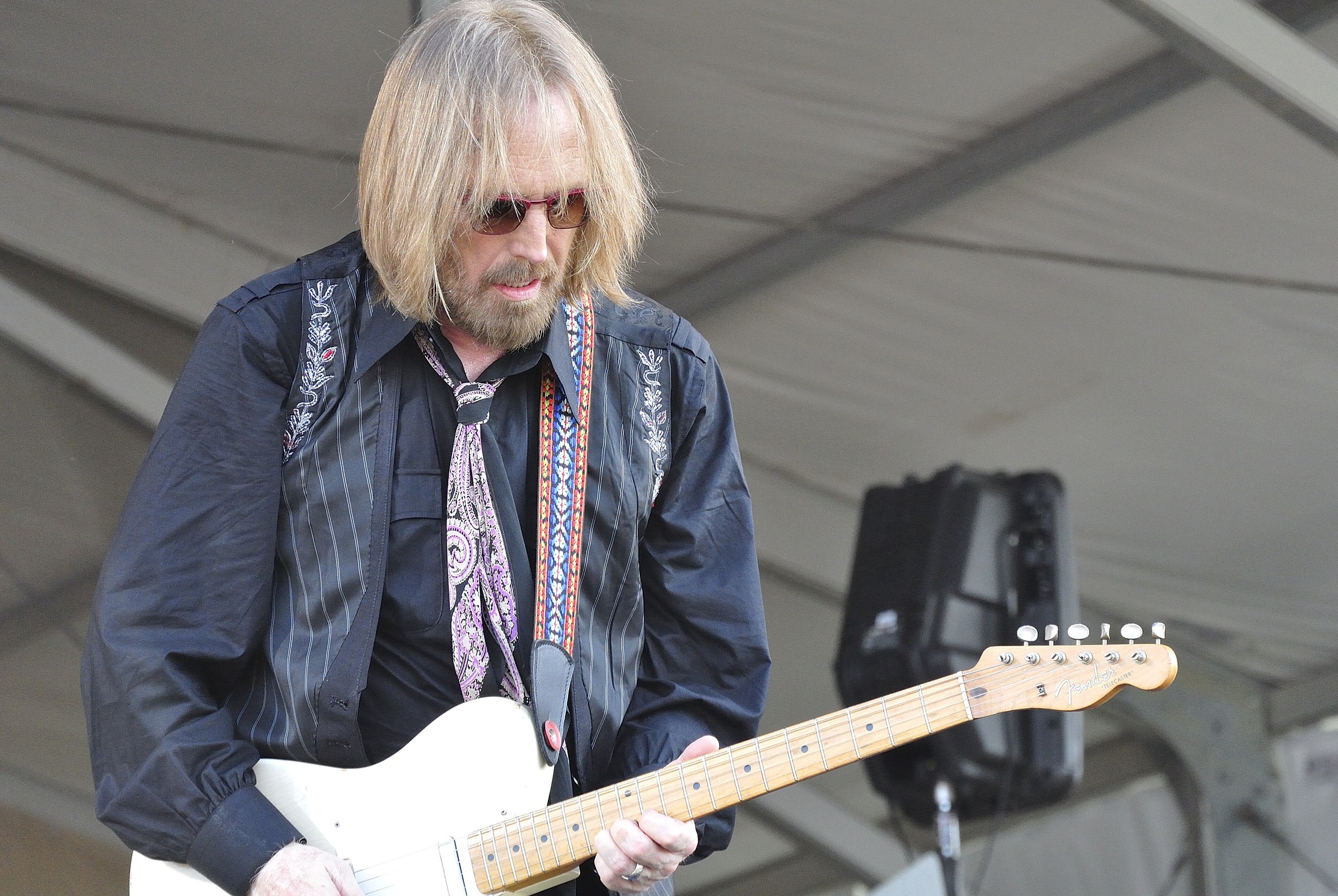
Tom Petty on stage at the New Orleans Jazz & Heritage Festival in 2012. Photo: Takahiro Kyono from Tokyo, Japan, CC BY 2.0. Source: https://commons.wikimedia.org/wiki/File:Tom_Petty_(7314688280).jpg
The best-known Rickenbacker in Tom Petty’s story is not his. The twelve-string on the cover of Damn the Torpedoes belonged to Mike Campbell, and that small fact explains most of what matters about Tom Petty guitars: the Heartbreakers were a two-guitarist band in which the instruments, and sometimes the guitar parts, moved between the singer and his lead player. Petty also built a collection of his own, from a signature 12-string to a pair of Martin acoustics, and this guide sorts out which guitar and amp belonged to whom.
Petty fronted Tom Petty and the Heartbreakers, singing lead and writing the songs, until his death in October 2017. His gear is documented in pieces: a long 2006 Vintage Guitar profile, a handful of signature instruments, a 2012 theft report and scattered interviews with Campbell. Where those pieces disagree or stop, this guide says so.
Two Guitarists, One Band
Petty did not start out as the guitar hero of his own band. In the 2007 documentary Runnin’ Down a Dream, he recalled that Campbell arrived at his audition carrying an “$80 Japanese guitar,” according to Premier Guitar’s 2017 tribute. Campbell, who stayed for roughly forty years, went on to co-write “Refugee,” “The Waiting,” “Here Comes My Girl” and “I Need to Know.” Premier Guitar describes Petty and Campbell as two of the most knowledgeable aficionados of instruments and amplifiers ever to share a rock band, and notes that tone and feel mattered to Petty as much as a good chord progression.
The split of labour is easier to see in specific songs than in general statements. Vintage Guitar’s 2006 profile, by Ward Meeker, ties individual guitars to individual records:
- Campbell used his 1950 Fender Broadcaster for the solos and rhythm parts on the first two Heartbreakers albums, including “Breakdown” and “I Need to Know.”
- The “Refugee” solo was played on Campbell’s early-1970s “Red Dog” Telecaster, which has a built-in fuzz.
- Petty plays Campbell’s 1964 Stratocaster on “American Girl.” Asked which guitars mattered most in the band’s history, Campbell named this one.
- “The Waiting” and other twelve-string songs are Petty’s semi-hollow blond Rickenbacker 12, which he bought, Vintage Guitar says, because Roger McGuinn played one.
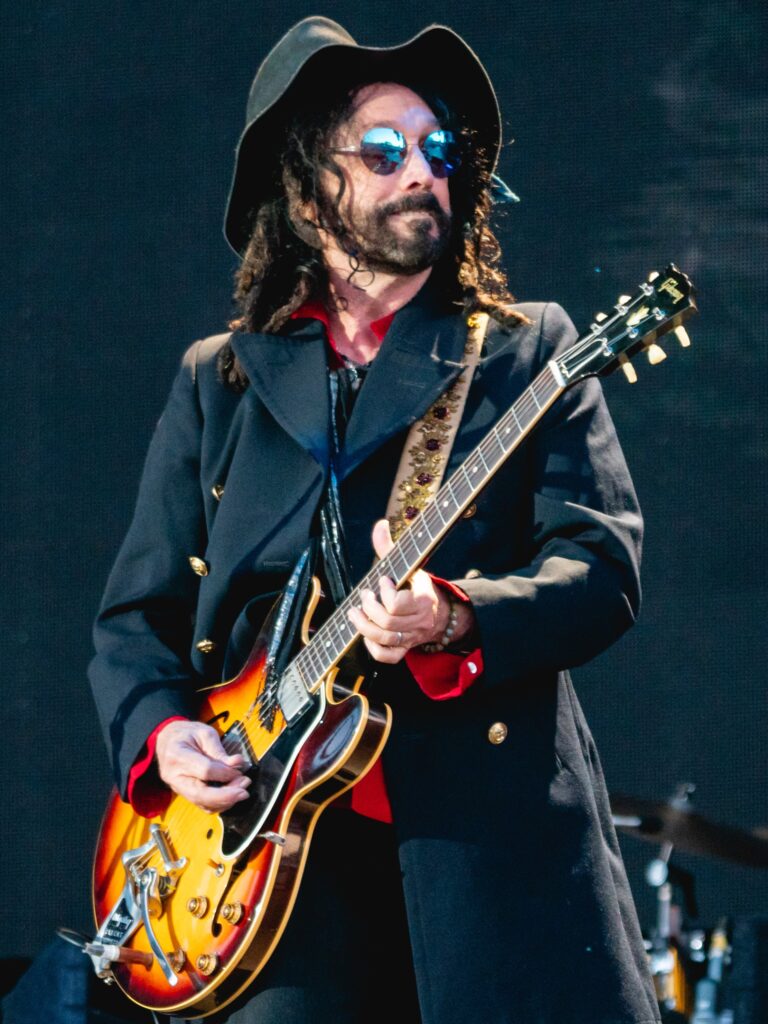
So the rhythm and chime on some of the best-loved records come from Petty’s own hands, while the lead lines and many of the guitars themselves are Campbell’s. For Campbell’s side of the story, including his Telecasters, Les Pauls and pedals, see our Mike Campbell guitars and gear guide.
Petty’s Twelve-String Lineage: From the Byrds to the Heartbreakers
Petty’s chiming sound sits in a line that runs through George Harrison and Roger McGuinn. Our Rickenbacker 360/12 guide credits Petty and Campbell with carrying that jangle into the 1980s, and our Roger McGuinn guide lists Petty among the players who took the Byrds’ twelve-string approach as a main source. McGuinn’s six-string-to-twelve-string path began with a Rickenbacker bought after A Hard Day’s Night, as covered on our Rickenbacker 360 page.
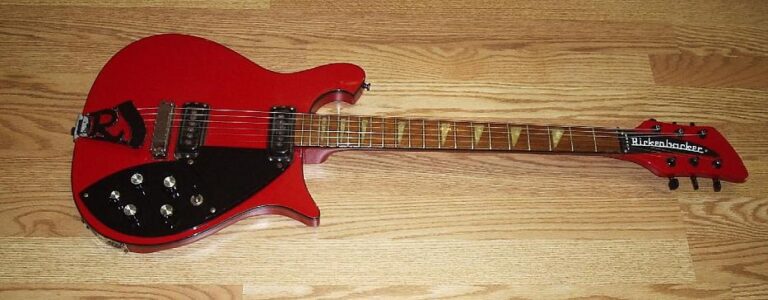
The 1979 album cover guitar connects the two eras. According to our Rickenbacker 620/12 guide, Campbell bought a solidbody twelve-string prototype from a classified ad, believing it to be a different Rickenbacker model. Petty appeared holding it on the Damn the Torpedoes cover, and the resulting demand led Rickenbacker to put the 620/12 into production in January 1980. Sources disagree on the exact designation. Premier Guitar calls it a 620/12, Vintage Guitar’s interview has Campbell calling his red guitar a 660/12, and Mixdown magazine calls it a 625. Vintage Guitar says Petty described it as the third Rickenbacker twelve-string made and the first solidbody one. The price Campbell paid is reported as anything from about $120 to a couple of hundred dollars. The full story of the cover guitar is on our Rickenbacker 620 page.
The Rig: Tom Petty’s Guitars and Amps
The entries below cover Petty’s own instruments only. The Rickenbacker on the 1979 cover, the Broadcaster and the Red Dog Tele are Campbell’s and are covered above. Vintage Guitar’s 2006 captions list many more Petty guitars than are discussed here, including a 1964 Shoreline Gold Stratocaster, a 1964 Sonic Blue Jaguar and a 1966 Electric XII, but give no dates of use.
Guitars
Rickenbacker’s gallery shows Petty with the 660/12TP limited edition. Dealer listings date the model to 1991 (Mixdown puts it in the mid-to-late 1990s) and one gives a run of 1,000 instruments, with neck-through construction, “checked” binding, a gold pickguard and a trapeze tailpiece. Vintage Guitar says Petty widened the neck, and its 2006 caption calls the signature Rickenbacker his primary stage guitar. Premier Guitar reports that he played “his beloved Rickenbacker” at his last show, at the Hollywood Bowl on September 25, 2017.
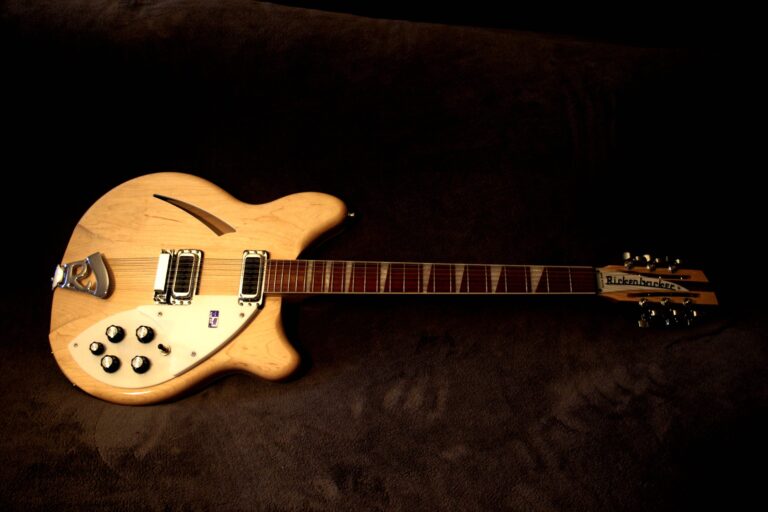
Vintage Guitar describes it as the guitar Petty used on “The Waiting” and other twelve-string songs, bought because McGuinn played one. The article does not date it, and it should not be confused with the 660/12TP.
Ultimate Classic Rock reported on April 14, 2012 that a 1967 Rickenbacker 360 twelve-string and a 1965 Gibson SG-style TV Junior belonging to Petty were stolen from a soundstage in Culver City where the band was rehearsing for a tour. The report also lists Campbell’s signature Duesenberg and Ron Blair’s Broadcaster among the stolen instruments. The article gives a $7,500 reward and says police were investigating. We found no source reporting their recovery.
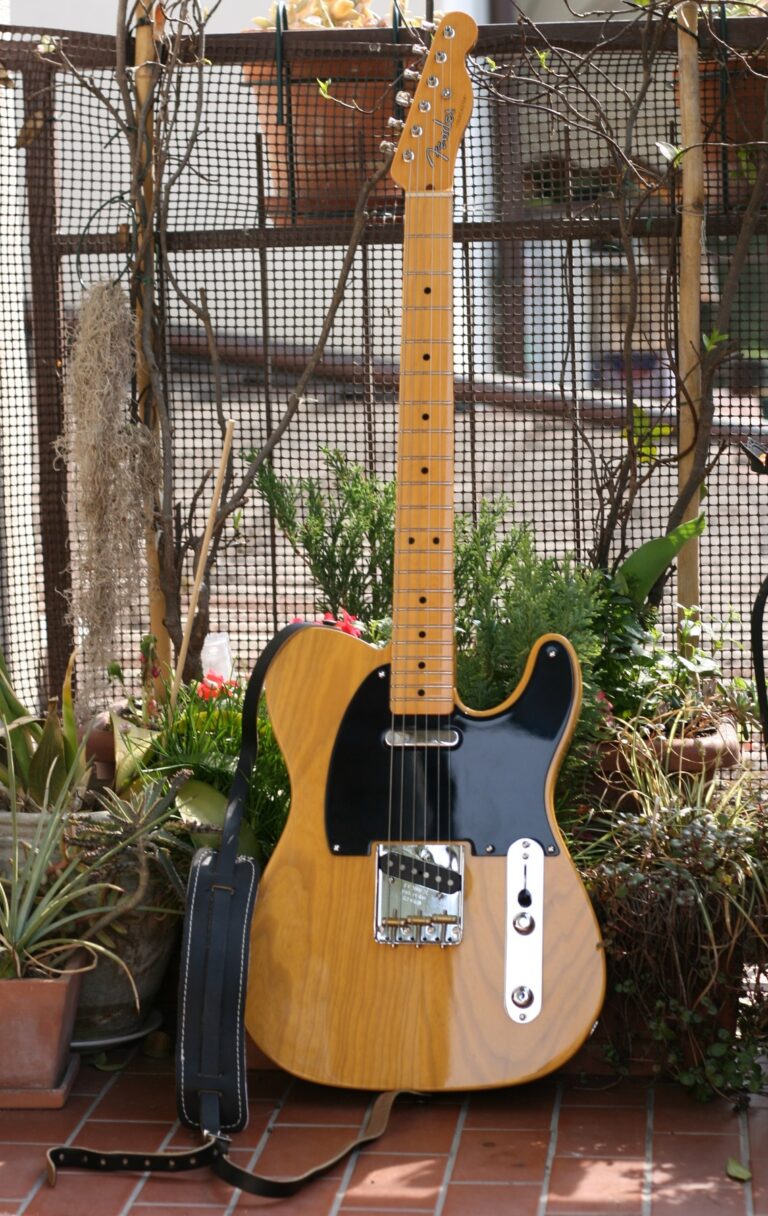
Premier Guitar lists Petty’s Telecasters among his dozens of vintage guitars and names one as a Torucaster built by Toru Nittono. Because we could not open a source with its history, no date is given here. Our Fender Telecaster guide covers the model itself.
Sonic State covered the launch of the Martin HD-40 and HD12-40 Tom Petty Signature Editions in April 2004. Both are dreadnoughts with ebony fingerboards carrying moon-phase and star inlays and Petty’s signature, and with factory Fishman electronics. Each came with an interior label signed by Petty and C.F. Martin IV. Petty told Vintage Guitar the Martin signature acoustics were the only acoustics used on Highway Companion (2006), though Campbell, in the same article, also lists Gibson J-45s and a Martin 12-string among his acoustics.
Gibson built a one-off SJ-200 for Petty around the time of his solo album Wildflowers. Guitar Player’s July 2021 report dates it to the early 1990s, while Vintage Guitar says only that it came in the 1990s. Gibson’s 2021 limited edition is based on that guitar, with a Sitka spruce top, quilted maple back and sides, an LR Baggs pickup and a lyric decal on the headstock. Vintage Guitar’s article says 100 were to be made.
Vintage Guitar’s profile describes a white three-pickup Vox teardrop used on the road and another used on Highway Companion, and a Höfner Club bass Petty used on nearly everything for about ten years. Mixdown magazine also places a Gretsch Country Gentleman with Petty in the Traveling Wilburys.
Amps
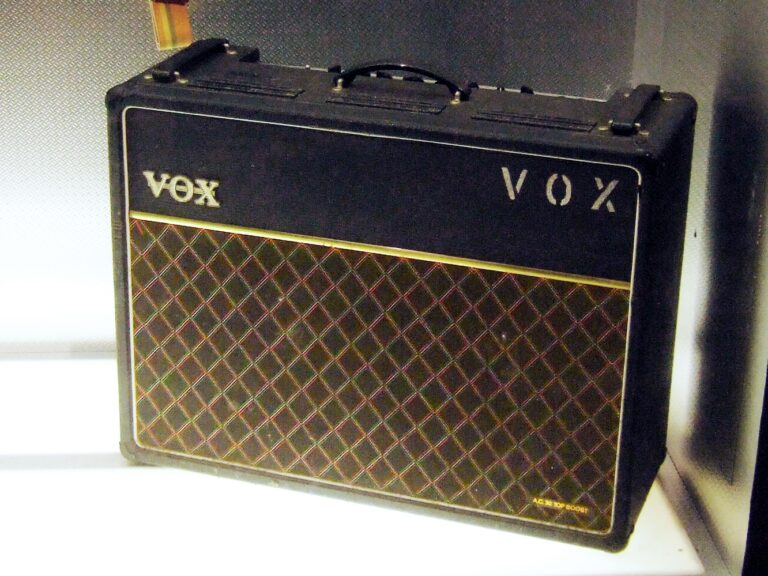
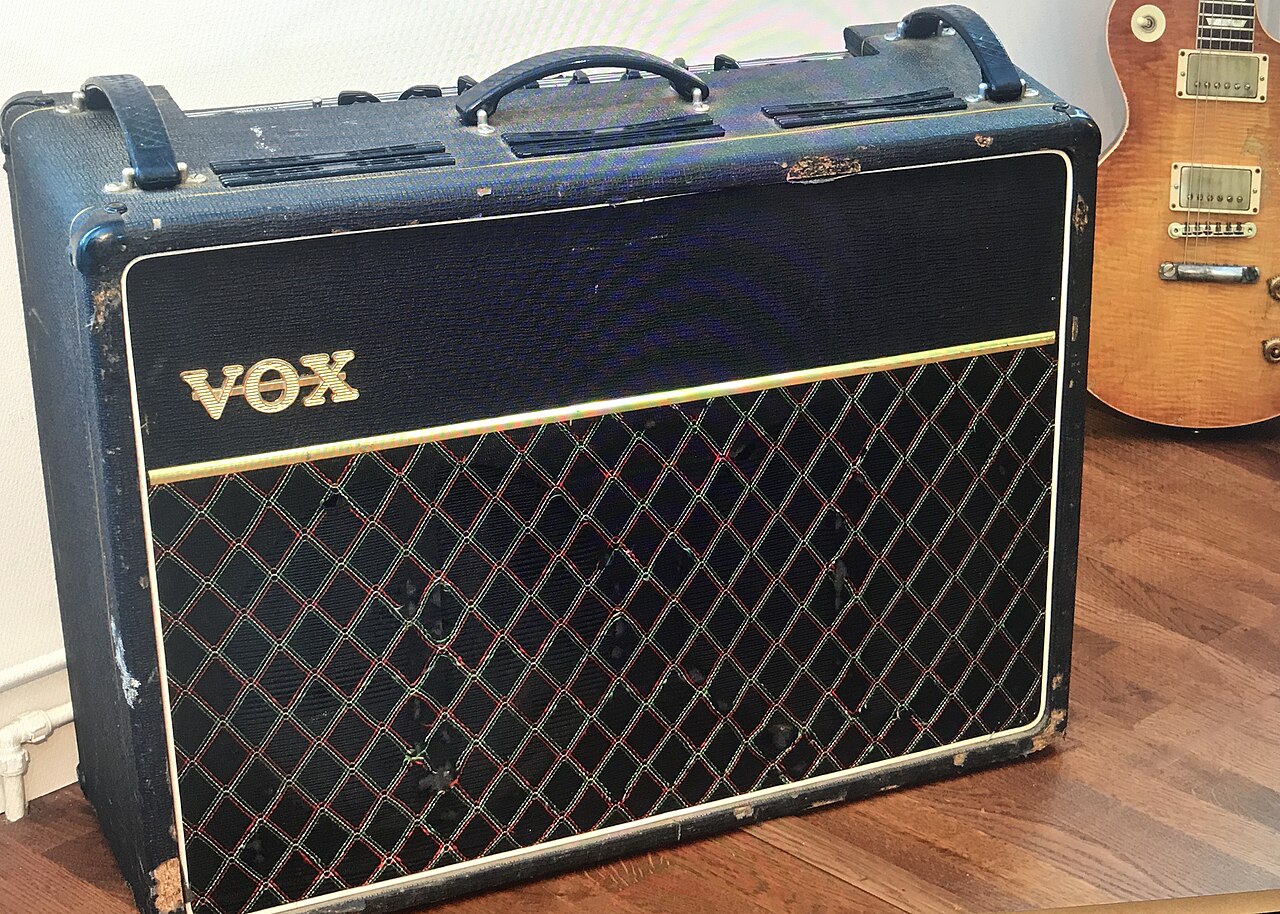
Vintage Guitar’s caption calls it Petty’s primary recording and touring amp, and in the interview he says he plays it quite a bit. Campbell has his own, a ’61 AC30. Our Vox AC30 Top Boost guide covers the amp’s circuit.
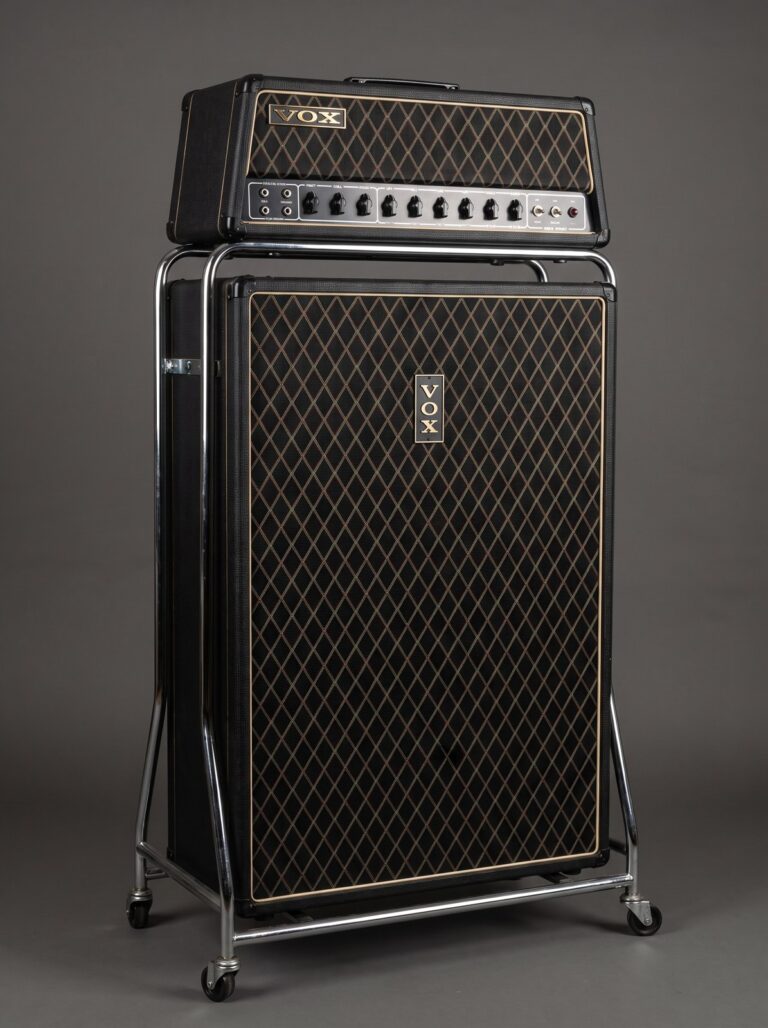
Vintage Guitar says these big amps were bought early in the band’s life and returned to on tour. In a Guitar World interview Campbell says the band started out with 100-watt Vox Super Beatles. Mixdown says Petty often played a wall of vintage-styled Vox amps.
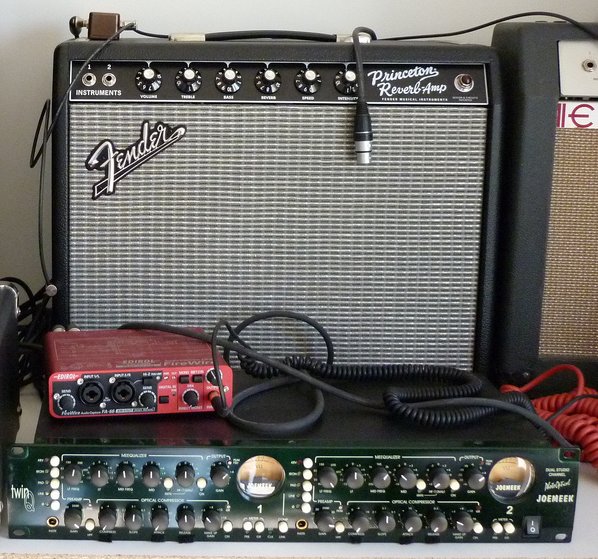
In Vintage Guitar, Petty says he prefers blackface Deluxes and Princetons in the studio. He also mentions a red 1960s Marshall of 50 watts.
Studio Versus Live
The rig changes with the room. On stage Petty is documented with a Rickenbacker 12-string and a wall of Vox. In the studio he reached for small blackface Fenders, and his later records were shaped as much by producer Jeff Lynne as by anyone’s amp.
Full Moon Fever (1989) is the clearest example. Campbell told Premier Guitar in 2020 that Lynne’s way of working was not the Heartbreakers’ way:
“His system is not about recording a live band—that’s the one thing I don’t totally endorse. But it was really the only way to get the songs to work the way we wanted for Full Moon Fever.”
— Mike Campbell, Premier Guitar, November 2020
In the same interview Campbell says a Duesenberg amp was used for some overdubs because it was a little louder, and his old Ampeg Rocket was used “a lot” on the album. He credits Lynne with arriving after session breaks with whole parts worked out. Campbell’s own method in the Heartbreakers, he says, was to cue up the track and play with no preconceived ideas.
Highway Companion (2006) is the best-documented later session. Vintage Guitar reports it was mostly acoustic-based, with Petty on acoustics, a Telecaster and a Vox teardrop, and Campbell on several Strats and Gibsons from Lynne’s collection. Many of Campbell’s solos came from a blackface Fender Champ with two microphones in the room at Lynne’s studio.
The cleanest crossover between the two worlds is “Handle With Care,” recorded by the Traveling Wilburys. According to Vintage Guitar, Campbell played through his small Marshall and George Harrison played the solo through Campbell’s amp.
On effects, none of the sources opened for this guide documents a Petty pedalboard. Premier Guitar’s 2013 rig rundown of Campbell lists his pedals, including a Dunlop Camel Toe and a Line 6 DL-4, but names no Petty effects at all. Anything claimed beyond that is guesswork.
Gear Confidence Table
Era: c. 1991 — Detail: Signature model, wider neck, run of 1,000 per a dealer listing; year varies by source
Era: 1979 — Detail: Owned by Mike Campbell, not Petty; model designation varies by source
Era: 2004 — Detail: Launched April 2004, 12-string companion to the HD-40
Era: 2012 — Detail: Reported stolen from a Culver City rehearsal; recovery not found
Era: 1970s — Detail: Petty’s primary recording and touring amp per a 2006 caption
Era: 1990s — Detail: One-off built for Petty; exact year differs by source
Era: Unknown — Detail: Named in one source; date not confirmed
Key Albums With a Documented Guitar Angle
- Tom Petty and the Heartbreakers (1976): The debut. Campbell’s Broadcaster is documented on the first two albums.
- Damn the Torpedoes (1979): The cover Rickenbacker is Campbell’s twelve-string, which led to the 620/12 going into production in January 1980.
- Full Moon Fever (1989): Petty’s solo album, produced by Jeff Lynne with Campbell, built part by part, with the Ampeg Rocket and a Duesenberg amp on overdubs.
- Highway Companion (2006): Martin signature acoustics, a Telecaster and a Vox teardrop for Petty.
Where Tom Petty’s Sound Lives Today
The Heartbreakers’ guitar story is still visible in Duesenberg’s catalogue: our Duesenberg Starplayer TV page notes that Campbell played one at the Super Bowl XLII halftime show in February 2008, and that the company later made a 30th Anniversary Heartbreaker model in his honour. Our Fender Stratocaster guide covers the model behind “American Girl,” on which Petty plays Campbell’s 1964 example.
Frequently Asked Questions
What guitar did Tom Petty play?
Mostly Rickenbacker twelve-strings, plus Telecasters, Stratocasters and acoustics from Martin and Gibson. His signature Rickenbacker, the 660/12TP, is dated to 1991 by dealer listings, and Vintage Guitar’s 2006 profile called it his primary stage guitar.
Was the Rickenbacker on the Damn the Torpedoes cover Tom Petty’s guitar?
No. It belonged to Mike Campbell. Petty later played his own Rickenbackers, including the semi-hollow blond twelve-string used on “The Waiting.”
What amp did Tom Petty use?
A late-1970s Vox AC30 is listed in Vintage Guitar as his primary recording and touring amp. He also used Vox Super Beatles on the road, and says he preferred early-1960s Fender Deluxes and Princetons in the studio.
Did Tom Petty play lead guitar in the Heartbreakers?
Campbell handled most lead work, including the “Refugee” solo and the solos on the first two albums, while Petty played rhythm and twelve-string parts such as the chime in “The Waiting.” The sources do not give a track-by-track breakdown.
Did Tom Petty have a signature guitar?
Three instruments carry his name or design: the Rickenbacker 660/12TP (c. 1991), the Martin HD-40 and HD12-40 Tom Petty Signature Editions from 2004, and the Gibson SJ-200 Wildflower, a 2021 limited edition based on a guitar built for him in the 1990s.
Image credits
- Vox AC30: Johnsamps, Wikimedia Commons, CC BY-SA 4.0.
- Top image: Takahiro Kyono from Tokyo, Japan, Wikimedia Commons, CC BY 2.0.
- Fender Telecaster: Massimo Barbieri, Wikimedia Commons, CC BY-SA 3.0.
- Vox AC30 Top Boost: wetwebwork; existing crop and contrast/color adjustments: Clusternote, Wikimedia Commons, CC BY-SA 2.0.
- Fender Princeton Reverb: sploshette, Flickr, CC BY 2.0.
- Rickenbacker 360/12: Hal Hawkins, Wikimedia Commons, CC BY 2.0.
- Vox Super Beatle: GuitarGangsters AI-generated reference illustration, not a photograph.