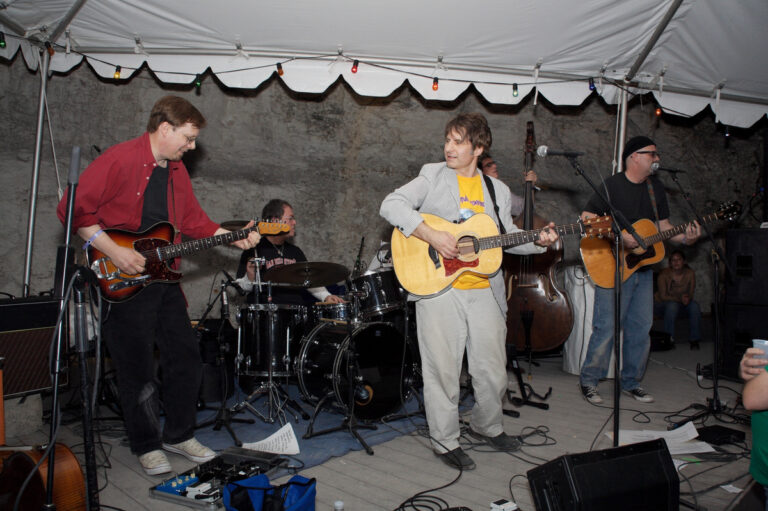
Roger McGuinn Guitars & Gear: The Byrds’ Twelve-String Pioneer’s Complete Rig
Roger McGuinn guitars gear — Rickenbacker 360/12 and Vox AC30 deep-dive for the Byrds folk rock pioneer's iconic chiming twelve-string tone and complete rig.
Explore Roger McGuinn guitars gear and you encounter the equipment that created the sonic foundation of folk rock — a Chicago-born guitarist whose Rickenbacker twelve-string approach, developed with the Byrds in 1964 and 1965, produced one of the most immediately recognisable and most widely influential guitar sounds in rock history. McGuinn’s specific combination of the Rickenbacker 360/12’s chiming character and a compression-filtered picking technique drew directly on the sound of George Harrison’s Rickenbacker twelve-string work with the Beatles while transforming it into something new: the layered, ringing, deeply American sound of the Byrds that defined folk rock and whose influence has extended unbroken through five decades of indie, alternative, and Americana guitar music.
This guide covers McGuinn’s complete equipment picture across his career: the Rickenbacker twelve-strings that defined his tonal identity, the amplification he used with the Byrds and beyond, his approach to effects and signal processing, and the playing philosophy of a musician who understood instinctively how a specific instrument played in a specific way could create a new kind of music. Understanding Roger McGuinn’s gear is understanding the moment when folk music became rock and roll, and how a twelve-string electric guitar made it possible.
Background
James Joseph McGuinn III was born on July 13, 1942, in Chicago, Illinois. His early musical formation was rooted in the folk revival of the late 1950s and early 1960s — he absorbed the acoustic guitar tradition of Pete Seeger, the Kingston Trio, and the broader folk movement before the electric guitar and rock and roll redirected his musical ambitions. He worked as a backing musician for Bobby Darin and Judy Collins before the formation of the Byrds in Los Angeles in 1964.
The key artistic decision that shaped everything that followed came when McGuinn heard the Beatles’ recordings — specifically the electric twelve-string Rickenbacker that George Harrison played on A Hard Day’s Night — and recognised in that sound a fusion of the folk tradition’s harmonic richness and the electric rock energy that he was seeking. He acquired a Rickenbacker 360/12 and developed the specific picking and filtering technique that translated the Beatles’ influence into something distinctively American and distinctively his own.
The Byrds’ breakthrough came with their cover of Bob Dylan’s “Mr. Tambourine Man” in 1965 — a single that reached number one in both the UK and the US and that established the folk rock genre as a commercially viable and artistically significant form. McGuinn’s twelve-string tone on the record was central to its immediate impact: the combination of the Rickenbacker’s chiming quality, his specific picking approach, and the production that captured the guitar’s full tonal character gave the record a sonic identity that was instantly recognisable and immediately compelling.
The subsequent Byrds albums — Turn! Turn! Turn! (1965), Fifth Dimension (1966), Younger Than Yesterday (1967), The Notorious Byrd Brothers (1968), Sweetheart of the Rodeo (1968) — showed the band’s musical evolution while maintaining the twelve-string guitar identity that McGuinn’s playing had established. The Sweetheart of the Rodeo album in particular — the first significant country rock record — showed how his guitar approach could serve a fundamentally different musical context while maintaining its characteristic tonal identity.
He changed his first name to Roger in 1967 upon joining the Subud spiritual organisation. His subsequent solo career, and various Byrds reformation projects, have maintained both the specific musical values and the specific guitar sound that the original Byrds work established. He remains one of the most recognisable guitarists in American music — not because of technical virtuosity but because his sound is so completely and immediately identifiable.
Roger McGuinn Guitars Gear: The Complete Rig
Guitars
Roger McGuinn’s guitar identity is as completely defined by a single instrument as any guitarist in rock history — the Rickenbacker 360/12 twelve-string electric that he has played as his primary instrument since 1964 and that has become so synonymous with his sound that the instrument’s name and his name are practically inseparable in the folk rock and Americana guitar traditions.
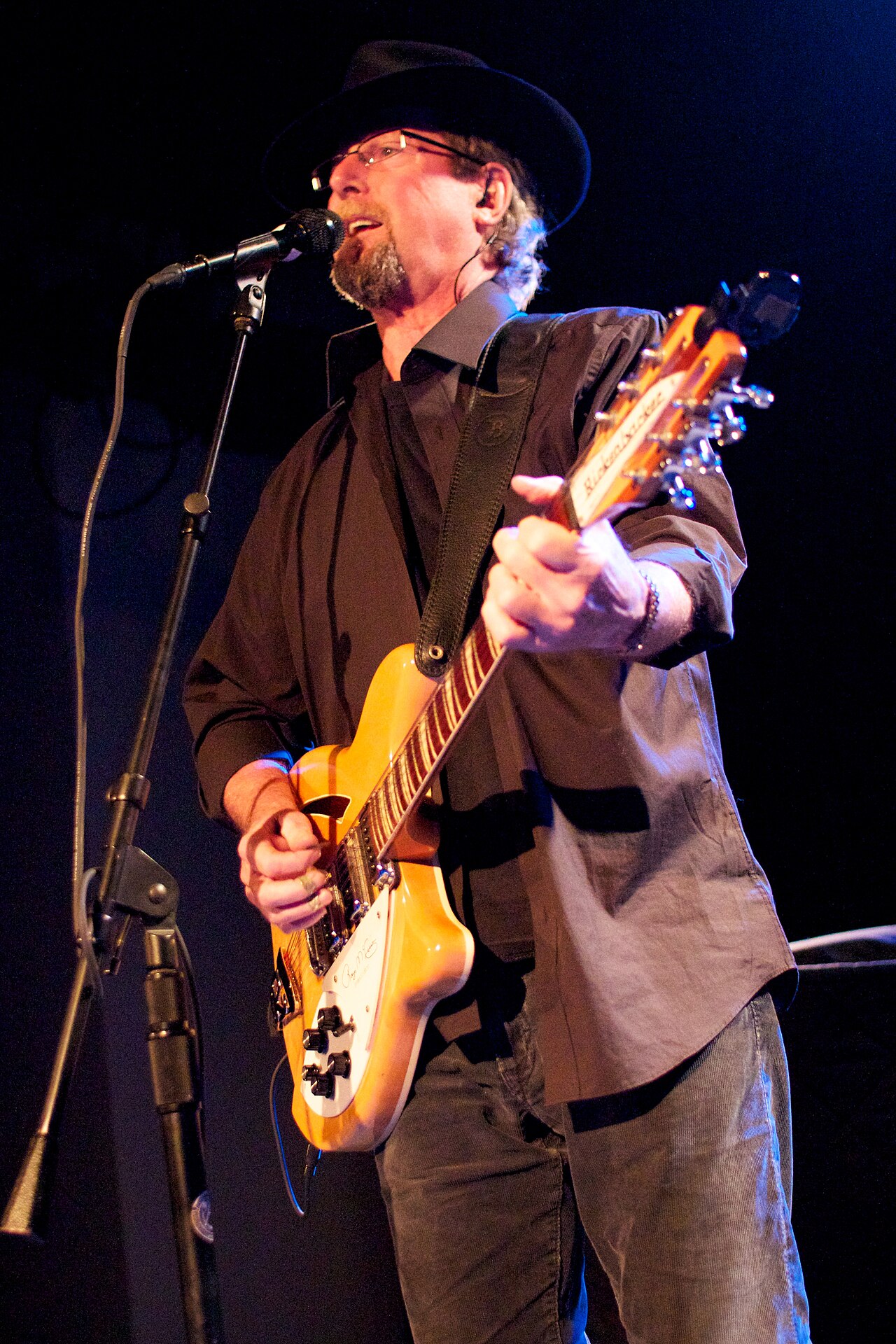
His primary guitar is the Rickenbacker 360/12 — the semi-hollow thinline twelve-string that Rickenbacker introduced in the early 1960s and that became, through McGuinn’s playing with the Byrds, the defining instrument of folk rock. The 360/12’s specific construction and pickup configuration give it a tonal character that no other twelve-string electric replicates exactly: the semi-hollow body adds acoustic resonance; the “toaster” single-coil pickups (approximately 6k to 8k ohms DC resistance, Alnico magnets) produce a compressed, upper-midrange-emphasised tone; and the specific twelve-string arrangement — with the octave strings leading the main strings in each course, reversed from the conventional arrangement — gives the instrument a brighter, more immediate attack than other twelve-string configurations produce.
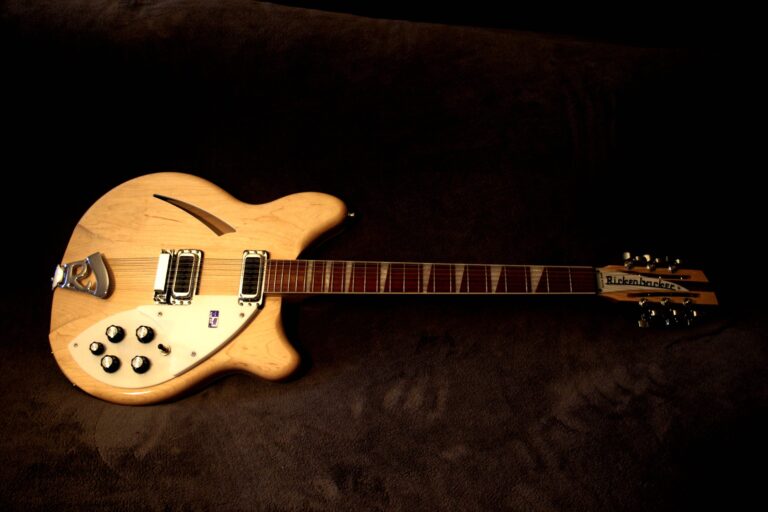
The Rickenbacker twelve-string’s standard tuning and the specific way its courses are arranged produces a very particular harmonic character: when a chord is strummed, the octave strings attack first, producing a brief moment of higher-pitched clarity before the main strings join, creating a subtle arpeggiation effect even in what is technically a simultaneous strum. This effect — barely perceptible in isolation but cumulative over a full musical phrase — is part of what gives the Rickenbacker twelve-string its specific shimmering, time-spread quality that single-strum strumming on a conventional six-string doesn’t produce.
McGuinn’s specific technique for using the Rickenbacker — which he has described and demonstrated in various interviews and teaching contexts — involves a picking approach that exploits the instrument’s compression and chiming qualities rather than working against them. He picks with a flatpick, using a specific attack angle and stroke that emphasises the upper strings relative to the bass strings, giving the instrument its characteristic brightness. The flatpick’s hard material gives each note a defined attack followed by the Rickenbacker’s natural sustain, producing the specific combination of clarity and bloom that characterises his playing.
He has maintained this same basic instrument and approach throughout his career — resisting the temptation to update or modernise the fundamental equipment choice that defined his sound. Various specific Rickenbacker 360/12 instruments have served as his primary guitars across different decades — he has been through several examples over the years — but the basic instrument type has never changed. This remarkable consistency of equipment choice reflects both the correctness of the original decision and McGuinn’s understanding that the specific tonal identity the instrument gave him was his most valuable musical asset.
He has also used a six-string Rickenbacker (the 360 six-string) and various acoustic twelve-string guitars for specific performance and recording contexts. A Guild twelve-string acoustic appeared in the early folk period and in specific acoustic contexts throughout his career. For the country material on Sweetheart of the Rodeo and subsequent country-influenced work, various acoustic and electric six-string guitars appeared — including Fender and Gibson instruments that suited the different tonal requirements of the country music context.
String gauges on the Rickenbacker twelve-string run medium-light — the paired string courses require careful gauge selection to balance playability with tone across both the main and octave strings. Standard twelve-string sets in the .009–.046 or .010–.046 range for the main strings, with lighter gauges for the octave strings, provide the appropriate balance.
Amps
Roger McGuinn’s amplification has been specifically oriented toward the clean, crystalline character that the Rickenbacker twelve-string’s tonal identity requires. The specific compression and chiming quality of the instrument is destroyed by heavy amplifier distortion; it requires clean or very lightly driven amplification to preserve its characteristic acoustic-electric dimension.
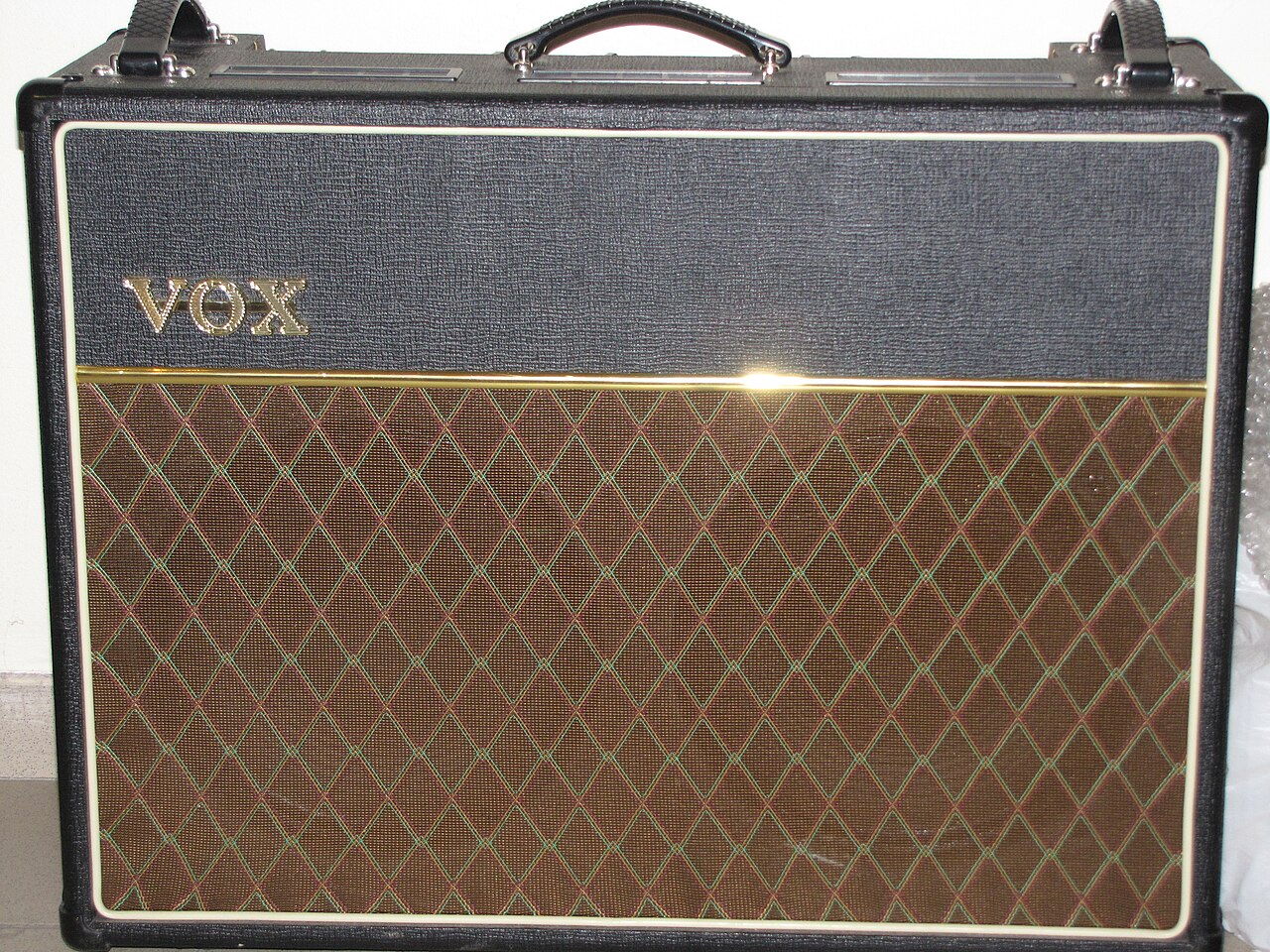
His primary amplifier through the Byrds period was a Vox AC30 Top Boost — the EL84-driven 30-watt combo whose natural compression and chimey character complemented the Rickenbacker’s own tonal tendencies perfectly. The AC30 Top Boost channel’s ability to add treble and upper-midrange presence suited the Rickenbacker’s already bright character by extending it into a slightly different frequency range without the harsh brightness that some amplifier EQ circuits would produce. The EL84 output valves’ natural compression gave sustained chords their bloom — the way they sustain and develop over time rather than attacking and immediately decaying — that is one of the defining characteristics of the Byrds’ sound.
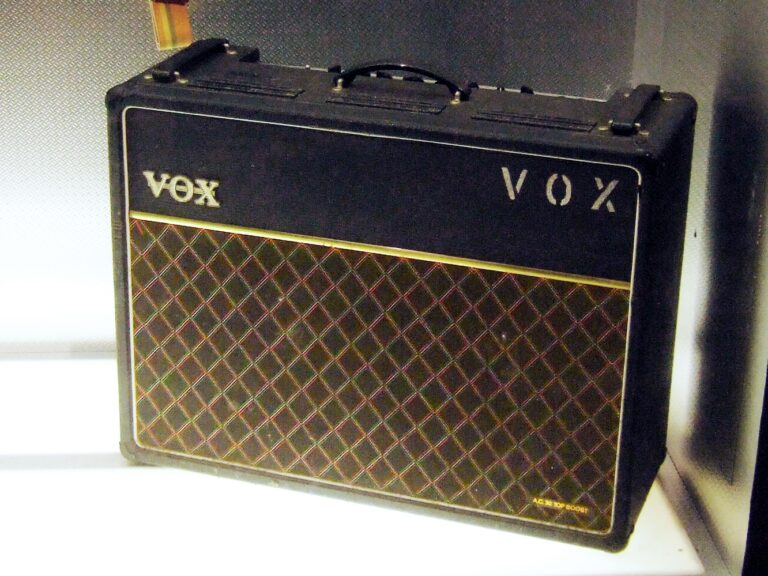
The specific Celestion alnico Blue speakers in the AC30 contributed their own character to the overall tone: the alnico magnet’s warmer, smoother frequency response compared to ceramic-magnet speakers, combined with the 15-watt rating that kept them operating within their linear range at the AC30’s working volume, produced a top-end sweetness that prevented the Rickenbacker-and-AC30 combination from becoming shrill despite the inherent brightness of both components. This warm, sweet top end was essential to the specific character of McGuinn’s jangle: bright without harshness, chiming without being piercing.
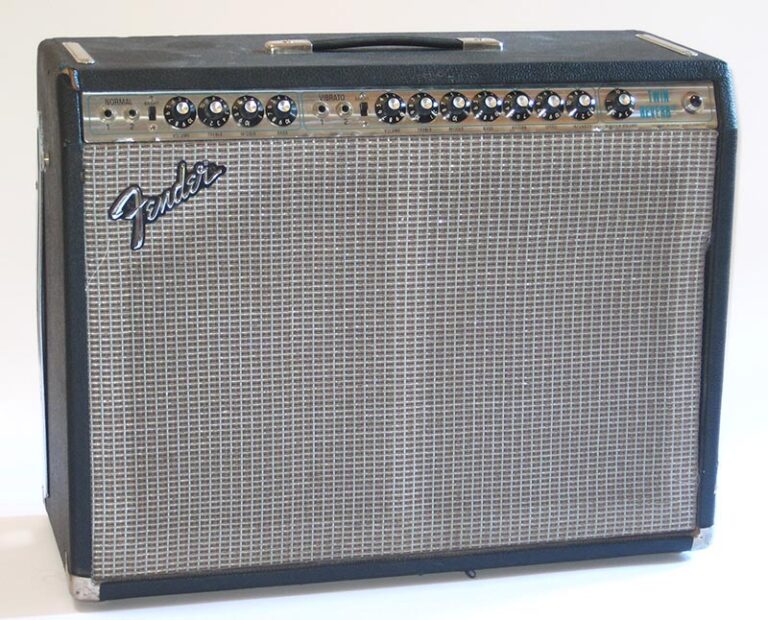
He also used Fender amplifiers at various points — the Twin Reverb’s clean 6L6 character and the Deluxe Reverb’s slightly driven 6V6 warmth both appearing in different performance and recording contexts. For live performances where the AC30’s 30 watts was insufficient for the venue, the Twin Reverb’s 85 watts provided adequate volume while maintaining the clean, American character that suited the folk rock material.
Effects
McGuinn’s effects use was minimal — consistent with the folk rock tradition’s preference for the natural acoustic character of the instrument. The Rickenbacker twelve-string and the AC30 provided the primary tonal identity; effects were selective additions rather than structural components.
The most distinctive technical element of McGuinn’s signal chain — and the one that distinguishes his Byrds recordings from what a Rickenbacker twelve-string through an AC30 alone would produce — was his use of a Vox Treble Booster and the specific filtering effect of recording and playback through an early-1960s film soundtrack compression system. The story is well-documented: when the Byrds were recording “Mr. Tambourine Man,” producer Terry Melcher used a specific signal processing approach that included compression and limiting that shaped the guitar’s frequency response. The combination of the Rickenbacker’s natural character, the AC30’s compression, and this additional signal processing produced the specific quality of the “Mr. Tambourine Man” guitar tone — more compressed, more filtered, and more atmospheric than a direct Rickenbacker-through-AC30 recording would produce.
In subsequent live and recording contexts, McGuinn approximated this specific compressed, filtered quality through the use of a compressor pedal — an MXR Dynacomp or similar unit that reproduced some of the compression characteristic of the original recording processing. The compressor’s specific function in his chain was to reduce the dynamic range of the Rickenbacker’s output, evening out the variations in level between individually picked notes and strummed chords and giving the overall signal a consistent, sustained quality.
He has also used a delay pedal — Boss DD series in later years — for specific atmospheric passages where echo added appropriate spatial dimension. His delay use was selective and subtle.
Playing Style & Tone Philosophy
Roger McGuinn’s playing style is defined by a quality that is deceptively simple in description but genuinely difficult to achieve: the ability to create an immediately recognisable and deeply satisfying musical sound from a minimal technical approach. His picking technique, his chord voicings, and his melodic vocabulary are all relatively simple by the standards of technically accomplished guitarists, but the combination of the right technique with the right instrument and the right amplification creates a sound that is both immediately distinctive and musically deeply satisfying.
His flatpick approach to the Rickenbacker twelve-string — picking individual string courses in specific patterns rather than strumming all strings simultaneously — exploits the instrument’s harmonic complexity in a way that simple strumming doesn’t. The specific arpeggiated patterns he uses allow individual notes of each chord to be heard clearly rather than blurring together in the wash of a full strum, giving the harmonic content its full dimension and allowing the twelve-string’s specific shimmer to develop as each note sustains while subsequent notes are added.
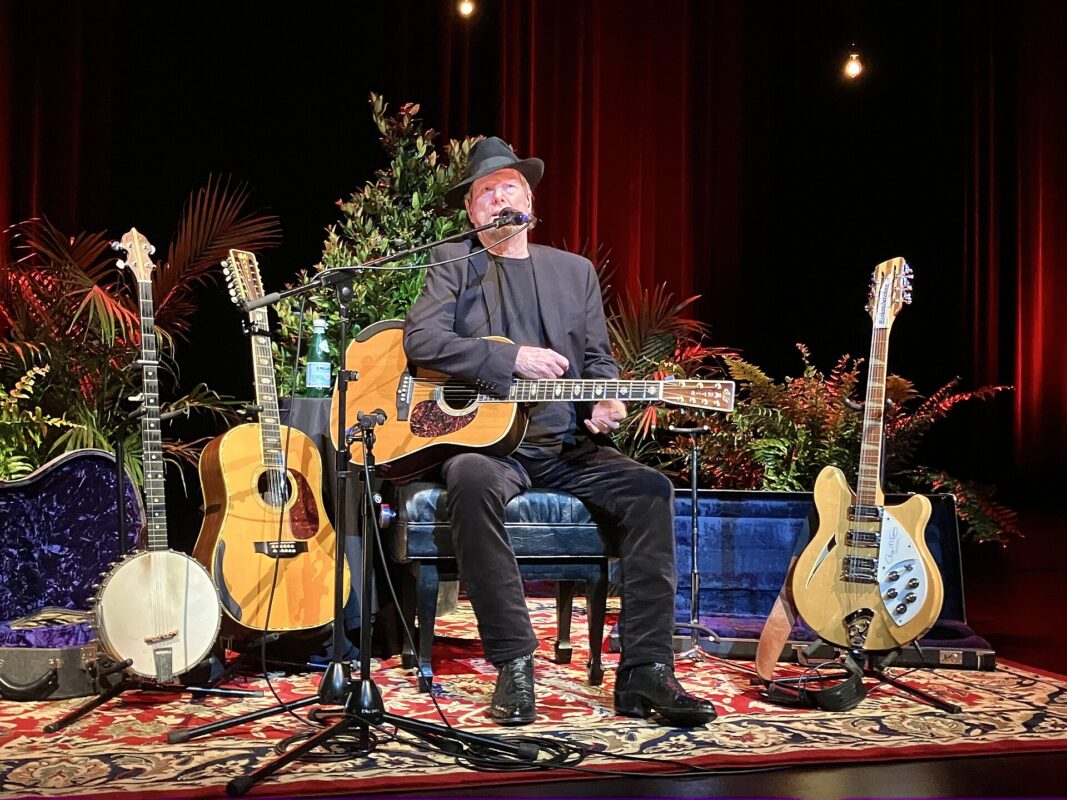
His melodic vocabulary reflects his folk music roots — the pentatonic and modal scales of the folk tradition, deployed with the rhythmic directness of country picking and the harmonic range of his broader musical education. He was never primarily a lead guitarist in the rock sense; his most important contributions to the Byrds’ music were the specific texture and harmonic quality his rhythm playing created, and the melodic fills and countermelodies that served the songs’ emotional content rather than displaying his individual technique.
Tonally, McGuinn’s philosophy is the Rickenbacker twelve-string player’s philosophy: the instrument’s natural character is the primary tonal identity, and every other equipment choice exists to serve and enhance that character rather than to replace it. The AC30’s compression supports the Rickenbacker’s natural sustain; the compressor pedal makes the dynamics more consistent; the flatpick technique brings out the instrument’s upper harmonics. All these choices are in service of a single tonal goal: the specific chiming, ringing, harmonically complex sound that the Rickenbacker twelve-string at its best produces.
How to Sound Like Roger McGuinn
Guitar Approach
A Rickenbacker 360/12 twelve-string is non-negotiable — no other instrument produces the specific combination of compressed upper-midrange character, octave-string shimmer, and semi-hollow acoustic resonance that defines McGuinn’s tone. Tune the instrument carefully (twelve-string tuning maintenance is more demanding than six-string) and use a medium-weight flatpick for the specific attack character his technique requires. Develop the arpeggiated picking patterns that exploit the twelve-string’s harmonic complexity rather than relying on full strums — the patterns found on “Mr. Tambourine Man,” “Turn! Turn! Turn!,” and “Eight Miles High” are the primary technical models.
Amp Approach
A Vox AC30 Top Boost with Celestion Blue alnico speakers is the essential amplifier. Run the Top Boost channel at a volume where the EL84s are contributing their natural compression — typically volume 5 or 6 — and adjust the treble and bass to suit the specific acoustic environment. A compressor pedal before the amplifier (MXR Dynacomp or equivalent) adds the sustained, compressed quality of the original recordings. Keep everything else minimal — the Rickenbacker and AC30 combination does the tonal work without needing additional processing.
| Control | Setting | Notes |
|---|---|---|
| Volume (Top Boost) | 5–6 | EL84 natural compression zone — essential for the jangle character |
| Treble | 7 | High — Rickenbacker needs treble presence, AC30 adds warmth |
| Bass | 3 | Low bass — the twelve-string’s shimmer requires clarity, not warmth |
| Tone Cut | 5–6 | Moderate — prevent excessive shrillness without losing presence |
| Compressor (before amp) | Medium ratio, slow attack | Even out dynamics and sustain — the core of the “Mr. Tambourine Man” tone |
| Reverb (if any) | Minimal | Natural room acoustic preferred over reverb processing |
Influence & Legacy
Roger McGuinn’s legacy is one of the most extensive and most continuously active in American music — the specific guitar sound he created with the Byrds has been adopted, adapted, and reinvented by successive generations of guitarists across six decades without ever losing its essential identity or its power to connect with listeners. The Rickenbacker twelve-string jangle is as recognisable today as it was in 1965, and the musicians who have deployed it — Tom Petty, R.E.M., the Bangles, the La’s, Teenage Fanclub, Wilco, and hundreds of others — all acknowledge the Byrds and McGuinn as the primary source.
The specific contribution he made to American music history goes beyond the guitar sound itself to the musical synthesis it represented. By taking Bob Dylan’s folk material and combining it with the Beatles’ electric rock energy through the specific medium of the Rickenbacker twelve-string, he helped create folk rock as a genre — and in doing so, created the template for American guitar-based popular music that has remained productive and relevant through all the stylistic evolutions of the subsequent fifty years.
His influence on country rock — particularly the Sweetheart of the Rodeo album and its direct impact on the Eagles, Emmylou Harris, and the entire country-rock tradition — is as significant as his folk rock contribution. The willingness to take the Rickenbacker twelve-string into a country music context and find that it worked showed both the instrument’s versatility and his understanding that musical genres were less fixed categories than fluid traditions that could be combined productively.
For players exploring the jangle rock tradition that McGuinn founded, the rigs of Peter Holsapple — whose dBs work represents the most musically sophisticated American absorption of the Byrds’ approach — and James Honeyman-Scott, whose Pretenders work showed how the twelve-string jangle aesthetic could be integrated with a harder new wave approach, provide the most direct lineage comparison. The folk music dimension of his work connects to Robin Williamson‘s work with the Incredible String Band, which shows how the same folk-music-into-rock-music synthesis was being pursued from a Celtic rather than American starting point.
Mr. Tambourine Man: The Recording That Changed Everything
“Mr. Tambourine Man” (1965) is one of the most important single recordings in the history of American popular music — the record that created folk rock as a commercially viable genre, that introduced the Byrds to the world, and that contained the specific guitar sound that would influence American music for the next six decades. Understanding what specifically happened to the guitar on that recording — the specific equipment, the specific technique, and the specific signal processing that produced that sound — is essential for anyone who wants to understand the Byrds’ place in music history and McGuinn’s specific contribution to it.
The recording was produced by Terry Melcher at Columbia Studio A in Hollywood, with a session that included professional studio musicians alongside the Byrds themselves (the other Byrds didn’t play on the original recording — only McGuinn’s guitar and vocals). Melcher’s production approach for the track was to process the guitar signal through a combination of compression and limiting that reduced the dynamic range and shaped the frequency response, giving the guitar a more sustained, filtered quality than a direct recording would have produced.
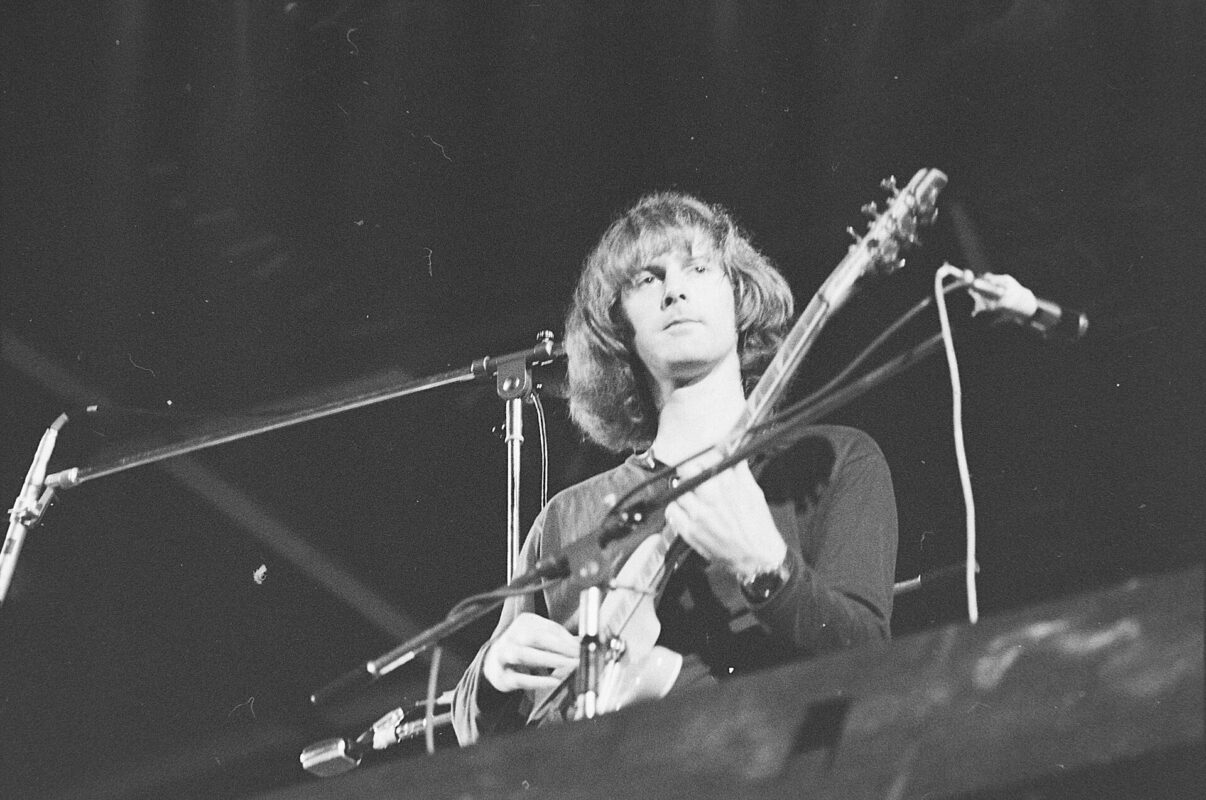
McGuinn’s Rickenbacker 360/12 through his Vox AC30, itself already providing significant compression from the EL84 output valves, went through this additional processing, and the result was a guitar sound that was simultaneously brighter and more sustained than the natural instrument-and-amplifier combination produced. The specific character of the compression — which sustained soft notes while limiting loud transients — gave the picking patterns their characteristic cascading quality: each note blooming at a consistent level before the next note was added, creating the shimmer that is the recording’s most immediately distinctive sonic feature.
This specific recording is the audio foundation from which the entire folk rock guitar tradition descends. Every player who has subsequently used a Rickenbacker twelve-string through clean compression to produce jangle pop was responding, consciously or unconsciously, to this specific recording and the specific guitar sound it documented. The equipment — Rickenbacker, AC30, compression — and the technique — flatpick, arpeggiated picking patterns — were the specific tools; the recording was the specific demonstration of what those tools in combination could achieve. Understanding that combination is understanding the origin of one of rock music’s most important and most enduring guitar sounds.
Eight Miles High: The Psychedelic Extension
“Eight Miles High” (1966) represents the furthest extension of McGuinn’s Rickenbacker twelve-string approach into territory that was genuinely new — not the folk rock of “Mr. Tambourine Man” but a synthesis of the twelve-string jangle with the modal jazz of John Coltrane’s “India” and the psychedelic sensibility that was reshaping American rock in 1965 and 1966. The guitar solo on this recording is McGuinn’s most harmonically adventurous and most technically demanding work, and it required both his existing technical approach and a significant expansion of his melodic vocabulary.
The John Coltrane influence on “Eight Miles High” was specifically identified by McGuinn in interviews — he was listening to Coltrane’s modal jazz recordings and attempting to translate some of the saxophonist’s melodic approach to the Rickenbacker twelve-string. The specific quality of Coltrane’s “sheets of sound” — rapid, continuous melodic movement through the harmony — translates to the twelve-string as a cascade of notes that exploits the instrument’s harmonic complexity in a way that slower, more carefully constructed melodic lines don’t.
The guitar solo on “Eight Miles High” is not a conventional blues-derived rock solo but a genuinely modal improvisation — the notes are drawn from modal scales rather than pentatonic vocabulary, and they move through the harmonic space with a logic derived from jazz improvisation rather than rock lead guitar. The specific achievement of applying this harmonic approach to a twelve-string electric in 1966 — years before jazz-rock fusion had developed this synthesis as a genre — reflects McGuinn’s genuine musical sophistication and his willingness to pursue musical ideas wherever they led regardless of genre conventions.
The specific equipment for “Eight Miles High” — the same Rickenbacker 360/12 and Vox AC30 as “Mr. Tambourine Man” — produced a different guitar sound appropriate to the different musical context: faster picking, more complex melodic movement, and a more aggressive attack that suited the modal jazz influence. The same instrument served both the gentler folk rock of the first album and the psychedelic modal jazz of “Eight Miles High” by responding differently to different playing approaches — one of the Rickenbacker twelve-string’s most musically valuable properties being its ability to reveal the player’s specific musical intention through its response to pick attack and technique.
Sweetheart of the Rodeo: Country Rock Founding Document
Sweetheart of the Rodeo (1968) — the Byrds album that introduced Gram Parsons to the band and that is widely credited as the first significant country rock record — presented McGuinn with a specific challenge: how to maintain the Byrds’ musical identity while serving a country music aesthetic that was fundamentally different from the folk rock and psychedelia that had preceded it.
His solution was to deploy the Rickenbacker twelve-string in a country music context while also incorporating more conventional country instruments and playing approaches. The twelve-string jangle — an instrument not typically associated with country music in 1968 — found its way into the country context by emphasising the acoustic, folk-derived qualities that the Rickenbacker twelve-string shares with the acoustic instruments of the country tradition, rather than the electric rock qualities that had defined its folk rock identity. The instrument’s ability to bridge these two contexts reflected both its genuine acoustic-electric hybrid character and McGuinn’s understanding of the musical tradition well enough to find the specific common ground between folk rock and country.
His use of more traditional country picking approaches on the album — the specific flatpicking and hybrid picking patterns of country guitar — alongside his established Rickenbacker technique gave the record a guitar character that was simultaneously recognisably his own and appropriate to the country music context. This adaptability — the ability to serve a fundamentally different musical tradition through specific technique and equipment choices while maintaining a coherent musical identity — reflects the same musical intelligence that had made the folk rock synthesis of the earlier Byrds work possible.
The specific amplification for the country material — likely using Fender amplifiers rather than or alongside the Vox AC30, for the warmer, more American character that suited the Nashville country production aesthetic — showed his willingness to adapt even his most fundamental equipment choice to serve the specific musical context. The Rickenbacker remained constant; the amplification shifted to serve the different musical requirements. This separation of the essential from the contextual — knowing which equipment choices were non-negotiable expressions of his musical identity and which were adjustable variables in service of different musical contexts — is the specific equipment wisdom that sustained his musical effectiveness across dramatically different musical genres.
The compressor pedal’s specific role in McGuinn’s live rig — approximating the signal processing character of the original “Mr. Tambourine Man” recording in a live context — is worth examining in detail, because it illustrates a broader principle about how recorded sounds become live sounds and what equipment enables that translation. The original compression applied in the Columbia studio was not a guitar effects pedal but a professional audio dynamics processor operating on the final signal — a device that compressed the overall amplitude range of the guitar track rather than modifying the signal before it reached the amplifier. The specific character of this processing — the way it sustained soft notes while limiting loud transients, the way it shaped the frequency response through the natural behaviour of the compression circuit — was not exactly replicable with a guitar-level compressor pedal. But the MXR Dynacomp and similar pedals, applied before the amplifier, produced a significant proportion of the effect: the sustained, consistent level of each picked note that gave the live playing its characteristic bloom, and the reduction in dynamic variation that gave the arpeggiated patterns their cascade quality. The imperfect translation from studio processing to live effects pedal was sufficient for the specific musical purpose — approximating the recorded sound in a live context well enough that audiences familiar with the recordings recognised the connection. This imperfect but functional translation of studio character to live equipment is one of the more practically important equipment skills in rock guitar, and McGuinn’s solution — the compressor pedal as a pragmatic approximation of studio dynamics processing — was an early and effective example of this translation being made intelligently and musically.
Roger McGuinn’s continued relevance to new generations of guitar players — the young musicians discovering the Byrds for the first time and immediately wanting to understand how that twelve-string sound was made — reflects the enduring power of the musical synthesis he helped create. The specific combination of folk music’s harmonic richness, rock music’s electric energy, and the Rickenbacker twelve-string’s unique acoustic-electric character produced a new kind of music in 1965 that has never become obsolete, because the musical values it expressed — melodic accessibility, harmonic depth, the specific kind of emotional directness that acoustic instruments amplified provide — are permanent musical values that no stylistic evolution can make irrelevant. The gear he chose to realise those values — the Rickenbacker, the AC30, the compressor, the flatpick — was exactly right for exactly those values, and continues to be exactly right for any musician who wants to pursue the same musical territory. That is the ultimate validation of an equipment choice: not that it was fashionable or prestigious, but that it was musically correct, and remained musically correct for as long as the music that required it remained worth making.
The George Harrison connection — the specific influence that Harrison’s Rickenbacker twelve-string work on A Hard Day’s Night had on McGuinn’s decision to adopt the instrument — is a remarkable moment in the history of musical influence, because the instrument that Harrison was playing was itself a relatively new design and Harrison himself was only beginning to understand its full potential. The Rickenbacker twelve-string that Rickenbacker’s founder F.C. Hall presented to Harrison in 1964 was among the first examples of the instrument produced in significant quantities, and its specific character — the reversed octave-string arrangement, the toaster pickups, the semi-hollow body — was as new to Harrison as to everyone else who heard it. Harrison’s recording of the opening chord of “A Hard Day’s Night” (played on the Rickenbacker twelve-string, though the chord itself is often attributed to various instruments) and his use of the instrument throughout the film’s soundtrack gave the instrument’s specific character its first massive public demonstration. McGuinn heard this and understood instantly that the instrument could serve American folk music’s harmonic richness in ways that a conventional six-string electric couldn’t — and his subsequent development of a specifically American approach to the Rickenbacker twelve-string produced something genuinely new from a starting point of recognising the potential in what Harrison had demonstrated. This is how musical influence works at its most productive: not imitation but recognition — seeing in another musician’s discovery a potential that the original discoverer hadn’t yet fully explored, and pursuing that potential in a different musical direction to find genuinely new musical territory.
The Byrds’ influence on country rock deserves one additional note in the context of equipment, because the specific way the Rickenbacker twelve-string translated into the country context helped establish a bridge between the acoustic and electric instruments of two musical traditions that had previously seemed separate. Country music’s acoustic twelve-string tradition — associated with players like Doc Watson and the broader bluegrass and folk-country tradition — had established the twelve-string’s folk credentials well before the Byrds brought the electric Rickenbacker into the picture. McGuinn’s use of the electric twelve-string in a country context drew on both traditions simultaneously: the acoustic folk twelve-string heritage that gave country music its harmonic dimension, and the electric rock twelve-string identity that the Byrds had established through the folk rock recordings. This dual heritage gave the country rock recordings their specific character — more electric than pure country but more acoustically grounded than straight rock — and it was the Rickenbacker twelve-string’s ability to occupy this middle ground that made it the right instrument for the synthesis. The equipment choice was not arbitrary but reflected a genuine understanding of both traditions and of what the instrument could contribute to their combination.
The acoustic dimension of McGuinn’s musical career — his Guild twelve-string acoustic and his work within the folk tradition that preceded the Byrds — is important for understanding why the Rickenbacker twelve-string worked so well for his specific musical purposes. He came to the electric twelve-string from a background of acoustic twelve-string playing, which meant that his right-hand technique was developed for an acoustic instrument whose harmonic complexity is very different from a standard electric guitar. The flatpick arpeggiated approach he used on the acoustic twelve-string — exploiting the instrument’s full harmonic range through careful pick placement and stroke direction — transferred directly to the electric Rickenbacker, where the same approach exploited the electric instrument’s amplified version of the same harmonic richness. Players who come to the twelve-string electric from an electric guitar background, and who approach it as a louder version of a six-string electric with doubled strings, don’t get the same results as players who come from an acoustic twelve-string background and understand the instrument’s harmonic complexity from the inside. McGuinn’s folk music formation — the years of acoustic twelve-string playing before the Byrds — was as important to his specific Rickenbacker approach as the instrument itself or the amplification, and it is part of the reason his playing sounds so distinctively different from other electric twelve-string players who may use the same instrument but who lack the same acoustic grounding. The gear matters; the musical formation that shapes how the gear is used matters equally.
Roger McGuinn’s legacy is written in the twelve-string guitar sounds of American music from 1965 to the present — a legacy so widely distributed and so deeply embedded in the fabric of American popular music that most listeners encounter it without recognising its specific source. The Rickenbacker 360/12, the Vox AC30, the compression, the flatpick, the arpeggiated technique — these specific tools produced a specific sound that became the sonic foundation of an entire genre, and that genre’s influence on everything that followed in American guitar music is incalculable. The equipment was right; the music was great; and the combination produced something that lasted. There is no better outcome for a guitarist’s relationship with their gear.
The Rickenbacker company’s understanding of and relationship with McGuinn’s specific use of their instrument is worth noting as an example of the productive relationship between a musician and a manufacturer that benefits both. Rickenbacker has maintained the 360/12 in production continuously since the early 1960s — in part because McGuinn’s use of the instrument created sufficient demand to sustain production through periods when the instrument might otherwise have been discontinued. The company has produced various signature and tribute models associated with McGuinn’s specific playing, and his continued advocacy for the instrument across six decades of professional activity has been a significant factor in maintaining the 360/12’s position as the primary jangle pop and folk rock guitar. This mutual benefit — the musician’s career sustained in part by the instrument’s specific qualities, the instrument’s commercial survival sustained in part by the musician’s advocacy — is one of the more productive and most genuinely symbiotic relationships between a guitarist and a guitar manufacturer in rock music history. The instrument deserved the advocacy; the advocacy deserved the instrument; and the music that resulted from both deserved the audience it found and continues to find.
Frequently Asked Questions: Roger McGuinn Guitars & Gear
What guitar does Roger McGuinn play?
Roger McGuinn’s primary instrument is the Rickenbacker 360/12 twelve-string electric — the semi-hollow thinline twelve-string with “toaster” single-coil pickups that he has played as his primary guitar since 1964. This instrument’s specific combination of compressed upper-midrange character, octave-string shimmer, and semi-hollow acoustic resonance defines his tonal identity as completely as any guitarist’s instrument defines theirs. He has also played six-string Rickenbackers, acoustic twelve-strings (including Guild models), and various other guitars for specific contexts.
What amp does Roger McGuinn use?
His primary amplifier through the Byrds period and subsequently has been the Vox AC30 Top Boost — the 30-watt EL84-driven combo with Celestion alnico Blue speakers. The AC30’s natural compression and chimey character complement the Rickenbacker twelve-string’s own tonal tendencies, with the EL84 output valves’ specific compression giving sustained chords their characteristic bloom. He has also used Fender amplifiers for specific contexts where higher power or a different tonal character was required.
What is the secret to the Byrds’ twelve-string sound?
The Byrds’ specific twelve-string sound on recordings like “Mr. Tambourine Man” involved several interacting elements: the Rickenbacker 360/12’s inherent tonal character, the Vox AC30’s natural compression, specific signal processing during recording that compressed and filtered the guitar signal further, and McGuinn’s specific flatpick arpeggiated technique that exploited the twelve-string’s harmonic complexity. The combination of these elements produced a sound more compressed, more sustained, and more filtered than a direct recording of the guitar through the amplifier would have produced.
What is McGuinn’s specific picking technique?
McGuinn uses a flatpick with a specific attack angle that emphasises the upper strings relative to the bass strings, exploiting the Rickenbacker twelve-string’s upper harmonics. More importantly, he typically arpeggiates chord voicings — picking individual string courses in patterns rather than strumming all strings simultaneously — which allows the twelve-string’s harmonic complexity to develop phrase by phrase rather than being compressed into a single simultaneous strum. This technique, combined with the instrument’s natural sustain and the AC30’s compression, produces the cascading harmonic shimmer that defines the Byrds’ guitar sound.
Does Roger McGuinn use effects?
His effects use is minimal — consistent with his philosophy of letting the Rickenbacker and AC30 combination do the primary tonal work. A compressor pedal (MXR Dynacomp or similar) is his most consistent effect, approximating the compressed, filtered quality of the original Byrds recordings. A delay pedal has appeared for specific atmospheric applications. The Vox Treble Booster was part of his early signal chain but is not a consistent long-term element.
What is Roger McGuinn’s most important album?
Mr. Tambourine Man (1965) is the most historically important — the debut album that established folk rock as a genre and that contains the title track recording that defined the Byrds’ sound. Fifth Dimension (1966) shows the band’s psychedelic evolution, and Sweetheart of the Rodeo (1968) is the foundational country rock record. For McGuinn’s guitar playing specifically, Younger Than Yesterday (1967) and The Notorious Byrd Brothers (1968) show some of his most inventive and harmonically sophisticated work.
Why is the Rickenbacker 360/12 so associated with folk rock?
The Rickenbacker 360/12 became synonymous with folk rock through McGuinn’s specific use of it with the Byrds — the recordings he made with the instrument from 1965 onwards defined how the instrument sounds in a folk rock context, and every subsequent player who wanted to evoke the folk rock aesthetic reached for the same instrument partly because of those recordings’ cultural weight. The instrument’s specific tonal qualities — the compressed chime, the octave-string shimmer, the semi-hollow acoustic resonance — also genuinely suit the folk rock aesthetic better than other electric twelve-string designs, validating the association acoustically rather than merely historically.
Genre:
Folk Rock / Psychedelic
Decades:
1960s | 1970s | 1980s | 1990s | 2000s | 2010s
Image credits
- A Vox AC30 CC2 amplifier: massygo from Ghent, Belgium, Wikimedia Commons, CC BY 2.0.
- Roger McGuinn: Fred Harrington, Wikimedia Commons, CC0.
- Roger McGuinn: photo by Fotoburo De Boer, via Wikimedia Commons, CC0.
- Roger McGuinn: photo by Dcameron814, via Wikimedia Commons, CC BY 4.0.
- Rickenbacker 360/12: Hal Hawkins, Wikimedia Commons, CC BY 2.0.
- Vox AC30 Top Boost: wetwebwork; existing crop and contrast/color adjustments: Clusternote, Wikimedia Commons, CC BY-SA 2.0.
- Fender Twin Reverb: Micahmedia, Wikimedia Commons, CC BY 3.0.