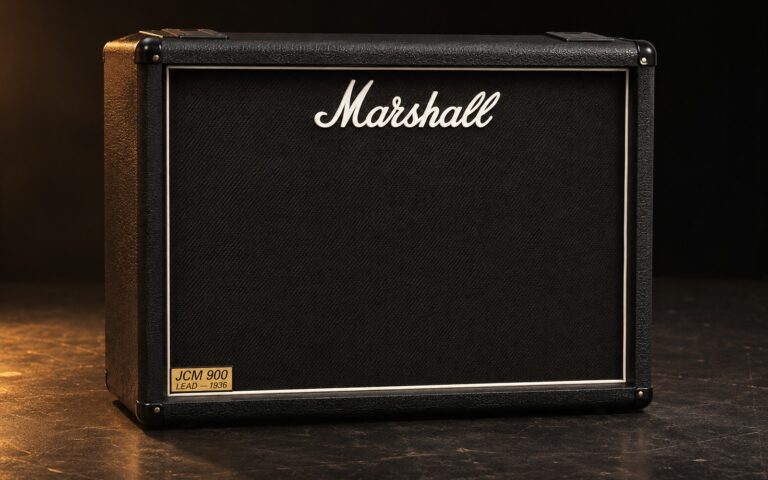
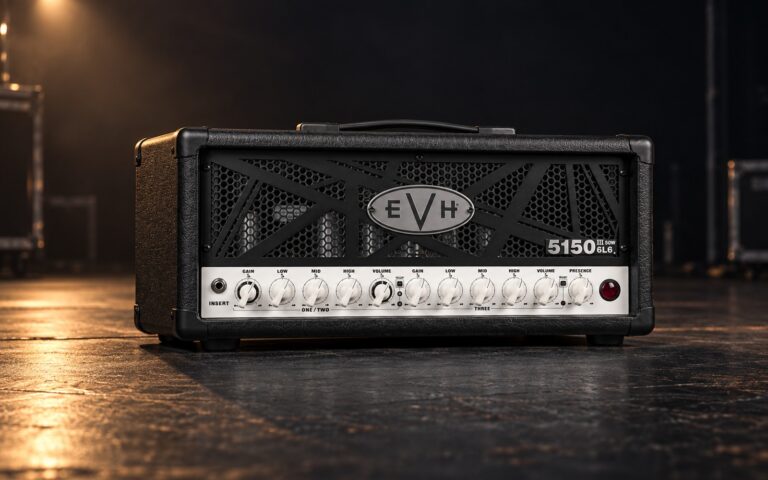
The EVH 5150III 2×12 Cabinet: Big-Stage Sound in a Box You Can Actually Move
EVH 5150III 2x12 cabinet: Celestion G12H 30W Anniversary speakers, 60W closed-back birch pine enclosure. Full specs, tone guide, and honest player notes.
There is a version of guitar player mythology that says you have not truly committed until there are eight 12-inch speakers standing behind you, enough cubic feet of air to pressurize a small house, and a back brace booked for Monday. Eddie Van Halen helped build that mythology, and then, with characteristic practicality, he did something about it. The 5150III cabinet line gave players the option to use the same Celestion-voiced, birch-pine-walled enclosure architecture as the EVH touring system in formats that fit through a rehearsal room door without geometry.
The 2×12 cabinet — part numbers 2253101010 (Black) and 2253101410 (Ivory) — is the most useful expression of that idea. It is compact enough to share a vehicle with a head and a pedalboard, loud enough to hold a stage at most venues, and voiced through a pair of Celestion G12H 30W Anniversary speakers that deliver a character distinct from the larger touring cabs. Understanding exactly what it does, and what it does not do, makes the buying decision easy.
The 5150III Cabinet Line: Where It Came From
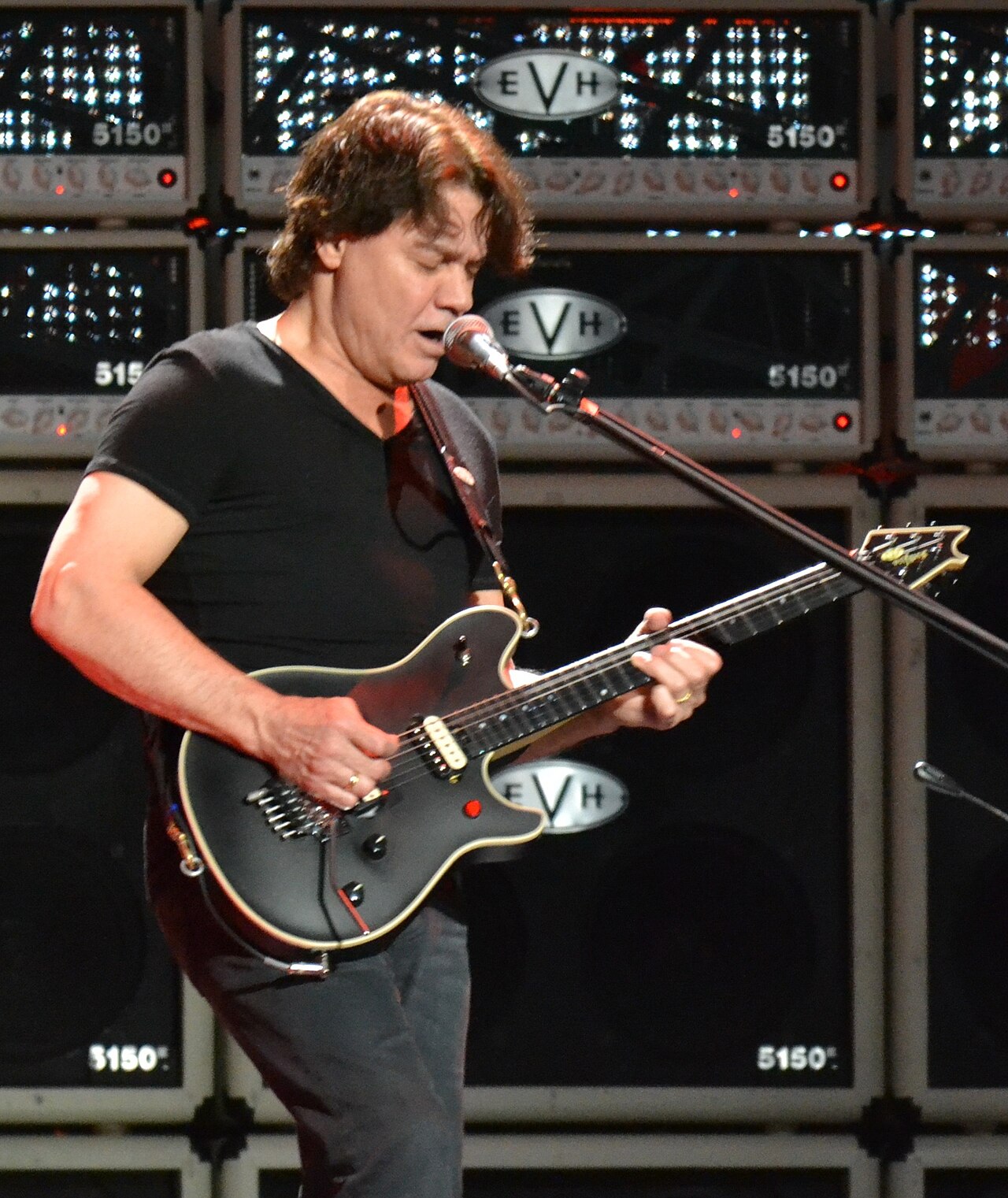
When EVH Gear launched the 5150III head at NAMM in January 2007, the accompanying cabinet system reflected Eddie’s established touring philosophy: big, loud, push a lot of air. The flagship 4×12 — loaded with Celestion G12 EVH 20W speakers derived from the Heritage Series G12M Greenback that Eddie had used since the beginning — was the primary companion piece. His live sound from 1978 onward was built on Greenback-loaded 4×12 stacks, and the EVH 5150III 4×12 continued that lineage directly. Celestion’s own product page confirms the G12 EVH’s heritage: “Throughout his career, whether in the studio or on the stage, the Celestion 20-watt ‘Greenback’ has played an essential role to Edward Van Halen in making the tones that rewrote the book on guitar sound.”
The 2×12 arrived as the line matured, designed to serve the other half of the 5150III amp roster — players running the 50W heads who wanted portability without abandoning the EVH cabinet character. At a street price of approximately $649.99 (Black) and $629.99 (Ivory), it sits well below the 4×12 both in cost and in cubic footage, yet uses the same 7-ply 5/8-inch birch pine cabinet construction that gives the full-size cab its rigidity and tonal character.
The line currently offers three 2×12 variants: the standard 2×12 in Black or Ivory (2253101010 / 2253101410), the EL34 2×12 (2253101310) voiced as a companion for the EL34 head, and the 50S 2×12 (2253101710), the all-black Stealth aesthetic version. All three share the same G12H 30W Anniversary speakers. This guide focuses on the standard 2×12.
Specifications
The Speaker Question: G12H 30W Anniversary vs. G12 EVH 20W
This is the distinction that matters most and gets muddled the most. The EVH 5150III 2×12 does not use the same Celestion speakers as the touring 4×12. That is not a downgrade — it is a genuinely different voice.
The 4×12 used by Mammoth WVH on tour (documented in Premier Guitar’s Rig Rundown, June 1, 2022) uses the Celestion G12 EVH 20W — a speaker based on the Heritage Series G12M Greenback. The G12M means a medium-weight ceramic magnet, 20W rating, and the classic “Greenback” character: airy, articulate, with a slight looseness in the low end and a chiming upper midrange that sits right around 2kHz. It is the speaker that defined Eddie’s tone on the original Van Halen records, and Celestion engineered it specifically to recreate that Heritage Greenback sound with the EVH cosmetic treatment.
The 2×12 uses the Celestion G12H 30W Anniversary Series. The G12H means a heavier magnet — that “H” designation, introduced in the late 1960s, denotes a heavier magnet structure than the M-series, which changes the speaker’s behavior in ways the power rating alone does not capture. The G12H has a tighter, more controlled low end; its midrange sits with more authority rather than chime; and its high-frequency response is smoother, with less of the air and shimmer of a Greenback. Players who have used both consistently describe the G12H Anniversary as sitting between a Greenback and a Vintage 30 — warmer than a V30, more controlled than a pure Greenback, with a thick bottom and a focused punch that rewards modern high-gain applications specifically.
For the 2×12 format — which has less internal air volume than a 4×12 and therefore a naturally tighter bottom end — the G12H’s controlled low-frequency character works in the cabinet’s favor. A Greenback in a small closed-back 2×12 can sound thin; a G12H in the same box sounds full and punchy without the excess bass that a small closed-back sometimes introduces.
The practical takeaway: if you own a 5150III head and want the closest match to Mammoth WVH’s exact touring sound, the 4×12 with G12 EVH 20W speakers is the correct choice. If you want a compact, high-quality EVH-branded 2×12 with its own voice — one that handles modern high-gain material extremely well and works in rooms that cannot absorb a 4×12 — the 2×12 with G12H 30W Anniversary speakers is exactly what it claims to be.
Cabinet Architecture: Closed-Back, Birch Pine, and Why It Matters
Closed-back cabinets enforce themselves on a room. An open-back cabinet bleeds sound in all directions and creates a wider, roomier image — ideal for clean tones, jazz, blues, and studio applications where you want the speaker interacting with the room’s acoustics. A closed-back cabinet throws sound forward, controls the rear wave, tightens the low-frequency response, and delivers more focused chest-punch pressure in the listening position. For high-gain rock and metal, the closed-back is almost always the correct choice, and the 2×12 makes no apology for this.
The 7-ply 5/8-inch birch pine construction is significant. Plywood cabinet panels resonate at higher, more distributed frequencies than MDF, and birch pine’s density-to-weight ratio means the cabinet walls are stiff enough not to flex under high SPL while still contributing a subtle warmth to the low-midrange. Cheaper cabs use MDF (heavy, acoustically dead) or thin plywood (flexible, prone to adding unwanted resonance). The EVH birch pine construction falls in between: lighter than MDF at comparable stiffness, with a pleasant and consistent coloration. The head-mounting mechanism on the top panel and the tilt-back legs on the bottom make it purpose-built to be used as a standalone unit beneath any of the 5150III head series.
Famous Players: The Honest Account
Eddie Van Halen and Wolfgang Van Halen are listed as the 5150III 2×12 Cabinet’s primary artist connections. Both names deserve a precise accounting.
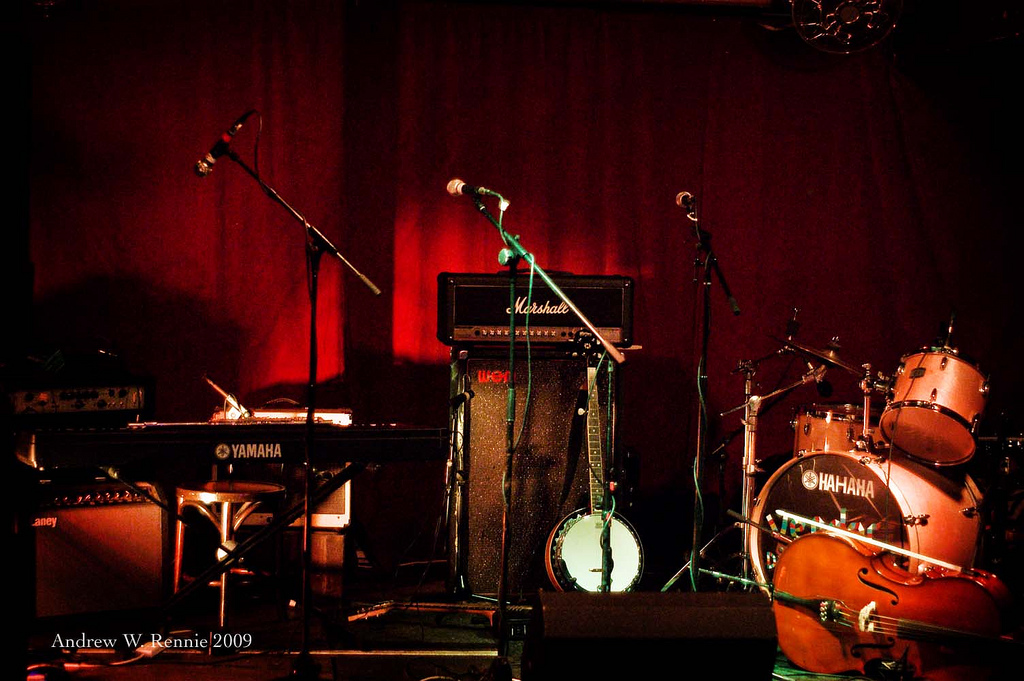
Eddie Van Halen
Eddie Van Halen is the reason the 5150III cabinet line exists. The entire EVH amp and cabinet system emerged from his decades of thought about what a guitar rig should do — how it should respond, how it should age, how it should behave when the guitarist’s pick attack changes. But his personal live rigs, from the earliest Van Halen tours through the 2015 final tour documented by Guitar World’s Chris Gill backstage at Bethel Woods, consistently used 4×12 configurations. The 4×12 was his system; the 2×12 was the compact offering within the same architectural family. No primary source places Eddie personally running a 2×12 on stage or in the studio. Using the 5150III 2×12 connects you to his design philosophy and cabinet construction standards — not to a specific rack configuration he used himself.
Eddie died on October 6, 2020. His impact on every piece of gear this brand produces is direct and documented, and that is stated plainly here rather than inflated into a false “as used by” endorsement.
Wolfgang Van Halen
Premier Guitar’s Chris Kies documented Wolfgang Van Halen’s Mammoth WVH touring rig in full detail on June 1, 2022. The relevant passage: “His amp of choice for Mammoth is the EVH 5150III 50W 6L6 head matched with a EVH 5150III 4×12 loaded with Celestion G12 EVH 20W speakers.” That is the 4×12, not the 2×12, and those are G12 EVH 20W Greenback-derived speakers, not the G12H 30W Anniversary speakers in this cabinet. Wolfgang uses the larger cabinet in his touring configuration. His fellow Mammoth WVH guitarists Jon Jourdan (50W EL34 head) and Frank Sidoris (100S 6L6 head) also use 4×12 cabinets in the same rig rundown.
None of this makes the 2×12 a lesser product. It makes it an honest one: the compact cabinet in the EVH lineup, with its own speaker voice and its own audience of players who need portability without surrendering the 5150III architecture.
Which Head Pairs Best With This Cabinet?
The 5150III 2×12 was designed alongside the 50W heads and is the natural physical and tonal companion to any of them. The cabinet’s 60W total power handling sits comfortably above the 50W output maximum, leaving headroom without waste. The 4×12 can handle 120W (4× 30W per speaker in series-parallel) — appropriate for the 100W heads, which would run the 2×12 at the very edge of its rating at full volume.
In practice, most players running 100W heads never push them to their rated output in any venue short of an arena without a PA. But the pairing math matters for insurance: the 5150III 50W 6L6 Head into this 2×12 is the manufacturer’s implied first choice and the safest configuration. The 5150III 100W 6L6 Head can drive the 2×12, but stay conservative with master volume settings on high-volume stages. The 5150III EL34 100W Head pairs most naturally with the EL34 2×12 variant (part 2253101310) rather than the standard 6L6 2×12 reviewed here, though the impedance is the same; the EL34 cabinet’s speaker voicing is reportedly adjusted to complement the EL34 power section’s mid-forward character. The 50W Stealth Head fits the companion 50S 2×12 Stealth aesthetically but is electrically identical to the standard 2×12 pairing. And the 5150 Iconic 40W 1×12 Combo is a completely separate product — a closed-back combo rather than a head-and-cab system, with its own EVH Custom Celestion 12″ speaker.
The 2×12 cabinet also works with any amp that can run into a 16Ω load: plug your Peavey 5150 into it, your Marshall, your Bogner — the impedance is constant and the cab is not fussy about what drives it.
Tone Recipes and Settings
Classic Van Halen Crunch (5150III 50W into 2×12)
Channel 2 (Blue/Crunch). Gain 5.5, Low 4, Mid 7, High 5, Volume 6. Presence 6, Resonance 4. This is the bridge position of a Wolfgang or a humbucker-loaded guitar — the G12H’s midrange authority makes the crunch sit in a mix without the nasal thinness that smaller cabs sometimes produce on this channel. Add a touch of Mid to compensate for the 2×12’s slightly smaller sound stage versus a 4×12.
High-Gain Lead (5150III 50W into 2×12)
Channel 3 (Red/Lead). Gain 7, Low 5, Mid 5.5, High 5, Volume 6.5. Presence 5, Resonance 5. Keep Resonance at 5 — the closed-back cabinet’s natural bottom-end control means you do not need as much rear-wave compensation as you would with an open-back. At higher gain, the G12H tracks individual notes more cleanly than a Greenback; the tighter low end prevents chords from turning into mush. A Boss NS-2 or MXR Smart Gate in the loop is standard practice; the 5150III’s own noise gate on Channel 3 handles basic hum but gate stomp boxes clean up pick-attack transients better.
Clean and Boost (Channel 1 into the 2×12)
Channel 1 (Green/Clean). Gain 2, Low 5, Mid 6.5, High 5.5, Volume 7. This configuration exposes the G12H Anniversary’s particular strength: at clean volumes, the heavier magnet gives the speaker a richer, rounder tone than a Greenback — less Fender sparkle, more mid-band fullness. Layer an Ibanez TS9 or an MXR EVH 5150 Overdrive in front for pushed-clean crunch. The MXR EVH 117 Flanger in the loop transforms Channel 1 into the early-album texture.
Studio Direct with Speaker Sim
Many players use the 2×12 live and the 5150III’s XLR speaker-emulated output for recording. The cab’s G12H Anniversary character differs from the EVH’s internal speaker sim model (which references a V30-adjacent voicing), so record the actual speaker with a dynamic mic (SM57 pointed slightly off-axis at the inner edge of the dustcap, about 2 inches from the grille) and blend it with the direct signal at roughly 70/30 mic-to-direct for depth without phase issues.
Rehearsal Volume with a 100W Head
Running the 100S Stealth head or the standard 100W into the 2×12 at rehearsal? Keep master volume below 4 and use the amp’s per-channel volume controls to balance channels. The G12H Anniversary speakers will thermal-protect and recover, but sustained high-SPL operation with a 100W head at high master volumes is outside the cabinet’s design intent. The 50W head is the cleaner match technically and practically.
How It Compares: Cabinet Alternatives at This Price Point
EVH 5150III 4×12 Cabinet
The obvious sibling. G12 EVH 20W Greenback-derived speakers (different character from the G12H — more open, airier, classic British chime). Approximately double the speaker surface area, heavier, louder, harder to fit in a sedan. Better for stages that require the cab to project to the back of a 500-person room without PA support. The 2×12 is better for studio recording, rehearsal, and venues with under 200 capacity and any PA support at all. The 4×12 is Mammoth WVH’s touring choice; the 2×12 is the working musician’s real-world choice.
Mesa Boogie Rectifier 2×12 Straight Cabinet
Loaded with Celestion V30s. More complex, harmonically richer mids but with a pronounced upper-midrange bark around 3kHz that some players find overwhelming on high-gain settings. Mesa’s cabinet construction is comparable (furniture-grade pine). Pairs better with Mesa’s own amps or with the Mesa Boogie Dual Rectifier specifically. Running a 5150III head into a Mesa cab is entirely possible but you are paying for Mesa’s voicing at odds with EVH’s.
Marshall 1922 2×12
A/B’d against the EVH 2×12 with a JCM800 or a 5150III, the Marshall cab’s open-back design immediately separates them. The 1922 is airier and more spatially distributed; the EVH 2×12’s closed-back design is tighter and more directional. For high-gain metal and modern rock, the closed-back wins. For classic rock and blues, the open-back wins. Choose by genre, not by badge.
Orange PPC212 Closed-Back
Loaded with Celestion Vintage 30s in a closed-back birch ply enclosure. Comparable street price (~$600–$700). V30s add a harder 2.5kHz edge and slightly scooped low-mids compared to the G12H Anniversary. Orange’s build quality is excellent. Running a 5150III into an Orange PPC212 is a popular combination and gives a distinctly British flavour that the G12H approaches but does not duplicate. Try both if possible before committing.
Bogner Uberkab 212
Two speakers, multiple voicing switches (open/closed back, T75/V30 configurations), boutique construction. Three to four times the price of the EVH 2×12. If you need maximum configuration flexibility in a 2×12, the Uberkab delivers. If you need the EVH system voiced as its designers intended, the EVH 2×12 at one-third the price is the more honest choice.
Buying Guide
The 5150III 2×12 Cabinet is a current-production item and available new at authorized EVH dealers worldwide. The main purchasing decisions come down to color (Black or Ivory — functionally identical), variant (standard 2×12, EL34 2×12, or 50S Stealth 2×12), and whether you need the standard model or the Stealth cosmetic package.
On the used market, the main thing to check is speaker condition. The Celestion G12H Anniversary speakers are robust but can be damaged by sustained abuse — spider sag, voice coil rub, cone tears. Test each speaker individually by disconnecting one at a time and playing through the remaining single speaker at low volume. Listen for scraping, farting, or any crackle that is not coming from the amp itself. A blown G12H Anniversary costs around $150-180 to replace as a single unit, making a damaged-speaker used cab a negotiation point but not a reason to walk away.
Also check the head-mounting hardware on top and the tilt-back leg pivots. The molded plastic strap handle’s end caps can crack with rough transport — cosmetic only, but worth noting. The cabinet’s interior bracing is fixed, and there are no known structural weak points in normal use.
Pairing guide recap: 5150III 50W 6L6 or EL34 heads → this 2×12 is the correct companion. 5150III 100W heads → possible but keep master volume moderate. Any head running into 16Ω → this cabinet accepts it.
Ownership Notes
The 2×12’s closed-back construction makes it more sensitive to room placement than open-back alternatives. Against a wall, the bass response increases; pulled a foot into the room, it tightens. Start with the cabinet angled slightly upward on the tilt-back legs, which raises the speaker axis toward ear level rather than shin level — this alone improves perceived clarity at stage volumes more than any EQ adjustment.
The G12H Anniversary speakers require a break-in period of approximately 10-15 hours at moderate playing volumes before they reach their mature character. New, they can sound slightly stiff and overly prominent in the upper mids. After break-in, the low end fills out and the overall tone becomes more balanced. Do not judge the cab on first use.
For recording, close-mic the cabinet with an SM57 slightly off-center and blend a room mic (condenser, 3-8 feet back) at low level. The G12H’s controlled low end makes it easier to record than a Greenback-loaded cab because there is less boom to manage; you can use the cabinet in smaller rooms without the sub-bass build-up that plagues Greenback-loaded cabs in reflective spaces.
Transport: the cabinet does not include a carry bag or road case. At 67 pounds, two-person transport is recommended. The molded plastic strap handle on the rear panel works for short distances; a hand truck handles it on longer hauls. The head-mounting rails on top accommodate any standard 5150III head and can also support other heads with compatible footprints.
FAQ
Is the EVH 5150III 2×12 Cabinet the same as the one Mammoth WVH uses live?
No. Premier Guitar’s documented Mammoth WVH Rig Rundown (June 1, 2022) confirms the band uses EVH 5150III 4×12 cabinets loaded with Celestion G12 EVH 20W speakers. The 2×12 is the compact alternative in the EVH line, loaded with the different Celestion G12H 30W Anniversary speakers. Both are legitimate EVH products; neither is a lesser version of the other — they are two different voices in the same cabinet family.
What is the difference between the standard 2×12, the EL34 2×12, and the 50S 2×12?
All three use the same Celestion G12H 30W Anniversary speakers and the same closed-back birch pine construction at 16Ω. The standard 2×12 (2253101010/2253101410) comes in Black or Ivory and is the general-purpose companion for any 5150III head. The EL34 2×12 (2253101310) is voiced and cosmetically matched to the EL34 head series. The 50S 2×12 (2253101710) is the Stealth all-black version matching the 100S and 50S Stealth heads aesthetically. For any non-Stealth head, the standard 2×12 is the right purchase.
Can I run a 100W head into this 2×12?
The cabinet is rated at 60W total (2× 30W speakers). At stage volumes with a 100W head, you are running the cabinet close to or at its thermal limit if the master volume is high. Many players do run 100W heads into 2×12 cabs without incident because real-world stage levels rarely push a 100W head to its rated output. That said, the 50W heads are the design-intent match. If you own a 100W head and this cab, keep master volume moderate and monitor the speakers for any signs of thermal stress.
What is the Celestion G12H 30W Anniversary? Is it a Greenback?
No. The G12H 30W Anniversary is a heavy-magnet (H = heavy) 30W speaker, compared to the G12M Greenback’s medium magnet (M = medium) and 20W rating. The heavier magnet structure produces a tighter low end, a warmer and more controlled midrange, and a smoother high-frequency response than the classic Greenback chime. It sits sonically between a Greenback and a Vintage 30. The Celestion G12 EVH 20W speaker used in the touring 4×12 cabs is a G12M-based Heritage Greenback — a distinctly different speaker with different character.
How does this cabinet compare to the 5150III 1×12 Cabinet?
The 1×12 Cabinet (2253100010/2253100410) uses a single Celestion G12H 30W Anniversary and is rated at 30W total at 8Ω. It is lighter, cheaper (~$449 street), and designed specifically as a companion for the Iconic 40W 1×12 combo head section or as a solo practice/studio cab. The 2×12 is louder, deeper, more capable on stage, and handles twice the power. In a venue context, the 2×12 is the serious gigging choice; the 1×12 is the bedroom-to-small-studio tool.
What pedals pair well with the 5150III 2×12 setup?
Wolfgang Van Halen documented using all the MXR EVH branded pedals on the Mammoth tour: the EVH95 Cry Baby wah, MXR EVH 5150 Chorus, MXR Eddie Van Halen Phase 90, and MXR EVH117 Flanger, plus a Boss DD-3 for delay and EarthQuaker Devices Afterneath for ambient textures. For the high-gain channels, a noise gate (Boss NS-2, ISP Decimator, or MXR Smart Gate) in the effects loop is essential. In front of the clean channel, a transparent overdrive (Ibanez TS9, MXR EVH 5150 Overdrive, Xotic BB Preamp) produces pushed-crunch tones that the 2×12’s G12H speakers translate naturally.
Is the 2×12 loud enough for live use without PA support?
With a 50W or 100W head: yes, in rooms up to approximately 150-200 people. The G12H Anniversary’s sensitivity and the closed-back cabinet’s forward projection give the 2×12 more perceived loudness than its two-speaker count suggests. In larger venues, use the amp’s XLR speaker-emulated direct output for PA support and treat the 2×12 as your stage monitor. The 4×12 system is appropriate when you need to physically fill a large room with stage volume alone, which is rare in modern live production.
Can I mix an EVH 5150III 2×12 with a 4×12 in a stereo or parallel rig?
Yes, with a caveat. The 2×12 is 16Ω and the 4×12 is typically 16Ω (in standard 4×12 configuration). Running them in parallel from a single amp head gives you an 8Ω load — check your head’s minimum impedance before doing this. Running them from two separate outputs on a stereo rig (two amps, or a stereo preamp into two power amps) avoids the impedance issue entirely. The tonal character of the G12H Anniversary (2×12) and the G12 EVH Greenback (4×12) will diverge slightly, giving the stereo image some natural width from speaker voicing alone. This is not a problem — it is a feature.
Image credits
- A small band stage with amps and drums: Andy Rennie from Glasgow, Wikimedia Commons, CC BY-SA 2.0.
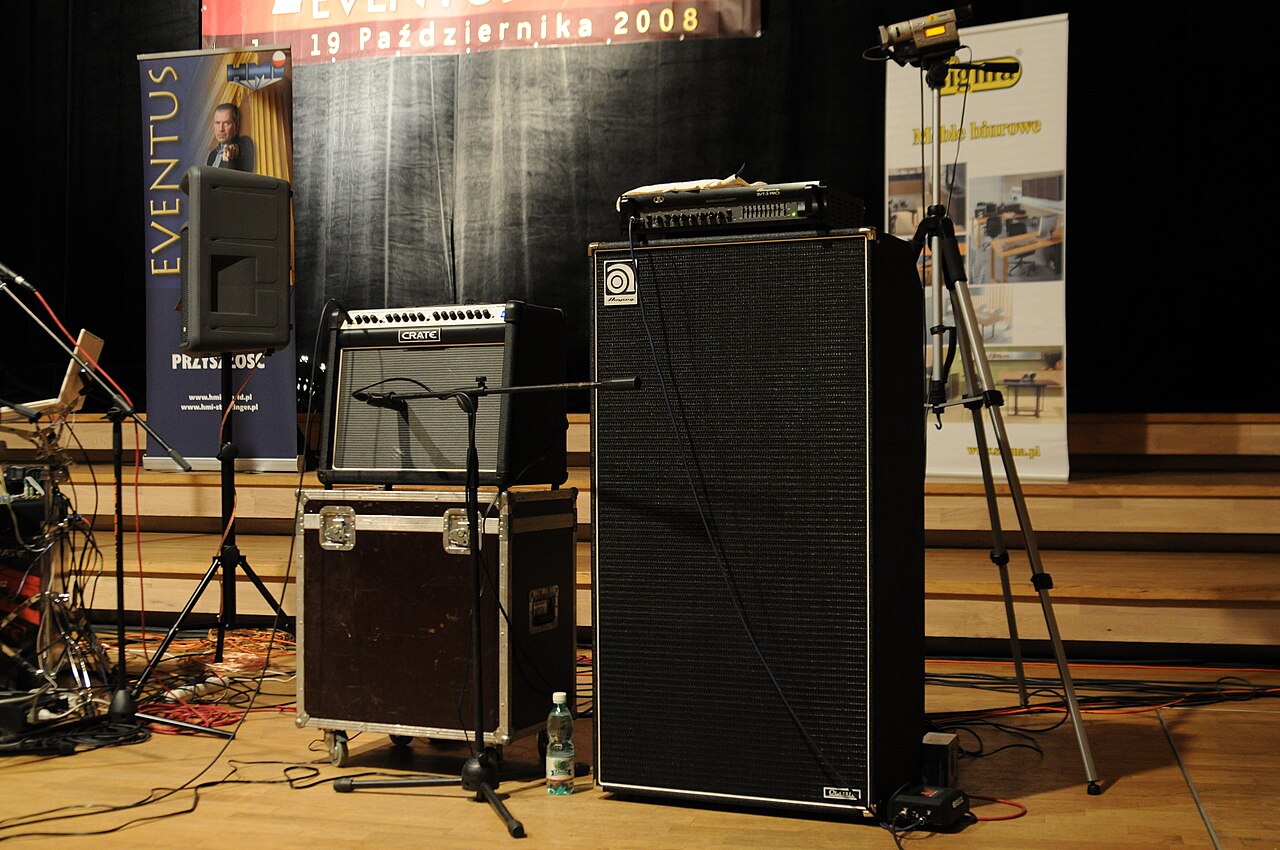
- Amplifiers and a speaker cabinet on a stage: Kuba Bożanowski from Warsaw, Poland, Wikimedia Commons, CC BY 2.0.
- Eddie Van Halen: Joe Bielawa, Wikimedia Commons, CC BY 2.0.
Latest News
Related
On This Day
Monday 9 November
From this week: