EVH 5150III 2×12 Cabinet: The Portable Roar That Carries Eddie’s DNA Wherever You Play
EVH 5150III 2x12 Cabinet: 60W closed-back with Celestion G12H Anniversary speakers, 7-ply birch. Tone recipes, specs, variants and buying advice.
There is a cab-shopping paradox every serious rock guitarist hits eventually: the rig that sounds best on stage also requires a touring vehicle, a roadie, and a chiropractic appointment to maintain. The EVH 5150III 2×12 Cabinet exists to end that standoff. It packs the same Celestion speakers and birch-pine construction philosophy that underpin the full 5150III wall of sound into a head-and-cab rig that fits in the back of a mid-size SUV — and it does not apologize for a single decibel of the trade.
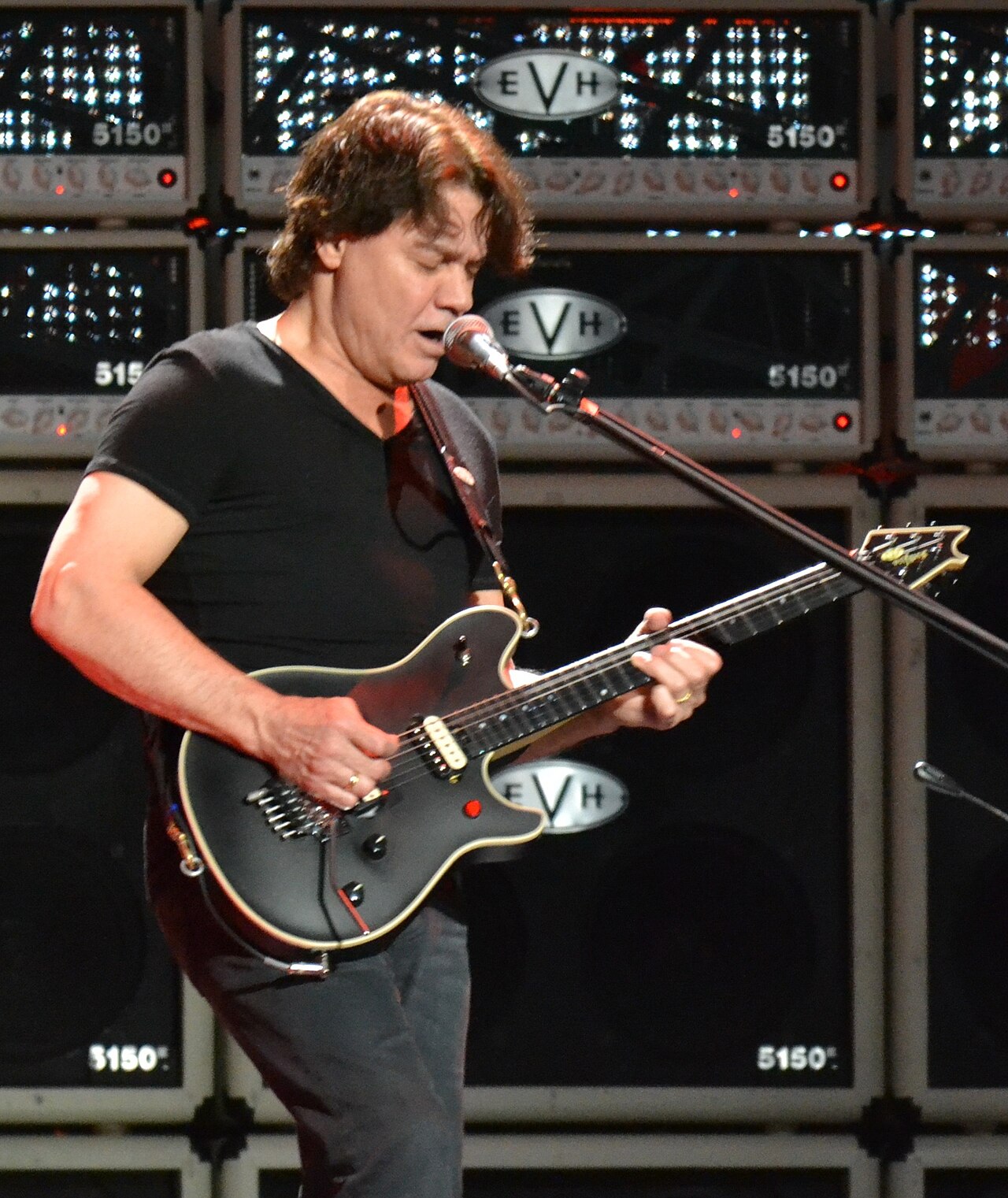
The 2×12 was designed from day one as the natural partner for the EVH 5150III 50W 6L6 head and the 15W lunchbox heads that followed. Whereas Eddie Van Halen‘s own touring setup was built around towering 4×12 cabinets — his final Van Halen tour in 2015 used a wet/dry/wet configuration with multiple 5150III 4×12 cabs flanking a single 100S Stealth head — the 2×12 addresses a different kind of player: one who needs that exact tonal character on a club stage, a rehearsal room floor, or a recording session where sheer air movement matters but moving companies do not. Same DNA, smaller suitcase.
History and Design Philosophy
EVH Gear launched the 5150III cabinet line as a direct extension of the amplifier family it had built around Eddie’s circuit, and the 2×12 format was included from the outset to serve the 50-watt market segment that would eventually grow into one of the brand’s most popular amp sales. The pairing logic is straightforward: a 50W 6L6 head delivers enough clean headroom and saturated firepower to fill most live venues, and a well-constructed 2×12 moves enough air to keep up without the bulk of a 4×12 stack.
Construction uses 7-ply 5/8-inch birch pine — a stiffer, more resonant material than MDF and a deliberate departure from cheaper particle-board alternatives. Birch pine panels reduce unwanted cabinet resonance while still allowing the enclosure itself to contribute a subtle warmth that affects the final sound. The straight-front (as opposed to angled) baffle projects sound forward with focused directionality, which suits live stage applications where floor monitoring needs to be distinct from what the cab throws into the room.
Finish options have always included a thick textured Black and an Ivory covering, both carrying the silver EVH logo badge. Hardware includes a molded plastic strap handle with black powder-coated end caps, a built-in head-mounting mechanism so the matching 50W head can sit directly on top of the cabinet without a separate stand, and front-facing tilt-back legs that prop the cabinet at an upward angle when needed — useful for monitoring on stage or for controlling room reflections in smaller spaces.
The cabinet family has expanded over the years. The EL34 2×12 variant arrived in October 2017 alongside the 5150III EL34 50W head, finished in black and gold to match the EL34 line’s distinctive aesthetic. It added built-in casters for easier transport and carries the same Celestion speaker load as the standard model. The 50S 2×12 Stealth variant matches the all-black cosmetics of the 5150III 50W Stealth head. Each variant shares the core cabinet construction and speaker specification — the cosmetic differences are intentional pairing signals for the corresponding heads.
Full Specifications
The Speaker: Celestion EVH G12H 30W Anniversary Series
No discussion of the 5150III 2×12 is complete without spending time on the driver that defines it. The Celestion EVH G12H 30W Anniversary speaker is a purpose-voiced variant of one of the most historically significant speakers in rock guitar history.
The G12H lineage traces back to the 1960s, when Celestion developed a heavier-magnet version of the G12 to handle the increasing power demands of the emerging rock amplifier market. The “H” in G12H denotes that heavier ceramic magnet — 1.42kg — which gives the speaker its characteristic tight low-frequency control and pronounced low-mid punch. When Celestion reissued the design in 1994 to celebrate their 70th anniversary, the G12H Anniversary captured the original voicing with modern manufacturing consistency. EVH Gear worked with Celestion to produce the “EVH” variant of this speaker, voiced specifically to complement the 5150III circuit’s gain structure and EQ characteristics.
The technical specifications tell part of the story: 30W power handling, 100dB sensitivity (meaning it converts input power into volume very efficiently), a resonance frequency of 85Hz that places the low-end rolloff below most rhythm guitar fundamentals, a 44mm round copper voice coil, and a frequency response of 75–5,000Hz. That relatively narrow upper-frequency limit is deliberate. The G12H Anniversary does not attempt to reproduce the full presence peak that modern high-output speakers often feature. Instead it rolls off in the upper midrange in a way that controls ice-pick harshness and emphasizes the body and grit that define classic rock cabinet sound.
The result in a closed-back 2×12 format is substantial bottom-end definition — more focused than an open-back design would produce — combined with an aggressive low-mid push and a controlled high end that keeps the 5150III’s gain from becoming fizzy or fatiguing. Forum consensus from players who have run both configurations consistently notes that the EVH G12H 2×12 sounds “big” relative to its size, but with more top-end presence and less low-end weight than the 4×12 version simply due to the smaller enclosure volume.
Famous Players
Eddie Van Halen is the spiritual architect of everything the 5150III cabinet family represents. His guitar tone — tracked across the Van Halen catalog from the 1978 debut through to the final years — was built around large-format cabinets driving significant air volume, and his documented touring rigs reflected that preference. The Guitar World rig tour from his 2015 A Different Kind of Truth tour finale (Chris Gill, September 2015) detailed a wet/dry/wet setup using EVH 5150III 4×12 cabinets, not the 2×12. The 100S head fed the center dry cab while flanking cabs handled the wet delay signal. There is no primary-source documentation of Eddie running the 5150III 2×12 as his main stage cabinet. What is true is that the 2×12 carries his speaker selection, his cabinet voicing philosophy, and his name — it is what he would have played at home had he been looking for a manageable practice-to-small-club cab rather than a 100-show stadium rig.
Wolfgang Van Halen’s live rig, documented in the Premier Guitar June 2022 Mammoth WVH rig rundown, used EVH 5150III 50W 6L6 heads through EVH 4×12 cabinets — again the larger format for touring. Like his father, Wolfgang’s documented live preference runs to the full 4×12 setup. The 2×12 represents the same EVH speaker character in a format more suited to smaller operations, rehearsal, and studio use.
Where the 2×12 genuinely lives is with the working rock guitarist who wants the EVH cabinet voice without committing to the weight and space of a full 4×12. Touring club-level acts, studio session players tracking heavy rhythm work, and gigging musicians who run a matched 50W 6L6 head all form the primary user base. The EVH design team built it for exactly that application, and it performs in that role without compromise.
Tone Character and What to Expect
Running a high-gain head through the 5150III 2×12 at gig volume reveals a cabinet that is not subtle about what it wants to do. The G12H Anniversary speakers take time to break in — early reviews consistently note that fresh speakers sound stiffer and brighter than the same cabinet after 10–20 hours of playing. This is standard for Celestion ceramic-magnet designs and is not a flaw. Once the surround material loosens and the spider compliance settles, the low-end gains weight and the upper midrange smooths out considerably.
The closed-back construction concentrates bass energy in a way that open-back 2×12 designs do not. If you are used to a Fender-style open-back 2×12, the EVH closed-back will initially feel more directional and punchy — the sound does not spread behind the cabinet the way an open-back design does, which is useful on stage but means it projects strongly at whatever it is aimed at. Tilt-back legs are worth using both for on-stage monitoring and for adjusting room dispersion in rehearsal spaces.
Players pairing the 2×12 with high-gain heads above 60W should be aware of the power handling ceiling. The cabinet’s 60W total capacity (30W per speaker) means it handles the full output of the matched 50W heads cleanly under most conditions, but pushing a 100W head to its limits risks thermal damage. The cabinet is designed for the 50W and 15W segments of the EVH line — matching it with a 5150III 100W 6L6 head requires discipline with the master volume.
Tone Recipes and Settings
Recipe 1: Classic EVH Brown Sound (paired with 5150III 50W 6L6)
Channel 1 (Clean), gain at 3–4, volume at 7. Guitar volume rolled to 7. Presence 6, Resonance 5. Low 6, Mid 5, High 5. Play into the front end of the clean channel to push natural overdrive. Brightness and compression come from the G12H speaker’s low-mid weight.
Recipe 2: Hard Rock Crunch (Channel 2)
Gain 5–6, volume 6. Presence 6, Resonance 5. Low 6, Mid 4, High 5.5. The G12H’s mid push handles the body of rhythm work without additional EQ. Works well with a humbucker-equipped guitar at full volume.
Recipe 3: Modern Metal Saturation (Channel 3)
Gain 7–8, volume 5.5. Presence 7, Resonance 6. Low 5, Mid 3.5, High 6. Higher presence compensates for the G12H’s rolled-off upper midrange when you need articulation in tight djent or thrash rhythm work. Noise gate engaged.
Recipe 4: EL34 Variant — British Edge (paired with 5150III EL34 50W head)
Channel 2, gain 5, volume 6. Presence 5, Resonance 4. Low 5.5, Mid 5, High 5. The EL34’s harmonic character paired with the G12H Anniversary creates a more compressed, dynamically responsive tone than the 6L6 version — closer to a loaded Marshall 2×12 but with modern gain capability.
Recipe 5: Studio Direct (with XLR out from Iconic combo, cab as monitor)
Use the 2×12 as a stage monitor or secondary speaker while routing to the XLR out on a compatible EVH combo (5150 Iconic 40W combo). Run the cabinet at low volume as a feel reference without committing full stage volume to the room.
Recipe 6: Wet/Dry Mini-Stack
Run the 2×12 as the dry cabinet in a small wet/dry setup. Head’s send goes to a stereo delay pedal, returns to a second amplifier or a power amp feeding a second 1×12. The G12H’s tight low-end keeps the dry signal anchored and prevents the wet signal from becoming muddy.
Recipe 7: Speaker-Breaking Period Settings
New cabinet: set gain conservatively (4–5), keep master volume moderate for the first 10 hours. Avoid sustained high-volume clean tones (which stress the cone more than driven tones at lower volumes). Alternate between clean and driven work to flex the surround material evenly.
Comparisons with Similar Cabinets
EVH 5150III 2×12 vs. EVH 5150III 4×12
The most natural comparison is with its sibling. The 4×12 cabinet uses four of the same Celestion G12H speakers and occupies exactly twice the internal volume, which translates to more bottom-end weight and a wider dispersion pattern. Players who have run both report that the 2×12 sounds brighter and slightly tighter in the low end, while the 4×12 has more “chest thump” at full output. For club stages and recording, many players find the 2×12 sufficient or even preferable — the lower air-mass means the speaker responds faster to transient attacks, which benefits articulate picking. The 4×12 wins for outdoor festivals and large stages where the cab needs to project across significant distance.
EVH 5150III 2×12 vs. Marshall 1936 2×12
The Marshall 1936 is the 2×12 benchmark that players most often reference. It carries a pair of Celestion G12T-75 speakers — a different character from the G12H Anniversary, with more upper-midrange aggression and a higher power handling (75W per speaker vs. 30W). The Marshall 1936 sounds more aggressive and cutting in the upper mids, which suits Marshall JCM-voicing heads. The EVH 2×12 sounds warmer and slightly more controlled in the high frequencies, which suits the 5150III’s own gain character. Neither is objectively better — they are optimized for different head voicings. Running a Marshall JCM800 through the EVH 2×12 works but loses some of the JCM’s characteristic presence; running the 5150III through the Marshall 1936 gains aggression but loses some of the low-end body the G12H provides.
EVH 5150III 2×12 vs. Mesa Boogie Rectifier 2×12
Mesa’s Rectifier 2×12 is another frequently cited alternative, typically loaded with Celestion V30 speakers. The V30 has a scooped lower midrange and a characteristic upper-midrange spike around 3kHz that creates the “singing” lead tone many Mesa users associate with the Dual Rectifier. The G12H Anniversary’s character is nearly inverse: stronger lower mids, softer upper-mid presence. The EVH 2×12 will sound thicker and warmer than the Mesa in direct A/B comparison; the Mesa will sound more forward and “shouty.” For modern metal rhythm work, many players prefer the EVH G12H character because it avoids the V30’s tendency to become congested with multiple layers of heavily distorted guitar tracks in a mix.
EVH 5150III 2×12 vs. Peavey 5150 4×12
The lineage connection is direct: the original Peavey 5150 was frequently paired with Peavey’s own 4×12 cabs loaded with Sheffield speakers — a very different driver character from the Celestion G12H. Sheffield speakers tend toward a scooped, scooped-mid character with prominent low end and clear high end. Players transitioning from vintage Peavey 5150 rigs to the EVH 5150III 2×12 often note that the EVH cab sounds more “British” — specifically because the G12H’s lower-mid emphasis is absent in the Sheffield design. It is a meaningful tonal shift even with the same head circuit.
Buying Guide: Is the 5150III 2×12 Right For You?
The 5150III 2×12 makes compelling sense for any guitarist running a matched EVH 50W head who plays venues up to mid-size clubs or regularly records in studios where raw cabinet volume is a consideration. At 67 lbs it is heavy for a 2×12 — the birch construction and hardware account for that — but it is significantly more manageable than a loaded 4×12 that can run past 100 lbs.
The 60W power handling spec means you match it with the right head. The 50W 6L6 head delivers roughly 50W RMS under clean conditions — well within the cabinet’s capacity. Running it with a 100W head requires consistent attention to master volume levels. If your primary amp is the 5150III 100W 6L6 and you play at full stage volume regularly, invest in the 4×12 instead.
The EL34 2×12 variant is worth selecting if you own the matching EL34 head and want the aesthetic and tonal pairing to be consistent. The black-and-gold finish is more than cosmetic — the EL34 cabinet variant was also developed with the specific character of EL34 power tubes in mind, and the combination sounds coherent in a way that mixing and matching variants can dilute.
On the used market the standard 2×12 in good condition typically runs $300–500 depending on age and finish condition. The Celestion G12H speakers have no consumable lifespan under normal use — speaker cones and surrounds can last decades — so a used cabinet in good physical shape represents strong value relative to the new price. Inspect the speaker surrounds (the foam ring around the cone edge) for tears or deterioration on older units, and check the cabinet corners and baffle for any internal damage from transit.
Ownership Notes
Breaking in new speakers is the most important first step. Run the cabinet at moderate volume — not bedroom levels, not gig levels — for 10 to 20 hours of playing time before judging its final character. The G12H Anniversary’s surround material stiffens during storage and shipping and will sound brighter and thinner than it ultimately will. Players who dismiss the cab as “harsh” after the first session and then return to it after a full rehearsal schedule often report a meaningful improvement in low-end weight and high-frequency smoothness.
Head mounting: the built-in mechanism means you can set the 50W head directly on top of the cab without a third-party cradle, which is convenient but also means the amp’s vibration couples directly to the cabinet. Some players use a thin layer of foam between head and cab to reduce microphonic feedback at high gain levels.
Impedance is fixed at 16Ω. Verify that your head’s impedance selector matches before connecting — mismatching impedance on a tube amp does not instantly destroy the output transformer but increases wear over time and affects tone and power delivery.
The tilt-back legs are frequently underused. For in-room monitoring on stage, angling the cab upward toward your ears at an approximately 30-degree tilt changes the on-stage experience significantly — you hear more attack and definition from the speakers instead of your ankles. Many players who described the cab as “muddy on stage” corrected the problem entirely by deploying the tilt-back legs.
Frequently Asked Questions
What is the EVH 5150III 2×12 Cabinet’s power handling?
The cabinet handles 60W total — two Celestion G12H 30W speakers wired in series at 16Ω. This makes it the correct match for the EVH 5150III 50W 6L6 and 50W EL34 heads, and also appropriate for the 15W lunchbox heads in the EVH lineup. Running a 100W head through it is technically possible but requires discipline with the master volume to avoid thermal damage to the speakers.
Is the EVH G12H 30W Anniversary the same as the standard Celestion G12H Anniversary?
The EVH G12H 30W Anniversary is a purpose-voiced variant of the standard Celestion G12H Anniversary, specified and branded for the EVH cabinet line. The core design — 30W, ceramic magnet, 44mm voice coil — is shared, but the EVH variant is voiced to complement the 5150III amplifier circuit specifically. Replacement speakers from the standard Celestion G12H Anniversary line are compatible physically and will produce a similar tonal character, though the EVH-branded version is the factory specification.
Did Eddie Van Halen use the 5150III 2×12 cabinet?
There is no primary-source documentation of Eddie Van Halen running the 5150III 2×12 as his main live cabinet. His documented touring setup — including the final Van Halen shows in 2015 — used EVH 5150III 4×12 cabinets in a wet/dry/wet configuration. The 2×12 is designed as a portable companion to the 50W heads and serves a different application than Eddie’s touring rig required. The tonal DNA — specifically the Celestion G12H speaker choice — connects directly to the EVH design philosophy, but the 2×12 is a product aimed at the working musician rather than a recreation of Eddie’s stage setup.
What is the difference between the standard 2×12, the EL34 2×12, and the 50S 2×12?
All three use the same Celestion G12H 30W Anniversary speakers and the same fundamental cabinet construction. The EL34 2×12, announced in October 2017, carries a black-and-gold finish to match the EL34 head line and includes built-in casters; it is rated at 50W to match the EL34 head’s power output. The 50S 2×12 (Stealth) carries the all-black cosmetic treatment matching the 50W Stealth heads. If you own one of those matching heads, select the corresponding cabinet variant — if you own the standard 6L6 head, the standard Black or Ivory 2×12 is the intended companion.
How does the closed-back design affect tone compared to open-back 2x12s?
Closed-back construction concentrates bass energy at the speaker face and prevents rear radiation, which produces tighter, more focused low-end response and a more directional sound pattern. Open-back 2x12s (common on Fender-style combo amplifiers) have more “bloom” in the low end and a more diffuse, room-filling character. The EVH closed-back 2×12 behaves more like a scaled-down 4×12 than like a Fender-style combo cabinet — it projects forward with authority rather than spreading sound in multiple directions, which is a better match for high-gain rock tones where low-end definition matters.
Can I run two EVH 5150III 2×12 cabinets together?
Yes. Two 16Ω cabinets wired in parallel produce an 8Ω load; most EVH heads include an 8Ω output tap. Running two 2×12 cabs is a popular alternative to a single 4×12 — you get the same speaker count with a different physical arrangement that can be more practical for transport and stage positioning. The total power handling doubles to 120W with two cabs, which means you can safely drive the 100W heads through the pair without concern about speaker damage.
What guitars pair best with the 5150III 2×12?
The cabinet’s G12H character — strong low-mids, controlled high end — works best with humbucking pickups that are not already bass-heavy. An EVH Wolfgang, a Les Paul with PAF-style pickups, or an aggressive H-H superstrat all take advantage of the cabinet’s tonal character. Single-coil guitars work but the lower output may require more gain compensation from the head. Extremely high-output pickups (ceramic magnets, 14k+ DCR) can make the cabinet sound congested in the low-mids; a pickup with balanced output generally produces a cleaner and more defined result through this cab’s voicing.
Is the EVH 5150III 2×12 worth the price over a budget 2×12?
The birch construction and Celestion G12H speaker choice represent genuine quality at the price point, not marketing specification. Budget 2×12 cabinets typically use MDF or particle-board panels and generic OEM drivers — the cabinet resonance and speaker character both differ meaningfully from what the EVH delivers. If you own a 5150III 50W head and are considering a budget cab as a cost-saving alternative, be aware that the speaker is the single most important determinant of final tone from a head-and-cab system. The cabinet is where the amp’s signal actually becomes sound that moves air, and the G12H Anniversary is a well-documented, historically proven driver. Spending the money on the EVH cabinet is not vanity — it is the component that finishes the circuit.
Image credits
- A small band stage with amps and drums: Andy Rennie from Glasgow, Wikimedia Commons, CC BY-SA 2.0.
- Amplifiers and a speaker cabinet on a stage: Kuba Bożanowski from Warsaw, Poland, Wikimedia Commons, CC BY 2.0.
- Eddie Van Halen: Joe Bielawa, Wikimedia Commons, CC BY 2.0.


Latest News
On This Day
Tuesday 10 November
From this week: