Faith Venus Blood Moon: The Indonesian Gamble That Put a British Brand on the Wall
Faith Venus Blood Moon guide: solid Trembesi tone, full specs, Fishman INK3 vs Shadow, honest player facts, tone recipes, buying tips and FAQ.
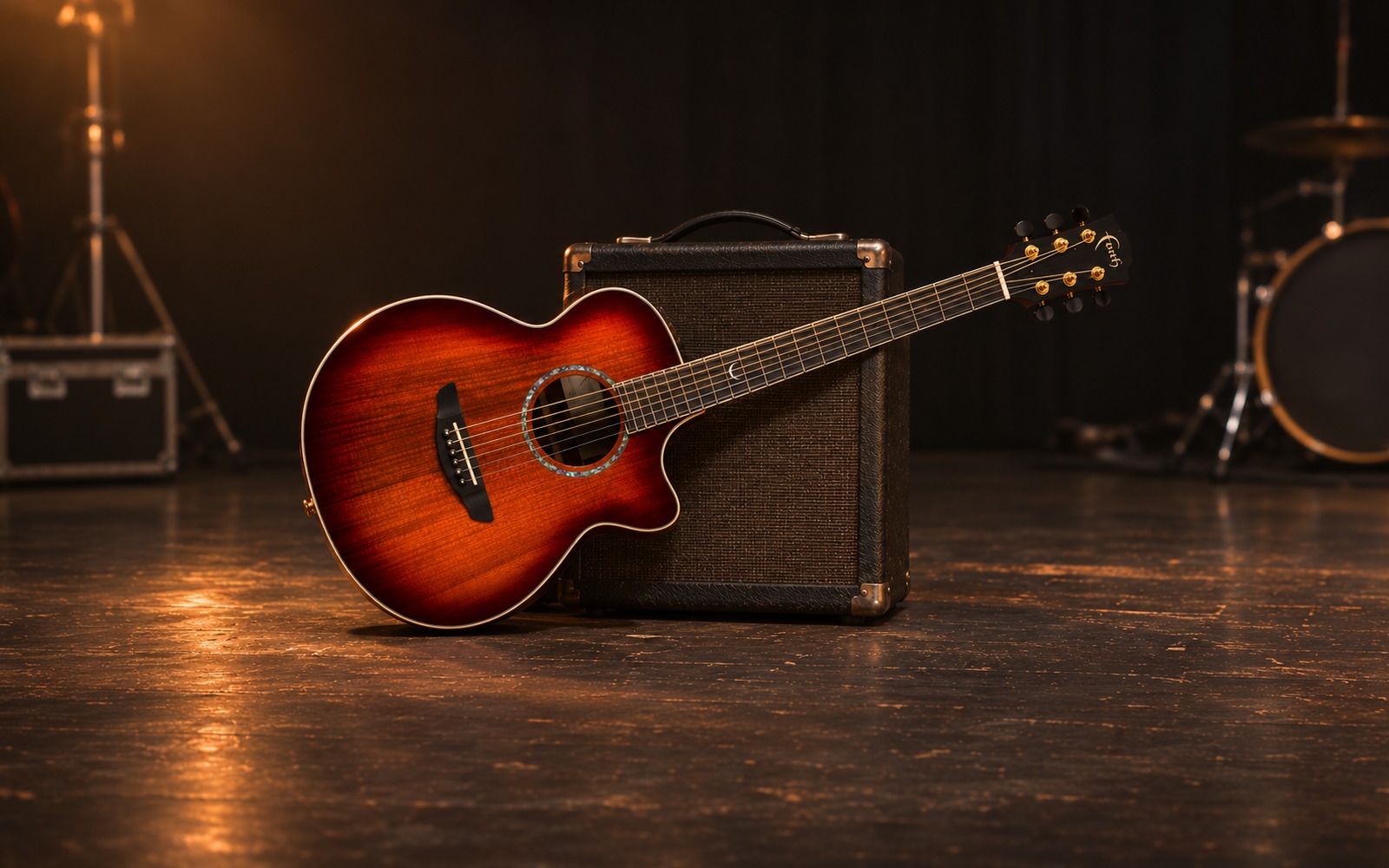
There is a particular kind of guitar that stops people mid-sentence in a shop. Not because of the headstock logo — nobody walks past a Faith and gasps at the badge — but because of what the wood is doing. The Blood Moon Venus is that guitar. A deep red burst laid over Indonesian Trembesi so wildly figured that no two examples share a grain pattern, wrapped in solid flamed maple binding, hung with gold Grovers and fitted with Macassar ebony everywhere it can reasonably be fitted. It looks like it costs three times what it costs.
That is the whole trick, and it is worth being honest about it up front. The Blood Moon Venus is a piece of aggressive value engineering executed by people who genuinely know how to build guitars. It is designed in Britain by Patrick James Eggle, one of the most respected luthiers this country has produced, and built in Indonesia by workshops using timbers that grow within a few hundred miles of the bench. That geography is not a compromise on this instrument. It is the entire strategy.
What follows is a full feature on the model — where it came from, what the wood actually does, what the brand’s own paperwork gets wrong about its own guitar, and who really plays one. It is not a review. It is the story of a guitar that arrived looking like a boutique instrument and priced like a mid-range electro, and has spent a decade refusing to be embarrassed about either.
Barnes & Mullins, Oswestry, and the Eggle Connection
Faith is not a garage startup. The brand sits under Barnes & Mullins, a British musical instrument distributor whose roots run back to 1895, operating today from Mile Oak Industrial Estate in Oswestry, Shropshire. (Faith’s own website footer files that address under “Wales,” which is charming but wrong — Oswestry is in England, about five miles from the border. It is the first of several small documentation slips we will meet on this model.)
The design authority is Patrick James Eggle. Eggle built his reputation in the late 1980s and early 1990s making electrics in Coventry that were good enough to make Americans nervous, then spent the following decades as a hand-builder of acoustics with a serious following. His involvement with Faith is not a logo licence. The bracing pattern, the neck geometry, the body shapes and the setup protocol are his, and every Faith sold in the UK passes through his workshop for a pre-delivery inspection, action check and basic setup before it reaches a dealer. Guitars sold outside the UK get equivalent treatment from the territory distributor rather than from Eggle himself — a distinction worth knowing if you are buying in the US, Australia or mainland Europe.
The Venus Shape: Older Than You Think
The Venus was the first Faith body shape ever launched, in the winter of 2002. It has since become the brand’s reference point, and for good reason: it lands on the most useful footprint in acoustic guitar design. Faith describe it as an “OM/Auditorium,” with a 15-inch lower bout and a body that is shallower than a dreadnought without being a parlour.
The detail that matters is the depth. Writing in Guitarist / Total Guitar, Dave Burrluck measured the Venus against the classics and found it very slightly larger than a Martin OM/000 in outline, but noticeably deeper — closer, in fact, to Taylor’s Grand Concert, with which it shares near-identical dimensions. That extra cubic capacity is why the Venus does not sound like the small guitar it looks like when you first pick it up. Sitting down with one, the impression is of a bigger instrument than the outline suggests, and the meaty mahogany neck profile with near-jumbo fretwire reinforces that. Faith’s other shapes fill in around it: the Neptune baby jumbo derived from Eggle’s “Saluda,” the Saturn dreadnought, the short-scale 12-fret Mercury parlour, and the Earth, a true OM based on Eggle’s “Linville.”
What “Blood Moon” Actually Means
Blood Moon is a finish and timber designation, not a body shape or a tier. Every Blood Moon uses solid, highly figured Indonesian Trembesi for top, back and sides, stained with the deep red burst that gives the series its name, bound in solid flamed maple and fitted out in Macassar figured ebony. The same recipe is applied across the Venus, the Neptune baby jumbo and the Saturn dreadnought. There is a companion Blue Moon series using the identical construction with a blue burst instead — same guitar, different mood, same money.
The 2016-versus-2017 Wrinkle
Faith’s current product page states that the Blood Moon Venus “debuted in 2017.” That is demonstrably not the whole story, and the paper trail contradicts it twice over.
MusicRadar’s review of the Faith Venus Blood Moon was published on 26 May 2016, at a UK price of £849. A guitar cannot be reviewed in a national magazine a year before it exists. Separately, MusicRadar’s news coverage of 11 August 2017 reports that Faith had “added its Neptune and Saturn body shapes to its eye-catching Blood Moon line, joining the Venus” — Neptune electro at £949, Saturn at £829. The 2017 date is the year the series expanded to three shapes, not the year the Venus arrived. The Venus was there first, by at least a year.
This matters for buyers because it means there are genuinely early Blood Moon Venuses on the used market that predate the current specification — and one of the differences is significant.
The Electronics Changed. Nobody Announced It.
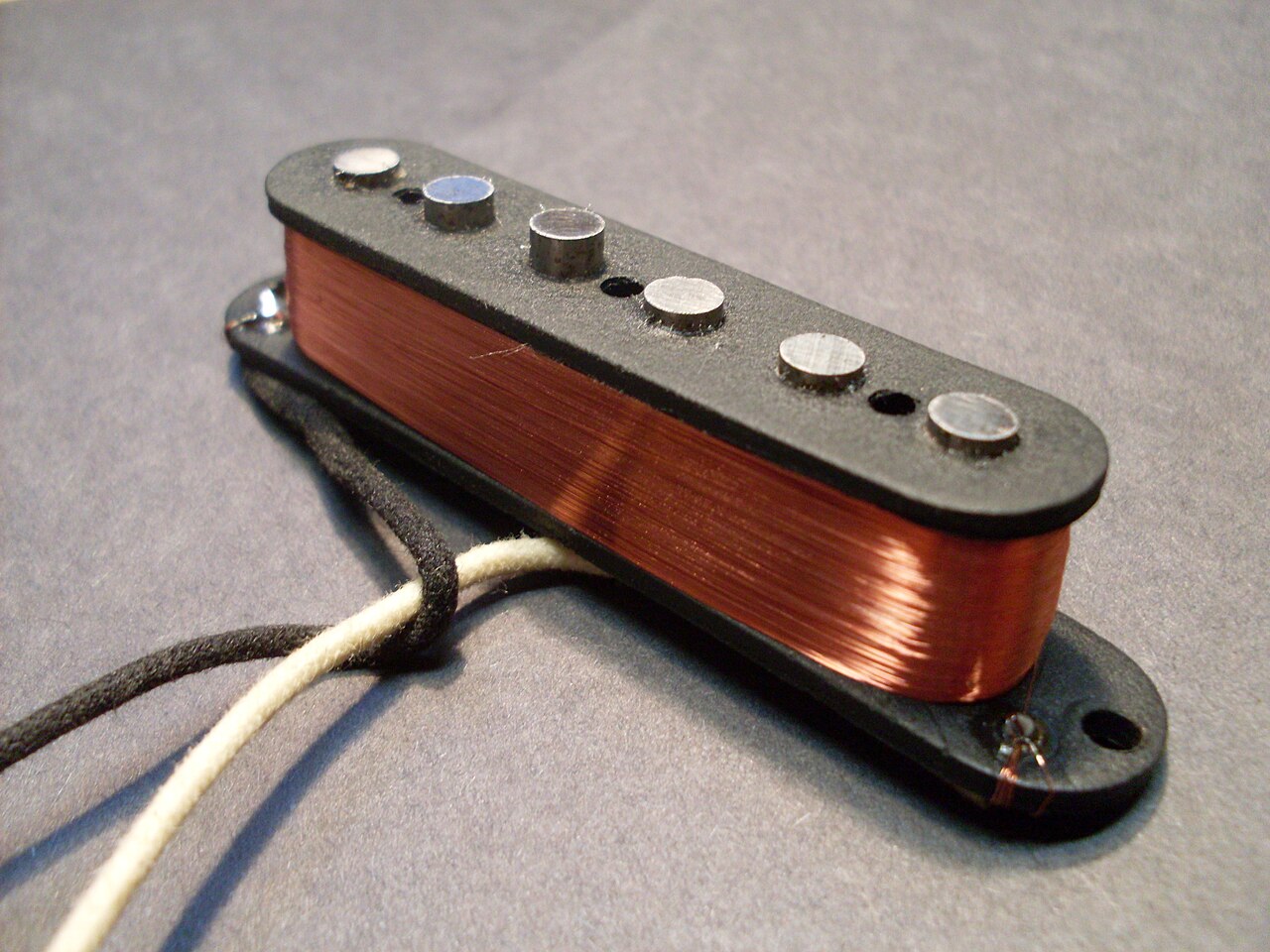
The 2016 review describes the guitar as carrying a Shadow Nanoflex under-saddle pickup with a side-mounted, Faith-branded Shadow Performer Tuner preamp — volume, bass and treble rotaries, a push-button phase control for feedback rejection, and a push-button onboard tuner with a micro LED display.
The current guitar carries a Fishman INK3 preamp with a Fishman Sonicore undersaddle pickup: three-band EQ, built-in tuner, flush side-mounted control panel, and an endpin jack with integrated battery box and separate strap button. Faith’s own Knowledge Base confirms the Fishman INK system as standard across HiGloss, Natural, Bloodmoon, Bluemoon, Classic Burst Venus/Neptune and Eclipse models.
Two entirely different pickup systems, from two different manufacturers, on the same model name. If you are buying used and the electronics matter to you — and on an electro they should — ask for a photograph of the preamp panel before you commit. The Shadow-equipped guitars are not worse, but they behave differently: the phase switch on the old system is a genuinely useful stage tool that the INK3 does not offer.
Faith Blood Moon Venus Cutaway Electro (FVBMB) — Specifications
Trembesi: The Timber Nobody Was Using
Trembesi — Samanea saman, the rain tree — is native to Indonesia and was, until fairly recently, a furniture wood. Enormous slab tables, hotel lobby counters, that sort of thing. It was prized for figure, not for tone, because nobody was seriously asking it about tone.
Faith asked. Their finding, and it is corroborated by every independent reviewer who has spent time with the series, is that a good Trembesi instrument behaves like mahogany with a koa accent: warmth and even balance across the strings, mahogany-style midrange presence, plus a little extra sparkle and harmonic charge at the top end. It is emphatically not a spruce voice. Hardwood tops never are.
What that means in practice is a slightly narrower frequency window than a spruce-topped guitar, with a subtle natural compression as you dig in with a pick. Burrluck flagged exactly this and framed it as a positive, which is the right call: big open chords sound like big open chords rather than like a shovel-load of overtones fighting each other. Hardwood tops flatter strummers and singer-songwriters for precisely this reason. The trade-off is at the bottom — the thumb has to work harder to get the low strings driving under fingerstyle than it would on a spruce-topped Martin OM-28, and the lower mids can cloud when the guitar is pushed hard through a PA.
Sourcing is documented, which is rarer than it should be. Faith state that all Indonesian mahogany, Sonokeling rosewood, Trembesi, mango and ebony comes from Java or Makassar via government-approved merchants under the Indonesian SVLK legal-timber scheme, with V-Legal export documentation filed and retained for inspection. There is no CITES burden of the kind that complicates rosewood-backed guitars at borders. Faith also partner with JUST ONE Tree, pledging a tree planted for every guitar sold globally, and — a detail vegans and vegetarians ask about often — the brand switched away from animal-derived hide and gelatine glues to non-animal white glues in 2022. The abalone rosette and mother-of-pearl logo are still animal-derived, by-products of the fishing industry from Australia or New Zealand.
Famous Players: The Honest Answer
Here is where most gear features would start inventing. We are not going to.
Faith Guitars does not have an artists page. Not one that is out of date, not one full of stale model codes — none at all. The URL faithguitars.com/artists redirects straight to the brand’s Knowledge Base. In its place is a short, unusually candid FAQ entry titled “Artist Endorsements,” which reads: “We are asked many times every day about artist endorsements, and as I’m sure you will understand, we are not able to offer many endorsements. Endorsed Faith Guitar players will pay an agreed artist price for their instruments.”
Read that again, because it is one of the most straightforward statements any guitar brand publishes. Faith is telling you, on the record, that it runs a very small endorsement programme and that even endorsed players buy their guitars at a negotiated price rather than receiving them. There is no roster to cross-reference because the brand has chosen not to build one.
That reframes the question entirely. Various forum posts and aggregator pages circulate lists of supposed Faith players; we attempted to verify the commonly repeated names against primary sources — official artist gear pages, band websites, published interviews — and could not confirm a documented Blood Moon Venus in professional touring use. Where a name could not be traced to a photograph, a video, or the artist’s own published gear list, it does not belong in this article.
What can be said with confidence is contextual. The Venus sits squarely in the British fingerstyle and singer-songwriter tradition — the lineage that runs through Bert Jansch, John Martyn, Nick Drake, Richard Thompson and Martin Simpson. Those players built their sound on 000/OM-sized instruments with strong midrange and a fast response, which is exactly the brief the Venus was drawn to. Nobody in that list played a Faith; the point is that the guitar was designed for the music they made.
And the absence of a marquee endorsee is not a knock on the instrument. It is a business model. A brand that sells through independent dealers, refuses to sell direct, and pours its budget into solid timbers and an included hardcase rather than into artist retainers is making a choice about where the money goes. On a £1,105 guitar with solid wood on all three surfaces, gold Grovers and Macassar ebony throughout, you can see exactly where it went.
Five Tone Recipes for the Blood Moon Venus
1. The Living-Room Strum
Nothing plugged in. Medium pick (0.73mm), attack just behind the soundhole toward the bridge. The Trembesi top’s natural compression does the work — you do not need to hit it hard, and hitting it hard is where it flattens out. If the guitar sounds boxy, you are strumming over the soundhole; move an inch back.
2. Solo Acoustic Gig, Small PA
INK3 volume at three-quarters maximum, no higher — Faith’s own feedback guidance, and it is correct. Bass at 10 o’clock (cut), mids flat, treble at 12–1 o’clock. The known weakness of this guitar amplified is a cloudiness in the lower mids; if your desk has a parametric, a 2–3dB dip around 250–400Hz clears it instantly. Drive the PA, not the guitar.
3. Fingerstyle, Mic’d
Small-diaphragm condenser about 30cm out, aimed at the 12th fret rather than the soundhole, angled slightly toward the bridge. The 43mm nut and 55mm string spacing are on the narrow side of comfortable for thumb-independent playing, so a light touch and a slightly raised right-hand wrist help. Roll a touch of low-shelf out below 100Hz to stop the deeper-than-it-looks body booming into the mic.
4. Two-Source Studio Blend
Condenser at the 12th fret as your main image, INK3 DI as a support channel underneath, DI high-passed hard at around 200Hz and sitting 8–12dB below the mic. You get the piezo’s transient definition without any of its quack. Check phase between the two sources before you commit — flip the polarity on the DI and keep whichever sounds fuller.
5. Alternate Tunings
The 645mm scale and factory light-gauge 12–53 set handle DADGAD and open D comfortably. Drop below that — open C, low bass tunings — and the light strings go slack. Move to a 13-gauge set if you live down there, but have the guitar checked by a tech afterwards; Faith explicitly recommend a professional look at the neck when moving to heavier or extra-light gauges, and the two-way truss rod makes the correction straightforward for someone who knows what they are doing.
How It Compares
vs Taylor 314ce
The obvious cross-shop. The Taylor 314ce gives you a spruce top, Taylor’s Expression System electronics, US manufacture and a resale value that holds like concrete. The Faith gives you solid figured hardwood on all three surfaces, a hardcase in the box, and a look nobody else in the shop has. The Taylor is the safer instrument; the Faith is the more interesting one, and roughly the same money in the UK.
vs Martin 000-15M
The Martin 000-15M is the all-mahogany, all-solid, deliberately plain answer to the same question — warm, compressed, mid-forward, no ornamentation whatsoever. It is the philosophical opposite of the Blood Moon: same tonal territory, zero visual drama. Choose by temperament.
vs Yamaha LL16 ARE
The Yamaha LL16 ARE brings torrefied spruce, a bigger body and Yamaha’s engineering rigour at a comparable price. It will out-project the Faith and give you a wider frequency spread. It will not give you a top that looks like a geological cross-section.
vs Lowden S-23
Worth naming because it shows what a step up costs. The Lowden S-23 is hand-built in Northern Ireland to a standard the Faith does not pretend to reach, at multiples of the price. If the Faith is the guitar that gets you into the small-body, hardwood-tone conversation, the Lowden is where that conversation ends.
vs Faith Naked Venus
Same shape, satin finish, no burst, lower price. The Naked Venus was voted UK’s Best Acoustic Guitar at the MIA Music Awards in 2013, and Faith have taken that award five times across the range. If the Blood Moon’s cosmetics leave you cold but the shape and the build appeal, the Naked is the same skeleton in work clothes. Note that satin finishes cannot be polished and will mark permanently — Faith say so plainly in their own care guide.
vs Blood Moon Neptune and Saturn
Identical recipe in different footprints. The Neptune (£1,135) is the baby jumbo, deeper and bassier, and comes with the INK3 as standard. The Saturn is the dreadnought and in its original 2017 form was all-acoustic — no electronics. If you want more low end than the Venus offers, that is the direction to walk.
Buying Guide
New: Faith do not sell direct. Not from faithguitars.com, not from Barnes & Mullins. You go through an independent dealer or your territory’s distributor, and the brand is unapologetic about that — their argument is that you should play the actual guitar you are buying. It is a reasonable argument, and on an instrument where every single example has a different top, it is close to essential. Two Blood Moon Venuses will not look alike and, because the Trembesi figure varies, they will not sound quite alike either.
Setup expectations: UK-sold guitars pass through Eggle’s workshop. Guitars elsewhere get the distributor’s equivalent. But Faith are candid that the guitar may have hung on a shop wall for months, moving with the seasons, and that the retailer owns its condition from delivery onward. Ask about a setup. If you are buying online, assume it has not been set up unless the retailer explicitly says otherwise.
Used checklist:
- Identify the preamp first. Shadow Performer panel = earlier build; Fishman INK3 = current spec. Photograph, not description.
- Check the fret ends. Proud fret ends on a solid-wood Indonesian-built guitar that has lived in a dry British flat is the classic humidity tell.
- Sight the top. Sinking around the bridge or a pronounced arch means the guitar has had a hard hydration life.
- Look inside at the base of the neck. The two bolts sit behind a white label; a disturbed or missing label means someone has been in there.
- Confirm the hardcase is present. It is a genuine part of the value proposition — a woodshell case, not a gigbag — and its absence should move the price.
- Gloss finish on this model means it can be polished, unlike the Naked series. Swirl marks are correctable; through-finish wear is not.
Living With One
Humidity is the whole ballgame. All-solid construction sounds better and complains louder. Faith’s guidance is unusually specific: keep it flat in the closed case when not in use, avoid radiators and fan heaters, avoid hanging it on an exterior wall in winter, and if it has been out in the cold, let it warm up inside the case rather than in the room. A cheap case humidifier removes almost all the risk. Warranty does not cover humidity damage — theirs or anyone else’s.
The bolt-on neck. Eggle’s design uses two bolts inside the body plus a glued fingerboard extension. It is there for stability and long-term serviceability, not for casual removal, and Faith’s own instructions for taking one off involve a travel iron, a foil-covered cardboard heat shield and fifteen minutes of patience. Do not. That said, the fact that the neck can be reset without a steam-and-pray dovetail operation is a real long-term ownership advantage. (Faith’s Apollo series uses a glued set neck — that one genuinely cannot come off.)
Battery. The INK3 takes a PP3 9V, accessed by carefully lifting the end of the black plastic cover on the Fishman-labelled panel at the base of the guitar and sliding it aside. No tools, no fumbling inside the soundhole with a velcro pouch — a small quality-of-life win over the discreet systems on some other Faith models.
Strap buttons. The endpin jack doubles as the strap button and it is fat. Some straps will not go over it. Options: a soft-ended strap, an endpin-specific connector, careful enlargement of the strap hole with a craft knife, or simply have a dealer fit a separate standard button alongside. Faith’s own FAQ recommends all four.
Frequently Asked Questions
Is the Faith Venus Blood Moon all solid wood?
Yes. Solid figured Indonesian Trembesi on the top, back and sides, with a mahogany neck and Macassar figured ebony fingerboard, bridge and bridge pins. There is no laminate anywhere in the body.
What is Trembesi and how does it sound?
Trembesi (Samanea saman, the rain tree) is an Indonesian hardwood traditionally used for furniture. Tonally it behaves like mahogany with a hint of koa: warm, balanced, mid-forward, with a little extra sparkle up top and a natural compression when strummed hard. Expect a slightly narrower frequency spread than a spruce-topped guitar of the same size.
When did the Blood Moon Venus actually come out?
Faith’s current page says 2017, but MusicRadar reviewed the Venus Blood Moon in May 2016 at £849, and the August 2017 launch of the Neptune and Saturn was explicitly described as those shapes joining the existing Venus. The Venus came first, by at least a year; 2017 is when the series expanded to three body shapes.
Which pickup system does it have?
Current production uses a Fishman INK3 preamp with a Fishman Sonicore undersaddle pickup — three-band EQ, onboard tuner, side-mounted flush panel. Earlier examples shipped with a Shadow Nanoflex pickup and a Faith-branded Shadow Performer Tuner preamp with a phase switch. Always verify by photograph when buying used.
Is the Venus a parlour guitar?
No. Faith classify the Venus as an OM/Auditorium with a 15″ lower bout. It is very slightly larger in outline than a Martin OM/000 and noticeably deeper in the body — dimensionally close to a Taylor Grand Concert. Faith’s parlour shape is the short-scale, 12-fret Mercury.
Which famous guitarists play a Faith Venus Blood Moon?
Faith does not publish an artists page — the URL redirects to their Knowledge Base — and the brand states openly in its own FAQ that it offers few endorsements, and that endorsed players pay an agreed artist price for their instruments rather than receiving them. We could not confirm any documented Blood Moon Venus in professional touring use against primary sources. That is a deliberate business model, not a verdict on the guitar.
Where are Faith guitars made?
Designed in the UK by Patrick James Eggle and handmade in Indonesia, using SVLK-certified Indonesian legal timber. Spruce bracing comes from FSC-certified North American, Canadian or Spanish sources. UK-bound instruments pass through Eggle’s workshop for inspection and setup before reaching dealers.
Does it come with a case?
Yes — a Faith woodshell hardcase with a padded plush interior is included with every Blood Moon. On a guitar at this price that is a meaningful chunk of the value, and its absence on a used example should be reflected in what you pay.
Is it good for recording?
Very. The hardwood top’s natural compression sits well under a vocal without needing much processing, and the mid-forward voice cuts through a dense mix where a scooped rosewood guitar would disappear. Mic it at the 12th fret and use the DI only as a support layer, high-passed.
Image credits
- Top image: GuitarGangsters AI-generated reference illustration, not a photograph.
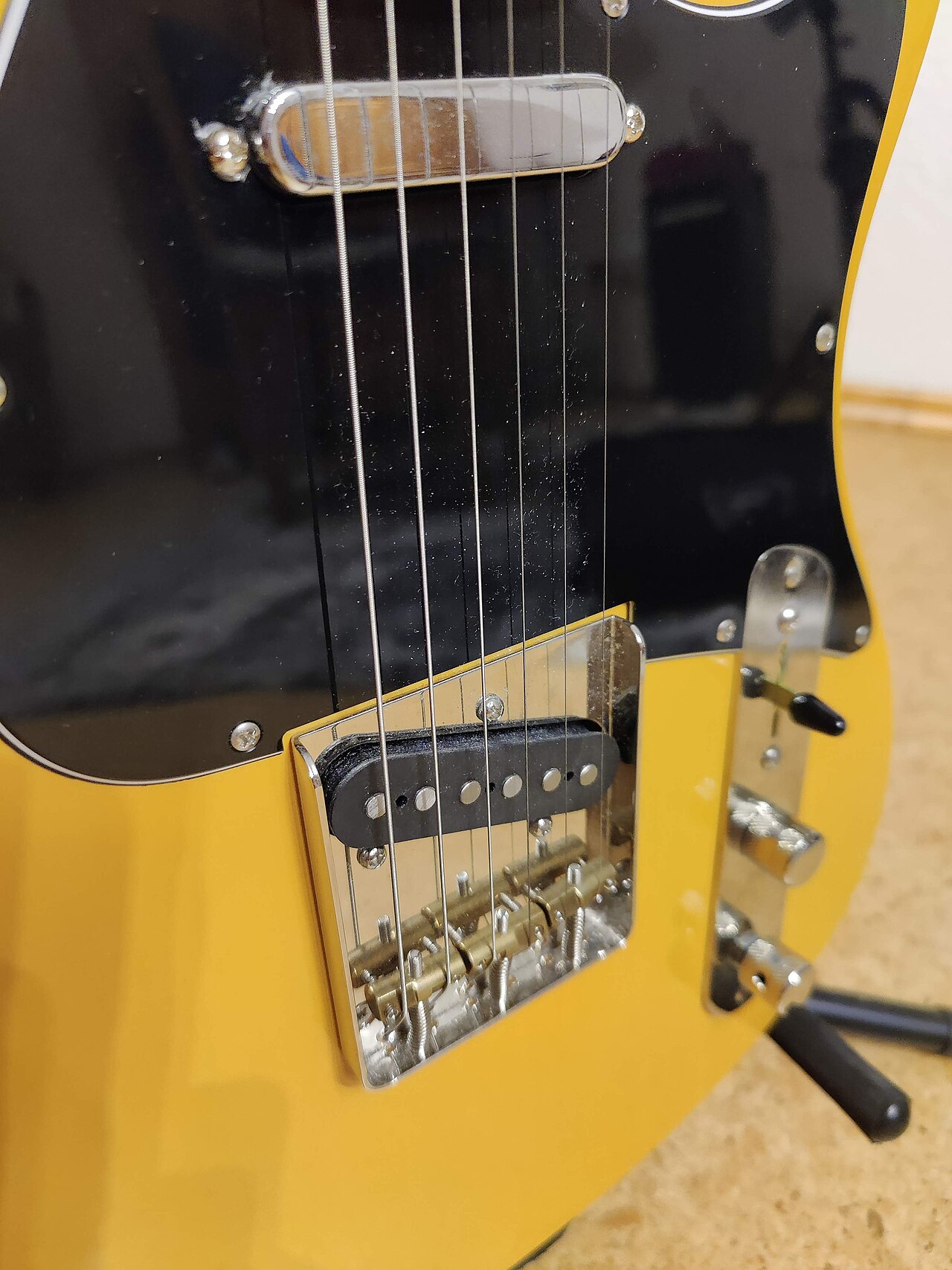
- A single-coil pickup with copper winding: Roadside Guitars, Wikimedia Commons, CC BY-SA 2.0.
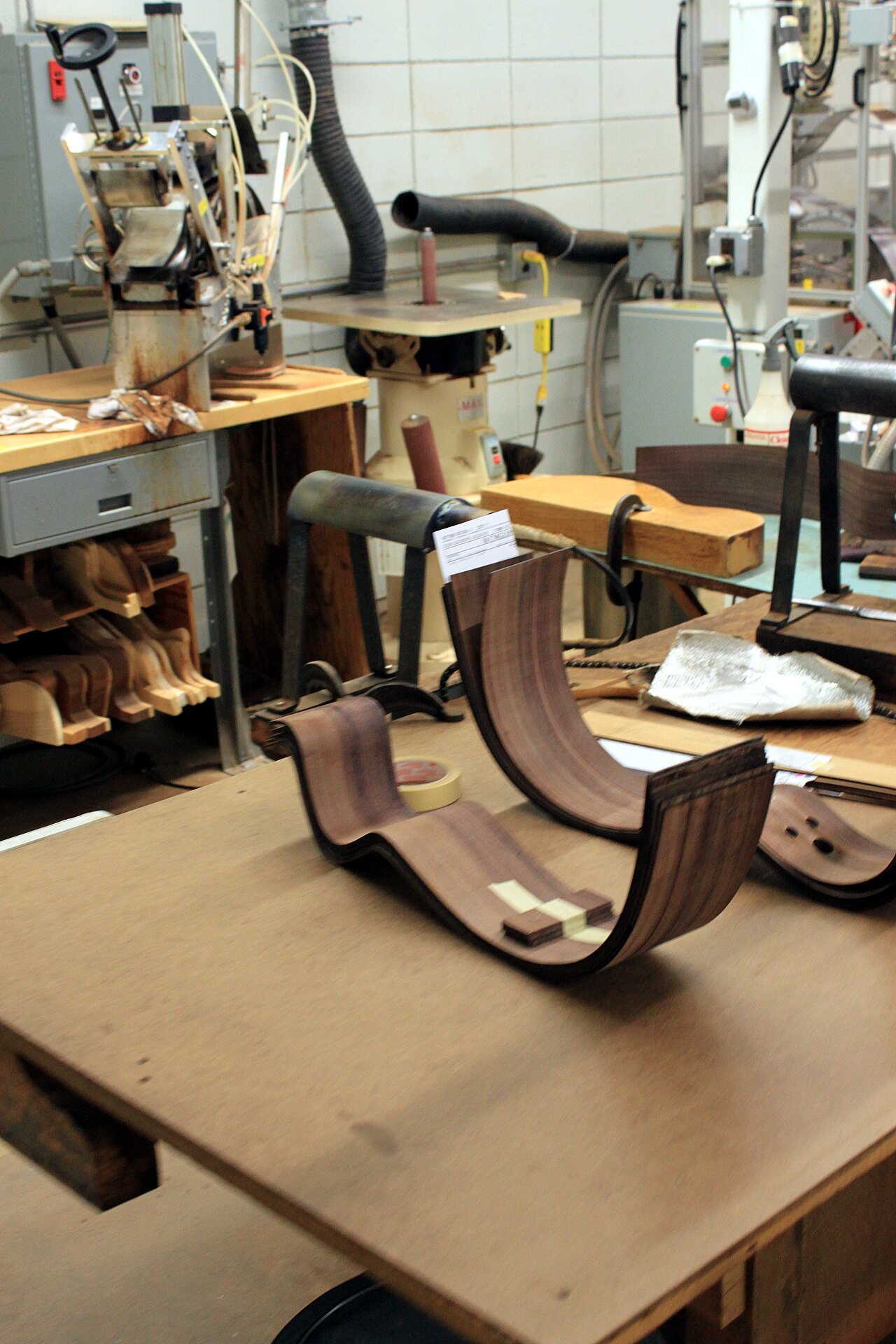
- A bending jig holding wooden guitar sides: Joseph Brent from New York, USA, Wikimedia Commons, CC BY-SA 2.0.
- The body of a yellow electric guitar: Elmschrat, Wikimedia Commons, CC BY-SA 4.0.
Latest News
Related
On This Day
Monday 9 November
From this week: