Marty Friedman Guitars & Gear: The Complete Guide to Megadeth’s Lead Guitar Master’s Rig
Marty Friedman's guitars, amps, and effects — the complete guide. Jackson Kelly, Carvin V220, PRS signature, ENGL amps, exotic scales, and how to nail that Rust in Peace lead guitar tone.
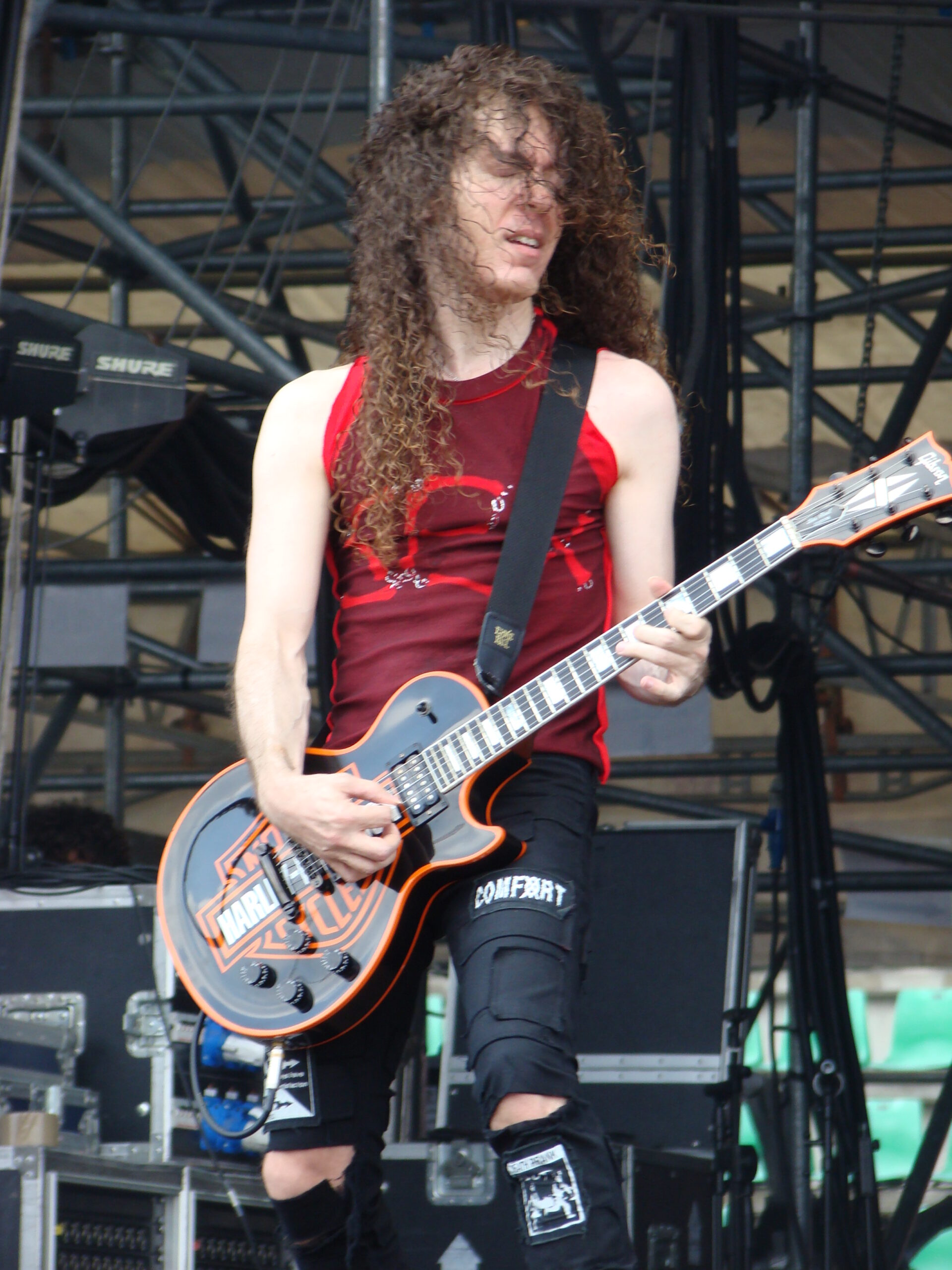
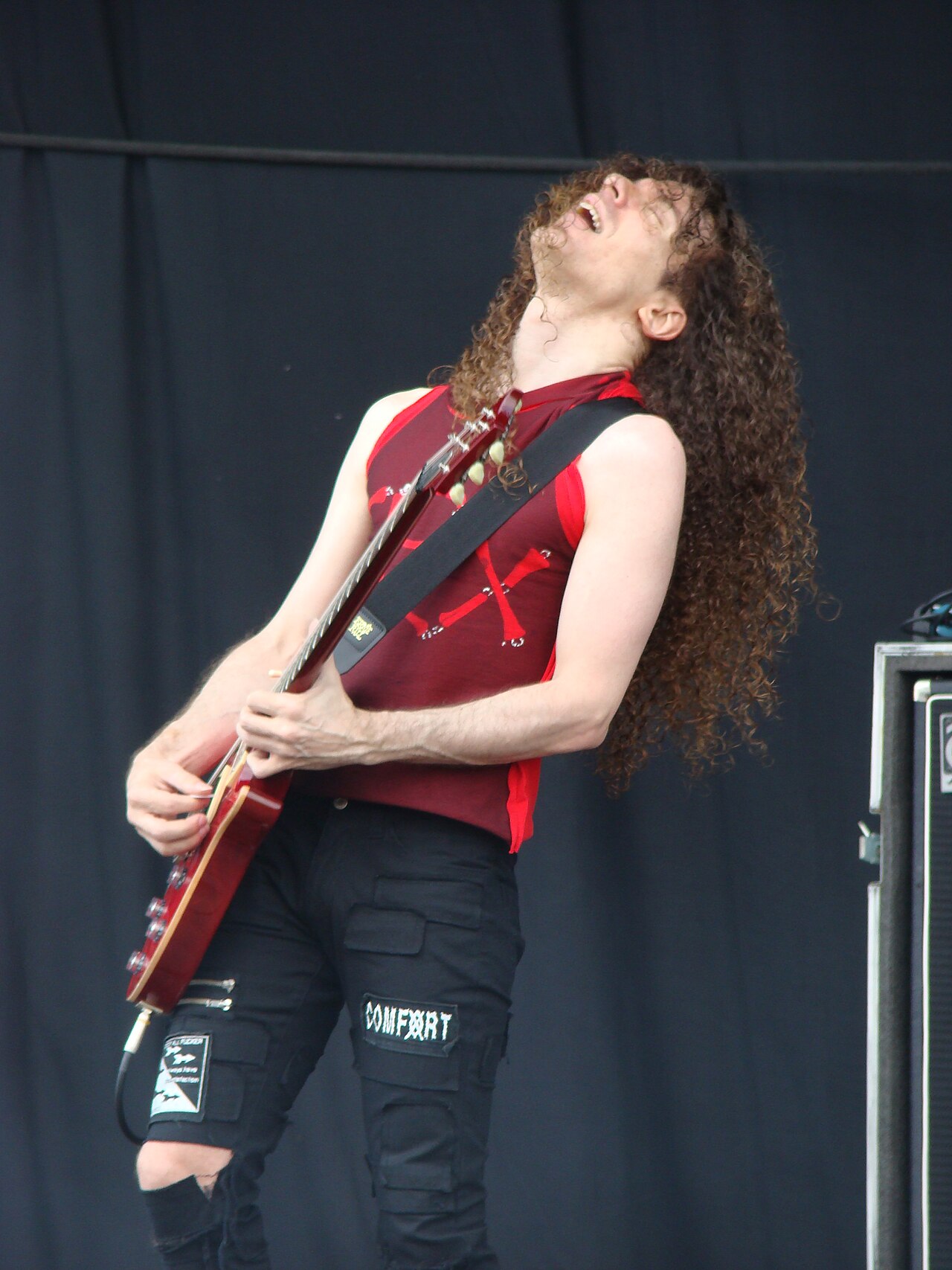
Photo by Shadowgate, licensed under CC BY 2.0. Work: Marty Friedman 13.jpg. Licence: https://creativecommons.org/licenses/by/2.0/ Source: https://commons.wikimedia.org/?curid=7929327. Site copy resized and re-encoded.
He was fourteen years old and he went to a KISS concert. The spectacle — the pyrotechnics, the makeup, the theatrics, the sheer physical volume of it — persuaded him that guitar was what he should be doing with his life. He went home and picked one up. He was largely self-taught. He rushed to form a band and started playing original songs rather than covers, for a reason that has the ring of genuine strategic intelligence: “Because, even if you screw up, you just claim that the song is written like that and no one can challenge you.” He moved to Hawaii at some point, spent time in the orbit of the Hawaiian guitar and its specific exotic scale traditions, and then joined Cacophony with Jason Becker — the neo-classical shred duo whose two albums established both players as genuinely exceptional guitarists before Becker was tragically diagnosed with ALS in 1990. Then Dave Mustaine called. The Rust in Peace era of Megadeth followed. And the guitar solo on “Tornado of Souls” — thirty-two seconds of melodically developed, technically accomplished, emotionally direct lead guitar — became one of the most celebrated solos in heavy metal history.
Martin Adam “Marty” Friedman was born on December 8, 1962, in Washington, D.C. He spent part of his youth in Maryland, lived in Hawaii, and has resided in Tokyo, Japan, since 2003. His career spans Cacophony (with Jason Becker, 1985-1989), Megadeth (1990-2000), an extensive solo catalog (thirteen albums), and a second career in Japan as a music television personality — appearing on over 700 Japanese television programs including Rock Fujiyama, Hebimeta-san, and Jukebox English. He married Japanese cellist Hiyori Okuda in 2012. He is one of the few American heavy metal guitarists to achieve mainstream celebrity status in Japan while simultaneously maintaining a reputation as a serious guitar instrumentalist within the international guitar community.
His playing is distinctive within the thrash metal context for its specific incorporation of non-Western scales — the Chinese, Japanese, and Middle Eastern scale patterns that he absorbed during his Hawaii period and from his ongoing engagement with Asian music. These exotic scales give his lead playing a specific melodic character that differs from the neoclassical minor/Phrygian vocabulary of most thrash metal lead guitarists: his lines don’t go where the listener expects them to go, because they’re traveling through harmonic territories that the Western listener’s ear hasn’t been trained to anticipate. The surprise is not randomness; it is organized and musical, but organized according to harmonic principles that Western rock music has rarely explored. This is what makes “Tornado of Souls” the greatest solo it is, and what has made his continued solo output worth listening to across decades of Japanese popular music exposure that might have diluted a lesser musician’s identity.
Background: From KISS to Hawaii to Rust in Peace
The KISS concert at fourteen is the foundational biographical event — the performance spectacle that convinced Friedman that guitar was what he should be doing. He found a band quickly, played original songs (for the tactical reason that originals can’t be compared unfavorably to the originals they’re derived from), and spent his formative years in the Washington D.C. suburban music scene before eventually moving to Hawaii. The Hawaiian period is less documented in his public biography than the subsequent Megadeth career, but its influence on his playing — specifically the exposure to Hawaiian music’s open tunings and lap steel traditions, and more broadly to Asian musical influences that were more accessible in Hawaii than on the U.S. mainland — is the source of the exotic scale vocabulary that distinguishes his playing from his thrash metal contemporaries.
Cacophony, formed with Jason Becker, was the specific vehicle through which his technical capabilities became visible to the wider guitar world. The two albums — Speed Metal Symphony (1987) and Go Off! (1988) — featured synchronized twin guitar harmonies, neo-classical scale patterns, and the specific kind of shred guitar that Shrapnel Records was promoting in the late 1980s. But even within the Shrapnel context — where technical demonstration was the primary aesthetic — Friedman’s contributions to Cacophony had the melodic intelligence and the exotic scale flavoring that set him apart from the more purely technical players in the same musical environment. When Becker was diagnosed with ALS and Cacophony dissolved, Friedman was already an established figure in the guitar community when Megadeth came calling.
His audition for Megadeth in 1989 — following a tip from guitarist Jeff Loomis — led to the decade-long run from 1990 to 2000 that included Rust in Peace (1990), Countdown to Extinction (1992), Youthanasia (1994), Cryptic Writings (1997), Risk (1999), and The World Needs a Hero (2000, released just after his departure). The Rust in Peace and Countdown to Extinction period represents his most celebrated Megadeth contribution — the specific combination of Mustaine’s rhythm sophistication and Friedman’s lead melodicism produced an album whose guitar work, more than forty years later, remains a reference point for what thrash metal guitar can achieve at its most compositionally intelligent.
His departure from Megadeth in 2000 — described by Friedman in his own words as “I wasn’t reaching my full potential in that band anymore” — and his subsequent move to Japan in 2003 opened a completely different career phase. The Japanese celebrity, the television programs, the engagement with J-pop and J-rock, the incorporation of Japanese pop production values into his solo work — all of these are the continuation of a musical career that has always been interested in music beyond the borders of Western rock convention. His solo albums released in Japan through Avex Trax and Universal are genuinely different from his Megadeth work: more melodically accessible, more influenced by Japanese pop aesthetics, but still built on the technical foundation and the exotic scale vocabulary that distinguish him from any other guitarist operating in those commercial contexts.
The transition from the Megadeth context to the Japanese popular music world deserves extended examination because it is genuinely unusual for an American metal guitarist and because it reflects the depth of Friedman’s musical curiosity. When most Western rock musicians engage with Japanese culture, they do so as visitors or as export products — bringing Western music to a Japanese audience. Friedman engaged as a participant: learning the Japanese music industry’s specific aesthetics, collaborating with Japanese artists as a peer rather than as a Western guitar hero making an appearance, and gradually developing the ability to operate within Japanese musical conventions while maintaining the technical identity that brought him there. The 700+ television program appearances are evidence of this integration — not a celebrity making occasional television appearances but a working figure in the Japanese entertainment industry. This level of cultural integration is exceptional and reflects something genuine in his interest in Asia that was visible even in his earliest guitar playing, in the Hawaiian period, in the exotic scales that had always distinguished him from his contemporaries.
The Rig: Marty Friedman’s Guitars, Amps, and Effects
Guitars
During Megadeth’s Rust in Peace and subsequent album cycle, Marty Friedman’s primary guitars were Jackson Kelly models — the angular, offset double-cutaway guitar shape that Jackson produced alongside the King V and Rhoads models in their specialist heavy metal lineup. The Jackson Kelly’s specific shape — asymmetric like a reverse V, with the lower treble cutaway providing upper-fret access and the angular body providing the visual identity associated with 1980s and 1990s metal guitar — was the instrument on which the Rust in Peace lead guitar work was played. The Kelly’s specific tonal character: a mahogany body with the through-neck or set-neck construction and high-output humbuckers that provide the sustain and clarity that technical lead playing at high gain requires. His early Jackson Kellys — some of the earliest productions of Jackson Kelly guitars — were among the instruments he later auctioned off after his Megadeth career ended.
During the Cacophony period, Friedman had a signature Carvin V220 — the California-made guitar company’s V-shaped instrument configured to his specific specifications. Carvin produced high-quality instruments at accessible price points with extensive customization options, and the V220 signature gave Friedman an instrument configured exactly as he needed. The Cacophony albums document the Carvin V220 period, and the auction of his signature Carvin V220 (along with the early Jackson Kellys) following his Megadeth career documented the end of his relationship with those specific instruments.
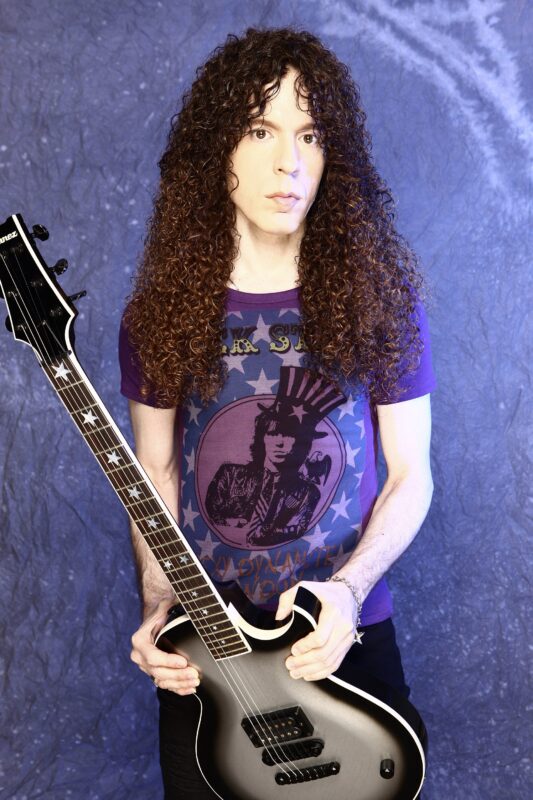
After leaving Megadeth and particularly for his 2014 Inferno album, Friedman’s primary guitars were PRS — Paul Reed Smith instruments that he describes with typical self-deprecating pragmatism: “I’ve been endorsing PRS for the last three years, and I have a new PRS Marty Friedman model that just came out. I used about five different PRS guitars on this record. The one that got used the most became the prototype for my signature model. It’s just an ass-kicking and really great-sounding guitar.” The PRS Marty Friedman signature features star inlays and other cosmetic customizations alongside the PRS tonal foundation — the specific combination of wood selection, construction quality, and pickup design that makes PRS guitars acoustically resonant and tonally complex.
The Jackson X Series MF-1 — his most recent Jackson signature model — represents his return to Jackson after the PRS period. The MF-1 features a fixed Jackson TOM (Tune-o-Matic) bridge style with anchored stop bar tailpiece (providing excellent vibration transfer), black hardware with an aggressive visual character, two volume controls, two tone controls for independent channel management, and pickup configuration suited to his specific lead and rhythm requirements. The return to Jackson is a return to the brand’s heritage in his playing history.
Ibanez produced Marty Friedman signature models — the MFM-1 (basically an SZ model with stars on the frets and body) and the MFM2 — during a period of his endorsement relationship with Ibanez. These signature models reflected his specific preferences for fretboard aesthetics (star inlays appearing across multiple endorsement relationships) and pickup configuration. The MFM-1’s SZ-model foundation provided the resonant tonewood combination and the pickup routing that suited his lead playing approach.
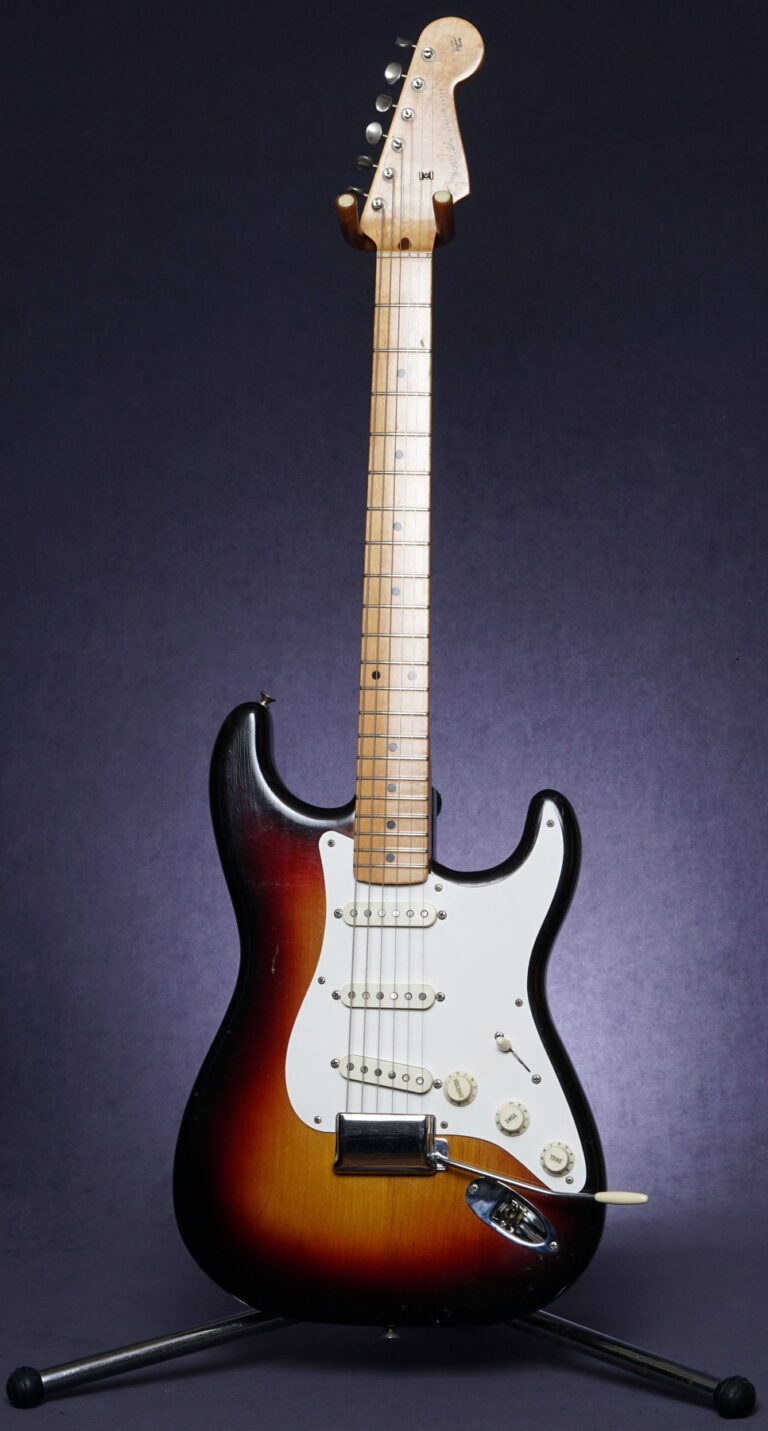
At Woodstock ’99, Friedman appeared playing a Fender Stratocaster during Megadeth’s performance of “Almost Honest.” A Fender MIJ Telecaster Butterscotch (with humbuckers and a hardtail bridge) appears in a promotional video for Fender’s Made in Japan Modern Series — reflecting his established residence in Japan and his ongoing relationship with Japanese guitar manufacturing. His Fender appearances are less central to his identity than the Jackson and PRS relationships but demonstrate his practical willingness to use whatever instrument suits a specific application.
He used the Seymour Duncan JB (SH-4) humbucker in Megadeth — the same high-output passive pickup that Dave Mustaine used in his Jackson King V. The JB’s specific character: a high-output, moderately bright passive humbucker with a specific mid-forward clarity that suits both rhythm playing and lead work. In the lead context specifically, the JB’s clarity prevents the muddy, compressed quality that some high-output pickups produce at high gain levels.
Friedman uses relatively standard heavy rock string gauges (.010-.046 or similar) consistent with his technical lead playing requirements. His picking technique — using a specific picking angle that produces the particular articulation of his lead lines — works in conjunction with his string gauge choice to produce the attack character that distinguishes his playing.
Amps
For the Inferno album (2014) and associated touring, Friedman’s primary amplification was ENGL — the German boutique amplifier company known for their high-gain clarity and note definition at extreme gain levels. “Engl amps. They send me five or six amps, I switch from one to the other, and they all sound good.” His approach to amp switching between rhythm and lead is pragmatic and specific: “An important thing when switching amps is, if you’re the same guy playing rhythms and leads, you don’t necessarily want to go through the same amp, because the tones tend to blend. But within only one Engl amp, you can get a great variety of sounds.” The ENGL’s specific character — tight, clear high-gain with note definition similar to the Mesa Boogie Mark series but with a German-voiced character — suits Friedman’s lead playing because it maintains the individual note clarity that his melodic lines require even at high gain levels.
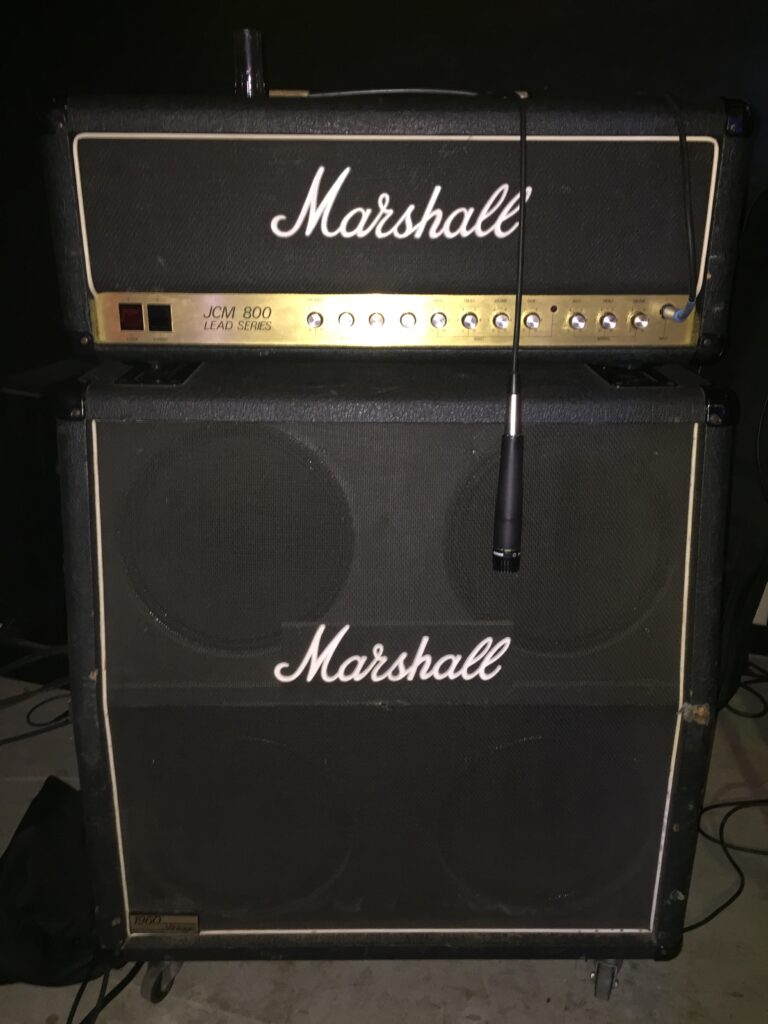
During Megadeth, Friedman used Marshall JCM800 and Mesa Boogie amplifiers — the standard thrash metal amplification platform shared with Mustaine. The specific combination of Friedman’s Jackson Kelly through Mesa Boogie high-gain amplification produced the Rust in Peace lead guitar sound: tight, present, note-clear, with the specific clarity that allows the exotic scales and the melodic development of his solo lines to be audible rather than blurred by excessive gain compression.
BOSS interviews Friedman about his use of GT-6, GT-8, and GS-10 processors, which he has used for comprehensive effects management in various touring and recording contexts. The BOSS GT series provides comprehensive amp modeling, effects, and signal management in a floor-based format that suits touring logistics.
Effects
For the Inferno album, Friedman gave his guitar tech a specific directive: “Get me a tone that any guy in a bar band would have.” He paid 99 percent of his attention to the content and the performance and one percent on how to get sounds. This is the most explicit possible statement of the philosophy that the music precedes the gear: the tone should be established and then forgotten, so that 100% of cognitive attention can be on performance quality. The implication is that extreme tonal complexity — elaborate effects chains, multiple amp configurations — competes with performance quality for the guitarist’s attention and that the competition is worth eliminating.
Despite the minimalist recording philosophy, Friedman has used BOSS GT-series multi-effects processors for comprehensive effects management in live and touring contexts where a complete signal chain is required from a single unit. The GT series provides the delay, reverb, modulation, and amp modeling that live performance requires in a programmable, consistent format.
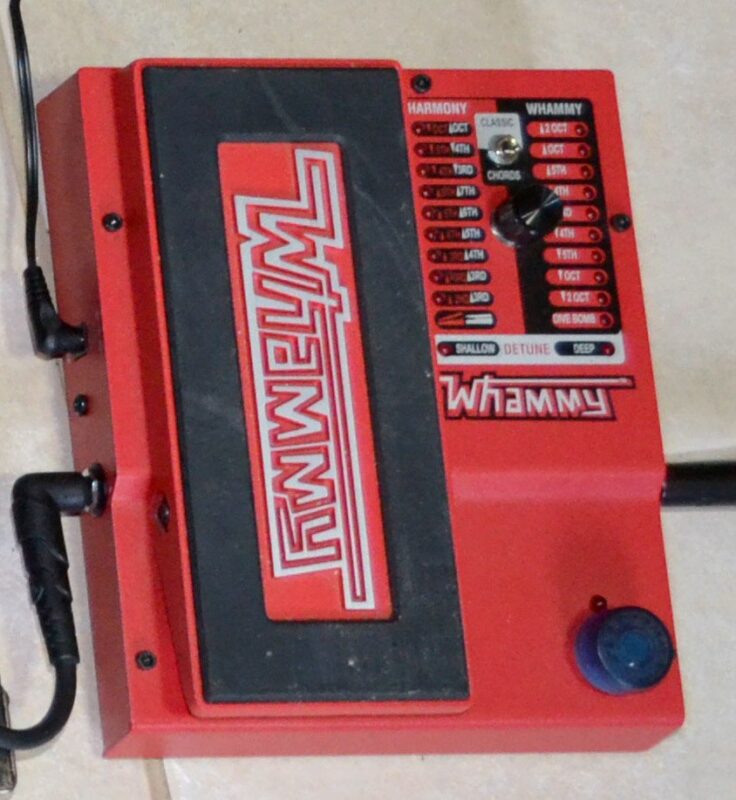
A Whammy pedal appears in Friedman’s documented live gear for specific applications — the DigiTech Whammy’s pitch-shifting providing the wide interval jumps and harmonic effects that appear in certain of his live guitar passages.
Standard delay and reverb appear in Friedman’s live signal chain, providing the spatial depth that leads require in live arena contexts. His reverb use is conservative — enough to add spatial dimension without washing out the melodic clarity of his lines.
His relationship with Jason Becker in Cacophony — the creative partnership that produced Speed Metal Symphony and Go Off! — is one of the more poignant collaborations in guitar history, given what happened to Becker. Two young guitarists pushing each other’s abilities, producing music of genuine technical and melodic quality, defining the Shrapnel Records neo-classical shred context at its highest level — and then ALS dismantling Becker’s physical ability while leaving his musical intelligence intact. Friedman has remained connected to Becker’s ongoing work, has participated in tribute events, and has maintained the friendship. The Cacophony period is a specific creative peak that Friedman built upon; Becker’s subsequent career, made through eye-tracking software after complete physical incapacitation, is one of the most extraordinary stories in music and deserves its own documentation.
Playing Style & Tone Philosophy
Marty Friedman’s playing style is built on the specific integration of Eastern and Western musical traditions — the exotic scale vocabulary absorbed from Hawaiian and Asian music combined with the Western rock and metal technical foundation of his early training. This synthesis produces lead guitar lines that move through unexpected harmonic territory — the chromatic patterns and the melodic intervals of non-Western scales creating the specific sense of melodic surprise that distinguishes his playing from the more harmonically predictable lines of purely Western-trained players.
His relationship with melody is the most defining element of his playing. Where many technically capable guitarists in the thrash metal tradition demonstrate technical ability through scalar runs and arpeggiated passages, Friedman constructs melodic narratives — lead guitar lines that have beginning, development, climax, and resolution like the melodic phrases of a song rather than the technical exercises they might be without that compositional intelligence. The “Tornado of Souls” solo is the fullest demonstration: each four-bar section develops the previous section’s melodic material, the exotic scale patterns appearing within a context of harmonic motion rather than as random exoticism, the entire solo building toward its final phrase with compositional logic.
His picking technique is also distinctive. He uses a slightly unconventional picking angle — the pick held at an unusual angle to the strings — that produces a specific articulation character that is neither the bright, precise attack of standard alternate picking nor the legato smoothness of hammer-on technique. This specific attack character gives his notes a particular “singing” quality — the attack present enough to define each note clearly but not so sharp that it feels mechanical.
His tone philosophy has evolved from the high-priority tone-chasing of the Megadeth period to the deliberately minimalist approach of his Japan years: “The main direction I gave to my guitar tech was, ‘Get me a tone that any guy in a bar band would have.’ I paid 99 percent of my attention to the content and the performance and one percent on how to get sounds.” This is the mature musician’s understanding that tone serves music rather than constituting it — that the melodic intelligence and the performance quality matter more than the specific frequency response of the amplifier.
His instructional work — the guitar clinics, the online lessons, the books and instructional videos — has been important in spreading his specific harmonic approach. A guitarist who introduces exotic scales into the vocabulary of thrash metal and heavy rock provides something genuinely useful for students who want to extend their harmonic range beyond the pentatonic minor and the neoclassical modes that most metal guitar instruction covers. His specific scale vocabulary — the Hirajoshi pentatonic, the Kumoi, the Phrygian dominant and harmonic minor in their exotic applications — represents a genuine contribution to heavy guitar pedagogy that has influenced how guitar instruction programs approach the question of harmonic range in the heavy metal context. The instructional dimension of his career is less celebrated than the Megadeth decade but is arguably as important in terms of lasting influence on how guitarists approach the instrument.
His Countdown to Extinction work — particularly the guitar work on “Symphony of Destruction,” “Sweating Bullets,” and the album’s lead passages — shows a different side of his contribution: the ability to serve the song’s melodic character rather than imposing his exotic scale vocabulary on every solo. Countdown to Extinction was a more commercially accessible record than Rust in Peace, requiring guitar work that was more immediate and less technically demanding. Friedman’s specific achievement on that album was finding the melodic approach that suited each song’s character while maintaining enough of his distinctive voice that his contribution was still identifiable. This adaptability — the ability to serve diverse musical contexts without losing essential identity — is one of the markers of a complete professional musician rather than a one-dimensional technical specialist.
How to Sound Like Marty Friedman
Getting Marty Friedman’s tone requires a high-output humbucker guitar through a high-gain amplifier with note clarity at the gain levels required. The more important element — the melodic and harmonic language — requires understanding of the exotic scales he draws from.
Guitar: Jackson MF-1 signature or equivalent high-output humbucker guitar. The Jackson TOM bridge and mahogany construction provide the sustain and clarity that his lead playing requires. Seymour Duncan JB (SH-4) in the bridge for the Megadeth era tone.
Amp: ENGL amps for the contemporary tone; Marshall JCM800 or Mesa Boogie for the Megadeth period. The critical element: note definition at high gain. Set gain high enough for sustain, but not so high that individual notes blur into each other. The melodic lines require each note to be individually audible.
Amp Settings (ENGL or Marshall JCM800, lead channel):
| Control | Setting (0–10) | Notes |
|---|---|---|
| Gain | 6–8 | High but not maximum — melodic clarity requires note definition |
| Bass | 4–5 | Controlled — prevents low-end muddiness at high gain |
| Mid | 5–7 | Present — Friedman’s tone is more mid-present than scooped |
| Treble | 6–7 | Bright — note definition comes from the upper midrange/treble |
| Presence | 6–8 | High — cutting quality for lead lines in the mix |
The exotic scales: Learning Friedman’s harmonic language requires studying scales beyond the Western minor pentatonic and major/minor modal system. Suggested starting points: the Phrygian dominant scale (also called the Spanish Gypsy scale, 1-b2-3-4-5-b6-b7), the Japanese pentatonic scales (Hirajoshi: 1-2-b3-5-b6; Kumoi: 1-2-b3-5-6), and the harmonic minor scale with its raised seventh. These provide some of the specific scale flavors that Friedman deploys; they should be learned in all positions across the neck before attempting to use them expressively in improvisation.
Influence & Legacy
Marty Friedman’s influence on guitar playing operates primarily through his demonstration that exotic scales and non-Western melodic approaches are not merely decorative additions to heavy metal guitar but can be the primary harmonic language of technically demanding, emotionally direct lead playing. His specific synthesis — the technical foundation of Western shred guitar combined with the harmonic vocabulary of Eastern musical traditions — opened possibilities for heavy metal guitar that the genre’s traditional minor pentatonic and neoclassical frameworks hadn’t explored.
His influence on Japanese guitar culture specifically is significant and unusual for an American metal guitarist. By relocating to Japan and engaging deeply with Japanese popular music — not as a tourist or a novelty act but as a genuine participant in the Japanese music industry — he demonstrated that Western metal technique and Japanese pop sensibility could be combined productively, and his television celebrity in Japan has introduced millions of viewers to serious guitar playing who might never have encountered it otherwise.
The “Tornado of Souls” solo’s specific legacy — as one of the most studied and most celebrated in metal guitar — documents his compositional approach to the guitar solo at its most effective. The solo is studied not because it’s technically the most extreme Megadeth guitar moment (it isn’t), but because its melodic intelligence, its compositional development, and its emotional arc make it the most musically satisfying.
For context on where Friedman fits in the Megadeth guitar tradition, the comparison with Dave Mustaine’s rhythm and compositional approach in Megadeth illuminates the specific division of labor on Rust in Peace — Mustaine’s rhythm sophistication and compositional architecture providing the harmonic framework within which Friedman’s melodic lead intelligence operated at its peak. The two together produced something neither could have achieved alone.
The comparison with Jason Becker’s similarly exceptional technical approach in Cacophony shows the specific creative relationship in which Friedman first emerged at the highest level — two young guitarists pushing each other’s abilities in a competitive but genuinely collaborative context, each making the other better and each developing a distinctive individual voice from the shared technical foundation of Shrapnel Records neo-classical shred.
And the comparison with Steve Vai’s similarly exotic-scale-informed lead approach shows the parallel tradition: both Vai and Friedman absorbed non-standard scale vocabularies and applied them to technical rock guitar contexts, each arriving at a genuinely distinctive personal harmonic language from different cultural starting points — Vai from the neo-classical European tradition and experimental composition, Friedman from Asian music traditions absorbed during his Hawaii years.
Marty Friedman is sixty-three years old in 2026, residing in Tokyo, performing, recording, and appearing on Japanese television. The Jackson MF-1 is in the case. The ENGL amplifier is in the rack. The tone direction is “any guy in a bar band would have.” And 99 percent of his attention is on the content and the performance. The “Tornado of Souls” solo is now over thirty years old and still taught in guitar programs worldwide. The exotic scales are still there, still moving through harmonic territory the listener didn’t expect, still making the most celebrated solos in thrash metal sound like more than thrash metal. Some musicians find the music that’s theirs and never lose it. Marty Friedman found his at a KISS concert at fourteen years old, in Hawaii, in the scales of Asian music, on a Carvin V220, on a Jackson Kelly, on a “Tornado.” He still has it.
His celebrity in Japan includes hosting Rock Fujiyama — a television program that was specifically about rock music and rock guitar, bringing international rock culture to Japanese audiences with Friedman as the host who understood both the guitar world and the Japanese entertainment context. The program, along with Jukebox English, demonstrated that the Japanese entertainment industry valued his dual identity: the serious guitar virtuoso who could also entertain and communicate across cultural contexts. This is a combination that very few Western musicians achieve in any non-English-speaking market — most either maintain the serious-musician identity and find a limited niche, or adapt so completely to the local entertainment context that their musical identity becomes secondary. Friedman maintained both, and 700+ television appearances across over two decades document the sustained success of that balance.
His solo albums — released through Avex Trax, Universal, and other Japanese labels alongside international releases — demonstrate the full range of his musical personality across their thirteen-album span. Tokyo Jukebox (2009) featured heavy metal arrangements of J-pop songs — applying his technical heavy guitar approach to the melodic material of Japanese popular music with results that were genuinely surprising and genuinely successful within the Japanese market. Wall of Sound (2017) was a return to heavy instrumental guitar. Inferno (2014) was explicitly aimed at the international heavy guitar audience rather than the Japanese pop market. Each album represents a specific decision about which of his multiple musical identities to foreground, and the cumulative body of work demonstrates a creative range that his Megadeth decade alone would never have predicted.
Marty Friedman is sixty-three years old in 2026, in Tokyo, making music. The ENGL amplifier provides the tone any bar band guy would have. The Jackson MF-1 is in the case. The exotic scales are still in his fingers — the Hirajoshi, the Kumoi, the Phrygian dominant, the harmonic minor in its Eastern applications. The 700+ television appearances are behind him but the television relationships continue. And somewhere in Tokyo, a musician who started because a KISS concert persuaded him guitar was worth doing is still proving, thirty years after “Tornado of Souls,” that the proving was always secondary to the music itself.
The specific character of his picking technique — the slightly non-standard angle that produces the particular attack of his notes — is worth one additional paragraph because it is the physical foundation of the tonal character that makes his playing recognizable even outside the context of the exotic scales. Most guitarists develop a picking angle through years of practice that becomes automatic; Friedman’s specific angle produces an articulation that lies between the crisp precision of flat picking and the softer attack of angled picking, creating the specific “singing” quality that the best passages on Rust in Peace demonstrate — each note clear enough to be individually heard but not so mechanically defined that the musical line feels robotic. This is a physical characteristic that is difficult to teach because it emerged from self-teaching without the corrective influence of a teacher who might have standardized it toward convention. The unconventional picking angle is one of the benefits of his largely self-taught background.
The “Tornado of Souls” solo is thirty-five years old. It is still widely considered one of the greatest in metal. The KISS concert at fourteen. The self-teaching. The “if you screw up you claim it was written that way.” The Hawaii period and the exotic scales. Cacophony with Jason Becker. Megadeth and Rust in Peace. Japan and 700 television programs. Sixty-three years old and still making music that moves through harmonic territory the listener didn’t expect. This is what a career built on genuine musical curiosity looks like from the outside. From the inside, it probably looks like a guy with a Jackson guitar, a bar-band amp setting, and 99% of his attention on the performance.
Frequently Asked Questions: Marty Friedman Guitars & Gear
What guitar does Marty Friedman play?
Marty Friedman’s guitars have evolved across his career. During the Cacophony period, he played a signature Carvin V220 — one of the earliest Jackson Kelly guitars and his signature Carvin V220 were auctioned off after his Megadeth career. During Megadeth (1990-2000), his primary guitars were Jackson Kelly models with Seymour Duncan JB pickups. For the Inferno album and the PRS endorsement period, he played PRS Marty Friedman signature guitars with star inlays. He has also played Ibanez MFM-1 and MFM2 signature models, various Fender Stratocasters and Telecasters, and his current primary guitar is the Jackson X Series MF-1 signature model with fixed Jackson TOM bridge, black hardware, and star inlays.
What amp does Marty Friedman use?
Marty Friedman’s primary amplification for his Inferno period (2014) and contemporary touring has been ENGL amplifiers — the German boutique brand known for high-gain clarity and note definition. “Engl amps. They send me five or six amps, I switch from one to the other, and they all sound good.” During his Megadeth period, he used Marshall JCM800 and Mesa Boogie amplifiers alongside the band’s standard high-gain amplification infrastructure. He has also used BOSS GT-6, GT-8, and GS-10 processors for comprehensive effects management in live contexts.
What is the “Tornado of Souls” solo and why is it famous?
“Tornado of Souls” is a track from Megadeth’s Rust in Peace (1990) that features Marty Friedman’s most celebrated lead guitar performance — a melodically developed, compositionally structured solo that builds across multiple sections with each phrase developing the previous one’s material. The solo is cited as one of the greatest in heavy metal because of its melodic intelligence: it’s not technically the most extreme playing on the album, but the melodic development, the use of exotic scale patterns within a compositionally coherent framework, and the emotional arc make it the most musically satisfying. It is widely taught in guitar programs as an example of how great solos are constructed rather than improvised.
How did Marty Friedman incorporate Eastern musical scales into metal?
Friedman incorporated Eastern musical scales — Japanese pentatonic scales (Hirajoshi, Kumoi), Chinese pentatonic scales, and Middle Eastern scale patterns — into his heavy metal lead playing through the specific influence of his time in Hawaii, where Asian musical traditions are more accessible than on the continental United States. He is largely self-taught and absorbed these scales alongside Western rock scales, using them as part of a unified harmonic vocabulary rather than treating them as exotic decoration. The result is lead lines that move through unexpected harmonic territory — intervals that the Western ear doesn’t anticipate — giving his playing the specific quality of melodic surprise that distinguishes it from purely Western-trained thrash metal players.
Why did Marty Friedman leave Megadeth?
Marty Friedman left Megadeth in 2000, stating “I wasn’t reaching my full potential in that band anymore.” After a decade of significant commercial and critical success with Megadeth, he felt his musical development required opportunities that the band’s specific context couldn’t provide. He moved to Japan in 2003, where he pursued an extensive solo career, collaborated with Japanese pop artists, hosted television programs (Rock Fujiyama, Jukebox English), and continued to develop the Asian musical influence that distinguishes his playing. His departure allowed him to explore the broader range of his musical interests — the exotic scales, the Japanese pop aesthetics, the instrumental guitar — that the Megadeth context couldn’t fully accommodate.
What is Cacophony and who is Jason Becker?
Cacophony was a neo-classical shred metal duo formed by Marty Friedman and Jason Becker, releasing two albums — Speed Metal Symphony (1987) and Go Off! (1988) — on Shrapnel Records. Jason Becker is an American guitarist whose prodigious technical abilities and melodic gifts made him one of the most celebrated guitarists of the late 1980s. In 1989, Becker was diagnosed with ALS (amyotrophic lateral sclerosis), which progressively robbed him of the ability to play guitar and eventually of the ability to move or speak. He has continued to compose music using eye-tracking technology. Cacophony’s dissolution following his diagnosis ended Friedman’s tenure there, after which he joined Megadeth. Becker’s diagnosis and subsequent decades of artistic production despite his condition make him one of the most extraordinary figures in guitar history.
Is Marty Friedman in the Rock and Roll Hall of Fame?
As of 2026, Marty Friedman has not been inducted into the Rock and Roll Hall of Fame as a solo artist. His Megadeth tenure placed him within one of thrash metal’s most celebrated bands, whose Rock and Roll Hall of Fame candidacy has been discussed but not acted upon. Friedman’s specific contribution to Megadeth’s most celebrated period — the Rust in Peace and Countdown to Extinction albums — includes some of the finest lead guitar work in the genre’s history, most notably the “Tornado of Souls” solo. His solo career in Japan has been commercially successful within the Japanese market and has produced respected instrumental guitar albums internationally, establishing him as a significant figure in both metal and instrumental guitar contexts.
Image credits
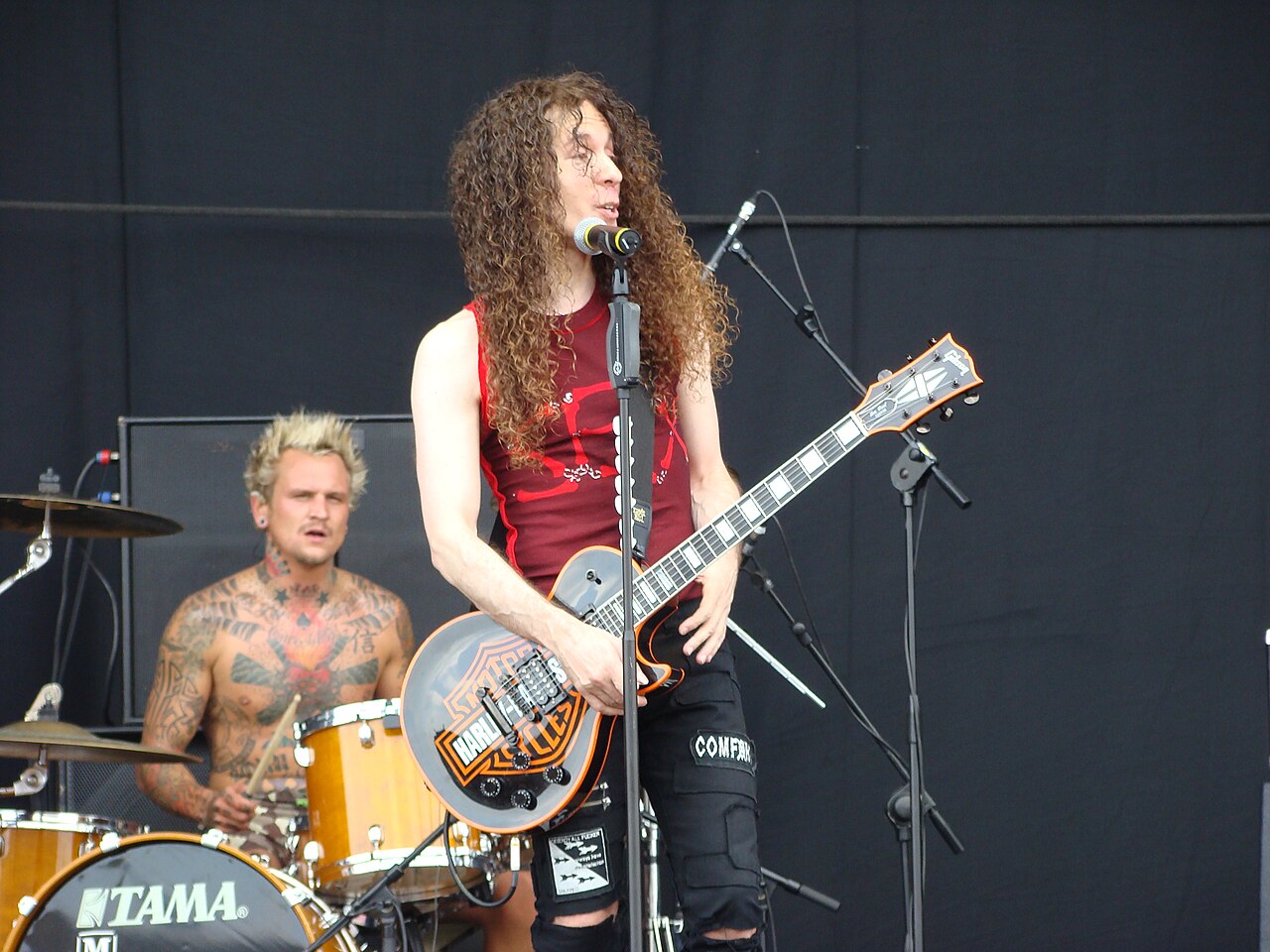
- Marty Friedman: Shadowgate, Wikimedia Commons, CC BY 2.0.
- Marty Friedman: Shadowgate, Wikimedia Commons, CC BY 2.0.
- Top image: by Shadowgate, Wikimedia Commons, CC BY 2.0.
- Marty Friedman: photo by Takaaki HenmiCopyright holder: Marty Friedman, via Wikimedia Commons, CC BY-SA 4.0.
- Marty Friedman: photo by Factor Metal, via Wikimedia Commons, CC BY 2.0.
- Fender Stratocaster: Lightburst, Wikimedia Commons, CC BY-SA 4.0.
- Marshall JCM800: John2112, Wikimedia Commons, CC BY-SA 4.0.
- DigiTech Whammy: marcelodonati, Wikimedia Commons, CC BY 2.0.