Mark Tremonti Guitars & Gear: The Complete Guide to Alter Bridge’s Guitar Architect’s Rig
Mark Tremonti's guitars, amps, and effects — the complete guide. PRS Mark Tremonti Signature, Mesa Boogie Dual Rectifier, PRS Archon, Morley wah, palm muting technique, and how to nail the Alter Bridge heavy tone.
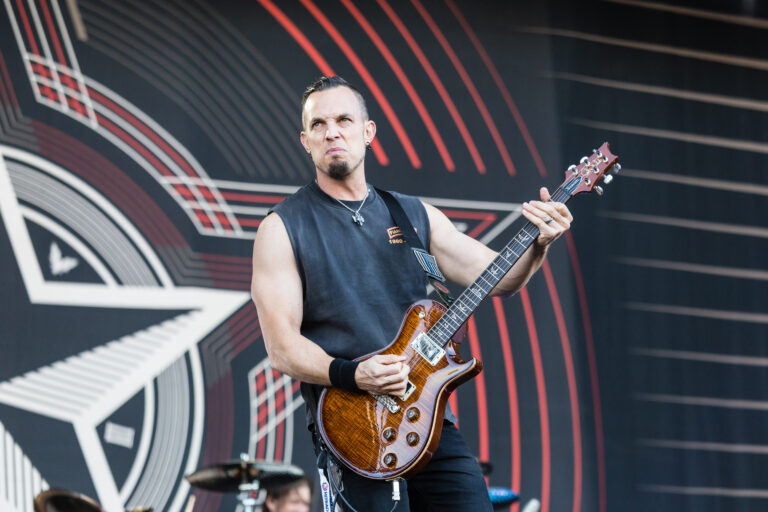
Photo by Antje Naumann, licensed under CC BY-SA 3.0. Work: 14-06-06 RiP Alter Bridge Mark Tremonti 3.JPG. Licence: https://creativecommons.org/licenses/by-sa/3.0/ Source: https://commons.wikimedia.org/?curid=33513223. Site file unchanged from the source.
One of the earliest gear secrets of his Creed period was simultaneously the most technically unusual: he ran a bass cabinet alongside his screaming Mesa Boogie Dual Rectifier stack, in order to add extra levels of monstrous thump to his tone. A guitar amplifier running into a bass cabinet — not because a bass guitarist needed it nearby, but because the specific tonal contribution of a speaker designed for lower frequencies added something to the guitar’s low end that guitar cabinets alone couldn’t provide. This is not a standard piece of advice in any guitar instruction book. It reflects the specific thinking of a musician for whom tone was a primary compositional element, worth engineering in unusual ways to achieve what the standard approaches couldn’t.
The Journey
Mark Thomas Tremonti was born on April 18, 1974, in Detroit, Michigan, and grew up in Orlando, Florida. He is one of the longest-tenured PRS signature artists in the company’s history, a founding member of both Grammy Award-winning Creed and Alter Bridge, and the frontman of his own solo band Tremonti. One of rock’s leading guitarists — as PRS describes him — with a “savage, polished and instantly recognizable style” that has left a lasting influence on the sonic architecture of modern heavy music. Guitar Interactive Magazine has called him “the best pure Rock guitarist in the world today.” The Loudwire Music Award for Best Guitarist came in 2015. And the specific combination of crushing rhythm playing and melodic lead work that defines his guitar identity — the palm-muted power chord rhythm precision and the lyrical, singing lead style that balances it — has made him the reference point for a generation of hard rock guitarists who want to know how technically advanced guitar playing and commercially accessible songwriting occupy the same musician at the same time.
His approach to the guitar, stated simply: “The Mark Tremonti sound essentially revolves around two core guitar tones: clean and heavily distorted. There is nothing particularly complex about his tone but with typical focus, Tremonti’s Alter Bridge live rig is aimed at delivering the sounds he wants with maximum power and efficiency.” This description — two tones, maximum power and efficiency — is the working definition of clarity in rock guitar philosophy. Everything in his setup serves either the clean tone or the heavily distorted tone. Nothing is present for its own sake. The bass cabinet was there because it made the distorted tone more powerful. When it stopped doing that more effectively than the alternatives, it was removed. The philosophy is the constant; the equipment is the variable.
Background: From Detroit to Creed to Alter Bridge
Tremonti began playing guitar at age eleven in Orlando, Florida, developing the technical foundation through the standard path of self-teaching combined with absorption of the artists he admired. His specific early influences — James Hetfield, Tony Iommi, Eddie Van Halen, Dimebag Darrell, Randy Rhoads, and Zakk Wylde — trace the complete trajectory of heavy metal rhythm and lead guitar from its foundational figures to his own immediate predecessors. The list reflects someone who approached the guitar through its heaviest traditions and built his own synthesis from there. Unlike many guitarists in this series who absorbed blues or jazz before rock, Tremonti went directly to heavy metal and developed the harmonic sophistication that distinguishes his playing from within that tradition rather than from outside it.
Creed formed in Tallahassee, Florida, in 1993, with Tremonti as the primary guitarist and Scott Stapp as vocalist. My Own Prison (1997) broke the band commercially; Human Clay (1999) and the number-one single “With Arms Wide Open” established them as one of the most commercially successful rock acts of the late 1990s and early 2000s. “With Arms Wide Open” won the Grammy for Best Rock Song at the 2001 Grammy Awards. By that point, Tremonti had already been contacted by PRS and was developing the signature guitar relationship that would define his instrument identity for the next two-plus decades. Creed’s dissolution in 2004 — following mounting tensions with Scott Stapp — led directly to Alter Bridge’s formation with the remaining Creed members and new vocalist Myles Kennedy.
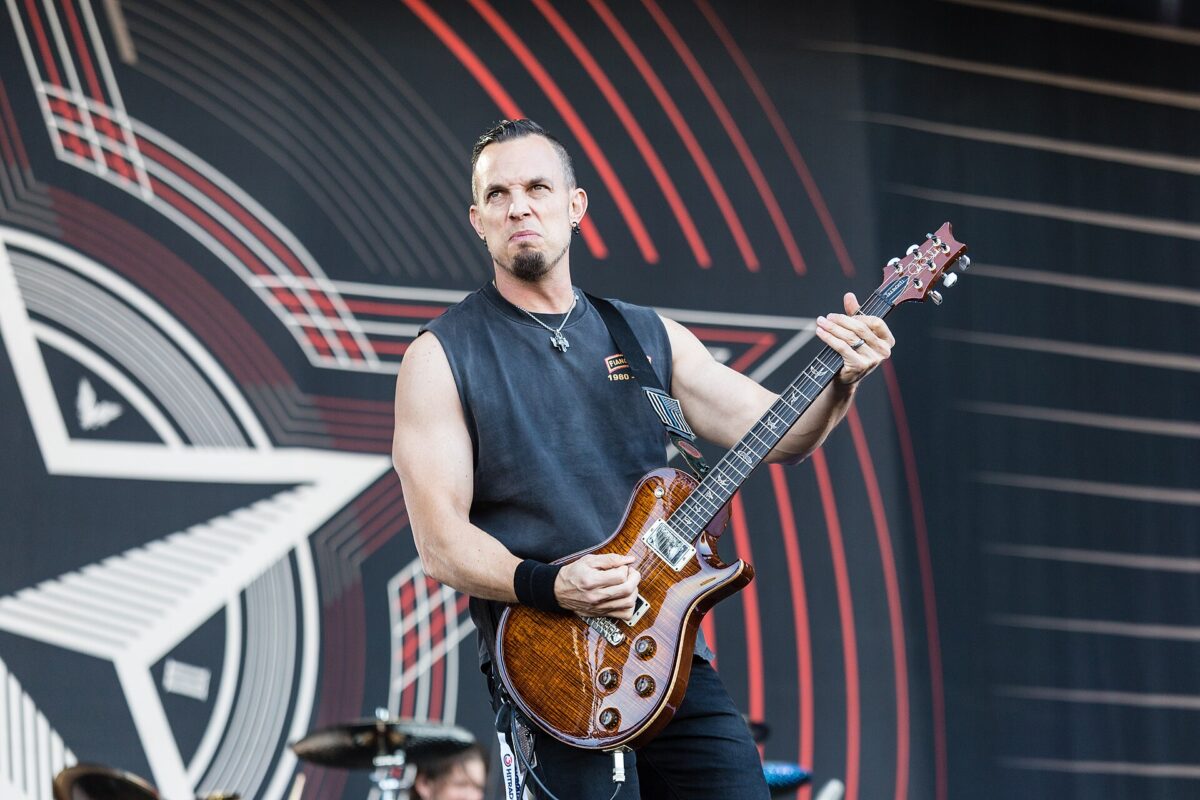
The Creed Grammy for “With Arms Wide Open” — Best Rock Song at the 2001 Grammy Awards — documents the commercial peak of the Creed period and the specific quality of Tremonti’s songwriting contribution to that peak. “With Arms Wide Open” is not a riff-based hard rock track; it is a melodic, emotionally direct song built around delicate acoustic guitar and a specific chord-based sensitivity that Tremonti developed alongside the heavy rhythm playing that defines his public guitar identity. The acoustic playing on that track — the clean, measured chord work that builds to the heavier section — demonstrates the full range of his guitar vocabulary. He is not only the player who drops the heavy palm-muted riff; he is also the player who constructs the delicate acoustic foundation that makes the riff’s impact feel earned when it arrives.
Alter Bridge has been Tremonti’s primary creative outlet since 2004, with five studio albums: One Day Remains (2004), Blackbird (2007), ABIII (2010), Fortress (2013), The Last Hero (2016), Walk the Sky (2019). Blackbird in particular is considered the band’s artistic peak — a record on which Tremonti’s guitar work matches the compositional ambition of the material, with the title track’s extended instrumental passages and the specific range of tonal approaches across the album demonstrating the full scope of his guitar vocabulary. The Tremonti solo band (Tremonti, the project) began in 2012, giving him the additional creative outlet for the heavier, more aggressive material that Alter Bridge’s more accessible approach doesn’t always accommodate.
The Alex Lifeson comparison — specifically cited in Guitar Interactive Magazine’s description of “One Last Breath” from Creed, noting “the delicate, pseudo-classical intro and suspended chords… echoes some of the work of Alex Lifeson from Rush” — is an unusual one that documents a dimension of his playing that the heavy rhythm emphasis might obscure. Lifeson’s Rush work involves suspended chords, open voicings, and harmonic sophistication within a hard rock context; Tremonti’s “One Last Breath” intro demonstrates the same capacity for delicate harmonic construction. This is the versatility that makes Alter Bridge’s guitar work more interesting than their commercial niche might suggest: the guitarist who plays the heaviest rhythm parts also plays the most harmonically sophisticated clean passages.
His development as a technical player is a sustained and specifically documented commitment. He practices consistently, maintains a specific practice routine, and has described the discipline of practice as fundamental to his ability to maintain the technical standard his music requires. This is not a musician who relies on natural talent and accumulated experience; it is a musician who actively works at maintaining and expanding his technical capabilities across a career that has now spanned three decades.
The Rig: Mark Tremonti’s Guitars, Amps, and Effects
Guitars
The PRS Mark Tremonti Signature is one of the longest-tenured signature models in PRS history — a mahogany body with figured maple top, mahogany neck with rosewood fretboard and Bird inlays, PRS tremolo with up-route (allowing the tremolo to move both up and down), Phase II locking tuners, nickel hardware, and Tremonti-spec’d pickups with independent volume and tone controls for each pickup. The pickups were specifically developed for his palm-muting-heavy rhythm playing: he needed pickups that were a little more aggressive and could complement his rhythm playing which contains a lot of palm muting. The Tremonti pickup’s specific character — higher output than standard PRS humbuckers, with a specific response to the sharp attack of palm-muted power chord playing — was developed to produce the massive, tight low-end of his rhythm work without the flabby, loose quality that some high-output pickups produce.
The PRS Tremonti’s relationship to the Les Paul tradition is specific and acknowledged: “It’s pretty much in the same world as the Les Paul.” Tremonti’s original primary guitar before the PRS relationship — a Les Paul Standard Goldtop — was his main guitar before the PRS endorsement. When PRS approached him during the My Own Prison tour and offered him a McCarty model, the immediate connection reflected the Les Paul similarity: both are mahogany-body, carved-top, humbucker-equipped guitars with the specific warm, sustaining character of that construction tradition. The PRS version differs in the PRS tremolo (unavailable on the Les Paul) and the specific neck profile and fretboard that PRS developed to Tremonti’s preferences. The result is a guitar that reproduces the Les Paul’s essential sonic character with modern playability improvements and the tremolo arm that his style requires.
Tremonti is one of the first and only PRS endorsees to have both a Core model and an SE model (PRS’s more affordable line), making his signature accessible at multiple price points. The SE Tremonti provides the essential character of the Core model — mahogany construction, Tremonti-spec pickups, similar shape and layout — at a significantly lower price point, bringing his specific instrument choice within reach of the guitarists who are influenced by his playing and want to use his tools. This accessibility commitment — explicitly designed as one of the more affordable SE models PRS offered — reflects both commercial sense and a genuine commitment to making the instrument available to fans.
I have a signature baritone hybrid that sits most comfortably in C# standard; anything that’s lower than that, I just use that guitar. The PRS baritone hybrid — with its longer scale length that provides proper tension for the lower-pitched strings of baritone tuning — allows Tremonti to access the lower register that some Alter Bridge and Tremonti band material requires without compromising the feel and intonation of his standard-pitch PRS Tremonti. The baritone’s comfortable “home” in C# standard makes it specifically useful for the drop-tuned material that characterizes contemporary hard rock and metal.
Before the PRS endorsement, Tremonti can be seen using a Les Paul Standard Goldtop. This was his main guitar before being endorsed by PRS. The Goldtop Les Paul — the mahogany/maple/rosewood combination with P-90 or humbucker pickups — was the foundational instrument of his early Creed work and the sound against which his subsequent PRS signature was explicitly designed to compare. His description of the PRS as “pretty much in the same world as the Les Paul” is the clearest possible documentation of the tonal lineage: the PRS Tremonti is Les Paul-derived, modernized, and personalized.
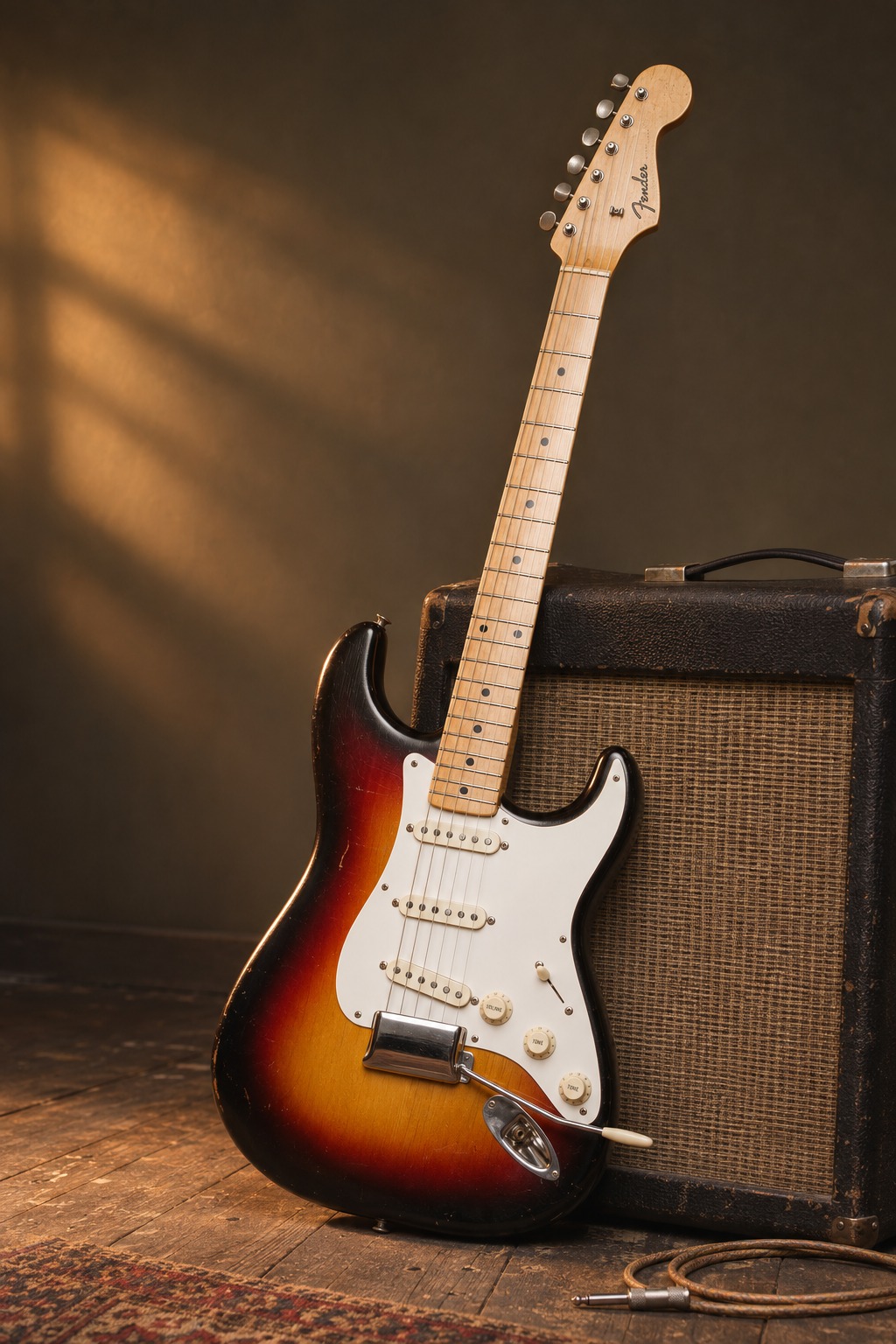
Mark Tremonti has previously been known to play a heavy relic Fender Stratocaster ’56. The heavy relic Strat — with its aged finish, vintage appointments, and the characteristic single-coil clarity of the 1956-specification Stratocaster — provides the clean tonal character that the PRS Tremonti’s humbucker pickups can’t fully replicate for specific applications where single-coil clarity is tonally appropriate. The use of a vintage-style Strat alongside the signature PRS reflects the practical musician’s willingness to use the right tool for the specific musical moment rather than maintaining a single-instrument identity regardless of context.
Amps
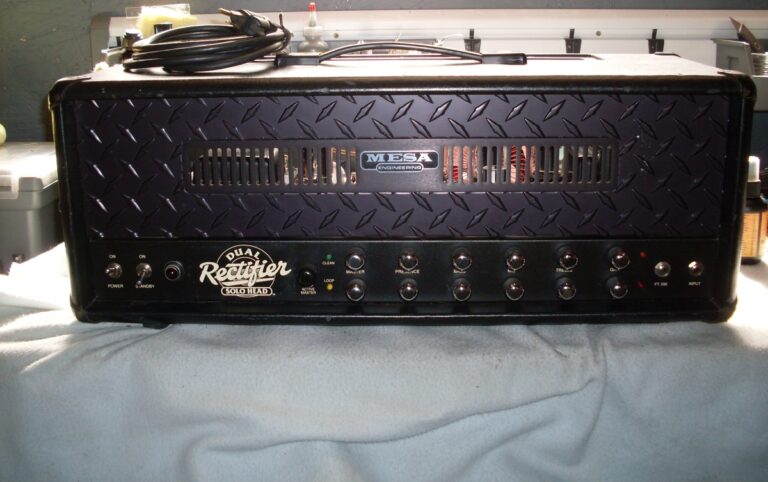
Tremonti uses a multi-amp setup anchored by his Mesa/Boogie Dual Rectifier, which runs through the two inside Mesa/Boogie 4×12 cabinets for rhythm and lead work. The Mesa Dual Rectifier is, with the Marshall JCM800, one of the two most ubiquitous heavy rock guitar amplifiers in the world — its aggressive, saturated character and its specific silicon or tube rectifier options providing the massive, tight heavy rock tones that the Creed and Alter Bridge material requires. Tremonti’s early Creed-era secret of running the Dual Rectifier through a bass cabinet alongside the guitar cabinet — adding the bass cab’s specific low-frequency contribution — represents the most unusual and most specifically effective tone-engineering decision of his early career.
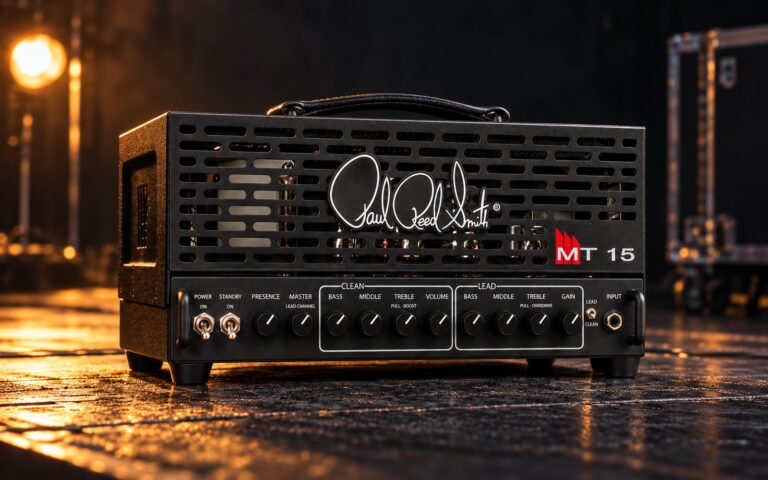
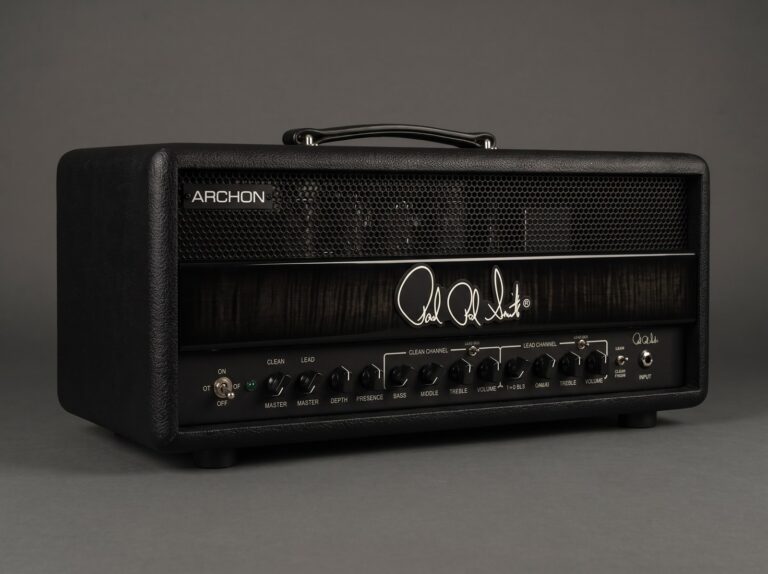
I’m using a Mesa-Boogie Revision F two-channel Rectifier, and I’m using a PRS Archon together. The PRS Archon — PRS’s own high-gain amplifier designed to provide the specific tonal character that the brand’s artist relationships had taught them guitarists needed — provides a different high-gain voice from the Mesa Rectifier. Running the two amplifiers simultaneously in his live rig gives Tremonti the specific stereo and tonal complexity of a dual-amp setup, with each amp’s character contributing to the overall sound. The Archon’s design reflects PRS’s accumulated knowledge of what their signature artists — including Tremonti — actually need from an amplifier.
Most of the rhythm and lead stuff on the new Alter Bridge record and my solo album was recorded with the RK100. The Cornford RK100 — the same British boutique amplifier that Richie Kotzen used for his solo work — was Tremonti’s primary studio amplifier for recording Alter Bridge and his solo album material. The RK100’s British boutique character provided a different tonal palette from the Mesa Rectifier’s American high-gain approach, and its specific use as a studio instrument (while the Mesa and PRS Archon remained the live tools) reflects the pragmatic distinction between studio and live requirements that professional musicians maintain.
Mark Tremonti of Alter Bridge is shown using the Diezel VH4 100W Tube Guitar Head Amp in documented performances — the German boutique amplifier that appeared in Vernon Reid’s documented gear as well, its four-channel design and high-gain clarity providing the note definition at extreme gain levels that Tremonti’s complex rhythm work requires.

This is a Voodoo V-Rock, it’s an amp I had never heard of until 8 months ago that I love that’s going through the outside, exterior cabinets. The Voodoo V-Rock — a less mainstream amplifier whose discovery Tremonti described with characteristic directness — represents the willingness to adopt new amplifiers when they produce the right result, regardless of name recognition or established reputation. Tremonti’s discovery of and enthusiasm for the V-Rock reflects the working guitarist’s ongoing evaluation of available tools against his specific tonal requirements.
Effects
The Mark Tremonti signature Morley wah is the first element of his minimal pedalboard. Morley designed the Tremonti signature wah to his specific specifications — the sweep range, the frequency emphasis, and the physical response tuned to his playing approach. Morley wah pedals use a optical system (light-dependent resistor) rather than the potentiometer-based system of most wah pedals, providing a different feel and response that some players prefer for the more linear sweep and the lack of physical wear associated with pot-based systems.
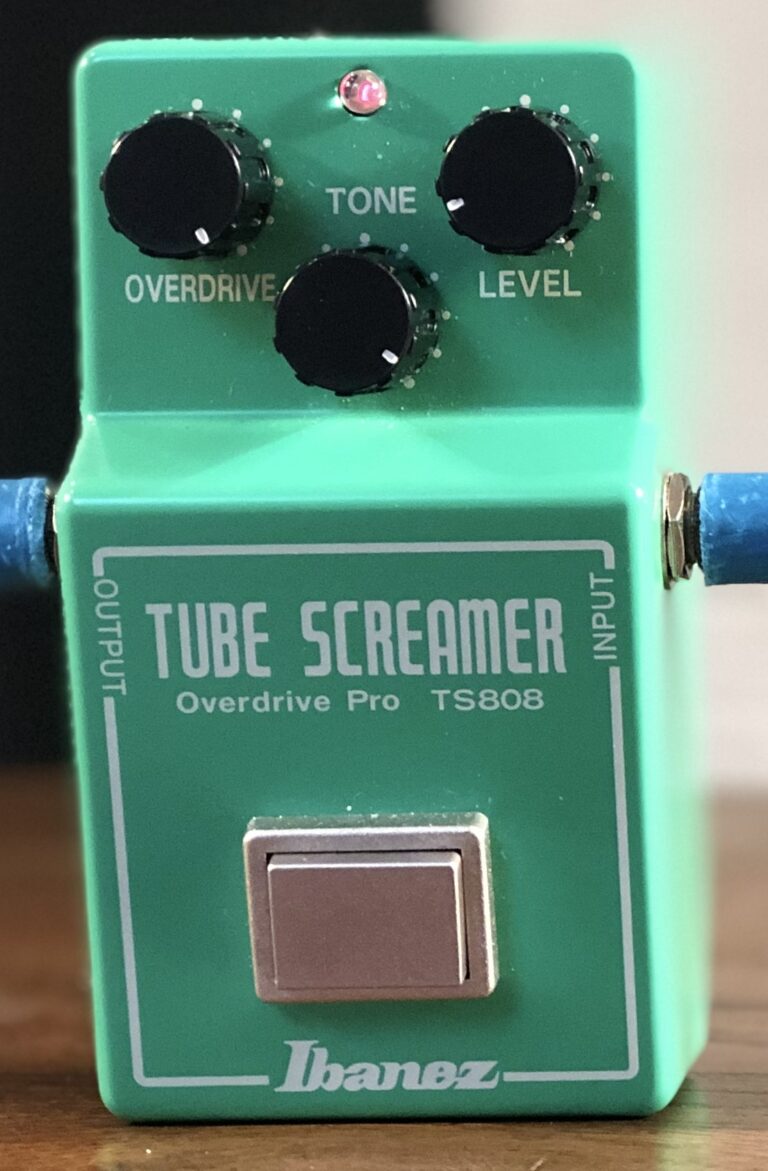
The Ibanez TS808HW — the hand-wired version of the legendary Tube Screamer, using the original circuit components and assembly approach that characterized the most valuable vintage TS808 units — provides the specific midrange boost and mild overdrive that gives his already-saturated Mesa Rectifier tone its additional harmonic complexity and cutting quality in the mix. The TS808HW’s specific character — the asymmetric clipping and the mid-boost — is virtually identical to what Stevie Ray Vaughan used with his Dumble and Vibroverb amplifiers, though the musical context could not be more different.
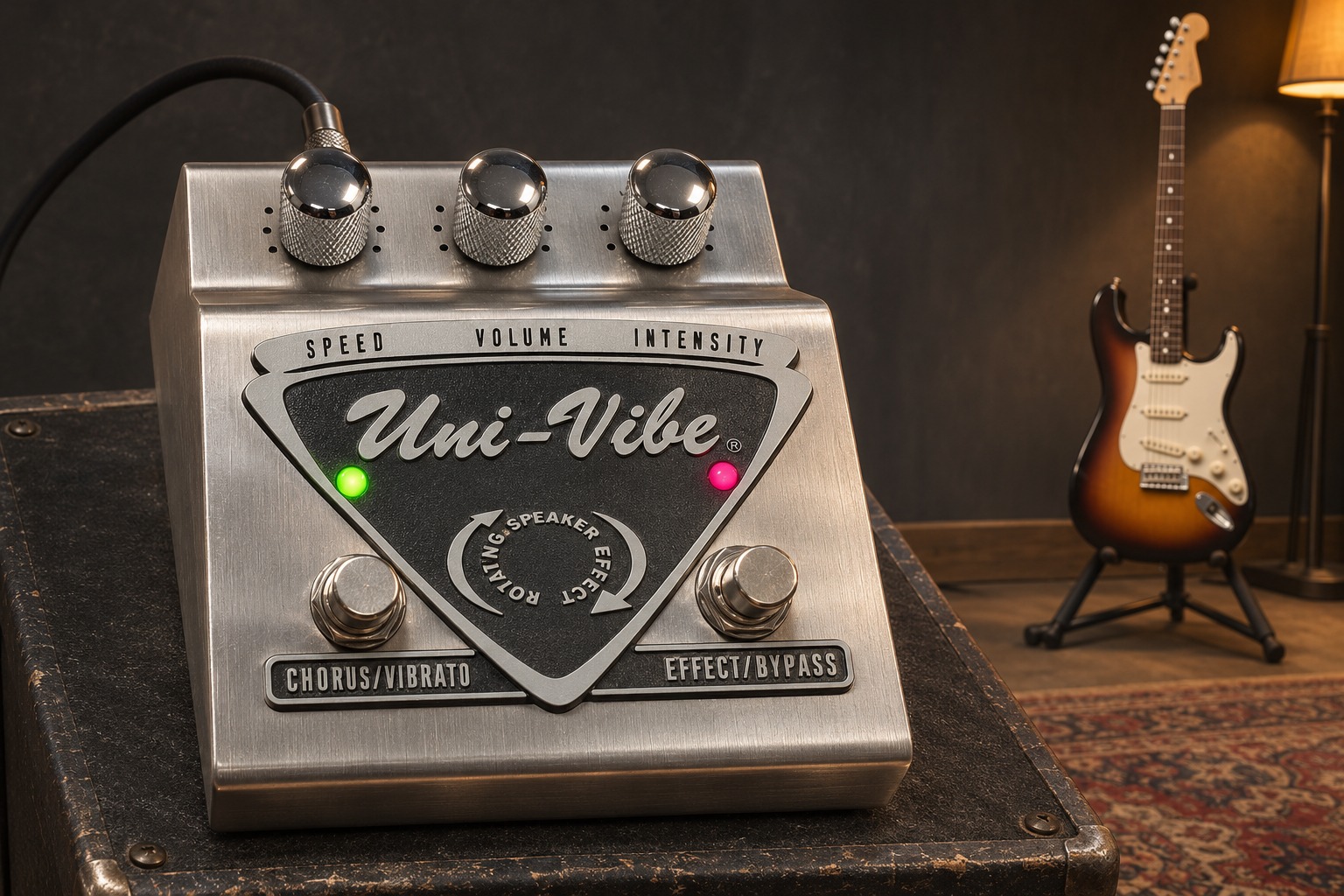
The Dunlop UV1 Uni-Vibe provides the rotating-speaker modulation effect for specific passages where the swirling phase character of the Vibe suits the musical moment. Its presence in the minimal pedalboard — alongside only the Morley wah, the Tube Screamer, the T-Rex Octavius, and the Palmer splitter — reflects Tremonti’s deliberate pedalboard discipline: each effect has a specific musical function, and nothing is present that doesn’t directly serve one of the two core guitar tones.
The T-Rex Octavius generates sub-octave and upper-octave content alongside the dry signal, extending the guitar’s tonal range into registers below and above what the instrument naturally produces. In the context of Tremonti’s heavy rock approach, the sub-octave content adds additional weight and density to specific passages, complementing the bass cabinet trick of his Creed-era tone engineering.
The Palmer PGA03 Splitter sends the pedalboard output signal to the multiple amplifiers in his live setup simultaneously, maintaining signal integrity while feeding each amplifier its own independently buffered signal. The splitter’s passive or active character provides the correct impedance for each amplifier input.
Playing Style & Tone Philosophy
Mark Tremonti’s playing style is built on the specific combination of rhythm-first technical foundation and melodically sophisticated lead vocabulary. His rhythm playing — palm-muted power chord riffs at precise tempos, with the specific tight, chunky character that comes from the combination of the PRS Tremonti’s pickups, the Mesa Dual Rectifier’s high-gain circuit, and the physical technique of controlled palm muting — is the primary compositional element of the Alter Bridge and Creed guitar parts. The lead playing — longer, more melodically developed solos that favor the lyrical, singing quality over technical display — is the second element, and both are equally present in the complete musical picture.
His influences — James Hetfield, Dimebag Darrell, Zakk Wylde — explain the specific character of his rhythm technique: the Hetfield-influenced downpicking discipline, the Dimebag-influenced harmonic complexity in rhythm riffs, and the Wylde-influenced pinch harmonic vocabulary all appear in his playing as specific absorbed elements rather than superficial imitations. The Creed material, with its massive, tightly controlled rhythm guitar, is the direct expression of these influences applied to a post-grunge commercial context; the Alter Bridge material adds harmonic complexity and lead vocabulary that the same influence set supports but doesn’t fully explain. His continued practice and development — the discipline that he has specifically described — accounts for the evolution from Creed’s more straightforward approach to Alter Bridge’s more complex guitar work.
His tone philosophy — two core tones, maximum power and efficiency — is the clearest statement in this series of a rock guitarist who has made specific choices and maintains them rather than constantly chasing tonal novelty. The bass cabinet discovery, the Cornford RK100 for studio work, the dual Mesa/PRS Archon setup for live: each of these was a specific decision to use a specific tool for a specific purpose, and each decision remained operational as long as it produced the best result for the purpose. This is the working musician’s pragmatic approach to gear: find what works, use it consistently, update when something better is found.
The Myles Kennedy partnership in Alter Bridge is worth examining as a specific creative relationship that has enhanced Tremonti’s guitar work in ways that his previous context (Creed with Scott Stapp) could not. Kennedy’s vocal range and his own guitar abilities — he is a guitarist as well as a vocalist — give Tremonti a creative partner who understands the guitar’s role in the arrangement at a technical level. This mutual musicianship has produced the Alter Bridge catalog’s specific quality of tight arrangement between vocal melody and guitar parts: the specific way that Tremonti’s rhythm guitar supports Kennedy’s vocals, and the specific way that his lead guitar parts extend and comment on the melodic themes Kennedy establishes, reflects a collaboration between two musicians who both understand what the guitar is doing and why. This is different from the dynamic in bands where the guitarist and vocalist have a more purely interpersonal creative relationship.
His solo band Tremonti — launched in 2012 with the album All I Was — provides the outlet for the heavier, more aggressive guitar work that Alter Bridge’s commercial context doesn’t always accommodate. The Tremonti band albums are heavier, faster, and more technically demanding than most Alter Bridge material; Tremonti sings lead vocals in addition to playing lead guitar in the solo band context, adding the technical challenge of simultaneous high-level guitar and vocal performance that characterizes the complete musician. The vocal addition to his performance responsibilities since the solo band’s launch represents a specific expansion of his performance identity — from guitarist who occasionally sings harmonies to guitarist who fronts his own band — that required the same disciplined development that his guitar technique has required.
The Detroit native, raised in Orlando, now operating globally as the lead guitarist of two active touring bands and a Grammy Award winner: Mark Tremonti’s biography traces the standard American rock musician’s trajectory from suburban bedroom practice to arena stages, with the specific discipline and the specific tonal intelligence that made the trajectory possible. The Les Paul Goldtop that he played before PRS found him. The McCarty that PRS sent and that he immediately loved. The subsequent signature collaboration that has produced one of the longest artist-manufacturer relationships in PRS history. The bass cabinet trick that added the specific low-end thump to the early Creed tone. The Cornford RK100 that Richie Kotzen also loved, and that Tremonti used for studio recording while the Mesa Rectifier handled the live work. Every gear decision a specific answer to a specific musical question.
How to Sound Like Mark Tremonti
Getting Mark Tremonti’s tone requires the PRS Tremonti’s specific mahogany-body humbucker character through a Mesa Dual Rectifier’s high-gain saturation, with the technical discipline of palm-muted rhythm playing.
Guitar: PRS Mark Tremonti Signature (Core or SE) — the Tremonti-spec pickups are specifically engineered for palm-muting-heavy rhythm playing and are the most direct path to his tone. The mahogany body and neck’s warmth combined with the maple top’s clarity gives the specific tonal balance that his playing requires. Any Les Paul-style mahogany guitar with high-output humbuckers provides an accessible alternative.
Amp: Mesa Boogie Dual Rectifier for the primary heavy rhythm tone. PRS Archon as a second amplifier for the stereo live approach. The Cornford RK100 or any British boutique amplifier for the studio approach. Tube Screamer TS808 to push the Mesa input for additional harmonic complexity.
Amp Settings (Mesa Boogie Dual Rectifier, Modern High-Gain Channel):
| Control | Setting (0–10) | Notes |
|---|---|---|
| Gain | 7–9 | High — but not maximum; palm-muting clarity requires definition |
| Bass | 4–5 | Controlled — tight low end for palm muting, not boomy |
| Mid | 5–7 | Present — harmonic complexity lives in the mids |
| Treble | 6–7 | Bright — each palm-muted note needs to be articulate |
| Presence | 6–7 | Cutting — the characteristic Mesa presence |
Palm muting: The foundation of Tremonti’s rhythm technique is controlled palm muting — the right hand’s edge resting against the bridge saddles at a specific position to produce the tight, controlled “chunk” of each palm-muted note. Practice this independently: place the edge of the picking hand against the bridge saddles at a position that mutes the strings without completely deadening them, then strike the strings with the pick. The palm muting should produce a sound that has both the muted quality and the pitched quality of the note — if you can clearly hear the pitch of each note through the muting, the muting position is correct. Practice alternating between muted and open (unmuted) strokes to develop the precise control that Tremonti’s rhythm parts require.
Influence & Legacy
Mark Tremonti’s influence on guitar playing is primarily generational — the guitarists who came of age with Creed’s commercial dominance in the late 1990s and early 2000s found in his specific combination of crushing rhythm guitar and lyrical lead vocabulary a model for how technically ambitious guitar playing could occupy commercially successful hard rock. His specific synthesis — the Hetfield-influenced rhythm discipline, the PRS Tremonti’s Les Paul-derived tonal character, and the melodic lead playing that distinguishes Alter Bridge from simpler hard rock — has produced a generation of guitarists who cite him directly as a primary influence on their approach to rhythm technique and lead vocabulary.
His longevity — the sustained quality of his guitar work across three bands (Creed, Alter Bridge, Tremonti) over three decades — is itself influential: the demonstration that the technical standard he established in his twenties can be maintained and developed into his fifties, with consistent practice discipline and a willingness to continue learning, gives younger guitarists both a model and a timeline for what serious guitar playing looks like as a long-term commitment.
For context on where Tremonti fits in the hard rock guitar tradition, the comparison with James Hetfield’s foundational heavy metal rhythm approach — one of his explicitly named primary influences — shows the direct lineage. Hetfield’s downpicking discipline and palm-muting precision are the technical foundation that Tremonti absorbed and applied to a post-grunge commercial context. The Mesa Boogie Dual Rectifier that appears in both rigs is more than coincidence; it is the documentation of a specific tonal tradition that Tremonti learned from and extended.
The comparison with Zakk Wylde’s approach to heavy guitar playing — another explicitly named primary influence — illuminates the other side of his guitar vocabulary: the pinch harmonics and wide vibrato that appear in Tremonti’s lead work draw from the Wylde tradition, and the Les Paul/mahogany-guitar-through-Marshall/Mesa-Rectifier tonal combination that characterizes both players reflects a shared understanding of what heavy guitar playing should sound like.
And the comparison with John Petrucci’s approach to progressive metal guitar in Dream Theater illuminates the parallel development of technical guitar playing within commercially viable hard rock contexts. Petrucci and Tremonti represent two approaches to the same challenge: how do you maintain genuine guitar virtuosity within a band that plays for arenas? Both found their own answers, and both have become reference points for the generation of guitarists who aspire to the same combination.
Mark Tremonti is fifty-two years old in 2026. Alter Bridge continues. The Tremonti solo band continues. The PRS Tremonti signature is still in production in both Core and SE configurations, joined by a growing family of PRS amplifiers. The Mesa Boogie Dual Rectifier and the PRS Archon are in the truck. The Morley signature wah is on the pedalboard. The TS808HW is pushing the Mesa’s input. And somewhere in the tight, controlled palm-muted rhythm riffs that are the foundation of every Alter Bridge song — in the specific combination of mahogany and maple resonance, Mesa saturation, and the physical technique of palm muting that Hetfield established as the standard — is what Mark Tremonti has built from thirty years of consistent practice and consistent performance. The best pure rock guitarist in the world today. The pedalboard has five pedals. The tone has two channels. The music has one standard: maximum power and efficiency. It hasn’t changed. It doesn’t need to.
Guitar Interactive Magazine’s description of him as “the best pure Rock guitarist in the world today” is the most focused possible statement of what his specific achievement amounts to — not the most innovative, not the most eclectic, not the most influential in the broader cultural sense, but the best at what rock guitar is specifically supposed to be: technically accomplished, emotionally direct, sonically powerful, compositionally intelligent in the service of songs rather than in the service of technical demonstration. This is the purity the description refers to: the absence of the compromise between rock guitar’s essential character and any other aesthetic agenda. He plays rock guitar at its highest possible level without diluting it with other influences or other priorities. This is not a limitation; it is a specific kind of excellence that is as rare as any other kind.
The specific shop in Detroit that took his gear as a kid and never gave him any money — referenced in the Vintage Guitar Magazine interview with the exact phrase “it was a shop in Detroit, and they took a bunch of my gear and never gave me any money for it” — is a small biographical detail that connects the international touring guitarist to the universal experience of the working musician at the beginning: equipment being lost, borrowed, or in this case taken by a shop that failed its obligations to him. The guitar career that followed — the PRS signature relationship, the Mesa Boogie stack, the Cornford RK100 in the studio, the Alter Bridge world tours — emerged from those Detroit beginnings where a shop took some equipment and never returned the money. The gear that followed was earned differently. It was earned on stages, in studios, in the practice room, in the disciplined application of technical knowledge to commercial and artistic purpose across three decades of professional music. The best pure rock guitarist in the world today. The guitar that started it all: a Les Paul Goldtop.
Frequently Asked Questions: Mark Tremonti Guitars & Gear
What guitar does Mark Tremonti play?
Mark Tremonti’s primary guitar is the PRS Mark Tremonti Signature — one of the longest-tenured signature models in PRS history. The Core model features a mahogany body with figured maple top, mahogany neck with rosewood fretboard and Bird inlays, PRS tremolo with up-route, Phase II locking tuners, nickel hardware, and Tremonti-spec’d humbuckers with independent volume and tone controls. The SE Tremonti (more affordable version) provides similar tonal characteristics at a lower price point, making him one of the first PRS artists with both Core and SE signature models. He also uses a PRS Baritone Hybrid for songs in C# standard or lower. Before the PRS relationship, his primary guitar was a Gibson Les Paul Standard Goldtop. A heavy relic Fender Stratocaster ’56 appears for specific clean tone applications.
What amplifiers does Mark Tremonti use?
Mark Tremonti’s live rig is anchored by a Mesa/Boogie Dual Rectifier through Mesa/Boogie 4×12 cabinets for rhythm and lead work. He pairs it with a PRS Archon amplifier for a dual-amp setup. He has also used a Diezel VH4 and a Voodoo V-Rock in his live rig at various points. For studio work, particularly on Alter Bridge albums and Tremonti band recordings, his go-to studio amp has been the Cornford RK100 (the same amp Richie Kotzen uses). In the early Creed period, he ran the Mesa Dual Rectifier into a bass cabinet alongside guitar cabinets to add low-end thump — one of his more unusual tonal engineering decisions.
What effects does Mark Tremonti use?
Mark Tremonti’s pedalboard is deliberately minimal: a Mark Tremonti Signature Morley wah (first in chain), Ibanez TS808HW Hand-Wired Tube Screamer (boost/overdrive), Dunlop UV1 Uni-Vibe Chorus/Vibrato, T-Rex Octavius Tri-Tone Generator, and a Palmer PGA03 Splitter (to route signal to multiple amplifiers). A T-Rex Fuel Tank Juicy Lucy handles pedalboard power. The philosophy is maximum power and efficiency with minimal complexity — every pedal on the board serves a specific, defined purpose for one of his two core guitar tones (clean or heavily distorted).
What is the PRS Mark Tremonti Signature guitar?
The PRS Mark Tremonti Signature is a mahogany-body, carved figured maple top guitar based on the PRS Singlecut design — PRS’s response to the Les Paul tradition. Tremonti describes it as “pretty much in the same world as the Les Paul,” with PRS refinements including the PRS tremolo system (allowing both up and down tremolo arm movement) and the Tremonti-spec’d humbuckers designed specifically for his palm-muting-heavy rhythm playing. The pickups needed to be “a little more aggressive and could complement his rhythm playing which contains a lot of palm muting.” The guitar is available in both Core (premium) and SE (affordable) versions, making it accessible at multiple price points.
What is Mark Tremonti’s palm muting technique?
Mark Tremonti’s palm muting technique — the foundation of his rhythm guitar approach — involves placing the edge of the right hand against the bridge saddles at a specific position to produce a tight, controlled muted tone on each picked note. Combined with the Mesa Dual Rectifier’s high-gain saturation and the PRS Tremonti’s high-output pickups, the palm muting produces the characteristic “chunky” rhythm sound of Alter Bridge and Creed. His influences — particularly James Hetfield — inform the specific discipline of the technique: each palm-muted note should be individually articulate, with the pitch of the note audible through the muting rather than the notes being fully deadened. Precision and consistency across fast tempos are the primary technical requirements.
Is Mark Tremonti in the Rock and Roll Hall of Fame?
As of 2026, Mark Tremonti and either Creed or Alter Bridge have not been inducted into the Rock and Roll Hall of Fame. Creed became eligible in 2022 (twenty-five years after My Own Prison in 1997). Tremonti’s career achievements include a Grammy Award for Best Rock Song (“With Arms Wide Open,” 2001), the Loudwire Best Guitarist Award (2015), and sustained multi-album success with both Creed and Alter Bridge. His specific influence on hard rock guitar playing — particularly the generation of guitarists who absorbed his rhythm technique — establishes the foundational credentials for future consideration.
How did Mark Tremonti start his relationship with PRS?
Mark Tremonti was contacted by PRS during the My Own Prison tour (1997-1998). PRS sent him a McCarty model, which he instantly fell in love with and played exclusively for a while. He subsequently began collaborating with PRS on a signature model specifically designed around his requirements — particularly the need for pickups that could complement his palm-muting-heavy rhythm playing. The first PRS Tremonti signature model was designed as one of PRS’s affordable SE models. He is now one of the longest-tenured signature artists in PRS history, with Core models, SE models, and a growing family of PRS amplifiers bearing his signature.
Image credits
- Dunlop UV1 Uni-Vibe Chorus/Vibrato (Modulation): GuitarGangsters AI-generated reference illustration, not a photograph.
- Fender Stratocaster ’56 Heavy Relic (Clean Tones, Specific Applications): GuitarGangsters AI-generated reference illustration, not a photograph.
- Top image: by Antje Naumann, Wikimedia Commons, CC BY-SA 3.0.
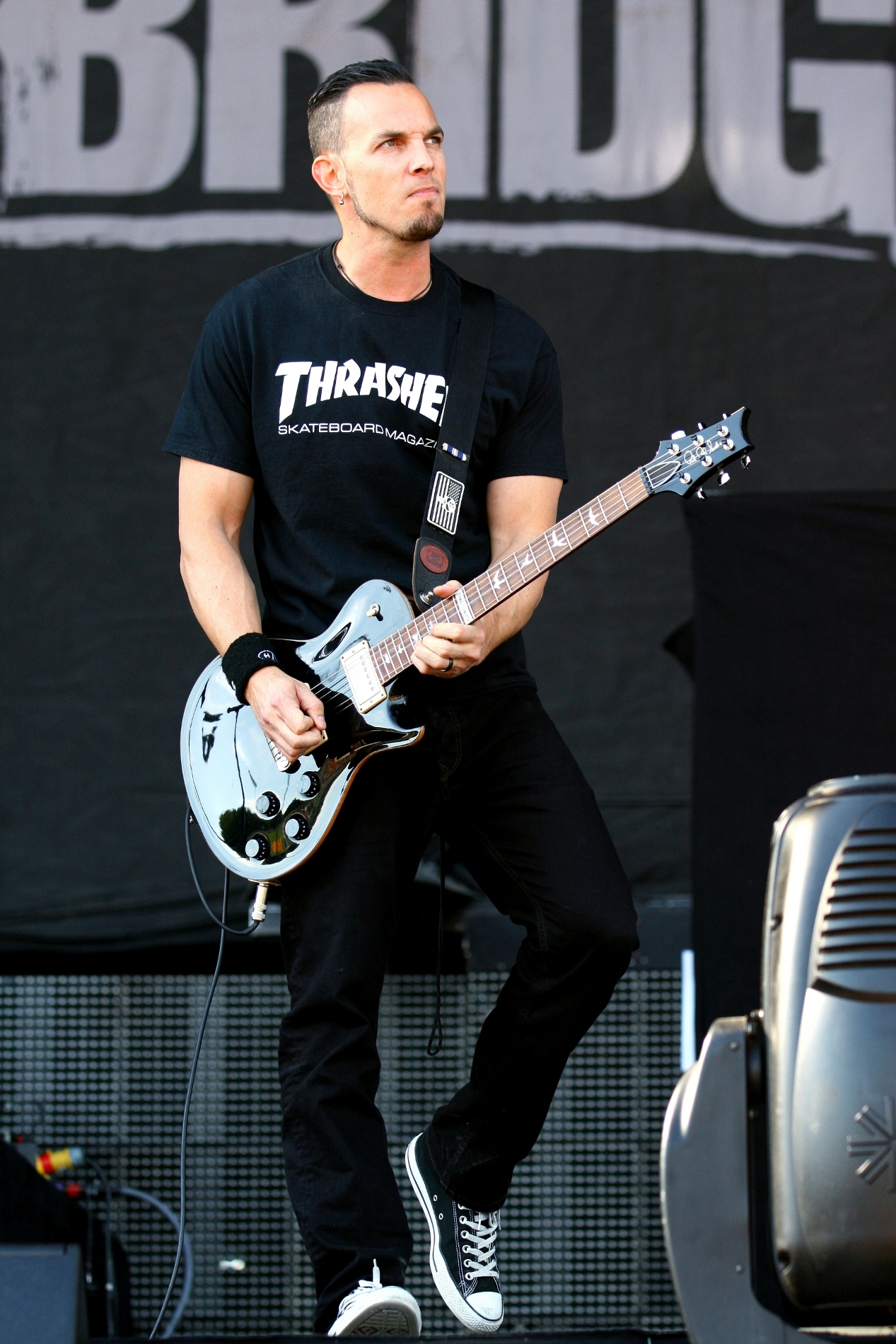
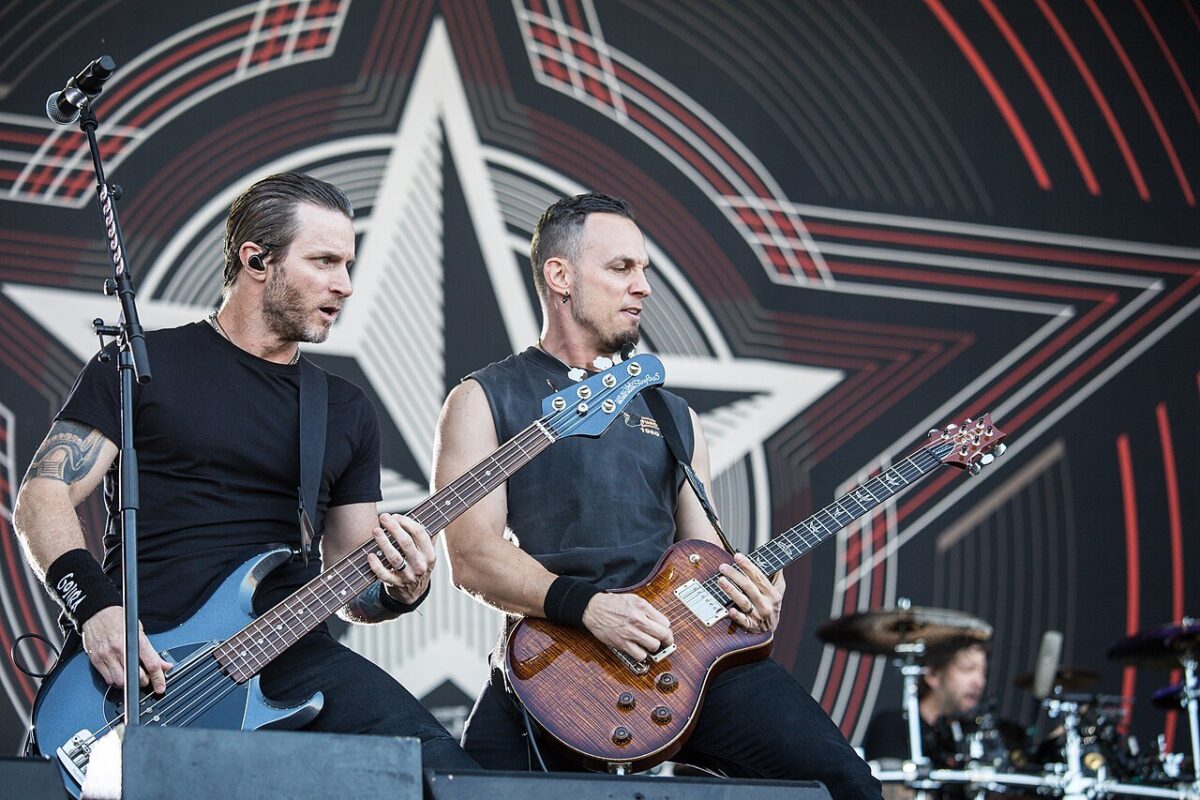
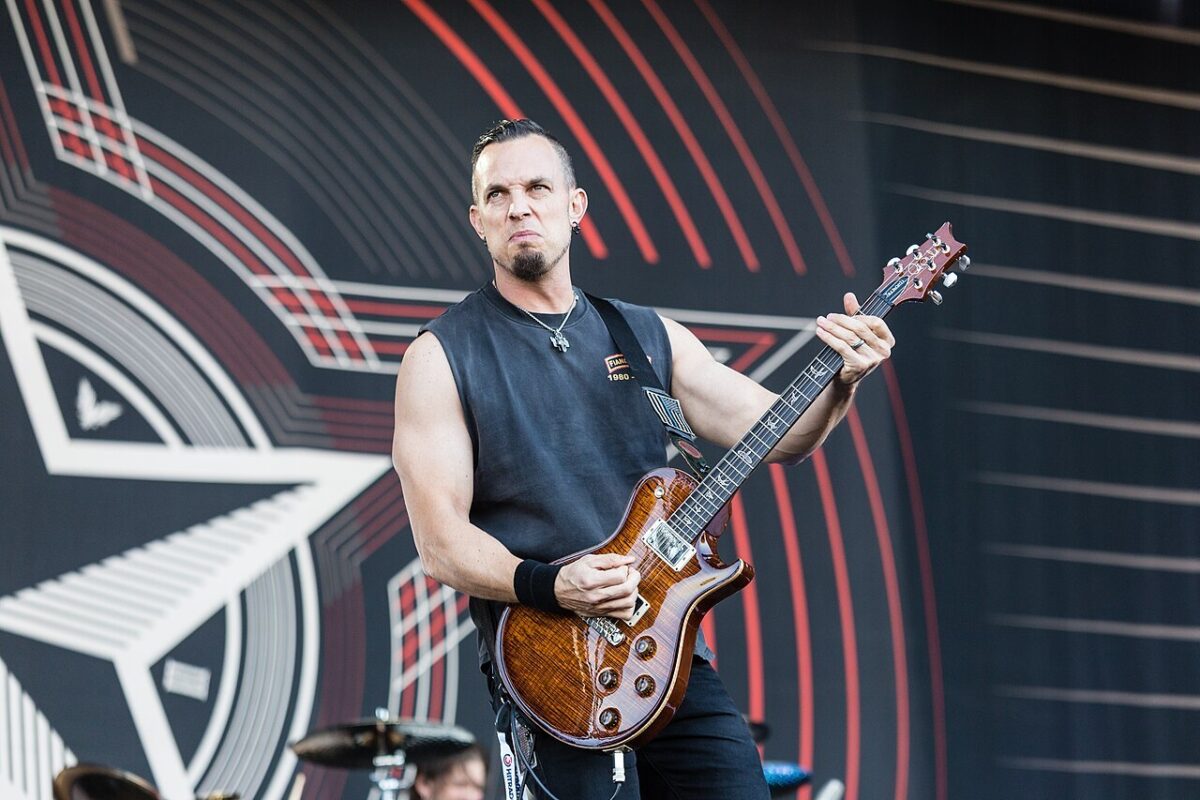
- Mark Tremonti: photo by Alfred Nitsch, via Wikimedia Commons, CC BY-SA 4.0.
- Mesa/Boogie Dual Rectifier: Roadside Guitars, Flickr, CC BY-SA 2.0.
- Diezel VH4: GuitarGangsters AI-generated reference illustration, not a photograph.
- Mark Tremonti live: Alfred Nitsch, Wikimedia Commons, CC BY-SA 4.0.
- Mark Tremonti live: Alfred Nitsch, Wikimedia Commons, CC BY-SA 4.0.
- PRS Archon: GuitarGangsters AI-generated reference illustration, not a photograph.
- Ibanez TS808 Tube Screamer: Guitar Chalk, Wikimedia Commons, CC BY 2.0.