Epiphone Wilshire: The “No Famous Players” Guitar That Jimi Hendrix, Pete Townshend, and Bruce Springsteen All Owned
The Epiphone Wilshire's hidden history: young Hendrix, Townshend and Daltrey, and Bruce Springsteen all played one. Full specs and buying guide inside.
Our spreadsheet flagged this one as having no clear artist connection — “verify in article,” it said, with the honest shrug of a researcher who ran out of time. That instruction turned into one of the more satisfying rabbit holes in this entire project, because the Epiphone Wilshire isn’t an obscure footnote. It’s the guitar Jimi Hendrix played before anyone knew his name. It’s the guitar that got passed from Roger Daltrey to Pete Townshend and effectively launched The Who’s original lineup. It’s the guitar Bruce Springsteen’s mother bought him. And it’s the guitar Johnny Winter — who we already covered fact-checking on the Flying V and Firebird — also happened to favor. The Wilshire has one of the strongest hidden-gem player rosters in the entire Epiphone catalog, and almost nobody talks about it, including, apparently, our own spreadsheet.
Here’s why that’s strange, and also why it makes sense. Unlike the Casino, the Riviera, or the Sheraton — semi-hollow Epiphones that got the Beatles treatment and never stopped getting name-dropped — the Wilshire is a solid-body, Epiphone’s own original design rather than a budget mirror of a Gibson classic. It never became anyone’s signature “look.” It became, instead, the guitar young players grabbed because it was affordable, sounded great, and nobody famous had claimed it yet — which is exactly why so many eventual legends ended up owning one on their way up, then moved on to something flashier once they could afford it. The current Epiphone Wilshire, priced from roughly $399 to $699 depending on configuration, inherits that “secret weapon” reputation completely intact.
1959: Epiphone’s Own Answer, Not a Gibson Copy
The Explorer, Flying V, Firebird, and SG Standard are all Gibson designs that Epiphone now builds under license as budget-friendly recreations. The Wilshire is different: it’s an Epiphone original, conceived in 1959, three years before Gibson’s design language would dominate the brand entirely. Launched shortly after Gibson acquired Epiphone in 1957 and relocated production to Kalamazoo, Michigan, the Wilshire was positioned as a mid-tier solid body — pricier than the entry-level Coronet, cheaper than the fancier Crestwood — aimed squarely at the market Fender was carving up with the Stratocaster and Jazzmaster.
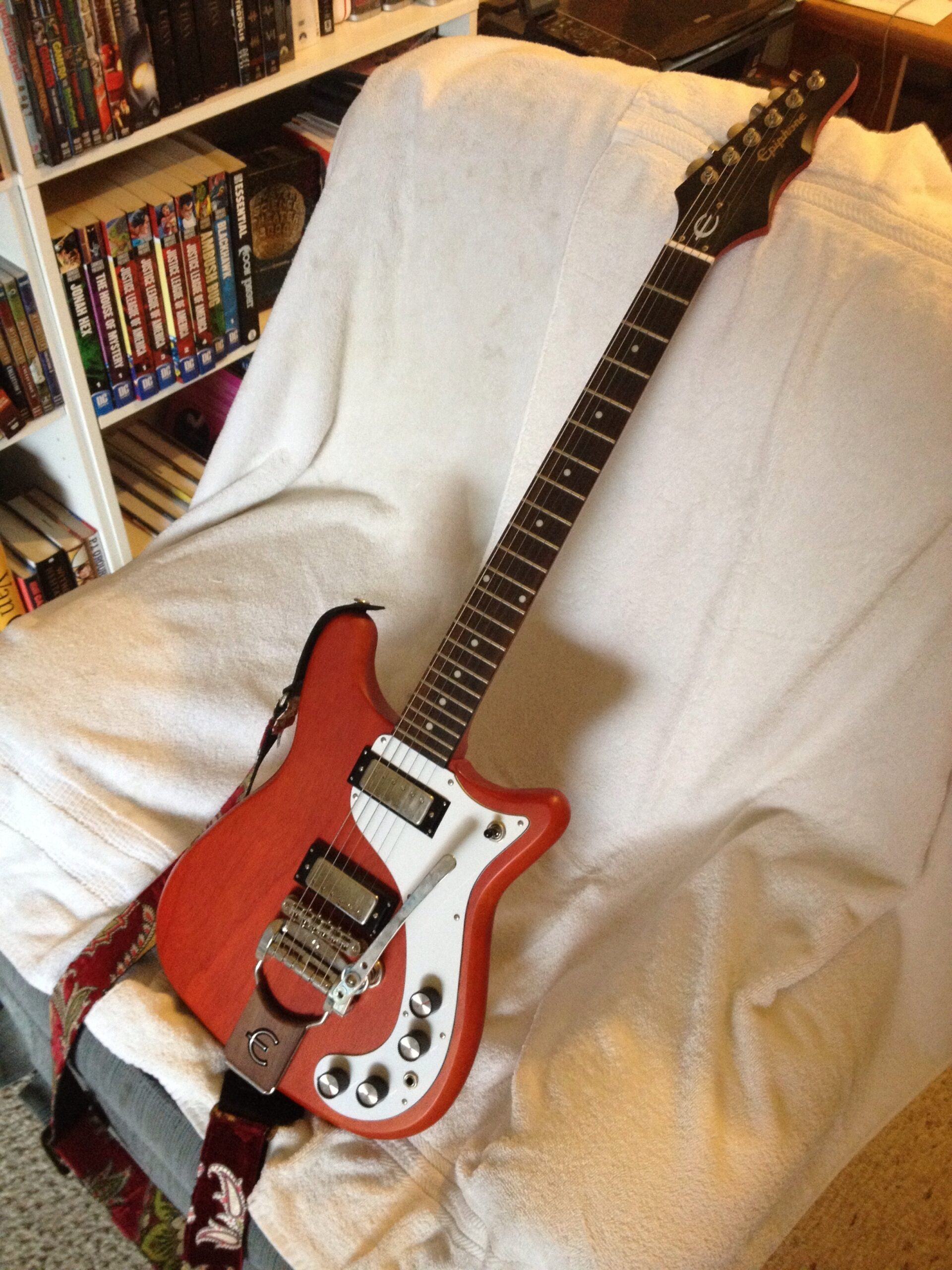
The original 1959 Wilshire was a symmetrical double-cutaway solid mahogany body with two P-90 pickups (white until 1960, black soapbars from 1961), a three-per-side headstock, and a tortoiseshell butterfly pickguard bearing Epiphone’s foil “E” logo. In 1963, the design shifted dramatically: an asymmetrical body with a longer upper horn, a six-in-line “batwing” headstock, and a pair of Alnico mini-humbuckers replacing the P-90s. Both eras have devoted followings today — the P-90 version for raw garage-rock bite, the mini-humbucker batwing version for a slightly rounder, more versatile voice. Epiphone discontinued the Wilshire in 1970, revived it briefly in the early ’80s, and brought it back for good starting in 2009, where it remains a cult favorite that never quite got its full due.
The Hidden Roster: Legends Before They Were Legends
Jimi Hendrix: The First Famous Guitar He Ever Owned
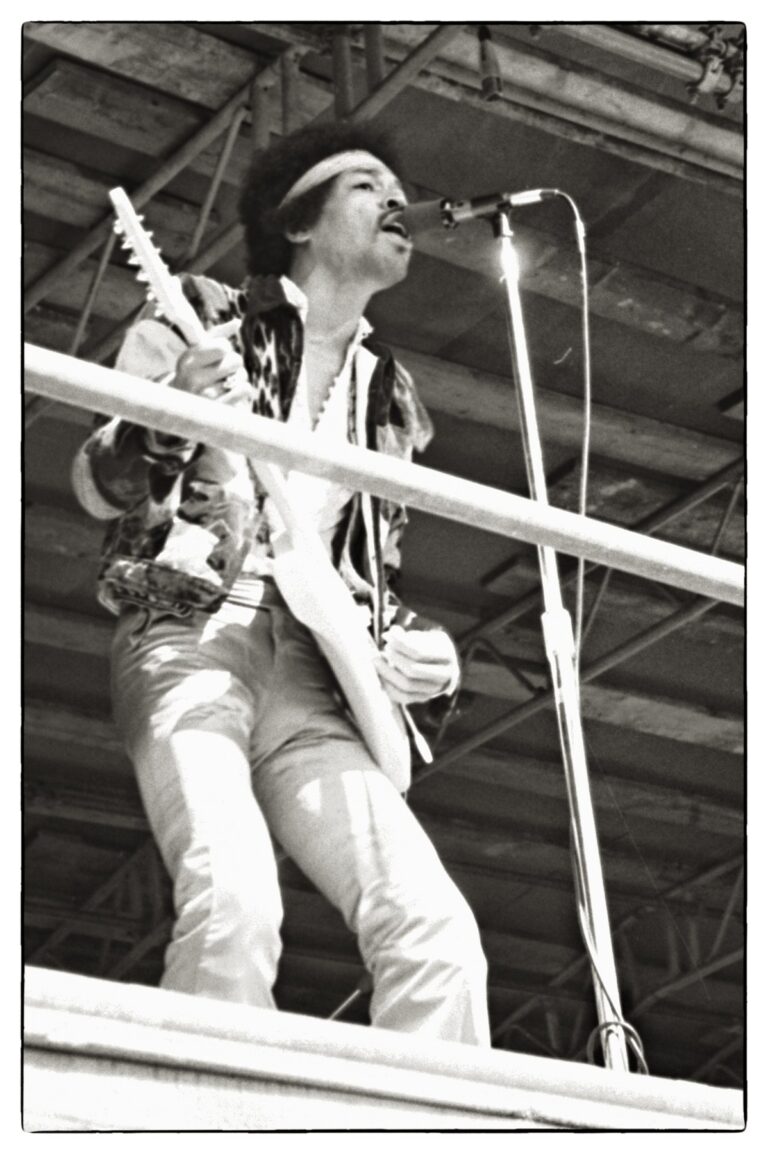
Before Fender. Before the Strat became inseparable from his name. Before “Purple Haze.” A young Jimi Hendrix owned a cherry red 1961 Epiphone Wilshire with black P-90 pickups, playing it around 1962 while gigging with local bands including Johnny Jones and the King Casuals. This wasn’t a footnote guitar he touched once — surviving photographs and firsthand accounts document Hendrix playing this exact instrument regularly during a formative period of his development, before he pawned it to a local shop owner and rented a Fender to get by. That Wilshire later surfaced at auction with an estimated value north of a million dollars, purely on the strength of Hendrix provenance — a staggering number for a guitar model that, new, currently retails for a few hundred dollars. It’s a genuinely wild thought experiment: the guitar most associated with reinventing the electric guitar’s vocabulary started his professional life on an Epiphone solid-body that Epiphone itself, decades later, would reissue as an affordable garage-rock workhorse.
Pete Townshend and Roger Daltrey: The Guitar That Built The Who
This is the story that should be far better known than it is. Before Pete Townshend became inseparable from his smashed Rickenbackers and Gibson SGs, an Epiphone Wilshire passed through the hands of both founding members of what would become The Who. Roger Daltrey — then the group’s guitarist, in their earliest incarnation as the Detours — owned the Wilshire, but sheet-metal work had split his fingers to the point where playing lead guitar became impractical. Daltrey sold the Wilshire to Townshend on an installment plan and transitioned to full-time frontman, a decision that reshaped the band’s entire creative chemistry. Townshend used that same Wilshire to write two of his earliest songs, “It Was You” and “Please Don’t Send Me Home,” before eventually moving on to Rickenbackers. In other words: the instrument underneath the moment Roger Daltrey became a singer and Pete Townshend became a guitarist — arguably the single most consequential lineup shift in the band’s history — was an Epiphone Wilshire. The guitar itself later went on display at the Metropolitan Museum of Art’s Play It Loud exhibition, a rare case of a budget-tier solid-body earning genuine museum status.
Johnny Winter and Steve Marriott: The Blues-Rock Connection
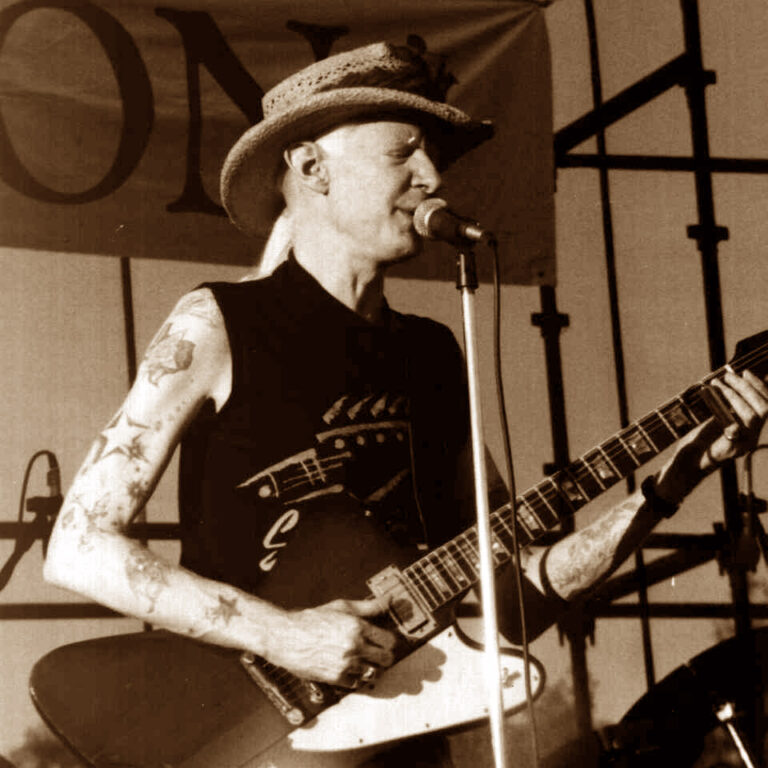
We’ve already covered Johnny Winter‘s deep relationship with the Gibson Firebird in this very thread, but Winter was also a genuine, verified Wilshire player — Epiphone’s own historical materials list him alongside the model’s notable users. And Steve Marriott of Small Faces and Humble Pie is frequently cited by tone historians as delivering some of the rawest, most convincing Wilshire tone on record — proof that this “no frills” guitar could hang with the heaviest British blues-rock of its era. Between Winter’s Texas fire and Marriott’s Humble Pie snarl, the Wilshire quietly built a reputation among players who valued substance over prestige branding.
Bruce Springsteen: A Gift From His Mother
Perhaps the most surprising name on the Wilshire’s roster is a guitarist almost entirely associated, for his entire career, with Fender’s Esquire and Telecaster. Bruce Springsteen owned a mid-1960s Epiphone Wilshire — a gift from his mother — early in his musical life, well before “Born to Run” and the Telecaster-and-Esquire hybrid that would become as recognizable as his voice. Details of exactly how much stage or studio time that guitar saw remain thin, but the story itself — one of American rock’s most Fender-identified figures starting out on a modest Epiphone solid-body bought by his mom — is exactly the kind of formative, unglamorous origin story this series exists to surface.

Wayne Kramer: Proto-Punk Credentials
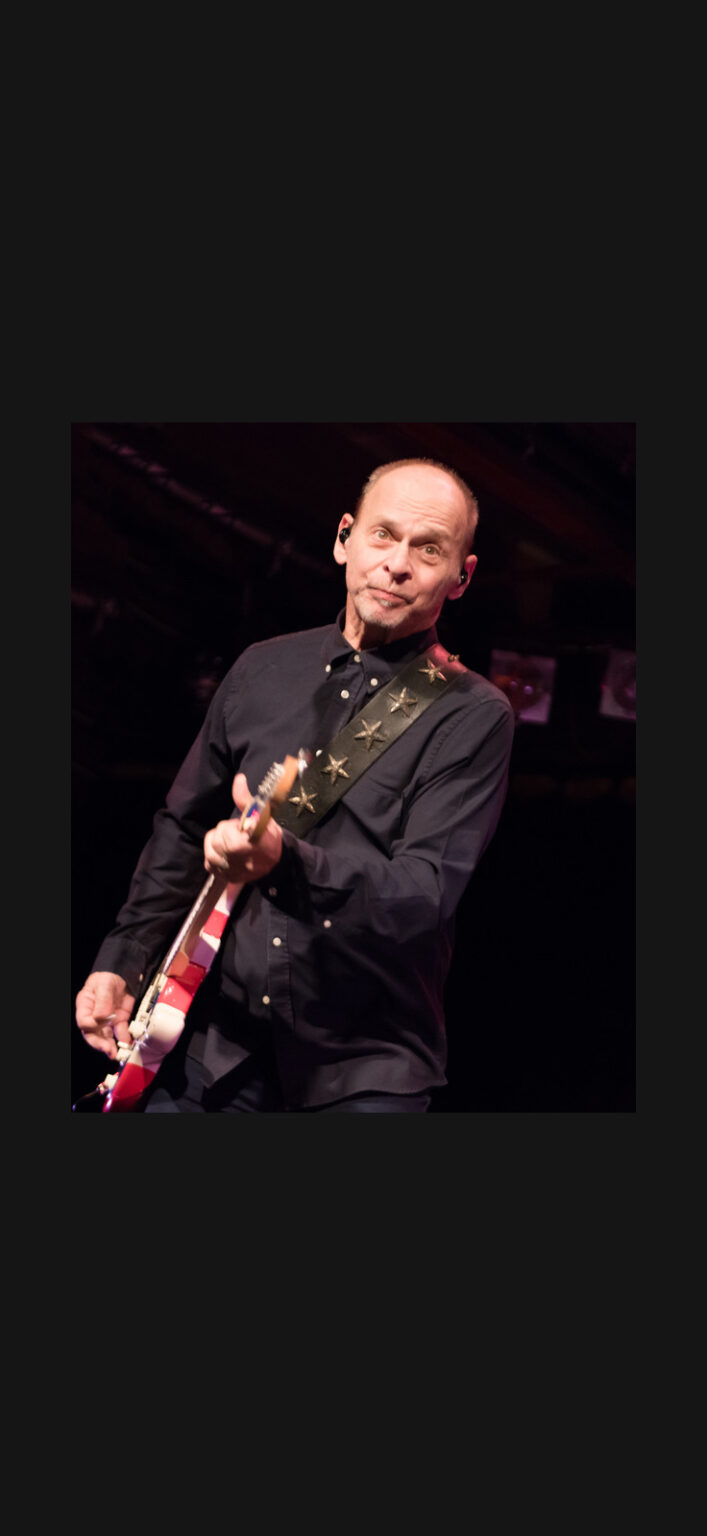
Wayne Kramer of MC5 — one of the most direct sonic bridges between 1960s garage rock and the birth of punk — was captured playing an Epiphone Wilshire during the band’s 1972 Beat Club television sessions. For a guitarist whose entire aesthetic was raw aggression and confrontational volume, the Wilshire’s stripped-down, no-frills design was a natural fit, reinforcing the guitar’s growing reputation as the thinking punk’s alternative to a Les Paul.
Frank Iero: The Modern Signature Chapter
The Wilshire’s most recent famous-player chapter belongs to Frank Iero of My Chemical Romance, who collaborated with Epiphone in 2011 on a signature model called the Wilshire “Phant-o-Matic” — reimagining the mid-’60s batwing-headstock Wilshire with block inlays, a six-position VariTone rotary filter in place of separate tone controls, and a momentary kill switch for the kind of staccato chopping popularized in emo and post-hardcore. It remains in Epiphone’s catalog today, proof that the Wilshire’s “undiscovered” reputation keeps attracting guitarists who want an instrument with real design pedigree but without an over-familiar silhouette.

The Epiphone Wilshire Today: Two Distinct Eras to Choose From
Epiphone currently sells the Wilshire in configurations spanning both halves of its history, which makes the buying decision genuinely interesting rather than a simple tier upgrade.
Full Specifications — Epiphone Wilshire P-90 (1959-spec reissue)
Full Specifications — Epiphone Wilshire PRO (1963-spec, mini-humbucker era)
The Frank Iero Phant-O-Matic
A distinct branch of the family: mahogany body based on the 1966 Wilshire shape, SlimTaper neck, rosewood board with block inlays, single volume knob, six-position VariTone notch filter, and a momentary kill switch, powered by covered Alnico Classic and Classic Plus humbuckers. It’s the Wilshire recontextualized for modern alternative and emo-adjacent playing, and it’s stayed in continuous production since 2011 — a rare feat of longevity for a guitarist signature model outside the absolute A-list.
How It Sounds: SG Body, Strat Feel, Its Own Voice
Players consistently describe the Wilshire as occupying a genuinely unique middle ground: the tonal versatility of an SG combined with a body feel closer to a Fender Strat or Telecaster, thanks to its slab mahogany construction and comfortable double-cutaway contours. The P-90 versions deliver exactly what you’d expect from soapbar single-coils — bright snap, woody acoustic resonance even unplugged, and a raw midrange bite that made the Wilshire a natural for garage rock, surf, and early blues-rock. Reviewers of vintage examples have noted the guitar “rings out acoustically” with genuine resonance, a testament to the solid mahogany build even without a chambered or semi-hollow design.
The mini-humbucker batwing-era Wilshire trades some of that P-90 rawness for a rounder, more controlled voice — still articulate, with less noise and a bit more sustain, closer to the tonal territory of a Les Paul Junior crossed with an SG. The modern Wilshire PRO’s coil-splitting via push-pull pots adds genuine flexibility that neither the original 1959 nor 1963 models offered — full humbucker warmth in one setting, Telecaster-adjacent single-coil twang in the other, a feature that reviewers single out as a rarity at this price point.
Tone Recipes
Kalamazoo ’61 (Hendrix pre-fame)
Both P-90s blended, into a small tweed-style amp pushed into natural breakup. No pedals — this is raw, unaffected garage and R&B tone from a guitarist still finding his voice. Roll the tone knob down slightly for a woolier neck-pickup blues sound.
Detours to The Who (Townshend, early)
Bridge P-90, amp clean but loud, aggressive downstroke rhythm playing. This is pre-Marshall-stack Townshend — think tight, percussive R&B rhythm chops rather than windmilling power chords. A treble booster ahead of the amp gets you closer to the era’s studio tone.
Captured Live Snarl (Johnny Winter)
If using a mini-humbucker Wilshire: bridge pickup, cranked tube amp, slide on your finger. Keep the signal chain minimal — Winter’s tone always lived in amp breakup and pick attack, not pedals.
Modern Emo Chop (Frank Iero style)
Phant-O-Matic or coil-split Wilshire PRO, bridge humbucker, moderate gain with a tight noise gate. Use the momentary kill switch (if your model has one) for staccato rhythmic chopping between chord stabs — a signature My Chemical Romance-era texture.
Epiphone Wilshire vs. the Alternatives
Vs. Epiphone SG Standard: Epiphone’s own community frequently describes the Wilshire as “the real Epiphone SG” — an original design rather than a Gibson-licensed recreation — with a neck join position and overall feel that closely echoes an actual SG despite the different body shape. If you want SG-style playability with more upper-fret access and a genuinely unique silhouette, the Wilshire delivers it.
Vs. Epiphone Casino: Both are Epiphone originals with real Beatles-adjacent and British Invasion pedigree, but the Casino is fully hollow with a warmer, airier voice prone to feedback at volume, while the Wilshire’s solid mahogany body stays tight and controlled even at stage volume — the better choice for players who want vintage tone without hollow-body feedback management.
Vs. a Fender Jaguar or Jazzmaster: The Wilshire’s most direct period competitor. Both chase a similar “1960s alternative to a Strat” niche, but the Wilshire’s set-neck mahogany construction delivers a warmer, more sustained voice than Fender’s bolt-on offset designs, at the cost of the tremolo flexibility and switching complexity Jaguars and Jazzmasters are known for.
Vs. a Gibson Les Paul Junior: Contemporaries from the same late-’50s “affordable solid body” moment. The Junior’s single P-90 and slab body chase pure simplicity; the Wilshire’s dual P-90s or humbuckers and double-cutaway design offer more tonal range and easier upper-fret access, at a small cost in raw single-pickup honesty.
Buying Guide: Which Wilshire, and What to Check
The Wilshire P-90 (~$399–$499) is the purist’s choice — closest to the guitar Hendrix and Townshend actually played, with genuine soapbar single-coil bite. The Wilshire PRO (~$364–$699 depending on year and finish) is the versatile modern workhorse, with coil-splitting humbuckers that cover more sonic ground for players who need one guitar to do several jobs. The Frank Iero Phant-O-Matic is the pick for anyone drawn to the VariTone’s tonal shaping options or the modern alternative-rock aesthetic specifically.
Used-market notes: original 1959–1970 Wilshires command serious money now, particularly early three-per-side P-90 examples (fewer than 250 of the very earliest configuration were built, making them among the rarest Kalamazoo-era Epiphones). The 2009-era reissues — Pro, ’66 Worn, ’62 USA — have developed their own small collector following and often sell for more than their original retail price, a genuine rarity in the reissue guitar market. On any Wilshire, check the neck joint carefully (the SG-adjacent design means the neck-body joint sits close to the upper frets, a detail some players need to adjust to), confirm coil-split wiring functions cleanly on PRO models, and inspect P-90 pole pieces for corrosion on vintage examples.
Living with a Wilshire: Practical Ownership
The Wilshire’s double-cutaway design gives genuinely comfortable upper-fret access, closer to an SG than to a single-cutaway Les Paul, while its solid mahogany body keeps weight reasonable — typically in the 7–7.5 pound range. The set-neck construction means no bolt-on tone loss, but also means neck resets, if ever needed, require a luthier rather than a screwdriver.
Because the model spans such a wide range of headstock configurations (three-per-side “Kalamazoo” on P-90 models, six-in-line “batwing” on mini-humbucker and PRO models), string trees and tuning stability characteristics differ meaningfully between variants — worth testing before committing if tuning stability under bends matters to your style. The guitar’s understated looks are, by design, part of its appeal: this is not an instrument that announces itself the way a Flying V or Explorer does, which some players find genuinely liberating on stage.
The Verdict: History’s Best-Kept Secret
Every guitar so far has had a fairly settled reputation — the SG is hard rock’s workhorse, the Explorer is metal’s totem, the Firebird is blues-rock’s brightest voice. The Wilshire refuses that kind of easy categorization, precisely because its most famous owners used it before they became famous and then moved on to flashier instruments once they could. That’s not a weakness in the story — it’s the story. Hendrix, Townshend, Daltrey, Springsteen, Winter, Marriott, Kramer: seven names who reshaped rock music, all of whom spent formative time with an unglamorous double-cutaway Epiphone most guitar shops still don’t bother to stock. There may be more genuine, verifiable rock history packed into this one modest model than in half the guitars with actual signature editions.
FAQ
Did Jimi Hendrix really play an Epiphone Wilshire?
Yes — a cherry red 1961 model with black P-90 pickups, which he played regularly around 1962 while performing with local bands before pawning it and moving to a rented Fender. The guitar later sold at auction for an estimated value exceeding a million dollars based on Hendrix provenance alone.
What’s the connection between the Epiphone Wilshire and The Who?
Roger Daltrey originally owned and played a Wilshire in the band’s earliest lineup (as the Detours), before selling it to Pete Townshend when hand injuries pushed Daltrey toward full-time vocals. Townshend wrote some of his earliest songs on that guitar before switching to Rickenbackers.
Is the Epiphone Wilshire a Gibson design like the SG or Explorer?
No — unlike most Epiphones in the Inspired by Gibson collection, the Wilshire is an original Epiphone design dating to 1959, predating the company’s full absorption into Gibson’s design language. This makes it one of the few genuinely distinct solid-body shapes in the modern Epiphone catalog.
What’s the difference between the P-90 and PRO versions of the Wilshire?
The P-90 version recreates the symmetrical 1959-era body with two soapbar single-coils and a three-per-side headstock. The PRO version follows the 1963-onward asymmetrical “batwing” design with humbuckers, coil-splitting, and a six-in-line headstock. Both are currently available; the choice comes down to preferred pickup voicing and headstock aesthetics.
Who is Frank Iero and why does he have a signature Wilshire?
Frank Iero is the guitarist for My Chemical Romance. His 2011 signature Wilshire “Phant-O-Matic” adds a VariTone rotary filter and momentary kill switch to the classic batwing-era Wilshire shape, and remains in continuous Epiphone production today.
Is the Epiphone Wilshire good value compared to other Epiphone solid-bodies?
Yes — starting around $399, it undercuts most Inspired by Gibson models while offering a genuinely distinct design pedigree and verified historical player connections spanning Hendrix to Springsteen, making it one of the stronger value propositions in the catalog for players who want something other than another Les Paul or SG shape.
Image credits
- Top image: 2011 Epiphone ’66 Wilshire with tremolo, photographed 28 October 2012. Photo: Marshall Stax. Source photograph · CC BY-SA 3.0. Full source frame resized by WordPress; no crop or retouching. Web version: CC BY-SA 3.0.
- Wayne Kramer: Frank Schwichtenberg, Wikimedia Commons, CC BY-SA 4.0.
- Jimi Hendrix: Detlef Hansen, Wikimedia Commons, CC BY-SA 4.0.
- Frank Iero: JonRHanna, Wikimedia Commons, CC BY-SA 3.0.
- Johnny Winter: Masahiro Sumori, Wikimedia Commons, CC BY-SA 3.0.
- Bruce Springsteen: Raph_PH, Wikimedia Commons, CC BY 4.0.
Latest News
Related
On This Day
Monday 9 November
From this week: