Three Plexis, One Box: Universal Audio’s UAFX Lion ’68 Super Lead Amp Brings the Amp That Built Rock to Your Pedalboard
Universal Audio UAFX Lion '68 packs three legendary Plexi amps — Super Lead, Super Bass, and Brown Sound — into one pedalboard-friendly stompbox.
You know the sound. It lives inside every record that mattered from 1966 onward — that particular bark on the attack, that singing sustain, that three-dimensional midrange that shoves through a mix like nothing else in the history of amplified guitar. The sound of a Marshall Plexi at full tilt is not a preference. It is the defining tone of electric rock guitar, and for five decades it has stayed stubbornly out of reach for anyone who couldn’t afford the vintage originals, tolerate the sheer volume required to make them sing, or justify hauling a 100-watt head and a 4×12 cab to a fly-date gig.
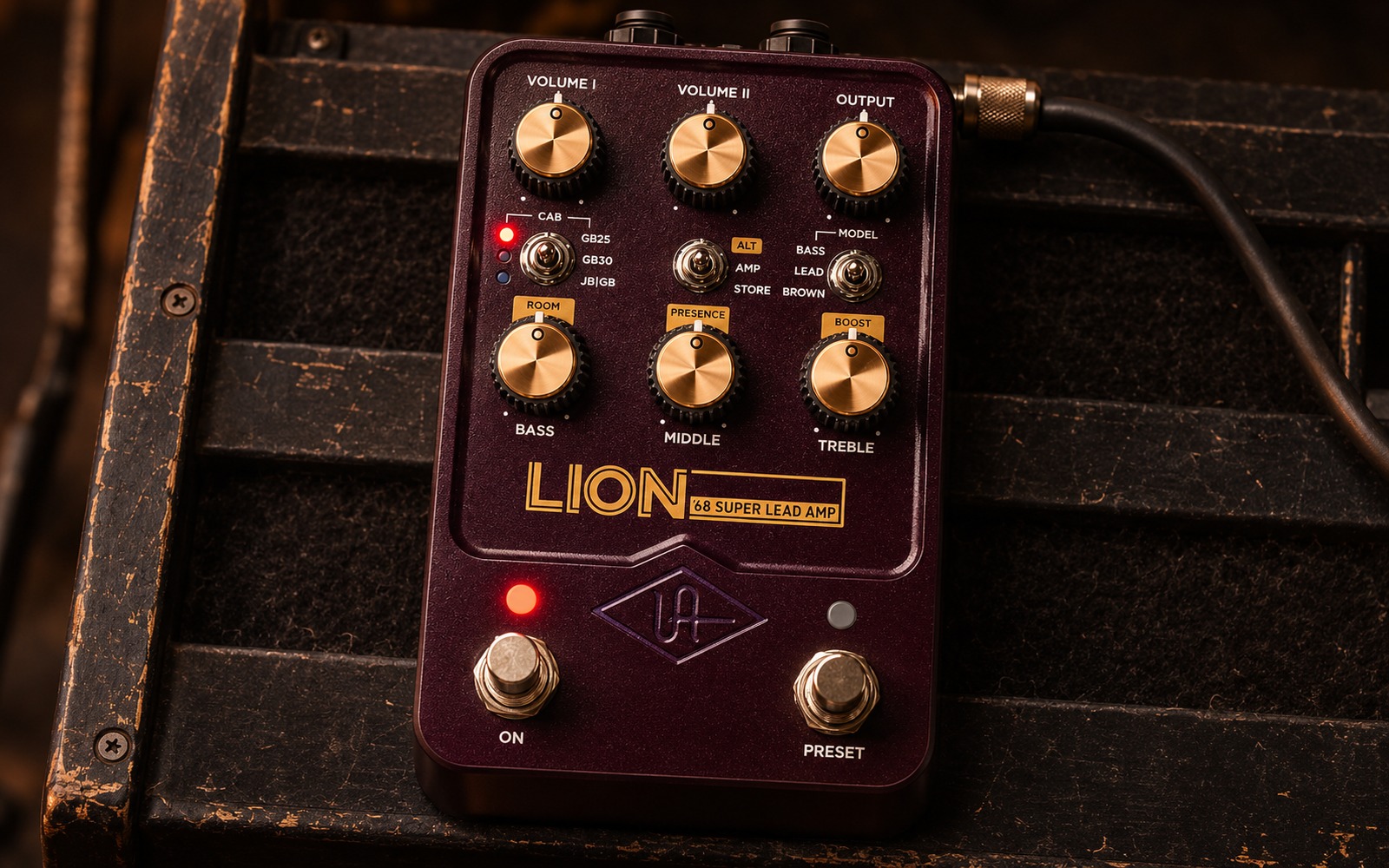
Universal Audio’s UAFX Lion ’68 Super Lead Amp is a direct assault on that inaccessibility. In a stompbox the same size as a Boss TU-3, UA has crammed three distinct 100-watt Plexi amplifier setups — the Super Lead, the Super Bass, and a third mode that the guitar world recognizes by a color — backed by six cabinet IR configurations derived from the company’s award-winning OX Amp Top Box loadbox. Released in late 2023, with UA’s official press announcement following in July 2024 as part of a broader UAFX lineup expansion, the Lion arrived as the fourth amp pedal in a line that had already earned enormous credibility with the Ruby ’63 (Vox AC30), Dream ’65 (Fender Deluxe Reverb), and Woodrow ’55 (Fender Tweed Deluxe). Marshall was always the one the guitar internet demanded most loudly. The Lion is UA’s answer, and it does not disappoint.
This is not a review — GuitarGangsters does not write reviews. This is a deep-dive feature. You will leave knowing the voltage differences between the three amp models, which cabinet configuration Paul Kossoff would have chosen, why Pete Townshend is directly responsible for the existence of this entire product category, and whether the Lion belongs on your pedalboard. Let’s get into it.
The Plexi: A Brief History of the Amp That Changed Everything
“Plexi” refers to a specific era of Marshall amplifiers, not a specific model number. From 1965 through 1969, Marshall mounted its control panels behind sheets of plexiglass — the transparent acrylic that gave the amps their nickname. The aluminum-panel models that came before and the non-reflective panels that came after are distinguished from these; the Plexis occupy a narrow, intensely documented four-year window that produced the most sought-after guitar amplifiers in history.
The 100-watt Super Lead — model number 1959 — did not exist until 1965, when Pete Townshend of The Who walked into Jim Marshall’s Hanwell shop and requested more power than the existing 50-watt designs could provide. The story is well-documented: Townshend needed to be louder than Keith Moon, which meant he needed more headroom than anything currently on the market. Jim Marshall obliged, doubling the 50-watt JTM 45 architecture to 100 watts using four EL34 power tubes instead of two. The result, the JMP Super Lead 1959, became the template for every high-powered British rock amp that followed.
Jimi Hendrix used a 100-watt Super Lead through Marshall 4×12 cabinets at Woodstock in 1969 — the same year the Plexi era ended. Jimmy Page built the entire sonic vocabulary of Led Zeppelin around Marshall Super Leads, including the famous “Whole Lotta Love” riff that introduced an entire generation to what a 100-watt Plexi at the edge of its range sounds like. Angus Young of AC/DC has used Super Leads since the band’s earliest recordings, and the aggressive attack of those Marshall power amp stages is the backbone of every song from “Highway to Hell” to “Back in Black.”

The Super Bass — model JMP 1992, launched in 1967 — is the overlooked member of the Plexi family. Originally designed for bass players (and loved by Lemmy Kilmister for exactly that reason), it dispensed with the bright cap circuit that made the Super Lead so aggressive on the high end, delivering a darker, warmer crunch with significantly more clean headroom. Paul Kossoff of Free chose the Super Bass over the Super Lead, and the result was one of the most tonally sophisticated rhythm guitar sounds of the classic rock era — smooth enough to sustain forever, but never brittle. John Frusciante of the Red Hot Chili Peppers has also been a documented Super Bass advocate, for similar reasons: it takes overdrive pedals better, responds more evenly to dynamics, and doesn’t ice-pick your ears at higher volumes.
Then there is the third amp mode in the Lion ’68. UA calls it “Brown.” The guitar world knows exactly what it means.
Enter Universal Audio
Universal Audio was founded in 1958 by Bill Putnam Sr. in Chicago as a studio hardware company — the 1176 compressor and LA-2A optical limiter that bear the UA name are among the most replicated studio tools ever built. After Putnam Sr.’s death, his sons Bill Jr. and Jim revived the company in 1999 in Santa Cruz, California (now Scotts Valley), focusing initially on faithful reissues of the 1176 and LA-2A before expanding into UAD DSP plug-ins and Apollo audio interfaces. UA did not launch a guitar pedal until 2022, when the UAFX Dream ’65, Ruby ’63, and Woodrow ’55 arrived simultaneously, selling fast enough that a Marshall entry was practically demanded from the first week.
The methodology that UA brings to pedal development is unusual. Senior product designer James Santiago and his team spend months sourcing exceptional “golden unit” physical amplifiers before modeling can even begin. They examine schematics component by component, decide which variables to expose as hardware controls and which to place inside the UAFX Control app, and validate the results against the physical amps at multiple volume levels and with multiple pickup types. The dual-engine processing platform — more computing power than most standalone amp modelers from five years ago — runs entirely inside the same compact enclosure as a standard Boss pedal. The Lion ’68 is the output of that process applied to the Marshall Plexi family, and the results speak for themselves.
What the Lion ’68 Actually Is
The Lion ’68 Super Lead Amp is a stompbox amp emulator running on UAFX dual-engine processing that emulates three distinct 1968 Marshall 100-watt amplifiers with six speaker cabinet configurations. It can be used as a complete amp-and-cab replacement direct to a PA, audio interface, or FRFR monitor; as a front-end drive pedal with the cab simulation bypassed; or in a 4-cable method configuration to add a high-powered Plexi preamp stage to an existing amp rig. Bluetooth connectivity to the UAFX Control mobile app unlocks deep editing — footswitch customization, noise gate, artist presets, Ghost Notes, input routing, and additional speaker cabinets. Since the Firmware 2.0 update in November 2025, the Lion also receives MIDI control over USB-C and stores four onboard presets switchable directly from the hardware.
Specifications
Three Amp Models: What They Are and How They Differ
The single most important thing to understand about the Lion ’68 is that its three amp modes are not the same amplifier at different gain settings. They are three genuinely different circuits with different voltage rails, different frequency responses, and different dynamic behaviors — and UA has captured each one at the specific operating conditions that define its character.
Super Lead — 1968 Marshall JMP 1959, 110V
The Lion’s Super Lead mode emulates a 1968 Marshall JMP 1959 running at 110V, with a 100-picofarad bright cap — a modification from the stock 5,000pF cap, inspired by the capacitor value used in the earlier JTM 45. UA specifically calls out that this modification provides “jangly highs without the harshness of the original cap value.” The bright cap can be switched off via the UAFX Control app for anyone who wants a slightly warmer interpretation of the same circuit.
This is the brightest, most aggressive of the three modes — the one that sounds like a stack being played at concert volume the moment you dig in. Volume I drives the high-sensitivity input; Volume II drives the low-sensitivity input; both interact exactly as they would on the real amp when the channels are internally jumpered. The Super Lead is the tone of Led Zeppelin’s first three albums, of Black Sabbath’s earliest recordings, of every hard rock guitar sound from 1968 through 1975.
Super Bass — 1968 Marshall JMP 1992, 117V
The Super Bass runs at a higher simulated voltage (117V vs the Super Lead’s 110V), which gives it more clean headroom and a notably more relaxed onset of saturation. The bright cap is absent entirely. The result is a warmer, darker voicing with a spongier attack — more bass weight, less treble aggression, more room for a guitar’s natural midrange to breathe.
For many players this mode is the most versatile of the three, precisely because it does not immediately overdrive at high volumes. It excels as a pedal platform: run a Tube Screamer, a Dallas Rangemaster-style treble booster, or a fuzz in front of it and the Super Bass’s high headroom lets the pedal’s own character come through without the amp’s natural gain compressing the dynamics. MusicRadar reviewer Rob Laing specifically noted the Super Bass as “an excellent platform for clean tones and drive pedals” that “offers an appealing blend of edge and low-end rounded weight.” This is the mode that explains why Paul Kossoff‘s rhythm work on Free records sounds simultaneously heavier and more controlled than the Super Lead recordings of the same era.
Brown — Variac’d Super Lead, 90V
UA describes this mode as “a 100-watt Super Lead with Variac’d power reduction, circuit mod and EQ’d boost.” The guitar world describes it as the Eddie Van Halen brown sound. UA’s press materials include Van Halen in the list of legendary artists the Lion ’68’s tones “fueled,” alongside Jimi Hendrix, Led Zeppelin, and AC/DC, while noting in the fine print that “use of artist names does not constitute official endorsement.” The circuit connection is explicit regardless of the trademark status.
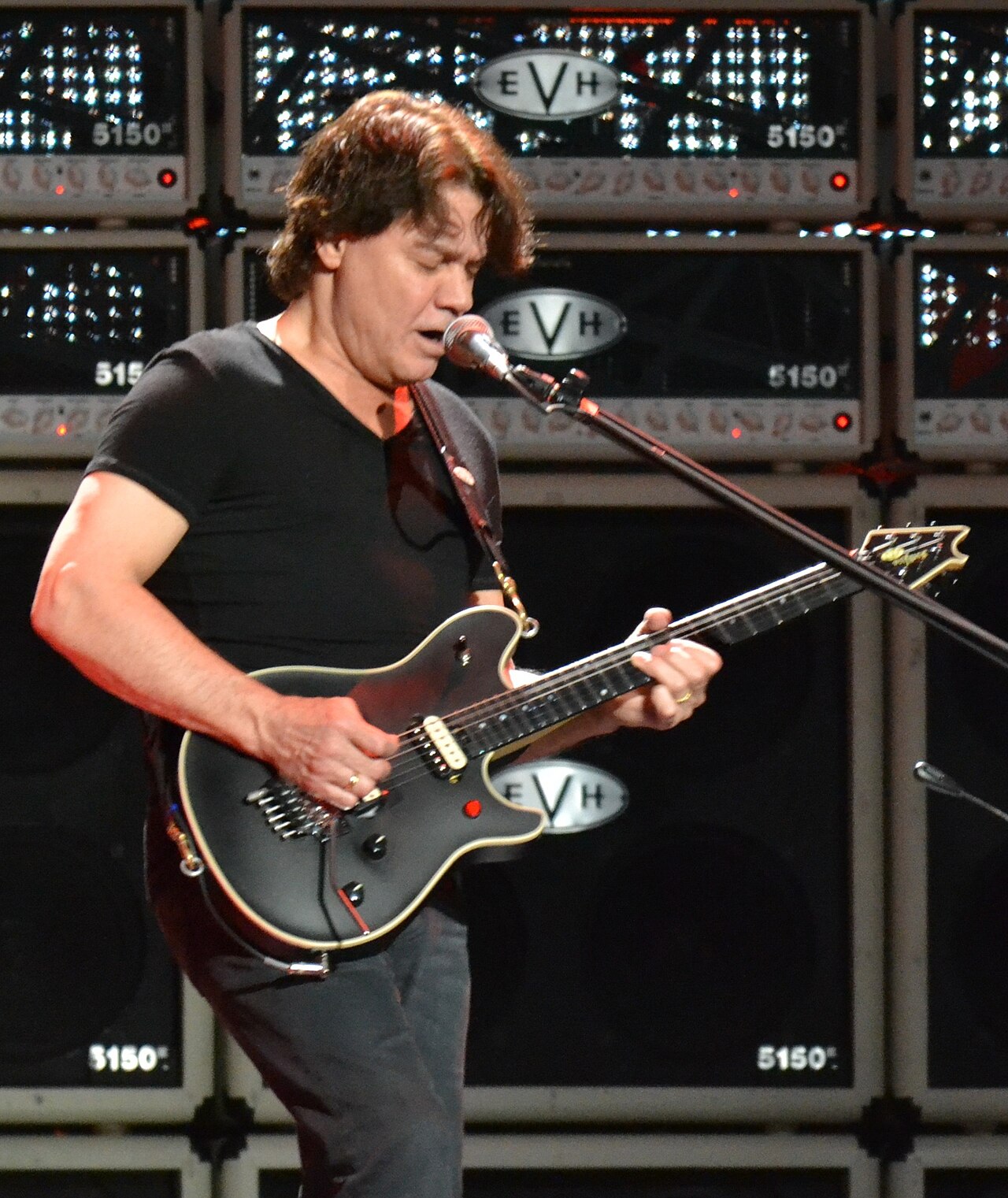
Running the Super Lead at a simulated 90V via Variac transformer — a technique that Eddie Van Halen employed in the band’s early club days to control volume while keeping his output tubes working hard — produces more power supply sag, earlier compression, and a characteristic upper-midrange thickness that defines the first three Van Halen albums. UA also biases the Brown mode high, which adds aggressive attack and increases sustain. The built-in Maestro EP-III preamp boost — the same Echoplex preamp stage that Eddie ran his signal through — is active by default in Brown mode, adding the slight harmonic thickening and high-end rolloff that completes the picture. Guitar Player’s Art Thompson, after a hands-on session, called it “the closest you’ll get to playing one of Eddie Van Halen’s Super Leads — at last in a pedal.” The JB/GB cabinet — a 1968 4×12 with two 30-watt Celestion Greenbacks and two JBL D-120F speakers, mixed separately and premixed — is the correct pairing. Eddie’s cabs evolved over the years (Celestion G12M-25 early, JBL D-120F as the run-of-show workhorse), and UA captured the characteristic mixed setup that defines the debut album’s guitar sound.
Six Cabinet Configurations
The Lion ships with three stock cab IRs accessible via the front-panel toggle, and three additional IRs that unlock after registering the pedal via the UA Connect desktop app. The LED beside each position glows red for stock IRs and green for the registration-unlocked bonus IRs; when the LED is off entirely, the amp model is active but cab simulation is bypassed — useful when running the Lion in front of a real guitar amplifier.
The three stock positions are GB25 (a 1968 4×12 loaded with 25-watt Celestion Greenbacks, mic’d with a Beyerdynamic 160 and a Shure SM57), GB30 (a 4×12 with 30-watt Celestion Greenbacks, SM57 and Royer R-121), and JB/GB (a 1968 4×12 with two Celestion 30W Greenbacks and two JBL D-120F speakers, separately mic’d with SM57s). The three registration bonus cabs are a 12-inch 200-watt Electro-Voice EVM12L in a 1×12 (AKG 414), a ported 2×12 with British 65-watt speakers (Sennheiser 421 and Royer R-121), and a 4×12 loaded with Celestion V30s (AKG 414).
In practice, the GB30 is the workhorse for classic rock — the Celestion 30W Greenback is the cornerstone speaker of classic rock recordings from the late 1960s through the 1970s, and the SM57/R-121 combination is the standard studio setup for Plexi recording. The JB/GB is the destination for anyone exploring the Brown mode. The GB25 has a slightly tighter low end that suits the Super Lead’s brightness, and the registration bonus EV 12L cab brings a different character entirely — more focused, more American in the upper midrange, useful for cutting through dense mixes without boosting treble.
Input Routing and the Jumper Trick
A fundamental technique in Plexi playing has always been jumping the channels: running a short patch cable from the low-sensitivity input of channel 1 to the high-sensitivity input of channel 2, then plugging your guitar into channel 1’s high input. This allows both channels’ tone stacks to interact simultaneously, creating a combined voicing that is warmer and more complex than either channel alone. Every famous Plexi tone you have ever heard on a record was likely produced with the channels jumpered in some configuration.
The Lion ’68 is internally jumpered, meaning both Volume I and Volume II knobs are always affecting the sound simultaneously — this is not a limitation, it is the correct implementation. The UAFX Control app additionally offers three Input Routing options that change how the guitar signal enters the circuit: Low (channel 1 low-sensitivity input, quieter and darker), High (channel 1 high-sensitivity input, the standard setting), and Jump (a Y-cable configuration combining channel 1 low and channel 2 high, the classic jumpered setup). Guitar Player’s Art Thompson noted that “it’s worth trying these hookups because they do sound a bit different.” The Jump routing produces the fullest, most complex version of the Lion’s voicing and is recommended as the starting point for anyone chasing classic rock Plexi tones.
Ghost Notes, Bright Cap, and App-Deep Features
The UAFX Control app exposes several parameters that have no hardware equivalent on the pedal itself. Ghost Notes is among the most interesting: activated in any of the three amp models, it simulates the harmonic artifacts produced by the original amps’ transformers and power supply — a subtle hum component that generated additional harmonics on certain notes, particularly in higher-register soloing. When Ghost Notes is off, the simulation assumes a cleaner power supply. The difference is subtle in isolation and more apparent when playing extended single-note lines.
The bright cap toggle lets you add or remove the 100pF cap on any amp model independently. By default it is on for Super Lead, off for Super Bass and Brown; you can reverse any of these in the app. Removing the bright cap from the Super Lead gives it a rounder, slightly less aggressive character that suits PAF-style humbuckers in particular. Adding it to the Brown mode produces a brighter version of the Van Halen voicing that some players find more useful for single-coil guitars.
The November 2025 Firmware 2.0 update addressed the single most-requested feature across the entire UAFX amp pedal line: MIDI control over USB-C. The Lion now receives preset changes and real-time parameter control (boost on/off, EQ, amp selection) from any USB MIDI host, including pedalboard controllers like the BOSS ES-8, the RJM Music Mastermind, and the Morningstar MC8. The same update raised the onboard preset count from one to four, accessible directly from the hardware without opening the app. An improved Bluetooth stack and a new hardwired USB-to-Mobile option round out the connectivity improvements. MusicRadar’s review, originally noting Bluetooth reliability as a concern, added a Firmware 2.0 update section confirming the improvements.
Famous Players
UA’s product page features three verified Lion-specific testimonials. Mark Karan, guitarist for Bob Weir & RatDog and Sophie B. Hawkins, names the Lion directly: “Lion ’68’s ‘edge of breakup’ and saturated tones kill, but its feel and response to picking dynamics are what make it truly awesome and so much more satisfying than other plexi models.” Tyler Bryant of Tyler Bryant & the Shakedown says the Lion is “my mainstay for fly out shows, giving me gritty guttural rock goodness.” Angela Petrilli of Angela Petrilli & The Players calls it her go-to for touring. These are Lion-specific quotes from primary sources — a welcome change from the brand-level-only testimonials that accompanied the earlier UAFX amp pedals.
The famous players most closely associated with the amplifiers the Lion emulates are a different matter. None of the following have endorsed the UAFX Lion ’68. They are listed here as players of the real 1968-era Marshall Plexis that this pedal captures.
Jimi Hendrix ran Marshall Super Leads from 1967 through his death in 1970, famously playing 100-watt heads through two or more 4×12 cabinets wired in parallel. The raw, feedback-prone edge of tone on “Voodoo Child (Slight Return)” is a Super Lead at or near its absolute limit. Jimmy Page used Super Leads throughout Led Zeppelin’s career, initially with 4×12 cabs and later developing the “Zeppelin” setup with two heads driving separate cabinets for stereo spread. The riff tone on “Communication Breakdown” from the 1969 debut is the gold standard Super Lead rhythm sound. Pete Townshend‘s request for more power directly produced the 100W JMP Super Lead design; The Who’s Marshall stacks — wound up to full volume and often deliberately damaged — were among the loudest stage rigs of the 1960s.

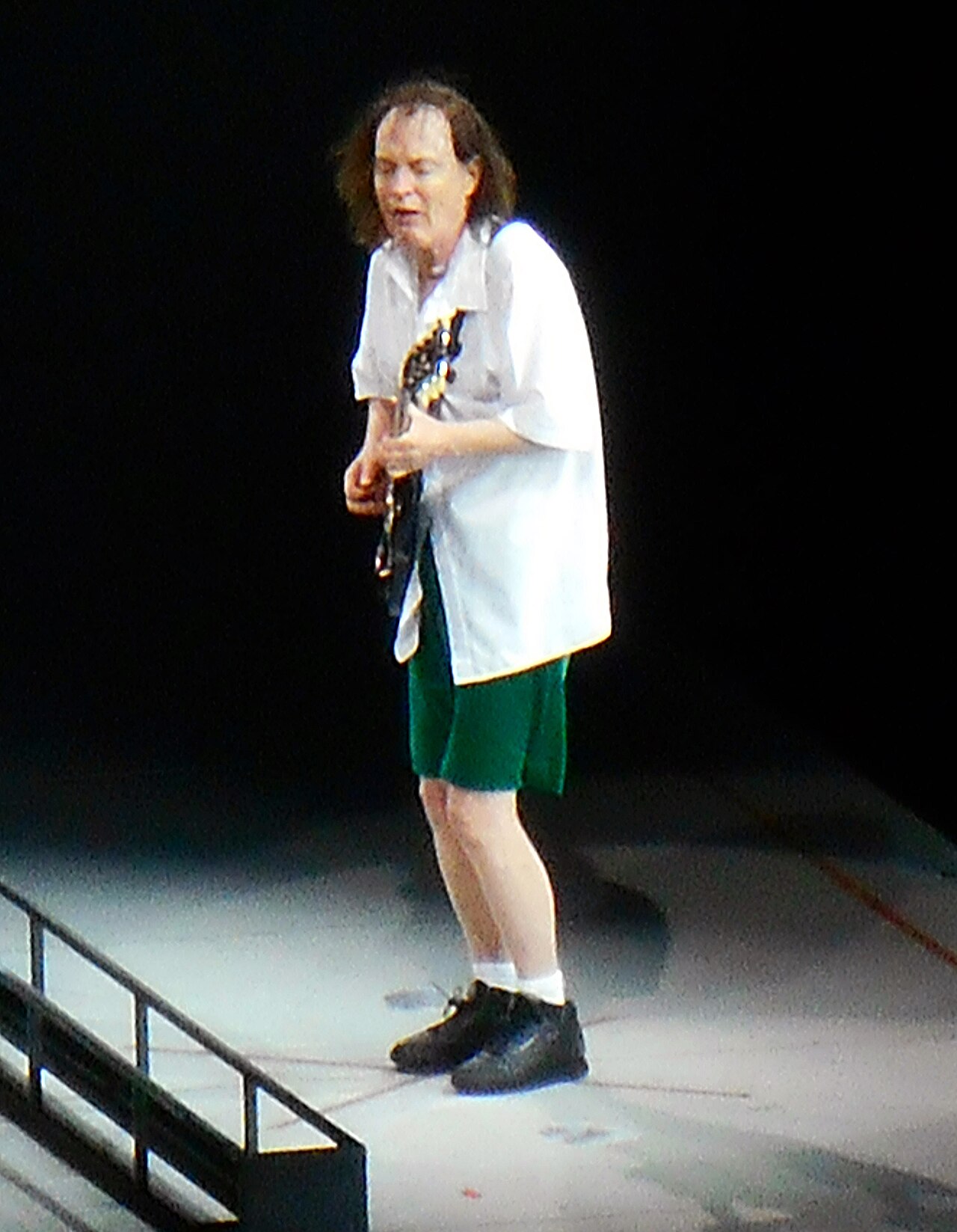
Angus Young of AC/DC has played Marshall Super Leads almost exclusively throughout the band’s career. His setup is famously simple: Gibson SG, Marshall Super Lead, no effects between guitar and amp. The aggressive attack, singing sustain, and midrange push of Back in Black’s guitar tracks are the direct result of that signal chain, and the Lion’s Super Lead mode on the GB30 cab is the starting point for replicating it. Ritchie Blackmore of Deep Purple used Super Leads through 4×12s, and his use of the bright cap and the amp’s natural treble response shaped the “Smoke on the Water” riff tone as distinctively as any guitar choice. Randy Rhoads used Marshall Super Leads during his work with Ozzy Osbourne, blending them with Marshall JMP 50-watt heads for a layered, complex studio tone; “Crazy Train” opens with one of the most famous Super Lead rhythm sounds in heavy metal history.
The Super Bass mode’s famous players are less often celebrated. Paul Kossoff‘s work with Free — particularly on “Fire and Water” and “All Right Now” — demonstrates the Super Bass’s character more completely than any technical description could. His tone is full, slightly compressed on the attack, with a natural harmonic richness that the Super Lead can’t quite match at the same gain settings. For anyone exploring the Lion’s Bass mode, Kossoff’s rhythm tracks are the definitive reference. Mick Taylor, Rolling Stones guitarist from 1969 to 1974, also worked with Marshall Super Bass setups during the band’s peak recording years, and his lead tone on “Sway” and “Can’t You Hear Me Knocking” carries that same smooth, high-headroom character.
The Brown mode’s reference is known. Guitar Player’s review says it plainly. Start there, set the Volume controls between 7 and 9, dial the Treble back to 5, boost the Middle to 7, and play with a Les Paul-style humbucker. You will understand immediately why an entire generation of guitarists spent decades trying to understand exactly what Eddie Van Halen‘s amplifier was doing.
Tone Recipes
1. Super Lead — Classic Rock Rhythm (Page/Young Reference)
Model: Lead. Volume I: 7. Volume II: 5. Treble: 6. Middle: 5. Bass: 4. Output: to taste. Cab: GB30. Room: minimal (9 o’clock). Input Routing: Jump. Boost: off. This is the internally-jumpered Plexi setup that Page, Townshend, and Young used as their baseline rhythm tone. The GB30’s Celestion 30W Greenbacks push the 3kHz presence peak that cuts through a full band mix. Dig in hard for maximum crunch; ease up on the pick attack for clean-ish bell tones. Start here before trying anything else.
2. Super Lead — Bell-Clean with Jimi Dynamics
Model: Lead. Volume I: 4. Volume II: 3. Treble: 7. Middle: 5. Bass: 3. Output: to taste. Cab: GB25. Bright cap: on. Input Routing: High. Boost: off. The Super Lead at lower volume settings with a single-coil or P-90-equipped guitar produces a bell-clean tone with enormous dynamic range — light picking yields sparkling clean tones, digging in pushes into natural breakup. This is the setup for exploring how responsive a real Plexi feels before the power amp stage gets involved. The GB25’s 25-watt Greenbacks emphasize the midrange bloom.
3. Brown Sound — The Van Halen Setup
Model: Brown. Volume I: 8. Volume II: 7. Treble: 5. Middle: 7. Bass: 4. Output: to taste. Cab: JB/GB. Boost: on (EP-III engaged). Input Routing: Jump. Use a Les Paul-style humbucker. Roll back the guitar volume to 7 for rhythm, push to 10 for lead. The Variac voltage reduction simulated in Brown mode produces noticeable sag on hard attacks — you will feel the compression more than hear it on the first notes. At high output levels the JBL D-120F component of the JB/GB cabinet brings an upper-midrange focus that gives single string runs a piano-like precision. This mode rewards picking dynamics more than any of the other Plexi configurations.
4. Super Bass — Pedal Platform
Model: Bass. Volume I: 5. Volume II: 4. Treble: 5. Middle: 6. Bass: 5. Output: to taste. Cab: GB25. Room: 10 o’clock. Boost: off. The Super Bass at moderate volume settings has enormous clean headroom — enough to take a Tube Screamer, a Rangemaster-style treble booster, or a germanium fuzz without the amp’s own gain compressing the pedal’s character. This is the correct setup for anyone who wants to use the Lion as the foundation of a pedal-forward rig rather than as a standalone gain source. The AKG 414 on the bonus GB25 EV 12L cab is worth unlocking via registration specifically for this mode — it adds clarity and definition to the low-midrange without introducing brightness.
5. Silent Recording — Direct to DAW
Model: Lead. Volume I: 8. Volume II: 6. Treble: 6. Middle: 5. Bass: 4. Output: reduced to match interface input. Cab: GB30. Room: 1 o’clock (add some studio air). Presence/ALT: raise slightly to compensate for the absence of room reflections. Input Routing: Jump. Connect the Lion’s XLR-equivalent stereo output to your interface’s line inputs. The Room control at 1 o’clock adds subtle ambience that helps the direct recording sit in a mix without needing additional reverb on the guitar track. The GB30’s SM57/Royer ribbon combination is the most commonly used studio setup for Plexi recording and translates directly to the mix context it was designed for.
Comparisons
UAFX Ruby ’63 (Rank 644) — The Vox to the Lion’s Marshall
The Ruby ’63 and Lion ’68 are built on identical hardware platforms, share the same Bluetooth/MIDI architecture post-firmware 2.0, and use the same OX-derived cabinet IR methodology. The difference is everything else: the Ruby captures the Vox AC30 Top Boost with its EL84 power tubes, its open-back birch-ply cabinet, and its vocal, chiming midrange character. The Lion captures the Marshall Plexi with its EL34 power tubes, its closed-back 4×12 cabinet, and its aggressive, scooped-mids rock character. These are not interchangeable tools. Serious players who work across British tones should own both — the Ruby for Britpop, alternative, and jangle rock; the Lion for hard rock, proto-metal, and high-gain classic rock. Running them in a stereo parallel rig produces a complementary A/B voicing that neither delivers alone.
UAFX Woodrow ’55 (Rank 645) — The American to the Lion’s British
The Woodrow ’55 emulates the Fender Tweed Deluxe 5E3, which is approximately the opposite of the Lion in every relevant parameter: 15 watts versus 100 watts, 1×12 Jensen versus 4×12 Greenback, cathode-biased 6V6 power tubes versus EL34s, American warmth versus British aggression. The Woodrow’s “always jumpered” architecture is structurally similar to the Lion’s internal jumper design, but the tonal result is entirely different — softer, hairier, more harmonically complex at lower volumes. The two pedals are complementary rather than competitive. If you own the Woodrow and want to expand to British rock territory, the Lion is the logical next addition.
Kemper Profiler Head (Rank 595) — Depth vs. Breadth
The Kemper Profiler can capture and play back any tube amplifier you own or have access to — the depth of its library is theoretically infinite. The Lion ’68 captures three specific amplifiers with a depth of modeling detail and tactile responsiveness that most Profiler users would acknowledge surpasses what a Profiler can do within those three amp types. The Profiler wins on breadth; the Lion wins on depth within its specific scope. For a player whose entire sonic identity is built around Plexi tones, the Lion’s cost, simplicity, and authentic response make a strong case. For a touring professional who needs 40 different amp characters in one rack unit, the Profiler is the correct tool.
Walrus Audio ACS1 MKII (Rank 643) — Six Models vs. Three Deep
The Walrus ACS1 MKII offers six amp models including a London model (1962 Marshall Bluesbreaker), plus high-gain models for Peavey 5150, Orange Rockerverb, and Mesa Boogie Dual Rectifier territory. Its breadth across amp types exceeds the Lion’s. However, the ACS1’s London model targets a 1962 Bluesbreaker-era Marshall, not the 1968 Plexi — the circuit and voicing differences are significant. The Lion’s Super Lead, Super Bass, and Brown modes are more sonically accurate within the specific Plexi window than anything the ACS1 provides, and the six-cab selection and app integration give the Lion more tonal depth within its scope. Players wanting maximum versatility across all amp types should look at the ACS1; players who want the definitive Plexi experience should look at the Lion.
Line 6 Helix Floor (Rank 618) — The Ecosystem vs. The Specialist
The Helix Floor contains Marshall Plexi models — including a Super Lead and Super Bass — among its 80+ amp emulations, full effects chain, and floor processor architecture. The Helix’s Plexi models are competent, but they exist within a system designed for maximum breadth rather than maximum depth at any single amp type. The Lion ’68’s Super Lead, Super Bass, and Brown modes represent a different philosophy: spend all of your R&D budget on one small slice of amp history and get it as right as the technology allows. For a player who only needs Plexi tones, the Lion is smaller, simpler, and sonically more precise. For a player who needs a complete, self-contained stage rig covering every amp type imaginable, the Helix Floor remains the industry standard.

Buying Guide
The Lion ’68 launched at $399 USD / £379 GBP in late 2023. The current price on UA’s website is $499 USD, matching the price increases that have affected the Ruby ’63, Dream ’65, and Woodrow ’55 over the same period. European pricing through Thomann has remained more competitive at around £338 GBP (as of mid-2026). Used examples in excellent condition with the original box sell for $250–$320 on Reverb.
Before buying, verify your power supply can deliver an isolated 9V DC center-negative output at 400mA or more. The Lion shares this requirement with every other full-size UAFX pedal, and it is a higher draw than standard 100mA pedal outputs — most budget power supplies will not handle it correctly. The Strymon Zuma, Cioks DC7, and Truetone 1 Spot Pro CS12 are commonly recommended solutions that can power UAFX pedals without issue.
Register the pedal immediately via the UA Connect desktop app to unlock the three bonus cabinet IRs. The registration process takes under five minutes and cannot be bypassed — the bonus cabs, including the EV EVM12L 1×12 and the Celestion V30 4×12, are worth having before you settle on your default cab selection. Download the UAFX Control app (iOS and Android, free) and connect via Bluetooth to explore Ghost Notes, input routing, and the artist preset library before making any permanent settings decisions.
If you are primarily a bedroom or studio player who wants Plexi tones at living-room volumes, the Lion delivers exactly this. If you plan to use it live through a FRFR speaker system, invest in a quality FRFR monitor before judging the pedal — the Lion’s quality is constrained by the full-range speaker it runs through. The Line 6 Powercab and the Fender Tone Master FR cabs are well-matched partners. Alternatively, run the Lion with cab simulation off directly into a real guitar cabinet and use it as a high-quality preamp/overdrive pedal — it excels in this role as well.
Ownership Notes
The Lion’s Volume I and Volume II knobs interact in the same way the real Plexi’s two channels do — both affect the overall gain and character simultaneously. Beginners often set Volume II to zero and wonder why the amp sounds thin. Set both above 5 before making tonal judgments.
The Boost knob (treble function in standard mode, boost function in ALT mode) behaves differently in Brown mode than in Super Lead or Super Bass. In Brown mode the EP-III boost is always available as a separate footswitch function and adds a perceptible midrange thickening when activated. In Lead and Bass modes the boost provides a more generic gain/EQ lift. Explore the difference before assigning footswitch behavior.
The 4-cable method connection — running the Lion between your real amp’s preamp out and effects return — converts the Lion into a Plexi preamp stage in parallel with or replacing your real amp’s preamp section. This is an underutilized setup that significantly expands the Lion’s versatility for players who already own a tube amplifier.
Ghost Notes should be off for tracking in most DAW contexts — it adds a subtle harmonic hum that is authentic to the real amps but can clutter dense mixes. Turn it on for live use where the organic complexity is a feature rather than a mix problem.
If Bluetooth connectivity proves unreliable with the UAFX Control app, update firmware via USB-C first (requires UA Connect on Mac or Windows). Post-firmware 2.0, the Bluetooth stack is substantially more stable, and the new USB-to-Mobile hardwired connection option bypasses Bluetooth entirely for preset management on mobile devices.
The Lion has no headphone output — a consistent omission across all UAFX full-size amp pedals that MusicRadar has flagged in every review since the original Ruby ’63 launch. This is the one real limitation of an otherwise feature-complete package. If silent headphone practice is a priority, add a dedicated headphone amp (the Boss Waza Headphone Amp or the Vox AmPlug 2 AC30 are compact options) downstream of the Lion’s output, or accept that the pedal’s use case is recording and live performance rather than midnight noodling.
Frequently Asked Questions
What does “Plexi” actually mean?
Plexi refers to Marshall amplifiers manufactured between 1965 and 1969, during which the rear of the control panel was covered with a sheet of plexiglass — transparent acrylic. Models from before 1965 used aluminum panels; models after 1969 used non-reflective black or chrome panels. The plexiglass era corresponds with some of the most desirable Marshall circuits ever built, and “Plexi” has become shorthand for any of them, most commonly the 100-watt Super Lead (model 1959) and 100-watt Super Bass (model 1992).
What is the difference between the Super Lead, Super Bass, and Brown modes?
The Super Lead runs at a simulated 110V with a 100pF bright cap — brighter, more aggressive, higher natural gain. The Super Bass runs at 117V with no bright cap — warmer, more clean headroom, better pedal platform, less immediately aggressive. The Brown mode runs the Super Lead circuit at 90V via Variac voltage reduction, biased high, with the EP-III preamp boost active by default — maximum compression and sag, softer high-end attack, the “brown sound” associated with Eddie Van Halen’s Variac-modified stage rigs. These are genuinely different amplifier setups with different dynamic behaviors, not the same circuit at different gain levels.
Can I use the Lion ’68 in front of a real amplifier?
Yes. Bypass the cabinet simulation by pressing the Cab toggle until the LED is off — the amp model stays active but the IR is removed from the signal path. The Lion then functions as a high-quality preamp/overdrive pedal that feeds your real amp’s input. This is an excellent setup for adding Plexi character to any clean-sounding tube amp. You can also use 4-cable method to route the Lion’s amp emulation through your real amp’s effects loop, effectively replacing your amp’s preamp stage with the Lion’s Plexi circuit while keeping your amp’s power stage and speaker cabinet in the chain.
What is the “Jump” input routing setting in the app?
Jump replicates the classic technique of running a short patch cable from the low-sensitivity input of channel 1 to the high-sensitivity input of channel 2 on a real Marshall — “jumping” the two channels together. This allows both channels’ tone stacks to interact simultaneously, producing a fuller, more complex voicing than either channel alone. Nearly every famous Plexi recording uses this technique in some form. Volume I and Volume II on the Lion correspond to the two channels, and adjusting their balance with Jump routing active produces a range of voicings between warmer (more Vol II) and brighter (more Vol I).
Does the Lion require an FRFR speaker to use live?
No. The Lion can be used with a standard guitar cabinet by bypassing the cab simulation — use the amp model as a preamp into your existing speaker system. It can also be run direct to a PA or front-of-house system with cab simulation active, which works well in modern live sound contexts. An FRFR monitor (such as the Line 6 Powercab or Fender Tone Master FR) gives the most accurate representation of the cab IRs when monitoring on stage, but it is not a requirement. Many players run the Lion direct to a PA and use wedge monitors for stage volume.
What changed with the Firmware 2.0 update in November 2025?
Firmware 2.0 added MIDI-over-USB connectivity — long the most-requested feature across the entire UAFX amp pedal range. The Lion now receives MIDI program change and control change messages from any USB MIDI host, enabling integration with programmable pedalboard controllers. The update also increased onboard preset storage from one to four, with all four presets accessible directly from the hardware without opening the app. Bluetooth stability was significantly improved, and a new USB-to-Mobile hardwired connection option was added for reliable app control without Bluetooth pairing.
What power supply does the Lion need?
An isolated 9V DC center-negative supply capable of delivering 400 milliamps. This is a higher current draw than standard 100mA pedal outputs — do not attempt to power the Lion from a daisy-chain power supply or a non-isolated output. Purpose-built pedalboard power supplies from Strymon (Zuma, Ojai R30), Cioks (DC7, 8), and Truetone (1 Spot Pro CS12) include outputs rated for 400mA or higher. Check that your specific supply’s isolated outputs meet the 400mA minimum before purchase.
Is the Lion a fair substitute for a real vintage Marshall Plexi?
No substitution is perfect, and the tactile experience of a 100-watt Plexi at live volume in a physical room cannot be fully replicated in any digital system. What the Lion does offer is the closest approximation that digital modeling has yet achieved within a pedalboard format, including voltage-accurate circuit behaviors, three genuinely distinct amp setups, six professionally mic’d cab configurations derived from OX Amp Top Box captures, and dynamic response that is sufficient to make both MusicRadar and Guitar Player — publications that review real vintage Plexis regularly — describe the experience as genuinely impressive. For the price of a single serviced vintage Plexi head, you could buy seven Lion ’68 pedals. That arithmetic answers the practical question for most working guitarists.
Image credits
- Top image: GuitarGangsters AI-generated reference illustration, not a photograph.
- Angus Young: TheACDCDoctor, Wikimedia Commons, CC BY-SA 4.0.
- Jimmy Page: Avda, Wikimedia Commons, CC BY-SA 3.0.
- Tyler Bryant: Visit El Paso, Wikimedia Commons, CC BY 2.0.
- Pete Townshend: Heinrich Klaffs, Wikimedia Commons, CC BY-SA 2.0.
- Eddie Van Halen: Joe Bielawa, Wikimedia Commons, CC BY 2.0.
Latest News
Related
On This Day
Monday 9 November
From this week: