ESP LTD TE-1000: The Guitar Mat Welsh Reaches For Most
While She Sleeps guitarist Mat Welsh calls the LTD TE-1000 his main stage guitar. Full history, specs, tone recipes, and buying guide.
Mat Welsh of UK metalcore band While She Sleeps told ESP’s own artist relations team that his ESP journey started with an EC-1000 back in 2005, that he currently owns two SN-1000s modified with Seymour Duncan Invaders, and — the detail that matters most for this article — that his main guitar in C tuning is the LTD TE with an EverTune bridge. Of everything covered across this entire ESP LTD thread so far, this is the closest thing to a guitarist naming his single most important instrument.
A Telecaster Shape, Built the ESP Way
TE stands for Telecaster — or more precisely, ESP’s own take on the traditional bolt-on, single-cutaway shape that Fender’s Telecaster made famous. The TE-1000 belongs to ESP’s tradition of taking an already-established body outline and rebuilding it with the hardware and playability a working metal or rock guitarist actually needs: locking tuners, stainless steel frets, modern active or coil-splittable pickups, and — on several configurations — an EverTune bridge for guaranteed pitch stability regardless of tuning or touring conditions. It’s the same underlying philosophy as the Charvel Joe Duplantier signature, which was also built on a Telecaster-derived Style 2 body — proof that a T-style outline paired with metal-grade hardware isn’t a one-manufacturer idea, but ESP’s version leans further into modern electronics than Charvel’s approach did.
Construction on the TE-1000 varies meaningfully by finish and year, which is worth knowing before shopping: some configurations, like the Snow White Deluxe model, use set-thru construction with a mahogany body and three-piece maple neck; others, like the Silver Blast finish, use a bolt-on design with a sandblasted swamp ash body, roasted maple neck, and a distinctive tiltback headstock. That’s a genuine structural difference, not just a cosmetic one, and it means two guitars both labeled “TE-1000” can feel and resonate differently depending on which finish you’re holding.
The Telecaster shape itself has a long history of being reinterpreted by manufacturers who aren’t Fender — its simple bolt-on construction and single-cutaway outline make it one of the easier classic designs to reimagine with modern features, since there’s no complex carved top or neck-through joinery standing in the way of a hardtail-to-EverTune bridge swap or a shift from vintage single-coils to modern active humbuckers. ESP’s approach with the TE-1000 keeps the recognizable silhouette — the offset waist, the single cutaway, the bolt-on or set-thru neck joint depending on finish — while replacing virtually everything else with parts built for a touring metal or hard rock guitarist rather than a vintage-tone chaser. That’s a meaningfully different philosophy from, say, a boutique Fender Custom Shop Telecaster reissue, which usually prioritizes vintage accuracy over modern hardware.
Full Specifications
The Famous Players
None of the usual five ESP names (James Hetfield, Kirk Hammett, Stephen Carpenter, Alexi Laiho, George Lynch) has a documented TE-1000 connection; their signature lines all run through other shapes. Independent research turned up a much more specific and better-sourced picture.
Mat Welsh: The Guitar He Actually Named
Welsh’s own account of how he found ESP in the first place traces back to around 2005, when he was deep into early metalcore and bought an EC-1000 as essentially his first serious guitar — he’s described being blown away by how solid it felt compared to the guitars he’d grown up playing on his father’s gear, which he remembers as feedback-prone and unable to hold tuning. He tracked While She Sleeps’ first few records on that original EC-1000, which makes his current TE-1000 less a random upgrade than the latest chapter in a nearly two-decade relationship with the same brand and, broadly, the same family of shapes.
In the same official ESP artist spotlight interview quoted in our SN-1000FR article, Welsh was asked directly which ESP models he plays with While She Sleeps, and he led with this one: “My main guitar in C is the LTD TE with an EverTune. The EverTune is so, so good.” Everything else he mentioned — the two SN-1000s, his earlier EC-1000 — came after that statement, positioned as the rest of his collection rather than the centerpiece. Welsh also gave real texture to why touring musicians specifically value guitars like this one: he described the punishment of “traveling with a guitar in a trailer that’s going from really hot environments where you’re really sweaty and super hot, to being in a freezing cold trailer,” and credited the EverTune bridge and ESP’s locking hardware with keeping his main guitar reliably in tune through exactly that kind of abuse, night after night, across different climates. It’s a rare case where the most useful buying-guide information — does this guitar actually survive real touring conditions — comes directly from someone who’s tested it the hard way.
The Broader TE-1000 Community
Beyond Welsh, the TE-1000’s user base skews toward working and hobbyist musicians who specifically compare it favorably against pricier competition — several owners describe the guitar as feeling comparable to instruments costing several times more, and it’s frequently mentioned alongside Charvel’s similarly T-style-adjacent models as a stylistic point of comparison, echoing the same Telecaster-derived design lineage this project already traced through the Charvel Joe Duplantier signature. At least one documented owner has modified their TE-1000 by swapping the stock Seymour Duncan Pegasus and Sentient pickups for Seymour Duncan Blackouts, seeking a more aggressive, higher-output metal voicing than the stock passive configuration offers — a data point worth knowing if you’re shopping this guitar specifically for its stock tone rather than planning to modify it.
Tone Recipes
Because pickup configuration varies so much across TE-1000 finishes, these recipes are organized by electronics package rather than treating the model as tonally uniform.
- Fishman Fluence Modern (most common configuration): Voice 1 on both pickups gives a high-output, ceramic-adjacent bridge tone and a fuller alnico neck tone; pulling the push-pull pot engages Voice 2 on either pickup for a more organic, passive-feeling response with greater dynamic sensitivity — useful for switching between tight rhythm and expressive lead work without changing guitars.
- EMG 57TW/66TW (Black Natural Burst EverTune configuration): Each pickup has its own independent coil-split via push-pull control, giving four distinct tonal combinations from a two-pickup guitar — full humbucker on both for maximum output, or split either or both down to single-coil for genuinely Telecaster-adjacent twang and clarity.
- EverTune-equipped configurations for drop tunings: Mat Welsh’s own use case — a constant-tension bridge is particularly valuable for a touring band using multiple altered tunings across a setlist, since it removes the retuning-and-restabilizing step that a standard bridge requires after a tuning change.
TE-1000 vs. the Rest of the ESP Family
This is the fourth LTD-tier shape profiled here, after the EC-1000, MH-1000, and SN-1000FR. Like the Snapper-based SN-1000FR, the TE-1000 is modeled on a pre-existing traditional shape rather than an ESP original — but where the Snapper channels a Strat-style HSS outline, the TE-1000 channels a Telecaster-style single-cutaway bolt-on silhouette, giving this ESP LTD lineup genuine coverage of both classic American guitar archetypes alongside its own house shapes.
Buying Guide: Know Your TE-1000 Configuration
Because the TE-1000 spans more genuine construction and electronics variation than most single LTD model numbers, checking the specific finish matters more here than on most guitars:
- Snow White Deluxe: Mahogany body, set-thru construction, Fishman Fluence Modern humbuckers, Hipshot hardtail bridge, black hardware and binding.
- Silver Blast: Sandblasted swamp ash body, bolt-on roasted maple neck with tiltback headstock — a genuinely different construction method than the set-thru Snow White finish.
- Black Natural Burst EverTune: Flamed maple top over mahogany, set-thru construction, EMG 57TW/66TW pickups with independent coil-splitting, EverTune bridge — the closest match to Mat Welsh’s own touring configuration.
- EverTune BP (Poplar Burl): Fishman Fluence pickups with a poplar burl top and EverTune bridge — a more visually distinctive finish within the EverTune-equipped range.
Given how much construction and electronics vary by finish, this is a guitar where reading the exact spec sheet for the specific finish you’re considering matters more than trusting general “TE-1000” reviews, which may describe a meaningfully different configuration than the one you’re about to buy.
What Owners Say
Feedback on the TE-1000 skews strongly positive on build quality relative to price — multiple owners specifically compare the feel and construction quality to guitars costing significantly more, and the jump in quality from LTD’s entry-level TE-200 to this 1000-series model is repeatedly cited as substantial rather than incremental. The Thin U neck and stainless steel frets draw consistent praise for playability. On the downside, some players shopping specifically for non-metal tones have expressed a preference for warmer passive options like Seymour Duncan’s JB4 over the stock Fishman or EMG electronics that ship on most configurations, suggesting the TE-1000’s factory voicing leans toward metal and hard rock rather than genuinely vintage-flavored Telecaster tones — worth keeping in mind if you’re drawn to this shape for its Tele-adjacent looks but want a correspondingly classic sound to match. A small number of shoppers comparing the TE-1000 against extended-range alternatives like the Ibanez SIX6 have opted for the competitor instead, generally citing a preference for different spec priorities rather than any specific complaint about the TE-1000 itself — a reminder that this guitar’s strengths are squarely in the traditional six-string, hardtail-or-EverTune metal and rock space rather than extended-range or baritone territory.
FAQ
What does “TE” stand for on this ESP model?
Telecaster — the TE-1000 is ESP’s own take on a traditional bolt-on, single-cutaway Telecaster-style body, rebuilt with modern hardware and electronics.
Does the TE-1000 have set-thru or bolt-on construction?
It depends on the finish. Some configurations, like Snow White, use set-thru construction; others, like Silver Blast, use a bolt-on neck. Check the specific finish before buying if construction type matters to your decision.
What pickups come on the TE-1000?
Most configurations use Fishman Fluence Modern active humbuckers with dual voicing. Some EverTune-equipped finishes instead use EMG 57TW/66TW pickups with independent coil-splitting on each pickup.
Who actually plays the TE-1000?
Mat Welsh of While She Sleeps has directly named the LTD TE with EverTune as his main guitar in C tuning, in an official ESP artist interview — the strongest of several ESP LTD connections he’s confirmed.
How does it compare to the SN-1000FR?
Both are traditional American shapes rebuilt with ESP hardware, but the SN-1000FR channels a Strat-style HSS outline with a Floyd Rose, while the TE-1000 channels a Telecaster-style bolt-on single-cutaway with a hardtail or EverTune bridge — genuinely different playing feel and tonal character.
Is the EverTune bridge worth it?
For touring musicians dealing with multiple tunings and unpredictable climate conditions, owners including Mat Welsh describe it as a significant reliability upgrade over a standard fixed bridge — though it’s a different playing feel than a traditional bridge and worth trying in person before committing.
Image credits
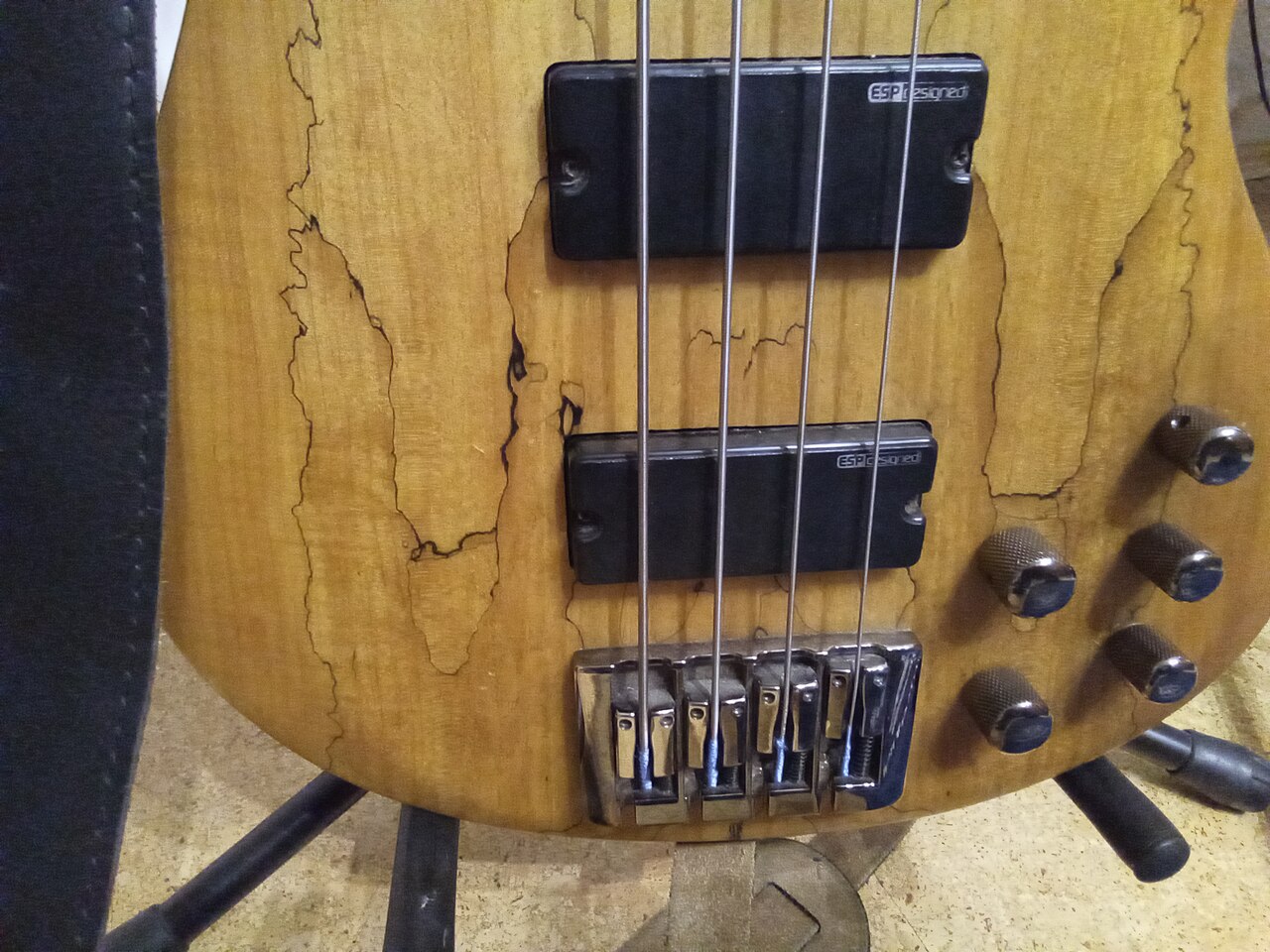
- The body of an ESP LTD B-204 SM bass guitar: Elmschrat, Wikimedia Commons, CC BY-SA 4.0.
Latest News
Related

On This Day
Tuesday 10 November
From this week: